Introduction
Successful sexual reproduction of plant species in deserts depends on germination being timed to coincide with periods of sufficient soil moisture that permits seedling emergence (germination) as well as their establishment and growth (Kos and Poschlod, Reference Kos and Poschlod2010; Kimball et al., Reference Kimball, Angert, Huxman and Venable2011). In the cold deserts of Central Asia, and in those of northwest China in particular, most of the annual rainfall occurs in summer, with unpredictable amounts of rain in autumn and next spring. In some years, there is sufficient soil moisture in autumn to promote germination but not in other years. However, there is snow in winter that melts in spring and thereby increases soil moisture, which promotes germination and seedling establishment (Wang et al., Reference Wang, Zhang, Jiang, Chen and Song2006, Reference Wang, Tan, Baskin and Baskin2010a; Lu et al., Reference Lu, Tan, Baskin and Baskin2016).
Although herbaceous perennials are an important component of the cold desert vegetation of Central Asia (Tang et al., Reference Tang, Tian and Long2009; Sharma and Sharma; Reference Sharma and Sharma2010; Baskin and Baskin, Reference Baskin and Baskin2014), their seed germination ecophysiology has received relatively little research attention (Tang et al., Reference Tang, Tian and Long2009; Fu et al., Reference Fu, Tan, Baskin and Baskin2013; Mamut et al., Reference Mamut, Tan, Baskin and Baskin2014b). On the other hand, much research has been done on the germination of cold desert annuals of Central Asia (Sun et al., Reference Sun, Lu, Tan, Baskin and Baskin2009; Lu et al., Reference Lu, Tan, Baskin and Baskin2010, Reference Lu, Tan, Baskin and Baskin2015; Ma et al., Reference Ma, Zhao, Tan, Baskin, Baskin and Xue2010; Tang et al., Reference Tang, Tian and Long2010; Wang et al., Reference Wang, Tan, Baskin and Baskin2010a; Mamut et al., Reference Mamut, Tan, Baskin and Baskin2014a; Zhou et al., Reference Zhou, Lu, Tan, Baskin and Baskin2015; Chen et al., Reference Chen, Shi, Zhang, Baskin, Baskin, Liu and Zhang2019a,Reference Chen, Zhang, Shi, Ban, Liu and Zhangb). For various species of annuals, rainfall in autumn promotes the germination of some seeds in a given cohort (i.e. seeds produced at the same time/season), resulting in seedlings that may survive overwinter and plants that flower in next spring. However, after snow melt in next spring additional seeds from the same seed cohort germinate, and these plants, as well as those from autumn-germinated seeds, flower and set seeds before the onset of high summer temperatures and periods of drought (see Chen et al., Reference Chen, Shi, Zhang, Baskin, Baskin, Liu and Zhang2019a,Reference Chen, Zhang, Shi, Ban, Liu and Zhangb).
There are two important reasons why some seeds in a cohort could germinate during a period of wet soil in autumn, and others do not germinate until next spring. One, in some species, only a portion of the seeds become non-dormant during summer, while others require winter cold (stratification) to become non-dormant (Zhou et al., Reference Zhou, Lu, Tan, Baskin and Baskin2015). Two, in other species seeds become non-dormant in summer, but the soil may not be moist during the time in autumn when temperatures are favourable for germination (Wang et al., Reference Wang, Tan, Baskin and Baskin2010a; Lu et al., Reference Lu, Tan, Baskin and Baskin2015). In general, it has been concluded that having the potential to germination in autumn and/or next spring enhances the chances that some seedlings will survive and plants will produce seeds (Lu et al., Reference Lu, Tan, Baskin and Baskin2016).
Since annuals and herbaceous perennials in the cold desert experience the same general environmental conditions, we hypothesized that seeds of herbaceous cold desert perennials have versatility in the timing of their germination. To address this hypothesis, we selected seeds of Leontice incerta Pall. (Berberidaceae) for study. This species is a herbaceous perennial (spring ephemeral) that occurs in the cold deserts of Kazakstan and northwest China (Ying et al., Reference Ying, Boufford, Brach, Wu and Raven2001). In China, L. incerta grows in desert and slopes of hills of northern Xinjiang, primarily at altitudes of 400–800 m. Flowering occurs from late March to early April (Sun et al., Reference Sun, Che, Chen, Lu, Wang, Li and Xin2019). Seeds mature in mid-May and are dispersed within a few days, after which the shoot dies. The species reproduces only by seeds.
The kind/class of dormancy in seeds of L. incerta has not been determined, but Nikolaeva et al. (Reference Nikolaeva, Razumova, Gladkova and Danilova1985) reported deep complex morphophysiological dormancy (MPD) in seeds of L. ewersmanni. However, physiological dormancy (PD) and MPD are known to occur in the Berberidaceae. Seeds of some genera, including Berberis (Figueroa and Armesto, Reference Figueroa and Armesto2001; Wang et al., Reference Wang, Baskin, Chen and Du2010b), Mahonia (Baskin et al., Reference Baskin, Baskin and Meyer1993; Taylor, Reference Taylor, Haase and Rose2001) and Sinopodophyllum (Liu et al., Reference Liu, Baskin, Baskin, Bu, Liu, Liu and Du2011) with fully developed embryos at seed maturity, have PD. However, seeds of Podophyllum (Kharkwal et al., Reference Kharkwal, Prakash, Bhattacharya and Ahuja2004), Jeffersonia (Baskin and Baskin, Reference Baskin and Baskin2014) and Caulophyllum (Barton, Reference Barton1944), have an underdeveloped embryo that must grow inside the seed prior to germination, and the embryo has PD, that is, seeds have MPD. Rhie et al. (Reference Rhie, Lee and Kim2019) reported that seeds of Gymnospermium microrrhychum (syn. Leontice microrrhyncha) had deep, simple epicotyl MPD, and Lee et al. (Reference Lee, Rhie, Kim and Kim2012) found that the embryo length (E): seed length (S) ratio for seeds of this species was 0.07.
Our preliminary observations showed that seeds (4.8 × 3.9 mm) of L. incerta have a fully developed spatulate embryo; the E:S ratio was 0.84 ± 0.01. Furthermore, seeds of Berberidaceae are not known to have physical dormancy (i.e. water-impermeable seed coats) (Baskin and Baskin, Reference Baskin and Baskin2014). Thus, we concluded that seeds of L. incerta have PD, but the level of PD was unknown.
To address our hypothesis, we asked the following questions. (1) If the seeds are buried in soil under natural temperature and soil moisture conditions, when do they come out of dormancy and when do they germinate? (2) Do GA3 and/or dry storage (afterripening) promote dormancy break and germination? (3) Do warm and/or cold stratification promote germination?
Materials and methods
Seed collection and field site description
Freshly matured seeds were collected from a natural population of L. incerta growing on the slopes of General Hill (44°18′68.9″N, 86°08′22.2″E, 717 m a.s.l.) in a suburb of the Shihezi City of Xinjiang Uyghur Autonomous Region, China, on 22 May 2018. After collection, seeds were stored in paper bags under ambient conditions in the laboratory (23–26°C, 20–30%, relative humidity) until used in experiments (i.e. until 28 May, 28 June, 28 July, 28 August and 28 November 2018). This area is an inland cold desert with a typical temperate desert climate. Mean annual temperature is 6.5°C, and annual precipitation (rain and snow) is 150 mm with 70 rainy days per year (Xu et al., Reference Xu, Zhang, Wang, Yan and Du2008).
Phenology of seedling emergence
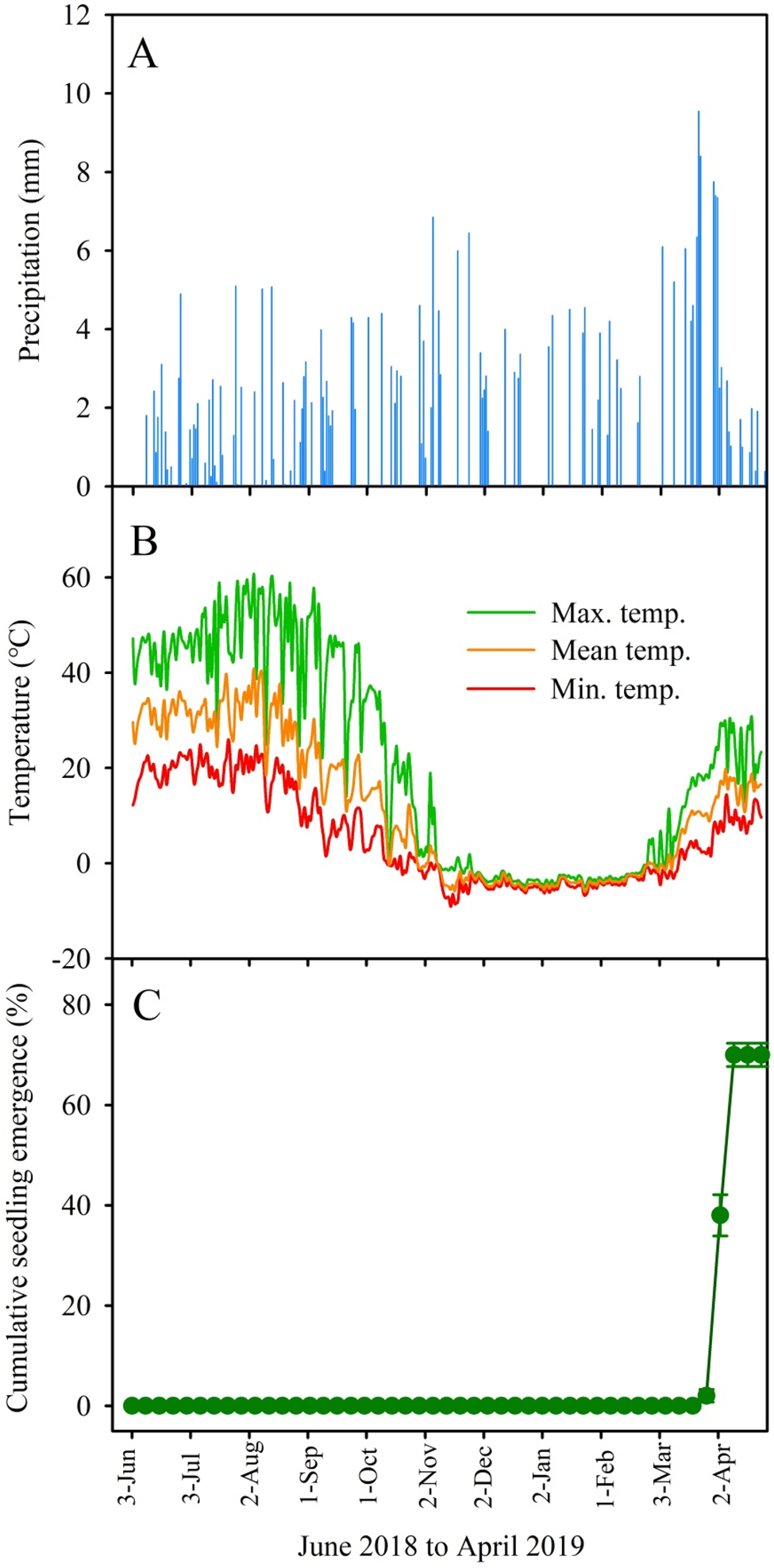
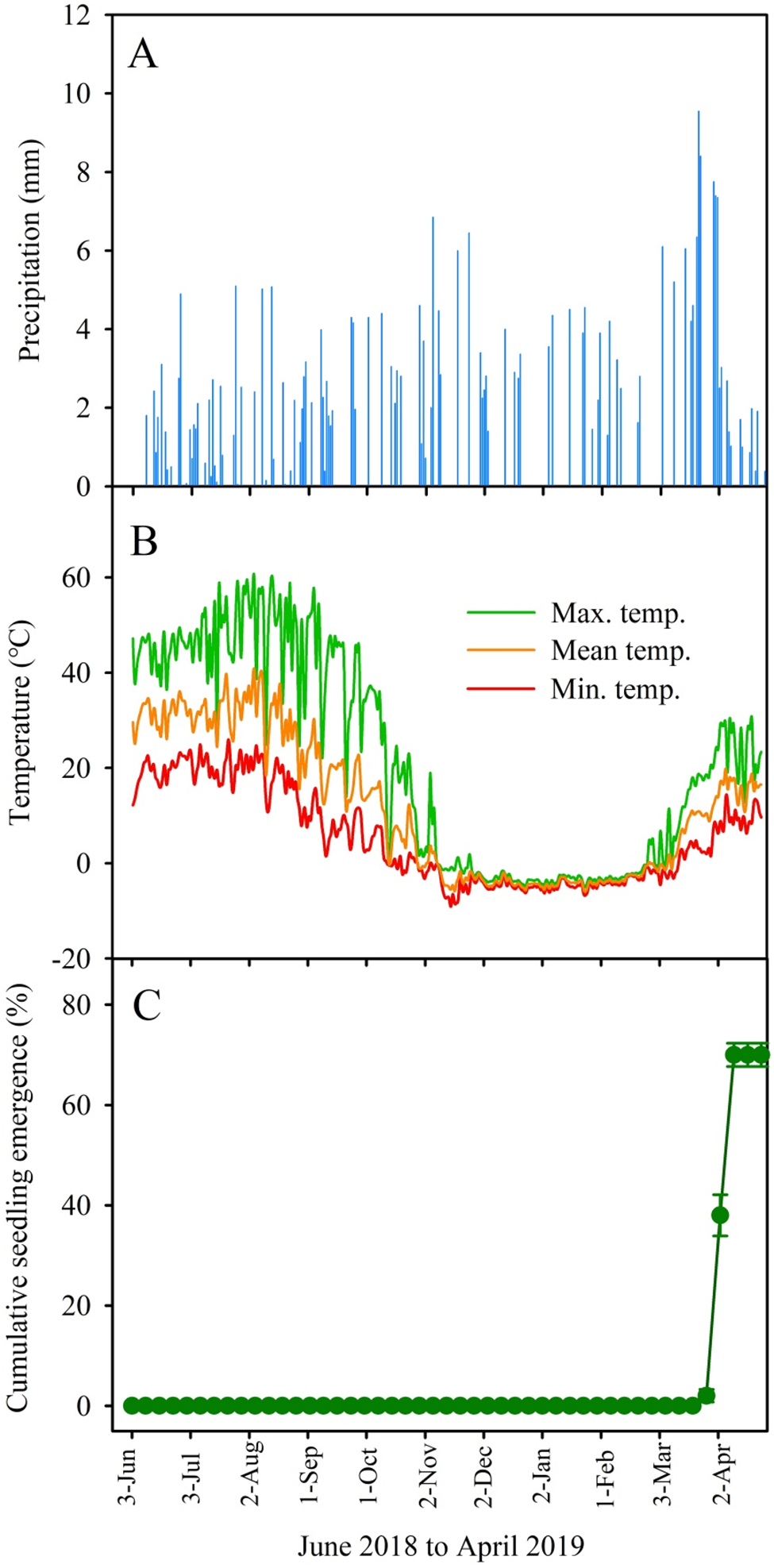
Five replicates of 50 freshly matured seeds were sown at a depth of 2 cm in the soil in pots (30 cm diameter × 30 cm deep) buried with the top level with the soil surface in the experimental garden on the campus of Xinjiang Agricultural University in Ürümqi (48°80′98.7″N, 87°56′10.3″E, 765 m a.s.l., 130 km from the seed collection site) on 3 June 2018 (12 d after seed collection). Seedling emergence was monitored at 3-d intervals, at which time any newly emerged seedlings were counted and gently removed from the pots. Soil temperatures at a depth of 2 cm were recorded at 2-h intervals throughout the burial period using Tiny Tag data loggers (Model Micro Lite LITE5016, Fourier Technologies, Beijing, China). Mean daily maximum and minimum temperatures were calculated from these data. The soil received water only via natural rainfall and snowmelt. Information on precipitation at the study site (Ürümqi) 2018 to 2019 (see Fig. 1) was obtained from the National Meteorological Information Center, China Meteorological Administration.
Daily precipitation (A) daily maximum, minimum and mean soil temperatures at a depth of 2 cm (B) and seedling emergence of Leontice incerta (C) in the experimental garden. Error bars (C) are ± s.e.
Effect of dry storage (afterripening) and GA3 on dormancy break
Four replicates of 25 seeds stored dry (afterripened) at room conditions (23–26°C, 20–30%, relative humidity) for 0 (fresh, control), 1, 2, 3 and 6 months were incubated in 0 (distilled water control), 0.1, 1 and 10 mmol l–1 GA3 solutions at 5/2, 15/2, 20/10, 25/15 and 30/15°C in both light/dark (12/12 h) and constant darkness (Petri dishes with seeds wrapped in aluminium foil) for 30 d. The daily photoperiod (cool white fluorescent light, approx. 100 μmol m–2 s–1, 400–700 nm) was 12 h (hereafter light), and it corresponded to the daily 12 h high-temperature period. Germination in light was monitored daily, at which time any germinated seeds were counted and removed from the Petri dishes; water was added to dishes as needed. Germination in darkness was determined only at the end of the 30-d experiment, and distilled water was added every 7 d using a green safe light. The criterion for germination was radicle emergence, but at 25/15 and 30/15°C cotyledon emergence was observed.
Effect of cold and warm stratification on dormancy break
Five-hundred freshly matured seeds were placed on moist sand in 12-cm-diameter Petri dishes and cold- and warm-stratified at 5/2 and 25/15°C, respectively, for 4, 8 and 12 weeks in both light and darkness. After each cold or warm stratification period, seeds were incubated in light and darkness at the five temperature regimes for 30 d. Seeds stratified in light and darkness were incubated in light and darkness, respectively. The number of seeds that germinated during the warm or cold stratification treatments was recorded, and seedlings were removed from the dishes prior to incubation at the five temperature regimes. After the germination trials were completed, each non-germinated seed was cut open, and the embryo was observed. Seeds with a white, firm embryo were counted as viable and those with a tan, soft embryo recorded as non-viable and excluded from calculations of germination percentages. Very few seeds were non-viable.
Effect of warm followed by cold stratification on dormancy break
To determine the effect of warm followed by cold stratification on germination, seeds were given 4, 8 and 12 weeks of warm stratification at 25/15°C in both light and darkness and then transferred to 5/2°C, where they remained for 4, 8 and 12 weeks; the dishes were checked for germination at 1-week intervals.
Effect of burial under natural temperatures and soil moisture conditions on dormancy break
Approximately 1000 seeds were placed in each of 12 (10 × 12 cm) fine-mesh nylon bags on 28 May 2018. Each bag was buried to a depth of 3 cm in the soil in plastic pots (16 cm diameter × 19.5 cm deep) with drainage holes (one bag per pot), and then pots were buried (top of the pot level with soil surface) in the experimental garden. These seeds were subjected to natural temperature and soil moisture conditions. Germination tests were conducted on the day of burial and after seeds had been buried for 1–5 months, starting on 28 June 2018 (seeds buried for 1 month) and ending on 28 October 2018 (5 months). Four replicates of 25 seeds each were incubated on wet filter paper in 9 cm diameter plastic Petri dishes incubated in light and darkness at 5/2, 15/2, 20/10, 25/15 and 30/15°C for 30 d.
Data analyses
Means and standard errors were calculated for germination percentages. Tukey's HSD test was performed for multiple comparisons to determine significant (P < 0.05) differences (or not) among levels in each treatment. Germination data were analysed using generalized linear models (GLMs) with a logit link to germination as a binomial response variable (two categories: germinated versus non-germinated). In the models, GA3 treatment, temperature, light condition and storage time were used as fixed factors for the ‘Effect of GA3 and dry storage on dormancy break’ experiment, and temperature, light condition and retrieval time were used as fixed factors for the ‘Effect of burial at natural temperatures on dormancy break’ experiment, with their interaction included in models. The significance of the effects of fixed factors and their interactions in the models were tested by Wald χ 2 values. Independent t-tests were used to compare germination between light and darkness in the ‘Effect of warm followed by cold stratification on dormancy break’ experiment. One-way analysis of variance was used to test for the effect of cold/warm stratification and warm followed by cold stratification on dormancy break. All statistical computations were performed with the software SPSS 21.0 (SPSS Inc., Chicago, IL, USA).
Results
Phenology of seedling emergence
Under natural conditions, no seedlings emerged from the time of burial on 3 June 2018 until 28 March 2019. Seedling emergence began on 29 March 2019 and ended on 11 April 2019. The peak of seedling emergence was between 29 March and 4 April when daily maximum and minimum temperatures were 15.3 and 2.7°C, respectively (Fig. 1). By 11 April 2019, 70.0% of the seeds had produced an emergent seedling; no additional seedlings emerged thereafter (Fig. 1).
Effect of dry storage (afterripening) and GA3 on dormancy break
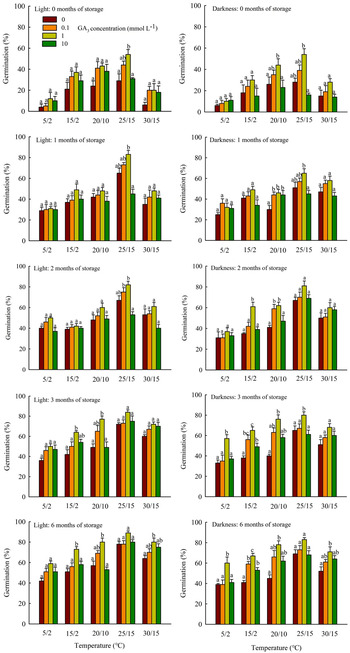
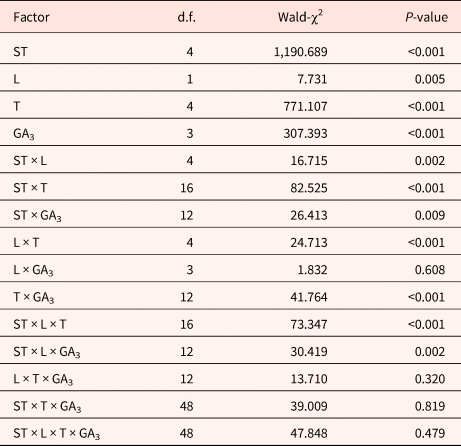
Freshly matured seeds and seeds stored for different periods of time can germinate in both light and darkness at five temperature regimes, and the optimum temperature regime for germination was 25/15°C (Fig. 2). GLMs analysis showed that germination was significantly affected by storage time (P < 0.001), light condition (P = 0.005), temperature (P < 0.001) and GA3 concentration (P < 0.001) (Table 1). No significant interactions were observed in germination percentage between light and GA3 (P = 0.608); light, temperature and GA3 (P = 0.320); storage time, temperature and GA3 (P = 0.819); or the interaction among the four factors (P = 0.479) (Table 1). The maximum germination of freshly harvested seeds was, at 25/15°C, 29 and 28% in light and darkness, respectively.
Effect of GA3 on germination percentages (mean ± s.e.) of Leontice incerta seeds in light and darkness at five temperature regimes after 0–6 months of dry storage at laboratory conditions. Error bars are ± s.e. Different letters indicate significant differences (P < 0.05) among different treatments at the same temperature within each of the graphs.

GLMs of effects of storage time (ST), light (L), Temperature (T), GA3 and their interactions on seed germination percentages of Leontice incerta

Some seeds were stored for 2 months and treated with 1 mmol l–1 GA3 germinated to a maximum of 81% at 25/15°C in both light and darkness. GA3 significantly increased germination percentages in light and in darkness, and the promotive effect of GA3 increased with the length of seed storage (afterripening). However, after 6 months of dry storage, seeds were incubated in light and darkness at 25/15°C germinated to about 70% without GA3 treatment, but even at 6 months, GA3 had a promotive effect on germination, especially at 25/15°C (Fig. 2).
Effect of cold and warm stratification on dormancy break
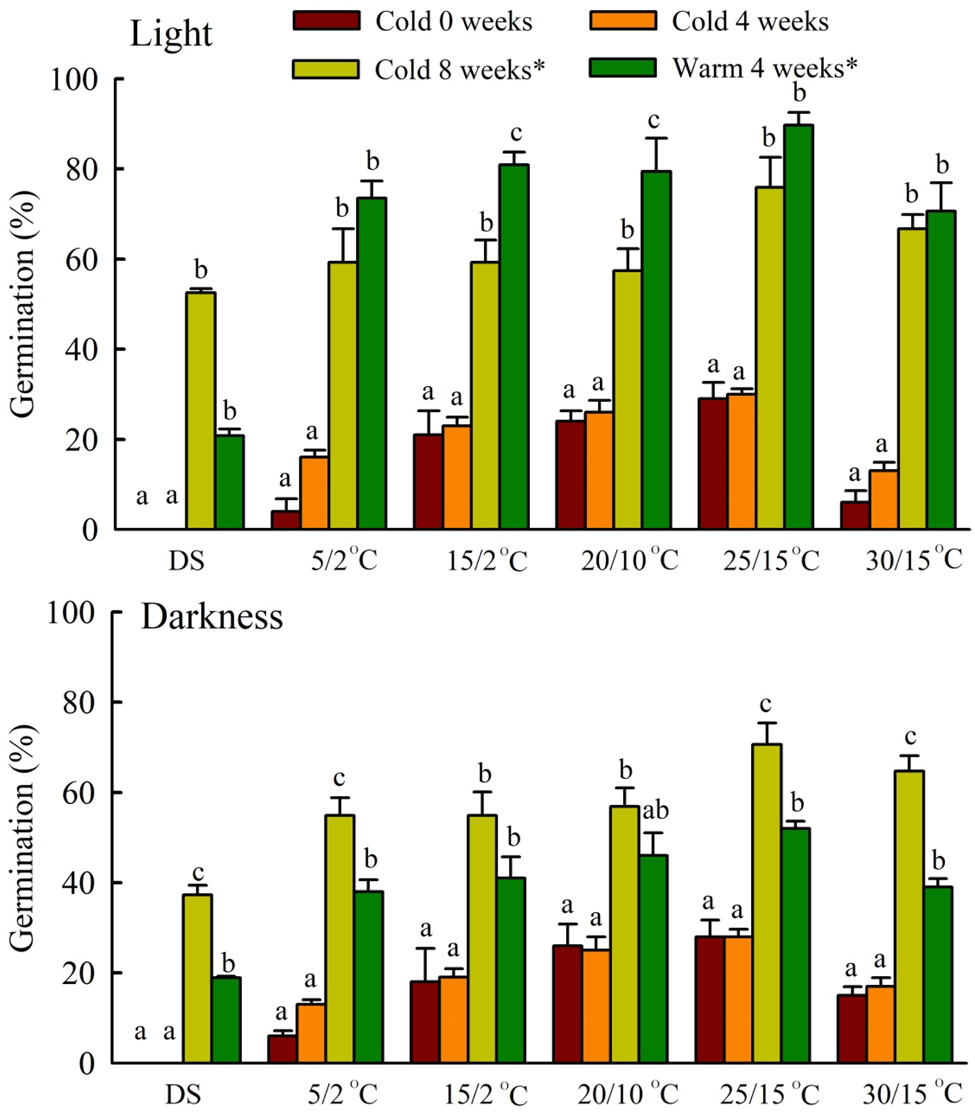
With the increasing time of cold and warm stratification, germination percentage increased at different temperatures, and highest germination was 75.9 ± 6.7 and 89.7 ± 2.8% (in light at 25/15°C) after 8 weeks of cold and after 4 weeks of warm stratification, respectively. Warm stratification at 25/15°C was more effective in promoting germination than cold stratifications at 5/2°C (P < 0.05, Fig. 3). After 12 weeks cold or 8 weeks warm stratification, 98% of the seeds had germinated in both light and darkness (data not shown); thus, seeds were not tested over the range of temperature regimes.
Germination percentages (mean ± s.e.) of seeds of Leontice incerta at five temperature regimes in light and darkness after 0, 4 and 8 weeks of cold stratification and after 4 weeks of warm stratification. Error bars are ± s.e. Different letters indicate significant differences (P < 0.05) among different stratification times within the same temperate regime in each graph. DS, during stratification; *% germination during incubation minus % germination during stratification = actual % germination during incubation, that is, % germination during stratification plus actual % germination during incubation = total % germination.

Effect of warm followed by cold stratification on dormancy break
After 4 weeks of warm stratification at 25/15°C, 91.8 ± 1.5 and 83.3 ± 4.6% of the seeds had germinated in light and darkness, respectively, by the end of 12 weeks at 5/2°C. The germination percentage had increased with the duration of warm plus cold stratification. After 8 weeks of warm stratification plus 12 weeks of cold stratification, the germination percentage had reached 95.3 ± 0.5 and 93.5 ± 0.5% in light and darkness, respectively (Table 2).
Final germination percentages (mean ± s.e.) of Leontice incerta seeds that occurred in light and darkness while they were receiving warm (25/15°C) followed by cold (5/2°C) stratification

Abbreviations: W, warm stratification; C, cold stratification.
Different uppercase letters within a column indicate significant differences (P < 0.05) between light regimes, and different lowercase letters within a row significant difference among the warm plus cold stratification.
Effect of burial under natural temperatures and soil moisture conditions on dormancy break
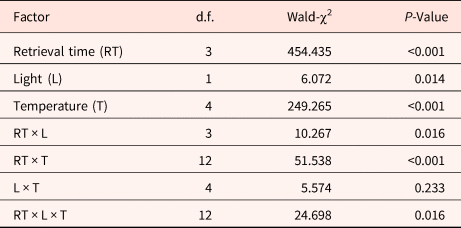
GLM analysis showed that the germination percentage was significantly affected by retrieval time (P < 0.001), light condition (P = 0.014) and temperature (P < 0.001) (Table 3). Also, significant interactions were observed for germination percentage between retrieval time and light (P = 0.016); retrieval time and temperature (P < 0.001); and retrieval time, light and temperature (P = 0.016), but not for the interaction between light and temperature (P = 0.233) (Table 3).
Generalized linear models of effects of retrieval time (RT), light (L), treatment (T) and their interactions on germination percentages of Leontice incerta seeds buried in soil in the experimental garden

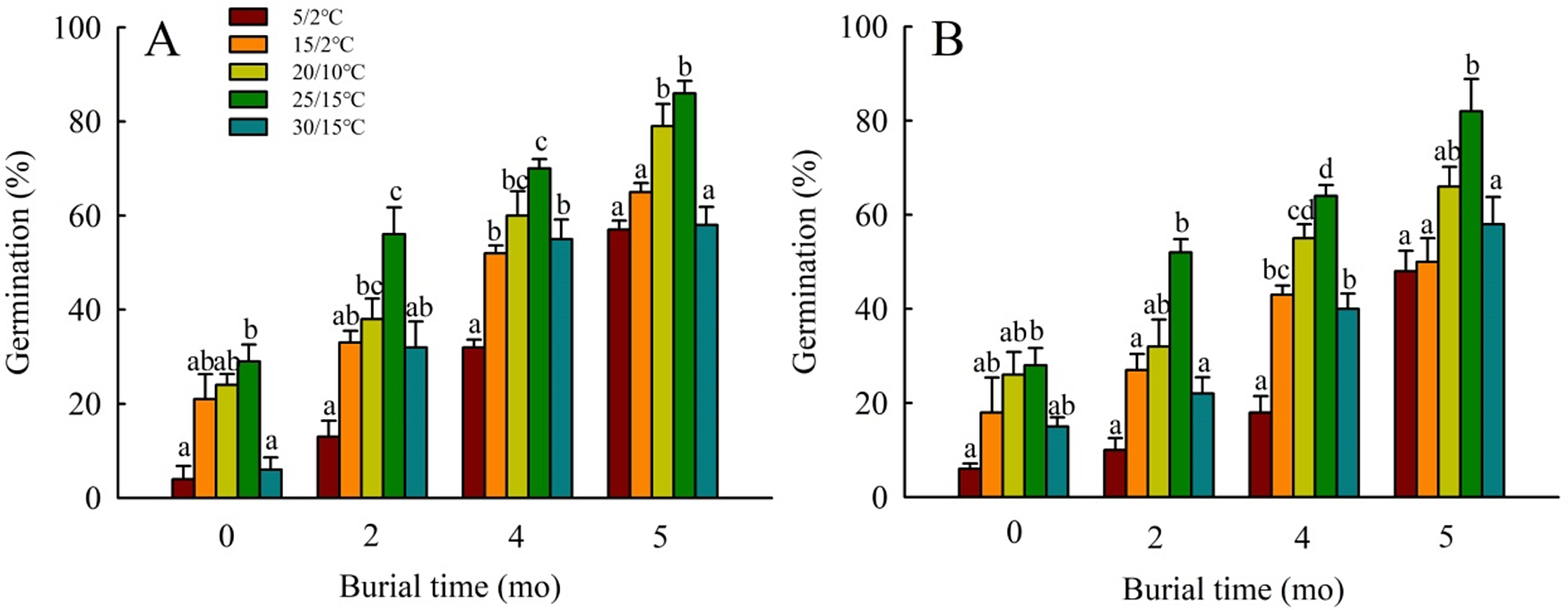
Freshly matured seeds and seeds from different periods of burial were germinated in both light and darkness at five temperature regimes, and the optimum temperature regime for germination was 25/15°C. The germination percentage of seeds buried for 0, 2, 4 and 5 months was higher in light than in darkness at all temperature regimes (Fig. 4). Freshly matured seeds germinated to a maximum of 29 and 28% in both light and darkness, respectively, at 25/15°C (Fig. 4). The optimum temperature regime for germination in both light and darkness was 25/15°C. As burial time increased from 2 to 5 months, germination at all temperature regimes increased in both light and darkness, especially at 25/15°C. In late October, no seedlings were found in the bag of exhumed seeds. However, but in late November, 95% of the seeds had germinated in the bag, and some of the seedlings had emerged cotyledons. Thus, germination tests could not be conducted.
Germination percentages (mean ± s.e.) of Leontice incerta seeds incubated in light (A) and constant darkness (B) at five temperature regimes following 0, 2, 4 and 5 months of burial in soil in the experimental garden. Error bars are ± s.e. Different letters indicate significant differences (P < 0.05) among different temperatures at the same burial time within each graph.

Discussion
About 30% of freshly matured seeds of L. incerta germinated at 25/15°C, and thus, the remaining seeds were dormant. Although dormant at maturity, seeds of L. incerta imbibed water (unpublished data), indicating that they do not have physical or combinational dormancy. Further, freshly matured seeds did not have a small (underdeveloped) embryo that needed to grow prior to radicle emergence; therefore, they did not have morphological or morphophysiological dormancy. Thus, seeds of L. incerta have PD. According to Nikolaeva (Reference Nikolaeva and Khan1977) and Baskin and Baskin (Reference Baskin and Baskin2014), there are three levels of PD: non-deep, intermediate and deep. What level of PD do the seeds of L. incerta have?
The response of seeds to afterripening, GA3 and warm and/or cold stratification is important in determining the level of PD (Nikolaeva, Reference Nikolaeva and Khan1977; Baskin and Baskin, Reference Baskin and Baskin2014). Relatively short (1–8 weeks) periods of warm or cold stratification (depending on the species), dry afterripening and GA3 promote the germination of seeds with non-deep PD. Long (8–14 weeks) periods of cold stratification promote the germination of seeds with intermediate PD, and afterripening (Crocker and Barton, Reference Crocker and Barton1931) or warm stratification (Baskin et al., Reference Baskin, Zackrisson and Baskin2002) may reduce the length of the cold stratification period needed to break dormancy; GA3 may or may not be effective in promoting germination. Long periods of cold stratification are required to break deep PD, but GA3 does not promote germination. Furthermore, excised embryos of fresh seeds with deep PD may or may not grow, and if they do, the seedlings are abnormal. Although we did not determine if excised embryos of fresh seeds would grow, fresh seeds that germinated had normal embryos.
Seeds of L. incerta afterripened rapidly under laboratory and summer field conditions, and GA3 (1 mmol l–1) was effective in promoting the germination of fresh seeds. With an increase in the period of dry storage (afterripening), seeds of L. incerta became increasingly responsive to GA3, and 6-month-old seeds treated without GA3 germinated to about 70% within 30 d at 25/15°C in both light and darkness. Furthermore, warm and cold stratification broke dormancy, with up to 89.7 and 75.9% germination, respectively. Thus, we conclude that the seeds of this species have non-deep PD (Baskin and Baskin, Reference Baskin and Baskin2014).
Regardless of seed age (degree of afterripening), test temperature, the concentration of GA3 and length of burial in the field, seeds of L. incerta can germinate to high percentages in both light and darkness. Thus, seeds of L. incerta have little or no potential to form a persistent soil seed bank. Seeds of many species of perennials do not form a soil seed bank (Baskin and Baskin, Reference Baskin and Baskin2014); thus, the short life span of L. incerta seeds buried in the soil is not too surprising. Thompson et al. (Reference Thompson, Bakker, Bekker and Hodgson1998) found that seeds of annuals and biennials are more likely to form persistent seed banks than those of polycarpic perennials, and this fits theoretical expectations (Rees, Reference Rees1993, Reference Rees1994). Perennials do not have to form soil seed banks in order for the population to persist, because the perennial plant itself is ‘more or less’ the ‘seed bank’. The cold desert perennials Ixiolirion tataricum, Tulipa iliensis (Tang et al., Reference Tang, Tian and Long2009), Crocus alatavicus (Fu et al., Reference Fu, Tan, Baskin and Baskin2013) and Eremurus anisopterus (Mamut et al., Reference Mamut, Tan, Baskin and Baskin2014b) also do not form a persistent soil seed bank.
Seeds of L. incerta were stored dry (afterripening) and treated with GA3, cold and warm stratification, and warm followed by cold stratification and buried at natural temperatures germinated in light and darkness at five temperature regimes, suggesting that seeds can germinate at any time in summer, autumn and spring if the soil moisture is sufficient to promote germination. These results support our hypothesis that seeds of herbaceous cold desert perennials exhibit versatility in the timing of germination.
Under natural conditions, seeds of L. incerta buried at a depth of 2 cm in soil did not germinate until the early spring of next year, and no germinated seeds buried to a depth of 3 cm were observed in the bag exhumed on 28 October, but about 95% of the buried seeds exhumed on 28 November had germinated in the bags. What is the reason for these phenomena? We suggest that there was more rapid drying of the soil at a depth of 2 cm, where the sown seeds were located, than in the closed bag at a depth of 3 cm in the soil. Low temperatures do not seem to explain the lack of germination at 2 cm because seeds exhumed on 28 October germinated to 57, 65 and 79% at 5/2, 15/2 and 20/10°C, respectively. Furthermore, seeds in the soil at 2 cm would have been exposed to about the same temperature as those buried at 3 cm during the relatively warm period in late October–early November.
Seeds buried in soil under natural temperature and soil moisture conditions during summer gained the ability to germinate to high percentages (e.g. 70% at 25/15°C) by the end of the summer, but high temperatures and drought during summer in the desert environment of the Junggar Basin in Xinjiang prevent seed germination, seedling emergence and survival. However, germination in autumn depends on rainfall occurring before the end of the growing season; it begins to snow in mid- to late October. By the end of September, exhumed seeds could germinate at 5/2, 15/2 and 20/10°C but to significantly lower percentages than at 25/15°C. Seeds were given a warm and then a cold treatment gained the ability to germinate to near 100% at 5/2°C. Thus, by early spring of the next year when the soil is wet due to snow melt and low soil temperatures are suitable for germination, seeds can germinate rapidly and to high percentages. These patterns were also reported in other cold desert species such as Eremopyrum distans (Wang et al., Reference Wang, Tan, Baskin and Baskin2010a), Isatis violascens (Zhou et al., Reference Zhou, Lu, Tan, Baskin and Baskin2015) and Erodium oxyrhynchum (Chen et al., Reference Chen, Shi, Zhang, Baskin, Baskin, Liu and Zhang2019a,Reference Chen, Zhang, Shi, Ban, Liu and Zhangb). By late March of the next year, seedlings emerge and grow rapidly when soil temperatures start rising again, and rain is available. These results indicate that rainfall in the cold desert environment could be the most important factor for germination and may play an important role in shaping seeds germination traits of desert plants. This information suggests that rainfall changes in cold deserts (such as more rain in summer) under climate changes in the future could influence the life form and population dynamics of desert plant species.
Acknowledgements
We thank the National Meteorological Information Center, China Meteorological Administration, for providing the precipitation data.
Funding
This work was supported in part by the National Natural Science Foundation of China (U1603231 and 31760060).