





Assessment and management of risk to self and others is a key responsibility for clinical teams in mental health services. Risk is defined as the likelihood of harm (to self or others) by way of violence, self-harm or suicide, or neglect. 1 Ideally, risk assessment should occur as part of a multidisciplinary process and be dynamic in nature, combining biological, psychological and social factors as part of a broad-based review to identify needs and associated risks. Reference Appleby, Kapur and Shaw2,Reference Nathan and Bhandari3 Risk management follows assessment and aims to adopt reasonable measures in light of the identified risks. 1,Reference Doyle, Grundy, McGleenan, Nash and Deering4
The rise of the ‘risk-averse culture’ has fostered a view that all risk can be identified and mitigated, Reference Cleary, Hunt, Walter and Robertson5 and increasing emphasis on risk assessment within services has contributed to defensive practice. Such practice is evident when the possibility of litigation guides clinical decision-making; excessive paperwork is a key indicator of this. Fear of litigation leads to a practice of all decisions being repeatedly recorded and justified. Reference Lorenc, Khouja, Harden, Fulbright and Thomas6 Research has largely focused on predicting risk, particularly regarding the relative merits of structured clinical judgement versus actuarial approaches. Reference Dolan and Doyle7,Reference Swanson8 Structured, evidence-based frameworks aim to assist staff to manage risks of violence, self-harm, suicide and self-neglect. 9 These frameworks have often relied on use of checklists to identify potential negative outcomes and have often stratified patients as high, medium or low risk; however, recent research indicates that risk tools should not be used to stratify risk in this way, as they have limited predictive validity. Reference Appleby, Kapur and Shaw2,Reference Carter, Milner, McGill, Pirkis, Kapur and Spittal10 Similarly, use of structured tools alone has not been linked to reduced suicides, although regular training alongside these tools may have an impact. Reference Appleby, Shaw, Sherratt, Amos, Robinson and McDonnell11 There is a growing consensus that risk tools alone do not prevent negative outcomes. Reference Appleby, Kapur and Shaw2
The literature on risk assessment in mental health settings has been largely concerned with the predictive validity of tools in forensic and criminal justice settings, with less focus on the clinical utility of tools in daily practice. Reference Carroll12 Evidence suggests that brief risk assessment tools adopted within general mental health services are not routinely used to assist with decision-making or risk management. Reference Higgins, Watts, Bindman, Slade and Thornicroft13,Reference Stein14 One study reported that the Glasgow Risk Screen (GRS) tool was completed at admission to hospital but rarely influenced decision-making and lacked patient and carer involvement. Reference Clarke and Taylor15 A more recent study reported significant variation across the UK in the type of risk tool used and in whether a tool was used at all. Reference Fedorowicz, Dempsey, Ellis, Phillips and Gidlow16 Training on risk assessment was similarly limited, and attendance could be affected by high levels of clinical activity. Reference Fedorowicz, Dempsey, Ellis, Phillips and Gidlow16
In recent years, there has been a move away from ‘checklist’ methods towards more formulation-based tools. 17 For example, a study in 2019 Reference Snowden, Holt, Simkiss, Smith, Webb and Gray18 reported positive feedback from clinical staff about a formulation-based tool for risk assessment and management. Survey respondents reported increased confidence in conducting risk assessment and management, as well as perceived improvements in the safety of patients and the public; however, there were concerns about the time taken to complete the tool and its relevance for specific populations. Sharing of risk formulations with patients and carers was an identified area of improvement. Another formulation-based risk assessment tool has been developed in recent years with collaboration from patients. Reference Doyle, Garnham, Carter and Ventress19 Feedback about the formulation approach and the relevance of the tool to practice was positive, with mixed responses regarding its impact on confidence in decision-making.
Multidisciplinary team (MDT) decision-making is a key component of risk assessment and management; 1 however, there has been limited research on how this works in practice. The authors of a study on decision-making processes around patient leave in a medium secure unit in London Reference Lyall and Bartlett20 reported that although mental state was discussed in relation to leave decisions, staff did not often explicitly link a patient’s mental state with the decision to grant leave, reflecting a lack of transparency around the decision-making process. The findings also highlighted that there was little disagreement in the team, with the responsible clinician often asking other members of the team whether they agreed with a decision. A forensic-based study investigated how treatment decisions were made in MDT meetings in a forensic mental health in-patient setting through a mixed-methods approach including non-participant observation. Reference Haines, Perkins, Evans and McCabe21 The findings revealed that many discussions and disagreements were focused on risk. Disagreements regarding risk led to less collaborative decision-making, which was affected by the hierarchy of the team. Such perceptions may have been based on factors such as differences in training, years of service or legal responsibility conferring perceived seniority. Although these studies were carried out in a forensic context, their results indicate the types of information that have been used to make decisions related to risk.
Policy in Scotland emphasises involvement of patients and carers in all aspects of mental healthcare, including risk assessment. 22,23,24,25 However, there is little evidence to suggest that carers and patients are routinely involved in risk assessment in a way that is meaningful and not tokenistic. Reference Haines, Perkins, Evans and McCabe21,Reference Dixon26 A growing body of research indicates the importance of involving patients in their own risk assessments. Reference Dixon26,Reference Langan27,Reference Hall and Duperouzel28,Reference Skeem, Manchak, Lidz and Mulvey29,Reference Vidaurrazaga Aras, Alexiou, Nilsson, Wolf and Olausson30 Moreover, if patients are unaware that a risk assessment has been completed about them, this raises questions about ethical and human rights considerations. Reference Langan27,Reference Hall and Duperouzel28
The present study was an opportunity to explore how teams think about and discuss risk management in the context of an updated risk policy and risk screening tool. The GRS was originally introduced in 2004 to support risk assessment and management see (Supplementary Appendix 1 available at https://doi.org/10.1192/bjb.2026.10283 for further details). In 2019, a new tool, the Clinical Risk Assessment Framework for Teams (CRAFT), was developed in response to a perception that the GRS was not fit for purpose (see Supplementary Appendix 2 for further details). This study was also an opportunity to investigate whether the CRAFT is used by teams when discussing risk assessment and management. We aimed to assess whether the CRAFT had clinical utility and impact, and whether this was sustained longer term. As the study covered the transition period from the GRS to the CRAFT, we could obtain information on whether the CRAFT was more acceptable to staff than the GRS, although the majority of data collection around use of the tools focused on the CRAFT. To date, no published studies have evaluated the predictive validity or other psychometric characteristics of the CRAFT. Our research team chose not to consider predictive validity with respect to the CRAFT, as it seemed more important to gain an understanding of how the tool was used in clinical practice, given the lack of research in this area.
Method
Study design and setting
A mixed-methods design was adopted, including qualitative and quantitative measures that were applied before and after implementation of the CRAFT. Data were gathered from multiple sources, including staff surveys (pre and post implementation), observations of team meetings at two time points, staff and patient focus groups following implementation, audits of case-file data at four time points and a review of Datix incident numbers.
The focus groups and team meeting observations were used to explore how teams discussed and made risk-related decisions and how the CRAFT tool was specifically used. Although there are many potential confounding variables that could affect numbers of incidents and referrals to forensic mental health services, we anticipated that triangulating the results obtained with these methods would provide a more in-depth understanding of the approaches that teams take to risk assessment.
Full ethical consent was granted by National Health Service (NHS) Health Research Authority (HRA) South Central – Hampshire A Research Ethics Committee (ref: 17/SC/0214). The study also had managerial and R&D consent from the Health Board.
Online survey
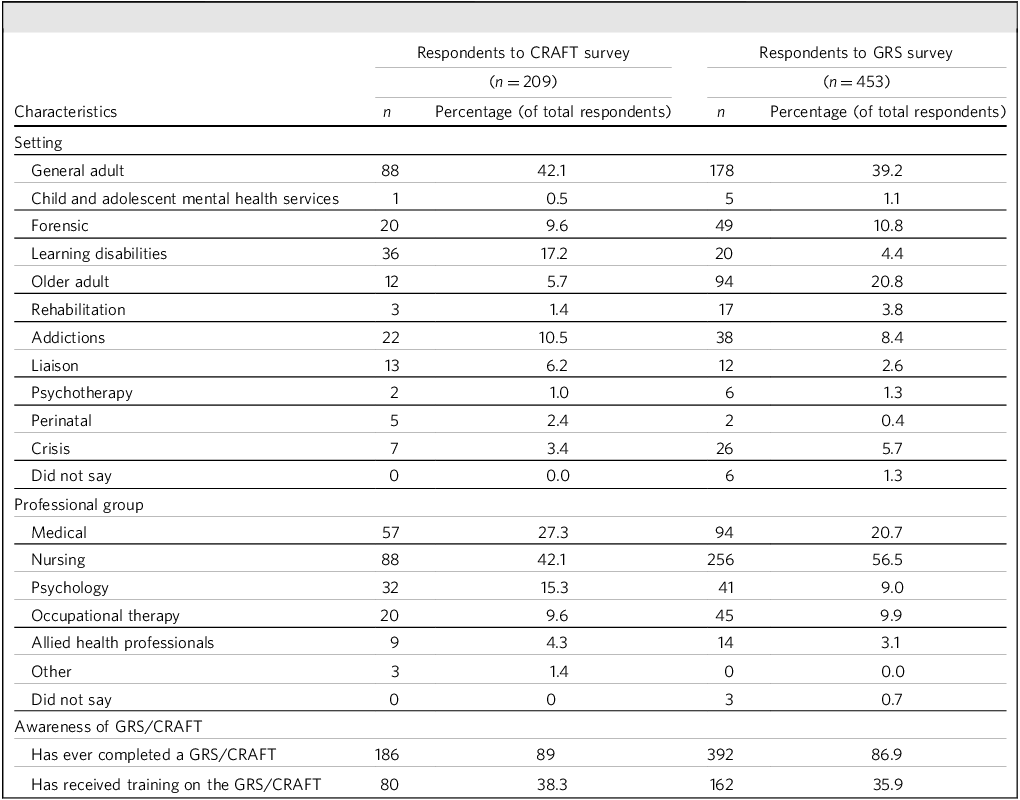
A web-based survey was developed to investigate clinicians’ experiences with risk assessment tools and with the GRS specifically. Eligible participants were current clinicians within the health board mental health services. The survey was distributed in June 2017, with respondents recruited through organisation email lists. This included a range of professional groups and settings (Table 1). Survey items included quantitative and open-ended questions related to the following topics: the purpose of the risk tool and its role in decision-making; patient involvement, time taken to complete and/or update, ease of use and training.
Respondent characteristics by risk tool survey

Table 1 Long description
A table comparing characteristics of respondents to CRAFT and GRS surveys. The table has 21 rows and 6 columns. The columns are labeled ‘Characteristics’, ‘Respondents to CRAFT survey (n=209)’, ‘n’, ‘Percentage (of total respondents)’, ‘Respondents to GRS survey (n=453)’, ‘n’, and ‘Percentage (of total respondents)’. The rows are grouped into three main categories: Setting, Professional group, and Awareness of GRS/CRAFT. Each row lists specific characteristics and the corresponding number and percentage of respondents for both surveys. Notable trends include higher percentages of respondents in the General adult setting and Nursing professional group for both surveys. The table also shows varying levels of awareness and training on the GRS/CRAFT among respondents.
CRAFT, Clinical Risk Assessment Framework for Teams; GRS, Glasgow Risk Screen.
The staff survey was repeated in November 2021, 24 months after implementation of the CRAFT, with minor updates to the survey to reflect the new tool. The multiple response options to ‘what sections of the risk tool are frequently or always completed?’ differed between the two surveys according to differences between the tools. Respondents are described in Table 1. The survey was open for 6 weeks; it was then extended by 5 weeks owing to low response rates, despite regular reminders being sent. The majority of the survey questions were analysed using descriptive statistics and by a professional group. Free-text comments were analysed thematically by two researchers.
Focus groups
Focus groups with mental health clinical staff and patients were planned to enable us to gain a greater understanding of how risk assessment was discussed and managed. The aim was to recruit to focus groups until data saturation was reached; this was estimated to require between 20 and 40 participants across four focus groups of staff (n = 2) and patients (n = 2). A purposive sample of staff was recruited via organisation email lists, and those interested in participating received an information sheet. The groups took place approximately 3 years following CRAFT implementation. Fourteen staff members attended across two focus groups, resulting in data saturation; their professions included nursing (n = 6), psychology (n = 1) and psychiatry (n = 7). Discussions focused on risk assessment (e.g. the purpose of assessment, decision-making and/or training), CRAFT (e.g. benefits, disadvantages and influence on decision-making) and patient involvement.
Focus groups were held with carers of current or former patients. Attempts were made to recruit current or former patients via posters in in-patient and community mental health settings. The study was also advertised via email distribution lists and newsletters of third-sector organisations. However, very limited numbers of individuals expressed interest via this approach, and it was not possible to facilitate a focus group comprising current or former patients of mental health services. Carers were recruited for focus groups via a third-sector organisation and a carers support group. Ten carers participated in focus groups before data saturation was reached. Participants were asked about their awareness, views and experiences of risk assessment processes, tools and decision-making within mental health services.
Focus groups were held on NHS and third-sector premises. Participants provided written consent for their participation in a focus group that was audio recorded and transcribed, and for the use of anonymous quotes in reports and publications. Focus groups lasted between 40 and 51 min and were facilitated by two researchers. Carers received a £15 gift voucher as a thank you for their contribution.
We adopted the approach of Braun & Clarke to thematic analysis. Reference Braun and Clarke31 Focus group data were read several times to ensure comprehension, then coded line by line and grouped into categories and themes through comparison across transcripts. Two researchers independently coded the data, with themes refined through team discussion. Final themes were selected after reviews with the research team.
Observations of team meetings
Of 140 mental health teams, 40 were randomly selected and recruited to take part in the study via non-participant observation. Patient-identifying information was not recorded by the researcher, and so informed consent was not sought from attendees of the meetings (although all attendees were informed that a researcher was present as an observer, and if there was an objection, the observer did not attend that part of the meeting). Team information was anonymised, and staff members were recorded by generic job titles, for example ‘senior charge nurse’ or ‘consultant psychiatrist’. This pragmatic approach was approved by NHS Research Ethics. Observations took place 24 and 36 months following CRAFT implementation. Teams were randomly selected within the specialties of old age, general adult including first episode psychosis services, learning disabilities, child and adolescent mental health services, rehabilitation, addictions, liaison, psychotherapy, perinatal, crisis and forensic. Teams were then invited to participate in the study via the consultant psychiatrist, consultant psychologist or team leader for that team. If a team declined to participate, then another team was randomly selected. In total, 40 meetings were observed. Researchers disclosed the purpose of the study; although this may have influenced behaviour, it was not expected to have a significant impact on findings owing to the volume of observations. Researchers attended either in person or via video link, completing a short pro forma during the meeting.
Data were analysed descriptively. Categorical responses from the pro forma were recorded as counts (e.g. instances in which CRAFT was discussed). Free-text responses were reviewed to identify types of risks discussed and related decisions. Findings were also compared across different observation time points.
Case-file audit
At 12, 18 and 24 months after CRAFT implementation, 20 in-patient case files from randomly selected departments were reviewed to assess whether the CRAFT had recently been completed, updated or consulted, as well as patient and/or carer involvement and any influence on decision-making. Patient-identifying information was not recorded. The ethics committee confirmed that informed consent was not required from the patients to whom the case files related. Audit data were reported as counts and frequencies across the three time points.
Numbers of adverse incidents
Average incident numbers were calculated for 12 months before and 18 months after CRAFT implementation. Incident types included: challenging behaviour, self-harm, violence and aggression, abscondment or missing, and suicide. Reports were reviewed at 6 months before CRAFT implementation and at 6, 12, 18 and 24 months post CRAFT. The average number of incidents was calculated for 6 month periods to review for any changes over time.
Numbers of referrals to forensic services
Numbers of referrals to forensic mental health services were reviewed, as an increase in these numbers could have indicated an improvement in the identification of risk as a result of the CRAFT. Numbers of referrals were reviewed before CRAFT implementation and 6, 12 and 24 months after CRAFT implementation.
Results
Staff survey
The 2019 GRS survey received 453 responses, whereas the 2022 CRAFT follow-up had 209 responses. These represented response rates of 21 and 10% of all clinical mental health staff working in the health board, respectively. Overall, the GRS and CRAFT survey respondent samples were similar in terms of setting and professional group representation. Similar proportions of staff had been trained to use and had used both tools (Table 1). The breakdown of respondents by setting and professional groups reflected that of the wider health board mental health workforce.
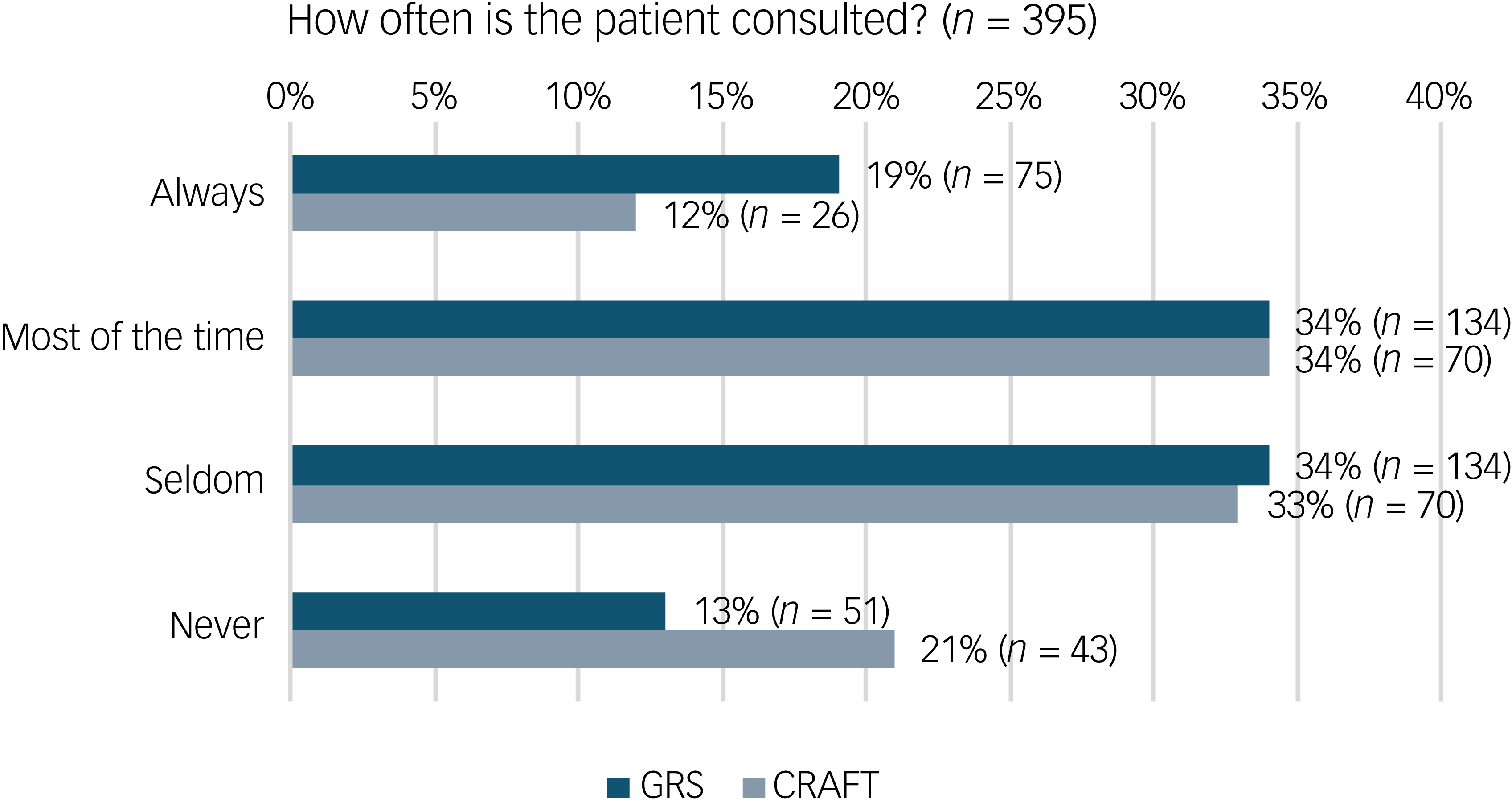
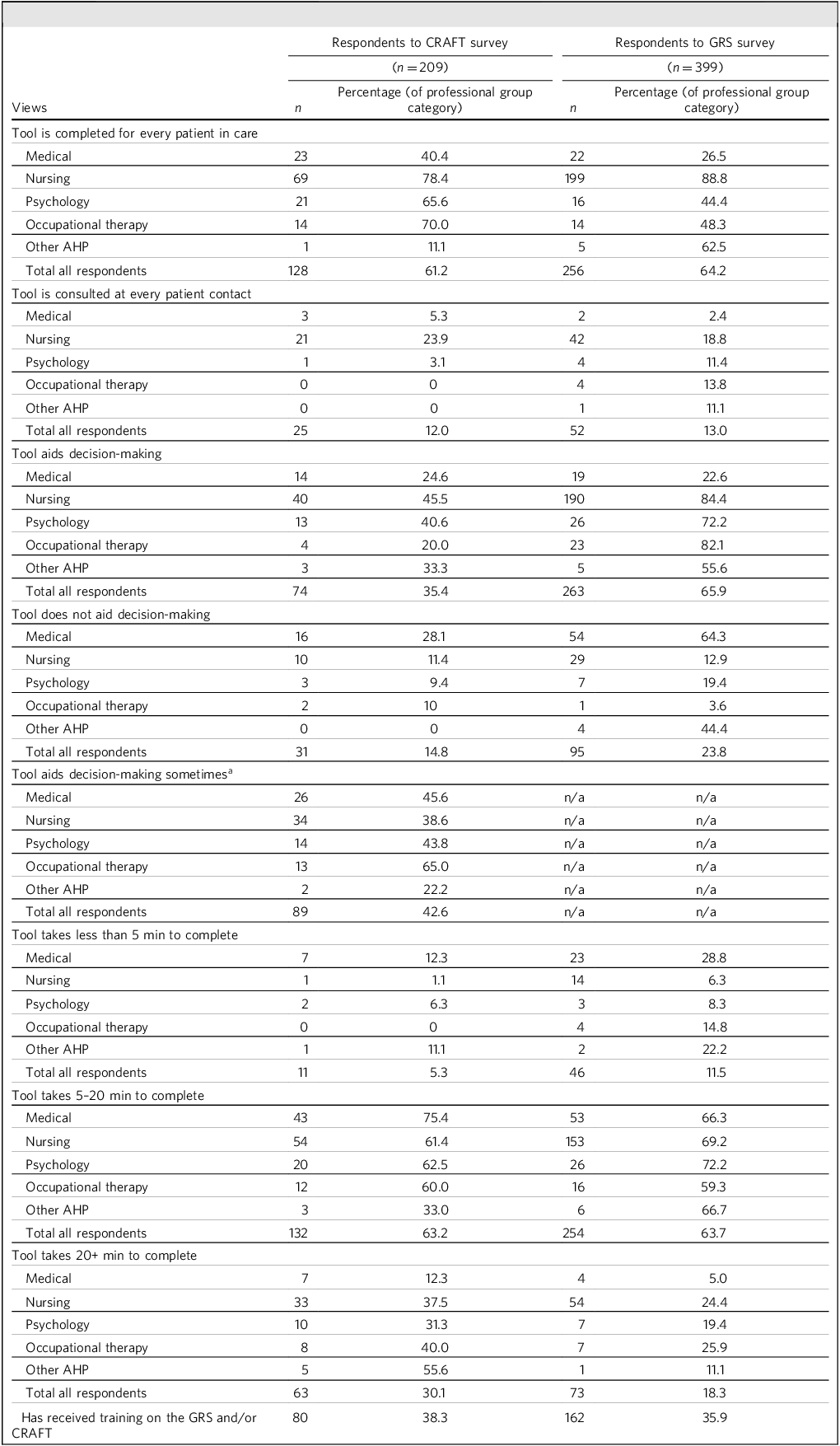
The majority of respondents said that they had completed the GRS (64.2%) and CRAFT (61.2%) for every patient in their care. A large proportion of respondents (65.9%) believed that the GRS aided decision-making about patient care, whereas 35.4% of respondents stated that the CRAFT aided decision-making. Table 2 details respondents’ perceptions on the clinical utility of the tools. As shown in detail in Fig. 1, a significant proportion of staff did not consult the patient when completing or updating the GRS, with 47% of respondents never or seldom doing so; similarly, 54% of respondents reported never or seldom consulting patients about the CRAFT. Family and carers were consulted even less often, with 75% reporting that they seldom or never consulting family and/or carers with respect to either the GRS or the CRAFT.
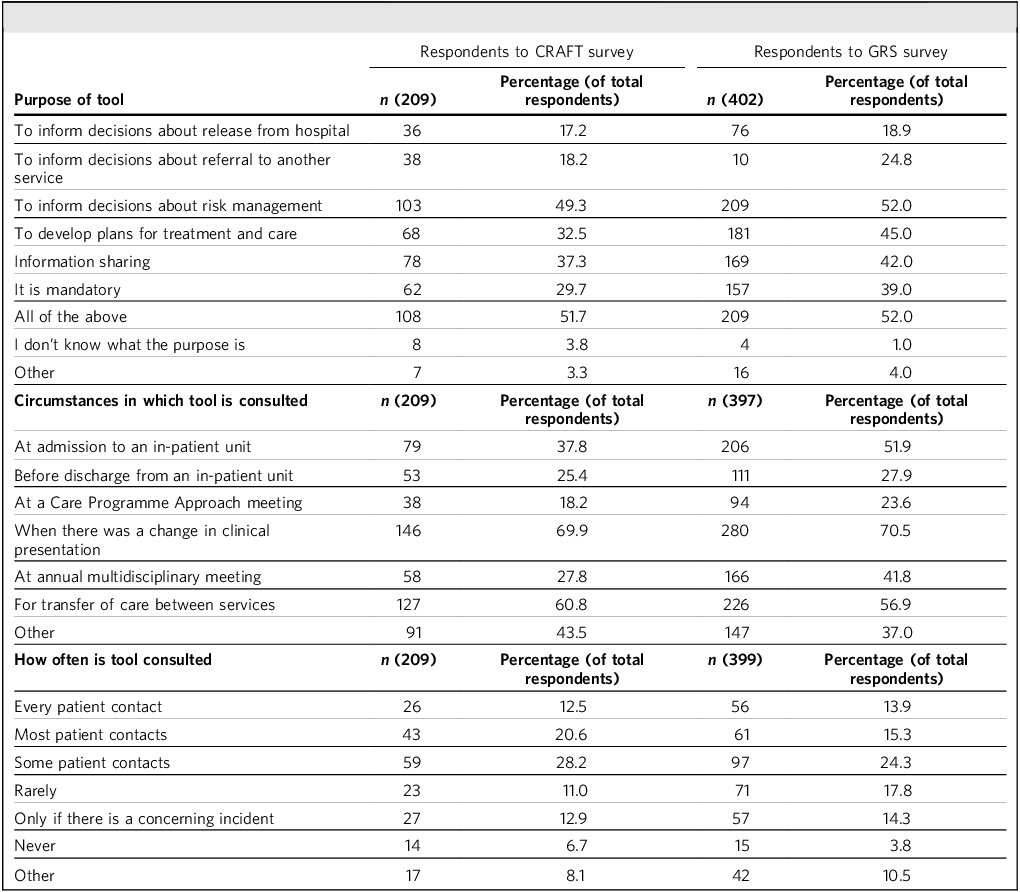
Use of tool: purpose, circumstances and frequency of use by risk tool survey

Table 2 Long description
A table comparing the use of tools for different purposes and circumstances by respondents to CRAFT and GRS surveys. The table has three main sections: Purpose of tool, Circumstances in which tool is consulted, and How often is tool consulted. Each section contains data for respondents to CRAFT survey and respondents to GRS survey. Purpose of tool section includes purposes like informing decisions about release from hospital, referral to another service, risk management, developing plans for treatment and care, information sharing, and mandatory use. Circumstances in which tool is consulted section includes scenarios like admission to an in-patient unit, before discharge from an in-patient unit, at a Care Programme Approach meeting, change in clinical presentation, annual multidisciplinary meeting, and transfer of care between services. How often is tool consulted section includes frequencies like every patient contact, most patient contacts, some patient contacts, rarely, only if there is a concerning incident, never, and other. Each section lists the number of respondents and the percentage of total respondents for both CRAFT and GRS surveys.
CRAFT, Clinical Risk Assessment Framework for Teams; GRS, Glasgow Risk Screen.
Frequency of patient consultation about risk tool. CRAFT, Clinical Risk Assessment Framework for Teams; GRS, Glasgow Risk Screen.

Table 3 provides details of the differences of opinion regarding the GRS and CRAFT between professional groups. Just over a quarter of medical staff completed a GRS for every patient in their care, compared with 88.8% of nursing staff; and 40.4% of medical staff reported completing a CRAFT for every patient in their care, compared with 78.4% of nursing staff.
Views of professional groups by risk tool survey

Table 3 Long description
A table comparing views of professional groups on risk tool surveys. The table has 11 rows and 8 columns. Column headers are Views, Respondents to CRAFT survey (n=209) Percentage (of professional group category), Respondents to CRAFT survey (n=209) n, Respondents to GRS survey (n=399) Percentage (of professional group category), Respondents to GRS survey (n=399) n. Row labels are Tool is completed for every patient in care, Medical, Nursing, Psychology, Occupational therapy, Other AHP, Total all respondents, Tool is consulted at every patient contact, Tool aids decision-making, Tool does not aid decision-making, Tool aids decision-making sometimes, Tool takes less than 5 min to complete, Tool takes 5-20 min to complete, Tool takes 20+ min to complete, Has received training on the GRS and/or CRAFT. Row 1: Tool is completed for every patient in care, Medical, 23, 40.4, 22, 26.5. Row 2: Nursing, 69, 78.4, 199, 88.8. Row 3: Psychology, 21, 65.6, 16, 44.4. Row 4: Occupational therapy, 14, 70.0, 14, 48.3. Row 5: Other AHP, 1, 11.1, 5, 62.5. Row 6: Total all respondents, 128, 61.2, 256, 64.2. Row 7: Tool is consulted at every patient contact, Medical, 3, 5.3, 2, 2.4. Row 8: Nursing, 21, 23.9, 42, 18.8. Row 9: Psychology, 1, 3.1, 4, 11.4. Row 10: Occupational therapy, 0, 0, 4, 13.8. Row 11: Other AHP, 0, 0, 1, 11.1. Row 12: Total all respondents, 25, 12.0, 52, 13.0. Row 13: Tool aids decision-making, Medical, 14, 24.6, 19, 22.6. Row 14: Nursing, 40, 45.5, 190, 84.4. Row 15: Psychology, 13, 40.6, 26, 72.2. Row 16: Occupational therapy, 4, 20.0, 23, 82.1. Row 17: Other AHP, 3, 33.3, 5, 55.6. Row 18: Total all respondents, 74, 35.4, 263, 65.9. Row 19: Tool does not aid decision-making, Medical, 16, 28.1, 54, 64.3. Row 20: Nursing, 10, 11.4, 29, 12.9. Row 21: Psychology, 3, 9.4, 7, 19.4. Row 22: Occupational therapy, 2, 10, 1, 3.6. Row 23: Other AHP, 0, 0, 4, 44.4. Row 24: Total all respondents, 31, 14.8, 95, 23.8. Row 25: Tool aids decision-making sometimes, Medical, 26, 45.6, n/a, n/a. Row 26: Nursing, 34, 38.6, n/a, n/a. Row 27: Psychology, 14, 43.8, n/a, n/a. Row 28: Occupational therapy, 13, 65.0, n/a, n/a. Row 29: Other AHP, 2, 22.2, n/a, n/a. Row 30: Total all respondents, 89, 42.6, n/a, n/a. Row 31: Tool takes less than 5 min to complete, Medical, 7, 12.3, 23, 28.8. Row 32: Nursing, 1, 1.1, 14, 6.3. Row 33: Psychology, 2, 6.3, 3, 8.3. Row 34: Occupational therapy, 0, 0, 4, 14.8. Row 35: Other AHP, 1, 11.1, 2, 22.2. Row 36: Total all respondents, 11, 5.3, 46, 11.5. Row 37: Tool takes 5-20 min to complete, Medical, 43, 75.4, 53, 66.3. Row 38: Nursing, 54, 61.4, 153, 69.2. Row 39: Psychology, 20, 62.5, 26, 72.2. Row 40: Occupational therapy, 12, 60.0, 16, 59.3. Row 41: Other AHP, 3, 33.0, 6, 66.7. Row 42: Total all respondents, 132, 63.2, 254, 63.7. Row 43: Tool takes 20+ min to complete, Medical, 7, 12.3, 4, 5.0. Row 44: Nursing, 33, 37.5, 54, 24.4. Row 45: Psychology, 10, 31.3, 7, 19.4. Row 46: Occupational therapy, 8, 40.0, 7, 25.9. Row 47: Other AHP, 5, 55.6, 1, 11.1. Row 48: Total all respondents, 63, 30.1, 73, 18.3. Row 49: Has received training on the GRS and/or CRAFT, Medical, 80, 38.3, 162, 35.9.
CRAFT, Clinical Risk Assessment Framework for Teams; GRS, Glasgow Risk Screen; AHP, allied health professional; n/a, not applicable.
a. Some results are shown as not applicable, as ‘Sometimes’ was only an option for the most recent survey.
When asked how often they consulted the GRS when caring for patients, 2.4% of medical staff and 18.8% of nursing staff reported that they consulted it at every patient contact. When asked how often they consulted the CRAFT when caring for patients, 5.3% of medical staff and 23.9% of nursing staff reported that they did so at every patient contact. Moreover, 15.8% of medical staff rarely consulted the GRS, compared with 6.8% of nursing staff.
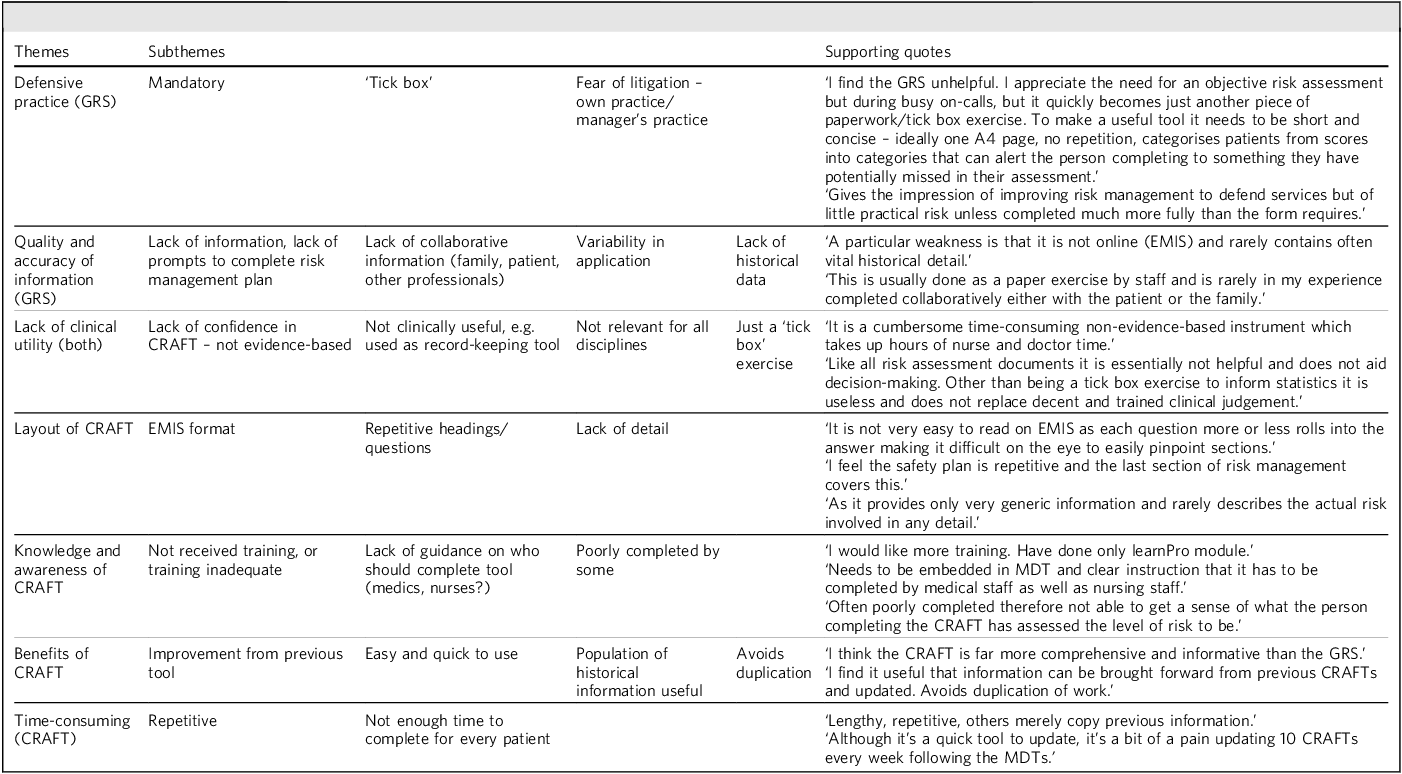
Nursing staff were also generally more optimistic about the tool compared with medical staff; 84.4% of nursing staff reported that the GRS aided clinical decision-making, whereas only 22.6% of medical staff did so. Almost half of nursing staff respondents believed that the CRAFT aided clinical decision-making, compared with only 24.6% of medical staff. Medical staff spent the least amount of time completing the GRS, with 28.8% spending less than 5 min completing; by comparison, 93.6% of nursing staff spent more than 5 min completing it. Medical staff also spent the least amount of time completing the CRAFT; 12.3% spent less than 5 min completing, whereas 98.9% of nursing staff spent more than 5 min. Analysis of free-text comments revealed several themes; these are detailed in Table 4. ‘Lack of clinical utility’ was a strong theme across both tools.
Main themes and subthemes from open-text question: ‘Are there any other comments you would like to make about your experience of using the GRS/CRAFT?’ (n = 91)

Table 4 Long description
A table with five columns and eight rows detailing themes and subthemes from open-text questions about the GRS and CRAFT tools. The columns are labeled Themes, Subthemes, Supporting quotes, and two additional columns for specific themes. Row 1: Themes, Defensive practice (GRS), Subthemes, Mandatory, Supporting quotes, ‘Tick box’, Fear of litigation - own practice/manager’s practice. Row 2: Themes, Defensive practice (GRS), Subthemes, ‘Tick box’, Supporting quotes, ‘I find the GRS unhelpful. I appreciate the need for an objective risk assessment but during busy on-calls, but it quickly becomes just another piece of paperwork/tick box exercise. To make a useful tool it needs to be short and concise - ideally one A4 page, no repetition, categorises patients from scores into categories that can alert the person completing to something they have potentially missed in their assessment. Gives the impression of improving risk management to defend services if done of little practical risk unless completed much more fully than the form requires.’. Row 3: Themes, Quality and accuracy of information (GRS), Subthemes, Lack of information, lack of prompts to complete risk management plan, Supporting quotes, Lack of collaborative information (family, patient, other professionals). Row 4: Themes, Quality and accuracy of information (GRS), Subthemes, Lack of collaborative information (family, patient, other professionals), Supporting quotes, Variability in application, Lack of historical data, ‘A particular weakness is that it is not online (EMIS) and rarely contains often vital historical detail. This is usually done as a paper exercise by staff and is rarely in my experience completed collaboratively either with the patient or the family.’. Row 5: Themes, Lack of clinical utility (both), Subthemes, Lack of confidence in CRAFT - not evidence-based, Supporting quotes, Not clinically useful, e.g. used as record-keeping tool, Not relevant for all disciplines, Just a ‘tick box’ exercise, ‘It is a cumbersome time-consuming non-evidence-based instrument which takes up hours of nurse and doctor time. Like all risk assessment documents it is essentially not helpful and does not aid decision-making. Other than being a tick box exercise to inform statistics it is useless and does not replace decent and trained clinical judgement.’. Row 6: Themes, Layout of CRAFT, Subthemes, EMIS format, Supporting quotes, Repetitive headings/questions, Lack of detail, ‘It is not very easy to read on EMIS as each question rolls in to the answer making it difficult on the eye to easily pinpoint sections. I feel the safety plan is repetitive and the last section of risk management covers this. As it provides only very generic information and rarely describes the actual risk involved in any detail.’. Row 7: Themes, Knowledge and awareness of CRAFT, Subthemes, Not received training, or training inadequate, Supporting quotes, Lack of guidance on who should complete tool (medics, nurses?), Poorly completed by some, ‘I would like more training. Have done only learnPro module. Needs to be embedded in MDT and clear instruction that it has to be completed by medical staff as well as nursing staff. Often poorly completed therefore not able to get a sense of what the person completing the CRAFT has assessed the level of risk to be.’. Row 8: Themes, Benefits of CRAFT, Subthemes, Improvement from previous tool, Supporting quotes, Easy and quick to use, Population of historical information useful, Avoids duplication, ‘I think the CRAFT is far more comprehensive and informative than the GRS. I find it useful that information can be brought forward from previous CRAFTs and updated. Avoids duplication of work.’. Row 9: Themes, Time consuming (CRAFT), Subthemes, Repetitive, Supporting quotes, Not enough time to complete for every patient, ‘Lengthy, repetitive, others merely copy previous information. Although it’s a quick tool to update, it’s a bit of a pain updating 10 CRAFTs every week following the MOTs.’
GRS, Glasgow Risk Screen; CRAFT, Clinical Risk Assessment Framework for Teams; MDT, multidisciplinary team.
Observations of team meetings
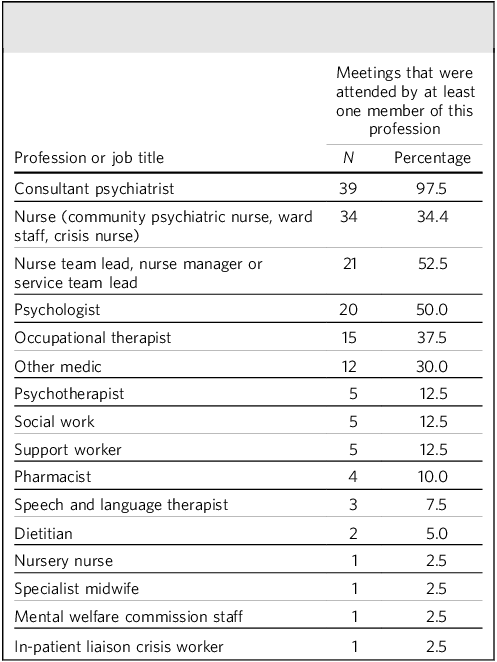
Observations took place at two time points: 24 months and 36 months following the implementation of the CRAFT. Data were gathered from 40 meetings across 11 different specialties, including general adult, addictions, older adults, learning disabilities, crisis, perinatal, eating disorders, forensic learning disabilities, forensic mental health, psychotherapy and rehabilitation. Members of various professions attended the meetings, with representatives from psychiatry and nursing present at the majority of meetings observed (Table 5). As findings were consistent across both time points, data were combined for analysis.
Observations of team meetings: professional groups in attendance

Table 5 Long description
A table titled ‘Meetings that were attended by at least one member of this profession’ with two columns: ‘Profession or job title’ and ‘Meetings that were attended by at least one member of this profession’. The second column is further divided into ‘N’ and ‘Percentage’. The table lists 16 different professions or job titles and their respective meeting attendance numbers and percentages. The professions include Consultant psychiatrist, Nurse, Nurse team lead, Psychologist, Occupational therapist, Other medic, Psychotherapist, Social work, Support worker, Pharmacist, Speech and language therapist, Dietitian, Nursery nurse, Specialist midwife, Mental welfare commission staff, and In-patient liaison crisis worker. The Consultant psychiatrist has the highest attendance with 39 meetings and 97.5 percent, while the Nursery nurse, Specialist midwife, Mental welfare commission staff, and In-patient liaison crisis worker each have the lowest attendance with 1 meeting and 2.5 percent.
Free-text analysis showed that the most commonly discussed risks in team meetings included suicide/self-harm, mental health concerns (e.g. relapse, depression), harm to others, physical health, cognitive-related safety risks, non-engagement and social disadvantage. Less frequent topics included domestic violence, medication side effects, absconding and criminal justice involvement. Similar risks were noted at both observation time points.
Risk was discussed in 39 of 40 meetings, with decisions made in 37. In most cases (n = 23), multiple members of the MDT initiated the discussion. Typically, the Chair reviewed a patient list, prompting team members to present cases. For eight of the meeting observations recorded, the psychiatrist initiated the discussion around risk; for six meetings, it was nursing staff who initiated the conversation. For the remaining two meetings, the psychiatrist or psychologist and psychiatrist/social worker initiated discussions about risk.
Disagreements about decision-making occurred in 11 of 40 meetings. In three cases, these were unresolved and deferred to a later date. In two meetings, the consultant psychiatrist made the final decision, and in one meeting the decision of the lead nurse was accepted. Other disagreements were resolved through further discussion within the meeting and discussion of details (e.g. a focus on referral information), and pre-agreed care plans were referred to. In one meeting, the disagreement involved a carer, and the MDT made the final decision, explaining their reasons for this to the carer.
The CRAFT was mentioned in 17 of the meetings observed. Discussion of the CRAFT most commonly involved team members being asked to complete the CRAFT or its being noted that they had updated or completed the CRAFT (n = 14). In two meetings, the CRAFT was used to review risk and ensure nothing had been missed, and in one meeting it was shared as part of a patient discussion.
The CRAFT was used to inform decision-making in two meetings. In one, the risk of aggressive behaviour noted in the CRAFT was highlighted and discussed to inform patient movement between services. In another meeting, the CRAFT was used to reassure staff that a patient did not have a risk of falls. In one meeting, a referral was made to social work as a result of the CRAFT. The remaining 38 meetings did not discuss the CRAFT in relation to any referrals being made.
Various types of information were accessed when decisions related to risk were made. These types of information included verbal updates from the MDT and/or social workers; reference to nursing notes or blood test results; SBAR (situation, background, assessment and recommendation) and risk assessments; and discussion of details of general practitioner referrals. Healthcare and social care record-keeping systems such as EMIS, Care First and Clinical Portal were also used. Information from patients and carers was sometimes referred to; however, patients and carers did not attend the majority of meetings observed.
Datix incidents
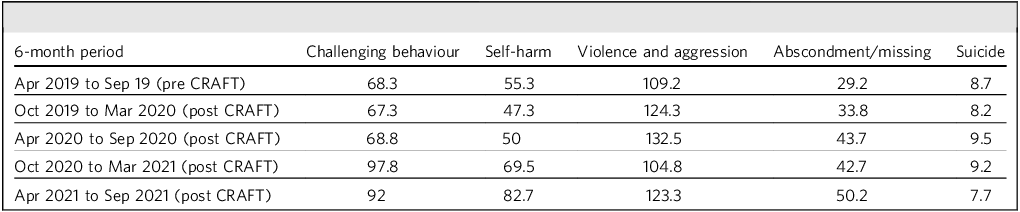
As shown in Table 6, there was no reduction in the average number of Datix incidents from any category after implementation of the CRAFT. Numbers of incidents of violence and aggression and suicide remained consistent, whereas the other categories showed an increase over time.
Average numbers of Datix incidents before and after CRAFT implementation

Table 6 Long description
A table comparing average numbers of Datix incidents across different categories over multiple 6-month periods. The table has 5 rows and 6 columns. The columns are labeled as follows: 6-month period, Challenging behaviour, Self-harm, Violence and aggression, Abscondment/missing, Suicide. The rows are labeled with specific 6-month periods and contain the following values: Row 1: Apr 2019 to Sep 19 (pre-CRAFT), 68.3, 55.3, 109.2, 29.2, 8.7. Row 2: Oct 2019 to Mar 2020 (post-CRAFT), 67.3, 47.3, 124.3, 33.8, 8.2. Row 3: Apr 2020 to Sep 2020 (post-CRAFT), 68.8, 50, 132.5, 43.7, 9.5. Row 4: Oct 2020 to Mar 2021 (post-CRAFT), 97.8, 69.5, 104.8, 42.7, 9.2. Row 5: Apr 2021 to Sep 2021 (post-CRAFT), 92, 82.7, 123.3, 50.2, 7.7.
CRAFT, Clinical Risk Assessment Framework for Teams.
Case-file audit
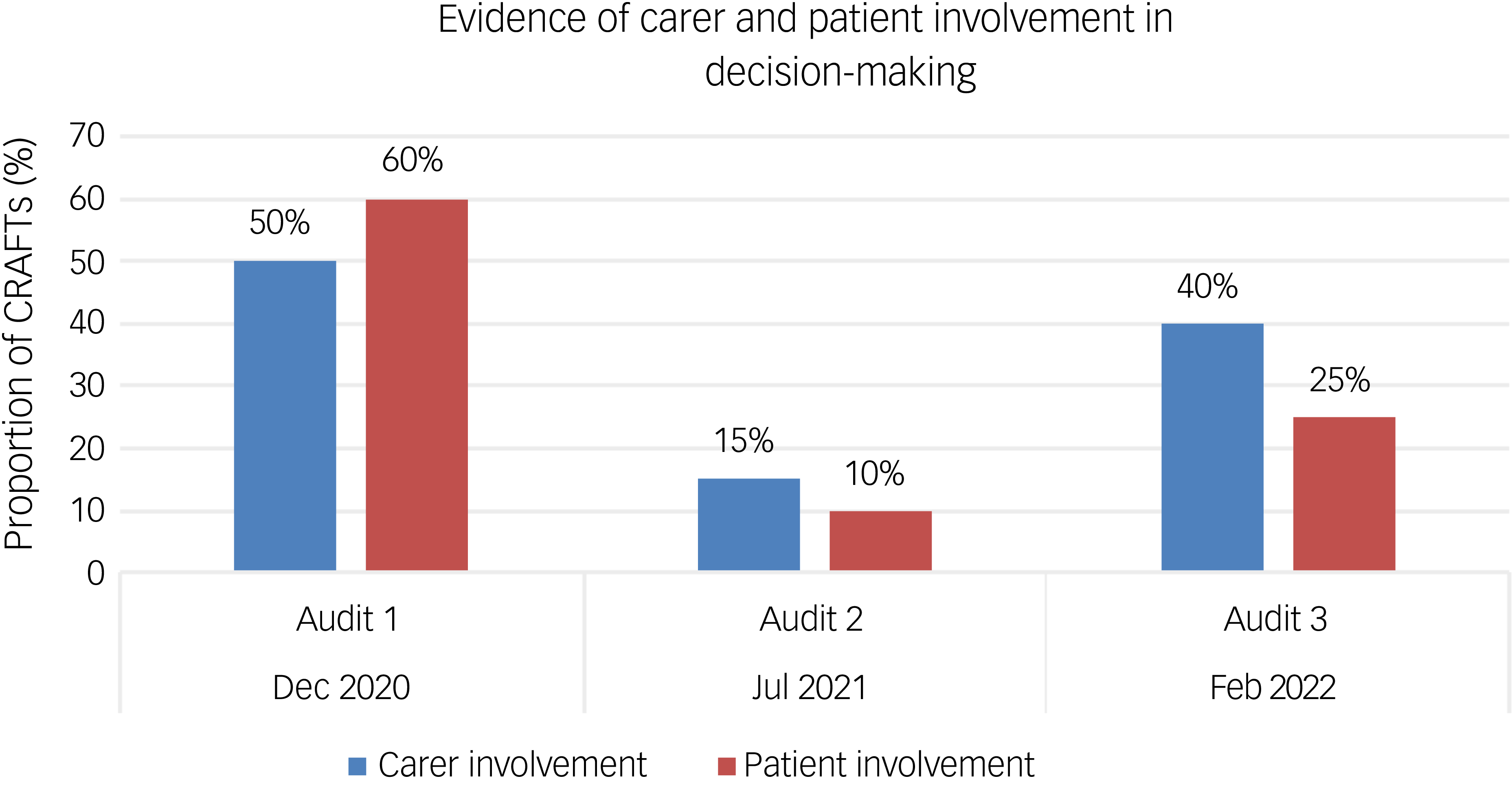
The case-file audit showed that the majority of patients had a CRAFT completed about them, ranging from 80% at time point 1 to 100% at time points 2 and 3. The CRAFT was completed largely during MDT reviews on admission, ranging from 40% at time point 1 to 55% at time point 2 and 80% at time point 3. There was little evidence that the CRAFT was completed after incidents or at key risk points such as discharge. Of the 60 CRAFTs audited across the 3 time points, 1 was completed post incident and 5 were completed at discharge. There was evidence from the case files that risks were identified and addressed by clinical teams. Nursing notes showed this at 90% in the audit at time point 1, then 100% at time points 2 and 3. Medical notes also showed this at 90% in the first audit followed by 100 and 90% in the subsequent audits. In addition, the audit showed that there was a lack of patient and carer involvement in decision-making (Fig. 2).
Proportion of CRAFTs with evidence of carer and patient involvement in decision-making at three time points.

Focus groups: carers
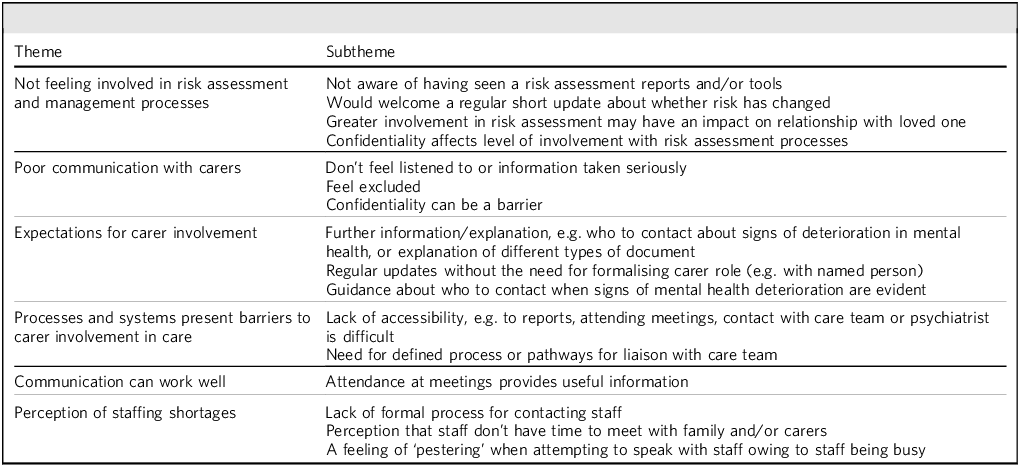
A total of ten carers attended across two focus groups. Six main themes emerged during data analysis: not feeling involved in risk assessment and management processes, poor communication with carers, expectations for carer involvement, processes and systems presenting barriers to carer involvement in care, communication can work well, and perception of staffing shortages. The main themes and subthemes are shown in Table 7.
Themes and subthemes from carer focus groups

Table 7 Long description
A table with two columns and six rows. The first column lists themes, and the second column lists corresponding subthemes. The themes are: Not feeling involved in risk assessment and management processes, Poor communication with carers, Expectations for carer involvement, Processes and systems present barriers to carer involvement in care, Communication can work well, and Perception of staffing shortages. The subthemes include points like not being aware of risk assessment reports, feeling excluded, needing further information, lack of accessibility, and perception of staff shortages.
Focus groups: staff
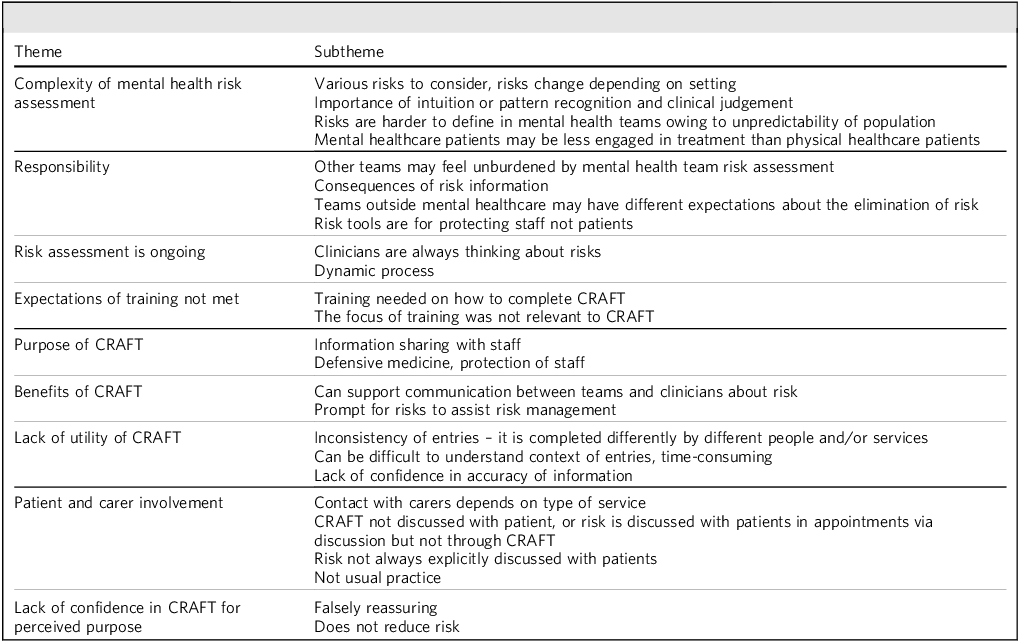
A total of 14 staff members attended across 2 focus groups. Professions included nursing (n = 6), psychology (n = 1) and psychiatry (n = 7). Nine main themes emerged from the data analysis: complexity of mental health risk assessment, responsibility, ongoing risk assessment, unmet expectations of training, purpose of CRAFT, benefits of CRAFT, lack of utility of CRAFT, patient and carer involvement, and lack of confidence in CRAFT for the perceived purpose. The main themes and subthemes are shown in Table 8.
Themes and subthemes from staff focus groups

Table 8 Long description
A table with two columns: Theme and Subtheme. The table has nine rows, each representing a different theme and its corresponding subthemes. Row 1: Theme is Complexity of mental health risk assessment. Subthemes are Various risks to consider, risks change depending on setting, Importance of intuition or pattern recognition and clinical judgement, Risks are harder to define in mental health teams owing to unpredictability of population, Mental healthcare patients may be less engaged in treatment than physical healthcare patients. Row 2: Theme is Responsibility. Subthemes are Other teams may feel unburdened by mental health team risk assessment, Consequences of risk information, Teams outside mental healthcare may have different expectations about the elimination of risk, Risk tools are for protecting staff not patients. Row 3: Theme is Risk assessment is ongoing. Subthemes are Clinicians are always thinking about risks, Dynamic process. Row 4: Theme is Expectations of training not met. Subthemes are Training needed on how to complete CRAFT, The focus of training was not relevant to CRAFT. Row 5: Theme is Purpose of CRAFT. Subthemes are Information sharing with staff, Defensive medicine, protection of staff. Row 6: Theme is Benefits of CRAFT. Subthemes are Can support communication between teams and clinicians about risk, Prompt for risks to assist risk management. Row 7: Theme is Lack of utility of CRAFT. Subthemes are Inconsistency of entries – it is completed differently by different people and/or services, Can be difficult to understand context of entries, time-consuming, Lack of confidence in accuracy of information. Row 8: Theme is Patient and carer involvement. Subthemes are Contact with carers depends on type of service, CRAFT not discussed with patient, or risk is discussed with patients in appointments via discussion but not through CRAFT, Risk not always explicitly discussed with patients, Not usual practice. Row 9: Theme is Lack of confidence in CRAFT for perceived purpose. Subthemes are Falsely reassuring, Does not reduce risk.
CRAFT, Clinical Risk Assessment Framework for Teams.
Discussion
This was a large mixed-methods study in a health authority that is responsible for the care of 1.3 million people and covers a wide range of settings from remote rural areas to urban environments. It includes some of Scotland’s most affluent and most deprived areas; this increased our confidence that the results would be generalisable to other health authorities. Direct observations of clinical teams and a review of case notes demonstrated that clinical teams were assessing and discussing risk, with 39 of 40 team meetings discussing risk and 37 of 40 making decisions directly in response to risk. However, the CRAFT risk tool was not widely referred to as part of this decision-making; this took place in only two meetings. When the CRAFT was discussed, it was most commonly to prompt staff members to update the tool.
This was echoed in the staff focus groups, with key themes emerging on the dynamic and complex nature of risk assessment but questioning the evidence base of the tool and suggesting that it was a tool for defensive medicine. Free-text comments from the staff surveys further supported this, with themes emerging around a lack of clinical utility of risk tools, a lack of time to complete them and inadequate training with respect to the tool. The staff survey also highlighted this, with only 5.3% of medical staff consulting the CRAFT at every patient contact, and 23.9% of nursing staff stating that they used the CRAFT at every contact with patients. For example, it was noted by one respondent in the staff survey ‘Like all risk assessment documents it is essentially not helpful and does not aid decision-making. Other than being a tick box exercise to inform statistics it is useless and does not replace decent and trained clinical judgement’. These results are consistent with those of previous studies that found that brief risk assessment tools were not routinely used to support decision-making around risk management. Reference Carroll12,Reference Higgins, Watts, Bindman, Slade and Thornicroft13,Reference Stein14
In addition, key themes across all data points were a lack of consultation of patients and carers when completing the risk tool, with only 46% of respondents stating they consulted the patient ‘most of the time’ or ‘always’ when completing the tool, and only 25% of staff saying they would consult family or carers ‘most of the time’ or ‘always’. This finding was consistent with a recent study reporting that only 33% of patients were aware of a risk tool being used in their meetings with care teams and that 44% of patients felt the process was impersonal and tended to disregard their feelings. Reference Graney, Hunt, Quinlivan, Rodway, Turnbull and Gianatsi32 The authors also reported a strong theme of frustration from carers about lack of involvement in support plans and safety planning. Similarly, in the current study, themes emerging from the carers’ focus groups highlighted feelings of exclusion from the risk assessment process, with the majority reporting that they had neither seen nor were aware of a risk assessment report or tool being used. Carers expressed a desire for a regular short update about whether risk had changed for their loved one. Participants reported limited communication from professionals and identified several barriers that hindered their involvement in decision-making, including a lack of accessible reports, meetings and regular contact with the care team. They also identified a need for a clear pathway for liaison with the care team.
Unsurprisingly Datix data did not show a significant reduction in incidents, whether self-harm, suicide or violence, following the introduction of the CRAFT risk tool. However, these data should be interpreted with considerable caution, as the period from March 2020 onwards covered significant changes to mental health services in response to the COVID pandemic, with corresponding increases in acuity of patients. Reference Ramirez, Rufino, Rech, Poa and Patriquin33 For example, many ‘non-essential’ services were paused or reduced, with crisis care and high-risk patients being prioritised. Reference Liberati, Richards, Parker, Willars and Scott34 Although mental health services experienced a significant decrease in presentations during the early stages of the pandemic, those who did access services were often more severely unwell. Reference Smith, Harcourt, Hoang, Lemanska, Elliot and Morbey35
Direct case-note audits suggested that the risk tool may have been used to assess risk a little more than the staff survey suggested. A CRAFT risk tool was completed for all patients, with documented evidence of this being used to support key decisions in around 50–55% of case files. However, as suggested by our staff surveys and focus groups, this may simply reflect clinical staff completing the tool because it is mandated by policy rather than because it is truly informing decisions around risk.
The results suggested that staff felt they had received inadequate training on how to complete the CRAFT risk tool. This finding was consistent with a previous study in which staff viewed ongoing training as necessary for supporting confidence in completing tools and extracting relevant information. Reference Graney, Hunt, Quinlivan, Rodway, Turnbull and Gianatsi32 The importance of training in suicide risk assessment was also highlighted in a systematic review of how suicide risk assessments are conducted and experienced by staff and patients. Reference Fedorowicz, Dempsey, Ellis, Phillips and Gidlow16 There was a lack of risk assessment training, including for practitioners who had frequent contact with patients experiencing suicidality. One study reviewed reported that 76% of surveyed NHS trusts offered training to junior doctors on suicide risk assessment, and half of the trusts provided this training to community psychiatric staff. Reference Smith, Harcourt, Hoang, Lemanska, Elliot and Morbey35 The authors noted that training on these risk assessments was not always mandatory, which could result in low attendance rates owing to competing demands. However, it is unlikely that training alone is enough to address the wider concerns that staff have about the utility of risk tools and the lack of perceived value.
Strengths and limitations
A key strength of this study was the scale and diversity of the health board involved. The study was based in one of the largest health authorities in the UK, covering a varied geographical area from inner city to rural settings. Participants from a wide range of mental health disciplines and specialties took part in the research, including respondents from general adult, psychotherapy and forensic services. This allowed the research team to gather a rich set of data using a mixed-methods approach.
The post-implementation staff survey had a low response rate (10%), which may limit the generalisability of the findings. However, the settings and professional groups of the survey respondents reflected those of the wider health board workforce, suggesting that the sample was broadly representative. The survey results were also triangulated with data from observations, case-note audits, focus groups and Datix reports; this strengthened our confidence in the overall conclusions. Further limitations include the fact that the study took place over the COVID-19 pandemic, so although it was originally intended to be completed in 3 years, pandemic restrictions resulted in delays in completion of key aspects of the study, including direct observations of team meetings. Focus groups were also a challenge, with 14 staff members and 10 carers recruited; however, we were confident that data saturation was achieved. We were also unable to adequately recruit to patient focus groups; this represented a significant limitation to the triangulation of the data and occurred despite widespread advertising of the research across the health board area, including directly approaching several patient organisations. It should also be noted that the observations of team meetings may have been subject to the ‘Hawthorne effect’, by which participants know that they are being studied and so the observer may have some impact on what is discussed at the meeting. Reference Davies, Amos and Appleby36 However, the researchers accepted that if risk was discussed in greater detail or at all owing to the presence of an observer, this was also a good outcome for practice. We also acknowledge that there may have been discussions outside the formal meeting that the observer would not be aware of and that may have influenced decision-making.
Clinical implications
There are growing concerns about the use of risk tools, with the literature citing lack of predictive validity and querying whether suicide in particular can be predicted or prevented in the current research landscape, Reference Davies, Amos and Appleby36,Reference McCambridge, Witton and Elbourne37 and the present study found that the CRAFT was not widely used to inform clinical decision-making or communicate risks and their management with patients or families, and was not considered be helpful by many clinicians. This places health authorities in a difficult position: on paper the CRAFT risk tool is a formulation-driven tool, as recommended by the National Institute for Health and Care Excellence 17 (the tool has simply turned the definition of formulation into a series of questions) and could therefore be viewed as being at the ‘cutting edge’ of risk management; however, as our study has demonstrated, that is not how it is perceived by busy clinicians working in stretched teams.
So how to navigate this? The risk tool could become a much more embedded part of practice. Electronic templates could be updated to integrate the CRAFT as part of the general practitioner letter and the MDT template, which would improve its completion rates and address concerns of regulatory bodies exploring adverse events; however, this may not change the perception of clinical utility or affect whether risk management plans are shared or even co-produced with patients more readily.
Or could risk assessment be abandoned altogether? Reference Silva38 There is a move to develop shared formulations with patients with agreed management plans. If we abandon assessments or replace them with an alternative, some documentation, however brief, will still be required to inform patients, families and other professionals of what to do when a risky situation emerges.
There is a clear need for further research that explores what those involved in managing risk in mental health services would find most helpful. This should include examination of how such insights could be translated into a meaningful intervention that supports a shared understanding of how to navigate the risky situations patients encounter. The aim would be to provide clear guidance on accessing support and implementing care in a format that can be developed quickly within the constraints of settings such as out-patient clinics.
About the authors
Heather Tolland is a researcher at the Directorate of Forensic Mental Health & Learning Disabilities, NHS Greater Glasgow & Clyde, UK. Emma Drysdale is a consultant clinical psychologist at the Directorate of Forensic Mental Health & Learning Disabilities, Greater Glasgow & Clyde, UK. Paula McMahon is a consultant psychiatrist in Addictions Psychiatry, Greater Glasgow & Clyde, UK. Alan Mackenzie is a consultant forensic psychiatrist at the Directorate of Forensic Mental Health & Learning Disabilities, Greater Glasgow & Clyde, UK. Fiona Mohammad is a consultant forensic psychiatrist at NHS Lanarkshire, UK. Scott Rae is a consultant psychiatrist at Esteem, NHS Greater Glasgow & Clyde, UK. Tonya Sheridan is a consultant psychiatrist in General Adult Psychiatry, NHS Greater Glasgow & Clyde, UK. Hollie Walker is a consultant psychiatrist in Intensive Psychiatric Care, NHS Greater Glasgow and Clyde, UK. Pamela Swift is a consultant psychiatrist in General Adult Psychiatry at NHS Ayrshire & Arran, UK. Kay Sunderland is a consultant psychiatrist in General Adult Psychiatry at NHS Greater Glasgow & Clyde, UK. Brian Gillatt, the Chief Investigator of this study, is a consultant forensic psychiatrist at the Directorate of Forensic Mental Health & Learning Disabilities, Greater Glasgow & Clyde, UK.
Supplementary material
The supplementary material is available online at https://doi.org/10.1192/bjb.2026.10283.
Data availability
The data that support the findings of this study are available from the corresponding author, B.G., upon reasonable request.
Acknowledgements
We thank Tracey McKee for support with literature reviews we used Microsoft Copilot to reduce the word count for the Background section of the article. This was accessed via an NHS Microsoft Office 365 account.
Author contributions
All authors were involved in data collection activities and reviewed and edited manuscript drafts.
Funding
This research received no specific grant from any funding agency, commercial or not-for-profit sectors.
Declaration of interest
None.


 Open access


eLetters
No eLetters have been published for this article.