




No CrossRef data available.
Article contents
Phylogeny, evolution and host–parasite relationships of the order Proteocephalidea (Eucestoda) as revealed by combined analysis and secondary structure characters
Published online by Cambridge University Press: 02 November 2004
Abstract
In a manner similar to many other groups of organisms, the tapeworm order Proteocephalidea poses a difficult phylogenetic problem if treated on the basis of single-gene analysis. Since the biogeography and host distribution of proteocephalideans make these tapeworms a potentially interesting model for evolutionary and co-evolutionary studies, we tried to resolve their phylogenetic relationships by applying a multi-gene approach. The ITS2 sequences and V4 hypervariable loop of 18S rRNA were obtained for 43 and 35 proteocephalidean taxa, respectively, and combined with other sequences available in the GenBank. The phylogenetic analysis of the combined DNA set was confronted with characters derived from ITS2 secondary structures. Using this approach, a species-rich Neotropical lineage of proteocephalideans could be reliably resolved. The phylogenetic relationships within this group show a high degree of phylogeny-independent host distribution. The reconstruction of ITS2 secondary structure revealed a universal 4-domain arrangement, which is conserved across a wide range of Neodermata. Several motifs of the secondary structure could be mapped to the phylogenetic tree as possible clade synapomorphies.
Keywords
Information
- Type
- Research Article
- Information
- Copyright
- 2005 Cambridge University Press
INTRODUCTION
Proteocephalidean tapeworms have been recognized as an evolutionarilly interesting but phylogenetically problematical group (Zehnder & Mariaux, 1999; škeříková, Hypša & Scholz, 2001; Scholz & de Chambrier, 2003; de Chambrier et al. 2004). This widespread, cosmopolitan order includes almost 400 species described from a wide range of hosts. To date, they have been found in freshwater fish, amphibians and reptiles. Recently, one species has even been described from a mammalian host, the black-eared opossum in Mexico (Cañeda-Guzmán, de Chambrier & Scholz, 2001). The majority of proteocephalideans, however, occur in the Neotropical and Holarctic regions and are parasites of teleosts, mainly siluriform fishes (Yamaguti, 1959; Freze, 1965; Schmidt, 1986; Rego, 1994).
The worldwide distribution and broad host range, together with the narrow host specificity of individual species (de Chambrier & Vaucher, 1997, 1999; Zehnder et al. 2000; de Chambrier et al. 2004), poses the question of whether these features display any phylogenetic patterns, making the proteocephalideans a potentially interesting model for historical biogeography and host–parasite relationships studies. However, initial molecular studies revealed that the current morphology-based taxonomy, relying mainly on the position of the reproductive system with respect to the longitudinal musculature (Schmidt, 1986; Rego, 1994), did not reflect natural phylogenetic relationships, and thus cannot be used as the basis for evolutionary studies. Most of the proteocephalidean taxa, from families to genera, including the largest genus Proteocephalus Weinland, 1858, were shown to represent artificial assemblages of unrelated species (Zehnder & Mariaux, 1999; Kodedová et al. 2000; de Chambrier et al. 2004). In fact, members of the morphology-based taxa were scattered across whole proteocephalidean phylogenetic trees in such a ‘random’ manner that many of the morphological/anatomical characters have to be considered highly plastic and phylogenetically unreliable.
Until now, several attempts have been made to resolve the phylogeny of proteocephalideans and reconstruct their evolution on the basis of molecular data (Zehnder & Mariaux, 1999; škeříková et al. 2001; de Chambrier et al. 2004). The most complex studies have been performed on 16S and 28S ribosomal DNAs (Zehnder & Mariaux, 1999; de Chambrier et al. 2004). However, despite considerable sampling and sequencing efforts, only a few components of proteocephalidean phylogeny have been reliably established, the most robust being monophyly and relationships of Palaearctic Proteocephalus species (Zehnder & Mariaux, 1999; de Chambrier et al. 2004). The rest of the order, particularly the rich Neotropical fauna, remains a phylogenetically difficult and mostly unresolved problem. As a consequence, the evolution of many biological features, such as geographical distribution and host–parasite relationships, could be investigated only to a limited degree.
In our previous analysis, it has been demonstrated that in the Palaearctic branch of Proteocephalus, parasitizing several orders of teleost fishes, speciation was decoupled from the phylogeny of their dominant hosts (škeříková et al. 2001). To determine whether the same phylogeny-independent distribution applies to the Neotropical, mostly catfish-specific species will require a reliable phylogeny of this group. Similarly, to assess the geographical origin of proteocephalideans and their probable original host group, more data on the most basal taxa and their phylogeny are needed. The studies concentrating on selections of different genes and/or an increase of taxa sampling, although providing new information, did not bring decisive progress and insight into the proteocephalidean phylogeny (Zehnder & Mariaux, 1999; de Chambrier et al. 2004). One possible alternative approach to such phylogenetic problems rests in the combination of various loci with different rates of evolution. A few studies have shown that further increase of phylogenetic resolution can be achieved by inclusion of motifs of typical secondary structures (e.g., Oliverio, Cervelli & Mariottini, 2002; Gottschling & Plötner, 2004). In this study, we sequence the highly variable V4 region of the 18S RNA gene and the whole ITS-2. These sequences were then combined with other two available genes, 16S and 28S rRNAs. As an additional source of information, we explore the secondary structures of the ITS-2 sequences. Based on these data, we determine reliable monophyletic groups, identify their molecular synapomorphies and discuss the relevance of the new phylogenetic data for proteocephalidean evolution.
MATERIALS AND METHODS
Unless otherwise stated, total genomic DNA was provided by Alain de Chambrier and Jean Mariaux from the Natural History Museum, Geneva. For the rest of the specimens, the DNA was extracted using the standard procedure of the DNeasy Tissue Kit (Qiagen, Sigma, St Louis, Missouri). The following proteocephalidean species were sequenced for this study.
Acanthotaenia sp. (Proteocephalidea: Acanthotaeniinae) ex Varanus exanthematicus (Squamata: Varanidae), Ghana, 1998 (collected by D. Modrỳ and T. Scholz).
Ageneiella brevifilisde Chambrier et Vaucher, 1999 (Proteocephalidea: Monticelliinae) ex Ageneiosus brevifilis (Siluriformes: Ageneiosidae), Río Paraguay, San Antonio, Paraguay, 3.11.1995.
Amphoteromorphus parkamoo Woodland, 1935 (Proteocephalidea: Zygobothriinae) ex Paulicea luetkeni (Siluriformes: Pimelodidae), Itacoatiara, Amazonas Province, Brazil, 11.10.1995.
Amphoteromorphus piraeeba Woodland, 1934 (Proteocephalidea: Zygobothriinae) ex Brachyplatystoma filamentosum (Siluriformes: Pimelodidae), Itacoatiara, Amazonas Province, Brazil, 7.10.1995.
Choanoscolex abscisus (Riggenbach, 1896) (Proteocephalidea: Monticelliinae) ex Pseudoplatystoma coruscans (Siluriformes: Pimelodidae), Río Paraguay, San Antonio, Paraguay, 14.10.1989.
Pseudocrepidobothrium eirasi (Rego et de Chambrier, 1995) (Proteocephalidea: Proteocephalinae) ex Phractocephalus hemioliopterus (Siluriformes: Pimelodidae), Itacoatiara, Amazonas Province, Brazil, 17.10.1995.
Endorchis piraeeba Woodland, 1934 (Proteocephalidea: Endorchiinae) ex Brachyplatystoma filamentosum (Siluriformes: Pimelodidae), Itacoatiara, Amazonas Province, Brazil, 7.10.1995.
Ephedrocephalus microcephalus Diesing, 1850 (Proteocephalidea: Ephedrocephalinae) ex Phractocephalus hemioliopterus (Siluriformes: Pimelodidae), Itacoatiara, Amazonas Province, Brazil, 5.10.1995.
Gangesia parasiluri Yamaguti, 1934 (Proteocephalidea: Gangesiinae) ex Silurus asotus (Siluriformes: Siluridae), Lake Suwa, Japan 28.6.1996 (collected by T. Shimazu).
Gibsoniela meursaulti de Chambrier et Vaucher, 1999 (Proteocephalidea: Zygobothriinae) ex Ageneiosus brevifilis (Siluriformes: Ageneiosidae), San Antonio, Paraguay, 3.11.1995.
Glanitaenia osculata (Goeze, 1782) (Proteocephalidea: Proteocephalinae) ex Silurus glanis (Siluriformes: Siluridae), Orlík reservoir, štĕdronín, Czech Republic, 12.9.1996 (collected by T. Scholz).
Goezeella siluri Fuhrmann, 1916 (Proteocephalidea: Monticelliinae) ex Pinirampus pirinampu (Siluriformes: Pimelodidae), Itacoatiara, Province Amazonas, Brazil, 2.10.1995.
Megathylacus brooksi Pavanelli et Rego, 1985 (Proteocephalidea: Corallobothriinae) ex Paulicea luetkeni (Siluriformes: Pimelodidae), Itacoatiara, Amazonas Province, Brazil, 2.10.1995.
Myzophorus pirarara (Woodland, 1935) (Proteocephalidea: Endorchiinae) ex Phractocephalus hemioliopterus (Siluriformes: Pimelodidae), INVE 21998.
Nomimoscolex admonticellia (Woodland, 1935) (Proteocephalidea: Zygobothriinae) ex Pinirampus pirinampu (Siluriformes: Pimelodidae), Itacoatiara, Amazonas Province, Brazil, 30.9.1995.
Nomimoscolex dorad (Woodland, 1935) (Proteocephalidea: Zygobothriinae) ex Brachyplatystoma flavicans (Siluriformes: Pimelodidae), Itacoatiara, Amazonas Province, Brazil, 11.10.1995.
Nomimoscolex lenha (Woodland, 1933) (Proteocephalidea: Zygobothriinae) ex Sorubimichthys planiceps (Siluriformes: Pimelodidae), Itacoatiara, Amazonas Province, Brazil, 2.10.1995.
Nomimoscolex lopesi Rego, 1989 (Proteocephalidea: Zygobothriinae) ex Pseudoplatystoma fasciatum (Siluriformes: Pimelodidae), San Antonio, Central Province, Paraguay, 6.11.1995.
Nomimoscolex piraeeba Woodland, 1934 (Proteocephalidea: Zygobothriinae) ex Brachyplatystoma filamentosum (Siluriformes: Pimelodidae), Itacoatiara, Amazonas Province, Brazil, 13.10.1995.
Nomimoscolex sudobim Woodland, 1935 (Proteocephalidea: Zygobothriinae) ex Pseudoplatystoma fasciatum (Siluriformes: Pimelodidae), Itacoatiara, Amazonas Province, Brazil, 12.10.1995.
Nomimoscolex suspectus Zehnder, de Chambrier, Vaucher et Mariaux, 2000 (Proteocephalidea: Zygobothriinae) ex Brachyplatystoma vaillanti (Siluriformes: Pimelodidae), Itacoatiara, Amazonas Province, Brazil, 2.10.1995.
Ophiotaenia gallardi (Johnston, 1911) (Proteocephalidea: Proteocephalinae) ex Notechis scutatus (Reptilia: Elapidae), Melbourne, Australia, 12.6.1996.
Ophiotaenia grandis La Rue, 1911 (Proteocephalidea: Proteocephalinae) ex Agkistrodon piscivorus (Reptilia: Viperidae), Biloxi, Mississippi, U.S.A, 4.9.1997.
Ophiotaenia ophiodex Mettrick, 1960 (Proteocephalidea: Proteocephalinae) ex Causus maculatus (Reptilia: Viperidae), Ivory Coast, Africa, 6.7.1998.
Paraproteocephalus parasiluri (Zmeev, 1936) (Proteocephalidea: Corallobothriinae) ex Silurus asotus (Siluriformes: Siluridae), Lake Suwa, Nagano Prefecture, Japan, 28.6.1996 (collected by T. Shimazu).
Peltidocotyle lenha (Woodland, 1933) (Proteocephalidea: Peltidocotylinae) ex Sorubimichthys planiceps (Siluriformes: Pimelodidae), Itacoatiara, Amazonas Province, Brazil, 1995.
Proteocephalus ambloplitis (Leidy, 1887) (Proteocephalidea: Proteocephalinae) ex Lepomis macrochirus (Perciformes: Centrarchidae), Pearl River, Mississippi, The United States, 6.6.1996.
Proteocephalus brooksi García, Rodríguez et Pérez-Ponce de León, 1996 (Proteocephalidea: Proteocephalinae) ex Rhamdia guatemalensis (Siluriformes: Pimelodidae), Río San Juan, Tlacotalpan, Veracruz, Mexico, 25.9.2000 (collected by T. Scholz).
Proteocephalus cernuae Gmelin, 1790 (Proteocephalidea: Proteocephalinae) ex Gymnocephalus cernuus (Perciformes: Percidae), Koclirov Pond, South Bohemia, Czech Republic, 28.3.2003 (collected by T. Scholz).
Proteocephalus chamelensis Pérez-Ponce de León, Brooks et Berman, 1995 (Proteocephalidea: Proteocephalinae) ex Gobiomorus maculatus (Perciformes: Eleotridae), Cuitzmala River, Chamelá, Jalisco, Mexico, August 1993 (collected by T. Scholz).
Proteocephalus filicollis (Rudolphi, 1802) (Proteocephalidea: Proteocephalinae) ex Gasterosteus aculeatus (Gasterosteiformes: Gasterosteidae), Stirling, Scotland, UK, May 2000 (collected by T. Scholz).
Proteocephalus fluviatilis Bangham, 1925 (Proteocephalidea: Proteocephalinae) ex Micropterus salmoides (Perciformes: Centrarchidae), Lake Noiri, Shinano, Nagano Prefecture, Japan, 6.6.1999 (collected by T. Shimazu).
Proteocephalus gobiorum Dogiel et Bychowsky, 1939 (Proteocephalidea: Proteocephalinae) ex Pomatoschistus microps (Perciformes: Gobiidae), Gulf of Gdansk, Poland, 2001 (collected by L. Rolbiecki).
Proteocephalus hemioliopteri (Rego, 1984) (Proteocephalidea: Proteocephalinae) ex Phractocephalus hemioliopterus (Siluriformes: Pimelodidae), Itacoatiara, Amazonas Province, Brazil, 13.10.1995.
Proteocephalus longicollis Zeder, 1800 (Proteocephalidea: Proteocephalinae) ex Coregonus lavaretus (Salmoniformes: Coregonidae), Lake of Bienne, Switzerland, June 1996 (collected by T. Scholz).
Proteocephalus macrocephalus (Creplin, 1852) (Proteocephalidea: Proteocephalinae) ex Anguilla anguilla (Anguilliformes), Orlík reservoir, štědronín, Czech Republic, 3.10.1994 (collected by T. Scholz).
Proteocephalus midoriensis Shimazu, 1990 (Proteocephalidea: Proteocephalinae) ex Lefua echinogia (Cypriniformes: Cobitidae), Midori, Iiyama, Nagano Pref., Japan, 6.8.1998 (collected by T. Shimazu).
Proteocephalus pirarara (Woodland, 1935) (Proteocephalidea: Proteocephalinae) ex Phractocephalus hemioliopterus (Siluriformes: Pimelodidae), Itacoatiara, Amazonas Province, Brazil, 1.10.1995. (See the discussion on the synonymization of Proteocephalus pirarara and Myzophorus pirarara.)
Proteocephalus plecoglossi Yamaguti, 1934 (Proteocephalidea: Proteocephalinae) ex Plecoglossus altivelis (Osmeriformes: Plecoglossidae), Lake Biwa, Shiga Prefecture, Japan, 2.5.1995 (collected by T. Shimazu).
Proteocephalus singularis La Rue, 1911 (Proteocephalidea: Proteocephalinae) ex Atractosteus tropicus (Semionotifirmes: Lepisosteidae), Tabasquillo, Tabasco, Mexico, 27.4.2001 (collected by R. Baez-Vale).
Rudolphiella lobosa (Riggenbach, 1895) (Proteocephalidea: Rudolphiellinae) ex Megalonema platanum (Siluriformes: Pimelodidae), Río Parana, Itapua, Campichuelo, 12.12.1986.
Rudolphiella szidati de Pertierra et de Chambrier (Proteocephalidea: Rudolphiellinae) ex Luciopimelodus pati (Siluriformes: Pimelodidae), Río Paraná, Corrientes, Corrientes Province, 30.7.1997.
Silurotaenia siluri (Batch, 1786) (Proteocephalidea: Gangesiinae) ex Silurus glanis (Siluriformes: Siluridae), Orlík reservoir, Czech Republic, 13.5.1998 (collected by T. Scholz).
Spatulifer maringaensis Pavanelli et Rego, 1989 (Proteocephalidea: Monticelliinae) ex Sorubim lima (Siluriformes: Pimelodidae), Río Paraguay, San Antonio, Central Province, Paraguay, 14.10.1989.
Thaumasioscolex didelphidis Cañeda-Guzmán, de Chambrier et Scholz, 2001 (Proteocephalidea: Proteocephalinae) ex Didelphis marsupialis (Marsupialia: Didelphidae), Los Tuxtlas, Veracruz, Mexico, 21.5.1999 (collected by T. Scholz).
Zygobothrium megacephalum Diesing, 1850 (Proteocephalidea: Zygobothriinae) ex Phractocephalus hemioliopterus (Siluriformes: Pimelodidae), Itacoatiara, Amazonas Province, Brazil, 1.10.1995.
To amplify ITS-2 and the V4 region of 18S rDNA, the Proteo1/Proteo2, and 2880/ B- primer pairs were used (for details see škeříková et al. 2001; Scholz et al. 2003). The PCR program was as follows: 15 min at 95 °C (HotStarTaq DNA Polymerase, Qiagen, Sigma, St Louis, Missouri) followed by 30 cycles of 1 min denaturation at 94 °C, 1 min annealing at 60 °C, and 2 min extension at 72 °C; the final extension for 8 min at 72 °C and 15 min at 68 °C. The PCR products were cloned into pGEM-T Easy (Promega, Madison, Wisconsin, USA) and sequenced in both directions using T7 and SP6 primers. DNA sequencing was performed on the 310 ABI PRISM automated sequencer (PE-Biosystems, Forter City, California, USA) using the BigDye DNA sequencing kit (PE-Biosystems).
The obtained sequences were combined into a set with sequences for additional genes and taxa retrieved from GenBank. Two taxa, Mesocestoides corti (Cyclophyllidea) and a tetraphyllid tapeworm, were used as outgroups. A complete list of the species and sequences (with their Accession numbers) used in this study is provided in Table 1.

Since the analysis embraced a large taxonomic span and included sequences with various degrees of variability, we designed two kinds of matrices differing in the taxon composition and aligning procedure.
The ‘basic matrix’ was produced by applying 3 different sets of alignment parameters (gap opening penalty/gap extension penalty/ transition weight: 15/1/0.7,10/0.1/0.7, 20/1/0.7) on a complete set of taxa and genes included in this study (i.e. the sequences listed in Table 1). A few long, clearly autapomorphic and unequivocally identified insertions, were excluded from further alignment procedure and phylogenetic analysis. Since the global use of alignment parameters led to clear misalignments within the indel rich regions of ITS2, the following procedure was applied to achieve a more accurate alignment. The most conservative homologous regions were identified by help of secondary structure prediction (see below) and aligned manually using the Bioedit program (Hall, 1999). The variable areas between each pair of successive conservative regions were then individually aligned in ClustalX (Thompson et al. 1997) using the option ‘realign selected residue range’. This procedure was repeated for each of the three sets of parameters, resulting in 3 ‘basic matrices’.
The ‘Inner Neotropical matrix’ contained 18 obviously related Neotropical species, which shared closely related sequences and formed a well-supported monophyletic lineage in ‘basic matrices’ analyses. The matrices are available on the following address: www.paru.cas.cz/DOWNLOAD.
Phylogenetic analyses and calculation of nodal support (maximum parsimony – MP, maximum likelihood–ML, and bootstrap) were performed in PAUP*, version 4.0b10 (Swofford, 1998). To explore the robustness of the data without introducing too many subjective assumptions on the evolution of individual regions, we analysed the whole matrices under various sets of parameters, and searched for the stable elements of the resulted topologies. MP analyses were performed by heuristic search (TBR) with 30 replicates of random sequence addition under the assumptions of Tv/Ts ratio 1[ratio ]1, 1[ratio ]2, and 1[ratio ]3. Gaps were treated as missing data. Bootstrap support (1000 replicates) was calculated for Tv/Ts 1[ratio ]2. To avoid a misleading result due to an incorrect setting of parameters, we used two highly different models for the ML analysis: the default PAUP* and setting based on the more complex HKY85+G+I model with assumed Tv/Ts ratio of 1[ratio ]2. The presence of significant phylogenetic signal was tested by the PTP permutation test (10000 replications). To detect a possible saturation of substitutions, the transitions/transversions ratio in the matrices was calculated and plotted against sequence distances using the program DAMBE (Xia, 2000).
Predictions of ITS2 secondary structure were calculated using RNAstructure, version 3.71, retrieved from the web site of the Turner RNA biophysical chemistry group (http://rna.chem.rochester.edu/index.html). ‘Common structure’ was obtained by the synthesis of results from two different approaches. The first approach relied on calculations of thermodynamically optimal solutions for the entire ITS2 sequences across all taxa. The most frequent structure was then picked up and searched for in each single species by application of conservative constraints. The second approach started with separate folding of each variable region delimited by conservative borders; these fragments were assumed to represent the stem-loop structures, with conservative parts at their bases. The most frequent stem-loop domains were then used as constraints in other taxa. The secondary structures were exported as.ct files, and subsequently visualized and edited by RNAviz 2 program (De Rijk, Wuyts & de Wachter, 2003).
RESULTS
Sequences and alignments
Sequences of the variable V4 region of 18S rDNA and complete ITS-2 were obtained for 35 and 43 taxa, respectively (Table 1). The ITS-2 sequences varied considerably in length reaching from 614 bp in Myzophorus pirarara and Proteocephalus pirarara to 940 bp in Proteocephalus macrocephalus. Most of this variability was due to several large continuous insertions and deletions, often represented by microsatellite sequences. Apart from variable areas, some of which were extremely difficult to align, the ITS-2 also contained several almost constant regions. These conservative sequences could be unambiguously identified across all taxa, including the cyclophyllidean outgroup, and served as useful markers for alignment construction. In linearly displayed alignments, these regions were represented by 4 major sections distributed in an apparently random manner along the whole ITS-2 sequence. However, their location within the secondary structure shows that they are restricted to only 2 areas of the folded molecule, clearly being responsible for the stability of two stem-loop structures (Fig. 1). The V4 region of 18S rDNA sequences was considerably more conserved with a single length-variable fragment corresponding to the E23 domain (Wuyts et al. 2000). The concatenated matrix combining the ITS-2 and 18S rDNA sequences with the two additional 16S rDNA and 28rDNA loci provided 3527–3815 positions altogether (Table 2), dependent on the alignment parameters. Under the MP criterion, the complete matrix contained 1181–1206 parsimony informative characters. The range of sequence lengths and the partition of informative characters are shown in Table 2. The permutation test confirmed the presence of a significant phylogenetic signal (P=0·001). No saturation of transitions was detected when a number of substitutions was plotted against the sequence distances across the whole taxonomic span.

Fig. 1. Secondary structure prediction for ITS-2 sequences. The positions conserved across all taxa are printed in bold. The grey boxes without contours indicate the conserved helices. The closed grey boxes show tentative synapomorphies – their numbers refer to the groups shown in Fig. 3. Inset, domain I is shown with compensatory mutations observed in some taxa. Dashed line indicates the border of deletion found in Proteocephalus pirarara, Myzophorus pirarara, and P. hemioliopteri.

Secondary structure
A prediction of secondary structure was obtained for all ITS-2 sequences included in this study. The two alternative approaches converged into ‘common structure’. In most species, the common structure was identical to the thermodynamically optimal structure. In some cases, however, the common structure was present only as one of several suboptimal alternatives or not found at all, and thus had to be constrained. Since the highly conservative elements are present as constraints (e.g., domain I supported by the occurrence of compensatory mutations; Fig. 1), these ‘forced’ structures are well substantiated. In several cases, these constraint-based structures even led to a thermodynamically better solution. The common ITS-2 secondary structure was composed of 4 stem-loop domains (domains I to IV in Fig. 1) and 1 small optional domain x, present only in some members of the taxa. The most conspicuous feature was the branching of domain III, with subdomain IIIb carrying one of two most conservative helices (Fig. 1). In some species, domain III displayed a tendency towards further, more complicated branching. This tendency could be partially or entirely suppressed by applying additional constraint(s) and thus restoring the ‘common’ structure with suboptimal thermodynamical value. Among the conservative helices, a G-rich motif at the base of domain III (Fig. 1) proved to be the most useful with respect to alignment building. This motif, occurring in several variants across all Neotropical taxa, was not properly recognized and aligned by the regular Clustal algorithm (i.e. under global parameters), and had to be manually fixed. The 4 stem-loop domains, although universally present, varied in their lengths and possessed several large deletions and insertions, mainly in their distal parts. The most conspicuous were: the insertion within IIIa subdomain of Zygobothrium megacephalum and the deletion within domain II in the 3 related species, Myzophorus pirarara, Proteocephalus pirarara and P. hemioliopteri. The last character was shown to be a potentially strong synapomorphy supporting the close relationship of the 3 Phractocephalus-specific species (Fig. 1).
Phylogenetic analysis
The MP and ML analyses of the ‘basic matrices’ provided partially resolved trees. Their strict consensus, generally compatible with the overall topology reported by de Chambrier et al. (2004), contained several stable clades (Fig. 2). The best resolution was obtained within the Palaearctic Proteocephalus lineage, while the inner topologies as well as mutual relationships of the other, mainly South American clades/taxa, remained unclear. For the clarity of further discussion, the main stable clades in this Neotropical (NT) part of the tree were designated as ‘terrestrial’ (4 spp.), ‘Nomimoscolex’ (3 spp.), ‘Phractocephalus-specific’ (4 spp.), and ‘internal Neotropical’ (INT; 18 spp.). Composition and arrangement of these clades are shown in Fig. 2. Several spp. did not cluster within any of these clades and their position is questionable.

Fig. 2. Majority consensus tree of 12 consensus trees obtained by MP analyses of ‘basic matrices’ (according to the matrix alignment parameters: TL=6743–6858; CI=0·46–0·47). The clades present in strict consensus are in bold lines – all these groups plus the group labelled ‘+’ were also present in strict consensus of the ML trees. The numbers at nodes show bootstrap support under MP for Tv/Ts rate 1[ratio ]1 (see Materials and Methods section). PP=Palaearctic Proteocephalus; NT=Neotropical clade. Open circles=siluriform host; closed circle=siluriform host from the family Pimelodidae. The position and nature of Crepidobothrium sp. (marked by *) is further explained in the Discussion section.
Restriction of the phylogenetic span of the sample increased the efficiency of the alignment procedure, leading consequently to better tree resolution within the clades. If only 18 spp. of the INT clade were aligned and analysed without any outgroup, an almost completely resolved unrooted tree was produced (Fig. 3). Investigation of ITS-2 alignment and secondary structures identified specific features and, since INT topology is unrooted, these features may potentially represent either subgroups' synapomorphies or the ‘INT’ symplesiomorphy. Although the root of this topology could not be reliably identified, its high inner resolution allows mapping the biogeography and host-specificity on a clear phylogenetic background (Fig. 3). Interestingly, this group of closely related Neotropical species also contained the North American species Proteocephalus ambloplitis. The position of the two Peltidocotyle spp. was uncertain. They clearly share many molecular characteristics of the ‘INT’ clade. On the other hand, they have the most diverged sequences within this group and differ in otherwise conserved regions. It is difficult to assess whether the differences are secondary autapomorphies of a derived lineage, or whether this genus forms a basal branch of the whole ‘INT’ clade. The latter possibility seems to be better substantiated by the data and is retained in the majority consensus shown in Fig. 2. Within the less resolved strict consensus, an obviously aberrant sequence of Nomimoscolex lenha was a member of a large polytomy without any clear affiliation. However, in the better resolved topologies, i.e. the results of some individual analyses, this species invariably clustered with the ‘Nomimoscolex’ clade, either in a monophyletic or paraphyletic manner (Fig. 2). In agreement with previous analyses (Rego et al. 1998; Zehnder & Mariaux, 1999; Kodedová et al. 2000; Olson et al. 2001; škeříková et al. 2001; de Chambrier et al. 2004), the basis of the whole order was formed by the Old World taxa, Gangesia, Silurotaenia, and Acanthotaenia. In contrast to the quoted studies, these genera tended to form a well-supported monophyletic branch, rather than a paraphyletic basis of the tree. This arrangement was present in the strict consensus tree and was supported by a high bootstrap value.

Fig. 3. A strict consensus of individual consensi obtained by all MP analyses of ‘INT’ matrix. The host genera are provided under the names of terminal taxa. The bold lines indicate the clades present in the strict consensus shown in Fig. 2. Open circles=siluriform host; closed circles=siluriform host from the family Pimelodidae. The circles with numbers refer to the tentative synapomorphies shown in Fig. 1.
DISCUSSION
Multi-gene analyses and tentative synapomorphies
The combined data, encompassing most of the sequences available for Proteocephalidea, proved to provide better resolved topologies than those obtained previously by single-gene analyses. In addition, the reconstruction and investigation of the secondary structure of the highly variable ITS-2 yielded 2 kinds of phylogenetically useful information. First, the identification of obvious homologies within the secondary structure improved the alignment of some variable parts. Second, a comparison of specific secondary structures revealed several well-defined features that can be considered as potential clade synapomorphies. When compared to the last comprehensive analysis based on 28S rDNA (de Chambrier et al. 2004), a particular improvement of topology resolution was achieved within the large ‘NT’ group. The main difference is a clear separation of the ‘Nomimoscolex’ clade (N. dorad, N. suspectus and N. piraeeba) from the ‘INT’ clade. While the separation of the three Nomimoscolex species is not possible on the basis of even the most variable regions of the rDNAs, their ITS-2 sequences are highly diverged and do not fall within the rest of the INT group. It is interesting to note that such an arrangement, including an ‘intermediate’ position of N. lenha, is well compatible with the results obtained previously by both morphological and molecular analyses performed on a taxonomically limited sample (Zehnder et al. 2000). The topology arising from the results obtained for different phylogenetic levels clearly confirms several evolutionary tendencies within Proteocephalidea. The most conspicuous is a clear-cut separation of the ‘INT’ clade formed by 18 spp., sharing the pronounced synapomorphies within the ITS-2 region. This group corresponds to a part of the highly unresolved Neotropical clade obtained by de Chambrier et al. (2004). While in basic analysis this ‘INT’ clade remains unresolved, analysis of ‘INT matrix’ provided a well-resolved and robust inner topology. In fact, it seems that the low resolution of this group in ‘basic analysis’ may stem from the difficulty with identifying its root (partly due to the aberrant character of both Peltidocotyle spp.) rather than the lack of phylogenetic information within the group. The branching of the specimen designated as Crepidobothrium sp. (marked by asterisk in Fig. 2) is surprising and makes the Crepidobothrium/Pseudocrepidobothrium issue (de Chambrier et al. 2004) even more complicated. This specimen has previously been used as an outgroup for the phylogenetic study within the genus Peltydocotyle (Zehnder & de Chambrier, 2000), but was never included in a more complex proteocephalidean phylogeny. Nevertheless, its position in our analyses shows that it is not a member of Pseudocrepidobothrium lineage, while its relationship to other Crepidobothrium spp. remains to be clarified.
A less clear topology was obtained on the basis of the Neotropical clade. Out of 6 basal Phractocephalus-specific spp., 4 clustered within a robust monophyletic clade supported by a high bootstrap value – P. pirarara, M. pirarara, P. hemioliopteri and Z. megacephalum. The two former species were previously found so similar in their sequences that they are currently considered a single species (de Chambrier & Vaucher, 1997). In our analyses, we found the distance between their ITS2 sequences to be equal or even larger than those observed between some other recognized species (R. lobosa – R. szidati). Although this finding does not prove an existence of 2 separate species itself, it should be taken into consideration in further studies. For the sake of clarity, we list these 2 samples under their original names.
Secondary structure of ITS-2
Despite considerable variability in the primary sequence, a standard thermodynamic approach combined with interspecific comparison revealed a universal 4 domain structure for the ITS-2 region. This finding is not surprising since the tendency of ITS-2 to be conservative was previously demonstrated across an enormous phylogenetic span (Joseph, Krauskopf & Michot, 1999). However, while the presence of all 4 domains is constant across the studied taxa, the degree of their length and composition variability differs among individual domains. Thus, domain I is virtually identical in all species, except for a few mutations – in all cases, these mutations either do not effect the original base pairing within the helices or they are compensated by a corresponding mutation (i.e. compensatory mutations). According to our comparative analyses, this domain is strongly conserved across a larger neodermate span and can be used to improve secondary structure predictions in otherwise problematic sequences. For example, when we constrained the ITS-2 sequence of Gyrodactylus salaris (Acc. no. Z72477), we obtained a secondary structure completely different from that published by Cunningham, Aliesky & Collins (2000). We also found a striking similarity with the proteocephalidean 4-domain arrangement. It is also interesting to see that the distribution of the most conservative regions is not entirely determined by secondary structure elements. Most of the conservative regions correspond to the helices which form stems of 2 domains (I and II) and 1 subdomain (III b), and apparently ensure the stability of these (sub)domains. On the other hand, some parts of the stems (e.g. the whole domain IV) are relatively variable or can be only conserved within a particular clade. Superimposition of the secondary structure onto the alignments shows that, similar to rRNAs, most of the variability is located in the distal parts of stem-loop structures. These areas suffer from insertions and deletions of whole DNA strings and are certainly not always homologous across a larger phylogenetic span. Due to this fact, such areas cause most of the alignment difficulties and should be carefully treated at higher phylogenetic levels. On the other hand, these indel processes give rise to conspicuous ‘morphological’ features that can be used as reliable phylogenetic markers. A good example is provided by the loss of the whole distal part in domain II as shared by 3 closely related Phractocephalus-specific species, M. pirarara, P. pirarara and P. hemioliopteri (see above).
Host–parasite coevolution
In their extensive phylogenetic study, de Chambrier et al. (2004) concluded that they found no indication of any co-evolutionary process at a higher level. To support this view, they stated that the primitive host Amia calva was parasitized by a derived species of Proteocephalus, while the host of primitive Acanthotaenia is a varanoid lizard. We agree that the host taxa, if mapped on the proteocephalidean cladogram, seem to be distributed in a random manner without any clear relation to parasite phylogeny. On the other hand, we want to stress that the mere position of any individual primitive/derived host taxon cannot itself be considered as an argument for or against a possible coevolutionary history. Such cases may often occur even within systems with strong co-evolutionary background as a result of occasional host switches. Detection of a ‘co-evolutionary signal’ (or lack thereof) in systems with a high number of host switches requires a rigorous analysis based on reliable phylogenies. Within Proteocephalidea, the phenomenon of uncoupled phylogenies was previously demonstrated by a rigorous co-evolutionary analysis of European species of Proteocephalus, where phylogenetic relationships were resolved by combination of molecular and morphological data (škeříková et al. 2001).
In the Neotropical clade, the majority of hosts belong to siluriform fishes, particularly to the family Pimelodidae. Thus, given that a few species found in other host groups, such as reptiles and mammals, represent host-switching events, the case of siluriform-specific species is more complicated and can only be assessed on the basis of well-resolved phylogeny. As discussed above, we were able to obtain good resolution for the ‘INT’ clade if it was treated as an unrooted tree. An algorithmic analysis was not possible due to the lack of phylogenetic information on the fishes, but the host distribution within the resolved topology did not display any convincing pattern. We suppose that the ‘host inertia’, expressed as a preferential invasion of siluriform, particularly pimelodid hosts, may be explained as a mere coincidence attributed to the dominant position of siluriforms within the Neotropical ichthyofauna (Banarescu, 1990). Such an abundance-based (rather than coevolutionary) view reflects a probable switch from siluriformes to more abundant orders in the Palaearct. Within Neotropical siluriformes, the proteocephalidean distribution does not exactly match the sizes of catfish families: the hosts belong most frequently to the second largest family Pimelodidae, while no proteocephalan has been reported from the largest family, Loricariidae (Rego & Pavanelli, 1990; de Chambrier & Vaucher, 1999). This fact, however, may be explained by their different feeding strategies: in contrast to large predatory pimelodids, the smaller loricariids are detritivorous.
An exception from phylogeny-independent distribution can be illustrated by several related taxa parasitizing the pimelodid species Phractocephalus hemioliopterus. In the context of other host-switch prone taxa, these tapeworms pose an interesting phylogenetic and co-evolutionary problem. Since the members of the ‘Phractocephalus-specific’ clade were not found in other hosts, they may illustrate a case of considerable parasite diversification within a single host species. In the study by de Chambrier et al. (2004), 3 of the 5 Phractocephalus-specific tapeworms were arranged in a paraphyletic manner at the base of Neotropical clade, while the 2 remaining species, both of the genus Pseudocrepidobothrium, were nested deeper within the clade. In our analysis, at least 4 Phractocephalus-specific species, Z. megacephalum, M. pirarara, P. pirarara and P. hemioliopteri, formed a monophyletic clade. The latter 3 species share a conspicuous feature in ITS-2 sequence, a large deletion corresponding to the tip of domain II. Despite the differences between the results of de Chambrier et al. (2004) and our results, the Phractocephalus-specific species apparently tend to basal branching within the Neotropical clade. We were not able to find any biological feature of Phractocephalus that potentially accounts for this phenomenon. For example, the comparative study by Duque & Winemiler (2003) shows that this species does not differ in diet preference from other Neotropical catfishes.
A few additional findings within the ‘INT’ clade deserve specific mention. The species P. singularis, restricted to ancient hosts of the order Semionoiformes, clustered deep in the Neotropical group. Despite a few slightly aberrant regions, the ITS-2 of this species was clearly of the ‘INT’ type. Another member of the ‘INT’ clade was P. ambloplitis, the species with North American distribution and ‘Holarctic type’ morphology. This inclusion illustrates the plasticity and hence unreliability of morphological features within this group. On the other hand, P. ambloplitis supposedly shares with other Neotropical species some biological characters, because its life-cycle includes, besides planctonic copepods as the first intermediate hosts (Scholz, 1999), also small fish with plerocercoids in their body cavity (Hunter, 1928; Hunter & Hunninen, 1934). Although the life-cycles of Neotropical species of proteocephalidean tapeworms have not been elucidated, existing data indicate a similar life-cycle pattern (Falavigna, Velho & Pavanelli, 2003). It seems that the presence of this species in North America is most likely due to a recent import of an originally Neotropical element. In our opinion, the largely unresolved topologies obtained in several studies indicate a low phylogenetic potential of relatively conservative rRNA genes, which may have been ‘exhausted’ by only a few stable nodes and can hardly be improved by increased sampling. The presented results show that a combination of the ITS-2 region with a more conservative sequence (i.e. variable parts of 18S, or 28S rDNA), together with analysis of secondary structures, provides an efficient tool for reconstruction of proteocepha-lidean phylogeny. Particularly, the ITS-2 region proved to be the most informative of the proteocephalidean sequences analysed so far. Moreover, its conservative parts ensure that it can be aligned across a broad taxonomic range and is likely to be useful in the future for more complex studies.
We would like to thank Alain de Chambrier and Jean Mariaux from the Natural History Museum, Geneva, Switzerland, for providing the majority of the species and valuable advice. We also thank to Takeshi Shimazu from Nagano Prefectural College, Nagano, Japan, Rafael Baez-Vale, Institute de Biología, UNAM, Mexico City, Mexico, and David Modrý, Veterinary and Pharmaceutical University, Brno, the Czech Republic. This work was supported by Grants 123100003 (Ministry of Education, Czech Republic) and K6005114 (Academy of Sciences, Czech Republic).
References
REFERENCES
BANARESCU, P. (
1990).
Zoogeography of Freshwaters.
Aula Verlag,
Wiesbaden, Germany.
CAÑEDA-GUZMÁN, I. C.,
de CHAMBRIER, A. &
SCHOLZ, T. (
2001).
Thaumasioscolex didelphidis n. gen. and n. sp. (Cestoda: Proteocephalidae) from the black-eared opossum Didelphis marsupialis from Mexico, the first proteocephalidean tapeworm from a mammal.
Journal of Parasitology 87,
639–647.Google Scholar
CUNNINGHAM, C. O.,
ALIESKY, H. &
COLLINS, C. M. (
2000).
Sequence and secondary structure variation in the Gyrodactylus (Platyhelminthes: Monogenea) ribosomal RNA gene array.
Journal of Parasitology 86,
567–576.CrossRefGoogle Scholar
de CHAMBRIER, A. &
VAUCHER, C. (
1997).
Révision des cestodes (Monticelliidae) décrits par Woodland (1934) chez Brachyplatystoma filamentosum avec redéfinition des genres Endorchis Woodland, 1934 et Nomimoscolex Woodland, 1934.
Systematic Parasitology 37,
219–233.CrossRefGoogle Scholar
de CHAMBRIER, A. &
VAUCHER, C. (
1999).
Proteocephalidae et Monticelliidae (Eucestoda: Proteocephalidea) parasites de poissons d'eau douce au Paraguay, avec descriptions d'un genre nouveau et de dix espèces nouvelles.
Revue Suisse de Zoologie 106,
165–240.CrossRefGoogle Scholar
de CHAMBRIER, A.,
ZEHNDER, A.,
VAUCHER, C. &
MARIAUX, J. (
2004).
The evolution of the proteocephalidea (Platyhelminthes, Eucestoda) based on an enlarged molecular phylogeny, with comments on their uterine development.
Systematic Parasitology 57,
159–171.CrossRefGoogle Scholar
DE RIJK, P.,
WUYTS, J. &
DE WACHTER, R. (
2003).
RnaViz 2: an improved representation of RNA secondary structure.
Bioinformatics 19,
299–300.CrossRefGoogle Scholar
DUQUE, A. B. &
WINEMILER, K. O. (
2003).
Dietary segregation among large catfishes of the Apure and Arauca Rivers, Venezuela.
Journal of Fish Biology 63,
410–427.CrossRefGoogle Scholar
FALAVIGNA, D. L. M.,
VELHO, L. F. M. &
PAVANELLI, G. C. (
2003).
Proteocephalidean larvae (Cestoda) in naturally infected cyclopid copepods of Upper Paraná River floodplain, Brazil.
Memorias do Instituto Oswaldo Cruz 98,
69–72.CrossRefGoogle Scholar
FREZE, V. I. (
1965).
Proteocephalids–Tapeworm Helminths of Fish, Amphibians and Reptiles. Essentials of Cestodology, Vol. V.
Publishing House Nauka,
Moscow.
GOTTSCHLING, M. &
PLÖTNER, J. (
2004).
Secondary structure models of the nuclear internal transcribed spacer regions and 5·8S rRNA in Calciodinelloideae (Peridiniaceae) and other dinoflagellates.
Nucleic Acids Research 32,
307–315.CrossRefGoogle Scholar
HALL, T. A. (
1999).
BioEdit: a user-friendly biological sequence alignment editor and analysis program for Windows 95/98/NT.
Nucleic Acids Symposium Series 41,
95–98.Google Scholar
HUNTER, G. W. (
1928).
Contribution to the life-history of Proteocephalus ambloplitis (Leidy).
Journal of Parasitology 14,
229–242.CrossRefGoogle Scholar
HUNTER, G. W. &
HUNNINEN, A. V. (
1934).
Studies on the plerocercoid larva of the bass tapeworm, Proteocephalus ambloplitis (Leidy), in the small-mouthed bass.
Supplement of the 23rd Annual Report. New York State Conservation Department, 1933, No. 8,
255–261.
JOSEPH, N.,
KRAUSKOPF, E. &
MICHOT, B. (
1999).
Ribosomal internal transcribed spacer 2 (ITS2) exhibits a common core secondary structure in vertebrates and yeast.
Nucleic Acids Research 27,
4533–4540.CrossRefGoogle Scholar
KODEDOVÁ, I.,
DOLEŽEL, D.,
BROUČKOVÁ, M.,
JIRKŮ, M.,
HYPšA, V.,
LUKEš, J. &
SCHOLZ, T. (
2000).
On the phylogenetic position of the Caryophyllidea, Pseudophyllidea and Proteocephalidea (Eucestoda) inferred from 18S rDNA.
International Journal for Parasitology 30,
1109–1113.CrossRefGoogle Scholar
OLIVERIO, M.,
CERVELLI, M. &
MARIOTTINI, P. (
2002).
ITS2 rRNA evolution and its congruence with phylogeny of muricid neogastropods (Caenogastropoda, Muricidae).
Molecular Phylogenetics and Evolution 25,
63–69.CrossRefGoogle Scholar
OLSON, P. D.,
LITTLEWOOD, D. T.,
BRAY, R. A. &
MARIAUX, J. (
2001).
Interrelationships and evolution of the tapeworms (Platyhelminthes: Cestoda).
Molecular Phylogenetics and Evolution 19,
443–467.CrossRefGoogle Scholar
REGO, A. A. (
1994).
Order Proteocephalidea Mola, 1928. In
Keys to the Cestode Parasites of Vertebrates
(ed. Khalil, L. F., Jones, A. & Bray, R. A.), pp.
257–293.
CAB International,
Wallingford, Oxon, UK.
REGO, A. A. &
PAVANELLI, G. C. (
1990).
Novas espécies de cestóides proteocefalídeos parasitas de peixes năo Siluriformes.
Revista Brasileira de Biologia 50,
91–101.Google Scholar
REGO, A. A.,
DE CHAMBRIER, A.,
HANZELOVÁ, V.,
HOBERG, E.,
SCHOLZ, T.,
WEEKES, P. &
ZEHNDER, M. (
1998).
Preliminary phylogenetic analysis of subfamilies of the Proteocephalidea (Eucestoda).
Systematic Parasitology 40,
1–19.CrossRefGoogle Scholar
SCHMIDT, G. D. (
1986).
Handbook of Tapeworm Identification.
CRC Press,
Boca Raton, Florida.
SCHOLZ, T. (
1999).
Parasites in cultured and feral fish.
Veterinary Parasitology 84,
317–335.CrossRefGoogle Scholar
SCHOLZ, T. &
de CHAMBRIER, A. (
2003).
Taxonomy and biology of the proteocephalidean cestodes: current state and perspectives.
Helminthologia 40,
65–77.Google Scholar
SCHOLZ, T.,
šKEŘÍKOVÁ, A.,
HANZELOVÁ, V.,
KOUBKOVÁ, B. &
BARUš, V. (
2003).
Resurrection of Proteocephalus sagittus (Grimm, 1872) (Cestoda: Proteocephalidea) based on morphological and molecular data.
Systematic Parasitology 56,
173–181.CrossRefGoogle Scholar
SWOFFORD, D. L. (
1998).
PAUP 4.0-Phylogenetic Analysis using Parsimony. Version 4.
Sinauer Associates,
Sunderland, Massachusetts.
šKEŘÍKOVÁ, A.,
HYPšA, V. &
SCHOLZ, T. (
2001).
Phylogenetic analysis of European species of Proteocephalus (Cestoda: Proteocephalidea): compatibility of molecular and morphological data, and parasite-host coevolution.
International Journal for Parasitology 31,
1121–1128.CrossRefGoogle Scholar
THOMPSON, J. D.,
GIBSON, T. J.,
PLEWNIAK, F.,
JEANMOUGIN, F. &
HIGGINS, D. G. (
1997).
The ClustalX windows interface: flexible strategies for multiple sequence alignment aided by quality analysis tools.
Nucleic Acids Research 24,
4876–4882.CrossRefGoogle Scholar
WUYTS, J.,
DE RIJK, P.,
VAN DE PEER, Y.,
PISON, G.,
ROUSSEEUW, P. &
DE WACHTER, R. (
2000).
Comparative analysis of more than 3000 sequences reveals the existence of two pseudoknots in area V4 of eukaryotic small subunit ribosomal RNA.
Nucleic Acids Research 28,
4698–4708.CrossRefGoogle Scholar
XIA, X. (
2000).
DAMBE: Data Analysis in Molecular Biology and Evolution. Department of Ecology and Biodiversity, University of Hong Kong.
YAMAGUTI, S. (
1959).
Systema Helmintum, Vol. 2. The Cestodes of Vertebrates.
Interscience Publishers, Inc.,
New York.
ZEHNDER, M. P. &
de CHAMBRIER, A. (
2000).
Morphological and molecular analyses of the genera Peltydocotyle Diesing 1850 and Othinoscolex Woodland 1933, and a morphological study of Woodlandiella Freze, 1965 (Eucestoda, Proteocephalidea), parasites of South American siluriform fishes (Pimelodidae).
Systematic Parasitology 46,
33–44.CrossRefGoogle Scholar
ZEHNDER, M. P.,
de CHAMBRIER, A.,
VAUCHER, C. &
MARIAUX, J. (
2000).
Nomimoscolex suspectus n. sp. (Eucestoda: Proteocephalidea, Zygobothriinae) with morphological and molecular phylogenetic analysis of the genus.
Systematic Parasitology 47,
157–172.Google Scholar
ZEHNDER, M. P. &
MARIAUX, J. (
1999).
Molecular systematic analysis of the order Proteocephalidea (Eucestoda) based on mitochondrial and nuclear rDNA sequences.
International Journal for Parasitology 29,
1841–1852.CrossRefGoogle Scholar
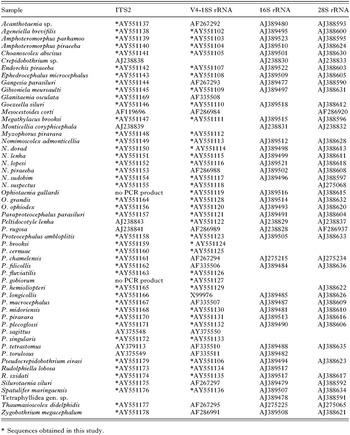
Table 1. List of species and Accession numbers of sequences analysed in this study
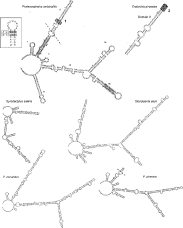
Fig. 1. Secondary structure prediction for ITS-2 sequences. The positions conserved across all taxa are printed in bold. The grey boxes without contours indicate the conserved helices. The closed grey boxes show tentative synapomorphies – their numbers refer to the groups shown in Fig. 3. Inset, domain I is shown with compensatory mutations observed in some taxa. Dashed line indicates the border of deletion found in Proteocephalus pirarara, Myzophorus pirarara, and P. hemioliopteri.

Table 2. Number of characters representing the analysed sequences
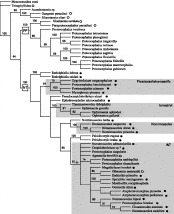
Fig. 2. Majority consensus tree of 12 consensus trees obtained by MP analyses of ‘basic matrices’ (according to the matrix alignment parameters: TL=6743–6858; CI=0·46–0·47). The clades present in strict consensus are in bold lines – all these groups plus the group labelled ‘+’ were also present in strict consensus of the ML trees. The numbers at nodes show bootstrap support under MP for Tv/Ts rate 1[ratio ]1 (see Materials and Methods section). PP=Palaearctic Proteocephalus; NT=Neotropical clade. Open circles=siluriform host; closed circle=siluriform host from the family Pimelodidae. The position and nature of Crepidobothrium sp. (marked by *) is further explained in the Discussion section.
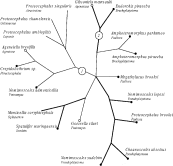
Fig. 3. A strict consensus of individual consensi obtained by all MP analyses of ‘INT’ matrix. The host genera are provided under the names of terminal taxa. The bold lines indicate the clades present in the strict consensus shown in Fig. 2. Open circles=siluriform host; closed circles=siluriform host from the family Pimelodidae. The circles with numbers refer to the tentative synapomorphies shown in Fig. 1.
 You have
Access
- 35
- Cited by