


INTRODUCTION
Encephalitis is a brain inflammatory process associated with neurological dysfunction [Reference Tunkel1], caused by different processes: immune disorders, cancer, vascular disorders, and infectious diseases [Reference Stone and Hawkins2, Reference Solomon, Hart and Beeching3]. Infectious encephalitis is mainly caused by viruses, such as herpes simplex virus (HSV) [Reference Shoji4–Reference Tattevin7]. However, recent studies have reported the role of bacteria [Reference Domenech8], fungi [Reference Chakrabarti9], and parasites [Reference Murray and Kazacos10]. Moreover, concern has been raised regarding the emergence or re-emergence of rare or unknown pathogens causing encephalitis during outbreak events [Reference Campbell11–Reference Granerod14]. Despite the availability of diagnostic tools, the aetiological origin of encephalitis remains undetermined in most patients [Reference Glaser6, Reference Granerod14–Reference Trevejo19]. Encephalitis generally results in a serious illness requiring hospitalization. Severe encephalitic illness can lead to death, and survivors frequently experience ongoing neurological sequelae with important public health implications [Reference Granerod and Crowcroft20]. In Italy, encephalitis is not a notifiable disease, apart from viral meningo-encephalitis, and data about incidence or clusters of this disease are not routinely available; thus, the occurrence of encephalitis is not well documented.
The aim of this study was to describe the epidemiology of encephalitis in Italy, in particular taking into account the geographical distribution, aetiology, and evolution of hospitalization rates over recent years.
METHODS
Data source
Hospital discharge data from the National Hospital Discharge Database (http://www.salute.gov.it/ricoveriOspedalieri/ric_informazioni/sceltadia.jsp) were examined for the 7-year period 1999–2005. The National Hospital Discharge Database includes all the principal discharge diagnosis coded according to the International Classification of Diseases, 9th Revision – Clinical Modification (ICD-9-CM) for patients hospitalized in all the hospitals in Italy from 1999 to 2005. The data were grouped by region, sex and age group (<1, 1–14, 15–64, ⩾65 years); moreover, individual data about the date of admission and discharge were provided by the Ministry of Health.
Definition
An encephalitis-associated hospitalization was defined as a hospitalization for which one of the ICD-9-CM codes for encephalitis was listed as the principal discharge diagnosis. Encephalitis was classified into the following aetiological categories: ‘viral’, ‘other infectious’, ‘post-immunization’, ‘post-infectious’, ‘toxic’, ‘other specified’ and ‘unknown’ as previously done by Khetsuriani et al. [Reference Khetsuriani, Holmann and Anderson16].
Data analysis
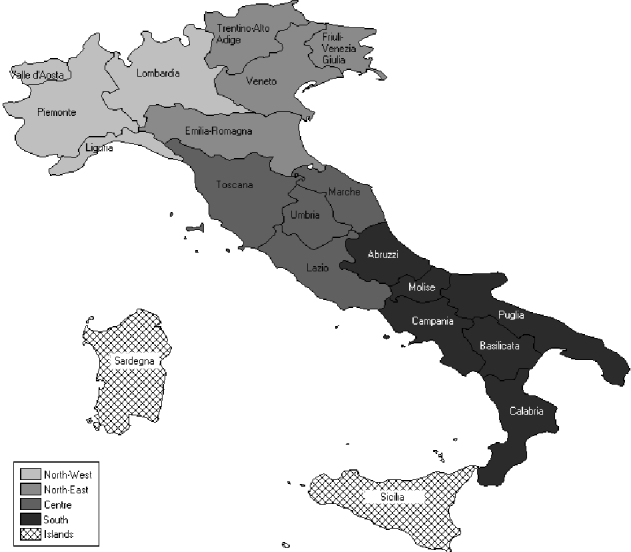
Encephalitis-associated hospitalizations were analysed according to aetiological categories, year of discharge, patient's age and sex, geographical region (North-West, North-East, Center, South, Islands), and duration of hospital stay. The Italian regions were comprised as follows: North-West (Valle d'Aosta, Piemonte, Liguria, Lombardia); North-East (Trentino Alto Adige, Veneto, Friuli-Venezia-Giulia, Emilia-Romagna); Center (Toscana, Marche, Umbria, Lazio); South (Campania, Abruzzi, Molise, Basilicata, Puglia, Calabria), and the Islands (Sicilia, Sardegna). The distribution of Italian regions by geographical areas is shown in Figure 1. SaTScan™ software was then used for analysis of clusters on a regional basis [Reference Kulldorff21, Reference Kulldorff22]. SaTScan™ employs Kulldorff's spatial scan statistic to identify and test clusters of encephalitis hospitalization. The scan statistic identifies the most likely (unusual) cluster. A Poisson model in SaTScan™ was used during the analysis. Hospitalization clustering was performed using purely spatial, temporal, and spatial–temporal scenarios separately. The maximum cluster size was set at the recommended value (50% of the total population at risk). For the analysis of clusters, regional distribution of cases was assessed. Moreover, the centroid of each of the 20 regions of Italy has been calculated and its coordinates have been used as reference position for each geographical entity.
Distribution of Italian Regions by ISTAT geographical areas.
Hospitalization rates were calculated by use of denominators derived from the Italian National Institute of Statistics (http://demo.istat.it/). Rates were expressed as the estimated number of hospitalizations per 100 000 population. Confidence intervals were calculated by using Poisson approximation. The Cochrane–Armitage test for trend was used to assess the significance of variation of hospitalization rates over the years. In order to evaluate seasonality and trend of recorded rates, time-series analysis (TSA) was performed by calculating the weighted moving average and the estimated trend after exponential smoothing. The data were analysed using an additive model where the observed hospitalization rates were considered to be the sum of three independent components: seasonal, trend, and the remainder. Decomposition of seasonal trends was performed using R software. R is an open source project that is distributed under the GNU General Public License. For analysis, the ‘ast’ package was used [23–Reference Ricci25]. The individual data (showing date of admission) were not available for the years before 2001, because of the lack of specific data from the Ministry of Health. Level of significance was set at 0·05.
RESULTS
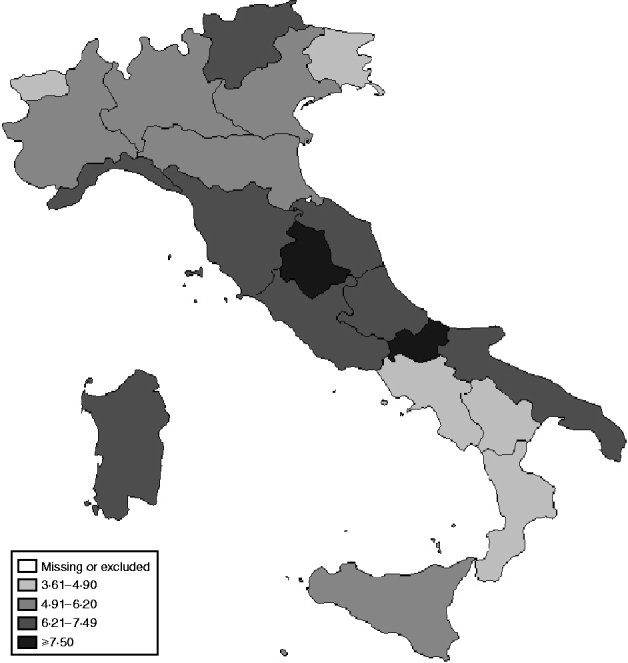
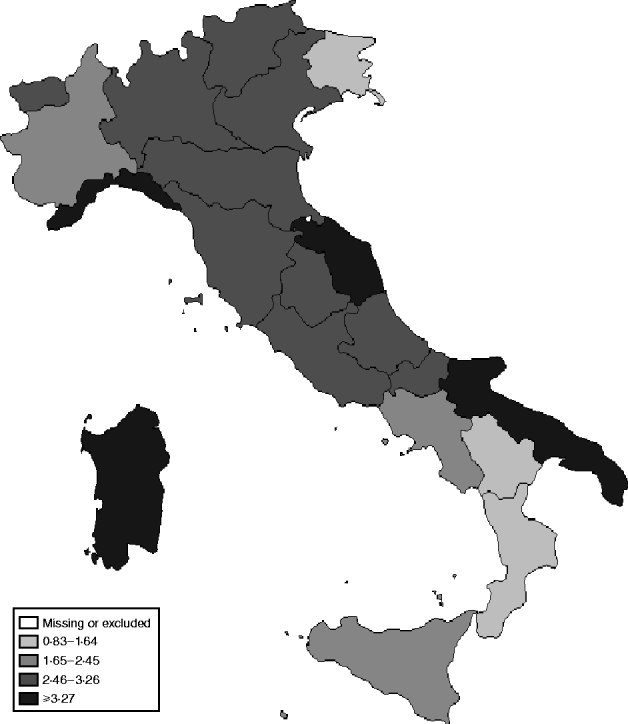
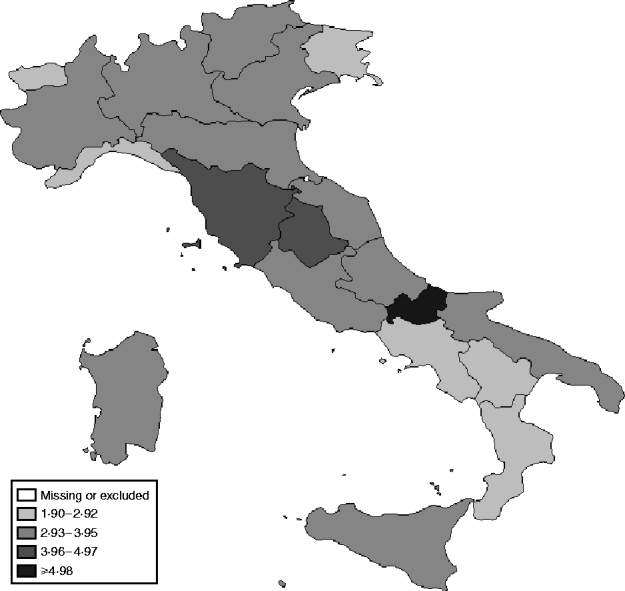
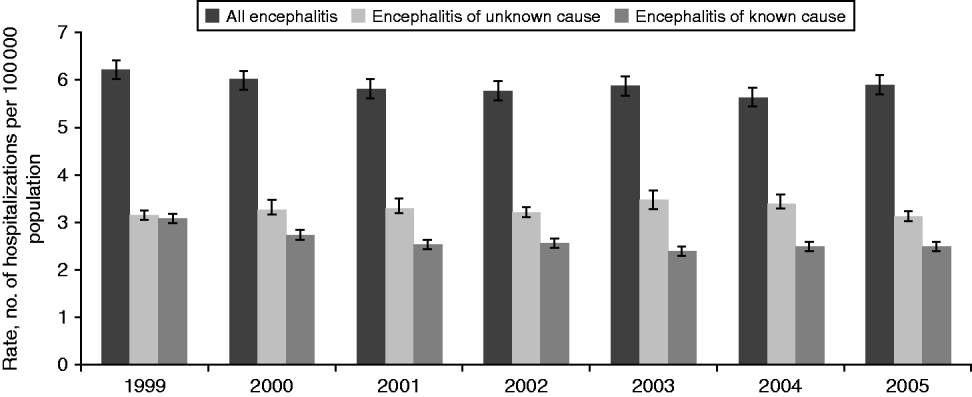
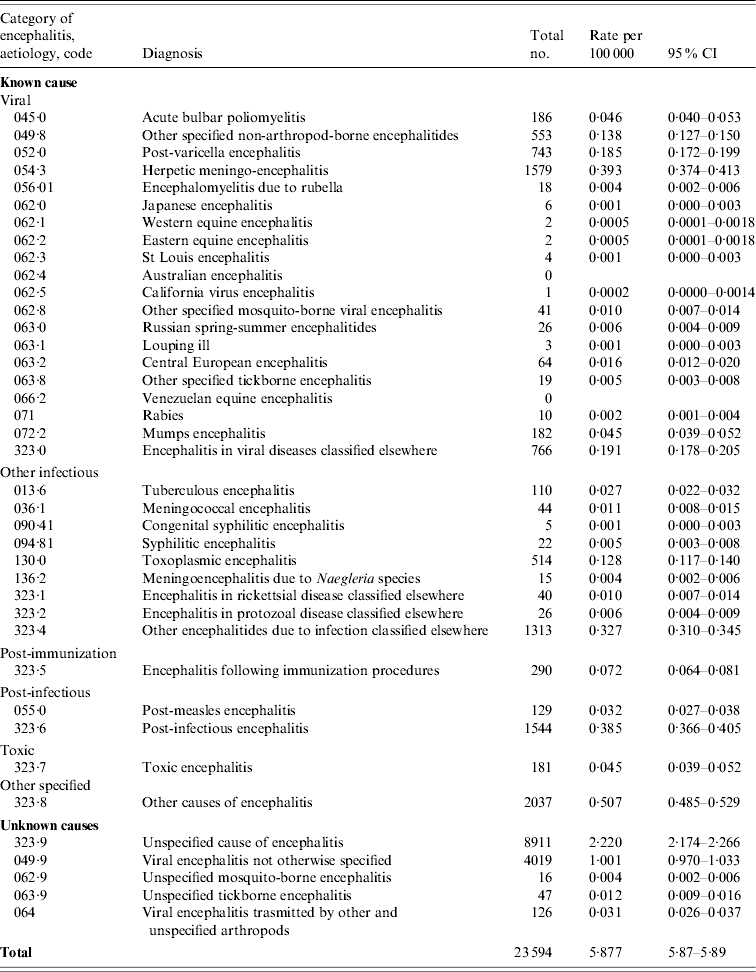
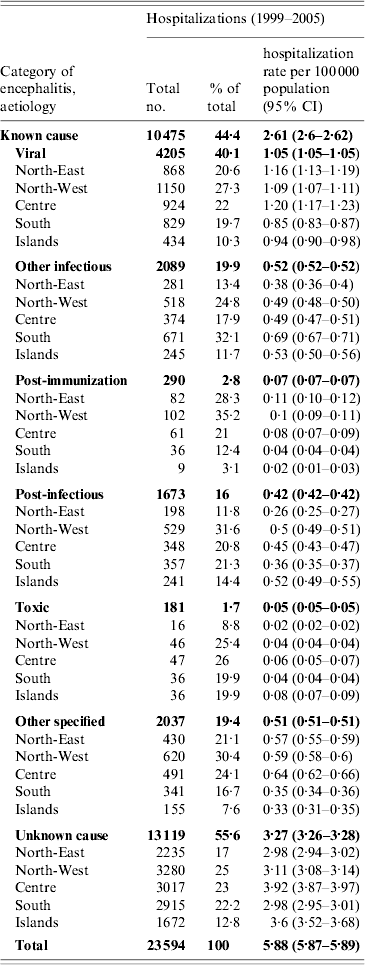
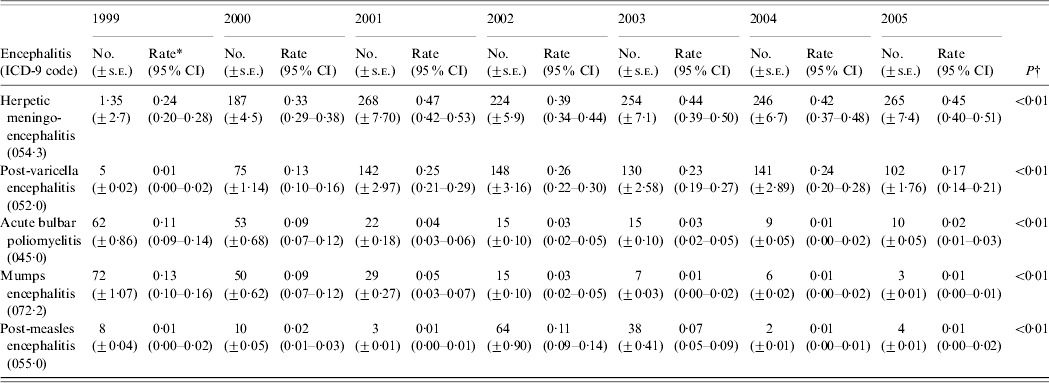
From 1999 to 2005, encephalitis accounted for 23 594 hospitalizations in Italy. The average annual rate of encephalitis hospitalization was 5·88/100 000 population (95% CI 5·87–5·89). The total number and hospitalization rate for each ICD-9-CM code included in the analysis are listed in Table 1. The annual rate for total hospitalizations (per 100 000) was significantly higher for men than for women (Table 2) both for all-cause (average rate 6·43, 95% CI 6·32–6·54 in men vs. 5·35, 95% CI 5·25–5·45 in women), unknown cause (3·57, 95% CI 3·49–3·66 in men vs. 2·98, 95% CI 2·91–3·06 in women) and known cause (average rate 2·86, 95% CI 2·79–2·92 in men vs. 2·37, 95% CI 2·30–2·44 in women) encephalitis. The highest incidence was found in infants (10·09/100 000, 95% CI 9·04–11·06), this higher incidence was found both for known and unknown causes. Incidence rate in infants was followed by people aged ⩾65 years with a 7·97/100 000 (95% CI 7·77–8·17) hospitalization rate. People living in the Centre had the highest rate (6·85, 95% CI 6·67–7·04) especially for unknown cause (3·92, 95% CI 3·78–4·06). Regional distribution of hospitalization for encephalitis (all cause, known cause, unknown cause) is showed in Figures 2–4, respectively. Satscan software analysis has highlighted different clusters of hospitalization. For post-infective encephalitis, a high rate of clustering was detected during 2000–2002 in the Liguria region [rate 1·3/100 000; relative risk (RR) 3·28, P<0·001]. In particular measles virus was responsible for a cluster of encephalitis hospitalizations in Basilicata, Puglia, Campania, Molise, Calabria, Abruzzi, and Lazio during 2002–2003 (rate 0·2/100 000, RR 15·57, P<0·001). Chickenpox was responsible for a cluster of encephalitis hospitalizations in Puglia in 2001–2002 (rate 0·6/100 000, RR 3·56, P<0·001). As for hospitalizations of unknown cause, high rate clustering was detected in 2003–2005 in Umbria, Marche, Abruzzi, Toscana and Lazio (rate 4·1/100 000, RR 1·28, P<0·001). In particular, regarding ‘viral encephalitis not otherwise specified’, high rate clustering was detected during 2003–2005 in Emilia-Romagna, Umbria, Marche, Toscana, and Liguria in people aged ⩾65 years with a rate of 0·5/100 000 (RR 2·08, P<0·001). For most of these hospitalizations (n=13 119, 55·6%), no specific cause of encephalitis was reported (3·27 hospitalizations/100 000 population, 95% CI 3·26–3·28). Encephalitis with known cause accounted for 10 475 hospitalizations (44·4%), with an average of 1496 hospitalizations per year (rate 2·61/100 000 population, 95% CI 2·61–2·62). For hospitalizations associated with encephalitis of known cause, the most common aetiological category was ‘Viral’ (Table 3), which accounted for 40·1% (n=4205) of such hospitalizations. Within this category, herpes virus was the leading causative agent (1579 hospitalizations, 37·5%), followed by chickenpox virus (743 hospitalizations, 17·7%). Rates for encephalitis caused by the most frequent viral pathogens are detailed in Table 4. We observed a trend towards an increase in herpetic and post-varicella encephalitis; on the other hand there was a reduction in polio, mumps and post-measles encephalitis. Codes for other known infectious causes were noted for 19·9% of hospitalizations associated with encephalitis of known cause. The ICD-9 code 323·4 (‘Other encephalitis due to infection classified elsewhere’) accounted for most discharge diagnoses in this category (n=1313, 62·8%). Of the individual infectious causes, toxoplasmic encephalitis was the most frequent (514 hospitalizations, 24·6%) followed by tuberculosis (110 hospitalizations, 5·2%). Codes for ‘Other specified encephalitis’ and ‘Post-infectious’ were each noted in 19% (n=2037) and 16% (n=1673) of discharge diagnoses for hospitalizations associated with encephalitis of known cause, while post-immunization and toxic encephalitis accounted only for 2·8% and 1·7% of encephalitis-associated discharge diagnosis, respectively, in this category. The all-cause hospitalization rate (per 100 000) (Fig. 5) showed a trend towards reduction from 6·20 (95% CI 6·00–6·41) in 1999 to 5·88 (95% CI 5·68–6·08) in 2005 (P<0·05), a similar trend was observed for a reduction in encephalitis of known cause from 3·06 (95% CI 2·92–3·21) in 1999 to 2·50 (95% CI 2·37–2·63) in 2005 (P<0·05), while the hospitalization rate for unknown-cause encephalitis remained unchanged (P>0·05).
Hospitalization rate (per 100 000) for all-cause encephalitis by region of residence, Italy, 1999–2005.
Hospitalization rate (per 100 000) for known-cause encephalitis by region of residence, Italy, 1999–2005.
Hospitalization rate (per 100 000) for unknown-cause encephalitis by region of residence, Italy, 1999–2005.
Rates of hospitalization (per 100 000) associated with encephalitis, by year, according to data from the National Hospital Discharge Database, Italy, 1999–2005 (95% CI).
Codes for encephalitis from the International Classification of Diseases, 9th Revision – Clinical Modification (ICD-9-CM); no. of total hospitalizations and rates×100 000 population, in Italy from 1999 to 2005
Encephalitis-associated hospitalizations by sex, age group and region, National Hospital Discharge Data, Italy, 1999–2005
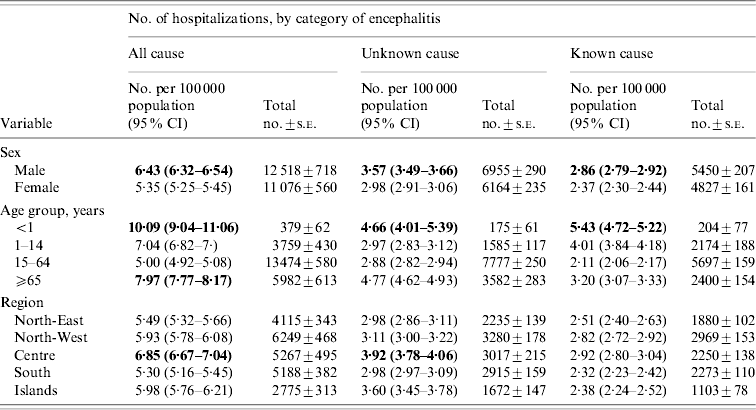
Bold values indicate significant at P<0·05.
Encephalitis-associated hospitalizations (main diagnosis), by disease category, National Hospital Discharge Database, Italy, 1999–2005
Rate of hospitalization per 100 000 inhabitants (95% CI) associated with most frequent viral encephalitis
* Rate per 100 000.
† Cochrane–Armitage test for linear trend.
In Figure 6, the temporal trend of hospitalization rates for all-cause encephalitis by age is shown.
Distribution of hospitalization rates (per 100 000) for encephalitis of (a) all-cause, (b) known cause and (c) unknown cause, by age group.
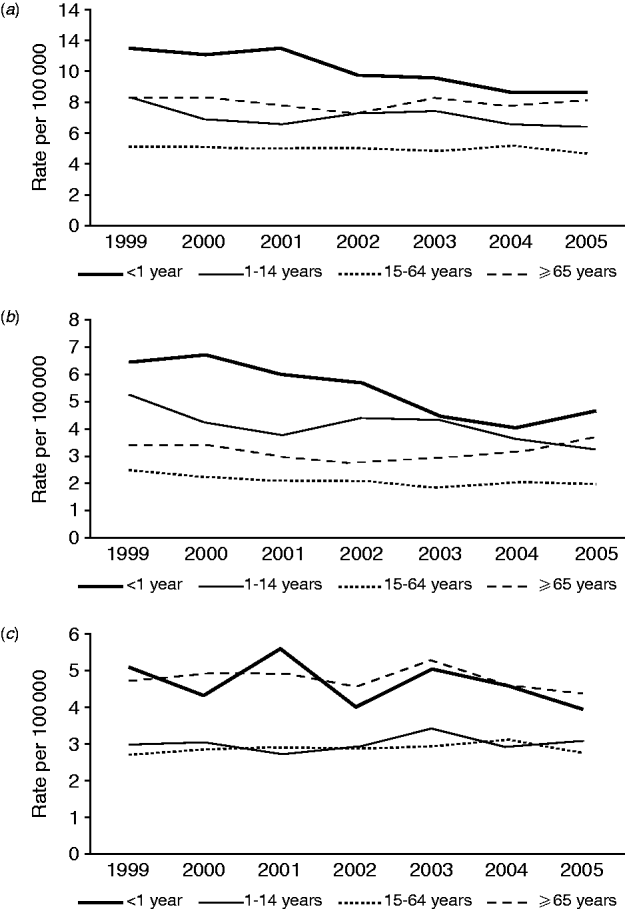
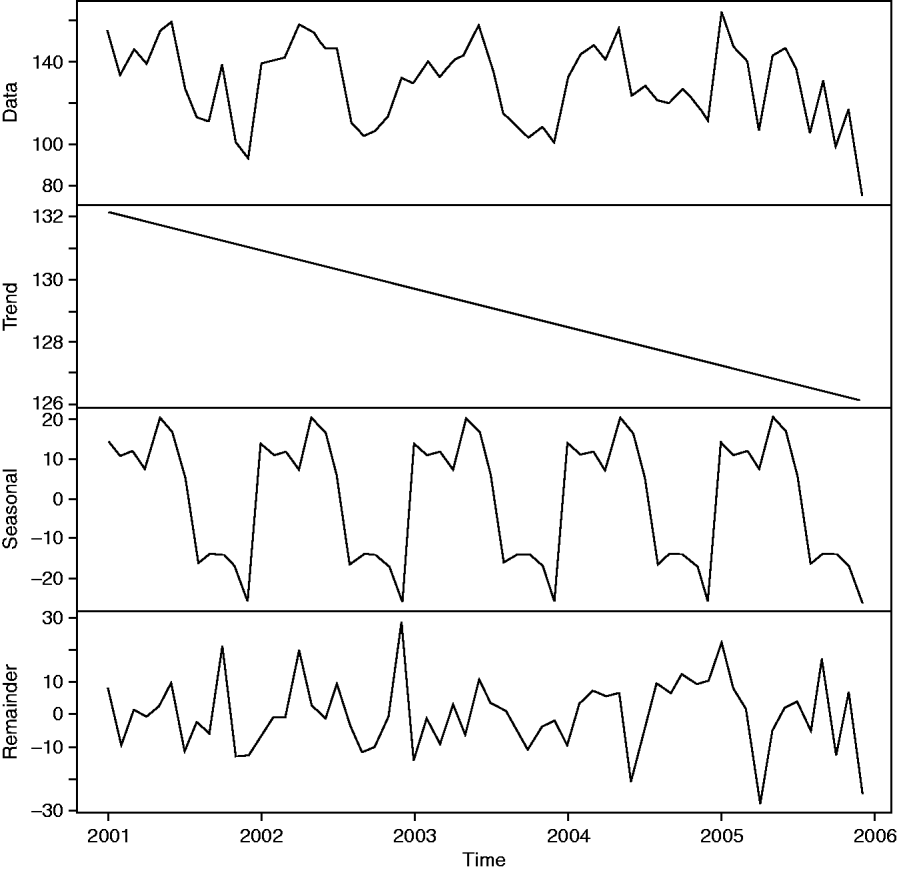
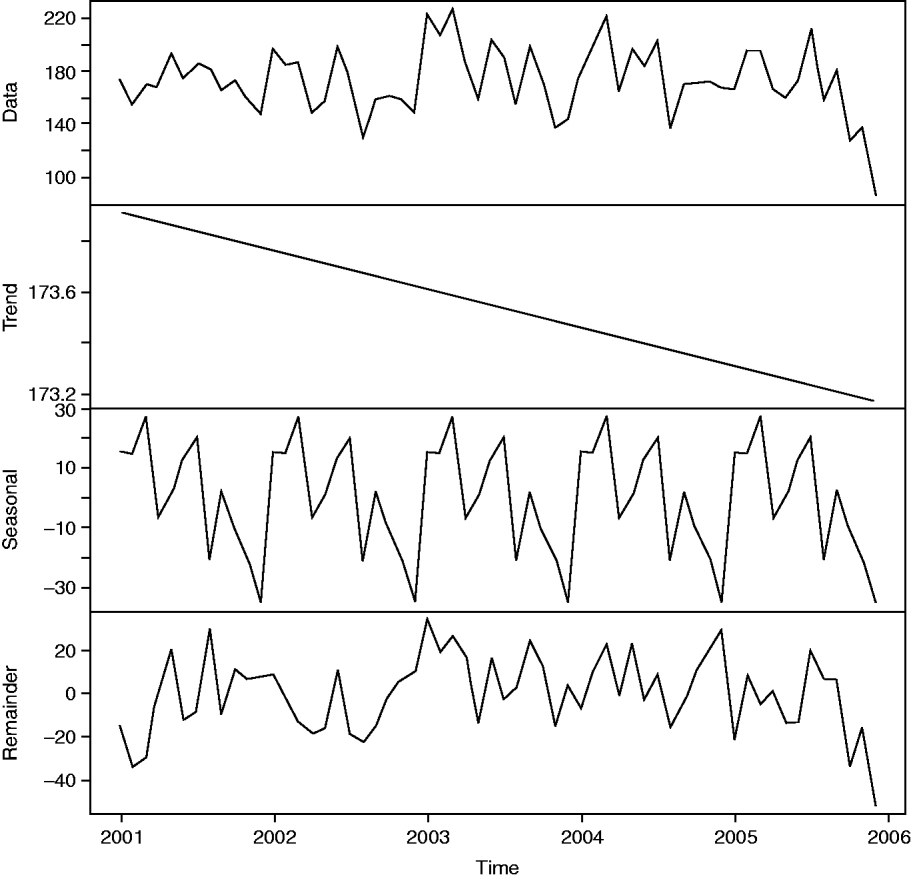
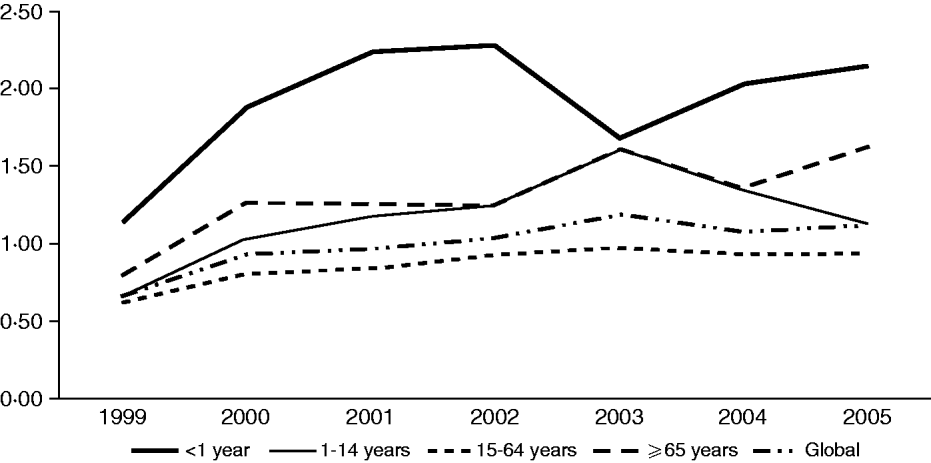
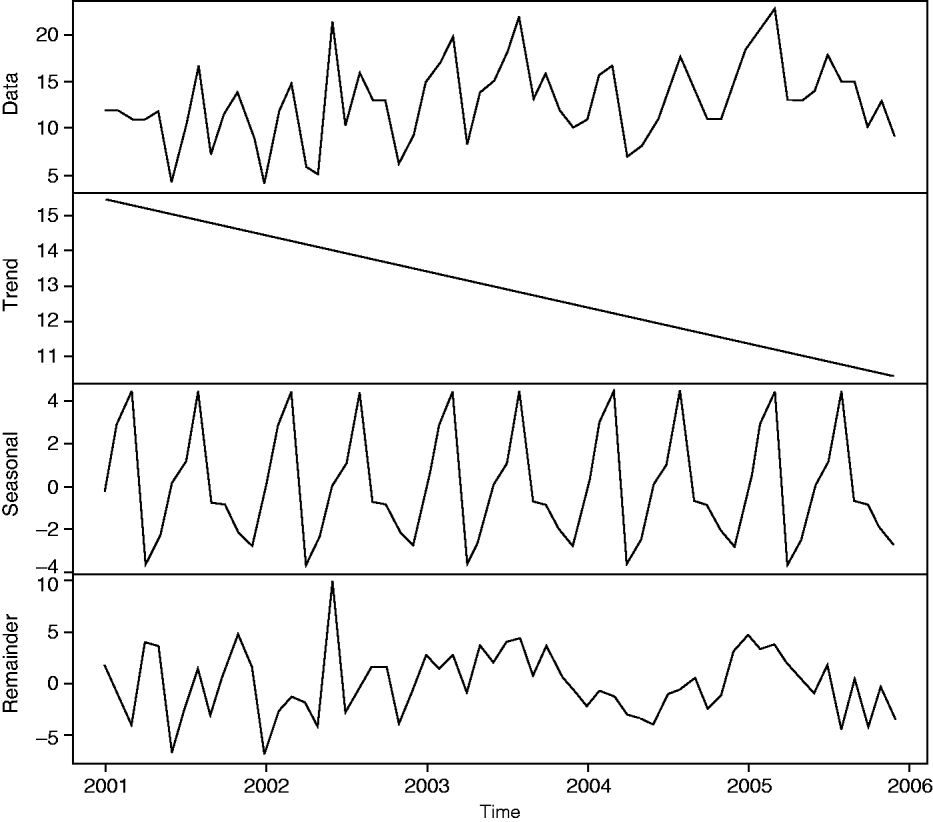
While hospitalization rates for all-cause encephalitis, and for known-cause encephalitis showed a declining trend in all age groups (except for people aged ⩾65 years), hospitalization rates for unknown-cause encephalitis were quite stable in all age groups over time. TSA has indicated an aggregation of cases during the first 6 months of the year in the known-cause encephalitis group (Fig. 7), and a lack of a sound seasonality for hospitalizations of unknown cause (Fig. 8). The focus on hospitalizations of unknown cause highlighted a trend towards reduction (P<0·001) for ‘unspecified cause of encephalitis’ (ICD-9 code 323·9), conversely an increase (P<0·001) in ‘viral encephalitis not otherwise specified’ (ICD-9 code 049·9) was recorded. Therefore, the subsequent analysis of distribution of ‘viral encephalitis not otherwise specified’ (ICD-9 code 049·9) hospitalizations over time (Fig. 9), has shown a significant increase in people aged ⩾65 years (P<0·001). Decomposition of hospitalization rates for ICD-9 code 049·9 has shown a seasonal pattern with peaks in January–March and July–August, that was particularly evident in people aged ⩾65 years (Fig. 10). Overall, during the study period, 382 089 hospital days were associated with all-cause encephalitis, giving an average of 54 584 hospital days annually. The average hospital stay was 15±8·8 days. Of these hospital days, 207 499 were associated with unexplained encephalitis (annual average 29 643 days), and 174 590 hospital days were associated with encephalitis of known cause (annual average 24 941 days). Hospitalizations associated with encephalitis of known cause had significantly longer average duration (15·3±9·3 days) than did hospitalizations associated with unknown cause (13·3±3·5 days, P<0·001).
Seasonal decomposition of the encephalitis hospitalizations (known cause) rate series for 2001–2005 by locally weighted scatterplot smoothing.
Seasonal decomposition of the encephalitis hospitalizations (unknown cause) rate series 2001–2005 by locally weighted scatterplot smoothing.
Distribution of hospitalization rates for ‘viral encephalitis not otherwise specified’ (ICD-9 code 049·9) over time by age group. * Cochrane–Armitage test for trend P<0·05 for 1–14 years, 15–64 years, ⩾65 years, and globally.
Seasonal decomposition of the ICD-9 code 049·9 ‘viral encephalitis not otherwise specified’ hospitalization series for 2001–2005, in people aged ⩾65 years).
DISCUSSION
The present study has analysed the epidemiology of hospitalizations caused by encephalitis in Italy during 1999–2005. The overall hospitalization rate recorded in Italy is similar to that recorded in Australia [Reference Huppatz26], but lower to that recorded in the USA [Reference Khetsuriani, Holmann and Anderson16], possibly because the latter study also considered secondary discharge diagnoses. Men appeared to be at higher risk of encephalitis than women as previously reported [Reference Khetsuriani, Holmann and Anderson16, Reference Huppatz26]. Regarding age group, infants had the highest frequency rate of hospitalization according to a report by Khetsuriani et al. [Reference Khetsuriani, Holmann and Anderson16]. Despite the importance of prompt diagnosis in order to implement the appropriate therapy [Reference Stone and Hawkins2] more than half of hospitalizations for encephalitis in Italy were of unknown cause. These data are in line with those of the Khetsuriani et al. study, who found no specific aetiology in 59·5% of cases [Reference Khetsuriani, Holmann and Anderson16]. Moreover, the California Encephalitis Study found that 63% of hospitalized patients with encephalitis had encephalitis of unknown aetiology, despite extensive laboratory testing [Reference Glaser6]. Concerning viral encephalitis, our results are lower to those reported by Davison et al. from the UK with 1·5 cases/100 000 population [Reference Davison15]. In accord with other studies, our study shows the main role of herpetic virus as a cause of encephalitis [Reference Glaser6, Reference Davison15, Reference Khetsuriani, Holmann and Anderson16, Reference Huppatz26–Reference Lee28]. The average length of stay was longer in Italy compared to that reported by Khetsuriani et al. [Reference Khetsuriani, Holmann and Anderson16] Duration of hospitalization associated with encephalitis of known cause was significantly longer than that for unknown cause, similarly to that recorded in the USA [Reference Khetsuriani, Holmann and Anderson16].
Moreover, our report highlights the general decrease in all-cause encephalitis, and the reduction in encephalitis of known cause, and on the other hand, the increase in encephalitis of unknown cause, especially in the Centre of the peninsula. The recorded clusters indicate the outbreak caused by measles in the Campania region during 2002 [Reference Ciofi Degli Atti29]; the cluster recorded in Puglia might be linked to a particular form of chickenpox virus with strong tropism for the central nervous system isolated in the same year in Toscana [Reference Frenos30].
In accord with the findings of Khetsuriani et al., no clear seasonality for all-cause encephalitis hospitalizations was observed, while encephalitis of known cause occurred more often during the first 6 months of the year. The analysis of hospitalization with ICD-9 codes included in the unknown subgroup (i.e. codes 323·9 and 049·9) highlighted an important increase in hospitalization associated with ‘viral encephalitis not otherwise specified’ (ICD-9 code 049·9), vs. a reduction in ‘unspecified causes of encephalitis’ (ICD-9 code 323·9). Seasonal decomposition showed the possible role of an infectious aetiology, through clear spikes in January–March and July–August, especially in those aged ⩾65 years. Therefore, this increasing trend of encephalitis of unknown cause suggests the hypotheses of the involvement of an unknown pathological agent, or the implication of usually identified causes that could be missed frequently. Moreover, in Italy, owing to its particular climate, geographical position, and political role in the Mediterranean area, exotic pathogens such as the Chikungunya virus in 2007 [Reference Moro31] and the West Nile virus in 2008 [Reference Angelini32] have already been reported.
Some limitations of the study should be mentioned. First, the hospital discharge database may have some coding errors, even if a good quality of discharge data occurred in Italy over recent years; nevertheless, only principal discharge diagnoses have been included in the analysis, limiting the sensitivity of results. Second, the administrative hospital discharge database could not be relied upon to confirm that all coded encephalitis cases were acute. Third, ICD-9 codes do not cover all encephalitis cases; for instance they do not include coding for the novel forms of encephalitis such as autoantibody-associated cases. Despite the above limitations, the study of acute encephalitis has already underlined the emergence of multiple virulent pathogens [Reference Sejvar33]. There is growing evidence that an increasing number of viruses can cause encephalitis in humans. For this reason it might be important to make efforts to identify whether uncommon infectious agents are involved in unexplained causes of encephalitis. Our findings raise some questions: might this increase in viral encephalitis of unknown cause suggest the emergence of a novel agent because of climate change [Reference Gould34], or do other factors play an equal or even more important role in it? In conclusion, specific surveillance of encephalitis of unknown origin should be reinforced in order to assist in pathogen identification and allow timely public health action to evaluate the possibility of prevention strategies.
ACKNOWLEDGEMENTS
The authors thank Dr Francesco Bevere, Dr.ssa Lucia Lispi, and Dott.Ing. Pietro Granella from the Italian Ministry of Health, Health Planning Directorate at the Department of Quality.
DECLARATION OF INTEREST
None.



