




No CrossRef data available.
Article contents
Long-lasting effect of stress on susceptibility of a freshwater clam to copepod parasitism
Published online by Cambridge University Press: 02 December 2004
Abstract
The question whether a stress event can have a long-lasting effect on susceptibility to parasites was studied using a freshwater bivalve clam and its crustacean parasite as a model system. Anodonta piscinalis clams were collected from 2 populations during August–September 2002. Clams were transported to the laboratory and marked. The stressed clams were subjected to low oxygen for 25 days, while the unstressed control clams were caged in their lakes of origin for the same period. Then the clams were transported to a third lake where they were exposed to natural infections by the ergasilid copepod, Paraergasilus rylovi, 11 months after the stress event. The stressed clams were more intensively parasitized. They also showed lower growth, lower reproduction and lower survival than the unstressed control clams. The results indicate that susceptibility of A. piscinalis to P. rylovi infection may be condition dependent, and that stress may have a long-lasting, increasing effect on host susceptibility to parasitism in natural populations.
Keywords
Information
- Type
- Research Article
- Information
- Copyright
- © 2004 Cambridge University Press
INTRODUCTION
In natural populations, ecological and environmental factors, such as stress may have a large effect on the outcome of a host–parasite relationship (review by Lafferty & Kuris, 1999). For example, poor quality of the environment can affect the physiological condition of the host and thereby influence the amount of resources that can be allocated to defence against parasites, thus making the host more susceptible to parasitism than would otherwise be expected by their genotypes (Jokela, Schmid-Hempel & Rigby, 2000).
Parasites and diseases are an important component of any ecosystem (Price, 1980). Therefore, stress and parasitism frequently interact in natural populations. The interplay between stress and parasitism can be complex (Lafferty & Kuris, 1999). Parasitism itself can impose a stress on the host individual and result in fitness costs such as reduced survival, growth or reproduction of host (e.g. Lehman, 1993). On the other hand, stress can lead to increased parasitism by impairing the host immune system (Murray & Young, 1992; Pruett, Ensley & Crittenden, 1993). The negative effect of parasites and pathogens on a host can be magnified by stress, such as starvation, both at individual and population level, due to the condition-dependent nature of host resistance and parasite virulence (Brown, Loosli & Schmid-Hempel, 2000; Krist et al. 2004).
Among invertebrates, studies demonstrating the relationship between stress and susceptibility to parasites are scarce (but see e.g. Abrous, Rondelaud & Dreyfuss, 2001; Hine et al. 2002). However, even severe stress does not necessarily result in increased susceptibility to parasitism, as observed by Krist et al. (2004) in a freshwater snail-trematode parasite system. Studies demonstrating the relationship between stress and susceptibility to parasites have usually been conducted in the laboratory, and the exposure to parasites or diseases took place during, or shortly after the stress event. To our knowledge, the question of whether a stress event can have long-lasting effects on host susceptibility in natural populations has not been studied. We addressed this question by exposing unionid clams to natural infections of parasites 11 months after the stress event. Furthermore, the effects of stress on clam survival, growth and reproduction, and parasite reproduction, were examined.
MATERIALS AND METHODS
Host–parasite system
Anodonta piscinalis Nilsson (Mollusca, Bivalvia) is a widespread and abundant unionid clam inhabiting slowly running waters and littoral zones of temperate lakes in northern Europe (Bauer, Hochwald & Silkenat, 1991). It matures at 2–4 years of age and reproduces annually, reaching a maximum life-span of more than 15 years (Haukioja & Hakala, 1978a). Spawning takes place in early summer and fertilized eggs are stored in the outer gill blades of females, where they develop into glochidia larvae. After release in spring, glochidia attach to a fish host for a few weeks before assuming benthic life (Jokela, Valtonen & Lappalainen, 1991).
The parasite, an ergasilid copepod Paraergasilus rylovi Markewitsch (sensu Chernysheva & Purasjoki, 1991), has been observed only in north-east Europe, in gills of A. piscinalis (Chernysheva & Purasjoki, 1991; Saarinen & Taskinen, 2004). Ergasilid parasites of fishes feed on gill tissues and blood, and may cause deformation or necrosis of the gill filaments (Bauer, Musselius & Strelkov, 1973). According to Saarinen & Taskinen (2004) the parasite was specific to A. piscinalis in the present study areas, and the annual reproductive period of the parasite was between June and August.
Experimental methods
Between 19 and 21 August 2002, 463 A. piscinalis were collected from Lake Jyväsjärvi, at the city of Jyväskylä, southern Finland (62°14′N, 25°46′E). In the laboratory, a field sample of 50 clams was dissected on the day of collection (Table 1). Dissected clams were aged (see Haukioja & Hakala, 1978b) and their length was measured. The presence of P. rylovi in hosts was determined by pressing the host gill tissues between two large glass plates and observing them under a dissection microscope with transmitted light. For each P. rylovi, the occurrence of egg sacs was used to determine reproductive state. The gonads of the dissected clams were examined under a dissection microscope for the presence of larval digeneans and to determine clam gender. The proportion of clam gill blade volume filled with glochidia (the relative larval production index) was estimated visually.
Table 1. Experimental parameters of Anodonta piscinalis studied (Parametyers include: the relative larval production index (LPI, %) (±S.E.) of female clams, minimum and maximum numbers of Paraergasilus rylovi individuals in host clam, and mean abundance (±S.E.) of P. rylovi in field samples collected before the experiment started in autumn 2002, and in samples collected on 9 October 2002, 8 May 2003, 11 June, 6 July and 6 August 2003 in order to monitor the infection of experimental clams kept in dense vegetation zone.)

The remaining clams (n=413) were placed individually in 1 l plastic containers with 0·5 l of aged tap water for screening of cercarial emergence of digenean parasites (see Taskinen, 1998) in order to exclude clams infected by digeneans. Aged tap water means water that has been stored in large buckets for 3–5 days before use. For screening of cercariae, 6 ml of water from each container was examined microscopically after the clams had been in the containers for 24 h. After that, the clams were individually marked on the shell using a boring tool, aged and their length and growth measured using a calliper rule. Clams were allocated randomly to the following treatment groups: (1) stress, (2) non-stressed control and (3) reference. The stress group was kept in the laboratory in low oxygen for 25 days while the unstressed control group and reference clams were kept in Lake Jyväsjärvi for the same period. After that, the stress and control groups were transported to Lake Saravesi (62°25′N, 26°00′E) 30 km northeast from the city of Jyväskylä, where the clams were exposed to the parasite P. rylovi next summer. We chose to perform the experimental infections in Lake Saravesi since P. rylovi occurs abundantly in that lake (Saarinen & Taskinen, 2003). The reference clams were not transported to Lake Saravesi, but were kept in Lake Jyväsjärvi throughout the experiment. The details of the experimental procedures are given below.
The stress treatment for Lake Jyväsjärvi clams started on 23 August 2002 and the clams (n=180) were placed in 4 plastic containers, 45 clams per container, with 20 l of aged tap water of room temperature. The stress treatment was achieved by using no aeration. The water was partially renewed every 5th day. In addition to low oxygen concentration, it is probable that the concentration of ammonia (NH4+ and NH4OH) nitrogen in the water increased in this treatment, since little water was renewed, and ammonia is the main excretory product of aquatic animals (e.g. Wetzel, 1983). During each water renewal, clams were also exposed to air for a short period, since they were re-mixed and randomly divided into the 4 containers. Water temperature and O2 concentration (mg/l) were measured using an YSI 55/12 FT (Yellow Springs Instrument CO., Inc., Yellow Spring, Ohio, USA) and any dead clams were removed daily. The mean water temperature (±S.E.) in all 4 containers over the 25 days was 18·6±0·1 °C and mean oxygen concentration (±S.E.) in containers 1, 2, 3, and 4 were 0·25±0·02, 0·26±0·02, 0·24±0·02, and 0·23±0·01 mg/l, respectively. Thirty-two clams died during the stress treatment, and were dissected and examined for digenean parasites as described above.
On 23 August 2002, after 2–3 days in the laboratory, control (n=165) and reference (n=66) clams were transported back to Lake Jyväsjärvi. Control clams were placed in plastic cages (50 cm×50 cm×70 cm), 13–14 clams per a cage and reference clams placed in 7 plastic basins (12 l, diameter 34 cm) filled one third with sand, 9–10 clams per basin on the bottom of the lake in the site from which the clams were collected.
On 16 September 2002, after 25 days of stress/non-stress, the stressed clams (n=148) and unstressed control clams (one of the control clam cages was lost during the stressed/non-stress treatment leaving 149 clams for the control group) were transported to Lake Saravesi. Clams were placed on the bottom of the littoral zone at 1 m depth in 30 plastic basins (12 l, diameter 34 cm) filled one third with sand, 5 clams from each treatment to one basin. The basins were placed among a growth of emergent macrophytes, separated from the ‘open water’ area by a 40 m zone of dense vegetation. This was done to prevent P. rylovi infections since we had previously observed the intensity of infection to be clearly lower in shallow, vegetation habitat than in open water area, outside the vegetation zone (Saarinen, M. and Taskinen, J., unpublished observations). To time the period of infection more precisely, we kept the experimental clams in the dense vegetation habitat in Lake Saravesi until August 2003 (see below).
On 3 September 2002, 355 A. piscinalis were collected from Lake Ahveninen adjacent to Lake Saravesi. On the day of collection, a field sample of 50 clams was dissected and examined as above (Table 1). Using a similar procedure as above, clams were screened, marked, stressed/non-stressed, and transported to Lake Saravesi. The stress, control and reference groups contained 133, 131 and 40 Lake Ahveninen clams, respectively. The stress treatment for Lake Ahveninen clams started on 5 September 2002 so that the stressed clams were placed to 3 plastic containers (45, 44, and 44 clams per container) with 20 l of aged tap water of room temperature. The mean water temperature (±S.E.) over the 25 days in all 3 containers was 18·5±0·07 °C and mean oxygen concentration (±S.E.) in containers 1, 2, and 3 were 0·27±0·02, 0·28±0·02, and 0·25±0·04 mg/l, respectively. One clam died during the stress treatment. On 5 September 2002, control and reference clams were transported back to Lake Ahveninen. On 29 September, after 25 days of treatment, stressed and unstressed control clams were transported to Lake Saravesi, where they were placed in the same location as Lake Jyväsjärvi clams, in similar conditions as above, in 27 plastic basins.
Clams from Lake Ahveninen are not infected by P. rylovi (Table 1; Saarinen & Taskinen, 2003), but clams from Lake Jyväsjärvi are (Table 1; Taskinen & Saarinen, 1999). However, the stressed clams from Lake Jyväsjärvi were freed from parasites during the stress treatment since in low oxygen the parasites are expelled from the clams in 2 weeks (Saarinen & Taskinen, 2003). This was verified by studying samples of stressed Lake Jyväsjärvi clams during the experiment (Table 1). The non-stressed control clams originally from Lake Jyväsjärvi were infected by P. rylovi when they were transported to Lake Saravesi, but the abundance (number of parasites per studied host) of parasites was very low at the time of exposure to new infections in Lake Saravesi in August 2003 (Table 1).
After 10 days in Lake Saravesi, on 9 October 2002, the first 2 basins containing Lake Ahveninen clams were fetched back to the laboratory. Clams were identified and their length was measured, and live clams were dissected as described above. The lakes became ice-covered soon after this. In 2003, after ice melt, some of the clams were taken back to the laboratory, and handled as above in order to monitor the infection of clams by P. rylovi on 8 May, 11 June, 7 July and 6 August (Table 1).
On 6 August 2003, we removed all dead clams, identified and measured them. Then we divided the remaining live clams (n=210) randomly to 24 basins, and moved them to the ‘open water’ habitat to expose them to P. rylovi infection. After about 11 months in the lake, on 18 August 2003, the remaining containers were returned to the laboratory, and the clams were dissected and studied as described above. On 20 August 2003, the reference clams (those kept in their lake of origin) were transported to the laboratory and dissected as above. However, the reference clams from Lake Ahveninen were lost for an unknown reason.
Statistical analyses
The effect of treatment on the intensity (the mean number of parasites among infected hosts) of P. rylovi was analysed with two-way ANCOVA using treatment (stress, non-stress) and origin (Lake Ahveninen, Lake Jyväsjärvi) as factors and length as a covariate. Only clams dissected at the end of the experiment on 18 August 2003 were included.
Logistic regression was used to analyse the relationship between clam survival by 6 August 2003, place of origin (Lake Ahveninen, Lake Jyväsjärvi), treatment (stress, non-stress), clam age and the interaction term ‘place of origin×survival’. Place of origin and treatment were included as independent categorical covariates in the model, and age as a continuous covariate.
The effect of treatment on the growth of clams during the experiment was studied with two-way ANCOVA using treatment (stress, non-stress) and origin (Lake Ahveninen, Lake Jyväsjärvi) as factors and initial length (before the stress treatment) as a covariate. Among the experimental clams, only live clams dissected on 18 August 2003 were included. The effect of treatment on the reproduction of female clams was analysed as above. Among the experimental clams, only female clams dissected on 18 August 2003 were included.
The effect of treatment on the reproduction of female P. rylovi (proportion of females with egg sacs) was analysed with two-way ANOVA using treatment (stress, non-stress) and origin (Lake Ahveninen, Lake Jyväsjärvi) as factors.
To assess the possible stress among the unstressed control clams induced by the experimental procedures, the differences in survival between the control and the reference clams (kept in their lakes of origin throughout the experiment) were compared using χ2-test. One-way ANOVAs were performed to compare growth and reproduction of clams between the control and the reference clams. All statistical analyses were performed using SPSS statistical package (SPSS Inc. Chicago, Illinois).
RESULTS
The mean length (±S.E.) and age (±S.E.) of the clams in different treatments, reference sample, and field samples were 57·0±0·3 mm and 2·8±0·3 year. Numbers of Anodonta piscinalis studied, the relative larval production index (±S.E.) of female clams, minimum and maximum numbers of Paraergasilus rylovi individuals in host clam, and mean abundance (±S.E.) of P. rylovi in the field samples collected before the experiment, as well as in the clams examined on 9 October 2002, 8 May 2003, 11 June, 6 July and 6 August 2003 in order to monitor P. rylovi infection of experimental clams kept in dense vegetation zone are given in Table 1. One P. rylovi infection was established among the previously uninfected, stressed Lake Jyväsjärvi clams by 6 August 2003. Among the unstressed control clams originally from Lake Jyväsjärvi, the mean abundance of P. rylovi infection decreased from 31·3±2·2 in the beginning of the experiment to 7·1±1·6 by 6 August 2003 (Table 1).
No digenean parasites were found either in the field samples collected from lakes Ahveninen and Jyväsjärvi before the experiment or in the clams, which died during the stress treatments. Water samples examined for each clam for cercarial emergence of digenean parasites before the experiment started contained no cercariae. A Rhipidocotyle fennica infection was found from one non-stressed Lake Ahveninen control clam, and from one stressed and one unstressed Lake Jyväsjärvi clam dissected on 18 August 2003. The quantity of R. fennica sporocyst material was low in the infected clams suggesting a recently established infection (Taskinen, Valtonen & Mäkelä, 1994).
Results of two-way ANCOVA suggested that both the treatment and host origin had a statistically significant effect on the intensity of P. rylovi (Table 2). Among clams from both populations, the stressed clams were about 1·25 times more intensively parasitized by P. rylovi than the unstressed control clams (Fig. 1). In addition, the non-significant interaction between ‘the place of origin’ and ‘treatment’ indicates that the observed pattern is consistent between the two populations. Clams originated from Lake Ahveninen were more intensively parasitized than those from Lake Jyväsjärvi (Fig. 1).

Fig. 1. Mean intensity of Paraergasilus rylovi infection (±S.E.) in stressed and non-stressed control groups on 18 August in Anodonta piscinalis clams originally from Lakes Ahveninen and Jyväsjärvi but kept in Lake Saravesi from September 2002 to August 2003 and infected by P. rylovi in August 2003.

When analysing the survival of stressed and unstressed control clams by 6 August 2003, the logistic regression model included terms ‘place of origin’ (change in log likelihood if term removed=8·515, P=0·004), ‘treatment’ (change in log likelihood if term removed=51·913, P<0·001), and ‘place of origin×treatment’ (change in log likelihood if term removed=17·294, P<0·001), but not the term ‘age’ (change in log likelihood if term removed=0·036, P=0·850). The survivals of stressed vs unstressed control clams were 31·9 vs. 99·2% and 56·2 vs. 92·5% in clams originally from Lake Ahveninen and Lake Jyväsjärvi, respectively.
The growth of clams during the experiment differed significantly among the treatments (Table 2). The mean growth (length increment) of stressed clams was about half of that of the unstressed control clams in both Lake Ahveninen and Lake Jyväsjärvi clams (Fig. 2). The covariate, clam length at the beginning of the experiment, also had a statistically significant effect on the growth of clams; length increment during the experiment was negatively correlated with the initial length of the clam.

Fig. 2. Mean length-adjusted growth (±S.E.) during the experiment among stressed and non-stressed control groups in Anodonta piscinalis clams originally from Lakes Ahveninen and Jyväsjärvi kept in Lake Saravesi from September 2002 to August 2003. Reference groups were kept in their lakes of origin, but those kept in Lake Ahveninen were lost.
Stress treatment had also a significant effect on the reproduction of female clams (Table 2). The relative larval production among the stressed clams was half and one third of that of the unstressed control clams originated from Lake Ahveninen and Lake Jyväsjärvi, respectively (Fig. 3).

Fig. 3. Reproduction of female Anodonta piscinalis clams, measured as the relative larval production index (%, the proportion of gill blade volume filled with glochidia) on 18 August 2003, in clams originally from Lake Ahveninen and Lake Jyväsjärvi but kept in Lake Saravesi from September 2002 to August 2003. Reference groups were kept in their lakes of origin, but those kept in Lake Ahveninen were lost.
Stress treatment did not affect the reproduction of P. rylovi, but the effect of origin was significant (Table 2). The mean (±S.E.) proportion of (female) P. rylovi carrying egg sacs was 22·0±1·2% in clams originally from Lake Ahveninen and 14·3±0·8% in clams originally from Lake Jyväsjärvi.
Survival of reference clams originally from and kept in Lake Jyväsjärvi throughout the experiment (100%) did not markedly differ from that of the non-stressed control group (92·5%) (χ2=3·825, P=0·050). Similarly, the relative reproductive performance of female clams in the reference group did not differ from that of the non-stressed control group (P>0·1) (Fig. 2). However, the growth of control clams was clearly lower than the growth of the reference clams (P<0·001) (Fig. 2).
DISCUSSION
Our study showed a long-lasting impact of stress on susceptibility to parasitism. In the unionid, A. piscinalis, low oxygen-stressed individuals were more intensively parasitized by the ergasilid P. rylovi than the unstressed control specimens, when exposed to parasites 11 months after the stress event.
The higher intensity of infection among the stressed clams can be due to several, mutually nonexclusive processes, such as easier recognition of or easier penetration of stressed individuals by parasites, or better development of parasites in stressed clams. On the other hand, if the above things were equal in stressed and unstressed hosts, the variation in the intensity of parasitism with respect to stress could be due to differences in the host's ability to inhibit parasite establishment, i.e. differences in host resistance to the parasite. Our results do not allow us to distinguish between these explanations, but one plausible explanation could be a connection between stress, host condition and host immune defence. The immune system of bivalves is based on an innate, non-lymphoid system involving humoral responses such as agglutination and cellular components such as phagocytosis (Pipe, 1990; Hine, 1999). Stress-induced changes in oysters include the release of noradrenaline, the principal catecholamide, which inhibits the immune functions (Lacoste et al. 2002). Hine et al. (2002) studied the effects of different stressors (e.g. stirring, starvation) on the dynamics of the protistan parasite Bonamia exitiosus infections in flat oyster, and observed significantly higher intensities of infection in stressed individuals than in controls. In the present study, the stressed clams showed lower growth, lower reproduction and lower survival than the unstressed control clams, which indicates that they were in poorer condition than the unstressed clams, and may have consequently been more susceptible to infection. This is in line with the results from studies on vertebrates in which a dependence between host stress, condition, immune defence and parasitism/disease has been observed (reviewed e.g. by Murray & Young, 1992).
The experimental design of the current study included a stress treatment in the laboratory and non-stress (control) treatment in the field. One could argue that the observed relationship between stress and susceptibility parasitism would be produced by some unknown difference between the laboratory and field conditions. However, the non-stressed control groups were also kept in the laboratory for 2–3 days before the non-stress treatment to be able to mark them and to check the possible trematode cercarial shedding. Thus, both the stress and non-stress groups were exposed to the laboratory conditions, such as aged tap water. The stress treatment applied in the present study, low oxygen, imposes a severe physiological challenge for the clam, that this most probably overrides the effect of laboratory conditions as such. Handling and transporting inevitably affect the clams so that the non-stressed control group was actually subjected to some stress. This was indicated by their lower growth when compared to the reference clams, which were subjected to less handling than the control clams and were allowed to stay in their lake of origin. Nevertheless, survival and the relative reproduction index of the control clams were equal to that of the reference clams, suggesting that the non-stressed control groups can be regarded as unstressed as measured by their reproductive performance and survival.
The seasonal timing of stress treatment was determined by the reproductive cycle of the parasite (Saarinen & Taskinen, 2004) so that the clams were transported to the lake as soon as possible after the seasonal infective period was over, in September 2002. In an organism living in a seasonally fluctuating environment, such as A. piscinalis, the seasonal timing of stress has a large effect on the consequences of stress. It was shown in a field experiment by Jokela (1996) that a stress applied late in the season, as in the present study, had a more intensive negative effect on performance of A. piscinalis than a stress occurring earlier in the season. This is because the clams can better compensate and adjust their reproductive effort in accordance with the resources if challenging changes in their environment take place before the reproductive period of the clam (Jokela, 1996).
The clams were investigated for digenean parasites before and at the end of the experiment since digenean infection has been observed to decrease the physiological performance, especially tolerance of anoxia (Sousa & Gleason, 1989). The occurrence of digenean trematodes cannot confound the present results. Observations on cercarial shedding and field samples indicate the experimental clams were not infected by trematodes before the experiment. Furthermore, only 3 recently established trematode infections were found among the 276 experimental clams studied at the end of the experiment.
In addition to infectivity, we also investigated parasite reproductive performance with respect to stress. There was no difference in the proportion of parasites carrying egg sacs between stressed and control clams, suggesting that parasite reproduction may not be affected by host stress in the present system, as measured about 11 months after the stress.
We had previously found the infection probability to be influenced by several ecological variables, such as habitat structure and host age and size in the present host–parasite association (Saarinen & Taskinen, 2004). In a previous study, we observed that the reproducing, brooding female A. piscinalis were more intensively parasitized by P. rylovi than non-reproducing females (Taskinen & Saarinen, 1999). The defensive ability of brooding individuals may be impaired when compared to non-brooding ones. Together with the present results, they indicate that stress, such as low oxygen or reproductive stress, may increase the susceptibility of A. piscinalis to infection by P. rylovi. Furthermore, the results indicate clear influence of the ecological and environmental factors on the susceptibility of infection in the present system. In the future, it would be valuable to evaluate the role of genetic factors, and the relative importance of genes versus environment, on the susceptibility of A. piscinalis to infection by P. rylovi.
Our important novel finding was the long-lasting increasing effect of stress on susceptibility to parasitism in the present natural populations. It was previously known that stress can impair immune functions and increase susceptibility to infection (e.g. Murray & Young, 1992; Pruett et al. 1993), but it was not known that exposure to a stress event can increase susceptibility to infection for such a long period after the stress. The present results indicate that organisms may recover very slowly from the negative effects of stress when the recovery is measured as their susceptibility to parasitic infection.
We thank P. Högmander for assistance in collection of clams, and J. Ahonen and A. Valkonen for help in preparing the experiment, and R. Jones for valuable comments on the manuscript. The study was financed by Finnish Cultural Foundation (M.S.), and Maj and Tor Nessling Foundation (J.T.).
References
REFERENCES
ABROUS, M.,
RONDELAUD, D. &
DREYFUSS, G. (
2001).
The stress of Lymnaea truncatula just before miracidial exposure with Fasciola hepatica increased the prevalence of infection.
Experimental Parasitology
99,
49–51.CrossRefGoogle Scholar
BAUER, G.,
HOCHWALD, S. &
SILKENAT, W. (
1991).
Spatial distribution of freshwater mussels – The role of host fish and metabolic rate.
Freshwater Biology
26,
377–386.CrossRefGoogle Scholar
BAUER, O. N.,
MUSSELIUS, V. A. &
STRELKOV, Y. A. (
1973).
Diseases of Pond Fishes.
Israel Program for Scientific Translations,
Jerusalem, Israel.
BROWN, M. J. F.,
LOOSLI, R. &
SCHMID-HEMPEL, P. (
2000).
Condition-dependent expression of virulence in a trypanosome infecting bumblebees.
Oikos
91,
421–427.CrossRefGoogle Scholar
CHERNYSHEVA, N. B. &
PURASJOKI, K. J. (
1991).
A redescription of Paraergasilus rylovi Markevich, 1937 (Copepoda, Ergasilidae).
Systematic Parasitology
20,
165–172.CrossRefGoogle Scholar
HAUKIOJA, E. &
HAKALA, T. (
1978 a).
Life-history evolution in Anodonta piscinalis (Mollusca, Pelecypoda).
Oecologia
35,
253–266.Google Scholar
HAUKIOJA, E. &
HAKALA, T. (
1978 b).
Measuring growth from shell rings in populations of Anodonta piscinalis (Pelecypoda, Unionidae).
Annales Zoologici Fennici
15,
60–65.Google Scholar
HINE, P. M. (
1999).
The inter-relationship of bivalve haemocytes.
Fish and Shellfish Immunology
9,
367–385.CrossRefGoogle Scholar
HINE, P. M.,
DIGGLES, B. K.,
PARSONS, M. J. D.,
PRINGLE, A. &
BULL, B. (
2002).
The effects of stressors on the dynamics of Bonamia exitiosus Hine, Cochennec-Laureau & Berthe, infections in flat oysters Ostrea chilensis (Philippi).
Journal of Fish Diseases
25,
545–554.CrossRefGoogle Scholar
JOKELA, J. (
1996).
Within-season reproductive and somatic energy allocation in a freshwater clam, Anodonta piscinalis.
Oecologia
105,
167–174.CrossRefGoogle Scholar
JOKELA, J.,
SCHMID-HEMPEL, P. &
RIGBY, M. C. (
2000).
Dr. Pangloss restrained by the Red Queen – steps towards a unified defence.
Oikos
89,
267–274.Google Scholar
JOKELA, J.,
VALTONEN, E. T. &
LAPPALAINEN, M. (
1991).
Development of glochidia of Anodonta piscinalis and their infection of fish in a small lake in northern Finland.
Archiv für Hydrobiologie
120,
345–356.Google Scholar
KRIST, A. C.,
JOKELA, J.,
WIEHN, J. &
LIVELY, C. M. (
2004).
Effects of host condition on susceptibility to infection, parasite developmental rate, and parasite transmission in a snail-trematode interaction.
Journal of Evolutionary Biology
17,
33–40.CrossRefGoogle Scholar
LACOSTE, A.,
MALHAM, S. K.,
CÉLÉBART, F.,
CUEFF, A. &
POULET, S. A. (
2002).
Stress-induced immune changes in the oyster Crassostrea gigas.
Developmental and Comparative Immunology
26,
1–9.CrossRefGoogle Scholar
LAFFERTY, K. D. &
KURIS, A. M. (
1999).
How environmental stress affects the impacts of parasites.
Limnology and Oceanography
44,
925–931.CrossRefGoogle Scholar
LEHMAN, T. (
1993).
Ectoparasites: direct impact on host fitness.
Parasitology Today
9,
8–13.CrossRefGoogle Scholar
MURRAY, P. J. &
YOUNG, R. A. (
1992).
Stress and immunological recognition in host–pathogen interactions.
Journal of Bacteriology
174,
4193–4196.CrossRefGoogle Scholar
PIPE, R. (
1990).
Hydrolytic enzymes associated with granular haemocytes of the marine mussel Mytilus edulis.
Histochemical Journal
22,
595–603.CrossRefGoogle Scholar
PRICE, P. W. (
1980).
Evolutionary Biology of Parasites.
Princeton University Press,
Princeton, New Jersey.
PRUETT, S. B.,
ENSLEY, D. K. &
CRITTENDEN, P. L. (
1993).
The role of chemical-induced stress responses in immunosuppression: A review of quantitative associations and cause-effect relationships between chemical-induced stress responses and immunosuppression.
Journal of Toxicology and Environmental Health
39,
163–192.CrossRefGoogle Scholar
SAARINEN, M. &
TASKINEN, J. (
2003).
Reduction in the level of infection of the bivalve Anodonta piscinalis by the copepod Paraergasilus rylovi using high temperature and low oxygen.
Journal of Parasitology
89,
1167–1171.CrossRefGoogle Scholar
SAARINEN, M. &
TASKINEN, J. (
2004).
Aspects of the ecology and natural history of Paraergasilus rylovi (Copepoda, Ergasilidae) parasitic in unionids of Finland.
Journal of Parasitology
90,
948–952.CrossRefGoogle Scholar
SOUSA, W. P. &
GLEASON, M. (
1989).
Does parasitic infection compromise host survival under extreme environmental conditions? The case for Cerithidea californica (Gastropoda: Prosobranchia).
Oecologia
80,
456–464.CrossRefGoogle Scholar
TASKINEN, J. (
1998).
Cercarial production of the trematode Rhipidocotyle fennica in clams kept in the field.
Journal of Parasitology
84,
345–349.CrossRefGoogle Scholar
TASKINEN, J. &
SAARINEN, M. (
1999).
Increased parasite abundance associated with reproductive maturity of the clam Anodonta piscinalis.
Journal of Parasitology
85,
588–591.CrossRefGoogle Scholar
TASKINEN, J.,
VALTONEN, E. T. &
MÄKELÄ, T. (
1994).
Quantity of sporocysts and seasonality of two Rhipidocotyle species (Digenea: Bucephalidae) in Anodonta piscinalis (Mollusca: Bivalvia).
International Journal for Parasitology
24,
877–886.CrossRefGoogle Scholar
WETZEL, R. G. (
1983).
Limnology, 2nd Edn.
Saunders College Publishing, a division of Holt, Rinehart & Winston, Inc.,
Orlando, Florida, USA.
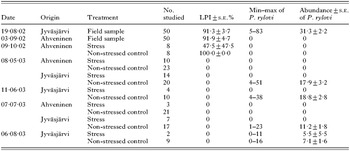
Table 1. Experimental parameters of Anodonta piscinalis studied
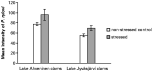
Fig. 1. Mean intensity of Paraergasilus rylovi infection (±S.E.) in stressed and non-stressed control groups on 18 August in Anodonta piscinalis clams originally from Lakes Ahveninen and Jyväsjärvi but kept in Lake Saravesi from September 2002 to August 2003 and infected by P. rylovi in August 2003.
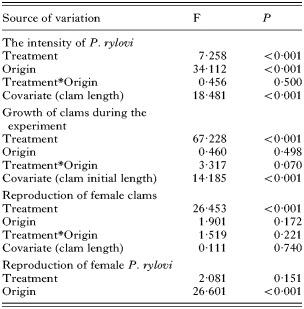
Table 2. Results of ANOVAs for testing the effects of treatment (stress, non-stressed control) and origin (Lake Ahveninen, Lake Jyväsjärvi) on the intensity of ergasilid Paraergasilus rylovi, growth of Anodonta piscinalis clams during the experiment, reproduction of female clams (the relative larval production index) and reproduction of female P. rylovi
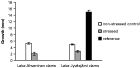
Fig. 2. Mean length-adjusted growth (±S.E.) during the experiment among stressed and non-stressed control groups in Anodonta piscinalis clams originally from Lakes Ahveninen and Jyväsjärvi kept in Lake Saravesi from September 2002 to August 2003. Reference groups were kept in their lakes of origin, but those kept in Lake Ahveninen were lost.

Fig. 3. Reproduction of female Anodonta piscinalis clams, measured as the relative larval production index (%, the proportion of gill blade volume filled with glochidia) on 18 August 2003, in clams originally from Lake Ahveninen and Lake Jyväsjärvi but kept in Lake Saravesi from September 2002 to August 2003. Reference groups were kept in their lakes of origin, but those kept in Lake Ahveninen were lost.
 You have
Access
- 16
- Cited by