




No CrossRef data available.
Article contents
- Abstract
- GENERAL INTRODUCTION (BY J.-F. GRAF)
- PRODUCT DEVELOPMENT (BY R. GOGOLEWSKI)
- ACARICIDE REGISTRATION, USE, MIS-USE AND RESISTANCE IN SOUTH AMERICA (BY G. J. ARANTES, G. A. SABATINI, M. B. MOLENTO & E. L. BORDIN)
- TICK RESISTANCE IN BRAZIL: SURPASSING EXPECTATIONS
- PROBLEMS ASSOCIATED WITH THE DEVELOPMENT AND USE OF ACARICIDES IN THE FIELD (BY NICK LEACH-BING)
- References
Tick control: an industry point of view
Published online by Cambridge University Press: 19 April 2005
Article contents
- Abstract
- GENERAL INTRODUCTION (BY J.-F. GRAF)
- PRODUCT DEVELOPMENT (BY R. GOGOLEWSKI)
- ACARICIDE REGISTRATION, USE, MIS-USE AND RESISTANCE IN SOUTH AMERICA (BY G. J. ARANTES, G. A. SABATINI, M. B. MOLENTO & E. L. BORDIN)
- TICK RESISTANCE IN BRAZIL: SURPASSING EXPECTATIONS
- PROBLEMS ASSOCIATED WITH THE DEVELOPMENT AND USE OF ACARICIDES IN THE FIELD (BY NICK LEACH-BING)
- References
Abstract
The development of new acaricides is a long and very expensive process. Worryingly, there is increasing resistance to available acaricides worldwide leading to the real possibility that our dwindling supply of effective acaricides will be exhausted unless action is taken to increase the number of new acaricidal products and reduce the rate of resistance development. In 1995, eight major animal health pharmaceutical companies formed the Veterinary Parasite Resistance Group (VPRG) to act as an expert consultative group to guide the FAO in resistance management and collaborate in the prudent use of acaricides. In this paper, members of the VPRG discuss the problems and processes in acaricide development, resistance in the field to commonly used acaricides and the different considerations when targeting the cattle and pet market, and give their view of the future for tick control from the perspective of the animal health industry.
Information
- Type
- Research Article
- Information
- Copyright
- © 2004 Cambridge University Press
GENERAL INTRODUCTION (BY J.-F. GRAF)
Since the middle of the nineteenth Century, when the cattle industry was developing in many tropical and subtropical countries, ticks became a major economic problem and, consequently, tick control measures began to be developed. In some regions, like Africa and South America, tick populations were already present; in others, like Australia, they were introduced accidentally with imported cattle. Through the direct and indirect damage ticks cause, and particularly because of the important livestock diseases they vector, ticks account for significant productivity losses and some of the pathogens they transmit can be fatal to the host animal. The use of ‘exotic’ breeds (i.e. of European or North-American origin) exacerbates the problem, as these breeds usually lack significant natural immunity against the various tick-borne diseases and can barely survive without a protective chemical umbrella. Ticks constitute the major limiting factor to successful cattle husbandry in many parts of the world.
Until the middle of the twentieth Century the available means for tick control were limited. The major products used were arsenic derivatives, characterized by their low efficacy and residual effect and their high cattle toxicity. With the discovery of the insecticidal properties of DDT in 1939 and the subsequent huge development of the organic pesticides, the situation improved dramatically for the cattle breeders all over the world. Tick control could fully profit from the development of the whole ranges of insecticides and acaricides, although this development was mainly driven by the needs of the crop protection industry. All the major categories of insecticides, the organochlorines, the organophosphates, the amidines, the pyrethroids and, more recently, the benzoylphenylurea growth regulators, gave birth to significant tick control products.
Tick control was thus an attractive market, generating significant research and development efforts from major animal health companies. The major challenge for the industry and the main driver for innovation certainly was the development and the spread of resistance to acaricides. With respect to the development of novel acaricides, the industry was successful in its efforts to deal with resistance and was able to bring new products with new modes of action each time the situation in the field required it: (1) DDT and other organochlorines appeared in the mid-1940s and early-1950s just in time to allow the cattle farmers to deal with the increasing resistance to arsenic compounds. (2) The organophasphates, from the early 1960s onward, constituted the answer to the rapidly spreading resistance to organochlorines. A decade or so later, when the organophosphates started to lose their efficacy, the amidines were made available first to boost or spike existing organophosphate dips, then as self-standing products. Amidine resistance appeared in the late-1970s, but was not given the time to spread and establish itself: the pyrethroids, based on their excellent efficacy and their large spectrum, took over large parts of the markets in the 1980s. (3) From the very beginning pyrethroids suffered from cross-resistance to DDT, based on a similar mode of action. Genuine pyrethroid resistance appeared during the mid-1980s, spreading quite rapidly in the nineties and allowing an important come-back of the amidines, whose potential had not really been fully exploited during their initial introduction. (4) The increased use of amidines has unfortunately lead to the re-appearance of resistance to this class of substances. Its practical impact is still difficult to assess at the current stage. (5) New products and solutions have made their appearance during the last decade. They focus mainly on the one-host, Boophilus spp., tick market. An acarine growth regulator based on a benzoyl-phenyl-urea has been developed and a slow-release macrocyclic lactone injectable is available in some countries. No resistance to these products has been reported so far. A tick vaccine, also thought unlikely to lead to resistance, is on the market in Australia and in some Latin-American countries (see chapter by Willadsen in this Supplement).
Another driving force behind product innovation is the safety and efficacy aspect, and when current products are being compared with the old arsenic-derivatives, it is evident that considerable progress has been achieved here as well. On the efficacy side, modern products when applied correctly are about as efficient as drugs can be. On the safety side, the organochlorines were much more favourable from an acute toxicological point of view, but their lipophilicity and stability eventually turned out to be a major drawback in the long term. The disappearance of organochlorines from the market was due to their accumulation in the environment and the food chain, as much as to the resistance they created. The organophosphates, although acutely more toxic than their predecessors, offered the advantage of being biodegradable, rapidly metabolized and allowed consequently shorter slaughter-withholding periods. The pyrethroids combine to a large extent the safety features of the organochlorines and the organophosphates but their major drawback in this regard is their potential for skin irritation and sensitization with topical pyrethroid application. The growth regulators, acting on targets specific to the arthropods (in this case on chitin synthesis), are largely innocuous to mammals. The tick vaccine, of course, offers the advantage of being devoid of residue problems.
Safety is a relative concept. All the products mentioned, with the exception of the vaccine, are pesticides and are required to be toxic to ticks. Thus, the products are likely to be toxic to other living organisms as well. The safety notion relates mainly to the target host, the user of the product and the consumer. Even modern and ‘safer’ products are not devoid of detrimental side effects towards aquatic invertebrates, fish or birds, for example. All precautions related to the use of pesticides have hence to be followed and the product-specific recommendations, as stated on the labels, have to be strictly respected.
Recent changes in acaricide markets
During the last decade or so, a shift has been observed in the marketplace, which has consequently affected on the attitude of the industry. Several factors account for this change:
The cattle acaricide market
This has lost some of its attractiveness from a commercial point of view. Large, state-subsidized tick eradication or control campaigns, as they were run in countries like Kenya, Argentina, Mexico, Cuba, to cite but a few, have largely disappeared, mainly for financial reasons. Frequencies of treatments are decreasing and the cattle industry is regressing in several countries. Exotic breeds are being replaced by local ones which have some natural resistance to ticks and thus require less care, but also show diminished productivity. The tick problem is often no longer perceived as being as important as it was. The cost-benefit of intensive treatment is being re-assessed on a different basis. The idea of tick eradication has been abandoned almost worldwide and the concept of enzootic stability is gaining ground. Regular treatments with highly efficient products may also have led to the decline of the tick populations, at least in one-host tick countries, and thus to reduction of the treatment frequency.
The pet ectoparasiticide market
This has gone through a tremendous development during the past few years, driven mainly by the huge increase in need for flea control. Sales of pet flea products are a multiple of those of cattle tick products. Tick control in pets, a widely neglected sector in the past, is gaining momentum. “As money goes where money is”, the animal health industry has tended to shift its focus towards pet products that are believed to be somewhat easier to develop (no residue problems) and more profitable. While in the past, parasiticides were developed for use in large animals and then possibly adapted to use in pets, the opposite can now be observed. Some very successful molecules in pet ectoparasite control did not and probably will not, for various reasons, make their way to the large animal market.
Regulatory requirements
These are increasing for parasiticides as they do for all other products. Regulatory requirements are eventually aimed at the safety and the protection of whatever and whoever comes in contact with the product, the environment, the treated animal and the human beings, including manufacturer, user and consumer. There is of course no objection to that, quite the contrary. However, for the industry, the required higher investments in time and money into a shrinking, or at the best flat, market does not offer a very attractive prospective. Thus, research and development money is likely to flow in other directions.
The trend of increased resistance to current products, yet with decreased prospects of new product development, means that parasiticides, like many other chemicals, cannot any longer be considered as coming from indefinitely renewable sources and have to be dealt with in a more sustainable way. This is in the interest of all the participants in the scenario: the producers, consumers, governments and the animal health industry.
Eight major animal health pharmaceutical companies (Merial, Pfizer, Schering Plough, Elanco, Novartis, Bayer, Intervet and Fort Dodge) formed the Veterinary Parasite Resistance Group (VPRG) in 1995 and act as an expert consultative group to the Confédération Mondiale de l'Industrie de la Santé Animale (COMISA). The major task of the group is to advise or direct industry and non-industry on the implications and consequences of parasite resistance, monitoring and management. VPRG is also part of a FAO/Industry contact group on parasite resistance whose general objectives are to: (1) assess the current status regarding the development and prevention of parasite resistance; (2) assess the status of development and implementation of sustainable parasite control strategies; (3) support establishment and dissemination of guidelines, protocols and test kits to monitor resistance development; (4) discuss specific areas for collaboration with industry; and (5) support FAO to lobby for drug registration and quality monitoring systems where lack of these contributes to the development of resistance. A recent practical example for this collaboration is the support and funding of CENAPA (Mexico) for the establishment of a modern and efficient tick resistance monitoring system.
The different sections of this presentation have been provided by representative members of the VPRG from some of the companies cited above and include: the various aspects of new acaricide development, the regulatory requirements, a detailed review of tick resistance management in Brazil and lastly the practical problems associated with the development and use of acaricides in the field. It is hoped these will highlight some of the workings and problems of acaricide development and resistance from individuals working in the animal health industry that academic ‘tickologists’ may not fully appreciate. The main message out of this contribution should be that the long-term interests of those involved, industry, non-governmental organizations, farmers and consumers, are the same and that only measures agreed and implemented in common will allow us to keep parasite burdens under an economic threshold and keep animal husbandry manageable and profitable.
PRODUCT DEVELOPMENT (BY R. GOGOLEWSKI)
Introduction to product development
Commercial development of a new compound that is derived from a screening programme is a long process that is fraught with a high level of risk. Costs of product development are high, with estimates for a new anthelmintic product based on a new chemical entity in the range of USD$30m to USD$50m. The fully allocated costs of discovery, development and global registration of such a new product can exceed USD$100m (Soll, 1997). For the purposes of this section, unless otherwise stated, the target species considered will be cattle as an example of a production animal for which product development is often more complex compared to that of companion animal developments. The target pathogen will be Boophilus microplus (cattle tick), a one-host tick and the most economically significant acaride of cattle. In view of the niche nature of the cattle acaricide market, the expected return may not justify the full development costs of a new chemical entity for use solely as a bovine acaricide. Therefore the business plan for the development of a new acaricide may need to be a part of a broader use opportunity. Either the new product should have combined anthelmintic and ectoparasiticide properties for use in cattle or have utility in another economically significant area such as agrochemical insecticides. Diversification of formulations, target parasites and species for application will underpin the business plan for the development of a new animal health product.
The goal of a development programme for any pharmaceutical product is the preparation of a registration dossier that reports fully on the safety, efficacy, and chemistry and manufacturing controls for the new product. While considerable efforts have been undertaken to harmonize regulatory requirements across geographic regions, significant attention needs to be given to ensure that the development plan covers the requirements of the regulatory bodies responsible for the respective target markets.
The process of product development involves a number of components each of which will be discussed under the following categories: claims development, pharmaceutical development and business development. Quality standards will also be discussed. Generation and interpretation of data and development of methods and processes for each of these categories proceeds concurrently. In addition, product development projects are subjected to periodic technical and business reviews to assess progress and address issues.
Claims development
Drug metabolism, pharmacokinetics and residue depletion profile studies
These are undertaken early in the development programme to establish the metabolic profile of the compound by determining its tissue distribution and identifying the nature and distribution of any metabolites. Analytical methods for identification of the compound and its metabolites in tissues and plasma must also be developed. Initial studies on the fate of the active ingredient are conducted in laboratory animals. These studies may also assist in the interpretation of the hazards identified in the toxicity studies. Pharmacokinetic studies are conducted to determine bioavailability and characterize Absorption, Distribution, Metabolism and Excretion (ADME testing) of the compound and its metabolites. These studies are conducted in the target animal and for production animals provide a basis for establishing the constituents of tissue residues (parent compound and/or metabolites/degradates) and identifying the target tissue(s). Residue depletion studies are completed to estimate the total residues present at various intervals after dosing and their distribution among edible tissues. These data are used in combination with food safety assessments to establish a withholding period for products for use in production animals, the details of which are discussed further below.
Safety
In development of an animal health product, the demonstration of safety encompasses: consumer safety, target animal safety and environmental safety. It is essential to establish an acceptable safety profile early in the development process. Many product candidates fail because of an unacceptable safety profile. In the development of a product for use exclusively in companion animals less safety data may be required, especially for products not applied topically, because the extent of human exposure is significantly reduced, compared to a product for use in production animals.
Consumer safety
An assessment of safety for consumers involves establishing handler safety for individuals administering the product or handling treated animals, occupational safety for individuals exposed to either active constituents or formulated product, and food safety for individuals possibly consuming tissues containing drug residues.
Safety for animal handlers and individuals with occupational exposure is typically assessed with a battery of single-dose tests assessing toxicity in laboratory animals following oral or dermal exposure of large doses of either the active ingredient or formulated product. Acute inhalation studies, sub-acute and sub-chronic toxicity studies may also be conducted. In addition, dermal and ocular irritation tests and dermal sensitisation studies are done. The carcinogenic potential of the active ingredient is assessed in a battery of in vitro genotoxicity studies. If results suggest genotoxicity, lifetime carcinogenicity bioassays must be conducted in two species. Reproduction studies and developmental toxicity studies are also conducted to determine potential effects on male and female reproductive performance and for teratogenicity. The results of these tests are used to define the hazards and precautions necessary for users of the product. If the results of these tests indicate an unacceptable hazard, product development is terminated.
Food safety is ensured by establishing a WithHolding Period (WHP) – the stipulated interval which must elapse between treatment with a product and slaughter to allow sufficient time for depletion of residues to non-hazardous levels. The potential risk of an adverse event due to the consumption of drug residue in food is dependent on the inherent toxicity of the drug multiplied by the estimated exposure to the drug residue. The hazard characterization process involves determination of a No-Observable-Effect-Level (NOEL) from an assessment of the toxicity testing results. An Acceptable Daily Intake (ADI) for people is established by applying a Safety Factor (SF) to the NOEL. The SF is applied to allow for a level of uncertainty in extrapolating the results of toxicity testing in animals to establish human toxicity. The ADI is the amount of residue one can consume on a daily basis for a lifetime without an appreciable health risk. The ADI is then used in association with given dietary consumption values for animal-derived food products to calculate safe tissue concentrations (SC) in food. The SC is used with residue chemistry data to determine the Maximum Residue Limits (MRL) that are permissible in food. The WHP is determined from the residue depletion profile, as the required period following treatment for residues to deplete to a level where no edible tissue exceeds its specific MRL. MRLs and their associated WHPs are intended to ensure that residual drugs have no harmful effects when consumed at their maximal concentrations.
Target animal safety
Safety studies are conducted in the target animal to determine any adverse effects that may occur under the proposed use of the product. These studies are conducted with the final formulation and establish a margin of safety – the ratio between the maximum recommended use level and the minimum dose producing a toxic effect. Toxicity studies generally test multiples of the proposed commercial dose (for example 1, 3, 5 times the selected dose, repeated at intervals generally at least three times the proposed duration of use). The selection of the duration of use is determined by taking into account the proposed use and the known pharmacological and toxicological properties of the active ingredient. In some instances, where preliminary non-target laboratory animal data provide non-conclusive data on toxicology, a tolerance study using a single exaggerated dose level, say 10× the recommended dose, may be necessary to support the target animal safety assessment. Observations of target animal safety under normal conditions of use are also made in field studies. Tissue irritation studies are also conducted, where appropriate, for products administered, for example, as topical pour-ons or spot-ons or by injection. In addition, studies may be conducted to demonstrate safety for breeding animals if the product is recommended for use in these animals. Such studies assess the product's effect on male and female reproductive functions, including assessment of embryotoxic and teratogenic potential in the target animal.
Environmental safety
An environmental impact assessment is conducted as part of the product development process to investigate the potential for environmental exposure and to assess potential hazards. Environmental studies are conducted to assess the risk of environmental exposure during manufacture, use and disposal of the product. Degradation of the active ingredient in water and light is assessed. The metabolism of the active ingredient in the environment (aerobic and anaerobic), potential for bioaccumulation and mobility in soil are also determined. Ecotoxicity potential for non-target species such as birds, and other vertebrates, aquatic organisms, non-target invertebrates and vegetation may also be necessary.
Efficacy
Provisional proof of concept must be demonstrated in the target animal against the target pathogen. At this early stage experimental formulations are generally used and are refined later in the programme if development proceeds. Dose-ranging studies are then undertaken to establish a suitable range of doses to be evaluated in a dose titration study. Generally, the range of doses evaluated should encompass a suboptimal dose and a dose in excess of that considered appropriate, and where no detectable increase in efficacy is observed. In some instances dose-justification studies are conducted. Selection of the final formulation must be completed at this stage to ensure that an appropriate dose is delivered by the chosen formulation. After selection of the dose, confirmation that the chosen dose is appropriate is demonstrated by the conduct of dose confirmation studies. For these studies, and target animal safety studies, the test compound is generally derived from a biobatch – a batch of formulated product manufactured at one tenth, or more, of the anticipated commercial scale of manufacture.
Tick dose-confirmation studies are directed at establishing therapeutic effect, and for formulations or compounds with persistent activity, the extent of prophylactic (preventive) activity must also be established. Therapeutic effect is demonstrated by ensuring a high level of efficacy following treatment of cattle on which all stages of ticks (larvae, nymphs and adults) are present at the time of treatment. Ideally such studies are conducted in pens with collection of all engorged ticks that drop from an adequate number of treated and untreated control cattle during approximately three weeks. At least five cattle per treated and control groups, held individually in pens, are usually used. Ideally pens should be constructed of solid partitions, to prevent cross-contamination of drug and ticks, and with mesh raised floors, to allow all engorged ticks dropping from each animal to be collected in wire baskets below the mesh. Pen studies should utilize induced infestations of a relevant tick strain whose origin and drug resistance spectrum are known. Starting about three weeks before treatment, 2500 to 10000 unfed larval ticks are placed onto each animal on about ten occasions prior to treatment. Cattle are randomly allocated to treatment groups based on a ranking of individual animal means of about three tick counts made over about three days before treatment. Following treatment, engorged ticks which have dropped from the animal are collected daily for a period of at least 23 days to ensure there is adequate time to complete the life cycle on cattle. Efficacy is determined by comparing the total number of engorged ticks collected from treated cattle and control cattle using appropriate statistical methods. In addition to an assessment of tick numbers, estimates of the biotic potential of ticks retrieved from treated and untreated cattle are usually undertaken. Various methods are employed to determine biotic potential, but a common method involves estimation of an index of reproduction for the engorged ticks collected each day. A sample of engorged female ticks from each animal on each collection day is selected for counts of eggs produced and percent egg hatchability after a suitable incubation period. An index of reproduction (IR) (Cramer et al. 1988) can be calculated as follows:

where TWT=Total weight of ticks; EWT=Weight of eggs produced; HT=Proportion of eggs hatching; WTIN=Weight of ticks incubated.
Total weight of engorged ticks collected may also be a useful indicator of activity. Benchmarks of acceptable therapeutic efficacy to sustain a regulatory claim vary among regulatory jurisdictions but are generally within the range of 90 to 98% efficacy, relative to untreated controls.
Development of formulations with persistent activity requires the establishment of the period of prophylactic efficacy against ongoing tick challenge. In such studies tick challenge must occur after treatment, at least twice weekly. The period of persistent efficacy is defined as the period taken for adult female ticks on treated cattle to establish to 2% to 10% (varies among regulatory jurisdictions) of ticks on untreated controls. It is important that animals should be exposed to normal weather conditions to establish a prophylactic period. To ensure adequate control of the study and continuing adequate challenge the execution of such studies in pens is preferred (uncovered pens for topical formulations).
In addition to controlled studies in pens for dose selection and confirmation, the efficacy of the acaricide must be assessed under a wide variety of field-use conditions, including various geographic locations, and both climatic and seasonal conditions. The resistance profile of tick strains encountered in field studies should be defined by in vitro testing. Additional considerations include the demonstration of rain-fastness for topical formulations. For dipwash formulations the stability and the rate of loss of active agent from the dip (stripping) must be established together with measures required to maintain the appropriate concentration of active ingredient during the dipping procedure.
Pharmaceutical development
Formulation development
Following identification of a promising new agent in a screening programme experimental formulations are prepared to demonstrate activity in vivo, including in the target animal. As described earlier, proof of concept is an important hurdle, together with demonstrating an acceptable safety profile based on initial inherent toxicity testing, in the decision to proceed with product development. It is also important to generate preliminary stability data for the new agent using formulations similar to the expected final formulation so there is a reasonable level of confidence that acceptable stability of the proposed commercial product is likely. By the stage of dose determination, selection of the final formulation should be completed to ensure that an appropriate dose is delivered by the chosen formulation. Long-term stability tests must also be initiated in order to verify that the compound is stable in the chosen formulation and a commercially acceptable shelf-life is achievable. In cattle acaricide markets, a shelf-life of at least two to three years is the minimum acceptable period, but a five year shelf-life is preferred considering the seasonality of tick infestations, the extensive nature of the grazing industry, time intervals required for shipping products and storage in the distribution and retail channels. Stability protocols include storage of the product under a variety of temperature and humidity conditions to establish the physical and chemical stability of the product. Accelerated stability testing, under elevated temperatures and relative humidity is also commonly utilized to provide an early indication of long term stability.
Manufacturing development
Throughout the product development period the development of manufacturing processes and capability are ongoing and include the development of processes for preparation of bulk compound, development of scale-up processes and identifying or establishing production facilities for handling all elements of product manufacture including packaging. Procedures for quality control processes and analysis of batches of product also need to be established.
Quality standards
To ensure the quality and consistency of studies undertaken to support registration of an acaricide, like other pharmaceutical products, studies are generally performed in compliance with internationally-recognised guidelines, according to the study type. In general, the Good Clinical Practice Guidelines (GCP1
(GCP) European Union Good Clinical Practice for the Conduct of Clinical Trials for Veterinary Medicinal Products. International Cooperation on Harmonization of Technical Requirements for Registration of Veterinary Medicinal Products Guideline 9 entitled Good Clinical Practice.
(GLP) US Environmental Protection Agency Good Laboratory Practice Standards in the Federal Register, 40 CFR 160, Volume 54, No. 158, August 17, 1989. UK Good Laboratory Practice Regulations of 1997, Statutory Instrument number 65. OECD Principles on Good Laboratory Practice (Revised 1997, issued Jan. 1998) ENV/MC/CHEM(98)17.
(GMP) CVM Guideline No 42 Animal Drug Manufacturing Guidelines. Code of Federal Regulations Title 21, Volume 4, Part 210 – Current Good Manufacturing Practice in Manufacturing, Processing, Packing or Holding of Drugs: General. Code of Federal Regulations Title 21, Volume 4, Part 211 – Current Good Manufacturing Practice for Finished Pharmaceuticals.
Business development
The significant costs of development of a product such as a new acaricide must be critically assessed to ensure that the product opportunity is of sufficient merit to justify the investment and be likely to generate a satisfactory financial return. Market research on the product opportunity and assessment of the product's net present value underpin the commercial justification to proceed with development. Definition of the market image of the product including selection of packaging must also be undertaken.
Conclusion on product development
The principles described above are generally applicable to the development of acaricides in species other than cattle, except for companion animals where food safety considerations are not applicable (see section below by Leach-Bing). The foregoing confirms the comprehensiveness, complexity and risk inherent in the process of development of a veterinary product such as an acaricide and explains the high costs of product development of a new active compound.
ACARICIDE REGISTRATION, USE, MIS-USE AND RESISTANCE IN SOUTH AMERICA (BY G. J. ARANTES, G. A. SABATINI, M. B. MOLENTO & E. L. BORDIN)
Acaricide regulatory policies in Mercosul: overview and tendencies
The Common Market of the South of the Latin America Continent (Mercosul) is formed by Argentina, Brazil, Paraguay and Uruguay and like most of emergent and developed countries, in Mercosul a veterinary product must be registered before its commercialization. These countries have harmonized some of the requirements for veterinary product registration, which is performed by each competent governmental organization. According to Argentinean, Brazilian, Paraguayan and Uruguayan laws, after fulfilling the requirements, the stated time for granting the registration is 90 days for pharmaceuticals and chemicals and 120 days for biologicals, biotechnologicals and new drugs. Each registration expires after ten years, with the possibility of each being renewed. The requirements of the registration must be accompanied by a dossier, in which a range of information is provided, for example commercial name of the product, name of the company, pharmaceutical form, quali-quantitative formula of the active ingredients and excipients, identification of the product, description of the production method, mode of action, indications, how to apply and dosages, quality control, possible side effects, correct conservation of the product, expiration period, published and unpublished data to support informed requirements, label samples and responsible expert among others.
Some issues are becoming more critical for registration approval as the governmental agencies become more stringent in their requirements. For example, Europe, US, Japan and others of the more developed markets have increased their quality standards based on food safety and consequently their barriers for the importation of products such as meat, milk, grains, etc. These markets are requiring strict residue profiles for products that will be directly related to the food safety.
It is worth summarising the history of cattle tick control in Brazil in order to discuss the current requirements for registration of an acaricide. The first compounds used for tick control were the arsenicals. In 1922 the cattle were treated in dip vats (Legg & Foram, 1930). Then in 1939, the organochlorines (such as DDT, lindane, dieldrin, BHC and toxafen) were introduced into the market as acaricides. A decade or so later, the organophosphates like diazinon, chlorpyriphos, dichlorvos, coumaphos, ethion, phenthion and trichlorphon, whose insecticidal properties were already known, were used as ectoparasiticides. The carbamates (carbaryl and propoxur) have also been used for tick control (Laranja, 1988). The amidines, the main member of this group being amitraz, appeared on the tick control scene in 1963, and they are still available as a spray or dip for use in cattle against Boophilus microplus (Taylor, 2001). The synthetic pyrethroids (flumethrin, cypermethrin, deltamethrin and cyhalothrin) have been used as pesticides since the mid to late 1970s and are known to provide excellent knock-down (Casida et al. 1983) when used in the control of ticks and flies. The newest acaricides are the macrocyclic lactones (ivermectin, abamectin, doramectin, eprinomectin, and the milbemycins, like moxidectin), phenylpyrazoles (fipronil), insect growth regulators (e.g. fluazuron) and the naturalytes (e.g. spinosad).
Each class of chemical has its unique characteristics and these are completely different from the old ones. The insect growth regulators (IGR) do not achieve more than 95% efficacy within the first 23 days post-treatment as required by Mercosul governmental agencies. Such compounds do not kill the target parasite directly, but interfere with growth and development. IGRs have proven to be one of the most recent and successful areas of research (Perrier, 1993) acting mainly on immature stages of the ectoparasite and as such are not usually suitable for the rapid control of established adult populations of ticks. Another example of a ‘different’ acaricide, is spinosad, the newest weapon against the cattle tick, B. microplus. The effect of the molecule is mainly observed on immature stages of the ectoparasite, but it also controls adult ticks. This compound, when applied according to the manufacturer's recommendations, does not reach the efficacy requirement (95% within the first 23 days post treatment), but on the other hand there is no withdrawal period for milk or meat. Spinosad is safe for animals and humans, and environmentally friendly due to its relatively rapid breakdown in soil (Thompson et al. 1995a; Hale & Portwood, 1996). The biological control, by fungi, bacteria or nematode larvae would also face some difficulty in the registration process if the requirements of the relevant government organizations do not change.
In Mexico, a new acaricide directive was introduced in 1993, which was very similar to the Australian regulatory guideline at that time. It required that for registration, a new cattle acaricide must deliver a minimum average of 98% efficacy against B. microplus in vitro in a stall test and in a field efficacy test. There is no ‘aids in the control of’ claim allowed as occurs in Australia and in other countries, nor flexibility to register products that would be useful in tick control programmes but do not meet the 98% hurdle. There is of course no desire to lower the requirements for border crossing, eradication and quarantine treatments – where perhaps 100% efficacy should be the appropriate standard. Fluazuron and the macrocyclic lactone products have been able to meet these qualifications only by not including the data generated during the first days of the trial, where the efficacy is lower. The anti-Boophilus microplus vaccine (TickGuard) was registered before 1993.
The control of ectoparasites of veterinary importance still relies heavily on the use of chemicals of whatever origin or class. Chemical compounds have, however, suffered a number of drawbacks such as the development of resistance to nearly all classes of chemicals (Cardozo et al. 1984; Curtis, 1987; Desquesnes, 1987; Martins & Furlong, 2001), or human, animal or environmental safety concerns, like the necessity to limit the chemicals residues in human food (Nolan & Schnitzerling, 1986; Kemp et al. 1998) and strict risk assessment of environmental impact due to veterinary products (Koschorreck, Koch & Ronnefahrt, 2002). One of the major limitations to the development of products with novel modes of action is that most of the existing pesticides target the nervous system and there is a limit to the number of neuroactive target sites (Taylor, 2001). Other important issues like high research and development (R&D) costs and the long time from the discovery of a new active ingredient and the market of the product have also to be considered.
For effective pest control around the world it is necessary to have available a range of compounds with different modes of action to enable the rotation of these chemicals and so help to manage existing resistance. We believe that the emergence of new molecules will have a valuable place in pest control programmes, because of their novel modes of action against synthetic pyrethroid-, organophosphate- and amidine-resistant ticks. The new compounds also need to have good safety characteristics for cattle and operators, as well as good food safety qualities and a ‘soft’ environmental toxicity profile. All these factors are important when evaluating a new drug. In our view, the 95–98% guideline is keeping valuable new chemistry from the marketplace. We consider that the current Australian guideline (http://www.nra.gov.au/guidelines/cattick.shtml) is a reasonable example of a modern approach to assessing the efficacy of new acaricides. It allows for an ‘aid in the control of’ claim (i.e. less than 98% efficacy) and permits flexibility in efficacy parameters, allowing to demonstrate the potential of such methods to provide satisfactory, stable levels of tick control in longer term field trials.
More investment in alternatives for tick control and acaricide resistance management are necessary. Some work has been carried out on biological control, mainly with fungi (Onofre et al. 2001), and impressive results can be obtained with tick vaccines (Willadsen et al. 1992). The use of resistant hosts has shown to be effective (Frisch, 1999), but more research is needed. Governmental institutions, industry and researchers should encourage integrated tick control. Regarding acaricide resistance, bioassays, like amitraz larval packet test (Miller, Davey & George, 2002), have been modified and improved, but the development of DNA-based tests should be better explored. Molecular biological tools provide a way to detect resistance before its emergence, when resistant gene frequency is insufficient to cause reduction of treatment efficacy. Hence, when resistance is detected by means of DNA-based tests the producer can change the acaricide to another of a different chemical class, avoiding the exhaustion of the former product. This procedure, acaricide resistance detection at an early stage of development, could certainly prolong the useful life of all chemicals. Unfortunately, there are few studies on molecular mechanisms of acaricide resistance (Jamroz et al. 2000).
There are no weapons that can replace the use of chemical or biological products in the control of parasites. It is very important to use these products prudently in order to improve their useful life and to reduce the probability to induce resistance. The parasiticidal agents for use in animal health should be considered as a non-renewable resource. It is necessary to implement combined control strategies but this requires additional effort and constant monitoring process.
TICK RESISTANCE IN BRAZIL: SURPASSING EXPECTATIONS
The development of parasite resistance has created an alarming situation for all parties involved in the food producing process, because this shortens the lifespan of the drugs, makes the market less profitable and narrows the alternatives for sanitary management. Parasite resistance is a rapidly growing global problem but it is particularly grave in Latin America where many countries are facing resistance to several parasite groups with helminths, ticks and horn flies being the most important.
Authorities and industry are concerned about this problem and have taken steps to study how to monitor, prevent and control the development of resistance to parasiticides. A standing Food Agriculture Organization (FAO) Working Group and an FAO/INDUSTRY Contact Group, the latter represented by the Veterinary Parasites Resistance Group (VPRG), has been created in order to guide FAO in resistance management and explore areas of collaboration between FAO and the industry in the prudent use of parasiticides in an attempt to control and prevent resistance development.
In Brazil, ticks are responsible for serious damage to the cattle industry, including the tick-borne diseases Babesia bovis, B. bigemina and Anaplasma marginale, which show high morbidity and mortality. Reliable estimates suggest losses of $1 billion/year (Horn, 1983), and this figure may have doubled since then, due to tick drug resistance. Tick eradication is impracticable, mainly due to environmental conditions. Temperature and humidity conditions enable tick free-living stages to survive throughout the year, and the tick population to complete up to four generations in a single year. Ticks may also survive to breed on wildlife (deer and capybara), complicating the research and economical effort.
Ticks are regarded as one of the main limiters for animal productivity. Tick control programmes in Brazil rely heavily on the use of chemotherapy. As an inevitable consequence, parasite selection initiates soon after any drug is released in the market. There have been many publications reporting resistance to Boophilus microplus, which is the most economically important tick found in South America (Merlini & Yamamura, 1998). Although the genetic potential of cattle in Brazil is undoubtedly high in many regions, the problem is that producers do not understand the importance of technology transfer projects and use chemical products intensively, hence, favouring the development of drug resistance. Producers rely on the questionable technical information available at the ‘Casas Agropecuárias’, where farmers can choose and buy all kinds of chemical products with little governmental control. Another difficulty is informing producers that maintaining parasite populations with low drug exposure would prevent the rapid development of drug resistance. Drug failure may be reported by any producer who suspects it immediately after treatment with the observation of a new infestation, a smaller than expected reduction in tick numbers on the animals or a complete failure of the treatment.
As is applicable to any parasite species, the success of tick control methods relies on the knowledge of the epidemiology of the species in question. A typical situation occurs during the rainy season (November to January) in Brazil, when most of the larvae are present in large numbers on pasture. The drug applied as pour-on, immersion or aspersion cannot be correctly absorbed by the animal and ticks would be exposed to low toxic levels with consequent low drug efficacy. The unrestricted drug usage, the under dosage, the incorrect drug administration, the host genetics and the treatment during a season with low impact on parasite reduction are some other factors that would contribute to the appearance of resistance.
There are many management alternatives that could be applied to maintain drug efficacy. Pasture rotation is one of the most efficacious non-chemical methods. The combined use of acaricides and pasture rotation (Voisin system) has the objective to treat animals strategically preventing pasture build up of infective larvae during summer months. Using this alternative, tick populations in refugia would be exposed to low levels of the chemicals maintaining a predominantly susceptible genotype. As a consequence it would allow the drug to retain its toxicity against future tick generations. The treat-and-move practice may support higher grazing stocks, but its usage as the only tick control method is still being evaluated, mainly because it may select parasite populations faster than slow rotation.
Evidence of chemical resistance in Brazil
Usually farmers do not have an official programme to control external or internal parasites; this is very true for the Latin American region, where parasite challenge can be severe and products are heavily used regardless of the management system, dose or route. Also, for countries in this area there is a lack of any real guidance to the producer regarding recommended parasite and chemical management practices.
Among all internal and external parasites that affect livestock in Brazil, the tick is by far considered the most important. In Brazil, resistance is widespread in the following States: Rio Grande do Sul (RS), São Paulo, Mato Grosso do Sul, Minas Gerais, Goiás and Rio de Janeiro. Reports on parasite resistance involving ticks, flies, protozoa and, more recently, nematodes of lambs, horses and cattle is increasing and appears to be proportional to the zootechnic standards and animal husbandry. In Brazil, the first report on tick resistance was made by Freire in 1953 in RS, and involved arsenic. Following this came reports of many B. microplus-resistant strains to organophosphates (OPs), to pyrethroids, or association between pyrethroids and OPs or amidines or fenilpirazols. There are many reports of tick resistance in Brazil including Ops and the current macrocyclic lactones. Tick resistance was reported in all of the most important beef and milk producing states exposing an alarming situation (Martins et al. 1995; Silva, Sobrinho & Linhares, 2000; Vidotto, 2002).
The efficacy of chlorfenvinphos and cyhalothrin treatment was tested in 22 dairy herds in Goiânia, Goiás State, which is the second largest milk producing State in Brazil with 11% of the national production. Engorged females were divided into three groups: chlorfenvinphos at 500 ppm, cyhalothrin at 45 ppm and an untreated control group. Chlorfenvinphos and cyalothrin reduced reproduction in B. microplus by 100 and 77%, respectively. Saueressig (1999) and Silva et al. (2000) tested five products: coumaphos, deltametrin, chlorfenvinphos in association with cypermethrin, amitraz and alphamethrin in 27 dairy farms in Distrito Federal and Goiás. These authors determined that multidrug resistance was observed in all 22 farms and amitraz was the most efficient compound (Table 1). Another revealing survey was performed in the state of São Paulo. Ticks were collected from 17 cities in four different regions of the state. The North and the Northwest regions are zebu areas and the Southern and Vale do Paraíba are predominantly dairy areas. The results were expressed in terms of the reproductive efficiency and the product efficacy. The authors determined that none of the compounds tested, coumaphos, amitraz, organophosphates in combination with pyrethroids and pyrethroids, had an efficacy against B. microplus above 95%, excepting amitraz with an efficacy of 95·82% in the Southern region. It has been shown that the pyrethroid efficacies were lower than 50% in all the evaluated regions (Table 2). Although small differences between regions were observed, there are statistically significant differences between treatments (Mendes et al. 2001).


From 1997 to 2001, the Dairy Research Center of Embrapa, in association with other institutions, monitored the resistance status of B. microplus populations to acaricides mailed predominantly from the state of Minas Gerais. The work was done using the immersion technique accepted internationally (Drummond et al. 1973). A total of 574 samples were analyzed and the results are expressed by product, quantity and average efficacy on Table 3. It was determined that the association of chlorfenvinphos in combination with dichlorvos and chlorpyriphos in combination with dichlorvos had superior efficacy compared to all the other compounds or associations but only the first combination had an efficacy that would be suitable to be used in the field. Therefore the data suggest that in Minas Gerais there is a high number of multidrug resistant tick strains in the field (Furlong, Martins & Leite, 2002).

Resistance to organophosphates, synthetic pyrethroids and amitraz has been reported in the South and Southeast states of the country (Farias, 1999; Furlong, 1999; Molento & Dias, 2000). As a result, injectable avermectins have been used extensively for tick control. Martins & Furlong (2001) tested the efficacy of doramectin, ivermectin and moxidectin against B. microplus in a group of Devon and Aberdeen Angus breeds in Rio Grande do Sul. The animals were treated with doramectin (Dectomax, Pfizer) on October 19, November 29 and December 27, 2000. Because of a new infestation the animals were treated again on February 7, 2001, with ivermectin (Ivotan, Hoechst Roussel Vet) with unsatisfactory control. Then in March 20, 2001, twelve animals were retreated: 10 animals were treated with doramectin, one animal was treated with moxidectin (Cydectin NF, Fort Dodge), and one with ivermectin (Ivomec, Merial). Three uninfected bulls were added to the paddock immediately after treatment and were assigned one animal per drug. One week later, tick numbers had not declined and the engorged female ticks laid viable eggs. After 14 days all 15 animals were infested with immature ticks. As a salvation treatment all animals were treated with amitraz by immersion dip, which was repeated 14 days later. No ticks were observed on the inspected animals thereafter. The results show that a B. microplus strain has developed cross-resistance within the macrocyclic lactone family on the study farm. This report raises concern about the unrestricted use of this drug to control endoparasites and the associated development of rapid resistance to ectoparasites.
The most recent compound to be tested was the fluazuron (Acatak, Novartis), which has the ability to prevent tick development. Six farms were chosen in Rio Grande do Sul and for each farm the animals were allocated as two groups of 40 animals each. Group A was treated with fluazuron and group B within each farm management was treated with amitraz or ivermectin. Data were collected from field observation and in vitro assays showed that group A had 4·2 times fewer ticks on the animals compared to group B. Weight gain was higher for group A (51·91 kg) as compared to group B (40·40 kg). Therefore, fluazuron could be used as an alternative treatment where ticks have developed resistance to amitraz and to ivermectin (Alves-Branco et al. 2002).
Due to acaricide resistance, Fipronil (TopLine, Merial), a member of the pyrazole group, is the newest alternative treatment for the important Tick Eradication Program in Mexico, where coumaphos is the main chemical. Fipronil effectiveness and residual effectiveness were tested and the authors determined that they are related to the concentration applied. At 0·25 and 0·5%, the efficacy was 86·2 and 94·3%, respectively, but did not meet eradication programme standards. However, at 1·0% the efficacy was of 99·7%. At 0·25% the protection against larval reinfestation was less than one week, whereas at 0·5% no ticks were able to successfully reinfest animals for four weeks after treatment. Again, the 1·0% concentration produced the longest protection against larval reinfestation, providing 100% protection for eight weeks after treatment. Thus, fipronil has the potential to be used as a control and as an alternative to presently used chemicals and should also be effective against pesticide resistant populations (Araújo et al. 1998; Davey et al. 1998). At this time, there are no reports of resistance to fipronil against fleas or ticks.
Recently, a new compound, Spinosad, has been developed by Dow Elanco (Indianapolis, IN) for use in crop production systems (Thompson et al. 1995b). Spinosad, a member of the Naturalyte chemical class is derived from the mixture of two components, spinosyn A and spinosyn D (West, 1996), that are metabolites of the actinomycete Saccharopolyspora spinosa (Thompson et al. 1995b) that provide good contact activity. However the product is very toxic when ingested (Sparks, Crouse & Durst, 2001).
Elanco Animal Health (Greenfield, IN) is developing spinosad for use against arthropod pests of livestock. Davey, George & Snyder (2001) have conducted a study to determine both the acute and residual efficacy of a single whole-body spray treatment of spinosad against the southern cattle tick, B. microplus (Canestrini). Positive results obtained from the study could provide the United States Department of Agriculture (USDA), Cattle Fever Tick Eradication Program (CFTEP) with a viable alternative acaricide treatment for use in eradicating cattle fever ticks. Results of the study demonstrated that a single treatment with spinosad at concentrations of 0·05 and 0·15% applied AI (active ingredient) to cattle infested with all parasitic stages of B. microplus would provide 85–90% control. In addition, almost complete protection against larval reinfestation (residual effectiveness) could be expected for 1 or 2 weeks following treatment at 0·05 and 0·15% AI, respectively. The study indicates that spinosad could be used in an eradication programme of ticks in infested areas of the US if repeated (systematic) treatments were applied to cattle maintained on the premises.
Discussion
Although developing nations need a cheaper solution to parasite control, any new strategy or product has to be certified by a proper official agency after extensive standard scientific testing. Fortunately, driven by the pharmaceutical industry, synthesis and screening technologies for new drug development continue to improve, allowing rapid testing of a diversity of chemicals against selective targets (Hopkins, 1994). Research and product development are onerous and time consuming. Therefore, alternative procedures based on increased use, increased concentrations or more frequent treatments, have been successfully used as stop-gap measures. Restoration of a satisfactory level of efficacy through synergism, alterations of formulation or additive toxicity through combination with another chemical are tactics that have been utilized to deal with low resistance levels (Nolan, 1989). In many cases, where there is a high level of tick resistance, producers double the doses or use products at higher concentrations. This strategy may impose a hazardous risk to the environment and humans (Kunz & Kemp, 1984). The situation in Brazil is getting out of control because of the multidrug resistant strains. Ranchers use acaricides in cattle from highly toxic insecticides used in agriculture, having up to 14-day withholding periods. Another technical orientation that is causing rapid selection is the constant product rotation or the rotation of trade names instead of chemicals. Compounds that are being used with satisfactory efficacy must be handled carefully in order to protect the efficacy of the other chemicals in the future. A chemical rotation programme that is not science based or well managed will fail and select for multi-drug resistance in a much shorter time. This strategy will render a complete resistant genotype in the population, which could be impossible to remove. Thus, advising farmers to use a correct rotation programme is of great benefit regarding the maintenance of the new compounds efficacy.
Although drug resistance is inevitable, it can be slowed down with integrated strategic management practices, which could then reduce the number of drug treatments. There are no standard control protocols to follow up because the situation on each farm is unique. Therefore success will depend largely on the planning and monitoring, employing a combination of different strategies in the control of ticks and tick borne diseases.
PROBLEMS ASSOCIATED WITH THE DEVELOPMENT AND USE OF ACARICIDES IN THE FIELD (BY NICK LEACH-BING)
The total cost of discovering and developing a novel animal health drug was estimated in 1996 by Animal Pharm to be in the region of US$57 million, but more recent estimates put the figure at over US$100 million. The research and development for such drugs, from inception to launch, could take as long as 10 years, and can involve the synthesis of highly complex molecules (Witty, 1999). In this section, the issues and problems involved in the development and use of acaricides in the ‘real-world’ are discussed from the viewpoint of the animal health pharmaceutical companies.
Issues of acaricide development and use in the livestock sector
Although there is clearly a need for a new class of livestock acaricidal agent, the size of the potential ectoparasiticide market (estimates range from US$80 millions to US$150 millions) means that pharmaceutical companies tend to concentrate their livestock antiparasitic research on broad-spectrum agents e.g. macrocyclic lactones. Thus there is an immediate conflict between how the animal health industry perceives the need for a product and how those in the farming industry actually use it. Efficient tick control is a dynamic process that involves a number of other potentially conflicting issues between the pharmaceutical and farming industries:
The use of a new broad-spectrum endectocide will depend upon the type of farming operation (e.g. beef or dairy, calves or store cattle) and the species of parasite to be targeted. Thus, if a farmer is treating cattle for helminths using an endectocide, this treatment regimen may well not be suitable for certain concurrent ectoparasites. Clearly, simply treating with acaricides does not constitute an effective control programme.
Endectocides are expensive relative to, for example, synthetic pyrethroids or amidines, even though the dollar-per-dose price has dropped over recent years. Therefore, the reality for pharmaceutical companies is that farmers are unwilling to pay for expensive products unless they have both effective acaricidal and insecticidal activity. The alternative to products with combined activities is to produce a very cheap acaricide (e.g. amitraz) that farmers will use more often in combination with a relatively cheap insecticidal product. It has been estimated that annual spending on tick control by farmers can range from US$2·5 to US$25·0 per head of cattle, depending on the country and type of farming operation (Pegram, 2001). Also 80% of livestock properties in the USA have 50 or fewer animals and so if livestock prices are low, then there is generally insufficient spare cash for endectocides.
Farmers like products that have persistent activity so that the number of treatments and labour costs can be reduced, but persistent levels of compound can lead to unacceptable residues in meat and milk. For example, the feedlot industry has very little use for products with persistent activity.
The formulation of an ectoparasiticidal product (e.g. pour-on, injectable, spray) often influences its overall effectiveness. For example, a farmer may prefer to use an acaricidal product formulated as a pour-on instead of a dip because of its ease-of-use, but the pour-on may not cover the animal so efficiently as would a dip and so ticks may be exposed to sub-therapeutic levels.
The timing and frequency of treatments is often a major area of contention, especially in developing countries where per capita incomes are low. The recommendations for treatment regimens made by the pharmaceutical companies for acaricidal products are very often ignored by farmers, leading to irregular treatments, the mixing of pour-on products with other substances such as diesel and paraffin (Masika, Sonandi & van Averbeke, 1997), under-dosing and an increased possibility of selecting for resistant heterozygotes (Kunz & Kemp, 1994). To prolong the useful life of an acaricide, it must be used at the recommended concentrations and treatment frequencies, especially as it is very difficult to reverse the resistant status of ticks.
Frequent use of an acaricide may increase profits for pharmaceutical companies in the short-term, but can also lead to acaricidal resistance and a subsequent decline in revenue in the long-term. This is especially true for one-host ticks (e.g. Boophilus microplus) where short generation times mean greater acaricidal exposure. Acaricidal resistance leads to a loss of revenue for both the animal health companies and for farmers.
Most farmers do not use acaricidal products prophylactically. Unfortunately there is a reluctance to adopt this type of strategy owing to the perceived cost and an irrational belief that a tick problem will never be visited upon them. Why treat cattle when there are no visible ticks? The cardinal rule for farmers is that they should adopt preventative measures because if ticks are visible then potentially they already have a major problem. In a survey of dairy farmers in Australia (Jonnson & Matschoss, 1998), it was found that most farmers were unconcerned that they had ticks on their own properties, but they still considered that ticks were a major threat to the dairy industry! Perhaps government agencies and the pharmaceutical companies should invest more resources in educating farmers about the methods of controlling ticks. For example, the TickCON programme, launched in Australia to control ticks on dairy cattle by using a combination of dips and tick vaccines, was a collaborative venture involving the Queensland Dairyfarmers' Organisation, scientists with the CSIRO and Hoechst Roussel Vet. Unfortunately, the programme was not a success, due chiefly to the fact that farmers never fully understood whether the aim was to eradicate ticks or merely provide sustainable control. However, it did illustrate that such collaborative ventures, if given clear aims and objectives, could have an impact on tick control.
Resistance management almost inevitably continues to involve the implementation of strategies after resistance has occurred and therefore has to operate in a crisis situation. The paradox is, of course, that once resistance has emerged, most of the best options for managing it are no longer effective. The options for controlling resistant ticks are limited: either farmers can use an alternative class of compound or they avoid bringing in tick-infested cattle on to clean pastures and maintain the tick-free areas by means of double fencing, grass cutting and strategic dosing. There is clearly a need for governments, advisory agencies, and the pharmaceutical and farming industries to cooperate to either prevent or at least facilitate the earliest possible detection of resistance, e.g. the creation of a group similar to the Veterinary Parasite Resistance Group or the World Acaricide Resistance Reference Centre. There is a need to develop partnerships that can develop control strategies (e.g. the use in rotation of different compound classes) so that the emergence of resistance to acaricides is delayed.
As society in general takes a ‘greener’ approach to food production, there is increasing pressure on pharmaceutical companies, from both consumers and producers, to increase research into non-chemotherapeutic methods of control for livestock parasites (Thompson, 2001). It is possible that improved tick vaccines (e.g. TickGARD™ Plus), acarine growth regulators (e.g. Acatak™) and increasing use of tick-resistant animals could significantly reduce the need for conventional chemotherapy and the associated problems of tissue residues.
Issues of acaricide development and use in the pet sector
The previous points have concentrated on livestock tick control because that was the focus historically for most ectoparasiticide research. However, another major problem for the farming industry has been that the companion animal antiparasitic market has been the largest and fastest growing component of the overall antiparasitic market in the 1990s, with sales in excess of US$600 million worldwide in 1998. The expansion in the companion animal sector of the animal health market, coupled with increased affluence of pet owners and low price sensitivity, means that pharmaceutical companies have devoted increasing resources to pet ectoparasiticide research, usually at the expense of livestock research programmes. The flea and tick market in North America alone is now estimated to be in the order of US$650 million. Frontline™ (Merial) has >40% share of this market and 30% of those sales are for tick control only. So what are some of the problems associated with developing and marketing new companion animal antiparasitic products?
Whilst it is generally accepted that the dominance of the companion animal sector will continue, unlike food-producing animals, pets are not essential and owners are quick to cut back on spending if economic difficulties are encountered. However, there is a premium pricing policy for companion animal products that can result in prices 4·5 times higher than those in the livestock sector. This means that fewer unit doses of acaricide used in the companion animal sector when compared with the livestock sector can still be more profitable.
Although flea products have chiefly dominated the pet ectoparasite market, increasingly there is a need for broad-spectrum ectoparasiticides that include tick control or for tick-only products. Unlike farmers and their cattle, pet owners have a far lower tolerance of ticks on their animals and so it is easier to achieve compliance with dosing levels and intervals. However, pet owners probably have a lower tolerance of the perceived failure of an acaricide and so there are high expectations of efficacy associated with a product. As with farmers and livestock products, pet owners are often reluctant to use products prophylactically and so there is a great deal of crisis management (especially with respect to flea control) and this can lead to the spread of tick-borne diseases.
Companion animal products, unlike those for livestock, are not strictly regulated with respect to tissue residues, but there are increasing concerns around environmental and safety issues. For example, children playing with pets treated with topically applied ectoparasiticides are at risk of being exposed to potentially toxic substances e.g. organophosphates. Therefore there will be increasing pressure on pharmaceutical companies to develop safer compounds or to reformulate existing products. For example, currently topically applied products could be reformulated as orally administered products, but this would inevitably alter the pharmacological and biological profiles.
The increased incidence of single occupancy homes and the attendant rise in pet ownership has also led to an increase in multi-species households. Therefore there is a need for a product that can be used in both cats and dogs. This is not always straightforward, for example an ectoparasiticide such as permethrin is safe for use in dogs but does not have a utility in cats because of toxicity concerns.
Although tick resistance is not a problem in companion animals, there is increasing evidence that resistance to fleas is emerging (Bossard, Hinkle & Rust, 1998). This could have an indirect impact on tick control by compromising the insecticidal component of a combination product and thus reducing its use by pet owners. As with the livestock sector there is a need to identify early on the emergence of drug resistance. At the conference of the World Association for the Advancement of Veterinary Parasitology, held in 2001, it was reported that veterinary parasitologists were cooperating with a pharmaceutical company to form an international consortium to investigate flea susceptibilities to a variety of insecticides.
Conclusions
Recent years have seen great progress in approaches to drug development with advances in biotechnology (functional genomics, recombinant drug targets, high-throughput screening assays, robotics, etc) and medicinal chemistry (combinatorial chemistry, in silico rational drug design, etc). Such advances will undoubtedly help to increase the speed and number of candidate drug discovery, but to fully harness these approaches in acaricide development and resistance management information about the use of the final product must be taken into account.
References
REFERENCES
ALVES-BRANCO, F. P. J., CORREA, I. F., SAPPER, M. F. M. &
FRANCO, J. C. B. (
2002).
Impacto econômico-sanitário do fluazuron no controle do carrapato Boophilus microplus em bovinos de corte no Rio Grande do Sul.
A Hora Veterinária, ano 22, 129, 19–23.Google Scholar
ARAÚJO, F. R., SILVA, M. P., LOPES, A., RIBEIRO, O. C., PIRES, P. P., CARVALHO, C. M., BALBUENA, C. B., VILLAS, A. &
RAMOS, J. K. (
1998).
Severe cat flea infestation of dairy calves in Brazil.
Veterinary Parasitology
80, 83–86.CrossRefGoogle Scholar
BOSSARD, R. L., HINKLE, N. C. &
RUST, N. K. (
1998).
Review of insecticide resistance in cat fleas.
Journal of Medical Entomology
35, 415–422.CrossRefGoogle Scholar
CARDOZO, H., PETRACCIA, C., NARI, A. &
SOLARI, M. A. (
1984).
Estudios de la resistencia a acaricidas organofosforados del Boophilus microplus en el Uruguay. I perfil de sensibilidade de la cepa Mozo tomada como patron sensible.
Veterinaria
20, 11–15.Google Scholar
CASIDA, J. E., GAMMON, D. W., GLICKMAN, A. H. &
LAWRENCE, L. J. (
1983).
Mechanism of selective action of pyrethroid insecticides.
Annual Review of Pharmacology and Toxicology
23, 413–338.CrossRefGoogle Scholar
CRAMER, L. G., CARVALHO, L. A. F., BRIDI, A. A., AMARAL, N. K. &
BARRICK, R. A. (
1988).
Efficacy of topically applied ivermectin against Boophilus microplus (Canestrini, 1887) in cattle.
Veterinary Parasitology
29, 341–349.CrossRefGoogle Scholar
CURTIS, R. (
1987).
Ectoparasite resistance in Australian with particular reference to ticks and industry.
Chemical Industrial Essex
8, 270–273.Google Scholar
DAVEY, R. B., AHRENS, E. H., GEORGE, J. E., HUNTER III, J. S. &
JEANNIN, P. (
1998).
Therapeutic and persistent efficacy of fipronil against Boophilus microplus (Acari: Ixodidae) on cattle.
Veterinary Parasitology
74, 261–276.CrossRefGoogle Scholar
DAVEY, R. B., GEORGE, J. E. &
SNYDER, D. E. (
2001).
Efficacy of a single whole-body spray treatment of spinosad, against Boophilus microplus (Acari: Ixodidae) on cattle.
Veterinary Parasitology
99, 41–52.CrossRefGoogle Scholar
DESQUESNES, M. (
1987).
A study of the resistance of ethion of the tick Boophilus microplus on the west coast of New Caledonie.
Revue d'Elevage et de Medicine Veterinarie de Nouvelle Caledonie New Caledonie
9, 19–21.Google Scholar
DRUMOND, R. O., ERNST, S. E., TREVINO, J. L., GLADNEY, W. J. &
GRAHAM, O. H. (
1973).
Boophilus anulatus and B. microplus: laboratory tests of insecticides.
Journal of Economic Entomology
66, 130–133.Google Scholar
FARIAS, N. A. (
1999).
Situation of resistance from the tick Boophilus microplus in the south of the Rio Grande do Sul, Brazil. IV Seminário Internacional de Parasitologia Animal.
Puerto Vallarta, Jalisco, México, 25–31.
FRISCH, J. E. (
1999).
Towards a permanent solution for controlling cattle ticks.
International Journal for Parasitology
29, 57–71.CrossRefGoogle Scholar
FURLONG, J. (
1999).
Diagnosis of the susceptibility of the cattle tick Boophilus microplus to acaricides in Minas Gerais state, Brazil. IV Seminário Internacional de Parasitologia Animal.
Puerto Vallarta, Jalisco, México, 41–46.
FURLONG, J., MARTINS, J. R. &
LEITE, R. C. (
2002).
Diagnóstico “in vitro” da sensibilidade do carrapato Boophilus microplus a acaricidas: resultados de 1997 a 2001. In
XXIX Congresso Brasileiro de Medicina Veterinária, Gramado, Brasil, 135.
HALE, K. A. &
PORTWOOD, D. E. (
1996).
The aerobic soil degradation of spinosad – a novel natural insect control agent.
Journal of Environmental Science and Health B – Pesticides Food Contaminants and Agricultural Wastes
31, 477–484.CrossRefGoogle Scholar
HOPKINS, W. L. (
1994).
Ag Chemical New Compound Review.
Indianapolis, In.
Thompson Publications.
465pp.
HORN, S. C. (
1983).
Prováveis prejuízos causados pelo carrapato do boi. Boletim.
Brasília, Ministério da Agricultura, Defesa Sanitária Animal.
JAMROZ, R. C., GUERRERO, F. D., PRUETT, J. H., OEHLER, D. D. &
MILLER, R. J. (
2000).
Molecular and biochemical survey of acaricide resistance mechanisms in larvae from Mexican strains of the southern cattle tick, Boophilus microplus.
Journal of Insect Physiology
46, 685–695.CrossRefGoogle Scholar
JONSSON, N. N. &
MATSHCOSS, A. L. (
1998).
Attitudes and practices of Queensland dairy farmers to the control of the cattle tick, Boophilus microplus.
Australian Veterinary Journal
76, 746–751.CrossRefGoogle Scholar
KEMP, D. H. et al. (
1998).
Acaricide resistance in the cattle tick Boophilus microplus and B. decoloratos: review of resistance data; standardization of resistance tests and recommendations for integrated parasite control to delay resistance. Report to the Animal Health Services, AGAH, FAO, October 1998.
KOSCHORRECK, J., KOCH, C. &
RONNEFAHRT, I. (
2002).
Environmental risk assessment of veterinary medicinal products in the EU – a regulatory perspective.
Toxicology Letters
131, 117–124.CrossRefGoogle Scholar
KUNZ, S. E. &
KEMP, D. H. (
1994).
Insecticides and acaricides: resistance and environmental impact.
Revue Scientifique et Technique – Office International des Epizooties
13, 1249–1286.CrossRefGoogle Scholar
LARANJA, R. J. (
1988).
Carrapaticidas usados e em uso no Rio Grande do Sul.
Boletim do Instituto de Pesquisa Desidério Finamor
10, 57–69.Google Scholar
LEGG, J. &
FORAM, J. L. (
1930).
Some experiments on the treatment of tick-infested cattle with arsenical dipping fluids.
Proceedings of the Royal Society of Queensland
41, 83–120.Google Scholar
MARTINS, J. R., CORREA, B. L., CERESÉR, V. H. &
ARTECHE, C. C. P. (
1995).
A situation report on resistance to acaricides by the cattle tick Boophilus microplus in the state of Rio Grande do Sul, southern Brazil. The Third International Seminar on Animal Parasitology, Acapulco, Mexico, 1–8.
MARTINS, J. R. &
FURLONG, J. (
2001).
Avermectin resistance of the cattle tick Boophilus microplus in Brazil.
Veterinary Record
149, 64.Google Scholar
MASIKA, P. J., SONANDI, A. &
VAN AVERBEKE, W. (
1997).
Tick control by small-scale cattle farmers in the central Eastern Cape Province, South Africa.
Journal of the South African Veterinary Association
68, 45–48.CrossRefGoogle Scholar
MENDES, M. C., VERÍSSIMO, C. J., KANETO, C. N. &
PEREIRA, J. R. (
2001).
Bioassay for measuring the acaricides susceptibility of cattle tick Boophilus microplus (Canestrini, 1887) in São Paulo State, Brazil.
Arquivos do Instituto Biológico de São Paulo
68, 23–27.Google Scholar
MERLINI, L. S. &
YAMAMURA, M. H. (
1998).
Estudo in vitro da resistência de Boophilus microplus a acaricidas na pecuária leiteira do norte do Estado do Paraná.
Semina, Ciências Agrárias
19, 38–44.CrossRefGoogle Scholar
MILLER, R. J., DAVEY, R. B. &
GEORGE, J. E. (
2002).
Modification of the Food and Agriculture Organization larval packet test to measure amitraz-susceptibility against ixodidae.
Journal of Medical Entomology
39, 645–651.CrossRefGoogle Scholar
MOLENTO, M. B. &
DIAS, B. (
2000).
Avaliação da eficácia de produtos carrapaticidas contra o Boophilus microplus na região de Umuarama, Paraná.
Arquivos de Ciências Veterinárias e Zoologia – UNIPAR
3, 231.Google Scholar
NOLAN, J. (
1989).
Strategies to contain and eliminate outbreaks of acaricide resistance. In
The Eradication of Ticks.
UN/FAO Animal Production and Health Paper, number 75, pp.
186–195.
Rome, Italy.
NOLAN, J. &
SCHNITZERLING, H. J. (
1986).
Drug resistance in arthropod parasites. In
Chemotherapy of Parasitic Diseases (
ed. Campbell, W. C. & Rew, R. S.), pp.
603–620.
New York, Kluwer Academic.CrossRef
ONOFRE, S. B., MINIUK, C. M., DE BARROS, N. M. &
AZEVEDO, J. L. (
2001).
Pathogenicity of four strains of entomopathogenic fungi against the bovine tick Boophilus microplus.
American Journal of Veterinary Research
62, 1478–1480.CrossRefGoogle Scholar
PEGRAM, R. G. (
2001).
Getting a handle on tick control: a modern approach may be needed.
Veterinary Journal
161, 227–228.CrossRefGoogle Scholar
PERRIER, T. P. (
1993).
Chemical insecticides for the 21st Century. In
Chemistry and Industry, November
883–887.
SAUERESSIG, T. M. (
1999).
Carrapato e resistência a carrapaticidas. Brazilian National Research Center, Embrapa Cerrados, ano IV n. 24.
SILVA, M. C. L., SOBRINHO, R. N. &
LINHARES, G. F. C. (
2000).
Avaliação in vitro da eficácia do clorfenvinfós e da cialotrina sobre o Boophilus microplus colhidos em bovinos da bacia leiteira da microrregião de Goiânia, Goiás.
Ciência Animal Brasileira
1, 143–148.Google Scholar
SOLL, M. D. (
1997).
The future of anthelmintic therapy from an industry perspective. In
Managing Anthelmintic Resistance in Endoparasites (
ed. Van Wyk, J. A. & Van Schalkwyk, P. C.). Workshop held at 16th International Conference of the WAAVP, Sun City, South Africa:
1–4.
SPARKS, T. C., CROUSE, G. D. &
DURST, G. (
2001).
Natural products as insecticides: the biology, biochemistry, and quantitative structure-activity relationships of spinosyns and spinosoids.
Pest Management Science
57, 896–905.CrossRefGoogle Scholar
TAYLOR, M. A. (
2001).
Recent developments in ectoparasiticides.
Veterinary Journal
161, 253–268.CrossRefGoogle Scholar
THOMPSON, G. D., BUSACCA, J. D., JANTZ, O. K., BORTH, P. W., NOLTING, S. P., WIBKLE, J. R., GANTZ, R. L., HUCKABA, R. M., NEAD, B. A., PETERSON, L. G., PORTEOUS, D. J. &
RICHARDSON, J. M. (
1995 a).
Field performance in cotton of spinosad: a new naturally derived insect control system. In
Proceedings of the 1995 Beltwide Cotton Production Conference (
ed. Richter, D. A. & Armour, J.), pp.
907–910.
National Cotton Council, Memphis TN, 4–7 January 1995.
THOMPSON, G. D., BUSACCA, J. D., JANTZ, O. K., KIRST, H. A., LARSON, L. L. &
SPARKS, T. C. (
1995 b).
Spinosyns: an overview of new natural insect management systems. In
Proceedings of the 1995 Beltwide Cotton Production Conference (
ed. Richter, D. A. & Armour, J.), pp.
907–910.
National Cotton Council, Memphis TN, 4–7 January 1995.
THOMPSON, R. C. A. (
2001).
The future of veterinary parasitology: a time for change?
Veterinary Parasitology
98, 41–50.Google Scholar
VIDOTTO, O. (
2002).
Estratégias de combate aos principais parasitas que afetam os bovinos. In
Simpósio sobre sustentabilidade da pecuária leiteira na região sul do Brasil (
ed. Santos, G. T., Jobim, C. C. & Damasceno, J. C.), pp.
193–212.
Maringá, Brazil.
WEST, S. D. (
1996).
Determination of the naturally derived insect control agent spinosad in cottonseed and processed commodities by high-performance liquid chromatography with ultraviolet detection.
Journal of Agricultural and Food Chemistry
44, 3170–3177.CrossRefGoogle Scholar
WILLADSEN, P., KEMP, D. H., COBON, G. S. &
WRIGHT, I. G. (
1992).
Successful vaccination against Boophilus microplus and Babesia bovis using recombinant antigens.
Memorias do Instituto Oswaldo Cruz
87 (Suppl. 3)
289–294.CrossRefGoogle Scholar
WITTY, M. J. (
1999).
Current strategies in the search for novel antiparasitic agents.
International Journal for Parasitology
29, 95–103.CrossRefGoogle Scholar

Table 1. Efficacy of different acaricide products most commonly used against adult female Boophilus microplus in the Distrito Federal, Goiás and Bahia States, Brazil

Table 2. Mean efficacy (%) of the acaricide products against Boophilus microplus (from Mendes et al. 2001)
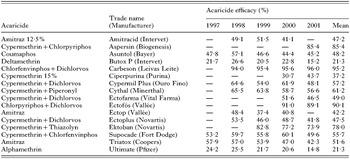
Table 3. Acaricides tested in populations of Boophilus microplus during 1997 and 2001 at Embrapa Gado de Leite, Brazil
 You have
Access
- 301
- Cited by