Introduction
Social and emotional skills are considered essential for success throughout the lifespan (Dayan, Reference Dayan2016; Tough, Reference Tough2012). Positive social and emotional skills have been linked to many encouraging outcomes, including higher academic performance, healthy social relationships, resilience and less maladaptive behaviours (Dayan, Reference Dayan2016; Duong & Bradshaw, Reference Duong and Bradshaw2017; Jones & Doolittle, Reference Jones and Doolittle2017). Social and emotional learning (SEL) involves the processes, practices and interventions by which people, including children, acquire and build social and emotional skills and competencies needed to improve their academic achievement (Dayan, Reference Dayan2016), citizenship and health-related behaviours (Schonert-Reichl, Reference Schonert-Reichl2017). Developed over the last 25 years in New Haven, USA, SEL aims to promote children’s positive development, reduce problem behaviours and increase their academic performance. Today, many programmes have been developed to implement SEL for students, each tailored for different age groups from early childhood to the final years in high school (Durlak, Weissberg, Dymnicki, Taylor, & Schellinger, Reference Durlak, Weissberg, Dymnicki, Taylor and Schellinger2011). The leading body of SEL research, which monitors evidence-based practice and policymaking, is the Chicago-based Collaborative for Academic, Social, and Emotional Learning (CASEL).
CASEL is an organisation that works towards advancing the practice of promoting integrated academic, social and emotional learning for all children in preschool through high school. CASEL (2018, para. 1) describes SEL as ‘the processes through which children and adults acquire and effectively apply the knowledge, attitudes, and skills necessary to understand and manage emotions, set and achieve positive goals, feel and show empathy for others, establish and maintain positive relationships, and make responsible decisions’. Indeed, acquiring strong social and emotional skills in life is crucial, even more so than what is currently included in traditional pedagogy curriculums, such as literacy and mathematics (Jones & Doolittle, Reference Jones and Doolittle2017).
Social and emotional skills are not only critical to becoming an effective student, but also to eventually becoming an effective contributor to society (Schonert-Reichl, Reference Schonert-Reichl2017). They are important to maintaining good quality of life by preventing or reducing risky behaviours such as drug use, violence and bullying (CASEL, 2018; Schonert-Reichl et al., Reference Schonert-Reichl, Oberle, Stewart Lawlor, Abbott, Thomson, Oberlander and Diamond2015). As Jones and Bouffard (Reference Jones and Bouffard2012) argue, ‘children who have strong social and emotional skills perform better in school, have more positive relationships with peers and adults, and have more positive emotional adjustment and mental health’ (p. 3). Thus, one of the most effective ways to achieve this involves implementing SEL education in the classroom where students engage in positive activities, through explicit and implicit methods, and strengthening parent and community involvement in programme planning, implementation and evaluation (CASEL, 2018).
CASEL (2018) has identified five core interrelated skills or competencies of SEL that are linked to self-regulation and are central to SEL:
a. Self-awareness: The ability to accurately recognise one’s emotions and thoughts and their influence on behaviour. This includes accurately assessing one’s strengths and limitations and possessing a well-grounded sense of confidence and optimism.
b. Self-management: The ability to regulate one’s emotions, thoughts and behaviours effectively in different situations. This includes managing stress, controlling impulses, motivating oneself, and setting and working towards achieving personal and academic goals.
c. Social awareness: The ability to take the perspective of and empathise with others from diverse backgrounds and cultures, to understand social and ethical norms for behaviour, and to recognise family, school, and community resources and supports.
d. Relationship skills: The ability to establish and maintain healthy and rewarding relationships with diverse individuals and groups. This includes communicating clearly, listening actively, cooperating, resisting inappropriate social pressure, negotiating conflict constructively, and seeking and offering help when needed.
e. Responsible decision making: The ability to make constructive and respectful choices about personal behaviour and social interactions based on consideration of ethical standards, safety concerns, social norms, the realistic evaluation of consequences of various actions and the well-being of self and others.
Education that promotes SEL for students gets results as it enhances students’ capacity to integrate skills, attitudes and behaviours to deal effectively and ethically with everyday tasks and challenges (CASEL, 2018). SEL uses a combination of psychological, neurobiological, and social and educational methods to achieve long-term positive social and emotional practices (Jones & Doolittle, Reference Jones and Doolittle2017; Schonert-Reichl et al., Reference Schonert-Reichl, Oberle, Stewart Lawlor, Abbott, Thomson, Oberlander and Diamond2015). In response to cognitive therapy, the psychological advances in SEL are predominantly based on emerging research in cognitive psychology and neuroscience in the USA exploring mindfulness, positive psychology and cognitive behavioural therapy (CBT) (Dayan, Reference Dayan2016; Gueldner & Feuerborn, Reference Gueldner and Feuerborn2015). Often called ‘third wave cognitive behavioural therapy’, these third wave practices encourage people to focus attention to the present moment, internalise emotions and attitudes, and build a strength-based and solution-focused mentality. Third wave interventions aim to increase the effectiveness of traditional CBTs and emphasise such concepts as mindfulness, emotions, metacognition, acceptance, relationships, personal values, goals and spirituality (Hayes & Hofmann, Reference Hayes and Hofmann2017). The third wave of behavioural and cognitive therapy, particularly, trains people to adjust their thoughts and attitudes to improve intrapersonal communication (Zelazo & Lyons, Reference Zelazo and Lyons2012), cognitive skills and social and emotional well-being (Gueldner & Feuerborn, Reference Gueldner and Feuerborn2015; Schonert-Reichl et al., Reference Schonert-Reichl, Oberle, Stewart Lawlor, Abbott, Thomson, Oberlander and Diamond2015).
In addition, research in neuroplasticity suggests that the process of learning develops neural pathways in the brain when information repetitively interconnects the same neural pathways over time (Davidson & McEwen, Reference Davidson and McEwen2012). The process of educating young minds on social and emotional competencies across their developmental years can increase their ability to self-regulate and completely engage their cognitive skills (Zelazo & Lyons, Reference Zelazo and Lyons2012) to maintain the information through adulthood, impacting on their whole lives (Davidson & McEwen, Reference McEwen2012). As positive social and emotional practices are learnt, it is paramount to educate children from early childhood through their schooling years for long-term positive outcomes. Therefore, given that children’s learning capacities develop across ages, SEL programmes need also to be structured to meet an age appropriate education level (CASEL, 2018). For example, children between 9 and 12 years of age require specific SEL programmes that meet their developmental needs, interests and strengths (Ainley, 2010 as cited in Jarvela, Reference Jarvela2011). This is because there is an expectation that children who enter upper primary school (Years 4–6) will begin to draw upon previously acquired knowledge and apply their social emotional skills to engage in more critical thinking (Duong & Bradshaw, Reference Duong and Bradshaw2017). Furthermore, they will begin to receive more performance evaluation from their schoolteachers, which may be a contrast to the often-positive feedback received in their earlier years (Duong & Bradshaw, Reference Duong and Bradshaw2017). In the primary school stage, children’s personalities, behaviours and capabilities begin to amalgamate before further strengthening, as they become adolescents and then adults (Schonert-Reichl et al., Reference Schonert-Reichl, Oberle, Stewart Lawlor, Abbott, Thomson, Oberlander and Diamond2015). It is in this transitional stage that the brain synapse production increases considerably in the prefrontal cortex, influencing the development of executive functioning: cognitive control abilities that organise and regulate behaviour (Hertzman, Reference Hertzman2012; Schonert-Reichl et al., Reference Schonert-Reichl, Oberle, Stewart Lawlor, Abbott, Thomson, Oberlander and Diamond2015). There is a prolonged developmental path of synaptogenesis – the formation of synapses between neurons in the central nervous system – in the prefrontal cortex that corresponds with executive functioning abilities from late childhood to mid-adolescence, suggesting that synaptogenesis is a contributing factor to cognitive control maturation (Knapp & Morton, Reference Knapp, Morton, Tremblay, Boivin and Peters2013). Changes in neural organisation in late childhood are associated with changes in self-regulatory and self-reflective capability (Zelazo & Carlson, Reference Zelazo and Carlson2012), and children in this age group become less egocentric as they develop the capacity to consider different perspectives; distinguish right and wrong; and act pro-socially (Eisenberg, Fabes, & Spinrad, 2006, as cited in Schonert-Reichl et al., Reference Schonert-Reichl, Oberle, Stewart Lawlor, Abbott, Thomson, Oberlander and Diamond2015). As children in Years 4–6 are at a stage of significant transformation, neurologically, psychologically and socially, SEL programmes play a crucial role in supporting children’s social and emotional development and skills linked to learning growth mindset (Dweck, Reference Dweck2012). This has led to the development of the Journey to the Island of Calm programme, which supports the SEL of school-age children.
The development of Journey to the Island of Calm programme
The Journey to the Island of Calm programme was developed, by the Brisbane-based Pathways to Resilience Trust,Footnote 1 to teach children skills and knowledge towards building self-awareness, positive relationships and the ability to approach challenges with focus, adaptability and persistence. It is a social and emotional well-being programme for school-age children (9–12 years old) in the later years of primary school, as well as children preparing to make the transition to high school. Children in this age group are increasing in mental competence that influences their competence to self-regulate and manage their social and emotional well-being. They require a different SEL programme to that of early adolescence,Footnote 2 when they will be transitioning into more complex social and emotional skills (van der Aalsvoort, 2010 as cited in Jarvela, Reference Jarvela2011).
The Journey to the Island of Calm programme takes children on a journey where they are placed as the captains of their own lives. Each week on their journey, they face an adversity which requires social and/or emotional skills to meet the needs of the challenge. Metaphors associated with a journey on a ship, including keeping a captain’s log, are linked to the practical and easily practiced activities. The programme begins with children choosing their crew – representing various common emotions that are likely to arise when faced with challenges. Children are taken through the skills of mindful attention training (inner radar), deep breathing, balancing the body, relaxing thoughts, problem solving, gratitude, optimism and growth mindset. This is all set upon the foundation of belonging to the larger ‘crew,’ which is the entire class. The activities help the children to self-regulate, become more optimistic and capable in problem solving. These skills contribute to a growth mindset that supports learning.
The programme is delivered to students through 12 core weekly sessions. Each session runs for a 45-min to 1-h period. A facilitator manual and student workbook form the basis of each session, and students engage in interactive discussions, structured group activities and role-plays to practice new skills. Throughout the programme, students explore the key idea that when their mind and body are calm, they can direct their attention wherever they want it to go, listen to themselves and others, and choose how they want to be in the world. In other words, they can be the captain of their own lives. The programme is delivered by a facilitator, from Pathways to Resilience Trust, to class groups (25–30 children). Prior to the delivery of the programme, the facilitator provides professional development (PD)Footnote 3 to classroom teachers. The students’ journey unfolds session by session in the form of a metaphorical ‘Hero’s Journey’ that uses figures from Greek mythology to introduce key themes and allow students to connect with the material in a safe, fun way. Each session begins with grounding and focusing activities. After a group check-in, the next part of the story is revealed. Students then engage in a variety of hands-on, creative activities drawn from the facilitator’s manual and student workbook to explore the key theme of that session.
The impetus for the programme is linked to educational policies in Queensland as well as identified community concerns about the well-being of Australian children. It is supported by the second Melbourne Declaration on Educational Goals for Young Australians, which states that: ‘All Australians become successful learners, confident and creative individuals, and active and informed citizens’ (Ministerial Council on Education, Employment, Training and. Youth Affairs (MCEETYA), 2008, p. 5); and provides an additional opportunity for teachers to expand opportunities for all students to reach their potential as successful people and create an inclusive culture of engaging learning that improves well-being and achievement and inspires lifelong learning. The programme helps teachers to cater for individual student’s academic, social and emotional needs (Department of Education and Training (DET), 2016). With regard to the Australian Curriculum, it is most closely aligned with the General Capability of Personal and Social Capability on which the Personal, Social and Community Health component of the Health and Physical Education curriculum is a key contributor.
The general capabilities of the Australian Curriculum specifically outline the need for students to develop self-awareness, self-management, social awareness and social management. Students develop personal, social and emotional skills to understand and manage themselves, relate to others, develop resilience and a sense of self-worth, resolve conflict, engage in teamwork and feel positive about themselves and the world around them (Australian Curriculum, Assessment and Reporting Authority (ACARA), 2018). The inclusion of these capabilities in the Australian Curriculum is significant and needs to be maintained. The evidence on SEL indicates that these capabilities are critical to student success and ability to both attain and use academic skills. The social and emotional skills being developed throughout the journey programme enable students to grow as learners who are confident in themselves and their own strengths, can direct and sustain their attention, develop empathy for others and make informed decisions. In the Australian Curriculum, this involves recognising and regulating their emotions, developing empathy and concern for others, understanding and establishing positive relationships, making responsible decisions, working effectively in teams, handling challenging situations constructively and developing leadership skills (ACARA, 2018).
Method
The evaluation reported in this article was conducted by the first author between 2016 and 2017 and was commissioned by Pathways to Resilience Trust. The goal was to evaluate the effectiveness of the Journey to the Island of Calm programme. The evaluation was conducted using a mixed method approach to ensure the quality of the evaluation and strengthen the findings (Johnson & Christensen, Reference Johnson and Christensen2014). This methodology, based on the philosophy of pragmatism (i.e., what works should be considered important in research), provides different sorts of knowledge and increases the ability to generalise evaluation findings (Johnson & Christensen, Reference Johnson and Christensen2014). Data were collected using surveys, focus groups, observations and interviews. The evaluation was conducted in three schools located in low socioeconomic and disadvantaged metropolitan communities in South East Queensland. These schools accepted Pathways invitation to participate in the programme’s evaluation. At Site 1, a coaching model was offered to classroom teachers (n = 2). In Site 2, an introductory session was provided for teachers (n = 4). In Site 3, a teacher (n = 1) was given 2 days of PD by a facilitator, from Pathways to Resilience Trust, about the theory and research underpinning Journey to the Island of Calm programme.
Surveys
Two survey tools were used to evaluate the programme and measure the change in the children pre- and post-intervention. These tools consisted of the Children’s Hope Scale (CHS) and the NEUROMITEFootnote 4 cognitive ability assessment. A pilot evaluation was conducted in Term 4 of 2016 with two classes of Year 6 (n = 54) children in Site 1. The information gathered during the pilot evaluation was used to develop additional resources to support teachers. In Terms 1 and 2 of 2017, there were four classes of Years 5 and 6 (n = 86) in Site 2 and (n = 45) children in Site 3 who completed the CHS (Snyder et al., Reference Snyder, Hoza, Pelham, Rapoff, Ware, Danovsky, Highberger, Ribinstein and Stahl1997; Snyder, Lopez, Shorey, Rand, & Feldman, Reference Snyder, Lopez, Shorey, Rand and Feldman2003). The CHS score data were collected by the same facilitator who delivered the Journey programme.
The CHS was embedded in the first and last sessions of the programme. CHS is a self-report tool where hope is defined as ‘a positive motivational state that is based on an interactively derived sense of successful (1) goal-directed energy (agency) and (2) planning to meet goals (pathways)’ (Snyder, Reference Snyder1989, p. 143). More specifically, hope is conceptualised as pathways and agency goal-directed thinking (Snyder, Reference Snyder1989; Snyder, Reference Snyder2002; Snyder, Irving, & Anderson, Reference Snyder, Irving, Anderson, Snyder and Forsyth1991). This conceptualisation involves three interrelated thinking components – goals, agency and pathways – which form the basis of what Snyder (Reference Snyder2000) calls ‘hopeful thought’ (p. 13). The agency component involves one’s sense of determination to meet personal goals successfully, whereas the pathways component involves one’s mental ability to generate workable routes to meet these goals (Mednick et al., Reference Mednick, Cogen, Henderson, Rohrbeck, Kitessa and Streisand2007; Snyder, Reference Snyder2000). Thus, hope is, here, a goal-directed thinking in which the child has the perceived capacity to plan and find routes to meet goals (pathways thinking), and the motivation to use those routes (agency thinking) (Snyder, Reference Snyder2002; Snyder, Irving, & Anderson, Reference Snyder, Irving, Anderson, Snyder and Forsyth1991).
Higher hope is related to (a) secure attachments (Snyder et al., Reference Snyder, Lopez, Shorey, Rand and Feldman2003) and (b) greater satisfaction with interpersonal relationships (Snyder, Reference Snyder2002). Children’s ability to engage in learning is built on the foundation of pursuing goals. Higher hope reflects increasing levels of both ‘agentic and pathways thinking’ towards goals (Snyder et al., Reference Snyder, Hoza, Pelham, Rapoff, Ware, Danovsky, Highberger, Ribinstein and Stahl1997) and has been correlated with positive outcomes in school achievement. Agentic thinking, known also as willpower, is reflected in such teleological self-talk as ‘I can do this’ and ‘I am not going to be stopped’ while pathways thinking, known also as waypower, is reflected in affirming self-talk messages as ‘I’ll find a way to get this done!’ (Snyder, Reference Snyder2000, p. 13). The agency and pathways thinking are ‘additive, reciprocal, and positively related, but they are not synonymous, nor does either component alone define hope’ (Edwards, Rand, Lopez, & Snyder, Reference Edwards, Rand, Lopez, Snyder, Ong and van Dulmen2007, p. 83). It is the interaction of the ‘agentic and pathways thinking’ that leads to hope. Therefore, to define hope, both the sense of agency (goal-directed energy) and the sense of pathways (planning to meet goals) are necessary, with neither being sufficient on its own (Mednick et al., Reference Mednick, Cogen, Henderson, Rohrbeck, Kitessa and Streisand2007; Snyder, Irving, & Anderson, Reference Snyder, Irving, Anderson, Snyder and Forsyth1991). In Snyder’s (Reference Snyder1989, Reference Snyder2000) goal-directed framework of hope theory, ‘agentic and pathways’ thoughts are learned throughout childhood and adolescence, influencing subsequent emotions.
Some of the research findings that have supported the validity of the hope model include improved psychological adjustment, health outcomes, and athletic and academic performance (Edwards et al., Reference Edwards, Rand, Lopez, Snyder, Ong and van Dulmen2007). Snyder et al. (Reference Snyder, Hoza, Pelham, Rapoff, Ware, Danovsky, Highberger, Ribinstein and Stahl1997) developed the CHS to assess hope in children ages 8–16 years. CHS consists of six items measuring agency and pathways. Three items measure agency, for example, ‘I think I am doing pretty well’. The other three items measure pathways, for example,, ‘I can think of many ways to get the things in life that are most important to me’ (Edwards et al., Reference Edwards, Rand, Lopez, Snyder, Ong and van Dulmen2007, p. 87). Children taking the CHS are encouraged to rate statements using a six-point Likert scale from 1 (none of the time) to 6 (all of the time). The highest possible score is 32, and the lowest is 8. The agency and pathways subscale scores can range from 3 to 18, while the total Hope scores (sum of both agency and pathways scores) can range from 6 to 36 (Edwards et al., Reference Edwards, Rand, Lopez, Snyder, Ong and van Dulmen2007, p. 87). The average level of hope on the CHS is 25 (Snyder et al., Reference Snyder, Hoza, Pelham, Rapoff, Ware, Danovsky, Highberger, Ribinstein and Stahl1997). The CHS has evidenced internal consistency (overall alphas from .72 to .86) and is relatively stable over 1-month with test–retest correlations of .71 and .73. Also, the CHS has demonstrated convergent, discriminant and incremental validity (Snyder et al., Reference Snyder, Hoza, Pelham, Rapoff, Ware, Danovsky, Highberger, Ribinstein and Stahl1997). The CHS measured children’s use of agency and decision-making capacities, which is linked to their capacity to self-regulation and strategy to pursue goals. The higher-hope children perceive that they have, the more they feel they are in control in their lives, which is significant to lifelong learning strategies.
For the NEUROMITE cognitive ability assessment, 31 children in Year 5 in Site 2 had the opportunity to undertake pre- and post-testings on changes to their abilities. The children were assessed in the first and last weeks of the programme. The tests were administered by Schuhfried Australia for the school. The NEUROMITE assessment was not used for all children because the school selected only children who were going to be in Year 6 next academic year. The NEUROMITE Schuhfried assessment result was additional information given to Pathways to Resilience Trust by the school. The NEUROMITE cognitive ability assessment focuses on the measurement of basic attentional abilities of students. These abilities include visual alertness and sustained attention, auditory focus and distractibility, and complex focus and task distractibility.
Focus groups
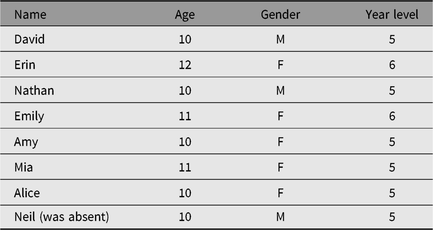
A separate invitation was extended to children to participate in three focus groups at Site 2 because it was linked to a student’s project. Eight participants were selected using convenience sampling, which is a type of non-probability sampling technique, to share and provide feedback about their experience participating in the programme. However, only seven children participated in the three focus groups. One child was absent on all three occasions when the three focus groups were held. While the children returned a parental consent form, each child was still given the opportunity to complete their own consent form at the commencement of Focus Group 1, as well as the opportunity to opt out of subsequent focus groups if they chose. Table 1 provides information about the children who returned their consent to participate in the study.
Participant summary

The focus groups lasted for 30–40 min. Children were asked questions to describe what they did, how they felt and what could be done differently in the programme. The focus groups data were gathered using video and audio recordings. Also, children’s drawing and reflections of emotion cards produced during the focus groups were collected. Phenomenological methods were used to explore the experience of the programme from the children’s perspective. The three focus groups were conducted on school premises in weeks 10, 11 and 12. The focus group strategy acknowledged children as the experts, providing an opportunity to share information in order to explore themes more deeply. All focus groups were recorded and transcribed. Drawings were used to engage children in conversation about the programme. This method of data collection provided a challenge for the children, who felt uncertain of what to draw. However, the ability of the researchers to build rapport with the children was helpful. Building rapport increased interaction as demonstrating interest in children’s thoughts and experiences can create a stronger researcher–child relationship (Freeman & Mathison, Reference Freeman and Mathison2009). During the interactions with the children, the research process was discussed, and children provided clarity to improve research outcomes and how children might get involved in the study (Durlak et al., Reference Durlak, Weissberg, Dymnicki, Taylor and Schellinger2011).
Interviews and observations
Observational data were collected about children and semi-structured interviews were conducted with classroom teachers who followed up the programme activities given by the programme facilitator using the Most Significant Change Methodology (Davies & Dart, Reference Davies and Dart2005). The interview questions focused on what the children did and felt about the programme, including the changes in the children that the teachers noticed. The facilitator kept a research journal, from July 2016, to December 2017, for the period of the implementation of the intervention at the different sites. The journal used the Circle of Change Revisited (COCR) model (Macfarlane, Cartmel, Casley, & Smith, Reference Macfarlane, Cartmel, Casley and Smith2014) to record reflective and analytical thinking about observations of behaviours and interactions particularly between children. The facilitator’s journal also contained responses from the children and staff that were gathered during the implementation phase. The qualitative data obtained from the interviews were analysed using a grounded theory approach (Strauss & Corbin, Reference Strauss and Corbin1998). The analysis involved multiple readings of the data to generate themes and subthemes, and to investigate how they were related to one another (Strauss & Corbin, Reference Strauss and Corbin1998).
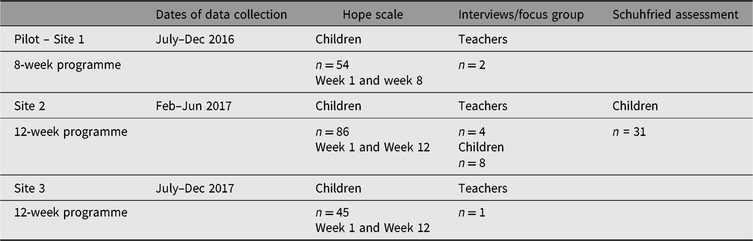
Ethics approval was obtained from Griffith University and Education Queensland. Permission was sought from each school principal to collect the data as the Journey to the Island of Calm programme was part of the school curriculum. Participation was voluntary and detailed information about the evaluation was given to teachers, parents/guardians and children regarding the process and purpose of the evaluation. Parents of the children selected for the study were also asked to let staff know if they wanted to ‘opt out’ – that their children’s information would not be included as part of the data collection, but it would not prevent them participating in the programme. Informed written consent was obtained from the children’s parents/guardians. Confidentiality was discussed, and all materials have been de-identified. Every effort was made to ensure that the evaluation methodology was respectful of the participants. All teachers and children’s names have been replaced with pseudonyms to maintain privacy and protect identity. Data collection and information about the participants are provided in Table 2.
Data collection and participants

Findings
The evaluation of the Journey to the Island of Calm programme was conducted to examine the change in children’s sense of agency and ability to manage their social and emotional well-being. In this section, the results are presented based on the approaches used in the data collection described in the methods section.
Survey and children’s responses
The two survey tools used in this evaluation were chosen because of the level of mental, cognitive, social and emotional capacity of the children undertaking the programme. The outcomes from these tools reflect the types of aspirations that the programme was trying to achieve – that the children were able to self-regulate and gain social and emotional skills.
Future goals (CHS)
A Wilcoxon Signed Rank Test revealed a statistically significant increase in sense of hope following participation in the Journey programme. The difference between pre- and post-scores was significant (z = −2.94, p, .003). Hope scores from 20 to 24 were considered hopeful while Hope scores from 25 to 28 were considered moderately hopeful. The children shifted band from being hopeful to moderately hopeful. There were significant increases for the total HOPE scores: The median pre-test score was 23.68 and the post-test score was 25.31. For the Agency and Pathways subscale scores: the median agency pre-test score was 12.31 and the post-test score was 13.22. The median pathways pre-test score was 11.61 and the post-test score was 12.59. It should be noted that 60% of children (n = 131) had an increase in sense of agency. Reviewing the items on the scale, it is the response to the following question: ‘I think the things I have done in the past will help me in the future’ – that has shown the greatest shift. This aligns with the use of the reflective sessions within the programme. This is a key motivator for children linked to an understanding about the importance of their schooling experiences to future aspirations.
Schuhfried NEUROMITE cognitive ability assessment
Between pre- and post-testing, 68% of children (n = 31) showed an improvement in visual alertness and processing auditory and visual information. These skills are significant in children’s capacity to engage in classroom learning. The Schuhfried’s results match well with sense of agency in the Hope Scale around confidence and positive self-worth. In pre-training, students (n = 9) with poor visual alertness took longer to process visual information before they could adequately respond. They needed additional early warnings or cues to signal when they needed to do something. Also, students (n = 12) with poor sustained attention were frequently distracted when faced with the same tasks over a long period of time or flitted from one task to another without seeing one through to completion. These students found it harder to refocus and stay focused in noisy and busy environments. We noticed it made it difficult for them to complete learning tasks. It also created a stressful environment for the teachers who spent their time managing behaviours rather than supporting learning.
However, the increase for most students in visual alertness and processing visual and auditory information after the participation in the Journey programme changed the classroom climate. The ripple effect was that students were able to focus on learning tasks. This increased ‘real’ teaching and learning time and heighted students’ success and capacity to meet learning challenges. The ability to listen to others and concentrate/focus within group activities appeared to have been a challenge for these children – and there were gains in their capacity to participate in group activities.
Focus group
In the focus groups, children were given the opportunity to share their experiences of the programme. The analysis of the data of the participating children revealed themes such as children’s self-regulation, empowerment and relationships. The children used programme teachings and lingo to respond to the researcher’s questions. For example, this was how some children related their activities when asked the following questions around the benefits and effectiveness of the programme:
Researcher: So why do you think you do that activity [breathing]?
It calms us down (Mia, FG: 31.05.17)
It relaxes our bodies (Erin, FG: 31.05.17)
To relax us (Alice, FG: 31.05.17)
Researcher: Does it relax you?
A little bit (Erin, FG: 31.05.17)
While most of the participating children indicated and accepted that the activity ‘relaxes’ them, many of them also felt positive about the programme and understood what it was. For example, when asked how they felt about the programme, some of the children stated:
It was positive (Emily, FG: 31.05.17)
Kindness (Amy, FG: 31.05.17)
Hope for the future (Mia, FG: 06.06.17)
The above statements corroborate the findings from the CHS that children shifted from being hopeful to moderately hopeful (Snyder, Reference Snyder2000; Snyder et al., Reference Snyder, Lopez, Shorey, Rand and Feldman2003). Similarly, when asked what the programme was about, some children indicated it was:
To calm yourself so you don’t get in trouble (Alice, FG: 13.06.17)
Teach you how to calm yourself down (Erin, FG: 13.06.17)
To not give up (Mia, FG: 13.06.17)
To stay calm (David, FG: 13.06.17)
Another interesting finding from the focus groups was that children’s peer relationships and sense of security about these relationships can impact on their mental and physical well-being. The development of friendship among children was helpful in their engagement and overall feeling about the programme. For example, when asked how they felt after they had been participating in the programme for three sessions, a child stated:
Normal…because I knew what was going on (Nathan, FG: 06.06.17).
Most children in the focus groups used strategies they had learnt in the programme to maintain their attention within the group and complete the task of telling the researcher about their involvement. Our interpretations of this information were shaped by the understandings of self-awareness of the children, evidenced through their comments within the focus groups. We found that the ability to listen to others and concentrate/focus within group activities appeared to have been a challenge for these children at the beginning of the programme. For example, some children commented:
I felt at first, I was a bit scared because I didn’t know what we were doing then I got used to coming here and I felt happy and safe.
I thought that the start of this journey was going to be easy, but it was hard getting through all the challenges and I felt worried, but then I felt good again because with the help of the other captains it was easy.
(Facilitator Journal – Responses from children).
However, there were gains in their capacity to participate in group activities. It was also noted that different data collection tools showcased different gains. For example, one of the children in the focus group did not show huge improvements in the Schuhfried score yet was a reflective and insightful participant in the focus group.
Journal and interview responses
The Journey to Island of Calm programme encouraged critical reflectiveness and self-expression. It was perceived to be a positive experience for students and teachers. This is indicated in the following statements:
I learnt how to control my anger and not take it out on others. I learnt who to trust and who is the better person to trust.
I’ve learnt that you can control your body and calm yourself down.
I learnt to control my emotions better, not only with anger and force.
It’s helped me a lot because I didn’t really have much self-control and I really enjoyed being here.
(Facilitator Journal – Responses from children).
Child-led and creative activities were significant to the programme and evaluation processes. The facilitator created a sense of safety for the children using the following key strategies: Regulating through rhythm; movement and breathing; following a predictable routine; setting students up for success; teaching through story and connecting and building relationships. The students reported to the facilitator about their reflection on their personal growth. For example, children demonstrated their self-awareness in these comments:
I felt kind of sceptical and just a little nervous, but now I feel kind of good. I used to sit at the back but now I sit down here on the floor.
I’ve learnt how to build better connections with people (Facilitator Journal – Responses from children, Site 2).
The responses reported demonstrate that a higher number of children had a positive change in their ability to self-regulate. The ability to self-regulate influenced the students’ engagement in classroom activities as well as building relationships with peers. As one teacher stated:
I have noticed over time, particularly in second term, that I’m not seeing overt acts of anger, either words or actions, in my classroom (Win – Teacher 2).
SEL programmes are better implemented and produce more positive benefits for school-age children when they are delivered by well-trained teachers who have the support of their school principals (Durlak et al., Reference Durlak, Weissberg, Dymnicki, Taylor and Schellinger2011; Kam, Greenberg, & Walls, Reference Kam, Greenberg and Walls2003). The PD offered to teachers strengthened the positive impact the programme had on children’s well-being. This increase in knowledge through the coaching and PD training, including the support from school principal, made a difference to the commitment of classroom teachers to use the strategies recommended in the programme on a daily basis during the evaluation (Facilitator Journal – 2017).
Also, the ability to self-regulate is significant to children’s sense of well-being and subsequently their motivation to engage in classroom learning. As observed by another teacher:
I am so intrigued and pleased with how the level of engagement from my students has improved each session. They seem to be more connected and accountable in regard to the topics being covered. My students are a lot more comfortable with talking about self-awareness and being more considerate of how others’ feelings and personalities differ (Cressida –Teacher 7).
We observed also that the children used more than words to express how they feel. As Albon and Rosen (Reference Albon and Rosen2013) and Nelson, Kendall, and Shields (Reference Nelson, Kendall and Shields2014) suggest, observing various modes of children’s communication is important as it can provide expanded interpretation of what they are feeling. The children displayed nervous laughter, made jokes and demonstrated careless behaviours. At times, they were quiet and reserved, avoiding eye contact, appeared easily distracted, moved around a lot looking out the window or touching things in the room, and several times, they used head nods, shakes and hand gestures to replace verbal responses. As research shows, children who have been reared in unsafe or developmentally unnourishing environments may develop protective behaviours such as hypervigilance (Nelson et al., Reference Nelson, Kendall and Shields2014) or lack linguistic competence to confidently verbalise what they are thinking and feeling (Faber, Reference Faber2016; Snow & Powell, Reference Snow and Powell2004). Although each child’s family circumstances were not specifically disclosed due to privacy, many of the children were reported by teachers to come from single parent homes, combined families, live with extended family or from out of home care and experience disadvantage and family disharmony.
Discussion
The evaluation findings confirm that the Journey to the Island of Calm programme is useful in supporting the SEL of all children. The findings from the CHS suggest also that the programme has accrued positive gains for many children in their self-regulation and self-understanding. The significant increase in their positive motivational state to engage in schooling has benefits as higher hope has been found to correlate with academic achievements (Snyder et al., Reference Snyder, Lopez, Shorey, Rand and Feldman2003) and a greater sense of well-being. The participating children showed more focused behaviours to engage in classroom learning, suggesting that the programme could influence behaviours at home as well.
The depth of change for individual children was self-reported. Although best efforts were made to treat children respectfully as equals, they appeared to see themselves as subordinate to adults in a child–adult relationship within a school environment (Hill, Reference Hill2006). In line with existing research on SEL, the Journey to the Island of Calm programme appears to be particularly useful in developing intervention and learning programmes for at-risk, vulnerable and traumatised children from low socioeconomic background and circumstances. It can also promote their sense of agency, self-regulation and self-independence, and contribute to their social and emotional development and skills from very early on in life. These children often present in the school setting with difficulties with regard to social and emotional skills and well-being (Gilley, Tayler, Niklas, & Cloney, Reference Gilley, Tayler, Niklas and Cloney2015).
While there is limited literature about SEL programmes for Years 4–6 school-age children, the Journey to Island of Calm programme sheds light on the importance of SEL programmes to integrate mindfulness practices to support top-down and bottom-up processing (Durlak et al., Reference Durlak, Weissberg, Dymnicki, Taylor and Schellinger2011; Kam et al., Reference Kam, Greenberg and Walls2003), and the recognition that SEL programmes could be more inclusive of many children, including children from different cultural backgrounds, language ability and who experience disabilities and/or mental health issues (CASEL, 2018). For example, research identifies that children may need adapted SEL programmes to meet their specific needs and strengths such as resilience, sense of agency, self-regulation and self-independence (Gueldner & Feuerborn, Reference Gueldner and Feuerborn2015; Schonert-Reichl et al., Reference Schonert-Reichl, Oberle, Stewart Lawlor, Abbott, Thomson, Oberlander and Diamond2015; Zelazo & Lyons, Reference Zelazo and Lyons2012). Thus, contemporary SEL programmes are expected to consider the benefits of third wave interventions and implement them into delivery.
The third wave interventions focus on acceptance and commitment therapy, compassion-focused therapy, dialectical behaviour therapy, metacognitive therapy and mindfulness-based cognitive therapy (Hayes & Hofmann, Reference Hayes and Hofmann2017). The advances of mindfulness, yoga and meditation for children present a positive supplement to current SEL programmes as they factor a more holistic approach to social emotional development (Schonert-Reichl et al., Reference Schonert-Reichl, Oberle, Stewart Lawlor, Abbott, Thomson, Oberlander and Diamond2015). This is particularly influential for Years 4–6 school-age children as they prepare for the transition into adolescents and become further independent where tools learnt from third wave practices can be beneficial. Although third wave behavioural interventions are a more recent consideration for implementing SEL programmes in Australia, the fundamental psychological aspects of many resilience-building approaches include CBT techniques (Dayan, Reference Dayan2016; Yamamoto, Matsumoto, & Bernard, Reference Yamamoto, Matsumoto and Bernard2017) along with third wave interventions.
Though children do not always use words to describe what they are thinking or feeling, their subtle nuances and nonverbal communication can reveal more about what they are thinking and feeling (Faber, Reference Faber2016; Snow & Powell, Reference Snow and Powell2004). For these children, SEL programmes such as the Journey to the Island of Calm can help to strengthen and support their emotional regulation across the lifespan. Consistent with the findings of Nelson et al. (Reference Nelson, Kendall and Shields2014), the evaluation of the Journey to Island of Calm programme identifies the social, psychological and neurological factors that contributed to children’s behaviours at school. For example, children, who experienced significant disadvantage, family disharmony and stress in their environment, including amongst their peers, can develop protective behaviours (such as hypervigilance) that can become maladaptive in their ability to build emotional and social skills and engage in cognitive learning (Nelson et al., Reference Nelson, Kendall and Shields2014). This is a result of children’s stress-response systems being overloaded leading to a reduction in neuroplasticity affecting emotional development. The plasticity of the prefrontal cortex, hippocampus and amygdala areas of the brain (the areas that play a role in allostasis: the process of achieving stability) occurs largely through the neurobiological response to the emotions children experience (McEwen, Reference McEwen2012; Nelson et al., Reference Nelson, Kendall and Shields2014).
A study by Zelazo and Lyons (Reference Zelazo and Lyons2012) supports the notion that children in the preschool ages are malleable in their development of self-regulation when behavioural and neuroplasticity may be particularly prominent. Their study also found that the repeated combination of activity in the prefrontal cortex (mediating reflection) and the limbic system (mediating emotional experience) in response to emotional stimuli should strengthen connections between these neural regions, building the neural circuitry that supports emotion regulation across the lifespan (Hertzman, Reference Hertzman2012; Zelazo & Lyons, Reference Zelazo and Lyons2012). Also, other research indicates that students receiving quality SEL programmes in the classroom compared with those who did not would: (a) score an average of 11 percentile points higher on standardised tests; (b) show improved self-esteem and commitment in school; (c) engage less in classroom disruption and delinquent acts; and (d) experience less depression and anxiety (Durlak et al., Reference Durlak, Weissberg, Dymnicki, Taylor and Schellinger2011). Similarly, the evaluation of the Journey to Island of Calm programme shows SEL programmes can have positive effects on children’s mental health, physical health and learning (McEwen, Reference McEwen2012). The children self-reported benefits of participation in the programme. SEL programmes that focus on social integration and coping mechanisms foster the development of self-regulation (particularly interventions targeting executive functioning, emotion regulation and perspective taking) (Zelazo & Lyons, Reference Zelazo and Lyons2012). Students who have heightened self- and social awareness and feel good about themselves can improve their life outcomes and their success. This contributes significantly to the increased likelihood of students completing school.
Like another study, the findings of this evaluation also shed light on the importance of SEL skill development and intervention in building a broad set of competencies needed to be successful into the future (Schonert-Reichl, Reference Schonert-Reichl2017). The findings from the data collected support the evidence that if students are calm, they can access the highest parts of their brain and can focus their attention. They can also work in groups, care about others, share responsibility, make good decisions and enjoy most interactions with their peers, including learning more about how to handle stress, build positive relationships with family and friends, avoid negative behaviours and engage in creative work. For example, we observed in this study that when students became alarmed or felt unsafe, they acted emotionally or drifted into daydreams as they tried to escape this heightened stress level. They could not learn well and started to activate their fight or flight mechanisms, acting out or appearing to be disengaged. No clear thinking can happen in this state. Learning becomes difficult as the children would find it harder to stay focused in such circumstances. Further, the students do not remember what has happened. The Journey to the Island of Calm programme supports students to self-regulate and focus their attention (Perry, Reference Perry and Webb2006). Thus, the programme and its intervention can help students to learn in school classrooms.
Furthermore, it is well documented in research both overseas and in Australia (Bernard, Reference Bernard2006; CASEL, 2018; Durlak et al., Reference Durlak, Weissberg, Dymnicki, Taylor and Schellinger2011; Kam et al., Reference Kam, Greenberg and Walls2003; Schonert-Reichl, Reference Schonert-Reichl2017; Schonert-Reichl et al., Reference Schonert-Reichl, Oberle, Stewart Lawlor, Abbott, Thomson, Oberlander and Diamond2015; Yamamoto et al., Reference Yamamoto, Matsumoto and Bernard2017) that the educators’ engagement and active support is the single biggest predictor of whether SEL programmes will be successful and beneficial to the students. Support is likely to be intermittent unless social and emotional skills are established and embedded within the curriculum (CASEL, 2018; Schonert-Reichl, Reference Schonert-Reichl2017). Therefore, this evaluation suggests that social and emotional skills can and should be explicitly taught rather than left to chance in the hope that students will simply pick them up through the course of their life. The most successful implementation of SEL is through a whole school-based approach with a structured programme/curriculum. This ensures that: (1) students learn skills in a systematic way; (2) students practice skills; (3) teachers model skills during their interactions with students; (4) teachers reinforce the skills every day; (5) teachers create specific opportunities for skill practice; (6) teachers use natural opportunities for practice of skills; (7) all adults in the school use the skills; and (8) the skills become part of school culture (CASEL, 2018).
Conclusion
Everyone has a unique genetic, epigenetic and developmental history, and therefore, it is difficult to have a one-size fits all approach to working with children and adults. It is important to select a unique sequence of enrichment and education interventions. The Journey to the Island of Calm programme is based on the sequence and understanding about how the brain develops, that is, the brain is organised from the bottom-up and that brain control starts with basic body functions low in the brainstem and moves up to the highest functions in the cortex; and all four areas of the brain work in concert with connections from bottom to top and top to bottom having the potential to support children to achieve in school (Perry, Reference Perry and Webb2006).
Although, this evaluation has provided insight into the positive effects of SEL programmes for children in their self-regulation and self-understanding, further research on SEL programmes for Years 4–6 school-age children’s social and emotional development is required. The systematic review of literature conducted for this evaluation identified a limited number of studies on SEL for Years 4–6 school-age children. However, many studies were identified exploring SEL for children in the early years. Few studies explored SEL for adolescents. As search results presented an abundance of research exploring SEL for children in the early years, the review included findings from some studies that covered age groups from preschool to Years 4–6, therefore, limiting the quality of the review for the evaluation when specifying findings for 9–12-year olds. Also, literature on SEL for children across age groups is in abundance, being well documented over the last 25 years, and as SEL incorporates many facets of a child’s development, it was difficult to identify relevant literature for review. However, this limitation was reduced by searching for key terms such as ‘mindfulness,’ ‘cognitive behavioural therapy’, ‘Aboriginal and Torres Strait Islanders’ and ‘brain development’ to identify more specific literature before reducing literature further to include, mostly, Years 4–6 school-age children. It must be noted also that most of the studies reviewed lacked a clear methodological approach to their own literature review, which prompts the question of how the research was collected, deemed appropriate and analysed. Only a few studies specified their approach to gaining their information in a methodology section (Doung & Bradshaw, Reference Durlak, Weissberg, Dymnicki, Taylor and Schellinger2017). As most of the literature did not stipulate their methods for obtaining their results clearly, the reviewed literature is limited in its findings. This indicates a need for future research to be explicit in the way findings are identified.
In addition, it would have been useful to ask staff during this evaluation to make more observations about changes in children’s behaviour. While the attendance patterns of the children influenced the collation of results, it was difficult to undertake long-term evaluations especially in schools where there is a turnover of children and staff. It is also noted that some of the issues involved in assessing social and emotional well-being are complex, particularly combining components such as feelings, beliefs, behaviour, character and temperaments. Furthermore, elements such as the health of children, family structure, culture and development of children affect their performance socially, emotionally and academically (Squires, Bricker, & Twombly, Reference Squires, Bricker and Twombly2003). It was not possible to gather data about these elements during this evaluation. However, rich data were collected during the implementation of the programme that provided an understanding of the experiences of the children and staff who participated. The development of a facilitator’s manual and lesson plans to accompany the Journey programme as well as the PD offered to teachers prior to their classes becoming involved with the programme strengthened its positive impact on children’s well-being. Indeed, given the importance of children’s social and emotional well-being, implementing SEL programmes and interventions in Years 4–6 school-age children education in Australia should become a necessary part of their education. Still, we must recognise that promoting children’s social and emotional competencies increases not only their SEL skills but also their academic performance, behaviour, citizenship, health and overall well-being.