Every possible means should be weighed and considered, in view of the devastation of modern warfare, to preserve the historic and artistic monuments, which are the heritage of mankind held in admiration and affection by all the world.
— Ardelia Ripley Hall, Reference Edsel1949Footnote 1
Since the Washington Conference on Holocaust-Era Assets in 1998, there has been a push to uncover and utilize archival documentation dealing with the confiscation, theft, and coercive transfer of cultural assets during World War II and the Nazi occupation of Europe.Footnote 2 Arguably, the most important resource in the United States for this work is the National Archives and Records Administration in College Park, Maryland, which houses the Ardelia Hall Collection, some 30 boxes of material dealing with the identification and return of looted artwork after the Second World War.Footnote 3 The collection is named for Ardelia Ripley Hall (1899–1979), whose papers it comprises; she served from 1946 until 1962 as the Fine Arts and Monuments Adviser to the U.S. Department of State. The Monuments, Fine Arts, and Archives (MFAA) Section of the military assisted in the protection and restitution of cultural property during and after World War II. Those who served in this program are more colloquially known as the Monuments Men. Long-overdue efforts have been made in recent years to recognize the accomplishments of the Monuments Men; however, comparatively little has been written about the women affiliated with the MFAA, including Eve Tucker, Edith Standen, and in particular Ardelia Hall, of whose biography very little is known.Footnote 4 Given that the records she left behind constitute such a significant body of documentation, which is being actively utilized and cited today, an examination of her life and career is opportune.
Ardelia Hall’s work for the State Department was extraordinary, and for this reason, her career path can be erroneously perceived, in retrospect, as preordained. It has been written, for example, that she was “destined to become a superb public servant” who had “made a bold move to Washington” to work for the government.Footnote 5 In fact, that Ardelia Hall should have worked for the State Department at all is surprising given her background. She was trained as an art historian and had spent most of her life in Massachusetts, including 11 years at the Museum of Fine Arts, Boston (MFA). Like most women of her era, she began a fairly traditional (which is not to say unsuccessful) professional trajectory—working as an assistant in a museum that was run entirely by men—and looked forward to marrying and raising a family someday. That instead she ended up in a position of such preeminence in Washington, DC, is not only unexpected, but in hindsight it appears nothing less than fortuitous. Drawing upon material housed at the museum’s Archives, which span the years 1936 to 1946, leading up to her appointment at the State Department, this essay traces for the first time Ardelia Hall’s remarkable journey from curatorial researcher to adviser on international art restitution.Footnote 6
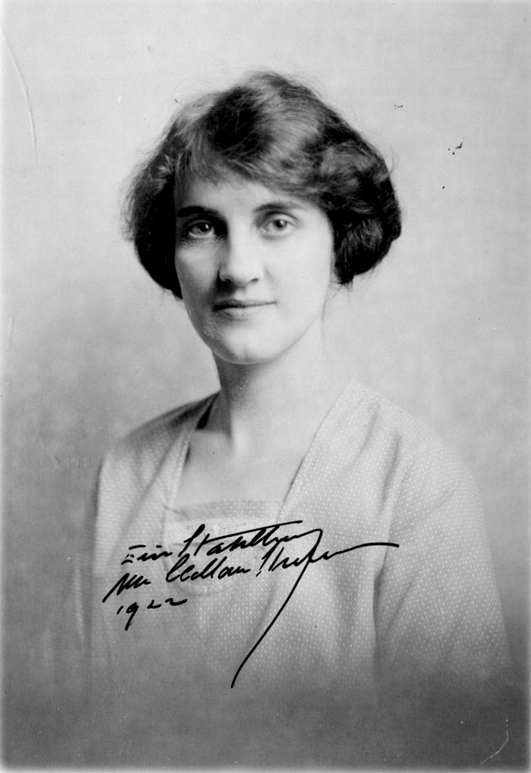
Ardelia Ripley Hall was descended, in good New England fashion, from Mayflower Pilgrims. She was born in Weymouth, Massachusetts, on 4 December 1899, to Willard Francis Hall (b. 1863) and Lura Sawin Hall (1874–1959), and was named for her maternal grandmother, Ardelia E. Ripley Hall of Duxbury, who had died earlier that year. She grew up in Cohasset, MA, with her parents and her younger sister Frances, known as Fannie. Fannie completed her education at Northfield Seminary (now Northfield Mount Hermon), and Ardelia enrolled at Smith (Figure 1).Footnote 7 The 1920 U.S. Census lists her mother Lura as a widow, though it is unclear when or where Willard Hall passed away.Footnote 8 During the 1920s Mrs. Hall maintained a summer home in Montague, in western Massachusetts, which would later pass to Ardelia; she spent time in New Haven during the winter months. Fannie married in 1928; she and her husband first made their home in Connecticut, and then settled in New Jersey.Footnote 9
Ardelia Hall, Smith College Yearbook Photograph, 1922. (Copyrighted and Courtesy of Smith College Archives.)

In contrast, Ardelia remained unmarried, and with her mother to support, employment was not just an option for her, but a necessity. Between 1922 and 1928, while she was earning her master’s degree in Chinese at Columbia University (her thesis was on the 13th-century Chinese landscape painter Hsia Kuei Footnote 10) and taking classes at New York University in Chinese history and language, Ardelia worked at the Metropolitan Museum of Art. There, she served as first assistant for research in “all branches of art.”Footnote 11 She began full-time work at the MFA in Boston on 30 June 1930. She moved into the city, and her mother continued to occupy the home in Montague. At the museum, Ardelia worked as an assistant in what was then called the Asiatic Art Department (presently the Art of Asia, Africa, and Oceania). The department was, at the time she was hired, under the direction of curator John Ellerton Lodge (1878–1942); unsurprisingly, curatorial leadership of the museum was at that time entrusted almost exclusively to men.Footnote 12 Ardelia’s responsibilities included researching and cataloguing the permanent collection of Chinese and Japanese art for Kojiro Tomita (1890–1976), Keeper of Japanese Art.
The Asiatic Art Department was especially busy during the 1930s; hundreds of objects were added to the collection each year. Every calendar year also saw over a thousand visitors to the department—in 1936 alone, there were 2,274 visitors—always including several hundred who brought in objects for examination by the staff.Footnote 13 Throughout this intense schedule, Ardelia remained a prolific scholar, publishing articles on objects from the MFA collection in the museum’s Bulletin, and on her area of specialty, Chinese art, in peer-reviewed journals.Footnote 14 She also gave frequent talks and public lectures.Footnote 15
If the daily workflow remained constant, there were nevertheless a number of personnel changes during her time in Boston. In 1931, John Ellerton Lodge retired, and Kojiro Tomita was promoted to curator, assuming leadership of the department. Ananda Coomaraswamy (1877–1947), Keeper of Indian, Persian, and Muhammadan Art, was promoted to Research Fellow, and he, not Tomita, became Ardelia’s immediate supervisor. In 1934, MFA director Edward Jackson Holmes resigned to become president of the museum, and George Harold Edgell, who had served as curator of paintings, became the new director. By the mid-1930s, Ardelia was already working for a different director, a different department head, and a different supervisor than she had when she was hired just a few years earlier. The initial duties she was hired to perform—cataloguing the Japanese and Chinese collections—shifted too, since she was now reporting to Coomaraswamy, a renowned scholar of the art of India. By 1936, she appears to have been frustrated with this structure and was struggling financially. On 22 January 1936, she wrote to her colleague Mortimer Graves that she could not stay at the MFA any longer because of the
small salary which the Museum pays.… I have the full support of my Mother and the upkeep of my property, which she cared for.… I am today working for the same salary which I received when I was in the Metropolitan Museum in 1923, and … I actually hold a position of lower rank, in fact the lowest round of the Boston Museum ladder.
The other half of the picture shows I think that the Museum has steadily added to the load of work which I carry. I was employed to do research and catalogue the Chinese and Japanese collections. Four years ago when Dr. Coomaraswamy was relieved of departmental work to devote himself to research, the full care of the Indian and Persian Collections, cataloguing, installation in galleries, etc. fell [to] my lot…. To my great regret I have less and less opportunity to work with Chinese art except outside the museum.
I brought the quite obvious extension of my duties, as well as my added financial needs to the attention of Mr. Tomita and Dr. Coomaraswamy last March, without any result.Footnote 16
So while “opportunities are splendid here,” she concluded, “I must seriously look elsewhere for another position.”
In spite of this dissatisfaction, Ardelia remained at the museum until 1941, when, at the age of 41, she announced that she was resigning to be married. That she should resign was not unusual; particularly during the years leading up to World War II, married middle- and upper-class women in America generally did not work, and many women stopped working to become wives.Footnote 17 With her impending marriage, Ardelia would leave the museum, and perhaps the field of art history, once and for all. In October 1941, however, she wrote to a colleague that while “I resigned in September to be married … [n]ow the wedding has been indefinitely postponed, [and] I shall settle down in Montague for a rest and vacation.”Footnote 18
Correspondence in the MFA archives skirts the issue of Ardelia’s broken engagement, which was bound to be deeply personal and very painful. That autumn, she notified friends and colleagues of her changed circumstances, but the details were not committed to paper, and the responses she received were elusive. One cryptic letter she received in the fall of 1941 was from Kojiro Tomita, who wrote: “Your account of the ‘lady’ in the West seems to confirm our suspicions. Too bad, but in this world and life things are often spoiled by a third party.”Footnote 19 Myron Bement Smith, a scholar of Iranian art and a dear friend of Ardelia’s, counseled her at greater length in a letter of 5 December 1941:
I have every sympathy for him, … because I went through many years of mother-domination and escaped only by announcing my wedding after it was over and to a girl mother had never met…. On the one hand, you have been treated shamefully. He is not a youth, he has … years of discretion, he knew his mind before he asked you, his children and mother were his problems, problems to be solved before he proposed. What does he propose to do about the way he has treated you? Despite his mother and children, there are few things he can do—he can marry you and then make a settlement, or he can make a settlement on account of his breach of promise.… I hope you will not let any New England prissyness prevent you from getting a fair settlement—it is done, you know; such things are, naturally, not advertised.
If you still love him and believe he still cares for you, let me talk with him. Mother-domination is a mental disease—I escaped from it only with the greatest difficulty.… Because I have been through as much agony myself and have observed it in my brother I think I could help him. Will he be East soon? Or I shall be glad to [go to] Idaho and see him.Footnote 20
What goes unexplained is that Ardelia was engaged to a wealthy man by the name of Dewey Brown (almost certainly short for Dewitt Clinton Brown) from Emmett, Idaho.Footnote 21 It is not known how they met. He had children from a previous marriage. The wedding was to take place in October 1941 at Ardelia’s home in Montague, which is also where the guests would stay. On the day before the ceremony, at the instigation of his mother, Brown presented Ardelia with a prenuptial agreement to sign stating that they would not have children. Evidently, his family (and his mother in particular—that is, “the ‘lady’ in the West”) did not want any of their wealth diverted to Ardelia’s future offspring. Given the choice between a childless marriage and no marriage at all, Ardelia chose the latter. She walked into the south parlor of her home the day before her wedding and announced to all of her guests that the ceremony was off. It is not known what happened to Dewey Brown, or to what extent Ardelia was in touch with him after the wedding was cancelled.
Ardelia needed to find employment again, since she had given up her job at the MFA. She sought to get her position at the museum back; however, another blow was struck. On 7 December 1941, Japanese forces bombed Pearl Harbor, and the United States entered immediately into World War II. Less than a week later, on 13 December, Kojiro Tomita wrote to Ardelia that “the committee voted that it could not at the moment take back Miss Hall. The budget has gone in and there are no funds available.”Footnote 22 Any earlier disappointment and frustration with the administration grew to anger. After 11 years of dedicated work for the museum, she took it as a personal insult that the MFA did not reinstate her. Letters from early 1942 reveal the extent of her distress. She wrote to Myron Bement Smith in the spring:
I was rather surprised by the complimentary remarks that Mr. Edgell made about me in the Annual Report. He states that the galleries are now among the most attractive in the MFA, and that I am a “scholar of parts and a person of exquisite taste.” Especially since there has always been a reluctance on the part of Mr. Tomita to recognize either that I was a scholar or had any taste whatever.Footnote 23
You know I haven’t shed any tears about not remaining at the MFA, for I seem to have acquired the aspiration of being in a position where no one can say we are sorry but we don’t need your services any longer. Earning my bread and butter is more pressing than a career. I am afraid that after working under the indifference of museum trustees, the flippancy of Edgell, and the opposition of Tomita, I have been bitten by the bug of independence.Footnote 24
Ardelia did return briefly for about a month in 1942, to assist the museum as it evacuated its more important works of Asian art as a wartime precaution; however, she did not remain.
Finding a new job proved difficult for Ardelia, particularly given her specialty in the art of East Asia; Japan was generally feared and hated following the infamous attack on Pearl Harbor. Ardelia pursued museum and teaching positions, but soon realized there were few opportunities for her; she concurrently looked for a job, as so many others did once the war began, with the government. After all, she had written, “earning my bread and butter is more pressing than a career.” In 1942 she sent out applications for clerical positions in the State Department and the U.S. Civil Service Commission.Footnote 25
Ardelia also turned to her academic connections for advice. Through the American Oriental Institute, whose membership committee she chaired, she had a network of scholarly colleagues in Asian studies, a few of whom had joined the Office of Strategic Services, or OSS, the government’s wartime intelligence agency (and predecessor to the Central Intelligence Agency [CIA]). John Wilson from the University of Chicago conducted research for the Near East Division of the OSS, and suggested she apply for a position in the Far East Division, where her knowledge of China could prove useful.Footnote 26 In March 1943, after a year of job hunting, Ardelia learned that she had finally secured an appointment with the OSS. She worked in the Reference Section of the Far East Division for the duration of the war, beginning in 1943 as a research analyst, and was transferred in 1945 to radio intercepts.Footnote 27
While at the OSS, Ardelia grew interested in contributing to the efforts that were underway to help protect monuments and works of art made vulnerable by the war. She almost certainly learned of these efforts from her colleagues at the American Oriental Institute, which belonged to the larger, umbrella humanities organization the American Council of Learned Societies (ACLS). Many members of the ACLS were concerned about the preservation of monuments and artwork during the war, and in January 1943 the executive committee formed the Committee for the Protection of Cultural Treasures in War Areas under the leadership of William Dinsmoor, professor of art and archaeology at Columbia University.Footnote 28 Using grants from the Rockefeller Foundation, and working out of the Frick Art Reference Library in New York, members of the committee prepared maps and lists of the cultural institutions in Europe to be safeguarded; these were sent to the War Department for use by the military. In 1943, Paul Sachs of the Fogg Art Museum formed another organization, which likewise prepared lists of monuments and institutions worthy of protection in addition to manuals on conservation. Sachs’s organization became part of the American Defense—Harvard Group, which provided expertise on cultural matters during the war.Footnote 29 The two committees, led by Dinsmoor and Sachs, offered invaluable services to the U.S. military, but were privately run organizations.
On 20 August 1943, the U.S. government officially responded to growing concerns about the wartime preservation of art, archives, and monuments, concerns that by then had reached the federal level. The State Department established the American Commission for the Protection and Salvage of Artistic and Historic Monuments in Europe (which would later change its name to include all “War Areas”), which worked closely with both Dinsmoor’s committee and the Harvard Group.Footnote 30 No doubt because of its unwieldy title, the group became known as the Roberts Commission, after its chairman, Supreme Court associate justice Owen J. Roberts. The purpose of the commission was to protect local archives, civil and ecclesiastical historic monuments, libraries, and works of art in war areas. Another goal was the restitution of cultural property, known to be subject to looting by Axis powers from both public and private collections.Footnote 31 To help execute this work, the War Department established the MFAA Section of the military within the Civil Affairs Division.
Initially the work of the ACLS Committee, the Harvard Group, and the Roberts Commission focused on areas of Europe affected by the war. By the end of 1943, however, it was clear that the scope of their work would need to be extended to Asia as well. At around this time, Ardelia expressed an interest in working with these groups. On 3 December 1943, she wrote to Paul Sachs:
I have been much interested in learning of the formation of the Committee for the Protection of Cultural Treasures in the War Areas under the American Council of Learned Societies, of what is being done for the European Areas … and especially that a similar undertaking is projected at Harvard University for the Pacific Area.Footnote 32
Later that day, she inquired with her colleague Langdon Warner, also of the Fogg Art Museum and a fellow scholar of Chinese art, who served on the Roberts Commission,
about the possibility of working for the Committee for the Protection of Cultural Treasures in the War Areas … for projected work in Asia.… it seemed that my special experience and the advantages I enjoyed in working at the Boston Museum might make me useful for the Pacific Area. More useful, perhaps than in the work I am now doing here in Washington at the Office of Strategic Services, even though I am in the Far Eastern Division, for it naturally has no connection with art.Footnote 33
Although she needed to “earn her bread and butter,” her letter reveals an underlying dissatisfaction with her work with the OSS; Ardelia wished to use her knowledge of art and Chinese culture and return to her field of specialty in whatever way possible.
Ardelia’s initial inquiries succeeded insofar as she was asked, and indeed tried, to leave the OSS to work with William Dinsmoor’s committee as it expanded its scope to Asia. In November 1944, Dinsmoor wrote to William Langer, Director of Research and Analysis at the OSS. He explained that his committee was about to undertake, “as a sudden emergency, the preparation of lists and cultural maps for China” and needed a specialist in Chinese art.
I have just talked with Miss Ardelia R. Hall, now passing through New York on her return to Washington. She has been very highly recommended by the various specialists whom we have consulted, and would, it seems, be the ideal person to have attached to our staff during the present emergency. Would it be too much to ask, therefore, if you could have her detached from OSS before she becomes deeply immersed in some other assignment, and to send her up to work here in New York with the staff at the Frick Art Reference Library for a period of one month beginning at the earliest possible date, preferably the middle of next week.Footnote 34
While she awaited an answer, Ardelia maintained correspondence with Dinsmoor and consulted with his committee regarding maps and areas worthy of protection in China. That December, she warned Dinsmoor of the greater difficulties he would face researching sites in Asia than in Europe:
By and large, I am quite certain that the work of the Committee will have far greater and more serious problems in dealing with China than it had for Europe. For an adequate listing of the monuments the same wonderful cooperation that you obtained for Europe is necessary but there are relatively so few to help.… As for the location of the monuments, it would seem to me that you will be handicapped by a lack of adequate maps, city and town plans, photographs from ground and air without the full resources of Washington, including classified material.Footnote 35
In reply, he expressed his thanks for the information and the suggestions Ardelia had provided, noting that in the future they would continue to “take the liberty of asking you for advice.” There is no evidence that the OSS ever spared Ardelia to conduct research in New York. She had already been granted a temporary leave from her job in Washington in October 1944 to reinstall the evacuated works of Asian art at the MFA. While there, she again expressed her hope to return to museum work, but was advised by director George Edgell to “hold your position in Washington and not count on returning to us.”Footnote 36
Through the fall of 1945, from her office at the OSS (which disbanded in September of that year), Ardelia appears to have served as a de facto consultant to the Roberts Commission, advising on the identification of important monuments in East Asia, assisting with the drafting of maps, and passing along news like the establishment of the Chinese Commission for the Preservation of Cultural Objects in War Areas in Chungking. She also drew up a report on objects stolen from Chinese collections.Footnote 37 In so doing, she made herself indispensable to the commission. In December 1945, in recognition of the work she had already accomplished, she was appointed a consultant for Japan and Korea in the Division of Cultural Cooperation, later called the Office of International Information and Affairs, in the State Department. In this capacity, she served as a liaison among the Roberts Commission, the MFAA branch of the military, and the Department of State. Working on the displacement of art by Japanese troops, she translated into English relevant Japanese and Korean laws and information on Japanese art personnel for the MFAA; for the Roberts Commission she drafted the Principles of Restitution in Japan, which were based on the Principles of Restitution in Germany.Footnote 38
Ardelia Hall was formally transferred to the State Department in 1946. On November 8 of that year (chronologically the latest correspondence in the MFA Archives), Ardelia informed several acquaintances that the Roberts Commission had gone out of existence on June 30, and that her office at the State Department had since taken over all of its files and postwar functions, pertaining not just to Asia, but Europe as well.Footnote 39 It was a colossal task. In her new position, Ardelia helped oversee the rehabilitation of monuments and cultural institutions, as well as the recovery and restitution of movable cultural property that had been displaced during the war. The extensive records she maintained from 1946 until 1962 reveal, in particular, the extent of art looting in Europe and Asia, the recovery and return of cultural objects in the postwar period, and the programs put in place to return looted and missing artifacts to their countries of origin. It is for this role that Ardelia Hall is today best remembered, as the “indefatigable” MFAA adviser.
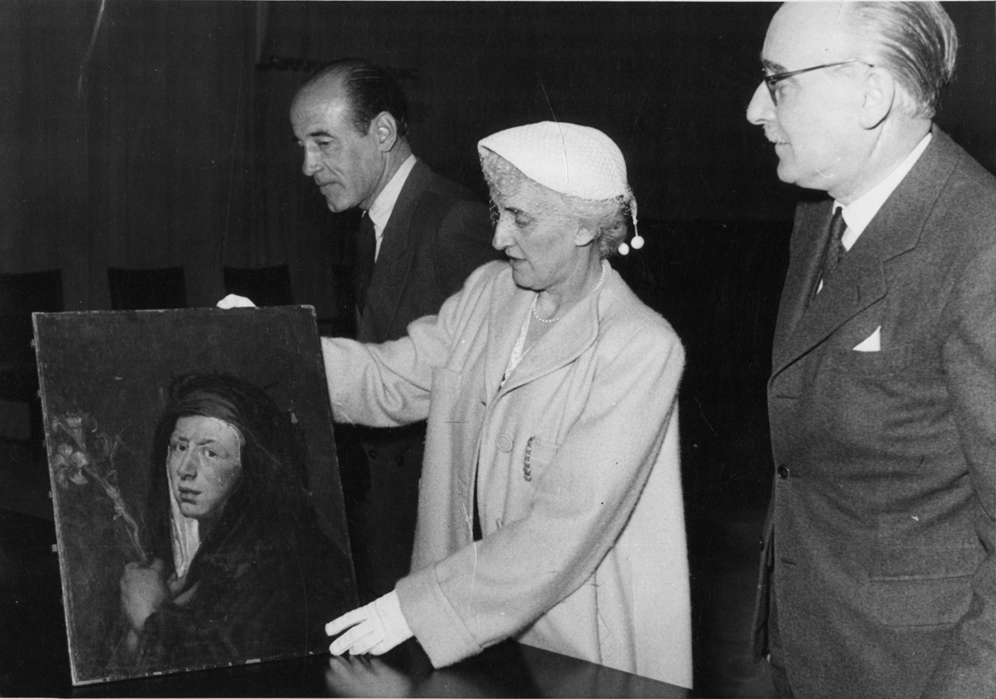
Between 1949 and 1954, Ardelia Hall published reports on the progress of the U.S. government in fulfilling its commitment to return cultural property that had been displaced. She publicized important works of art that were still missing, noting that “the circulation of the publications on missing works of art helps protect American interests against the danger of purchasing stolen property without a clear title.” In 1954, for example, she wrote about the return of one-half of the two-page Hildebrandslied, a ninth-century manuscript, to the Landesbibliothek in Kassel, illustrating in full the missing second page, along with the lost Willehalm Codex from the same library. The missing items were recovered in the United States some 20 years later.Footnote 40 In particular, Ardelia focused on carrying out the State Department’s objective of returning looted artwork that had found its way to American soil.Footnote 41 By 1954, 66 cases had come under her purview, comprising nearly 1600 items.Footnote 42 Works of art recovered in the United States were, as a result of her efforts, returned to public institutions in West Germany, Austria, Italy, and Poland, as well as to private collections, such as that of the Rothschild family in Paris (Figure 2).
Bernhard von Tischowitz, Ardelia Hall, and Franz Wolff Metternich, Bonn, 1952. Return by the U.S. State Department of a Painting by Peter Paul Rubens to the Federal Republic of Germany, for Restitution to the City of Düsseldorf. (Copyrighted and Courtesy of Smith College Archives.)

In her work on identifying and restituting stolen cultural objects that had entered the United States, Ardelia wrote to MFA director George Edgell in 1953. The museum had acquired two medieval enamels that—unbeknownst to the staff—had been looted from the Czartoryski collection in Poland during the war. The matter remained unresolved in 1955, prompting her to contact the MFA a second time, writing to Edgell’s successor, Perry Rathbone: “The Museum is formally requested to surrender the two enamels and to forward them … for restitution.” This was in keeping with the policy she had elucidated in print just a few years earlier: “[i]f the Department [of State] is informed that the holder of such a [looted] object is willing to surrender it, the Department will request its transfer to Washington for return to the claimant government”.Footnote 43 The MFA had purchased the objects from the dealer Wildenstein in Paris in the early 1950s, and ultimately reached a financial settlement with the dealer and the Prince Czartoryski. In 1955 full legal title passed to the museum, and the enamels are still on view in the MFA’s Catalonian Chapel gallery.
Though she is primarily remembered for her work on World War II restitution, Ardelia conducted similar work during and after the Korean War (1950–1953) as well. In this endeavor, she was once again able to draw on her expertise in Asian art. During the Korean War, the United States assisted South Korea in protecting and evacuating important cultural property. Following the war, in 1954, Ardelia traveled to Korea under the auspices of the Department of State and the Army to survey museums, palaces, temple monasteries, and ancient sites; these monuments were photographed by U.S. officials, and the photographs were exhibited at venues in both Korea and the United States. The survey and the photographs were published in 1959. Ardelia also oversaw restitution matters, and during her trip to Korea was charged with personally returning to the royal household in Seoul a 10th -century sword that had been brought into the United States by an American soldier.Footnote 44
Ardelia retired from the State Department in 1962. As several boxes of privately held material show, during the period of her retirement, she maintained her homes in Montague and Georgetown, visited with friends, and traveled for pleasure.Footnote 45 But she did not rest completely; her concern over the destruction and looting of art during wartime continued. In 1971, at the age of 71, she was at work on an article about Cambodia, which she evidently never finished. Completely disillusioned with the Vietnam War and the broader conflict in Southeast Asia, she wrote to a friend:
I am going down to Boston and on to Washington this week on both official and personal business, like dentist, eye doctor, and lawyer; and in an effort to get an embargo put on the importation into the U.S.A. of Cambodian antiquities that are being smuggled across the Cambodian border into Thailand.Footnote 46
After the career she had led, and in the face of the widespread fighting in Cambodia, enacting import legislation may well have seemed to Ardelia Hall to be a routine precaution. Nevertheless, it would not be until 1999, long after her death, that the United States restricted the importation of Cambodian antiquities. Ardelia would probably be gratified, in fact, to see that today the Cambodian government has successfully recovered sculptures that it claims were looted from the temple site at Koh Ker during precisely this period of unrest.Footnote 47
Ardelia Hall passed away in Greenfield, Massachusetts, on 4 September 1979, from complications of a stroke, and is buried in her family plot at the Mayflower Cemetery in Duxbury.Footnote 48 Her achievements have been unanimously acknowledged by those who knew her; in 1997, Ely Maurer of the State Department remembered Ardelia as “a persistent, zealous person, passionate in her attempts to recover stolen cultural property.”Footnote 49 Her professional choices, while extraordinary, were nevertheless shaped by the vicissitudes of her personal life. She had a rich and exceptional career in the government at a time when such a thing was rare for women, but in retrospect her path can be considered neither direct nor predestined. In fact, she was once just one day away from never fulfilling the important role for which she is remembered. The art world is indeed fortunate that Ardelia Hall had the intelligence and perseverance to face the challenges she encountered, ultimately leaving behind a legacy, and a vast body of documentation, that allows a new generation of historians, art historians, and researchers to continue the work that she began.
ACKNOWLEDGMENTS: An earlier version of this article was presented at From Plunder to Preservation: The Untold Story of Cultural Heritage, World War II, and the Pacific, Lawyers’ Committee for Cultural Heritage Preservation Annual Conference, 8 November 2012. I would like to thank Julio Alves, Frederick Ilchman, Thomas Kline, Marc Masurovsky, and Maureen Melton for their assistance in preparing this article, and I extend a special thanks to Dick West and Anne West for sharing their memories of Ardelia Hall.