Traumatic brain injury (TBI) has a high incidence internationally, with 69 million individuals estimated to sustain a TBI each year (Dewan et al., Reference Dewan, Rattani, Hung, Punchak, Shrime, Park and Rosenfeld2019). In Australia, there is an estimated 22 710 hospitalisations involving TBI. These hospitalisations have resulted in over 26 000 episodes of inpatient care totalling nearly 206 000 days and estimated direct costs of hospital care of $184 million (Helps, Henley & Harrison, Reference Helps, Henley and Harrison2008). With the cognitive changes from TBI affecting work, leisure and relationships, the personal and economic costs are substantial (Ma, Chan & Carruthers, Reference Ma, Chan and Carruthers2014). Cognitive outcomes of TBI are influenced by both injury related variables including the severity and complications, and cognitive rehabilitation intervention provided (Rabinowitz & Levin, Reference Rabinowitz and Levin2014; Rao & Lyketsos, Reference Rao and Lyketsos2000).
While the majority (80%) of TBIs are mild, moderate to severe TBI forms the focus of neurosurgery care within acute hospital settings (Marshman, Jakabek, Hennessy, Quirk & Guazzo, Reference Marshman, Jakabek, Hennessy, Quirk and Guazzo2013). People with moderate to severe TBI are often admitted to acute hospitals with impaired consciousness and post-traumatic amnesia (PTA). PTA is a passing state characterised by disorientation, confusion and memory impairment, in which disturbed sleep–wake cycle, decreased daytime arousal, agitation, affective lability, and perceptual disturbance exist (Marshman et al., Reference Marshman, Jakabek, Hennessy, Quirk and Guazzo2013). This is also described as displaying the cognitive and behavioural patterns of confusion and agitation (according to the Ranchos Los Amigos Revised Scale, Level IV), where maximal assistance is required to carry out cognitive and physical functions (Gouvier, Blanton, LaPorte & Nepomuceno, Reference Gouvier, Blanton, LaPorte and Nepomuceno1987).
People with TBI, particularly in the acute stages and during PTA, can exhibit behavioural disturbances (Marshman et al., Reference Marshman, Jakabek, Hennessy, Quirk and Guazzo2013). Within a clinical setting, these behavioural disturbances are often referred to as challenging behaviours, a generic term that covers a range of behaviours of such intensity, frequency or duration that can be a threat to quality of life and/or physical safety of the person or others (Banks et al., Reference Banks, Bush, Baker, Bradshaw, Carpenter, Deb and Xenitidis2007). Challenging behaviours following TBI can include agitation and irritability, physical or verbal aggression, disinhibited behaviour (including sexual and social disinhibition), perseverative behaviour, apathy, wandering or absconding (Hicks, et al., Reference Hicks, Gould, Hopwood, Kenardy, Krivonos and Ponsford2017; Sabaz et al., Reference Sabaz, Simpson, Walker, Rogers, Gillis and Strettles2014).
Challenging behaviours after acute TBI represent difficulties in managing the care provided and potential dangers to hospital staff. Of these challenging behaviours, post-traumatic agitation is experienced during treatment in between 30% and 70% of patients admitted to acute rehabilitation facilities (Mortimer & Berg, Reference Mortimer and Berg2017). McNett, Sarver and Wilczewski (Reference McNett, Sarver and Wilczewski2012) conducted a prevalence study on agitation among 219 TBI patients on an acute hospital ward. A high percentage (41%) of participants exhibited agitated behaviour during their stay on the acute care ward, and adverse effects of agitation included prolonged hospital stays and decreased functional outcomes among patients with TBI (McNett et al., Reference McNett, Sarver and Wilczewski2012). Lombard and Zafonte (Reference Lombard and Zafonte2005) define agitation as a state of aggression during PTA without physical, medical or psychiatric causes that may involve akathisia (i.e. a constant inner restlessness, which is almost unavoidable after a severe TBI). In this phase of recovery from TBI, these behaviours fluctuate with situational changes such as environmental stimulation, task demands and time of day. Agitation is associated with an increased length of hospital stay, reduced engagement in rehabilitation and less cognitive and motor recovery (Bogner et al., Reference Bogner, Barrett, Hammond, Horn, Corrigan, Rosenthal and Garmoe2015). Similarly, aggression is a common type of challenging behaviour which presents after an acute TBI, with 11% of patients experiencing aggression on medical or surgical wards immediately following a TBI (Brooke, Patterson, Questad, Cardenas & Farrel-Roberts, Reference Brooke, Patterson, Questad, Cardenas and Farrel-Roberts1992). Aggression may manifest as verbal and/or physical aggression. Aggression interferes with rehabilitation and is a major cause of burden both to patient and caregivers (Rao et al., Reference Rao, Rosenberg, Bertrand, Salehinia, Spiro, Vaishnavi and Miles2009).
These behaviours are not limited to the acute post-injury period and can often accumulate in chronic behavioural disabilities. Psychological and behavioural problems can exceed physical problems in causes of chronic disability, or even death, following brain injury (Jennett, Snoek, Bond & Brooks, Reference Jennett, Snoek, Bond and Brooks1981). This, in conjunction with a need to ensure a safe working environment for carers and hospital staff who are involved with this population group, stresses the need for management strategies for challenging behaviours in an acute setting.
There is an emphasis on understanding the underlying mechanisms which may cause these challenging behaviours when considering treatment methodologies. For example, patients may display agitated behaviours due to pain (Luauté, Plantier, Wiart & Tell, Reference Luauté, Plantier, Wiart and Tell2016) or depression (Deb & Crownshaw, Reference Deb and Crownshaw2004). Furthermore, it is important that the correct management strategies are selected for the underlying mechanism which is prompting the challenging behaviour, as there is the potential to demonstrate harm, rather than benefit.
These management strategies can be roughly divided into two groups: pharmacological interventions and non-pharmacological interventions. Pharmacological interventions include any intervention which utilises a pharmaceutical component, for example, sedatives, anti-depressants and anti-convulsants. Non-pharmacological interventions include any intervention which does not include pharmacological intervention, such as environmental modifications, psychological interventions, reorientation strategies, training programmes or physical restraints. Currently, the management strategies for challenging behaviours are varied and often unsupported by high-quality evidence (Luauté et al., Reference Luauté, Plantier, Wiart and Tell2016).
The objective of this review is to examine the evidence for both pharmacological and non-pharmacological management strategies for challenging behaviours for patients with TBI or PTA. The aim of this review was to synthesise and evaluate the quality of the current best evidence on the different intervention types which can be used to manage challenging behaviours in patients in the acute hospital setting with TBI or PTA.
Methods
As this review sought to provide an overall examination of a body of information that is available for a range of management strategies for challenging behaviours in patients with TBI/PTA, an umbrella review was undertaken. The principle focus of an umbrella review is to provide a summary of already undertaken primary research syntheses and not to re-synthesise the literature or incorporate primary studies (Aromataris & Munn, Reference Aromataris and Munn2017). This umbrella review was not registered but followed the Joanna Briggs Institute (JBI) methodology for umbrella reviews (Aromataris & Munn, Reference Aromataris and Munn2017).
Inclusion criteria
This umbrella review included systematic reviews (SRs) involving:
Participants: any adult patients with challenging behaviours related to TBI or PTA in the acute phase after injury (i.e. first 0–6 months following TBI);
Interventions: any management strategy used with the stated aim of reducing the challenging behaviour;
Context: the tertiary health care service (acute hospital setting);
Outcomes: behavioural change and impact on rehabilitation progress;
Types of studies: Due to the nature of the intervention, we chose not to limit the study designs included in the SRs. All SRs had to be published in the English language, in a peer-reviewed journal and be available in full text. No time period restrictions were applied, and the latest search was undertaken on September 27, 2018.
Exclusion criteria
Opinion pieces or non-peer-reviewed publications, published study protocols, conference abstracts, articles not available in English language and where full-text copies were not accessible were excluded.
Literature search strategy and article selection
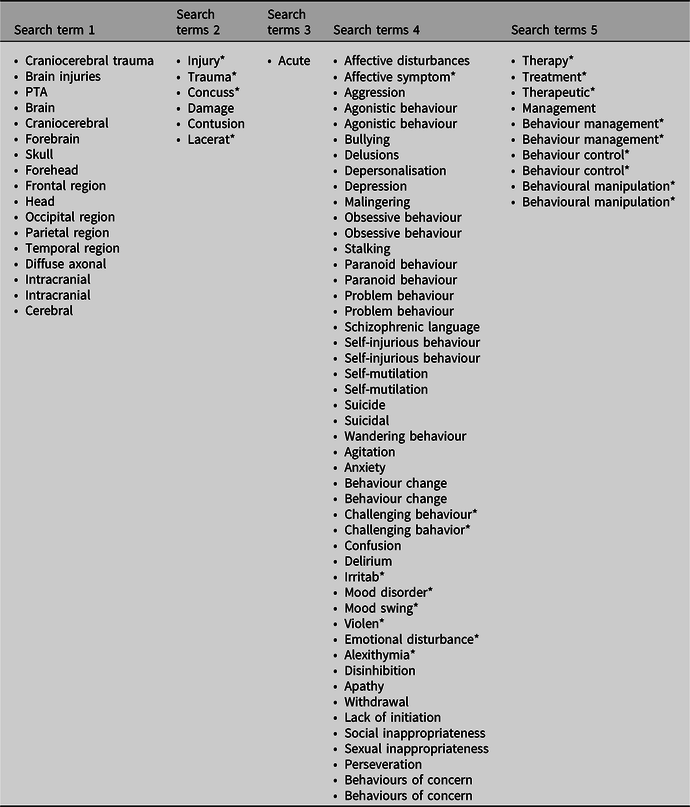
The keywords (presented in Table 1) were used to search 10 electronic databases: EMBASE, MEDLINE, AMED, PsychINFO, ICONDA, CINAHL, Pre-MEDLINE, The Cochrane Library, Scopus and Web of Science. The search focused on studies regarding clinical effectiveness of interventions for the management of challenging behaviours in patients with acute TBI or PTA. Attempts to identify further articles were made by searching the reference lists of these studies. The title and abstract of articles identified in the search were examined independently by two reviewers against inclusion/exclusion criteria (see above) and the full text retrieved. In case of disagreement, the reviewers met to discuss the article and reached consensus.
Search Terms Utilised for the Review

* Truncation.
Assessment of methodological quality/critical appraisal
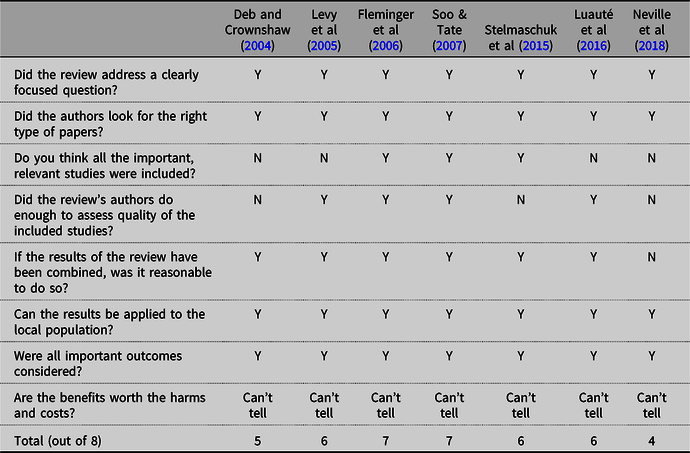
Following article retrieval, the studies were reviewed for methodological quality independently by two reviewers using the Critical Appraisal Skills Programme (CASP) Tool for SRs. The CASP checklist includes eight questions with ‘yes’, ‘no’, ‘can’t say’ or ‘not applicable’ as responses with the appraiser giving an overall rating of quality, based on the responses to questions of either high quality (++), acceptable (+), low quality (−) or unacceptable (Critical Appraisal Skills Programme, 2018). There is no defined cut-off for low/moderate or high quality based on scores using the CASP critical appraisal tool; however, scores of seven and eight reflected high-quality evidence. Quality of evidence within each SR was reported as is described in the SR.
Data collection
Following quality scoring, data were extracted from the studies using a specially designed data extraction sheet. The data extraction table was developed based on the recommendations of the JBI Methodology for JBI Umbrella Reviews (Aromataris & Munn, Reference Aromataris and Munn2017). Two independent researchers synthesised the data in tabular format. The data extracted from each SR was as follows: author, year, objectives, sources searched, inclusion criteria, exclusion criteria, population participants (characteristics/total number), description of interventions/phenomena of interest, comparator, number of studies included, range (years) of included studies, types of studies included, country of origin of included studies, appraisal, appraisal instruments used, appraisal rating, analysis, method of analysis, outcome assessed, results/findings, significance/direction, and heterogeneity.
Results
Description of studies
As shown in the flow chart in Fig. 1, the initial search resulted in 4604 citations, which left 2916 for title and abstract screening following removal of duplicates. From screening, 2909 articles failed to meet the inclusion criteria leaving seven studies for inclusion investigating the clinical effectiveness of interventions for the management of challenging behaviours in patients with acute TBI.
Flow chart of search results (adapted from Moher et al. Reference Moher, Liberati, Tetzlaff and Altman2009).

Data synthesis and quantitative analysis
The seven SRs identified explored different approaches to the management of challenging behaviours following TBI. While this review aimed to explore the evidence related to PTA, no review specifically focussed on this phase of post TBI recovery with Luauté et al. (Reference Luauté, Plantier, Wiart and Tell2016), Deb and Crownshaw (Reference Deb and Crownshaw2004), Levy et al. (Reference Levy, Berson, Cook, Bollegala, Seto, Tursanski and Bhalerao2005) and Soo and Tate (Reference Soo and Tate2007) including PTA as part of the acute TBI presentation.
Methodological quality
Apart from the two Cochrane reviews (Fleminger, Greenwood & Oliver, Reference Fleminger, Greenwood and Oliver2006; Soo & Tate, Reference Soo and Tate2007), the SRs identified in this review were generally of low to moderate quality, with quality scores ranging from four to seven out of eight, and characterised by limited search strategies, limited reporting of the critical appraisal of the included literature and limited consideration to the methodological rigour of the review process (i.e. independent reviewers), reflecting the age of the publications. High-quality SRs that focused on randomised controlled trial (RCT) level evidence were characterised by low numbers of studies which make conclusions hard to draw. The assessments of methodological quality of the SRs included in this review are presented in Table 2.
Assessment of Methodological Quality Using CASP Critical Appraisal Tool

Findings
The SRs that were identified could be broken down into two main treatment approaches – pharmacological management (Deb & Crownshaw, Reference Deb and Crownshaw2004; Fleminger et al., Reference Fleminger, Greenwood and Oliver2006; Levy et al., Reference Levy, Berson, Cook, Bollegala, Seto, Tursanski and Bhalerao2005; Luauté et al., Reference Luauté, Plantier, Wiart and Tell2016; Stelmaschuk, Will & Meyers, Reference Stelmaschuk, Will and Meyers2015) and non-pharmacological approaches (Luauté et al., Reference Luauté, Plantier, Wiart and Tell2016; Neville et al., Reference Neville, Gomes-Osman, Amorim, Hayashi, Galhardoni, Zaninotto and Paiva2018; Soo & Tate, Reference Soo and Tate2007). While one review (Stelmaschuk et al., Reference Stelmaschuk, Will and Meyers2015) included non-human studies and TBI greater than 6 months, only one of the seven studies reviewed included non-human subjects (rats) and one study included TBI greater than 6 months. A pragmatic decision was made to include this SR; however, findings from the two irrelevant primary studies were not included in this umbrella review.
Pharmacological management
The data extraction from studies involving pharmacological agents is presented in Table 3. Five SRs reported on pharmacological management approaches.
Studies Involving Pharmacological Interventions

ABI, acquired brain injury; FIM, functional independence measure; NR, not reported.
Overall the evidence for the pharmacological management of challenging behaviours in acute TBI is limited. The evidence is summarised below relating to pharmacological management for challenging behaviours, in particular agitation and aggression.
Beta-blockers
Although the exact mechanism remains unclear (Luauté et al., Reference Luauté, Plantier, Wiart and Tell2016), there is some evidence, albeit weak, that beta-blockers may be effective in the management of agitation and aggression following TBI. Based on their review of the evidence, Luauté et al. (Reference Luauté, Plantier, Wiart and Tell2016) supported beta-blocker use and assigned a Grade B recommendation (i.e. scientific presumption). This supported the earlier findings of Fleminger et al. (Reference Fleminger, Greenwood and Oliver2006) in their Cochrane review where they reported that the best evidence for the management of agitation and aggression following TBI was for the use of beta-blockers. Levy et al. (Reference Levy, Berson, Cook, Bollegala, Seto, Tursanski and Bhalerao2005) also reported level I evidence (good research-based evidence) in support of use of Propanolol. Deb and Crownshaw (Reference Deb and Crownshaw2004) reported that while there was preliminary evidence in support of beta-blockers for the reduction of assaultative behaviour and temper outbursts in patients with TBI, they were required to be taken at such high doses that adverse effects were a greater risk. Authors cautioned on the lack of high-level evidence, with a lack of long-term follow-up, small subject numbers and heterogenic populations.
Anti-epileptics
The effects of anti-epileptic or anti-convulsant medications may occur through their action on neurotransmitters involved in agitation and aggressiveness, or through the phenomenon of kindling in the limbic system observed in certain patients with aggression or agitation (Eames & Wood, Reference Eames and Wood2003). Anti-epileptics have been recommended for the management of agitation and aggressiveness following TBI; however, the evidence for the use of these drugs was equivocal. Deb and Crownshaw (Reference Deb and Crownshaw2004) reported on the evidence associated with the anti-convulsant drugs: Sodium Valproate, Phenytoin, Carbamazepine, Divalproex Sodium, Lamotrigine and reported weak evidence in favour of their use, a finding that was supported by Luauté et al. (Reference Luauté, Plantier, Wiart and Tell2016) who reported Grade C (low level of evidence) in favour of the use of mood regulating anti-epileptics. While the use of anti-epileptic medications was the standard treatment for aggression according to expert opinion, methodological biases in the evidence limit the strength of evidence, for example, heterogeneity of the population, treatment of agitation and aggressiveness at a chronic stage and not specifically during a crisis, and use of associated medical treatments. The authors also noted the adverse effects on cognitive performances and time needed to perform psychomotor tasks which were relatively common with Carbamazepine and Valproate. Levy et al. (Reference Levy, Berson, Cook, Bollegala, Seto, Tursanski and Bhalerao2005) reported level II (fair research-based evidence) and level III (expert clinical opinion) evidence in favour of Valproic Acid/Divalproex (two studies), Carbamazepine (four studies), Lithium Carbonate (three studies), and level III evidence against use of Gabapentin (one study) and Buspirone (six studies).
Neuroleptics/anti-psychotics
Neuroleptics are commonly used to obtain a quick sedation in order to protect the patient from himself/herself, or to protect the members of the healthcare team. Deb and Crownshaw (Reference Deb and Crownshaw2004) concluded from their review of four studies involving Thioridazine, Clozapine and Methotrimeprazine that there was no convincing evidence for the use of neuroleptics in the management of behaviour disorders in TBI and a significant incidence of adverse events. Levy et al. (Reference Levy, Berson, Cook, Bollegala, Seto, Tursanski and Bhalerao2005) reported level II evidence in support of the use of Methotrimeprazine (one study), Droperidol (one study), Haloperidol (six studies), Clozapine (one study) and level III evidence in support of Chlorpromazine (one study), Olanzapine (one study) and Risperidone (one study). Luauté et al. (Reference Luauté, Plantier, Wiart and Tell2016) concluded that there was limited and low-level evidence in support of the use of Olanzapine (one study), Clozapine (one study), Quetiapine (one study) and Ziprasidone (one study) and that expert opinion was that neuroleptics should not be used as first-line treatment and only in case of crisis and for a short period of time.
Anti-depressants
It has been proposed that anti-depressants work on the levels of neurotransmitters related to behavioural disorders, with serotonin shown to influence personality changes, agitation and aggressiveness. Luauté et al. (Reference Luauté, Plantier, Wiart and Tell2016) concluded that there was low level of evidence for the use of anti-depressants for the management of agitation and aggressiveness. They reported Grade C evidence (low level of evidence) in support of Sertraline, and Amitriptyline for agitation from 25 mg/day as a second-line treatment (Grade C). Levy et al. (Reference Levy, Berson, Cook, Bollegala, Seto, Tursanski and Bhalerao2005) reported level I and II evidence in support of Sertraline (two studies), level II evidence in support of Citalopram (one study) and level III evidence in favour of Bupropion (one study), Fluoxetine (one study), Protriptyline (four studies) and Amitriptyline (three studies). Deb and Crownshaw (Reference Deb and Crownshaw2004) reviewed 11 studies and concluded that anti-depressants lead to a demonstrable improvement in behaviour but that this behaviour was affective in nature. They felt that as depression and other affective disorders are common following TBI, anti-depressants may treat the affective condition which reduces the development of agitation and aggression.
Psychostimulants
This group of medications is thought to work by improving the neurochemical transmission of both dopamine and norepinephrine (Levy et al., Reference Levy, Berson, Cook, Bollegala, Seto, Tursanski and Bhalerao2005) and is commonly used to treat behavioural problems such as impaired vigilance and attention, impaired initiation and difficulty in concentrating (Deb & Crownshaw, Reference Deb and Crownshaw2004). Deb and Crownshaw (Reference Deb and Crownshaw2004) identified eight studies relating to this class of medication and concluded that while there was evidence that these drugs were effective in treating symptoms such as slowness of behaviour and lack of initiation and attention, there was the potential risk of significant adverse effects and, hence, their use needed to be monitored closely. Levy et al. (Reference Levy, Berson, Cook, Bollegala, Seto, Tursanski and Bhalerao2005) reported level I evidence in support of Methylphenidate (four studies) and level III evidence in support of Dextroamphetamine (two studies). Luauté et al. (Reference Luauté, Plantier, Wiart and Tell2016) reported on three studies that explored the use of Methylphenidate with two controlled studies showing a reduction in aggression and a third case study showing an increase in agitation in a patient with TBI treated with Methylphenidate.
Anti-parkinsonian agents
It has been observed that following severe TBI, particularly involving the frontal lobe, there are significant effects on brain monoamines, such as dopamine. Amantadine, an anti-Parkinsonian medication, increases dopaminergic neurotransmission and has been used in TBI patients for improving cognitive function, concentration, processing time and psychomotor speed, and for reducing fatigue. Deb and Crownshaw (Reference Deb and Crownshaw2004) identified five studies looking at the effect of Amantadine (two RCTs and three case studies) and concluded that the evidence in favour of the use of the drugs for improving behaviour in TBI was equivocal, with a significant risk of adverse events. Levy et al. (Reference Levy, Berson, Cook, Bollegala, Seto, Tursanski and Bhalerao2005) reported level I–III evidence (nine studies) supporting the use of Amantadine; however, the high-level evidence was again equivocal with one RCT showing no difference in effect compared to placebo and one RCT demonstrating improved initiation and progress/participation in therapy within a few days following commencement of treatment. Luauté et al. (Reference Luauté, Plantier, Wiart and Tell2016) also identified contradictory findings in the two high-level studies they reviewed and concluded that the benefit of Amantadine on agitation and aggressiveness remained to be validated. Stelmaschuk et al. (Reference Stelmaschuk, Will and Meyers2015) in their review of the use of Amantadine identified 11 primary studies, of varying levels and concluded that while the older (pre-2004 studies) were equivocal, they were of low level and of poor quality. More recent studies (since 2004) were higher level studies, with larger sample sizes. These studies included randomisation and placebo-controls and favoured Amantadine for increased arousal and/or cognition.
Non-pharmacological treatments
Three SRs reported on non-pharmacological management approaches. The findings from the reviews investigating non-pharmacological interventions are presented in Table 4. The evidence is summarised below under non-pharmacological management for agitation/aggression specifically and other behavioural symptoms.
Studies Involving Non-Pharmacological Interventions

NR, not reported; TMS, transcranial magnetic stimulation.
Agitation and aggression
Luauté et al. (Reference Luauté, Plantier, Wiart and Tell2016) found no primary research into the use of non-pharmacological therapeutic interventions for the management of agitation or aggression in patients with TBI.
Other behavioural symptoms
Cognitive behavioural therapy
There was some evidence in support of the use of cognitive behavioural therapy (CBT) (Soo & Tate, 2003) for treatment of acute stress disorder following mild TBI, and combining CBT with neurorehabilitation for targeting general anxiety symptomatology in people with mild to moderate TBI (two RCT studies). The authors identified that treatment effects appeared to be linked to the disorder rather than general anxiety, suggesting that further research should focus on interventions which are specific to the disorder. The authors warned that the current research was limited with small sample sizes.
Transcranial magnetic stimulation
Neville et al. (Reference Neville, Gomes-Osman, Amorim, Hayashi, Galhardoni, Zaninotto and Paiva2018) explored the evidence related to the use of transcranial magnetic stimulation in the assessment and treatment of TBI. The authors identified five case studies and one case series of which two case studies reported improvement in neurobehavioural symptoms, and two case studies reported improved cognition and depression.
Discussion
This umbrella review summarised the evidence from seven SRs including 203 relevant studies, involving 2699 participants. The majority of included reviews examined pharmacological interventions (n = 5), including beta-blockers, anti-depressants, anti-epileptics/anti-convulsants, neuroleptics/anti-psychotics, psychostimulants and anti-parkinsonian agents. Despite their widespread use in the management of challenging behaviours following TBI, the evidence is generally equivocal, potentially reflecting the heterogeneity of patients with TBI and their clinical behaviours. There is a lack of evidence relating to the appropriate dosage of pharmacological interventions during the acute phase of TBI or PTA. The evidence relating to the non-pharmacological management of challenging behaviours following acute TBI or PTA is scare, with three reviews reporting on non-pharmacological approaches, with limited evidence in support of the use of CBT for the management of anxiety in cases of mild TBI. Similarly with the reviews reporting on pharmacological management approaches, the low-level quality of reviews relating to non-pharmacological approaches is likely due to the heterogeneity of patients with TBI and the lack of high-quality primary research relating to non-pharmacological behaviour management approaches following acute TBI and PTA. High-quality RCTs are challenging within the TBI population due to the inherent heterogeneity of TBI type, symptoms, severity and prognosis impacting on the ability to recruit TBI participants to strict enrolment groups and draw outcomes between treatment groups (Roozenbeek et al., Reference Roozenbeek, Maas, Marmarou, Butcher, Lingsma, Lu and Steyerberg2009). Thus, there were more low-level sources of evidence in most of the SRs included in this umbrella review.
Of the SRs included in this umbrella review, most reported on behaviour management approaches related to agitation and aggression (Deb & Crownshaw, 2014; Fleminger et al., Reference Fleminger, Greenwood and Oliver2006; Levy et al., Reference Levy, Berson, Cook, Bollegala, Seto, Tursanski and Bhalerao2005; Luauté et al., Reference Luauté, Plantier, Wiart and Tell2016). Agitation is a prevalent behavioural change following TBI, with over 40% of patients with TBI exhibiting agitation within the acute hospital setting (McNett et al., Reference McNett, Sarver and Wilczewski2012) and posing risks in poorer functional outcomes and prolonged hospital admissions for the patient with TBI (Bogner et al., Reference Bogner, Barrett, Hammond, Horn, Corrigan, Rosenthal and Garmoe2015; McNett et al., Reference McNett, Sarver and Wilczewski2012). Hence, agitation may be the focus in the primary research included in the SRs given its high prevalence and risks to staff, patients and hospital efficiencies. There is also considerable variability in the definition of agitation (Fugate, Spacek, Kresty, Levy, Johnson & Mysiw, Reference Fugate, Spacek, Kresty, Levy, Johnson and Mysiw1997), potentially impacting on the differentiation of behavioural disturbances following acute TBI within the SRs included and primary research.
No SRs were identified focussing on behaviour management approaches during PTA. Of the primary studies included in the SRs examined, only one related to PTA, however, was included in the SRs as part of the acute TBI presentation (Luauté et al., Reference Luauté, Plantier, Wiart and Tell2016). There is a lack of primary research relating to behaviour management approaches for patients experiencing PTA, hence no SRs were identified. This umbrella review has highlighted a gap in primary research relating of PTA and behaviour management approaches.
The strengths of this umbrella review are that it provides a summary of existing research syntheses related to the evidence for management strategies for challenging behaviours for patients with TBI. Due to the amount of evidence syntheses already undertaken on this topic, this review of reviews allowed consideration of the evidence associated with both pharmacological and non-pharmacologic management in the same review.
A limitation of this umbrella review is that the findings are dependent on the reporting of the included systematic research syntheses. Primary data searching, quality appraisal and data extraction, all potentially at risk of bias, have been performed in the SRs and are outside the control of the current authors. Also, the focus on SRs means that any new and developing intervention, which may not have had sufficient primary evidence to be included in an SR will not be identified in an umbrella review. A further limitation of this umbrella review is the currency of findings. Majority of the evidence reported within the included SRs reflect research up to 2015, with this umbrella review excluding primary research within the past 5 years. Since the review period, there have been more recent studies published investigating the efficacy of pharmacological interventions for neurobehavioural symptoms in PTA (Hicks et al., Reference Hicks, Clay, Hopwood, James, Jayaram, Batty and Ponsford2018) and pharmacological interventions for aggression after TBI (Hicks et al., Reference Hicks, Clay, Hopwood, James, Jayaram, Perry and Ponsford2019).
Conclusions
This is the first umbrella review examining the effect of management strategies for challenging behaviours after TBI in the acute hospital setting, to the best of our knowledge. The review sought to determine the most effective management strategy for challenging behaviours in this population. The results compiled from the SRs indicate that the current evidence for the management of challenging behaviours in patients with acute TBI is characterised by low levels of methodological quality with significant biases. The results indicate that there is scare evidence relating to management of challenging behaviours in patients experiencing PTA highlighting this as a gap in primary research.
Recommendations for practice. In the absence of high-quality evidence, clinicians rely on clinical practice guidelines or expert opinion to guide clinical reasoning for behaviour management approaches for the acute patient with TBI or PTA. First-line management of challenging behaviours within the acute phase of TBI should include a comprehensive and consistent assessment for the underlying mechanisms causing behavioural changes (Institut national d’excellence en santé et en services sociaux – Ontario Neurotrauma Foundation [INESSS-ONF], 2015; Luauté et al., Reference Luauté, Plantier, Wiart and Tell2016) with careful assessment of the individual and their environment (Flanagan, Elovic & Sandel, Reference Flanagan, Elovic and Sandel2009). Despite the lack of research relating to behaviour management for TBI patients experiencing PTA, PTA should be assessed prospectively with a standardised tool, and environmental modifications can be implemented to reduce agitation during PTA (Ponsford et al. Reference Ponsford, Janzen, McIntyre, Bayley, Velikonja and Tate2014). Ylvisaker, Jacobs and Feeney (Reference Ylvisaker, Jacobs and Feeney2003) described a framework of positive behaviour support involving context-sensitive applied behaviour analysis, antecedent management and a person-centred collaborative approach with the individual with behavioural changes. Acute TBI behaviour management should be an integrative approach from the interdisciplinary team, commencing with non-pharmacological approaches and elimination of antecedents and triggers to agitation and aggression (INESSS-ONF, 2015; McNett et al., Reference McNett, Sarver and Wilczewski2012; Plantier & Luauté, Reference Plantier and Luaute2016). It is when non-pharmacological approaches are unsuccessful in modifying the challenging behaviour that pharmacological intervention is necessary (Levy et al., Reference Levy, Berson, Cook, Bollegala, Seto, Tursanski and Bhalerao2005). Despite the equivocal evidence relating to the pharmacological management of challenging behaviours, clinical practice guidelines and expert opinions recommend pharmacological management agents should be based on personalised management and targeted to symptoms (Plantier & Luauté, Reference Plantier and Luaute2016). Patients with TBI can be sensitive to psychotropic drugs, and therefore, pharmacological agents should be at low doses with slow progression of doses (Luauté et al., Reference Luauté, Plantier, Wiart and Tell2016; Plantier & Luauté, Reference Luauté, Plantier, Wiart and Tell2016). Staff and clinicians should be trained in behavioural assessment and treatment techniques, and there should be a robust programme of patient and family education for TBI behaviour management (INESSS-ONF, 2015).
Recommendations for research. Future research should focus and include non-pharmacological and pharmacological behavioural interventions to compare and contrast the most effective behaviour management approaches for the acute patient with TBI. Non-pharmacological interventions in practice include environmental modifications, psychological interventions, reorientation strategies and staff training programmes (Flanagan et al. Reference Flanagan, Elovic and Sandel2009; Luauté et al., Reference Luauté, Plantier, Wiart and Tell2016; McNett et al. Reference McNett, Sarver and Wilczewski2012); however, the evidence relating to these non-pharmacological interventions is scare. Primary research should aim focus on the efficacy of these non-pharmacological interventions on acute TBI behaviour management. The lack of evidence relating to the management of challenging behaviours for patients experiencing PTA indicates further primary research is required for effective behaviour management in PTA. The TBI population is inherently heterogeneous, and studies involving homogeneous TBI populations may limit the generalisability of outcomes in practice. However, primary research should aim to include TBI populations with more homogeneity relating to TBI damage, severity, specific criteria, specific behaviours, and involve longer term follow-up and functional outcomes, in order to minimise limitations in research studies.
Supplementary material
To view supplementary material for this article, please visit https://doi.org/10.1017/BrImp.2020.5
Financial Support
This work was supported by the Lifetime Support Authority of South Australia [grant number GA00038].
Conflict of Interest
Mrs Heather Block has no conflicts of interest to disclose. Dr Stacey George has no conflicts of interest to disclose. Dr Steve Milanese has no conflicts of interest to disclose. Dr Janine Dizon has no conflicts of interest to disclose. Ms Holly Bowen-Salter has no conflicts of interest to disclose. Mrs Felicity Jenkinson has no conflicts of interest to disclose.
Ethical Standards
The authors assert that all procedures contributing to this work comply with the ethical standards of the relevant national and institutional committees on human experimentation and with the Helsinki Declaration of 1975, asrevised in 2008.