Introduction
China has one of the world's largest karst regions, which mainly occurs in Yunnan, Guizhou and Guangxi Provinces (Tong et al., Reference Tong, Brandt, Yue, Horion, Wang, Keersmaecker, Feng, Schurgers, Xiao and Luo2018). An abundance of endemic plant species with high extinction risks is found in this region (Chen et al., Reference Chen, Shui, Yang, Wang, Nishii, Wen, Zhang and Möller2014), and the karst ecosystem is considered to be sensitive and vulnerable (Zhu et al., Reference Zhu, Wang, Li and Sirirugsa2003). The biodiversity and conservation of this ecosystem is of great interest to the government and scientists, and many projects concerning plant conservation and restoration have been conducted (Tong et al., Reference Tong, Brandt, Yue, Horion, Wang, Keersmaecker, Feng, Schurgers, Xiao and Luo2018). In order to use seeds in restoration projects, information about seed dormancy and germination is required (Baskin and Baskin, Reference Baskin and Baskin2014). In addition, seeds in the soil seed bank are considered to play an important role in restoration efforts (Baskin and Baskin, Reference Baskin and Baskin2014). To date, however, little work has been done on seed ecology, as it relates to habitat preservation/restoration in this region. Further, no studies have been done on germination responses of seeds exposed to natural seasonal environmental changes or on the soil seed bank dynamics of species endemic to the vulnerable karst ecosystem in south-west China.
Begonia guishanensis S. H. Huang & Y. M. Shui (Begoniaceae) is endemic to mixed forests on limestone hills in Yunnan, China (Huang and Shui, Reference Huang and Shui1994), and Paraisometrum mileense W. T. Wang (Gesneriaceae), belonging to the monotypic genus Paraisometrum, is endemic to south-west China (Yunnan, Guizhou and Guangxi) (Weitzmann et al., Reference Weitzmann, Skog, Wang, Pan and Li1997). According to Shimizu (Reference Shimizu1963) and Chin (Reference Chin1977), these two species are ‘plants exclusive to limestone habitat’, thus persistence of their populations is dependent on the stability of their natural habitat (Zhu, Reference Zhu2007). Due to increased agriculture activities and urbanization, the natural limestone habitats are fragmented. Those two species coinciding in one place (Shilin County, Yunnan Province). Both species are herbaceous perennials but have different growth habits. The above-ground organs of B. guishanensis emerge only in the wet season during late May to late October. On the other hand, plants of P. mileense are evergreen and can survive extreme water loss down to below 10% relative water content; thus, they are considered to be resurrection plants (Li et al., Reference Li, Wang, Yu, Yu and Li2014). Despite the drought tolerance of P. mileense, it is listed as one of the ‘plant species with extremely small populations’ and is critically endangered (Ma et al., Reference Ma, Chen, Grumbine, Dao, Sun and Guo2013). Seeds of B. guishanensis are obovoid, c.a. 372 μm in length and 236 μm in width (Yang et al., Reference Yang, Chen and Shui2015) and are considered to have little or no endosperm (McDonald and Kwong, Reference McDonald and Kwong2005; Tebbitt and Garden, Reference Tebbitt and Garden2005). The seed length and width of P. mileense are 590 ± 60 and 280 ± 20 μm, respectively (Liu et al., Reference Liu, Qin and Hu2015), and have only one or several cell layers of endosperm (Imaichi et al., Reference Kastner, Goebel and Maguire2000). Embryos of both species are fully developed (Hu et al., Reference Hu, Yang and Guan2012; Liu et al., Reference Liu, Qin and Hu2015). Seeds of both species are dispersed at the end of the wet season, and they are known to have non-deep physiological dormancy (PD) (Hu et al., Reference Hu, Yang and Guan2012; Liu et al., Reference Liu, Qin and Hu2015). However, dormancy levels of P. mileense seeds are usually low and are expressed only at temperatures below 20°C (Liu et al., Reference Liu, Qin and Hu2015). GA3, dry afterripening (DAR) and moist chilling (MC) are able to break the dormancy, and KNO3 significantly enhances the germination of both species (Hu et al., Reference Hu, Yang and Guan2012; Liu et al., Reference Liu, Qin and Hu2015).
Depending on the species, seeds with non-deep PD may cycle between full dormancy (no germination at any condition) and non-dormancy (germination over a wide range of conditions) or between conditional dormancy (germination over a limited range of conditions) and non-dormancy several times before they eventually germinate or die (Baskin and Baskin, Reference Baskin and Baskin2014). Many studies have been carried out to determine the environmental factors that influence dormancy cycles. Temperature, light or darkness, soil moisture condition, gaseous environment, and organic and inorganic chemicals may play a role in dormancy cycling, but temperature and soil moisture are the most critical (Baskin and Baskin, Reference Baskin and Baskin2014). However, the main factors driving dormancy cycling vary with the species, and only a small study has examined the interactions of two or more factors (Cao et al., Reference Cao, Baskin, Baskin, Yang and Huang2013).
Based on the meteorological data from 1990 to 2008 for Shilin County, Yunnan Province (the area of common distribution for the two species), we summarized several possible combinations of temperature and moisture conditions that seeds may experience in the field after dispersal (Table 1). From November to February, rainfall is very scarce (98 mm) and is accompanied by low temperatures (5.5–17.8°C); thus, seeds during this period may experience MC, DAR and wet and dry cycles (WD cycles) at low temperatures, and the WD cycles can be considered as MC interrupted by DAR events. From late April to early June, temperatures range from 15.0 to 24.8°C, and precipitation is still sporadic. During this time, seeds in the field may experience DAR and WD cycles at relatively high temperatures. Although the temperature is as high as that during the wet season and is favourable for germination, the imbibition phases are not long enough to promote germination. After the start of the wet season, temperatures do not change much (17.3–24.6°C), but rainfall becomes abundant, at which time seeds will experience suitable temperature and moisture conditions for germination. However, based on our observations, seedlings of B. guishanensis are rarely found, while those of P. mileense are relatively abundant in their natural habitat during the wet season.
Summary of maximum and minimum air temperatures and rainfall data in Shilin County, Yunnan Province, China, from 1990 to 2008 (China Meteorological Scientific Data Sharing System)

We speculated that seed dormancy might play a role in the rarity of B. guishanensis seedlings during the wet season, and this dormancy could be induced during the transition between the dry and the wet season. DAR at room temperature and MC at 5°C are able to break dormancy for seeds of B. guishanensis (Hu et al., Reference Hu, Yang and Guan2012), but the effects of WD cycles at relatively high temperatures are unknown for both species. Also, the effects of DAR and MC under the natural temperatures (5.5–17.8°C) that occur at the beginning of the dry season have not been determined for either species. Depending on the species, WD cycles may promote, depress or have no effect on seed germination (Kastner et al., Reference Imaichi, Nagumo and Kato1981; Bradford et al., Reference Bradford, Steiner and Trawatha1990; Allen et al., Reference Allen, White and Markhart1993; Ren and Tao, Reference Ren and Tao2003; Santini et al., Reference Santini, Rojas-Aréchiga and Morales2017; Lima and Meiado, Reference Lima and Meiado2018). Hoyle et al. (Reference Hoyle, Daws, Steadman and Adkins2008) showed that WD cycles under high summer temperatures alleviated dormancy for seeds of several species from south-west Queensland, Australia, and the effects of WD cycles on some species were better for breaking dormancy than dry afterripening (DAR) and MC under the same temperature regimes. These results suggest that mimicking the temperature and moisture conditions that seeds experienced in the field after dispersal can provide a better understanding of dormancy-breaking and germination requirements.
For non-deep physiologically dormant (PD) seeds that exhibited dormancy cycling, if dormancy is alleviated by low winter temperatures, then high summer temperatures may induce dormancy or conditional dormancy. Thus, the primary (conditional) dormancy of B. guishanensis and P. mileense seeds should be alleviated during the cool, dry season, resulting in germination in the warm, wet season. In support of this idea, the previous work has shown the dormancy releasing effect of MC at 5°C and DAR at room temperature (Hu et al., Reference Hu, Yang and Guan2012; Liu et al., Reference Liu, Qin and Hu2015). Thus, we hypothesized that MC, DAR and WD cycles under low temperatures (e.g. 15/5°C) would break the dormancy B. guishanensis and P. mileense seeds, while WD cycles under high temperatures (e.g. 25/15°C) will induce conditional dormancy.
To determine if the seeds of B. guishanensis and P. mileense undergo dormancy cycling and the possible driving factors, we carried out experiments on DAR, MC and WD cycles in the laboratory and conducted a field experiment in the Kunming Botanical Garden (Yunnan Province), where the climate is quite similar to that in the natural habitat of B. guishanensis and P. mileense. The aims of this research were to determine: (1) the effect of WD cycles, constant dry (can be considered as DAR) and constant wet (can be considered as incubation or MC) under different temperature regimes on seed dormancy and germination; and (2) if seeds undergo dormancy cycling in the natural environment.
Materials and methods
Ripe capsules of B. guishanensis and P. mileense were collected in Shilin County in Yunnan Province on 22 October 2013. All seeds were given 3 weeks of DAR at room temperature before initiation of experiments. Only round, fully developed seeds were used in the experiments.
WD cycles, DAR and MC treatment
To determine the effects of WD cycles, DAR and MC treatment on seed dormancy, seeds of both species were incubated at 15/5°C and/or 25/15°C. The 15/5°C regime simulates field temperatures during the early part of the dry season and 25/15°C the latter part of the dry season and wet season (Table 1). For WD cycles, seeds were first sown on water-saturated filter papers in 90-mm Petri dishes with the lid on and sealed in transparent plastic bags at both temperature regimes. After 2 d, the Petri dishes were taken out of the plastic bag, the lids removed, and seeds were allowed to dry at each temperature for 5 d. The duration of one WD cycle was 1 week. For the DAR treatment, seeds were placed on dry filter paper in 90-mm Petri dishes with lid off at both temperatures. For the MC treatment, seeds were sowed on 1% agar water medium in 90-mm Petri dishes with lid on and were sealed in transparent plastic bags at only 15/5°C because some seeds of both species can germinate at 25/15°C (Hu et al., Reference Hu, Yang and Guan2012; Liu et al., Reference Liu, Qin and Hu2015). For all treatments, the photoperiod was 12 h light (22.2 μmol m−2s−1 illumination by cool white fluorescent light) and 12 h dark. All treatments were given for 0, 2, 4 and 8 weeks. One 90-mm Petri dish containing 1500 (for B. guishanensis) or 750 seeds (for P. mileense) was used, and after 2, 4 and 8 weeks, 480 (for B. guishanensis) or 240 seeds (for P. mileense) were picked out for each treatment and tested for germination (see below).
Field experiment
For each species, 60 (for B. guishanensis) or 30 (for P. mileense) seeds were placed in each of 33 nylon cloth bags and on 14 November 2013 were placed on top of six pots (about 20 cm in dimension) filled with soil taken from the natural habitat of the two species. The pots were set placed in the Kunming Botanical Garden, which is located about 100 km from the seed collection site. The altitude of the Garden and the seed collection was about 2000 m a.s.l. A double-layer of black mash net was set 2.5 m above the pots to reduce sunshine and the impact of falling raindrops. At 30-day intervals, three bags of seeds for each species were retrieved and tested for germination in the laboratory (see below).
Germination tests
After WD cycles, DAR and MC treatments and various periods in the garden, seeds of both species were tested for germination in light (12 h of 22.2 μmol m−2s−1 cool white fluorescent light and 12 h dark each day) at 20, 25, 15/25 (night/day) and 20/30°C (night/day). Seeds of B. guishanensis were placed on 1% agar/water medium (plain agar) or 1% agar/water medium with 90 mg l−1 KNO3, while those of P. mileense were placed on plain agar. Three replicates of 20 seeds each were used for each test condition. The Petri dishes were placed in transparent plastic bags to prevent desiccation.
Germination was monitored every 7 d, and seeds with a radicle that exceeded one-third the total seed length were considered to be germinated. The Petri dishes were randomly rearranged on checking days. The germination test ran for a minimum of 4 weeks, after which if no additional seeds germinated for 2 continuous weeks, the test was terminated. At the end of each test, all non-germinated seeds were cut open to determine if they contained an embryo and if it was viable; firm white embryos were recorded as viable and soft and/or rotten ones as nonviable.
Statistical analysis
Germination percentage (GP) used for dormancy assessment was calculated as follows:
 $${\rm GP} = \sum \displaystyle{{ni} \over {{\lpar {N {-} Ne {-} Nd} \rpar }}} {\times 100\percnt} $$
and viability was calculated as follows:
 $$V{\rm}= \displaystyle{{\lpar {N {-} Ne {-} Nd} \rpar } \over N} \times 100\percnt $$
where N is the total number of seeds tested, Ne the number of empty seeds, Nd the number of decayed seeds and ni the number of germinated seeds. If the viability was below 70% (which means more than 30% of the seeds tested in that treatment were empty and\or decayed), germination data for that treatment were excluded from dormancy assessment and analysis. Germination data were analyzed using one-way ANOVA for different treatments at different germination temperatures and on different medium separately to determine the effect of different treatments on germination at a certain incubation temperature on each medium. Data were arcsine square-root transformed if necessary to meet the assumptions of ANOVA for normality and homogeneity of variance. A least significant difference post-hoc test was used for multiple comparisons. Differences obtained at a level of P < 0.05 were considered to be significant. All statistical analyses were performed using SPSS 16.0 for windows (SPSS, Chicago, IL).
Results
Effect of WD cycles, MC and DAR
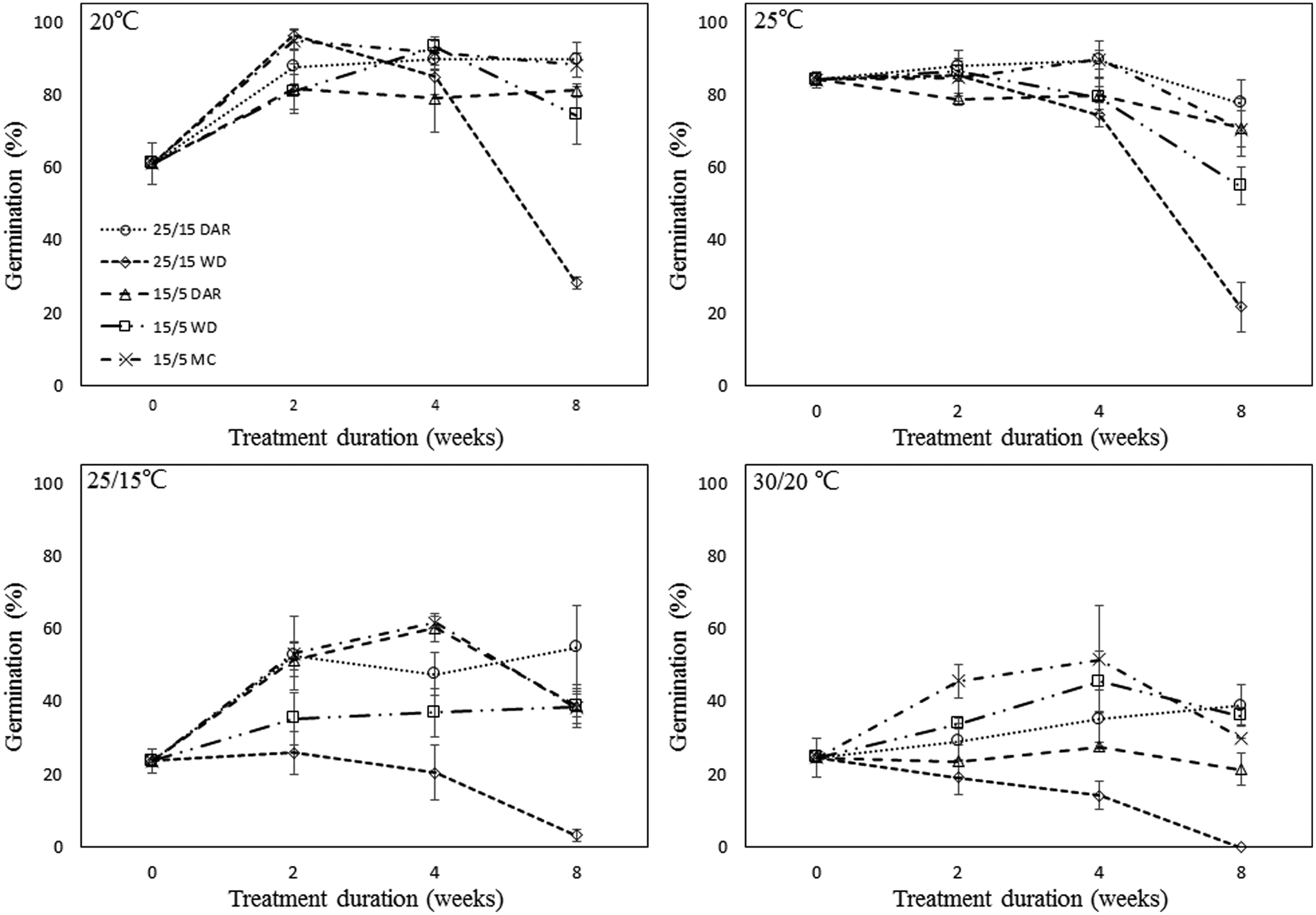
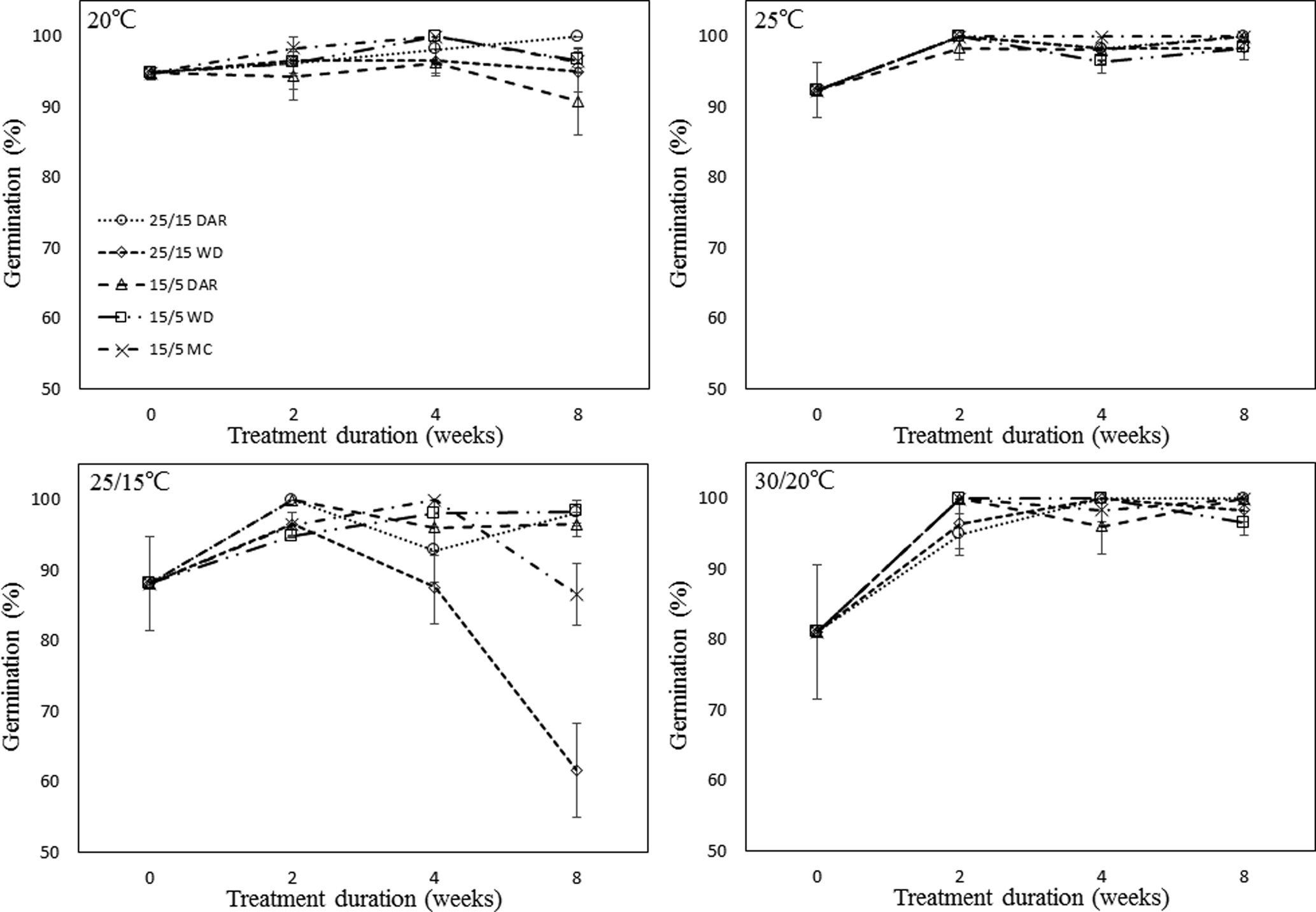
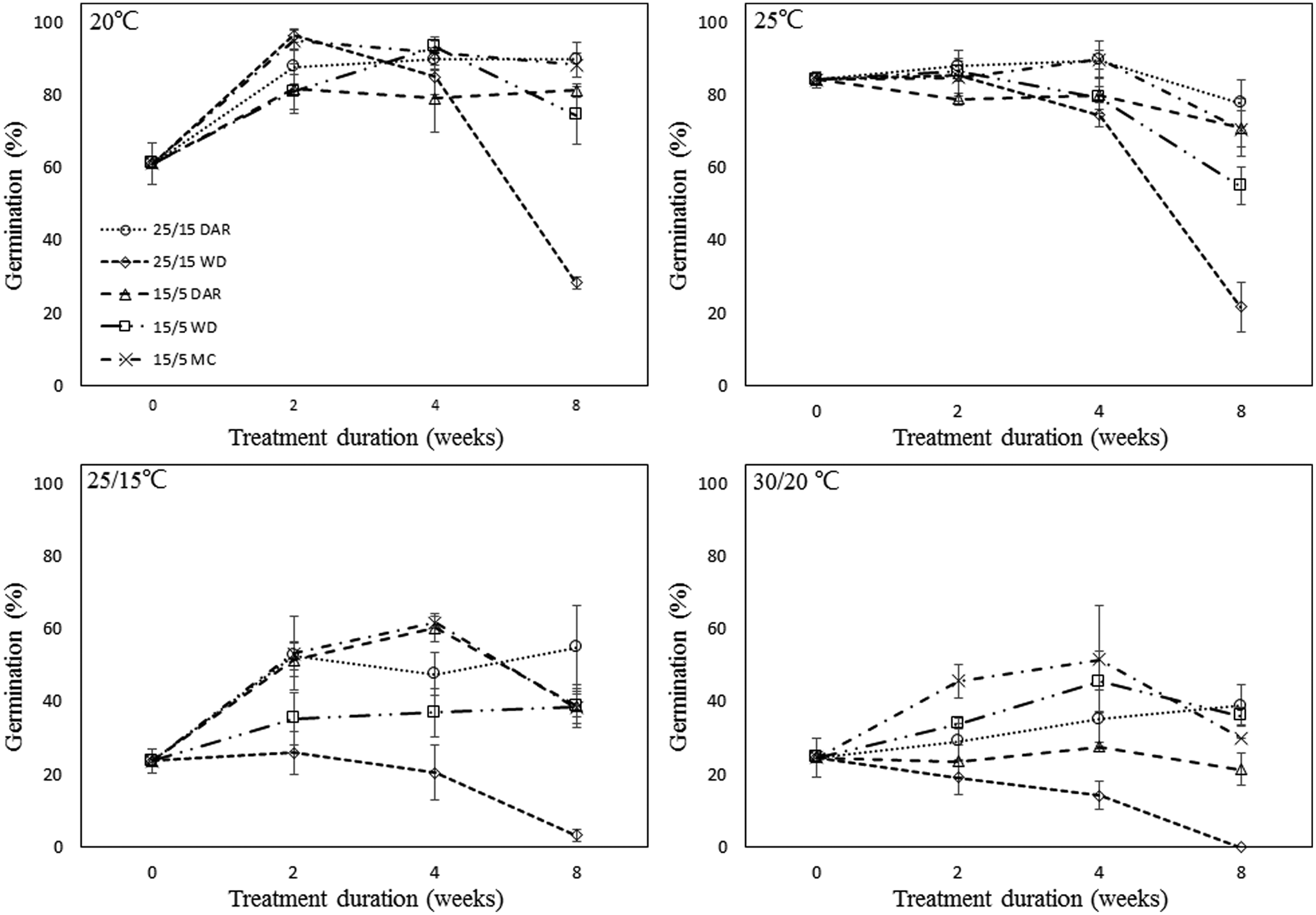
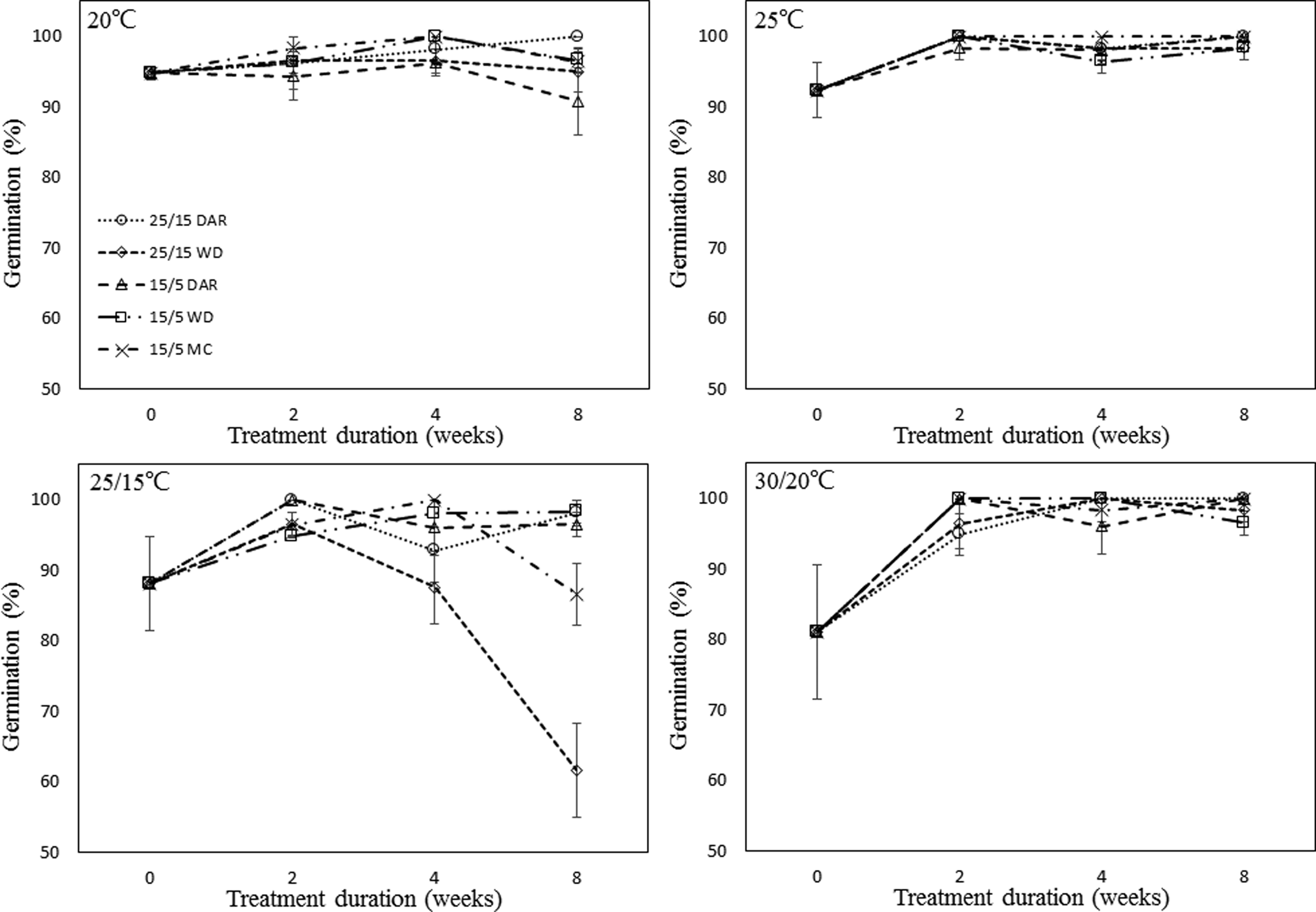
Seed viability for all treatments was above 70% for both species. The initial germination of B. guishanensis seeds ranged from 23.8% at 25/15°C to 84.2% at 25°C on plain agar (Fig. 1) and from 81.1% at 30/20°C to 94.8% at 20°C on agar with KNO3 (Fig. 2). WD cycles at 15/5°C significantly promoted germination at 20, 25/15 and 30/20°C on plain agar and at 25, 25/15 and 30/20°C on agar with KNO3. However, WD cycles at 25/15°C significantly decreased germination at 20, 25, 25/15 and 30/20°C on plain agar (Fig. 1) and at 25/15°C on agar with KNO3 (Fig. 2). MC at 15/5°C significantly promoted germination at 20, 25/15 and 30/20°C on plain agar and at 20, 25, 25/15 and 30/20°C on agar with KNO3. DAR at 15/5°C promoted germination at 25 and 30/20°C on agar with KNO3 but had no effect at 20 and 25/15°C regardless of media. DAR at 25/15°C significantly promoted germination at 20 and 25/15°C on plain agar (Fig. 1) and at 20, 25 and 30/20°C on KNO3 agar (Fig. 2).
Final germination (mean ± s.e.) of B. guishanensis seeds on plain agar in light at 20, 25, 25/15 and 30/20°C after different durations of DAR, WD and MC treatment under 25/15 and 15/5°C.
Final germination (mean ± s.e.) of B. guishanensis seeds on agar with KNO3 in light at 20, 25, 25/15 and 30/20°C after different durations of DAR, WD and MC treatment under 25/15 and 15/5°C.
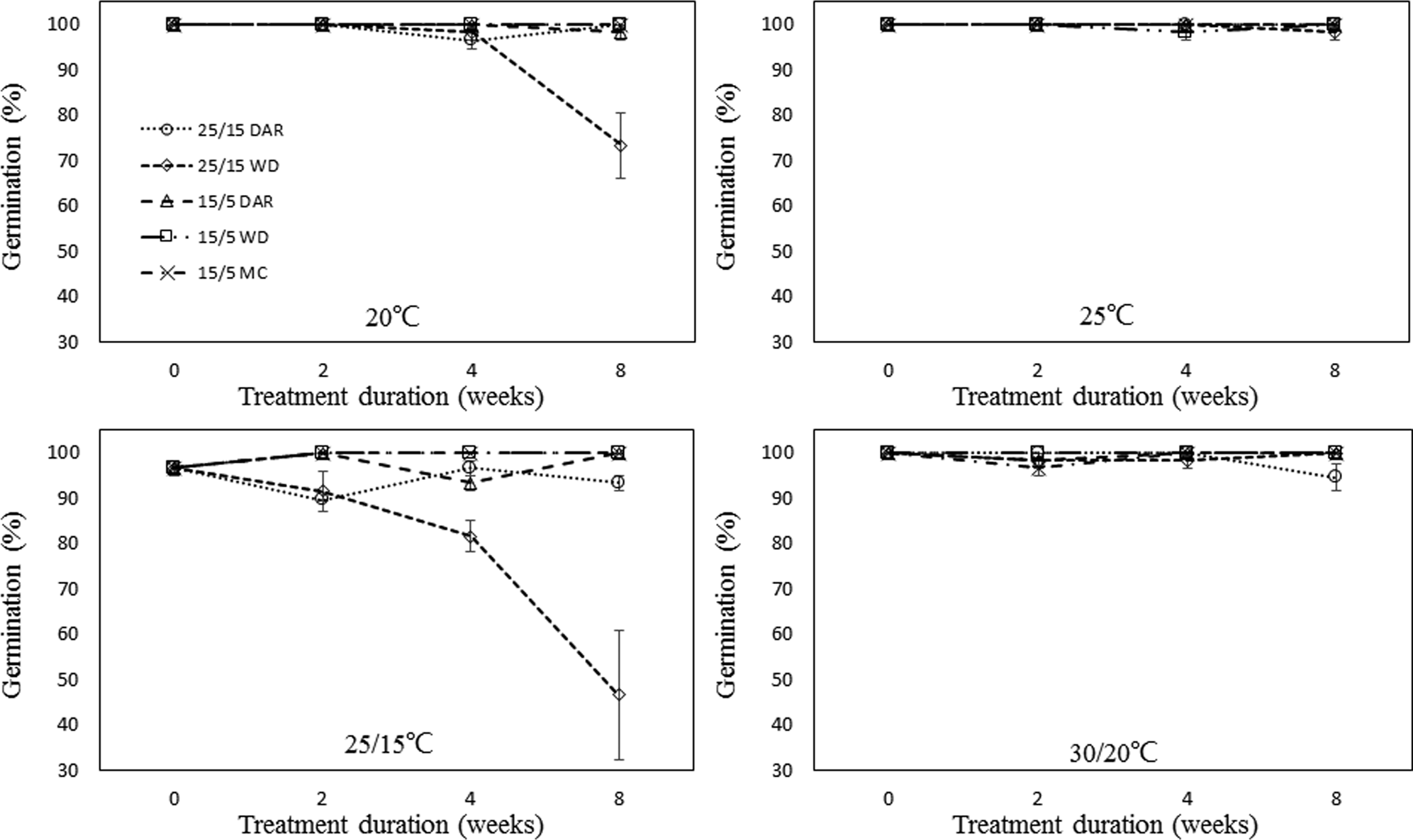
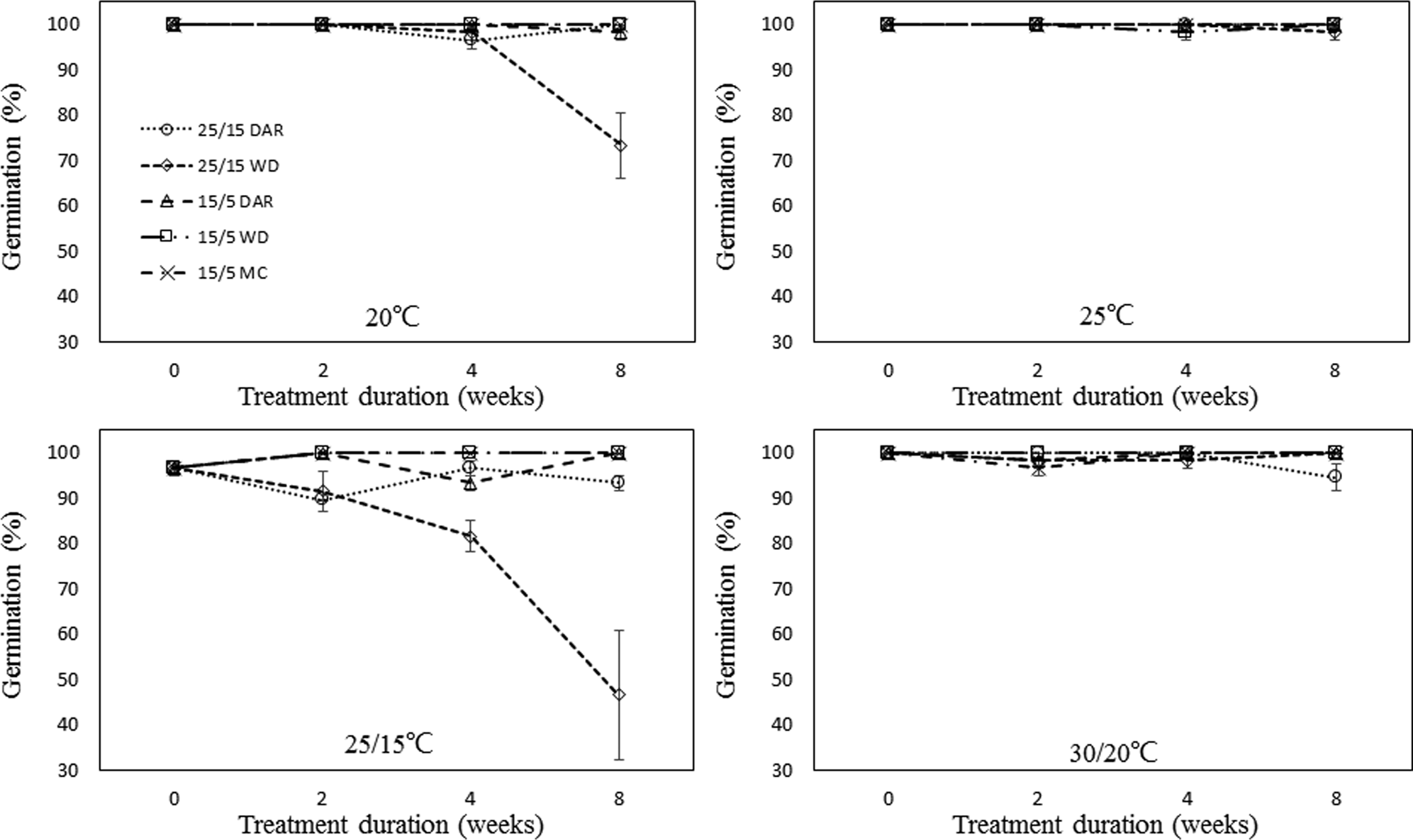
The initial germination of P. mileense was 100% at 20, 25 and 30/20°C and 96.7% at 25/15°C. Most of the treatments had no significant effect on GP at any test temperature, and only 8 weeks of WD cycles at 25/15°C showed a significant depressing effect on germination at 20 and 25/15°C (Fig. 3).
Final germination (mean ± s.e.) of P. mileense seeds on plain agar in light at 20, 25, 25/15 and 30/20°C after different durations of DAR, WD and MC treatment under 25/15 or 15/5°C.
Field experiment
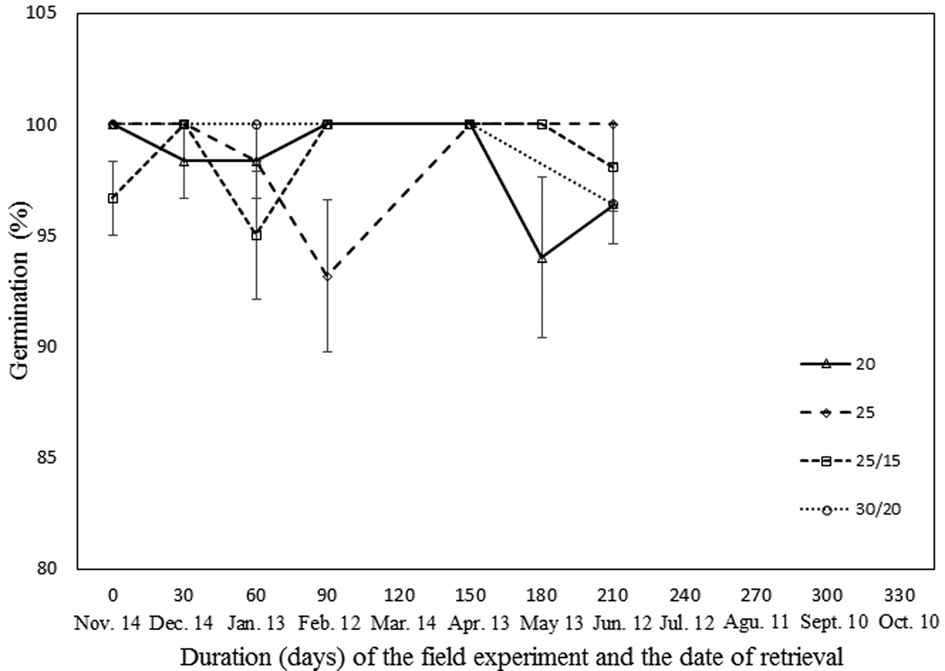
For B. guishanensis, the viability of seeds retrieved from the field on day 120 (14 March 2014) and then tested for germination ranged from 0% at 30/20°C to 63.3% at 20°C. Also, the viability of P. mileense seeds retrieved from the field on day 180 (13 May 2014) and tested at 25 and 30/20°C was 28.3% and 20.0%, respectively. The loss of viability during field burial may distort the effect of dormancy change on germination, thus germination data for seeds with <70% viability were excluded from the analysis. For B. guishanensis, no seeds germinated in the cloth bags during field burial, while for P. mileense, no germinated seeds were found until day 210 (12 June 2014). On day 210, although a few seeds had germinated in the cloth bag, there were at least 60 non-germinated seeds that could be used for the germination test. On day 240 (12 July 2014), most of the P. mileense seeds had germinated, so germination tests could not be performed in the laboratory.
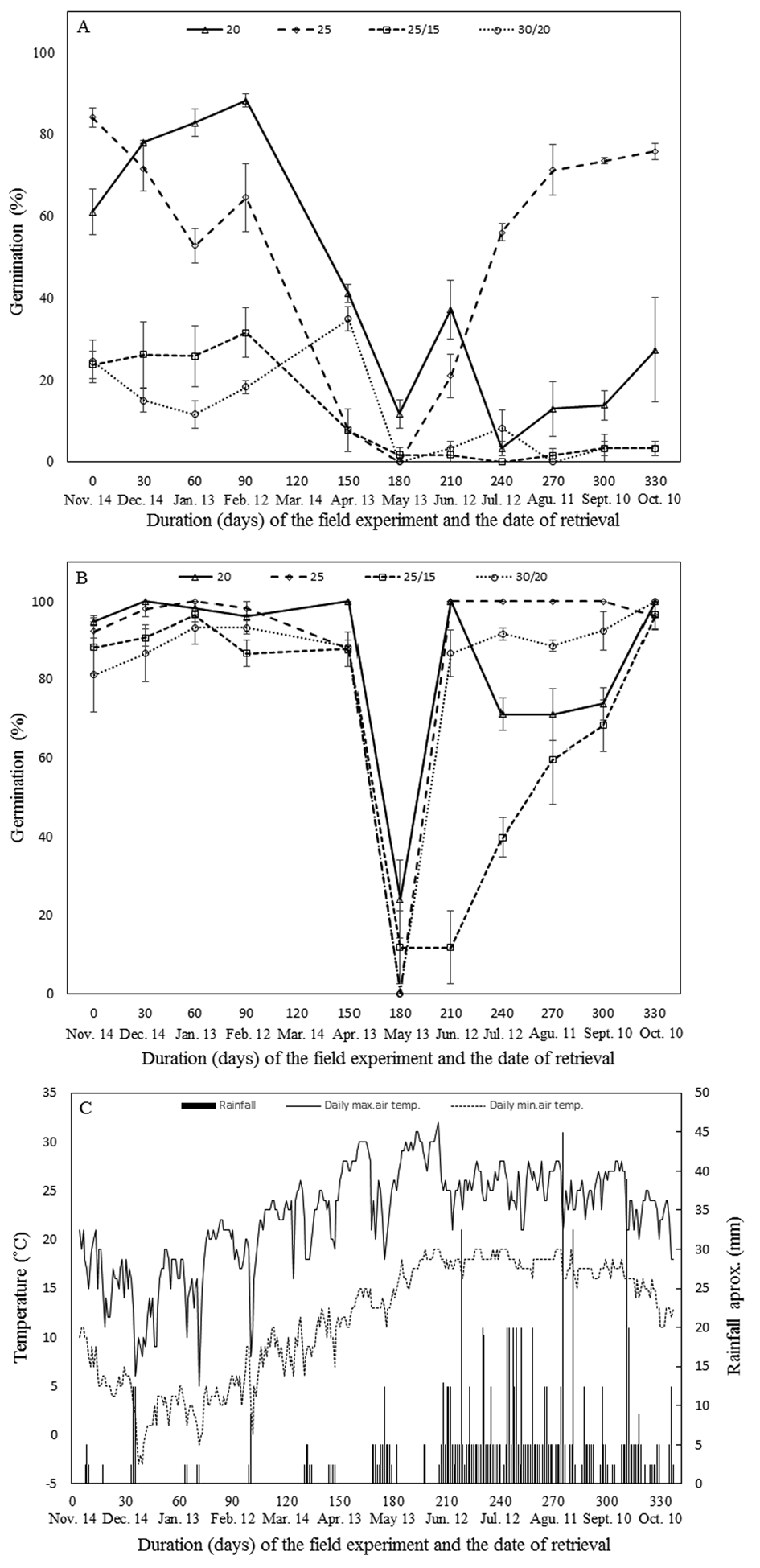
Germination percentages of B. guishanensis seeds retrieved before mid-May were not significantly changed compared to the control on agar with KNO3, but the germination of the seeds retrieved on 13 May 2014 (day 180) was significantly decreased at all temperatures. Germination on agar with KNO3 of seeds retrieved after 12 June 2014 at all temperatures had returned to the initial level, which was around 90% (Fig. 4).
Final germination (mean ± s.e.) of B. guishanensis seeds on plain agar (A) and agar with KNO3 (B) at 20, 25, 25/15 and 30/20°C after different durations in the field (C). Daily maximum and minimum air temperatures and daily rainfall of Kunming during the field experiment.
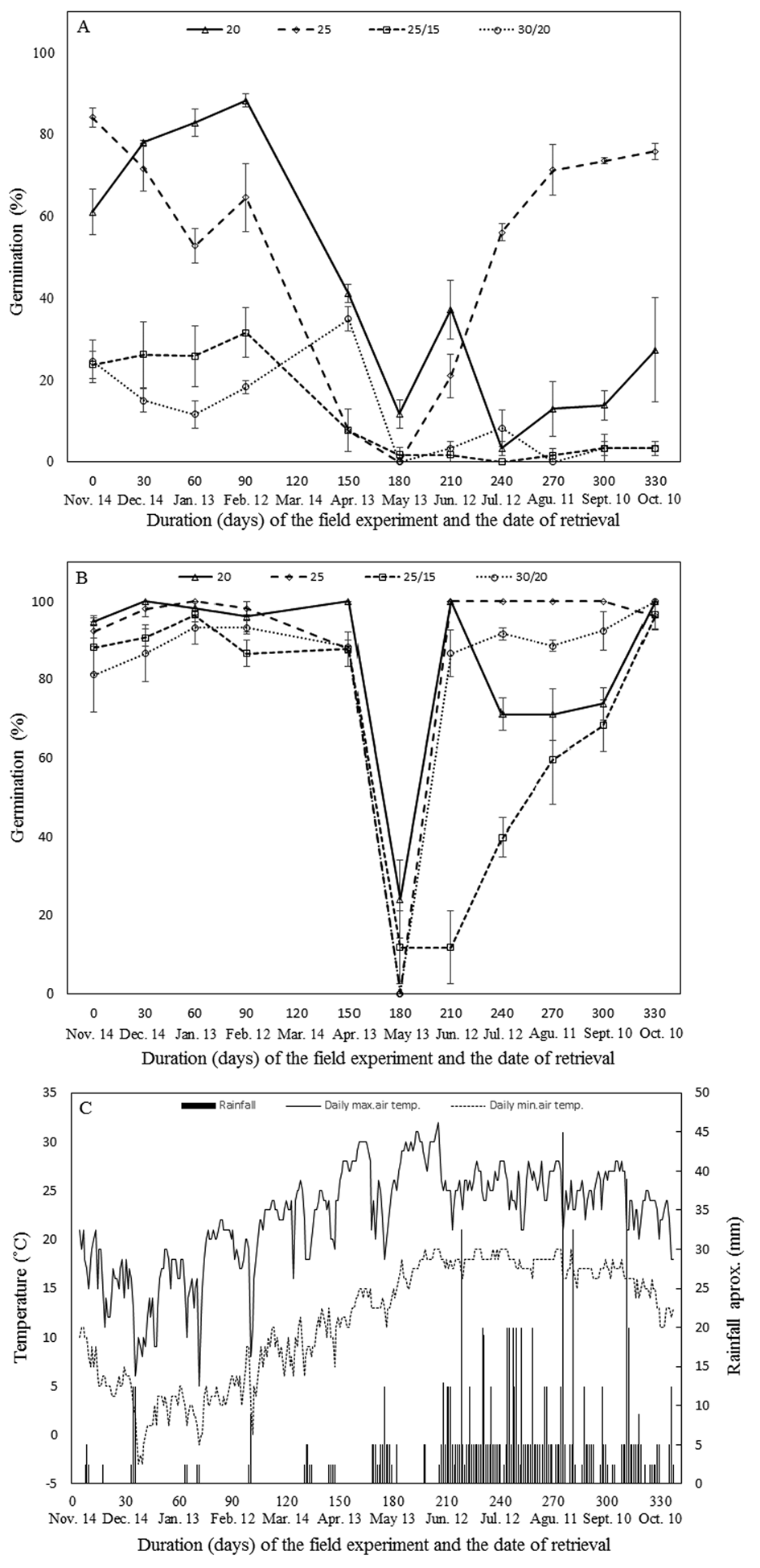
Germination percentages of B. guishanensis seeds retrieved on day 30 (14 December 2013) to day 90 (12 February 2014) and placed on plain agar were increased significantly at 20°C but were depressed significantly at 25°C with germination ranging from 52.8% to 71.7%. GP of B. guishanensis seeds retrieved on day 180 (13 May 2014) was significantly decreased at all temperatures on plain agar, and only germination at 25°C recovered gradually to the initial level, which was around 80% after day 270 (11 August 2014) (Fig. 4).
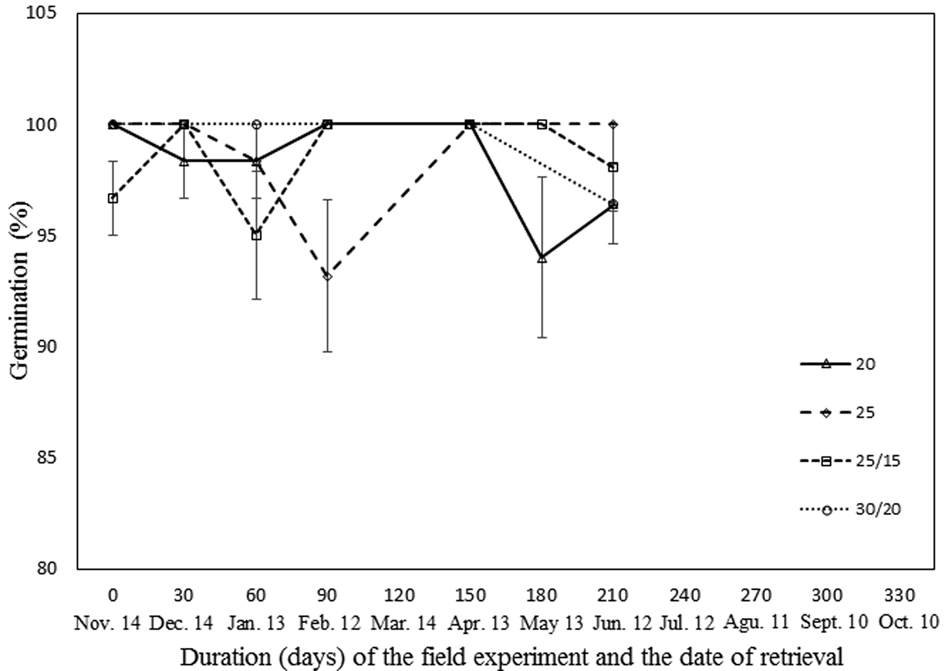
Germination percentages of P. mileense retrieved on 12 February 2014 and tested at 25°C, on 13 May at 20°C and on 12 June at 30/20°C were significantly lower than those of the control (Fig. 5).
Final germination (mean ± s.e.) of P. mileense seeds on plain agar at 20, 25, 25/15 and 30/20°C after different durations in the field.
Discussion
Our hypothesis that WD cycles, MC and DAR at low temperatures can alleviate dormancy, while WD cycles at high temperatures can induce conditional dormancy that was supported by the results for B. guishanensis seeds and partly by those for P. mileense seeds. This is the first report of dormancy induction by WD cycles at relatively high temperatures, which are also suitable for seed germination. However, in the case of B. guishanensis, DAR at both low and high temperatures alleviated seed dormancy, although DAR at 25/15°C was more effective than at 15/5°C (Figs 1 and 2). These results are consistent with the thermal afterripening time model for other species such as Bromus tectorum (Bauer et al., Reference Bauer, Meyer and Allen1998), Elymus elymoides (Meyer et al., Reference Meyer, Debaene-Gill and Allen2000) and Helianthus annuus (Bazin et al., Reference Bazin, Batlla, Dussert, El-Maarouf-Bouteau and Bailly2010), in which dormancy loss increased with the temperature above a threshold.
MC was effective in breaking dormancy of B. guishanensis seeds. MC for 2 and 4 weeks was usually better than, or as effective as, DAR at 25/15°C, while 8 weeks of MC was less effective than DAR at 25/15°C (Figs 1 and 2). The reduced effectiveness of prolonged MC also was reported for other species such as Pedicularis rex and P. rhinanthoides (Ren and Guan, Reference Ren and Guan2008). WD cycles at 15/5°C had a similar effect as MC at 15/5°C on promoting germination at 20 and 25°C (Figs 1 and 2). WD cycles at 15/5°C can be considered as an MC treatment interrupted by DAR since the effects of DAR at 15/5°C were usually not significant. The effect of WD cycles at 15/5°C was also less effective compared to MC at 15/5°C (Figs 1 and 2). However, it is clear that seed dormancy of B. guishanensis can be released by WD cycles, MC and DAR at low temperatures in the field during the early cool and dry season. Unlike 15/5°C, 25/15°C is a temperature at which seeds of B. guishanensis can germinate. Thus, WD cycles at 25/15°C can be considered as incubation interrupted by DAR. Although DAR at 25/15°C was more effective than at 15/5°C on breaking dormancy, the effect of WD cycles at 25/15°C generally was suppressive (Figs 1 and 2), implying that inadequate rainfall during the latter (warmer) part of the dry season in the field could induce seeds of B. guishanensis into a deeper state of conditional dormancy.
Some, but not all, species with non-deep PD exhibit dormancy cycles if seeds are exposed to natural seasonal environmental changes, especially temperature (Baskin and Baskin, Reference Baskin and Baskin2014). Depending on the species, non-deep PD can be broken by high summer temperatures or by low winter temperatures (Baskin and Baskin, Reference Baskin and Baskin2014). If seeds with non-deep PD exhibit dormancy cycling in response to changes in the seasonal environmental conditions, the time of dormancy varies with the species. If high summer temperatures break PD, then low temperatures of winter induce dormancy or conditional dormancy, which is broken the following summer (Baskin and Baskin, Reference Baskin and Baskin1983). If low winter temperatures break PD, then high temperatures of summer induce dormancy or conditional dormancy, which is broken by following winter (Baskin and Baskin, Reference Baskin and Baskin1980).
In the field experiment, seeds of B. guishanensis exhibited a dormancy cycle and were less dormant in February, which is the middle of the dry season, and they were mostly dormant in June, which is the beginning of the wet season (Fig. 4). These changes in dormancy correspond to changes in the environment (Fig. 4). According to the meteorological record during the experiment, before day 120 (14 March 2014), precipitation was sporadic, and the average temperature ranged roughly from 5 to 15°C (Table 1 and Fig. 4). Thus, the seeds in the field may have experienced DAR, WD cycles or stratification at relatively low temperatures, which usually have a dormancy-breaking effect for B. guishanensis. However, although the germination of B. guishanensis at 20°C on plain agar was promoted significantly during the field experiment at this early dry season period, germination at other temperatures on both medium did not show a very positive effect (Fig. 4).
We speculated that WD cycles under the relatively low temperatures that seeds experienced in the field might be different from those we gave in the laboratory experiment. For example, the dry period in the field may be longer than 5 d because rainfall is very sporadic during this period (Table 1 and Fig. 4). The effect of DAR at 15/5°C was less effective than MC at 15/5°C, thus the prolonged dry phase may be one of the reasons for the poor dormancy alleviation in the field experiment. From late April to early June, the average temperature ranged roughly from 15 to 25°C, but the precipitation was not abundant (Table 1 and Fig. 4). Thus, seeds in the field may experience DAR and WD cycles at high temperatures, the former has an enhancing effect while the latter has a suppressing effect on germination. The results of the field experiment suggest that the effect of WD cycles at high temperatures may have been prominent during this period especially between days 150 (13 April) and 180 (13 May) (Fig. 4) and that WD cycles at higher temperatures induced seeds of B. guishanensis into a deeper conditional dormancy. From early June to early September, temperatures roughly ranged from 15 to 25°C, and precipitation was abundant (Table 1 and Fig. 4). Thus, during this period, seeds may experience a suitable temperature and moisture condition for germination in the field, but none of the B. guishanensis seeds in bags in the field germinated. Also, the germination of retrieved seeds on plain agar was decreased at all temperatures except 25°C (Fig. 4). However, their induced dormancy was released during the rainy period (Fig. 4), suggesting that secondary dormancy can be alleviated by warm stratification during the wet season when the temperature is around 20°C.
For seeds of B. guishanensis, KNO3 mitigated the suppressive effect of both artificial and natural WD cycles at high temperatures at all the germination test temperatures (Figs 1, 2 and 4). Thus, KNO3 may play an important role in the field for seed germination of this species. Physiologically, KNO3 is considered to be a germination cue or a dormancy releasing factor (Finch-Savage and Leubner-Metzger, Reference Finch-Savage and Leubner-Metzger2006). Ecologically, KNO3 is considered to be an indication of disturbance and gap formation, and it usually is affected by other environmental factors such as temperature fluctuation and light conditions (Fenner and Thompson, Reference Fenner and Thompson2005). However, in the case of B. guishanensis, seeds have a negative response to temperature fluctuation, as germination on plain agar at 25/15 and 30/20°C is lower than at the constant temperatures 20 and 25°C (Figs 1 and 2). The natural habitat of B. guishanensis is under the canopy where the temperature is relatively stable, thus the combination of a constant temperature and KNO3 may indicate low competition under a canopy coverage (Hu et al., Reference Hu, Yang and Guan2012).
The results of the field experiment suggest that the suppressive effect on the germination of WD cycles at high temperatures (e.g. 25/15°C) may play a role in the rarity of B. guishanensis seedlings in the field. Seeds were conditionally dormant (CD) at the beginning of the rainy season and could not germinate. Although CD was released gradually during the rainy season, the lack of microenvironmental conditions that can provide a constant temperature (e.g. 25°C) and/or nitrate may result the poor seedling emergence in the field for B. guishanensis. We speculate that the usually intermittent rainfall during the transition from the dry to the wet season induces secondary dormancy and thus is detrimental for the seedling emergence of B. guishanensis. Consequently, the successful seedling establishment of B. guishanensis probably requires a microenvironment that could prevent desiccation during the transition period and provide a canopy coverage with reduced competition for nitrate.
GP of P. mileense did not change much during the field experiment. Although some significant differences were detected, the reduced germination was still above 90% (Fig. 5). Further, germination percentages of P. mileense did not show any significant response to most of the dormancy-breaking treatments (Fig. 3), which is consistent with the former report that seed dormancy in this species is very shallow and can be detected only below 20°C (Liu et al., Reference Liu, Qin and Hu2015). However, WD cycles at 25/15°C had a significant depressing effect on the germination of seeds tested at 20 and 25/15°C (Fig. 3). In both the laboratory and field, WD cycles at relatively high temperatures induced a deeper CD in seeds of P. mileense. Some seeds of P. mileense had germinated in the field on day 210, indicating that a portion of the seeds started to germinate immediately after the onset of the rainy season, implying that the induced CD was very superficial.
Although on day 240 most seeds of P. mileense had germinated inside the bags in the field, none of the B. guishanensis seeds germinated during burial. It has been reported that seeds of B. guishanensis need light to germinate (Ma et al., Reference Ma, Li and Guan2005), so the light requirement may also have contributed to the lack of germination of B. guishanensis seeds in the cloth bags during the field experiment. Apparently, the germination requirements for seeds of B. guishanensis are more rigorous than those of P. mileense. Based on these results, we conclude that seeds of B. guishanensis may form a persistent seed bank, while those of P. mileense do not because they all germinated at the beginning of the wet season. Since P. mileense is an evergreen perennial with a high desiccation tolerance (Li et al., Reference Li, Wang, Yu, Yu and Li2014) and the above-ground parts of B. guishanensis plants cannot survive the dry season, we assume that seedlings of P. mileense are probably more tolerant to drought and/or cold than those of B. guishanensis.
With respect to conservation, it is important to preserve plants of P. mileense in the field because if most of the individuals of a population are harvested or die, it will be difficult for the population to recover due to the potential lack of a persistent seed bank for seedling recruitment. Ex situ conservation such as seed banking is also necessary for P. mileense. For B. guishanensis, the maintenance of a suitable habitat and the avoidance of intensive competition (e.g. for nitrate) seem essential for seedling establishment. If those two species need to be re-introduced to the field by seeds, different timing of seed sowing should be considered. For B. guishanensis, it is preferable to sow the seeds after the beginning of the wet season using seeds that have afterripened, while for P. mileense sowing at the beginning of the wet season would give seedlings the maximum period of time for growth before the dry season begins.
In summary, seeds of B. guishanensis showed the evidence of dormancy cycling in the field experiment, while those of P. mileense did not show clear evidence for dormancy cycling. The induction of dormancy was correlated with the occurrence of natural WD cycles under relatively high temperatures during the transition from the cool, dry to the warm, wet season. WD cycles at 25/15°C induced dormancy in seeds of both species, while WD cycles at 15/5°C broke dormancy of B. guishanensis but not P. mileense seeds. KNO3 mitigated the depressing effect of both artificial and natural WD cycles under relatively high temperatures for B. guishanensis. Most freshly matured seeds of P. mileense were nondormant. DAR at 25/15 and 15/5°C broke dormancy for B. guishanensis, with DAR at 25/15°C being more effective than at 15/5°C. MC at 15/5°C also has a positive effect on dormancy break for B. guishanensis. Seeds of B. guishanensis may be able to form a persistent soil seed bank, while these of P. mileense germinate with the onset of the wet season.
Acknowledgements
The authors would like to thank the two anonymous reviewers and Dr Peng De-Li for their advice on the revision of the manuscript. The first author thanks Mr Guo Yun-Gang and Ms Li Mei-Juan for their assistance in the experiments.
Financial support
This study was supported by the Science & Technology Basic Resources Investigation Program of China (Grant No. 2017FY100100) and was conducted using the facilities of Large Research Infrastructures User Service Platform, Chinese Academy of Sciences.