INTRODUCTION
Electrical injury (EI) pertains to tissue damage caused by electrical forces. Whenever a voltage (i.e., an electrical potential difference) is imposed across two or more contact points on the body, ionic currents will flow through the body from one contact point to another and establish electric fields within tissue in the current’s path through the body (Lee, Reference Lee1997; Lee & Kolodney, Reference Lee and Kolodney1987). Damage to tissue can result immediately from irreversible electroporation of membranes, tissue heating from the movement of salt ions in solution, and other biophysical processes. Because of these multiple modes of tissue injury, EI is one of the most complex modes of physical trauma and often presents a challenge for clinicians to comprehend (He et al, Reference He, Baird, Butera, Datta, George, Hecht and Zhang2013).
Clinically, victims of electrical shock can present with a wide range of physical presentations from no external burns to disturbing thermal destruction of parts of the body that require major limb amputations (Lee, Burke & Cravalho, Reference Lee, Burke and Cravalho1992). Regarding non-thermal electroporation injury that is not accompanied by marked soft tissue burn injury, substantial peripheral and central neurological consequences can manifest. Specifically, long-term effects of EI frequently include physical concerns and chronic pain (Duff & McCaffrey, Reference Duff and McCaffrey2001; Pliskin et al., Reference Pliskin, Capelli-Schellpfeffer, Law, Malina, Kelley and Lee1998), emotion regulation problems (Ramati et al., Reference Ramati, Rubin, Wicklund, Pliskin, Ammar, Fink and Kelley2009b; Soble et al., Reference Soble, Resch, Schulze, Paxton, Cation, Friedhoff and Pliskin2019), and cognitive difficulties (Barrash, Kealey & Janus, Reference Barrash, Kealey and Janus1996; Pliskin et al,, Reference Pliskin, Ammar, Fink, Hill, Malina, Ramati and Lee2006; Primeau, Reference Primeau2005; Ramati et al., Reference Ramati, Pliskin, Keedy, Erwin, Fink, Bodnar and Sweeney2009a). If not adequately recognized or managed, these sequelae can interfere with the survivor’s functioning and quality of life.
Case reports and more extensive neuropsychological investigations document a broad range of possible cognitive impairments following EI, particularly in attention and concentration, verbal learning and memory, and executive functioning (e.g., Crews, Barth, Brelsford, Francis & McArdle, Reference Crews, Barth, Brelsford, Francis and McArdle1997; Duff & McCaffrey, Reference Duff and McCaffrey2001; Pliskin et al., Reference Pliskin, Fink, Malina, Moran, Kelley, Capelli-Schellpfeffer and Lee1999; Pliskin et al., Reference Pliskin, Ammar, Fink, Hill, Malina, Ramati and Lee2006; Ramati et al., Reference Ramati, Pliskin, Keedy, Erwin, Fink, Bodnar and Sweeney2009a). These cognitive difficulties not only affect daily functioning, but also quality of life and return to work. Some research suggests that only 25–50% of EI survivors return to their previous employment, with one-third being unable to return to work at all (Noble, Gomez & Fish, Reference Noble, Gomez and Fish2006; Theman, Singerman, Gomez & Fish, Reference Theman, Singerman, Gomez and Fish2008). This is of particular concern given that the overwhelming majority of EIs (i.e., 90%) occur in working age (i.e., ages 20–34) men and result in nearly $16 million per case in estimated costs to employers (National Safety Council, 2016). Thus, a better understanding of the causes of cognitive impairment following EI is critical for the development of effective interventions and treatment.
Multiple factors likely contribute to the cognitive issues that often emerge and persist after EI. First, cognitive impairment may be a direct consequence of the injury itself. Although unusual, electrical shock involving current passage through the brain may result in direct injury to neural processing or possibly through deafferentation of central nervous system (CNS) after peripheral nervous system injury, thereby affecting cognitive abilities even in the absence of detectable lesions or direct injury to the head (Lee, Reference Lee1997; Lee, Zhang & Hannig, Reference Lee, Zhang and Hannig2000).
In addition to direct neurophysiologic effects of the injury itself, emotional or psychological symptoms may influence cognitive functioning in patients with EI. Problems with emotion regulation and increased emotional distress often develop following EI, with common psychiatric diagnoses including major depressive disorder, generalized anxiety disorder, and post-traumatic stress disorder (Aase, Fink, Lee, Kelley & Pliskin, Reference Aase, Fink, Lee, Kelley and Pliskin2014; Grigorovich, Gomez, Leach & Fish, Reference Grigorovich, Gomez, Leach and Fish2013; Grossman, Tempereau, Brones, Kulber & Pembrook, Reference Grossman, Tempereau, Brones, Kulber and Pembrook1993; Hahn-Ketter et al., Reference Hahn-Ketter, Whiteside, Pliskin and Rice2016; Ramati et al., Reference Ramati, Rubin, Wicklund, Pliskin, Ammar, Fink and Kelley2009b). In fact, research has linked mood symptoms to neuropsychological performance in patients with EI (Aase et al., Reference Aase, Fink, Lee, Kelley and Pliskin2014; Grigorovich et al., Reference Grigorovich, Gomez, Leach and Fish2013; Ramati et al., Reference Ramati, Rubin, Wicklund, Pliskin, Ammar, Fink and Kelley2009b) and found that EI subjects with two psychiatric diagnoses performed worse on measures of verbal memory, executive functioning, and attention compared to those with a single or no diagnosis (Ramati et al., Reference Ramati, Rubin, Wicklund, Pliskin, Ammar, Fink and Kelley2009b), though findings have not been universal (i.e., Pliskin et al., Reference Pliskin, Ammar, Fink, Hill, Malina, Ramati and Lee2006). Thus, cognitive symptoms following EI may be caused by or exacerbated by psychological symptoms when present.
One frequently reported physical symptom that may be critical to understanding cognitive difficulties following EI is chronic pain (e.g., Bryan, Andrews, Hurley & Taber, Reference Bryan, Andrews, Hurley and Taber2009), with around half of participants endorsing this symptom after injury (e.g., Primeau, Reference Primeau2005; Ramati et al., Reference Ramati, Rubin, Wicklund, Pliskin, Ammar, Fink and Kelley2009b; Singerman, Gomez & Fish, Reference Singerman, Gomez and Fish2008). Indeed, due to the extremities being a frequent point of contact, EI commonly affects peripheral nerve and striated muscle tissues, which are rapidly damaged (i.e., electroporation) by exposure to electrical forces, while other tissues with smaller cell sizes are damaged by high temperatures (Lee et al., Reference Lee, Zhang and Hannig2000). The electrical surge that occurs during EI results in the rapid remodeling of the nerves and neurons in the spinal cord. Central sensitization, a phenomenon of synaptic plasticity and increased neuronal responsiveness in central pain pathways, occurs almost instantaneously after EI resulting in the experience of chronic pain (Ji, Nackley, Huh, Terrando & Maixner, Reference Ji, Nackley, Huh, Terrando and Maixner2018). These direct injuries to muscles and nerves may lead to chronic pain through both direct and indirect pathways. Regardless of the mechanism, chronic pain is a common manifestation following EI; however, no research has directly examined the relationship between the experience of pain and cognitive functioning in patients with EI.
The experience of pain involves more than nociception or the process by which information about actual or potential tissue damage is relayed to the brain. Pain is a biopsychosocial experience that also involves several psychological processes, including attention to the painful sensation and its source, cognitive appraisal of the meaning of the pain, and the resulting emotional, psychophysiological, and behavioral reactions (Garland, Reference Garland2012). Not surprisingly, chronic pain (CP) research provides substantial evidence that pain may directly and indirectly influence cognitive functioning (e.g., Brown, Glass & Park, Reference Brown, Glass and Park2002; Jamison, Sbrocco & Parris, Reference Jamison, Sbrocco and Parris1989; Martelli, Zasler, Bender & Nicholson, Reference Martelli, Zasler, Bender and Nicholson2004). Pain has been found to impact three key areas of cognitive performance in CP populations: attention and processing speed (e.g., Dick, Eccleston & Crombez, Reference Dick, Eccleston and Crombez2002; Eccleston, Reference Eccleston1995; Grace, Nielson, Hopkins & Berg, Reference Grace, Nielson, Hopkins and Berg1999), verbal memory (e.g., Grace et al., Reference Grace, Nielson, Hopkins and Berg1999; Iezzi, Duckworth, Vuong, Archibald & Klinck, Reference Iezzi, Duckworth, Vuong, Archibald and Klinck2004), and executive functioning (e.g., Karp et al., Reference Karp, Reynolds, Butters, Dew, Mazumdar, Begley and Weiner2006; Verdejo-Garcia, Lopez-Torrecillas, Calandre, Delgado-Rodriguez & Bechara, Reference Verdejo-Garcia, Lopez-Torrecillas, Calandre, Delgado-Rodriguez and Bechara2009), domains also affected following EI (e.g., Pliskin et al., Reference Pliskin, Ammar, Fink, Hill, Malina, Ramati and Lee2006). The fact that the general CP research literature has implicated these components of cognition as vulnerable to the effects of pain underscores the importance of understanding the relationship between pain and cognitive functioning among patients with EI.
The purpose of the study was to better understand the relationship between chronic pain and cognition in patients with EI. Specifically, the objectives of this study were to examine: (1) whether the experience of pain influenced cognitive functioning in patients with EI; (2) whether depression mediated the relationship between pain and cognition in patients with EI; and (3) whether the relationship between pain and cognitive functioning after EI was similar to or different from the relationship observed in a general CP population with no history of EI. Based on prior EI and CP research, it was hypothesized that greater pain would both directly (1) and indirectly (2) lead to poorer cognitive functioning. In addition, given the potential impact of other factors, such as the acute electrical event, it was hypothesized that the relationship between pain somatization and cognition (i.e., attention/processing speed, verbal memory, executive functioning) would exist, but that it would be significantly weaker in patients with EI as compared to patients with CP.
METHOD
This cross-sectional study used archival data from patients with EI and CP who underwent outpatient neuropsychological evaluation. Data collection procedures were approved by the University of Illinois at Chicago Institutional Review Board. Per clinic procedures, a flexible battery approach was used, the measure of pain was only given if an EI patient had specific pain complaints. Thus, the pain questionnaire was not administered to every EI patient who sought evaluation at the clinic; rather, administration was based on acknowledgement of pain complaints on the semi-structured interview and patient report. Release of information was obtained to collect relevant medical chart information, and all data was obtained in compliance with the Helsinki Declaration. For purposes of the present study, patients with EI and CP were only included if (1) they had the select measure of pain and depression and (2) demonstrated a valid neuropsychological test performance on multiple, independent performance validity tests (PVTs) and symptom reporting on symptom validity tests (SVTs; see below). All participants endorsed a pain experience of at least 3 months, consistent with the International Association for the Study of Pain (IASP) conceptualization of chronic pain (Nicholas et al., Reference Nicholas, Vlaeyen, Rief, Barke, Aziz, Benoliel and Treede2019).
Participants
Electrical injury (EI) group
Participants consisted of 121 consecutive cases who underwent a comprehensive outpatient neuropsychological evaluation as part of a multi-disciplinary electrical trauma program workup at a Midwest academic medical center between 2005 and 2020. The source of EI was limited to domestic and commercial power sources, and participants were excluded if they suffered a lightning injury (n = 5) or electrical contact to their head (n = 4). Finally, only EI participants that had had specific pain complaints and completed the measure of pain somatization were included in the present study, which resulted in a final sample size of 50. Complete demographic and injury-related characteristics of the EI participants are presented in Table 1. The majority of the sample were Caucasian (n = 42) males (n = 42), with an average age of 43.7 years (SD = 9.8) and average educational attainment of 12.9 years (SD = 2.3). Participants were an average of 32.5 months post-EI (SD = 26.2).
Electrical injury and chronic pain demographic information

Chronic pain (CP) comparison group
A CP comparison group was derived from a sample of 132 treatment-seeking individuals who received comprehensive outpatient neuropsychological evaluations at the same academic medical center between 2001 and 2019. The CP group consisted of individuals who reported experiencing chronic pain and had a CP rating, over the previous six months, of at least 4 on a 10-point Likert-style pain scale (10 = “excruciating pain”). The majority of the CP sample were referred for assessment of candidacy for spinal cord stimulator trial or surgery (n = 70) and thus were highly motivated to perform well in order to present as qualified candidates. Participants were excluded if they had a history of traumatic brain injury (TBI) or seizure (n = 2); active alcohol or other substance abuse disorder (n = 1); had greater than 1 PVT/SVT failure (n = 19; see below); or demonstrated an invalid performance on the P3 (n = 21). Of the 93 patients with CP who met general inclusion criteria, there was a total of 34 men (36.6%), with an average age of 49.5 years (SD = 10.4) and educational attainment of 13.0 years (SD = 2.5). Of the sample, 46 participants (49.5%) were White, 31 (33.3%) were Black, 13 (14.0%) were Hispanic, and 3 (3.2%) were another race.
Measures
Participants completed a neuropsychological history questionnaire and were administered in a semi-structured interview to collect demographic and injury-related information (see Table 1). Concerning racial/ethnic background, the patients with EI and CP were collapsed into two groups (i.e., white and racial/ethnic minority groups) to ensure an adequate cell size to conduct analyses.
Pain was assessed with the Pain Patient Profile (P3; Tollison & Langley, Reference Tollison and Langley1995). The P3 is a self-report measure designed to assess the comprehensive experience of pain in patients presenting with pain complaints. The P3 has three clinical scales and a validity scale. Of specific importance to this study was the pain somatization clinical scale, which represents the sensory and perceptive aspects of the pain experience and assesses the magnitude of patients’ concerns about pain, physical health, bodily processes, muscle tension, somatic functioning and physical abnormalities. The P3 is appropriate for use with patients experiencing pain due to disease, illness, or physical trauma. The P3 has demonstrated sound psychometric properties with an internal consistency of .85 in a clinical pain patient sample (Tollison & Langley, Reference Tollison and Langley1995) and strong convergent validity with other established measures (Willoughby, Hailey & Wheeler, Reference Willoughby, Hailey and Wheeler1999). The P3 contains an embedded Validity Index to detect random responding, reading problems, and symptom magnification. Per manual interpretive guidelines, P3 protocols were considered valid if there were no omitted items and the Validity Index score was ≤11. All EI and CP participants demonstrated a valid performance on the P3.
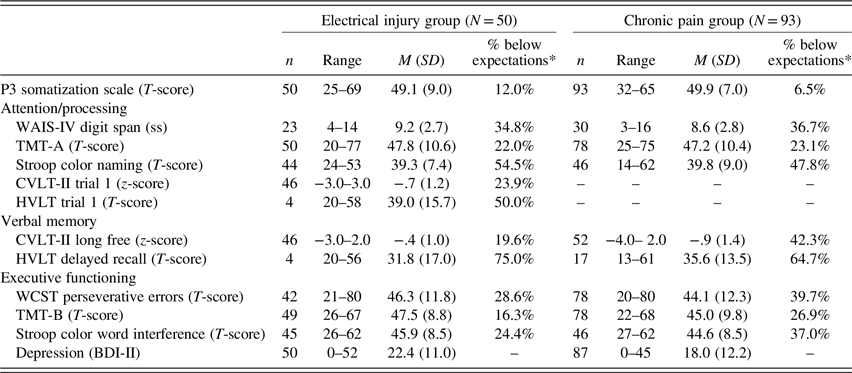
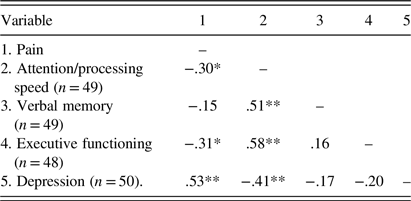
Neuropsychological tests were selected from the overall battery to assess three areas of cognitive functioning: attention/processing speed, verbal memory, and executive functioning. Standardized scores (i.e., T-scores, Z-scores) were obtained for all neuropsychological variables from normative data with available demographic corrections for each test (i.e., age, education, gender, and/or race/ethnicity) as obtained from test manuals (see Table 2 for standardized scores and percent impaired for the EI and CP groups). For each neuropsychological test, the standardized scores were converted to study z-scores were using group mean and standard deviations from all 143 participants (n = 50 patients with EI, n = 93 patients with CP). The cognitive test z-scores were then averaged to create cognitive domain z-scores (i.e., attention/processing speed; verbal memory; and executive functioning). Attention/processing speed scores included Trail Making Test: Part A (Reitan & Wolfson, Reference Reitan and Wolfson1993), WAIS-IV Digit Span (Wechsler, Reference Wechsler2008), Stroop Color Naming (Golden & Freshwater, Reference Golden and Freshwater2002), and Trial 1 performance of California Verbal Learning Test-Second Edition (CVLT-II; Delis, Kaplan, Kramer & Ober, Reference Delis, Kaplan, Kramer and Ober2000), California Verbal Learning Test-Third Edition (CVLT-3; Delis, Kramer, Kaplan & Ober, Reference Delis, Kramer, Kaplan and Ober2017), and Hopkins Verbal Learning Test-Revised (HVLT-R; Brandt & Benedict, Reference Brandt and Benedict1997). Verbal memory scores were based on the Long Delay Free Recall of the CVLT-II (Delis et al., Reference Delis, Kaplan, Kramer and Ober2000) or CVLT-3 (Delis et al., Reference Delis, Kramer, Kaplan and Ober2017) and Delayed Recall of the HVLT-R (Brandt & Benedict, Reference Brandt and Benedict1997). Executive functioning scores included the Wisconsin Card Sorting Task (WCST; Heaton, Chelune, Talley, Kay & Curtis, Reference Heaton, Chelune, Talley, Kay and Curtis1993) Preservative Errors, Stroop Color Word Interference (Golden & Freshwater, Reference Golden and Freshwater2002), and Trail Making Test B (Reitan & Wolfson, Reference Reitan and Wolfson1993). As two versions of the California Verbal Learning Test (CVLT) were administered using the same 16-item word list, the CVLT-3 raw scores were converted to standard scores using the CVLT-II norms. Participants were required to complete at least two measures of attention/processing speed and executive functioning to be included in the corresponding analyses. Outliers (i.e., any individuals greater than 2.5 SD above/below the composite mean) were not included in the corresponding analyses; outliers were removed domain by domain to maximize sample size. The Beck Depression Inventory-Second Edition (BDI-II; Beck, Steer & Brown, Reference Beck, Steer and Brown1996) was used to assess the cognitive and behavioral features of depression. Correlations between the measures of cognition, pain, and depression for the EI sample are presented in Table 3.
Standardized scores for electrical injury and chronic pain groups

Notes. BDI = Beck Depression Inventory; CVLT = California Verbal Learning Test; HVLT = Hopkins Verbal Learning Test; P3 = Pain Patient Profile; TMT = Trail Making Test; WAIS = Wechsler Adult Intelligence Scale; WCST = Wisconsin Card Sorting Test.*% impaired was conceptualized as less than 1 SD below the mean (i.e., ≤40 T-score; ≤−1.0 z-score; ≤7 ss)
Correlations among study variables for the electrical injury group

* p < .05.
** p < .01.
To ensure valid neurocognitive test performance, all participants were administered multiple freestanding and embedded PVTs throughout their evaluations. Given a flexible testing battery and the time interval over which data was collected, individual PVTs varied, but all EI participants had at least four from the following measures: Test of Memory Malingering (Tombaugh, Reference Tombaugh1996), Victoria Symptom Validity Test (Resch et al., Reference Resch, Webber, Bernstein, Rhoads, Ovsiew and Soble2021), Rey 15-Item Test (Rey, Reference Rey1964; Lezak, Howieson, Bigler & Tranel, Reference Lezak, Howieson, Bigler and Tranel2012), Word Memory Test (Green, Reference Green2003), Medical Symptom Validity Test (Green, Reference Green2003), Dot Counting Test (Boone, Lu & Herzberg, Reference Boone, Lu and Herzberg2002), CVLT Forced Choice (Delis et al., Reference Delis, Kaplan, Kramer and Ober2000), Brief Visuospatial Memory Test-Revised Recognition Discrimination (Bailey, Soble, Bain & Fullen, Reference Bailey, Soble, Bain and Fullen2018; Resch et al., Reference Resch, Pham, Abramson, White, DeDios-Stern, Ovsiew and Soble2020), Reliable Digit Span (Schroeder, Twumasi-Ankrah, Baade & Marshall, Reference Schroeder, Twumasi-Ankrah, Baade and Marshall2012), and Repeatable Battery for the Assessment of Neuropsychological Status Effort Index (Shura et al., Reference Shura, Brearly, Rowland, Martindale, Miskey and Duff2018). All CP participants had at least three PVTs from the same possible PVTs as the EI sample, though this sample also included the Word Choice Test (Bernstein, Resch, Ovsiew & Soble, Reference Bernstein, Resch, Ovsiew and Soble2021). Consistent with current practice standards and empirical findings (Boone, Reference Boone2013; Critchfield et al., Reference Critchfield, Soble, Marceaux, Bain, Bailey, Webber and O’Rourke2019; Jennette et al., Reference Jennette, Williams, Resch, Ovsiew, Durkin, O’Rourke and Soble2021; Larrabee, Reference Larrabee2008; Sherman, Slick & Iverson, Reference Sherman, Slick and Iverson2020; Soble et al., Reference Soble, Alverson, Phillips, Critchfield, Fullen, O’Rourke and Marceaux2020; Webber, Critchfield & Soble, Reference Webber, Critchfield and Soble2020) including EI-specific validity findings (Resch et al., Reference Resch, Pham, Abramson, White, DeDios-Stern, Ovsiew and Soble2020), participants with one or fewer PVT failures were classified as having valid neuropsychological test performance valid and retained for this study.
Data Analyses
The significance level was set to p < .05 for all analyses. To determine whether pain directly impacts cognitive performance (i.e., greater pain relates to poorer attention/processing speed, verbal memory, and/or executive functioning performance) and whether pain impacts cognition indirectly through mood (i.e., greater pain relates to greater depression which in turn leads to poorer cognitive performance) after EI, three mediation models were tested in line with previous research examining similar models (e.g., Brown et al., Reference Brown, Glass and Park2002; Martelli et al., Reference Martelli, Zasler, Bender and Nicholson2004). The paths examined in the mediation analyses are outlined in Figure 1: (1) the total effect of pain on cognition (c path or the direct effect of pain on cognitive functioning), (2) the direct effect of pain on depression (a path), (3) the direct effect of depression on cognition after adjusting for pain (b path), (4) the direct effect of pain on cognition after adjusting for depression (c′ path), and (5) the indirect effect of pain on cognition through depression (ab path). For the EI mediation analyses, outliers were considered as individuals greater or less than 2.5 SD above or below the mean of the EI group; one individual was removed from both the attention/processing speed and executive functioning analyses.
Mediation pathways. c path represents test of the direct effect of pain on cognition.

Prior to the mediation analyses, multivariate analyses of variance (MANOVAs) examined the relationships between neuropsychological scores and the injury-related variables to determine whether it was necessary to include any of these variables as covariates. Mediation analyses were then performed via mediation bootstrapping analyses as described by Preacher and Hayes (Reference Preacher and Hayes2008) and Hayes (Reference Hayes2017). To test the significance of the indirect effect, Hayes’ (2017) "PROCESS" macro for SPSS was used to conduct the bootstrapping mediation analyses. The bias-corrected bootstrap was selected as it has been shown to be the most powerful test across mediation conditions (Fritz & MacKinnon, Reference Fritz and MacKinnon2007). Concerning the statistical power for mediation analyses, given that the EI sample consisted of 48–50 patients, medium to large effect sizes for the direct relationships were necessary (Fritz & MacKinnon, Reference Fritz and MacKinnon2007). Chronic pain research does report medium to large effect sizes for these relationships, although the literature is largely mixed and dependent on the population studied and measures employed.
Moderation analyses were performed to determine whether the relationship between pain and cognitive functioning after EI was similar to or different from the relationship observed in a CP population. Differences between the two clinical groups on demographic variables were examined using independent samples t-test and chi-square analyses, with relevant assumptions met for the analyses. For the moderation analyses, one individual was considered a statistical outlier based on the combined group mean and SD for attention/processing speed and removed from the corresponding analyses.
To test the moderation models, the data were centered and interaction terms subsequently computed. Hierarchical regression analyses were conducted with pain and clinical group (i.e., EI or CP) were entered at Step 1. The interaction term was entered in Step 2, which represented the critical test of the moderation hypothesis. If the interaction term was significant, post hoc probing was planned via conditional moderators and simple slopes. With a 143 total participants, there was adequate power to detect a medium effect size (Aiken & West, Reference Aiken and West1991).
RESULTS
Pain, Mood, and Cognition in Patients with Electrical Injury
Within-group analyses revealed no differences in test scores based on injury-related variables (p > .05). In the first mediation analysis, pain represented the predictor variable, depression was the mediator, and attention/processing speed was the outcome variable. Pain significantly predicted poorer attention/processing speed performance (c path, Figure 1), b = −.30, t(48) = -2.11, p = .040. Pain also significantly predicted greater depression (a path), b = .53, t(48) = 4.32, p < .001. Depression significantly predicted attention/processing speed scores, after adjusting for pain (b path), b = −.36, t(47) = −2.25, p = .029. However, the direct effect of pain on attention/processing speed after adjusting for depression was no longer significant, (c’ path), b = −.11, t(48) = −.67, p = .509. Importantly, the indirect effect of pain on attention/processing speed through depression was significant, 95% CI [−.028, −.004].
The second mediation model tested whether depression mediated the relationship between pain and verbal memory. Pain did not significantly predict verbal memory, b = −.15, t(49) = −1.02, p = .313. Depression did not significantly predict poorer verbal memory performance, after adjusting for pain, b = −.14, t(48) = −.80, p = .431. In addition, the direct effect of pain on verbal memory after adjusting for depression remained non-significant, b = −.08, t(48) = −.47, p = .638. In line with these findings, the indirect effect of pain on verbal memory through depression was not significant, 95% CI [−.031 to .008].
The final mediation analysis examined whether depression mediated the relationship between pain and executive functioning. Pain significantly predicted executive functioning, b = −.31, t(48) = −2.18, p = .034. Depression did not predict poorer executive functioning performance, after adjusting for pain, b = −.05, t(47) = −.312, p = .757. The direct effect of pain on executive functioning after adjusting for depression was not significant, b = −.28, t(47) = −1.66, p = .105. Finally, the indirect effect of pain on executive functioning through depression was not significant, 95%CI [−.015 to .012].
Comparison of Patients with Electrical Injury and Chronic Pain
Preliminary analyses indicated difference between the EI and CP groups on age, racial/ethnic background, and gender (Table 1). Regarding age, the EI group was modestly younger (M = 43.7 years) than the CP group (M = 49.5 years; p = .001); importantly, all analyses used age-corrected neuropsychological tests. There was also significant difference in breakdown of gender and racial/ethnic background between groups, p < .001. The majority of the EI sample were White (n = 42, 84.0%) males (n = 42, 84.0%), while the CP group had a more diverse breakdown of participants with 36.6% (n = 34) of the sample being men and approximately half being of diverse racial/ethnic backgrounds (n = 47, 50.5%). Despite differences in both gender and racial/ethnic breakdown, follow-up within-group analyses for the EI and CP samples found no gender or racial/ethnic differences on any of the measures of cognition, mood, and pain examined. Further, the gender and racial/ethnic breakdown was representative of the diversity of the respective patients with EI and CP at the clinic. Given the lack of relationships between gender and racial/ethnic background with relevant study variables as well as the representativeness of the samples, these variables were not adjusted for in the first step of the analyses. In addition, there were no differences between the EI and CP groups on cognition or pain ratings (Table 4). However, the EI group scored significantly higher on the measure of depression (M = 22.4, SD = 11.0) as compared to the CP group (M = 18.0, SD = 12.2).
Electrical injury and chronic pain neuropsychological and mood test scores

Notes. P3 = Pain Patient Profile.
Results of the moderation analyses indicated that there was no significant interaction between pain and clinical group in predicting attention/processing speed, β = .10, t(100) = .83, p = .410, verbal memory, β = .18, t(115) = 1.47, p = .145, or executive performance β = .15, t(133) = 1.20, p = .232.
DISCUSSION
This is the first study to investigate the relationship between pain and cognition following electrical injury. Further, the study was the first to include a chronic pain comparison group to better characterize the nature of the relationship between pain and cognition in patients with EI. In our sample of patients with EI, pain was significantly related to their cognitive performance in two key areas: attention/processing speed and executive functioning. Pain and depression were significantly related, with depression mediating the relationship between pain attention/processing speed in patients with EI. Clinical group (EI or CP) did not moderate the relationship between pain and cognitive functioning, which suggests that pain influences cognition to a similar extent for patients with EI as compared to other patients with CP. These findings add to our knowledge of the effects of pain on mood and cognitive functioning following EI and have important implications for treatment and future research with this population.
Research has shown that patients with EI perform significantly worse on measures of attention, mental processing speed, and executive functioning compared to matched controls or normative samples (Barrash et al., Reference Barrash, Kealey and Janus1996; Pliskin et al., Reference Pliskin, Ammar, Fink, Hill, Malina, Ramati and Lee2006; Ramati et al., Reference Ramati, Rubin, Wicklund, Pliskin, Ammar, Fink and Kelley2009b), although the reasons for these difficulties are not always clear. This study suggests that the experience of pain is a significant contributing factor to two of the key cognitive deficits found in patients with EI. Attention/processing speed had a significant relationship with pain, which is in line with prior research that reports pain to be most strongly and consistently associated with attention/processing speed in chronic pain patients (Hart, Martelli & Zasler, Reference Hart, Martelli and Zasler2000). Greater pain was also significantly related to poorer executive functioning performance after EI. Chronic pain research suggests that pain patients demonstrate poorer performance on tasks of executive functioning as compared to controls (e.g., Karp et al., Reference Karp, Reynolds, Butters, Dew, Mazumdar, Begley and Weiner2006; Verdejo-Garcia et al., Reference Verdejo-Garcia, Lopez-Torrecillas, Calandre, Delgado-Rodriguez and Bechara2009), although results vary based on how executive functioning is defined and measured. The study’s use of a composite executive functioning score helped capture the complex and heterogeneous group of cognitive abilities impacted by the pain experience.
Once the effects of depression on cognition were accounted out, pain was no longer a significant predictor of attention/processing speed and executive functions. However, the current findings do not suggest that pain is unrelated to cognitive performance. In fact, studies of chronic pain patients have demonstrated that cognitive deficits are often more closely associated with emotional symptoms rather than pain variables (Hart et al., Reference Hart, Martelli and Zasler2000; Hart, Wade & Martelli, Reference Hart, Wade and Martelli2003). Mediation findings highlight that pain may indirectly impact attention/processing speed through depression. For executive functioning, pain and depression may have an alternate, synergistic relationship with both variables being important in understanding cognition after EI.
Pain was not significantly related to verbal memory in the current study. Research with CP populations has sometimes interpreted impaired immediate and delayed memory performance to reflect a primary deficit in attention rather than difficulties with encoding or retrieval, per se (Hart et al., Reference Hart, Wade and Martelli2003). Thus, patients with EI’s everyday experience of short-term memory deficits may actually reflection difficulties with attention, which subsequently impairs retrieval or free recall of that information.
Consistent with studies of CP (e.g., Brown et al., Reference Brown, Glass and Park2002; Jamison et al., Reference Jamison, Sbrocco and Parris1989), depression significantly mediated the relationship between pain and attention/processing speed for patients with EI and highlights the potential mechanism of action through which pain exerts an impact.
Specifically, pain appears to impact attention/processing speed by way of changes in mood. That is, attention/processing speed may be particularly sensitive to the reductions in mental bandwidth caused by mood changes. A number of potential explanations exist for the lack of mediation relationship between pain and executive functioning/verbal memory through depression. First, pain may have more of a direct impact on cognition by competing with other stimuli for limited cognitive resources and altering the brain’s neurochemistry, thereby resulting in cognitive difficulties. EI imaging studies have documented compensatory CNS changes when completing functional tasks (Ramati et al., Reference Ramati, Pliskin, Keedy, Erwin, Fink, Bodnar and Sweeney2009a), with pain potentially interfering with the compensatory processes. In addition to psychological concerns, other factors such as sleep, fatigue, pain location, and pain chronicity may impact the relationship between pain and neuropsychological performance and contribute to cognitive difficulties in this population (Moriarty, McGuire & Finn, Reference Moriarty, McGuire and Finn2011). The relationship between pain and cognitive functioning may be multiply determined, with future research needed to investigate other mediators and mechanisms.
The exact pathogenesis of chronic pain following EI is likely multifactorial. We have reported that pain and associated neuropsychological problems often manifest delayed onset and the pain is generalized. Because of the anatomically widespread locations of post-EI peripheral pain and headaches, some experts have called electrical shock a diffuse injury. However, our experience suggests that electrical injury is associated with generalized development of myofascial pain (i.e., trigger points) that are caused by loss of balance and muscle coordination. Thus, we postulate that electrical shock causes nerve injury in the current path, leading to generalized neuromuscular imbalance and loss of coordination, which subsequently results in generalized myofascial pain. The long-term, debilitating chronic pain experience may be the result of the immediate rewiring of nerves and neurons in the spinal cord following the electrical current, with the pain mimicking a variety of neuropathic pain conditions from small fibers neuropathies to complex regional pain syndrome (Kim & Bryant, Reference Kim and Bryant2001). This proposed mechanism requires empirical, longitudinal investigation to demonstrate its validity in patients with EI.
Effective pain management in patients with EI involves addressing psychological symptoms. It should be noted that depression was a concern in this EI sample. According to BDI-II criteria, the mean depression score was in the moderate range (M = 22.4, SD = 11.0), with 12 patients falling in the severe range and 20 in moderate range. Examination of the mediation pathways revealed greater pain was strongly related to greater depressive symptoms in patients with EI. There may be multiple explanations for this significant relationship, such as shared neurotransmitter pathways and a cycle of behavioral changes, including reduced activity, thereby limiting quality of life and resulting in depressive symptoms (Bair, Robinson, Katon, & Kroenke, Reference Bair, Robinson, Katon and Kroenke2003). Alternatively, the strong relationship between pain and depression may be partially due to the conceptual overlap between the measures of pain (i.e., P3) and depression (i.e., BDI-II). The P3 somatization scale encompassed an evaluative component as to how pain impacts health and functioning, which may have been influenced by and overlap with patients’ depressive symptoms.
Clinical group (EI or CP) did not moderate the relationship between pain and cognition. Although much of the EI research has highlighted the distinctiveness of this population, pain influences cognitive functioning to a similar and significant degree in patients with EI. Moreover, patients with EI are commonly compared to individuals with mild traumatic brain injury (mTBI) given the similar cognitive and affective symptoms endorsed. Current findings parallel mTBI research, which documents a relationship between greater pain and poorer neuropsychological performance (e.g., Massey, Meares, Batchelor, & Bryant, Reference Massey, Meares, Batchelor and Bryant2015; Vernon-Wilkinson & Tuokko, Reference Vernon-Wilkinson and Tuokko1993). Healthcare professionals working with this clinical population should be aware that pain may be a significant issue for many patients with EI and that individuals reporting pain may also present with depressive symptoms as well as difficulties with attention/processing speed and executive functioning.
A particular strength of the current study was the inclusion of a CP group to investigate the role of pain on neuropsychological performance. This study also has several limitations. First, although the sample size was larger than previous EI studies, future research should aim for larger sample sizes to increase the power to detect smaller effect sizes and perform other analytic procedures (i.e., moderated mediation). Second, the nature of the EI sample poses some limitations. The patients with EI were primarily young, white males. While our sample may be representative of the broader population of patients with EI (e.g., Ghavami, Mobayen & Vaghardoost, Reference Ghavami, Mobayen and Vaghardoost2014; Lee, Reference Lee1997; Shih, Shahrokhi & Jeschke, Reference Shih, Shahrokhi and Jeschke2017), caution should be taken when generalizing findings to female patients or more diverse EI groups. Further, all the patients with EI were from one neuropsychology clinic that employed a flexible battery approach with the measure of pain only given when determined necessary. Thus, the current sample may represent a subset of patients with EI who have both chronic pain and cognitive difficulties, and caution should be taken when generalizing findings to the EI population as a whole. However, results do suggest that pain, when present, can influence cognitive functioning and mood in patients with EI with intervention and treatment warranted.
Given the archival nature of the data, this study was also limited to the available demographics, injury-related characteristics, and pain, mood, and cognitive measures. Future research would benefit from assessing other aspects of pain (e.g., pain intensity, illness beliefs, pain catastrophizing, pain duration), emotional functioning (e.g., anxiety, PTSD, psychosocial stress), and opioid pain and psychopharmacologic medication use to better understand the nuances of and the mechanism by which pain influences cognitive performance. Given the potential impact of medication on cognition, future EI research should explore whether medication dosage, number of medications, duration of use, or compliance has differential effects on cognition. A final limitation relates to the cross-sectional methodology, which limits our ability to draw conclusions about causality. Given the evidence that cognition may also influence the perception of chronic pain (e.g., Oosterman, Gibson, Pulles & Veldhuijzen, Reference Oosterman, Gibson, Pulles and Veldhuijzen2013), future research should use longitudinal designs to more thoroughly and completely understand the relationship among pain, depression, and cognitive difficulties.
This controlled investigation offers valuable contributions to our understanding of pain and cognitive difficulties in patients with EI. Pain not only complicates the symptom picture in EI, but the resolution of cognitive and mood symptoms may depend on successful coping with pain. Pain not only impacts quality of life but may also impact return to work and future functioning, with appropriate intervention warranted. Neuropsychological evaluation can aid in accurate assessment of EI patient’s pain, mood, and cognitive functioning to create an individualized treatment plan that is best suited to the individual’s needs.
ACKNOWLEDGEMENTS
Certain ideas and data presented in this study were based on the primary author’s dissertation project. The manuscript itself has never been published either electronically or in print. We thank all participants who were involved in this study and the individuals at the Chicago Electrical Trauma Rehabilitation Institute (CETRI) for providing their clinical expertise.
CONFLICTS OF INTEREST
For all authors, there are no financial conflicts of interests or other relationships that could be interpreted as a conflict of interest affecting this manuscript.