




No CrossRef data available.
Article contents
Cost-effectiveness of interventions to reduce the thrombolytic delay for acute myocardial infarction
Published online by Cambridge University Press: 01 August 2004
Abstract
Objectives: The objective of the study was to estimate the costs and health benefits of a public awareness campaign aimed at shortening the delay for thrombolytic therapy in patients with acute myocardial infarction (AMI) and to estimate the incremental costs and benefits of an additional telemedicine program.
Methods and Results: By using trial data on the impact of a Swedish campaign, a model was developed to simulate the current distribution of thrombolytic delay in Denmark and the delay after a campaign. The reduction in delay was translated into reduced fatality assuming reductions from the campaign and additional effects of a telemedicine program. The costs of the campaign were based on trial data and Danish unit costs while telemedicine costs were taken from a Danish demonstration program. The analyses indicate that the awareness campaign will translate into five fewer fatal AMIs (sixty-two life years gained) and a cost per life year of DKK283,300, with both costs and benefits discounted at 5 percent. When combining the public campaign with prehospital telemedicine diagnostics, the incremental cost per life year gained was DKK854.700.
Conclusions: Programs aimed at reducing delay of thrombolysis in patients with AMI are likely to have a limited impact on AMI fatality. Information campaigns may have acceptable cost-effectiveness ratios, while telemedicine programs lead to threefold greater ratios. Whether such programs can be considered cost-effective will depend on how life year gains are valued by society.
Information
- Type
- RESEARCH REPORTS
- Information
- International Journal of Technology Assessment in Health Care , Volume 20 , Issue 3 , August 2004 , pp. 368 - 374
- Copyright
- © 2004 Cambridge University Press
Coronary heart disease (CHD) accounted for approximately 20 percent of all deaths in Denmark in 1996 (32). The number of acute myocardial infarctions (AMI) was approximately 13,000, of which 5,000 proved fatal. Approximately half of these fatalities occurred outside hospitals. However, the AMI mortality has declined over the past ten to fifteen years, partly because of improved medical treatment, including intravenous thrombolytic therapy.
It is well established that thrombolytic therapy reduces the mortality during the first month after an AMI and that the benefit of the therapy is greatest if it is started shortly after the onset of the symptoms (1;2;8). It has now been demonstrated that primary percutaneous coronary intervention (PCI) provides a better survival (also time dependent) after transmural AMI than thrombolytic therapy (4;25;27). The full potential benefit of the thrombolytic is not achieved because of unnecessary delay from debut of the AMI symptoms until thrombolytic therapy is initiated.
Public campaigns have been organized to increase people's awareness of AMI symptoms (6;11;16;21;26;31), but findings from studies have been conflicting with respect to shortening of patients' delay (the time from onset of symptoms until contact to the health-care system) (6;7). In some studies, the median as well as the mean patient delay has been reduced (6;11) whereas in others, there has been no apparent effects. Prehospital AMI diagnosis through telemedicine has reduced door-to-needle delay (the time from admission to hospital until start of thrombolytic therapy) by approximately 50 percent (19;20). The health benefit in terms of reduced mortality, however, will depend on the distribution of delay before and after an intervention as the association between delay and reduction in mortality is not necessarily linear (2;8).
The aim of this study was to estimate health and economic consequences of a public awareness campaign aimed at reducing patients' delay in order to start thrombolytic therapy earlier—alone and in combination with prehospital AMI diagnosis through telemedicine. Both health and economic consequences were modeled by comparing the current situation in Denmark to a situation of reduced delay due to the interventions.
METHODS
To estimate costs and health benefits, we developed a model to simulate all cases of AMI during one year in Denmark with the current and the reduced delay. Studies on the effects of public awareness campaigns and telemedicine programs were identified by a Medline search using the terms myocardial infarction, thrombolytic therapy, delay, mortality, long-term survival, media campaign, prehospital diagnosis. While earlier thrombolytic therapy may have several health benefits, we focused on the increased survival, applying life years gained as the measure of health benefit.
With delay time as the key variable, the current use of thrombolytic therapy was simulated, applying data on the Danish AMI-population and the current delay, and compared it with a reduced delay from a public campaign, adapting Swedish data to a Danish setting. Health benefits were modeled by estimating the increased number of AMI survivals during the first month after the infarction (avoided fatalities) as a result of earlier thrombolytic treatment, assuming—in the base case—that the beneficial effect of thrombolytic therapy is diminishing as a nonlinear function of time from onset of symptoms to start of thrombolytic therapy. The additional avoided fatalities due to the combination with prehospital telemedicine diagnosis were modeled, reducing the door-to-needle delay for patient transferred by ambulance. The reduced one-month case fatality was translated into life years gained by estimating remaining life years, according to age (groups of five years) and sex, for AMI patients who survive one month after the infarction. The costs of the campaign were modeled along with economic consequences in terms of more patients contacting the hospitals and the cost of prehospital telemedicine diagnosis.
Assuming that the initial delay reduction of the campaign would persist for at least three years (as was the case in the Swedish campaign) and that the initial campaign in Denmark would be followed by a short “fresh-up” campaign, we adopted a time horizon of five years to capture avoided fatalities from the campaign and the consequent costs during a realistic period of time. The inclusion of future health care costs has been subject to discussion (10), and we chose to exclude them. In line with this strategy, we also excluded also the potential value of increased production due to gained life years; thus, we applied the perspective of the health-care provider. In line with common practice, we excluded the economic consequences of additional survivors of AMI. All future costs and life years gained were discounted at 5 percent and expressed in year 1999 Danish Crowns (DKK; 1 US$=8 DKK).
The model has 7 main components. The data and the assumptions will briefly be described in the following sections.
Current Danish Delay among Patients with AMI
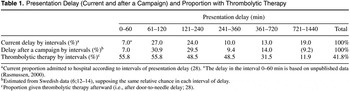
Current Presentation Delay (patient delay plus the prehospital delay: time from onset of symptoms until hospital admission): In line with Ottesen et al. (28), we assumed that 34 percent of patients with AMI arrive at hospital within two hours after onset of symptoms and 81 percent arrived within twelve hours (Table 1). Seven percent of the AMI patients were assumed to be admitted at hospital within one hour after onset of symptom (Rasmussen CH, unpublished data, 2000).

Current Door-to-Needle Delay: Based on Rasmussen (Rasmussen CH, unpublished data, 2000), the current door-to-needle delay was assumed to be sixty minutes.
Thrombolytic Therapy Among Patients with Myocardial Infarction
Proportion of the AMI-Population Treated with Thrombolysis: From the study of Ottesen et al. (28), we applied data of the proportion of AMI patients having thrombolytic therapy as a function of intervals of presentation delay (Table 1). Of the total AMI population admitted to hospital, approximately 42 percent were assumed to have thrombolytic therapy with the current delay and with a reduced delay. In Sweden, the proportion is 30 percent (12).
Age Distribution among Patients Having Thrombolysis: The age distribution among patients having thrombolysis was estimated from a study in Copenhagen (22), where 21 percent of patients aged older than sixty-five years had thrombolytic therapy, while the proportion was 8 percent of those older than seventy-five years.
Impact of the Interventions
The Public Campaign: The impact of a Danish public campaign was estimated from the literature, and it was assumed that the campaign only would have an impact on patients' delay. Due to cultural and delay similarities between Sweden and Denmark and partly because of detailed data from the Swedish study (5–7;12–15), the change in pattern of presentation delay after a Danish campaign was estimated, applying the Swedish data on a Danish setting (Table 1). In Sweden, both the proportion of patients arriving in hospital less than one hour after symptom debut and the proportion arriving through contact with the emergency phone remained unchanged. We assumed a small increase in use of emergency phone, as the proportion is low in Denmark (30 percent) in comparison to Sweden (60 percent). As for the Swedish campaign, we assumed that the reduced delay pattern remained for at least three years.
Prehospital Telemedicine Diagnostics: The additional health benefit of combining prehospital telemedicine diagnostics with a public campaign was modeled reducing the door-to-needle delay by 50 percent (base case estimate) for patients admitted by ambulance, as demonstrated in the literature (19;20). This is, however, optimistic with the actual Danish organization of the health care system. Due to the short distances in Denmark, it is not realistic to administer prehospital thrombolytic therapy. The mean prehospital delay (the time from contact to the health-care system to hospital admission) for patient using the emergency phone is assumed to be thirty minutes.
Of patients with suspected AMI, 32 percent call the emergency phone and are transported by ambulance, while 64 percent contact a general practitioner (Rasmussen CH, unpublished data, 2000). For the latter group, approximately 80 percent are transferred by ambulance to hospital.
Mortality Reduction Due Thrombolytic Therapy as a Function of Delay
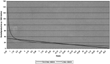
Based on the pathophysiology of myocardial infarction, we assumed as base case estimate that the mortality reduction from thrombolytic therapy declines nonlinearly with delay time as proposed in a meta-analysis by Boersma et al. (8), applying discrete intervals of delay. According to their analysis, the mortality reduction due to thrombolytic treatment declines nonlinearly as a function of the delay time, that is, the mortality reduction relative to placebo will be 65, 37, 29, 23, 18, and 9 per 1,000 given thrombolytic therapy with a delay of, respectively, less than one hour, 1–2, 2–4, 6–12, and more than 12 hours. In contrast, The Fibrinolytic Therapy Trialists' (FTT) Collaborative Group (2) concluded that the absolute mortality reduction declines linearly with time since onset of AMI symptoms, and the estimated loss of benefit is 1.6 lives per 1,000 for each hour of delay. The initial mortality reduction was estimated at thirty-five per 1,000 treated patients compared with no thrombolysis. As will appear from Fig. 1, the difference between the linear and the nonlinear model is only important during the first two hours of delay, where the nonlinear model predicts greater effect.
Danish Population of AMI-Patients
The occurrence of AMI in Denmark was based on recent statistics of the occurrence of AMI in Denmark (32), and the gender-specific thirty days fatality after admission with AMI has been calculated, applying data for the age and gender distribution of the out-of-hospital AMI fatality (Søren Rasmussen, National Institute of Public Health, Copenhagen, unpublished data, 2000). In line with Maggioni et al. (23), we assumed that the age-specific mortality increases by 6 percent per year of age, assuming that the exponential increase in mortality is true for all patients with AMI up to one year after the infarction.
Life Expectancy after the First Month after AMI
Remaining life expectancy for patients who survived an AMI was estimated on the basis of age- and sex-specific mortality risks in the general Danish population (3). The risk was adjusted upward due to the higher mortality risk among those who have had AMI and expressed as remaining life expectancy in age groups of five years for each sex. As base case estimate, the excess mortality risk of AMI patients was estimated on the basis of survival data from the Danish part of the MONICA project (Monitoring of Trends and Determinants in Cardiovascular Disease Project), where standardized mortality ratios have been calculated successively fifteen years after acute myocardial infarction for cohorts of Danish patients with nonrecurrent AMI in the period 1982–1991 (9).
Cost Consequences
Cost Consequences of Danish Public Campaign: The economic consequences of a Danish campaign was estimated adopting the Swedish cost data from 1987 (in U.S. dollars) (6;14) converting U.S. dollars into DKK (100 DKK=684.36 U.S. dollars [1987]) and adjusting for the different size of populations and the inflation in Denmark between 1987 and 1999. The estimated costs of a one year Danish campaign—human resources exclusive—were 40 million DDK.
Adjusting Swedish data to the size of the Danish population (13;14), we estimated that the campaign initially would increase the number of patients seeking care at the emergency rooms at the hospitals for noncardiac chest pain with approximately 6,500 per year at a cost of 1.2 million DKK. The potential for increased number of hospital admissions was accounted for only in the sensitivity analysis. Assuming that more patients will contact the ambulance services directly and, thereby, bypass the family doctor, we estimated a saving equivalent to 6 percent less contacts to the family doctor.
Costs of Prehospital Telemedicine Diagnostics: The economic consequences of establishing and running telemedicine diagnostics in all ambulances (500) in Denmark were based on information of the need (and costs) for equipment and for upgrading ambulance staff (electronic information, Ole Qvist Pedersen, 2000) and on the assumption that prehospital diagnostics will require telemedicine teams with cardiologic specialist in five hospitals to provide AMI diagnostics in Denmark. Capital equipment was assumed to last five years. In the sensitivity analysis, the equipment alternatively was assumed to be out-dated in three years, using standard techniques.
RESULTS
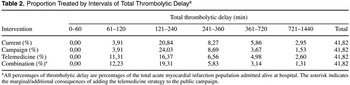
Assuming an unchanged door-to-needle delay (sixty minutes), a public campaign will increase the proportion of patients having thrombolysis in the interval two to four hours after onset of AMI symptoms from 20.8 percent to 24.0 percent, whereas the proportion of patients treated in hospital within the first two hours of onset of symptom will remain the same (Table 2).

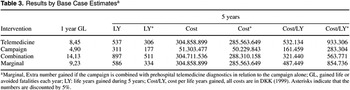
According to the model, of approximately 9,800 patients admitted alive to hospital for AMI during one year, approximately five more patients than today will avoid a fatal outcome in the subsequent month (Table 3). During five years of reduced delay, the avoided fatalities translate into 177 life years gained (discounted at 5 percent). The estimated net five-year cost of the public campaign (intervention costs minus savings) will be 51.3 million DKK (50.2 million DKK when discounting at 5 percent). Consequently, the base case estimate for the cost per life year gained (cost/LY) is DKK283,300, discounting both life years and costs at 5 percent or DKK161.500 when not discounting.

If the public campaign were combined with prehospital telemedicine diagnostics—reducing the door-to-needle delay by 50 percent—approximately fourteen patients would avoid a fatal AMI outcome. The base case estimate for cost/LY for the combination is DKK563,800, when discounting at 5 percent, or DKK321,400 undiscounted. The marginal cost/LY of adding the telemedicine strategy to the public campaign is DKK854,700. This marginal cost/LY approximately DKK80,000 less than for the telemedicine strategy alone (Table 3) and is explained by the fact that the relation between reduced fatality and earlier thrombolysis is assumed to be nonlinear and that a slightly greater proportion is assumed to use the emergency phone due to the campaign.
In the sensitivity analysis, we varied, one by one, the assumptions upon which the analysis were based and compared the consequences with the base case estimates of discounted cost/LY for the campaign alone and the marginal cost/LY for the combination. Assuming that 25 percent of the patients with noncardiac chest pain in the emergency departments will be admitted to the cardiologic department, the cost/LY for the campaign will be DKK577,000, an increase of 103 percent. With a reduced cost of information materials from DKK40 million to DKK20 million, the cost/LY was DKK170,000, a decrease of 40 percent. With a reduced proportion of 33.5 percent (instead of 41.8 percent) treated with—or with effect—thrombolysis, cost/LY was DKK373,000. Assuming a different age distribution among those having thrombolysis (i.e., more elderly treated and fewer younger treated), cost/LY was DKK346,000. Realistic changes in other parameters had little influence on the cost-effectiveness ratio.
Assuming that the relationship between delay and mortality reduction is linear (2), the marginal cost/LY of the combination will be DKK 1,743,300. This change in assumption is only important for the telemedicine strategy. If the telemedicine equipment was assumed to last three years instead of five years, the marginal cost/LY will be DKK981,300. (It is possible, however, that equipment prices will be lower in the future. We could not account for this possibility.) The cost/LY will decrease with approximately the same amount if the ongoing upgrading of ambulance staff is less costly. If it is possible in the future to eliminate the door-to-needle delay by the telemedicine strategy, the marginal cost/LY of the combination will be DKK223,500, a decrease of 74 percent and DKK50,000 less than the campaign alone.
DISCUSSION
An information campaign aimed at getting patients with AMI to hospital earlier appears to result in approximately five avoided fatalities (of 2,400 fatalities per year) among 9,800 AMI patients admitted alive to the hospital at a cost of DKK283,300 per life year gained (discounted at 5 percent). The limited impact on the total fatality can partly be explained by the fact that, although the median delay will be reduced due the campaign, almost the same number as before a campaign will be treated within the first two hours after onset of symptoms. Combining the campaign with prehospital telemedicine diagnosis—and thereby reducing the door-to-needle delay by 50 percent (for those admitted by ambulance)—will result in approximately nine more avoided fatalities yearly (DKK854.700 per additional life year saved). These estimates of costs and benefits, however, should be seen against the limitations of the study. The main limitation of our study lies in the fact that the beneficial effect of earlier thrombolytic therapy was modeled as a discrete function of time, that is, the time interval from onset of symptoms rather than as a continuous function of time. This simplification has limited impact for delay times over two hours (Figure 1) and, consequently, not for the campaign alone, but the number of avoided fatalities might be slightly higher for the combination. The beneficial effect of thrombolysis was estimated on the basis of meta-analyses of randomized clinical trials (RCTs; 2;8). Although results from meta-analyses are widely seen as the best evidence (of efficacy), it may not necessarily yield the best measure of effectiveness in routine clinical practice. Patients included in RCTs normally represent a selected group of patients in clinical practice. The effectiveness in routine practice may be inferior to that of the trials, because it is more likely that cases without beneficial effect from thrombolysis are having thrombolysis in clinical practice.

Linear versus nonlinear relation between delay and mortality. The figure illustrates the difference between a linear end a nonlinear relationship between hours of delay and the effect (mortalityreduction) of thrombolytic therapy to patients with acute myocardial infarction. Thrombolytic therapy is compared to placebo. Sources: nonlinear relation (8), linear relation (2).
Another limitation is the rather rough estimate of the costs of the campaign. The cost/LY for the campaign, thus, was very sensitive to the imperfection of the data related to costs.
Although several studies aimed to evaluate the effect of thrombolysis and/or to evaluate interventions aimed to reduce the delay in thrombolytic therapy have been published, we have not found studies similar to our study; consequently, the present analysis cannot directly be compared with others. In a cost-effectiveness study of different thrombolytic agents (24), the marginal cost/LY for accelerated tissue plasminogen activator versus Streptokinases was US$32,678 or DKK265,000, compared with DKK283,300 for the campaign alone in our model. Estimates of costs per life year gained for Streptokinases versus placebo has been approximately of US$17,000 or DKK138,000 per life year gained (29).
POLICY IMPLICATIONS
The present analysis gives no unequivocal answer to the question of whether public campaigns should be implemented, partly because there is no official threshold value with respect to how much society is willing to pay for gaining a life year. Moreover, a general awareness of symptoms of AMI might not only have an impact on the case fatality among patients admitted alive to hospital but also on prehospital fatality. A substantial number of patients die before arrival in hospital, and this number is likely to decline when patients contact the health-care system earlier (17;18;30). The fact that a public campaign also might lead to a reduction of “out of hospital ischemic heart disease deaths” could make it more reasonable to conduct a campaign.
In planning a campaign, it is critical to prepare nurses and doctors to handle adequately the increased burden in emergency departments and to expect increased demand for health care, especially in the beginning of the campaign. Furthermore, the possible increase in anxiety in the entire population should be considered.
The marginal cost/LY of a combination of a public campaign with prehospital telemedicine AMI diagnostics aimed to reduce the thrombolytic delay in Denmark is likely to be considerably less cost-effective than a public campaign alone. The high marginal cost/LY of the telemedicine strategy (and of the telemedicine strategy alone) is explained by the high costs of equipments that is needed in every ambulance and staff in both hospitals and ambulances, while few patients actually will gain health benefit from the service. Few AMI patients in Denmark contact directly the emergency service during the first hour of unset of symptoms. Rather, general practitioners are de facto “door keepers” to the hospitals, and the general practitioner is often the first health professional to be contacted in case of chest pain. If a public campaign should be combined with the telemedicine strategy, it is urgent to focus on the direct contact to the emergency service. Total elimination of the door-to-needle delay due to telemedicine strategy is necessary if the strategy should be cost-effective—and this elimination will call for structural changes. This holds only if the time-dependent reduction in mortality in fact is nonlinear. It has been beyond the scope of this study to evaluate costs and health benefit of prehospital telemedicine diagnostics aimed at directly admitting patients to a cardiology center to perform primary PCI.
CONCLUSIONS
Programs aimed at reducing delay of thrombolysis in patients with AMI are likely to have a limited impact on AMI fatality. This conclusion can be explained by the finding that neither of the strategies seems to increase much the proportion of patients with a thrombolytic delay less than two hours. Not accounted for in the model, the public campaign may also lead to a reduction in the out-of-hospital fatality. Due to the high costs of the telemedicine strategy the cost per life year gained is more than threefold higher than that of the public campaign. Whether such programs can be considered cost-effective will depend on how life year gains are valued by society. In a Danish context, they are in “the gray zone” in which factors other than cost-effectiveness may influence policies.
The authors are grateful to Claus-Henrik Rasmussen at the University of Southern Denmark for providing data on prehospital delay among patients with acute coronary syndromes; to Søren Rasmussen at the National Institute of Public Health for providing data on out-of-hospital infarction fatality; and to Ole Qvist Pedersen, deputy director of Falck Denmark, for providing data on telemedicine costs.
The study was financed by DSI Danish Institute for Health Services Research, Center for Evaluation and Health Technology Assessment (the Danish National Board of Health) and the Danish Heart Foundation. The study was carried out, while the first author was affiliated with DSI. The revisions of the paper were partly financed by Department of Health Technology Assessment, Hvidovre University Hospital of Copenhagen.
References
Effectiveness of intravenous thrombolytic treatment in acute myocardial infarction.
Gruppo Italiano per lo Studio della Streptochinasi nell'Infarto Miocardico (GISSI).
Lancet.
1986
1:
397–
402.
Indications for fibrinolytic therapy in suspected acute myocardial infarction: Collaborative overview of early mortality and major morbidity results from all randomised trials of more than 1000 patients.
Fibrinolytic Therapy Trialists' (FTT) Collaborative Group.
Lancet.
1994
343:
311–
322.
1999.
[Befolkningens bevægelser 1997—Vital statistics 1997].
Copenhagen:
Statistics Denmark
Andersen HR,
Nielsen TT,
Vesterlund T, et al.
Danish multicenter randomized study on fibrinolytic therapy versus acute coronary angioplasty in acute myocardial infarction: Rationale and design of the Danish trial in acute myocardial infarction-2.
Am Heart J.
2003
146:
234–
241.Google Scholar
Blohm M,
Herlitz J,
Schroder U, et al.
Reaction to a media campaign focusing on delay in acute myocardial infarction.
Heart Lung.
1991
20:
661–
666.Google Scholar
Blohm MB.
1997.
Delay time until delivery of treatment in suspected acute myocardial infarction. An intervention study with particular emphasis on patient delay.
Göteborg:
Blohm MB,
Hartford M,
Karlson BW,
Luepker RV,
Herlitz J.
An evaluation of the results of media and educational campaigns designed to shorten the time taken by patients with acute myocardial infarction to decide to go to hospital.
Heart.
1996
76:
430–
434.Google Scholar
Boersma E,
Maas AC,
Deckers JW,
Simoons ML.
Early thrombolytic treatment in acute myocardial infarction: Reappraisal of the golden hour.
Lancet.
1996
348:
771–
775.Google Scholar
Brønnum-Hansen H,
Jørgensen T, et al.
Survival and cause of death after myocardial infarction. The Danish MONICA study.
J Clin Epidemiol.
2001
54:
1244–
1250.Google Scholar
Drummond MF,
O'Brian BJ,
Stoddard GL,
Torrance GW.
1999.
Methods for economic evaluation of health care programmes.
Oxford, New York, Toronto:
Oxford University Press.
Gaspoz JM,
Unger PF,
Urban P, et al.
Impact of a public campaign on pre-hospital delay in patients reporting chest pain.
Heart.
1996
76:
150–
155.Google Scholar
Herlitz J,
Blohm M,
Hartford M, et al.
Follow-up of a 1-year media campaign on delay times and ambulance use in suspected acute myocardial infarction.
Eur Heart J.
1992
13:
171–
177.Google Scholar
Herlitz J,
Hartford M,
Blohm M, et al.
Effect of a media campaign on delay times and ambulance use in suspected acute myocardial infarction.
Am J Cardiol.
1989
64:
90–
93.Google Scholar
Herlitz J,
Hartford M,
Karlson BV, et al.
Effect of a media campaign to reduce delay times for acute myocardial infarction on the burden of chest pain patients in the emergency department.
Cardiology.
1991
79:
127–
134.Google Scholar
Herlitz J,
Hartford M,
Karlson BW, et al.
One-year mortality after acute myocardial infarction prior to and after the implementation of a widespread use of thrombolysis and aspirin. Experiences from the community of Goteborg, Sweden.
Cardiology.
1998
89:
216–
221.Google Scholar
Ho MT,
Eisenberg MS,
Litwin PE,
Schaeffer SM,
Damon SK.
Delay between onset of chest pain and seeking medical care: The effect of public education.
Ann Emerg Med.
1989
18:
727–
731.Google Scholar
Holmberg M,
Holmberg S,
Herlitz J.
Incidence, duration and survival of ventricular fibrillation in out-of-hospital cardiac arrest patients in Sweden.
Resuscitation.
2000
44:
7–
17.Google Scholar
Holmberg M,
Holmberg S,
Herlitz J,
Gardelov B.
Survival after cardiac arrest outside hospital in Sweden. Swedish Cardiac Arrest Registry.
Resuscitation.
1998
36:
29–
36.Google Scholar
Karagounis L,
Ipsen SK,
Jessop MR, et al.
Impact of field-transmitted electrocardiography on time to in-hospital thrombolytic therapy in acute myocardial infarction.
Am J Cardiol.
1990
66:
786–
791.Google Scholar
Kereiakes DJ,
Gibler WB,
Martin LH,
Pieper KS,
Anderson LC.
Relative importance of emergency medical system transport and the prehospital electrocardiogram on reducing hospital time delay to therapy for acute myocardial infarction: A preliminary report from the Cincinnati Heart Project.
Am Heart J.
1992
123
(pt 1):
835–
840.Google Scholar
Luepker RV,
Raczynski JM,
Osganian S, et al.
Effect of a community intervention on patient delay and emergency medical service use in acute coronary heart disease: The Rapid Early Action for Coronary Treatment (REACT) Trial.
JAMA.
2000
284:
60–
67.Google Scholar
Madsen JK,
Pedersen F,
Nielsen H,
Jensen GV,
Hansen JF.
Improvement in long-term prognosis of elderly patients with acute myocardial infarction after the introduction of intravenous thrombolytic therapy.
Scand Cardiovasc J.
1998
32:
365–
370.Google Scholar
Maggioni AP,
Maseri A,
Fresco C, et al.
Age-related increase in mortality among patients with first myocardial infarctions treated with thrombolysis. The investigators of the Gruppo Italiano per lo Studio della Sopravvivenza nell'Infarto Miocardico (GISSI-2).
N Engl J Med.
1993
329:
1442–
1448.Google Scholar
Mark DB,
Hlatky MA,
Califf RM, et al.
Cost effectiveness of thrombolytic therapy with tissue plasminogen activator as compared with streptokinase for acute myocardial infarction.
N Engl J Med.
1995
332:
1418–
1424.Google Scholar
Moon JCC,
Kalra PR,
Coats AJS.
DANAMI-2: Is primary angioplasty superior to thrombolysis in acute MI when the patient has to be transferred to an invasive centre?
Cardiology.
2002
85:
199–
201.Google Scholar
Moses HW,
Engelking N,
Taylor GJ, et al.
Effect of a two-year public education campaign on reducing response time of patients with symptoms of acute myocardial infarction.
Am J Cardiol.
1991
68:
249–
251.Google Scholar
Nielsen TT,
Andersen HR.
2003
[Primary percutaneous coronary intervention of ST elevation myocardial infarction, the DANAMI 2 study. The Danish Society of Cardiology].
Ugeskr Laeger.
165:
1227.Google Scholar
Ottesen MM,
Kober L,
Jorgensen S,
Torp-Pedersen C.
Determinants of delay between symptoms and hospital admission in 5978 patients with acute myocardial infarction. The TRACE Study Group. Trandolapril Cardiac Evaluation.
Eur Heart J.
1996
17:
429–
437.Google Scholar
Parmley WW.
Cost-effectiveness of reperfusion strategies.
Am Heart J.
1999
138
(pt 2):
S142–
S152.Google Scholar
Rustige JM,
Burczyk U,
Schiele R,
Werner A.
1999
Media campaign on delay times in suspected myocardial infarction. The Ludwigshafen project. Abstract.
Eur Heart J.
11
(Suppl):
17.Google Scholar
Videbæk J,
Madsen M.
1999.
Heart statistics.
Copenhagen:
Danish Heart Foundation and Danish Institute of Clinical Epidemiology
Presentation Delay (Current and after a Campaign) and Proportion with Thrombolytic Therapy
Proportion Treated by Intervals of Total Thrombolytic Delaya
Results by Base Case Estimatesa
Linear versus nonlinear relation between delay and mortality. The figure illustrates the difference between a linear end a nonlinear relationship between hours of delay and the effect (mortalityreduction) of thrombolytic therapy to patients with acute myocardial infarction. Thrombolytic therapy is compared to placebo. Sources: nonlinear relation (8), linear relation (2).
 You have
Access
- 6
- Cited by