Introduction
Primary parotid gland carcinomas are rare, accounting for approximately 0.5 per cent of all malignant tumours and no more than 5 per cent of all head and neck carcinomas.Reference Ettl, Schwarz-Furlan, Gosau and Reichert1 They are classified into 25 different histopathological subtypes in the World Health Organization 2005 classification,Reference Eveson, Auclair, Gnepp, El-Naggar, Barnes, Eveson, Reichart and Sidransky2 although Jouzdani et al.Reference Jouzdani, Yachouh, Costes, Faillie, Cartier and Poizat3 proposed a modification of this system to a three-grade, prognosis-based classification system that has been adopted at many clinical practices. Because of their rarity, complicated histopathological classification and three-grade classification, it is difficult to assemble a sufficient number of cases to study, especially cases with data on long-term outcomes.
Surgical resection still remains the first-line treatment, and it is sometimes followed by radiation therapy in cases with poor prognostic factors such as a positive surgical margin, perineural invasion, multiple lymph node metastases and high-grade tumours.Reference Erovic, Shah, Bruch, Johnston, Kim and O'Sullivan4–Reference Pohar, Gay, Rosenbaum, Klish, Bogart and Sagerman7 However, adjuvant radiotherapy still remains controversial.Reference Mendenhall, Morris, Amdur, Werning and Villaret8–Reference Laurie and Licitra13 Therefore, the purpose of this paper was to investigate the treatment outcomes and prognostic factors in patients with parotid gland carcinoma who were treated by resection with or without adjuvant radiation therapy at Kyushu University Hospital, Fukuoka, Japan.
Materials and methods
This study was approved by the Institutional Review Board at Kyushu University, Fukuoka, Japan (approval number: 29–43). We retrospectively reviewed all patients who were diagnosed with parotid gland carcinoma and treated between 1983 and 2014 at Kyushu University Hospital. Cases with suspected metastatic carcinoma were excluded. Among the 118 eligible patients, the following cases were excluded: 3 patients who only had excisional biopsy because of an unresectable tumour and 7 patients who had no adequate clinicopathological data. The remaining 108 patients were analysed, and none were lost to follow-up.
We reviewed the clinical findings, the results of imaging studies and the pathological findings. The slides were assessed by three observers (Hidetaka Yamamoto, Kazuki Hashimoto and Takafumi Nakano) who were blinded to the clinical outcomes.
From these findings, the tumours were restaged according to the 7th edition of the American Joint Committee on Cancer and the International Union on Cancer and were graded as low-, intermediate- or high-grade tumours.Reference Jouzdani, Yachouh, Costes, Faillie, Cartier and Poizat3 We classified low-grade mucoepidermoid carcinoma, carcinoma ex pleomorphic adenoma non-invasive type, acinic cell carcinoma and epithelial-myoepithelial carcinoma as low-grade tumours; intermediate-grade mucoepidermoid carcinoma, adenoid cystic carcinoma tubular or cribriform type and myoepithelial carcinoma as intermediate-grade tumours; and high-grade mucoepidermoid carcinoma, carcinoma ex pleomorphic adenoma invasive type, adenoid cystic carcinoma solid type, salivary duct carcinoma, adenocarcinoma not otherwise specified, squamous cell carcinoma, oncocytic carcinoma, large cell carcinoma and small cell carcinoma as high-grade tumours.
The disease-specific survival (the event being death from parotid gland carcinoma), disease-free survival and local or lymph node recurrence-free survival were calculated using the Kaplan–Meier method and the log-rank test. Cox models were used to analyse individual factors impacting survival. The results were considered statistically significant if the probability value was less than 0.05. Statistical analyses were performed using JMP Statistical Discovery Software (version 13.0; SAS, Cary, North Carolina, USA).
Results
Clinicopathological findings
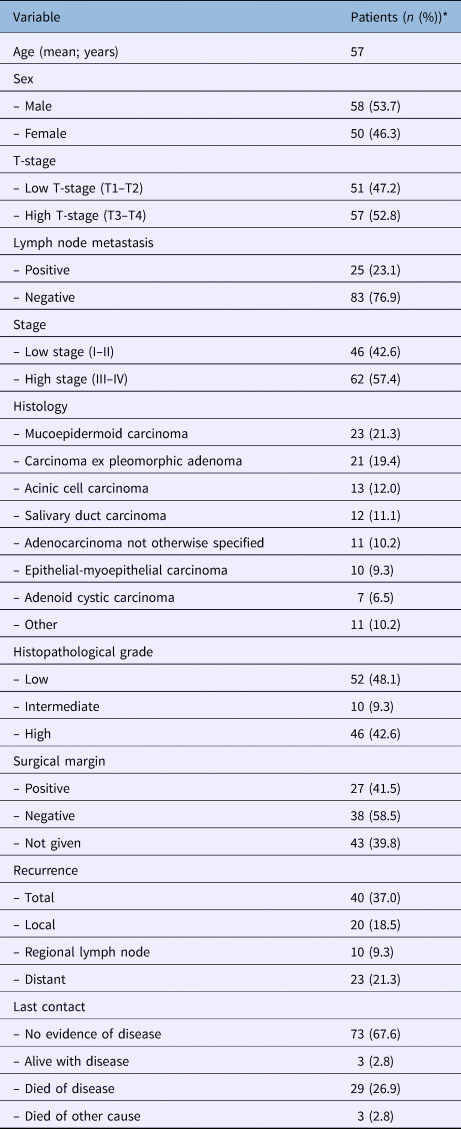
Clinicopathological findings of parotid gland carcinoma are shown in Table 1. The patients (58 males and 50 females) ranged in age from 14 to 89 years (mean age, 57 years). Of the 108 patients, 51 (47.2 per cent) had low T-stage (T1–T2) tumours, and the other 57 (52.8 per cent) had high T-stage (T3–T4) tumours.
Clinicopathological findings of parotid gland carcinomas

*Total n = 108
Twenty-five patients (23.1 per cent) showed pathologically positive lymph node metastasis. Forty-six patients (42.6 per cent) had low clinical stage (I–II) tumours, and the other 62 patients (57.4 per cent) had high clinical stage (III–IV) tumours.
The most frequent histopathological tumours were mucoepidermoid carcinoma (n = 23; 21.3 per cent), carcinoma ex pleomorphic adenoma (n = 21; 19.4 per cent) and acinic cell carcinoma (n = 13; 12.0 per cent), followed by salivary duct carcinoma (n = 12; 11.1 per cent), adenocarcinoma not otherwise specified (n = 11; 10.2 per cent), epithelial-myoepithelial carcinoma (n = 10; 9.3 per cent) and adenoid cystic carcinoma (n = 7; 6.5 per cent). Other tumours included squamous cell carcinoma, myoepithelial carcinoma, basal cell adenocarcinoma, mucinous adenocarcinoma, oncocytic carcinoma and lymphoepithelial carcinoma.
Fifty-two tumours (48.1 per cent) were low grade, 10 (9.3 per cent) were intermediate grade and 46 (42.6 per cent) were high grade. Of 65 cases, 27 (41.5 per cent) had positive surgical margins and 38 (58.5 per cent) had negative surgical margins. Local and regional lymph node recurrence after initial surgical treatment was detected in 20 cases and 10 cases, respectively. Twenty-three patients experienced distant metastases. Four patients showed both local and regional lymph node recurrence, 7 cases showed both local and distant metastasis, and 2 cases showed both regional lymph node recurrence and distant metastasis. In total, 40 (37.0 per cent) patients experienced tumour relapse (with 7 low-grade cases and 33 intermediate- or high-grade cases). Twenty-nine patients (26.9 per cent) died of their tumour (2 with low grade and 27 with intermediate- or high-grade tumours), 3 (2.8 per cent) died of another cause and 3 (2.8 per cent) remain alive with disease. At the last contact, 73 patients (67.6 per cent) showed no evidence of disease.
Prognostic analyses
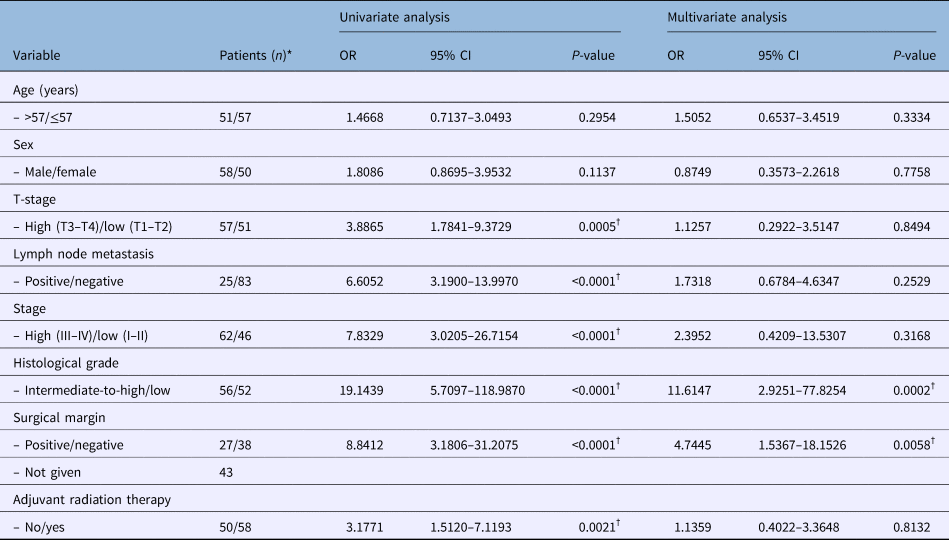
The risk factors for disease-specific survival are shown in Table 2. In the univariate analysis, high T-stage tumour (p = 0.0005), positive lymph node metastasis (p < 0.0001), high clinical stage tumour (p < 0.0001), intermediate- to high-grade tumour (p < 0.0001), positive surgical margin (p < 0.0001) and cases treated with adjuvant radiation therapy (p = 0.0021) were significantly correlated with disease-specific survival. In the multivariate analysis, intermediate- to high-grade tumour (p = 0.0002) and a positive surgical margin (p = 0.0058) were significantly correlated with disease-specific survival.
Relationship between disease-specific survival and clinicopathological factors

*Total n = 108; †statistically significant. OR = odds ratio; CI = confidence interval
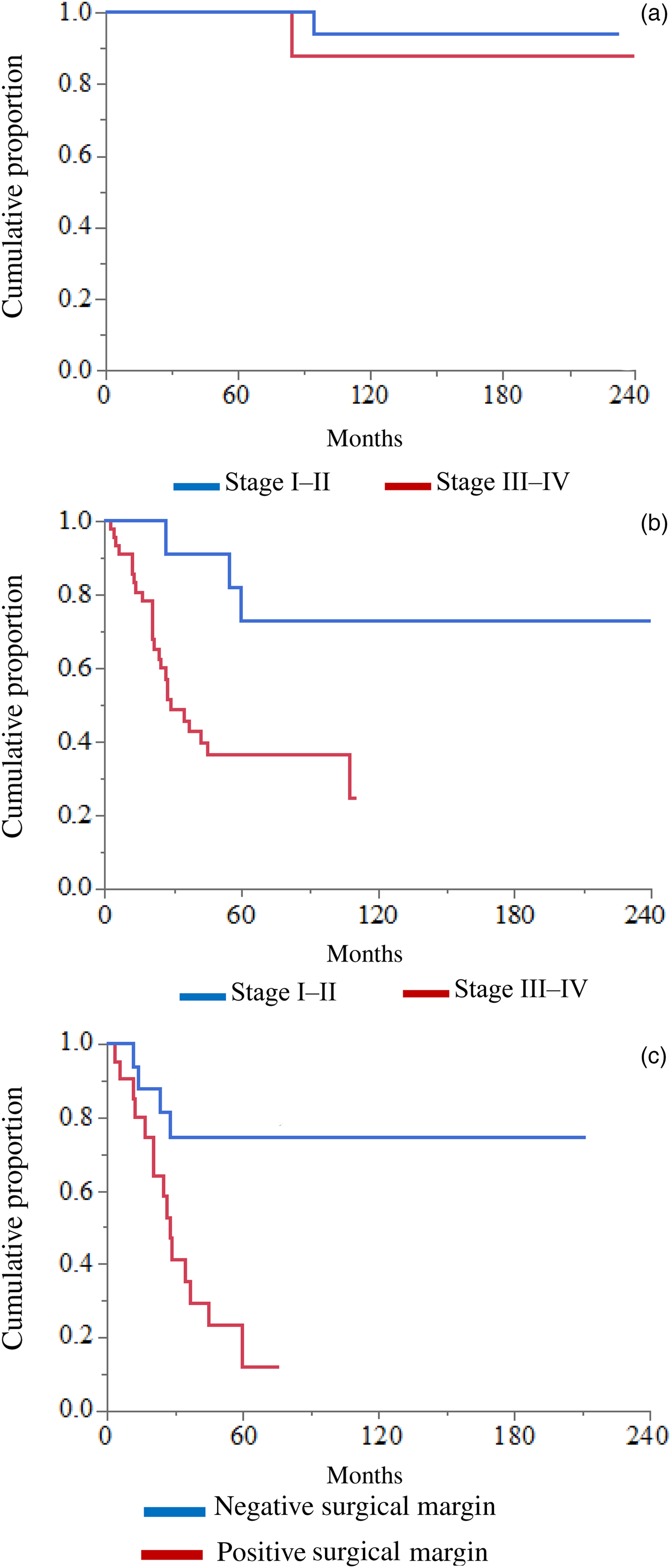
Figures 1–4 show the disease-specific survival, disease-free survival, local recurrence-free survival and lymph node recurrence-free survival by each factor. Among all 108 cases, the patients with high clinical stage disease, with intermediate- to high-grade tumours and with positive surgical margins had significantly shorter periods of disease-specific survival (p < 0.0001, p < 0.0001 and p < 0.0001, respectively; Figure 1a–c).
The patients with high clinical stage disease (a), with intermediate-to-high histopathological grade tumours (b) and with positive surgical margins (c), had significantly shorter periods of disease-specific survival (DSS). (a) Stage I–II: n = 46; stage III–IV: n = 62; DSS: p < 0.0001. (b) Low grade: n = 52; intermediate-to-high grade: n = 56; DSS: p < 0.0001. (c) Negative surgical margin: n = 38; positive surgical margin: n = 27; p < 0.0001.

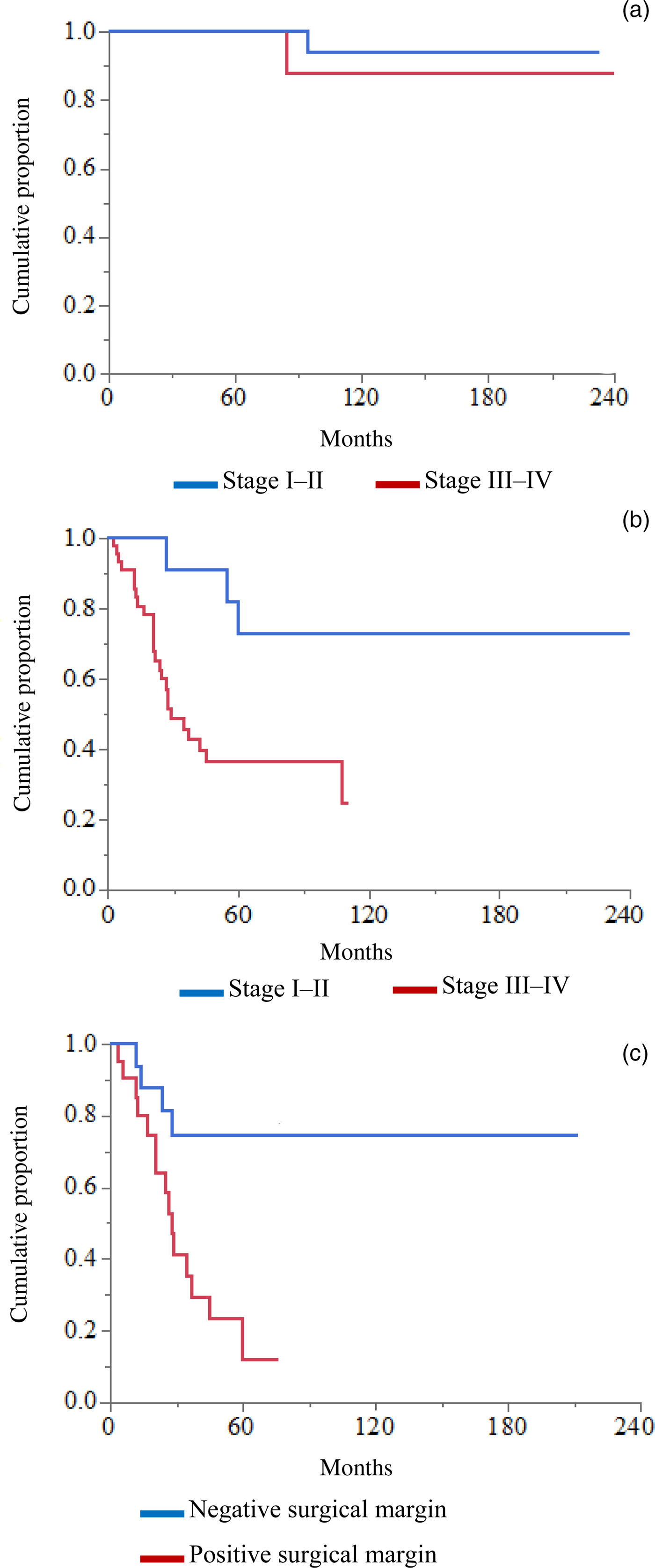
(a) In low-grade cases, there was no statistical difference between low and high clinical stage. Among intermediate- to high-grade cases, patients with high clinical stage disease (b) or with positive surgical margins (c) exhibited significantly shorter periods of disease-specific survival (DSS). (a) Stage I–II: n = 34; stage III–IV: n = 18; DSS: p = 0.4842. (b) Stage I–II: n = 12; stage III–IV: n = 44; DSS: p = 0.0107. (c) Negative surgical margin: n = 22; positive surgical margin: n = 16; p = 0.0028.

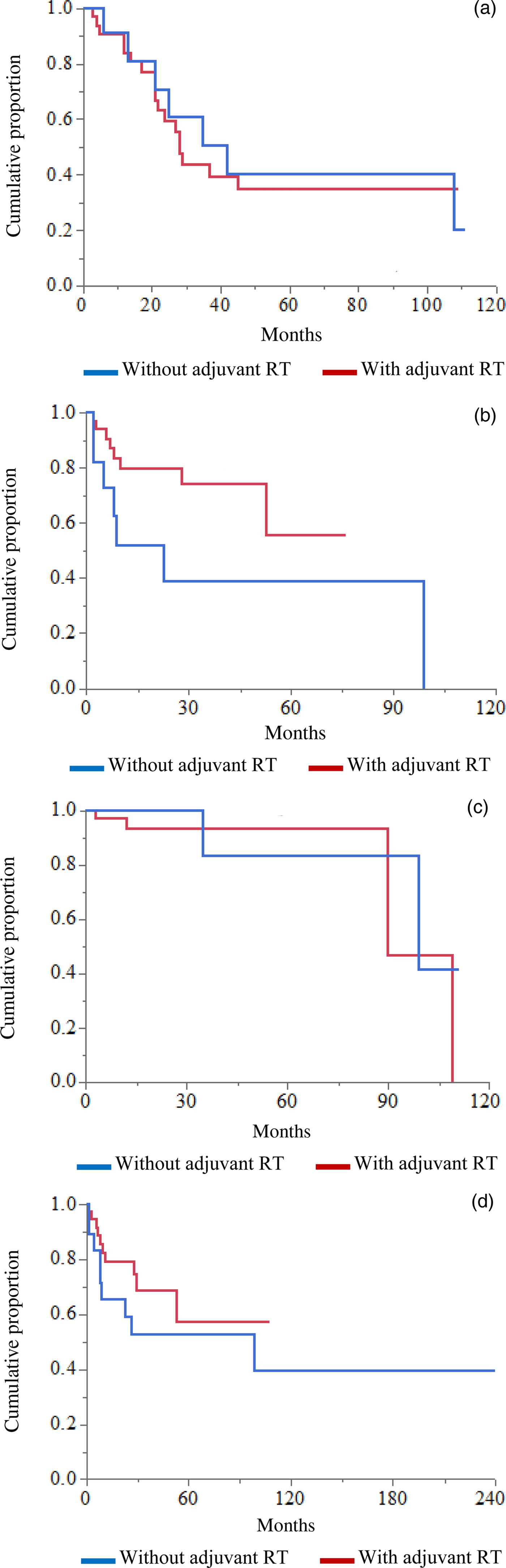
Adjuvant radiation therapy (RT) was not correlated with disease-specific survival (DSS; (a)), disease-free survival (DFS; (b)) or lymph node recurrence-free survival (RFS; (c)) among high clinical stage cases with intermediate- to high-grade tumours, or with DFS (d) among intermediate- to high-grade tumours. (a) Without adjuvant RT: n = 11; with adjuvant RT: n = 33; DSS: p = 0.8326. (b) Without adjuvant RT: n = 11; with adjuvant RT: n = 33; DFS: p = 0.0874. (c) Without adjuvant RT: n = 11; with adjuvant RT: n = 33; lymph node RFS: p = 0.6485. (d) Without adjuvant RT: n = 19; with adjuvant RT: n = 37; DFS: p = 0.3096.

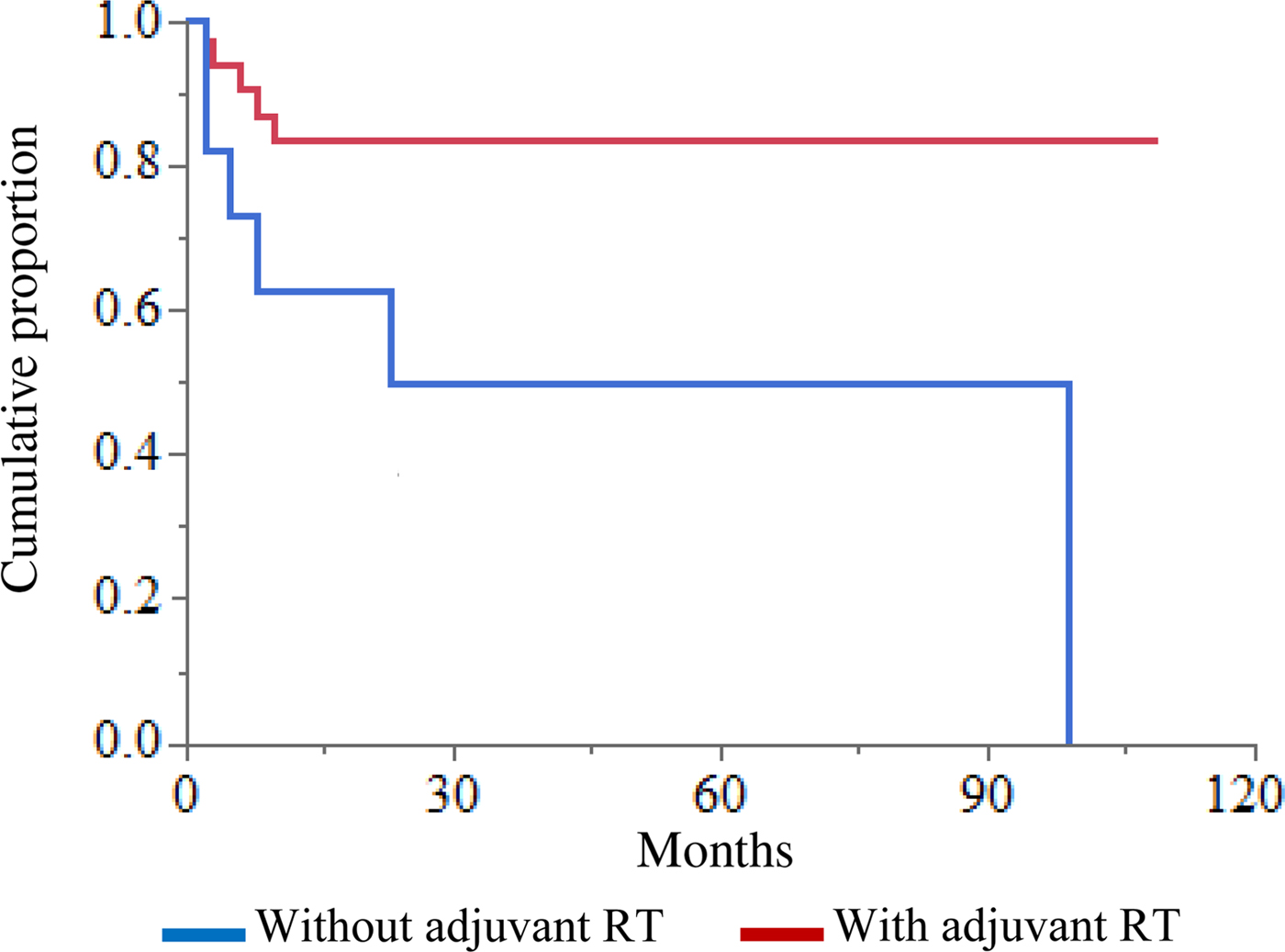
Adjuvant radiation therapy (RT) was significantly associated with local recurrence-free survival (RFS) among high clinical stage cases with intermediate- to high-grade tumours. Without adjuvant RT: n = 11; with adjuvant RT: n = 33; local RFS: p = 0.0244.

The 5-year and 10-year disease-specific survival values for cases with low clinical stage disease, low-grade tumour and negative surgical margin were 91.68 per cent and 87.09 per cent, 100 per cent and 91.43 per cent, and 88.92 per cent and 88.92 per cent, compared with 52.80 per cent and 42.64 per cent, 43.40 per cent and 37.20 per cent, and 31.29 per cent and 31.29 per cent for those with high clinical stage disease, intermediate- to high-grade tumours and a positive surgical margin.
In the low-grade cases, the clinical stage was not correlated with disease-specific survival (p = 0.4842; Figure 2a). In contrast, among intermediate- to high-grade cases, patients with high clinical stage disease or with positive surgical margins exhibited significantly shorter periods of disease-specific survival (p = 0.0107 and p = 0.0028; Figure 2b and c).
The 5-year and 10-year disease-specific survival values for cases with low clinical stage and a negative surgical margin among intermediate- to high-grade tumours were 72.73 per cent and 72.73 per cent, and 74.48 per cent and 74.48 per cent compared with 36.46 per cent and 24.31 per cent, and 23.42 per cent and 11.71 per cent for those for high stage and positive surgical margin cases.
In addition, adjuvant radiation therapy was not associated with disease-specific survival, disease-free survival or lymph node recurrence-free survival among high clinical stage cases with intermediate- to high-grade tumours (p = 0.8326: Figure 3a; p = 0.0874: Figure 3b; p = 0.6485: Figure 3c) and also not associated with disease-free survival among intermediate- or high-grade cases (p = 0.3096: Figure 3d). However, among high clinical stage cases with intermediate- to high-grade tumours, the cases with adjuvant radiation therapy had longer local recurrence-free survival than those without adjuvant radiation therapy (p = 0.0244: Figure 4).
Discussion
In our retrospective study, low-grade cases were associated with better prognosis irrespective of their disease stage (Figure 2a). Of the two patients with low-grade tumours who died of their disease, one patient had stage I and the other had stage III disease. Previous studies also showed that histologically low-grade tumours or clinically low-stage tumours were correlated with better local control and prognosis.Reference Jeannon, Calman, Gleeson, McGurk, Morgan and O'Connell14,Reference Tullio, Marchetti, Sesenna, Brusati, Cocchi and Eusebi15 Therefore, adjuvant radiation therapy might be less necessary for patients with low-grade tumours.
On the other hand, cases with high clinical stage, intermediate- to high-grade tumours and a positive surgical margin were statistically associated with worse prognoses (Figures 1a–c, 2b and c). In our multivariate analysis, both intermediate- to high-grade tumours and a positive surgical margin were factors related to poor prognosis (Table 2). Similarly, previous reports described that high-grade tumours, advanced stage disease and positive surgical margins were correlated with worse prognosis.Reference Erovic, Shah, Bruch, Johnston, Kim and O'Sullivan4–Reference Pohar, Gay, Rosenbaum, Klish, Bogart and Sagerman7,Reference Jeannon, Calman, Gleeson, McGurk, Morgan and O'Connell14,Reference Tullio, Marchetti, Sesenna, Brusati, Cocchi and Eusebi15 Considering these reports together, patients with any one of these factors should receive adjuvant therapy including radiotherapy, chemotherapy, molecular targeted therapy or immune-targeted therapy. Indeed, the effectiveness of molecular targeted therapy or chemotherapy have been reported in small series studies,Reference Ettl, Schwarz-Furlan, Gosau and Reichert1,Reference Caballero, E Sosa, Tagliapietra and Grau16–Reference Limaye, Posner, Krane, Fonfria, Lorch and Dillon19 but the effect of these adjuvant therapies remains unclear. Further experimental and clinical studies with larger numbers of patients are needed.
With regard to adjuvant radiation therapy, our results showed no significant association between such adjuvant treatment and parameters related to prognosis, except in the case of local recurrence (Table 2, Figures 3a–d and 4). Among patients with high clinical stage disease and intermediate- to high-grade tumours, those who received adjuvant radiation therapy had significantly better local recurrence-free survival (Figure 4). Our results suggest that radiation therapy followed by complete surgical resection might be able to improve the local recurrence rate. Some researchersReference Terhaard, Lubsen, Van der Tweel, Hilgers, Eijkenboom and Marres9,Reference Mendenhall, Morris, Amdur, Werning and Villaret8,Reference Fu, Leibel, Levine, Friedlander, Boles and Phillips12,Reference Jeannon, Calman, Gleeson, McGurk, Morgan and O'Connell14 have reported that adjuvant radiation therapy was associated with a better local control rate or overall survival, whereas othersReference Cockerill, Gross, Contag, Rein, Moore and Olsen10,Reference Mercante, Marchese, Giannarelli, Pellini, Cristalli and Manciocco11 have reported that adjuvant radiation therapy was not associated with prognosis. Therefore, although the necessity of adjuvant therapy including radiation therapy for salivary gland carcinoma remains controversial, adjuvant radiation therapy is useful in improved local control and is one of the options for cases with the poor prognostic factors mentioned above.
As for the follow-up period, most recurrences happen within five years of the initial surgery, although this depends mainly on their clinical stage and histological grade. In low-grade cases, all recurrences occur after 20 months. On the other hand, 26 of 28 patients who experienced recurrence within 2 years of the initial surgery had intermediate- or high-grade tumours. Therefore, it is reasonable to suppose that five years is an appropriate post-surgical follow-up period and that special attention should be paid within the first two years for cases with intermediate- or high-grade tumours.
• This study looks at the long-term outcomes for salivary gland carcinoma in a single institute
• The clinical stage and histopathological grade were associated with prognosis
• Adjuvant radiation therapy is useful in local control
Conclusion
We retrospectively reviewed 108 parotid gland cancers. High clinical stage, intermediate- to high histological grade and a positive-surgical margin were statistically associated with poor prognosis, irrespective of adjuvant radiation therapy. However, adjuvant radiation therapy was correlated with improved local control among patients with high clinical stage and intermediate- to high-grade tumours. Therefore, additional experimental and clinical studies are needed to define which cases will benefit from adjuvant radiation therapy and to identify effective new therapeutic strategies, such as molecular targeted therapy or immune-targeted therapies.
Acknowledgements
The English usage in this article was reviewed by KN International (http://www.kninter.com/). This work was supported by the Japan Society for the Promotion of Science Kakenhi Grant-in-Aid for Young Scientists (B): grant number 16K20253.
Competing interests
None declared