Over the last few decades, there have been several case reports and studies describing an association between complete heart block and QT prolongation. This association exists across many different aetiologies of complete heart block. Published cases show that the heart block precedes the QT prolongation.Reference Mendoza, Belda, Salguero and Granados 1 , Reference Gladman, Davis, Fogelman, Hamilton and Gow 2 The existing literature contains examples of long QT development both before and after pacemaker insertion,Reference Mendoza, Belda, Salguero and Granados 1 , Reference Wilmin, De Bels, Knecht, Gottignies, Gazagnes and Devriendt 3 and in both children and adults.Reference Gladman, Davis, Fogelman, Hamilton and Gow 2 , Reference Jeon, Her and Chin 4 , Reference Esscher and Michaelsson 5
It has been shown that the presence of QT prolongation is a risk factor for death in children with complete heart block, regardless of the presence of a pacemaker.Reference Esscher and Michaelsson 5 QT prolongation appears to be associated with periods of bradycardia, generally in patients without pacemakers.Reference Jeon, Her and Chin 4 – Reference Kurita, Ohe and Marui 8 We report the case of a patient with complete heart block and a pacemaker with QT prolongation and torsades de pointes during a period of ventricular rate above the pacemaker rate.
Case report
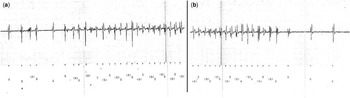
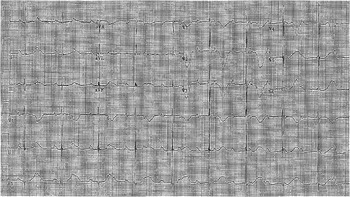
We report the case of a 16-year-old boy with complete heart block and an episode of torsades de pointes. He had been diagnosed prenatally with complete heart block secondary to maternal Sjögren’s syndrome. In early infancy, he underwent placement of a transvenous ventricular pacemaker. He was also diagnosed with a glycogen storage disease type 1b. He had short stature, neutropenia, and an enlarged liver with normal liver function. He underwent two pacemaker generator replacements. He had normal cardiac anatomy and normal ventricular function. He presented with an episode of syncope. He had been sick for few days before the event with a viral illness and fever. He was not taking any QT prolonging medications. Interrogation of the pacemaker demonstrated that he had episodes of ventricular tachycardia at about 300 beats/minute (Fig 1) at the time of the syncope with a preceding ventricular rate of about 100 bpm with premature ventricular contractions. The pacing rate was programmed at ventricular demand rate-responsive (VVIR) with a minimum rate of 60 bpm. On arrival at the emergency room, it was noted on the bedside cardiac monitor that the non-paced QRS had a prolonged QT interval. A 12-lead electrocardiograph with the pacemaker off showed an underlying rhythm of complete heart block with a narrow QRS at 57 bpm and a corrected QT interval of 570 ms (Fig 2). The electrolyte levels, renal function, and liver function were normal. There was no acidosis. The blood sugar level was slightly elevated at 129 mg/dl. The pacemaker was replaced with a defibrillator via a right subclavian approach with tunnelling of the lead to the left-sided pocket, as the innominate vein had been occluded, and he was discharged on metoprolol with a minimum pacing rate of VVIR at 80 bpm. After 2 years, the metoprolol was discontinued. He has been free of tachycardia or syncope for 4 years without implantable cardiac defibrillator shocks. Genetic testing did not show any mutations known to be associated with long QT syndrome.
Intra-cardiac tracings obtained from pacemaker interrogation demonstrating initiation ( a ) and termination ( b ) of ventricular tachycardia. The intrinsic ventricular rate before the tachycardia was about 100 bpm with premature ventricular contractions.

Sinus rhythm with complete heart block and a narrow QRS escape rhythm with prolonged QTc interval. QT: 590 ms, RR interval: 1050 ms, and QTc: 570 ms. QTc=corrected QT.

Discussion
This case illustrates an unusual occurrence, the development of ventricular tachycardia with long QT, likely torsades de pointes, in a patient with a pacemaker and a ventricular rate above the minimum pacing rate. Despite the patient being ventricularly paced at 60 bpm, precluding any episodes of profound bradycardia or pauses, a prolonged corrected QT was still observed. It has been suggested that QT prolongation in complete heart block occurs via different mechanisms compared with QT prolongation in isolated bradycardia, even at comparable heart rates,Reference Chawla, Gadhavi, Hanon and Schweitzer 9 which may account for the relatively higher observation rate of torsades de pointes in complete heart block patients compared with bradycardia alone. Cellular mechanisms have been proposed to account for QT prolongation and torsades de pointes in bradycardia states;Reference Antzelevitch and Sicouri 10 however, the cellular mechanism for complete heart block without bradycardia causing QT prolongation, as in our case, is unclear. Despite this, the fact that episodes of syncope did not recur in our patient once the pacing rate was increased from 60 to 80 bpm suggests that the bradycardic mechanism mentioned above may actually account for the cause of the torsades de pointes. An increase in heart rate from 60 to 80 bpm has been previously shown to alleviate cardiac symptoms in a similar case.Reference Wilmin, De Bels, Knecht, Gottignies, Gazagnes and Devriendt 3 Regarding his glycogen storage disease, it is not known to be associated with conduction abnormalities, and his electrolyte and acid–base balance were normal when he presented with prolongation of the QT interval.
This case demonstrates the importance of regularly checking the QT of patients with complete heart block, as they are at a risk of developing torsades de pointes. Despite the fact that placement of a pacemaker reduces the bradycardia-related risk of developing torsades de pointes, our case demonstrates that vigilance is needed not only before pacemaker insertion, when the bradycardia-related risk is present, but also in patients after pacemaker insertion.
Acknowledgement
None.
Financial Support
This research received no specific grant from any funding agency, commercial, or not-for-profit sectors.
Conflicts of Interest
None.