Background
Stroke is a major public health priority worldwide due to its frequency and severity, and it is a leading cause of disability and death in the adult population of developed countries (1). Acute ischemic stroke (AIS) accounts for about 80 percent of all strokes (Reference Béjot, Bailly and Graber2). Systemic intravenous (IV) thrombolysis and management in a stroke unit have been proven to improve the clinical outcomes of AIS patients (3–Reference Hacke, Kaste and Bluhmki5). Access to stroke care is an emergency since IV thrombolysis needs to be administered within a restricted time window: 3 up to a maximum of 4.5 h in a stroke center (6). Despite clear evidence and guidelines, access to stroke care remains insufficient and IV thrombolysis underused with rates below 5 percent (Reference Leys, Ringelstein and Kaste7). The main barriers are the lack of facilities (neurologists) and geographic distance (Reference Silva, Farrell, Shandra, Viswanathan and Schwamm8). In this context, telemedicine is an opportunity to improve access to a stroke unit and to reduce the time from symptom onset to needle time. Telemedicine applied to stroke is known as telestroke (Reference Levine and Gorman9). Its goal is to enable the remote evaluation of patients by a neurologist and the delivery of IV thrombolysis (telethrombolysis). The use of telestroke has spread considerably over the last decade (Reference Johansson and Wild10). In France, the region of Burgundy was chosen to pilot a telestroke network, called the TeleAVC Burgundy network, which was implemented in 2012 (Reference Delpont, Blanc and Mariet11). The TeleAVC Burgundy network is a hub-and-spoke shaped network that connects 13 local hospitals (spokes) to two stroke units (hubs). In the local hospitals, patients are remotely managed by the stroke unit neurologist for evaluation, diagnosis, and the decision to initiate thrombolysis, and afterwards they are sent to the stroke unit for post-thrombolysis monitoring. This approach is an effective way to reduce the time from onset to treatment and to improve clinical outcomes (Reference Johansson and Wild10;Reference Walter, Kostopoulos and Haass12;Reference Legris, Hervieu-Bègue and Daubail13).
Economic issues must also be addressed because stroke generates major in-hospital and rehabilitation costs (Reference Caro, Huybrechts and Duchesne14). Several previous studies have assessed the cost-effectiveness of telestroke (Reference Ehlers, Müskens, Jensen, Kjølby and Andersen15–Reference Whetten, Goes (van der) and Tran20), and most demonstrated potential savings and improved health care outputs over a long-term horizon (Reference Ehlers, Müskens, Jensen, Kjølby and Andersen15–Reference Nelson, Okon and Lesko19). Moreover, all of these published studies, except one (Reference Nelson, Okon and Lesko19), relied mainly on estimates from the literature. A recent study showed beneficial effects over 3 months, but the network under study was dedicated to general neurological teleconsultations rather than stroke care (Reference Whetten, Goes (van der) and Tran20). These factors limit the transferability of the published results to the French context. Therefore, the aim of the current study was to evaluate the short-term clinical outcomes and costs for AIS patients managed by a telestroke network compared with usual care. Our work was based on a decision analysis model using French population-based data.
Material and Methods
Study Population
We conducted a multicenter before–after study that included a total of 742 patients (Reference Drummond, Sculpher, Claxton, Stoddart and Torrance21). Included patients met the following criteria: adults hospitalized for ischemic stroke, confirmed by imaging or a neurologist (CIM-10 diagnosis codes I63; I64 and G46), from 1 October 2010 to 30 September 2013. These patients were retrospectively identified from the administrative claims data of five of the 13 hospitals (in Auxerre, Mâcon, Nevers, Semur-en-Auxois, and Sens) that were connected with the two regional stroke units (in Dijon and Chalon-sur-Saône). We chose the five local hospitals that were already using telestroke on a routine basis in 2012.
Eligible patients were then assigned to two periods: the “before” phase (1 October 2010 to 30 September 2011) and the “after” phase (1 October 2012 to 30 September 2013). Patients who received endovascular treatment in addition to IV thrombolysis were excluded seeing as endovascular procedures were only performed at the Dijon University Hospital by trained neuroradiologists.
The baseline characteristics (age, gender, NIHSS score) of patients in the before and after phases were compared at a 5 percent level. The demographic and clinical characteristics did not differ significantly (Supplementary Table 1 – unpublished data).
Permission to collect retrospective patient data was granted by decision DR-2014-115 of the French “Commission Nationale de l'Informatique et des Libertés.”
Model Overview
A decision analysis model was built using Tree Age Pro Healthcare 2014 v2.2 software (TreeAge Inc, Williamstown, MA). Two strategies were compared: the first was usual care (before 2012) and the second was telestroke care. All clinical events in the two competing strategies were associated with estimated conditional transition probabilities. At the end of each alternative arm of the decision tree, two payoffs were assigned, corresponding to the total cost of care and the effectiveness.
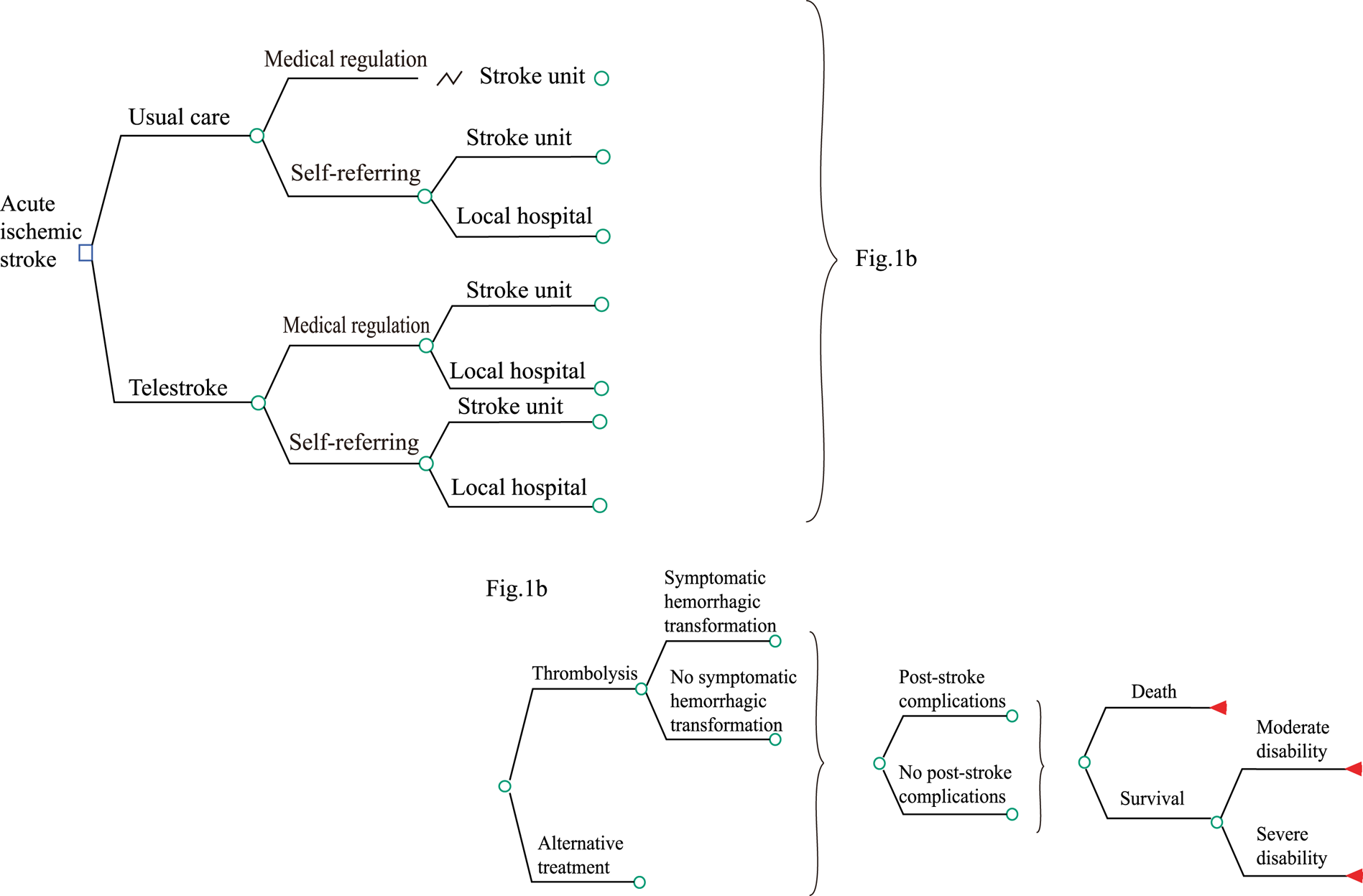
As shown in Figure 1, patients entered the model by presenting with AIS. Before the implementation of the telestroke network, two types of access to the hospital care were modeled at stroke onset: emergency medical regulation or self-referring. In the case of emergency medical regulation, the patient was referred to one of the two stroke units; in the other case, we assumed that the patient self-referred to the closest hospital (with or without a stroke unit). If there were no contraindications, stroke unit patients received IV thrombolysis. Patients admitted to the local hospital could be transferred to the stroke unit and receive IV thrombolysis under the same indications. The criteria for transferal were age, severity of stroke, and time from stroke onset. Alternative treatment and monitoring was provided to patients who did not receive thrombolysis. The complications associated with stroke were also taken into account. Because intracerebral hemorrhage complications are potential complications of IV thrombolysis, they were aggregated with post-stroke complications in relevant cases. After 2 days of monitoring in the stroke unit, thrombolysis patients were eligible for transfer to rehabilitation care. The patients who received an alternative treatment were also eligible for transfer to rehabilitation care depending on their condition. The payoffs for each branch were the resulting health states and costs. We modeled three options for health states: hospital death, death at 3 months, and disability 3 months after stroke, according to the level of severity.
Decision-analysis model.
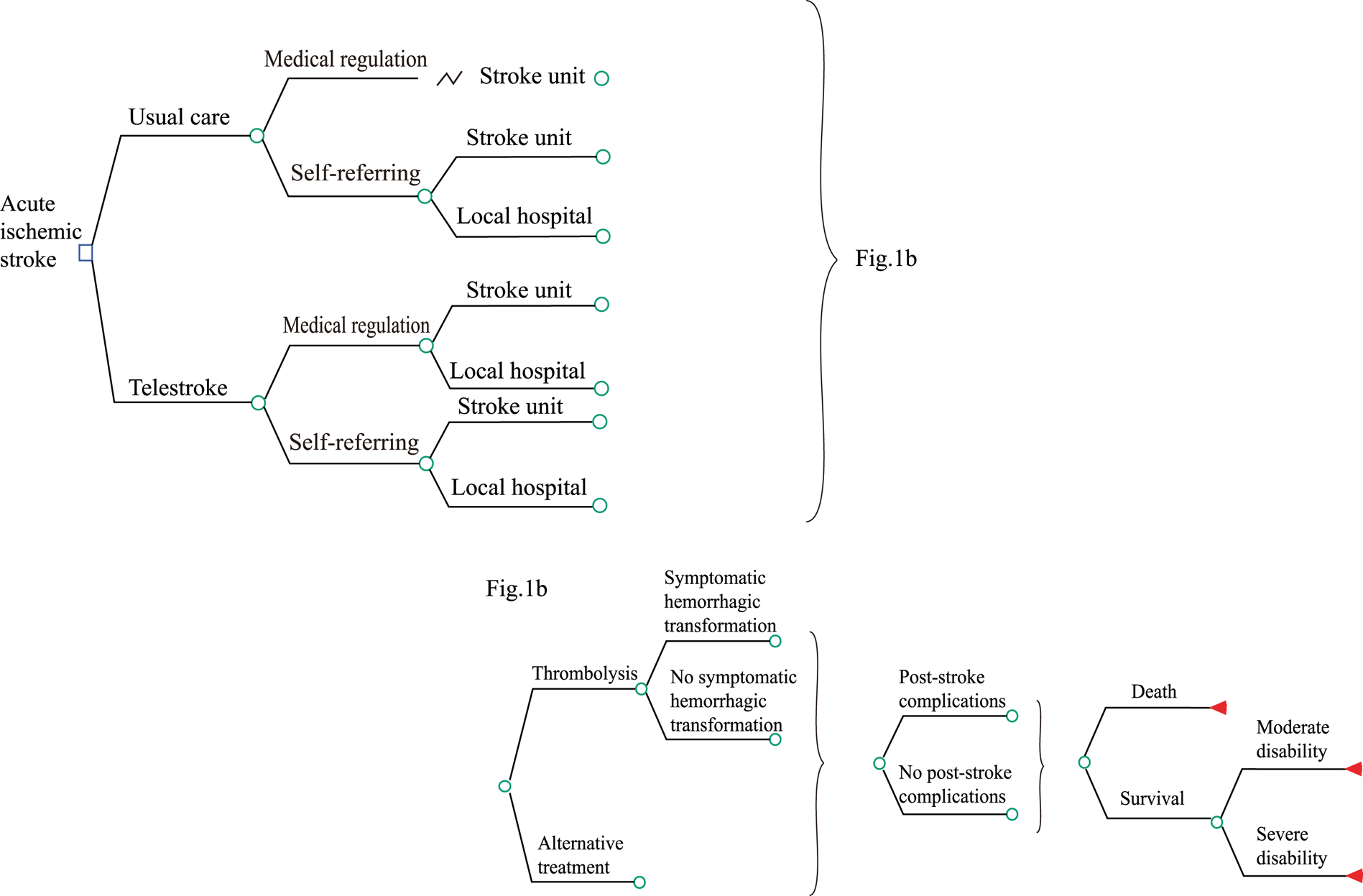
The sequencing of clinical events after the implementation of the telestroke network was quite similar to the usual care strategy, but there was one important difference: in case of emergency medical service activation, the stroke patient was systematically referred to the nearest hospital (with or without a stroke unit). Therefore, stroke patients could be examined remotely by a neurologist in conjunction with a local physician; IV thrombolysis was administered in situ if required, and the patient was necessarily transferred to the stroke unit for medical monitoring.
Model Parameters
Event Probabilities
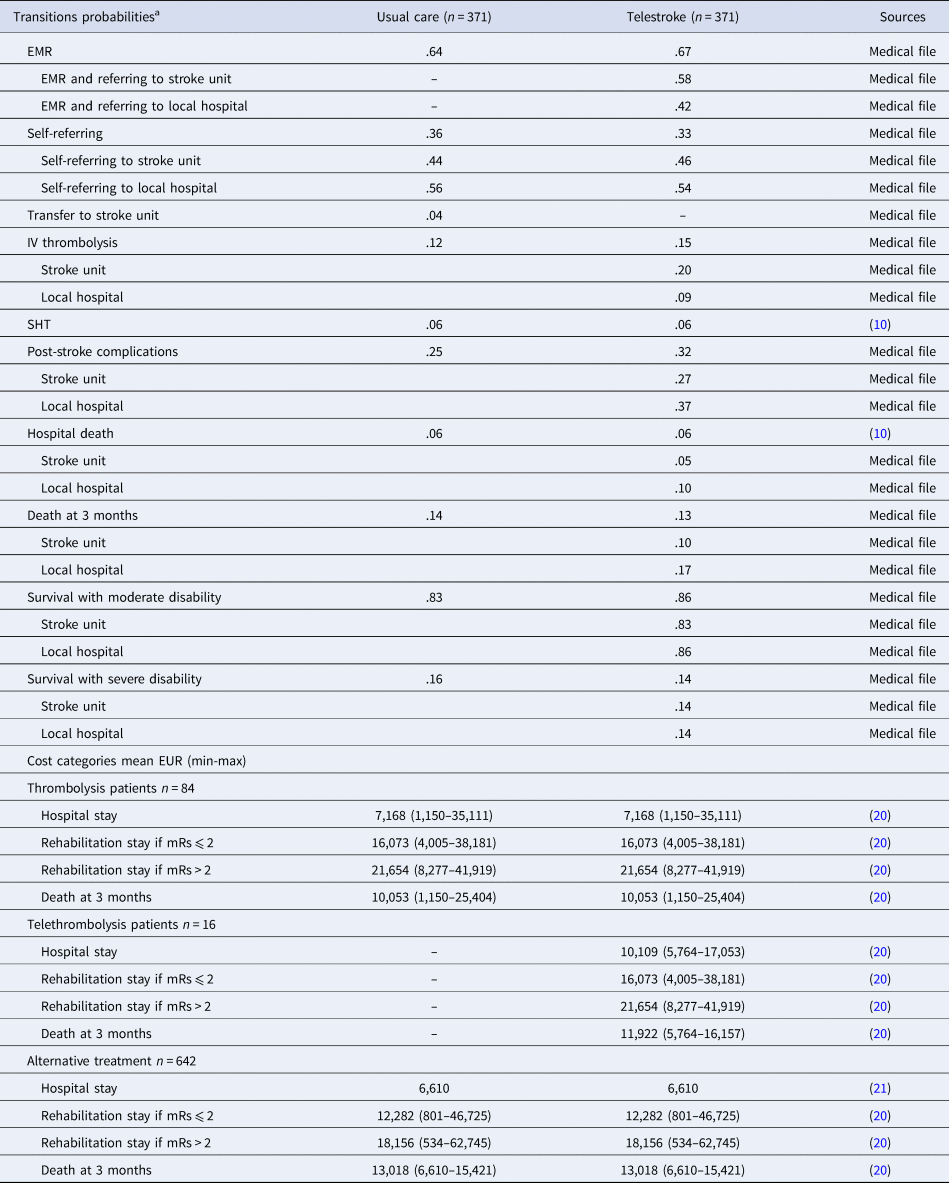
Most of the model parameters were based on data from the medical files of the 742 included patients. The files were obtained from emergency regulation services and various hospital departments (i.e. emergency services, neurology and medical services, or rehabilitation services) of the five local hospitals and the two stroke units. The model parameters were: the probability that a patient called emergency medical service, the probability that a patient received IV thrombolysis or experienced post-stroke complications, and all data relative to the effectiveness criteria (hospital death, death at 3 months, and disability associated with stroke at 3 months) (Table 1).
Model parameters
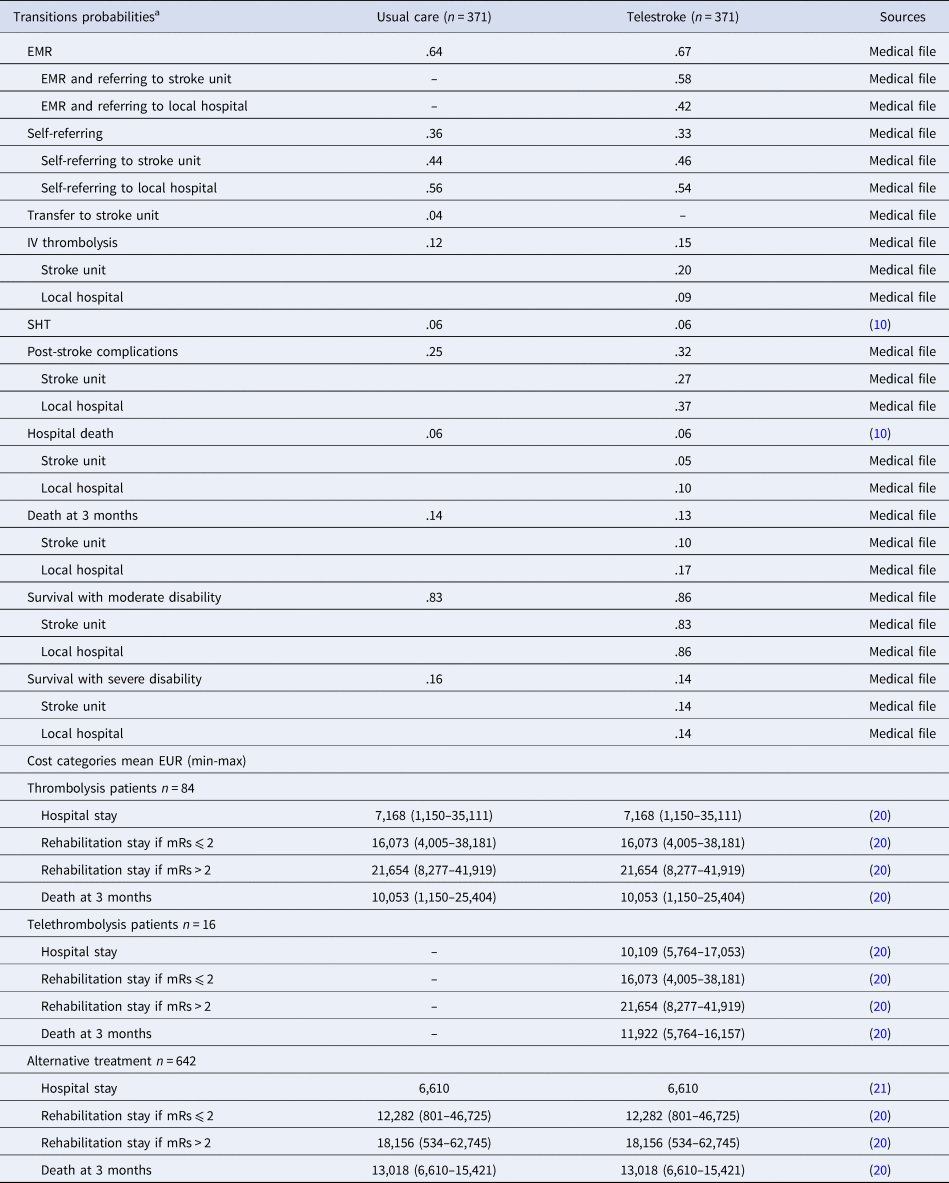
EMR, emergency medical regulation; SHT, symptomatic hemorrhagic transformation; mRs, modified Rankin score.
a The transition probabilities reported in this table are aggregated transition probabilities.
The probability that a patient would have symptomatic hemorrhagic transformations (SHT) associated with IV thrombolysis was the only clinical data taken from the literature. The probability of SHT was based on a study of the TeleAVC Burgundy network (Reference Legris, Hervieu-Bègue and Daubail13). In this study, SHT were recorded according to the National Institute of Neurological Disorders and Stroke criteria (3).
Finally, we applied event probabilities (thrombolysis, post-stroke complications, death, and disability) from the usual care strategy to the “stroke unit self-referring patients” event, since no thrombolysis patients were obtained with the random selection. This imputation was possible because the management of stroke patients was similar before and after the implementation of telestroke and because stroke severity, assessed by NIHSS score, was also similar in both groups.
Effectiveness
The model was built over a time horizon of 3 months so that the stroke outcomes would be stabilized (Reference Fagan, Morgenstern and Petitta22). Three effectiveness endpoints were used: (1) hospital death, (2) death at 3 months, and (3) associated disability 3 months after stroke. Hospital deaths included deaths that occurred during the hospital stay (in the stroke unit or local hospital); deaths that occurred in the rehabilitation unit were excluded. Death at 3 months included deaths that occurred after hospital discharge (death in the rehabilitation unit, at home, or other).
For the analysis, we allocated a score of 1 for death and 0 for survival. Disability after stroke at 3 months was evaluated with the dedicated modified Rankin scale (mRs) score. The scale ranges from 0 (no disability) to 5 (bedridden); 6 refers to death. Moderate disability is an mRs score of 1 to 2, and severe disability from 3 to 5. For the analysis, we assigned a score of 1 for severe disability and 0 for moderate disability.
Costs
Only direct medical costs were included in the analysis (Table 1). They included the health expenditures related to the hospital and rehabilitation stays, all of which were fully covered by the national health insurance system.
Cost of hospital stay. All patients were hospitalized. We modeled the costs of hospital stays for three treatment options: thrombolysis patients (stroke unit), telethrombolysis patients (local hospital), and alternative treatment patients (patients who did not receive thrombolysis). The average cost and length of stay (LOS) for telethrombolysis patients and alternative treatment patients were taken from two French studies (Reference Peyron and Wallut23;Reference Chevreul, Durand-Zaleski and Gouépo24).
Cost of rehabilitation stay. The cost of the rehabilitation stay was estimated using the average daily cost for rehabilitation and the average LOS in a rehabilitation unit. The average daily cost for rehabilitation was taken from French literature (Reference Chevreul, Durand-Zaleski and Gouépo24). The average LOS in a rehabilitation unit was based on the 742 included patients. In case of missing data, we assumed that thrombolysis and telethrombolysis patients had the same average length of rehabilitation stay. We then adjusted the cost of the rehabilitation stay for the three treatment options. The adjustment was based on the average LOS by the level of disability (severe or moderate) in stroke survivors and on the average LOS in case of death.
Efficiency
Usual care was used as the reference strategy. The cost-effectiveness analysis was based on the calculation of an incremental cost-effectiveness ratio (ICER) for each of the three effectiveness criteria (hospital death, death at 3 months, and disability 3 months after stroke). The ICER referred either to the cost by additional fatality case prevented (hospital death or death at 3 months) or to the cost by additional severe disability prevented. In each case, the ICER was calculated by dividing the incremental expected cost by the incremental expected effectiveness of the two alternative strategies according to the following formula: ICER = (Mean Costtelestroke − Mean Costusual care)/(Mean effectivenesstelestroke − Mean effectivenessusual care). The period was less than one year, so the costs and effectiveness were not discounted.
Sensitivity Analyses
Sensitivity analyses were performed, which allowed us to test the robustness of the model (Reference Drummond, Sculpher, Claxton, Stoddart and Torrance21). All of these analyses focused on the length of stay in the rehabilitation unit because it was the main component of the total cost. The goal was to determine whether varying the lengths of the rehabilitation stay according to treatment and post-stroke disability affected the results of the model. The first analysis, entitled “global rehabilitation LOS”, examined the length of rehabilitation stay whatever the treatment (telethrombolysis, thrombolysis or alternative treatment) and the post-stroke level of disability (mRs⩽ 2 or >2). The other sensitivity analyses focused on the length of rehabilitation stay for several patient profiles: 1. “Rehabilitation LOS alternative treatment (mRs > 2)” focused on patients who received alternative treatment and with mRs >2 (baseline value: 68 days; min: 2 days; max: 235 days); 2. “Rehabilitation LOS alternative treatment (mRs ⩽ 2)” focused on patients treated with alternative treatment and with mRs ⩽ 2 (baseline value: 46 days; min: 3 days; max: 175 day); 3. “Rehabilitation LOS thrombolysis and telethrombolysis (mRs > 2)” focused on patients treated with thrombolysis or telethrombolysis and with mRs > 2 (baseline value: 81.1 days; min: 31 days; max: 157 days); and 4. “Rehabilitation LOS thrombolysis and telethrombolysis (mRs < 2)” focused on patients treated with thrombolysis or telethrombolysis and with mRs ⩽ 2 (baseline value: 60.2 days; min: 15 days; max: 143 days). All the results were presented in a tornado diagram showing the impact of these variations on the baseline ICER, and expressed in terms of the 3-month incremental cost per additional avoided case of severe disability.
Results
Baseline Cost-Effectiveness Analysis
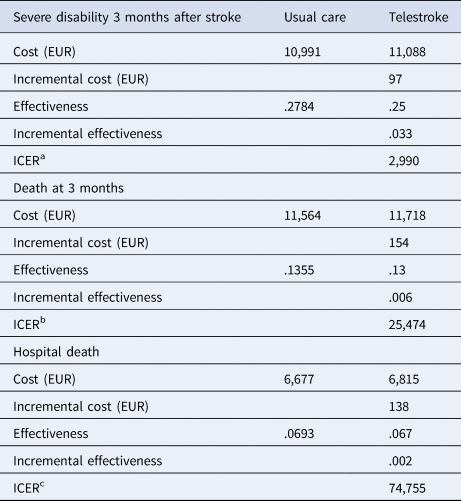
As shown in Table 2, the telestroke strategy was slightly more effective and slightly more costly than the usual care strategy, whatever the time horizon. The 3-month analysis for disability criteria revealed that telestroke was the most effective strategy, with 25 disability cases per 100 patients compared with 28 for usual care. It was also the costliest, with an extra cost of EUR 97, leading to an ICER of EUR 2,990 per additional avoided case of severe disability. The two other analyses showed similar results but with lower incremental effects and cost-savings. An ICER of EUR 25,474 per additional avoided death at 3 months was associated with the 3-month death analysis and an ICER of EUR 74,755 per additional avoided death at hospital discharge for the hospital death analysis.
Results of the cost-effectiveness analysis
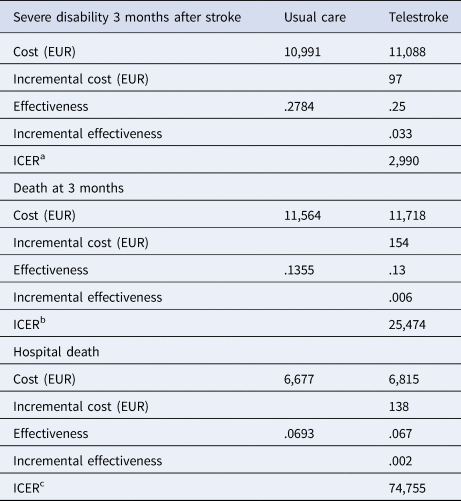
a ICER: incremental cost effectiveness ratio expressed respectively in terms of cost per additional avoided severe disability case.
b Cost per additional avoided death at 3 months.
c Cost per additional avoided hospital death.
Sensitivity Analyses
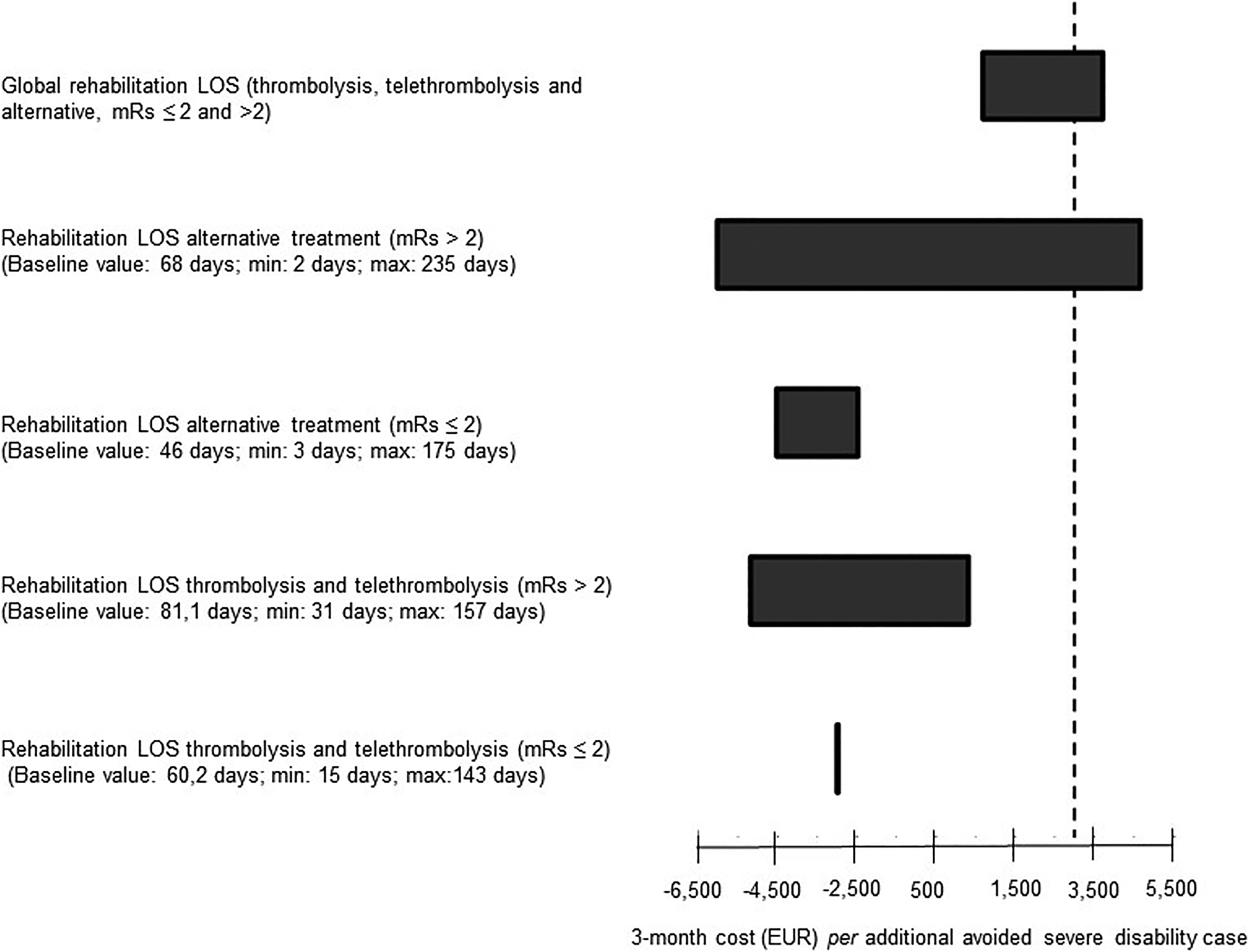
The results of the one-way sensitivity analyses for the 3-month disability model are presented as a tornado diagram in Figure 2. Figure 2 shows the robustness of the ICER. The results were consistently in favor of the telestroke network: when the global length of rehabilitation stay parameter ranged from the lowest to highest values, the baseline ICER (EUR 2,990) varied between EUR 670 and EUR 3,707. Other analyses showed that the highest ICER value (EUR 4,652) was obtained for patients treated with an alternative treatment and presenting an mRs > 2. These patients also had the longest rehabilitation stay. In all other cases, telestroke was a dominant strategy (less costly and more effective than usual care) with an ICER ranging from EUR −2,482 to EUR −6,009.
Tornado diagram: effect of LOS in a rehabilitation unit on the 3-month incremental cost per additional case of avoided severe disability. This figure shows ICERs associated with longer and shorter length of rehabilitation stay for each treatment option. Midline is base-case ICER for 3-month disability (2,990). LOS, length of stay; mRs, modified Rankin Scale. The highest value ICER was EUR 4,652 which corresponded to the highest rehabilitation LOS for alternative treatment with mRS > 2; the lowest value ICER was EUR −6010 which corresponded to the lowest rehabilitation LOS for alternative treatment patient with mRs > 2.

Discussion
The study showed that telestroke was slightly more effective than usual care. In other words, more frequent and quicker access to stroke care reduced – as expected – death and disability after stroke. However, telestroke was slightly more costly than usual care, which can be explained by the higher cost of telethrombolysis care. First, patients had two consecutive hospital stays, one in a local hospital and one in a stroke unit for post-acute monitoring, and second, the cost of a local hospital stay is higher than the cost of a stroke unit stay.
Previous decision analysis studies have demonstrated the efficiency of telestroke over the longer-term (Reference Ehlers, Müskens, Jensen, Kjølby and Andersen15–Reference Demaerschalk, Switzer and Xie18). Among them, two American studies demonstrated that telestroke was cost-effective (under the USD 50,000 per QALY threshold) over a lifetime when compared to a scenario with no network (16;18). A similar Danish study revealed that telestroke became the dominant approach after 2 years of implementation (Reference Ehlers, Müskens, Jensen, Kjølby and Andersen15). However, these results are only partially transferable to French telestroke because, at present, French stroke management standards require a systematic post-acute transfer of telethrombolysis patients, while in the USA transfer from spoke to hub depends on spoke size (medium-size hospitals can keep their stroke patients) (Reference Demaerschalk, Switzer and Xie18).
In addition to the long-term results, the two American studies also analyzed the short-term effect of telestroke. Nelson et al. (Reference Nelson, Saltzman, Skalabrin, Demaerschalk and Majersik16) and Demaerschalk et al. (Reference Demaerschalk, Switzer and Xie18) found that, while telestroke led to gains in terms of effectiveness, it was also associated with an increase in costs over the yearly time horizon of the study. These results were recently confirmed by another short-term study on the New Mexico telestroke network that described a potential cost-saving of USD 4,241 per patient and a gain of .20 QALY over 3 months (Reference Whetten, Goes (van der) and Tran20). After consulting with a team of neurologists, we also limited our investigation to a shorter period to be able to attribute the clinical benefit directly to the telestroke network. The main difference between the existing studies and ours was the type of medico-economic evaluation. Cost-effectiveness analyses and cost-utility evaluations are considered complementary (25). However, cost-utility analyses require utility data, which were not available due to the retrospective design of our study. Another difference was the absence of randomization, which is justified by the fact that our cost-effectiveness study was part of the implementation of the telestroke network. In this context, a before/after study was considered relevant, especially since clinical practice guidelines did not change throughout the study period (25).
Decision analysis models have been criticized for the uncertainty generated by the structure and the sources of the implemented parameters. Therefore, the fact that we used local, population-based data when possible is the second main strength or our work. One potential limit of the present study is the relatively small sample size. Theoretically, 1,766 individuals could have been included over the entire study period, but only 42 percent of this eligible population was used to estimate the parameters of the model. This limitation was a result of local organizational constraints. Specifically, we decided to include the seven hospitals with current telestroke activity even though 13 hospitals were technically connected to the network at the start of our study. Since we could not collect comprehensive population-based data, we developed hypotheses to overcome missing data. Seeing as the rehabilitation care standard applied in both situations and because they have similar 3-month outcomes (Reference Legris, Hervieu-Bègue and Daubail13), we assumed that telethrombolysis patients and thrombolysis patients had the same average rehabilitation stay. Furthermore, telethrombolysis patients were underrepresented in the sample, which led us to extract three specific parameters from the literature. The rate of symptomatic intracranial hemorrhagic transformations and the cost of stroke for telethrombolysis and thrombolysis patients were obtained from another study conducted in Burgundy (Reference Legris, Hervieu-Bègue and Daubail13;Reference Peyron and Wallut23), and the cost of stroke for alternative treatment patients and the daily cost of a rehabilitation stay were based on a national French study (Reference Chevreul, Durand-Zaleski and Gouépo24).
Conclusion
Telestroke is an effective mean of delivering stroke care to remote populations, and there is only a slightly higher cost for the French health insurance system. The extra cost identified here is partially due to the consecutive stays of telethrombolysis patients in the local hospital and in the stroke unit. Our findings provide critical information that should be weighed in the debate of whether the French telestroke network should be expanded or not. In short, this data could be used to inform policymakers in their efforts to reach national objectives on stroke care.
Acknowledgments
The authors would like to thank the Biostatistics and Bioinformatics service/department (DIM) of the involved hospitals for helping to identify the included patients and collect the clinical data and the Directions des Affaires Financières (DAF) for providing data on cost of hospital stay. We thank Adrien Roussot, Dr Chantegret, Dr Dreyfus, and Pr Freysz for providing data for the decision model. The authors wish to thank Suzanne Rankin (Dijon University Hospital) for English language editing. This work was supported by the Agence Régionale de Santé de Bourgogne. This research was supported by a French government grant managed by the French National Research Agency under the programme ‘Investissements d’Avenir’ with reference ANR-11-LABX-0021 (Lipstic Labex).
Supplementary material
The supplementary material for this article can be found at https://doi.org/10.1017/S0266462320000057
Author contributions
All authors attest that (1) each author contributed to the conception and design or analysis and interpretation of data and the writing of the paper; (2) each has approved the version being submitted; and (3) the content has not been published nor is being considered for publication elsewhere.
Conflict of Interest
None.