The acculturation gap-distress hypothesis, based in the theory of bicultural family functioning (Szapocznik & Kurtines, Reference Szapocznik and Kurtines1993), purports that when youth in immigrant families acculturate (i.e., become more connected to the host culture), they experience a loss of connection to aspects of their heritage culture that remain extremely important to their parents. Resulting intergenerational differences, variously termed cultural gaps (Lau et al., Reference Lau, McCabe, Yeh, Garland, Wood and Hough2005), cultural discrepancies (Wang, Kim, Anderson, Chen, & Yan, Reference Wang, Kim, Anderson, Chen and Yan2012), and cultural dissonance (Weaver & Kim, Reference Weaver and Kim2008), may disrupt family and youth psychological functioning. Although parent–youth cultural gaps are assumed to be prevalent and erosive within immigrant and other bicultural families, decades of research testing this hypothesis have produced mixed evidence. Studies have found the nature of cultural gaps to be more varied than originally portrayed; it is not the case that all parents remain more connected to their heritage culture and less connected to the host culture over time than their children (Telzer, Reference Telzer2010). As well, the impact of cultural gaps on youth emotional and behavioral outcomes vary depending on the cultural dimensions on which they are based and the statistical methods used to identify and model them within and across time (Bámaca-Colbert & Gayles, Reference Bámaca-Colbert and Gayles2010; Cano et al., Reference Cano, Schwartz, Castillo, Unger, Huang, Zamboanga and Szapocznik2016; Telzer, Reference Telzer2010). Findings are difficult to reconcile because studies often test very different questions that are not well aligned with the original theory (Lim, Yeh, Liang, & McCabe, Reference Lim, Yeh, Liang, Lau and McCabe2008).
Consistent with the theme of the Special Issue focused on cultural development and psychopathology, and guided by theory as to why and how cultural gaps increase risk for family and youth maladjustment, this study identified profiles of mother–adolescent and father–adolescent discrepancies on heritage cultural values in a diverse sample of Mexican heritage families. Specifically, growth mixture modeling of adolescents’ and parents’ heritage cultural values were used to identify mother–adolescent and father–adolescent profiles across the adolescents’ transition from late childhood (5th grade) to middle adolescence (10th grade). This approach integrated a developmental perspective by modeling dyadic (family-centered) growth profiles for the first time, building on studies that have used growth mixture modeling of culture change at the individual level (Knight et al., Reference Knight, Basilio, Cham, Gonzales, Liu and Umaña-Taylor2014; Schwartz et al., Reference Schwartz, Des Rosiers, Huang, Zamboanga, Unger, Knight and Szapocznik2013). Because differential culture change is at the heart of cultural gap-distress theory, this approach offered a developmentally informed method to identify problematic cultural-gap typologies that can account for individual, dyadic, and time-varying cultural assessments. In so doing, the study also examined two hypotheses based on cultural gap-distress theory: (a) whether theoretically problematic gap trajectories in which youth are becoming less aligned with their heritage values and more discrepant from parents are associated with increased parent–adolescent conflict, and (b) whether increased parent–adolescent conflict serves, in turn, as a mediator linking problem gap trajectories to adolescents’ externalizing and internalizing symptoms.
Cultural Gap-Distress Theory and Evidence
Acculturation is the process of cultural change that occurs as a result of contact between members of two or more cultural groups (Berry, Reference Berry and Padilla1980). Although the acculturation label was used historically as the umbrella term to capture the complex changes involved in this process, theoretical refinements over the years prompted a shift from a unidimensional to a bidimensional paradigm to reflect the reality that individuals experience both acculturation, as they interact with and adapt to the dominant or receiving culture, and enculturation, as they interact with and adapt to their heritage or ethnic culture (Berry, Reference Berry, Bornstein and Cote2006; Knight, Jacobson, Gonzales, Roosa, & Saenz, Reference Knight, Jacobson, Gonzales, Roosa, Saenz, Dalla, DeFrain, Johnson and Abbot2009; Schwartz, Unger, Zamboanga, & Szapocznik, Reference Schwartz, Unger, Zamboanga and Szapocznik2010). Accordingly, the term cultural adaptation (vs. acculturation) is used hereafter to describe this bidimensional process and cultural gap is used in place of acculturation gap.
A fundamental tenet of cultural gap-distress theory is that children acculturate at a faster pace and often to a greater extent than their parents (Nguyen & Williams, Reference Nguyen and Williams1989; Szapocznik & Kurtines, Reference Szapocznik and Kurtines1993), rapidly picking up the new language and behaviorally participating in the new culture. This results in part from sheer differences in exposure because children inevitably attend schools within the host culture where they are exposed to a wide range of peers and adults who serve as extrafamilial socializing influences. Further, children are uniquely prepared to be what Konner (Reference Konner2010) has called “cultural acquisition devices,” which makes them particularly attuned to these socializing contexts, with some cultural acquisition processes assuming greater salience at distinct developmental stages. For example, cultural identity and values formation assume heightened significance as youth enter adolescence (Phinney, Reference Phinney1990). In contrast, adults tend to retain aspects of their culture of origin, particularly those that were raised for most of their lives in their country of origin, and their acculturation to the new culture is typically slower and less pronounced (Liebkind, Reference Liebkind1996).
In a process also termed dissonant acculturation (Portes & Rumbaut, Reference Portes and Rumbaut1996), a clash of values or cultural gaps are thought to result over time from these generational differences. Szapocznik, Santisteban, Kurtines, Perez-Vidal, and Hervis (Reference Szapocznik, Santisteban, Kurtines, Perez-Vidal and Hervis1984) were among the first to suggest that less acculturated parents and their more acculturated youths may come to feel alienated from one another, and this gulf can widen over time as parents and youths react in ways that lead to increased parent–adolescent conflict and increased likelihood of youth behavior problems. However, studies linking parent–adolescent cultural gaps to adolescent adjustment have yielded equivocal results. Whereas some studies find direct and indirect associations with youth outcomes, such as lower life satisfaction and self-esteem and increased anxiety, depression, and substance use, as well as increased family stress and conflict (Birman, Reference Birman, Bornstein and Cote2006; Costigan & Dokis, Reference Costigan and Dokis2006; Farver, Narang, & Bhada, Reference Farver, Narang and Bhadha2002; Martinez, Reference Martinez2006; Phinney & Ong, Reference Phinney and Ong2002; Smokowski, Rose, & Bacallao, Reference Smokowski, Rose and Bacallao2008; Tardif & Geva, Reference Tardif and Geva2006), other studies yield little support for cultural gaps being salient in predicting adolescent adjustment (Atzaba-Poria & Pike, Reference Atzaba-Poria and Pike2007; Gil, Vega, & Dimas, Reference Gil, Vega and Dimas1994; Lau et al., Reference Lau, McCabe, Yeh, Garland, Wood and Hough2005; Pasch et al., Reference Pasch, Deardorff, Tschann, Flores, Penilla and Pantoja2006; Sam & Virta, Reference Sam and Virta2003; Vega, Khoury, Zimmerman, Gil, & Warheit, Reference Vega, Khoury, Zimmerman, Gil and Warheit1995). Lau et al. (Reference Lau, McCabe, Yeh, Garland, Wood and Hough2005) found theoretically “problem gaps” in which Mexican American youths were more Americanized than their parents were not associated with heightened conflict nor youth conduct problems, while “benign gaps” in which parents were more Americanized than youths were associated with more youth conduct problems. Cano et al. (Reference Cano, Schwartz, Castillo, Unger, Huang, Zamboanga and Szapocznik2016) not only found parent–youth cultural discrepancies on indicators of collectivism and Hispanic identity were associated prospectively with family functioning and health risk behaviors but also found that adolescents’ individual levels on these variables drove these effects.
Inconsistencies across studies have been clouded by differences in methods used to measure cultural gaps. Telzer's (Reference Telzer2010) review showed many studies fail to capture heterogeneity in parent–child cultural discrepancies. Some use difference scores but ignore the direction of discrepancies, combining all types of gaps regardless of whether the youth has higher or lower scores than the parent. Others ignore the magnitude of differences by grouping all families showing a particular type of discrepancy, whether large or small, within the same category. More sophisticated methods have emerged recently to better measure and model discrepancies (Bámaca-Colbert & Gayles, Reference Bámaca-Colbert and Gayles2010; Cano et al., Reference Cano, Schwartz, Castillo, Unger, Huang, Zamboanga and Szapocznik2016; Weaver & Kim, Reference Weaver and Kim2008), yet to our knowledge prior studies have not modeled patterns of dyadic culture change.
Relevance of Heritage Cultural Values and Trajectory Profiles
Recent reviews highlight the need for researchers to specify whether cultural gaps are based on host (i.e., mainstream) or heritage (i.e., traditional or ethnic) culture dimensions (Lim et al., Reference Lim, Yeh, Liang, Lau and McCabe2008; Telzer, Reference Telzer2010). Telzer (Reference Telzer2010) summarized four general types of gap based on this dual cultural framework: youth more aligned with host culture than parent, parent more aligned with host culture than youth, youth more aligned with heritage culture than parent, parent more aligned with heritage culture than youth. The first and last of these represent “problem gaps,” as described in the theoretical literature over the past three decades. The other two were labeled “benign gaps” notwithstanding some evidence they may not be benign (Lau et al., Reference Lau, McCabe, Yeh, Garland, Wood and Hough2005). Evidence has shown that intergenerational gaps involving heritage culture dimensions may be most disruptive and consistent with cultural-gap distress predictions (Bámaca-Colbert & Gayles, Reference Bámaca-Colbert and Gayles2010; Cano et al., Reference Cano, Schwartz, Castillo, Unger, Huang, Zamboanga and Szapocznik2016; Ho & Birman, Reference Ho and Birman2010; Juang, Syed, & Takago, Reference Juang, Syed and Takagi2007; Liu, Brenner, Lau, & Kim, Reference Liu, Benner, Lau and Kim2009). For example, Costigan and Dokis (Reference Costigan and Dokis2006) examined 36 interactions across a range of host and heritage dimensions in a Chinese Canadian sample and found only one of the host culture gaps was significant whereas seven heritage culture gaps were significant and were related to increased family conflict and youth depression and decreased academic motivation. They concluded cultural gap-distress effects are most likely when they involve heritage culture discrepancies.
The current focus on heritage cultural gaps was informed by these findings and prior theory describing how and why cultural gaps operate as a source of family stress and youth maladjustment. Theory suggests that when family members follow divergent paths in the processes of cultural adaptation, some youths reject traditional cultural values and the resulting intergenerational gap in cultural values is what gives rise to family tensions and conflict (Szapocznik & Kurtines, Reference Szapocznik and Kurtines1993). Among Mexican Americans specifically, parent-adolescent cultural gaps are expected to occur because traditional cultural values emphasize collectivism, the centrality of family, maintenance of family and cultural traditions, and hierarchically-based youth respect (“respeto”) toward their parents and elders (Gonzales et al., Reference Gonzales, Jensen, Montano and Wynne2015). Traditionally oriented parents are likely more invested in maintaining these values and may be threatened when children are not similarly oriented. For example, parents may interpret individualistic, receiving-culture-oriented adolescent behaviors (e.g., spending more time with friends or challenging authority) as a disrespectful affront to collectivist-oriented family norms (Portes & Rumbaut, Reference Portes and Rumbaut2001). These differences, rather than children's greater English proficiency or greater ability to navigate mainstream culture compared to their parents, are presumed to account for family tensions and increasing youth alienation. Even more precisely, cultural gaps and associated family conflicts have often been linked to the underlying “values” associated with the family's heritage culture. Although variables such as Spanish language use may serve as markers for these processes, heritage value discrepancies are typically the putative driving force.
Person-Centered Models of Culture Change
Our approach was further informed by studies that have employed person-centered analytic methods to identify trajectory profiles of culture change in adolescence (Knight et al., Reference Knight, Basilio, Cham, Gonzales, Liu and Umaña-Taylor2014; Knight, Vargas-Chanes, et al., Reference Knight, Vargas-Chanes, Losoya, Cota-Robles, Chassin and Lee2009; Matsunaga, Hecht, Elek, & Ndiaye, Reference Matsunaga, Hecht, Elek and Ndiaye2010; Pahl & Way, Reference Pahl and Way2006; Schwartz et al., Reference Schwartz, Des Rosiers, Huang, Zamboanga, Unger, Knight and Szapocznik2013). These studies significantly advanced research on cultural adaptation and have demonstrated that youth follow multiple trajectories of cultural adaptation during the second decade of life. Matsunaga et al.'s (Reference Matsunaga, Hecht, Elek and Ndiaye2010) study of Mexican Americans found movement in multiple directions during the course of adolescence, with some youth shifting toward a stronger heritage cultural orientation and others shifting away from their heritage cultural orientation. In a study that modeled parallel changes in Mexican American adolescents’ heritage and host cultural values, Knight et al. (Reference Knight, Basilio, Cham, Gonzales, Liu and Umaña-Taylor2014) found four trajectory groups: two were relatively stable and two were declining in heritage cultural values across this span (these profiles were further differentiation by host cultural values trajectories). Schwartz et al. (Reference Schwartz, Des Rosiers, Huang, Zamboanga, Unger, Knight and Szapocznik2013) used mixture models to examine both host and heritage cultural dimensions (Hispanicism and Americanism) and found three trajectory profiles for Latino adolescents as well as their parents. As expected, these profiles showed greater cultural shifts over time for youths than for parents, and a greater tendency for youths to become increasingly acculturated (higher on Americanism) whereas parents were more likely to remain more oriented to the Hispanic culture. In addition to modeling separate parent and youth profiles, Schwarz et al. (Reference Schwartz, Des Rosiers, Huang, Zamboanga, Unger, Knight and Szapocznik2013) related these profiles prospectively with family functioning and youth outcomes such as conduct problems, sexual activity, and substance use. However, their analyses did not link parent and youth trajectory profiles to examine how they operate together to predict family and youth adjustment.
The Present Study
The present study corresponds well with the theme of this Special Issue, cultural development and psychopathology, which is concerned with the “elucidation of cultural processes at the individual and social level that initiate, contribute, and maintain trajectories of normal and abnormal behavior” (Causadias, Reference Causadias2013, p. 1380). Theoretically, the cultural gap-distress hypothesis epitomizes this approach through its integrative focus on culture, development, and psychopathology. However, as previously described, this hypothesis has not been pursued methodologically in developmental terms, which was a central critique of the broader literature that prompted Causadias (Reference Causadias2013) to formulate a roadmap for more meaningful integration of culture in developmental psychopathology. The current methodology exemplifies several recommendations offered by Causadias (Reference Causadias2013). Individual-level cultural values were conceptualized and modeled as a developmental process using person-centered methodology that has been vital to the field of developmental psychopathology. As described in Cicchetti and Rogosch (Reference Cicchetti and Rogosch2009), person-centered methods capture diversity in developmental pathways and the possibility that the same end state may be reached from a variety of different initial conditions (i.e., equifinality), and that individuals who begin on the same pathway may exhibit very different patterns of adaptation or maladaptation (i.e., multifinality). By using data on heritage cultural values from multiple family members, the study also provided a more meaningful way to model the dynamic nature of cultural gaps and heterogeneity in developmental pathways at the family level. Although heritage cultural values have been shown most often to operate as promotive factors (i.e., related to aspects of youth positive development, such as self-esteem), including in a meta-analysis of prior acculturation and enculturation studies (Yoon et al., Reference Yoon, Chang, Kim, Clawson, Cleary, Hansen and Gomes2013), cultural gap-distress theory describes one way in which heritage cultural values trajectories may operate as “cultural risks” (Causadias, Reference Causadias2013) that increase the likelihood of maladaptive family and youth outcomes.
The study was organized around three aims. Growth mixture modeling was used to examine mother–adolescent and father–adolescent parallel profiles of change on heritage cultural values across three waves of data spanning late childhood to middle adolescence (Grades 5, 7, and 10). These analyses sought to represent heterogeneity in shifting dyadic patterns of gap and concordance within a diverse US Mexican heritage sample across a developmental period during which cultural gaps in values may be most likely to emerge and create intergenerational tensions. As children enter adolescence, they move from smaller neighborhood schools to large and more diverse middle and high schools, and participate in a wider range of environments and social groups that are not selected by their parents. Normative identity processes also prompt adolescents to explore and affirm their ethnic identity, and this process involves increasing commitment to the values that are connected to their emerging cultural identities (e.g., Phinney, Reference Phinney1990; Umaña-Taylor, Gonzales-Backen, & Guimond, Reference Umaña-Taylor, Gonzales-Backen and Guimond2009). For our first aim, we hypothesized that these intersecting processes would produce varied trajectories of youth cultural values and that some youths would converge or become more similar to their parents, while others would diverge to become less traditional than their parents over time.
Our second aim was to test the assumption that it is not the overall level of discrepancy at any point in time but rather the diverging nature of cultural gaps that place youth at greatest risk for problems in adolescence, with those in families showing diverging patterns or widening heritage cultural values discrepancies during adolescence (“problem gaps”) being most at risk. For our second aim, we hypothesized that these problem gap families would report higher levels of parent–child conflict in 10th grade and increased adolescent internalizing and externalizing symptoms in 12th grade.
Our third aim was to examine whether parent–child conflict mediated cultural-gap effects on subsequent youth internalizing and externalizing symptoms; cultural gap profiles from Grades 5 to 10 were allowed to predict adolescent internalizing and externalizing symptoms in 12th grade (a) directly and (b) indirectly through family functioning in 10th grade. This strategy provided temporal ordering of variables to test our third hypothesis that parent–child conflict would mediate problem gap effects on youth psychopathology.
All analyses were conducted separately for mother–adolescent and father–adolescent dyads, thereby addressing another research gap. Except for a small handful of studies (Costigan & Dokis, Reference Costigan and Dokis2006; Padilla, McHale, Rovine, Updegraff, & Umaña-Taylor, Reference Padilla, McHale, Rovine, Updegraff and Umaña-Taylor2016; Schofield, Parke, Kim, & Coltrane, Reference Schofield, Parke, Kim and Coltrane2008; Weaver & Kim, Reference Weaver and Kim2008), prior research has largely focused on mothers or on generic “parents,” and fathers have been relatively neglected (Telzer, Reference Telzer2010). Although there is some modest consensus that father–youth cultural gaps may be more predictive of intergenerational conflict than mother–youth gaps (Costigan & Dokis, Reference Costigan and Dokis2006; Padilla et al., Reference Padilla, McHale, Rovine, Updegraff and Umaña-Taylor2016; Schofield et al., Reference Schofield, Parke, Kim and Coltrane2008), findings regarding the gendered nature of cultural gap-distress processes are inconclusive at best. Thus, we expected cultural gap-distress predictions would be relevant to both mother–adolescent and father–adolescent dyads and made no predictions about differences based on gender of parent.
Method
Data come from the first four assessments (between 2004 and 2013) of an ongoing longitudinal study investigating the role of family, culture, and context in the lives of 749 Mexican American families (Roosa et al., Reference Roosa, Liu, Torres, Gonzales, Knight and Saenz2008). Each family included a biological mother and, if a two-parent household, a biological father who each self-identified as Mexican or Mexican American and a 5th-grade adolescent who lived with the mother and was not severely learning disabled. Participants were selected from rosters of schools that served ethnically and linguistically diverse communities in the Phoenix metropolitan area. A multiple-step process was used to recruit a representative sample (Roosa et al., Reference Roosa, Liu, Torres, Gonzales, Knight and Saenz2008): use of a stratified random sampling strategy to select culturally and economically diverse neighborhoods, recruitment through 47 schools across 35 neighborhoods, and culturally sensitive data collection involving in-home interviews in English or Spanish. Of the 1,982 families that we attempted to contact, 12 (0.6%) could not be contacted, 55 (2.8%) declined to participate before being screened, and 1,970 were screened to determine if they met the eligibility requirements. Of the 1,085 who met the eligibility requirements, 749 (69.0%) completed the initial interview, 270 (24.9%) declined to participate, 4 (0.3%) were not able to complete the interview, and 61 (5.6%) were not asked to participate because we had reached our recruitment goal. Of those who were ineligible, 56 (2.8%) no longer attended the participating school, 99 (5.0%) and 243 (12.3%) did not have a biological mother or father (respectively) in the home, 298 (15.1%) and 106 (5.4%) did not have a Mexican American biological mother or father (respectively), 16 (0.8%) were severely learning disabled, 3 (0.01%) could not speak either English or Spanish, and 9 (0.04%) were participating in another research project. Hence, the overall recruitment success was 73.2% of those who were eligible and asked to participate. The resulting sample was diverse in cultural orientation, social class, and type of residential neighborhoods, and similar to the census description of this population.
Participants
The sample consisted of 749 Mexican American adolescents and their biological mothers. The biological fathers were also included in the sample; however, of the 579 two-parent household families, only 469 fathers agreed to participate in the study. The majority of mothers and fathers were born in Mexico (74.4% and 79.9%, respectively) and the majority of adolescents were born in the United States (70.2%); 30.0% of mothers, 23.2% of fathers, and 82.4% of adolescents chose to be interviewed in English and the remainder in Spanish. At baseline (5th grade), the mean age of mothers was 35.9 years (SD = 5.81), the mean age of fathers was 38.1 years (SD = 6.26), and the mean age of adolescents was 10.43 years (SD = 0.54). Annual family incomes ranged from less than $5,000 to more than $95,000 (mean $25,001–$30,000).
Procedures
Families were screened according to the following eligibility criteria: they had a target 5th grader attending a sampled school; the participating mother, who lived with the child, was the biological mother and of Mexican heritage; the biological father was of Mexican heritage; no stepfather figure lived with the child; the child was not learning disabled; and the family was not participating in other studies. Adolescents, mothers, and fathers were assessed at four different time points: when youth were in the 5th grade (N A = 749, N M = 749, N F = 467), 7th grade (N A = 710, N M = 708, N F = 417), 10th grade (N A = 641, N M = 629, N F = 351), and 12th grade (N A = 636, N M = 605, N F = 324).
Measures
Heritage cultural values scale
Adolescents, mothers, and fathers reported their heritage cultural values using the Mexican American Cultural Values Scale (Knight et al., Reference Knight, Gonzales, Saenz, Bonds, Germán, Deardorff and Updegraff2010), which measures the degree to which respondents adhere to Mexican American and mainstream American values. Heritage values were based on the average of five value dimensions: familism-support (six items), familism-obligation (five items), familism-referents (five items), respect (eight items), and religiosity (seven items). The response scale was a 5-point Likert-type scale ranging from (1) not at all to (5) very much for each item. Mexican American Cultural Values scores collected in 5th, 7th, and 10th grade were used in the present study. Adequate reliability was established for adolescents (α = 0.85–0.92), mothers (α = 0.88–0.91), and fathers (α = 0.88–0.89) at all three time points.
Parent–adolescent conflict
Adolescents reported conflict with their mothers and fathers separately, mothers reported conflict with their adolescent, and fathers reported conflict with their adolescent using a 10-item measure that has shown good psychometric properties in studies with Mexican American families (Corona et al., Reference Corona, McCarty, Cauce, Robins, Widaman and Conger2012; Telzer, Gonzales, & Fuligni, Reference Telzer, Gonzales and Fuligni2014; Vargas, Roosa, Knight, & O'Donnell, Reference Vargas, Roosa, Knight and O'Donnell2013). Respondents reported how often they had experienced minor and serious disagreements (e.g., “How often did you and your mother disagree with each other?”). Conflict scores collected at 5th and 10th grade were used in the present study. Adequate reliability was established for adolescent report on mothers (α = 0.72, 0.88), adolescent report on fathers (α = 0.74, 0.90), mother report (α = 0.84, 0.87), and father report (α = 0.80, 0.84), at 5th grade and 10th grade, respectively.
Adolescent mental health problems
Mothers and adolescents separately completed the Diagnostic Interview Schedule for Children (Shaffer, Fisher, Lucas, Dulcan, & Schwab-Stone, Reference Shaffer, Fisher, Lucas, Dulcan and Schwab-Stone2000), based on the Diagnostic and Statistical Manual of Mental Disorders (4th ed.; American Psychiatric Association, 1994). Adolescent internalizing symptoms were based on combined symptom counts for anxiety, major depression, and dysthymia. Externalizing symptoms were based on combined symptoms counts for conduct problems and oppositional defiant disorder. To maximize reliability and criterion validity, mother and adolescent reports were combined using standard scoring algorithms (Shaffer et al., Reference Shaffer, Fisher, Lucas, Dulcan and Schwab-Stone2000). Reports at 10th grade and 12th grade were used in the present study.
Data analytic strategy
We conducted preliminary analyses including analyses to examine psychometric properties of the studied variables and attrition analyses. All analyses for the hypothesis testing were performed in Mplus 7.3 (Muthén & Muthén, Reference Muthén and Muthén1998–2014) using full information maximum likelihood estimation, which does not exclude cases with missing scores. As discussed below, the growth trajectories of heritage values over time were used to test the hypotheses. We first examined measurement equivalence of the Mexican American Cultural Values Scale across the three assessments using Chen's (Reference Chen2007) criteria (e.g., invariance holds if the difference in the comparative fit index between the constrained [i.e., more invariant] model and the unconstrained model is ≤.01) for each of the five subscales separately by reporter (i.e., adolescents, mothers, and fathers). Equivalences at both the loading and intercept levels for each of the subscales were satisfactory for mother report and father report. For adolescent report, partial scalar invariance held such that the intercept estimates for 8 items (out of 93 items across three time points) were freed to vary across time. Given the small number of items with slight differences in intercepts across time points, we concluded mean comparisons across time were valid and proceeded to examine the growth trajectories.
Trajectory patterns of heritage cultural values were tested using growth mixture modeling, which creates subgroups based on the patterns of longitudinal change, separately for adolescents, mothers, and fathers. The time metric was measured in years with 5th grade being the zero point (i.e., 0, 2, and 5). The covariance between the intercepts and slopes within class was fixed to zero for all models because, when estimated, Heywood cases occurred (e.g., the correlation was greater than one). In addition, for the mother and father models only, the variance of the slopes was constrained to equal zero to avoid Heywood cases (a small, negative variance was estimated for the slope variance; see Hox, Reference Hox2002; Muthén, Reference Muthén2005). Multiple fit indices (e.g., Bayesian information criterion, adjusted Bayesian information criterion, entropy, Vuong–Lo–Mendell–Rubin likelihood ratio test, Lo–Mendell–Rubin likelihood ratio test, and Bootstrap p-value) were considered for model selections (see Tein, Coxe, & Cham, Reference Tein, Coxe and Cham2013). The final model was chosen based on statistical fit, interpretability of results, and sample size of classes (see Muthén, Reference Muthén and Kaplan2004). Posterior probabilities were used to classify the mothers, fathers, and adolescents to their most likely latent class in order to test the mediation models.
Using the most likely class, for the mother–adolescent dyad model, we crossed the adolescent and mother classes into joint trajectory profiles to determine how mothers and adolescents jointly changed in heritage values over time. For the father–adolescent dyad model, we used the same process except the adolescent and father classes were used. An alternative is to use parallel process growth mixture models to determine the trajectory profiles for adolescents and parents simultaneously; however, adolescents would potentially be classified in different trajectory patterns in the mother–adolescent dyad model and the father–adolescent dyad model due to different samples. To check this issue, we analyzed a growth mixture model for adolescents using the father sample (N = 469), and 5% of adolescents were classified into a different latent class. Because a small amount of children were reclassified and because the larger sample size has more power and information (better for addressing missing data), we classified adolescents based on the full sample of adolescents for both mother–adolescent dyads and father–adolescent dyads for consistency across models. For the mother–adolescent dyad model, we expected that these analyses characterized distinct profiles of mother–adolescent trajectories such as a problem gap profile in which the adolescent declined in Mexican American cultural values across adolescence period and, in the process, became increasingly less traditional than his or her mother. Depending on the latent classes that emerged, we categorized the trajectory profiles as either problem gap or benign gap (i.e., any profile that did not include the adolescent declining away from the mother). We then investigated mean differences between the benign gap and problem gap groups (defined with a dummy code) using multiple regression analyses on mother–adolescent conflict at 10th grade (controlling for conflict at 5th grade) and externalizing and internalizing symptoms at 12th grade (controlling for externalizing and internalizing symptoms at 10th grade). This same thought process and procedure (of creating trajectory profiles and analyzing mean comparisons) was performed for the combination of father and adolescent latent growth trajectories as well.
If the group mean difference on either report of conflict (adolescent or parent) was significant, we followed up with mediation analyses, separately for mother–adolescent and father–adolescent dyads. Path analyses were used to assess direct (i.e., c’ path) and indirect (i.e., mediation; ab path) pathways from the dummy code of gap group through parent-child conflict (i.e., a path) to externalizing and internalizing symptoms (i.e., b paths). Parameter estimates and estimates of indirect effects were obtained through bootstrapping (number of bootstrap samples = 1,000) and were considered statistically significant when 95% confidence intervals (CI) failed to include zero.
Exploratory analysis
While there are theoretical justifications to support the creation of the problem gap and benign gap groups, we conducted an exploratory investigation to determine if there were interesting differences between any of the trajectory profiles, controlling for the baseline differences. Because of the exploratory nature of these analyses and the potential small sample sizes for some of the groups (especially for the father–adolescent trajectory profiles), we focused on the Cohen's d values for these mean differences, rather than the significance tests, to better understand the size of the effects (Cohen, Reference Cohen1988). We focused on any mean comparisons that had a Cohen's d value ≥0.20, a small effect by Cohen's (Reference Cohen1988) standards.
Results
Preliminary analyses
There were three significant effects of attrition status, each at a different time point. Families who dropped out at 7th grade reported fewer externalizing and internalizing symptoms compared to families who remained in the study. At 10th grade, families who dropped out were more likely to be first-generation immigrants. At 12th grade, families who dropped out were more likely to have a girl in the study. The distributions of the measured variables were acceptable (i.e., skewness <2, kurtosis <7; West, Finch, & Curran, Reference West, Finch, Curran and Hoyle1995).
Aim 1: Mother–adolescent and father–adolescent parallel trajectories of change on heritage cultural values
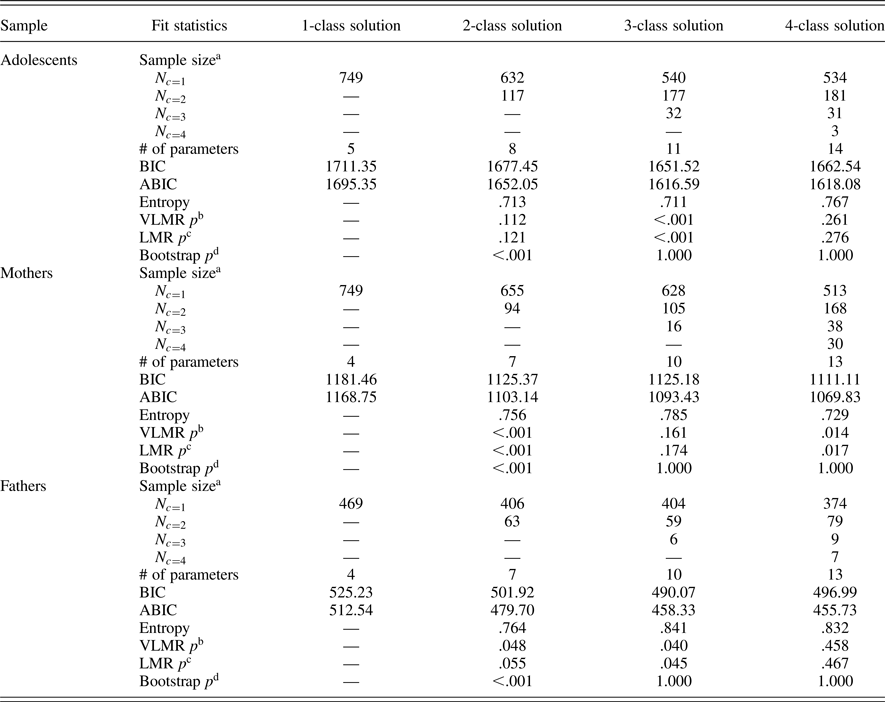
Table 1 presents the results of the analyses for the growth mixture models for adolescents, mothers, and fathers.
Fit statistics for the baseline, 2-class, 3-class, and 4-class growth mixture models of heritage cultural values for adolescents, mothers, and fathers

Notes: BIC, Bayesian information criterion. ABIC, adjusted Bayesian information criterion. aEstimated class counts based on most likely latent class membership. bVuong–Lo–Mendell–Rubin likelihood ratio test (LRT) p-value. cLo–Mendell–Rubin adjusted LRT p-value. dParametric bootstrap LRT p-value.
Adolescents
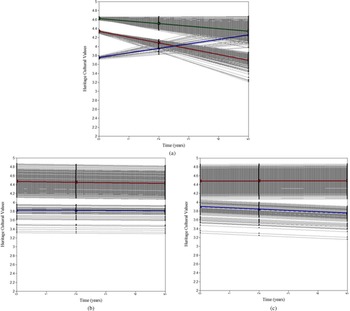
The best-fitting model was a three-class solution. Figure 1a illustrates the longitudinal trajectories of the three classes. The largest class (72%) had an average trajectory that started out high in heritage values at 5th grade (b = 4.62, 95% CI [4.59, 4.65]) and slightly decreased over time (b = –0.06, 95% CI [–0.07, –0.04], t = –7.74, p < .001). The next largest class (24%) had lower heritage values scale scores at 5th grade (b = 4.34, 95% CI [4.25, 4.43]) compared to the first class and a steeper negative slope over time (b = –0.13, 95% CI [–0.16, –0.10], t = –9.05, p < .001). Finally, the smallest class (4%) was relatively low on heritage values at 5th grade (b = 3.76, 95% CI [3.65, 3.87]), but increased in enculturation (b = 0.10, 95% CI [0.04, 0.16], t = 3.43, p = .001) over time. The intercept variance and slope variance were constrained to be equal across classes and were 0.004 and 0.002, respectively. We labeled the three classes as youth high, youth decreasing, and youth increasing, respectively.
Estimated longitudinal trajectories of heritage cultural values for (a) adolescents, (b) mothers, and (c) fathers, with the average trajectory of the class in color.

Mothers
Because all three likelihood ratio tests testing the addition of a third class were not significant, we concluded the two-class solution was the optimal fitting model. Figure 1c illustrates the longitudinal trajectories of the two classes. The largest class (87%) was high and stable with an intercept of b = 4.48 (95% CI [4.44, 4.52]), and a slope of b = 0.002 (95% CI [–0.004, 0.008], t = 0.70, p = .48). The other class (13%) was moderate and slightly decreasing with an intercept of b = 3.90 (95% CI [3.75, 4.05]), and a slope of b = –0.03 (95% CI [–0.05, –0.01], t = –2.45, p = .014). The intercept variance for both classes was 0.047. We labeled the two classes as mom high and mom lower, respectively.
Fathers
The best fitting model was a three-class solution; however, the third class only included six fathers based on the posterior probabilities. Because of concern for capitalizing on idiosyncrasies in the data (which decreases generalizability) and because the two-class solution was theoretically similar to the mother solution, we proceeded with the two-class solution. Figure 1b illustrates the longitudinal trajectories of the two classes. The largest class (87%) was high and slightly decreasing with an intercept of b = 4.47 (95% CI [4.42, 4.53]), and a slope of b = –0.01 (95% CI [–0.02, 0.00], t = –2.32, p = .020). The other class (13%) was moderate and stable with an intercept of b = 3.83 (95%CI [3.68, 3.98]), and a slope of b = –0.005 (95%CI [–0.05, 0.04], t = –0.21, p = .83). The intercept variance for both classes was 0.043. We labeled the two classes as dad high and dad lower, respectively.
Mother–adolescent trajectory profiles
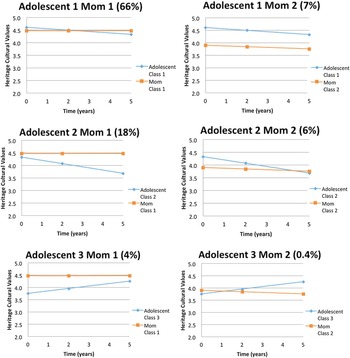
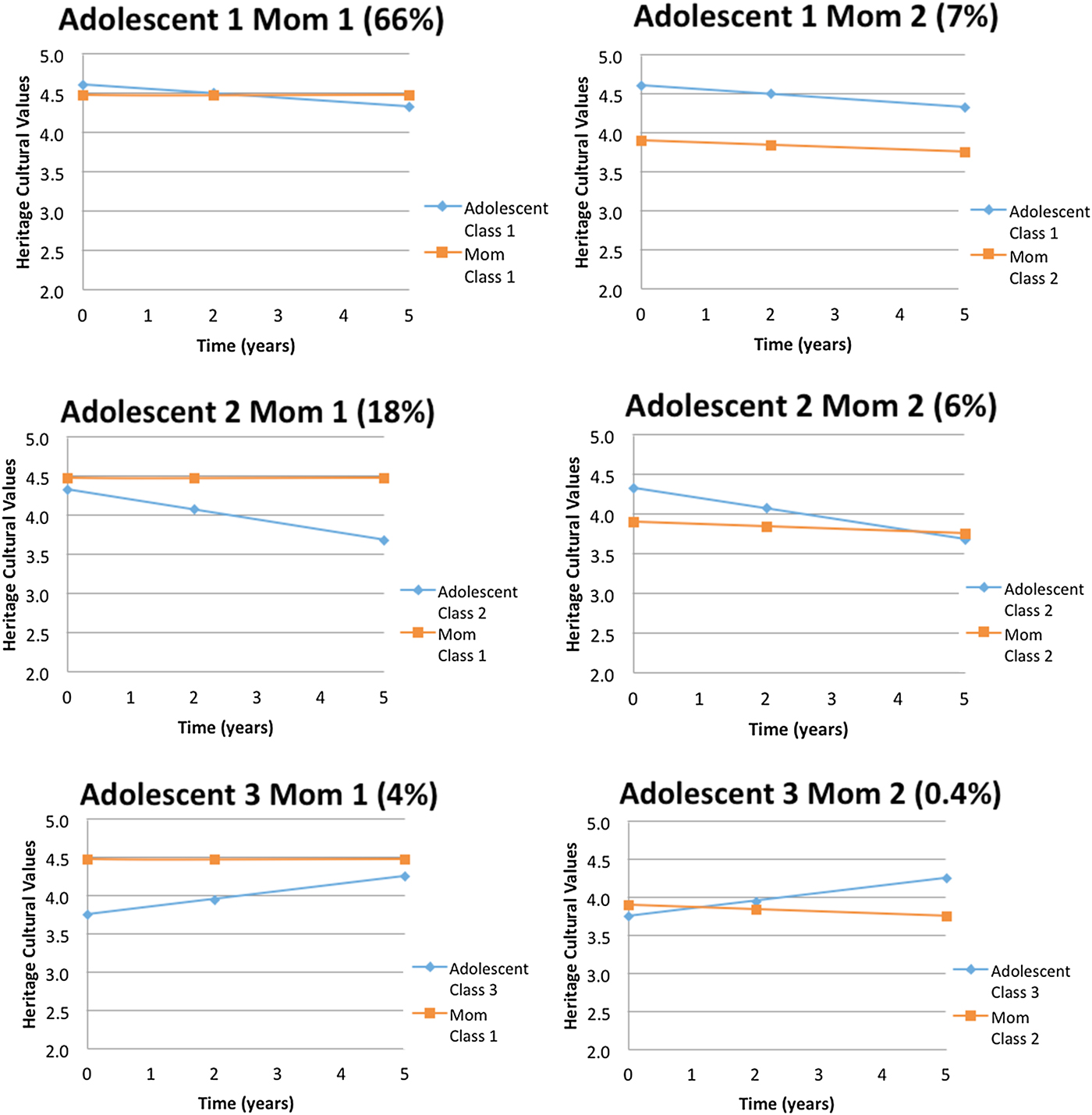
Figure 2 illustrates the six combinations of the mother–adolescent trajectories of heritage cultural values. The mother–adolescent pairs who had trajectories that were categorized by the youth decreasing/mom high profile were labeled as problem gap. All of the other five profiles were labeled as benign gap.
Combined longitudinal trajectories of heritage cultural values for adolescents and mothers.
Father–adolescent trajectory profiles
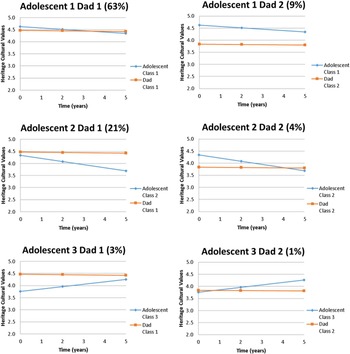
Figure 3 illustrates the six combinations of the father–adolescent trajectories of heritage cultural values. The father–adolescent pairs who had trajectories that were categorized by the youth decreasing/dad high profile were labeled as problem gap. All of the other five profiles were labeled as benign gap.
Combined longitudinal trajectories of heritage cultural values for adolescents and fathers.

Aim 2: Comparisons of problem gap versus benign gap profiles on parent–child conflict and adolescent mental health problems
Mother–adolescent comparisons
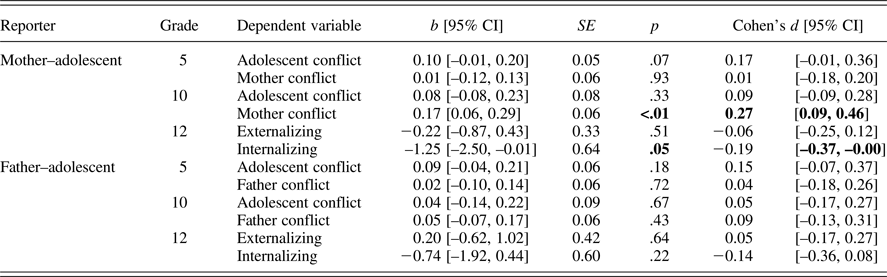
As shown in Table 2, the problem gap and benign gap groups did not significantly differ on conflict when the adolescent was in 5th grade. However, at 10th grade, mothers in the problem gap group, on average, reported significantly more conflict with their adolescent compared to mothers in the benign gap group. In addition, at 12th grade, adolescents in the problem gap group had significantly fewer internalizing symptoms than adolescents in the benign gap group.
Mean comparisons of benign gap and problem gap groups

Notes: Adolescent conflict, adolescent-reported conflict with parent. Mother conflict, mother-reported conflict with adolescent. Father conflict, father-reported conflict with adolescent. Positive b coefficients represent the problem gap group had a higher mean by that value than the benign gap group; negative b coefficients represent the problem gap group had a lower mean by that value than the benign gap group. Bolded p-values indicate significance; bolded Cohen's d confidence intervals indicate confidence intervals that do not contain zero.
Father–adolescent comparisons
There were no significant differences between the problem gap and benign gap groups based on the father–adolescent trajectories.
Aim 3: Test of mediation for mother–adolescent problem versus benign gap profiles
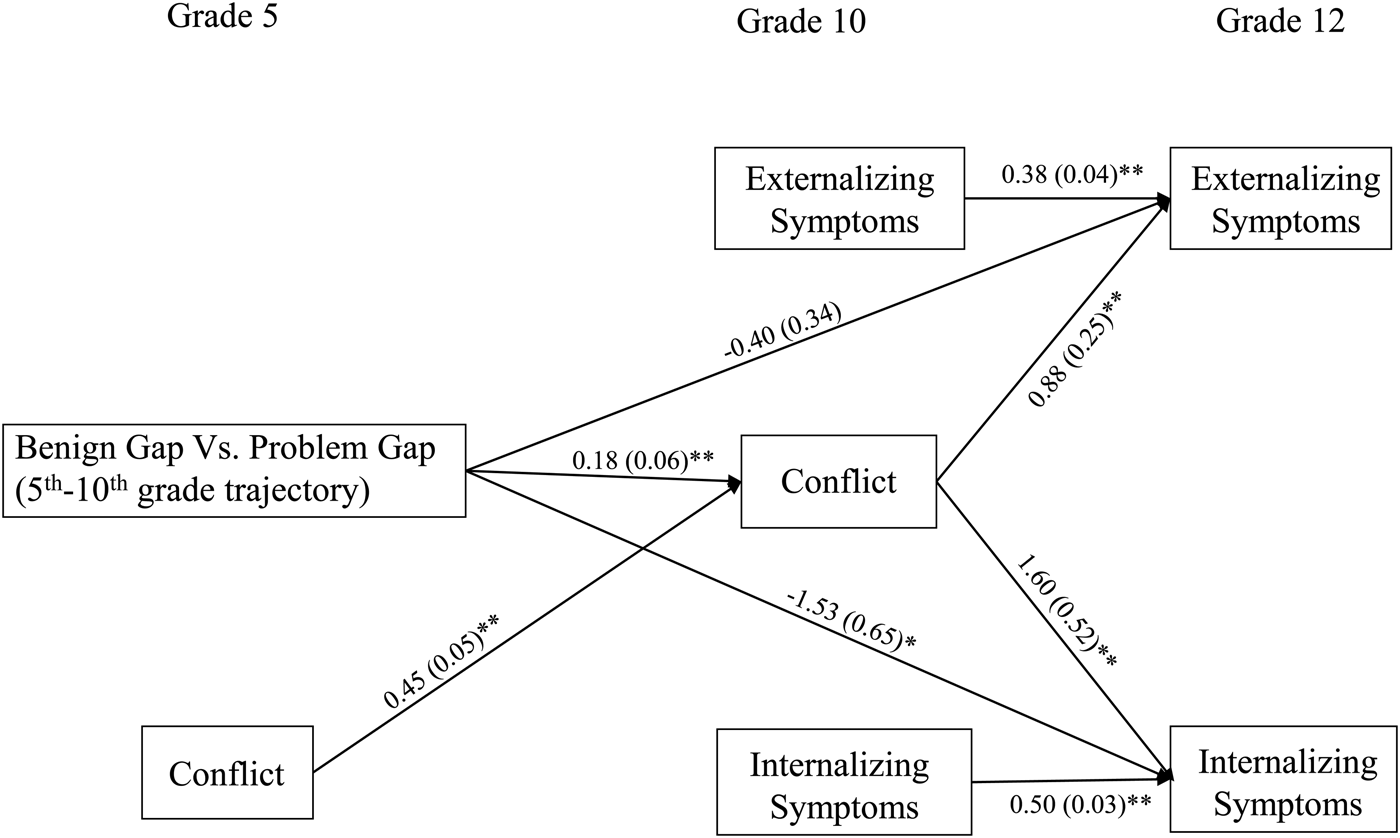
Because there was a significant group difference on mother report of mother–adolescent conflict at 10th grade, we analyzed a mediation model to examine the direct and indirect effects from the dummy code of the two gap groups to adolescent externalizing and internalizing symptoms through mother-reported conflict. Figure 4 illustrates the exact mediation model tested and the parameter estimates of the pathways.
Path analysis of the mediating effects of type of gap trajectory through mother-reported conflict to adolescent mental health problems. *p < .05, **p < .01. Correlations of the variables at the same assessment points not included for clarity; χ2 (4) = 3.30, p = .51, CFI = 1.00, SRMR = .01, RMSEA = .00.

The mediated effect through mother-reported conflict on externalizing symptoms was significant (ab = 0.15, 95% CI [0.05, 0.32]) such that the families in the problem gap group had higher scores on mother report of conflict, which in turn related to more externalizing symptoms than families in the benign gap group. The direct effect was not significant (c’ = –0.39, SE = 0.34, 95% CI [–1.02, 0.32], p = .25). The mediated effect through mother-reported conflict on internalizing symptoms was also significant (ab = 0.30, 95% CI [0.11, 0.68]). Note that the significant direct effect from the dummy code to internalizing symptoms was in the negative direction (c’ = –1.54, SE = 0.65, 95% CI [–2.86, –0.23], p = .018), indicating that families in the problem gap group reported fewer internalizing symptoms than families in the benign gap group after controlling for the mediated effect.
Exploratory analysis
Mother–adolescent mean comparisons
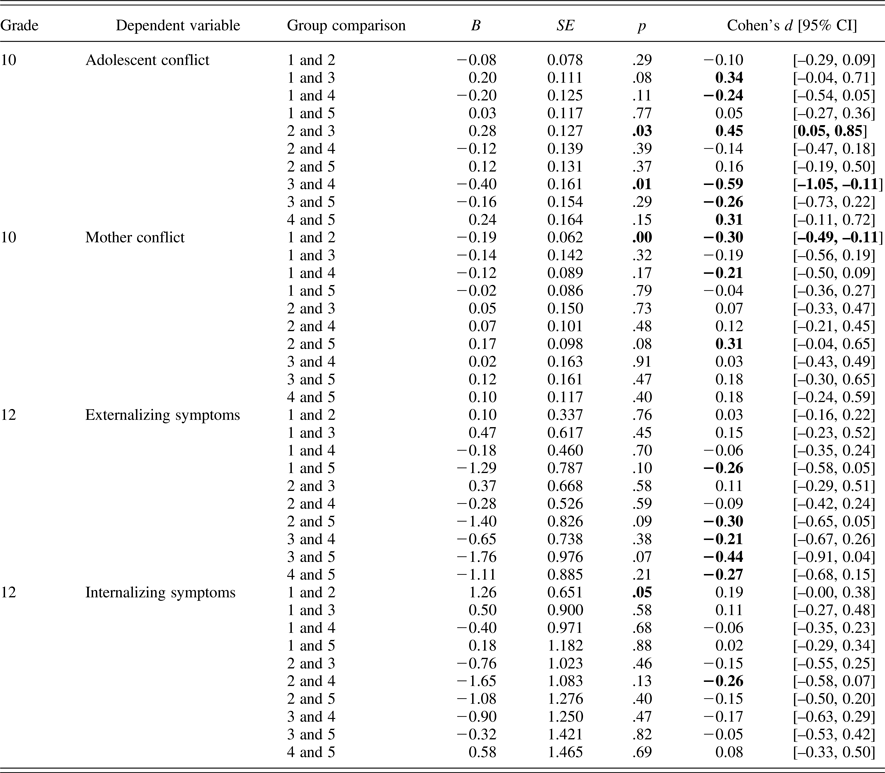
We explored the group mean differences among all mother–adolescent trajectory profiles. Because the youth increasing/mom lower trajectory profile only had three families, we excluded them from the analyses. Table 3 presents the p-values and Cohen's d estimates for the mean differences of the remaining five trajectory profiles on conflict, externalizing symptoms, and internalizing symptoms.
Mean differences between five of the mother–adolescent trajectory profiles controlling for baseline status

Notes: Group comparisons label refers to the trajectory profiles in Figure 2 (1 = youth high/mom high, 2 = youth decreasing/mom high [problem gap], 3 = youth increasing/mom high, 4 = youth high/mom lower, 5 = youth decreasing/mom lower, and 6 = youth increasing/mom lower). Adolescent conflict, adolescent reported conflict with parent. Mother conflict, mother-reported conflict with adolescent. Positive b coefficients denote that the first group listed had a higher mean by that value than the second group listed, and negative b coefficients denote that the first group listed had a lower mean by that value than the second group listed (for all outcomes, higher values represent worse outcomes). Bolded p-values denote p < .05; bolded Cohen's d values denote a small effect size or greater (i.e., |d| ≥ 0.20).
Adolescents in the youth increasing/mom high trajectory profile reported less conflict than adolescents in the other four analyzed trajectory profiles. In addition, adolescents in the youth high/mom lower trajectory profile, on average, reported more conflict with their mother compared to adolescents in the other four analyzed groups except the problem gap group (youth decreasing/mom high).
Mothers in the problem gap group reported more conflict compared to the mothers in the youth high/mom high and youth decreasing/mom lower trajectory profiles. In addition, mothers in the youth high/moms lower trajectory profile reported more conflict than mothers in the youth high/mom high trajectory profile.
Families in the youth decreasing/mom lower trajectory profile reported more externalizing symptoms than families in the other four analyzed trajectory profiles. In addition, families in the youth high/mom lower trajectory profile reported more externalizing symptoms than families in the youth increasing/mom high trajectory profile.
Families in the problem gap group reported fewer internalizing symptoms than families in the youth high/mom lower trajectory profile.
Father–adolescent mean comparisons
We also explored the group mean differences for the six father–adolescent trajectory profiles; however, none of the effect sizes were large enough to be considered a small effect.
Covariates
Because of the diverse sample, we reran all analyses (i.e. mean comparisons and mediation analyses) to include child gender, child nativity, and economic hardship. The significance of the results did not change with two exceptions. In the mean comparisons of the five mother–adolescent trajectory groups, the p-value of the difference on internalizing between the youth high/mom high and youth decreasing/mom high groups changed from .05 to .06 and the p-value of the difference on adolescent conflict between the youth high/mom high and youth increasing/mom high groups changed from .08 to .03.
We also tested if child gender, reporter nativity, and economic hardship varied across the latent classes from the growth mixture model separately by reporter using the three-step procedure in Mplus to take uncertainty of class membership into account (Asparouhov & Muthén, Reference Asparouhov and Muthén2013). For adolescent classes, economic hardship significantly varied across class membership (b = 0.13, p = .04), such that the youth increasing group had lower income than the youth decreasing group. Child gender, economic hardship, and parent nativity did not vary across the latent classes for mothers nor fathers.
Discussion
This study used longitudinal data and growth mixture modeling to identify parallel profiles of change in adolescents’ and their parents’ Mexican American cultural values and to test the cultural gap-distress hypothesis with a diverse sample of US Mexican heritage families. Mixture models identified three adolescent trajectory profiles and two profiles for mothers and fathers, resulting in six combined profiles that were similar for mother–adolescent and father–adolescent dyads. Although the majority of adolescents reported slight to moderate declines in their endorsement of heritage values, 18% of mother–adolescent dyads and 21% of father–adolescent dyads fit the hypothesized problem gap profile in which adolescents were declining and becoming discrepant from their parents. When we compared families in this problem gap profile to the other groups combined, we found evidence for cultural gap-distress theory, but only when examining profiles for mother–adolescent dyads. Mothers in dyads showing this pattern reported significantly higher levels of conflict with their adolescents in 10th grade. Increased conflict was, in turn, a significant pathway to subsequent increases in adolescents’ internalizing and externalizing symptoms for the problem gap group. Although these analyses supported theoretical predictions, the findings were not replicated when adolescent reports of conflict were used, and none of the comparisons were significant for the father–adolescent trajectory group comparisons. In addition, exploratory pairwise comparisons revealed additional subgroups with higher levels of mother–adolescent conflict and adolescent externalizing symptoms that were not associated with hypothesized cultural gap-distress processes.
Heterogeneity in patterns of change on heritage cultural values
Although findings supported increasing, stable, and decreasing endorsement of heritage values for adolescents, the predominant pattern showed adolescents were becoming less traditional as they transitioned from elementary to middle school and then to high school. This is likely due to their increased interaction with a broader range of peers and adults as well as normative developmental processes of identity exploration and increasing cognitive abilities that prompt youth to explore, question, and consciously choose their own values to a greater extent during adolescence (Ella et al., Reference Ella, David, Anna, Maya, Klaus and Ariel2012). However, even among those adolescents who were becoming less traditional over time, mean levels indicated they remained strongly connected to their heritage values; a majority (72%) started out very high in heritage values and showed only slight declines over time. A small percentage showed the opposite pattern, starting out relatively lower on heritage values and increasing over time, but this pattern comprised only 4% of the sample.
In contrast, mother and father trajectory profiles were characterized by less heterogeneity (only two classes) and greater stability over time. This was expected because the parents are not in a life stage in which identity exploration and value orientations are expected to be in developmental flux (Knight et al., Reference Knight, Basilio, Cham, Gonzales, Liu and Umaña-Taylor2014). The largest class (87% for both mothers and fathers) showed a pattern of high endorsement of heritage values with no change for mothers and only slight decreases for fathers. The remaining mothers and fathers (13%) showed somewhat lower but still moderately high endorsement of heritage values that were slightly decreasing for mothers, but not for fathers. Moreover, the majority of families showed profiles in which both generations were highly aligned with their heritage cultural values. These findings are consistent with prior research that has found traditional values remain centrally important in the lives of Mexican Americans and other Latino subgroups (Sabogal, Marín, Otero-Sabogal, Marín, & Perez-Stable, Reference Sabogal, Marín, Otero-Sabogal, Marín and Perez-Stable1987). Study results also support Costigan and Dokis (Reference Costigan and Dokis2006), who concluded that portrayals in the literature often overestimate the extent of parent–child cultural gaps and that statistical differences often categorized as problematic are in reality more a matter of degree than of true dissonance versus harmony.
Across the combined trajectory classes, only one profile fit the problem gap pattern in which adolescents significantly decreased in heritage values and became discrepant from their parent. In all other cases, adolescents were either higher than their parents or became more similar to their parents over time. Thus, we combined these groups and collectively labeled them benign because they did not fit the original cultural gap pattern identified as theoretically problematic for bicultural family dynamics. On average and consistent with theoretical predictions, problem mother–adolescent gap group membership was associated with higher levels of mother–adolescent conflict. Tests of mediation also revealed significant indirect effects of problem gap group membership on both internalizing and externalizing symptoms through increased mother–adolescent conflict. These findings provided strong support for cultural gap-distress theory because they were theoretically driven, based on longitudinal data in which shifting values across Grades 5 to 10 predicted conflict in Grade 10 and youth externalizing and internalizing symptoms in Grade 12, and had statistical controls for prior levels of conflict and symptomatology. Further, because the problem gap group did not differ from the benign profiles at the 5th-grade baseline, we can conclude with greater confidence that this cultural-gap trajectory profile was linked causally to later family dysfunction rather than the reverse causal explanation.
However, several qualifications must be acknowledged. Although the problem gap group was at higher risk for mother–adolescent conflict and indirectly at risk for both more internalizing and externalizing through this conflict mediated pathway, the problem gap group was not at higher risk overall for more externalizing nor internalizing. Apart from mother–adolescent conflict, the problem gap group had lower levels of internalizing compared to the combined benign gap groups. Perhaps the process of challenging traditional family norms and achieving greater autonomy offers benefits to acculturating adolescents’ emotional well-being if this process is not associated with conflict and distance from parents. Cultural gap-distress effects on internalizing and externalizing were only supported, indirectly, when mothers’ perceived greater conflict with their adolescents at the 10th-grade assessment. Mothers may particularly perceive tensions and frustration when adolescents begin challenging traditional family values, such as respect and loyalty, particularly at this age when the affective intensity of mother–adolescent conflict is at a peak (Laursen, Coy, & Collins, Reference Laursen, Coy and Collins1998). Resulting disagreements may further escalate or compromise other critical aspects of maternal–child relationships and parenting (e.g., support, acceptance, monitoring, and open communication) that are widely implicated in internalizing and externalizing problems in adolescence (Bornstein, Reference Bornstein2002).
Another qualification to our findings is that the cultural gap-distress hypothesis was only supported when analyzing mother–adolescent trajectories. In many studies, mother–adolescent and father–adolescent differences have not been distinguished, with the seeming assumption that maternal and paternal acculturation processes are similar, if not identical (Padilla et al., Reference Padilla, McHale, Rovine, Updegraff and Umaña-Taylor2016). Thus, our focus on fathers was important. It is possible that the mother–adolescent relationship is more vulnerable to cultural gap-distress processes within Latino families, as our findings would support. However, two other studies found the opposite, reporting stronger effects on family process for father–adolescent than for mother–adolescent discrepancies (Padilla et al., Reference Padilla, McHale, Rovine, Updegraff and Umaña-Taylor2016; Schofield et al., Reference Schofield, Parke, Kim and Coltrane2008). As maternal participation was required and father participation was optional for initial recruitment into the study, we cannot rule out the possibility that the current sample of fathers is less representative of Mexican heritage fathers. Continued research is needed on the unique role of fathers in bicultural family functioning.
Exploratory evidence of alternative risk trajectory profiles
Although exploratory in nature, pairwise comparisons among the mother–adolescent trajectory groups offered additional nuances that were informative. With respect to conflict, adolescents in the youth high/mom lower trajectory profile (7% of the sample) reported higher levels of conflict with their mothers compared to all other analyzed groups except the problem gap group. Although adolescents in this group were not diverging and neither were they lower in heritage values than their mothers; they were nonetheless discrepant than their mothers (i.e., qualitatively higher) at all time points. This pattern supports the stance that cultural dissonance may be more generally problematic, including for families in which adolescents are more traditional than their mothers. Across all analyzed profiles, this group and the problem gap group were associated with greater increases in mother–adolescent conflict over time (i.e., equivalent to a small effect or greater compared to the other groups), with adolescents perceiving higher conflict when they were more traditional than their mothers and mothers perceiving higher conflict when they were more traditional than their adolescents.
Another revealing finding from the pairwise comparisons involved the trajectory group in which adolescents were decreasing in heritage values but their mothers were lower and also slightly decreasing (6% of the sample). Adolescents in this trajectory group had higher levels of externalizing compared to the other four analyzed groups, indicating this group was most at risk for escalating externalizing behaviors from late childhood to early adolescence. These findings are consistent in many respects with the broader Latino family literature. Traditional cultural values, such as familism, are at the core of Mexican culture (Sabogal et al., Reference Sabogal, Marín, Otero-Sabogal, Marín and Perez-Stable1987) and have been shown to have a widespread promotive role for Mexican heritage youth (Knight, Carlo, Mahrer, & Davis, Reference Knight, Carlo, Mahrer and Davis2016; Yoon et al., Reference Yoon, Chang, Kim, Clawson, Cleary, Hansen and Gomes2013), as well as inverse associations with a multitude of negative outcomes, particularly externalizing symptoms (e.g., Gonzales et al., Reference Gonzales, Germán, Kim, George, Fabrett, Millsap and Dumka2008; Zeiders et al., Reference Zeiders, Updegraff, Umaña-Taylor, Wheeler, Perez-Brena and Rodríguez2013). In keeping with the argument that the loss of connection to these values may represent one of the most salient predictors of maladjustment for acculturating youths (Gonzales, Germán, & Fabrett, Reference Gonzales, Germán, Fabrett, Chang and Downey2012), the current findings identified the two trajectories groups in which youths are declining in heritage values as being most at risk for externalizing symptoms in late adolescence. Moreover, in contrast to fundamental assumptions of cultural gap theory, and similar to Lau et al. (Reference Lau, McCabe, Yeh, Garland, Wood and Hough2005), the most problematic family profile with respect to externalizing symptoms was characterized by weaker heritage culture connections for both mothers and adolescents. Although these families were not at greater risk for mother–adolescent conflict, youth in these families may be at greater risk for externalizing through other processes associated with the family's decreased traditionalism. For example, research suggests traditional values decrease susceptibility to acculturative strains and other negative influences outside the family (Germán, Gonzales, & Dumka, Reference Germán, Gonzales and Dumka2009; Gil et al., Reference Gil, Vega and Dimas1994; Heilemann, Frutos, Lee, & Kury, Reference Heilemann, Frutos, Lee and Kury2004). Latino family values also motivate family members to make choices that are centered on the good of the family (Tsai, Telzer, Gonzales, & Fuligni, Reference Tsai, Telzer, Gonzales and Fuligni2015) and to prioritize their duty to protect and support the family above individual needs and goals (Fridrich & Flannery, Reference Fridrich and Flannery1995; White, Roosa, Weaver, & Nair, Reference White, Roosa, Weaver and Nair2009). Particularly with respect to externalizing psychopathology, traditional family values may play an important role in fostering the conventional behaviors of Latino youth who remain motivated to protect the family’ honor and to avoid bringing shame (vergüenza) to the family through socially disapproved behavior (Zayas & Bryant, Reference Zayas and Bryant1984).
One type of gap that was clearly not associated with increased risk in the follow-up analyses was the trajectory group in which adolescents were discrepant from parents initially but increased their heritage values over time to become more similar to their parents. This small group (4% of the sample) generally showed the most favorable adjustment, including less adolescent-reported conflict than all other analyzed groups and fewer externalizing symptoms compared to several other groups. Yet again, these findings support the health-enhancing effects that may accrue psychologically when minority youth strengthen their cultural ties (Umaña-Taylor et al., Reference Umaña-Taylor, Quintana, Lee, Cross, Rivas-Drake, Schwartz and Seaton2014). These findings also highlight inherent problems with longitudinal studies that assess cultural dimensions or discrepancies at earlier ages to predict later family and individual outcomes. These studies cannot account for shifts in dimensions of cultural orientation that are also occurring over time. Although these pairwise comparison findings are quite interesting, it is important to remember that they are based on exploratory analyses that will need to be to be confirmed in analyses with a sufficient sample size to allow credible significance testing.
Study strengths and limitations
This study was intentionally focused on a narrow conceptualization of cultural gaps in an effort to test specific hypotheses at the core of cultural gap-distress theory (Szapocznik et al., Reference Szapocznik and Kurtines1993). However, studies since have shown there are multiple types of gap, including parents being less traditional in their cultural orientation than their children, that may be relevant to family and youth functioning (Telzer, Reference Telzer2010). Acculturation theories also have emphasized multiple cultural domains besides values, such as language, customs, and cultural identity, as well as both heritage and mainstream dimensions that are important for understanding processes of cultural change (Berry, Reference Berry, Bornstein and Cote2006; Birman & Trickett, Reference Birman and Trickett2001). Although we were judicious in our selection of heritage cultural values because of their central importance in Mexican culture and their unique relevance to traditional cultural gap-distress theory, efforts to examine parallel parent and youth trajectories along other cultural domains may offer additional avenues for understanding the full implications of cultural gap trajectories (Juang et al., Reference Juang, Syed and Takagi2007; Telzer, Reference Telzer2010). However, we propose that future research addressing additional dimensions should remain theoretically driven in advancing hypotheses about the nature and impact of all the different types of gaps that are possible. We also recommend continued developmental focus on typologies of change in parent–child cultural gaps, as well as continued focus on both fathers and mothers. In addition, to guard against the tendency to misattribute cultural explanations only to particular racial/ethnic minorities (Causadias, Vitriol, & Atkin, Reference Causadias, Vitriol and Atkin2018), future research should explore other subgroups, including Whites, who are also likely to experience cultural transmission gaps due to their contact with other cultures.
Another study limitation is that only 469 of fathers from the 579 two-parent households provided data. This affects external validity and limits the generalizability of the results. Because of the small sample sizes for many of the trajectory profiles, particularly for the father–adolescent trajectory groups, there was low power to detect mean differences in the exploratory analyses. Because effect sizes are subject to sampling variability and small samples increase the chance of finding a medium or large effect size due to sampling error (Fan, Reference Fan2001), results should be replicated with a larger sample.
In addition, we treated latent class membership as an observed variable in later analyses (e.g., mean comparisons). The uncertainty in class membership should be taken into account when using the grouping variable; however, we were not able to do so because two latent class variables (i.e., adolescent class variable and parent class variable) were not able to be used in the three-step Mplus procedure (Asparouhov & Muthén, Reference Asparouhov and Muthén2013), which would account for the uncertainty of classification. Moreover, the benign gap latent classes could not be combined into one group and have the uncertainty be preserved. Thus, we used most likely class and treated the gap group as an observed variable. Further methodological advances are needed to incorporate the uncertainty in the mean comparisons and mediation analyses.
We modeled changes in heritage values from 5th to 10th grade to examine effects on parent–adolescent conflict in 10th grade and youth internalizing and externalizing in 12th grade. Because we wanted to preserve some degree of temporal precedence for testing mediation effects on youth symptomatology, we did not extend our cultural trajectory analyses beyond the 10th grade. Future extensions of these trajectories, including extensions to young adulthood, will be important to chart changes in youth cultural values over a broader developmental span. Nevertheless, we believe our 7-year span addressed a critical window of time for studying cultural gap trajectories because it included major developmental and contextual transitions (elementary to middle to high school) that are likely to produce significant shifts in youth cultural values and family processes.
Other study strengths included incorporation of the perspectives and experiences of multiple family members toward characterizing how families operate as a system, and a sampling strategy that maximized diversity on dimensions such as socioeconomic status, nativity, and community contexts that are expected to increase variability in family values trajectories. Most important, our longitudinal person- and family-centered methodology allowed us to be more precise in modeling not only the heterogeneity in type and magnitude of parent–youth heritage values discrepancies but also change parent–youth discrepancies over time. This method proved important to test key assumptions of the cultural gap hypothesis and to shed light on prior findings and inconsistencies in the broader literature.
Conclusion
In the context of ongoing research on cultural discrepancies, there are many ways in which the current results support, refute, and even reconcile prior findings. These findings support accumulating evidence that there are multiple profiles of parent–child agreement and discrepancy, and the problem gap-distress phenomenon may not be as prevalent as often described, nor as salient in accounting for youth maladjustment. Yet, at the same time, the findings also support the central tenets of cultural gap-distress theory. We identified a class of families in which mothers were highly traditional and adolescents were showing steep declines in heritage values across adolescence, and the mothers in this subgroup reported significantly more conflict with adolescents that contributed indirectly to increases over time in both externalizing and internalizing symptoms in late high school. In contrast, the pattern of mean differences among the trajectory subgroups also lend exploratory support to the often-cited alternative hypothesis that, compared to parent–youth acculturation discrepancies, individual parent and adolescent cultural measures may serve as stronger predictors of youth psychological functioning and health-related outcomes (Cano et al., Reference Cano, Schwartz, Castillo, Unger, Huang, Zamboanga and Szapocznik2016; Gonzales, Deardorff, Formoso, Barr, & Barrera, Reference Gonzales, Deardorff, Formoso, Barr and Barrera2006; Pasch et al., Reference Pasch, Deardorff, Tschann, Flores, Penilla and Pantoja2006). The current findings suggest that both alternatives may be true and may reflect different pathways that increase risk for psychopathology among acculturating Latino youth. These complexities also may explain why variable-centered studies of cultural gap that ignore heterogeneity in family patterns and processes often yield findings that are difficult to reconcile.