Introduction
Animal domestication is one of the most important developments in human history. Despite various definitions of domestication employed in related research, we use it in a broad sense, implying human intervention in the reproduction and care of animals (Vigne Reference Vigne2011; Zeder Reference Zeder2015). New methods and data are now revealing that the origins of many domesticated animal species are strongly conditioned by their local environmental and cultural histories (e.g. Ervynck et al. Reference Ervynck, Dobney, Hongo and Meadow2001; Smith Reference Smith2011; Vigne Reference Vigne2011; Larson & Fuller Reference Larson and Fuller2014; Zeder Reference Zeder2015). Consequently, research is shifting towards the identification of the varied pathways that led to the development of the diverse agricultural traditions and animal-management strategies evidenced throughout the archaeological record (Bogucki Reference Bogucki and Campana1995: 105; Smith Reference Smith2001; Redding Reference Redding, Vigne, Peters and Helmer2005; Gremillion et al. Reference Gremillion, Barton and Piperno2014). It is this line of investigation that the present article pursues, illustrating that domestication can follow different trajectories, in our case among pigs (Sus scrofa) in central and southern China.
While many domesticated animals can be traced back to a single geographic point of origin, researchers now know that pigs were domesticated multiple times in separate places. Pigs are therefore ideal for examining the influence that geography and culture can have in shaping the domestication process. Current evidence suggests that the domestication of pigs followed different trajectories across Eurasia. Recent zooarchaeological research at Çayönü in Turkey (Ervynck et al. Reference Ervynck, Dobney, Hongo and Meadow2001; Zeder Reference Zeder2012), for example, suggests that pig domestication resulted from early commensalism with humans, as evidenced by diachronic morphological changes and a shift in demographic culling profiles. Both occurred gradually over at least 3000 years, before resulting in full domestication. In Cyprus, faunal evidence suggests an early introduction of wild boar around 11 400 years ago and, later, a heavy reliance on domestic pigs after 10 000 BP (Vigne Reference Vigne2011); while in central Anatolia, pig husbandry was not fully integrated into the local animal economy until the fifth millennium BC (Arbuckle Reference Arbuckle2013). Recent studies on pig domestication in Europe reveal another complex domestication trajectory that involved the management of indigenous wild boars, the introduction of Near Eastern domestic pigs and the later re-exportation of European lineages back to the Near East (Larson et al. Reference Larson2007; Ottoni et al. Reference Ottoni2013; Frantz et al. Reference Frantz2019).
In China, pigs have played an important role in defining diet and culture (Kim et al. Reference Kim, Antonaccio, Lee, Nelson, Pardoe, Quilter and Rosman1994). Current archaeological evidence suggests that pigs were domesticated independently in China, and recent studies have outlined a general picture of pig domestication (Yuan & Flad Reference Yuan and Flad2002; Dobney et al. Reference Dobney, Yuan, Ervynck, Albarella, Rowley-Conwy, Yang and Luo2006; Flad et al. Reference Flad, Yuan, Li, Madsen, Chen and Gao2007; Larson et al. Reference Larson, Liu, Zhao and Yuan2010; Yuan Reference Yuan2014). Both genetic and biometric evidence, however, indicate complex domestication scenarios, with multiple episodes of gene flow and regional diversification across Neolithic China (Yuan et al. Reference Yuan, Flad and Luo2008; Luo Reference Luo2012; Larson & Burger Reference Larson and Burger2013). The differential trajectories of pig domestication in China are comparatively poorly understood. A reappraisal of the available archaeological evidence is therefore necessary.
In this article, we reconsider archaeological, zooarchaeological and some archaeobotanical and isotopic evidence from two regions—central China (modern Henan Province) and the Lower Yangtze Valley—to explore how cultural factors, such as urbanism and social complexity, and environmental conditions influenced the differential trajectories of pig domestication. We argue that pig domestication in China was a dynamic process, shaped by different social and cultural institutions that defined the Neolithic in central and southern China.
Regional trajectories of pig domestication
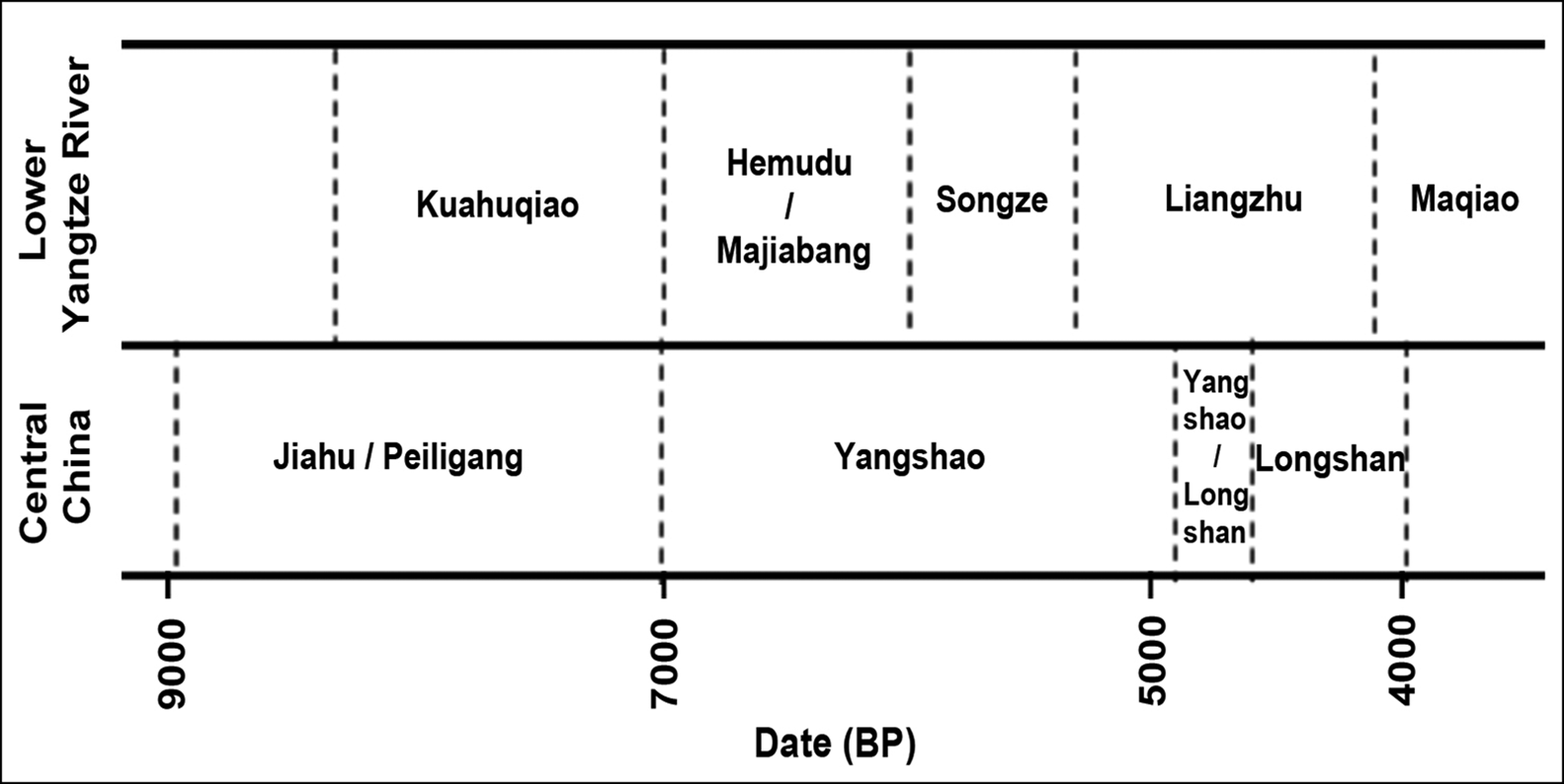
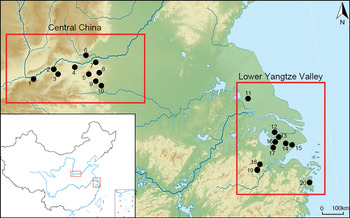
The Chinese Neolithic is defined by a variety of cultures (see regional chronology in Figure 1). To investigate regional differences in pig domestication between central and southern China, we revisit 20 Neolithic sites with available zooarchaeological evidence (Figure 2). The data presented here are either collated from published reports or have been examined by the authors themselves. Ten sites in central China with zooarchaeological evidence and some isotope data for pig remains were identified for analysis. For the selected sites from southern China, where there is a general lack of isotopic data, only zooarchaeological evidence is available for consideration. The abundance of pig remains for each site is compared in terms of their number of identified specimens (NISP). Where available, isotopic data are used to cast light on pig-feeding strategies. Both zooarchaeological and isotopic data are integrated and interpreted in the context of the social organisation inferred from the archaeological evidence from each site to offer insight into the effects of social factors on pig domestication trajectories.
Chronology of the major Neolithic cultures mentioned in this study (figure by N. Dong).

Major sites in this study: 1) Xipo; 2) Bancun; 3) Duzhong; 4) Zhouli; 5) Wangchenggang; 6) Xijincheng; 7) Xishan; 8) Xinzhai; 9) Wadian; 10) Jiahu; 11) Jiangzhuang; 12) Chuodun; 13) Shaoqingshan; 14) Guangfulin; 15) Maqiao; 16) Longnan; 17) Kuahuqiao; 18) Meirendi; 19) Bianjiashan; 20) Tashan (map by N. Dong).

In central China, the earliest evidence for pig domestication comes from Jiahu (9000–7700 BP), in Henan Province. While the Jiahu site is dated to 9000–7700 BP, the pig bone directly dates to 6600 cal BC. Although the correlation between the proposed morphological markers of domestication detected by geometric morphometric methods and the factors responsible for these changes is still unclear (Rowley-Conwy & Zeder Reference Rowley-Conwy and Zeder2014), researchers have used these methods on pig remains from Jiahu to link changes in molar morphology to pig domestication, suggesting that this site is probably one of the earliest centres of pig domestication in central China at 6600 cal BC (Cucchi et al. Reference Cucchi, Hulme-Beaman and Yuan2011). In the Lower Yangtze Valley, research on the biometric characteristics and culling profile of pig remains recovered from Kuahuqiao (8200 BP) in Zhejiang Province reveals a different trajectory of pig domestication in southern China (Zhejiang Provincial Institute of Cultural Relics & Xiaoshan Museum 2004: 265). While these lines of evidence suggest two separate domestication events, it is unclear how social organisation and environmental conditions led pig domestication to follow different trajectories.
Central China
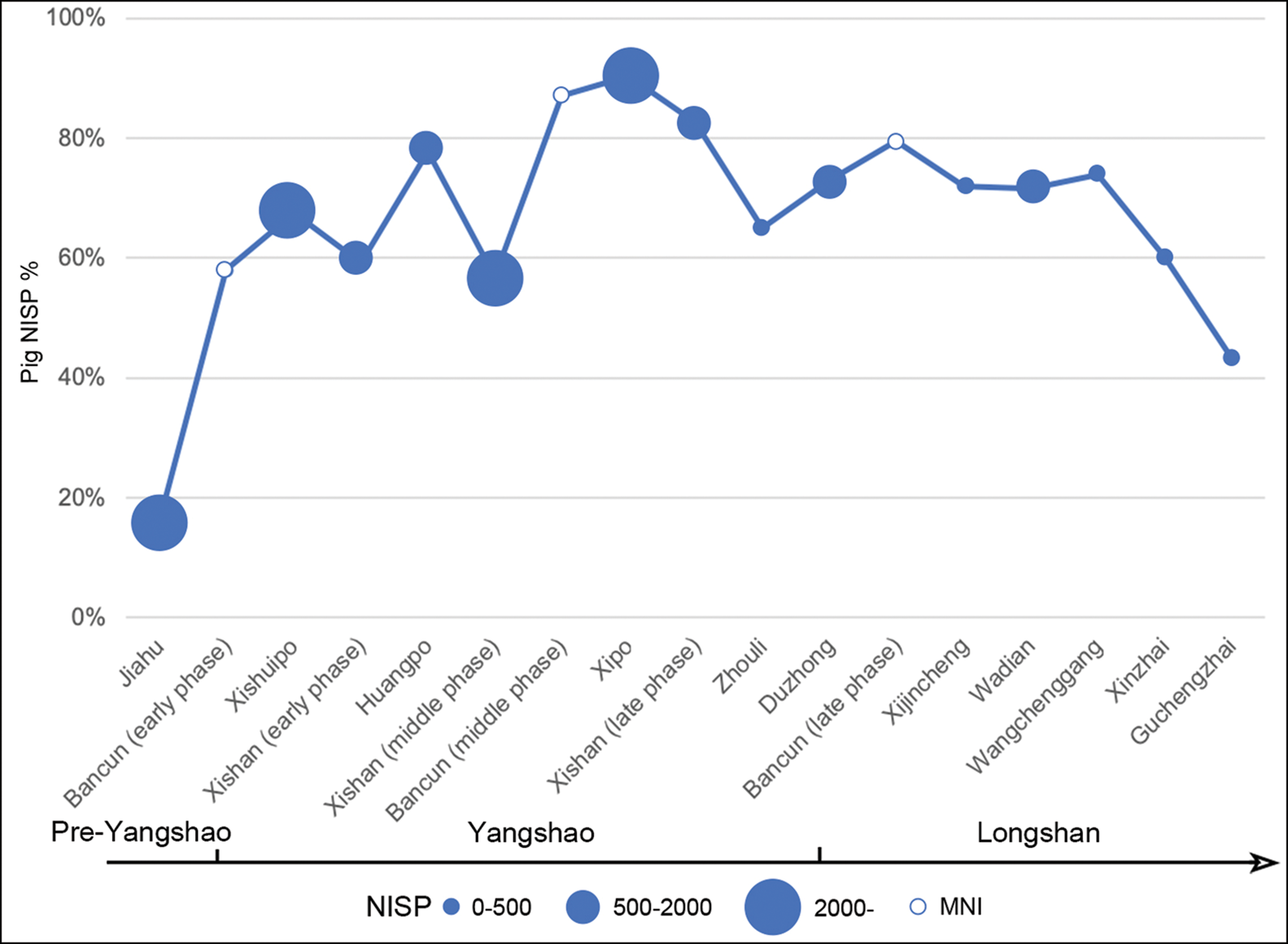
Our collated data from sites in Henan (Table S1 in the online supplementary material (OSM)) show that greater quantities of pig bones were recovered from archaeological sites that post-date the Peiligang period (9000–7000 BP) (Figure 3). After the emergence of food production during the Peiligang period, the Yangshao period witnessed some important social changes. An agrarian way of life was established, with a corresponding increase in populations fed on domestic plants and animals. Societal complexity was thus developed (Liu & Chen Reference Liu and Chen2012: 170–71). At each Yangshao-period site (7000–5000 BP), more than half of the total faunal assemblage consists of domestic pig. At Xipo (5800–5500 BP), for example, pig bones comprise 90 per cent of the total faunal assemblage. The percentage of pig remains recovered from Yangshao-period sites peaks before declining slightly during the Longshan period (4600–4000 BP), when new domestic taxa, including sheep, goat and cattle were introduced (Flad et al. Reference Flad, Yuan, Li, Madsen, Chen and Gao2007). The high proportion of pig remains on sites in Henan suggests successful pig management. The extensive exploitation of domestic pigs indicates that most societies in central China adopted an agricultural subsistence strategy that relied heavily on pigs at roughly the same time.
Chronological change in the pig NISP (number of identified specimens) percentage from Neolithic sites in central China (figure by N. Dong).

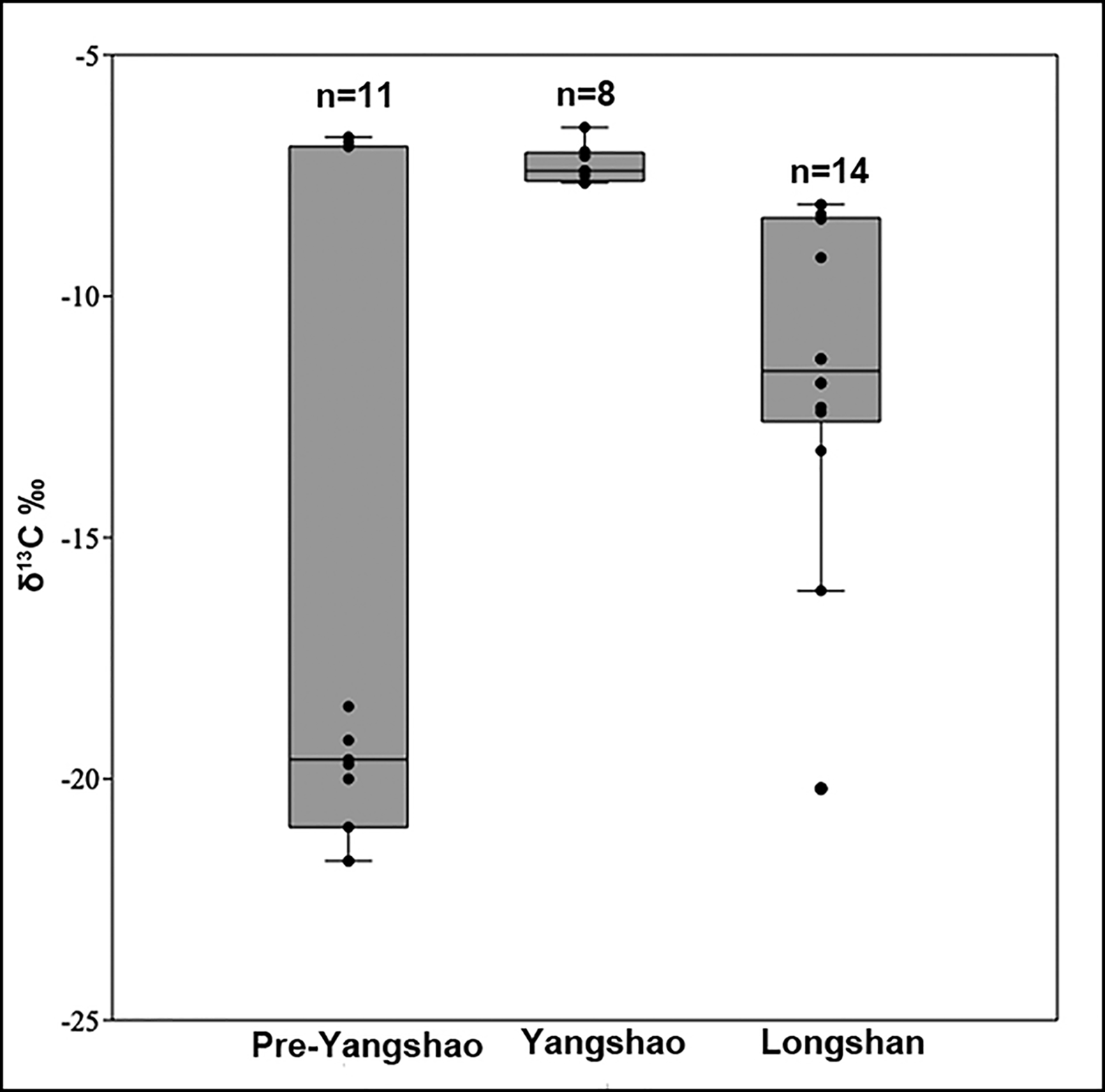
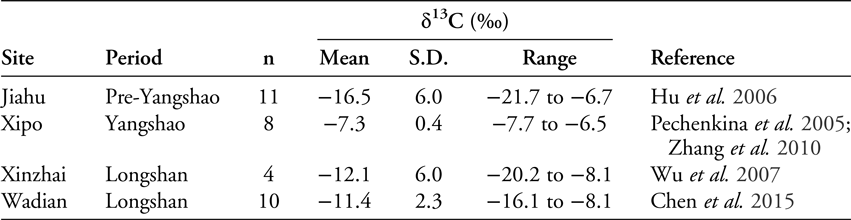
The increasingly large proportion of pig remains found at these sites probably reflects changing husbandry practices. Available isotopic data suggest the emergence of a more refined foddering strategy during the Middle Neolithic (7000–5000 BP). Table 1 presents a summary of published isotope data for pigs from Henan. As shown in Figure 4, pigs from pre-Yangshao sites have relatively negative δ13C values, indicating predominantly C3 food consumption. After the Yangshao period, pigs yield much more positive δ13C values, suggesting a significant contribution of C4 plants or C4-related foods. The vegetation of central China predominantly comprises C3 plants, with the only C4 plants being the two dominant Neolithic crops: broomcorn and foxtail millet (Panicum miliaceum and Setaria italica) (Cai & Qiu Reference Cai and Qiu1984; Pechenkina et al. Reference Pechenkina, Ambrose and Xiaolin2005). The direct or indirect contribution of millet and millet by-products to pig diets is the most plausible explanation for the presence of a C4 isotope signal. During the pre-Yangshao period, pigs may have foraged in areas beyond the settlement, resulting in their C3-based diet. During the Yangshao period, pigs probably had more immediate access to millet and millet by-products in the form of prepared fodder and human dietary refuse, as indicated by their enriched δ13C values. This change in food-provision strategy represents a shift to a more intensive investment in pig husbandry as a food resource.
Boxplot for pig carbon isotopic values from Henan Province in the pre-Yangshao, Yangshao and Longshan periods (figure by N. Dong).

Summary of published isotope data of Neolithic pigs in Henan Province.

Changes in settlement layout are also contemporaneous with this change in pig-husbandry strategy. Early Neolithic sites in central China were arranged under ‘unitary organisations’, in which economic products were shared and decisions were usually made by the group as a whole (in the manner of a village collective), lacking intermediate supra-household institutions (Peterson & Shelach Reference Peterson, Shelach, Bandry and Fox2010). As reflected in the spatial layout, smaller structures were often arranged around a single larger one, and storage pits were distributed evenly between houses, as discovered at Jiahu (Henan Provincial Institute of Archaeology & Cultural Relics 1999). During the Yangshao period, the internal layout of settlements became more compact, making it more suitable for the closer regulation and management of animals. Many settlements display an increasingly ‘closed’ layout, in which houses with ‘private’ storage areas are spaced farther apart (Li Reference Li2010). This layout suggests that daily activities may have been practised within nuclear families (Peterson & Shelach Reference Peterson and Shelach2012). Animal pens and dung deposits found at Jiangzhai (7000–5000 BP), a Middle Neolithic village in Shaanxi Province, also provide evidence for socio-economic activities at the household level (Shelach Reference Shelach2006). It is thus plausible that livestock were owned and raised by individual households.
This change in settlement layout is likely to represent the formation of new economic practices. Liu and Jones (Reference Liu, Jones, Boyle, Rabett and Hunt2016) postulate that the close control of animals included providing them with living spaces close to a nuclear family and fodder derived from human food waste. Such an arrangement would have been connected with the ‘privatisation’ of household resources and the intensified management of pigs as domesticated animals. The pigs would have been considered private resources, representing accumulated household wealth.
Overall, the development of pig domestication in central China was rapid, and is observed in the relative abundance of pig remains, as well as in evidence for sheltering and foddering in the archaeological record. Pig domestication therefore appears to be a process largely driven by socio-economic changes and demographic fluctuations.
The Lower Yangtze Valley
In the Lower Yangtze Valley it is only in the Liangzhu period (5500–4300 BP)—almost 3000 years after the initial pig domestication at Kuahuqiao—that pigs began to make a significant contribution to the diet. This is documented at sites such as Bianjiashan (4900–4500 BP) and Meirendi (late Lianghzu), where pig remains account for over 90 and 70 per cent of the faunal assemblages respectively (Zhang Reference Zhang2014; Matsui et al. Reference Matsui, Kiguchi, Matsusaki, Eda, Maruyama, Liu, Wang, Matsui and Kiguchi2016).
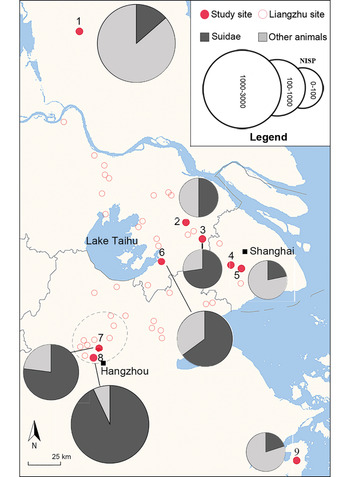
The extent of pig exploitation varies across the Lower Yangtze Valley. There is a sharp contrast between sites in the core area of the Liangzhu cultural zone and those in the periphery. The core area, located to the south of Lake Tai (Figure 5), is usually defined as containing settlement complexes centred around Liangzhu city and composed of a system of earthen dams, ritual altars, cemeteries and a series of production sites (Renfrew & Liu Reference Renfrew and Liu2018). The borders of the Liangzhu cultural zone extend to the north across the Yangtze River and to the coastal areas in the east. Figure 5 shows the locations of these sites, along with the percentage of suids, and the zooarchaeological data from Liangzhu sites are summarised in Table S2 (OSM). Here, we discuss ‘suid’ (i.e. pigs, wild boars, feral pigs and probably hybrids of the three) rather than ‘pig’, as both domestic pigs and wild boars are present in the Liangzhu assemblages (Zhang Reference Zhang2014; Matsui et al. Reference Matsui, Kiguchi, Matsusaki, Eda, Maruyama, Liu, Wang, Matsui and Kiguchi2016). This adds another layer of complexity to the human-suid relationship; it remains unclear whether this relationship involved hunting, free-ranging feralisation or other management strategies. An aggregation of suid remains appears to be limited to the core area. Suid remains make up over 90 per cent of the faunal assemblage at Bianjiashan, located to the north of Liangzhu city, for example (Zhang Reference Zhang2014).
Suidae NISP (number of identified specimens) percentage from study sites plotted over the map of Liangzhu sites: 1) Jiangzhuang; 2) Chuodun; 3) Shaoqingshan; 4) Guangfulin; 5) Maqiao; 6) Longnan; 7) Meirendi; 8) Bianjiashan; 9) Tashan (figure by N. Dong).

As urbanisation developed in central Liangzhu, populations were concentrated in towns and cities. Domesticated animals provide more predictable food sources for feeding large, sedentary populations. Conversely, at peripheral sites such as Jiangzhuang (late Liangzhu period) in Jiangsu Province, pigs constitute only a minor part of the faunal assemblage, while deer account for over 60 per cent. A similar pattern is observed at both Maqiao (late Liangzhu) and Guangfulin (5200–4500 BP) (Yuan Reference Yuan2002). The exploitation of local wild animals, including avian and aquatic resources, continued in peripheral areas throughout the Neolithic. This variability in pig exploitation has important implications for our understanding of the urbanisation in Liangzhu.
Isotope data from pig remains at Liangzhu-period sites are limited to samples from the Zhuangqiaofen site (5000–3700 BP) in Zhejiang Province. Here, the δ13C values suggest a dietary intake of C3 food. Oxygen isotope composition (δ18O) in teeth and bones derived from meteoric water in the form of either liquid or food sources is relevant to local geography and temperature (Longinelli Reference Longinelli1984; Luz et al. Reference Luz, Kolodny and Horowitz1984), and therefore is able to inform on human and animal seasonality and mobility. The pig δ18O values at Zhuangqiaofen have a tight range, and probably indicate pig management in the local environment (Guo et al. Reference Guo, Lou, Xiang, Xia and Xu2018). More isotope analyses are needed, however, before any robust conclusions can be made.
Our zooarchaeological analyses generally agree with results obtained from archaeobotanical analyses. Evidence for rice storage and paddy fields has been recovered from the Liangzhu core area, and the relative abundance of rice is higher than that in peripheral sites (Zheng Reference Zheng2018). A wide range of indigenous wild plants, including acorn (Quercus sp.), foxnut (Euryale ferox), water caltrop (Trapa sp.) and persimmon (Diospyros sp.), was exploited continuously in the Lower Yangtze Valley, alongside with the adoption of rice cultivation, which took advantage of the local wetland ecosystem (Pan Reference Pan2017: 287–95).
When intensive agricultural production could not be sustained after the collapse of Liangzhu, wild resources become even more important, leading to a reversion to the predominant exploitation of wild resources. Coastal archaeological cultures that appeared after the Liangzhu, such as the Maqiao (3900–3200 BP) and Guangfulin (4300–4000 BP), adopted subsistence strategies that relied heavily on wild resources, supplemented by limited use of domesticated plants and animals.
In general, compared to central China, the evidence from the Lower Yangtze Valley indicates that pig domestication followed a slow trajectory, leading to the contingent exploitation of both livestock and wild resources, with local variations.
Demography, social complexity and climate change
Our re-evaluation of the collated data suggests that distinct pig domestication trajectories emerged in central China and the Lower Yangtze Valley respectively. While early domestication was followed quickly by intensification in central China, pig domestication was slower and locally more variable in the Lower Yangtze Valley, a contrast that we link with both demographic and socio-economic factors.
Demographic fluctuation
Population growth in central China may have accelerated the pig-domestication process. Although the reconstruction of prehistoric demography from archaeological data has long been controversial and challenging (see Chamberlain Reference Chamberlain2006), we use the number of sites as a rough measure of population differences between central China and the Lower Yangtze Valley.
In central China, there is an increase from 115 sites belonging to the Peiliang period to 878 sites in the Yangshao period (Figure 1; Huang Reference Huang2005). The increase in site numbers in the Lower Yangtze Valley was comparatively moderate, with just over 60 sites before the Lianghzu period and around 200 sites during Liangzhu (Institute of Archaeology CASS 2010). While it is uncertain whether a growing population triggered the demand for intensified livestock management, there is a clear correlation between the intensification of pig use and population growth.
A recent analysis designed to detect elevated nitrogen isotope values in archaeological millet grains suggests that manuring in Late Neolithic northern China was used to increase crop yields (Wang et al. Reference Wang, Fuller, Zhang, Hu, Hu and Shang2018). Pigs could have produced an important secondary product, that is, the organic fertiliser necessary for sustaining more intensive agricultural regimes. The improved crop production may, in turn, have boosted population growth. To make the most of pig by-products—for example, to ensure easier access to manure—people could have moved pigs into either permanent pens or restricted agricultural fields. Raising pigs at a small (probably household) scale fits this husbandry strategy. The intensive exploitation of pigs also corresponds broadly with the ‘privatisation’ process (Liu & Jones Reference Liu, Jones, Boyle, Rabett and Hunt2016), at a time, from the Middle Neolithic onwards, when the mode of production and consumption shifted from the village to the family (Peterson & Shelach Reference Peterson and Shelach2012). Larger groups were gradually organised into smaller families, and these demographic fluctuations were entwined with changes in socio-economic organisation.
Conversely, while population sizes seemed to remain comparatively small in the Lower Yangtze Valley, the core area around Liangzhu provides an exception. Guo's (Reference Guo2014) estimation based on the spatial distribution of Liangzhu settlements suggests that the average settlement density in the core area was approximately five sites/100km2. In the peripheral area, such as in Jiangsu Province, the average density drops to 0.9 site/100km2. A certain number of people had to live in the central city and nearby satellite towns to maintain the urban infrastructure. There, we expected the population density to be higher than that in the periphery, and, correspondingly, we found the proportion of pig remains to be larger than that in peripheral sites.
Urbanism
In addition to demographic differences, the Liangzhu mode of pig husbandry can be linked with early attempts at urbanism. A similar pattern is evident in third-millennium BC northern Mesopotamia. As pigs can easily adjust to urban environments, pigs provided urban residents with a secure meat source during the twin processes of urbanisation and institutional expansion in Mesopotamia. Thus, pig husbandry became an alternative subsistence solution to the limited access to pasture land under institutional control (Price et al. Reference Price, Grossman and Paulette2017).
In Liangzhu, powerful institutional groups formed, and the city of Liangzhu soon emerged as a political, social, economic and religious centre (Renfrew & Liu Reference Renfrew and Liu2018). Pigs, with their ability to live within dense urban environments and scavenge for food waste, are ideal livestock for this setting. In addition, the expansion of farmland for rice cultivation may have led to the depletion of forests (Li et al. Reference Li, Wu, Hou, Shi, Mo, Liu and Zhou2010; Zhuang et al. Reference Zhuang, Ding and French2014), which would have considerably restricted pigs’ access to a wide range of wild resources through the demolition of their habitats. It would thus have made sense for farmers in urban centres to pursue more intensive forms of pig husbandry. By contrast, in rural areas, people could continue to make use of the abundant wild resources still available. Future studies comparing C/N isotopes of pigs kept in urban and non-urban environments may cast light on this issue.
Settlement analyses in central China also indicate a hierarchical structure and the emergence of urban sites in the Neolithic (Liu Reference Liu2004: 73–116). The zooarchaeological pattern of pig remains reveals no obvious contrast between high- and low-ranked sites, suggesting that the influence of urbanisation may be more clearly resolved using lines of evidence other than pigs.
Climate instability
Pig exploitation formed only one component of wider subsistence economies shaped by complex sets of factors. Among them, environmental changes probably had some influence on cropping strategies and pig domestication, particularly during the dramatic climatic change at around 4000 BP (Liu & Feng Reference Liu and Feng2012).
In central China, the pig- and millet-based agricultural regime persisted throughout the Neolithic, which later (in the Longshan period) incorporated Western Eurasian domesticates, including sheep, goat, cattle and wheat (Lee et al. Reference Lee, Crawford, Liu and Chen2007; Yuan & Campbell Reference Yuan and Campbell2009). This diversified subsistence economy allowed Neolithic cultures in central China to mitigate the prolonged climatic instability around the 4200–4000 BP event (Liu & Feng Reference Liu and Feng2012). At Liangzhu, however, this does not seem to have been the case. The Western Eurasian domesticates did not immediately disperse farther eastward after their arrival in central China, and were therefore not incorporated into the subsistence strategy of southern China at this time. Consequently, the over-reliance on mono-cropping/husbandry in this region was threatened by the general drying and cooling climatic trend, alongside risks from rising groundwater and flooding c. 4000 BP (Chen Reference Chen2005; Atahan et al. Reference Atahan, Itzstein-Davey, Taylor, Dodson, Qin, Zheng and Brooks2008). This climate deterioration and the subsequent destruction of local ecosystems meant that the subsistence strategies at Liangzhu in the Lower Yangtze Valley could no longer be sustained, partly resulting in the collapse of this complex society (Yuan et al. Reference Yuan, Pan, Dong and Storozum2020). While it is generally recognised that there was no single catastrophic event that affected the entire Lower Yangtze Valley, the gradual erosion of social institutions through environmental instability is likely to have made it difficult to sustain a high level of political integration throughout the region.
Conclusion
Using previously published data and new analyses, we have examined the divergent trajectories of pig domestication in central China and the Lower Yangtze Valley. In central China, pig husbandry practices intensified shortly after initial domestication. This is clearly seen in the archaeological record of most Yangshao-period sites, where pig remains constitute over 50 per cent of the total faunal assemblages. In contrast, the Lower Yangtze Valley followed a different trajectory that adopted a mixed subsistence regime, involving the exploitation of both pigs and a range of wild resources, depending on location. Demographic as well as socio-economic factors shaped these divergent trajectories. In central China, intensive pig husbandry was linked with population growth and the transition to household-centred activities during the Middle Neolithic. The differential take-up of pig husbandry in the core and periphery of Liangzhu in the Lower Yangtze Valley, however, may correlate with emerging urbanism. The differences in environments and agricultural strategies between the two regions may have resulted in distinct responses to the climate instability c. 4000 BP in these two regions, which, in turn, may have had ramifications for economic development in central and southern China during the subsequent Bronze Age.
Recognising divergent pig domestication trajectories in central and southern China provides valuable insights into the pace and process of domestication more generally. It is hoped that future, more detailed studies of unexplored or under-studied regions and domestic species will contribute to a more comprehensive understanding of the diverse domestication trajectories of each region and taxon.
Acknowledgements
We would like to thank Pan Yan for constructive discussions when shaping this study, Xue Yining for offering useful suggestions on the figures, and especially Michael Storozum for reading and commenting on early versions of this article. We are also grateful to the two anonymous reviewers for their insightful comments. Qin Xiaoli kindly provided the photograph of the Meirendi site.
Supplementary material
To view supplementary material for this article, please visit https://doi.org/10.15184/aqy.2020.122