BACKGROUND
The prevalence of depression is high, and there are significant problems with accessing care (Scogin et al. Reference Scogin, Hanson and Welsh2003), partly due to a lack of trained therapists (Lovell & Richards, Reference Lovell and Richards2000). Self-help interventions can provide effective care for depression using ‘health technologies’ such as bibliotherapy and computer programs. Treatments without any therapist contact (so-called ‘pure self-help’) could have the greatest impact on access but may not be effective with depressed patients who lack motivation and confidence. In the UK, the term ‘guided self-help’ is used to refer to self-help interventions with minimal therapist contact that might provide the optimal balance between efficiency and effectiveness.
There is developing evidence that self-help interventions can be effective (McKendree-Smith et al. Reference McKendree-Smith, Floyd and Scogin2003; Anderson et al. Reference Anderson, Lewis, Araya, Elgie, Harrison, Proudfoot, Schmidt, Sharp, Weightman and Williams2005), and they have been proposed as a key part of stepped care models of depression care in both the USA and the UK (Scogin et al. Reference Scogin, Hanson and Welsh2003; National Collaborating Centre for Mental Health, 2005). However, evidence of effectiveness is not uniformly positive (Richards et al. Reference Richards, Barkham, Cahill, Richards, Williams and Heywood2003; Proudfoot et al. Reference Proudfoot, Ryden, Everitt, Shapiro, Goldberg, Mann, Tylee, Marks and Gray2004; Mead et al. Reference Mead, MacDonald, Bower, Lovell, Richards and Bucknall2005). Significant variation in clinical effectiveness beyond that expected by chance is known as heterogeneity. Heterogeneity may be reliably associated with factors such as the quality of study design, patient populations and the context of care, or may relate to differences in the design of self-help interventions themselves. Such factors are known as moderators of treatment effect (Baron & Kenny, Reference Baron and Kenny1986). Understanding the contribution of different moderators is crucial for the interpretation of study results and the design of future interventions. Meta-regression is a technique that can be used to examine moderators. Whereas a meta-analysis combines results in order to obtain a single summary effect size, meta-regression aims to relate the size of effect to one or more characteristics of the studies involved (Thompson & Higgins, Reference Thompson and Higgins2002).
Several recent reviews have been conducted in this area (Bower et al. Reference Bower, Richards and Lovell2001; McKendree-Smith et al. Reference McKendree-Smith, Floyd and Scogin2003; Den Boer et al. Reference Den Boer, Wiersma and Van Den Bosch2004; Anderson et al. Reference Anderson, Lewis, Araya, Elgie, Harrison, Proudfoot, Schmidt, Sharp, Weightman and Williams2005). Because of the paucity of studies, most have been unable to quantify key moderators. A recent review including 14 studies suggested that self-report assessments were associated with lower effect size but that severity of illness did not influence the results (Den Boer et al. Reference Den Boer, Wiersma and Van Den Bosch2004). However, there were insufficient studies available for a more comprehensive analysis.
The policy focus on self-help interventions means that additional studies are published frequently, and previous reviews must be updated. The aim of the current study was to provide a systematic review of the randomized controlled trial literature to determine intervention, population and study design factors that moderate the treatment effect of self-help interventions for depression.
METHOD
Objective
To use meta-regression to determine intervention, population and study design factors that moderate the treatment effect of self-help interventions for depression.
Inclusion and exclusion criteria
Because a key focus of the study was to examine the relationship between variation in study characteristics and outcomes, the inclusion criteria were deliberately kept relatively broad (Gotzsche, Reference Gotzsche2000).
Study design
Only randomized controlled trials were eligible.
Population
Depressive disorders, depressive symptoms or psychosocial problems (e.g. stress), where depressive symptoms were measured as a primary outcome, were all included, as were studies of the prevention of depression in patients at risk. All settings were also eligible, including community, primary care, specialist out-patient and in-patient and non-clinical settings.
Interventions
There is no agreed definition of self-help, or clarity about the demarcation between self-help and conventional brief therapy. In general, the interventions of interest were designed to assist patients in the treatment of their depressive symptoms, using a health technology such as written information, audiotape, videotape or computer presentation. Interventions were designed to be conducted predominantly independent of professional or paraprofessional contact. There is no consensus concerning the appropriate amount of therapist contact for a treatment to be described as ‘self-help’. In the UK, current treatment length for conventional brief therapy is 6–8 sessions (National Collaborating Centre for Mental Health, 2005), and for the present review the maximum amount of professional input for self-help interventions was defined as half that found at the lower range for conventional therapy (i.e. 3 hours or less). This definition would include studies meeting published definitions of ‘self-administered therapy’, ‘predominantly self-help’ and ‘minimal contact therapy’ (Newman et al. Reference Newman, Erickson, Przeworski and Dzus2003).
Literature search strategies
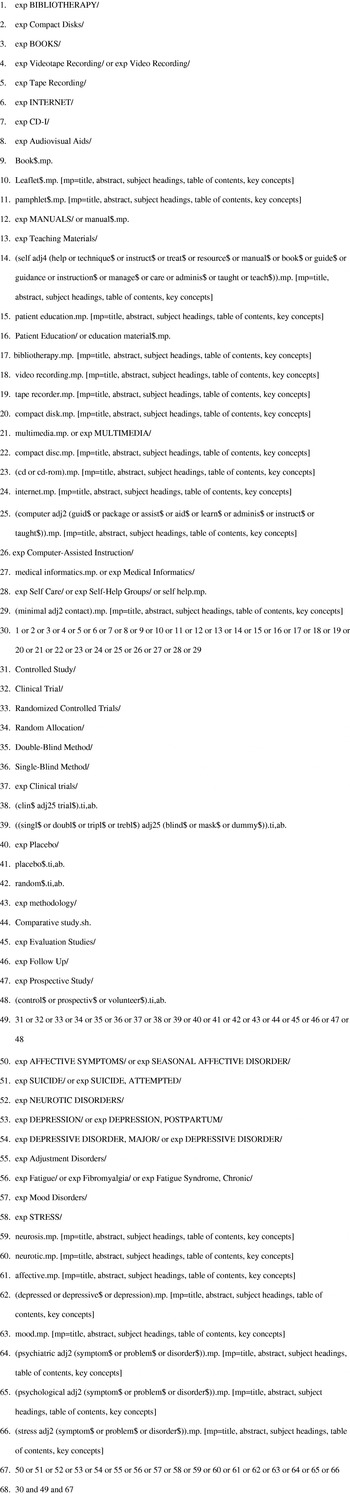
There were several methods of identifying studies for the review. A number of previous reviews had been conducted in this area (Scogin et al. Reference Scogin, Bynum, Stephens and Calhoon1990; Gould and Clum, Reference Gould and Clum1993; Marrs, Reference Marrs1995; Cuijpers, Reference Cuijpers1997; Bower et al. Reference Bower, Richards and Lovell2001; McKendree-Smith et al. Reference McKendree-Smith, Floyd and Scogin2003; Den Boer et al. Reference Den Boer, Wiersma and Van Den Bosch2004; Anderson et al. Reference Anderson, Lewis, Araya, Elgie, Harrison, Proudfoot, Schmidt, Sharp, Weightman and Williams2005) and these were initially examined for relevant studies. A comprehensive search (without language restriction) of the Cochrane Collaboration's register of controlled trials (CENTRAL) was then undertaken to identify any studies missed by these previous reviews. The search of CENTRAL was then augmented by searches of Medline, EMBASE, CINAHL and PsycINFO for the years 2002–2005 to identify any recent additional literature that might not have been identified within CENTRAL. Searches used a mix of subject headings and free text terms for self-help interventions and depression, combined with a conventional randomized controlled trials search filter (an example search is available in the online Appendix).
Study selection and data extraction
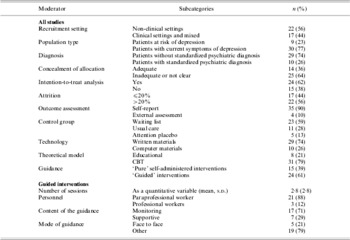
Titles and abstracts were judged by individual researchers who identified potentially eligible studies. Full text articles were then discussed by the research team and assessed against the study inclusion criteria. When studies were judged as eligible, data were extracted from published reports by two researchers working independently, with disagreements resolved by discussion or contact with authors. For the purposes of this review, data extraction was restricted to comparisons of self-help interventions versus ‘control’ groups, and comparisons with other treatments (e.g. conventional therapy) were excluded as they were comparatively rare. Control groups included a range of comparators such as attention placebos, waiting list and usual care. Data on the codes are presented in Table 1.
Descriptive data on moderator variables

CBT, Cognitive behavioural therapy; s.d., standard deviation.
Study design moderators
Three measures of internal validity were used. The first measure was concealment of allocation, which was a judgement of whether random allocation was conducted such that judgements of eligibility for the trial were made independent of knowledge of the allocation sequence (Schulz & Grimes, Reference Schulz and Grimes2002), a known moderator of effect size (Schulz et al. Reference Schulz, Chalmers, Hayes and Altman1995).
The other measures of internal validity were the use of an intention-to-treat analysis (Hollis & Campbell, Reference Hollis and Campbell1999) and levels of attrition (Cook & Campbell, Reference Cook and Campbell1979; Smith et al. Reference Smith, Glass and Miller1980), using an arbitrary threshold of 80% follow-up. Judgements were made on the basis of published information; where information was missing, studies were rated as ‘low’ quality for that category.
Two other study design issues were coded. Given that the type of assessment (self-report versus external assessor) was found to be a moderator of outcome in a previous review (Den Boer et al. Reference Den Boer, Wiersma and Van Den Bosch2004), this was also coded. Finally, control groups were coded as ‘attention placebos’, ‘waiting list’ or ‘usual care’.
Study context and population moderators
Recruitment context was coded as either ‘non-clinical’ (mainly media advertisements or unselected surveys in the community) or ‘clinical’ (e.g. referral from a professional in a primary care or mental health setting) or mixed. Patient populations were coded as either patients ‘at risk’ for depression (e.g. recruited from particular groups, such as pregnant women, based on likely risk) or patients recruited on the basis of existing depressive symptoms. Studies including patients ‘at risk’ did so on the assumption that a proportion of ‘at risk’ patients would develop more severe symptoms during the study, and that the proportion would be reduced in those receiving self-help. Patients were also coded as to whether they had received a psychiatric diagnosis of depression according to a standardized scheme such as DSM-IV or ICD-10.
Intervention moderators
The type of health technology was coded as either ‘written bibliotherapy’ or ‘computer technology’. The theoretical model underlying the intervention was coded as either ‘educational’ (when the intervention was restricted to information provision) or ‘cognitive behavioural therapy’ (CBT) (when the intervention included specific descriptions of CBT techniques). Studies were coded as ‘pure’ or ‘guided’ self-help based on the presence or absence of therapist contact as part of the intervention. In the subset of ‘guided’ studies, the background of the therapist was coded as either ‘professional’ (postgraduate mental health qualification) or ‘paraprofessional’ (no postgraduate mental health qualification). The mode of delivery of guidance was coded as ‘face-to-face’ or ‘other’ (which included telephone, email and written contact). The content of the guidance was coded as ‘monitoring’, where the focus was on checking that patients had used the materials, assisting with queries about use, or where there was a specific statement that therapeutic techniques such as counselling were not used. Interventions were coded as having ‘supportive’ content when the intervention involved more than simple monitoring, which might include advice from the therapist about specific problems, motivation or support.
Outcomes
Outcome measures in the studies included self-report and external assessment, and ranged from measures of depressive symptoms to related psychological processes such as cognitive styles. Continuous measures were translated to a standardized effect size, that is mean of intervention group minus mean of control group, divided by the pooled standard deviation. Outcomes reported as dichotomous variables were translated to a standardized effect size using the logit transformation (Lipsey & Wilson, Reference Lipsey and Wilson2001).
Many studies included multiple outcome measures, and used multiple follow-up points. The primary analysis was restricted to measures of depressive symptoms or diagnoses, and measures of related psychological processes such as cognitive styles were excluded. However, some studies still reported multiple relevant measures, and their inclusion would violate statistical assumptions about independence. In these cases, it is possible to average over multiple dependent measures, or use a single measure chosen a priori (Lipsey & Wilson, Reference Lipsey and Wilson2001). The latter approach was used in the current study. The frequency of use of depression measures in the entire sample was calculated, and the most frequently used measure available within any study was chosen for the primary analysis (which usually involved validated measures such as the Beck Depression Inventory, the Hamilton Rating Scale for Depression, the Centre for Epidemiological Studies – Depression Scale and the Hospital Anxiety and Depression Scale). To assess the possible effect of this choice, a secondary sensitivity analysis used those outcome measures within each trial that gave the highest and lowest standardized effect size.
Data extraction was restricted to short-term outcomes, as long-term outcomes were infrequently reported. Where multiple short-term follow-ups were reported, the analysis used the longest recorded follow-up within a 6-month period. This provided a reasonable degree of consistency in terms of the length of follow-up across studies.
Analysis
Meta-regression extends conventional meta-analysis to estimate the extent to which one or more moderators in each study explain heterogeneity in treatment effect. Analyses were conducted in Stata version 9 (Stata Corporation, College Station, TX, USA), using the metan and metareg macros. The primary analyses were conducted on all studies initially, and then restricted to the subset of ‘guided’ studies when examining the moderating effects of different types of guidance.
Where studies reported two parallel comparisons with a control group (e.g. two types of bibliotherapy versus waiting list), both comparisons were included separately, but sample sizes in the control group were halved to ensure that they were not double counted in the meta-analysis. One study reported analyses of a trial split by site (Rahe et al. Reference Rahe, Taylor, Tolles, Newhall, Veach and Bryson2002), and these were treated as two separate comparisons. Two studies used factorial designs (Reid et al. Reference Reid, Glazener, Murray and Taylor2002; Little et al. Reference Little, Dorward, Warner, Moore, Stephens, Senior and Kendrick2004), although in both cases only one of the factorial comparisons was related to the study question and included in the analyses.
The initial meta-analyses used random effects modelling (Sutton et al. Reference Sutton, Abrams, Jones, Sheldon and Song1998) to provide a conventional pooled effect size. Random effects modelling is based on the assumption that estimates of effects are distributed randomly. Such models are superior in cases where studies are markedly heterogeneous, and are thus appropriate in the present context. Heterogeneity was measured using Cochran's test of heterogeneity, but this test provides only an assessment of the significance of heterogeneity, not its magnitude, is susceptible to the number of trials in the meta-analysis, and is difficult to interpret when comparing meta-analyses. Therefore, the I 2 statistic, which estimates the percentage of total variation across studies that can be attributed to heterogeneity rather than chance, was also calculated. As a guide, I 2 values of 25% may be considered ‘low’, 50% ‘moderate’ and 75% ‘high’ (Higgins et al. Reference Higgins, Thompson, Deeks and Altman2003).
The main analysis of moderators of treatment effect used random effects meta-regression, which provided estimates of the relationships between moderators and outcomes in the form of a regression coefficient and related confidence intervals (CIs). This regression coefficient represents the difference in effect between trials rated on the two levels of categorical moderator variables (such as ‘pure’ and ‘guided’ self-help) or the change in effect associated with a one-unit increase in a continuous moderator variable (such as average session length within a trial). The permutation test was used to calculate p values (using 1000 Monte-Carlo simulations) to reduce the chance of spurious false-positive findings (Higgins & Thompson, Reference Higgins and Thompson2004). Initial univariate analyses were followed by estimation of a multivariate model. The amount of heterogeneity explained by moderator variables was examined by reductions in the I 2 statistic when the moderator was entered into the analysis.
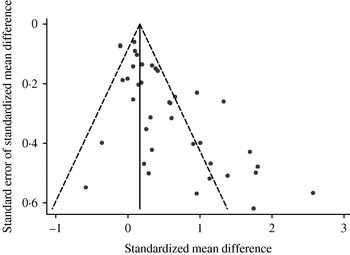
Publication bias refers to the situation when published research is systematically unrepresentative of the population of completed studies (Rosenthal, Reference Rosenthal1979), and was assessed through a funnel plot (Egger et al. Reference Egger, Davey, Schneider and Minder1997), which plotted effect size against the standard error of the effect size. When an absence of small studies with small effect sizes causes asymmetry in the plot, publication bias may be present.
RESULTS
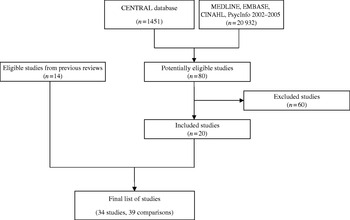
We identified 34 published studies reporting 39 relevant comparisons. Fourteen studies were identified from previous reviews, and 20 were located from the 22 383 studies identified by the new electronic database searches (the flowchart is available in the online Appendix).
Meta-analysis
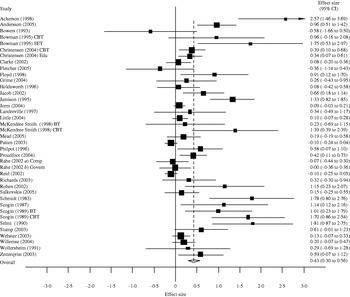
Overall, the effect of self-help interventions was ‘medium’ according to current convention, with a pooled standardized mean difference of 0·43 and 95% CI 0·30–0·57 (Cohen, Reference Cohen1988; Lipsey, Reference Lipsey1990). The results are plotted in Fig. 1. The variation in effect size (I 2) attributable to heterogeneity was 77·3%. When the analysis was restricted to those studies using ‘guided self-help’, the pooled standardized mean difference was ‘large’ according to current convention (0·80, 95% CI 0·58–1·01), and the variation in effect size attributable to heterogeneity was 68·3%.
Random-effects meta-analysis of estimates of effect size. CBT, Cognitive behavioural therapy; SET, self-examination therapy; BT, behavioural therapy; Edu, educational website; Comp, computer industries sample; Govern, city government sample.

Meta-regression
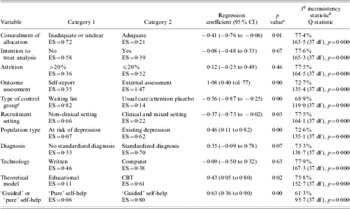
The results of the analyses of all studies are shown in Table 2.
Univariate analyses of moderators of self-help interventions

CI, Confidence interval; ES, effect size; df, degrees of freedom; CBT, cognitive behavioural therapy.
a Based on 1000 Monte Carlo simulations.
b I 2 statistic describes the percentage of total variation across studies that is due to heterogeneity rather than chance. A value of 0% indicates no observed heterogeneity, and larger values show increasing heterogeneity. The I 2 value in the table reflects the amount of heterogeneity remaining after accounting for each moderator in the row of the table.
c Usual care and attention placebo collapsed into a single category as the estimates of effects were similar (−0·15 and −0·13).
Study context and population moderators
Studies involving patients recruited in non-clinical settings reported a significantly higher effect size than those in clinical populations. Two comparisons involved populations with ‘stress’, and nine were with patients ‘at risk’ for depression rather than suffering from existing problems. Studies with populations ‘at risk’ for depression showed a significantly smaller effect size than those in patients with existing problems.
Study design moderators
There was no association between effect size and intention-to-treat analyses, or attrition rates. However, effects were significantly lower when allocation was adequately concealed, when assessment was through self-report, and when the control group was ‘usual care’ or ‘attention placebo’ as opposed to ‘waiting list’.
Intervention moderators
Studies using a ‘guided’ model reported a significantly higher effect size than those using ‘pure’ self-help. Interventions based on a CBT model reported a significantly higher effect size than those based on an educational model. There was no significant difference between the effect of self-help based on written bibliotherapy and those based on information technology.
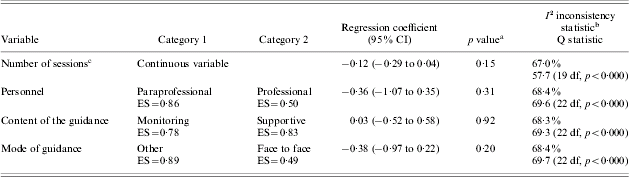
When the analysis was restricted to ‘guided’ studies (Table 3), there were no significant relationships between effect size and personnel type, content of the guidance, mode of the guidance or number of sessions.
Univariate analyses of moderators of guided self-help interventions

CI, Confidence interval; ES, effect size; df, degrees of freedom.
a Based on 1000 Monte Carlo simulations.
b I 2 statistic describes the percentage of total variation across studies that is due to heterogeneity rather than chance. A value of 0% indicates no observed heterogeneity, and larger values show increasing heterogeneity. The I 2 value in the table reflects the amount of heterogeneity remaining after accounting for each moderator in the row of the table.
c Based on n=21.
Multivariate analyses
A multivariate analysis was also conducted using any moderators with associations significant in the univariate analyses across all studies (i.e. concealment of allocation, type of assessment, type of control group, recruitment setting, population type, theoretical model, and ‘guided’ versus ‘pure’ self-help). Only ‘guided’ versus ‘pure’ remained significant in the multivariate analysis (regression coefficient 0·36, 95% CI 0·05–0·68, p=0·03). No multivariate analysis was conducted restricted to ‘guided’ studies as there were no significant moderators in the univariate analyses.
Secondary analyses
As noted earlier, most studies reported multiple outcomes, and the most commonly used outcomes were used in the primary analysis. An a priori secondary analysis examined the effect of including those outcome measures that gave the highest and lowest estimates of effect within each study, as opposed to the most commonly reported measure. When the highest effect sizes were used, there were no changes in the statistical significance of associations reported in Tables 2 and 3. When the lowest effect sizes were used, recruitment context, theoretical model, concealment of allocation and type of outcome assessment were no longer significant moderators, whereas diagnosis became significant.
A post hoc secondary analysis was also conducted to assess the effect of one study that was based on an adolescent population, and demonstrated a highly positive effect size (Ackerson et al. Reference Ackerson, Scogin, McKendree-Smith and Lyman1998). The statistical significance of the results reported in Tables 2 and 3 were not influenced by the exclusion of this study.
Analysis of publication bias
The funnel plot showed significant asymmetry, which suggested that publication bias might be present (Fig. 2). The test for asymmetry among all studies was positive using Egger's test (p<0·001). However, publication bias was only evident among ‘guided’ self-help studies (p<0·0001), but was non-significant in ‘pure’ self-help studies (p=0·39).
Funnel plot of all studies. Graph of asymmetrical funnel plot suggestive of publication bias. Egger's regression test (zero if unbiased)=2·41 (95% CI 1·60 to 3·22), p<0·05.

DISCUSSION
The results of the overall meta-analysis concerning the effectiveness of self-help interventions are lower than previous studies, which have reported effect sizes of 1·36 (Anderson et al. Reference Anderson, Lewis, Araya, Elgie, Harrison, Proudfoot, Schmidt, Sharp, Weightman and Williams2005) and 0·84 (Den Boer et al. Reference Den Boer, Wiersma and Van Den Bosch2004). The current review included significantly more studies than previous reviews, partly because new studies were published in the time between reviews, and partly because the current review used more liberal inclusion criteria. The study took a liberal approach to inclusion because the focus was on moderators of treatment effects. This led to the inclusion of studies with a wider range of interventions, including simple provision of educational booklets as well as more complex self-help technologies. A wider variety of patients were also included, such as those with diagnosed depression, depressive symptoms, stress, and those ‘at risk’. The difference in the overall effect size between the current review and previous studies may reflect variation in inclusion criteria, and these issues must be kept in mind when interpreting the results.
However, the overall estimate of effect was of less interest than the analysis of moderating variables, and the present study extends the results of previous reviews by giving a more comprehensive examination of moderators. It should be noted that only guided self-help was a significant moderator of outcomes in the multivariate analysis. The interpretation of multivariate regression is complex, as the analysis takes account of the relationships between moderator variables, as well as those between the moderators and the outcome. If a variable predicts outcome in a univariate analysis but fails to reach significance in a multivariate analysis, this may not mean that it is unimportant. Nevertheless, the following discussion of variables that are only significant in the univariate analyses should be viewed with some caution, as their statistical significance may reflect statistical confounding between moderators.
Concealment of allocation was a key moderator of treatment effect, replicating earlier work (Schulz et al. Reference Schulz, Chalmers, Hayes and Altman1995). Similarly, the effect of type of outcome assessment supported a previous review of self-help (Den Boer et al. Reference Den Boer, Wiersma and Van Den Bosch2004). The mechanism underlying the moderating effect of the type of control group is unclear. Few studies provided detailed information about the services available to those in the control groups. However, the size of the effect does suggest caution in generalizing the results from waiting-list studies.
The finding that the interventions had a smaller effect in patients recruited from clinical settings rather than volunteers contradicts a previous review (Den Boer et al. Reference Den Boer, Wiersma and Van Den Bosch2004) but is in accord with a recent systematic review of brief therapy for depression (Churchill et al. Reference Churchill, Hunot, Corney, Knapp, McGuire, Tylee and Wessely2002). It is noteworthy that the evidence base used for self-administered treatments within the National Institute for Clinical Excellence (NICE) depression guidelines was almost entirely conducted in volunteer populations.
Overall, self-help interventions may be more effective with existing problems rather than in a preventive capacity (the difference in effect between patients with and without a diagnosed depressive disorder was marked, although statistically non-significant). It is generally supposed that self-help interventions are of greatest benefit in milder problems, but clearly the capacity to benefit in populations at risk may be smaller, such that it may be difficult to show additional benefit from any intervention compared to no treatment.
The univariate results suggested that self-help interventions should be based on CBT principles rather than education. This may be unsurprising, but has important implications, as simpler educational materials may have greater applicability to some populations, such as those with poor health literacy. It is still unclear whether other theoretical models would show equal efficacy to CBT, and it is unknown what the optimal mix is between cognitive and behavioural components.
The multivariate analysis gave clear evidence of the superiority of ‘guided’ interventions, which supports current treatment guidelines (National Collaborating Centre for Mental Health, 2005). However, when analyses were restricted to ‘guided’ studies, there was no clear relationship between number of sessions and outcome, which means that no specific recommendations on the type of guidance can be given. It should be noted that the range in session length is necessarily restricted when considering self-administered interventions, and power to detect associations was limited.
There was no clear advantage associated with contact that involved ‘supportive’ guidance beyond ‘monitoring’. However, this finding should be treated with caution. The coding of this attribute was problematic because the exact nature of the contact was not always made clear within published reports.
The study only tested a small number of moderators that were felt to be likely sources of heterogeneity, as there were concerns that testing large numbers of moderators would inflate the chance of false-positive findings. However, it is possible that other variables might be important. It should also be noted that the reliability of the coding used in the study was not assessed quantitatively.
Limitations of the study
It is possible that additional studies would have been identified if the electronic database search had been extended to cover databases from inception, as previous reviews might have used different inclusion criteria or missed relevant studies. However, the search did use the CENTRAL database in the Cochrane Library, which is a comprehensive database of randomized controlled trials identified from a large number of databases without time restriction, as well as the results of handsearches of journals conducted by the Cochrane collaboration (Dickersin et al. Reference Dickersin, Manheimer, Wieland, Robinson, Lefebvre and McDonald2002). It has been suggested that traditional exhaustive search strategies using multiple databases are not cost-effective, as this has already been done for CENTRAL (Royle & Waugh, Reference Royle and Waugh2005). It is possible that the study failed to examine sufficient grey literature sources and other methods for the identification of unpublished studies (such as contact with authors) and the funnel plot did suggest that publication bias might be present. However, there are a number of interpretations of the asymmetrical plot other than publication bias (Shadish & Baldwin, Reference Shadish and Baldwin2005).
The analysis is limited because it is restricted to short-term outcomes. Moderators of short-term benefits may differ from those that predict enduring effects. However, studies using waiting-list controls did not generally report long-term outcomes with appropriate control groups.
The technique of meta-regression has several limitations (Thompson & Higgins, Reference Thompson and Higgins2002). The analysis only represents an observational association because meta-regression across trials does not have the benefits of randomization. Primary randomized controlled trials and ‘dismantling’ studies (Jacobson et al. Reference Jacobson, Dobson, Truax, Addis, Koerner, Gollan, Gortner and Prince1996) are optimal methods for examining moderators, but may not always be feasible.
Power to detect associations is limited by the number of available studies (Lambert et al. Reference Lambert, Sutton, Abrams and Jones2002), and limitations of power are especially important in the analysis of studies using the ‘guided’ model (n=24). In a small sample, outliers might have a large influence, and multivariate models might be highly sensitive to the inclusion of particular variables. Finally, some moderators (such as the number of guidance sessions) might demonstrate a relationship within trials that is not present in differences between trials (Thompson & Higgins, Reference Thompson and Higgins2002).
Implications of the study
The results would support the NICE recommendation about the appropriate treatment being materials based on CBT with guidance from a health professional, although the length or nature of that guidance is less clear. Other associations should be interpreted with caution, but might suggest that the particular technology used is less crucial, and that a range of delivery methods, professionals and content can be used successfully. The current results also identify key population and methodological moderators. These may be useful in determining whether the effects of self-help shown in a study completed in one context can be reasonably generalized to another.
Although the meta-regression provides some useful insights, the multivariate analysis only identified a single significant moderator. A key issue for the future is the comparison of different methods of investigation in the analysis of moderators of treatment effect. Qualitative research (Elliott et al. Reference Elliott, Fischer and Rennie1999) and process methods (Elliott, Reference Elliott, Rice and Greenberg1984) may be required to provide a more fine-grained analysis and provide more detail concerning the optimal methods of delivering self-help interventions.
ACKNOWLEDGEMENTS
This study was funded by the Medical Research Council Brain Sciences Initiative.
DECLARATION OF INTEREST
None.
NOTE
Supplementary information accompanies this paper on the Journal's website (http://journals.cambridge.org).
ONLINE APPENDIX
References to studies included in the review
Ackerson, J., Scogin, F., McKendree-Smith, N. & Lyman, R. (1998). Cognitive bibliotherapy for mild and moderate adolescent depressive symptomatology. Journal of Consulting and Clinical Psychology 66, 685–690. Andersson, G., Bergstrom, J., Hollandare, F., Carlbring, P., Kaldo, V. & Ekselius, L. (2006). Internet based self-help for depression: a randomised controlled trial. Journal of Clinical Psychology (in press). Andersson, G., Bergstrom, J., Hollandare, F., Ekselius, L. & Carlbring, P. (2004). Delivering cognitive behavioural therapy for mild to moderate depression via the internet: predicting outcome at 6 month follow up. Verhaltenstherapie 14, 185–189. Bowers, W., Stuart, S., McaFarlane, R. & Gorman, L. (1993). Use of computer-administered cognitive-behaviour therapy with depressed inpatients. Depression 1, 294–299. Bowman, D., Scogin, F. & Lyrene, B. (1995). The efficacy of self-examination therapy and cognitive bibliotherapy in the treatment of mild to moderate depression. Psychotherapy Research 5, 131–140. Christensen, H., Griffiths, K. & Jorm, A. (2004). Delivering interventions for depression by using the internet: randomised controlled trial. British Medical Journal 328, 265. Clarke, G., Reid, E., Eubanks, D., O'Connor, E., DeBar, L., Kelleher, C., Lynch, F. & Nunley, S. (2002). Overcoming depression on the internet (ODIN): a randomized controlled trial of an internet depression skills intervention programme. Journal of Medical Internet Research 4, e14. Fletcher, J., Lovell, K., Bower, P., Campbell, M. & Dickens, C. (2005). Process and outcome of a non-facilitated self-help manual for anxiety and depression in primary care: a pilot study. Behavioral and Cognitive Psychotherapy 33, 319–331. Floyd, M., Scogin, F., McKendree-Smith, N., Floyd, D. & Rokke, P. (2004). Cognitive therapy for depression: a comparison of individual psychotherapy and bibliotherapy for depressed older adults. Behavior Modification 28, 297–318. Floyd, R. (1998). Cognitive therapy for depression: a comparison of individual psychotherapy and bibliotherapy for depressed older adults. Unpublished PhD thesis, University of Alabama. Griffiths, K. & Christensen, H. (2000). Quality of web based information on treatment of depression: cross sectional survey. British Medical Journal 321, 1511–1515. Grime, P. (2004). Computerized cognitive behavioural therapy at work: a randomized controlled trial in employees with recent stress-related absenteeism. Occupational Medicine 54, 353–359. Holdsworth, N., Paxton, R., Seidel, S., Thomson, D. & Shrubb, S. (1996). Parallel evaluations of new guidance materials for anxiety and depression in primary care. Journal of Mental Health 5, 195–207. Jacob, K., Bhugra, D. & Mann, A. (2002). A randomised controlled trial of an educational intervention for depression among Asian women in primary care in the United Kingdom. International Journal of Social Psychiatry 48, 139–148. Jamison, C. & Scogin, F. (1995). The outcome of cognitive bibliotherapy with depressed adults. Journal of Consulting and Clinical Psychology 63, 644–650. Jorm, A., Griffiths, K., Christensen, H., Korten, A., Parslow, R. & Rodgers, B. (2003). Providing information about the effectiveness of treatment options to depressed people in the community: a randomized controlled trial of effects on mental health literacy, help-seeking and symptoms. Psychological Medicine 33, 1071–1079. Landreville, P. & Bissonnette, L. (1997). Effects of cognitive bibliotherapy for depressed older adults with a disability. Clinical Gerontologist 17, 35–55. Little, P., Dorward, M., Warner, G., Moore, M., Stephens, K., Senior, J. & Kendrick, T. (2004). Randomised controlled trial of effect of leaflets to empower patients in consultations in primary care. British Medical Journal 328, 444. McKendree-Smith, N. (1998). Cognitive and behavioural bibliotherapy for depression: an examination of efficacy and mediators and moderators of change. Unpublished PhD thesis, University of Alabama. Mead, N., MacDonald, W., Bower, P., Lovell, K., Richards, D. & Bucknall, A. (2005). The clinical effectiveness of guided self-help versus waiting list control in the management of anxiety and depression: a randomised controlled trial. Psychological Medicine 35, 1633–1643. Patten, S. (2003). Prevention of depressive symptoms through the use of distance technologies. Psychiatric Services 54, 396–398. Philpot, V. & Bamburg, J. (1996). Rehearsal of positive self statements and restructured negative self statements to increase self esteem and decrease depression. Psychological Reports 1996, 83–91. Proudfoot, J., Goldberg, D., Mann, A., Everitt, B., Marks, I. & Gray, J. (2003). Computerized, interactive, multimedia cognitive-behavioural program for anxiety and depression in general practice. Psychological Medicine 33, 217–227. Proudfoot, J., Ryden, C., Everitt, B., Shapiro, D., Goldberg, D., Mann, A., Tylee, A., Marks, I. & Gray, J. (2004). Clinical efficacy of computerised cognitive-behavioural therapy for anxiety and depression in primary care: randomised controlled trial. British Journal of Psychiatry 185, 46–54. Rahe, R., Taylor, C., Tolles, R., Newhall, M., Veach, T. & Bryson, S. (2002). A novel stress and coping workplace program reduces illness and healthcare utilization. Psychosomatic Medicine 64, 278–286. Reid, M., Glazener, C., Murray, G. & Taylor, G. (2002). A two-centred pragmatic randomised controlled trial of two interventions of postnatal support. British Journal of Obstetrics and Gynaecology 109, 1164–1170. Richards, A., Barkham, M., Cahill, J., Richards, D., Williams, C. & Heywood, P. (2003). PHASE: a randomised, controlled trial of supervised self-help cognitive behavioural therapy in primary care. British Journal of General Practice 53, 764–770. Rohen, N. (2002). Analysis of efficacy and mediators of outcome in minimal-contact cognitive bibliotherapy used in the treatment of depressive symptoms. Unpublished PhD thesis, University of Alabama. Salkovskis, P., Rimes, K., Stephenson, D., Sacks, G. & Scott, J. (2005). A randomized controlled trial of the use of self-help materials in addition to standard general practice treatment of depression compared to standard treatment alone. Psychological Medicine 36, 325–333. Schmidt, M. & Miller, W. (1983). Amount of therapist contact and outcome in a multidimensional depression treatment program. Acta Psychiatrica Scandinavica 67, 319–332. Scogin, F., Hamblin, D. & Beutler, L. (1987). Bibliotherapy for depressed older adults: a self-help alternative. The Gerontologist 27, 383–387. Scogin, F., Jamison, C. & Davis, N. (1990). Two year follow-up of bibliotherapy for depression in older adults. Journal of Consulting and Clinical Psychology 58, 665–667. Scogin, F., Jamison, C. & Gochneaur, K. (1989). Comparative efficacy of cognitive and behavioral bibliotherapy for mildly and moderately depressed older adults. Journal of Consulting and Clinical Psychology 57, 403–407. Selmi, P., Klein, M., Greist, J., Sorrell, S. & Erdman, H. (1990). Computer administered cognitive-behavioural therapy for depression. American Journal of Psychiatry 147, 51–56. Stump, J. (2003). Efficacy and process of cognitive bibliotherapy for the treatment of depression in prison. Unpublished PhD thesis, University of Alabama. Webster, J., Linnane, J., Roberts, J., Starrenburg, S., Hinson, J. & Dibley, L. (2003). IDentifty, Educate and Alert (IDEA) trial: an intervention to reduce postnatal depression. British Journal of Obstetrics and Gynaecology 110, 842–846. Willemse, G., Smit, F., Cuijpers, P. & Tiemens, B. (2004). Minimal contact psychotherapy for sub-threshold depression in primary care: randomised trial. British Journal of Psychiatry 185, 416–421. Wollersheim, J. & Wilson, G. (1991). Group treatment of unipolar depression: a comparison of coping, supportive, bibliotherapy and delayed treatment groups. Professional Psychology: Research and Practice 22, 496–502. Zetterqvist, K., Maanmies, J., Strom, L. & Andersson, G. (2003). Randomized controlled trial of internet-based stress management. Cognitive Behaviour Therapy 32, 151–160.
Study flow diagram.

MEDLINE search strategy.

Brief description of studies included in the review

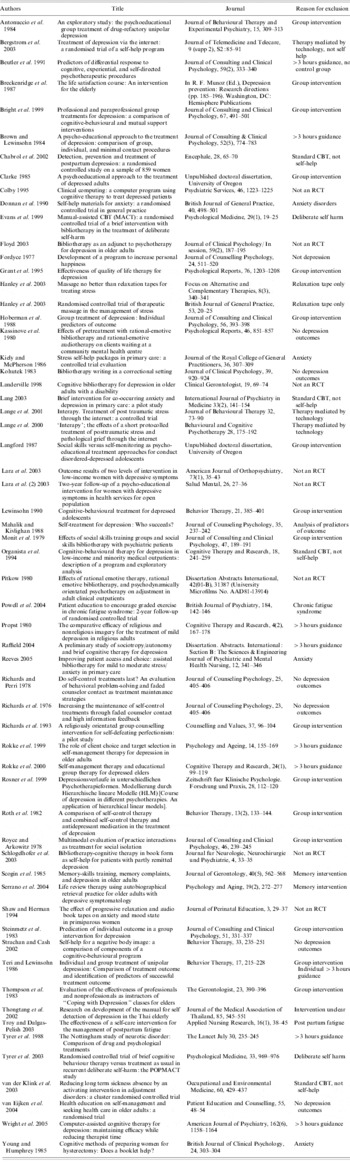
List of excluded studies