Introduction
Korean pine Pinus koraiensis Sieb. et Zucc is an evergreen tree in the Pinaceae and one of the three five-needled pine species globally (Jin et al., Reference Jin, Pukkala, Li and Dong2017; He et al., Reference He, Zhang, Jin, Sui, Zhang and Song2021). This species is widely grown in northeastern China, the west coast of Japan, the Korean Peninsula, and southeastern Russia (Zhang et al., Reference Zhang, Zhang, Wang and Zhao2019). Korean pine is an essential economic and afforestation species, and thus, has had very high economic value in China since the early 1950s. Approximately 360,000 hm2 of Korean pine plantations in the Heilongjiang Province of China have reached the age for cone setting. The annual yield of pine seeds exceeds 460 million USD (Niu et al., Reference Niu, Wang and Yan2020).
The unreasonable collection of cones and the indiscriminate use of chemical pesticides have caused endemic pest damage in Korean pine. Currently, at least two insect species, Dioryctria sylvestrella Ratzeburg and Dioryctria abietella Denis & Schiffermüller are serious economic pests of Pinaceae species (Glynn and Weslien, Reference Glynn and Weslien2004; Skrzypczyήska, Reference Skrzypczyήska2005; Xu et al., Reference Xu, Yan, Nie and Wang2010; Rosenberg et al., Reference Rosenberg, Nordlander and Weslien2015). The D. sylvestrella is prevalent from May to September each year. These larvae damage the cones, seeds, main stems, and Korean pine branches. In severe cases, the cones are eaten empty; the seeds are poorly developed, and the trunk is decayed and malformed (Xu et al., Reference Xu, Yan, Nie and Wang2010). However, the D. abietella is predominant from late June to the end of September. Their larvae feed and damage the cones of Pinaceae species (Xu et al., Reference Xu, Yan, Nie and Wang2010; Svensson et al., Reference Svensson, Wang, Jirle, Rosenberg, Liblikas, Chong, Löfstedt and Anderbrant2018). Both pests cause serious economic losses with over 80% cone damage and 50% damage of seeds (Mosseler et al., Reference Mosseler, Roberts and Tricco1992; Hall et al., Reference Hall, Farman, Domínguez and Pajares2017). The annual loss of nuts loss exceeds 70 million USD in Heilongjiang Province alone (Xu et al., Reference Xu, Yan, Nie and Wang2010; Niu et al., Reference Niu, Wang and Yan2020).
Chemical pesticides are used to control the borers dominated by D. sylvestrella and D. abietella and include pyrethroids, organophosphates, and neonicotinoids (Rosenberg et al., Reference Rosenberg, Nordlander and Weslien2015; Hardy et al., Reference Hardy, Sayyed, Leslie and Dittrich2020). However, pine growers gradually abandoned long-term aerial insecticide sprays because of the extensive damage to natural enemies and arthropods and water pollution (Glynn and Weslien, Reference Glynn and Weslien2004; Kwon, Reference Kwon2008). Biological control is now the major approach for non-destructive pest control, and it is conducive to the ecological environment (Brockerhoff and Kenis, Reference Brockerhoff and Kenis1997). Trichogramma minutum Riley is an important biological agent that is used to control cone pest populations near Hearst, Ontario (Zaborski et al., Reference Zaborski, Teal and Laing1987; Smith and You, Reference Smith and You1990). Globally, Bacillus thuringiensis ssp. kurstaki (Btk) is a widely used biological control insecticide that is highly effective at controlling lepidopteran larvae (Sanchis and Bourguet, Reference Sanchis and Bourguet2008). Aerial Btk sprays reduce the damage by pests and enhance the photosynthesis of leaves (Cadogan, Reference Cadogan1993; Salama and Salem, Reference Salama and Salem1999; Fuentealba et al., Reference Fuentealba, Bauce and Dupont2015, Reference Fuentealba, Dupont, Hébert, Berthiaume, Quezada-García and Bauce2019). In spruce orchards, Btk sprays significantly reduced infestations by the corn pyralid (Glynn and Weslien, Reference Glynn and Weslien2004; Rosenberg and Weslien, Reference Rosenberg and Weslien2005). Unsprayed cones had an 80% incidence of damage, but the incidence decreased to <15% in cones sprayed with a 0.2% suspension of Btk (Weslien, Reference Weslien1999).
This study evaluated the effect of entomopathogenic fungi and bacterial sprays on fruit set and cone development, which was calculated as the percentage of flowers observed to survive during their development to cones, cone damage, and seed quality. The study established a correlation between indicators and the connection between pest species and the spraying suspension.
Materials and methods
Forest plantation conditions
The study site was in Linkou County (45°24′38″N, 130°15′46″E), which is located in southeast Heilongjiang Province, China. The forest plantation covers 19,865 hectares, and the growing stock volume was 18,270,052 m3. The main tree species are birch (Betula platyphylla Suk.), linden (Tilia amurensis Rupr.), Korean pine (P. koraiensis), Mongolian Scotch pine (P. sylvestris ‘mongolica’), larch (Larix gmelinii (Rupr.) Kuzen.), and Mongolian oak (Quercus mongolica Fisch. ex Ledeb.). Korean pine constituted 9.90% of the forest plantation cover. Four-year-old Korean pine seedlings were planted in 1974 and spaced 3 × 3 m apart. They started to produce cones in 1996. The pine trees were approximately 16 m high and 45 years old at the time of experiment.
Insecticides
Fungi
The fungal conidia were cultured as described by Serebrov et al. (Reference Serebrov, Gerber, Malyarchuk, Martemyanov, Alekseev and Glupov2006) and Wang and Chi (Reference Wang and Chi2019) with some modifications. Four fungal strains, namely Beauveria bassiana Bb01 (B.bassiana01), Be. bassiana Bb122077 (B.bassiana122077), Lecanicillium fusisporum LF01 (L.fusisporum01), and L. antillanum LN01 (L.antillanum01) were chosen for the study. B.bassiana01 was isolated from the larvae of Xylotrechus rusticus L. in the field and separated by Jun-nan Ding in the laboratory in May 2013. B.bassiana122077 was purchased from the Bena Culture Collection Company (Henan, China). Both L.fusisporum01 (GenBank accession MZ569595) and L.antillanum01 (GenBank accession MZ569596) were isolated from D. abietella larvae. All the fungal strains were activated on potato dextrose agar media at 27 ± 1°C. Afterwards, the conidia and hyphal mixture were transferred into potato dextrose broth media and cultured at 27 ± 1°C, 180 rpm for 7 days. The solution was filtered using sterile gauze, and 0.05% of Tween 80 was added to the filtered solution to form a stock solution. The conidia were counted on a blood count plate under an optical microscope (BX51; Olympus Corporation, Japan). The stock solution was diluted with sterile water to 1 × 10⁸, 1 × 10⁶, and 1 × 10⁴ conidia ml−1 into a 2.5 litre hand sprayer (approximately 2 litre in the container) for application.
Bacteria
The bacterial solution was prepared as described by Raymond et al. (Reference Raymond, Lijek, Griffiths and Bonsall2008) and Frankenhuyzen et al. (Reference Frankenhuyzen, Régnière and Bernier-Cardou2008). Bacillus thuringiensis ssp. entomocidus 223176 strain (Bt223176) was purchased from the Bena Culture Collection Company. The bacterial strain was cultured in a beef extract-peptone medium at 37 ± 1°C for 24 h. Cultured bacterial colonies were carefully picked from the beef extract-peptone media using an inoculating loop and incubated overnight at 37 ± 1°C shaking at 220 rpm, followed by centrifuged at 12,000 rpm for 2 min. The pellet was washed three times and resuspended in 0.1 M phosphate-buffered saline (PBS). The bacterial density was measured at OD600, adjusted to 0.5 (1 × 10⁸ CFU ml−1 ≈ 0.5), and the same solution was further diluted to 1 × 10⁶ and 1 × 10⁴ CFU ml−1.
Experimental design
The experimental design and indicators of this study were adopted from Glynn and Weslien (Reference Glynn and Weslien2004), Rosenberg et al. (Reference Rosenberg, Nordlander and Weslien2015), Weslien (Reference Weslien1999), and Loewe-Muñoz et al. (Reference Loewe-Muñoz, Balzarini, Delard and Álvarez2019). Briefly, the study was a completely randomized design. Each of the 68 treated trees (17 treatments × 4 replicates) was the minimum unit. These units were numbered. The experiment was divided into two groups: the experimental and control groups. There were four blocks in total in the experimental group; the same treatment was a plot, and three treatments (different concentrations of same strain) were used as a block. In the control group, one block was set and had two plots (water treatment and no treatment). The study involved four fungal strains (B.bassiana01, B.bassiana122077, L.fusisporum01, and L.antillanum01) and one bacterial strain (B. thuringiensis, Bt223176) at three concentrations (1 × 10⁸, 1 × 10⁶, and 1 × 10⁴ CFU ml−1/conidia ml−1), respectively.
The experiment had two controls to establish whether spraying the solution during the opening period of ovulate strobilus affected the quality of pine seeds. One control involved spraying a solution of water (approximately 2 litre of solution per treatment) that contained 0.05% Tween 80 (CK), and the other control had no treatment (blank). To reduce mutual interference, the different treatments were set at 20 m intervals, and the treatments and controls were established 500 m apart.
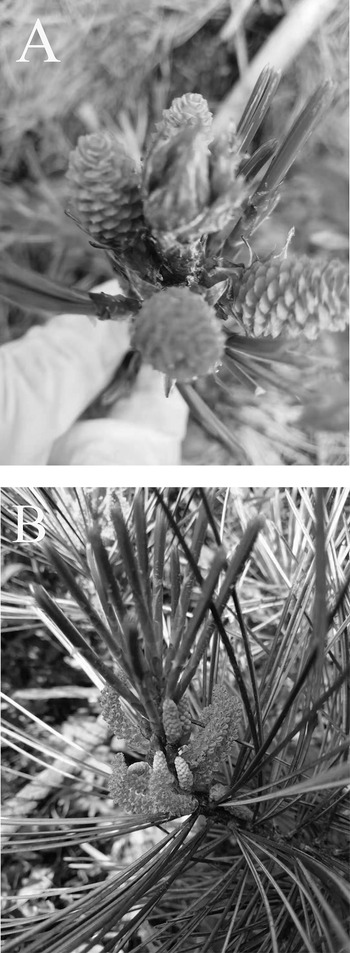
The ovulate strobilus opening phase was 16–19 May 2019, according to the plantation phenological period (fig. 1). The number of ovulate strobili per tree was recorded to measure the possible harmful effect of insecticides on the survival and development of the cones. A 1 litre hand-held plant sprayer was used to treat each individual ovulate strobilus to ensure uniform application. Stainless steel plates were used to mark each treated tree to track the development of young cones, which was recorded until early June of that year. In early June of the following year, the number of young cones on each treated tree was re-recorded. Two methods determined the number of young cones of Korean pine. One method involved climbing to the middle and upper part of the tree to observe, while the other method involved a recorder who stood 10 m from the tree trunk and observed the tip around the circle. The number of mature cones on each treated tree was re-recorded in September of the following year. All the cones of treatments and controls were collected and brought to the laboratory for systematic inspection, including the determination of insect species, cone damage, and seed quality. The cone surface was examined to identify any excrement and to determine whether the cone was damaged or not. The cones examined were dissected to check for any pest species. Dry threshing is a normal procedure for the extraction of seeds. The seeds per cone were dried at 40°C and 13 ± 1% moisture content in an oven. The number of seeds per cone was recorded and weighed, and the seeds were stored in bags. A total of 30 seeds were randomly chosen from every treatment, and an X-ray was filmed to observe shriveled seeds.
Korean pine ovulate strobilus (A) and microstrobilus (B).

Setting for indicators
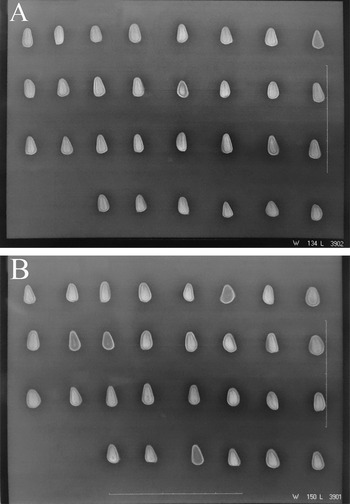
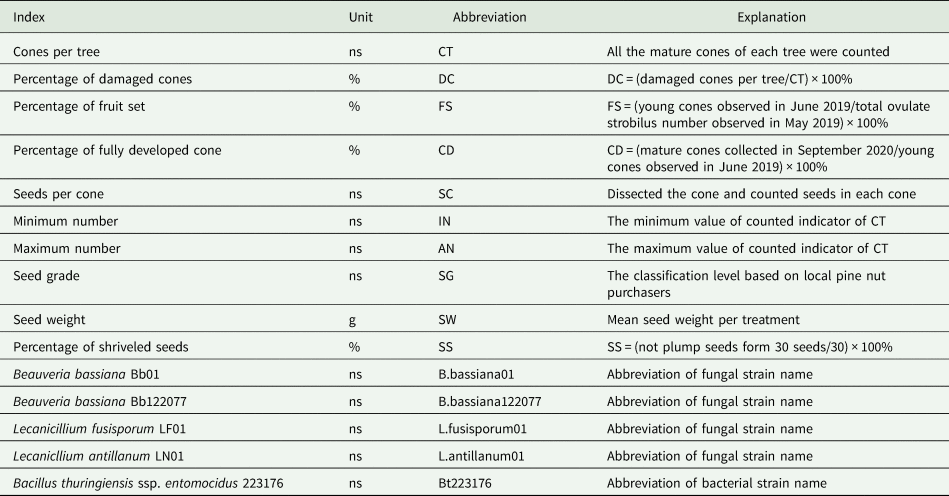
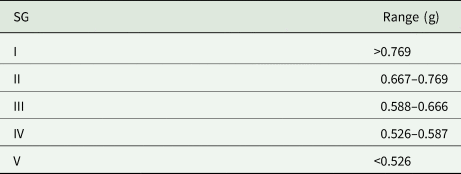
The setting of all indicators is shown in table 1. A total of 474 cones were analyzed for seed quality, cone damage, and development in the laboratory. The seed quality was determined as a factor of seed weight, percentage of shriveled seeds, and the number of seeds per cone. A total of 30 seeds were randomly selected from each tree, and X-rays determined the percentage of shriveled seeds (fig. 2). Cone damage was measured as the percentage of damaged cones (DC) where damage was indicated by external excrement on the cone and insects inside the dissected cone. The percentage of fruit set (FS), fully developed cones (CD), and the cones per tree (CT) indicated cone growth. The seeds were divided into five levels according to the grading of pine nuts by local buyers (table 2).
X-ray films for checking empty or plump seeds. (A) Low percentage of empty seeds. (B) The high percentage of empty seeds.

Calculation of indicators

Note: SW was the weight of seed dried at 40°C to moisture content of 13 ± 1%.
Grading of pine nuts based on SW

Data analysis
The results are presented as the mean ± SE of four replicates analyzed using Microsoft Excel (USA). The study involved a single-factor analysis of variance at 0.05 and 0.01 levels, respectively. Duncan's multiple test comparison assessed the differences among groups using the SPSS 24.0 (IBM, Inc., USA). The analysis involved seven independent variables (B.bassiana01, B.bassiana122077, L.fusisporum01, Bt223176, L.antillanum01, CK, and Blank) and six dependent variables, including percentage of fruit set, cone development, damaged cones, seed weight, seeds per cone, and cones per tree. A Pearson correlation coefficient determined the correlations between indicators.
Result
Effect of spraying different bacterial and fungal concentrations on FS and CD
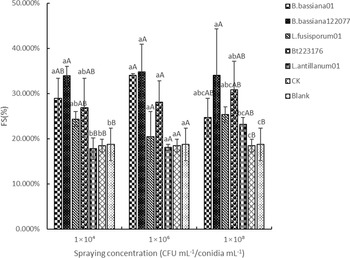
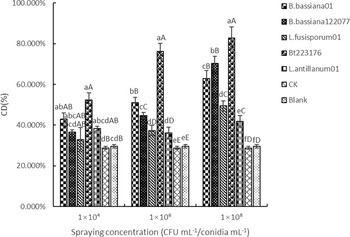
The FS difference ranged from 17.757 to 34.792% based on the treatment means from the number of ovulate strobili and young cones recorded twice in 2019 (fig. 3, table 3). At high (1 × 10⁸ CFU ml−1/conidia ml−1) and low concentrations (1 × 10⁴ CFU ml−1/conidia ml−1), the FS of bacterial and fungal solutions that were sprayed was significantly different between treatments (1 × 10⁸: F = 3.847; DF = 6, 21; P < 0.05, 1 × 10⁴: F = 4.152; DF = 6, 21; P < 0.01). However, the CK and blank were not statistically different (1 × 10⁸: P = 0.951, 1 × 10⁴: P = 0.952). At medium concentrations (1 × 10⁶ CFU ml−1/conidia ml−1), the treatments were not statistically different (1 × 10⁶: F = 1.963; DF = 6, 21; P = 0.117). In addition, the cones on each tree were counted in June 2019 and September 2020, and the results showed that increasing bacterial and fungal concentrations significantly improved the percentage of cone development (CD) (fig. 4) without changing the FS.
The percentage of fruit set for each strain at different concentrations. Different lowercase letters indicate the statistical difference between strains under the same spraying concentration (Duncan's test, P < 0.05). Different capital letters indicate the statistical difference between strains under the same spraying concentration (Duncan's test, P < 0.01).

The percentage of cone development for each strain at different concentrations. Different lowercase letters indicate the statistical difference between strains under the same spraying concentration (Duncan's test, P < 0.05). Different capital letters indicate the statistical difference between strains under the same spraying concentration (Duncan's test, P < 0.01).

Young cones of spraying different bacterial and fungal concentrations on ovulate strobili

At different concentrations (1 × 10⁸: F = 111.374; DF = 6, 19; P < 0.01, 1 × 10⁶: F = 137.313; DF = 6, 18; P < 0.01, 1 × 10⁴: F = 19.027; DF = 6, 18; P < 0.01), the treatment groups were significantly different. At the high concentration (1 × 10⁸ CFU ml−1/conidia ml−1), the CD of all the treatments treated with microorganisms had larger increase than the CK. Sprays of Bt223176 (1 × 10⁸ CFU ml−1) caused the highest CD (82.738%) (fig. 4), nearly threefold higher than that of the CK, indicating that spraying Bt223176 effectively promoted cone development. The L.antillanum01 treatment caused the lowest CD (41.773%) at the same concentration (1 × 10⁸ CFU ml−1). The average CD was similar for high (1 × 10⁸ CFU ml−1/conidia ml−1), medium (1 × 10⁶ CFU ml−1/conidia ml−1) and low concentrations (1 × 10⁴ CDU ml−1/conidia ml−1). Spraying low concentrations of bacterial or fungal solutions mildly affected the cones.
The effect of different bacterial and fungal concentrations on DC
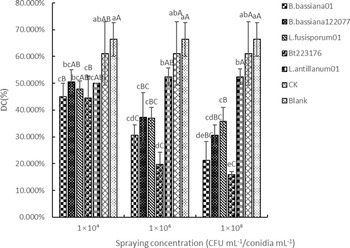
As anticipated, increasing the bacterial and fungal concentrations reduced the percentage of DC (fig. 5). Based on the three levels of concentration, the difference in the treatment groups was extremely significant (1 × 10⁴: F = 4.389; DF = 6, 18; P < 0.01, 1 × 10⁶: F = 16.596, DF = 6, 18; P < 0.01, 1 × 10⁸: F = 24.640, DF = 6, 19; P < 0.01). The 1 × 10⁸ CFU ml−1/conidia ml−1 concentration was the most effective against pests, particularly for the D. abietella, which was reduced to 15.873% after Bt223176 treatment. This was 76% lower than the blank. The DC of Bt223176 was significantly lower than that of the other treatments at this concentration (P < 0.05). The effects of B.bassiana01 and B.bassiana122077 were relatively moderate, and both differed significantly from the CK. Treatment with B.bassiana01 and B.bassiana122077 reduced the mean percentage of damaged cones to 21.212 and 30.556%, respectively. Interestingly, spraying water slightly reduced the DC, which decreased by 8.604% compared with the blank.
The percentage of damaged cones for each strain at different concentrations. Different lowercase letters indicate the statistical difference between strains under the same spraying concentration (Duncan's test, P < 0.05). Different capital letters indicate the statistical difference between strains under the same spraying concentration (Duncan's test, P < 0.01).

Effect of spraying different bacterial and fungal concentrations on insects
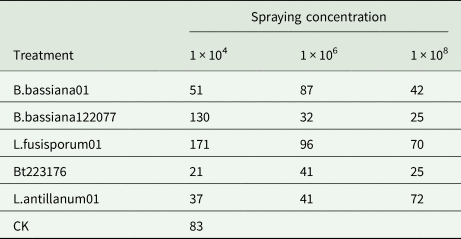
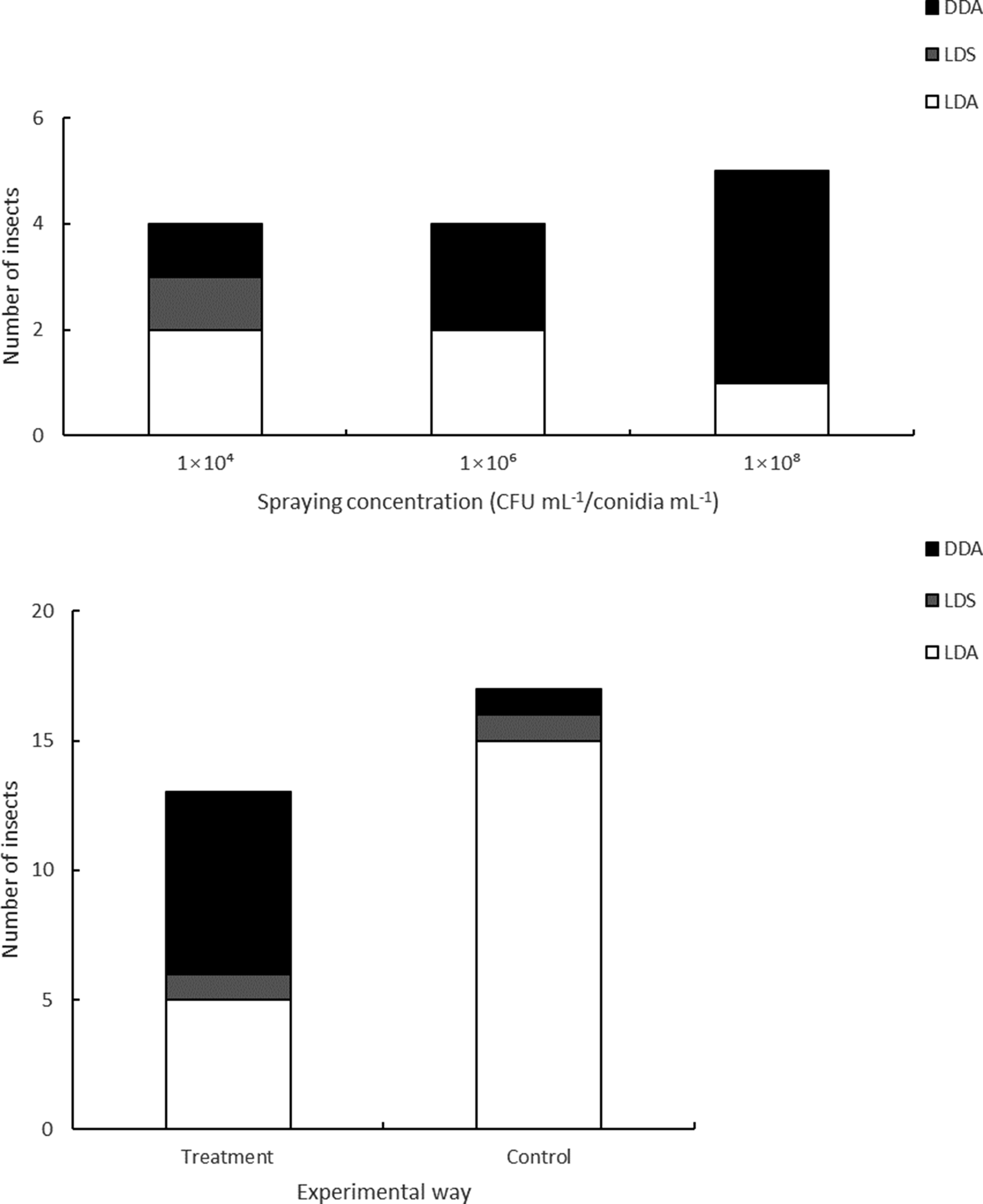
When 474 cones were dissected, the injured cones had two insect species: D. abietella and D. sylvestrella (fig. 6). D. abietella larvae accounted for 93.334% with living (66.667%) and dead (26.667%) larvae, while D. sylvestrella larvae only accounted for 6.667%, and all were alive (fig. 6). The number of D. abietella decreased significantly in the dissected cones after the treatments in comparison with the CK group (water and no treatment), while the number of D. sylvestrella was unchanged (fig. 6). Spraying fungi and bacteria on the cones caused much higher D. abietella mortality than that of the CK.
The species and number of insects in dissected cones. LDA, living D. abietella larvae; LDS, living D. sylvestrella larvae; DDA, dead D. abietella larvae.

Effect of spraying different bacterial and fungal concentrations on seed quality
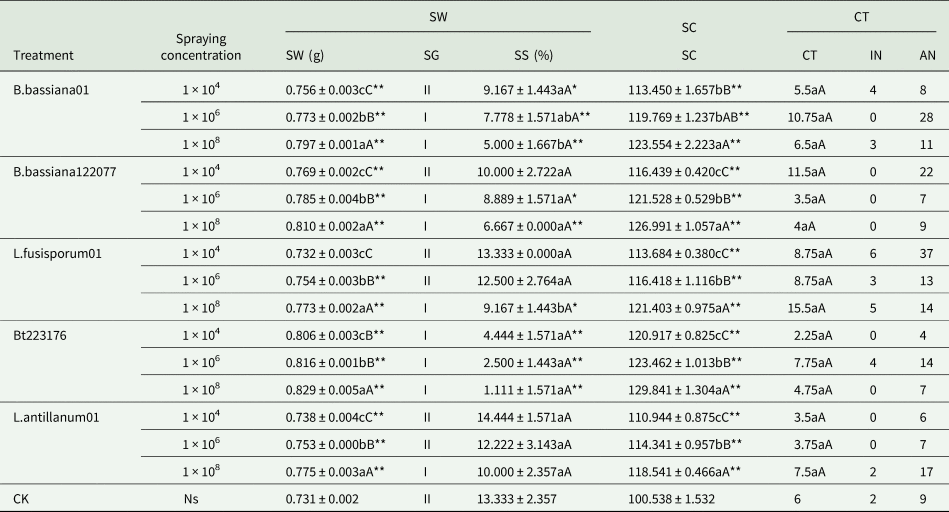
Seed quality, which included seed weight (SW), seeds per cone (SC), CT, seed grade (SG), and the percentage of shriveled seeds (SS), was vital for assessing the growth of young cones after spraying bacterial or fungal solutions. Spraying bacterial or fungal solutions significantly improved the seed quality (table 4). The SW was 0.738–0.829 g, the SC was 110.944–129.841, and the CT was 2.25–15.5 after bacterial and fungal sprays, respectively.
Effect of spraying different bacterial and fungal concentrations on seed quality

Notes: SW and SC data are given as mean ± SE. The CT data are presented as means. Different capital and lowercase letters in the table indicate the statistical difference at different concentrations of each strain (Duncan's test, P < 0.01 and P < 0.05). * and ** indicate statistical significance compared to CK at P < 0.05 and P < 0.01, respectively.
Spraying different strains of bacteria and fungi had different effects on the SW of Korean pine. Different strains caused significant differences between varying bacterial and fungal concentrations (B.bassiana01: F = 241.781; DF = 2, 8; P < 0.01, B.bassiana122077: F = 42.425; DF = 2, 6; P < 0.01, L.fusisporum01: F = 161.975; DF = 2, 8; P < 0.01, Bt223176: F = 26.077; DF = 2, 7; P < 0.01, L.antillanum01: F = 129.668; DF = 2, 7; P < 0.01). Different Bt223176 concentrations increased the SW compared with the CK (F = 662.949, DF = 3, 10; P < 0.01). At a high concentration of Bt223176 (1 × 10⁸ CFU ml−1/conidia ml−1), the SW was somewhat higher than that of other strains (0.829 g, grade I, table 2). The SS was the lowest in all strains, with an average increase of only 1.111% (table 4). Strain B.bassiana122077 increased the SW to 0.810 g at a high concentration, which was comparable to the effects of Bt223176. However, strain L.antillanum01 was the least effective, with only 0.738 g SW at a low concentration (1 × 10⁴ CFU ml−1/conidia ml−1) and 14.444% SS (table 4). These results suggested that the three indicators SW, SG, and SS are interrelated.
There was a highly significant difference in the SC between treatments and CK (B.bassiana01: F = 50.909; DF = 3, 11; P < 0.01, B.bassiana122077: F = 295.364; DF = 3, 9; P < 0.01, L.fusisporum01: F = 170.937; DF = 3, 12; P < 0.01, Bt223176: F = 270.957; DF = 3, 10; P < 0.01, L.antillanum01: F = 150.319; DF = 3, 10; P < 0.01). Bt223176 had the highest output with a 129.841 SC value at a high concentration (1 × 10⁸ CFU ml−1/conidia ml−1), followed by B.bassiana122077, which reached 126.991 seeds at a high concentration (table 4). In contrast, L.antillanum01 was the least effective, producing only 118.541 seeds under a high concentration in SC.
The use of the CT indicator indicated that a high concentration (1 × 10⁸ CFU ml−1/conidia ml−1) of L.fusisporum01 was the most effective, with an average of 15.5 cones per tree (table 4). Strain Bt223176 had 4.75 cones per tree at a high concentration.
Discussion
This study found that spraying Bt223176 had an important relationship with reducing the living number of D. abietella in damaged cones, and higher concentrations had more apparent effects. These results are consistent with those of Meng et al. (Reference Meng, Feng, Wang, Chen and Chen1996) that indicated that the insecticidal effect increased with the concentration of the fungal-bacterial agents, particularly the role of B. thuringiensis. Bt223176 in this experiment was the relatively efficient strain and decreased the percentage of CD from 66.369 to 15.873%. Weslien (Reference Weslien1999) showed that repeated Btk application to young cones using a backpack sprayer reduced the damage from D. abietella from 77 to 14%. He concluded that spraying with B. thuringiensis was an effective measure against D. abietella in a spruce seed orchard, which caused the production of large-sized cones. Meng et al. (Reference Meng, Feng, Wang, Chen and Chen1996) indicated that the average percentage of infested cones in unsprayed spruce was almost sevenfold higher than that of the sprayed spruce. Moreover, large-scale application of the Btk biological insecticide during the flowering phase of Swedish spruce reduced the damage by D. abietella in the following year as measured by external excrement (Rosenberg and Weslien, Reference Rosenberg and Weslien2005). Cadogan (Reference Cadogan1993) also discovered that applying 30 billion international units (BIU) ha−1 of Futura XLV (Bt) at 1.4 ha in northern Ontario reduced the jack pine budword (Choristoneura pinus pinus Freeman) populations by 89%, reaching <2.6 larvae per branch. When Btk (HD-1) was used in Italian pine forests, the larval mortality of pine processionary (Thaumetopoea pityocampa Denis and Schiffermüller) increased from 79.47 to 98.43% at an application of 32,000 BIU ha−1. In contrast, the average larval mortality in the control block was only 1.56% (Ferracini et al., Reference Ferracini, Saitta, Pogolotti, Rollet, Vertui and Dovigo2020). A study by Roversi (Reference Roversi2008) further established that aerial spraying with Btk reduced the number of T. processionea L. larvae in Turkey oak woods. Indeed, this study proved that Bt effectively controlled D. abietella.
However, the FS percentage varied from 17.757 to 34.792% in this study. Therefore, FS was probably affected by plantation phenological conditions, such as rainfall, temperature, and the ‘on-and-off-year’ phenomenon (Mattson, Reference Mattson1978; Cerović et al., Reference Cerović, Akšić, Ðorđević and Meland2021). B.bassiana122077 caused the highest percentage of FS (34.792%), probably because this strain efficiently prevented and controlled inflorescence pests. Interestingly, Glynn and Weslien (Reference Glynn and Weslien2004) found that spraying water during the flowering phase increased the seed yield. They further explained that the suspended pollen in water increased the chance of mechanical pollination. Nevertheless, it has not been demonstrated that water spraying increased the chance of ovulate strobilus pollination, as we observed little difference in seed yield between spraying water solution and the controls in experiments. Our data suggested that the increase in seed yield was due to the application of a high concentration of Bt223176. Salama and Salem (Reference Salama and Salem1999) also confirmed the role of Bt. Treatment with it resulted in higher seed yield when a high concentration of Btk (HD-1) was sprayed on soybeans (Glycine max L.).
In this study, bacterial or fungal spraying significantly increased the CD, probably because spraying killed some pests and compromised the health of surviving pests, inhibited cone damage and improved cone development. Moreover, there was no difference between the blank and CK, which confirmed that using the hand-held sprayer did not affect the development of cones. These findings were consistent with those of Glynn and Weslien (Reference Glynn and Weslien2004), who observed very few necrotic or abnormally developed cones after spraying a solution of water in the spruce seed orchard.
This study confirmed that pest damage was strongly associated with seed quality. Severe pest damage (66.369%) decreased the seed quality, and the SW was only 0.724 g. As documented in other studies, insects caused approximately 75% of the damage of cone crops in seed orchards (Skrzypczyήska, Reference Skrzypczyήska1998; Rosenberg et al., Reference Rosenberg, Nordlander and Weslien2015; Shin et al., Reference Shin, Nam, Kim, Byun and Kim2018). In severe cases, cone worms decreased the number of intact seeds per cone by 93% (Mosseler et al., Reference Mosseler, Roberts and Tricco1992). Heavier pine nuts were plumper. However, spraying Bt during the Korean pine flowering period did not change the seed quality as similarly reported by Glynn and Weslien (Reference Glynn and Weslien2004). The total number of seeds and filled seeds were relatively but non-significantly higher after Btk treatment than the CK (Rosenberg et al., Reference Rosenberg, Nordlander and Weslien2015). In the SS indicator, the Bt223176 and CK treatments were not significantly different at the 0.01 significance level indicating that Bt223176 spraying increased the degree of plump seeds.
Currently, this study hypothesized that the effect of pest control was closely related to the phase of Bt223176 spraying. As described by Glynn and Weslien (Reference Glynn and Weslien2004), the flowering phase of Korean pine was considered to be the most sensitive time for spraying Btk. Spraying Bt at this stage protected the bacteria from degradation by UV radiation and from being washed off by rain, and thus, Bt remained active for longer (Reardon et al., Reference Reardon, Dubois and McLane1994). Usually, a layer of wax was produced after the young cones were formed. Therefore, bacterial or fungal solutions sprayed after this period were poorly absorbed, which affected their efficacy against insects. Additionally, using B. thuringiensis to control pests in cones still required in-depth analysis. For example, the amount and concentration of Bt for the effective control of pests, the method to systematically count insect species before and after Bt application, and the type of pests that were more sensitive to Bt sprays were unconfirmed. All these issues require reliable and straightforward monitoring methods.
Conclusion
Investigations were conducted within 1.5 year after spraying fungal or bacterial solutions on Korean pine ovulate strobili in 2019. Spraying high concentrations (1 × 10⁸ CFU ml−1/conidia ml−1) of the different strains optimally protected Korean pine seeds. As the spray concentration decreased, the control effect was reduced. Bt223176 effectively controlled D. abietella damage, increased grain yield, and reduced the level of empty seeds.
Acknowledgements
We wish to thank the financial support provided by the ‘Thirteenth Five-Year’ National Key R&D Program (2018YFD0600204) and Central University Basic Research Business Expenses Special Fund Project (2572018BA06). Moreover, we wish to give particular thanks to M. Guichun Deng of the Linkou County Forestry Bureau for his helpful guidance and suggestions during the field work.
Conflict of interest
No conflict of interest exits in the submission of this manuscript, and the manuscript is approved for publication by all the authors.