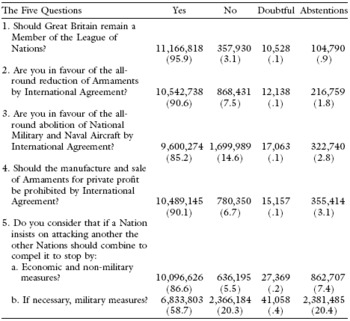
Between November 1934 and June 1935, millions of British people received an invitation to participate in a unique political experiment. Every householder over the age of eighteen was asked to answer “yes” or “no” to a series of questions concerning British policy toward the League of Nations. Eleven and a half million Britons, or almost 38 percent of the adult population, accepted the invitation and proceeded to cast their votes in the National Declaration on the League of Nations and Armaments, or the “Peace Ballot,” as it was more commonly known. Strong majorities favored continued League membership, disarmament, abolition of the private arms trade, and the use of economic sanctions, with a smaller majority in favor of the collective use of military force (see table 1). A special deputation presented these results to the prime minister, Stanley Baldwin, and the foreign secretary, Samuel Hoare, at the Foreign Office in July 1935.
The Ballot was the initiative of the League of Nations Union (LNU), a nonparty pressure group founded in 1918 for the purpose of educating the British public in the principles of the collective League system.Footnote 1 Led principally by the maverick Conservative aristocrat Lord Robert Cecil, Oxford classicist Gilbert Murray, Liberal peer David Davies, and, until his death in 1933, former Foreign Secretary Sir Edward Grey, the LNU became one of the largest voluntary associations of its day, winning a royal charter in 1925 and boasting a paid-up membership of over 400,000 at its peak. However, by 1934 these leaders feared that British people were beginning to tire of the League as a consequence of slow progress at the World Disarmament Conference and the constant drip of isolationist propaganda
—The Results of the National Declaration on the League of Nations and Armaments

Source.—The table is derived from Martin Ceadel, “The First British Referendum: The Peace Ballot, 1934–5,” English Historical Review 95, no. 377 (October 1980): 810–39, 828.
Note.—% of total in parentheses; “doubtful” refers to number of cases where it was not clear on the form which answer was indicated.
in the right-wing press.Footnote 2 Not only might this lead the National government to downgrade its commitment to the League, the LNU reasoned, but it created the added risk that foreign opinion would draw the lesson that Britain was unwilling to fulfill its obligations under the Covenant. The Ballot was thus launched as a bid to revive popular internationalist feeling by giving all citizens the opportunity of publicly restating their faith in the League. The extraordinary response took even the LNU and its supporters by surprise, who quickly hailed the Ballot as “a constructive democratic experiment of major importance” and “a notable vindication of British democracy.”Footnote 3 Organizers pointed to the pro-League remarks made by Hoare during a major speech in September 1935 and the high profile given to the League by all three parties at the general election in November as proof of the Ballot's impact.Footnote 4
Such a remarkable event was unlikely to escape the attention of historians, who have debated the meaning and significance of the Peace Ballot at length. Most have attempted, predictably, to relate the results to broader controversies surrounding the origins of “appeasement.” Some early commentators read the Ballot as evidence of pacifist attitudes opposed to rearmament, a product, following E. H. Carr's classic critique, of naïve interwar idealism.Footnote 5 Others, by contrast, argued that it signaled a desire on the part of the people to stand by Britain's international obligations, including those of collective security.Footnote 6 For Martin Ceadel, whose 1981 English Historical Review article remains the standard work, the episode revealed the strength of public feeling behind a problematic “middle way between isolationism and militarism.”Footnote 7 In a similar vein, Donald Birn argues that it was still possible in late 1934 for Ballot organizers to present “collective security” as wholly compatible with disarmament, a claim that would soon be discredited by events in Abyssinia and elsewhere.Footnote 8 Both authors further dwell upon the hostility the Ballot engendered among supporters of the National government, who refused to participate on grounds that the exercise was politically biased and misleading. This refusal, Ceadel and Birn argue, mobilized antigovernment forces, thus ensuring a massive turnout.Footnote 9
This article offers a rather different interpretation of the Ballot. It treats the event not as an episode in the unfolding drama of high-level, foreign-policy decision making but, rather, as a case study revealing the considerable power that the idea of “democratized” international relations exercised over the political imagination of the interwar electorate. As is well known, the popular control of foreign policy was a long-standing radical demand that moved to the forefront of public debate during the First World War, a conflict associated by many on the left with the wicked machinations of elites engaged in “secret diplomacy.”Footnote 10 Following the Armistice, the more general notion that international peace hinged on relations between peoples—as well as governments—took root in both the new and established liberal democracies of Europe.Footnote 11 For many progressives, the creation of the League of Nations embodied this basic truth by providing a new arena for the expression and mobilization of a global “public opinion.” In Britain, the LNU and its allies took the lead in educating this public in the principles of international government, aided, on the one hand, by the general mood of revulsion against war and, on the other, by the political idealism generated by the advent of universal suffrage.Footnote 12
The most striking feature of the Ballot, it is argued here, was the sheer volume of support expressed for this broad project of democratization. The Ballot revealed the desire of major groups within civil society—most notably women's associations, the churches, educationalists, and organized youth—to participate in a national conversation about Britain's conduct abroad. In facilitating this conversation, the LNU exploited the associational capacities of interwar society and pressed into service a discourse of “active citizenship,” thus reinforcing the increasingly peaceable and domesticated tone of political life after 1918.Footnote 13 The Ballot also revealed the willingness of almost one in three British voters to participate in a simple political act. While millions more closed their doors against the volunteers or threw the ballot forms away, this finding suggests that contemporary and historical accounts emphasizing the supposed apathy of the mass electorate may be in need of some revision.Footnote 14
The massive response to the Ballot is thus only partially explained by the narrower interplay of party politics, the decisive element in existing accounts. As will be seen, participation cut across party lines, as did opposition. Opponents critiqued the LNU's basic claim that it was desirable to involve ordinary citizens in foreign policy decision making. Although these arguments did not deter millions from voting at the time, later events cast a shadow over the democratization project and significantly reconfigured the relationship between “public opinion” and foreign affairs. The model of rational participation promoted in the Ballot was discredited both by the public reaction to Mussolini's invasion of Abyssinia and by the appearance of “scientific” polling techniques and the ethnographic investigations of Mass Observation. Meanwhile, government adopted a more assertive approach to the presentation and communication of its foreign policy aims, a trend reinforced by the outbreak of war and the subsequent retreat from “open” methods of diplomacy.
In Britain, the idea that popular government could supply an alternative to blundering and unprincipled diplomacy dated back to the radical politics of the late eighteenth century and remained a recurrent strand in political debate through most of the Victorian era.Footnote 15 The creation of a mass male electorate by the Second Reform Act, however, together with the growth of the daily press at home and deepening imperial rivalries abroad, served to sharpen this radical political discourse during the decades preceding 1914. Refashioning foreign policy to meet the demands of modern democratic politics subsequently became a major preoccupation of such men as E. D. Morel, J. A. Hobson, and H. N. Brailsford. Following the outbreak of war, their critiques of “secret diplomacy” and demands for greater parliamentary oversight of foreign policy gained in influence, aided by the energetic campaigning of the newly founded Union of Democratic Control (UDC).Footnote 16 So too did the more general notion, popular within moderate center-left circles, that citizens needed to be better informed about foreign affairs and better prepared to hold their governments to account. In his introduction to The War and Democracy (1914), a volume dedicated to the Workers Educational Association (WEA), internationalist Alfred Zimmern noted that while the British people remained “deeply engaged and interested in domestic problems,” they had largely ceded control of foreign policy to officials: “And so it was with something like stupefaction,” he wrote, “that they discovered, one day in August, that they were called upon to honour the obligations contracted in their name.”Footnote 17 The solution, in Zimmern's view, was education. Ordinary working people “are called upon now to widen their horizon, and to apply the democratic conception of education to the new problems which have arisen owing to the part which Great Britain is now playing in the affairs of Europe.”Footnote 18 Another contributor to the volume, the future Labour minister Arthur Greenwood, played an influential role in creating the Council for the Study of International Relations (CSIR), a wartime body dedicated “to stimulating and organising the desire for an understanding of international relations amongst the general public.”Footnote 19 Working in partnership with such organizations as the WEA, the University Settlements, and the Club and Institute Union, the CSIR hosted conferences, ran summer schools and published literature with the object of helping British citizens “to think clearly on these themes, so that the labours of statesmen for the establishment of a happier condition of things shall have the encouragement and support of an enlightened public opinion.”Footnote 20
This narrative of popular enfranchisement underpinned wartime proposals for a League of Nations, featuring most prominently in Woodrow Wilson's “Fourteen Points” of January 1918.Footnote 21 Famously, Wilson's first point advocated “open covenants openly arrived at,” a prescription that came to typify the so-called New Diplomacy and enshrined the principles of publicity and transparency in the Covenant of the League.Footnote 22 The vision of a diplomacy transformed by the power of public opinion also inspired key figures tasked with developing the British government's own League proposals.Footnote 23 By far the most important influence here was Lord Robert Cecil, Minister for the Blockade in the Lloyd George Coalition, Britain's leading negotiator on the League at the Paris Peace Conference and, from 1919, a very active chairman of the LNU.Footnote 24 Speaking on the League during a Commons debate in August 1918, Cecil endorsed the remarks of the Labour MP and UDC cofounder Ramsay MacDonald, telling the House: “I agree that the great weapon of public opinion is open discussion. I think there is much to be said for the view that the most fruitful provision is not to venture upon war until the cause of the dispute has been thoroughly and openly discussed before the world at large.”Footnote 25 Cecil believed that this new international institution had the potential to eradicate secrecy and intrigue from diplomatic relations for good by substituting in their place transparent structures that allowed for rigorous public scrutiny. As he later explained to Prime Minister Stanley Baldwin in 1926, “One of the chief principles on which the success of the League depends is that the general public opinion of the world is in favour of peace, and that in international difficulties an appeal shall be made to this opinion.”Footnote 26 As a Conservative, Cecil's faith in publicity was unusual, a facet of his deeper liberal tendency, which helps to explain his lifelong devotion to the League and which resulted in a brief attempt to form a new “Centre Party” in 1921.Footnote 27
Cecil discovered many more kindred spirits in the LNU, which became the largest and most powerful of the League-themed voluntary societies established by internationalists across Europe and beyond in the immediate postwar period.Footnote 28 These nonstate actors, LNU leaders believed, were the real lifeblood of the League. “Kings and emperors, statesmen and diplomats, victorious generals and admirals who formerly made the great political changes are now almost powerless to secure the world against war,” remarked an editorial in the LNU's monthly journal, Headway, in 1930. Today, that task should fall to “ordinary people who are convinced that it needs doing and who combine to create a sentiment of world loyalty and a clear understanding that the interest of any one nation can only be served by serving at the same time the interests of the whole international community.”Footnote 29 In common with wartime progressives, LNU leaders believed that the horrors of the First World War had stirred the British people from their apathy regarding the conduct of foreign affairs. For Freda White of the LNU staff, such apathy was now unimaginable: “The old days when the nation was content to leave acquaintance with international problems to the Foreign Office, and to trust blindly to dim oracles pronounced by Foreign Ministers, are gone and gone for ever,” she wrote. “The people are aware that their fate hangs on these issues, and they are determined to learn and to make up their own minds about them.”Footnote 30
For this reason, the LNU placed great emphasis upon the task of education. It installed a large lending library at its London headquarters. Regular summer schools in Britain and Geneva were held from the early 1920s, and undergraduates were organized through the British Universities League of Nations Society (BULNS), which had established a presence in every university by the end of the decade.Footnote 31 A panel of speakers willing to give talks to schoolchildren was convened, and a magazine dedicated for school use, League News, was founded in 1924, with a circulation that grew to 37,000 by 1933. The LNU also supplied teachers with lantern slides, films, and guidance on producing plays, running essay competitions, and organizing “Model Assemblies” for their students, often under the auspices of formally constituted junior branches.Footnote 32 In addition, many of the movement's local branches established “study circles” involving small groups of members meeting weekly to discuss international or League-related topics, the aim being, as one LNU pamphlet put it, “that each member should form the habit of doing his, or her, own thinking.”Footnote 33 This focus on rational inquiry provided a narrative thread running through much of the LNU's public language. In Cecil's mind, the average citizen could not fail to appreciate the inherent merits of the League system once they had been set out in terms he or she could understand. “We may be sure of its [the League’s] acceptance by the public opinion of this country,” he said in a speech of 1920, “if it is honestly and clearly explained.”Footnote 34 Grey, LNU president from 1919 to 1933, put it in similar terms: “We want this country to be thoroughly in favour of the League of Nations because it thoroughly understands it.”Footnote 35
This background context is salient because it helps to explain the central importance attached by LNU leaders to the educational and democratizing aspects of the Peace Ballot. The events immediately leading up to its launch are well documented in existing scholarly accounts. A League-themed poll organized by an enterprising local newspaper editor in Ilford caught Cecil's eye in February 1934 and convinced him that a scaled-up version could be just what was needed to revive flagging public enthusiasm for the international authority. Cecil was further spurred on by the launch of a number of postcard polls exhibiting a strong isolationist slant by local, Rothermere-controlled newspapers. Believing the Ilford result to be more indicative of the public mood, Cecil presented the Ballot to the LNU's General Council in June as an exercise that would “make it quite clear that the people of this country were enthusiastically and determinedly behind the League and a policy of peace and desired that it should be supported in every way that was possible.”Footnote 36 Despite some reservations concerning the scheme's feasibility, the Ballot was approved, and a National Declaration Committee (NDC) composed of representatives of around forty participating organizations was formed to oversee the process. The country was carved up according to existing Parliamentary divisions, and organizing committees were formed in each. Local political, religious, and civic organizations supplied lists of volunteers prepared to carry out the hard work of delivering and collecting the ballot forms and counting the votes.Footnote 37
While these details are well known, standard accounts of the Ballot fail to recognize the prominent place accorded by its organizers to the task of educating the democratic electorate. This task was one of three official objectives, the others being the influencing of the National government and the shaping of opinion overseas.Footnote 38 Yet in reality, the notion of democratization through education provided an overarching narrative that dominated Ballot propaganda throughout. According to David Davies, the LNU's chief in Wales, the Ballot stood as “one of the greatest experiments ever tried in the country. It is the essence of democracy.”Footnote 39 The effect of the exercise, one Ballot official informed readers of the Daily Mirror, would be “to arouse interest, to act as a leaven, to educate, to render audible the great voice of Democracy,” while for his colleague the Ballot represented “one of the most romantic chapters in the history of democracy.”Footnote 40 The Ballot mattered, Cecil told wireless listeners in March, because “in the end it is the people who determine what our national policy shall be, since we live in a democracy. … The results already received show that millions have considered these questions and expressed their opinion on them. Can there be any better form of political education?”Footnote 41Headway similarly emphasized the intellectual capacities of voters, presenting the Ballot in December as proof that “the mass of the British people give serious thought to the great problems of the day and are prepared with serious and reasoned answers.”Footnote 42
This vision of a politically engaged citizenry was reinforced by the impressive tally—half a million in total—of volunteers offering their services to the local declaration committees. In London, organizers recruited 35,000 of these “admirable patriots” as Cecil called them, while 7,000 were mobilized in Glasgow and 6,500 in Birmingham.Footnote 43 Tributes were paid to the heroic labors of these volunteers in ensuring that even the hardest-to-reach groups had the opportunity of making their views known. In January the Ballot was completed in the Scottish fishing town of Macduff, where, according to the Manchester Guardian, the highly mobile population of fishermen “had to be caught by the canvassers immediately their boats got in.”Footnote 44 Equally determined workers in London chartered a boat in order to distribute forms to “all the river dwellers in barges, house-boats and sailing boats from the Thames estuary to Harlow, in Essex.”Footnote 45 Thinly populated rural areas posed an additional challenge; one LNU traveling secretary recalled visiting seven different valleys in a single day in order to set up a local declaration committee.Footnote 46 Special arrangements were made for secret balloting where residents expressed concerns about their voting preferences becoming known, presumably to employers or landlords.Footnote 47
Although coverage was not universal (parts of Scotland and Northern Ireland were not balloted), this dedication among volunteers made it possible for organizers to trumpet proudly the truly “national” character of the exercise. “These votes have not come from one or two specially organised districts,” Walter Ashley, a Ballot official, insisted in the Daily Mirror, “but from all over England, Scotland, Wales and Northern Ireland.”Footnote 48 This desire to secure the widest possible response led to the unusual innovation of inviting eighteen- to twenty-year-olds to participate, on the grounds that, while they were too young to vote in a general election, they were old enough to be conscripted to fight in a war.Footnote 49 It also ensured that Ballot propaganda would at all times emphasize the social diversity of both the “door-knocker parade” (as the volunteers became known) and those opening their doors to receive them. The official history published in June 1935 contained a catalog of anecdotes telling of butchers, bishops, newsagents, bank clerks, social workers, factory owners, and an amateur dramatics troupe helping to deliver ballot papers, and of Glaswegian tenement dwellers, colonels, country widows, and domestic servants all happily filling them in.Footnote 50
This portrait of an active, democratic public on the move did not, however, impress everyone. As Ceadel has shown, the Ballot provoked considerable opposition among Conservatives and the right-wing press, who disliked its method and suspected that enemies of the National government were seeking to exploit the exercise for their own partisan ends.Footnote 51 As will be shown below, this latter fear was far from groundless. The objections concerning method, however, deserve lengthier comment because they draw attention to more fundamental tensions underlying the democratization project and the Ballot's educational aims. One major objection was the alleged one-sidedness of the endeavor. At planning stage, Conservatives on the LNU's Executive Committee expressed consternation at the proposed notes to be distributed with Ballot forms, arguing that they supplied only the case for answering in the affirmative and thus made a mockery of the scheme's professed educational objectives. “How are the British Public to give an instructed opinion,” asked Lord Cranborne, Cecil's nephew, “if they are only given the arguments on one side?”Footnote 52 These dissentients were invited to draft an additional note setting out potential objections to each of the questions, but when the NDC later ruled that local workers were not required to distribute either note if they so wished, the Conservatives suspected treachery, and Austen Chamberlain, the senior Tory on the Executive, openly attacked the decision in the Commons and The Times.Footnote 53
The organizers’ response was equivocal. They insisted that the Ballot was a genuine inquiry, yet at the same time issued instructions that told volunteers, “We are sure you share our hope that an overwhelming majority of the answers will be ‘Yes,’ and we are confident that this will be so if the issues are frankly presented and clearly understood by voters.”Footnote 54 Gilbert Murray further argued that the League's enemies had enjoyed ample opportunity to set out their case in the right-wing press over the preceding years and that it was time to redress the balance. He wrote to The Times defending the Ballot as an answer to “the pernicious campaign maintained, day after day and year after year, by important organs of the Press, assisted by extremists on both sides, against the League of Nations.”Footnote 55
The LNU never fully resolved this tension between its role as impartial educator and that of passionate League advocate, a tension that fed into the second line of attack against the Ballot concerning the wording of the five questions. Again, opponents claimed that these were misleading, particularly questions 5a and 5b, which, they argued, glossed over the fundamentally interlinked nature of economic and military sanctions.Footnote 56 More seriously, opponents challenged the organizers’ claims regarding the basic intellectual fitness of the electorate by suggesting that the issues involved were simply too complex for ordinary voters to grasp. The foreign secretary, John Simon, remarked during a Commons debate in November that asking for the public's views on privately manufactured arms was entirely misguided in that it called for “the verdict of the uninstructed person.”Footnote 57 Tellingly, this concern was not confined to members of the government. Liberal historian Charles Mallet, for instance, wrote to The Times questioning the wisdom of polling voters “who often have a very imperfect apprehension of the difficult issues involved.”Footnote 58 Murray received letters from worried League supporters, one asking whether “a summons for Yes or No upon extraordinarily complicated questions make for thought or thoughtlessness?” and another declaring that question 5 was “worthy of a place in the Economics Diploma and would not disgrace the Modern Greats School.”Footnote 59
Publicly, however, the LNU stood firm on its belief in the rationality of public opinion. In a BBC radio debate Cecil insisted to his adversary, the Conservative MP Leo Amery, that “no-one has been misled by our questions. In saying they have, you underrate the intelligence of our people.”Footnote 60 Ballot supporters echoed the sentiment locally. In Ealing, for example, the sitting Conservative, who had told the local newspaper that it was impossible “to attach any value to a verdict on questions of such vast complexity when that verdict is given by a mass of uninformed opinion, however well-meaning it may be,” received the following reply from the chairman of the local LNU branch: “When you, sir, offer yourself for Parliamentary election, on all kinds of complicated issues, and you are returned, you hail it as a verdict from an intelligent electorate in favour of your policy, in spite of the fact that many of the voters have not attended a single meeting. Why cannot the same electorate give a verdict on the ballot paper?”Footnote 61 This argument was frequently wheeled out by Ballot supporters in defense of the capabilities of voters. Cecil Gee, chairman of the Leicester Ballot, accepted that the questions were complex but asked voters to compare them with those covered in general or by-election campaigns. “The voters are then asked to decide—for example—on the future constitution of India, on tariffs, on the gold standard, on agricultural quotas, on the nationalisation of banks, as well as on local matters of interest to every constituency.”Footnote 62 For R. B. Strangeways of Bury, the slur on the intellect of voters was “a singularly dishonest argument for those who proclaim loudly their belief in democracy. It is far easier to answer ‘Yes’ or ‘No’ to the questions than to decide at a General Election whether to vote for X, with whom you agree on some points, or with Y, with whom you agree on others.”Footnote 63
Activists defended the Ballot just as ardently against a third and final charge concerning its constitutional legitimacy. Those who objected to the use of the referendum technique on the grounds that it was alien to Britain's political culture were accused of wishing to close down legitimate debate.Footnote 64 The organizing secretary of the Blackpool Ballot, Rev. Frank Coleman, responded to one detractor by insisting that “what we desire is that the will of the people should be known, and I do not think that any useful purpose is being served by suggesting that the ballot papers should be torn up. Rather one might say that this is a policy of evasion which, in my judgment is definitely un-British.”Footnote 65 Cecil addressed the issue at the declaration of the final results at the Albert Hall in June, at which he emphasized the voluntary and unofficial nature of the exercise, describing the result as “a solemn declaration by a free and educated people of their will on vital issues on which they feel with passionate sincerity.” He added: “It is for those who represent them in Parliament and in the Cabinet to carry those wishes into effect.”Footnote 66 Former UDC radical and LNU stalwart Norman Angell supplied another line of defense by arguing that the Ballot provided an opportunity for the “plain man” to consider the League question unhampered by “the noise and turmoil of a General Election, when partisan spirit runs at its height.” Angell continued: “If he does not seize that opportunity, and instead just throws the paper away, then indeed will the anti-democratic plea be justified, that the ordinary man is indifferent to the fate to which he is led, and is too stupid to have views about it.”Footnote 67
In short, much of the criticism directed at the Ballot hinged upon the manner in which public opinion was being encouraged to intervene in the political process. Far from fostering rational and informed debate, opponents argued, Ballot propaganda was manipulating voters by presenting them with a false choice, thus proving their unfitness to pronounce sensibly on complex matters of foreign policy. Furthermore, the entire exercise was an unconstitutional attempt to bind the government's hands. These arguments might strike the reader as not wholly without merit, and indeed many historians have expressed sympathy for them.Footnote 68 Yet they evidently fell flat with the 11.5 million Britons who chose to vote regardless. Why?
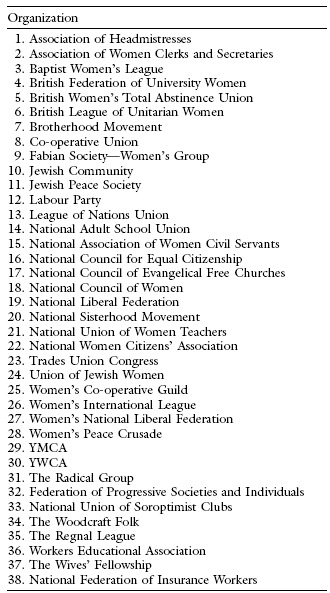
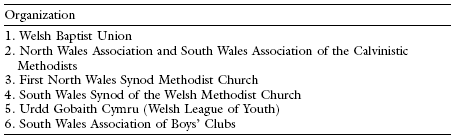
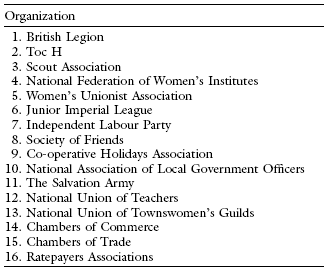
The answer lies in the peculiar appeal of the Ballot's democratization agenda among broad sections of interwar society. As tables 2–4 demonstrate, Ballot organizers
—National Organizations Participating in the National Declaration

Note.—In addition, Rotary International sent an “Observer” to meetings of the NDC.
recruited a diverse cross-section of political, religious, educational, and civic associations at both the national and local levels. With the inclusion of umbrella bodies such as the Trades Union Congress (TUC) and the National Council of Women (NCW), their combined forces—even allowing for overlapping membership—potentially
—Additional Organizations Participating in Wales
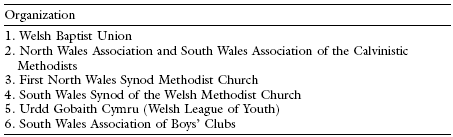
ran into the millions.Footnote 69 Although representation on the NDC was not a guarantee that every member of these bodies would volunteer (or even vote), they provided a grassroots infrastructure for the carrying out of the Ballot and helped to communicate its aims to a wider audience.Footnote 70 The presence of trade unionists and other working-class organizations, such as the Women's Co-operative Guild (WCG), ensured that this audience stretched beyond the provincial middle classes, who tended to dominate the LNU at the local level. The National Council of Labour, for example, issued a manifesto in November 1934 urging all members of the Labour and trade union movement “to co-operate wholeheartedly in the work.”Footnote 71 The Bury branch of the Women's Co-operative Guild responded to this call by holding a silver collection in October in aid of the Ballot, sending representatives to the local organizing committee, and compiling a list of willing helpers.Footnote 72 Other organizations followed suit; some printed details of the five questions in house journals or newsletters, while others convened special meetings addressed by Ballot organizers or raised funds to support the cause.Footnote 73
The Ballot's objective to involve ordinary voters in foreign policy decision making resonated with these groups in a variety of ways. In the first place, the identification of the Ballot with notions of active citizenship spoke powerfully to many women's organizations, of which no fewer than twenty-one chose to be officially represented on the NDC (out of a total of thirty-eight). This groundswell of enthusiasm can be traced back to the LNU's early success in courting female voters using propaganda that dwelt upon women's new political influence following their partial enfranchisement through the Fourth Reform Act.Footnote 74 The LNU recruited as a result fifty-five bodies to its Women's Advisory Council by 1922, including some
—Other Organizations Participating on Ad Hoc Basis Locally
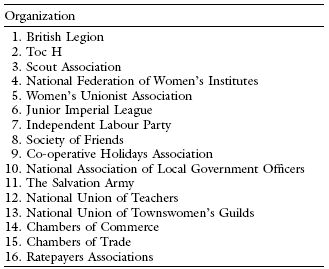
of the largest voluntary associations of the period, such as the National Federation of Women's Institutes, the Girl Guides’ Association, and the Mothers’ Union.Footnote 75 Although generally founded without any explicitly internationalist agenda, interest in the League ran high in these associations as their leaders cast around for ways of describing and promoting women's positive contribution to postsuffrage public life.Footnote 76 In the case of the Women's Institutes, the educational resources on offer made the LNU a valuable ally in achieving the movement's aim of widening the horizons of rural housewives, and by 1934 over 500 institutes had signed up as “corporate associates.”Footnote 77
The Ballot thus offered yet one more arena for demonstrating the seriousness with which women took their duties as newly enfranchised citizens. Mrs. S. Farrell of the Blackpool Women's Liberal Association, for instance, told the local newspaper that many of her colleagues had volunteered, adding, “I believe that every woman will add her signature to this great peace effort as if she were carrying out a sacred trust. One thing is certain, women will not allow the ballot to fail.”Footnote 78 Veteran feminist Kathleen Courtney was similarly convinced that the democratic character of the exercise had factored heavily in winning women's support, as she told Baldwin during the deputation to the Foreign Office in July 1935. “The recognition of the value of the judgment and intelligence of the ordinary woman for whom I speak was of the essence of the National Ballot and the ordinary woman responded to it.”Footnote 79
Another important group of sympathizers was to be found within the churches. Although the isolationist Daily Express rounded up a number of anti-Ballot clergymen willing to go on record, the official response of the various denominational groupings was positive, and a great many individual clergymen preached pro-League sermons and encouraged their flock both to volunteer and to vote.Footnote 80 One leaflet produced by the NDC published statements of support from twenty-nine Anglican bishops, the Catholic archbishops of Liverpool and Glasgow, the chief rabbi, and various representatives of nonconformity.Footnote 81 Many referred specifically in their messages to the Ballot's educative and democratic aims. The bishop of Bristol, for instance, remarked that the questionnaire “will force those who attempt to answer it to think out their personal attitude towards the great problems involved; and hard thinking is not the least important factor in the fight for Peace.” The bishop of Chester, in similar fashion, suggested that the Ballot was forcing the ordinary citizen to “clarify his thinking and commit himself to a decision which he is prepared to defend,” while the bishop of Salisbury wrote approvingly of the “fine educational influence” of the exercise.Footnote 82
These warm tributes were wholly unremarkable given the LNU's earlier record in fostering support among the churches. Clergymen provided the backbone of many branches, while their congregations supplied by far the largest category within the movement's affiliated membership.Footnote 83 For many in the Free Churches, League activism offered a new outlet for the expression of the “nonconformist conscience” following the marginalization of its traditional parliamentary vehicle, the Liberal Party.Footnote 84 It was not uncommon for branch meetings to open with prayer or to take place on church premises, and observers often remarked upon the “crusading” zeal of participants.Footnote 85 One LNU organizer in south Wales reported in 1925 of his success in “discovering not only money but souls for the League of Nations.”Footnote 86 For Anglicans, the League provided an opportunity to build on existing internationalist activities in the missionary field and through the World Alliance for Promoting International Friendship through the Churches.Footnote 87 It also allowed the Church of England to consolidate its commitment to greater ecumenical cooperation and strengthened the hand of those identified with the Liberal Anglican tradition, who offered new ways of thinking about the relationship between church, state, and community between the wars.Footnote 88 As Matthew Grimley has shown, the language of citizenship and civic obligation was prominent in this Liberal Anglican discourse, deployed by men like William Temple and A. D. Lindsay in opposition to the destabilizing forces of economic competition and class conflict.Footnote 89 Given its educational aspirations and universalistic rhetoric, the Ballot's appeal to these kinds of Christians was not hard to fathom. As the dean of Chichester told Baldwin during the deputation, the Ballot had, he believed, “brought the Christian Churches together in positive social action more than anything has done since the war. … The clergy valued the Ballot because it demanded careful thought. It was an important piece of national education.”Footnote 90
Schoolteachers were another notable presence among Ballot volunteers, represented on the NDC by the Association of Headmistresses and the National Union of Women Teachers. Between six and seven hundred agreed to carry out the Ballot count in Blackpool, many of whom would, undoubtedly, have been long-standing champions of the LNU's educational mission, running the movement's numerous junior branches and backing LNU demands for a broader classroom curriculum designed to nurture a “sympathetic understanding of world affairs” among pupils.Footnote 91 Dozens of teachers’ organizations endorsed an LNU manifesto in 1927 that declared that “no citizen can be expected to think or act reasonably on questions of foreign policy if he knows nothing of the growth of national interdependence during the last hundred years, or his country's unprecedented obligations under the League Covenant.”Footnote 92
With a similar desire to instill a sense of public duty in British youth, local leaders of the Scout and Guide Associations lent the services of their members to Ballot committees in many areas, as did other youth bodies, such as Toc H and the YMCA and YWCA. The phrase “world citizenship” was frequently on the lips of educationalists and youth leaders in this period, denoting their commitment to making international cooperation, as Murray put it, “a habit of mind” among the young.Footnote 93 These and other associations increasingly saw themselves as belonging to an emergent international civil society after 1918, with the League providing an obvious focal point for cooperation with their counterparts overseas. Hubert Martin, director of the Boy Scouts International Bureau, for example, wrote an account of the movement's first “jamboree” in Headway in 1923, spelling out the close affinity of League ideals and Scouting values.Footnote 94 Official representatives of the League attended the Scouts’ fourth biennial conference and international training camp held in Switzerland three years later, where participants chatted around the campfire on such topics as: “Is Nationalism an Obstacle to International Brotherhood?” and “Scouting and International Education.”Footnote 95
The strength of this civic consensus behind the Ballot casts new light upon the party-political dimensions of the episode, which have formed the primary focus of existing accounts. Conservative prevarication undoubtedly allowed Labour, which declared wholehearted support from the outset, to fashion itself the guardian of peace, but it also, and perhaps more importantly, enabled Labour to present itself as the party of democracy. To some extent, this was an obvious fit. Labour was not only identified with the democratic control agenda through the influence of the UDC, but on a broader plane had from its inception championed political representation for the working classes and fostered an ethos of self-improvement and education for ordinary working people. Labour politicians thus had little difficulty in appropriating the language of democratization promoted in Ballot propaganda. Arthur Henderson, for example, argued that “a great vote on the five questions would be of the highest educational value in creating a right understanding of the grave issues of war and peace and the endorsement by many millions of British electors of the policies of arbitration.”Footnote 96 He asked voters in South Normanton, “How could the people of a great democratic nation show that they understood these principles of the collective peace system, that they accepted them and were determined that they should be observed? He could imagine no better way than by the Peace Ballot.”Footnote 97
Like Ballot organizers, Labour supporters could accuse Conservatives of seeking to prevent ordinary people from legitimately expressing their views. For the Daily Herald leader writer, the government's “root objection” to the Ballot was “the free opportunity it gives to the people to declare their faith in international order, in disarmament, arbitration, and collective security.”Footnote 98 Meanwhile the Daily Mirror, recently embarked upon its reinvention from middle-class, center-right organ to left-leaning paper of choice for the working classes, seized the opportunity to satirize the antidemocratic instincts of the Ballot's opponents.Footnote 99 “What's this?” an editorial asked rhetorically in June, “Millions of people are filling up the Peace Ballot! They’re taking the trouble to answer the silly questions. That means they’re thinking it over, talking about it, in millions of homes. Wretches! Don’t they see it's a trap? This is supposed to be a democracy, isn’t it? Well, then what business have people to ask lots of other people what they think? Who cares what lots of people think—in a democracy?”Footnote 100 A. J. Cummings, columnist in the Liberal News Chronicle, took a similar line, detecting among the Ballot's critics “an instinctive dislike of the precedent which gives the common people an opportunity to express its unfettered opinion on a specific political issue. The idea is repugnant to what used to be called the ruling political class. It is poaching on an ancient preserve.”Footnote 101
The left did not, however, enjoy a monopoly on the language of democratization in this period. Even if they did not generally envisage such values applying to foreign policy, active citizenship and political education were, nonetheless, major preoccupations for Conservatives following the enfranchisement extensions of 1918 and 1928. This was reflected, for example, in the party's efforts to build up political knowledge among the grassroots membership through the foundation of the Philip Stott College and Ashridge in the 1920s and the Right Book Club and National Book Association in the later 1930s.Footnote 102 Furthermore, the image of the rational, reflective citizen featured prominently in the broader public rhetoric of such leaders as Baldwin and Lord Halifax.Footnote 103 During the deputation to the Foreign Office, Kathleen Courtney alluded directly to this imagery when she remarked to Baldwin that the Ballot's success “must, Sir, be as much a source of satisfaction to you as to its organizers. We know from your speeches the importance that you attach to the spirit of independence and freedom of thought which inspires the British conception of democratic government.”Footnote 104 Ballot supporters pressed into service the same notions of exceptionalism and national character that appeared frequently in Conservative public rhetoric to illustrate the alien nature of authoritarian regimes abroad.Footnote 105 A sympathetic editorial in the journal Time and Tide, for example, drew a contrast between the calm and constructive character of the Ballot in a nation like Britain, which “prides itself upon initiating and maintaining the democratic tradition,” and the use of the “plebiscite” in Turkey and the Saar, whose “conduct is too often associated with illicit pressure and explosive sectionalism.”Footnote 106 For Cecil, the Ballot represented simply one more opportunity for the nation to put its superior qualities of judgment and leadership on display. “The British people deserve the world's tribute to their political wisdom,” he wrote in November. “They have the gift of recognising a supreme issue, of disentangling the essential factor from the unessential, of coming to the right decision.”Footnote 107
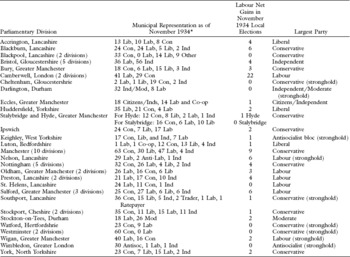
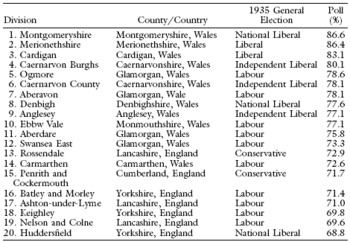
Although the Conservative discourse of citizenship was expounded with very different ideological intent, the power of these broad democratic values on the center-right may help to explain why so many Conservatives chose to cooperate with their Labour counterparts in supporting the Ballot despite the reservations expressed by the national leadership. It is impossible to know for sure the number of divisions in which cross-party consensus was achieved, but close reading of a sample of local newspapers together with information gleaned from LNU publications uncovers around fifty, including large cities such as Manchester, Bristol, and Nottingham (see table 5). In some places where Labour's municipal representation was growing or already strong, such as York or Wigan, the motivation may have been partly electoral; Conservative activists were naturally anxious not to hand their political opponents the moral dividend of being the only party associated with the Ballot, especially at a time when Labour was making a concerted effort to extend its appeal beyond its traditional industrial base.Footnote 108 Conservatives elsewhere may have feared a Liberal resurgence, conscious that the League commanded fierce loyalties among many Liberal voters; it was surely no coincidence that seven of the ten highest-polling divisions were Liberal seats (see table 6).Footnote 109
A final consideration in explaining grassroots participation by Conservatives concerns the language of nonpartisanship and consensus deployed by Ballot organizers. This was, after all, the language of interwar Baldwinite Conservatism, which sought to identify the Conservative cause in the voter's mind with the constitution and the public interest.Footnote 110 To be a Conservative was to be for the nation, and not just selfish sections of it, a rhetorical elision that became explicit with the formation of the “National” government in 1931. Ballot organizers destabilized this discursive strategy by utilizing the LNU's own credentials as a nonparty organization in order to accuse opponents of politicizing the Ballot through their refusal to participate.Footnote 111 A ballot worker in Scarborough told readers of the Manchester Guardian that “whatever element of party political feeling has been introduced into it has emanated largely from Conservative party organisations.”Footnote 112 In a similar manner, a Daily Herald reader summarily dismissed Conservative
—Profile of Divisions in Which All Three Parties Participated in the Ballot

* Lib = Liberal, Lab = Labour, Con = Conservative, Ind = Independent, Mod = Moderate, Co-op = Co-operatives, Antisoc = Antisocialist.
—Twenty Highest-Polling Divisions

Source.—Polling figures taken from LNU, The National Declaration on the League of Nations and Armaments: Results in Each Constituency of the United Kingdom (London, n.d.).
protests about being unfairly represented as a party opposed to peace: “If the Conservative Party had not been the only one of three to oppose the Ballot and go out of its way to hinder it, no accusations on the subject could have been launched.”Footnote 113 It seems reasonable to suggest that many of the Conservatives who broke with the official party line did so in order to minimize this kind of bad publicity. The Bromley Conservative Association, for example, sent a donation to the local declaration committee in January, having previously voted against participation.Footnote 114 Lord Ebbisham, chancellor of the Primrose League, appeared to undergo a change of heart the very same month, when he entertained forty canvassers from the Cobham Ballot at his home.Footnote 115 Only the previous November, Ebbisham had been quoted in the Daily Express advising the people of Scarborough against filling in the ballot forms.Footnote 116
In short, while existing accounts acknowledge that Conservative opposition to the Ballot represented a serious political miscalculation, they ignore the deeper sources of the error. In essence, the party's willingness to hand Labour a propaganda coup rested on its failure to recognize the full power of the Ballot's appeal to large sections of the interwar electorate. The LNU skillfully yoked its own democratization project to the normative values of active citizenship and nonpartisanship. Contextualizing the Ballot within the broader transformations taking place in Britain's political culture at this time reinforces this verdict. In an important article of 2006, Jon Lawrence briefly alludes to the house-to-house canvassing technique of the Peace Ballot as evidence of the increasingly “domestic and peaceable” tone of public politics, which he links to legal reforms in electoral practice, the dying out of older electoral customs and civic rituals, the elimination of the disorderly male nonelector, and the arrival of female candidates and voters.Footnote 117 The analysis advanced here would broadly support this interpretation but push it further in two respects. First, the Ballot demonstrates the important role played by nonparty actors in shaping this peaceable political culture. Although the event became a flashpoint for interparty conflict, as has been shown, the LNU and its civic allies within the women's movement, churches, and educational circles played an equally if not more significant role in facilitating participation and anchoring the Ballot to notions of responsible citizenship.
Second, the preceding analysis underlines the quite literal meaning of the Ballot as a “domesticated” political exercise, with forms delivered by hand—often by women—and completed in the privacy of the home. Volunteer testimony and Ballot propaganda depicted scenes both real and imagined of husbands, wives, and adult sons and daughters deliberating over the kitchen table or around the hearth in order to illustrate the educative benefits and bonding effects on the family.Footnote 118 The intimacy of the Ballot technique is striking when compared to the other historic moments of mass political mobilization of this era, such as the Hunger Marches or the Battle of Cable Street. Unlike these much-memorialized events, the Ballot has left little trace in the popular memory or visual record despite engaging a much larger proportion of the population.Footnote 119
Lawrence makes one further observation salient to our discussion, which concerns the tendency for interwar politicians to conceive of the mass electorate as a passive “silent majority,” unresponsive to fractious partisan warfare and the exuberant electoral disorder of old. While the Ballot undoubtedly reinforced the values of nonpartisanship and nonviolence, the discourse accompanying it suggests that the “quiet,” rational citizen was not always defined as a fundamentally unassertive force. Press supporters seized upon the exercise as proof that the British people were not apathetic when it came to decisions that could result in war. For the News Chronicle, the response had revealed “an eager interest and an emphatic conviction on the part of vast masses of British electors greater even than might have been expected.”Footnote 120 The five questions, according to a writer in the Daily Herald, had made the British people think: “They have brought them to face those difficulties of decision which they must face if democracy is to mean anything at all.”Footnote 121
This was, of course, an exaggeration. After all, only one in three of the adult population participated in the Ballot, although the NDC estimated, possibly optimistically, that the figure might have been as high as 50 percent had coverage been universal.Footnote 122 Certainly in the highest-polling divisions (see table 6) the claims made regarding the Ballot's participatory character were justified. Yet in other areas far less than a third of the population returned questionnaires. Some of the lowest figures were recorded in London divisions, such as Stepney (11.5 percent), Bethnal Green (13.5 percent), Westminster (16.2 percent), and North Kensington (18.8 percent). Without systematic cross-referencing of polling figures with other relevant data, including—crucially—the strength of local declaration committees, it is impossible to draw generalizations about the drivers of participation in different constituencies, although it seems clear that the high turnout in Wales and the north of England was a result of exceptional organization and the residual presence of Liberalism and Nonconformity, both, as has been noted, key sources of pro-League opinion.Footnote 123
The qualitative testimony of volunteers adds to this picture of local variation, even within the same division. In Preston, for example, one volunteer reported that some voters had “completely failed to understand the meaning and some have taken the fatalistic attitude—‘It has got to happen so what's the use of filling in the form.’” His colleague, meanwhile, in another ward was encouraged to discover that “the people in the working-class houses in the town seem to be thoroughly in earnest on the subject, judging by the number of questions they are asking.”Footnote 124 Anecdotal evidence of the comments written in the space on the bottom of the forms offers a similarly mixed picture. Some, an organizer from Eastbourne reported, “were pleasant to read and encouraging to the jaded vote counter, some were bitterly unfriendly, some showed ignorance, and a few were quite unintentionally humorous.”Footnote 125 In Romford, comments ranged from the radical (“Kings and Governments who want war should be put in the front line trenches”) to the poignant and personal (“Went through the last war—never again”) to the simply cheerful (“Good Luck to You!”).Footnote 126 Although Ballot organizers liked to point to these as “evidence of quiet, independent thought,” in truth only a small minority availed themselves of the opportunity to supplement their answers in this way; in Nelson, for example, only 855 of the approximately 17,000 Ballot forms distributed were returned with comments attached.Footnote 127
How, then, should we assess the Ballot's success as an exercise in democratizing foreign policy? Its impact was undoubtedly felt during the general election of November 1935, at which the government affirmed its commitment to the League and to a collective response to Mussolini's invasion of Abyssinia, which had taken place the previous month. Levels of public interest in the affair initially ran high; revelations concerning Samuel Hoare's secret deal with the French foreign minister, Pierre Laval, in December unleashed such a public outcry that Hoare was forced to resign, an outcome for which the LNU was quick to claim some credit.Footnote 128 Yet the effect of the Italo-Abyssinian War was ultimately to discredit rather than strengthen the case for democratization. As the months wore on and fear of an escalation mounted, the defiant public mood weakened. By June 1936, voters who had, only a year earlier, pledged support for military sanctions in their millions looked on placidly as the government removed existing light-touch sanctions against Italy and the League followed suit a few weeks later. This apparent contradiction was seized upon by the Ballot's enemies as compelling evidence of the irrational character of public opinion. It featured prominently in a famous essay by E. H. Carr, which anticipated his highly influential critique of “utopian” internationalist thought and paved the way for the “realist” school of international relations post-1945.Footnote 129 Historians influenced by this interpretive framework, as noted at the beginning of this article, subsequently portrayed the Peace Ballot as just another facet of interwar idealism: worthy in intent but fundamentally misguided.Footnote 130
Meanwhile, other developments in the later 1930s reconfigured the relationship between the British public and foreign policy in significant ways. The year 1937 saw the appearance of the first “scientific” opinion polls, carried out by the newly established British Institute of Public Opinion (BIPO).Footnote 131 It also witnessed the founding of Mass Observation (MO), a research organization committed to pioneering a “science of ourselves” through the use of opinion surveys and ethnographic techniques.Footnote 132 Although their immediate impact upon political elites was limited, the claims of BIPO and MO to greater objectivity in their investigations of public attitudes rendered the Ballot method largely obsolete, and all proposals to repeat the exercise were quickly rejected.Footnote 133 The investigations of MO appeared to challenge the Ballot's claims in another way by discovering widespread political apathy among ordinary voters, particularly with regard to foreign affairs. When asked for their thoughts on the latter in March 1938, 35 percent of the sample taken from the London borough of “Metrops” (MO's code name for Fulham) failed to answer, and of those who did a full 40 percent were unable to express any definite view.Footnote 134 In “Worktown” (actually the northern industrial town of Bolton), the proportion of everyday conversation related to politics peaked at a mere 6 percent following Hitler's march into Austria, before slumping back to the 0.3 percent average recorded on a typical day.Footnote 135
Yet foreign policy continued to provoke mass agitations in this period, many of which shared certain features of the Ballot's model of an active, mobilized public opinion. Lloyd George's Council of Action for Peace and Reconstruction, for example, which offered a radical alternative to the government's existing foreign and domestic policy program, proceeded on an inclusive cross-party basis, with a particularly strong presence among the nonconformist churches.Footnote 136 Similarly, the Spanish aid campaigns frequently deployed a “non-political” discourse in order to facilitate the participation of clergymen and nonparty bodies such as the Women's Institutes and the British Legion.Footnote 137 This was an attentive, organized public, as opposed to the nonvoting “Don’t Know, Don’t Care” types that absorbed the attention of MO.Footnote 138 This public might not have stood for Britain but neither necessarily did Metrops and Worktown. What set the Peace Ballot apart was its ability to mobilize both or at least to convince some unorganized voters to swap momentarily their football pools coupons for a ballot form. Had MO existed in 1934–35 and studied the process, it seems reasonable to assume that its investigators would have found the same mix of engagement, hostility, interest, and fatalism reported by Ballot volunteers. In other words, it was the failure of collective security over Abyssinia and subsequent events that caused widespread disillusionment with foreign policy after 1936, not the inherent apathy of the electorate.
There was one further development in the later 1930s reshaping popular attitudes to foreign affairs. Around this time, government became more skilled at communicating its own foreign policy aims to the mass public. It would be wrong to suggest that this task had been neglected by previous prime ministers, but Neville Chamberlain, perhaps inevitably given the deepening international crisis, took it more seriously than most. This was evident in his careful management of the press and audacious personal diplomacy during September 1938, when he flew at short notice to Germany to hold crisis talks with Hitler.Footnote 139 Through a series of press briefings, public appearances, and speeches timed to fit the news cycle, all enhanced by the dazzling, hypermodern spectacle of air travel, Chamberlain engineered a brilliant—albeit short-lived—political victory for his appeasement policy.Footnote 140 “Munich” thus revealed the prime minister's acute awareness of the importance of public opinion, but it was a very different kind of public opinion from that envisaged by proponents of democratization. However highly publicized the before and after might be, summitry of this kind involved face-to-face, often bilateral, meetings of political leaders held in secret. It was a far cry from the “open covenants openly arrived at” championed by the original prophets of the New Diplomacy, and a stark departure from the more recent opening session of the World Disarmament Conference in February 1932, a session devoted to hearing the statements of voluntary societies representing millions worldwide.Footnote 141 The government might have faced closer rigorous scrutiny from movements such as the LNU and UDC in the 1930s, together with an electorate more familiarized with foreign news through the radio, newsreels, and daily press.Footnote 142 Yet the consequence was not greater involvement—nor even the consultation—of voters in foreign policy decision making but, rather, more attention paid to the presentation and communication of foreign policy objectives. This trend was intensified by the outbreak of war in 1939, but by the time of the 1945 election, foreign policy questions had come to occupy a low political profile.Footnote 143 While they could still, on occasion, provoke popular protests (Suez in 1956, Vietnam in 1968, the Falklands War in 1982), the ideological climate of the Cold War militated against greater openness or accountability in government over matters relating to national security.Footnote 144
All of this points to the conclusion that the Peace Ballot, despite its phenomenal success as a piece of political mobilization, represented an ending rather than new beginning for the democratization project. As has been shown, establishing greater transparency in the formulation of foreign policy and the conduct of diplomacy were ideas that found particular resonance among Britons in the two decades following the Armistice. Not only did they speak to the people's hope for peace, but they also dovetailed with a broader desire for education and civic involvement in the wake of the Fourth Reform Act. Ballot organizers exploited both these currents of feeling to the full between November 1934 and June 1935, a moment when the collective system of the League could still be presented as offering a viable solution to Europe's problems, and when the LNU could still rely on its power base in the churches, schools, women's organizations, youth movements, and the Liberal and Labour parties. However, given its close identification with the League of Nations, the democratization project was almost bound to lose direction and support following the failure of collective security during the Abyssinian affair. When this project reemerged in 1945, it generated a more cautious idealism born of experience, while the United Nations never came to symbolize the dream of a democratized global order with which its predecessor, the League of Nations, had inspired the British people between the wars.