Much attention has been paid to China's wildlife trade policies following the emergence of the coronavirus SARS-CoV-2 in Wuhan and initial suggestions that this may have been linked to trade in wild animals.Footnote 1 Policy interventions in China have reflected official concern over this reported link, with “Decisions” adopted by the Standing Committee of the National People's Congress (NPCSC) on 24 February 2020 prohibiting the breeding of and trade in most terrestrial wild animal species, including specimens bred in captivity, for consumption as food.Footnote 2 Prior to this, regulations had permitted trade in wild animals other than nationally protected species for consumption as food if proof of legal origin could be provided.
The new prohibitions were consolidated in a 2020 draft revision of the Wildlife Protection Law (WPL), China's most significant legislation covering the conservation of and trade in wild animals.Footnote 3 However, contrary to some media reports, these policy changes do not represent a comprehensive prohibition of trade in wild animals.Footnote 4 For example, they do not prohibit the commercial breeding of and trade in aquatic wild animals such as turtles, frogs and salamanders for consumption as food. Nor do they prohibit trade in wild animals for non-food purposes such as traditional medicine, fur, ornamental items or the pet trade. Both the current WPL and the draft revision set out provisions for commercial trade for non-food purposes, even if the species is protected.
China's Wildlife Protection Law
The WPL was first adopted in 1988, with revisions approved in 2009, 2016 and 2018 – the 2016 revision being the most substantial.Footnote 5 After further revision of the WPL was added to the work programme for the NPCSC in February 2020,Footnote 6 a revised draft was published in October 2020 and was open to public comments until 19 November.Footnote 7
The WPL stipulates different levels of protection for wild animal species, including first-class and second-class special state protection. First-class special state protection is the highest category of protection under Chinese law and currently covers species including the tiger (Panthera tigris), leopard (Panthera pardus), saiga antelope (Saiga tatarica), musk deer (Moschus spp.), Asian elephant (Elephas maximus) and three species of pangolin (Manis spp.). Species covered by second-class special state protection include the Asiatic black bear (Ursus thibetanus) and Chinese giant salamander (Andrias davidianus).Footnote 8
Article 27 of the current WPL states that approval may be granted by provincial-level government departments for “the sale, purchase or utilization of wild animals under special state protection or the products thereof [if it] is necessary for scientific research, captive breeding, public exhibition or performances, heritage conservation or other special purposes.” Article 28 then states that species under special state protection “for which there exist established knowledge and techniques for captive breeding … [may be] included on a list … of captive-bred wildlife under special state protection” (hereafter referred to as the “utilization list”). Captive-bred specimens of these species may be traded commercially, subject to permits and production quotas. The language of both articles remains unchanged in the October 2020 revised draft.
A superficial reading of the WPL may therefore lead to the conclusion that commercial trade in species under special state protection, and products thereof, is prohibited, except for captive-bred specimens of species included on the utilization list. Wang Wenxia and colleagues reach a similar conclusion, stating, “The revised WPL is very specific in outlining wildlife species that are exempted from any use, compiling them in a detailed list of Chinese species under special state protection” and “the consumption or trade of specimens collected in the wild is clearly prohibited.”Footnote 9 Neither assertion, however, is correct. Research published by the Environmental Investigation Agency (EIA) into China's legal, permitted trade in leopard bone and pangolin scales demonstrates how provisions of the current WPL enable commercial trade in the parts and products of species under first-class special state protection, including those sourced from wild populations.Footnote 10
Trade in leopard bone
Leopards (Panthera pardus), snow leopards (Panthera uncia) and clouded leopards (Neofelis nebulosa) are subject to first-class special state protection in China and, since 1975, have been listed in Appendix I of the Convention on International Trade in Endangered Species of Wild Fauna and Flora (CITES), which prohibits international commercial trade in the species, including parts and derivatives.
It is known that trade in packaged traditional Chinese medicines (TCM) containing leopard bone has been occurring in China since at least 1994.Footnote 11 “Leopard bone,” or baogu 豹骨, is also listed as an ingredient within standard formulations in the Chinese State Pharmacopoeia.Footnote 12 The term used for leopard bone in TCM is ambiguous, as the generic character for leopard (bao 豹) could refer to leopards, snow leopards or clouded leopards, all of which have been officially recognized as species from which the medicinal ingredient leopard bone may be derived.Footnote 13 On product labelling, leopard bone is sometimes represented in quasi-Latin as “Os pardi,” a non-scientific term with no precise taxonomic meaning.
In 2007, the Chinese government reported to CITES that “only existing stock of leopard bones could be used” by pharmaceutical manufacturers.Footnote 14 In 2019, it further stated that “since January 1, 2006, only the outstanding stockpile of leopard bones held by pharmaceutical factories and verified by the national forestry authorities can be used for medicinal purposes.”Footnote 15 The quantities and provenance of these stockpiles have never been made public.
In 2018, the EIA identified 36 products listed on TCM manufacturer websites which included leopard bone in the ingredients list, plus an additional 26 products for which leopard bone was listed as an ingredient on images of product packaging and/or package inserts hosted on a third-party website.Footnote 16
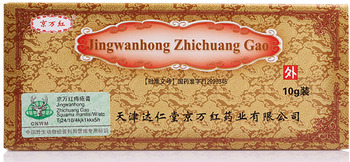
Since 2003, Chinese Government agencies have implemented a labelling mechanism for products which contain the body parts of certain wild animal species as a means of tracing and legitimizing trade.Footnote 17 The EIA found images of these China National Wildlife Mark (CNWM) labels on the packaging of six products which noted that they contained leopard bone (“Os pardi” or baogu) (Figure 1). Five of these products carried the code “W,” which indicates that the bone was sourced from the wild, while the sixth was marked with an “N,” which indicates that the origin is unknown. A search of the alphanumerical code on these labels on the CNWM website produced details of permits issued to the manufacturer by the State Forestry Administration (SFA, renamed the National Forestry and Grassland Administration (NFGA) in 2018) between 2011 and 2016.Footnote 18 Further details of these permits (such as quantities of leopard bone covered) do not appear to be publicly available. However, the full text of one permit issued by the SFA in 2018, Forestry Protection Permit No. 01237, was made available online by investigative journalists in China.Footnote 19
CNWM Label Affixed to Hongmao Yaojiu Packaging, 2019
Source: Characters for “leopard bone product” (baogu zhipin 豹骨制品) are visible.

Permit No. 01237 allowed one company to purchase 1.23 tonnes of leopard bone. According to a Chinese media article, the bone was verified by SFA experts in 2010.Footnote 20 When inspectors asked about its provenance, the individual named on the permit stated that his father had purchased the bone from many different places over the past few decades; a representative of the local forestry bureau claimed that he would not reveal its origin. These details indicate that the registering of leopard bone with the authorities and the procurement of new stock by pharmaceutical companies were both allowed after 2006, despite the 2006 regulation, and that a permit for the sale of leopard bone may have been issued without proof of its legal origins.
The continued permitted domestic trade in leopard bone products in China is a serious concern given the lack of any obvious replenishable legal source and the high level of illegal trade in the species. While publicly reported seizures are insufficient to establish the true scale of the illegal trade, a minimum of 5,430 Asian leopards have been reportedly seized since 2000.Footnote 21 In 2015, leopards were assessed as “vulnerable” by the International Union for Conservation of Nature (IUCN) on its Red List of Threatened Species – a rapid decline in status from “least concern” in 2002.Footnote 22 Loss of range has been particularly severe for leopards in Asia.Footnote 23 In 2015, it was estimated that there were fewer than 450 leopards remaining in the wild in China.Footnote 24 The IUCN assessment recognized that trade in leopard parts for medicinal use may represent a substantial threat to leopard populations.Footnote 25 In 2019, a CITES review highlighted China as one of the countries of particular concern regarding illegal trade in leopards, and noted an apparent growing demand for leopard bones in China and Vietnam.Footnote 26
By allowing the domestic trade in leopard bone to continue, the Chinese government is failing to implement key elements of CITES Resolution 12.5 on conservation and trade of Asian big cats. For example, paragraph 5a) recommends: “that the consumer States … work with traditional medicine communities and industries to develop and implement strategies for gradually reducing and eventually eliminating the use of Asian big cat parts and derivatives.” Paragraph 1c) urges: “all Parties in whose jurisdiction there is a legal domestic market for specimens of tiger and other Asian big cat species that is contributing to poaching or illegal trade, take all necessary legislative, regulatory and enforcement measures to close their domestic markets for commercial trade in tiger and other Asian big cat specimens.”Footnote 27
Trade in other species subject to first-class special state protection
In contradiction to the claims made by Wang and colleagues outlined above, these findings clearly point to the fact that China still permits commercial trade in species under first-class special state protection and from wild sources.Footnote 28 They also demonstrate that upgrading a species from second-class to first-class special state protection does not automatically prohibit commercial domestic trade in that species.
In June 2020, the protection status of the Chinese pangolin (Manis pentadactyla) – a critically endangered species threatened by poaching and much prized in traditional medicine for its scalesFootnote 29 – was upgraded.Footnote 30 Yet, in July 2020, the EIA found 56 pharmaceutical companies advertising 64 products that claimed to contain pangolin.Footnote 31 Of the 12 legible CNWM labels found in images online, five stated that the pangolin scales were wild-sourced; the other labels list the scales as being of “unknown” source (Figure 2). While the Chinese pangolin was removed from a section of the 2020 State Pharmacopoeia, which lists key medicinal ingredients, it remained listed as an ingredient in eight standardized formulations in the pharmacopoeia.Footnote 32 Similarly, while semi-processed pangolin scales are reportedly no longer covered by national medical insurance as of January 2020, processed medicines containing pangolin continue to be covered.Footnote 33 As with leopards, the pangolin scales circulating in the legal domestic trade purportedly derive from registered stockpiles, but data on the quantities and origins of such stocks have never been made publicly available and there are concerns that the management system is highly susceptible to abuse and is used to launder illegally sourced stock.Footnote 34 Indeed, in May 2021, Chinese news media reported that a pharmaceutical company in Beijing had been fined, and staff imprisoned, for illegal trade in pangolin scales and saiga horn; the case involved fraudulent use of labels to launder illegally sourced protected wildlife products.Footnote 35
Medicinal Product Advertised on a TCM Company Website, July 2020
Notes: This CNWM label indicates the product contains pangolin scales (Squama manitis) of wild origin.

Trade in other species under first-class special state protection has also been documented through the CNWM label mechanism. Products include traditional medicine containing saiga horn,Footnote 36 and rugs made from the skins of captive-bred tigers.Footnote 37, Footnote 38
Ambiguity persists around the legality of trade in farmed tiger bone and rhino horn. A 1993 State Council notification prohibited trade in and medicinal use of tiger bone and rhino horn, and both were removed from the State Pharmacopoeia.Footnote 39 Yet a 2005 government notification (which appears not to be publicly available in full) apparently permitted the medicinal use of captive-bred tiger bone.Footnote 40 In 2018, a new State Council notification repealed the 1993 notification and stated that farmed tiger bone and rhino horn could be used in certain circumstances.Footnote 41 Shortly thereafter, a government spokesperson indicated that implementation of the 2018 notification was being delayed and that in the interim, the former prohibitions remain in place.Footnote 42 While a government submission to CITES in 2019 referred to the continued validity of the 1993 ban,Footnote 43 the 2018 notification is still listed on the State Council website as valid policy without qualification.
A publicly accessible database lists all the permits issued by the NFGA to “buy, sell and/or utilize terrestrial wildlife under first-class state protection or the products thereof.” While the species, products, quantities and purposes covered by these permits are not specified on the database, a 2017 notification lists ten taxa for which trade permits, under Article 27 of the WPL, must be approved by the central forestry department (i.e. NFGA) rather than provincial authorities.Footnote 44 It is likely therefore that these permits relate to these ten taxa.Footnote 45 There were 45 such permits issued to pharmaceutical companies between January 2018 and August 2020, indicating that the scale of permitted trade in these species alone for medicinal purposes could be considerable.Footnote 46 Six of the companies issued with these permits have previously been implicated in the trading of tiger parts and derivatives, and six have been documented advertising products claiming to contain leopard bone.Footnote 47
Discussion
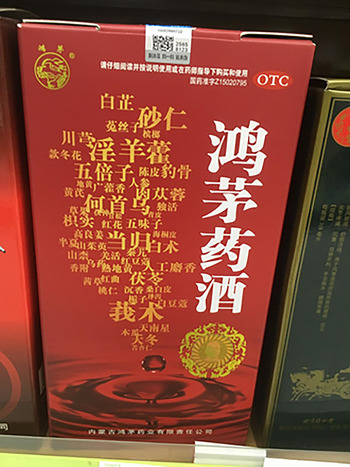
If the permitted trade outlined above is in accordance with the WPL, the exemptions in Article 27 allowing trade for “special purposes” are evidently being interpreted to allow for commercial trade in traditional medicine products. This may be owing to the provision made for “heritage conservation.” In 2014, the production methods for Hongmao Medicinal Wine, a product which lists leopard bone as an ingredient (see Figure 3), were added to the “representative intangible cultural heritage” list and thus were deemed worthy of protection.Footnote 48
Hongmao Yaojiu, A Medicinal Wine for Sale in a Pharmacy in China, 2019
Notes: Characters for “leopard bone” (baogu 豹骨) are visible on the packaging.

The trade in captive-bred specimens of species included on utilization lists published to date, such as the Chinese giant salamander, may be occurring in accordance with Article 28 of the WPL.Footnote 49 This includes trade in these species for the consumption as food. CNWM labels, however, also indicate the permitted use of captive-sourced bear bile in traditional medicine products,Footnote 50 and lion bone (Panthera leo) in tonic wines offered for sale at tiger farms and associated retail premises (although marketed as containing tiger).Footnote 51 Neither of these species is included on the published utilization list for terrestrial species.Footnote 52 This could suggest additional species have been added to utilization lists without public notification, or that provisions in Article 27 are being interpreted to permit such trade outside the mechanism specifically designed to regulate trade in captive-bred specimens of protected species.
Captive breeding of threatened wild animal species, including those used in TCM such as tigers and bears, has long been endorsed by the Chinese government and some other commentators as a means to meet market demand while alleviating pressure on wild populations.Footnote 53 Conversely, many have argued that the farming of wildlife frequently increases extinction risk.Footnote 54 Several species which have been bred commercially in China have declined in the wild since commercial breeding began, including the Chinese giant salamander,Footnote 55 tiger and Asiatic black bear.Footnote 56
Laura Tensen argues that the commercial breeding of wild animals can only benefit conservation of a species if five conditions are met: farmed products must be more cost-efficient than illegally sourced products; demand should not be stimulated by the legal market in farmed products; a lack of consumer preference for wild-sourced products over farmed products; the absence of the laundering of illegal products through the legal market; and no re-stocking of farms from the wild.Footnote 57 Tensen concludes that for most species being traded, including tiger, bears and pangolins, these conditions are unlikely to be met. For instance, in the case of tigers and bears, studies find that consumers prefer wild-sourced products over farmed when the products are used in traditional medicine.Footnote 58 The captive breeding of pangolins to meet consumer demand has been deemed to be commercially unviable.Footnote 59 The laundering of illegally sourced tiger products through China's legal markets has been documented,Footnote 60 and research has indicated the widespread trapping of wild Chinese giant salamanders to stock farms.Footnote 61
Conclusion
As it is currently implemented, the WPL permits commercial domestic trade in wild animal species subject to the highest levels of protection, including specimens sourced from the wild. The lack of transparency around the awarding of permits and the paucity of information on the quantities and origins of wildlife products in government and private stockpiles renders the accurate estimation of the scale of the trade and the true provenance of products sourced from protected species practically impossible through open-source research. A policy environment characterized by a lack of transparency, mixed messages and, in some cases, the overt legitimization of the commercial use of threatened wildlife is of particular concern for species such as leopards, tigers, bears and pangolins, given the threat that demand in China and trade in their body parts pose to these species.
Revision of the WPL, which is ongoing at the time of writing, represents an opportunity to resolve the ambiguities within it and address such concerns, particularly if Articles 25, 27 and 28 in the existing law are amended to specifically prohibit the commercial breeding of and trade in wild animal species that are threatened by trade, including for traditional medicine and ornamental purposes.
The revised draft of the WPL published in October 2020 contains significant changes, including increased penalties and new coordination mechanisms for law enforcement. However, key language in the aforementioned articles remains unchanged. Academics and NGOs both in China and abroad have raised concerns that the revised draft will continue to permit the commercial trading of protected species and have recommended further changes.Footnote 62 Whether these recommendations will be reflected in subsequent drafts remains to be seen.
Acknowledgements
I would like to thank the Environmental Investigation Agency and its donors who have enabled this research and the writing of this paper, particularly Save the Rhino International and Network for Social Change.
Conflicts of interest
The author is employed by the Environmental Investigation Agency.
Biographical note
Aron WHITE is a wildlife campaigner and China specialist at the Environmental Investigation Agency in London, where his work focuses on wildlife trade and policy in China, South Asia and South-East Asia, and the use of wild animals in traditional medicine.