Introduction
Young adulthood is a fragile life phase and yet many future paths are partially determined by events occurring during this period. Both American and European evidence shows that difficulties such as unemployment in early adulthood can have deleterious consequences for various labour market outcomes later in life (e.g. Mroz and Savage, Reference Mroz and Savage2006; Vanttaja and Järvinen, Reference Vanttaja and Järvinen2006; Schmillen and Umkehrer, Reference Schmillen and Umkehrer2017). In general, long-term exclusion from the labour market is seen as a negative phenomenon both for the society and the individual (Hohmeyer and Lietzmann, Reference Hohmeyer and Lietzmann2020).
In addition to early exposure to unemployment, health problems are among the risks that can negatively affect future trajectories. Health selection, meaning that poor health leads to low socioeconomic position, is likely to be more relevant among young adults compared to older people (Hoffmann et al., Reference Hoffmann, Kröger and Geyer2019). Especially mental health problems in adolescence and early adulthood are known to be a risk factor for failing at successfully completing one’s studies and at the transition to the labour market on both sides of the Atlantic (Fletcher, Reference Fletcher2013, for the USA; Lundborg et al., Reference Lundborg, Nilsson and Rooth2014, for Sweden; Helgesson et al., Reference Helgesson, Tinghög, Niederkrotenhaler, Saboonchi and Mittendorfer-Rutz2017, for Sweden; Hakulinen et al., Reference Hakulinen, Elovainio, Arffman, Lumme, Pirkola, Manderbacka, Keskimäki and Böckerman2019, for Finland).
Various institutions are likely to affect school-to-work transitions, and the universalistic Nordic model has often been considered well-performing in this regard (Walther, Reference Walther2006). Lately, policy measures targeted at youth have become more coercive also in the Nordic countries: social support has become less generous, eligibility criteria have been tightened, and more emphasis has been put on sanctions and activation (Lorenzen et al., Reference Lorenzen, Angelin, Dahl, Kauppinen, Moisio and Salonen2014; Helms Jørgensen et al., Reference Helms Jørgensen, Järvinen and Lundahl2019). More generally, it has been argued that with a new emphasis on activation and social investment, the welfare state is now being rebuilt around work and employability (Rovny, Reference Rovny2014; Grover and Piggott, Reference Grover and Piggott2015; Hultqvist and Nørup, Reference Hultqvist and Nørup2017). These changes might reflect a shift from structural understanding of disadvantage to a more individualistic one, which means that disadvantage is rather attributed to individual deficiencies – with a policy solution of improving employability – than, for example, to social inequality, access to opportunities, and discrimination (Helms Jørgensen et al., Reference Helms Jørgensen, Järvinen and Lundahl2019).
Unemployment and other problems during young people’s transitions into the labour market are reflected in the use of social assistance, which is a means-tested last-resort financial aid in many countries. Long-term receipt of social assistance, in particular, can be regarded as an indication of accumulation of disadvantages (Overbye and Saebo, Reference Overbye and Saebo1998; Taylor and Baruch, Reference Taylor and Baruch2004). While there is a growing body of evidence on the individual and family characteristics and critical life events that increase the risk of receiving social assistance among young adults in the Nordic countries (Dahl and Lorenzen, Reference Dahl and Lorenzen2003; Bergmark and Bäckman, Reference Bergmark and Bäckman2011; Lorenzen et al., Reference Lorenzen, Dahl and Harslof2012; Kauppinen et al., Reference Kauppinen, Angelin, Lorenzen, Bäckman, Salonen, Moisio and Dahl2014; Ilmakunnas, Reference Ilmakunnas2018; Ilmakunnas and Moisio, Reference Ilmakunnas and Moisio2018), few longitudinal studies have been able to investigate the importance of health problems in understanding the use of social assistance (with the exception of Ayala and Rodriguez, Reference Ayala and Rodriguez2007, for Spain).
To contribute to this literature, we conduct a survival analysis to examine how health problems are associated with exit from social assistance among young adults aged 18–34. We use rich register data on the total population living in the metropolitan area of Finland allowing a uniquely detailed analysis. We follow a group of young adults who started receiving social assistance for the first time in the years 2007-2011 and track their monthly social assistance receipt up to 60 months. Employing Kaplan-Meier estimators and Cox proportional hazard regression models we study how health problems are related to spell duration.
Motivated by the growing concern about mental illness among the youth and the population in general, our main focus is on mental health problems. Among all Finns aged 19-34, around 15 per cent are currently affected by mental health problems (Suvisaari et al., Reference Suvisaari, Aalto-Setälä, Tuulio-Henriksson, Härkänen, Saarni, Perälä, Schreck, Castaneda, Hintikka, Kestilä, Lähteenmäki, Latvala, Koskinen, Marttunen, Aro and Lönnqvist2009). In addition, in the past decade the number of young adults receiving disability pension due to mental illness has grown by a third in Finland (Mattila-Holappa, Reference Mattila-Holappa2018). Mental health problems have also proved to be more important than somatic illnesses in explaining future labour market outcomes (Lundborg et al., Reference Lundborg, Nilsson and Rooth2014, for Sweden). As an additional advantage in this study, we have information on various psychiatric diagnoses based on health care use and use of psycho-pharmaceuticals enabling a comparison between different diagnoses.
Literature Review
The association between socioeconomic status and health is a well-known fact, and even in the countries with a relatively low level of income inequality and poverty, such as the Nordic countries, these inequalities in health persist (Marmot, Reference Marmot2005; Mackenbach et al., Reference Mackenbach, Stirbu, Roskam, Schaap, Menvielle, Leinsalu, Kunst, van Oyen, Demarest, Rychtarikova, Dzurova, Andersen, Ekholm, Judge, Tekkel, Prättäla, Martikainen, Desplanques, Jusot, Helmert, Kovacs, Marton, Layte, Costa, Vannoni, Villerusa, Kalediene, Klumbiene, Geurts, Dahl, Strand, Wojtyniak, Santana, Madarasova Geckova, Artnik, Borrell, Esnaola, Regidor, Burström, Fritzell, Lundberg, Bopp and Glickman2008; Hu et al., Reference Hu, van Lenthe, Borsboom, Looman, Bopp, Burströ, Dzúrová, Ekholm, Klumbiene, Lahelma, Leinsalu, Regidor, Santana, de Gelder and Mackenbach2016; Lahelma et al., Reference Lahelma, Pietiläinen, Pentala-Nikulainen, Helakorpi and Rahkonen2019). Mental health problems are no exception to this pattern (Murali and Oyebode, Reference Murali and Oyebode2004; Hudson, Reference Hudson2005; Aneshensel, Reference Aneshensel2009; Reiss, Reference Reiss2013; Allen et al., Reference Allen, Balfour, Bell and Marmot2014).
While the association between one’s socioeconomic status and health is well established in the literature, the bi-directional and complex causality behind this association leaves many questions open for examination. The association has been mainly explained with the social causation and selection hypotheses. The first asserts that poor socioeconomic status increases the risk of health problems through, for example, reduced access to health care, occupational hazards, poorer diets, and stress related to being poor or unemployed. According to the second hypothesis health problems prevent people from attaining higher positions and they can lead to work incapacity and decrease in earnings (e.g. Goldman, Reference Goldman2001). It could also be that there is a third factor affecting both health and socioeconomic status; for example, genetic endowment, risky behaviour or childhood living conditions might predict both worse health and lower socioeconomic status in adulthood (Case et al., Reference Case, Lubotsky and Paxson2002; Hoffmann et al., Reference Hoffmann, Kröger and Geyer2019).
Both social causation and selection in explaining inequalities in health are supported by evidence, and the choice of indicators for health and socioeconomic status, societal context, and population group under focus can affect the results (Kröger et al., Reference Kröger, Pakpahan and Hoffmann2015; Vaalavuo, Reference Vaalavuo2016a, Reference Vaalavuo2016b; Hoffmann et al., Reference Hoffmann, Kröger and Pakpahan2018; Kane et al., Reference Kane, Harris, Morgan and Guilkey2018). Age can be an important element in the conundrum and the relative importance of the two explanations has been shown to vary with age: according to Hoffmann et al. (Reference Hoffmann, Kröger and Pakpahan2018, Reference Hoffmann, Kröger and Geyer2019) both selection and causation are important mechanisms during childhood and young adulthood, but selection loses its importance with age, making causation a more relevant mechanism for older people. It seems logical that health problems early on in life are important for future socioeconomic status attainment as this is the period when individuals make decisions about their education, while at older ages one has already achieved a certain socioeconomic position in occupational and educational terms.
Life course studies have shown that both health and socioeconomic status depend on their prior status (Hoffmann et al., Reference Hoffmann, Kröger and Pakpahan2018). Moreover, the two are likely to be intertwined so that health and human capital accumulation reflect strong interdependence (Kane et al., Reference Kane, Harris, Morgan and Guilkey2018). From this perspective early life course – childhood, adolescence, and transition to adulthood – is essential in understanding social inequalities in health later in life. Haas (Reference Haas2006) and Haas et al. (Reference Haas, Glymour and Berkman2011) have shown that those with poor childhood health have substantially lower earnings over their working career. The effect seems to be mediated by lower educational attainment and poorer adult health.
The type of illness may matter too for how social causation and selection work. For example, social causation explains much of the association between depression and socioeconomic position, while in the case of schizophrenia social selection seems to be more important (Dohrenwend et al., Reference Dohrenwend, Leav, Shrout, Scwartz, Naveh, Link, Skodol and Stueve1992). Similarly, Miech et al. (Reference Miech, Caspi, Moffitt, Entner Wright and Silva1999) found that anxiety and depression during adolescence did not affect educational transitions, while those with conduct disorder were less likely to earn a school certificate in New Zealand. These findings suggest that different mental health disorders are related to social status in different ways.
One in six people in the European Union has a mental health problem costing the economy EUR 240 billion, or 1.6 per cent of the GDP, due to loss in productivity and lower employment according to the OECD estimates (2018). Mental health disorders can create a barrier to education and employment (Pacheco et al., Reference Pacheco, Page and Webber2014) and among adolescents and young adults they are associated with lower education, higher unemployment and substantially lower earnings later in life (Hakulinen et al., Reference Hakulinen, Elovainio, Arffman, Lumme, Pirkola, Manderbacka, Keskimäki and Böckerman2019). Mental disorders in young adulthood also increase the risk of sickness absence and receiving disability pension (Helgesson et al., Reference Helgesson, Tinghög, Niederkrotenhaler, Saboonchi and Mittendorfer-Rutz2017) and overall the risk of not succeeding in the transition from school to employment and of becoming excluded from the labour market (Olesen et al., Reference Olesen, Butterworth, Leach, Kelaher and Pirkis2013; Baggio et al., Reference Baggio, Iglesias, Deline, Studer, Henchoz, Mohler-Kuo and Gmel2015; Power et al., Reference Power, Clarke, Kelleher, Coughlan, Lynch, Connor, Fitzpatrick, Harley and Cannon2015; Rodwell et al., Reference Rodwell, Romaniuk, Nilsen, Carlin, Lee and Patton2017).
The understanding of what constitutes a disability has changed over time from a medical view to a more holistic social model (Mitra, Reference Mitra2006). According to the latter, disability is not a characteristic of the individual, but a social construction that is affected by personal attributes (e.g. impairment, age, gender, ethnic background), the individual’s resources, and the physical, social, economic and political environment (Mitra, Reference Mitra2006; Grover and Piggott, Reference Grover and Piggott2015). The way in which the society responds to mental illness is essential in the promotion of social inclusion of people with mental health issues (Grover and Piggott, Reference Grover and Piggott2015). Mental disorders can cause significant work incapacity but they are also heavily stigmatized compared to most somatic diseases. Research has shown that discrimination, negative stereotypes and prejudices against individuals with mental disorders are common, and discrimination is associated with poor employment outcomes (Mehta et al., Reference Mehta, Kassam, Leese, Butler and Thornicroft2009; Sharac et al., Reference Sharac, Mccrone, Clement and Thornicroft2010; Baldwin and Marcus, Reference Baldwin, Marcus, Schultz and Rogers2011).
Many factors associated with impaired mental health, such as unemployment and low education, are also among the biggest risk factors for receiving social assistance and predicting longer social assistance spells (Bäckman and Bergmark, Reference Bäckman and Bergmark2011; Ilmakunnas and Moisio, Reference Ilmakunnas and Moisio2018). Overall, several studies across rich Western democracies have found that social assistance recipients have worse physical and mental health compared to the rest of the population (Overbye and Saebo, Reference Overbye and Saebo1998; Taylor and Baruch, Reference Taylor and Baruch2004; Vozoris and Tarasuk, Reference Vozoris and Tarasuk2004; Kaplan et al., Reference Kaplan, Siefert, Ranjit, Raghunathan, Young, Tran, Danziger, Hudson, Lynch and Tolman2005; Morris et al., Reference Morris, Rosenbluth, Scott, Livingstone, Lix, McNutt and Watsonj2006; Ayala and Rodriguez, Reference Ayala and Rodriguez2007; Baigi et al., Reference Baigi, Lindgren, Starrin and Bergh2008; Ohram Naper, Reference Ohram Naper2009; Hammer and Hyggen, Reference Hammer and Hyggen2010; Løyland et al., Reference Løyland, Miaskowski, Dahl, Paul and Rustoen2011; Königs, Reference Königs2013; Vaalavuo, Reference Vaalavuo2016a; Shahidi et al., Reference Shahidi, Ramraj, Sod-Erdene and Siddiqi2019). It has also been shown that mental health disorders are the most significant disease group among social assistance recipients in Finland compared to the overall population, especially among young adults (Vaalavuo, Reference Vaalavuo2016a). While a lot of the research on the topic is descriptive and based on cross-sectional data, there is also some evidence that worse health precedes the receipt of social assistance or other forms of income support (e.g. Morris et al., Reference Morris, Rosenbluth, Scott, Livingstone, Lix, McNutt and Watsonj2006; Kiely and Butterworth, Reference Kiely and Butterworth2014; Vaalavuo, Reference Vaalavuo2016a). Nevertheless, a more dynamic understanding of the association with health and social assistance seems to be somewhat lacking.
We will test three hypotheses based on the earlier literature: first, health problems at the start of a social assistance spell are associated with longer social assistance duration as suggested by the literature on health selection; second, mental health problems are more strongly associated with spell length than somatic health problems; and third, younger individuals are more strongly affected by health problems than older individuals who are more likely to have established themselves in the labour market. Furthermore, we will test whether the results hold for various different diagnoses of mental health disorders.
Institutional Context
Finland is a welfare state characterized by universal and relatively generous welfare benefits together with a comprehensive social and health care sector. Individuals are entitled to basic income benefits based on residence, while earnings-related benefits also exist and they depend on prior earnings. Social assistance is a last-resort means-tested benefit that is designed to cover basic necessities in life. As the level of basic benefits has decreased relative to wages and rising housing expenditures, the use of social assistance has increased. This is especially typical for young adults who are not necessarily entitled to other benefits.
In 2019 the basic monthly amount of social assistance was 497 euros for those living alone. Supplementary social assistance can be granted to cover housing costs and other necessary expenses that are needed to secure a decent livelihood. Medical expenses can also be covered through social assistance, and recipients get their prescribed medicines automatically reimbursed. The amount can also be lowered if the recipient refuses to register as an unemployed jobseeker or take part in other activation measures such as training. However, even in these situations, a necessary level of subsistence should not be compromised. Overall, around 4 per cent of the recipients are sanctioned annually (Jokela et al. Reference Jokela, Kivipelto and Ylikännö2019).
8.5 per cent of the population received social assistance in 2018. In the last decade the number of recipients has been growing steadily. As in most parts of Europe, the original idea of social assistance was to cover for short-term needs and economic hardship, but since the 1990s it is more frequently received on a longer-term basis. In 2018 almost a third of all the recipients received social assistance for more than ten months (Tanhua and Kiuru Reference Tanhua and Kiuru2019). Since young adults usually do not have sufficient working experience to receive unemployment benefits and the transition to the labour market is somewhat uncertain, they are overrepresented among social assistance recipients.
The high share of young people receiving social assistance and the increasing share of long-term beneficiaries has led to many demands to reform the system and increase work incentives or availability of appropriate occupational rehabilitation services. The new government program (Government program, 2019) aims at decreasing social assistance dependency among young adults, which makes the results of this study very topical in Finland. However, the underlying mechanisms of social exclusion apply to other countries as well, and academics and policy-makers interested in health inequalities and welfare policies will find the results interesting.
Data, Analysis Sample, and Methods
Data
Our data consists of individual-level register data of the whole population living in the metropolitan region of Finland (cities of Helsinki, Espoo and Vantaa) during 2005-2016. The data includes information on the use of public special health care services together with ICD-10 codes (International Classification for Diseases) for diagnoses, prescribed pharmaceuticals with ATC codes (Anatomical Therapeutic Chemical Classification), and social assistance receipt on a monthly level from the registers of Finnish Institute for Health and Welfare and Social Insurance Institution. It also includes annual-level information on socioeconomic characteristics of the individuals from the Statistics Finland. The data was anonymized and used through a remote system of Statistics Finland.
Analysis sample
In our analysis, we focus on a cohort of individuals aged 18–34 years who started receiving social assistance for the first time between 2007 and 2011 and who at that time lived in Helsinki, Espoo or Vantaa. A new social assistance recipient was defined as someone who had not received social assistance for at least two years prior to the spell under study here. This way we are able to solve the problem of left-censoring as we know the starting point of all spells; however, we are not able to control for possible social assistance receipt before this. Multiple spells per person during the follow-up are possible but rare, as a person needs to exit social assistance for at least two years before being applicable for the analysis sample again. We follow this cohort for a maximum of 60 months. Individuals receiving social assistance for over 60 months or who are still recipients in December 2016 are marked as right-censored. People who died or moved out of Finland during the follow-up have been omitted from the analysis. The data consist of 36,268 people with a total of 36,728 spells.
Dependent variable
We use exit from social assistance as our dependent variable, or event. It has been defined as not receiving social assistance for at least six consecutive months. As a robustness test, we also conducted analysis for exits of at least twelve months. An exit of six months (and twelve months even more so) is regarded here as a rather permanent exit, while it allows us to count recurrent users with only short gaps without social assistance as recipients.
Independent variables
The main explanatory variable in our analyses is health status, measured as the use of public special health care services during a calendar year and main diagnoses received based on the ICD-10 classification. Both in- and out-patients visits are taken into account. The health variable has three categories: 1) no diagnosis, 2) any psychiatric diagnosis, and 3) only a somatic diagnosis (pregnancy-related diagnoses are excluded). The second category includes also individuals with both psychiatric and somatic diagnoses, while the third category excludes individuals with any psychiatric diagnoses. Our main focus is on psychiatric diagnoses, but we have included a category for somatic diagnoses as well to see whether mental health issues, in particular, are associated with social assistance duration. We also examine how different psychiatric diagnoses are associated with the exit from social assistance.
Since special health care does not account for all health care visits, we have tried to measure mental health problems also more broadly by combining information on psychiatric diagnoses and/or use of psychiatric drugs (identified based on ATCs that internationally classify medicines). We have created a dummy variable on mental health problems based on this information (0=no mental health problems, 1=mental health problems). This variable is used mainly to investigate the robustness of the results based on our first health variable. In Finland, milder mental health disorders are usually treated in primary health care, and only people with more severe disorders end up in special health care. It can therefore be expected that the broader operationalization of the health variable will capture more people with milder mental disorders. It should be noted that some psychiatric drugs can also be used as painkillers (Ananth, Reference Ananth2012). Furthermore, a single purchase of sleeping pills does not necessarily indicate having a mental health disorder, while having a psychiatric diagnosis from special health care is likely to reflect more severe mental disorders. Both health variables are measured at the starting year of the first social assistance spell.
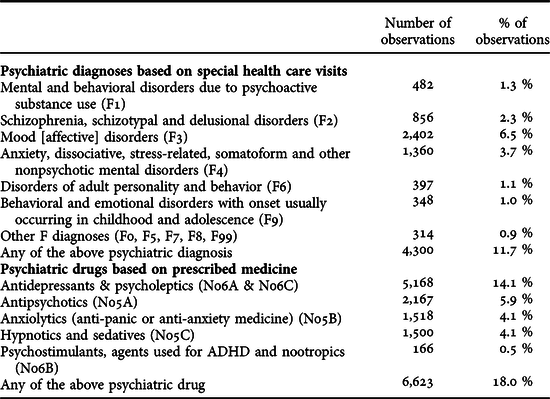
Table 1 presents the number of observations with a psychiatric diagnosis or purchases of psycho-pharmaceuticals in our analysis sample. Altogether almost 12 percent had some psychiatric diagnosis and 18 percent had bought psychiatric drugs during the first year of social assistance. Multiple diagnoses are possible, and they are common. For example, among those with a mood disorder more than a half also had another psychiatric diagnosis. There are some differences between age groups in the prevalence of specific diagnoses. Most importantly, schizophrenia is more common among those aged 30-34 (3.6 % compared to 1.9 % among those aged 18-24), while behavioural disorders with the onset in childhood and adolescence are more common in the youngest age group (1.4 % compared to 0.4 % among those aged 30-34).
Mental health problems at the start of the first social assistance spell based on special health care visits and purchases of psycho-pharmaceuticals

The use of health care services does not directly measure the health status of the person but it can be considered a good proxy for it. For example, Miilunpalo et al. (Reference Miilunpalo, Vuori, Oja, Pasanen and Urponen1997) have shown that poor self-assessed health is correlated with the use of health care services, while others have shown that self-assessed health is a good predictor of mortality and morbidity (Idler and Benyamini, Reference Idler and Benyamini1997; Benjamins et al., Reference Benjamins, Hummer, Eberstein and Nam2004). All residents in Finland are entitled to public special health care services after referral from primary health care, while user fees apply. However, we are not able to account for unmet needs for health care that are usually more common among low-income individuals. Unfortunately, we do not have information on the use of occupational or private health care services, but they would mostly impact on the measured use among employed and higher income groups. Despite these challenges, using health indicators based on register data and objective measures can be more accurate than relying on self-reported health that can suffer from justification bias (e.g. Bago d’Uva et al., Reference Bago d’Uva, O’Donnell and van Doorslaer2008).
Control variables
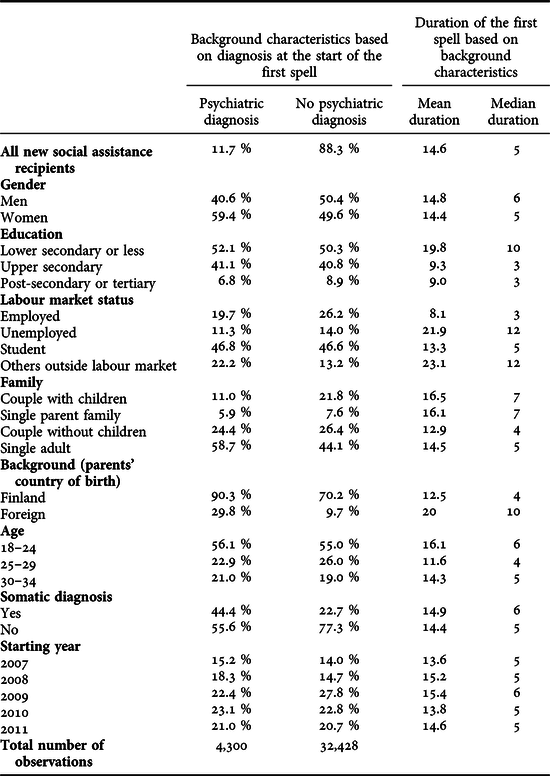
Our control variables are presented in Table 2. Age is measured at the start of the first social assistance spell. The level of education, labour market status, and family type are all used as time-varying variables and are measured on an annual basis. Labour market status measures the main activity of a person in the last week of the year. The “main activity” variable from Statistics Finland has originally been coded in line with the recommendations of the International Labour Organization. The ILO hierarchy of activities places labour market participation at the top so it prioritizes employment and unemployment over other statuses. In other words, if a full time student is working during the weekends they are coded as employed instead of student. Even one hour of work is enough to override the student status. (Asplund and Vanhala, Reference Asplund and Vanhala2013.) This is not the most accurate measure for our purposes when studying young adults, of whom many are primarily students. To account for this, the main activity variable has been recoded: if a person received educational allowance during the year, they have a student status, regardless if they were also working. This is important also because students are obliged to use their student loans before being eligible for social assistance.
Descriptive statistics based on personal characteristics at the beginning of the first social assistance spell

Family type has been created with a family identification number available in the data. According to this identification, a family consists of two adults who are married, live together or are in a registered relationship with or without children and single parents living with their children. People who are not included in this definition of a family and thus do not have a family identification number are coded as living alone. Children above the age of 18 living with their parents are thus coded as living alone. However, it is noteworthy that they are eligible for receiving social assistance regardless of their parents’ income, although the amount is lower than for those living independently.
Methods
We start our analysis with descriptive evidence based on Kaplan-Meier estimations and proceed to using Cox proportional hazard models to analyse factors that are associated with the occurrence and timing of exit from social assistance (Cleves et al., Reference Cleves, Gould and Marchenko2016). This method is sometimes also called survival, event history, or duration analysis. We follow individuals in our analysis sample from the month they started receiving social assistance in the years 2007–2011 until they left social assistance for at least six months, or until censoring in December 2016 or after 60 months of follow up. The dependent variable basically consists of two parts: the event itself (end of social assistance receipt) and time from baseline to the event or censoring (duration of the social assistance spell). We have analysed three age groups separately (18-24, 25-29 and 30-34 years old) to test for our hypothesis on differences between age groups.
Hazard ratio is the ratio of hazards (i.e. leaving social assistance) for example among those with and without a psychiatric diagnosis. Hazard, on the other hand, represents here the probability that an individual leaves social assistance at a particular point in time, assuming that he or she has been receiving social assistance until that point. The Cox proportional hazard model assumes that the hazard rates (the risk of event occurrence) between groups are constant throughout the observation period. This assumption seems to hold in our analysis sample when we look at the Kaplan-Meier estimations that illustrate parallel lines between comparison groups.
Results
In Table 2 we have described the study population separately by psychiatric diagnosis (based on ICD-10 codes for special health care visits) at the start of the first social assistance spell. Table 2 also presents the mean and median duration of social assistance receipt by our control variables. The descriptive statistics are in line with previous studies: for example, lower level of education, unemployment or being outside the labour market, having children, and foreign background are all associated with longer social assistance duration.
The mean spell length was 14.6 months and the median 5 months, demonstrating a highly skewed distribution of spell durations (Table 2). For those with a psychiatric diagnosis, the mean duration was 18.6 months (median 9 months) and for those with a somatic diagnosis 15.6 months (median 6 months). Most individuals received social assistance for relatively short periods. A third of all spells last only for a month. This is in line with previous studies: most young adults use social assistance for brief periods of time, since young adulthood is a transitory period with a lot of uncertainty. Overall, the exit rate is quite high during the first year of the follow-up, and the majority of recipients leave social assistance within a year; after which the exit rate starts to decelerate. On the other hand, about one tenth continue to receive social assistance for 5 years or more. This includes also individuals with brief exits and recurrent use of social assistance as exit is defined as not receiving social assistance for at least six consecutive months.
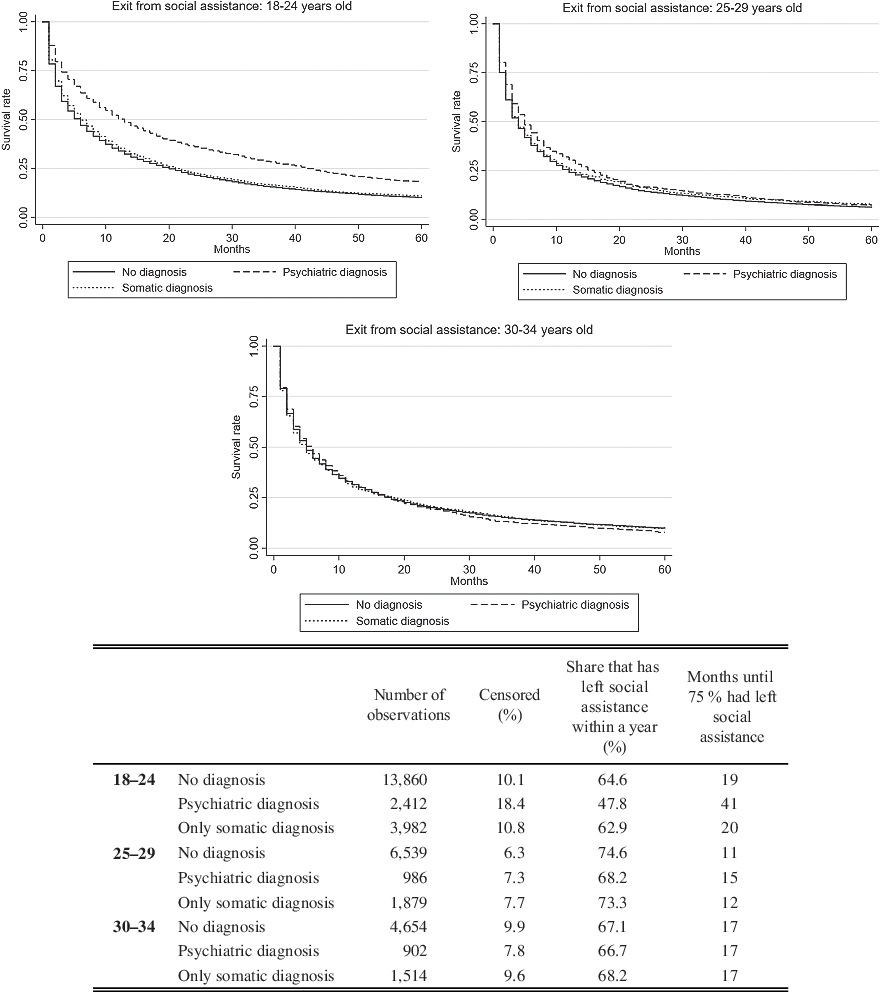
In Figure 1 and the table below we have calculated the survivor functions for different age groups by health status at the beginning of the social assistance spell. Individuals with a psychiatric diagnosis differ significantly from those without a psychiatric diagnosis among those aged 18-24 years: they are much more likely to stay on social assistance for longer. The difference is the greatest at the beginning of the spell and narrows towards the end, but the difference remains. After 12 months, more than 60 per cent have left social assistance among those without a psychiatric diagnosis, while for those with a psychiatric diagnosis the share is less than 50 per cent. To achieve an exit rate of 75 percent among those with a psychiatric diagnosis takes 41 months compared to 20 and 19 months among those with only a somatic diagnosis or no diagnosis. For those aged 25-29 years the difference between the groups is smaller, and for the oldest age group, the difference between health categories has all but disappeared.
Kaplan-Meier estimates by special health care diagnosis, separately for age groups

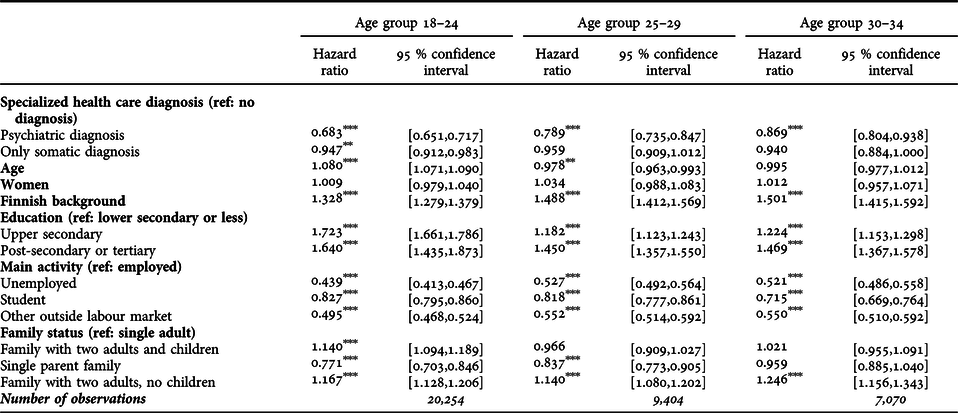
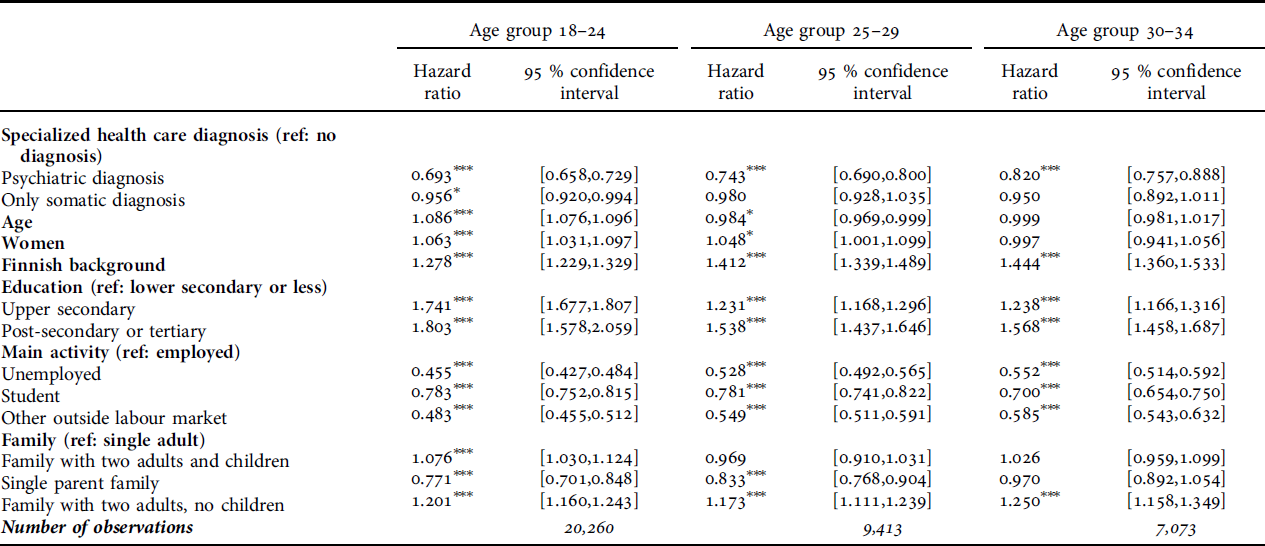
Table 3 presents hazard ratios for leaving social assistance, controlling for various background characteristics. The results show that those with a psychiatric diagnosis have a significantly lower probability of exiting social assistance in all age groups, while the hazard ratio implies the strongest association in the youngest age group (HR 0.683 compared to those without any diagnoses among those aged 18-24, HR 0.789 among those aged 25-29, and HR 0.869 among those aged 30-34). The strength of the association between a somatic diagnosis and leaving social assistance does not vary by age groups, but it is statistically significant only in the youngest group: the hazard of leaving social assistance is 5 percent smaller compared to individuals with no diagnosis.
Exit from social assistance (at least 6 consecutive months without receiving social assistance). Hazard ratios estimated with Cox regression, by age groups

Note: ***p-value<0.001, **p-value<0.01, *p-value<0.05. Also controlled for starting year.
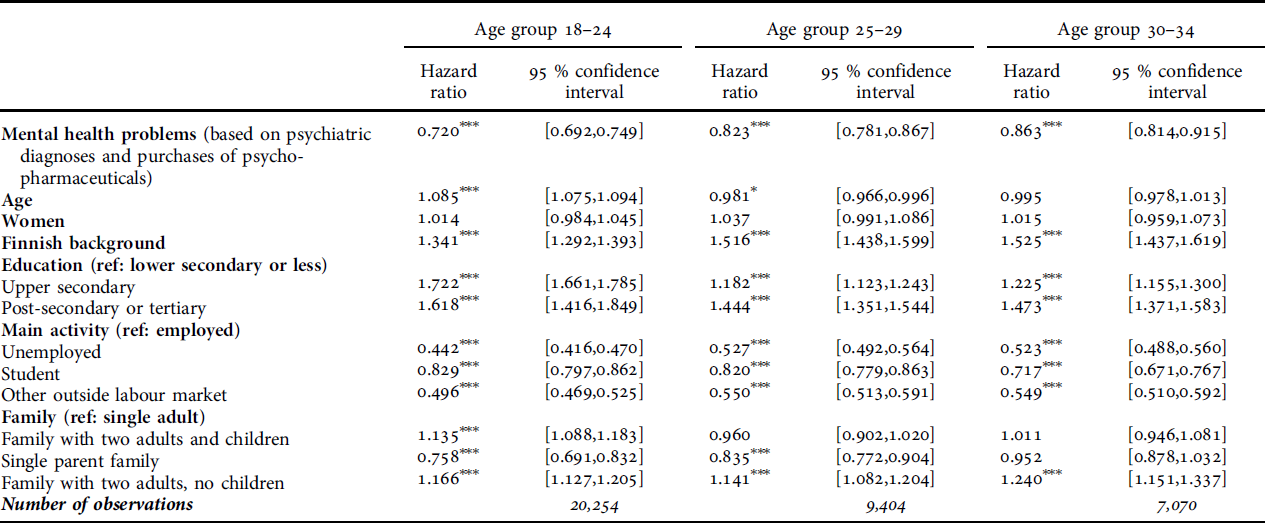
As robustness tests, we explored whether our definition of mental health problems or operationalization of exiting social assistance affected the results. When mental health was measured as a dummy indicating a psychiatric diagnosis and/or purchases of psychiatric drugs, the results remained similar to the ones in Table 3 (HR 0.720 for those aged 18-24, 0.823 for those aged 25-29, and 0.863 for those aged 30-34, appendix table A1). However, the difference between those with and without mental health problems narrowed down slightly as we expected.
When exit was defined as not receiving social assistance for at least 12 consecutive months the results remained similar (appendix table A2). The average spell length increased in all groups, but the differences between groups did not change significantly.
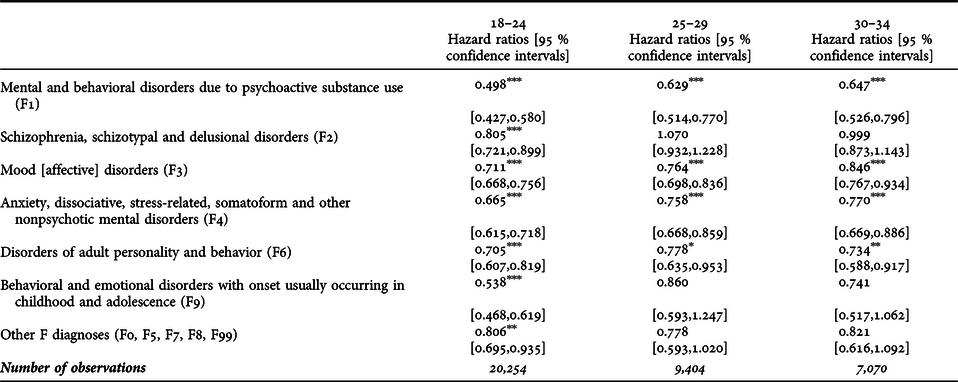
Furthermore, Cox regression models were run for each psychiatric diagnosis separately (Table 4). All diagnoses were more or less associated with longer receipt of social assistance, although schizophrenia, behavioural disorders with onset in childhood and other psychiatric diagnoses not specified in other groups were not statistically significant in age groups 25-29 and 30-34. The strongest association between a psychiatric diagnosis and social assistance exit was found for disorders due to psychoactive substance use in all age groups. In the youngest age group also, behavioural and emotional disorders with onset in childhood or adolescence were clearly associated with receiving social assistance for longer.
Exit from social assistance (at least 6 consecutive months without receiving social assistance). Hazard ratios estimated with Cox regression, by age groups and different psychiatric diagnoses

Note: ***p-value<0.001, **p-value<0.01, *p-value<0.05. Controlled for gender, age, highest level of education, labour market status, family type, and starting year. Each psychiatric diagnosis is modelled separately, reference group “no psychiatric or somatic diagnosis”.
Conclusion and Discussion
Mental health problems are a growing problem causing a considerable burden on the economy in general as well as on the individuals in question. In this study we employed rich longitudinal register data from Finland and studied the association between psychiatric disorders and social assistance duration among new beneficiaries of social assistance. We focused on individuals aged 18-34 years. We found a strong association between a psychiatric diagnosis at the starting year of social assistance and spell duration, while somatic diagnoses were only modestly associated with exit. The association was especially strong in the youngest age group, which we had expected; as individuals in their early adulthood are in a life phase when they have not yet completed their post-compulsory and advanced education, and their position in the labour market is more vulnerable.
The results are in line with previous evidence indicating that mental health problems especially in young age are detrimental for labour market outcomes (e.g. Lundborg et al., Reference Lundborg, Nilsson and Rooth2014). However, we are not able to disentangle to what extent mental illness per se constitutes an obstacle for adequate income and to what extent it is the society that transforms mental illness into a disadvantage that excludes these people from further education and labour market (e.g. Grover and Piggott, Reference Grover and Piggott2015). Mental disorders can cause significant amounts of disability but are also heavily stigmatized compared to most somatic diseases. Discrimination is associated with poor employment outcomes among people with mental health problems (Baldwin and Marcus, Reference Baldwin, Marcus, Schultz and Rogers2011). The policy conclusions obviously differ depending on whether we attribute the problem to individual or structures. It is perhaps safe to assume that both play a role: therefore, we can focus on improving mental health outcomes in general, addressing employability of young adults with mental health problems, lessening the stigma related to psychiatric disorders, and transforming our schools and work places to be more adapted to people with mental health issues.
We also investigated whether there are differences between different psychiatric diagnoses as observed in some studies on the association between mental health and educational outcomes (Miech et al., Reference Miech, Caspi, Moffitt, Entner Wright and Silva1999). Diagnoses related to abuse of alcohol or drugs were most strongly associated with longer social assistance spells in all age groups. This is not really surprising as these disorders are likely to be connected to many other social problems and challenges in life management (Schilling et al., Reference Schilling, Aseltine and Gore2007). In addition, alcohol and substance use related mental disorders are severely stigmatized compared to other mental disorders (Schomerus et al., Reference Schomerus, Lucht, Holzinger, Matschinger, Carta and Angermeyer2011).
In general, most of the social assistance spells were short and the majority of beneficiaries left social assistance within a year (Hohmeyer and Lietzmann, Reference Hohmeyer and Lietzmann2020, make a similar observation with data on German welfare recipients). However, ten percent of individuals aged 18-24 received social assistance still at the end of the 60 months follow-up period, and the share was double that among those who had a psychiatric diagnosis. This can be considered worrying as long-term receipt is associated with an increased risk of poverty. Furthermore, Hohmeyer and Lietzmann (Reference Hohmeyer and Lietzmann2020) find some evidence of duration dependence in the receipt of benefits in Germany indicating that interventions should be targeted early on. However, our results also reveal considerable heterogeneity among benefit recipients, which means that social workers should be granted enough resources to identify the most vulnerable groups and appropriate measures of support. The recent centralization of the social assistance system in Finland might have been counterproductive in this regard.
Our results provide some evidence supporting the social selection thesis asserting that ill health leads to lower socioeconomic position, while causal examination was outside the scope of this study. Alternative explanations for the association are plausible. For example, mental illnesses can have roots in adverse childhood experiences that are likely to affect education and employment independently (Schilling et al., Reference Schilling, Aseltine and Gore2007; Metzler et al., Reference Metzler, Merrick, Klevens, Ports and Ford2017). Also, young adults from poorer background are less able to receive financial aid from their parents, while they also experience mental health problems more often (Reiss, Reference Reiss2013).
With these caveats in mind, the results point to the need of developing better coordinated social and mental health care services for young adults especially, and greater support for those social assistance recipients who are suffering from mental health issues. Almost 12 per cent of the individuals in our analysis sample had a psychiatric diagnosis in the year they started receiving social assistance and 18 per cent had purchased psycho-pharmaceuticals illustrating the magnitude of the problem. However, the structural factors that marginalize people with health problems should also be tackled, and the focus should not only be on the individual’s “deficiencies”. For example, interventions aiming at reducing stigma should be considered (Pinfold et al., Reference Pinfold, Toulmin, Thornicroft, Huxley, Farmer and Graham2003). On the other hand, research shows that coercive activation policies targeted at people with health problems can have negative consequences and can even exacerbate the problems (Patrick and Fenney, Reference Patrick, Fenney, Grover and Piggott2015; Hultqvist and Nørup, Reference Hultqvist and Nørup2017). Similarly, Davis (Reference Davis2019) has demonstrated that higher benefit conditionality and sanctions are associated with worse mental health among low-educated single mothers in the US. Consequently, researchers have argued that a wider perspective on social inclusion should be endorsed – rather than a narrow focus on paid employment as a sole form of societal participation (Grover and Piggott, Reference Grover and Piggott2015; Nørup, Reference Nørup2020).
As governments aim to decrease the number of young people resorting to social assistance or the duration of benefit receipt, mental health problems certainly deserve greater attention. Mental health is a resource than can affect the attainment of socioeconomic status later in life. In addition to investing in mental health, measures are needed to support those with mental health problems both in schools and working life.
Acknowledgements
This study has received funding from the Finnish Social Insurance Institute and INVEST flagship financed by the Academy of Finland.
Appendix
Testing for an alternative measure of mental health (psychiatric diagnosis and purchases of psycho-pharmaceuticals). Exit from social assistance (at least 6 consecutive months without receiving social assistance). Hazard ratios estimated with Cox regression, by age groups

Note: ***p-value<0.001, **p-value<0.01, *p-value<0.05. Also controlled for starting year.
Testing for an alternative operationalization of exit (12 consecutive months without social assistance). Exit from social assistance. Hazard ratios estimated with Cox regression, by age groups

Note: ***p-value<0.001, **p-value<0.01, *p-value<0.05. Also controlled for starting year.