


Introduction
There is evidence in deep-sea sediment cores from the North Atlantic for the occurrence of short-lived episodes of sudden, intensified iceberg discharge into the North Atlantic, known as Heinrich (H) events, during the last glacial period (Reference Heinrieh,Heinrich, 1988; Reference Bond,Bond and others, 1992; Reference Broecker,, Bond,, Klas,, Clark and McManusBroecker and others, 1992; Reference Grousset,Grousset and others, 1993). During these episodes, very large numbers of icebergs are inferred to have drifted from the Labrador Sea into the North Atlantic and then eastward along the 40–50° N latitude band (Reference Bond,Bond and others, 1992). H events also appear to take place at the ends of cooling trends of the surface ocean (Reference Bond,Bond and others, 1993; Reference Bond, and LottiBond and Lotti, 1995), and they were accompanied by a contemporaneous change in deep-water formation in the North Atlantic (Reference Keigwin, and Lehman,Keigwin and Lehman, 1994).
Although they are clearly related to abrupt climate changes, the forcing mechanism of H events remains elusive. Insolation changes (Reference Heinrieh,Heinrich, 1988), sea-level rise (Reference Bond,Bond, 1994) and global temperature changes (Reference Bond, and LottiBond and Lotti, 1995) are general mechanisms proposed to explain their origin. In contrast, (Reference MacAyeal,MacAyeal 1993a, Reference MacAyeal,b) proposed that basal melting due to the trapping of geothermal heat by the part of the Laurentide ice sheet located over Hudson Bay was responsible for an ice-sheet surge associated with the H events. According to this theory — the “binge/purge” model — the slowly growing thickness of the ice sheet insulates the underlying bedrock and hinders the upward diffusion of geothermal heat to the atmosphere. Heat accumulated at the glacial bed thaws the subglacial till that, once water-soaked, acts as a lubricant, triggering a sudden ice surge (Reference Alley, and MacAyeal,Alley and MacAyeal, 1994). The phase of last ice flow finishes when the geothermal and frictional heat are dissipated as the ice thins. The water-charged subglacial till assumed to form the substrate refreezes onto the underlying glacial bed, effectively ceasing its lubricating function. The unconsolidated sediment entrained in the ice would be transported as ice-rafted debris to the open ocean after icebergs are calved during the subsequent surge episode. Reference Verbitsky, and SaltzmanVerbitsky and Saltzman (1995) concurred that the events are controlled by the factors that regulate basal melting, but proposed instead that internal friction in the ice and downward advection of atmospheric temperature conditions to the base of the ice sheet rather than geothermal heating are the critical factors. Under these circumstances a change in atmospheric conditions could have been the driving force of the H events.
The binge/purge model readily explains the inferred short duration of the events (∼750 years) and the large amount of detritus transported to the open ocean in each episode (approximately a 10 cm thick layer of wet sediment over an area of 5 × 10¹² m2 (Reference Alley, and MacAyeal,Alley and MacAyeal, 1994)). The binge/purge model received support in Pb isotopic measurements of ice-rafted Ieldspars (Reference Gwiazda,, Hemming, and Broecker,Gwiazda and others. 1996) that showed that the Churchill province of the Canadian Shield was the major source of the materials of Heinrich layer 2 (H2). On the other hand, Reference Fronval,, Jansen,, Bloemcndal and JohnsenFronval and others (1995) provided evidence for advances of the Fennoscandian ice sheet contemporaneously with the surges of the Laurentide ice sheet. In addition. IRD derived from areas besides the Canadian Shield have been identified in H layers from cores of the North Atlantic (Reference Bond, and LottiBond and Lotti, 1995: Reference Revel,, Sinko, and Grousset,Revel and others, 1996).
Provenance studies of IRD from the H layers can identify the ice sheets that surged and thus provide critical information to test the theories proposed to explain the H events. In this paper we present 40Ar/39Ar ages and Ca/K ratios of single ice-rafted amphibole grains from H2 and the ambient glacial sediment from the same cores in which the Pb isotopic study was conducted (Reference Gwiazda,, Hemming, and Broecker,Gwiazda and others, 1996). These results further constrain the provenance of the ice-transported materials.
Previous Work
Reference Bond,Bond and others (1992) noted a sharp increase in the concentration of detrital carbonate grains in four out of six H layers in addition to a thinning of the layers away from the Labrador Sea (Reference Dowdeswell,, Maslin,, Andrews, and McCave,Dowdeswell and others, 1995). They proposed that Hudson Bay was the source of the IRD deposited in the North Atlantic during H events. Reference Huon, and RuchHuon and Ruch (1992), Reference Jantschik, and HuonJantschik and Huon (1992) and Reference Huon, and JantschikHuon and Jantschik (1993) showed that the K/Ar age of the fine fraction of H layers 1, 2, 4 and 5 is 850–1140 Ma, whereas the age of the background sediment is 350–620 Ma. These results indicate that the IRD contribution of old continental sources increased during H events. Reference Grousset,Grousset and others (1993) concluded that the Sr and Nd isotopic compositions of the bulk silicate fraction of H-layer materials represent mixtures of an Icelandic component and a contribution from Baffin Island. Reference Gwiazda,, Hemming, and Broecker,Gwiazda and others (1996) measured the Pb isotopic composition of ice-rafted feldspars from H2 and from the background glacial sediment, and concluded that the source of ice-rafted feldspars from H2 was the Churchill province of the Canadian Shield, which includes Baffin Island, in agreement with the inerpretation of Reference Grousset,Grousset and others (1993). In contrast, the IRD in the ambient sediment had multiple sources. All of these studies are consistent with the hypothesis that H events were produced by a sudden surge of the Laurentide ice sheet through Hudson Strait.
Reference Fronval,, Jansen,, Bloemcndal and JohnsenFronval and others (1995) provided evidence of simultaneous advances of the Fennoseandian and Laurentide ire sheets during H events. Reference Bond, and LottiBond and Lotti (1995) identified in various H layers IRD originated in sources other than Hudson Bay. Reference Revel,, Sinko, and Grousset,Revel and others (1996) presented isotopic data that indicate the presence of IRD from European sources in H layers of cores from outside the band of maximum IRD accumulation, between 40° and 50° N (Reference Ruddiman,Ruddiman, 1977).
Methods
Materials from H2 and the ambient glacial sediment were taken from a core of the Labrador Sea, core HU87-033-009 (62°31ʹN, 59°27ʹW, 1437m depth); a core from the western North Atlantic, core Y23-14 (43°24ʹN, 45°15ʹ W, 3177 m depth); and a core from the eastern North Atlantic, core V28-82 (49°27ʹN, 22° 16ʹW, 3935 m depth) (Fig. 1). Details about the identification of H2 in these cores can be found in Reference Gwiazda,, Hemming, and Broecker,Gwiazda and others (1996). Amphibole grains were handpicked from the > 150 µm size fraction and loaded onto aluminum sample stages holding 94 grains for neutron irradiation followed by 40Ar/39 laser microprobe analyses at Princeton University. Sample stages also contained 25 grains of Mmhb-1 hornblende (520.4 ± 1.7 Ma; Reference Samson, and Alexander,Samson and Alexander, 1987), which were distributed radially across the sample stages to average any flux gradients. Stages were irradiated at McMaster Reactor, in Hamilton, Ontario, Canada, for 180 MWh. Upon return the sample stages were loaded into the laser extraction line, and individual grains were fused with a Nd-VACJ laser. Analytical procedures and backgrounds are given in Reference Clumbest,, Johnson, and Onstott.Cumbest and others (1994). The Mmhb-1 analyses were very consistent and yielded a J value of (2.148 ± 0.014) × 10−2. The dates calculated are corrected for decay of 39Ar, 37Ar and 36Cl and for interfering reactions from K, Ca and Cl. The latter corrections are based upon laser fusion of K2SO4, KCl and CaF2 salts from irradiations immediately prior to and following irradiation of the samples of this study. Ca/K ratios of the amphiboles were derived from measurements of 37Ar and 39Ar.
Geologic map of the continental areas surrounding the North Atlantic, with the locations of the three cores sampled in this study. Main geological units of different ages are drawn with different patterns. The age corresponding to each pattern is shown on the map. Terrains affected by metamorphism are labelled with the metamorphic age.

Results
In the core from the Labrador Sea. core HU87-033-009 (Fig. 2a), virtually all the ages from H2 and ambient glacial sediment grains fall in the interval 1640–1971) Ma. In core V23-14 (Fig. 2b), the majority of ages of H2 grains are within the range of ages measured in the core from the Labrador Sea. Ages of most grains from below H2 also occur in the same interval, but some younger grains are also present. The ages of grains from above H2 are widely separated and suggest a heterogeneous population. In core V28-82 (Fig. 2c), ages of H2 grains cluster on the 1640–1970 Ma age interval, but 4 out of a total of 13 grains have ages outside that range. A similar pattern is observed in grains from below H2. In both sections. H2 and the glacial sediment below H2, the proportion of grains falling in the 1640–1970 Ma age interval is the same. Above H2, this fraction declines and younger and older grains are also present.
40Ar/39 Ar ages of single ice-rafted amphiboles vs depth. Full circles are ages of grains from the background glacial sediment, and open circles are from H2. (a) Gore HU87-033-009 from the Labrador Sea. (b) Core V23-14 from the western North Atlantic, (c) Core V28-82 from the eastern North Atlantic. Average age uncertainly (2σ) is 47 Ma (n = 107, range = 3–191 Ma).

The Mann-Withney test is the non-parametric statistical tool used to evaluate the probability that two sample groups were derived from the same parent population (Reference Siegel,Siegel, 1956; Reference Sachs,Sachs, 1984). The use of this test to compare the age distributions of ambient sediment and H2 grains is preferred here to the more common t test because the Mann-Withney test does not require that ages be normally distributed as the t test does. If grains weir derived from multiple sources, their ages would group within various specific time intervals rather than be normally distributed around a given mean.
Applying the Maun–Withney test to the age distributions of grains from core V23-14, it is found that if the composition of the ambient sediment and H2 were the same, there is a 20% probability of observing the age distributions of Figure. 2b or distributions with even more extreme differences between ambient and H2. In other words, 0.2 is the possibility of error in claiming that the two distributions were drawn from different populations. Although this value indicates that it is likely that the IRD from H2 and from the ambient sediment were derived from different sources, a level of significance of 0.2 is not very strict. The same test applied to the age distributions of ambient sediment and H2 grains from core V28-82 does not show a statistically significant difference between the two distributions.
On the basis of 40Ar/39Ar ages alone it is not possible to establish strict statistically significant differences between ambient sediment and H2 materials, in part because most grains have ages in the 1600–2000 Ma interval. Analyses of Ca/K ratios οf 1600–2000 Ma old grains reveal that in fact not all grains in this age group are a homogeneous population (Fig. 3a). The variations in Ca/K ratios could be due to different degrees of crustal contamination of a mantle-derived granitic source. There are no systematic investigations of the variability of this ratio as a function of geography. The Ca/K ratios of 1600–2000 Ma old amphiboles from H2 from the three cores have a mean of 8.33 ± 3.63 (1σ). In contrast, the Ca/K ratios of 1600–2000 Ma old grains from the ambient sediment from the three cores have a bimodal distribution (Fig. 3b) with no apparent differences in the distributions of the Ca/K ratios between grains from above and below H2. The first peak coincides with the Ca/K distribution observed in amphiboles from H2. A detailed examination of the Ca/K ratios of 1600–2000 Ma old amphiboles from each core shows that the single distribution in the H layer and the bimodal distribution in the ambient sediment occur in all three cores, although in HU87-033-009 it is ambiguous (Fig. 3c–h). The non-parametric Tisher exact probability test (Reference Siegel,Siegel, 1956) can be used to examine whether the distributions of the Ca/K ratios of 1600–2000 Ma old amphiboles from H2 and the ambient sediment in each core are drawn from different populations. For this test 1600–2000 Ma old amphiboles are classified as either inside or outside the first peak (Ca/K ratio ≤ 8.33 + 3.63). The test calculates the probability of the observed distributions, or even more extreme distributions, under the hypothesis that all grains were derived from the same parent population. For core HU87-033-009, there are no statistically significant differences. In core V23-14, the distributions of the Ca/K ratios of 1600–2000 Ma old amphiboles from the ambient sediment and from H2 are significantly different at the 0.05 level. That is, if the grains were derived from the same sources in the same proportions, there is only a 5% probability of observing the distributions of Figure 3e and f. For core V28-82. the distributions of the Ca/K ratios of 1600–2000 Ma old amphiboles from the ambient sediment and H2 are significantly different at the 0.11 level.
Discussion
Provenance of IRD
In the North Atlantic cores, 1600–2000 Ma old grains with Ca/K ratios centered around 8.33 are abundant in H2. The proportion of grains belonging to this subgroup at each level in each core can be calculated. However, because the grains measured are a limited sample of the whole population of amphiboles at each depth, the probability that this estimate approximates the true value must be ascertained. Confidence intervals were assessed such that there is minimum 68% probability that the true value of the fraction lies within the interval (Fig. 4. This confidence interval ε, in units of standard deviation, is calculated from (Reference Noether,Noether, 1976):

where P(ε) is the probability that the estimated value is in the interval ε, −ε and it is given by the area under the normal curve between 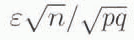 and
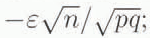 n is the number of measurements, p is the probability of picking a grain belonging to the subgroup (the true value of the fraction of 1600–2000 Ma grains with Ca/K ratio ≤ 8.33 + 3.63), and q is 1 − p. Since p, the true value of the fraction, is not known, the maximum value of the product between p and q, 0.5. is used. This is why the probability is referred as a minimum probability.
In all cores, 1600–2000 Ma amphiboles with Ca/K ratio ≤ 8.33 + 3.63 are the dominant component of H2 materials (Fig. 4) but a smaller proportion of the ambient sediment. Identification of the provenance of this population would be indicative of the ice sheet that advanced the most during H event 2 and the path that it followed. Because there are no surveys of the geographical variations of the Ca/K ratio, this parameter is not useful for source identification. Nevertheless, the 1600–2000 Ma age is in agreement with the previously proposed major source of icebergs to the North Atlantic during H event 2. A major iceberg source in the Labrador Sea area is supported by the strong decay eastward of the layer thickness across the North Atlantic (Reference Dowdeswell,, Maslin,, Andrews, and McCave,Dowdeswell and others, 1995) and the presence of detrital carbonate in the layer (Reference Bond,Bond and others, 1992; Reference Bond, and LottiBond and Lotti, 1995). Reference Gwiazda,, Hemming, and Broecker,Gwiazda and others (1996) through Pb isotopic analyses of IRD identified Churchill province of the Canadian Shield as the main source of icebergs during H event 2. This terrain forms the basement of the northern part of Hudson Bay (Fig. 1), and outcrops at Hudson Strait, the likely path of ice flow from the Laurentide ice sheet according to the binge/purge model (Reference MacAyeal,MacAyeal, 1993a, Reference MacAyeal,b), and Baffin Island (for a map of the topography and drainage basins of the Laurentide ice sheet at 18 Ka (14C) see Reference Dowdeswell,, Maslin,, Andrews, and McCave,Dowdeswell and others (1995)). The 40Ar/39Ar ages of the predominant IRD component of H2 are consistent with a dominance of iceberg discharge from Churchill province because this terrain, formed 2700 Ma ago (Reference McCulloch, and Wasserburg,McCulloch and Wasserburg, 1978) and affected by metamorphism around 1700 Ma ago, has K/Ar ages that range between 1600 and 2000 Ma with a median at 1735 Ma (Reference Ozard,, Slawson, and Russell,Ozard and others, 1973). It is unlikely that Baffin Island was the source of H2 grains, because the presence of detrital carbonate in the H layers is more consistent with derivation from Hudson Bav (Reference Andrews, and TedescoAndrews and Tedesco, 1992). Grains with Ca/K ratios outside the 8.33 + 3.G3 peak should have originated in other Early Proterozoic (1700 Ma) areas around the North Atlantic, such as Greenland and Scandinavia, or in a different part of Churchill province. If the Fennoscandian ice sheet advanced during H event 2, ice streams originated in 1700 Ma old terrains of Scandinavia must have crossed the Caledonian along the coast. Such an advance was proposed by Reference Fronval,, Jansen,, Bloemcndal and JohnsenFronval and others (1995) based on increases of the IRD fraction on a core of the Norwegian Sea. The possibility that the iceberg discharge from this advance was a major component of the iceberg supply to the North Atlantic during H event 2 is rejected because there is only one grain in H2 from the three cores that have a Caledonian age (420 Ma), as opposed to numerous ≈ 1800 Ma old grains. A similar conclusion, based on the absence in H2 of feldspars with a Caledonian signature, was reached by Reference Gwiazda,, Hemming, and Broecker,Gwiazda and others (1996). In addition, the strong thickness decay of H2 from east to west across the North Atlantic does not support a Srandinavian origin (Reference Dowdeswell,, Maslin,, Andrews, and McCave,Dowdeswell and others, 1995).
Histograms of the distribution of the Ca/K ratios of 1601–2000 Ma old amphibole grains. Dashed pattern identifies grains from above H2; dark pattern represents grains from below H2. The average Ca/K error (1σ) is 0.67. In H2, the Ca/K ratio of 1600–2000 Ma old amphiboles has a unimodal distribution, whereas in the ambient sediment it is bimodally distributed with no apparent differences between grains from above and below H2. The first peak approximately coincides with the distribution of H2 grains.

Proportion of grains with ages in the range 1600–2000 Ma and Ca/K < 8.33 + 3.63, al each depth interval. Values calculated from the discrete measurements are marked by thick ticks. There is a 68% probability, normally distributed around the value calculated from the discrete measurements, that the true values lie within the intervals represented by the horizontal bars. H2 has a larger proportion (at least 65–80%) of Churchill-derived grains than the background sediment (20–40%). Within H2, the fraction decreases as the core is from locations farther away from the Hudson Bay area.

Likewise, a major southeastern drainage pathway for the Laurentide ice sheet during H event 2 via the Saint Lawrence River (Reference Bond, and LottiBond and Lotti, 1995) is not supported by the 40Ar/39Ar ages, because in H2 From core V23-14 only one grain with an Appalachian age (420 Ma), one with a Grenville age (930 Ma) and none with a Superior province age (2700 Ma) were identified. In contrast, the rest (11 grains) have ages between 1700 and 1900 Ma and must have come from sources farther north.
Grains with ages outside the 1600–2000 Ma range possibly originated in the following areas around the North Atlantic (Fig. 1): terrains dated 250−550 Ma include the Appalachians in North America, the Caledonian in the northern part of East Greenland and a 200 km wide band along western Scandinavia except its southern portion (Reference Condie,Condie, 1990); 900–1100 Ma old areas are the Grenville bell extending north of the Saint Lawrence River, from the Great Lakes to the Canadian Atlantic shore (Reference Easton,, Moore,, Davidson and Baer,Easton, 1986) and the Sveconorwegian Orogen in southern Scandinavia (Reference Rommer, and Wright,Rommer and Wright, 1993); cratonic sources dated between 2550 and 2800 Ma are the Superior province of the Canadian Shield, small areas of Labrador, Greenland (Reference Hoffman,, Bally, and Palmer,Hoffman, 1989) and northern Scandinavia (Reference Rommer, and Wright,Rommer and Wright, 1993).
On the basis of results from previous studies (Reference Bond,Bond and others, 1992; Reference Bond, and LottiBond and Lotti, 1995; Reference Dowdeswell,, Maslin,, Andrews, and McCave,Dowdeswell and others, 1995; Reference Gwiazda,, Hemming, and Broecker,Gwiazda and others, 1996), it is inferred that the major IRD component of H2 in this data set (ages 1600–2000 Ma; Ca/K ratios ≤ 8.33 + 3.63) most likely originated in Churchill province. The shift in the proportion of this constituent from 20–40% in the ambient sediment to 65–80% in H2 (Fig. 4) implies that during H event 2 the increase in the discharge of the Laurentide ice sheet was by far the largest compared to other sources. The ten-fold increase of the sedimentation rate at the level of H2. determined through 14C ages (Reference Bond,Bund and others. 1992) and 230 XSTh (Reference Francois, and Bacon,Francois and Bacon, 1994; Reference Higgins,, Anderson,, McManus, and Fleisher,Higgins and others, 1995), indicates that the dominance of the Churchill-derived fraction is due to an intensification of the iceberg output. In H2 of all cores there is a minor IRD contribution from other sources besides Hudson Bay. Whether this implies that other ice sheets advanced during H2 or continued to shed icebergs with the same intensity as before the event cannot be resolved with these data. Increases in the fractions of IRD originated in sources other than Canada in H2 of North Atlantic cores (Reference Bond, and LottiBond and Lotti, 1995; Reference Revel,, Sinko, and Grousset,Revel and others, (1996) by themselves do not require an increased iceberg discharge but might reflect extended survivality of icebergs. Even if other ice sheets besides the Laurentide advanced during a Heinrich event this would not necessarily imply a global driving mechanism (Reference Heinrieh,Heinrich, 1988; Reference Bond,Bond, 1994; Reference Bond, and LottiBond and Lotti, 1995) over a local mechanism (Reference MacAyeal,MacAyeal, 1993a, Reference MacAyeal,b). Reference MacAyeal,MacAyeal (1993b) proposed three ways in which a collapse of the Laurentide ice sheet could have triggered advances by other ice sheets: (a) a sea-level change of 3.5 m associated with each event, (b) changes in North Atlantic deep-water formation because of the meltwater input, or (c) changes in North Atlantic deep-water formation because of the lowering of the topographic barrier to atmospheric circulation created by the Laurentide ice sheet.
Conclusions
The great majority of amphiboles from H2 have 40Ar/39 Ar ages in the 1600–2000 Ma old range and have rather uniform Ca/K ratios. The prevalence of ice-rafted amphibole ages within the 1600–2000 Ma interval supports the hypothesis that H events were produced by a surge via Hudson Strait of the Laurentide ice-sheet drainage basin located over Hudson Bay. Most grains from the ambient sediment also have ages within the 1600–2000 Ma range, but there is an additional contribution of younger and older grains. Furthermore, the Ca/K ratios of these 1600–2000 Ma old amphiboles are bimodally distributed, with the first peak matching the Ca/K distribution of H2 grains. This indicates that, in addition to Churchill province, 1600–2000 Ma old grains from the ambient sediment were derived from another Early Proterozoic source from either within Churchill province or elsewhere.
The Churchill-derived component of IRD in H2 is 65–80%. The proportion decreases to roughly 20–40% in the ambient sediment of the North Atlantic cores. It is therefore concluded that H events were produced by a sudden intensification of the iceberg discharge through Hudson Strait that mixed in the North Atlantic with icebergs that continued to calve from other ice-sheet margins. Because the drifting icebergs melted and released debris to some extent before reaching the eastern basin, the fraction of IRD in H2 from ice sheets other than the Laurentide is larger in the east than in the west.
Acknowledgements
We are grateful to two anonymous reviewers whose comments greatly improved this paper. The research was funded by the U.S. Department of Energy’s (DOE) National Institute for Global Environmental Change (NIGEC) through the Western Regional Center at the University of California, Davis (DOE Cooperative Agreement 92NIGECC0356). This is Lamont-Doherty Earth Observatory contribution no. 5537.



