



Concave mirrors: a broken tradition in ancient Mesoamerica?
The torch which is to illuminate Mexico has been lighted and today
we have been given a mirror to look into.
Nezahualpilli of Texcoco during the enthronment of Moctezuma Xocoyotzin (Durán Reference Durán1867:414)
In evolutionary biology, linguistics, and archaeology, the continuity hypothesis (or continuity paradigm) is used to identify patterns of similar traits, thereby establishing lineages among species, languages, and cultures. This approach allows researchers to determine chronological relationships and construct arguments for how evolutionary processes created these differentiated patterns (O’Brien et al. Reference O’Brien, Blai Vidiella, Salva Duran-Nebreda and Valverde2025). Within Mesoamerican cultural history, this paradigm is a particularly powerful tool, as many heritable cultural traits have been preserved from the early Formative period up to the present day. It was this context that made the discovery of ancient Olmec cities so revolutionary, as they revealed what was then considered the oldest civilization in the Americas (Philip et al. Reference Philip, Heizer and Robert1955). The Olmec were dubbed the “Mother Culture” of Mesoamerica due to their profound aesthetic, ritual, and technological influence, representing the most ancient traceable Mesoamerican traits on later societies like the Maya and the Mexica (Soustelle Reference Soustelle1984). The Olmecs, though no longer seen as the absolute mother culture, were indeed foundational. Their legacy includes the vulcanization of rubber (Tarkanian and Hosler Reference Tarkanian and Hosler2011), the Mesoamerican ballgame, the cultivation of cotton (Follensbee Reference Follensbee2008), the development of calendar systems and likely the concept of the mathematical zero (Justeson Reference Justeson, Morley and Renfrew2010), and an early writing system (Martínez et al. Reference Rodríguez Martínez, Ortíz Ceballos, Coe, Diehl, Houston, Taube and Calderón2006). Furthermore, the iconographic roots of many Mesoamerican deities have been widely investigated, showing how the evolving prominence of maize cultivation is registered in Olmec art from the early to late Formative periods (Taube Reference Taube1997).
The foundational influence of Olmecs on the development of Mesoamerica may extend to one of the most intricate ritual complexes of the contact period: the worship of Tezcatlipoca, the nemesis of Quetzalcoatl and a central deity of the Mexica, known as the “Lord of the Smoking Mirror,” which finds a parallel in the Maya god K’awiil.
While the “smoking mirror” seems a fantastical metaphor, excavations at La Venta in 1949 uncovered concave mirrors that raised a compelling practical question: could these artifacts have been used to ignite fire? This discovery prompted a re-evaluation of the ritual’s origins. As stated by Rice, “The mirror shared by Tezcatlipoca and God K/K’awiil might relate back to an Early Formative pan-Mesoamerican mirror-cult tradition of royal lineage and power based on elite associations with concave, ground iron-ore mirrors” (Rice Reference Rice2012). Is it possible to trace the Lord of the Smoking Mirror complex back to the Olmecs? And are these concave mirrors evidence of its precursor? These questions remain open, demanding a thorough analysis of both old and new archaeological data.
Since then, the archaeological record of Mesoamerican mirrors has expanded considerably, spanning from the Formative to the Postclassic periods (Blainey Reference Blainey2007). However, as the vast majority of mirrors from the Classic period are flat, a presumption took root within the archaeological community that all mirrors from the Classic were flat (Gallaga et al. Reference Gallaga and Blainey (editors)2016:17; Healy and Blainey Reference Healy and Blainey Marc2011; Rosales Reference Rosales2017:165, Reference Rosales2025). This lack of archaeological evidence settled as a broken concave mirror manufacturing tradition continuity, and thus, led to a diminished interest in concave mirrors, with the remarkable Olmec specimens often dismissed as rare exceptions. Consequently, the hypothesis linking the Lord of the Smoking Mirror to concave mirrors remained dormant, awaiting new techniques to demonstrate their incendiary capability, and to establish a firm correlation between concave mirrors and the worship complexes of Tezcatlipoca and K’awiil.
To address this, two critical gaps must be closed. First, the chronological discontinuity between Preclassic concave magnetite mirrors and “flat” Classic pyrite mirrors must be bridged, showing a continuous lapidary manufacturing tradition of concave mirrors capable of igniting fire. Second, a robust correlation must be demonstrated between the mythical elements of the cult and archaeological, ethnohistoric, and pictorial evidence to prove the mirrors’ use as incendiary artifacts beyond mere metaphor.
The present and the following papers provide key elements to address these gaps. First, in the present article and from a physical perspective, we introduce a thermodynamic theoretical analysis to calculate the burning power of Olmec and Maya concave mirrors and experimentally validate it using modern analogs based on archaeological counterparts. Second, in order to demonstrate the tradition continuity, we present evidence of concave mirrors and testimonies of their use well into the Classic and Postclassic periods. In a second paper (Salazar-Neumann et al. Reference Salazar-Neumann, Delgado-Calderon and Nahmad-Molinari2026), as a continuation of this, we demonstrate the relationship between mirrors and cigars, conforming an incendiary system, within the ritual practices among the Lord of the Smoking Mirror, based on an iconographic analysis and ethnohistoric information.
Finally, we have to stress out that due to the diminished interest, all these concave mirrors remained with a shape and figure poorly characterized, and thus, digital surface models (DSM) are still needed for getting a better understanding of their optical properties and capabilities to project images or ignite fire, or to perform experiments by making replicas of them following the new school of Experimental Archaeology that has shown striking results in identifying the lithic processes sequence, precedence, technology and tools used, etc. of archaeological specimens (Gallaga et al. Reference Gallaga and Blainey (editors)2016; Melgar et al. Reference Tísoc, Ricardo and Beatriz Solís Ciriaco2005, Reference Melgar Tísoc and Beatriz Solís Ciriaco2014:41–68, Melgar et al. Reference Melgar Tísoc, Beatriz Solís Ciriaco, Gallaga and Blainey2016:25–50, Reference Melgar Tísoc, Beatriz Solís Ciriaco, Gallaga and Blainey2016:51–72).
Concave mirrors
In Mesoamerica, the Olmec culture began producing concave mirrors around 1400 b.c. and continued making them for the next 800 years, approximately, until around 400 b.c. This lapidary tradition of concave mirrors was continued by other Mesoamerican peoples as shown in classical Mayan art and few mirrors in the archaeological record (Morris Reference Morris, Charlot and Morris1931) and even was present up to the sixteenth century as described in the Florentine Codex by Fray Bernardino de Sahagún (Sahagún Reference Sahagún, Richter and Houtrouw2023:bk. 10, f. 63r). Archaeological remains of these concave mirrors have been discovered in various locations in Mexico, spanning from Jalisco in the Pacific coast, Morelos, Oaxaca (Nordenskiöld Reference Nordenskiôld1926), and the Gulf of Mexico region, where most of them were found (Heizer and Gullberg Reference Heizer, Jonas and Benson1981:101–120), unto El Salvador in Central America (Olsen et al. Reference Olsen Bruhns and Amaroli2011). The material used to create these mirrors consists of ferrous oxides, also referred to as iron ores, like magnetite, hematite, ilmenite, or combinations of them. In 1976, Carlson catalogued 24 of these Olmec mirrors, seven of which were found at the site of La Venta in the state of Tabasco (Carlson Reference Carlson and Benson1981). To give the reader an idea of the characteristics of these mirrors, here is the description provided by Heizer and Gullberg (Heizer and Gullberg Reference Heizer, Jonas and Benson1981:111) regarding the mirrors found at La Venta:
The technical and artistic quality of the La Venta mirrors is such that the present authors believe that for their age, there are no specimens of lapidary art known from the aboriginal New World that exceed them. Such a judgment might be argued, but the Olmec mirrors are surely more than expert stone-fashioning since they have specific optical properties that were deliberately aimed at and that were, no doubt, tradition-directed.
There is an essential similarity in all the specimens, even though their dimensions and focal lengths differ. The degree of polish on the concave surface is remarkably good and seems to represent the limit of perfection that the material will allow. No clear trace of abrasion marks on the polished surface can be detected.
This was corroborated using modern techniques by Valerie F. Olson (Olson Reference Olson1984) who considered that the Olmec lapidary craftsman polished the mirror close to its theoretical limit in order to achieve the maximum reflectance. Furthermore, she states that the polished surface of the Olmec mirror has 3 percent of scattered reflections after 3,000 years buried in a hostile environment, in comparison with a contemporary high-quality stainless steel mirror which has 0.2 percent of total scatter.
In addition, Gullberg (Gullberg Reference Gullberg, Drucker, Heizer and Squier1959) continues describing the figure of La Venta mirrors:
One’s first impression is that the mirrors are spherical, but a careful study of the curvatures proves them to have a changing radius of curvature from the center to the outer edge, with the radius of curvature becoming progressively greater as the edge is approached. The effect is almost identical to the modern practice of parabolizing optical reflectors. The outer local flattening improves the performance of the reflector in focusing radiant energy.
Classic Maya concave mirrors
On the other hand, during the Classic and Postclassic periods, Theotihuacanos, Maya, and Mexica people who, as will be shown, inherited the polishing technique, used mainly (but not exclusively) obsidian, mica or pyrite, and chalcopyrite tessellated flat mirrors. In Theotihuacan, the use of slate backs for mirrors is likely due to natural co-occurrence of pyrite and slate within the same deposit (López-Juárez et al. Reference López Juárez, Luis Ruvalcaba Sil, González and Franco2024). Even though it was believed that pyrite mirrors in the Classic Maya archaeological record were all flat, a well restored and preserved conspicuous example of a concave tessellated mirror made of pyrite tiles, which has a beautifully decorated frame with turquoise (see Figure 1a) was found in the Warriors’ Temple in Chichen Itza, Yucatán (Morris Reference Morris, Charlot and Morris1931). This shows that the tradition of making concave mirrors was continued from the Preclassic well into the early Postclassic period.
Turquoise mosaic plaque from the Warriors Temple at Chichen Itza and a diagram of its restoration in which a transverse section shows the concavity of the pyrite mirror at his center (Morris Reference Morris, Charlot and Morris1931). The perfect aquarelle, drawings, and restoration were done by Shoichi Ichikawa.

Figure 1 Long description
A turquoise mosaic plaque from the Altar Cache, Temple of the Chac Mool, with a detailed diagram of its restoration. The plaque is circular with a scalloped edge, featuring various shades of turquoise tiles arranged in a symmetrical pattern. The center of the plaque contains a concave pyrite mirror surrounded by turquoise tiles. The outer edge is decorated with alternating sections of turquoise and other materials. Below the plaque, a cross-section diagram illustrates the restoration process. The diagram includes labeled areas: A, B, C and D. Area A shows sections found concave but straightened to original level. Area B indicates areas built out of original pieces found loose. Area C represents areas where new material was substituted during restoration. Area D highlights areas in which new material was substituted during restoration. The cross-section also details the wooden backing, sandstone at the center and layers of turquoise and plastic substances used in the restoration. The diagram provides insight into the structural composition and restoration techniques applied to the plaque.
Unfortunately, the pyrite mirrors are highly prone to corrode themselves under the prevailing humid conditions of the region, and their surface suffers extensive damage or even disappears completely in many cases, transforming their surface through oxidation processes into a jarosite powder, making it impossible to get a surface digital model from their original figure. This was the case for the several other mirrors of Chichen Itza, not identified then as mirrors by Morris, for which only the sandstone discs backs were found covered by jarosite powder, a result of the decayed pyrite that once formed a lustrous shining surface. They likely were slightly concave, but is not stated as such, however their description coincides with the one known as the Turquoise Plaque, shown in Figure 1 (a), which only preserved two of the pyrite tiles that conformed the mirror. The rescue and restoration work of this piece is exemplary in the discipline, making the most artistic and detailed representation in which every single one of more than three thousand tiles was portrayed in aquarelle with its individual characteristics and variation of color. In this mirror the concavity of the back sandstone disc is faithfully depicted in a transverse section diagram (Figure 1 [b]) from which the curvature value was calculated by our group, within a credible range, being R = 180 ± 30 mm, and its corresponding focal distance of about F = 90 ± 30 mm. The curvature radius R is the radius of the osculating (kissing) sphere at the vertex or center of the concave mirror, and the focal point or focus of the mirror is the point at which the sunrays are concentrated or focalized after being reflected by the mirror. The distance from this focal point to the vertex of the mirror is the so-called focal distance and measures half of the curvature radius at this vertex.
The aforementioned pyrite mosaic artifact from Chichen Itza (Figure 1) was misidentified as a “turquoise disc” upon its discovery. This error reflects a historical underestimation of Maya mirror technology: it was not yet known that mirrors were commonly fashioned from tessellated pyrite tiles, and the possibility of concave, not merely flat, mirrors were not seriously considered, especially in 1931, before the discovery of Olmec concave mirrors. Consequently, even this superb example of a concave mirror remained unrecognized as such until the present study, which re-examines its form from the restoration report in light of recent archaeological insights.
Other Mesoamerican mirrors and discs
The tradition of crafting concave mirrors spread out not only among the Maya region but as well to the Mexica region as registered by Fray Bernardino de Sahagún; “He sells two-faced mirrors, polished on both sides, mirrors with only one face, and concave mirrors, all of which are very good” (Sahagún Reference Sahagún, Richter and Houtrouw2023:bk 10, f. 63r), and even into Jalisco, where concave mirrors have been found (López et al. Reference López Mestas C and de la Vega2006:279), which indicates a straightforward continuity with the ancient Preclassic of using concave mirrors. These objects give testimony of the Olmec influence (Mountjoy Reference Mountjoy, Gallaga and Blainey2016:143) in the polishing technique and likely constituted relics preserved by prestigious leaders and passed throughout generations.
Gazzola and coworkers (Gazzola et al. Reference Gazzola, Gómez Chávez, Calligaro, Gallaga and Blainey2016:114) found over two hundred slate discs in the Feathered Serpent tunnel at Teotihuacan. The presence of pyrite and specular hematite in the site, and of red and yellow substances identified as secondary minerals derived from the decomposition of pyrite adhering to them suggest they were used as mirrors; unfortunately, information about their concavity (convexity) was not reported.
Even more, the usage of tessellated pyrite mirrors can be tracked down to the Middle Formative period since the discovery of a transitional mirror specimen or a pyrite tessellated mirror together with hematite mirrors in the same burial, at the Chiapa de Corzo site (Bachard et al. Reference Bachand and Lowe2011; Gallaga and Lowe Reference Gallaga and Lowe2018; Gallaga et al. Reference Gallaga, Melgar and Lowe2024).
In summary, these facts show that the usage of concave mirrors is not exclusively related to the Preclassic, but their manufacture prevailed well into the Postclassic, spanning a large area. Conversely, the usage of pyrite tiles for manufacturing mirrors was thought to be related solely to the Classic period but excavations at Chiapa de Corzo show that pyrite mirrors is a much ancient tradition developed among Olmec or Olmec contemporary and closely related cultures (Mixe-Zoqueans) (Gallaga and Lowe Reference Gallaga and Lowe2018; Rodriguez and Ortíz Reference Rodríguez and Ortíz Ceballos2000). Undoubtedly, the numerous pyrite mirrors found in the Maya Classic and Postclassic periods find their roots in a fine lapidary tradition inherited by the Mayans from the Formative period civilizations. How many of these specimens are still unrecognized as concave would be the motive of further revision with modern techniques, but we are sure that their shape and figure will acquire renewed interest.
On the material selection and polishing techniques
Concave mirrors were deliberately made, yet they distort the image, suggesting their purpose went beyond mere image reflection. One thing is failing to achieve a perfectly flat mirror due to imperfections in the stone, and another is intentionally making them concave, knowing that as mirrors they would not reflect images faithfully. In physiology the phrase “shape is function” (or its Latin predecessor, “structura id est functio”) is a foundational axiom, and it scales down even to the molecular level with remarkable precision. Therefore, they must have served another purpose, especially since the shapes and materials differ between concave and flat mirrors. If they were merely ornaments or used for divination, they would have used jade, a material considered valuable. In fact, there are Olmec axes made of black serpentine that exhibit a mirror-like polish without achieving the metallic shine of magnetite or ilmenite.
Since hematite or magnetite have a higher reflectance than obsidian (20 percent vs. 5 percent, respectively) due to the metallic nature of their composing elements, they were preferred by the Olmec people. Additionally, polishing metallic oxides through chemical abrasion is likely in contrast to volcanic glasses, which are not attacked by soft acids or bases, avoiding scratching of the surface. Testimonial evidence of the use of bat guano, possibly more as a polishing agent than as a glue or as a cutting agent, by mirror craftsmen is provided by Sahagún in the Florentine Codex. This mildly acidic paste, combined with sturdy canes (probably used as a buffing brush), appears to be a component of the polishing technique that enabled the reported exceptionally fine finish on the reflecting surface.
I make a mirror. I work it. I shatter it. I form it. I grind it. I polish it with sand. I work it with fine abrasive sand. I apply to it a glue of bat excrement. I prepare it. I polish it with a fine cane. I make it shiny (Sahagún Reference Sahagún, Richter and Houtrouw2023:bk. 11, f. 210r).
The mirror seller belongs to the (trade) of lapidaries because he is also a fine cutter of mirror stones, which they scrape with the instrument that they call teoxalli. And he saws it with a bitumen made from bat dung, and he polishes (the mirrors) on some solid canes that they call quetzalotlatl. He sells two-faced mirrors, polished on both sides, mirrors with only one face, and concave mirrors, all of which are very good. And some of them are made of white stone and others of black stone; and the latter are no longer used (Sahagún Reference Sahagún, Richter and Houtrouw2023:bk 10, f. 63r).
Audra and colleagues (Audra et al. Reference Audra, Barriquand, Bigot, Cailhol, Caillaud, Vanara, Nobécourt, Madonia, Vattano and Renda2016) have found that guano is essentially composed of phosphates, sulfates, potassium, ammonium, sodium, and calcium. However, its composition also varies depending on the diet of the bats. Guano mineralization releases acids (carbonic, nitric, sulfuric, and phosphoric). Such aggressive compounds not only have an effect on carbonate rock and flowstones, but they are also likely effective in treating iron ores by chemical attack.
Regarding the polishing techniques employed by the Olmecs, Carlson conducted insightful experimental studies to determine how the distinctive elliptical borders were produced during the grinding of parabolized cavities in concave mirrors. He concluded that the elliptical shape arises naturally from the grinding technique used to carve the cavity. The characteristic elliptical form of these Olmec mirror borders is evident in various artifacts, including the Maya glyphs “nen” or “lem,” which symbolize mirrors, the figurines from Jaina Isle, the mirror of the effigy of the Maya deity K’awiil excavated from Tikal, and the mirror from shaft tombs of Jalisco (Mountjoy Reference Mountjoy, Gallaga and Blainey2016; Rosales Reference Rosales2025), see Figure 2. This suggests that these mirrors were likely concave in their original form, or their glyphs were representations of this kind of mirror.
The mirrors with elliptical borders are created by using a smaller tool piece with preselected major and minor axes, and the tool does not need to be particularly symmetrical. The grinding stroke is ovoid, and the two pieces are not rotated relative to each other. A characteristic oscillating hand motion, without any great display of skill, yields a very symmetrical elliptical concavity indistinguishable from the Olmec original (Carlson Reference Carlson and Benson1981:122).
(a) A figurine from the Jaina Island with a concave mirror pendant in the chest, (b) a K’awiil effigy excavated from Tikal holding an elliptical concave mirror, and (c) the Maya glyph “nem” or “lem” meaning mirror, and (d) the mirror of the shaft tombs of Jalisco, all of them showing the oval-shaped border rim characteristic of concave mirrors.

Carlson (Reference Carlson and Benson1981) further describes the likely processes sequence going from carving with abrasive quartz sand and quartz powders of sequentially finer grain likely obtained by elutriation (sedimentation of a dispersion of powder in water which allows separating the supernatant rich in finer grains from the sediment rich in coarse grains). Finally, after carving the concavity, the surface could have been polished using hematite powder (jewelers rouge).
Optical characteristics for self-contemplation, ritual, and as burning instruments
Regarding the question of their use, most authors agree in indicating that ancient Mesoamerican mirrors had both a ceremonial function and divinatory purposes (Ménager et al. Reference Ménager, Salgado and Freidel2023), while they were also ornamental objects to denote prestige, the so-called Reflective Surface Complex by Healy and Blainey (Healy and Blainey Reference Healy and Blainey Marc2011). However, one can speculate about the utility of these masterpieces of lapidary craftsmanship as incendiary instruments, since their incendiary function remains a critically understudied aspect, particularly in contrast to the extensive research devoted to their ritual and symbolic significance. Were they used solely for self-contemplation, as garments of prestige, and for scrying rituals, or could they additionally have been employed for igniting fires as first Robicsek (Reference Robicsek1978), Ekholm (Reference Ekholm1973), Gullberg and Carlson (Gullberg Reference Gullberg, Drucker, Heizer and Squier1959), and others (Lunazzy Reference Lunazzi, Gallaga and Blainey2016:130) suggested? As for the high-status ornamental, divinatory, or symbolic function, the optical characteristics of Olmec mirrors are not determining factors for this type of use. However, this is not the case with their use in self-contemplation. A simple analysis of their aperture suggests a small window and high image amplification at normal observation distances, making them seemingly unfit for self-contemplation due to their magnifying power, a purpose more suited to flat or convex mirrors (see, for example, the beautiful images on Neolithic convex obsidian mirrors, from Anatolia at (The Archaeologist 2022; Calvo and Enoch Reference Calvo and Enoch2007) and the testimony registered by Sahagun:
The black one (mirror), this one is not good. It is not to look into. It does not make one appear good. It is one (so they say) which contends with one’s face. When someone uses such a mirror, from it is to be seen a distorted mouth, swollen eyelids, thick lips, a large mouth. They say it is an ugly mirror, a mirror which contends with one’s face (Sahagún Reference Sahagún, Richter and Houtrouw2023:bk 11, fol. 210r).
In spite of having large magnifying power for self-contemplation, black stone should be preferred over white, gray, or other colors for self-contemplation, with the exception of those with metallic luster minerals like pyrite, since black indicates maximal absorbance of light within the material, and consequently, the least amount of backscattered light. Even a small amount of random backscattered light from within the material could preclude observation of the reflected image at the surface, rendering the mirror useless for self-contemplation purposes. As an example of this effect, modern cell phones serve as good black mirrors when turned off, but no reflected image can be observed when turned on, as the reflected image is negligible, being much fainter than the image on the screen. The turned-off display surface of a cellphone (the contemporary scrying mirror of our times to whom we ask many questions daily) resembles much more a flat obsidian mirror like the Mexica mirror of the English alchemist John Dee, who also practiced divinatory arts to give advice to Elizabeth I, Queen of England (Campbell et al. Reference Campbell, Healey, Kuzmin and Glascock2021). But magnetite and hematite which were used in the Preclassic period (not exclusively), present a metallic shine when polished instead of the black appearance of the unpolished rock surface (Barrientos et al. Reference Barrientos, Sandoval, Iizuka and Carías2024). Such a metallic shine is indicative of a higher reflectance (20 percent for magnetite) than obsidian (5 percent), making them idoneous to make mirrors for both purposes; self-contemplation or solar radiation concentrating devices.
The Olmecs also frequently produced concave, convex, and flat objects from jadeite, serpentine, and other materials. Among these were so-called “spoons,” likely pendants or hanging ornaments, which bear a striking resemblance to mirrors. Additionally, the Olmecs crafted rectangular pendants and petaloid jade axes with one convex face and a slight rectangular depression on the other. Many of these objects exhibit a flawless polish, giving them a mirror-like sheen. While convex surfaces scatter light divergently, concave ones concentrate it—a property the Olmecs undoubtedly understood. Though they excelled in jade workmanship, they deliberately selected less valuable materials like magnetite, hematite, and ilmenite for their precious concave mirrors. The metallic luster of these dark colored stones likely enhanced radiation concentration, unlike the predominantly green jade, which may explain why dark mirrors far outnumber clear ones in the archaeological record among the Olmecs.
Certainly, the knowledge and paraphernalia required to manufacture iron ore mirrors—from sourcing raw materials to the final polishing and decoration—was highly complex (Gallaga et al. Reference Gallaga and Blainey (editors)2016). This expertise was likely controlled by a small number of elite artisans and confined to the political elite (Kovacevich Reference Kovacevich2016). If, as we hypothesize, these concave mirrors were used ceremonially to ignite fire using sunlight, this powerful ability would have been reserved for the highest-status individuals, such as the king/queen or highest priest. This strict restriction of knowledge is a “double-edged sword.” While it dramatically demonstrates the ruler’s unique command over natural forces, it also renders the knowledge extremely vulnerable. It could be lost entirely if a holder died without transmitting it to a successor. This vulnerability offers a compelling explanation for two phenomena: first, why the practical technique of fire-starting seems to have been lost, even while the myth of the Smoking Mirror (a narrative accessible to the population) persisted for centuries. Second, it explains the relative scarcity of concave mirrors compared to flat ones in the Classic period archaeological record, as their production and use were likely limited to a very narrow segment of society.
Assessing the burning power of mirrors
As stated, since the discovery of the Olmec mirrors, their concavity has been the motive of speculation about their possible use for concentrating the sunlight for starting fires. However, the burning power of Olmec concave mirrors has been inadequately assessed, both theoretically and experimentally. Only three experiments have been reported using actual archaeological specimens (Ekholm Reference Ekholm1973; Olson Reference Olson1984; Olsen et al. Reference Olsen Bruhns and Amaroli2011), one successful and two failed to burn wood, however they remain as anecdotal observations since no details on the experimental setup are given, such as the color of the target, the local irradiance, ambient temperature, etc. To this, it must be added that many of the mirrors found are fragmented, making it impossible to determine their optical properties experimentally. For example, out of the 24 mirrors that Carlson reports in his catalog, nine of them are fragments, and they have lost their original luster (see Figure 3), making it impossible to experimentally determine their ability to ignite fire.
Olmec mirrors numbers 1 (upper) and 2 (lower) from Carlson’s catalog, as shown in the Gulberg’s Technical Notes (1959) and present time pictures (by the authors) at the Museo Nacional de Antropología de México. Note the spoilage in the luster of their surface.

To theoretically address the issue of their incendiary potential, we must determine the temperature at which a piece of blackened cellulose or wood—the target—achieves a thermodynamic stationary state when exposed to the concentrated radiant flux of sunlight at the focal point of a concave mirror. The stationary state is reached when the incoming radiant power equals the power radiated back to the environment by the target as a result of its rise in temperature. At this point, the target reaches a stagnation temperature, since it loses energy at the same rate at which it receives energy from the incoming radiant flux. Initially, the size of the Sun’s image produced by the mirror at its focal point should be calculated using the apparent angular diameter of the Sun 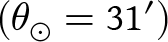 $(\theta_{\odot} = 31')$ as viewed from Earth, providing a radius and diameter of the Sun’s image given respectively by:
 \begin{equation*}{r_ \odot } = F\,tan\left( {\frac{{31'}}{2}} \right)\end{equation*}
 \begin{equation}{D_ \odot } = 2F\,tan\left( {\frac{{31'}}{2}} \right)\end{equation}
where F is the focal distance of the mirror. Then, the concentration ratio C of the mirror is the collecting area of the mirror 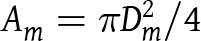 ${A_m} = \pi D_m^2/4$ divided by the area of this image of the Sun
 ${A_ \odot }$:
 \begin{equation}C = \frac{{{A_m}}}{{{A_ \odot }}} = \frac{{D_m^2}}{{4{F^2}ta{n^2}\left( {31'/2} \right)}}\end{equation}
It is worth to note that 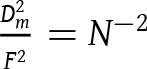 $\frac{{D_m^2}}{{{F^2}}} = {N^{ - 2}}$ is the reciprocal of the squared f-number of the mirror which measures the “speed of the lens” which indicates that the burning power grows with smaller focal distances F and larger diameters of the mirror Dm. In other words, two mirrors with different focal lengths and diameters, but the same f-number have the same concentration ratio and thus equal burning power as we will show.
To calculate the power emitted by the target, we use the Stefan-Boltzmann law, which states that the electromagnetic power radiated per unit surface area P of a blackbody increases with the fourth power of its temperature.
P = σT4 with σ the Stefan-Boltzmann constant. Accordingly, a blackbody at 100°K radiates 10,000 times more energy than the same body at 10°K, not merely 10 times more. This law is particularly useful, for example, in calculating the power emitted by a star when its color—directly related to its temperature—is known, or the average temperature of the Earth exposed to the radiant flux of the Sun. This radiant flux is the basis for life and the primary driver of weather and climate phenomena.
Since at thermodynamic stationary state the incoming energy flowing into the firing body should equal the radiated energy from the body to their surroundings, in accordance to the Stefan-Boltzmann law, then the absorptance (visible) α multiplied by the reflectance ρ and the concentration factor C of the mirror, times the multiplied by the incoming solar irradiance  $I_{\odot}$, should equals the emissivity (infrared) ε of the target of the body times the Stefan-Boltzmann constant σ =5.670374419 × 10⁻8 W/(m2·K4), multiplied by the difference between the fourth power of the equilibrium temperature TEq minus the fourth power of the ambient temperature TA (Duffie and Beckman Reference Duffie and Beckman2013) or:
 \begin{equation}
\alpha \rho C I_{\odot}
= \varepsilon \sigma
\left(T_{\mathrm{Eq}}^{4} - T_{A}^{4}\right)
\end{equation}
This Equation (Eq.) 3 equals the absorbed radiant energy by the target (left side) to the irradiated energy by it to their surroundings (right side). Equations have a great beauty since they represent a balanced relationship between the acting agents which convey physical meanings—on one side, the energy of Sun’s rays concentrated by the mirror, and on the other, the energy radiated by the target due to its temperature. On the left, the coefficients  $\rho $ and
 $C$ appear representing the quality of the mirror, acting as affixes that diminishes due to poor reflectivity
 $\rho $—or amplifies the magnitude of the solar energy flow
 $I_{\odot}$—due to high magnifying power
 $C$, while α indicates the percentage of this light concentrated by the mirror that is absorbed by the target, thereby representing how dark the target’s color is. On the other side, the target’s outgoing energy flow depends on its temperature TEq relative to the ambient TA, and on how effectively the target radiates back infrared radiation to its environment, denoted by
 $\varepsilon$ (which has almost the same value for any ordinary objects). The temperature of the target changes until both sides reach equilibrium. After defining the physical meaning of each letter—and stripping them of their phonetic content, they now show how the relationship among the involved elements—the mirrors material
 $\rho $ and its magnifying power C, the color of the target
 $\alpha $, and the environment TA must seek balance, through TEq changing in due proportion until equilibrium is reached.
Solving Eq. 3 for TEq gives:
 \begin{equation}T_{Eq}^{} = {\left[ {\frac{{\alpha \rho C{I_{_ \odot }}}}{{\varepsilon \sigma }} + T_A^4} \right]^{1/4}}\end{equation}
which can easily be evaluated for the selected mirrors of the Carlson’s catalog (Carlson Reference Carlson and Benson1981:120–121) larger than 37 mm, including all those found in La Venta, Tabasco, Mexico, as shown in Table 1. We used measured values for magnetite reflectance reported by (Olson Reference Olson1984) of 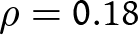 $\rho = 0.18$, and absorptance and emissivity for carbon were taken from tables in (Holman Reference Holman1998:453) of
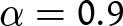 $\alpha = 0.9$ (visible), and
 $\varepsilon = 0.9$ (infrared); and a standard value of 1000 w/m2 for solar irradiance
 $I_{\odot}$ is considered. The mirror number 13 in Carlson’s catalog corresponds to the one studied by Ekholm, found at Arroyo Pesquero site, together with mirrors number 14 and 15 of the same catalog. The last mirror considered from Carlson’s catalog was found in Guerrero. It is worth noting that the only data available in literature about focal distances of mirrors comes from Gullberg and Carlson. In addition, we considered the concave pyrite mirror found in Chichen Itza, and an Olmec magnetite mirror (two fragments) kept at Xalapa Museum of Anthropology, whose corresponding focal distances were calculated using a paraxial approximation from their transverse sections or fitting a parabola to it respectively. We should point out that Eq. 4 is a powerful tool to calculate the burning power when only fragments remain and just estimates of the focal distances are available.
Geometrical, optical, and thermodynamic characteristics of the Olmec and Chichen Itza concave mirror

Table 1 Long description
Rows list mirror numb. Carlson plus Chichen and Xalapa, with columns for major and minor diameter in mm, major and minor focus in mm, ellipse area in mm2, suns image diameter in mm, area Suns image in mm2, conc. factor, TEq degrees C, time in seconds, and analogue focus in mm. Mirror 1: 96 and 90 mm diameters, focus 245 and 210 mm, ellipse area 6786 mm2, suns image 2,2 mm and 3,8 mm2, conc. factor 1769, TEq 1197 degrees C, time 3s, analogue focus 200 mm. Mirror 2: 117 and 89 mm, focus 300 and 160 mm, ellipse area 8178 mm2, suns image 2,7 mm and 5,8 mm2, conc. factor 1422, TEq 1119 degrees C, time less than 1s, analogue focus 150 mm. Mirror 3: 58 and 46 mm, focus 570 and 355 mm, ellipse area 2095 mm2, suns image 5,1 mm and 20,8 mm2, conc. factor 101, TEq 440 degrees C, time No, analogue focus 300 mm. Mirror 4 has 90 and 90 mm diameters marked with an asterisk, focus 140 and 140 mm, ellipse area 6362 mm2, suns image 1,3 mm and 1,3 mm2, conc. factor 5079, TEq 1641 degrees C, time less than 1s, analogue focus 150 mm. Mirrors 5 to 7: mirror 5 has focus 80 and 65 mm with suns image 0,7 mm and time 3s; mirror 6 has focus 100 and 80 mm with suns image 0,9 mm and time 2s; mirror 7 has focus 115 and 105 mm with suns image 1,0 mm and time 6s. Mirrors 13, 14, and 15: mirror 13 has equal diameters 119 and 119 mm and equal focus 180 and 180 mm with time 2s; mirror 14 has focus 200 and 140 mm with time less than 1s; mirror 15 has focus 150 and 150 mm with time less than 1s. Mirror 18: 37 and 30 mm diameters, focus 180 and 120 mm, ellipse area 872 mm2, suns image 1,6 mm and 2,1 mm2, conc. factor 421, TEq 753 degrees C, time No, analogue focus 150 mm. Chichen uses approximate values: diameters about 66 and 68 mm, focus about 90 and 90 mm, ellipse area 1762 mm2, suns image 0,81 mm and 0,52 mm2, conc. factor 6810, TEq 2510 degrees C, time less than 1s, analogue focus 100 mm; Xalapa uses approximate values: diameters about 88 and 70 mm, focus about 231 and 231 mm, ellipse area 4838 mm2, suns image 1.1 mm and 0,95 mm2, conc. factor 5086, TEq 1223 degrees C, time 3s, analogue focus 200 mm.
Note: The dimensions of the mirror number 4 have been corrected, since they were reported as “calculated,” from the only fragment found, as 9 mm each diameter, while it should be 90 mm as calculated by us from the picture of the fragment shown in the appendix of Gullberg’s report.
Since the ignition temperature of cellulose is 233°C (451ºF, as the title of the Ray Bradury’s famous novel), it can be seen from the TEq column of Table 1 that all the mirrors are capable to ignite blackened dry cellulose at an ambient temperature of 27°C (300°K), which is the average annual temperature reported for Tabasco state by the National Meteorological Institute in Mexico.
The optical and geometric characteristics of 11 mirrors reported by Carlson and Gullberg are presented in Table 1 in conjunction with calculated values of the Chichen Itza and Xalapa mirrors. In the first column the number of each mirror according to Carlson’s catalog is shown. The reported dimensions and focal lengths of these ancient concave mirrors are in columns 2 to 5. Subsequently, the calculated mirror areas, the diameter of images of the Sun produced at their respective focus, and the equilibrium temperature TEq of a blackened receiver are tabulated. The last two columns show the time it takes a blackened cigar to get ignited and the experimental focal length used with analogous models (to be described in the experimental section).
Certainly, the TEq depends on the figure of the mirror since it was calculated assuming a perfect image of the Sun (parabolic surface) at their major focal distance (astigmatism would be an issue for mirrors number 2 and 3 due to their large differences in focal distances, however mirror 2 has a very large aperture and shorter focal distance). Further, another critical factor that determines the burning power of the mirrors is the solar irradiance at the moment in which it is used, since a one-quarter exponent is involved in Eq. 4. Even if the equilibrium temperature is adjusted considering an air convective environment (air flow cooling the target) by using an effective convection coefficient  $h = 10{\text{ }}W/{m^2}$, all specimens considered surpass the ignition temperature of cellulose, only diminishing at most in 10 percent of the TEq.
Regarding the temperature reached by the mirrors themselves being exposed to direct sunlight, the same Eq. 4 can be applied using a concentration factor of 1 and equal values for absorptance and emittance of  $\alpha $ = 1-
 $\rho $ = 0.82, giving T = 114.5°C. This temperature cannot be reached by the mirror’s body but after several hours of exposure to solar radiation due to their mass and convective losses, a huge time compared to the time to ignition, keeping the mirror cool while manipulated.
Analyzing the theoretical equilibrium or stagnation temperature at the targets achievable by the mirrors reveals a shared characteristic among them. Ten out of 13 mirrors possess TEq values between 1,000°C and 2,000°C, just being the one exceeding 2,000°C the Chichen Itza mirror, and only two (3 and 18) falling below 900°C but still over 400°C, still surpassing the ignition point of cellulose. Being only the mirror number 3 at the limit of reaching the ignition temperature of lignin and cellulose mixtures. This consistent burning ability suggests it may have been a deliberate criterion in the fabrication process for lapidary artisans correlated to the burning power of the manufactured mirrors. The craftsman could have proceeded by shortening the focal distance of the mirror depending on the size of the iron ore nodule, which in turn determines the aperture of the mirror, until the concentration factors allowed the igniting of a dark target.
It should be remarked that Carlson characterizes the mirrors as paraboloidal in a broad sense, noting a “gradual increase in curvature radius towards the mirror’s rim” (Carlson Reference Carlson and Benson1981:119), a characteristic that improves their burning power compared to spherical ones. Two mirrors discovered at Arroyo Pesquero were found to be spherical, with only one of them successfully used to ignite fire by Ekholm in 1973 (Ekholm Reference Ekholm1973). However, a more detailed reconstruction of their figure and precise determination of its concentration factor is still lacking. Modern experimental approaches, such as structured light or interferometric techniques (this last unsuccessfully attempted by Olson in 1984 due to fractures and discontinuities in the surface), should be employed to create digital surface models (DSM) of all available specimens. This is essential for a thorough assessment of their burning ability through ray tracing and thermodynamic simulations. Achieving precision in these models is imperative for creating mirror reproductions and performing experiments with them in order to determine the image quality, aberrations and their burning power with accuracy.
A first attempt to produce a digital surface model of an Olmec mirror (identified as such in the present work for the first time, which is broken and only two fragments persisted, and whose precedence is unknown) kept at the Xalapa Museum of Anthropology with fringe projection and photogrammetry gave us inconclusive results due to the poor reflectivity of the magnetite. An image of the mirror, and one from the 3D reconstructed model are shown in Figure 4 (a) and (b), respectively, and in the interactive DSM of the mirror is given in supplementary materials.
(a) Upper view and (b) 3D reconstruction snapshot of the Olmec mirror from Xalapa made with photogrammetric technique. The major diameter was estimated to be 88 mm, its thickness at the center is 6.5 mm, and at the border rim 10 mm. It has one biconical perforation on the plate out of the carved ellipse and is likely made of magnetite.

Signal to noise ratio in the obtained XYZ map precludes fitting a parabola or a circle unambiguously to the long axis of the ellipse since the best resolution for depth achieved was 1.0 mm due to the high contrast of white spots on black background of the mineral. Instead, the Xalapa mirror’s figure and focal length were determined from a transverse section that fortunately passes near the vertex. Using XY coordinates measured from the borders of the smaller fragment in a high-resolution photograph, a parabola was fitted to these points as shown in Figure 5 (a) and (b). The major and minor axis lengths of the elliptic rim were also estimated (see Table 1, last row). The surface exhibits a striking conformity to a parabolic figure, with a correlation coefficient of 0.992. This finding corroborates Gullberg’s assertion that Olmec mirrors were parabolized, most likely to concentrate the sun’s rays at a precise focal point without spherical aberration, thereby achieving the ignition temperature of cellulose. Working with a fragment had the problem that the analyzed transverse section does not align with a principal symmetry axis of the elliptical mirror, as the fracture occurs along a random line that is approximately parallel to the major axis. This results in a measured distance from the rim to the vertex that is longer than the estimated semi-major axis, leading to a focal distance greater than that calculated using the paraxial approximation (which measures the height at the rim relative to the vertex). Nevertheless, the excellent parabolic fit is consistent with a cross-section of an elliptic paraboloid, confirming the parabolic figure described by Carlson. To highlight the technological significance of this lithic achievement, we note that Sir Isaac Newton himself was unable to produce a parabolic mirror, as the optical polishing techniques of his time could not generate such a shape. Consequently, the first reflector telescope, he presented to the Royal Society, used a spherical mirror instead (Hutton Reference Hutton1795; Simms and Hinkley Reference Simms and Hinkley1989).
(a) Transverse view of a fracture presented by the Xalapa Olmec mirror in which the XY coordinates of some points at its reflecting surface were measured, and (b) Plot of the XY coordinates of the mirror’s surface (black squares) and the minimum squared deviation fit to a parabola (red continuous curve), showing a striking good agreement.

Figure 5 Long description
A showing a long, narrow fragment with an uneven surface and a straight upper edge. A small label, a), appears near the left side. A scatter plot with a fitted curve and an inset table. The x-axis label is X Coordinate in millimeter. The y-axis label is Y coordinate in millimeter. The x-axis shows tick labels from minus 10 to 70 in increments of 10. The y-axis shows tick labels from minus 0.5 to 4.0 in increments of 0.5. A legend lists Measured Coordinates and Fitting Parabola. The plotted black square points start near x equals 0 and y about 3.7, then descend as x increases. Points appear around x equals 10 and y about 3.0, x equals 20 and y about 2.0, x equals 30 and y about 1.0, x equals 40 and y about 0.5 and x equals 50 and y about 0.2. Several points lie near y equals 0 between x about 55 and 65 and one point appears near x about 70 and y about 0.3. A smooth curve follows the points, descending from about y 3.7 near x 0 to near y 0 around x 60, then rising slightly by x 70. An inset table shows the equation, y equals Intercept plus B1 times x to the power 1 plus B2 times x to the power 2. The table lists Intercept 3.80928 plus or minus 0.05672, B1 minus 0.12009 plus or minus 0.003, B2 9.66903E minus 4 plus or minus 5.49525E minus 5 and R Square COD 0.99292. A small label, b), appears near the lower left of the plot area.
Experimenting with analog models
Attempting to experimentally determine the burning power of these artifacts without knowing their precise original shape might seem futile. However, a feasible approach exists using analogous models, inspired by the methodology of Lunazzi (Lunazzi Reference Lunazzi and Consortini1996a, Reference Lunazzi, Malacara-Hernandez, Acosta-Ortiz, Rodriguez-Vera and Malacara1996b, Reference Lunazzi, Gallaga and Blainey2016) who conducted a successful igniting experiment using a modern mirror. This approach involves using silvered glass concave mirrors with high reflectivity and adjusting their light-collecting area to match the total energy reflected by the archaeological specimens. Thus an analogue mirror is a modern mirror, which, regardless of the material it is made of, has the same effective aperture—given the relative reflectivity—and the same focal distance (the same effective speed of the lens) as their corresponding archaeological specimen.
Guided by this principle, we tested the burning power of analogous model mirrors representing the Olmec specimens and the mirror from the Turquoise Plate of Chichen Itza and Xalapa mirrors. Although tobacco use among the Olmecs remains uncertain, we used blackened cigars as optimal targets for ignition since they allow excellent oxygenation of the combustion reaction without casting significant shadow on the mirror, and for reasons that will become evident in the next article (Salazar-Neumann et al. Reference Salazar-Neumann, Delgado-Calderon and Nahmad-Molinari2026). As described for the Chichen Itza model, detailed drawings and descriptions of the Turquoise Plate allowed us to estimate its focal distance, and we used a conservative reflectance value of 0.5 for pyrite, for this mirror. For the Xalapa mirror, we used the focal distance of the best fitting parabola described earlier.
The equivalent adjusted area for each analog model is calculated by multiplying the archaeological mirror’s actual area by the material’s reflectivity. The square root of this equivalent area gives the side length of a square-shaped hollow mask with an equivalent radiant energy reflected by the mirror (Figure 6). Crucially, the analog mirrors must have a similar focal distance to their archaeological counterparts, as this determines the size of the Sun’s image—a critical factor in the concentration ratio (governed by Eq. 4) and thus the mirror’s burning power or TEq. The experimental setup is shown in Figure 6.
Experimental setup and its diagram in which the analog mirror based on the Turquoise Plaque of Chichen Itza is lighting a tip-blackened cigar via concentrated solar radiation. The mirror successfully ignited the cigar tip almost instantly.

Our results, summarized in the last two columns of Table 1, demonstrate that 11 of the 13 analogous mirrors easily ignited the cigar. As anticipated, mirrors 3 and 18 failed under the experimental conditions, which were conducted on a clear but windy day (August 15, 2025) with a solar irradiance of 896 W/m2 recorded at 11 am. We employed four distinct focal distances for the mirrors to closely match the optical characteristics of their archaeological counterparts shown in the last column of Table 1; the time required to achieve ignition is shown in the preceding column.
To further validate the results, we tested the Olmec mirror number 15 using white bond paper with a whiteness index of 0.75 (the industrial name for the reflectance in the visible spectrum) and thermal paper (commonly used for receipts and tickets) as receivers. As expected, the white bond paper did not ignite and in the case of thermal paper, the time to ignition was delayed by four seconds due to the paper’s high initial albedo. Last, it should be remarked that trying to light the cigar pointing toward accumulated ashes at the tip of a previous experiment, hinders the ignition process since the ashes are gray. These observations show how achieving ignition critically depends on the receiver’s absorptivity (α) of the tinder element (Lunazzy Reference Lunazzi, Gallaga and Blainey2016). Using ocote as a receiver allows it to produce smoke, but not a sustained ember. In Figure 7, four different prepared targets: light ocote wood, amber colored ocote, tobacco cigarette (natural color), and blackened tobacco cigarette, are presented before and after being exposed to 3 seconds of concentrated solar radiation by the Chichen Itza analogous. In the upper strip of the figure the effect of the same number of concentrated sunrays on a grayscale is shown. The effect is, as expected, a larger and more effective ignition zone as darker the color of the target.
In the upper strip, a grayscale exposed for 3 seconds to concentrated radiation from a mirror analogous to that of Chichen Itza. The following are shown: a blackened tobacco cigar, a cigar with its natural color, and dark and light ocote wood—all of them exposed and not exposed to 3 seconds of concentrated radiation from the same mirror. It should be noted that the blackened cigar had to be extinguished before the photograph was taken, as its amber remained lit.

Finally, the deliberate choice of a small size for mirrors becomes even more striking when considering the technological context. Unlike the Olmec lapidaries, who were constrained by the size of available magnetite or hematite nodules, the Classic Maya had mastered the tessellation technique using highly reflective pyrite. This technology freed them from size limitations, allowing for the creation of much larger mirrors. Why, then, is the masterfully crafted tessellated pyrite mirror from Chichen Itza only 68 mm in diameter? The answer likely lies in its specific function. We must emphasize that this mirror possesses the highest burning power of all the mirrors studied, a result of its strong curvature and high reflectivity. This very curvature, which makes it unsuitable for self-contemplation, coupled with its small, handheld size, strongly suggests its primary purpose was not reflective viewing but rather its efficacy as a potent, precision incendiary ritual instrument. For comparison of their relative dimensions, in Figure 8 we show a schematic diagram of the traverse section of two of the analyzed mirrors, the mirror number 15 from Carlson’s catalog (left), and the Chichen Itza Turquoise Plaque. Strikingly, the Chichen Itza mirror is much smaller, having half of the diameter of the Olmec mirror 15 (one-quarter of the energy collecting area), but has a larger burning power or TEq due to its much higher reflectivity and smaller focal distance.
Schematic diagram showing, for comparison, the dimensions of the mirror number 15 from the Carlson’s catalog, and the Chichen Itza central mirror of the Turquoise Plaque.

Thus, having taken a glimpse, with the eyes of Stefan-Boltzmann theory, into the ancient Mesoamerican concave mirrors allowed us to understand some aspects of their burning ability, dissipating, at least partially, the mist of the time’s breath that veils our reflections on their surface.
Future research
High brilliance fringe projection or infrared laser line projection techniques will be developed in order to achieve submillimeter resolution in this strongly absorptive material in order to obtain DSMs, and characterize the surface of the Xalapa mirror first, and those in the National Museum of Anthropology of Mexico afterwards, including all the Turquoise Discs in order to determine if some concavity could be detected.
Conclusions
The prevailing archaeological interpretation of concave mirrors, predominantly viewed as ornamental or ritual objects, overlooks their potential as technological igniting devices as proposed by Carlson, Robicsek, Ekholm, and others. This oversight stems from a lack of physical evidence supporting their use, as well as insufficient research aimed at verifying their ability to ignite fire in then readily available fuels.
The long-standing hypothesis, first elaborated by Carlson, Ekholm, and Robicsek, regarding the capability of the concave Olmec iron ore mirrors discovered at the La Venta site in the state of Tabasco, and other sites in Mexico, to ignite fire has undergone theoretical scrutiny. Their incendiary potential for blackened cellulose was calculated by considering the mirror’s reported average reflectance in the visible part of the spectrum, their aperture area, and their focal distance through a thermodynamic radiative equilibrium, or stationary state approach.
The theoretical analysis shows their previously unexplored burning power from a new point of view, indicating that the whole set of specimens analyzed possess the capability to ignite dry blackened cellulose, even in cases where the mirrors have relatively small areas and long focal distances. This novel methodology could allow other researchers in calculating the burning power of concave mirrors when detected. Furthermore, experimental results with analogous models of the ancient concave mirrors, including similar focal distances to those of their original archaeological counterparts, notoriously show their burning power and the cigar as an excellent tool for igniting an ember for a posterior propagation of fire. Our analysis provides the first direct measurement of one of the mirror’s surface figures, confirming it to be a precisely carved parabola, consistent with Carlson’s description. Moreover, we present the first identification of the turquoise Plaque of Chichen Itza as a concave mirror. Inference of its optical properties from its geometry confirms it has the highest burning ability of those studied archaeological specimens. This result not only substantiates the presence of concave mirrors outside the Olmec region but also confirms the continuity of this technology’s manufacture into the Postclassic period.
Finally, we should remark that the possibility that these instruments were used in rituals related to the Lord of the Smoking Mirror led us to investigate the iconography of this deity, in which cigars, torches, or cigarettes often appear in conjunction with mirrors. These findings, published in this same issue (Salazar-Neumann et al. Reference Salazar-Neumann, Delgado-Calderon and Nahmad-Molinari2026), point toward the use of a sophisticated pyrotechnology at the roots of the worship of the Lord of the Smoking Mirror.
However, the present theoretical and experimental study underscores the urging and critical importance of accurately determining the surface shape and optical figure of mirrors and establishing Digital Surface Models by structured light or photogrammetric techniques, since there exists the possibility that small concavities could have been neglected in some specimens.
Supplementary materials
The supplementary material for this article can be found at https://doi.org/10.1017/S0956536126101059.
Acknowledgements
The authors gratefully acknowledge Alfredo Hernández Velázquez for his invaluable assistance photographing the Xalapa mirror, Claudio Nahmad for his work on the 3D reconstruction, and Ixchel Fuentes Reyes for granting us access to the artifact at the museum’s storehouse.
Competing interests
The authors declare none.
Data availability statement
Data available on request to the corresponding author at yuri@ifisica.uaslp.mx.
Funding statement
Any funds were received for the realization of the present article



