





Introduction
Cetaceans play key roles in the blue economy, including top-down control as apex predators in marine food webs (Baum and Worm, Reference Baum and Worm2009; Kiszka et al., Reference Kiszka, Woodstock and Heithaus2022), facilitating carbon sequestration in systems such as the ocean’s biological carbon pump (Sheehy et al., Reference Sheehy, Taylor, Zwerschke, Collar, Morgan and Merayo2022; Pearson et al., Reference Pearson, Savoca, Costa, Lomas, Molina, Pershing, Smith, Villaseñor-derbez, Wing and Roman2023), and ensuring distribution of nutrients from eutrophic to oligotrophic regions, both horizontally and vertically throughout ocean basins (Roman et al., Reference Roman, Abraham, Kiszka, Costa, Doughty, Friedlander, Hückstädt, Marcondes, Wetsel and Pershing2025). Given their diminutive size, the role of porpoise species within the blue economy is often overlooked. However, their high position in coastal marine food webs means that they play a prominent role in regulating prey populations (IJsseldijk et al., Reference IJsseldijk, ten Doeschate, Davison, Gröne and Brownlow2018; Nachtsheim et al., Reference Nachtsheim, Viquerat, Ramírez-martínez, Unger, Siebert and Gilles2021). As a result, they are recognized as ecosystem sentinels in international legislation, such as the EU Habitats Directive (Koschinski et al., Reference Koschinski, Owen, Lehnert and Kamińska2024), influencing policy and industry standards (Pinn, Reference Pinn2023). In addition to their ecological importance, porpoises attract nature-based tourism to coastal communities, making them a crucial part of the oceans’ natural capital (Cook et al., Reference Cook, Malinauskaite, Davíðsdóttir and Ögmundardóttir2022).
Concerns surrounding porpoise population health are growing, with recent studies indicating harbour porpoise (Phocoena phocoena) population size in European waters is declining (Carlén et al., Reference Carlén, Nunny and Simmonds2021; Goh et al., Reference Goh, Paradell, Jessopp, Rogan and Pirotta2025). Strandings of harbour porpoise in European waters have increased in recent years (IJsseldijk et al., Reference IJsseldijk, ten Doeschate, Brownlow, Davison, Deaville, Galatius, Gilles, Haelters, Jepson, Keijl, Kinze, Olsen, Siebert, Thøstesen, van den Broek, Gröne and Heesterbeek2020). This increasing trend coincides with a general growth not only in the numbers of individuals, but also in the diversity of cetacean species stranding (Alvarado-Rybak et al., Reference Alvarado-Rybak, Toro, Escobar-dodero, Kinsley, Sepúlveda, Capella, Azat, Cortés-hinojosa, Zimin-veselkoff and Mardones2020; Lennon et al., Reference Lennon, Williams, Allan, ten Doeschate, Davison, Babayan and Brownlow2025). Declines in cetacean populations are closely linked to increasing impacts from infectious agents including viruses (Arbelo et al., Reference Arbelo, de Los Monteros, Herráez, Andrada, Sierra, Rodríguez, Jepson and Fernández2013), bacteria (González-Barrientos et al., Reference González-Barrientos, Morales, Hernández-Mora, Barquero-Calvo, Guzmán-Verri, Chaves-Olarte and Moreno2010) and parasites (Gulland and Hall, Reference Gulland and Hall2007, Suárez-González et al., Reference Suárez-González, Fernández, González, Salgado-Jiménez, Molpeceres-Diego, Alonso-Almorox and Sierra2026) that cause chronic and long-term population stress, with the issue being highlighted within the long-term planning of UN sustainable goals (Sanganyado and Liu, Reference Sanganyado, Liu, Leal Filho, Azul, Brandli, Lange Salvia and Wall2022). A temporal increase in parasite load and species diversity within affected cetaceans has been observed (Suárez-González et al., Reference Suárez-González, González, Arbelo, Sierra, Castro-alonso, Hernández, Martín, Fraija-Fernández and Fernández2024), with an example being an increase in infection with anisakid gastrointestinal parasites in cetaceans (Mastick et al., Reference Mastick, Fiorenza and Wood2024). Within porpoises and other marine mammals, parasitic burden can reduce the overall fitness of the host, increasing susceptibility to secondary infections such as bacterial pneumonia, shown to be a leading cause of death in cetaceans (Dzido et al., Reference Dzido, Rolbiecki, Izdebska, Rokicki, Kuczkowski and Pawliczka2021). Certain parasites are also thought to be implicated in stranding events, infecting organs such as the cranial and auditory sinuses, reducing the host’s ability to perceive water depth or distance to obstacles (Kim et al., Reference Kim, Youn, Lee, Lee, Kim, Kang, Choe and Georgieva2023, Reference Kim, Kang, Lee, Opara, Bia, Lee, Lee, Kim, Lee, Kim, Kim, Do, Kim, Lee, Lee, Park, Kim, Choe and Youn2025). The growing link between parasitism and mortality of hosts (Hasegawa et al., Reference Hasegawa, Otsuki, Uemura, Furusawa, Naka, Kanno and Koizumi2025) increases the importance of improving understanding of marine parasite species.
Identification of parasites collected from stranded cetaceans is often difficult owing to morphological plasticity, leading to a paucity of understanding of taxonomic and phylogenetic relationships between parasitic species (Kim et al., Reference Kim, Kang, Lee, Opara, Bia, Lee, Lee, Kim, Lee, Kim, Kim, Do, Kim, Lee, Lee, Park, Kim, Choe and Youn2025), with one such example being the genus Oschmarinella within the family Brachycladiidae. Ultimately, this has led to misidentification and discrepancies in records of parasite species associated with pathology in cetaceans, making monitoring and surveillance of disease challenging (Barroso et al., Reference Barroso, López-olvera, Kiluba and Gortázar2023). This is particularly true for members of the digenean family Brachycladiidae. With their global distribution and use of definitive cetacean host species, they represent a model family to study speciation and divergence of parasites in marine systems (Fraija-Fernández et al., Reference Fraija-Fernández, Aznar, Fernández, Raga and Fernández2016; Ebert et al., Reference Ebert, Müller, Marigo, Valente, Cremer and da Silva2017; Dzido et al., Reference Dzido, Rolbiecki, Izdebska, Rokicki, Kuczkowski and Pawliczka2021; Suárez-González et al., Reference Suárez-González, González, Arbelo, Sierra, Castro-alonso, Hernández, Martín, Fraija-Fernández and Fernández2024). Within the Brachycladiidae family, Campula oblonga (Cobbold, 1858) is a cosmopolitan liver fluke, considered to be phylogenetically challenging and one of the most ubiquitously observed parasites in post-mortem investigations of stranded Phocoenidae species (Dzido et al., Reference Dzido, Rolbiecki, Izdebska, Rokicki, Kuczkowski and Pawliczka2021). Documented to infect several species of porpoise, with differing distributions, evolutionary histories and ecological traits, C. oblonga infects the cold-to-temperate water neritic harbour porpoise, the warm-water neritic East-Asian finless porpoise (Neophocaena asiaeorientalis) (Lin et al., Reference Lin, Zhao, Chen, Sakornwimon, Aierken, Kittiwattanawong, Wang and Li2023; Goh et al., Reference Goh, Paradell, Jessopp, Rogan and Pirotta2025), and the highly migratory Dall’s porpoise (Phocoenoides dalli), widely distributed across the north Pacific Ocean (Jefferson, Reference Jefferson2025).
Previous investigations have studied brachycladiid parasites infecting wide-ranging, highly mobile hosts across relatively small spatial scales, uncovering a high degree of panmixia in their parasite populations (Marigo et al., Reference Marigo, Cunha, Bertozzi, Souza, Rosas, Cremer, Barreto, de Oliveira, Cappozzo, Valente, Santos and Vicente2013). These studies have utilized standard molecular markers used for taxonomic and evolutionary analyses, including the use of the nuclear ribosomal fragments 18S, both internal transcribed spacer regions (ITS 1 and 2), as well as 28S (Fraija-Fernández et al., Reference Fraija-Fernández, Aznar, Fernández, Raga and Fernández2016, Reference Fraija-Fernández, Aznar, Fernández, Raga and Fernández2016; Marigo et al., 2015; Ebert et al., Reference Ebert, Müller, Marigo, Valente, Cremer and da Silva2017; Kremnev et al., Reference Kremnev, Gonchar, Krapivin, Knyazeva and Krupenko2020). Similarly, mitochondrial markers, particularly a fragment of the nicotinamide adenine dinucleotide dehydrogenase subunit 3 (mtND3), have also been used (Fraija-Fernández et al., 2015, Reference Fraija-Fernández, Aznar, Fernández, Raga and Fernández2016; Marigo et al., 2015; Ebert et al., Reference Ebert, Müller, Marigo, Valente, Cremer and da Silva2017), with Briscoe et al. (Reference Briscoe, Bray, Brabec and Littlewood2016) illustrating the use of multiple mitochondrial markers by providing a single complete mitochondrial genome for a member of the family. However, the phylogenetic power of differing molecular markers has not been investigated. To date, studies have investigated speciation of brachycladiid parasites between host families, but never within a closely related parasite group that specializes in infecting a single host family of cetaceans. Previous studies have focused on classifying brachycladiid parasites in the context of the whole family (Fraija-Fernández et al., Reference Fraija-Fernández, Aznar, Fernández, Raga and Fernández2016) or identifying speciation in specific brachycladiid parasites (Shiozaki et al., Reference Shiozaki, Amano, Fernández and Fraija-Fernández2019). Thus, this study is the first to investigate diversity within one specific genus utilizing a range of definitive host species, with the aim of investigating divergence in the parasite due to varying host evolutionary histories. Investigating parasite speciation between host species allows for inferences to be made about the effect of host evolution on parasite divergence. Using both standard nuclear and mitochondrial markers, this study aimed to resolve the phylogenetic position of C. oblonga recovered from P. phocoena. Specifically, in relation to other closely related members of the Brachycladiidae family, particularly species of Oschmarinella infecting Sowerby’s beaked whales (Mesoplodon bidens). Thus, this study also aimed to provide detailed insights into the evolutionary history of C. oblonga, to address the following hypotheses; i) that this parasite is a single cosmopolitan species found in hosts from the Northern Hemisphere; ii) this parasite has undergone several host species swapping events; and iii) given the well-documented link between parasite-host co-evolution and ecology in terrestrial and freshwater systems (Buckingham and Ashby, Reference Buckingham and Ashby2022), we hypothesize that with such varying ecological traits across phocoenidae definitive host species, C. oblonga may instead be considered as several cryptic Campula species. Finally, this study provides the first account of cryptic speciation associated with host divergence in the Brachycladiidae family, through evolutionary processes by which several genetically distinct but morphologically and ecologically similar parasite species have evolved.
Materials and methods
Parasite collection and DNA sequence generation
A total of 13 liver flukes identified as putatively belonging to the Brachycladiidae family were collected from the liver and pancreas of stranded harbour porpoises and 1 Sowerby’s beaked whale (Supplementary Tables 1 and 2). These specimens were collected from the coastline of the Netherlands by the Division of Pathology of the Faculty of Veterinary Medicine (Utrecht University, The Netherlands), where necropsies are commissioned by the Dutch Ministry of Agriculture, Fisheries, Food Security and Nature as part of ongoing health monitoring and surveillance, before being archived in 70% ethanol.
In total, 12 novel mtND3 (10 Campula and 2 Oschmarinella) sequences were generated for analyses as part of this study (Supplementary Table 1). In addition, 12 novel 28S (10 Campula and 2 Oschmarinella) sequences were also generated as part of this study (Supplementary Table 2). Genomic DNA was extracted from parasite tissue using a Qiagen DNeasy Blood and Tissue Kit (Qiagen®, Germany), following the manufacturer’s recommendations, with the additional re-elution using 200 µL Buffer AE step for DNA enrichment and increased DNA yield. Using the PCR cycling conditions as described by Fernández et al. (Reference Fernández, Aznar, Raga and Latorre2000) and Kremnev et al. (Reference Kremnev, Gonchar, Krapivin, Knyazeva and Krupenko2020), fragments of mtND3 were amplified using the brachycladiid-specific ND3F (GCT TAA TTK KTA AAG TGR ATT CTT ACT) (Fernández et al., Reference Fernández, Aznar, Latorre and Raga1998a) and ND3D (CTA CTA GTC CCA CTC AAC (G/A)TA ACC (T/C)T) (Fernández et al., Reference Fernández, Aznar, Raga and Latorre2000) primers, and DIG12 (AAGCATATCACTAAGCGG) (Tkach et al., Reference Tkach, Littlewood, Olson, Kinsella and Swiderski2003) and 1500 R (GCTATCCTGAGGGAAACTTCG) (Tkach et al., Reference Tkach, Littlewood, Olson, Kinsella and Swiderski2003) primers. All novel sequences of both mtND3 and 28S molecular markers were obtained by Sanger sequencing. Sanger sequencing was carried out using a ThermoFisher Scientific ABI 3500xL sequencer (Applied Biosystems, USA) at the Natural History Museum (NHM), London. Novel sequences were visualized, assembled and edited to build consensus sequences using BioEdit 7.7 (Hall, Reference Hall1999). Consensus sequences were checked using NCBI BLAST (Camacho et al., Reference Camacho, Coulouris, Avagyan, Ma, Papadopoulos, Bealer and Madden2009) analysis to ensure that the resulting sequence was appropriate for use in phylogenetic analysis.
Alignment, parasite identification and species delimitation
All publicly available brachycladiid sequences for analyses were collected from GenBank (https://www.ncbi.nlm.nih.gov/genbank/) and accession numbers are listed in Supplementary Tables 1 and 2. A total of 36 liver- and pancreas-infecting brachycladiid publicly available mtND3 sequences were analysed – 21 C. oblonga sequences, 5 Orthosplanchnus sp. sequences, 5 Oschmarinella sp. sequences and 4 Brachycladium sp. sequences. A total of 21 brachycladiid publicly available 28S sequences were also analysed – 12 C. oblonga sequences, 4 Oschmarinella sp. sequences, 3 Brachycladium sp. sequences and 1 Orthosplanchnus sp. sequence. All publicly available brachycladiid mtND3 sequences included a partial sequence for tRNA-Lys, requiring a further data-cleaning step to remove the tRNA-Lys sequence and include only the mtND3 sequence, to maintain consistency with novel sequences generated for this study. This was done using the extractseq tool (Rice et al., Reference Rice, Longden and Bleasby2000) on the Galaxy Server (The Galaxy Community, 2024). Multiple sequence alignments were assembled for both the mtND3 sequence set and the 28S sequence set using the ClustalW alignment tool within MEGA12 (Kumar et al., Reference Kumar, Stecher, Suleski, Sanderford, Sharma and Tamura2024), with an additional smaller Campula sp. sequence set also assembled following the same procedure. Subsequently, using the model test implemented in MEGA12 (Kumar et al., 2024), a maximum likelihood analysis of substitution models revealed a Kimura 2-parameter model with a fraction of sites allowed to be evolutionarily invariant (K2 + I) for the brachycladiid 28S alignment. A Tamura 3-parameter model, with a discrete Gamma distribution and a fraction of sites allowed to be evolutionarily invariant (T92 + G + I), was identified for both the brachycladiid mtND3 alignment and the smaller Campula sp. mtND3 alignment. Pairwise distances (d) were also calculated in MEGA12 (Kumar et al., 2024) between each individual sequence in both respective datasets. The phylogenetic signal from both respective alignments was assessed by exploring the relationship between transitions (s) and transversions (v). Publicly available sequences for Schistosoma mansoni and Schistosoma haematobium were selected to form an outgroup for both the 28S and the mtND3 alignments. These selections were based on working knowledge of divergence times of genes within the Schistosoma family, and phylogenetic similarity to the Brachycladiidae family as trematodes. Delimitation between sequenced species was determined iteratively. Phylogenetic topology was assessed through Bayesian phylogenetic tree reconstruction using the BEAST X v10.5 suite of phylogenetic analysis packages: BEAUti v10.5.0, BEAST v10.5.0, TreeAnnotator v10.5.0 and FigTree v1.4.4 (Suchard et al., Reference Suchard, Lemey, Baele, Ayres, Drummond and Rambaut2018). Tree parameters were as follows: strict clock, following a Speciation: Yule process tree prior, with a burn-in (as states) value of 100 000. Posterior probability was set at 0.0, and the target tree type was a maximum clade credibility tree, with the node heights set to median heights. The K/θ ratio, comparing ratios of pairwise differences between individuals and clades within a phylogeny, as described by Birky (Reference Birky2013), was used to assess the boundries between species arcoss the phylogeny . The K/Ɵ method for species delimitation, whilst not explicitly a model-based coalescent delimitation method, is based on population genetic theory and shares similarities with the Generalized Mixed Yule Coalescent method, and typically returns the same results as the K/Ɵ method when supplied with the same datasets (Birky, Reference Birky2013). To support species delimitation results returned by the K/Ɵ, the C. oblonga alignment was run through both the Poisson tree process (PTP) tool (Zhang et al., Reference Zhang, Kapli, Pavlidis and Stamatakis2013) and the automatic barcode gap discovery (ABGD) tool within the SpartExplorer software (Puillandre et al., Reference Puillandre, Lambert, Brouillet and Achaz2012). Mean pairwise sequence distances within groups were calculated using the aligned sequences in MEGA12 (Kumar et al., 2024), as were the mean pairwise sequence distances between groups. The ABGD tool within the SpartExplorer software (Puillandre et al., Reference Puillandre, Lambert, Brouillet and Achaz2012) was used to further investigate species delimitation. To run ABGD analysis, a FASTA file containing the Campula mtND3 sequences was uploaded, and the ABGD tool was selected. Similarly, the PTP tool on the bPTP server (Zhang et al., Reference Zhang, Kapli, Pavlidis and Stamatakis2013) was used to corroborate the results of species delimitation analysis. To set up PTP analysis, a Newick file containing the Campula mtND3 sequences was uploaded to the bPTP web server and run as an unrooted tree, with 100 000 Markov chain Monte Carlo (MCMC) generations, a thinning value of 100, and a burn-in of 0.1.
Parasite-host co-phylogeny analyses between Campula and Phocoenidae hosts
A hypothesis of co-phylogeny between the genus Campula and the Phocoenidae was tested. Following the methodology as outlined by Ben Chehida et al. (Reference Ben Chehida, Thumloup, Schumacher, Harkins, Aguilar, Borrell, Ferreira, Rojas-bracho, Robertson, Taylor, Víkingsson, Weyna, Romiguier, Morin and Fontaine2020), complete mitochondrial sequences for 59 individuals from six of the seven species within the Phocoenidae family were accessed from GenBank: 25 harbour porpoise, 6 Dall’s porpoise, 12 Vaquita (Phocoena sinus), 3 spectacled porpoise (Phocoena dioptrica), 3 Burmeister’s porpoise (Phocoena spinnipinis) and 11 East-Asian finless porpoises. The outgroup consisted of 1 Narwhal (Monodon monoceros) sequence, 3 bottlenose dolphin (Tursiops truncatus) sequences and 3 killer whale sequences (Orcinus orca) Supplementary Table 4). The sequences were aligned using MEGA12 (Kumar et al., 2024) before the dataset was exported for further phylogenetic analysis using the BEAST X v10.5.0 suite of phylogenetic analysis packages: BEAUti v 10.5.0, BEAST v10.5.0, TreeAnnotator v10.5.0 and visualised in FigTree (Suchard et al., Reference Suchard, Lemey, Baele, Ayres, Drummond and Rambaut2018). Due to the monophyletic nature of the clades in the resultant tree, clades were collapsed and renamed to the corresponding species. The co-evolutionary hypothesis between representatives of different C. oblonga species and their respective porpoise hosts was investigated using software Jane 4.0 (Conow et al., Reference Conow, Fielder, Ovadia and Libeskind-hadas2010), which is a statistical cost-based software tool for reconstructing cophylogenetic trees. To account for difficulties in accurately estimating the relative cost of events, Jane 4.0 supports solving for ranges of costs. Costs were set in ranges as recommended in the Jane 4.0 documentation to account for the difficulty in accurately estimating the relative evolutionary cost of speciation events: co-speciation cost 0, duplication cost between 1 and 3, duplication and host switch cost between 3 and 5, loss cost between 5 and 7 and failure to diverge cost between 7 and 9.
Divergence times estimation of Campula
To investigate relative timings of divergence events, well-established molecular clock methods were employed and calibrated using known divergence times for another trematode genus, Schistosoma. The divergence rate for Schistosoma cytochrome-c oxidase subunit 1 (COX1) genes is 0.035 substitutions per million years (Jones et al., Reference Jones, Norman, Borrett, Attwood, Mondal, Walker, Webster, Rajapakse and Lawton2020). Differences in same-gene divergence rates between differing families within the class Trematoda are low; hence, the similar evolutionary distances allow for conservation of divergence time within the same family (Gu and Li, Reference Gu and Li1998). The following analysis was based on the concept that substitution rates (r) are proportional to branch lengths (L) under the assumption of a molecular clock. The formula described by Hu et al. (Reference Hu, Sackton, Edwards and Liu2019) was then used to calculate the relative rate of divergence in the mtND3 genes within the genus Campula (Supplementary Figure 2). The divergence rate of Brachycladiidae mtND3 was estimated to be 0.074 substitutions per million years. To account for unvalidated cross-gene rates being used to calibrate the molecular clock, the clock was re-run with a ±10% mutation rate (Supplementary Table 6). This value was used as the mean clock rate to calibrate the Brachycladiidae family mtND3 molecular clock.
Results
Phylogenetic position of Oschmarinella and Campula, divergence between parasite species and assessment of molecular markers
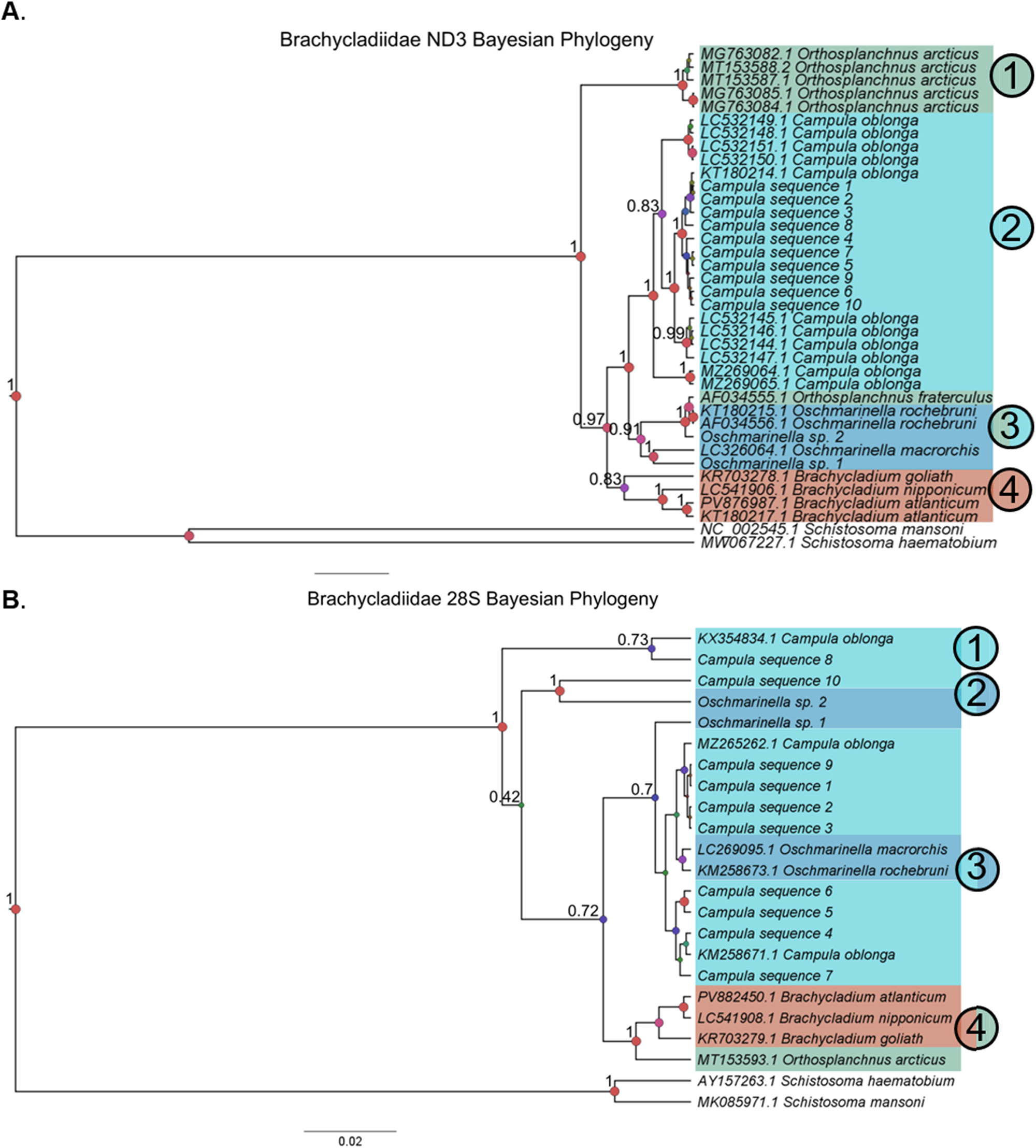
Bayesian phylogenetic analysis using both the mtND3 gene and the 28S rRNA gene produced differing topologies (Figure 1A and B). The 28S Bayesian phylogeny (Figure 1B) showed the occurrence of polyphyly within the genera Oschmarinella and Orthosplanchnus. Clade 1 is monophyletic, consisting of parasites belonging to the genus Campula. However, clade 2 comprises 1 parasite belonging to the genus Oschmarinella and another belonging to the genus Campula. Similarly, clade 3 contains parasites belonging to the genera Campula and Oschmarinella. Finally, clade 4 contains samples within the genus Brachycladium. The clades were not particularly well supported, with posterior probability values ranging between 0.42 and 0.73.
Phylogenetic reconstruction of the Brachycladiidae with a focus on the campulid parasites of porpoises. (A) Bayesian phylogeny generated using the mtND3 molecular marker. (B) Bayesian phylogeny generated using the 28S rRNA molecular marker. Numbers on clades indicate the designated clade for reference in results section. Support values at nodes represent posterior probability values. Red circles on nodes denote a posterior probability value of 1.

Figure 1 Long description
Two Bayesian phylogenetic trees of the Brachycladiidae family are presented. Panel A shows the phylogeny using the mtND3 molecular marker, while Panel B uses the 28S rRNA marker. Both trees are oriented vertically, with nodes marked by red circles indicating posterior probability values, with a value of 1 highlighted by filled circles. In Panel A, clades are numbered 1 to 4, with clade 1 containing Orthosplanchnus arcticus and Campula oblonga, clade 2 including Campula sequences, clade 3 featuring Campula and Oschmarinella macrochirus and clade 4 comprising Brachycladium goliath and Schistosoma species. Panel B shows a similar structure, with clade 1 containing Campula oblonga, clade 2 with Campula sequences and Oschmarinella, clade 3 with Campula and Oschmarinella macrochirus and clade 4 with Brachycladium and Schistosoma species. Support values at nodes range from 0.42 to 0.83 in Panel A and 0.42 to 0.73 in Panel B, indicating varying levels of support for the clades.
Phylogenetic reconstruction based on the mtND3 molecular marker had higher resolution, with clades supported by posterior probability values greater than 0.8 (Figure 1A). Using this molecular marker, most of the resulting clades are monophyletic. Clade 1 contains sequences within the genus Orthosplanchnus, clade 2 contains sequences within the genus Campula and clade 4 contains sequences within the genus Brachycladium. Clade 3 is polyphyletic, comprising sequences from the genera Oschmarinella and Orthosplanchnus. Analysis revealed the mtND3 gene to have the most phylogenetic power when compared with 28S, given the monophyletic nature of the Bayesian phylogeny generated and the presence of well-defined, well-supported monophyletic clades. Thus, this molecular marker was selected for further analysis.
Detection of speciation events within Campula oblonga
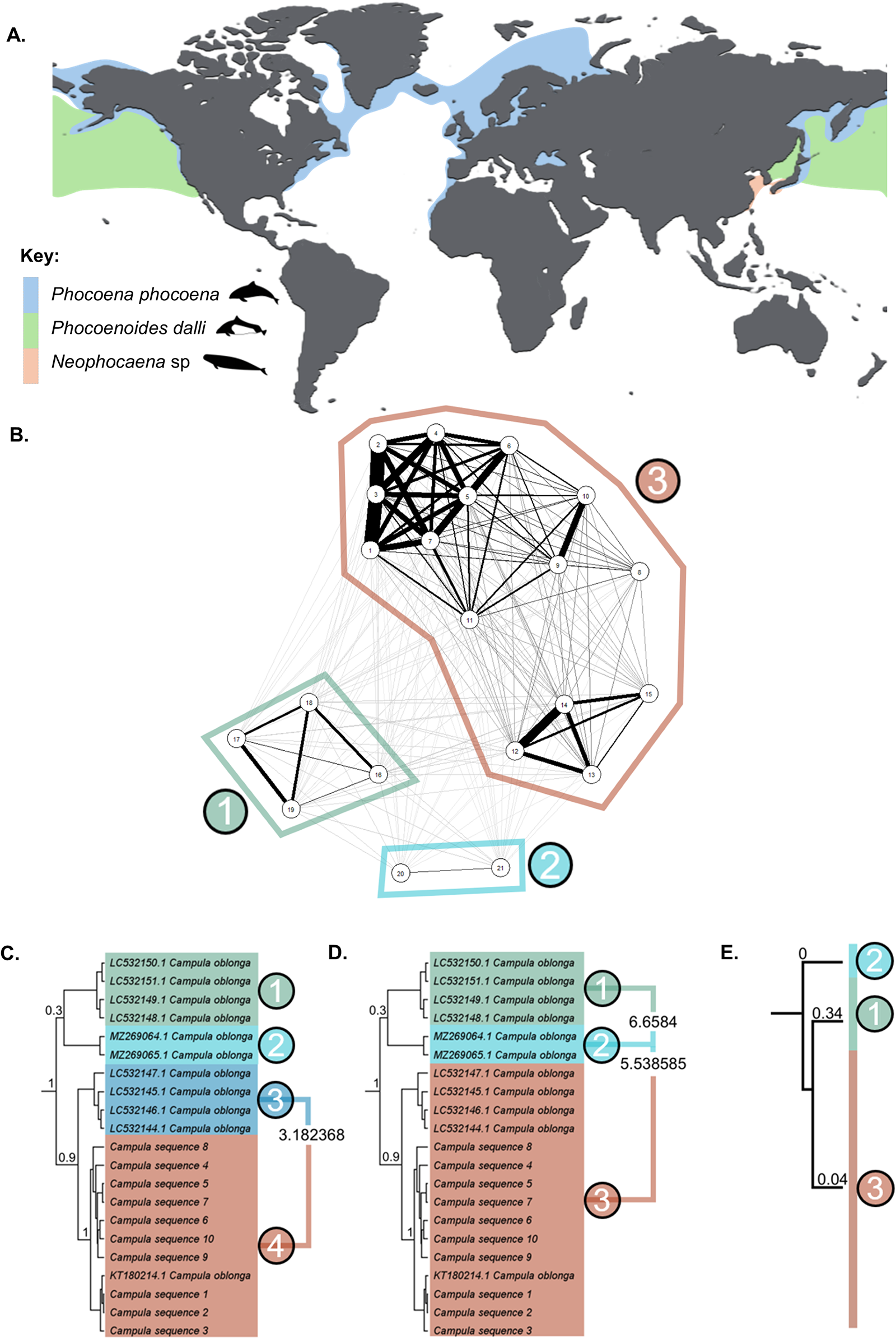
The distribution of different Campula species was shown to correspond to the distribution of different definitive host species (Figure 2A). Campula species 1 and 2 where shown to be restricted to the Pacific Ocean, along with their respective hosts, North Pacific harbour porpoises and finless porpoises. Campula species 3 is found in both the North Atlantic, in North Atlantic harbour porpoises, and in the North Pacific, in Dall’s porpoises. Visualization of a pairwise distance (d) tanglegram (Figure 2B) showed the presence of 4 groups, corresponding to the individual parasite’s cetacean host species (Supplementary Table 3). Cluster 4 corresponds to clade 4 (Figure 2C), containing Campula sequences from North-Atlantic harbour porpoises; cluster 3 corresponds to clade 3 (Figure 2C), containing Campula sequences from Dall’s porpoises; cluster 2 corresponds to clade 2 (Figure 2C), containing Campula sequences from East-Asian finless porpoises; and cluster 1 corresponds to clade 1 (Figure 2C), containing Campula sequences from North-Pacific harbour porpoises.
The association between host biogeography and the divergence of the genus Campula: (A) Distribution of observed Campula spp. With the distribution of definitive hosts also shown. (B) Tanglegram of Campula spp. MtND3 sequences. (C) Output of the first round of K/θ analyses of pairwise distances. Support values on tree branches show posterior probability values. (D) Output of the second round of K/θ analyses. Support values on tree branches show posterior probability values. (E) Output of PTP and SPARTexplorer ABGD analysis to strengthen speciation analysis. Support values on tree branches show Bayesian support values.

Figure 2 Long description
The infographic is arranged top to bottom across five parts labeled A through E. Part A is a world map showing the geographic distribution of three host species. The key lists Phocoena phocoena, Phocoenoides dalli and Neophocaena sp. Highlighted regions appear across the North Atlantic, North Pacific and parts of coastal Asia. Part B is a tanglegram connecting Campula spp. MtND3 sequences on the left to corresponding host sequences on the right. Three numbered groups are visible: group 1 at the top right, group 2 at the lower left and group 3 at the top right of the right-side tree. Group 1 contains a dense cluster of interconnecting lines between nodes. Group 2 and group 3 show fewer and more spread-out connections. Line thickness varies across the tanglegram, with thicker lines concentrated within group 1. Part C is a tree diagram showing the output of the first round of K/theta analyses with pairwise distances. Support values on branches show posterior probability values. The value 3.182368 is labeled on a branch separating a cluster of sequences labeled Campula oblonga from a group of sequences labeled Campula sequence followed by numbered identifiers. Sequence labels visible include LC302135.1, LC302151.1, LC302149.1, LC302148.1, MC280965.1, LC302145.1, LC302149.1, LC302147.1 and KT180214.1. Two numbered group outlines are present: group 1 enclosing the Campula oblonga sequences at the top and group 3 enclosing the lower Campula sequences. Part D is a tree diagram showing the output of the second round of K/theta analyses. Support values on branches show posterior probability values. The value 6.6584 is labeled on an upper branch and 5.535585 is labeled on a lower branch. The same sequence labels appear as in Part C. Three numbered group outlines are present corresponding to groups 1, 3 and an additional group 4 visible at the lower portion of the tree. Part E is a simplified tree diagram showing the output of PTP and SPARTexplorer ABGD analysis. Support values on branches show Bayesian support values. The value 0.34 is labeled on the upper branch and 0.04 is labeled on the lower branch. Two numbered groups are marked: group 1 at the top and group 2 below it.
Construction of a Bayesian phylogeny based on the mtND3 gene fragment resulted in the formation of well-supported clades (posterior probability >0.8), grouping together parasites from different host species and sampling locations (Figure 2C and D). Initial analyses showed the resultant K/θ ratio between clades 3 and 4 (Figure 2C) to be <4 (3.182368), resulting in the parasites in those clades being considered the same species, and the clades being combined to form a super clade. Subsequent analysis (Figure 2D) showed the K/θ ratio between the super-clade (clade 3) and clade 2 was >4 (5.38585), suggesting that the clades in comparison contain different species. Finally, the K/θ ratio between clades 1 and 2 was found to be >4 (6.6584) (Figure 2B). These results were supported by ABGD analysis, which revealed the same distinct species groupings as the K/θ ratio, in 3 distinct subsets with a p(prior) value of 0.007743. However, even though PTP analyses did produce the same overall tree topologies as seen in previous analyses, the support for the lineages was low (Figure 2E). Yet, despite the incongruence, all analyses did indicate the occurrence of three separate species within the dataset: one Campula spp. infecting harbour porpoises in European waters and Dall’s porpoise in Asian waters; another Campula spp. infecting harbour porpoises in Asian waters; and a final Campula spp. infecting finless porpoises in Asian waters.
Co-phylogeny between Campula and its Phocoenidae hosts
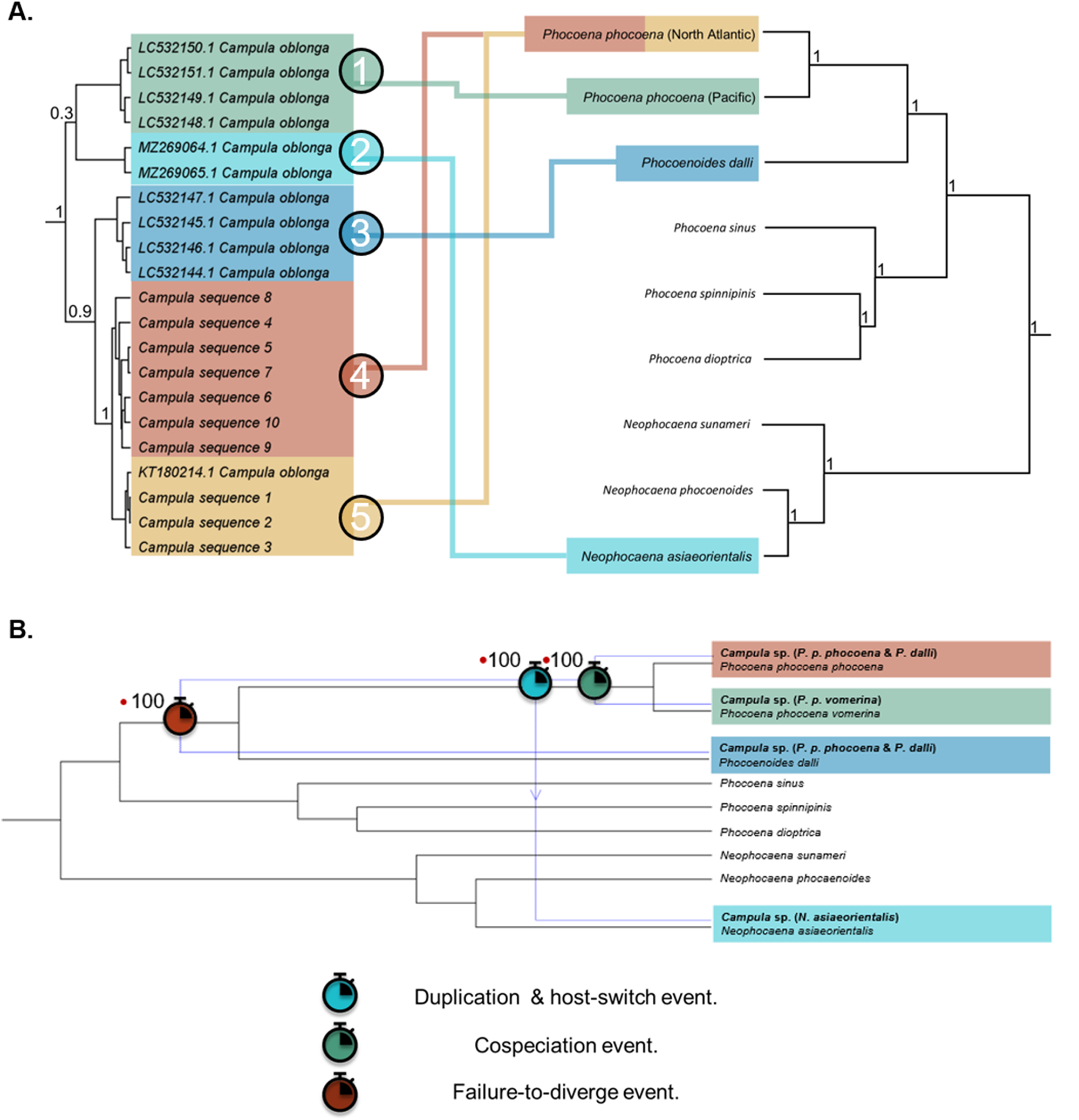
Within the genus Campula, well-supported divergence was observed when comparing the mtND3 molecular marker. Phylogenetic structure appears to correspond with the definitive host species from which the parasite was sampled (Figure 3A). Clade 1 contained sequences from parasites retrieved from North-Pacific harbour porpoises on the coastline of Japan, clade 2 from East-Asian finless porpoises on the coastline of South Korea, clade 3 from Dall’s porpoises on the coastline of Japan and 1 solitary North-Pacific harbour porpoise on the coastline of Japan, and clade 4 from North-Atlantic harbour porpoises on the coastline of the Netherlands and the United Kingdom. Phocoenidae phylogenetic reconstruction using complete mitochondrial genome sequences mirrored the species phylogeny as described by Ben Chehida et al. (Reference Ben Chehida, Thumloup, Schumacher, Harkins, Aguilar, Borrell, Ferreira, Rojas-bracho, Robertson, Taylor, Víkingsson, Weyna, Romiguier, Morin and Fontaine2020). Three of the documented hosts of C. oblonga (P. p. phocoena in the North Atlantic, P. p. vomerina in the North Pacific, and Ph. dalli (also in the North Pacific) grouped closely within the Bayesian phylogeny, indicating genetic similarity. Interestingly, Ph. dalli appeared to be phylogenetically bracketed between species of Phocoena and had a paraphyletic relationship with both subspecies of P. p. phocoena (Figure 3A). However, the final host, Neophocaena asiaeorientalis, sat within a distinct Neophocaena clade, indicating a greater degree of genetic difference (Figure 3A). The Jane 4.0 co-phylogeny analyses revealed there to be 3 distinct evolutionary events between the Campula and porpoise phylogeny, with each of the events being supported 100% of the time within the analyses. Deep within the Phocoena/ Phocoenoides clade, the co-phylogeny analyses revealed a failure-to-diverge event with the same lineage of Campula infecting the ancestral species of Ph. dalli and P. phocoena. Similarly, a co-speciation event between Campula lineages infecting P. p. phocoena and P. p. vomerina was identified to have occurred as the two porpoise groups diverged. Finally, a duplication and host switch event allowed Campula infecting ancestral P. phocoena to infect N. asiaeorientalis (Figure 3B).
Evolution of parasite-host interactions between the genus Campula and porpoise definitive hosts. (A) Co-phylogeny between Campula spp. and their respective definitive Phocoenidae hosts. Support values on nodes of both parasite and host trees represent posterior probability values. (B) Output of Jane analyses, identifying co-evolutionary events. The cophylogenetic tree output from Jane 4.0 comes complete with support values, in the form of the percentage of solutions in which a specific event of the parasite tree is mapped to a given location on the host tree. Nodes are also colour-coded, with green indicating that a better placement of a divergence event exists, orange indicating that an equally good placement exists, and red indicating that all other placements are worse.

Figure 3 Long description
The diagram consists of two panels labeled A and B. Panel A displays a co-phylogeny between Campula species and their respective Phocoenidae hosts. The left side shows a phylogenetic tree of Campula sequences, labeled from LC523750.1 to KT374281.1, grouped into five clades. Clade 1 includes sequences from Campula oblonga, while clades 2 to 5 contain various Campula sequences. The right side shows a phylogenetic tree of porpoise hosts, including Phocoena phocoena (North Atlantic and Pacific), Phocoenoides dalli and Neophocaena asiaeorientalis. Lines connect corresponding clades of Campula and porpoise hosts, indicating evolutionary relationships. Support values are shown on nodes, representing posterior probability values. Panel B illustrates the output of Jane analyses, identifying coevolutionary events. Nodes are color-coded: green for better placement, orange for equally good placement and red for worse placement. Three distinct evolutionary events are marked: duplication and host-switch event, cospeciation event and failure-to-diverge event. These events are supported 100 percent within the analyses, with lines connecting specific Campula lineages to porpoise hosts, indicating the evolutionary interactions between them.
Estimation of divergence times between Campula lineages
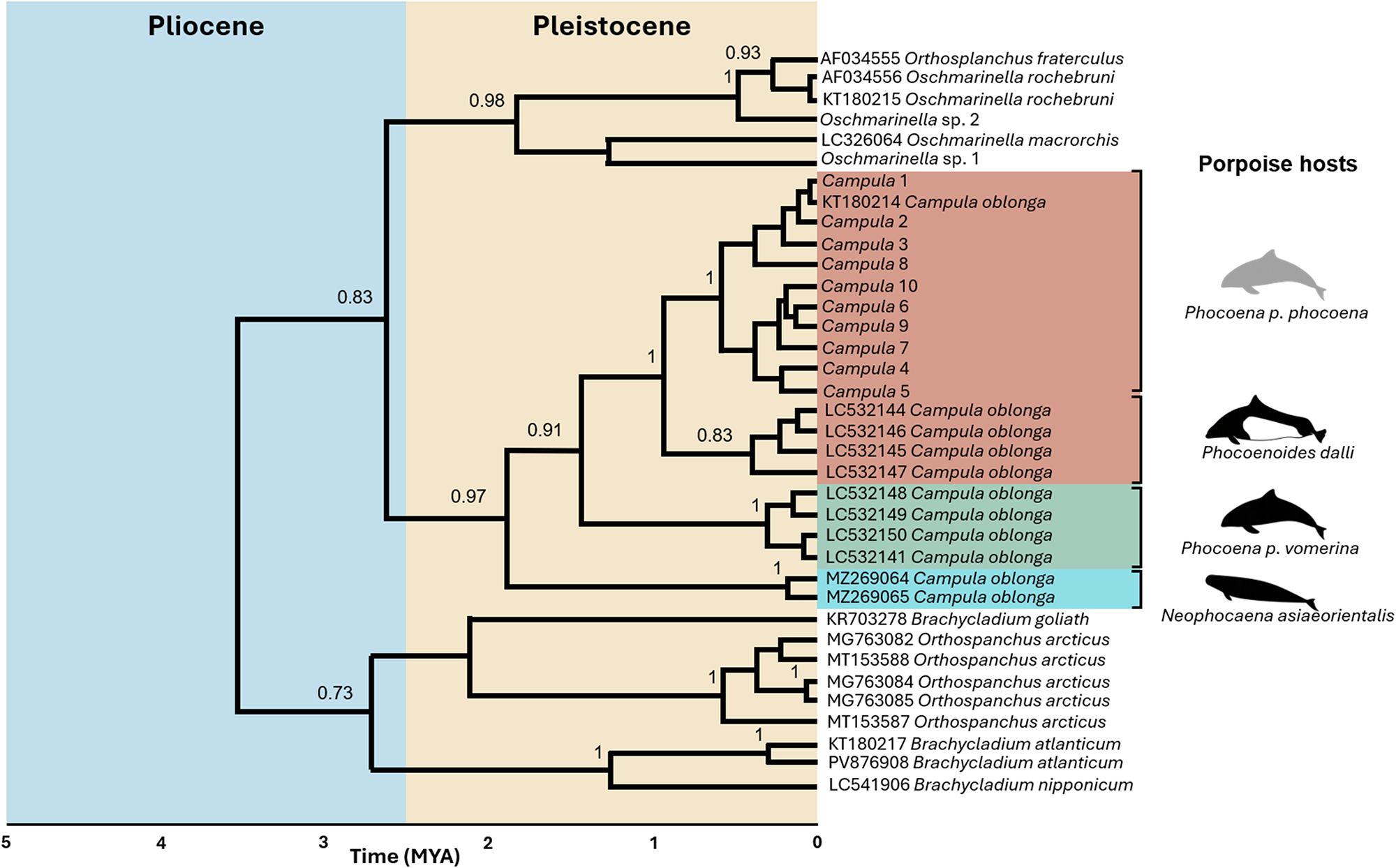
Generation of a molecular clock (Figure 4) allowed for estimation of divergence times within lineages of Campula spp with all effective sample size (ESS) values greater than 300 (ESS > 35 000), providing support for the analyses (Supplementary Table 5). When plotted as a histogram, the frequency of posterior values across molecular clock bootstraps showed a normal distribution (Supplementary Figure 1). The divergences in Campula appear to have occurred over a 1.8–2-million-year period. The cospeciating event was estimated to have occurred approximately 1.5 million years ago. The failure-to-diverge event was estimated to have occurred approximately 0.8 million years ago. However, whilst the Campula species found to be infecting N. asiaeorientalis appears most basal to the group, it was not possible to accurately predict the timing of the host duplication and swapping event. The divergence times across brachycladiid parasites indicate a major diversification event approximately around 2.6–2.7-million-year period, with the divergence of Campula and Oschmarinella. Each of the brachycladiid genera, including Brachycladium, Orthosplanchnus and Oschmarinella, appears to have undergone substantial diversification events over a 1.8–2.2-million-year period, in a similar way to Campula.
Molecular clock analyses of Brachycladiidae showing the divergence times within the genus Campula. Brachycladiid sequences outside the genus Campula were utilized to provide context within the family. Molecular clock analysis was run using a Gamma Site Model, with a TN93 substitution model. An optimized relaxed clock was used, with a mean clock rate of 0.035. An MRCA prior was added, with the Schistosoma mansoni and Schistosoma haematobium sequences selected. A log-normal distribution was selected for the MRCA prior, with an M value of 1.62 and an S value of 0.09. All other prior values were left as default. The MCMC was set to run with a chain length of 100 000 000. Support values at nodes show posterior probability values, and hosts for each lineage of Campula is highlighted.

Figure 4 Long description
A phylogenetic tree illustrates the divergence times of Campula species, with a timeline spanning from the Pliocene to the Pleistocene epochs. The horizontal axis represents time in million years ago (MYA), ranging from 0 to 5. The tree is divided into two main sections: the Pliocene on the left and the Pleistocene on the right. Branches are labeled with posterior probability values, indicating the confidence of each divergence event. The tree includes various putative Campula species, with specific lineages highlighted in different colors to indicate their porpoise hosts. The porpoise hosts are represented by silhouettes on the right, labeled as Phocoena phocoena, Phocoenoides dalli and Neophocaena asiaeorientalis. The tree shows the evolutionary relationships and divergence times among the species, with notable nodes marked with probability values such as 0.83, 0.73, 0.97 and others. The diagram provides insights into the evolutionary history and host associations of the Campula species.
Discussion
Results show that the cosmopolitan liver fluke, Campula oblonga, is in fact a complex of putative cryptic species whose divergence reflects the evolutionary histories and ecological traits of their cetacean hosts. This indicates that parasite speciation can occur across both spatial and host-specific scales, highlighting the value of parasite lineages as independent markers of host population structure and long-term isolation (Marigo et al., 2015). Understanding these evolutionary relationships is increasingly important from a conservation and population-health perspective, as patterns of parasite divergence can uncover hidden host vulnerabilities and illuminate historical processes that may not be detectable through host genetics alone (Whiteman and Parker, Reference Whiteman and Parker2004, Nieberding and Olivieri, Reference Nieberding and Olivieri2007). Together, these insights underscore the broader significance of integrating parasite phylogenies into assessments of cetacean ecology, evolution and conservation planning. The close nature of the relationship between parasites and their hosts has resulted in the opportunity for parasites to be used as indicators of host speciation and divergence (Whiteman and Parker, Reference Whiteman and Parker2004; Nieberding and Olivieri, Reference Nieberding and Olivieri2007). In the case of the Brachycladiidae family, this has the potential to advance the field of cetacean conservation.
In evolutionary and taxonomic studies of Platyhelminthes mitochondrial markers have typically been used for species identification, molecular barcoding, phylogeography and resolving deep evolutionary relationships (Le et al., Reference Le, Blair and McManus2000; Shimada et al., Reference Shimada, Hiruta, Takahoshi and Kajihara2023). A combination of rapid evolutionary rate, lack of recombination and high copy number means that mitochondrial markers offer higher resolution than nuclear genes for identifying closely related or cryptic species (Chan et al., Reference Chan, Chaisiri, Saralamba, Morand and Thaenkham2021). When selecting a molecular marker, because mtCOX1 is relatively conserved, faster-evolving mtNADH genes, including mtND3, are highly valued for distinguishing closely related parasite species, cryptic species and studying population genetics (Brabec et al., Reference Brabec, Scholz, Kráľová-hromadová, Bazsalovicsová and Olson2012). This study first assessed the performance of two molecular markers, comparing the phylogenetic resolution of the mitochondrial mtND3 marker with the ribosomal 28S marker and their ability to distinguish species within the Brachycladiidae. Cryptic diversity and identification challenges were evident, as parasites initially identified morphologically as Campula oblonga from a Sowerby’s beaked whale were reassigned as Oschmarinella following molecular analysis. Both genera share many morphological features, and are liver flukes of cetaceans. The genus Oschmarinella has been observed within killer whales (Gibson and Bray, Reference Gibson and Bray1997), striped dolphins (Stenella coeruleoalba) (Mateu et al., Reference Mateu, Raga and Aznar2011) and beaked whales (Nakagun et al., Reference Nakagun and Kobayashi2020). Results of this study showed that the mtND3 molecular marker was more phylogenetically informative than the 28S molecular marker when investigating brachycladiid parasites, producing well-supported, monophyletic phylogenetic trees.
However, the Brachycladiidae family remains taxonomically challenging, particularly when considering the relationship between the genera Oschmarinella and Orthosplanchnus. Comparison of mtND3 sequences produced a monophyletic Oschmarinella clade, whereas the 28S molecular marker split the genus into 2 clades, nested within Campula, suggesting unresolved relationships between these genera. Orthosplanchnus (Kremnev et al., Reference Kremnev, Gonchar, Krapivin, Uryadova, Miroliubov and Krupenko2021) also produced polyphyletic clades, consistent across both molecular markers investigated. Comparison of mtND3 sequences led to parasites within the genus Orthosplanchnus largely forming a monophyletic clade, with one individual positioned within the Oschmarinella clade. Prior studies have shown both of these genera grouping together in a single clade when using mtND3 sequences (Fraija-Fernández et al., Reference Fraija-Fernández, Aznar, Fernández, Raga and Fernández2016), whereas here a greater degree of phylogenetic separation is observed. When using the 28S molecular marker, the sole representative of the genus Orthosplanchnus is grouped in a clade with the genus Brachycladium. Given that available sequences include both adult Orthosplanchnus from seals and larval stages from intermediate hosts, further work is required to clarify species boundaries and evolutionary relationships within these genera.
The majority of species delimitation analyses on trematodes are carried out using mitochondrial barcoding, often using a single-gene molecular marker. The most ubiquitous molecular markers available for the Brachycladiidae family are mitochondrial (n = 284) when compared with nuclear (n = 112), of which the majority contain mtND3 sequences (n = 169), followed only by mtCOX1 sequences (n = 111). Specifically, 13 of the total 14 sequences available for Campula oblonga are represented by mtND3 sequences. Thus, to maximize the dataset for this study and to allow for the most impactful analyses to be carried out, mtND3 was selected as the most appropriate molecular marker. This was also the first study on the Brachycladiidae that employed three distinct species delimitation analyses to test the validity and ability of mtND3 to distinguish between species. Both the K/Ɵ ratio and the ABGD analysis were congruent, supporting species delimitation and indicating the occurrence of distinct cryptic species within the Campula. However, the lack of support from the PTP analyses did highlight the uncertainty in defining species boundaries within the dataset. Nonetheless, the concordance seen between the K/Ɵ ratio and the ABGD outputs does strongly indicate the occurrence of putative cryptic species, but also illustrates the need for further genome-wide markers to truly disentangle the association between species within Campula and across the brachycladiids (Marigo et al., Reference Marigo, Cunha, Bertozzi, Souza, Rosas, Cremer, Barreto, de Oliveira, Cappozzo, Valente, Santos and Vicente2013; Fraija-Fernández et al., Reference Fraija-Fernández, Aznar, Fernández, Raga and Fernández2016; Ebert et al., Reference Ebert, Müller, Marigo, Valente, Cremer and da Silva2017; Barnett and Miller, Reference Barnett and Miller2018; Shiozaki et al., Reference Shiozaki, Amano, Fernández and Fraija-Fernández2019; Kremnev et al., Reference Kremnev, Gonchar, Krapivin, Knyazeva and Krupenko2020; Nakagun and Kobayashi, Reference Nakagun and Kobayashi2020; Felipe-Jiménez et al., Reference Felipe-Jiménez, Fernández, de Quirós, Arregui-gil, Puig-lozano, Arbelo and Sierra2023; Kim et al., Reference Kim, Youn, Lee, Lee, Kim, Kang, Choe and Georgieva2023).
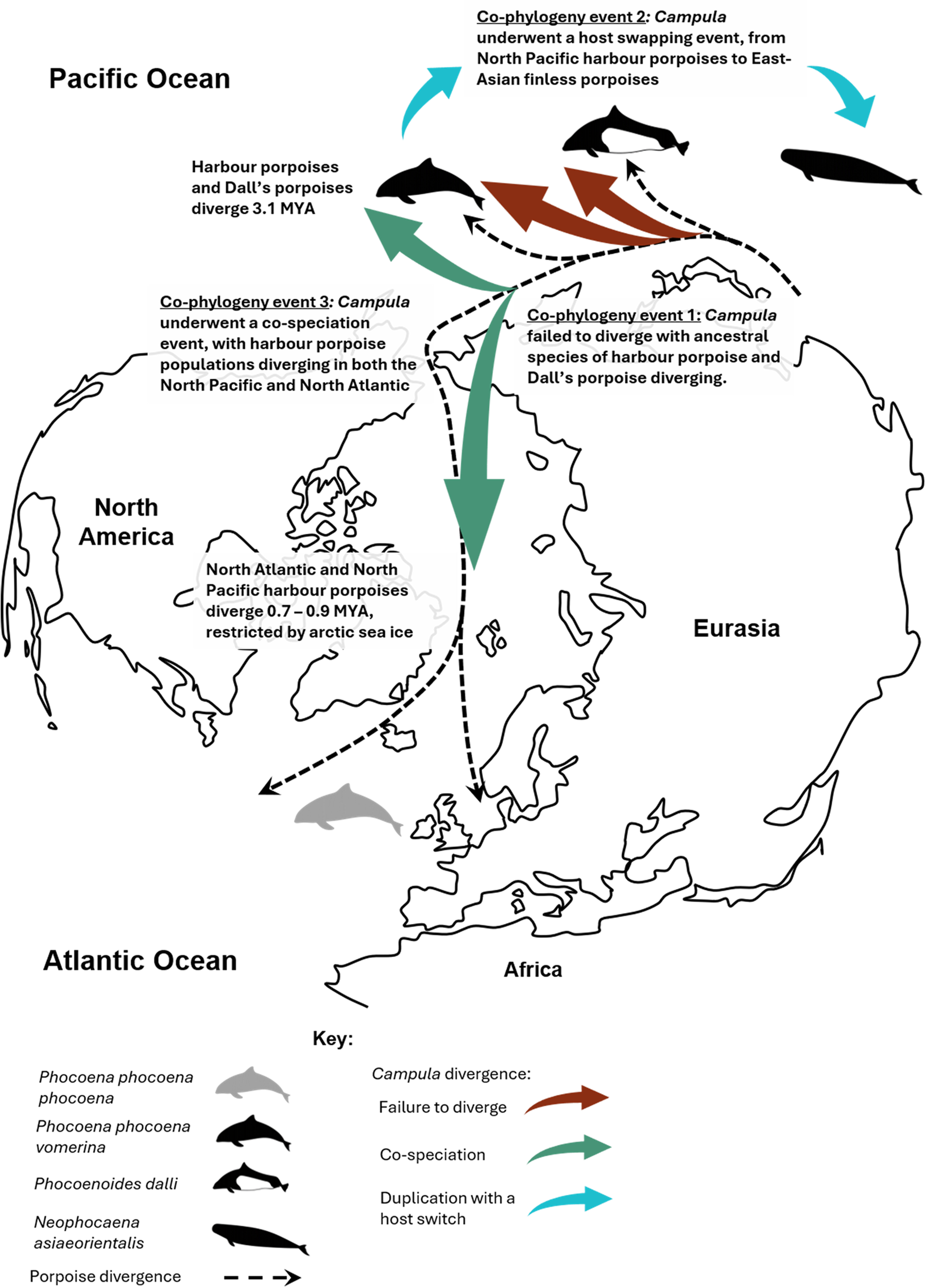
Although Campula has traditionally been considered a single species (C. oblonga), based on morphological characteristics (Kim et al., Reference Kim, Kang, Lee, Opara, Bia, Lee, Lee, Kim, Lee, Kim, Kim, Do, Kim, Lee, Lee, Park, Kim, Choe and Youn2025), sequence data revealed previously unrecognized diversity within the genus. Whilst cryptic fauna in marine systems is well-documented in parasites of marine fishes (Jousson et al., Reference Jousson and Bartoli2001; McNamara et al., Reference McNamara, Miller and Cribb2014; Gilardoni et al., Reference Gilardoni, Etchegoin, Cribb, Pina, Rodrigues, Diez and Cremonte2020), this study provides the first evidence of such patterns in parasites of cetaceans, highlighting overlooked diversity in helminths of top predators in marine systems and associated parasite fauna. Similarly, species complexes are equally common in parasites, with phylogenetically similar, morphologically plastic, host-sharing parasites making differentiation difficult (Auld and Tinsley, Reference Auld and Tinsley2014). Consequently, it was hypothesized that the Campula genus does not solely consist of Campula oblonga, but instead three different putative species. Campula parasites appear to have co-evolved in conjunction with their cetacean definitive hosts, with this finding corroborated by previously published work investigating co-evolution across the whole Brachycladiidae family (Fraija-Fernández et al., Reference Fraija-Fernández, Aznar, Fernández, Raga and Fernández2016). Host speciation and divergence have been driven by changes in oceanic conditions, resulting in isolation of cetacean populations (Louis et al., Reference Louis, Fontaine, Spitz, Schlund, Dabin, Deaville, Caurant, Cherel, Guinet and Simon-bouhet2014; Ludt and Rocha, Reference Ludt and Rocha2014; Fraija-Fernández et al., Reference Fraija-Fernández, Aznar, Fernández, Raga and Fernández2016; Ben Chehida et al., Reference Ben Chehida, Thumloup, Schumacher, Harkins, Aguilar, Borrell, Ferreira, Rojas-bracho, Robertson, Taylor, Víkingsson, Weyna, Romiguier, Morin and Fontaine2020). Brachycladiidae phylogenetic structuring confirms this, suggesting divergence in parasites infecting near-shore and offshore definitive host populations. This reflects host divergence to exploit differing environmental niches, as shown in the Phocoenidae hosts of the genus Campula (Ben Chehida et al., Reference Ben Chehida, Thumloup, Schumacher, Harkins, Aguilar, Borrell, Ferreira, Rojas-bracho, Robertson, Taylor, Víkingsson, Weyna, Romiguier, Morin and Fontaine2020) (Figure 5). Changes in oceanic conditions may have driven gradual divergence of cetacean host species, resulting in biological and ecological isolation of host populations, and subsequently parasite populations (Kebke et al., Reference Kebke, Samarra and Derous2022). As cetacean definitive hosts largely dictate brachycladiid distribution (Fraija-Fernández et al., Reference Fraija-Fernández, Aznar, Fernández, Raga and Fernández2016), with host populations no longer mixing, parasite population mixing would also decrease, resulting in loss of gene flow, culminating in parasite speciation. In all cases, parasite divergence was inferred to have occurred after that of the host, consistent with previous evidence that parasite speciation often follows host evolutionary separation, which has been seen in other parasite-host systems such as schistosomes and their ruminant hosts (Jones et al., Reference Jones, Norman, Borrett, Attwood, Mondal, Walker, Webster, Rajapakse and Lawton2020) as well as biting lice and their mammalian hosts (Reed et al., Reference Reed, Light, Allen and Kirchman2007).
Hypothesis of Campula spp. – porpoise co-evolution. The schematic provides a biogeographic perspective of the genus Campula evolution by highlighting the distribution of the Phocoenidae host family. Evidence indicates that Campula originally emerged in the North Pacific as a parasite of the ancestors of the Dall’s porpoise and Pacific harbour porpoise (co-phylogeny event 1). Later, the parasite underwent a host-swapping event utilizing East Asian finless porpoises (co-phylogeny event 2), followed by a co-speciation event as the Atlantic porpoise diverged from the North Pacific porpoise (co-phylogeny event 3).

Figure 5 Long description
The schematic map illustrates the biogeographic perspective of Campula genus evolution, focusing on co-evolution with porpoise hosts. It highlights three co-phylogeny events: Event 1 shows Campula failing to diverge with ancestral species of harbour porpoises and Dall's porpoise diverging. Event 2 depicts a host swapping event from North Pacific harbour porpoises to East-Asian finless porpoises. Event 3 indicates co-speciation with harbour porpoise populations diverging in the North Pacific and North Atlantic. The map includes arrows representing these events and their directions. The key explains symbols: Campula divergence, failure to diverge, co-speciation, duplication with a host switch and porpoise divergence. Geographic regions include the Pacific Ocean, Atlantic Ocean, North America, Eurasia and Africa. Specific porpoise species labeled are Phocoena phocoena phocoena, Phocoena phocoena vomerina, Phocoenoides dalli and Neophocaena asiaeorientalis. The map shows the divergence of North Atlantic and North Pacific harbour porpoises, restricted by the Arctic sea ice, occurring 0.7 to 0.9 million years ago.
Our findings show that parasite evolutionary trajectories can reflect broader patterns in cetacean adaptation to changing marine environments. Harbour porpoises and Dall’s porpoises are estimated to have diverged approximately 3.1 million years ago (Ben Chehida et al., Reference Ben Chehida, Thumloup, Schumacher, Harkins, Aguilar, Borrell, Ferreira, Rojas-bracho, Robertson, Taylor, Víkingsson, Weyna, Romiguier, Morin and Fontaine2020), during the Pleistocene epoch. This divergence could be linked to changing oceanic conditions leading to ecological niche specialization in near-shore and offshore cetacean species (Louis et al., Reference Louis, Fontaine, Spitz, Schlund, Dabin, Deaville, Caurant, Cherel, Guinet and Simon-bouhet2014). This period is characterized by rapid and successive changes in ocean cycling conditions (Ludt and Rocha, Reference Ludt and Rocha2014). The evolutionary history of the Campula parasites of these two lineages shows this also, with divergence estimated to have occurred approximately 1.5 million years ago. Finless porpoise species were estimated to be the first of the Phocoenidae family to diverge, approximately 4 million years ago (Rosel et al., Reference Rosel, Haygood and Perrin1995; Fajardo-Mellor et al., Reference Fajardo-Mellor, Berta, Brownell, Boy and Goodall2006; Ben Chehida et al., Reference Ben Chehida, Thumloup, Schumacher, Harkins, Aguilar, Borrell, Ferreira, Rojas-bracho, Robertson, Taylor, Víkingsson, Weyna, Romiguier, Morin and Fontaine2020). This was during the Pliocene epoch, a period characterized by gradual ocean condition changes from stable, warm environments to colder glacial conditions, driven by tectonic events (Karas et al., Reference Karas, Nürnberg, Bahr, Groeneveld, Herrle, Tiedemann and de Menocal2017). An estimated 2 million years later, a duplication-and-host switch event occurred, allowing Campula sp. infecting Phocoenidae to infect ancestral species of finless porpoises as a novel definitive host. Dall’s porpoises and harbour porpoises are estimated to have diverged approximately 3.1 million years ago (Ben Chehida et al., Reference Ben Chehida, Thumloup, Schumacher, Harkins, Aguilar, Borrell, Ferreira, Rojas-bracho, Robertson, Taylor, Víkingsson, Weyna, Romiguier, Morin and Fontaine2020), and a failure-to-diverge event of their Campula parasites is timed at approximately 0.8 million years ago (Figure 5). This corresponds to timings of divergence between subpopulations of North Atlantic harbour porpoises and North Pacific harbour porpoises, estimated to have occurred approximately 0.86 million years ago (Ben Chehida et al., Reference Ben Chehida, Thumloup, Schumacher, Harkins, Aguilar, Borrell, Ferreira, Rojas-bracho, Robertson, Taylor, Víkingsson, Weyna, Romiguier, Morin and Fontaine2020). Populations of harbour porpoise and Dall’s porpoise became separated either ecologically or geographically, most likely through sea-ice restricting migration through the Arctic basin approximately 0.7–0.9 million years ago (Louis et al., Reference Louis, Fontaine, Spitz, Schlund, Dabin, Deaville, Caurant, Cherel, Guinet and Simon-bouhet2014; Ben Chehida et al., Reference Ben Chehida, Thumloup, Schumacher, Harkins, Aguilar, Borrell, Ferreira, Rojas-bracho, Robertson, Taylor, Víkingsson, Weyna, Romiguier, Morin and Fontaine2020) and changing ocean cycling conditions. This led to the development of distinct porpoise species (Ben Chehida et al., Reference Ben Chehida, Thumloup, Schumacher, Harkins, Aguilar, Borrell, Ferreira, Rojas-bracho, Robertson, Taylor, Víkingsson, Weyna, Romiguier, Morin and Fontaine2020), with the present study showing that the Campula parasites within them failed to follow suit. Wide-ranging, open-ocean Dall’s porpoise populations could plausibly share prey with harbour porpoise within the same body of water, allowing for panmixia of parasite populations (Nichol et al., Reference Nichol, Hall, Ellis, Stredulinsky, Boogaards and Ford2013) (Figure 5). Ultimately, this would lead to insufficient genetic variation between parasites infecting each definitive host, resulting in the parasites being considered the same species (Gómez et al., Reference Gómez, Ashby and Buckling2015).
Parasite genetic information has the potential to be used to recreate the genealogy and evolutionary history of their hosts, owing to shared evolutionary histories (Whiteman and Parker, Reference Whiteman and Parker2004; Nieberding and Olivieri, Reference Nieberding and Olivieri2007). Phylogenetic analysis of marine trematodes within the genus Microphallus was used to reconstruct the historical biogeographic processes associated with their marine bird hosts, illustrating host switching, range expansion and isolation linked to Pliocene-Pleistocene glacial cycles (Galaktionov et al., Reference Galaktionov, Blasco-costa and Olson2012), similar to the processes hypothesized here to be affecting the relationship between Campula and its porpoise hosts. Thus, it could be argued that one potential use of genetic variation in Brachycladiidae parasites is the monitoring of host cetacean populations. Within marine environments, parasite genotyping has been used to differentiate between populations of anadromous migratory fish (Mackenzie, Reference MacKenzie2002; Criscione et al., Reference Criscione, Poulin and Blouin2005), but within cetaceans, variation in parasite genotypes has been found to be insufficient to differentiate between source populations of highly mobile hosts (Marigo et al., 2015). The present study, however, makes a case for potential differentiation in parasite genotypes in parasites infecting hosts with more restricted distributions. Whilst samples in this study were also isolated geographically, it remains to be seen whether parasites occurring in sympatric hosts with low mobility and high locality specificity exhibit the same levels of genetic variation, and so may be used to differentiate between source populations of stranded or bycaught cetaceans. Divergence timings indicate mixing between ancestral and emergent novel species of host populations, and that parasite divergence only occurred when host population mixing dropped and respective host species became isolated. Thus, a combination of geographic and biological isolation events, Phocoenidae speciation to exploit different ecological niches and environmental factors, drove Phocoenidae definitive host populations apart (Ben Chehida et al., Reference Ben Chehida, Thumloup, Schumacher, Harkins, Aguilar, Borrell, Ferreira, Rojas-bracho, Robertson, Taylor, Víkingsson, Weyna, Romiguier, Morin and Fontaine2020), ultimately driving the divergence of Campula. Speciation and divergence within the genus Campula appear linked to host speciation and divergence, occurring through the formation of physical barriers to gene flow, due to changing global climate and ocean cycling conditions.
Although the current study was based on small sample sizes and short fragments of only two molecular markers, the analyses presented here represent the most comprehensive assessment currently possible with the available data on Campula. Similarly, the study provides an up-to-date framework for the understanding of parasite speciation and divergence in cetaceans. Reliance on single mitochondrial markers could confound species boundaries through the effects of population structure, introgression or even selection; however, the results of this study provide a robust foundation and approach for generating testable hypotheses regarding parasite diversification and co-evolution with their marine mammal hosts. With the continued advancement of sequencing technologies and bioinformatic approaches, future studies incorporating larger sample sizes, multiple markers and even genomic datasets will enable more rigorous evaluation of species relationships within the Brachycladiidae and their evolutionary association with their hosts.
The findings of this study highlight the importance of integrating molecular data with traditional morphological approaches when identifying brachycladiid parasites, particularly in groups with limited distinguishing morphological features. Furthermore, this work highlights the utility of archive samples in molecular epidemiological, ecological and evolutionary studies. The molecular approaches used in this study highlight the shortfalls of relying solely on morphological information to identify brachycladiid parasites, especially with cryptic speciation being such a well-documented phenomenon in parasites (Auld and Tinsley, Reference Auld and Tinsley2014; Cháves-González et al., Reference Cháves-González, Morales-calvo, Mora, Solano-barquero, Verocai and Rojas2022). This study highlighted, for the first time, cryptic speciation in the brachycladiid genus Campula, when utilizing the mtND3 molecular marker. Divergence among lineages appears linked to the evolutionary histories and ecological traits of their cetacean hosts, highlighting the potential for parasite genotypes to act as proxies for host population structure and evolutionary change. These findings underscore the value of integrating molecular data into brachycladiid taxonomy and emphasize the broader conservation relevance of parasite evolutionary history. Further research across additional parasite taxa and host populations is needed to determine how widespread these patterns are and to refine their ecological and conservation applications. Additionally, building on the use of the mtND3 gene to identify species within the Brachycladiidae family, the possibility of extracting eggs from faecal samples or developing eDNA-based techniques to remotely sample brachycladiid and other cetacean-infecting parasites is exciting and deserves attention, with unexplored potential to measure the diversity of parasites in marine mammals, without the requirement for cetacean mortality and subsequent post-mortem investigations.
Supplementary material
The supplementary material for this article can be found at https://doi.org/10.1017/S0031182026102637.
Data availability statement
All DNA sequence data used in this study are available to readers on GenBank (GenBank Overview), and accession numbers are provided within the manuscript.
Acknowledgements
The authors thank the Natural History Museum sequencing facility for undertaking the Sanger sequencing detailed within this study. The authors also thank Ruby Wagensveld-van den Dikkenberg from Utrecht University, Netherlands, for her administrative support in providing parasite specimens and data.
Author contributions
S.P.L., T.L., S.M. and N.F. conceived the project. K.B., T.B. and S.P.L. undertook the data gathering. K.B. undertook the experimental work and developed the project. L.I. and L.v.S. provided samples and were responsible for curation of the material. K.B., T.L. and S.P.L. undertook data analyses. K.B. was responsible for synthesis. K.B. and S.P.L. were responsible for writing the original draft. K.B., T.L., S.M., N.F., L.I., L.v.S. and S.P.L. all read and edited the original and final drafts of the M.S. S.P.L., T.L., S.M., N.F. were responsible for supervision.
Financial support
The authors kindly thank Scotland’s Rural College (SRUC), Scotland, for funding this work as part of the first author’s PhD programme.
Competing interests
The authors declare there are no conflicts of interest.
Ethical standards
Not applicable.


 Open access

