Background
Cardiothoracic surgery has a 0.3%–5% surgical site infection (SSI) incidence rate, with associated mortality ranging from 10%–47%. Reference Abu-Omar, Kocher and Bosco1 Open chest with delayed sternal closure (DSC) is a surgical technique in cardiothoracic operations when closure is a risk for hemodynamic compromise or bleeding. Reference Abu-Omar, Kocher and Bosco1,Reference Boeken, Assmann, Mehdiani, Akhyari and Lichtenberg2 Antimicrobial selection and duration in the setting of DSC are varied, with a lack of data supporting the use of prolonged broad-spectrum antimicrobials. The purpose of this study was to assess the SSI incidence after implementation of an institutional guideline optimizing prophylactic antimicrobials from broad-spectrum antimicrobial agents until chest closure to cefazolin with or without vancomycin and micafungin for 24 hours.
Methods
This single-center, quasi-experimental prepost study was conducted at a tertiary academic medical center. Patients who left the operating room (OR) with an open sternum from July 2021 to June 2024 were included. Patients were excluded if they received therapeutic antimicrobials within one week prior to surgery, had an infected cardiac device, endocarditis diagnosed before the procedure, or sternotomy at an outside hospital. Patients were identified using the electronic health record through hospital reporting of postcardiac surgeries. The preintervention cohort included patients who underwent cardiac surgery and returned from the OR with an open sternum from July 2021 to February 2023, while the postintervention cohort included patients from June 2023 to June 2024. A buffer period from March through May 2023 was provided to ensure practice consistency following guideline implementation in April 2023. The guideline recommends limiting postoperative antimicrobials to 24 hours of cefazolin, with the addition of micafungin in heart transplant cases and vancomycin if methicillin-resistant Staphylococcus aureus nares screening is positive. An additional 24 hours of cefazolin could be administered for patients whose chest remained open following instrumentation events, such as chest washouts (Supplemental Table 1). All patients underwent preoperative screening for Staphylococcus aureus, with carriers decolonized using chlorhexidine or mupirocin for 3 days before surgery. Data collected included demographics, past medical history, body mass index, immunosuppression status (HIV, malignancy, recent chemotherapy or radiation, transplant with active immunosuppression, or systemic immunosuppressive medications), procedure type, insulin requirement within 3 days of the OR, and sequential organ failure assessment score within the first 24 hours of intensive care unit (ICU) admission. This study was deemed exempt by the Mass General Brigham Institutional Review Board.
The major end point was the SSI incidence within 90 days of cardiac surgery, as defined by the National Healthcare Safety Network. 3 Minor endpoints included prophylactic antimicrobial selection and duration while the chest remained open (defined as the time from first to last administered dose), acute kidney injury (AKI) within 7 days, Clostridioides difficile (C. difficile) infection within 90 days, hospital length of stay (LOS), ICU LOS, in-hospital mortality, OR duration, duration of open chest, and duration of mechanical ventilation (MV). Additional minor endpoints included the incidence of infection with multidrug-resistant (MDR) organisms within six months, initiation and duration of antimicrobial treatment after the completion of surgical prophylaxis within 90 days, and positive microbial cultures within 90 days of the completion of surgical prophylaxis, including respiratory, blood, and wound/tissue cultures when clinically indicated at the providers’ discretion. AKI was defined as an increase in serum creatinine (SCr) by ≥ 0.3 mg/dL within 48 hours or an increase in SCr to ≥ 1.5 times baseline, known or presumed to have occurred within the prior 7 days. C. difficile was defined as both a positive toxin A/B and glutamate dehydrogenase antigen. MDR organisms were defined using Centers for Disease Control and Prevention (CDC) definitions. 4
Categorical data were analyzed using the χ 2 or Fisher’s exact test as appropriate, and results were expressed numerically (percentage). Continuous data were analyzed using the Mann–Whitney U test or t-test, and results were expressed as medians with interquartile ranges or mean with standard deviation as appropriate. Endpoints with a two-tailed P-value of < .05 were considered statistically significant.
Results
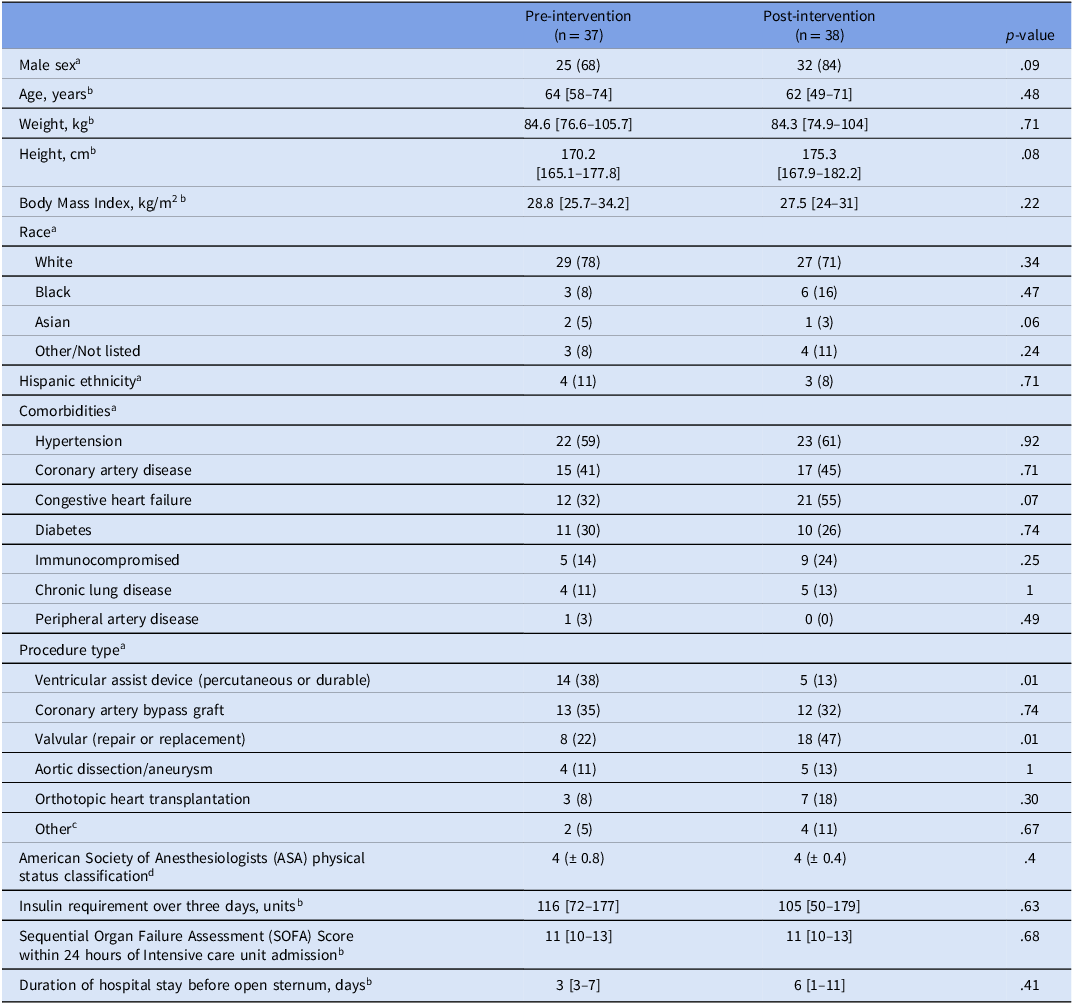
A total of 115 patients were evaluated, with 75 patients meeting inclusion criteria (Supplemental Figure 1). Patients were primarily excluded for receiving therapeutic antimicrobials within one week of surgery. Of those included, 37 patients were in the preintervention group and 38 were in the postintervention group. Baseline characteristics were similar between the two groups, except for the cardiac surgery type, where the preintervention group had more ventricular assist device procedures and fewer valvular procedures (Table 1).
Baseline characteristics

Table 1 Long description
The table compares baseline characteristics of patients in pre-intervention and post-intervention groups, focusing on demographics, comorbidities, and procedure types. It includes data on 37 pre-intervention patients and 38 post-intervention patients. Key variables include age, weight, height, body mass index, race, Hispanic ethnicity, comorbidities such as hypertension and diabetes, and procedure types like ventricular assist device and valvular repair. Notable trends include differences in the types of cardiac surgery performed between the two groups, with the pre-intervention group having more ventricular assist device procedures and fewer valvular procedures. The table also includes p-values to indicate statistical significance.
a Data expressed as n (%).
b Data presented as median [IQR].
c Thrombectomy, thromboendarterectomy, embolectomy, mediastinal mass removal, chest exploration for right ventricular dysfunction, and tamponade.
d Data presented as a mean (± SD).
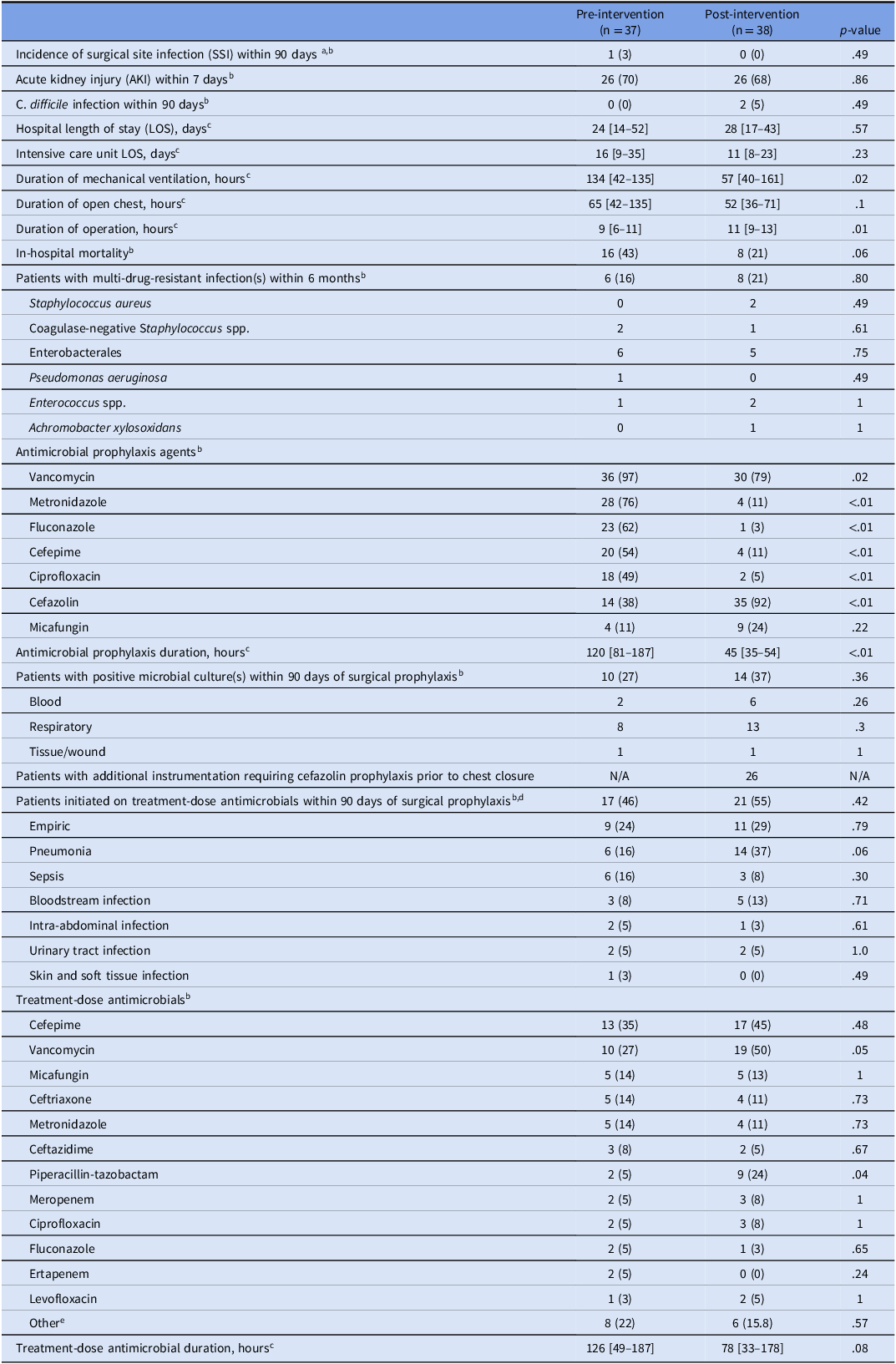
There was no significant difference in SSI incidence between the pre and postintervention groups (3% vs 0%; P = .49). In the postintervention group, there was a significant reduction in the use of vancomycin, metronidazole, fluconazole, cefepime, and ciprofloxacin and a significant increase in the use of cefazolin (Table 2). There was also a significant decrease in the median duration of postoperative prophylaxis antimicrobials (120 vs 45 hours, P < .01). There were no significant differences in the initiation of treatment-dose antimicrobials after prophylaxis, AKI, C. difficile infection, MDR infections, hospital LOS, ICU LOS, in-hospital mortality, positive microbial cultures after the completion of surgical prophylaxis, or duration of open chest (Table 2).
Endpoints

Table 2 Long description
The table presents a comparison of various clinical outcomes and antimicrobial use between pre-intervention and post-intervention groups. It includes data on the incidence of surgical site infection within ninety days, acute kidney injury within seven days, and C. difficile infection within ninety days. Additionally, it provides information on hospital length of stay, intensive care unit length of stay, duration of mechanical ventilation, duration of open chest, duration of operation, in-hospital mortality, and patients with multi-drug-resistant infections within six months. The table also details the use of various antimicrobial prophylaxis agents, their duration, and the initiation of treatment-dose antimicrobials within ninety days of surgical prophylaxis. Notable trends include a significant reduction in the use of vancomycin, metronidazole, fluconazole, cefepime, and ciprofloxacin, and a significant increase in the use of cefazolin in the post-intervention group. There was also a significant decrease in the median duration of postoperative prophylaxis antimicrobials.
C. difficile: Clostridioides difficile.
a The SSI in the preintervention group was a case of mediastinitis (organ/space SSI).
b Data expressed as n (%).
c Data presented as median [IQR].
d Patients could qualify for multiple indications for treatment-dose antimicrobials (e.g. pneumonia and sepsis).
e Amphotericin B, azithromycin, ceftolozane-tazobactam, cephalexin, daptomycin, doxycycline, flucytosine, gentamicin, imipenem-cilastatin, posaconazole, trimethoprim-sulfamethoxazole.
Discussion
Evidence regarding optimal antimicrobial prophylaxis in patients with DSC is scarce. The Society of Thoracic Surgeons provides recommendations for antimicrobial choice and duration for cardiac surgery but lacks recommendations for patients with DSC. Reference Edwards, Engelman, Houck, Shahian and Bridges5,Reference Engelman, Shahian and Shemin6 In this study, we found no difference in the SSI incidence between the group receiving broad-spectrum antimicrobials for the duration of open sternotomy compared to the group receiving primarily cefazolin for 24 hours. These findings are consistent with prior literature noting the use of broad-spectrum antimicrobials and prolonged prophylaxis durations have not been associated with a reduced incidence of sternal wound infections and may elevate the risk of adverse effects. Reference Eckardt, Wanek and Udeh7,Reference Li, Mazzeffi and Gammie8
There was a numerical increase of postclosure pneumonia in the postintervention group in our study. Pneumonia is a known complication of DSC, particularly due to prolonged MV and limited implementation of standard ventilator-associated pneumonia prevention measures, such as head-of-bed elevation. Reference Mekis and Kamenik9 In our study, the pneumonia rate was 26%, notably higher than the 15% previously reported. Reference Li, Mazzeffi and Gammie8 We hypothesize the observed trend may be attributed to a lower threshold for initiating broad-spectrum antimicrobials if there was a clinical perception patients were inadequately covered with cefazolin or off antimicrobials following the 24-hour prophylaxis window.
The use of prophylactic antimicrobial agents for prolonged durations after cardiac surgery can potentially lead to negative outcomes. Gelijns et al. found an increased risk of infection when postoperative antimicrobials were continued for more than 48 hours. Reference Gelijns, Moskowitz and Acker10 While we did not find a difference in C. difficile infections between our study groups, durations for more than 48 hours after a cardiac operation have been reported to have a six-fold increased C. difficile risk. Reference Gelijns, Moskowitz and Acker10
To our knowledge, this is the first study directly comparing broad-spectrum antimicrobials for a prolonged duration and narrow-spectrum antimicrobials for a short period of time in DSC in a prepost design. Given the retrospective nature of data collection, all confounders may not have been accounted for, which may have impacted outcomes. Additionally, guideline implementation occurred only one year before the start of our study, limiting sample size and power. Lastly, we did not evaluate the appropriateness of antimicrobial dosing and frequency.
This quasi-experimental prepost study found that limiting postoperative antimicrobial use in DSC to 24 hours of primarily cefazolin was associated with a significant reduction in broad-spectrum antimicrobial prophylaxis use without increasing SSI incidence.
Supplementary material
The supplementary material for this article can be found at https://doi.org/10.1017/ice.2026.10441.
Acknowledgments
None.
Financial support
None reported.
Competing interests
All authors report no conflicts of interest relevant to this work.