


Introduction
Affect has had a long and chequered history within psychotherapy research, starting with the discredited drive theories of the 1950s and re-emerging in the 1990s as a helpful element in understanding motivation (Lazarus, Reference Lazarus1991). Within clinical supervision, affect is integral to Kolb's (1984) experiential learning theory (a model advocated within the British Association for Behavioural and Cognitive Psychotherapies 2005). Affect was, for instance, thought to enable change to occur in an intensive case study of CBT supervision (James, Allen and Collerton, Reference James, Allen and Collerton2004). This is consistent with the wider literature on training and learning, where it appears that emotions play an important role in learning and its transfer to practice, although they have been poorly researched (Colquitt, LePine and Noe, 2001; Atkins, Reference Atkins2002). As a result, a specific model linking the emotions to critical professional development activities like staff training and clinical supervision has yet to be put forward. This is problematic, as “emotional processes are crucial in learning, since they involve the development of abilities to convert learning into clinical, educational or managerial practice” (Atkins, Reference Atkins2002, p. 61). However, there are at least some general models incorporating the emotions, and some specific practice examples, and we draw on these to address this omission.
Perhaps the best known general model of emotions and learning is Kolb's (1984) account of experiential learning, which describes a holistic, integrative process, one that necessarily involves feelings, perceptions and behaviours. Although Milne and Westerman (Reference Milne and Westerman2001), and Milne and James (Reference Milne and James2002) tested Kolb's (1984) model, finding some support for his emphasis on emotional processing as a necessary condition for learning, such general models may not reflect current understanding. This is because emotions within the supervision process are now starting to receive more recognition from researchers (Macdonald, Reference Macdonald2002), so Kolb's (1984) account may require updating. For example, it is not clear how the emotion control mechanism works. Furthermore, the learning cycle approach has been seen as “normative” and “prescriptive” (Rogers, Reference Rogers1996, p. 111), and as over-emphasizing critical reflection and underestimating the context in which learning occurs (Gould, Reference Gould2000). Similarly, an updating process has occurred in CBT. For example, Beck's (Reference Beck and Salkovskis1996) new CBT model “. . .underscores the importance of a multifaceted approach” (p. 22) addressing the integrated structures of adaptation, including affect. This helps to address the growing view that CBT has traditionally ignored emotional processes, and now needs to include them (Castonguay, Goldfried, Wiser, Raue and Hayes, Reference Castonguay, Goldfried, Wiser, Raue and Hayes1996). In this spirit, the Cognitive Therapy Scale was revised to incorporate “facilitation of emotional expression” (Blackburn et al., Reference Blackburn, James, Milne, Baker, Standart, Garland and Reichelt2001). This growing emphasis on including emotional processing is reflected in the CBT supervision literature (Follette and Batten, Reference Follette and Batten2000).
In order to reflect this current account of CBT, and because general models like Kolb's (1984) may not fit with specific approaches to supervision (so impairing uptake and effectiveness), we aim to develop a specific model that is relevant to CBT supervision. We do this by reviewing the relevant empirical and theoretical literature, explaining the model and then applying it to CBT supervision.
New research findings on emotions in supervision and training
Saarikoki and Leino-Kilpi (Reference Saarikoski and Leino-Kilpi2002) described students’ perceptions of the clinical learning environment and supervision. A correlational analysis indicated that the most important factor in the students’ clinical learning was their satisfaction with their supervisory relationship, which included “. . .cooperation between student and supervisor. . .involving the elements of equality, mutual interaction, respect and a sense of trust” (p. 265). These results are in line with the idea of the multidimensional approach to learning described above, where cognitive abilities are not the only factors responsible for successful learning. Similarly, Severinsson and Hallberg (Reference Severinsson and Hallberg1996) interviewed 18 trained nurse supervisors concerning the role of the supervisory relationship, clarifying two supervisory styles. The “emotional” style was defined as “creating a relationship and using dialogue with the supervisees, and giving an affective response and sharing the supervisees’ feelings of guilt, irritation and failure” (p. 155). The “cognitive style” was more related to the support given to the supervisee to “understand and reflect” (p. 156) on his or her own practice. According to these results, the supervisor interprets his or her role as a facilitator of problem-solving processes, and of a reflector on emotions.
Research reviews of training (for example Colquitt et al., Reference Colquitt, LePine and Noe2000) have supported the view that, although cognitive ability is still seen as the best predictor of learning outcomes (accounting for 16–50% of the variance in post-training ability), the relationship between learning and transfer to practice is not straightforward: affect and skill dimensions also account for variance within trainees. The affective dimension of learning (not to be confused with the “enjoyment” of, or “satisfaction” with training), was a weak predictor of training generalization (Alliger, Tannenbaum, Bennett, Traver and Shotland, Reference Alliger, Tannenbaum, Bennett, Traver and Shotland1997) but has been overlooked and poorly researched (Hook and Bunce, Reference Hook and Bunce2001).
Therefore, it seems from this sample of research work that there is a need to investigate more systematically the experience of emotions in clinical supervision, and how these may influence learning and subsequent performance with clients. In particular, we propose that the emotional dimension needs to be considered when conducting research on training and clinical supervision, especially if learning is considered as a multidimensional process. Consequently, research on clinical supervision requires a multidimensional perspective that includes not only changes in knowledge, skills and abilities (Goldstein, Reference Goldstein1993), but also in the emotional and affective domains (Gagné, Reference Gagné1984).
This conclusion is supported by findings in the over-arching area of staff training. For example, Warr, Allan and Birdi (Reference Warr, Allan and Birdi1999) found a significant negative correlation between attempting to exercise emotional control (including warding off anxiety) and self-reported competence. Based on their study of 288 adults attending a course in preparation for work as vehicle technicians, Warr and Downing (Reference Warr and Downing2000) suggested that three types of learning strategies are used when acquiring new material: cognitive, behavioural, and self-regulatory. Self-regulatory strategies include motivation monitoring and emotion control; the latter is defined as “procedures to ward off anxiety and prevent concentration failures caused by the intrusion of anxiety-linked thoughts” (p. 313). Particularly relevant for the present paper was their assessment of the influence of learning anxiety on each of these three learning strategies, through a regression analysis. They found that less learning occurred for trainees who reported using more rehearsal, interpersonal help-seeking, emotional control and motivational control. A prior measure of learning anxiety was shown to account for the pattern. Warr and Downing (Reference Warr and Downing2000) concluded that anxiety had an influence on learning strategies, with a more positive association between strategies and learning occurring with less anxious trainees. For more anxious individuals, reports of strategies used were especially strongly correlated with poorer learning. Warr and Downing (Reference Warr and Downing2000) also commented that the emotional impact linked to learning tasks seems greater in professionals who were making substantial career decisions and for whom improvements in their job prospects may depend on the success of their training or supervision.
In a final example, Hook and Bunce (Reference Hook and Bunce2001) hypothesized that warmth and empathy were positively associated with immediate learning. In order to test this hypothesis, they developed an ad hoc questionnaire to measure the two kinds of process variables: “session impacts” (e.g. the consequences of training on the job), and “affective reactions” (i.e. the feelings experienced during the training session, for example warmth, empathy and enjoyment). It was found that both session impact and affective reaction play an important role in training outcomes. In particular, measures of warmth were associated with positive learning outcomes, but empathy was negatively associated with learning. Hook and Bunce (Reference Hook and Bunce2001) explained this unexpected result by suggesting that the trainees may not have felt sufficiently challenged in their learning.
Definition of terms
One reason for the lack of progress in clarifying the role of emotions in supervision and training may be because there is no widely-accepted definition of emotion, in part because it involves so many different phenomena for which there is no clear definition. However, there is a general agreement that the experience of emotions and mood can be subsumed under the category of “affect states”, which comprises moods, emotions or feelings (Lorr, Reference Lorr1984; Faith and Thayer, Reference Faith and Thayer2001). A popular idea is that the distinction between emotions and mood lies in their duration. Thus, an emotion is considered to be brief, intense and triggered by events that are perceived as occurring quickly and without warning. By contrast, a mood is more pervasive, lasts longer and may occur following an event that is perceived as happening over a longer period of time (Ekman and Davidson, Reference Ekman and Davidson1994; Kokken and Pulkkinen Reference Kokkonen and Pulkkinen2001). However, Ekman and Davidson (Reference Ekman and Davidson1994) argued that a functional explanation would help us to better understand the differences between these two constructs. They suggested that the primary function of mood is to modulate cognition, creating the affective environment that modulates our thoughts and then influences the beginning of a certain emotion. Whereas, according to Moore and Isen (1990), the three main functions of emotions are to regulate action, shape our future behaviour, and regulate social interaction. Similarly, Cacioppo and Gardner (Reference Cacioppo and Gardner1999) argued that “. . . emotions are increasingly recognized for the constructive role they play in higher forms of human experience” (p. 194). Specifically, some researchers believe that the experience of emotions is not inherent in the situation itself, but depends on the individual's evaluation of the situation (Boeckaerts, Reference Boekaerts, De Corte and Weinet1996). We next turn to a model that explicates this relationship.
A model of emotions relevant to CBT supervision
Lazarus has elaborated one of the most influential theories of emotions and suggested, like Boeckaerts, that the appraisal of the situation influences the emotional response. This concept has been widely studied in clinical psychology and has been taken up in cognitive behavioural therapy (CBT), especially when treating stress-related problems (Fridja, Reference Fridja, Pawlik and Rosenzweig2000). Some authors (Reilly, Reference Reilly2000; Follette and Batten Reference Follette and Batten2000) have even argued that emotion is the main factor in CBT, and in clinical supervision generally.
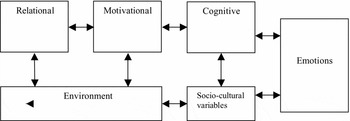
In keeping with this view, Lazarus (Reference Lazarus1991, Reference Lazarus2000) reformulated emotions as being event-specific reactions within a transactional model he called the “cognitive, motivational and relational model of emotion”. According to Lazarus (Reference Lazarus1991, Reference Lazarus2000), emotions are based upon a number of variables involved in the person-environment interaction. Given such an interaction, emotions occur when some sort of personal significance is placed upon an event during cognitive appraisal. Two appraisals, primary and secondary, are central to Lazarus's model of emotions. An individual's primary appraisal is an evaluation of the personal significance of an event, and has been referred to as the “motivational relevance” of an encounter; this appraisal considers the encounters motivationally congruent or incongruent (Lazarus, Reference Lazarus1991). Three types of evaluation have been suggested by Lazarus. First, an irrelevant encounter is one that has no personal significance for the individuals and is ignored. Second, a benign-positive encounter is one that is considered beneficial and/or desirable. Third, a stressful encounter is one that is considered harmful, threatening, or challenging (Lazarus, Reference Lazarus, Candrall and Perrewe1993). A stake in the encounter generates the potential for emotion (Lazarus, Reference Lazarus1991), and stressful situations are appraised as such because they involve perceived harm/loss, threat, or challenge to the individuals’ well being (Lazarus, Reference Lazarus, Candrall and Perrewe1993).
If individuals determine that they have a stake in the encounter, the transactional model proposes that they will engage in a secondary appraisal in order to judge whether they can change those conditions perceived to be undesirable. This appraisal therefore focuses on the available coping options for altering the perceived harm, threat or challenge. Coping is expected to be consistent with a determination of whether anything can be done to change the situation (Lazarus and Folkman, Reference Lazarus and Folkman1984). Ultimately, the individual's choice of a coping mechanism is determined by their perceptions of personal control over the stressful situation (Lazarus and Folkman, Reference Lazarus and Folkman1984). Lazarus (Reference Lazarus, Candrall and Perrewe1993) included a third cognitive variable, which he labelled re-appraisal. This represents the feedback process where changes in both primary and secondary appraisals are brought about via individual reactions/coping and the environmental counter-reactions.
Initial exploratory research on the application of the Lazarus model provided some evidence of its ability to describe the emotions experienced by mental health professionals within clinical supervision and training. Lombardo (Reference Lombardo2007) conducted semi-structured interviews with 11 supervisees, and 10 trainees engaged in workshops. Transcripts were then analysed using an inductive content analysis. This confirmed that emotions were present in their training and supervision, and were especially marked in the person-environment relationship. This supported Lazarus's (Reference Lazarus1991) contention that this relationship is an important mediator of the emotions.
In summary, according to the Lazarus model (Reference Lazarus1991), emotions are seen as being the outcome of an adaptational encounter. For example, a supervisor whose primary appraisal of an event (like critical feedback from a supervisee) is that it is a challenge (stressful) and who judges that this can be managed successfully (secondary appraisal), may react by clarifying the feedback with the supervisee (coping strategy, e.g. re-attribution of responsibility for something that went wrong and merited the criticism). If, however, the supervisee reacts by reiterating strongly that the supervisor was directly responsible (environmental reaction), then the supervisor may well decide to try harder next time (re-appraisal) and end up feeling angry (emotional outcome of encounter/transaction).
In conclusion, the Lazarus model of emotions, as depicted in Figure 1, can accommodate recent research findings and so provides a more current, detailed and explanatory account of how emotions might contribute to experiential learning in the context of CBT supervision, thereby augmenting Kolb's (1984) account. Recognition that interpretations rather than stimuli elicit emotions explains why given events may have multiple emotional meanings (Fridja, Reference Fridja, Pawlik and Rosenzweig2000). This model could help to clarify the role of emotions in CBT supervision, for example by examining the contextual variables (such as the frequency of supervision received), the motivational-relational variables (including individuals’ objectives or perceived support), the primary appraisal of meaning (the personal significance of supervision); secondary appraisal (e.g. which coping strategies are being used in supervision); and emotional responses (e.g. finding supervision frightening). We now turn to two examples that illustrate how the Lazarus (Reference Lazarus2000) model can be applied in CBT supervision.
A simplified diagram of the Lazarus model of emotions

Applying the model to CBT supervision
Illustration one: the learning alliance
One critical aspect of both CBT and CBT supervision that highlights the importance of emotions is the need for a strong learning alliance. This is traditionally regarded as composing an emotional bond (including rapport), mutual engagement in therapy tasks, and an agreement about therapy goals (Bordin, Reference Bordin1979). Therapy and supervision have been suggested to overlap in important respects (Liese and Beck, Reference Liese, Beck and Watkins1997; Milne, Reference Milne2006), with the learning alliance being a case in point. Therefore, when trying to understand supervision and the alliance, it often helps to also look at research on the therapeutic alliance, as this may afford greater insight into this phenomenon.
Focusing first on therapy research, there is thought to be a misconception that alliance is not important in CBT (Liese and Beck, Reference Liese, Beck and Watkins1997). In fact, research indicates that an early therapeutic alliance produces more positive treatment outcomes for clients in many areas of mental health, such as depression (Zuroff and Blatt, Reference Zuroff and Blatt2006) and anxiety (Durham et al., Reference Durham, Chambers, Power, Sharp, Macdonald, Major, Dow and Gumley2005). However, therapeutic relationships require effort and, even once formed, can be problematic. Safran and Muran (Reference Safran and Muran2000b) suggest that therapeutic alliance ruptures are an inevitable aspect of the therapeutic process. Whilst alliance ruptures may at first be seen negatively by both the therapist and the client, resolving them may actually help the client progress through therapy, and itself represents therapy (Safran and Muran, Reference Safran and Muran2000a, Reference Safran and Muranb).
How does this rupture-repair cycle relate to the Lazarus (Reference Lazarus1991) model? A successful therapeutic relationship is highly influenced by the therapist and their emotions (Reilly, Reference Reilly2000) as occurring during alliance ruptures. There are two main types of alliance rupture (Safran and Muran, Reference Safran and Muran2000a, Reference Safran and Muranb), “confrontation” (i.e. the client directly expresses anger, resentment or dissatisfaction with the therapist or the therapy) and “withdrawal” (the client withdraws or partially disengages from the therapist, his/her emotions, or some aspect of the therapy). These two subtypes can be linked to the motivational aspect of the Lazarus (Reference Lazarus1991) model illustrated in the previous section. According to Lazarus, motivation acts as a mediator of such emotions: if we are motivated to achieve successful supervision sessions, then experience an alliance rupture, we feel the goal of successful therapy is less achievable. This is what Lazarus (Reference Lazarus1991) described as primary appraisal, when the individual will perceive the rupture either as harmful, benign, or beneficial. Then, through a secondary appraisal process (e.g. the perceived availability of a coping strategy), the individual will come to a resolution of an event perceived as harmful (e.g. alliance rupture). Reilly (Reference Reilly2000) suggests that learning how to identify and overcome these emotions is a critical skill for CBT therapists, and once they learn this (primarily through the help of supervision), they can start focusing on repairing the rupture. This rupture-repair cycle also help clients to gain greater insight into their feelings, and to understand the reason behind the rupture. So, the rupture-repair cycle can ultimately create positive emotions within both the therapist and the client, and thus increase their motivation. This cycle gradually leads to the rupture repairing, which creates a stronger alliance overall and in turn a better therapeutic outcome.
This rupture-repair cycle highlights the centrality of powerful emotions in the alliance, and since alliance is seen as a key factor for successful CBT, it holds that emotions too are important for successful CBT. As suggested earlier, therapy and supervision overlap when it comes to alliance (Liese and Beck, Reference Liese, Beck and Watkins1997; Milne, Reference Milne2006), and so not surprisingly research indicates that alliance is also an important factor for successful supervision, with some researchers even suggesting that it is the most important aspect of supervision (Ladany, Friedlander and Nelson, Reference Ladany, Friedlander and Nelson2005; Reichelt and Skjerve, Reference Reichelt and Skjerve2002).
In summary, Lazarus's (Reference Lazarus1991) model affords a theoretical account of how emotion might play a mediating role in the supervisory alliance, while Safran and Muran (2000a, b) provide a more practical, complementary view. By using both we may gain a better insight into the alliance, and be better placed to facilitate it.
Illustration 2: the deskilling-development pattern
Another important example of the way that emotion is integral to clinical supervision can be found in the fascinating challenges we encounter when trying to facilitate professional development. Whilst some competencies can be acquired painlessly, such as the ability to list relevant facts (e.g. through rote learning, as in memorising parts of the knowledge-base that underpins competence), development that requires “deeper” learning is typically associated with some personal discomfort (e.g. feeling inadequate: Dewar and Walker, Reference Dewar and Walker1999) and de-skilling (feeling confused, helpless and incompetent: Zorga, Reference Zorga2002). Nel (2006) regards this pattern as well-documented in the training of counsellors and psychotherapists, citing reviews by developmental theorists (including Friedman and Kaslow, Reference Friedman, Kaslow and Kaslow1986; Skovholt and Ronnestad, Reference Skovholt and Ronnestad1992). This would appear to be verified by a major text on clinical supervision, in which developmental models of professional development have “emerged as the zeitgeist” (Watkins, Reference Watkins1997, p. 610). To illustrate, Stoltenberg and McNeill's (1997) chapter in this textbook describes an “integrated developmental model” within which the supervisees’ competence is expected to fluctuate, and where excess complexity shakes their confidence, leading to “confusion, despair, vacillation” (p. 190). But over time the supervisee is expected to build a stable professional identity, including developing their own style.
Although there appears to be a consensus on the existence and importance of the deskilling-development pattern in professional development (see for example Zorga, Reference Zorga2002), there also appears to be surprisingly little empirical support for it. To illustrate, James, Blackburn, Milne and Reichelt (Reference James, Blackburn, Milne and Reichelt2001) assessed the development of competence amongst a multi-disciplinary group of 20 professionals (attending a post-graduate certificate training programme in CBT) with the revised Cognitive Therapy Scale (CTS-R). They reported a mid-training dip in the competence of these professionals, attributed to de-stabilizing their understanding (e.g. through systematic reflection and questioning, according to James, Milne, Blackburn and Armstrong, Reference James, Milne, Blackburn and Armstrong2006). Although this was only observed for the 11 females in their sample, and did not reach statistical significance, it was noticeable in comparison to a significant increase in competence by the end of training for the whole group.
Significant findings were, however, reported by Lovell (Reference Lovell2002), who analysed counsellor development on a Masters course with the Supervisee Levels Questionnaire (McNeill, Stoltenberg and Romans, Reference Lazarus1992). Although the developmental stage of these students (N = 67) was a better predictor of their progress than age, education or experience, Lovell (Reference Lovell2002) obtained a “discontinuous pattern” (p. 235) of development. She interpreted this pattern as consistent with theories that assume the necessity of “developmental disequilibration” (p. 235), featuring a “spiral” of fluctuating competencies (e.g. she found that cognitive variables, like a critical awareness of context, were negatively correlated with change, whilst autonomy from the supervisor was positively associated with the counsellor's development). It may be that the reason for these discrepant findings is that Lovell (Reference Lovell2002) utilised self-report, introducing either greater sensitivity or greater bias.
These speculations about the mechanisms of deskilling within professional development all refer back to the Piagetian concept of “disequilibration”, namely the loss of balance between cognitive schemas as a result of experiences that cannot be readily understood or addressed (or between these schemas and emotionally-laden experiences: Zorga, Reference Zorga2002). According to this theory, competence develops when we restore balance by learning from such experiences, through drawing on emotional experiencing, reflection, acquiring information, action planning, and experimenting with possible solutions (Kolb, Reference Kolb1984). The two processes underpinning this adaptational process are assimilation and accommodation, equivalent to shallow or “surface” learning (where processing can utilize existing schema) and “deeper” learning (which requires schema change), respectively. Interestingly, Kolb (Reference Kolb1984) also posits a spiralling process of development, drawing on the original thinking of Dewey (Reference Dewey1955), within an upward, cone-like trajectory in which, as a result of years of this experiential learning, we normally acquire ascending levels of proficiency in life (such as greater specialization and sophistication in therapy).
In supervision this is traditionally characterized by developmental stages, such as the supervisee's progression from “level 1” (featuring beginning competence, high anxiety and concreteness) to “level 3” (featuring competence and autonomy: Stoltenberg and McNeill, Reference Stoltenberg, McNeill and Watkins1997). This developmental trajectory is a good example of the way that complex systems move, through a dialectic process, from steady states through dis-organization (destabilization and chaos) to re-organization (integration) at a higher level of complexity (Magnavita, Reference Magnavita2006). This chaos model would help to explain the otherwise puzzling findings above, and would suggest that supervisors need to work skilfully around the supervisee's cusp, or “zone of proximal development” (Vygotsky, Reference Vygotsky1978). The supervision case study by James et al. (Reference James, Allen and Collerton2004) nicely illustrates such a process, incorporating the emotional accompaniments of learning from experience. From the above, it would appear that a moderately charged emotional environment is a necessary condition for accommodative learning.
To relate this account explicitly to the Lazarus (Reference Lazarus2000) model, consider the example of an experienced clinician who normally operates confidently at an autonomous level, but who is exploring innovations, such as the role of mindfulness in CBT, which occasions episodes of self-doubt. Supervision may occasion considerable stress as this clinician's primary appraisal leads to the initial perception of personal threat associated with appearing unusually confused, a long-forgotten state that is re-evoked with a return to the novice stage of development (as regards mindfulness). This is also a professionally challenging encounter, as the clinician may appear incompetent and feel inadequate. However, in such a perilous situation secondary appraisal may well come to the rescue, as such an experienced clinician will probably have an exceptionally well-tuned coping repertoire. For instance, the supervisor might be invited to help to formulate the encounter, which (with some prompting from the clinician) might reasonably be construed adaptively, as a necessary stage that the willing learner needs to go through in order to emerge as more competent. Such a reappraisal enables the clinician to endure the threat long enough to discover that catastrophic fears do not actually materialize (e.g. anxiety over being exposed as an impostor).
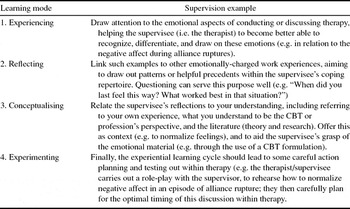
As this account of disequilibration indicates, emotion is intimately entwined with the process of developing (and temporarily losing) competence. Table 1 summarizes how the CBT supervisor might use this “balance” theory in practice. The left-hand column lists the Piagetian modes of learning from experience (Kolb, Reference Kolb1984), and the right-hand column offers some supervision examples. These examples are drawn from a CBT-compatible model, called “evidence-based supervision” (Milne and Westerman, Reference Milne and Westerman2001; Milne and James, Reference Milne and James2002) that differs largely because it explicitly incorporates emotion.
Ways to work with emotion in CBT supervision

Implications for emotionally-grounded CBT supervision
From this theoretical review, we argue that the emotional dimension needs to be considered in clinical supervision. It would seem advisable for supervisors to pay more attention to the emotions experienced by supervisees, rather than looking solely at the cognitive content. Also, supervisors and supervisees could attempt to become more aware of their emotional responses (to the therapy and other work material that is discussed, as well as to what is occurring within supervision). There are likely to be many stressful events that can activate emotions and have consequences for the supervisees’ performance, both in terms of learning within supervision and in transferring this to the job. The main mechanism to monitor is the interference with concentration that can follow from untoward emotional arousal. A second mechanism is the lowering of motivation, which can lead supervisees to give up when they have initially been unsuccessful. The supervisor is in an excellent position to facilitate the supervisees’ reappraisal, and the use of coping strategies to re-focus and re-motivate. A further implication of the model, one that is highly congruent with CBT, is the importance of the supervisor being aware of the highly divergent perceptions and appraisal mechanisms that supervisees may utilize, meaning that goals, commitments and beliefs will vary, and that what is salient and noticed in the supervisees’ environment will also tend to diverge from that of the supervisor. It follows that CBT supervisors should help their supervisees (the therapists) to gradually recognize how their thoughts and beliefs may contribute to their emotions and behaviour during their supervision sessions (Liese and Beck, Reference Liese, Beck and Watkins1997; Reilly, Reference Reilly2000). For instance, these emotions may lead to ruptures within the supervisory alliance. When these ruptures appear, the supervisor's role is to help repair them by focusing on the therapist's emotions and motivation at the time, which is often done by getting the therapist to fill out their own dysfunctional thought records during supervision (Reilly, Reference Reilly2000). This helps the therapist become better aware of their feelings and, by applying this to their therapeutic alliance ruptures, helps to stop them from becoming part of the maladaptive interpersonal cycle during their therapy sessions (Safran and Muran, Reference Safran and Muran2000a). As in therapy, this rupture-repair cycle leads to increased motivation and a stronger alliance, and research indicates that this kind of supervisory alliance is significantly related to the client's perception of the therapeutic alliance (Patton and Kivlighan, 1997, cited by Fleming and Steen, Reference Fleming and Steen2004). Therefore, creating a strong alliance in supervision may also contribute to therapeutic success (sometimes termed a “parallel process”).
Discussion
This paper is intended to contribute to the development of CBT supervision by introducing an expanded, affectively-informed model with closely-related implications for supervisory practice. In order to develop the model we summarized the relevant theoretical and empirical literature, illustrating its application to two critical aspects of CBT supervision.
As suggested by the literature review, learning is a holistic process, where psychological factors (which include emotions and environmental factors) should be taken into consideration. We have set out and tried to justify, with reference to the available theory and research, an augmented version of Kolb's (1984) theory of experiential learning, in order to include variables (e.g. the individual appraisal mechanism, the influence of the context where the individual lives) that Kolb has neglected, but which have subsequently been identified as important. Also, based on a literature review, we identified the Lazarus model of emotions (Reference Lazarus1991, Reference Lazarus2000) as the most suitable to explain and incorporate emotions within an augmented account of CBT supervision (Fridja, Reference Fridja, Pawlik and Rosenzweig2000). The model is highly compatible with CBT, and offers practical suggestions as to how CBT supervisors might better attune their work to the emotional aspects of supervision.
Having made this recommendation, we need to acknowledge the paucity of rigorous, theory-driven research on affect within clinical supervision. Consequently, we need to adopt a multidimensional approach that features emotions as a transactional process. However, despite finding that the Lazarus model was supported in a recent analysis (Lombardo, Reference Lombardo2007), its application to CBT supervision still needs be tested. As a result, we recognize readily that we do not have a firm empirical basis on which to argue that the effective treatment of such episodes as alliance rupture-repair or deskilling will be enhanced by emotionally-attuned CBT supervision. Also, we have only minimal evidence that the Lazarus model of emotions is a suitable candidate for this theory-driven research. However, in the absence of a stronger alternative candidate, we believe that there are good theoretical grounds for testing the Lazarus model, which is highly congruent with CBT. This may further enhance the effectiveness of CBT supervision. A further recommendation of the model is that it is not confined to any particular focus or format. For example, it is as relevant to group supervision as to the other formats, where some of the processes might beneficially change (e.g. group members may help to monitor fluctuations in concentration or motivation in a peer supervisee), but where the basic logic would remain relevant.
Acknowledgements
Mark Papworth suggested links between emotions in supervision and in CBT; Regina McClure provided helpful suggestions on a draft. John Carpenter made useful comments on the final draft. Thank you also to the trainees and supervisees who took part in the preliminary study of the Lazarus model.



Comments
No Comments have been published for this article.