Introduction
Disasters pose significant challenges to global societies, leading to long-lasting environmental, economic, and health impacts. 1 The complex nature of disaster events necessitates managing risks through effective prevention, preparedness, response, and recovery. 2 Disaster-related research has been conducted at each stage before and after disasters. There is a need for in-depth analysis of each case to evaluate each management strategy and lessons learned.
Case study is a classic research method that has been used in various disciplines, such as medicine, sociology, economics, management, etc., for analyzing individuals, organizations, and communities.Reference Carolan, Forbat and Smith 3 –Reference Yin 7 In medicine, clinical case report has been popular since the time of Hippocrates.Reference Nissen and Wynn 8 Moreover, case studies have a particular importance in managing a specific organization, community, and event. Indeed, case studies have been a popular method for researching disasters in social science.Reference Peek, Champeau and Austin 9 Disaster risks are typically defined through the combination of hazards, exposure, and vulnerability.Reference Crichton and Ingleton 10 Thus, disaster-related research has been inherently linked to human subjects, either directly or indirectly. Particularly in human-related research, reporting guidelines, like those provided by EQUATOR, have shown standards for structure and content of publications.Reference Altman, Simera and Hoey 11 There are some review articles involving disaster-related case study focusing on specific types of disaster or research areas. Reference Peek, Champeau and Austin9,Reference Rufat, Tate and Burton12,Reference Syahrir and Suparno13 However, there is limited information on the topics, contents, trends, and reporting structure of published case studies related to disasters.
Structural topic modeling can be conducted to understand actual publication and their spillovers in diverse research fields.Reference Murakami, Nishikawa and Kitajima 14 By analyzing publication metadata, research topics, and reporting structures, this large-scale analysis of disaster-related research aimed to capture the intellectual landscape of disaster research within multidisciplinary perspectives. This study would be beneficial in understanding the actual reporting of disaster-related research.
Methods
Search Strategy and Data Collection
This large-scale publication analysis, using structural topic modeling, was conducted referring to the PRISMA statement.Reference Page, McKenzie and Bossuyt 15 This study used the metadata retrieved from Elsevier/Scopus, 16 as this study focused on the publication trends of case studies in disaster-related literatures. The Elsevier/Scopus provides an extensive overview of global research output across science, technology, medicine, social science, and the arts and humanities, featuring 28,300 titles from more than 5,000 international publishers. 16 Scopus database includes all MEDLINE journals and enables citation analysis.Reference Falagas, Pitsouni and Malietzis 17 , Reference Kulkarni, Aziz and Shams 18
To capture research outputs clearly stating disaster-related case study, the following search strategy was used: “case study” (Title or Keywords) OR “case studies” (Title or Keywords). As for disasters, to incorporate both natural disasters and nuclear disasters, MeSH terms “natural disasters” and “radioactive hazard release” (https://www.ncbi.nlm.nih.gov/mesh/) were referred and the following terms were used: earthquake, tsunami, tidal wave, volcanic eruption, landslide, avalanche, typhoon, hurricane, tropical storm, cyclonic storm, cyclone, flood, storm, tornado, wildfire, drought, nuclear disaster, Chernobyl, Chornobyl, Fukushima, Three Mile Island, and disaster. The search term is described in Supplementary Material 1. In deciding this search term, we also considered searching by title/abstract; however, we found that a non-negligible number of the review articles mentioned that “case studies were excluded” in a pilot search. The development of the search strategy was conducted in consultation with Mr. Takaaki Suzuki, a librarian at Nara Medical University/Cochrane Japan, as well as through discussions with the CAST-D Group (https://sites.google.com/view/jicast/contributors), which includes 17 professors and researchers from Japan, Ghana, Australia, the United Kingdom, and the United States, specializing in disaster medicine, radiation protection, public health, and related fields. All keywords used in the final searches are listed in Supplementary Material 1. As a sensitivity analysis, we expanded the included search terms to evaluate the robustness of topic classification. The results of this sensitivity analysis are provided in Supplementary Materials 2.
Search and data extraction were conducted using Scopus on 2024/4/23. The target research period was from 1901/1/1 to 2023/12/31. The following data were collected: author, year of publication, title, journal name, abstract, keywords, country of author’s affiliation, and the number of citations. Article types such as conference paper, book, book chapter, conference review, abstract report, and erratum were excluded after extraction.
Analytical Methods
Descriptive analysis
Items were aggregated and descriptively analyzed. The number of publications by year was presented. Additionally, the top 10 countries of first authors and the top 10 journals were described.
Structural topic modeling
Structural topic modeling of abstracts was conducted using the R package stm (v1.3.6).Reference Roberts, Stewart and Tingley 19 The number of topics was determined using the following diagnostic values: held-out likelihood, semantic coherence, residuals, and lower bound, through the discussion between YN and MM, and approved by all the authors. Held-out likelihood measures a model’s ability to predict unseen data, with higher values indicating better performance. Semantic coherence assesses the interpretability of topics generated by the model, with higher coherence suggesting that the topics make intuitive sense. Residuals indicate the difference between observed and predicted values, where lower residuals reflect more accurate predictions. The lower bound, used in probabilistic models, is ideally higher to show a better approximation of the model’s parameters and accuracy. High probability words in each topic were described in the study.
Hierarchical clustering of identified topics
To perform hierarchical clustering of identified topics, we first constructed an adjacency matrix based on Pearson correlation, applying a threshold of 0.08. Using the Ward’s method for average-linkage clustering, we generated a dendrogram to illustrate the groupings. We then divided the topics into 5 distinct clusters.
Temporal analysis of each topic
To highlight the dynamic evolution of thematic content within the dataset, a cubic (third-dimension) polynomial regression was used to model the effect of time (measured in years) on topic prevalence. Each topic’s expected relative proportion over time was plotted with 95% confidence intervals.
Sensitivity analysis
Using expanded search terms in the sensitivity analysis, we also examined annual publication trends, performed structural topic modeling, conducted hierarchical clustering of topics, and temporal analysis of each topic (Supplementary Materials 2).
Citation analysis
The number of citations was descriptively summarised. In this study, 2 authors (YN and MM) independently reviewed the top 5 most-cited papers for each topic and evaluated the validity of each paper as a disaster-related case study. Both have been engaged in disaster research, including case study. YN specializes in clinical oncology, health informatics, and public health, while MM’s areas of expertise include risk science, environmental science, and public health. The agreement rate and kappa coefficient were calculated. If there were any disagreements regarding the validity of a paper, other co-authors were consulted to facilitate a discussion and reach a consensus. Through this process, three papers for each topic were selected to present. For each topic, the 3 most-cited references were retained. The content of these articles was summarized by group and topic.
Evaluation of disaster-related case studies
The 3 highly cited papers from each topic were evaluated for their reporting structure. This evaluation considered whether the papers followed the IMRaD structure,Reference Sollaci and Pereira 20 , Reference Shiely, Gallagher and Millar 21 included geographical information (map) and temporal information, and used the term “case study” or “case studies” in the title/abstract/keywords. Two independent reviewers conducted the evaluation. YN evaluated all the articles, and KU, YM, or MM independently reviewed them. The agreement rate and kappa coefficient were calculated. In cases of discrepancies, they resolved them through discussion and reached consensus.
Software
These analyses were performed using R version 4.22.
Results
Overviewing Publication of Case Studies Related to Disasters
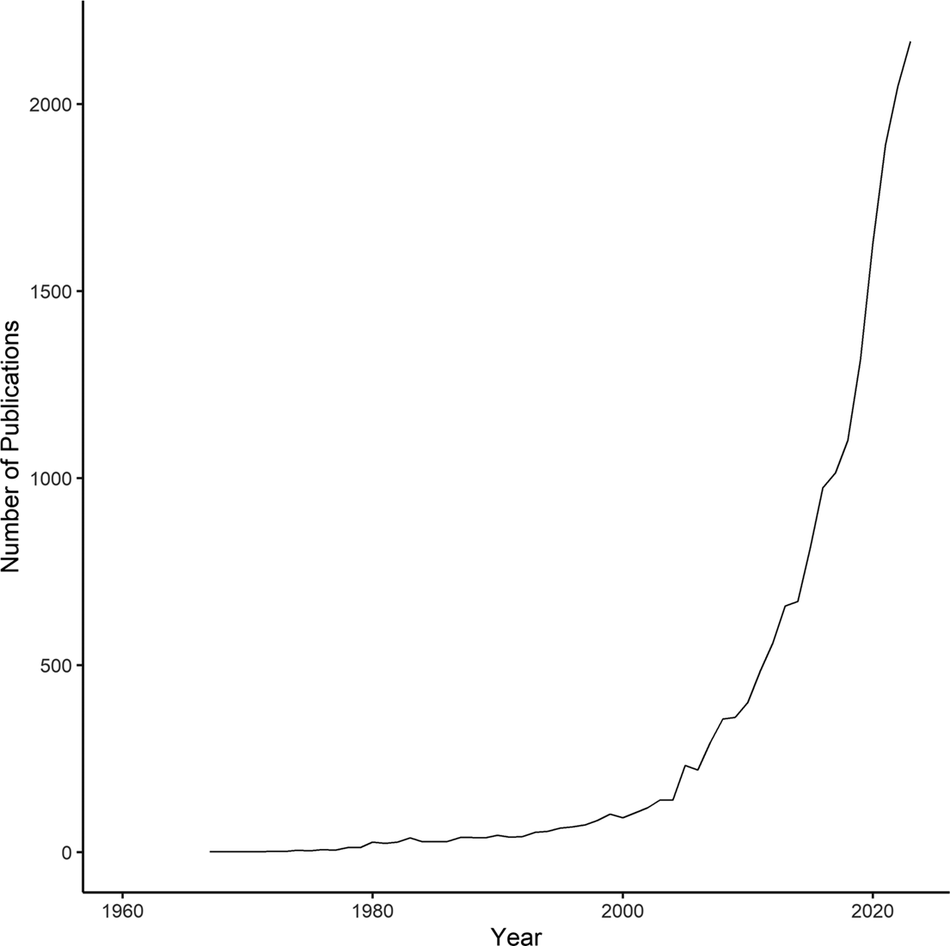
A total of 25,914 records were extracted from Elsevier/Scopus. From these, 446 entries without abstracts were excluded. Additionally, 6,686 articles of the following document types were excluded: conference papers, books, book chapters, conference reviews, abstract reports, and errata. In total, 18,782 articles were included in the analysis. Figure 1 shows a steady increase in the number of case study publications over time. Beginning in the 1990s, there was a gradual rise, which became more noticeable around the 2000s. This trend continued into the 2020s, reflecting a growing use of case studies in research.
Number of publications.

We analyzed the top 10 countries with the highest number of case study publications. China led with 3,500 publications, followed by the United States with 1,544. Other notable countries included Italy (689), Iran (531), India (525), and Japan (513) (Supplementary Material 1).
The top 10 journals publishing disaster-related case study articles were shown in Supplementary Material 1. “Water (Switzerland)” led with 469 publications, followed by “Natural Hazards” with 413, “Sustainability (Switzerland)” with 366, and “International Journal of Disaster Risk Reduction” with 290. These journals were key sources for case study publications across various fields.
Determination of Number of Topics and Clustering of Topics
To determine the number of topics, the diagnostic values were evaluated as the topic number increased from 5 to 50 in increments of 5. Based on the diagnostic values of held-out likelihood, semantic coherence, residuals, and lower bound, the topic numbers from 5 to 15 were carefully examined. Considering coherence, exclusivity, and actual interpretability by authors, the topic number was decided to be 12 (Supplementary Material 1). After 18 iterations, the topic model reached convergence. The topic model included 12 topics, 18,782 documents, and a 20,954-word dictionary. The emerged 12 topics with high-frequency terms, FREX terms, and high-score terms were shown in Supplementary Material 1. The hierarchical cluster analysis results were shown in Figure 2. When divided into two clusters, “Public Health and Social Medicine” was distinguished from a combined “Earth Science and Environmental Technology.” Further clustering results showed five clusters as follows: “Group A: Public Health and Social Medicine” included topics Urban, Patient, and Social. The cluster “Group B: Geological Hazards” comprised topics Seismic, Landslide, and Drought. Other clusters showed “Group C: Atmospheric and Sedimentary Processes” with topics Sediment and Convect; “Group D: Soil and Climate Change” with topics Soil and Fire; and “Group E: Hydrology” with Flood and Water. High probability words for each topic were shown in Figure 3.
Hierarchical clustering dendrogram.

Highest probability terms for each topic.

Publication Trends for Each Topic
Figure 4 illustrates the trends in topic proportions over time. Topics like landslide, drought, and fire showed a steady increase, indicating that interest or research in these relatively new areas had grown. In contrast, floods and water initially experienced a decline but have since maintained a steady level, suggesting they were once prevalent and continued to retain interest. Topics like urban, patient, social, and convect exhibited fluctuations, which might have reflected ongoing shifts in research focus despite their long-standing presence.
Trends of topic proportion for each topic.

Sensitivity Analysis With Expanded Search Terms
Supplementary Materials 2 showed the result with expanded search terms. A total of 29,939 records were extracted from Elsevier/Scopus. After excluding 1,020 entries without abstracts and 7,038 records classified as conference papers, books, book chapters, conference reviews, abstract reports, or errata, 21,881 articles were included in the analysis. The results of the sensitivity analysis, as shown in Supplementary Materials 2, were largely consistent with the primary analysis. The overall topic structure, the highest probability terms for each topic, and the trends in topic proportions remained similar. Diagnostic values by the number of topics also showed comparable patterns.
Citation Analysis and Characteristics of Each Topic Group
The included articles received a total of 330,819 citations, with a mean of 17.6 citations per document and a standard deviation of 34.5. For each of the 12 topics, the top 5 most-cited papers were reviewed by YN and MM. Out of a total of 60 papers examined, there were 3 papers with initial discrepancies (agreement rate 0.95 and kappa 0.74). Through discussion, consensus was reached with a 100% agreement rate. Finally, 7 papers were determined not to be disaster-related case studies and were excluded. Six of the excluded papers mentioned “disaster” or “case” as part of their background or objectives, but they were not primarily focused on a disaster-related case study, leading to their exclusion. One paper was excluded because it contained an unrelated publication. The remaining top three papers for each topic were shown in Table 1 and described below. Detailed information were shown in Supplementary Material 1.
Group, topic, and key content of highly cited articles in each topic

Major Group and Group A: Public Health and Social Medicine
-
• Urban: This topic included public health and urban management, focusing on development and resilience planning. Turner II B.L. et al. presented coupled human-environment systems, underscoring their implications for urban health services.Reference Turner, Matson and McCarthy 22 Govindan K. et al. tackled demand management in health care logistics amid COVID-19, vital for urban health planning.Reference Govindan, Mina and Alavi 23 Scholten K. et al. explored supply chain resilience, crucial in ensuring uninterrupted health care delivery in urban environments.Reference Scholten, Sharkey Scott and Fynes 24
-
• Patient: This public health-focused topic addresses vulnerabilities and health care challenges within climate-affected populations. Cutter S.L. et al. revealed vulnerabilities in Georgetown County, essential for health care accessibility plans.Reference Cutter, Mitchell and Scott 25 Hahn M.B. et al. introduced a Livelihood Vulnerability Index in Mozambique, offering a public health perspective on climate risk assessments.Reference Hahn, Riederer and Foster 26 Brouwer R. et al. analyzed socioeconomic vulnerabilities to environmental risks, such as flooding in Bangladesh, highlighting impacts on health infrastructures.Reference Brouwer, Akter and Brander 27
-
• Social: This topic intersects public health and social medicine, focusing on community resilience and disaster response. Rufat S. et al. reviewed social vulnerability to floods, impacting public health and community resilience.Reference Rufat, Tate and Burton 12 Burton C.G. validated resilience metrics post-Hurricane Katrina, highlighting social capital’s role in health recovery.Reference Burton 28 Tomasini R.M. et al. discussed humanitarian logistics partnerships, underscoring cooperative strategies for health and disaster management.Reference Tomasini and Van Wassenhove 29
Major Group: Earth Science and Environmental Technology
Group B: Geological Hazards
-
• Seismic: Focusing on seismic activities, this topic analyzes fault dynamics and structural impacts. Watts P. et al. used simulation models for landslide-tsunami interactions, enhancing seismic risk assessments.Reference Watts, Grilli and Kirby 30 Schrott L. et al. applied geophysical field methods, advancing seismic evaluation techniques.Reference Schrott and Sass 31 Savage M.K. investigated crustal anisotropy effects, crucial for understanding seismic wave behavior.Reference Savage 32
-
• Landslide: This topic explored landslide mechanisms and risk mitigation. Huggel C. et al. assessed glacial lake outburst hazards via remote sensing, showcasing environmental techniques in landslide prevention.Reference Huggel, Kääb and Haeberli 33 Akgun A. highlighted innovative methods for landslide susceptibility mapping, vital for environmental planning.Reference Akgun 34 Canals M. analyzes submarine landslides, focusing on dynamics and triggers.Reference Canals, Lastras and Urgeles 35
-
• Drought: Examining drought prediction and management, this topic utilized simulations and data analytics for effective forecasting. Yilmaz I. compared machine learning models for susceptibility mapping, advancing drought impact predictions.Reference Yilmaz 36 Yao X. et al. applied advanced machine learning in natural slope risk assessment, enhancing predictive modeling capabilities.Reference Yao, Tham and Dai 37 Pham B.T. et al. evaluated models for accuracy in environmental risk assessments.Reference Pham, Pradhan and Tien Bui 38
Group C: Atmospheric and Sedimentary Processes
-
• Sediment: This topic included sediment deposition and erosion processes within riverine and coastal contexts, an area of earth sciences. Church M. examined geomorphic responses to regulated river flows, providing insights into sediment transport mechanisms.Reference Church 39 Moreno P.I. et al. discussed abrupt climate impacts on sediment in the Chilean Lake District, linking environmental change to sediment dynamics.Reference Moreno, Lowell and Jacobson 40 Aitken J.F. et al. utilized high-resolution sequence stratigraphy to enhance our understanding of sediment distribution in fluvial systems.Reference Aitken and Flint 41
-
• Convect: This topic examined convective weather patterns, incorporating simulations and models for better understanding. Liu X.G. et al. investigated haze evolution in Beijing, utilizing atmospheric modeling techniques.Reference Liu, Li and Qu 42 Marks D. et al. focused on snowmelt processes during storm events, employing simulation tools to analyze climate interactions.Reference Marks, Kimball and Tingey 43 Wu D. et al. described low visibility events, leveraging models to understand convective influences.Reference Wu, Tie and Li 44
Group D: Soil and Climate Change
-
• Soil: This topic focused on soil as a critical resource for ecosystem and agricultural stability under stress conditions. Niemi G.J. et al. linked soil quality with aquatic system recovery, emphasizing conservation.Reference Niemi, DeVore and Detenbeck 45. Tuberosa R. et al. identified genetic factors affecting drought-stricken maize, relevant for ecological resilience.Reference Tuberosa 46 Haregeweyn N. et al. stressed soil conservation in erosion-prone watersheds, crucial for sustainable land use.Reference Haregeweyn, Tsunekawa and Poesen 47
-
• Fire: Addressing wildfire impacts, this topic explored interactions between land use and climate change with simulations. Muis S. et al. examined flood risk adaptation amid urban expansion, paralleling fire risk management approaches.Reference Muis, Güneralp and Jongman 48 Chandler R.E. et al. modeled rainfall variability, applicable to predicting fire conditions.Reference Chandler and Wheater 49 Poelmans L. et al. analyzed urban sprawl, correlating landscape changes with fire susceptibility.Reference Poelmans and Van Rompaey 50
Group E: Hydrology
-
• Flood: This topic showed flood dynamics, employing simulation and modeling for risk assessment. Ouma Y.O. et al. used AHP and GIS for urban flood mapping, enhancing flood simulation methodologies.Reference Ouma and Tateishi 51 Delrieu G. et al. documented the 2002 Gard region flash-flood using hydrometeorological models.Reference Delrieu, Nicol and Yates 52 Knebl M.R. et al. integrated GIS and rainfall data to model regional floods, highlighting technological advancements in flood management.Reference Knebl, Yang and Hutchison 53
-
• Water: This topic covered water resource sustainability, addressing quality and management practices. Gude V.G. critiqued desalination processes, critical for sustainable water solutions.Reference Gude 54 Tabbal D.F. et al. explored irrigation strategies in rice cultivation, improving water usage efficiencies.Reference Tabbal, Bouman and Bhuiyan 55 Ying X. et al. used AHP and GIS for environmental quality assessments, integrating water considerations into ecological modeling.Reference Ying, Zeng and Chen 56
Table 2 shows the structural and content evaluation of case studies in each topic group. For each of the 12 topics, the top 3 most-cited papers were evaluated by 2 authors. While there were some discrepancies in the initial evaluation (with an agreement rate of 0.90 and a kappa coefficient of 0.77), all discrepancies were resolved through discussion. The Introduction section consistently had high inclusion rates, reaching 100% in Groups B, C, and D. The Methods section was reported less frequently, with Group E leading at 50%. In the Results section, Groups D and E were well-documented, whereas the Discussion section was generally better described than Methods or Results. Geographical Information and Temporal Information were less exhibited in Group A, while other groups showed better inclusion. The use of the term “Case Study” in the title, abstract, or keywords maintained high consistency across all groups, as it was used as a search term in this study.
Evaluation of reporting structure of highly cited case studies related to disasters

Discussion
This study analyzed large-scale publication metadata of disaster-related case studies indexed in Elsevier/Scopus. Overall, the presented data underscored the spread of disaster-related case study methodology in various disciplines, particularly in the fields of public health, social medicine, earth science, and environmental technology. The substantial number of publications and the geographic diversity of contributors highlight the broad applicability and value of case study investigations in advancing knowledge and addressing global challenges toward disasters.
Structural topic modeling identified 12 topics, which were categorized into 5 clusters: public health and social medicine, geological hazards, atmospheric and sedimentary processes, soil and climate change, and hydrology. Some topics corresponded to specific types of disasters, such as landslides, droughts, and wildfires, which were also included in the search terms. It should be noted that public health and social medicine can form an independent cluster separate from the earth science and environmental technology groups.
Temporal change analysis highlighted the increase of climate change-related articles, like topics named landslide, drought, and fire. Still, all the topics showed some proportions. This result provided insight into how each topic has shifted over the evaluated period. Nonetheless, the recurrence of topics related to public health and medicine underscored the active publication landscape in disaster-related case studies.
Variability was observed in the positioning of the case in each article. This variability can be attributed to the submission guidelines of different journals, which reflect the diverse disciplines of the selected literature. From a research methods perspective, several issues were identified. In topics like convect, seismic, flood, and fire within the fields of earth science and environmental technology, simulations or predictions have been incorporated based on the circumstances presented as case studies.Reference Watts, Grilli and Kirby 30 , Reference Wu, Tie and Li 44 , Reference Muis, Güneralp and Jongman 48 –Reference Knebl, Yang and Hutchison 53 In these instances, the case study is embedded as part of a simulation rather than as a comprehensive case study, often focusing on specific regions or circumstances. This underscores the importance of clearly reporting whether a study is entirely or partially a case study. In medicine, when focusing on individuals, “case report” is more commonly used than “case study.”Reference Alpi and Evans 57 It should be noted that publications referred to as “case studies” often target meso (institutional or community) levels, macro (national or global) levels, or both. The positioning and level of the case within the study can vary and are important to consider.
There were considerable variabilities in the structures and content of the articles. While variations in structure might be unavoidable, the boundaries between human-centric research and fields like the humanities, environmental technology, and sociology are becoming less distinct. This indicates a need for ongoing discussion, particularly from an ethical standpoint. The IMRAD format is a frequently used structure in scientific researchReference Sollaci and Pereira 20; however, many publications deviate from this style. Structural variations may be more influenced by the submission guidelines than by content similarity. Additionally, it should be noted that geographical and temporal information were less frequently reported in the public health and social medicine group compared to others. The term “case study” was included in the articles because it was part of the search term in this study. Ideally, it should be included in their titles, abstracts, or keywords to enhance discoverability in literature searches, similar to other research types.Reference Page, McKenzie and Bossuyt 15 , Reference Schulz, Altman and Moher 58 This point should be noted for disaster-related research, where the dominance of case studies has been reported.Reference Peek, Champeau and Austin 9 Deciding on essential items for reporting case studies in public health and medicine is crucial for accumulating and synthesizing future lessons learned.
This study has several limitations. First, it relied solely on the Elsevier/Scopus database due to the necessity of using standardized publication metadata for this analysis. However, all the MEDLINE articles and other multidisciplinary articles were indexed in Scopus, allowing us to adequately assess the dynamics of research publications on case studies. Second, highly cited case studies may not necessarily reflect high-quality research, and less cited case studies are not always indicative of lower quality. Nevertheless, the number of citations serves as an objective and reasonable criterion for selecting articles from a vast pool of work. Third, while structural topic modeling offers a systematic approach to large-scale classification, it may not fully capture certain important but less frequently reported disaster types. Sensitivity analysis with additional search terms yielded more records; however, the overall topic structure was consistent with the primary analysis. Even with the expanded search, topics such as “subsidence,” “avalanche,” “freezing rain,” and “lahar” did not emerge, likely due to their low frequency in the literature. Still, structural topic modeling would be a reasonable method to capture the patterns of document data.Reference Murakami, Nishikawa and Kitajima 14 , Reference Roberts, Stewart and Tingley 19 Fourth, this study used search terms related to general disaster terminology, as well as terms specific to natural and nuclear disasters, and included case studies focusing on these types of events. Therefore, it may not fully represent the diversity of disaster-related case studies, particularly those involving man-made events such as terrorism, war, conflict, or explosions.Reference Coleman 59 , Reference Abo-Rass, Nakash and AboJabel 60 Nevertheless, it would be emphasized that this study was a large-scale bibliometric analysis that provided an overview of case studies on natural and nuclear disasters. Lastly, case studies that did not include “case study” in their titles or keywords were not considered, potentially omitting relevant studies from the analysis. However, this approach remained an acceptable method for bibliometric analysis of disaster-related case studies because it is not feasible to manually determine whether all the publications are case studies.
In conclusion, this study showed a global increase in the number of case studies. Structural topic modeling analysis identified 12 topics, indicating their distribution across various fields, with public health and social medicine being a major domain. Variability was observed in the structure and content of disaster-related case studies within public health and medicine. This study highlighted the need to itemize essential contents when reporting disaster-related case studies in public health and medicine to enhance knowledge synthesis.
Supplementary material
The supplementary material for this article can be found at http://doi.org/10.1017/dmp.2025.10279.
Acknowledgments
This large-scale analysis was conducted as part of the CAST-D (Reporting Guideline for Case Study in Public Health and Medicine related to Disasters) project. CAST-D was registered to the EQUATOR Network,Reference Altman, Simera and Hoey 11 as reporting guidelines under development on September 4, 2024. YN was supported by JSPS KAKENHI Grant Number JP22K17367 (CAST-D project), FY2025 MUSUBIME, Network-type Joint Usage/Research Center for Radiation Disaster Medical Science Joint Research Projects, and the Takemi Program in International Health, Harvard T.H. Chan School of Public Health. ChatGPT-4o (OpenAI, California, USA) was used for its assistance in English language editing only; no content generation; authors reviewed all outputs.
Author contribution
Yoshitaka Nishikawa: Writing—original draft, visualization, methodology, investigation, funding acquisition, formal analysis, conceptualization. Kayo Ueda: Writing—review and editing, methodology, investigation, conceptualization. Yuko Masuzawa: Writing—review and editing, methodology, investigation, conceptualization. Michio Murakami: Writing—review and editing, methodology, investigation, formal analysis, conceptualization.
Competing interests
Outside the submitted work, YN received personal fees from the Japan Association for Clinical Engineers, the Japan Society for the Promotion of Science, and EUCALIA Inc., and a grant from the Japan Medical Association, and a donation from Datack Inc.