Introduction
The overly simplistic monoamine deficiency hypothesis that states that major depressive disorder (MDD) arises out of low concentrations of serotonin, dopamine, and/or norepinephrine is often combated and debated.Reference Lacasse and Leo1 Newer theories such as monoamine receptor excesses, brain-derived neurotrophic factor deficiencies, hypofrontality, or hyperactive amygdala activity are potentially valid in theory now as well.Reference Belmaker and Agam2, Reference Stahl3 However, in practice, most antidepressant treatments (ADTs) that are indicated and approved function to facilitate increases in monoamine levels, ie, selective serotonin reuptake inhibitors (SSRI), selective serotonin-norepinephrine reuptake inhibitors (SNRI), selective norepinephrine–dopamine reuptake inhibitors (NDRI), and tricyclic antidepressants (TCA). Other ADTs manipulate monoamine receptors, ie, serotonin antagonist-reuptake inhibitors (SARI), serotonin partial agonist-reuptake inhibitors (SPARI), and norepinephrine agonist-serotonin antagonists (NASA) as a way to change neurotransmission rates and effect an antidepressant response through the monoamine systems as well.Reference Sadock, Sadock and Sussman4, Reference Stahl5
These ADTs also have in common the fact that they will raise only 1 or 2 monoamines’ central nervous system (CNS) concentrations at a time. The monoamine oxidase inhibitor (MAOI) ADT functions uniquely to increase all 3 monoamines simultaneously.Reference Stahl3 This addresses the monoamine hypothesis of depression directly by inhibiting the degradation of all 3 monoamines by lowering monoamine oxidase-A (MOA-A) (preferentially) and monoamine oxidase-B (MOA-B) enzyme activity within CNS neurons.
Despite the MAOI class's ability to robustly increase all 3 monoamines, these ADTs have largely fallen out of use due to the risk of drug–drug interactions and dietary reactions. These may cause increased risk (hypertensive crisis/serotonin syndrome) to the patient versus more conventional ADTs, and also, the MAOIs require quite a bit of time educating and informing the patient prior to treatment initiation.Reference Berlim, Fleck and Turecki6 There likely is also increased fear of use among younger clinicians due to little training and experience with MAOIs in psychiatry residency clinics, as well as increased patient fear if patients should self-research the MAOI class of drugs online. Clinicians also underutilize the MAOI, likely because there are more facts about interactions, washout periods, titration schedules, and combination-augmentation limitations that they are forced to memorize or reference at the point of service, making competent MAOI use time-insensitive for the busy practitioner.
Despite many ADTs being available for use, MDD still remains a difficult-to-treat psychiatric disorder with a 16% lifetime risk, 60% recurrence rate, and a 30% chance of becoming chronic in nature.Reference Greden7–Reference Fava, Rush and Trivedi12 With very few ADTs noted to be in the research pipeline in general, and especially very few, if any, that will work outside of the monoamine hypothesis,Reference Murrough and Charney13 psychopharmacologists likely have to become more comfortable and adept at using available treatments from each pharmacological family while awaiting the next, novel breakthrough ADT to be developed and marketed.Reference Schwartz and Stahl14
The remainder of this article is dedicated to better describing and understanding the MAOI class of ADT. From basic science to MDD etiological theory, information will be presented in order to give the reader a well-rounded sense of why the MAOI class of antidepressants should continue to have a clear place in the treatment of treatment-resistant MDD, especially where risk–benefit analysis is more meaningful and acceptable.
MAO Functioning in the CNS
MAO-A and MAO-B enzymes’ main function is to lower CNS concentration of monoamines. The brain seeks to maintain homeostasis in most ways, and governing the amount and activity of available monoamines is no exception. If dopamine levels are too high, MAO levels are noted to increase to compensate. If serotonin levels become too low, then MAO activity should lower as well to leave adequate serotonin supplies left for the CNS to function optimally.Reference Sacher, Rabiner and Clark15 An example might make use of the dopamine hypothesis of schizophrenia,Reference Howes and Kapur16 where too much dopamine is felt to promote positive symptoms of hallucinations or delusions. The opposite may happen in MDD, or even attention deficit hyperactivity disorder (ADHD), where more deficient dopamine activity levels may produce cognitive symptoms of inattention, inability to make decisions, poor concentration, and loss of vigilance.Reference Stahl3 In either case, monoamine levels and receptor activity are partially maintained by the MAO enzyme system, and when optimal, no symptoms likely occur.
It is likely that in a certain subset of MDD patients, the monoamine deficiency hypothesis is clearly true. For example, some patients may have elevated MAO concentrations or activity that systematically lower monoamines, causing brain functioning to change, which yields a myriad of MDD symptoms. For example, prefrontal cortex (PFC) and anterior cingulate (ACC) neuroanatomic areas have been found to have excess MAO activity (34%) in MDD studies, and suicide victims show hypothalamic elevations as well.Reference Du, Faludi and Pakovits17–Reference Meyer, Wilson and Sagrati21 Particularly, MAO-A increases in the PFC would lower dopamine and norepinephrine; this could theoretically predispose patients to executive dysfunction and to incorrect negative emotional valences being assigned to social situations. In the ACC, this might promote inattention, poor concentration, and, more likely, provide for a loss of vigilance or an inability to stay on task.Reference Stahl3
As a teaching example, consider the following 3 cases. In the first case, imagine a patient who is depressed and has inherited genes for a defective serotonin transporter (SERT), also known as a reuptake system. If this transporter system is overly aggressive, then serotonin is removed from synapses too quickly and MDD symptoms may emerge. Knowing this, the choice of an SSRI would make clinical and neuroscientific sense, as the reuptake pumps that are causing the depression are too active, and should be inhibited and shut down. In this way, the drug mechanism of action perfectly corrects the underlying brain pathology that is likely causing this individual patient's particular depressive symptoms. Here, the drug corrects the defective protein's excessive activity (SERT system). (See Figures 1A–1C.)
Monoamine deficiency and treatment in depression. (A) In the healthy brain, levels of both reuptake transporters and monoamine oxidase-A (MAO-A) allow for adequate monoamine levels. (B) According to the monoamine hypothesis of depression, the depressed brain experiences too much reuptake and/or MAO-A activity, leading to reduced levels of monoamines in the synapse. (C) Treatment with a first-line antidepressant, such as an SSRI, leads to increased levels of monoamines in the synapse by blocking reuptake. (D) Treatment with an MAOI leads to increased synaptic monoamine levels by blocking the enzymatic activity of MAO-A. Copyright 2013. Neuroscience Education Institute. Used with permission.

The second MDD case involves a patient who has inherited genes for MAO-A, whereby the enzymes produced are overly active and aggressively destroy and deplete brain monoamines, thus causing clinical depressive symptoms. Choosing an MAOI treatment, even initially, would be worth the clinical risk perhaps, given that the drug's mechanism of action may actually directly reverse the cause of the depressive symptoms at hand. Again, the drug corrects the defective and overly aggressive catabolic protein (enzyme) in this case too see Figure 1D).
In the final case, imagine that our second patient with the aggressive MAO-A enzyme activity comes to be seen in a primary care or psychiatric care practice in a first episode of MDD. Generally this patient is placed on a front-line treatment, likely an SSRI. Sequenced Treatment Alternatives to Relieve Depression (STAR*D) trial resultsReference Rush, Trivedi and Wisniewski22 would suggest that only 1/3 of these patients will remit on the SSRI. The next guideline and practical step would be to switch to an SNRI or NDRI, which would allow another batch of patients to remit.Reference Zajecka and Goldstein23 Still others will remain fully depressed. For these, a third step of using sedating antidepressants, antidepressant combinations, or TCA monotherapies is often required. After this, a reasonable minority of patients will remain unremitted, and those who gain a remission are very likely to relapse within a year. In these cases, use of novel antidepressants is often fraught with treatment response and loss of response, or “poop out.” In some of these cases, it is possible that the ADT provides a temporary increase in CNS monoamine levels, only to be systematically thwarted by an inherited and aggressive MAO-A activity the patient's brain possesses. It is possible that brain homeostasis prevails in these cases where the depressed brain detects the extra monoamines provided by the SSRI being used and adjusts by increasing its levels of MAO availability or activity.Reference Sacher, Rabiner and Clark15 Assuming that each ADT therapeutic trial here would take 3 months to titrate and await effect, this patient's depression would have been treated for at least 9 months with little hope of sustained remission, as the root etiologic cause of the MDD in this case was not addressed. If the practitioner knew of the inherent MOA-A abnormality at treatment initiation, this could have been explained to the patient, and the greater inherent risk of MAOI use could be justified and possibly accepted by patient and prescriber alike. In this case, lowering MAO-A activity with an MAOI may have directly addressed the cause of excessive monoamine depletion instead of adding the SSRI, SNRI, NDRI, etc as temporary fixes.
MAO-A as a Genetic Risk Factor in Major Depressive Disorder
Genetically, there are some findings that may support the overactive MAO-A corollary of the monoamine deficiency hypothesis of MDD. First, a single nucleotide polymorphism mutation called T941G has a G allele, which, when homozygously inherited from both parents, yields a more robust MAO-A enzyme to be created that is 75% more efficient at monoamine degradation and is more often associated with MDD than its less active T allele.Reference Pitychoutis, Zisaki, Dalla and Papadopoulou-Daifoti24 There is also a variable tandem repeat mutation (MAOA-uVNTR) where the long allele is associated with greater risk to develop MDD, worse outcomes in MDD patients who experienced childhood trauma, and greater suicide risks in male MDD patients.Reference Du, Faludi and Pakovits17, Reference Pitychoutis, Zisaki, Dalla and Papadopoulou-Daifoti24, Reference Fan, Liu and Jiang25–Reference Xu, Zhang and Shi30 Outside of MDD, this gene may also dictate a patient's temperament or personality style. For example, a cortico-limbic neuroanatomic circuit was detailed in a functional neuroimaging study by Buckholtz etal.Reference Buckholtz, Callicott and Kolachana31 These authors determined that a network, composed of area BA 10 of the ventromedial prefrontal cortex (vmPFC), the ACC, and the amygdala, exists and functions under significant genetic control based largely on the MAO-A gene. Here, increased MAO-A functioning (long repeat alleles) in the vmPFC allows for a loss of top-down control in the amygdala with a resultant hyperactivity here. In these cases, patients often have a loss of harm avoidance, more impulsivity, and a loss of prosocial reward-seeking, all predominantly in male subjects.Reference Buckholtz, Callicott and Kolachana31 This supports the growing stress-diathesis–laden theory that MDD patients inherit genes for aberrant proteins. When there is enough inheritance of risk combined with environmentally stressful interactions, these dysfunctional proteins (enzymes, receptors, transporters, transcription factors, etc) change brain neurocircuitry functioning and symptoms can develop. Sometimes, symptoms may represent as personality traits that predispose patients to greater interpersonal and social stress that may lead secondarily to MDD development, or perhaps these inherited abnormal proteins may lead directly to depressive symptoms, ie, poor concentration, suicidality, etc.Reference Schwartz32 Regardless, the above MAO genetic findings and translational correlations suggest a potential etiology for depressive symptoms in subsets of MDD patients.
As noted above, aggressive MAO-A activity may deplete monoamines and facilitate the development of MDD symptoms in some patients. Another depressogenic mechanism may be related to a potential loss of CNS neuroprotection when MAO-A is too active, and brain atrophy may occur. In fact, several studies have shown that patients with more chronic MDD appear to have a loss in brain tissue volume.Reference Bremner, Narayan and Anderson33, Reference Sheline, Sanghavi, Mintun and Gado34 It also appears that a byproduct of MAO activity is the generation of chemicals that are toxic and detrimental to neuronal health.Reference Andreazza, Shao, Wang and Young35 For example, increases in reactive oxygen species (ROS), ie, oxygen ions and peroxides, have been noted in depressed patients, which allows for decreased mitochondrial ATP production, altered cerebral energy metabolism, and abnormal increases in cell death and damage to occur. Additionally, R1 has been associated with increased MDD findings as well. R1 is an upstream transcription factor protein whose function is to actually lower the production of functioning MAO-A proteins. R1 binds to the MAO-A gene's promoter region and inhibits it (Figure 2). Post-mortem studies in MDD patients suggest that R1 is 37% deficient in treated and untreated MDD patients and also in suicide victims.Reference Johnson, Stockmeier and Meyer19, Reference Thalmeier, Dickmann and Giegling36 It suggests in these cases that excessive MAO-A activity was likely increased, and monoamine levels and neurotransmission were decreased by default.
The R1 repressor protein modulates MAO-A gene expression. R1 is an upstream transcriptional repressor of the MAO A gene. (A) When R1 is not bound to the promoter region of the MAO-A gene (located on the X chromosome), MAO-A is expressed, leading to degradation of monoamines. (B) Binding of R1 to the promoter region of the MAO-A gene shuts off expression of MAO-A, leading to reduced degradation of monoamines. If levels of R1 are low (due to genetic and/or environmental factors), excessive expression of MAO-A would be expected to cause deficiency in monoamine levels. Copyright 2013 Neuroscience Education Institute. Used with permission.
There may also be a gender difference in the role that MAO enzymes play in the development of MDD symptoms. Women typically have a higher prevalence of MDD diagnosis and treatment compared to men. One possible explanation may involve MAO-A levels again. First, sex steroidal hormones (estrogen/testosterone) inhibit MAO activity and promote creation of greater serotonin CNS monoamine concentrations. One clinical example revolves around postpartum depression, where estrogen levels drop quickly after delivery. Postpartum depression is common in this time frame, and it has been found that the abrupt loss of estrogen compounds postpartum will allow for a 43% increase in MAO-A activity and subsequent losses in synaptic monoamines (Figure 3). Here, Sacher etalReference Sacher, Wilson and Houle37 found and measured these remarkable increases in MAO-A binding activity postpartum using functional neuroimaging techniques. Interestingly, the MAO-A gene resides on both female X chromosomes. Generally, only 1 gene on 1 X-chromosome is active, but in some MDD women, X-inactivation may occur, allowing both X chromosomes to produce MAO-A simultaneously, leading to greater monoamine degradation and MDD symptoms to potentially develop. Also, in males, the Y-chromosome carries a gene whose protein's (SRY) function is to inhibit or limit MAO-A enzyme production. Women do not carry a Y-chromosome and so are missing this check and balance capability again leading to more MAO-A development and activityReference Keating, Tilbrook and Kulkarni38–Reference Wu, Chen, Li, Lau and Shih40 (Figure 4). In summary, certain genetic findings may be used to explain the etiology of MDD symptoms in certain patients. Especially in women, excesses in MAO-A concentrations or activity may be a main etiologic factor.
MAO-A activity, estrogen, and postpartum depression. In the weeks following delivery, estradiol levels are drastically reduced. As estrogen is an inhibitor of monoamine oxidase A (MAO-A), it is not surprising that MAO-A levels increase during the postpartum period, leading to increased degradation of monoamines and a concomitant increase in the risk for depressive symptoms. Copyright 2013 Neuroscience Education Institute. Used with permission.
Sex differences in MAO-A gene expression. (A) In males, the SRY protein produced by the sex-determining region of the Y sex chromosome, which is consequently present only in males, regulates the expression of the MAO-A gene, which is located on the X chromosome. When SRY, along with a protein called steroidogenic factor 1 (SF1), binds to the promoter region of the MAO-A gene, expression of MAO-A is inhibited and monoamine levels are elevated. (B) Unlike males, females have 2 copies of the X-chromosome; 1 X chromosome is usually inactive (silenced) in every cell of the female body. However, the silencing of the X chromosome is not always absolute, and this incomplete X inactivation can lead to an excess expression of MAO-A in females. Differential expression of MAO-A from incomplete X activation and the absence of the SRY protein may contribute to the increased prevalence and heritability of MDD in females. Copyright 2013 Neuroscience Education Institute. Used with permission.
Conclusions
Evidence appears to be mounting, and it makes intuitive sense neuroscientifically that MAO functioning is related to psychosocial functioning. In this article, the discussion focused largely on normal MAO-A functioning and monoamine homeostasis initially and transitioned to a larger discussion regarding the way abnormalities in MAO-A functioning could lead to temperament changes or the genesis of MDD symptoms directly. One caveat would be to indicate that MDD is likely more complicated than having just the 1 or 2 gene mutations mentioned here.Reference Schwartz41, Reference Garriock and Moreno42 There are likely hundreds of genes that would have to be aberrant, making many dysfunctional proteins to create abnormal hyper- or hypofunctioning neurocircuits. These would have to interact and coalesce in the face of key environmental factors to create enough MDD symptoms in a patient to make said patient fully syndromal in order to be diagnosed and treated with pharmacotherapy or psychotherapy.
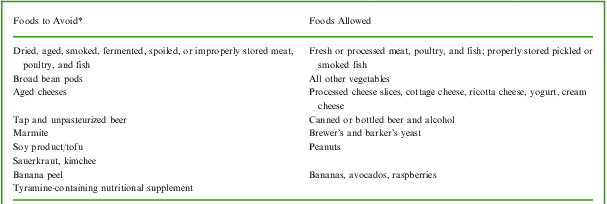
The author does wish the reader to consider that, in a certain subset of MDD patients, that MAO-A dysfunction, especially hyperactivity, may be a key factor among many that may lend to recurring, resistant, or refractory MDD. The use of MAOI agents should not be a treatment of last resort after 10–12 failed antidepressant trials occur or when the patient has become chronic with 2–3 years of unmitigated MDD. Clinically, female patients with recurring MDD and frequent loss of therapeutic antidepressant treatment response should be considered earlier than this for MAOI utilization given the neuroscientific basis presented in this article. There are no randomized or controlled trials in this area, of course. These scenarios rely on the clinician's previous experience in treating this patient population and the willingness to embrace a theoretical biologically oriented formulation. Additionally, the risk–benefit analysis of MAOI use must be considered. Key factors include the knowledge of drug–drug interactions (DDI), whereby a clinician should not add drugs with serotonergic reuptake inhibition to MAOI due to risk of serotonin syndrome. Outside of the customarily avoided SSRI, SNRI, and TCA, the reader should be aware that other drugs may have these properties hidden in their mechanisms of action. For example, the opiates tramadol, meperidine, fentanyl, methadone, and tapentadol all have serotonin reuptake inhibition (SRI) properties,Reference Gillman43 as do the antihistamines brompheniramine and chlorpheniramine.Reference Stahl and Felker44 Factually, clinicians often also forget that both cyclobenzaprine (for muscle pain) and carbamazepine (for epilepsy and bipolar disorder) are also TCA in structure. They are fairly devoid of SRI properties, but are still relatively contraindicated with MAOI use. These DDI can be intimidating to the prescriber of the MAOI, and the author often combines 2 basic rules as part of informed consent when prescribing MAOI to patients: (1) use 1 pharmacy and (2) carry and use a diet restriction card. The first rule is to alert the patient to use 1 single large chain pharmacy store routinely to fill his or her MAOI prescription. This single-pharmacy approach allows 1 agency to monitor all prescription drugs the individual patient receives, and large chain pharmacies deploy likely the most up to date computer tracking systems for DDI given their liability in dispensing conflicting medications.Reference Ansari45 This provides a double-checking system between the prescriber and the dispenser of the MAOI. Patients should also be instructed to bring all over the counter (OTC) vitamins, minerals, pain medications, cold, and allergy medicines to the pharmacist's counter to seek counseling from the pharmacist every time, as even OTC drugs can create serotonin syndrome complications. The second rule deals with the better-known tyramine hypertensive crisis, whereby ingested food containing tyramine (aged cheese, fava beans, banana peel, tap beer, marmite, sauerkraut, soy products, herring, or old or inappropriately stored meat, poultry, or fish, etc) may cause a robust release of norepinephrine, causing extreme hypertension, stroke, or heart attack in some cases. The rule here requires the patient to be aware of, and even carry a card delineating the foods that cannot be ingested while taking an MAOI (Table 1). Unfortunately, there is no double-check system in place, as the prescriber cannot ask the dispenser to monitor and counsel on diet in the same way it can counsel on DDI. Often, patients in practice seem the most worried that they will need to follow a hypertension diet (low salt), a cardiac diet (low fat), or a diabetic diet (low sugar), but in practice once they are told of the seemingly random list of about 20 foods to avoid, most patients seem compliant and become knowledgeable quickly regarding dietary restrictions. Using these 2 safety rules makes prescribing MAOI less intimidating than memorizing and navigating the many different MAOI interaction facts for both patient and clinician. The author hopes that these clinical pearls will allow for the appropriate and timely use of the MAOI class of antidepressants when warranted and after appropriate informed consent is given to the recurrent or treatment-resistant MDD patient.
MAOI dietary guidelines
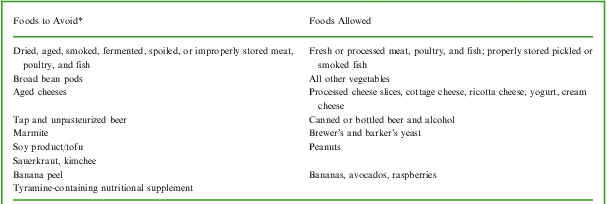
*Not necessary for 6 mg transdermal or low-dose oral selegiline
Copyright 2013 Neuroscience Education Institute. Used with permission.
Disclosures
Thomas L. Schwartz receives research support from Bristol-Myers Squibb, Cephalon, and Cyberonics.
No writing assistance was utilized in the production of this article.
CME Posttest and Certificate
CME Credit Expires: November 30, 2016
CME posttest study guide
NOTE: The posttest can only be submitted online.The below posttest questions have been provided solely as a study tool to prepare for your online submission. Faxed/mailed copies of the posttest cannot be processedand will be returned to the sender. If you do not have access to a computer, contact customer service at 888-535-5600.
1. Jackson is a 40-year-old male patient with treatment-resistant depression. In addition to depressed mood, he presents with the complaint of inattention and inability to concentrate. Inattention, poor concentration, and loss of vigilance may be due to:
A. Excess MAO activity in the prefrontal cortex
B. Excess MAO activity in the anterior cingulate cortex
C. Deficient MAO activity in the prefrontal cortex
D. Deficient MAO activity in the anterior cingulate cortex
2. Sarah is a 31-year-old patient with treatment-resistant depression. She has recently started taking a monoamine oxidase inhibitor (MAOI) and is having a promising therapeutic response. Females may have increased monoamine oxidase activity compared to males due to:
A. Incomplete X-inactivation
B. The presence of the SRY protein
C. Both of the above
D. Neither of the above
3. A 37-year-old man with a history of treatment-resistant depression has been successfully treated with a monoamine oxidase inhibitor (MAOI) for the last year. He recently suffered a broken wrist while playing tennis and is in quite a bit of pain. Which of the following would be an acceptable pain management option for this patient?
A. Hydrocodone
B. Meperidine
C. Tramadol
D. The patient cannot take any of these medications
4. Marlena is a 29-year-old patient with major depressive disorder. She has had little therapeutic benefit on previous trials of various SSRIs, SNRIs, or TCAs. You would like to start her on an MAOI, but she is reluctant because she is a vegetarian and does not want to have to give up her favorite foods, including cottage cheese, peanuts, and tofu. You inform her that while taking an MAOI, she would need to avoid:
A. Cottage cheese
B. Peanuts
C. Tofu
D. Cottage cheese and peanuts
E. Cottage cheese and tofu
F. Peanuts and tofu
G. All of the above
CME online posttest and certificate
To receive your certificate of CME credit or participation, complete the posttest and activity evaluation, available only online at http://www.neiglobal.com/CME under “CNS Spectrums.” If a passing score of 70% or more is attained (required to receive credit), you can immediately print your certificate. There is no posttest fee. Questions? call 888-535-5600 or email customerservice@neiglobal.com.