Highlights and Implications
-
• Combining community-based participatory research (CBPR) and legal epidemiology methods to inform policy is a successful way to dismantle structural racism and advance health equity by identifying opportunities to address historical race-based, health-harming policies, increasing community awareness of the health implications of past and future land use policies, and aligning policy efforts with community priorities.
-
• Adopting a CBPR-legal epidemiology approach to assess inclusion of equity, health, and health equity — three separate but related concepts — in policy could be beneficial to other communities.
-
• Future research is needed to assess the impact of including health equity in East Point’s comprehensive plan on future land use policies, health outcomes, health inequities, and other social determinants of health prioritized by the community.
Introduction
Public policies are increasingly being recognized for their contributions to structural racism, resulting in a wide range of harm, including racial and ethnic health inequities.Reference Bailey 1 Consequently, policy interventions are needed to address historical inequities, dismantle structural racism, and advance health equity. Structural racism, embedded in institutions and systems, “derives its strength and resilience from the interconnections among institutions.”Reference Gee and Hicken 2 The effects of structural racism can be explored through several separate but related concepts: equity, an umbrella term that encompasses a broad range of socioeconomic factors; health, which focuses on the specific ways in which structural racism affects health behaviors and outcomes; and health equity, which describes approaches that ensure everyone has a fair and just opportunity to attain their highest level of health. Policies intended to advance equity may or may not include a specific focus on health promotion and/or health equity. Evidence-based policy changes that promote health and advance health equity require multiple, coordinated actions across many domains, aligning the scientific evidence, community voice and activation, and political will.Reference Freudenberg and Tsui 3 As the Kingdon model demonstrates, a policy “window of opportunity” opens when the policy, politics, and problem streams align.Reference Kingdon 4
A wide range of research approaches have been leveraged to inform, implement, and evaluate policy interventions and their impact on health and health equity.Reference Douglas 5 However, these approaches tend to favor a single “stream,” which is insufficient to bridge the often conflicting (and sometimes contentious) interests, motivations, and priorities across research, community, and political systems that are essential to dismantling structural racism. For example, studies that quantify health inequities may bolster the problem, but may not provide policy solutions or align with the political environment. And evidence-based policy solutions may exist when the political will needed to modify policies is lacking, thereby maintaining the status quo.
Policy-focused research approaches, such as legal epidemiology, are increasingly being used to evaluate policies for their impact on health and health equity. 6 Legal epidemiology is the scientific study of how laws affect the spread and prevention of disease and injury in a population.Reference Ramanathan 7 Although legal epidemiology prioritizes scientific accuracy, accounts for jurisdictional differences, a key consideration for policymakers, and engages subject matter experts to inform research activities, these approaches often lack community engagement vital to understanding the impact of public policies on key populations disproportionately impacted by health inequities.Reference Ezell 8 Legal epidemiology approaches may also be less useful and have limited value for immediate policy efforts due to the substantial time and resources needed for implementation. Community-based participatory research (CBPR) is a research field that includes a “partnership approach that can facilitate capacity building and policy change through equitable engagement of diverse partners.”Reference Israel 9 CBPR models have successfully resulted in public policies that promote health. Often, however, misalignments remain between evidence prioritized in CBPR (i.e., community priorities) and the practical and political factors necessary for successful policy change.
Comprehensive strategies that leverage the strengths of these distinct approaches and address their limitations are needed. In order to dismantle structural racism in a meaningful, sustainable, and effective way, awareness of the health-harming effects of historical race-based policies (i.e., the problem stream), community-generated policy solutions to address inequities and promote health (i.e., the policy stream), and the political will to modify policies (i.e., the politics stream), must align. This paper describes a community-centered approach that combined community engagement and legal epidemiology research methods with practical, action-oriented systems-change approaches in East Point, Georgia. This approach resulted in modification of a local policy, the East Point Comprehensive Plan 2022–23 Updated, to include health equity for the first time.
City of East Point
The City of East Point (hereinafter referred to as “East Point”) is a predominantly Black city located in Fulton County, Georgia, with a population of approximately 38,000 people, that neighbors the City of Atlanta. East Point has a long history of structural racism. One of the first documented policies was in 1912, when an all-White, all-male East Point City Council adopted an ordinance that restricted Black residents to homes in undesirable sections of the city that neighbored industrial land, exposing residents to substandard housing and environmental conditions.Reference Mason 10 Today, the community designated for Black residents, now known as East Washington, has the highest rates of chronic conditions like diabetes and hypertension, and the lowest life expectancy. Structural racism continued to plague East Point through exclusionary zoning, redlining, forced segregation, and urban renewal that unequally distributed housing, education, and health care resources.
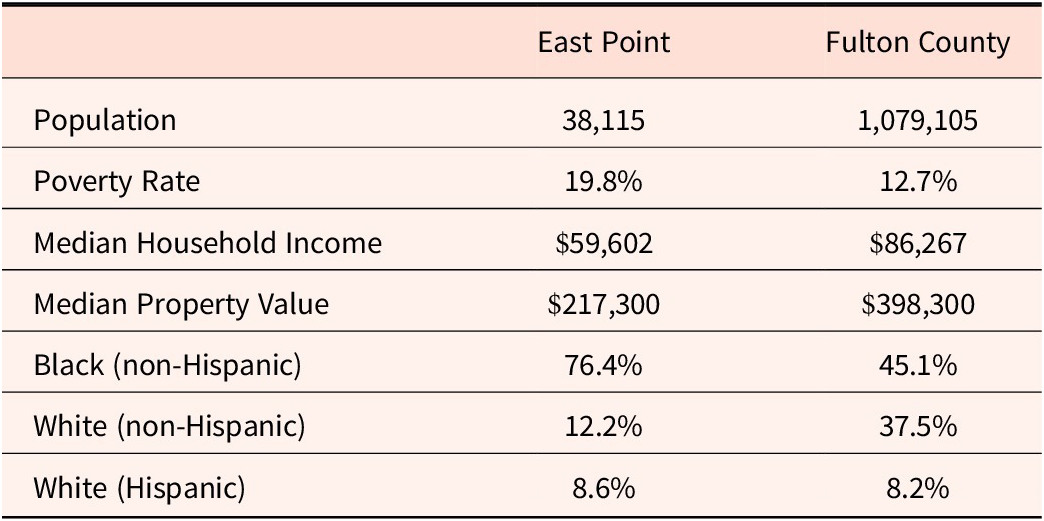
Compared to residents of Fulton County, East Point has a larger Black population, higher poverty rate, almost 50 percent of the median income, and more than two times lower median property value. Table 1 compares population demographics between East Point, GA, and Fulton County, GA.
Population Demographics: Comparing East Point, Georgia, and Fulton County, Georgia

Table 1. Long description
The table has three columns: indicator, East Point, and Fulton County. From top to bottom, the rows are as follows. Population: East Point 38,115, Fulton County 1,079,105. Poverty Rate: East Point 19.8 percent, Fulton County 12.7 percent. Median Household Income: East Point 59,602 dollars, Fulton County 86,267 dollars. Median Property Value: East Point 217,300 dollars, Fulton County 398,300 dollars. Black non-Hispanic: East Point 76.4 percent, Fulton County 45.1 percent. White non-Hispanic: East Point 12.2 percent, Fulton County 37.5 percent. White Hispanic: East Point 8.6 percent, Fulton County 8.2 percent.
Data Source: US Census Bureau (2023). QuickFacts: East Point, Georgia; Fulton County, Georgia. Retrieved from https://www.census.gov/quickfacts/.
Residents of north Fulton County live over a decade longer than residents of south Fulton County, where East Point is located.Reference Vance 11 Compared with more than 750 other cities across the country, East Point has above average rates of hypertension, obesity, diabetes, and mental distress.Reference Carnathan 12
In preparation for projected economic and population growth, East Point leadership committed to remedying the city’s racist past. In 2019, East Point adopted an Equity Resolution, which led to adoption of an Equitable Growth and Inclusion Strategic Plan (hereafter referred to as the “Equity Plan”) and a City Agriculture Plan.Reference Dashboard 13 Collectively, these plans outlined policy recommendations to address three key social determinants of health that contribute to poor health outcomes and health inequities: housing, land use, and healthy food access. Despite awareness that these policies could improve residents’ health, these plans lacked a clear, articulated connection to advancing health equity that dismantled structural racism.
Building on the momentum for equity in East Point, in 2021 researchers from a historically Black medical school located near East Point convened city leadership and three community organizations to discuss a federal funding opportunity focused on advancing health equity through policy, proposing to focus on adoption and implementation of the policy recommendations from the East Point Equity and City Agriculture Plans. Two of the three community organizations led the development of the East Point Equity and City Agriculture Plans and were therefore interested in supporting implementation of the policy recommendations from these plans — and willing to share their expertise, knowledge, and experience with the East Point community for the proposed project. The third community organization was engaged for their expertise in state and local policy and their relationships with policymakers, including those in East Point, providing guidance and advice on policy issues and strategies. Their preexisting relationships with East Point leaders and community members provided valuable insights for designing the proposal and would be leveraged to successfully build on the strong momentum for equity in the city. Following a series of collaborative discussions and a unanimous vote of support from the East Point City Council, the multi-sector team submitted a proposal intended to advance health equity through policy. 14 All three community organizations were included as funded partners in the proposal. The proposal was one of six selected for funding from across the country.
Development of a Three-Phase Community-Engaged Legal Epidemiology Research Approach to Inform Policy
The major goals of the project were to: (1) identify policies that contribute to health inequities using a legal epidemiology approach; (2) modify and implement policies that dismantle structural racism and advance health equity; and (3) evaluate the effect of the policy on health and health equity. The multi-sector team included faculty and staff from the academic institution and staff from the three community partner organizations, with combined expertise in law, public health, community engagement, implementation science, strategic communication, and evaluation. The main research question was: What evidence-based or evidence-informed policies have the most potential to improve health outcomes and reduce health inequities in the City of East Point, Georgia?
The multi-sector team prioritized the following principles in the research design: (1) community informs all activities; (2) acknowledge and use prior work and achievements; (3) build trust and authentic relationships; and (4) focus on sustainability. Aligning these principles with the project goals, the multi-sector team adopted a community-centered participatory approach that balanced research methods with flexible, real-time feedback loops between the community, public officials, and the multi-sector team. Sub-teams, hereinafter referred to as “teams,” were created from the multi-sector team to focus on specific aspects of the project, including community engagement and research efforts. The teams met on a more frequent basis, supplemented by full-team meetings to ensure cohesion and communication. A continuous quality improvement approach guided real-time decision making, allowing for changes based on community priorities, local context, and the policy making process. 15 This structure was important for real-time communication across teams to incorporate new information and community feedback, and to develop action plans.
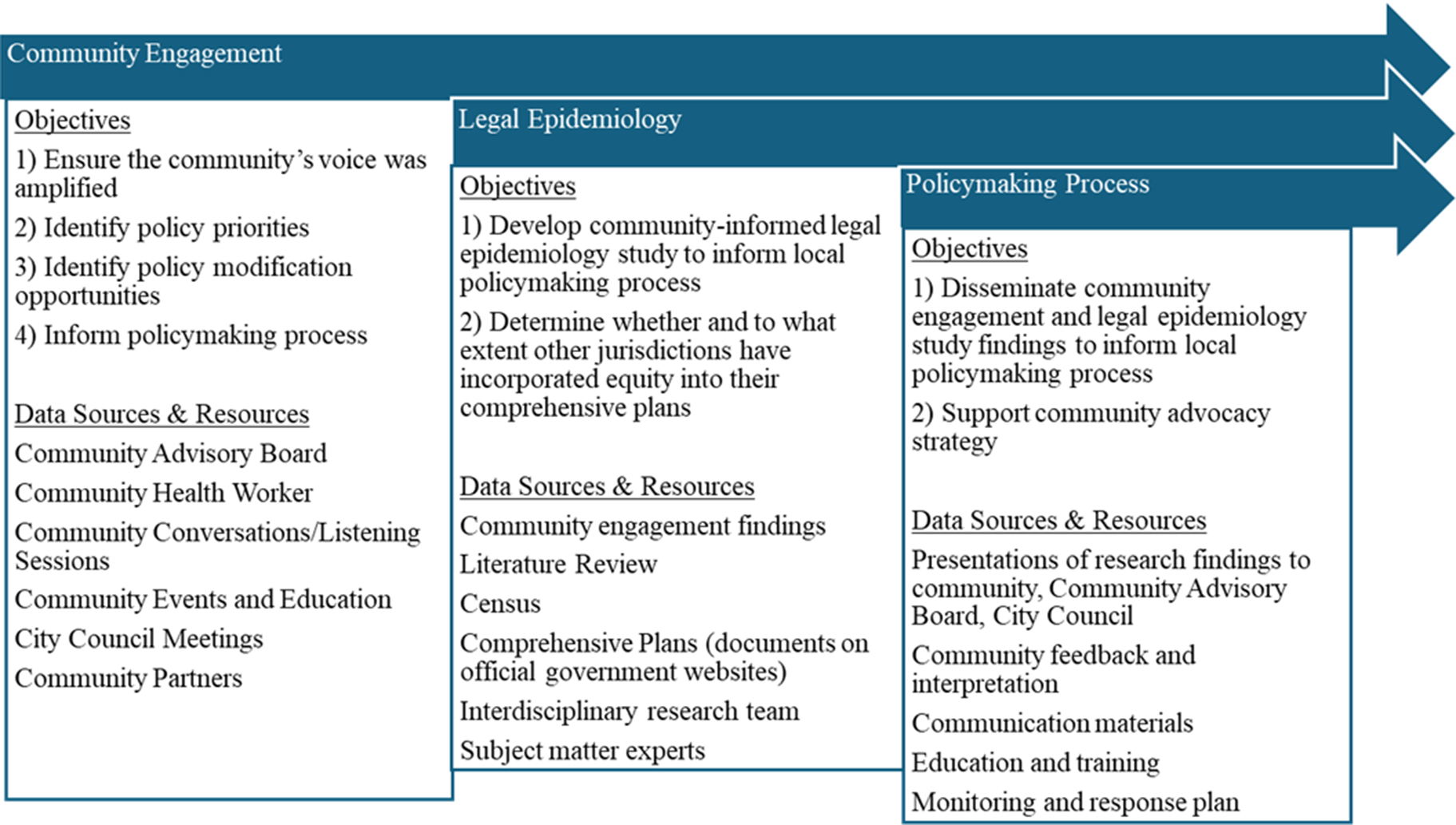
Given the research goals and principles, a three-phase approach was undertaken. First, the community’s policy priorities were established, and policy modification opportunities were identified. Second, research intended to inform the policy modification process was conducted. Finally, the team supported a community-centered/led policy action plan. Figure 1 describes the three-phase approach to community-engaged policy research and implementation developed by this project.
Three-phase approach to community-engaged policy research and implementation.

Figure 1. Long description
From left to right, the first phase is Community Engagement. Objectives listed are: 1. Ensure the community’s voice was amplified 2. Identify policy priorities 3. Identify policy modification opportunities 4. Inform policymaking process. Data Sources and Resources include Community Advisory Board, Community Health Worker, Community Conversations or Listening Sessions, Community Events and Education, City Council Meetings, and Community Partners. The second phase is Legal Epidemiology. Objectives are: 1. Develop community-informed legal epidemiology study to inform local policymaking process 2. Determine whether and to what extent other jurisdictions have incorporated equity into their comprehensive plans. Data Sources and Resources are Community engagement findings, Literature Review, Census, Comprehensive Plans (documents on official government websites), Interdisciplinary research team, and Subject matter experts. The third phase is Policymaking Process. Objectives are: 1. Disseminate community engagement and legal epidemiology study findings to inform local policymaking process 2. Support community advocacy strategy. Data Sources and Resources are Presentations of research findings to community, Community Advisory Board, City Council, Community feedback and interpretation, Communication materials, Education and training, and Monitoring and response plan. Each phase is visually separated by a blue arrow pointing right, indicating progression.
Phase 1: Community Engagement
The primary goals of community engagement were to: (1) ensure the community’s voice was amplified in the City’s ongoing efforts to advance health equity; (2) identify the single policy issue, as prioritized by the community, that would be the focus of the policy modification, implementation, and evaluation activities; (3) identify a policy modification opportunity that aligned with the priority issue; and (4) inform the policy modification and implementation process. To prepare for community engagement, a community profile was created using publicly available community-level data on health outcomes, health inequities, social and other factors to facilitate community conversations and support engagement activities. Higher than average rates of diabetes, hypertension, lack of access to healthy food, and lower than average life expectancy in East Point were visualized using maps and data comparing East Point with other communities across the country. The two community partner organizations that led the development of the East Point Equity and City Agriculture Plans were consulted to inform community engagement methods and strategies. Concurrently, the team analyzed data from the East Point Community Needs Assessment (CNA), a survey of over 400 residents conducted from January to April 2022 that included questions related to housing, food, health care, and other social needs. The CNA found that financial literacy (34 percent), utility assistance (33 percent), and legal services (24 percent) were of greatest need to residents.
Within the first six months of year one, the East Point Health Equity Community Advisory Board (CAB) was created, and began monthly meetings starting in April 2022. Potential CAB members were identified through relationships with East Point leaders and the community partners who had engaged the East Point community in their development of the Equity and City Agriculture Plans. The CAB was composed of 15 individuals, 12 of whom were East Point residents. The CAB included at least one resident from each of the four East Point wards, ensuring that a constituent of each City Council member was represented, which was an important strategy to inform and engage policymakers. Most of the CAB members had been involved in the city’s prior equity initiatives, and for this project, committed to attending monthly meetings, reviewing research plans, data, and findings, and providing feedback on community policy priorities to guide the research activities. CAB members received $100/hour compensation for their time.
The community profile and CNA findings were presented to the CAB. Following this presentation, the team led a discussion to identify the outcomes of most importance to the CAB, which were quality of life, health equity, and behavioral health. The CAB was also asked to rank several policy issues to establish which should be the focus of the project, based on the community needs and priority outcomes. The policy issues included affordable housing, access to healthy food, land use and environmental justice, and access to health care. 16 This exercise revealed several key findings that would drive project activities. First, the community had immediate, urgent needs that could not wait for long-term policy solutions. Second, the policy issues could not be addressed separately. Instead, the project should focus on policies that could advance a more holistic approach to community health and health equity (i.e., a health-in-all-policies approach). Third, the CAB recognized that to engage and activate the broader community in this work, a community-wide information and education campaign would be needed.
From this guidance, the team developed a community engagement and education plan. Recognizing the need for trusted messengers, the team decided to hire a community health worker (CHW) and, in consultation with the CAB, developed a job description and hiring criteria that required the CHW to be a member of the East Point community. The CHW would attend events and activities hosted and sponsored by the community and other organizations to educate attendees on health equity, listen to the community’s feedback, and report this feedback to the team and CAB. The team would send meeting notes and surveys to CAB members to provide them with discussion points, next steps, and the opportunities to provide feedback following their monthly meetings. During the meetings, CAB members also suggested events and partners for engagement and dissemination opportunities.
To facilitate communication, receive feedback, and build relationships with policymakers, the team and the CAB presented to City Council three times at their public meetings, receiving feedback at each. During this period, the team met with the mayor and city staff 23 times, in individual and group meetings. Team members attended listening sessions, served on a city-led committee focused on housing issues, and attended various community events sponsored by the City and community groups — all of which provided opportunities to observe and engage with residents, public officials, and community organizations. The team, including the policy-focused community partner organization, reviewed existing East Point policies and the policy recommendations included in the East Point Equity and City Agriculture Plans, and conducted literature reviews to identify policy opportunities.
Engagement with City officials revealed that the City was preparing to update its Comprehensive Plan, a state-mandated process that must be completed every five years following procedures established in state statutes and regulations. Comprehensive Plans describe a community’s vision, goals, and high-level details for future growth and development, and guide the long-range development of counties, cities, towns, and other local jurisdictions.Reference Rose 17
Comprehensive plans address a number of social determinants of health, including housing, transportation, development of green spaces, and land use for industrial, commercial, and residential purposes. Historically, structural racism associated with land use decisions, policies, and practices has created impoverished communities and multi-generational racial and ethnic inequities in wealth, income, and health, and “equity” has not been included in comprehensive planning.Reference Rouse 18 However, cities across the US have begun to incorporate equity into their comprehensive plans, and equity-focused comprehensive plans containing land use strategies that address this legacy of racial injustice are an emerging trend.Reference Loh and Kim 19 Using a community science approach, which involved community volunteers in the data collection, Loh & Kim (2021) reviewed 48 comprehensive plans and concluded that equity was an emerging but underutilized concept in comprehensive plans.Reference Heckert and Rosan 20
Although equity in comprehensive plans was an emerging topic, whether and to what extent health and health equity were being adopted into comprehensive plans was unknown, and therefore ripe for further exploration to assess different policy approaches, identify opportunities for policy modification, and develop an approach that aligned with East Point community needs and priorities. For this project, the opportunity to include health equity in the East Point Comprehensive Plan update uncovered questions that could be answered about whether and how other jurisdictions are (or are not) including equity, health, and health equity in their comprehensive plans. At this time, the East Point Comprehensive Plan update process was already underway, so the evidence generated by the policy mapping study, reviewed below, provided answers to these questions that were urgently needed.
Phase 2: Using Community Engagement to Inform Legal Epidemiology
Legal epidemiology is an interdisciplinary field that examines the effects of laws on health, resulting in evidence to inform public health and policy strategies.Reference Thompson 21 Policy mapping, also described as policy surveillance, is a legal epidemiology method that identifies and measures differences in laws, allowing for comparisons across jurisdictions and study of specific legal provisions.Reference Burris 22 Given that all municipalities in Georgia are required by state law to undertake comprehensive planning and the potential health impact of comprehensive plans, conducting a policy mapping study provided an avenue to identify variation and compare approaches across jurisdictions. 23
The team reviewed comprehensive plans from approximately ten jurisdictions in Georgia and two outside of Georgia to inform the study scope and policy coding scheme. Through this initial review, data sources were identified and coding themes developed, providing a basis for the study protocol. A primary coder and a coding supervisor from the academic institution conducted legal epidemiology activities. Informed by the Loh & Kim study, initial review of 12 comprehensive plans, and community engagement findings, the team adapted established policy surveillance methods to align with the community engagement findings, ongoing comprehensive planning process, and need for timely and relevant data. 24 Methodological decisions to align with the policymaking timeline and political factors included condensing the coding themes from the Loh & Kim study and applying a health equity lens. The Loh & Kim study evaluated comprehensive plans across 10 plan elements and included more than 50 questions. In addition, their study focused on the broader issue of equity but did not assess plans for their potential impact on health or health equity. Based on feedback from the community following presentations of the community needs assessment and health statistics, the team decided to assess whether other comprehensive plans included data on health, health equity, health care access, and social determinants of health.
The first coding instrument was discussed with the multi-sector team, including community partner organizations, and their feedback was incorporated. For example, the community partner that led the development of the Equity Plan wondered whether the policy recommendations from the Plan were mentioned in other comprehensive plans — in particular inclusionary zoning ordinances, community benefit ordinances, and/or community impact fees — so the team added questions related to these specific policies. The final coding instrument included questions to assess the following themes: (1) whether the plans included terms related to equity, health, and health equity; (2) whether the plans described the health, health inequities, health care access, and/or social determinants of health among the population; and (3) whether the plans mentioned the specific policy recommendations from the East Point Equity and City Agriculture Plans.
To inform the East Point Comprehensive Plan update and limit the scope of the coding protocol to politically relevant comparisons, jurisdictions were selected based on proximity to East Point, population size, and racial diversity. Census data was used to record and compare population size and demographics. For Georgia cities, the most recent comprehensive planning documents were collected and downloaded from the state Department of Community Affairs website. For jurisdictions outside of Georgia, comprehensive planning documents were collected and downloaded from the jurisdiction’s official website. Once all relevant documents were stored, jurisdiction profile sheets were created that included relevant information about each jurisdiction, including the population size and demographics, comprehensive plan effective dates, and official government website.
The coding instrument consisted of eight primary questions and nine sub-questions. Primary coding was conducted from September 5, 2022, through September 15, 2022. The primary coder applied the coding questions to each jurisdiction. Upon completion of primary coding, the coding supervisor randomly selected four jurisdictions for secondary coding. Discrepancies were discussed and upon consensus, modifications to the protocol were made and re-coding was conducted.
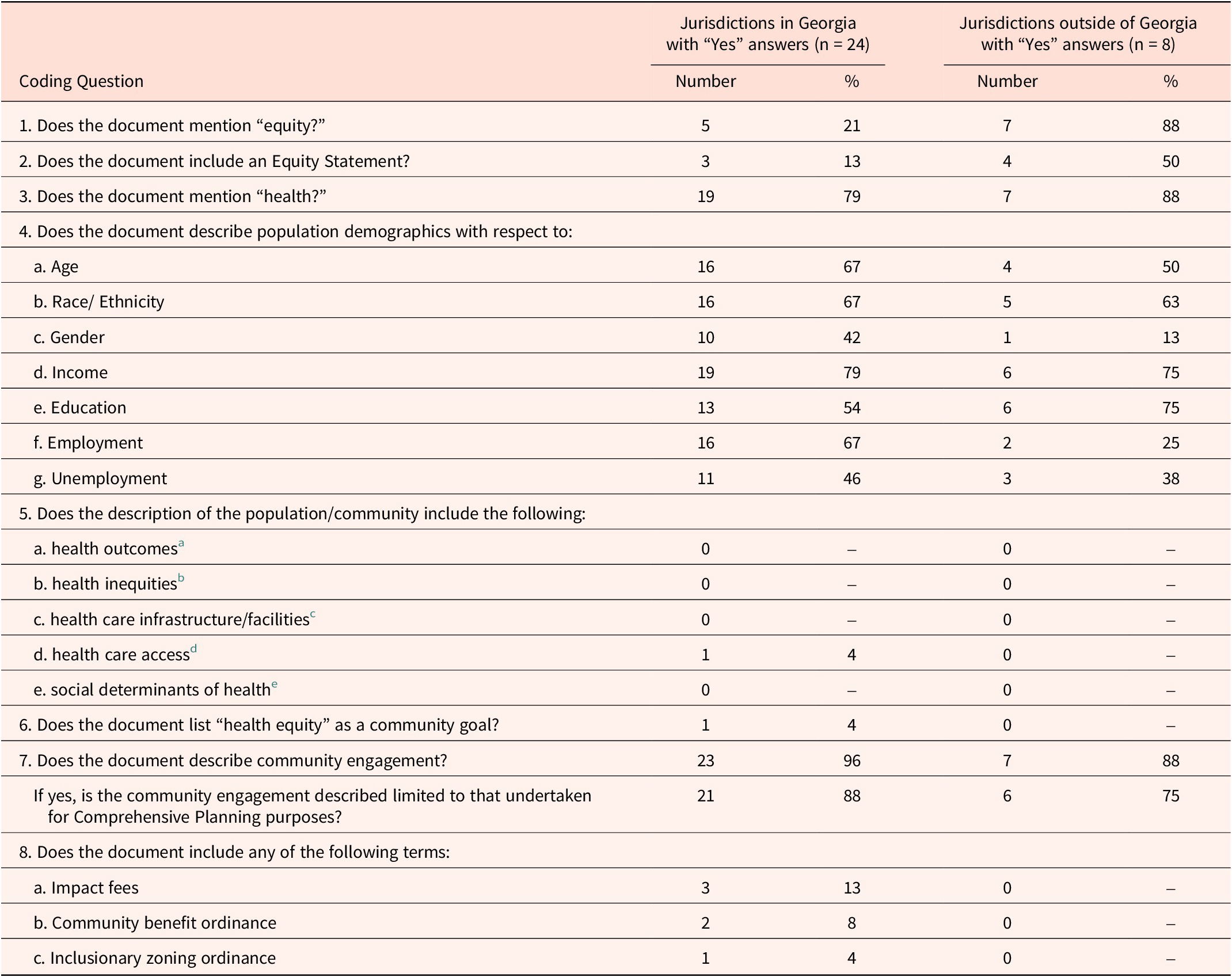
The study sample included 24 jurisdictions in Georgia and 8 outside of Georgia. Table 2 includes the legal coding instrument and jurisdictional responses for jurisdictions in Georgia and outside of Georgia.
Assessing equity in comprehensive plans: coding instrument and jurisdictional responses

Table 2. Long description
Starting from the top row, the table lists coding questions in the leftmost column. The next columns display responses for jurisdictions in Georgia and outside Georgia, each split into number and percent. For ‘Does the document mention equity?’, Georgia has 5 responses (21 percent), outside Georgia has 7 (88 percent). For ‘Does the document include an Equity Statement?’, Georgia has 3 (13 percent), outside Georgia has 4 (50 percent). For ‘Does the document mention health?’, Georgia has 19 (79 percent), outside Georgia has 7 (88 percent). For population demographics, Georgia responses are: age 16 (67 percent), race/ethnicity 16 (67 percent), gender 10 (42 percent), income 19 (79 percent), education 13 (54 percent), employment 16 (67 percent), unemployment 11 (46 percent). Outside Georgia: age 4 (50 percent), race/ethnicity 5 (63 percent), gender 1 (13 percent), income 6 (75 percent), education 6 (75 percent), employment 2 (25 percent), unemployment 3 (38 percent). For population/community description, health outcomes, health inequities, health care infrastructure/facilities, and social determinants of health are all zero or not reported. Health care access is reported in Georgia as 1 (4 percent), zero outside Georgia. Health equity as a community goal is 1 (4 percent) in Georgia, zero outside Georgia. Community engagement is described in Georgia 23 (96 percent), outside Georgia 7 (88 percent). If engagement is limited to comprehensive planning, Georgia has 21 (88 percent), outside Georgia 6 (75 percent). For included terms: impact fees, Georgia 3 (13 percent), outside Georgia zero; community benefit ordinance, Georgia 2 (8 percent), outside Georgia zero; inclusionary zoning ordinance, Georgia 1 (4 percent), outside Georgia zero. Footnotes clarify definitions for health outcomes, health inequities, health care infrastructure, health care access, and social determinants of health.
a defined as rates of illness or disease
b defined as comparison of health outcomes across two groups
c defined as inventory of hospitals, primary care practices, behavioral health providers, and/or federally qualified health centers
d defined as rates of insured/uninsured, medically underserved areas, and/or health professional shortage areas
e defined as those listed in Figure 1 of Samantha Artiga and Elizabeth Hinton, “Beyond Health Care: The Role of Social Determinants in Promoting Health and Health Equity,” KFF Issue Brief, May 10, 2018. https://www.kff.org/racial-equity-and-health-policy/issue-brief/beyond-health-care-the-role-of-social-determinants-in-promoting-health-and-health-equity/ (last visited February 4, 2026).
Only 5 jurisdictions (21 percent) in Georgia and 7 jurisdictions (88 percent) outside of Georgia mentioned the term “equity,” while 19 jurisdictions in Georgia (79 percent) and 7 jurisdictions outside of Georgia (88 percent) mentioned “health” in their comprehensive plans. More than half of the jurisdictions described their populations by age, race/ethnicity, income, and education. However, none of the jurisdictions included data related to health outcomes, health inequities, and/or social determinants of health in their comprehensive plans. Three jurisdictions (13 percent) in Georgia and four jurisdictions (50 percent) outside of Georgia included an “equity statement,” and only one jurisdiction in Georgia listed “health equity” as a community goal. These jurisdictions served as examples for the community to consider.
Phase 3: Using Community Engagement and Legal Epidemiology to Inform Policy
The policy mapping findings highlighted ways in which other cities and jurisdictions had (or had not) incorporated equity and health equity into their comprehensive plans. While health was a common issue mentioned in most comprehensive plans, very few included language that concretely connected the plans’ potential effect on the community’s health or health equity. These gaps presented opportunities for East Point to explore in its comprehensive planning process, to align its commitment to health equity with this important planning document, and to serve as a model for other cities in Georgia and across the country.
Community engagement continued, and the engagement strategy shifted to focus on information sharing and strategy. Because the Comprehensive Plan update process was already underway, the “window of opportunity” was open, and timing continued to be an important part of the strategy to inform the planning process. It is important to note that the project’s role in the policy modification process was solely focused on sharing the findings from the community engagement activities, the evidence base for policies that advance health equity, and results of the policy mapping study to inform and support the decisions made by East Point residents and policymakers.
Knowledge of the comprehensive plan update process varied across individual CAB members. Some were learning about this policy for the first time and others were knowledgeable and already engaging. In fact, two CAB members served on the East Point Comprehensive Plan Steering Committee, independent of their role as CAB members. At the invitation of the team, the City’s Director of Planning and Development attended a CAB meeting to share information about the process, answer questions, and hear feedback from CAB members. She also shared the website where public input was being collected and several upcoming community engagement events. At this CAB meeting, the team presented the policy mapping results, summarized the limited evidence base for health equity in comprehensive plans, and described opportunities to integrate health equity into the East Point Comprehensive Plan that were based on these findings. The team shared a draft Equity statement, developed using examples from the policy mapping study findings, for the CAB to consider and revise. The CAB revised the Equity statement and expressed support for adding health equity as a community goal, as well as adding data on health, health equity, and social determinants of health to the plan.
Upon approval from the CAB and with their guidance, communication materials were created to synthesize and convey the formative research findings. A one-page summary was created highlighting opportunities to integrate health equity into the East Point Comprehensive Plan update, which included health data and statistics from the community profile, findings from the community engagement activities, and the results of the policy mapping study. It also highlighted opportunities for East Point to integrate health equity into the comprehensive plan, including those that were agreed upon by the CAB. The one-page summary was disseminated to the CAB for their own personal use and to share with their neighbors and networks and was also disseminated at Comprehensive Plan community engagement events.
In December 2022, the team presented project updates to the City Council, including the opportunities to integrate health equity into the Comprehensive Plan. Two CAB members co-presented along with two of the team members. In January 2023, the first draft of the Comprehensive Plan update was released for public input. 25 Equity was mentioned 30 times. The team compared Draft 1 with the previously identified opportunities to integrate health equity into the comprehensive plan — and identified several missed opportunities, including an Equity Statement, stating health equity as a community goal, and inclusion of data related to health outcomes, health inequities, and social determinants of health. The team shared these findings with the CAB, along with additional opportunities to provide community input.
The Comprehensive Plan Draft 1 was presented to City Council by the City Department of Planning and Development, and the team was provided an opportunity to share the policy mapping study results with City Council at this meeting. In addition, several of the CAB members presented their deliberations and conveyed their desire to see health equity in the comprehensive plan. At this meeting, the City Council voted to include an Equity Statement in the second draft of the Comprehensive Plan. Individual council members provided additional input, suggested revisions, and offered the opportunity for public input on the Equity Statement. The second draft of the Comprehensive Plan update was released for public review and input in February 2023. 26 Draft 2 mentioned equity 47 times, included the collaboratively developed Equity Statement, and listed health equity as a community goal. These additions were included in the third and final draft, which was adopted by City Council on July 17, 2023. 27
Crafting a New Paradigm: Using Synergies Between Community-Based Participatory Research, Legal Epidemiology, and the Policymaking Process to Advance Health Equity
To effectively dismantle structural racism in policy to advance health equity, engaging the community in the policymaking process is vital. Community members are true experts on their community’s history, needs, and vision. In this project, actively centering the community’s voice directed the focus of the legal epidemiology study — and sharing the study results with CAB members proved to be a transformative moment in the project, inciting a sense of agency and empowerment that came from recognizing the potential for tangible, systems-level change. This encouraged them to present opportunities to embed health equity into the Comprehensive Plan to City Council and to share the study findings with their friends and neighbors who submitted public comments in support. These efforts, which emerged organically from the community, were the vehicle for the modification of the Comprehensive Plan. As constituents, East Point residents were empowered to speak directly to their elected officials about the effects of policies. The community-centered LEF approach not only led to a stronger, more collaborative policymaking process in East Point, but demonstrated its ability to serve as an emerging evidence-informed practice that can be employed to support community members to act within their own local governance systems to produce health equity-focused policy change.
Traditionally, legal epidemiology is a research method used to create legal data suitable for practical research and to conduct evaluation studies. Legal epidemiology research is often informed by subject matter experts, literature, and emerging public health issues, and less often by the communities affected by the policies being studied. For this project, prioritizing community engagement as a key data input resulted in a culturally responsive, health-in-all-policies approach to equity, and ensured a higher likelihood of successful policy modification and long-term implementation. Community engagement fundamentally changed the focus of the research, the methodological approach, and the dissemination strategy. Defining a narrow scope of coding questions and jurisdictions, applying a health equity lens to prior research, and incorporating community priorities into the coding instrument resulted in a rapid, responsive study, while maintaining the standards and scientific rigor that are essential for legal epidemiology studies.
Traditionally, policy mapping and surveillance studies identify jurisdictional differences in legal texts as the foundation for practical research. However, knowledge about what other jurisdictions are doing is highly impactful information for informing the local policymaking process. For these reasons, researchers conducting legal epidemiology should be aware of ways in which research findings can support policymaking and consider practical approaches for dissemination and use of research findings by affected communities. In addition to publishing research in scholarly journals, researchers have the knowledge and expertise to develop evidence-informed, community-centered dissemination materials. In this context, the valuable information on jurisdictional differences was combined with the real-time community feedback and cultural context setting needed to inform policy decisions. Results from the community-informed legal epidemiology study became powerful advocacy tools by highlighting opportunities for East Point to lead in this space, while also providing reassurance that other cities had done some similar things and assuaging relevant community concerns. The creation of one-pagers and presentations enabled the researchers and community members to share findings broadly, using communication strategies that reached key decision makers.
Positioning community members to guide decisions resulted in enriching outcomes — including changes to the original research plan that ensured buy-in from the community, who ultimately had the power to advocate for policy changes by engaging with their elected officials and neighbors — and participating in the policymaking process. Unlike traditional CBPR approaches, which focus on research outcomes, this project’s end goal was community-informed and -driven policy and systems change. This adds an additional layer of complexity, as systems change is complex and difficult for community members to prioritize over immediate needs. Policy change cannot be separated from the ever-changing political or community environment, which is out of researchers’ control. For example, the abrupt closure of the city’s only emergency department, and later news coverage, propelled health care access to the forefront of community priorities. Thus, despite health care access not being a priority policy focus area in our first project plans, we were compelled to examine community members’ concerns about the health care landscape, and leverage opportunities for other institutional partners (namely Morehouse Health Care) to address immediate needs. For these reasons, researchers attempting this type of work must be prepared to constantly adapt to environmental challenges that arise during the project. This speaks to a larger challenge faced by traditional legal epidemiology and community-based participatory research: program resources and timelines often do not align with real-time policymaking cadences. These valuable inputs need pragmatic, integrated, and rapid-response adaptations. There is often not a playbook for this course of responsive action but incorporating community feedback can result in strategies that are unique and responsive to the political moment.
Lessons Learned and Next Steps: Navigating Complexities and Ensuring Sustainability for Advancing Health Equity Through Community-Based Legal Epidemiology
In less than 18 months, with the support and resources provided by this project, the East Point community took concrete steps to collaboratively modify a local policy that builds upon ongoing efforts to dismantle structural racism and advance health equity. Adding health and health equity to the comprehensive plan lays the foundation for the prioritization of health equity in future legislation, as comprehensive plans serve as the basis for the development of ordinances, zoning codes, and other legal instruments. Successful implementation and sustainability of project activities were strengthened by establishing new and maintaining pre-existing relationships. Engagement and relationship-building started with the development of the funding proposal by including community partners with previous experience leading equity initiatives in the City. Prior to funding being awarded, an opportunity to assess and align proposed project activities with East Point’s ongoing efforts and priorities was essential, demonstrating commitment to building on the City’s accomplishments rather than creating new initiatives that were non-responsive to the community’s priorities and needs. The time and resources invested in developing the proposal established trust, which provided a strong foundation for collaboration once the funding was awarded. Relationship-building continued throughout the project, as demonstrated by the substantial number of stakeholder meetings, activities, and engagement events.
One key goal of the project was to increase awareness of health equity across the community and leaders. As Purtle et al. found, many local policymakers are unaware of the existence and extent of health inequities in their communities. 28 Although East Point leaders had taken decisive action to demonstrate their commitment to equity, their awareness of health inequities in their community, the contributing role of social determinants of health, and their potential role as policymakers was unclear. Lack of awareness affects political will and can be one of the biggest barriers to policy change. Efforts to generate and foster political will are time and resource intensive, sensitive to changing conditions and events, and impossible to predict. Despite high levels of political will for equity, connecting policy solutions related to housing, land use, and healthy food access with health equity was challenging, especially in the context of the local emergency department closure. Public officials and residents were focused on this problem, sought instant solutions, and did not see the immediate value in long-term policy solutions addressing social determinants of health. Acknowledging the pressing need while also sharing evidence that factors outside of the health care system have a much larger impact on health than clinical care helped maintain the focus on policies to address social determinants of health. Harnessing East Point leaders’ prior commitment to equity — as demonstrated by their adoption of an equity resolution, Equity Plan, and City Agriculture Plan — helped the policy modification process.
The Comprehensive Plan update not only provided an opportunity to incorporate health equity into local policy but also created a space to address priority issues identified by the community, as well as other key issues such as health care services and transportation conditions. By integrating health equity into the Comprehensive Plan, East Point has solidified a sustainable commitment to health equity — and created a framework for applying a health equity lens in future policies, including zoning policies and land use decisions. In February 2023, the City announced the creation of the East Point Office of Equity, Inclusion, and Empowerment. This office is tasked with centering equity in the City’s policies, programs, and practices, and will serve as a key resource for sustaining the city’s momentum and actions for equity and health equity. This office can continue to implement the policy recommendations from the East Point Equity and City Agriculture Plans, also highlighted in the Comprehensive Plan, leveraging the East Point Community Advisory Board and increased awareness of health equity established by this project.
Conclusion
The collaborative approach that combined distinct research and community engagement methods with practical, action-oriented systems-change approaches resulted in promising and sustainable policy modifications that promote health equity and create the foundation to dismantle structural racism. The synergy between legal epidemiology and CBPR lies in the potential to leverage the strengths of each approach. Legal epidemiology provides data and policy-relevant outcomes, while CBPR ensures community engagement and relevance. The conflict arises from each approach’s differing focuses, timelines, and resource requirements. Addressing these conflicts requires adaptations and a willingness to navigate political and community environments. By strategically integrating these approaches, meaningful and impactful policy changes that are both evidence-based and community-driven can be achieved. This project can serve as a model for other communities to emphasize the importance of being culturally, linguistically, and geographically responsive to residents’ needs.
Acknowledgments
Thank you to all the residents, partners, and leadership of the City of East Point. A special thank you to the CAB for your guidance and support of the project.
This project is supported by the Office of Minority Health of the US Department of Health and Human Services (HHS) as part of a financial assistance award totaling $1,224,845 with 100 percent funded by OMH/OASH/HHS. The contents are those of the author(s) and do not necessarily represent the official views of, nor an endorsement by, OMH/OASH/HHS or the US Government. For more information, please visit https://www.minorityhealth.hhs.gov/ (Award #: CPIMP211312). The authors have no other conflicts of interest to disclose.
Author contribution
All the authors participated in the study design, analysis, and/or interpretation of data, drafting and revising the paper, and have seen and approved the final version of the manuscript.
Ethical compliance
In accordance with the Declaration of Helsinki, this study was reviewed by the academic institution’s Institutional Review Board (IRB) and determined to be approved by IRB review under section 45 CFR 46.101, item 2.