Humans are now in a poor position to say what the formed integrities elsewhere in the solar system are. Speculating over what places, planets, moons should be designated as nature preserves would be more foolish than for Columbus to have worried over what areas of the New World should be set aside as national parks and wildernesses. All the same, in retrospect, our forefathers would have left us a better New World had they been concerned sooner about preserving what they found there…
— Holmes Rolston, IIIIntroduction
One of the most compelling reasons for exploring our Solar System is the possibility that in doing so, we might discover new forms of life. Although few still hold out hope for the discovery of large, complex life forms, nevertheless many anticipate the discovery of microbial life, perhaps in the Martian subsurface, the subsurface oceans of Europa or Enceladus, or in the hydrocarbon lakes of Titan. Planetary protection policies – in particular, those concerning forward contamination of the space environment – have been devised in order to protect the scientific viability of the search for life in these and other locations in the solar system. Among the many questions raised by these policies is whether microbial extraterrestrial life would fall under the scope of moral consideration. A common perspective here is that such life would have a special moral status and that it would be worth protecting for its own sake.Footnote 1 Some have even gone so far as to suggest that extraterrestrial microbes should be protected even if this requires prohibiting any scientific study of this life.Footnote 2 Consequently, it has been argued that the mere potential for an environment to harbour extraterrestrial life (or traces of past life) constitutes an ethically compelling reason for implementing planetary protection policies in order to protect that environment from biological and organic-chemical contamination. In contrast, alternative reasons for protection (e.g. conservation for future study or exploitation) tend to be regarded as non-ethical or as merely pragmatic.
But what about space environments that we do not at all suspect of harbouring life or traces of past life? Are these environments mere instruments for satisfying our desires, whatever those may be? Does nothing of ethical significance hang in the balance when we contemplate the exploration and use of these environments? Or are there nonetheless ethical reasons for maintaining that lifeless space environment might sometimes be worthy of protection? If so, what should we say about these issues as we entertain the possibility of exploration beyond our Solar System? Should a concern for planetary protection place any constraints on the kinds of interstellar expeditions that we might one day mount? Or will such exploration likely take place for purposes that moot any desire on our part to protect other solar systems?
In this paper, I suggest that mainstream ethical discussion concerning forward planetary protection is dangerously jaundiced, in that, it gives the appearance that ethical considerations are exhausted by a duty to protect living organisms. This rather narrow conception of forward planetary protection ethics ignores a seldom-recognized possibility: That we have an ethical duty to scientifically study the solar system, and that satisfying this duty requires protecting opportunities for satisfying scientific curiosity regardless of whether that curiosity is biological in nature.Footnote 3 If we recognize this broader ethical duty to conduct science in the solar system, then we have coherent grounds for broadening the scope of ethically motivated forward protection to include at least some lifeless environments. In brief, there is a life bias in thought about the protection of the space environment, and I think that it is one that we can and should overcome. (Nota bene: My concern throughout is exclusively with those aspects of planetary protection which concern forward contamination. Thus all subsequent uses of the term ‘planetary protection’ should be understood to refer specifically to protection against forward contamination.)
I present evidence for the existence of the life bias in the section ‘The life bias in planetary protection ethics’, and in the section ‘Planetary protection for lifeless planets?’ I frame and discuss an alternative approach that deemphasizes – but does not eliminate – the role of life in planetary protection ethics. In the section ‘Interstellar planetary protection’ I entertain the question as to whether we should take the life bias with us as we venture beyond the solar system. After all, how we decide to conceive of the scope and ethical justification for planetary protection – e.g. with or without a bias toward life – has consequences for the planning of interstellar exploration missions. I argue that early missions to other solar systems – exploratory probes and human precursor missions – would benefit from a non-life-biased approach that, as a rule, aims to preserve as many sites of scientific interest as possible in the target system.
The life bias in planetary protection ethics
What I here call the ‘life bias’ in planetary protection ethics can be summarized roughly as the belief that a space environment is worthy of protection if and only if it is home to life (or traces of past life).Footnote 4 A life biased perspective, or a defender of a life biased view, holds that the ethical rationale for planetary protection is exhausted by a concern to protect extraterrestrial life from biological and organic-chemical contamination. Thus, although a life biased individual may consistently endorse alternative reasons for protection, e.g. to preserve opportunities for the scientific study of extraterrestrial life, nevertheless, such a person would not recognize these as ethical reasons since they do not aim ultimately to protect life, but rather to protect the study of life (in the given example).
The historical and current function of planetary protection is to preserve the scientific viability of sites of interest in the search for life.Footnote 5 In particular, the goal is to minimize the risk of biological and chemical contamination of these sites because ‘[t]he conduct of scientific investigations of possible extraterrestrial life forms, precursors and remnants must not be jeopardized.Footnote 6’ Depending on the nature of the proposed mission, protection requirements can be as simple as documentation and trajectory biasing (in the case of certain flyby missions), or as onerous as bioload reduction and partial sterilization (in the case of certain lander missions). COSPAR has not always endorsed any ethical motivation for these policies, and has only in the last two decades fostered serious discussion about involving ethical considerations in the rationale for planetary protection. This is already telling evidence of the existence of the life bias, in that the desire to protect ‘scientific investigations of possible extraterrestrial life forms’ was not (and generally still is not) seen in and of itself as an ethical consideration. Rather, the perspective that appears to have gained the most traction is one according to which planetary protection is only genuinely ethically motivated when it is pursued for the sake of extraterrestrial life. Or, in other words, planetary protection only becomes ethical when protection policies are supplemented with a normative ethical theory under which extraterrestrial life forms – including microbial life forms – are recognized as intrinsically valuable.
What further evidence is there for the life bias and its affects on thought about the rationale for (and scope of) planetary protection? An early and, no doubt, influential antecedent of contemporary life biased attitudes comes from Carl Sagan's widely promulgated entreaty in Cosmos Footnote 7 that:
If there is life on Mars, I believe we should do nothing with Mars. Mars then belongs to the Martians, even if the Martians are only microbes. The existence of an independent biology on a nearby planet is a treasure beyond assessing and the preservation of that life form must, I think, supersede any other possible use of Mars. (Sagan Reference Sagan2013, 138)
However, it is somewhat difficult to accuse Sagan of himself espousing the life bias, since he earlier articulates a fascination even for items of more strictly geological interest when speaking about photographs sent from the Viking landers:
The landscape is stark and red and lovely: boulders thrown out in the creation of a crater somewhere over the horizon, small sand dunes, rocks that have been repeatedly covered and uncovered by drifting dust, plumes of fine-grained material blown about by the winds. Where did the rocks come from? How much sand had been blown by the wind? What must the previous history of the planet have been to create sheared rocks, buried boulders, polygonal gouges in the ground? What are the rocks made of? The same materials as the sand? Is the sand merely pulverized rock or something else? (ibid., 126)
Nevertheless, this enthusiasm is immediately followed by the more tempered realization that
…the camera revealed no sign of canal builders, no Barsoomian air cars or short swords, no princesses or fighting men, no thoats, no footprints, not even a cactus or a kangaroo rat. For as far as we could see, there was not a sign of life. (ibid., 126)
Whether Sagan intended it or not, it is difficult not to read some level of disappointment in this remark – that Mars, in showing no obvious signs of life, was for that reason less important, or less valuable of a place. And, whether Sagan would have ultimately approved, this attitude, manifested as what I call the life bias, continues to play a large role in ethical discussions about planetary protection.Footnote 8
Charles Cockell is perhaps the most vocal contemporary advocate for attributing a special ethical status to life, including microbial life, in planetary protection ethics. In its most recent articulation, Cockell's position is a kind of non-anthropocentric holism according to which communities of microbes (extraterrestrial or otherwise) warrant moral consideration.Footnote 9 Cockell's emphasis on communities of life is a bow to practical considerations – it would be difficult, if not impossible, to practice an ethic that required humans to protect individual microbes, but it is nevertheless possible for us to manage interactions with microbial communities. Cockell notes that the preservation of such life forms is an important ethical basis for planetary protection (2005, 289). This alone would not convict of Cockell of life bias, since arguing that extraterrestrial life warrants moral consideration is not tantamount to arguing that locations without life warrant no consideration. However, he does later push for life biased views regarding lifeless planets, entertaining arguments supporting the notion that life-bearing planets are more ethically valuable than lifeless planets; and suggesting that we may have a duty to seed lifeless planets with living organisms in order to increase their value (ibid., 291).Footnote 10 The upshot is that planetary protection may be unethical in the case of lifeless worlds:
We could, then, establish a reasonable ethical basis to conclude that failing to undertake any sterilization protocols for craft bound for lifeless planets is a good thing, as it increases the intrinsic value of the world being explored…Planetary protection might, in these rare instances, actually constitute a failure of our potential as moral agents to increase the intrinsic value of other planetary bodies, and we would end up in the somewhat bizarre position of concluding that planetary protection policies were unethical. (Cockell Reference Cockell2005, 291)
Cockell is, of course, aware of the epistemological problems associated with establishing decisively that a planet is lifeless and should not be understood as suggesting that we ought to engage in ecopoiesis without substantial evidence that a planet is lifeless. Nevertheless that he argues that we may have a duty to populate lifeless planets identifies his position as a life biased position.
Mark Lupisella has also made remarks that appear to advocate for a similar position on the scope of our ethical duties as they apply to the protection of the space environment. Consider his contemplation of what a provably lifeless Mars would mean for deliberation about the value of extraterrestrial life:
‘Even if Mars was determined to be dead, these kinds of policy and planning efforts would not be wasted since they would apply to the exploration of other unknown locations in the solar system, as well. It may be, that at the heart of such planning efforts, we will require a new kind of biocentric or cosmocentric ethical framework – one that goes beyond geocentrism and recognizes the intrinsic value of fundamentally different life forms. (Lupisella Reference Lupisella1997, pp. 93–94).’Footnote 11
I would not disagree with the claim that a lifeless Mars would remain relevant to ethical discussion surrounding planetary protection for its role in shaping ethical deliberation and thought about future possible encounters with extraterrestrial life. If indeed all Lupisella is suggesting is that a lifeless Mars would still be relevant to deliberation about the ethics of extraterrestrial life, then fair enough. But it is difficult to ignore that he makes no reference to Mars' abiding interest to extrabiological forms of scientific inquiry. Indeed, one gets the impression, even if he does not share the view himself, that he is writing for an audience which believes that ‘these kinds of policy and planning efforts’ would be a waste if we never discover extraterrestrial life, and that Mars' extrabiological appeal counts for naught ethically.
What I have argued so far is that the life bias is commonly exhibited in the ethical discussion surrounding planetary protection policies. The distinction between lifeless and life-bearing plays a significant role in shaping attitudes about when planetary protection is ethically compulsory. I would like to defend two further claims. First, that if we were to drop the life bias, then we would be likely to adopt more inclusive attitudes about what is worth protecting. And second, that we ought to drop the life bias because there is a broader array of duties which are relevant to the formation and assessment of the protection of the space environment.
Planetary protection for lifeless planets?
Though ethicists are unlikely to ever reach consensus about the scope of moral consideration and about the precise makeup of our duties, even a causal observer of ethics as a profession will recognize that simplistic positions, captured by slogans such as ‘only humans are morally considerable,’ ‘only sentient beings are morally considerable,’ etc., tend to be highly problematic upon closer inspection. Very often so much more is involved in ethical theorizing and deliberation than a mere calculus of impacts on human persons or on sentient organisms. This has yet to be fully appreciated in the literature discussing ethical rationales for planetary protection, where the dominant slogan seems to be ‘only extraterrestrial life is morally considerable.’ A reasonable alternative to this is not to endorse the infinitely more myopic slogan that ‘extraterrestrial life never matters,’ but rather to allow a role for additional considerations when providing an ethical assessment of the scope of and rationale for planetary protection.
How might we seek to include ethical considerations beyond those associated with respect for life? Holmes Rolston provides a clue. In a widely-cited essay on environmental ethics in the solar system, he specifically addresses what I call the life bias of those who, perhaps like Sagan, would express disappointment upon the realization that a previously unexplored planet was lifeless:
These other worlds are not places that failed. Nature never fails. Nature only succeeds more or less with its projective integrity…We ought not condemn Mars because it failed to be Earth, although we may value it less than Earth…Learning to appreciate these alien places for what they are in themselves, not deprecating them for what they failed to be, will provide an ultimate test in nature appreciation. (Rolston Reference Rolston and Hargrove1986, 172)
Rolston here intimates the striking thought that even so much as describing a planet such as Mars as ‘lifeless’ is evidence that we are in the grips of an unproductive conceptual scheme. His entreaty that we ‘appreciate…alien places for what they are in themselves’ has been articulated more recently by Tony Milligan:
…it is a familiar human trait, but also a failing, to encounter what is in terms of what it is not…It does not seem unfair to suggest that it is this sense of lack, this sense of what isn't there, which shapes and to some extent distorts perceptions and feeds a dismissal of calls for planetary protection…And yet what is there is also remarkable in its own right. (Milligan Reference Milligan2015, 107)
What Rolston and Milligan suggest is that the life bias, which prompts us to compartmentalize environments primarily as either ‘lifeless’ or ‘life-bearing’, diverts our focus away from the positive, ‘remarkable’ features of these environments and thus negatively affects our ethical evaluation of these environments. After all, aren't cold, oxygen-poor, dead rocks worth little compared with warm, oxygen-rich, living ones?Footnote 12 Perhaps, as Milligan suggests, it is worth getting to know space environments for what they are, rather than for what they are not.
To see how this more ‘positive’ approach can encourage a wider appreciation of values in the space environment we first have to move beyond the perspective afforded by astrobiology – something that even Sagan, despite his flirtations with the life bias in Cosmos, seems to have recognized while lamenting:
…the sense of disillusionment and disappointment of poets who would prefer to have the moon be unstructured, a kind of Rorschach test in the sky. As long as we do not know what it is, we can project whatever feelings we have on it. And when we find out what it really is, how disappointing. Oh, lifeless, airless rock. But if we look closer, we can find poetry there. The magnificent wasteland, as Buzz Aldrin called it, is, in fact, a record of how worlds are formed. We see the birthing of worlds in the desolation of the lunar landscape, and it applies to every world in the solar system. (Sagan, as quoted in National Geographic Society 1994, 17)
Though Sagan here expresses a desire that poets learn more lunar science, we could just as easily see him as lamenting
…the sense of disillusionment and disappointment of astrobiologists who would prefer to have Mars be life-harboring, a kind of petri dish in the sky. As long as we know there is life there, we can value and protect it. And when we find out what it really is, how disappointing. Oh, lifeless, arid desert. But if we look closer, we can find something worth protecting there…
Part of ‘looking closer’ at, e.g. Mars, involves looking at the planet through the lenses of scientific perspectives not implicated in the search for life. Compare the effects on our attitude toward Mars of describing and continually reemphasizing that Mars is a cold, dry and inhospitable planet, versus describing it in the words of geologist Sean McMahon, who says Mars recalls
…the Canadian High Arctic or the rocky deserts of Libya. The sky, however, is a strange inversion of the Earth's: brown, orange, lilac, yellow or olive green during the day but electric blue in the glow of the setting sun. Sometimes the blue returns before sunrise in high, feathery wisps on the brightening sky – noctilucent clouds in the upper atmosphere. The little moon Phobos rises and sets twice daily, passing in front of its smaller, slower twin, Deimos. In the warmer seasons, low-latitude hillsides and crater-flanks are painted in fine, dark, parallel strokes by trickles of saltwater.Footnote 13 On the floors of craters, black and red sand and dust pile into ripples and dunes, the largest in the solar system. Dust devils are ubiquitous, scrawling dark curlicues on the desert floor like the tracks in a cloud chamber. Compared to Earth, Mars is stark and simple. Undisturbed by the messy influence of biology, martian features have a mathematical regularity; the same patterns recur at many different scales, like those of a fractal: frost polygons, craters, ripples and dunes, fractures, veins and valley networks. (McMahon Reference McMahon, Schwartz and Milligan2016, 214)
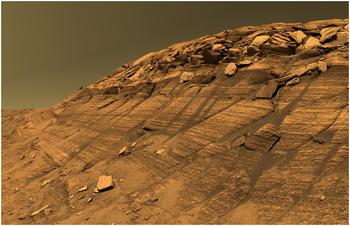
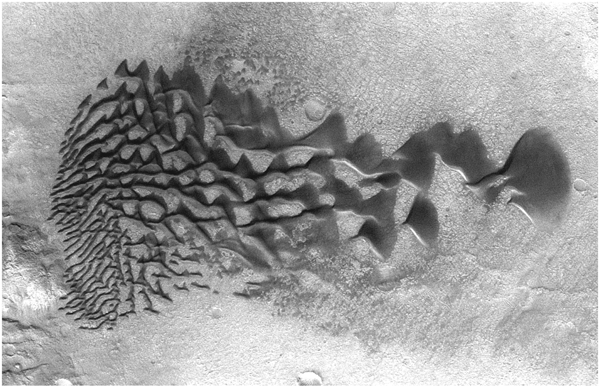
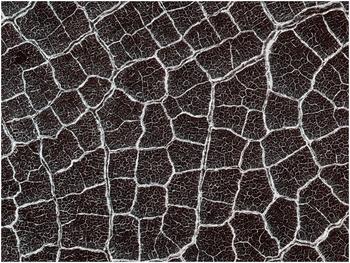
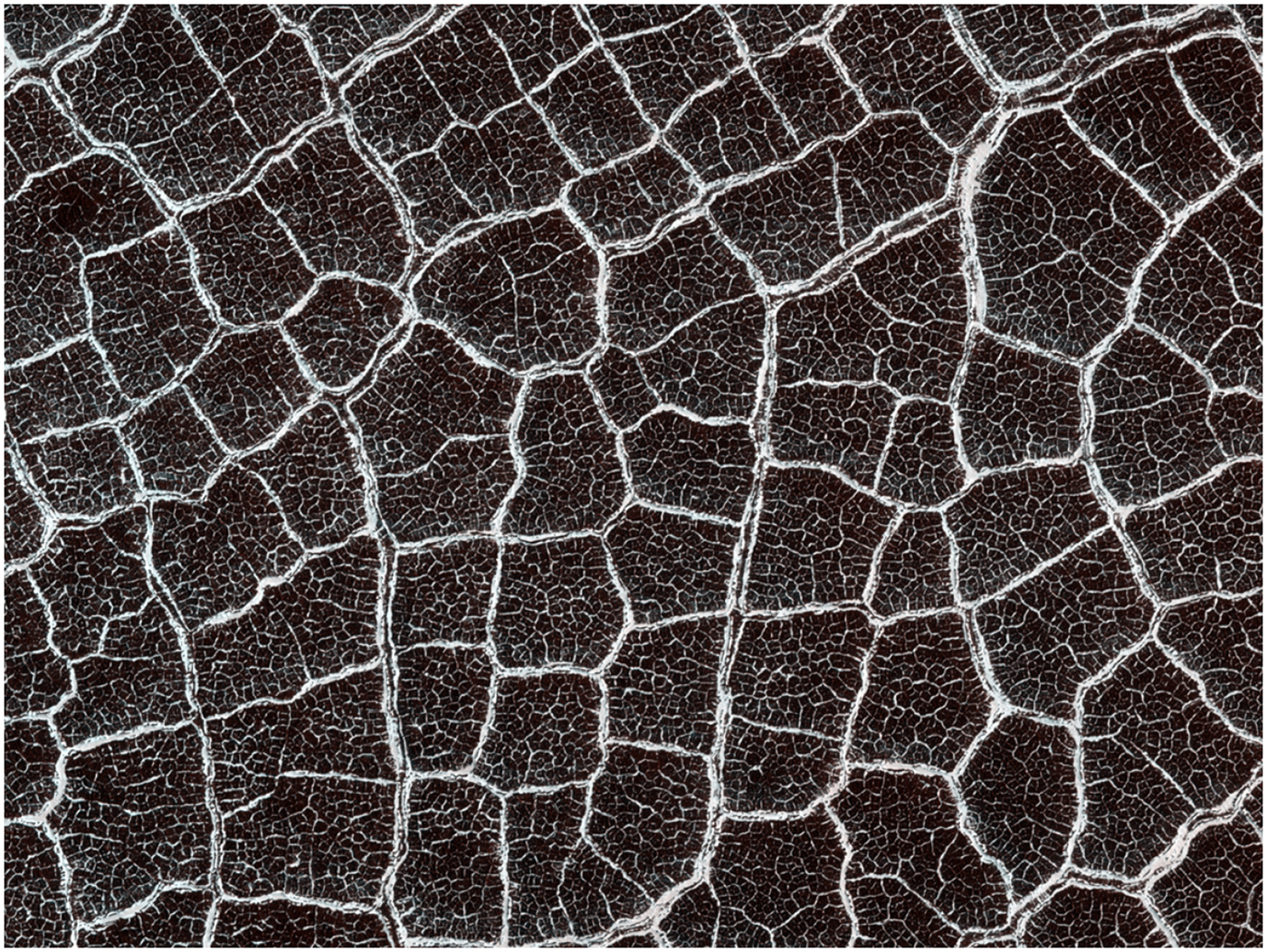
McMahon's description paints Mars as a much more inviting and interesting place – one that seems worth investigating, whether or not we would expect to discover any life along the way. It would be astigmatic to fail to acknowledge that Mars might be worth protecting even if only for its value to geologists (and, no doubt, for its value to a sundry of other scientists whose interest in Mars is not determined by the magnitude of its bioload). Crucially, these kinds of considerations might never occur to us if, under the grip of the life bias, we deny the relevance to planetary protection of disciplines other than astrobiology. And pace George R.R. Martin's imprecation that Mars in the post-Mariner era is ‘not the Mars we wanted,Footnote 14 we might also countenance various extrascientific perspectives – e.g. those of artists, writers, poets, musicians – as capable of illuminating what might be interesting (and so worth protecting) on Mars and in other lifeless environments. Perhaps Martian geologists and landscape painters could help foster an appreciation for the Martian wilderness in much the same way that the work of natural historians and landscape painters helped to foster an appreciation for the American wilderness.Footnote 15 Among the many locations on Mars that might spur artistic creation and appreciation are places like those imaged in Figs. 1–3.
Burns Cliff, Endurance Crater, Mars, as seen from the Opportunity rover. Just a dead, arid desert crater? Or something more? Image credit: NASA.

This image of Bunge Crater Dunes, taken by the Mars Odyssey orbiter, could easily be confused for abstract art. Image credit: NASA.

Polygonal patterns on a crater floor in Mars’ northern lowlands. Are these formations worth preserving for their aesthetic value? Image credit: NASA
Given, then, that a wider, non-life-biased perspective would likely yield novel insights into what is worth protecting in space, it remains to be determined whether this is something we ought to encourage. A small number of individuals have offered reasons for softening the grip of the life bias. That planetary protection should encompass more than mere biological and organic-chemical contamination has slowly been making inroads into space policy discussions. Iván Almár notes the need for more general environmental protections in space:
…in case planetary exploiters do not fully address the environmental consequences of their activity and do not protect the pristine surface and subsurface of celestial bodies, all essential in situ evidence on the origin and evolution of planets, asteroids and satellites will be denied to future generations of astronomers. (Almár Reference Almár2002, 1577)Footnote 16
The thrust of these remarks, as put more recently by William Kramer, is that
We should not be initiating actions that may adversely affect any environment without considering environmental impacts, their cumulative and synergistic effects and their potential to significantly constrain options for future generations. We should not wait until we are committed to living on other planets before we assess and document how we affect them. (Kramer Reference Kramer2014, 221)Footnote 17
And COSPAR itself has recently considered expansions to the scope of planetary protection, with a workshop report noting that ‘it would be important as an initial step to advocate an appropriately expanded framework for COSPAR planetary protection policy/policies to address other forms of ‘harmful contamination’ that go beyond biological and organic constituent contamination’ (Rummel et al. Reference Rummel2012, 1020). Relevant here is the workshop's fifth recommendation, which states in part that
…non-living things, including extraterrestrial things, likewise have value and deserve respect appropriate to their instrumental, aesthetic, or other value to human or extraterrestrial life. (ibid., 1020; emphasis in the original)
The workshop noted in particular that
‘…considerably more expert discussion is needed on the detailed questions of how the ethical principles used on Earth would apply in the context of outer space and varied future scenarios/activities by different sectors (science vs. other activities, governmental and nongovernmental). (ibid., 1019).’
This paper, of course, is my own attempt to provide a more substantive philosophical and ethical discussion of ethical and other principles that might be brought to bear on planetary protection.
So far I have presented evidence that the life bias affects thought about which space environments are worthy of protection, even if that bias is slowly being overcome. I have also, via Rolston, Milligan, Sagan and McMahon, suggested a way to ameliorate the situation further: by developing broader sympathies for science and the arts as far as rationales for protection are concerned. Finally, I have relayed the suggestions of Almár, Kramer and COSPAR that we are justified in developing these broader sympathies. But it is unclear that there is any characteristically ethical requirement here, since one might still complain that nothing I have so far said is relevant to ethical thinking about planetary protection because the only ethical rationale for protection stems from a respect for the value of extraterrestrial life, which is moot when we are considering lifeless environments. In order to bridge this gap it must be shown that we have other moral obligations which ground duties to protect even lifeless space environments.
That we may have duties to protect lifeless space environments is not an entirely novel concept. One example comes from Alan Marshall, who draws on the intrinsic value debate in environmental ethics in order to argue that abiotic objects in the solar system are at least potentially of value in themselves:
If Mars, or any other planetary body, is devoid of life it does not follow that it is devoid of value beyond any resources it may have that are useful to humans. An extension of human ethics to animals and thence to other organisms if taken to the next step would include an extension of ethics to abiotic objects…even if they do not contribute to a living ecosystem. (1993, 234)Footnote 18
Marshall's position is similar to life-centered views in its nonanthropocentrism about intrinsic value, according to which the rationale for protection is the preservation of things that have value independent of their uses to humans. Another example comes from Keekok Lee, who argues, even if Mars proves to be lifeless, that:
Awe and humility would then be the appropriate attitude to Mars…any attempt to go beyond cognitive understanding would constitute a violation of our recognition that it has a value entirely independent of ourselves which ought to constrain any impulse we may have to make it over to our own design, to transform its status as Nature to a status as Artefact. (1994, 98)
Though Lee's aim is to devise an objection to terraforming Mars, nevertheless her virtue-ethics-based perspective carries with it the implication that planetary protection is warranted for any space environment that, like Mars, we ought to greet with a sense of awe and humility. Nevertheless, one might espouse skepticism about the kind of non-anthropocentric values identified by Marshall and Lee,Footnote 19 and, therefore, it would be helpful to skeptics if we could limn a more characteristically anthropocentric rationale for the protection of lifeless environments.
Connecting Almár's and Kramer's points to anthropocentric ethical considerations, Michael Meltzer, in his impressive history of planetary protection, acknowledges the possibility ‘that the perceived need to conduct good scientific investigations is indeed an ethical position and a strongly held one, given the amount of money and effort that NASA has spent on planetary protection’ (Meltzer Reference Meltzer2011, 8). The suggestion here is that contamination, disruption, or destruction of a space environment may be wrong – not (or not only) because of its impact on the environments themselves, but (also) because of its potential to negatively impact future human projects.
I would like to develop further the idea that planetary protection can be ethically motivated by more-characteristically anthropocentric concerns. However, I do not wish to make this case on the grounds of narrow, unenlightened human self-interest. Rather, I would like to start from a claim I have defended in previous work, viz., that we have an ethical obligation to acquire scientific knowledge about the universe.Footnote 20 The duty to acquire scientific knowledge competes alongside other duties associated with space exploration, e.g. to use space resources to improve the material well-being of humanity; to colonize space to improve the chances of long-term species survival, etc. There is, of course, debate about the comparative strength and present importance of each of these duties, and I have argued in earlier work that we can at present effectively satisfy only the duty to acquire knowledge. Let me summarize from this work two points which are relevant in the present setting.
First, scientific examination is very often benign when compared with resource extraction and human habitation as far as contamination is concerned. Thus, effective science may only be possible in advance of more disruptive uses of space environments. If there is no pressing or immediate need to consume the resources of a given space environment, there is little to be lost – and much knowledge to be gained – by preserving that environment for scientific study.
Second, activities such as space mining and colonization cannot be undertaken prudently in ignorance about the chemistry, geology, climate, etc., of space environments. The suitability and, very likely, the profitability of such activities are likely to depend on the prior scientific study of the environments in question. Thus, preserving space environments for scientific study can help to enable and to streamline later development of those environments, in the event such development is deemed desirable.
As I have argued elsewhere,Footnote 21 rushing to develop space resources will not help solve major social, economic and environmental problems any more quickly, and furthermore such development will harm a myriad of opportunities for scientific study, the generation of new knowledge and the progress of science. There is little harm, then, and much to gain, by expanding the scope of planetary protection (and its ethics) to incorporate protecting opportunities for scientific study more broadly, which implicates devising protection policies for space environments that are not of interest in the search for life. This dovetails neatly with Rolston's and Milligan's prescriptions from the beginning of this section: The scientific investigation of the solar system – and not just the small parts where we might find life – will be a crucial step in coming to understand space environments for what they are, rather than for what they are not.
It is also worth remarking that scientific progress is often unpredictable.Footnote 22 It is generally not possible to know in advance which observations will lead to which hypotheses that will lead to which reformulations of scientific theories that will instigate which revolutions in science. In order to safeguard the progress of science, it would be best to adopt an attitude that is more rather than less cautious concerning the protection of sources of scientific curiosity. Similarly, we cannot with much confidence predict the future attitudes that space explorers and denizens will have towards space environments. To mime the opening quotation of this paper, we will leave our descendants a better solar system if we become concerned sooner, rather than later, about preserving what we find there. As Rolston rightly reminds us, while we might know more about the space environment than Columbus knew about what would come to be called the North American continent, that does not mean that we now know all that there is to know about what is worth protecting in space.
One might quibble with my attempt to expand the scope of planetary protection by arguing that planetary protection policies are, by definition, applicable only to environments implicated by the search for life. Accordingly, it would be a category mistake to speak as though reasons for protecting lifeless environments fall under the heading of ‘planetary protection’. If one insists on such a rigid and biotic understanding of the concept, then I am happy to make a move well-known to philosophers of language and to admit that all along I have not been discussing the ethics of ‘planetary protection’ but that I have instead been discussing the ethics of ‘planetary schprotection’, which is the union of ‘planetary protection’ with the kinds of extrabiological considerations raised above. My central thesis remains whether I am understood as expanding the scope of planetary protection or whether I am understood as proposing a novel concept that merely includes a pre-existing concept of protection: that there are ethically grounded reasons for preserving both life-harbouring and lifeless space environments. Obligations associated with ensuring the viability of the scientific study of lifeless environments are no less ethical simply because these environments are not home to life.
Interstellar planetary protection
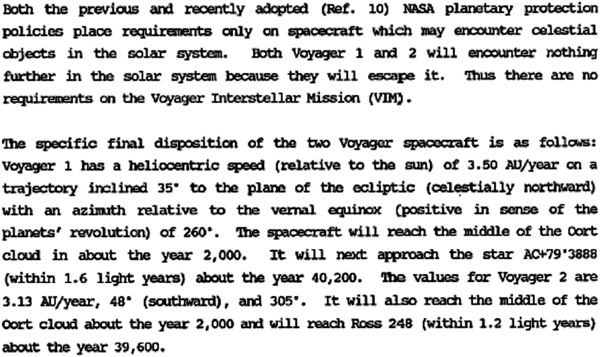
I have argued that we ought to solicit non-life-biased perspectives when contemplating the justification for and scope of planetary protection policies. So far I have only entertained reasons for expanding the scope of planetary protection in a phenomenal way, i.e., by expanding the types of phenomena that ought to be subject to protection. Nevertheless, it is worth considering whether the scope of planetary protection ought to be expanded in a spatial sense. At the moment protection policies only place requirements on missions to celestial objects in the Solar System. Meanwhile, interstellar travel may not be hopelessly distant in the future, especially given the rapid progress of the Breakthrough Starshot initiative, which hopes to use laser propulsion to accelerate very small, ‘wafer’ satellites to relativistic speeds. Indeed, it may be that the first such missions occur within decades, rather than centuries.Footnote 23 Thus it is not entirely foolish to initiate conversation about whether planetary protection requirements should be implemented for interstellar missions. As Fig. 4 evinces, this topic has already been broached, at least indirectly, in a 1990 JPL letter to John Rummel, who was then serving as NASA's Planetary Protection Officer. The letter discusses the long-term planetary protection requirements for the ‘interstellar’ component of the Voyager 1 and Voyager 2 missions. In particular, it notes that ‘there are no [planetary protection] requirements on the Voyager Interstellar Mission’ because ‘NASA planetary protection policies place requirements only on spacecraft which may encounter celestial objects in the solar system,’ and that ‘Voyager 1 and 2 will encounter nothing further in the solar system because they will escape it.’ Thus, while existing policies might apply to interstellar missions, it is unclear whether they place requirements on interstellar missions.
Excerpt of a 1990 letter from JPL to the NASA Planetary Protection Officer detailing the planetary protection requirements for the Voyager Interstellar Mission. Image credit: John Rummel.

Pace Star Trek: The Motion Picture, it is worth raising the question as to whether planetary protection should be conceived narrowly as the protection of ‘celestial objects in the solar system’ or whether it should include the protection of celestial bodies outside of our solar system. In much the same way as I argued in the section ‘Planetary protection for lifeless planets?’ that protection policies should be expanded to include the protection of sites of extrabiological interest, here I shall argue that protection policies should apply to extrasolar bodies just as they apply to solar system bodies. Although interstellar probe decontamination has already been discussed in the literature (Cockell Reference Cockell2008), to the best of my knowledge a discussion of interstellar planetary protection ethics is entirely novel.
One might think at first blush that interstellar planetary protection is of little to no concern, ethically speaking, because protection would interfere with extant, overriding ethical justifications for interstellar travel. One of the most commonly proffered justifications for interstellar travel is that through exploring other solar systems humanity will find a second home, the colonization of which will help to ensure the long-term survival of our species. If indeed our long-term survival is at stake in interstellar travel, then accordingly, we should not allow ourselves to be detained by weaker duties, such as those associated with interstellar nature-preservation.
This perspective is troubling for a number of reasons. First, it presumes a false urgency in the need to pursue interstellar colonization. The ability of interstellar colonization to ensure long-term human survival is only realizable over the very-long-term. Even with distant, futuristic technologies, interstellar colonization efforts will take decades, if not centuries, just to arrive at target systems. The interstellar option will do little to help our species if the more dire predictions about, e.g. terrestrial resource depletion, climate change, overpopulation, etc., come to fruition during the next century or two. The only genuine threat for which interstellar travel is an effective and necessary solution is the eventual expansion of our Sun into a red giant, which is expected to render Earth uninhabitable in approximately 2 billion years. For other, more immediate existential threats (terrestrial, asteroidal), local solutions will be more feasible and realizable over shorter timescales. There is no compelling ethical argument for rushing to colonize other solar systems. If anything, ethical considerations recommend caution a propos of interstellar colonization.
It would be the height of foolhardiness to attempt to colonize another solar system without an extensive prior study of that system, e.g. without knowing anything about either the number and orbital characteristics of its planets, the stability of the climates of its Earth-like planets (if it has any), the local radiation environment, or a sundry of other details about the system which might affect its ability to support a substantial human presence. Thus, if there is no immediate need to colonize other solar systems, then there is ample time during which we can engage in extended ‘exploratory’ phases for each target system. Indeed, I would submit that it is ethically obligatory to engage in extensive exploration in advance of colonization so that colonists are not sent on one-way trips to systems that cannot easily support human life.
It is during such exploratory phases that planetary protection will be most appropriate and important. A previously unexplored solar system would be for scientists, to borrow from Sagan, a treasure beyond assessing. The opportunity to study this system in its pristine state should not be spoiled by unnecessary or poorly justified contamination or disruption for much the same reasons as local opportunities for scientific study should not be spoiled by over-hasty contamination. Thus a similar, non-life-biased ethical justification can be given for both local solar system and extrasolar planetary protection: That we have an ethical duty to engage in the scientific study of the universe and that such study requires at least some planetary protection measures, wherever in the universe we happen to be.
So we at least have a reason – the protection of opportunities for scientific study – for implementing planetary protection policies for interstellar exploration. And, if the remarks of the previous section pass muster, this is an ethical reason and remains one even if the target system is not home to life of any kind.Footnote 24 To promote awareness and acceptance of non-life-biased rationales for protection, interstellar exploration should be pursued in service of as wide a body of interests as possible. If, for instance, interstellar missions are conducted solely for the purpose of seeking out new life, or solely for the purpose of finding a second home for humanity, then those with other interests may retract their interest in or their support for interstellar travel.
Thus, a failure of the interstellar community (and of the space advocacy community more generally) to disabuse itself of the life bias may do harm to the cause of interstellar exploration. Alienating or ostracizing those with non-life-biased perspectives threatens to attenuate critical thought about rationales and goals associated with interstellar travel – an endeavour that very much relies for its success on the critical evaluation of new ideas. It would be a mistake if the interstellar community is open primarily to new technological ideas but not open to new ethical ideas. Such lacunae would be disquieting precisely because there is no sharp division between science, technology and ethics. What we learn while doing science influences what technologies we develop and what we place value upon. But what we place value upon also influences what we decide to study and what technologies we develop.Footnote 25 The contemplation of an undertaking as grand as interstellar exploration simply cannot be conducted without awareness of the broader social and ethical context in which such exploration will occur. As the late Molly Macauley recognized in the case of solar system exploration (Macauley Reference Macauley2007), interstellar science and interstellar exploration goals, and thus, rationales for protection, are interdependent and fluid. We do not know when interstellar travel will be realized, nor for what purposes it will be conducted. It would be myopic to claim that we no longer need to subject reasons for interstellar travel to critical scrutiny, or that other compelling reasons, possibly contrary to those presently accepted, will not arise. Which is all to say that discussion of interstellar planetary protection should not be dismissed out of hand simply because many who presently advance the cause of interstellar travel see little reason to concern themselves with protection policies.
So much, then, for the motivation behind planetary protection (including non-life biased protection) for interstellar exploration. Can anything be said more constructively as far as policy formation is concerned? Though specifics will have to wait until more concrete exploration plans are nearing implementation, I can at least relay a number of general considerations and prohibitions that a non-life-biased interstellar protection policy should include.
To begin with, protection is likely to be most needed during the initial phases of interstellar exploration, when the least is known about target systems. Our best means of determining what is of interest, and hence, what might be worth protecting in a system will be by visiting that system for the first time. Thus, in order to minimize the chances of a mission harmfully contaminating or disrupting a site of potential importance, ‘first visits’ should be conducted with the utmost precaution.
What this will mean in practice will depend upon our technological capabilities. If human missions can eventually be conducted with contamination risks rivaling those of robotic missions, then perhaps robotic precursor missions will in future become unnecessary. And if, for instance, joint human/robotic missions allow for sites to be remotely explored via local, in-orbit human operators, then perhaps protection protocols will not look significantly different from those required in our solar system.Footnote 26 However, if, as is most likely, early interstellar missions will be purely robotic, then additional concerns will arise.
Even if probes reach modest percentages of c, interstellar missions will take a considerable amount of time (at a minimum, on the order of decades for the fastest missions to the closest stars). This requires fully autonomous interstellar probes, which will risk malfunctioning in critical ways. If, for instance, there is a hardware failure, the probe could pose a contamination hazard should it end up on a collision course with some body in the target system. Additionally, the probe's software may become corrupt, or it may prove insufficiently intelligent for conducting effective exploration. For instance, if the software is not able to make reliable and autonomous decisions about what items are of scientific interest – i.e., if the software cannot mimic the deliberations of the scientific community – then it will not provide future explorers with adequate information about what is of scientific interest in the system. Thus, ensuring spacecraft sterilization and reliability of hardware may prove inadequate as protection measures, if the spacecraft is not controlled by sufficiently intelligent software. It is therefore conceivable that protection policies might prohibit all interstellar exploration until such time as we can provide probes with sufficiently advanced artificial intelligences.
A concern for protection also rules out various mission profiles that would, by their nature, lead to the contamination or destruction of significant parts of target systems, including:
• ‘Life-seeding’ missions in which genetic material and incubators are sent to a target system with the intention of preparing that system for human settlement.
• Exploration via von Neumann machines which replicate themselves indiscriminately from the materials of target systems, possibly as a precursor to human settlement.
• Any other other mission that would require extensive, indiscriminate in-situ resource use.
It is difficult to envision a situation in which our survival so urgently depends on interstellar colonization that we cannot preserve candidate systems for prior scientific study. That is not to say that technology permitting, we do not have an ethical obligation to attempt the colonization of other solar systems. It is only to say that, in all likelihood, the satisfaction of our duty to engage in the scientific study of the universe is compatible with our long-term survival obligations. The burden is on those who would argue that we do not have time to preserve other systems for scientific study in advance of large-scale human settlement.
Conclusion
There are, then, ethical reasons for expanding the scope of planetary protection to include sources of scientific curiosity generally – and not just sites of interest in the search for life. However, the recognition of these reasons as ethical requires mitigating the life bias in thought about planetary protection; policy discussions should therefore actively solicit perspectives from both extrabiological and extrascientific perspectives. Awareness and appreciation for extraterrestrial environments will not come solely through the communication of wider scientific interests, but also through more characteristically cultural means – through artistic expression and the writing of fiction, for instance. The value of these non-biological and non-technological perspectives should not be ignored, but actively solicited as we proceed with more ambitious forms of solar system exploration and ultimately, interstellar exploration.
Acknowledgments
This paper is based on talks delivered to the 2016 Tennessee Interstellar Valley Workshop, Chattanooga, TN, March 2016, and to SoCIA 2016, Clemson University, September 2016. Thanks to John Rummel, Mark Lupisella, Charles Cockell, those in attendance at TVIW 2016 and SoCIA 2016 and an anonymous referee.