Cardiac resynchronization therapy (CRT) is one of the treatment options for adult patients with idiopathic or ischaemic cardiomyopathy-related heart failure associated with electromechanical dyssynchrony. Reference Cleland, Daubert and Erdmann1 Adult guidelines recommend CRT for left ventricular ejection fraction (EF) ≤ 35%, left bundle branch block (LBBB) morphology, long QRS duration (≥ 120 m/second), and NYHA Class II–IV ambulatory symptoms despite optimal medical therapy. Reference Yancy, Jessup and Bozkurt2 In many adult studies, including randomised multicentre clinical trials, it has been reported that functional capacity improved, mortality, and morbidity associated with heart failure reduced by providing structural and cellular remodelling with normal or near-normal electromechanical activation. However, CRT is not free of morbidity, and around 30% of patients do not have a beneficial response. Reference Motonaga and Dubin3
CHD is a relatively common condition with an incidence of 4–10 per 1000 live births. CHDs are a heterogeneous group of diseases with a wide spectrum of pathologies and sub-pathologies that all vary widely in the treatment approach. Reference Tworetzky, McElhinney and Brook4 In patients with CHDs, even those who were surgically corrected, the heart is not structurally normal, and signs of heart failure may occur at any time in their lives. In paediatric cases, heart failure treatment is mostly medical or requires heart transplantation at the last step. In these paediatric cases, contrary to adults, the use of CRT in the treatment of heart failure is limited and difficult due to different factors such as the age dependence of the QRS duration, the presence of systemic ventricle in right ventricular morphology as well as left ventricular morphology, the presence of single ventricular physiology, and the lack of treatment guidelines in children. Reference Motonaga and Dubin3,Reference Karpawich, Bansal and Samuel5
There is a limited number of paediatric studies in the literature investigating the use and effectiveness of CRT in CHD. Reference Motonaga and Dubin3,Reference Anjewierden and Aziz6 In this study, the methods and effects of CRT application in children with CHD were evaluated.
Patients and methods
The paediatric cases diagnosed with CHD in our arrhythmia centre between January 1, 2010, and January 1, 2020 were included in this study. Patients who developed cardiomyopathy after pacemaker implantation due to congenital complete atrioventricular (AV) block (n = 2), those with primary cardiomyopathy (n = 1) and patients with CHD and required CRT treatment over 18 years of age, were excluded from the study. This retrospective study was approved by the institutional ethics committee and was conducted in accordance with the principles of the Declaration of Helsinki.
The data for the study was collected from the electrophysiology database system. A study form was created for each patient including information such as gender, age, cardiac diagnosis, ventricular morphology, CRT application indication, electrocardiographic (ECG) findings, echocardiographic features, and clinical status.
The paediatric patients who had cardiac resynchronization therapy were divided into three groups and CRT indications were defined as follows Reference Hill, Silka and Bar-Cohen7,Reference Cecchin, Frangini and Brown8 :
– Patients who had previous pacemaker implantation due to AV block and developed pacemaker-induced CMP and ventricular dysfunction during follow-up (who need PM and had EF < 45%). Paced QRS duration >120 m/second and echocardiographic mechanical dyssynchrony findings (intraventricular and interventricular dyssynchrony measurements) were sought in addition to clinical findings and EF.
– In patients with CHD and LBBB, together with clinical findings QRS duration >120 m/second and low EF with intraventricular and interventricular dyssynchrony findings at echocardiography.
– The development of systemic ventricular dysfunction and heart failure during follow-up in ccTGA patients, regardless of functional repair or anatomical repair. Regardless of the degree of right bundle branch block-intraventricular conduction delay, these patients were considered as CRT candidates, since our transplant and assist device treatment options were limited in our country.
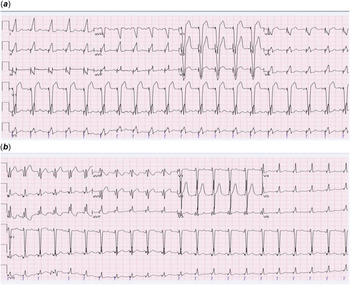
The ECG evaluations were performed before the procedure at the post-operative first day, first month, and sixth month and 6 months apart thereafter. Twelve-lead ECG was interpreted electronically with the Muse® system (Muse Cardiology Information System, GE Healthcare, California, CA, United States of America). The QRS duration was measured in leads II, V1, and V5–6 for consistency, at a paper speed of 25 mm/second (Fig 1a and b).
(a–b) Patient number 14: 2.2 years old, male patient with ventricular septal defect. History: VSD closure, post-operative complete AV block, dual-chamber epicardial pacemaker implantation, and 12 months after surgery, the patient was admitted with severe left ventricle dysfunction. ECG findings prior to CRT implantation; a sense V pace dual-chamber PM (Sinus tachycardia, LBBB with QRS duration 148 m/second). ECG findings 6 months after CRT-P implantation; QRS duration 102 m/second.

Echocardiographic evaluations were performed before the procedure at the post-operative first day, first month, and sixth month and 6 months apart thereafter. Standard views of paediatric echocardiogram were recorded including parasternal (long and short axis), apical (four chamber and fıve chamber), subcostal, and suprasternal views. In the definition of cardiac morphology, an evaluation was made in the direction of blood flow within the framework of the segmental approach. Reference Pearlman, Gardin and Martin9
In addition to clinical and ECG findings, echocardiographic morphology and functions and dyssynchrony measurements were also performed to determine the indications for CRT and for follow-up Reference Van der Hulst, Delgado and Blom10 ;
– For atrioventricular dyssynchrony: LV filling time was measured from transmitral flow recordings by pulsed-wave Doppler echocardiography and AV dyssynchrony was considered in case LV filling time/RR interval <40%.
– For interventricular dyssynchrony: Interventricular mechanical delay (IVMD) was evaluated with pulsed-wave Doppler echocardiography. Interventricular mechanical delay was obtained by calculating the difference between aortic and pulmonary pre-ejection intervals (the time from the onset of QRS to the onset of flow). An IVMD > 40 m/second is considered as interventricular dyssynchrony.
Intraventricular dyssynchrony: M mode echocardiography was preferred for these basal measurements of both LV and RV. From the parasternal short–long-axis view of the ventricle, the time difference between the maximal systolic inward motion of the septal and posterior (lateral) wall was calculated: the so-called septal-to-posterior Wall motion delay (SPWMD). Especially, an SPWMD value of ≥130 m/second was considered as significant intraventricular dyssynchrony.
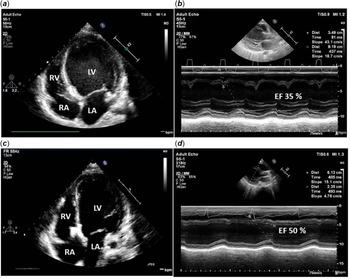
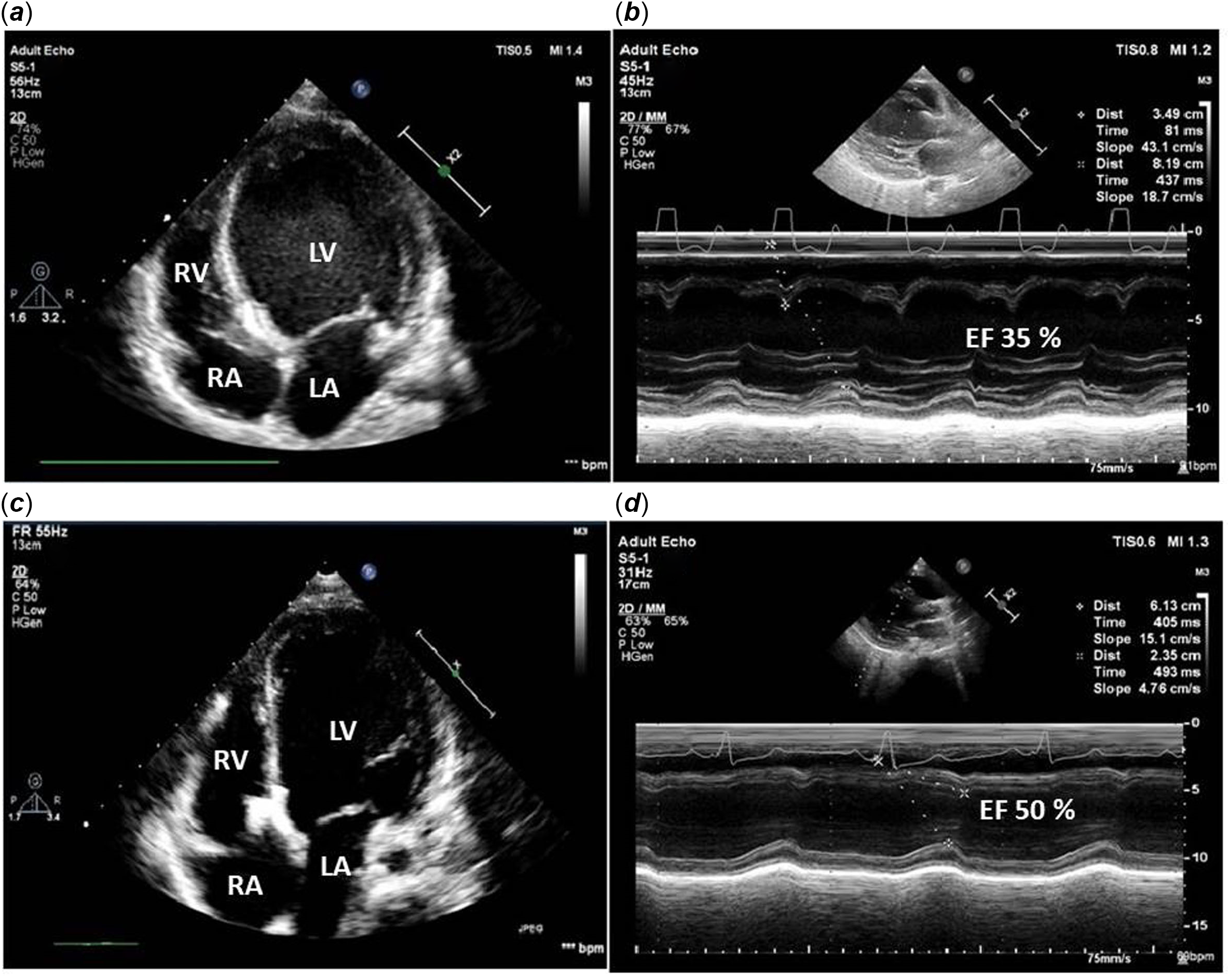
Additionally, strain and 3D Eechocardiography have been in use for intraventricular dyssynchrony and ventricular functions for the last 4 years. Systemic ventricular functions, shortening fraction (SF%), and ejection fraction (EF%) were evaluated. Simpson method was used to estimate systemic ventricular EF%. For systemic left ventricles, EF was measured by using the 5/6 area × length formula, and for systemic right ventricles, the 2/3 area × length method was used. Reference Cecchin, Frangini and Brown8 An SF % of less than 28% or an EF% of less than 55% indicated systolic dysfunction (Fig 2a–d).
(a–d) Patient number 7: 7.5 years old male patient with ventricular septal defect. History: Transcatheter VSD closure, dilated cardiomyopathy with left bundle branch block. (a) Apical four-chamber view in echocardiography prior to CRT implantation. (b) M mode view in echocardiography prior to CRT implantation. (c) Apical four-chamber view in echocardiography, 6 months after CRT-D implantation. (d) M mode view in echocardiography, 6 months after CRT-D implantation. LA = Left atrium; LV=left ventricle; RA = right atrium; RV = right ventricle.
Small patient size (body weight or age), presence of a contraindication for transvenous pacing, single-ventricle physiology, or significant residual intracardiac shunt, etc., were multiple factors to perform transvenous, epicardial, or hybrid CRT selection.
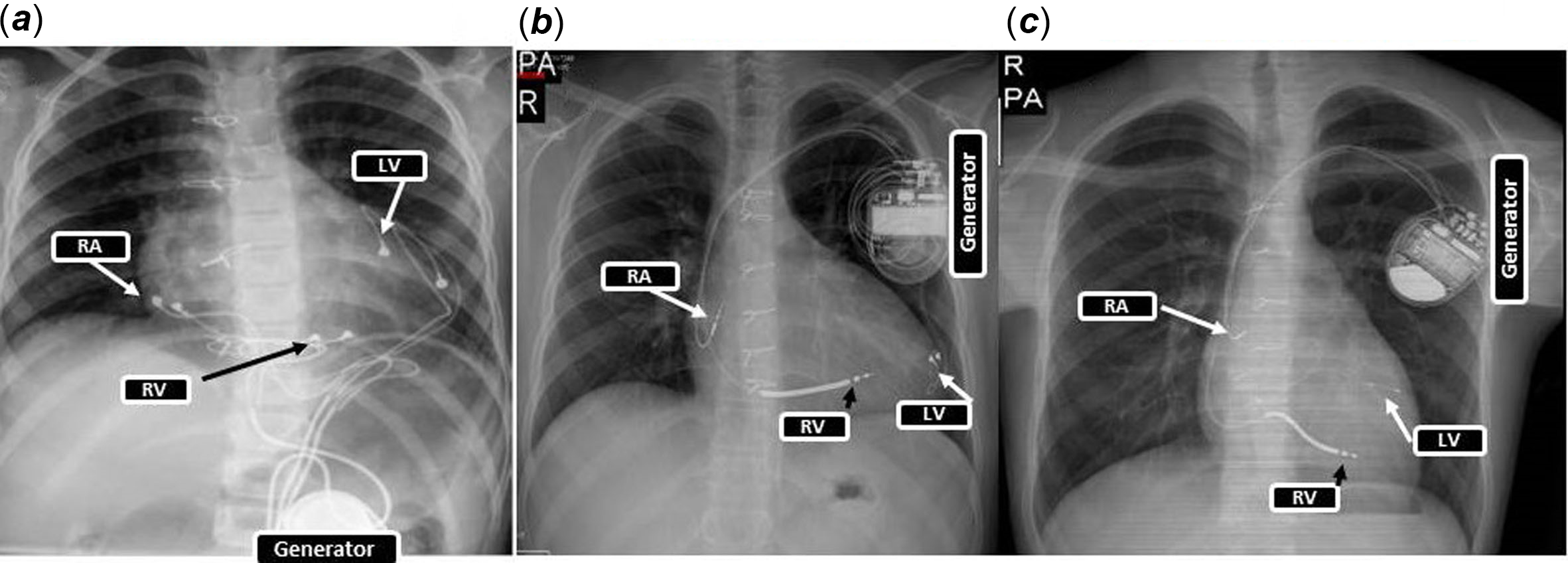
Conventional CRT involves implantation of a transvenous pacing lead into the RV and a left ventricular lead placed transvenously into a coronary sinus branch. However, this method could only be performed in a case due to the characteristics of our patient group. In this patient, the procedure was performed through the left subclavian vein by the Seldinger method. Afterwards, the left ventricular lead was placed into an optimal distal coronary sinus ventricular branch by the retrograde cannulation of the coronary sinus by using a variety of tools and techniques including coronary sinus angiography. Epicardial lead placement was performed via median sternotomy or lateral thoracotomy in patients with low body weight, single ventricular physiology, corrected transposition of great arteries, or uncorrected cardiac defects. In patients undergoing a transvenous lead placement, a left ventricular lead insertion was attempted using conventional techniques. In four patients, an atrial and two ventricular leads were placed by a combined transvenous and epicardial approach (hybrid approach) (Fig 3a–c).
(a–c) CRT implantation techniques. (a) Epicardial CRT-P. (b) Hybrid CRT-D. (c) Transvenous CRT-D. LV: Left ventricle; RA = right atrium; RV = right ventricle.

In patients with biventricular physiology or with systemic left ventricle (LV), LV lead was usually placed to the LV posterolateral wall far from obtuse marginal branch or phrenic nerve. In patients with systemic right ventricle, right ventricle (RV) lead was placed to midventricular free wall and LV lead to posterolateral or apical segment. In patients with single ventricle, leads were placed to two farthest points at midventricular level.
The response to CRT was measured by ECG and echocardiographic evaluation, which is defined as a quantitative improvement in ventricular functions. Clinical status was categorised as alive with CRT, alive with loss of CRT functionality, or death. CRT response was determined at 6–12 months after the CRT procedure. Shortening of the QRS interval following CRT was predefined as a minimum 10% decrease in QRS duration. Quantitative improvement following CRT was predefined as a minimum 10% proportional increase in systemic ejection fraction (EF) over baseline measurements. Reference Cecchin, Frangini and Brown8 Subjective improvement was defined as a decrease in one ordinal point of the pre-CRT NYHA class or Modified Ross Heart Failure Classification.
The patients’ post-procedural clinical status was grouped as negative responders, non-responders, responders, or superresponders. “Negative responders” were patients who demonstrate clinical worsening of their disease after CRT implantation and a decrease in EF% after CRT when compared with the baseline value. “Nonresponders” were defined as those with no quantitative improvement in clinical response. Either a subjective improvement or an increase of EF%, at least 10% from baseline value was further defined as “responders”. Patients were considered to be “superresponders” if functional recovery and left ventricular EF ≥ 50% were concurrently demonstrated. Reference Steffel and Ruschitzka11 Analyses were performed on an intention-to-treat basis.
Statistical method
In the study, the distribution of variables was classified by computer analysis. The descriptive statistics were calculated using SPSS version 15 (Statistical Package for the Social Sciences for Windows) program. The demographic variables were reported as mean ± standard deviation, median (range), numbers, and percentages. The Wilcoxon test was used for repeated measurements. p < 0.05 was considered statistically significant.
Results
Eighteen patients were included in the study. The median age was 11 years (range 2.2–18 years) and the median weight was 39 kg (range 10–81 kg).
The ventricular morphologies were systemic left ventricle in 13 patients, systemic right ventricle in 4 patients, and single ventricle in a patient. The cardiac pathologies were as follows: Tetralogy of Fallot (n = 2), atrioventricular septal defect (n = 1), truncus arteriosus (n = 1), mitral valve pathology (n = 1), atrial septal defect (n = 1), and aortic stenosis (n = 1).
Indications for CRT implantation were cardiac dysfunction developed after permanent pacemaker implantation (pacing-induced ventricular dysfunction (PIVD)) in 11 patients, ventricular dyssynchrony developed after LBBB in 4 patients, and systemic ventricular dysfunction in 3 patients. Permanent pacemaker implantation was performed in 11 cases (61%) due to post-operative complete AV block, before CRT. Before CRT implantation, single-chamber ventricular pacing systems were used in five cases (VVIR), dual-chamber ventricular pacing systems in five cases (DDD), and in one case, single-chamber ventricular pacing was performed and then upgraded to the dual-chamber pacing system.
Half of the patients (n = 9) were operated in other cardiac centres and pacemakers were implanted, or LBBB developed, and then they were referred to our centre for CRT.
CRT implantation was performed by epicardial (n = 13), hybrid (n = 4), and transvenous (n = 1) techniques. Cardiac resynchronization therapy–pacemaker (CRT-P) and cardiac resynchronization therapy–defibrillator (CRT-D) type devices were used in 15 and 3 cases, respectively. CRT-D was implanted in three patients with the diagnosis of Fallot tetralogy, ccTGA, and aortic stenosis, respectively. CRT-D was implanted in one of these patients (Fallot tetralogy) also for secondary prophylaxis since he was admitted with cardiac failure and VF-related cardiac arrest. The other two (ccTGA, aortic stenosis) were upgraded to CRT-D for primary prevention due to syncope. Only the patient with aortic stenosis (whose VT was not documented before but had CRT-D implantation due to syncope) had sustained VT episodes during follow-up. He was followed up with medical treatment.
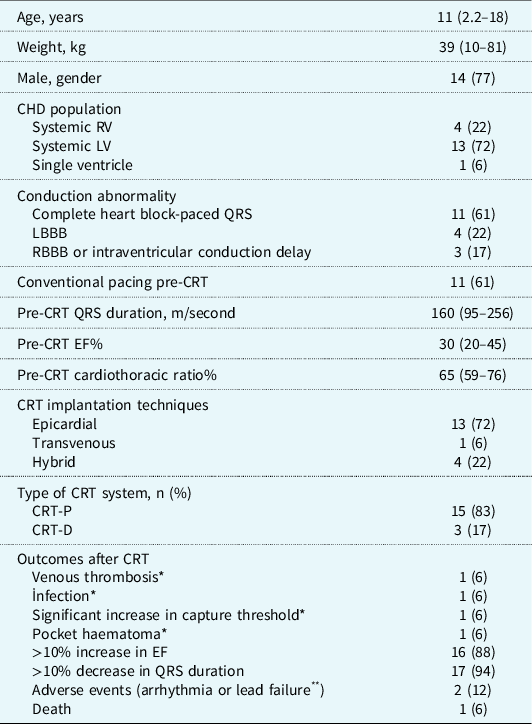
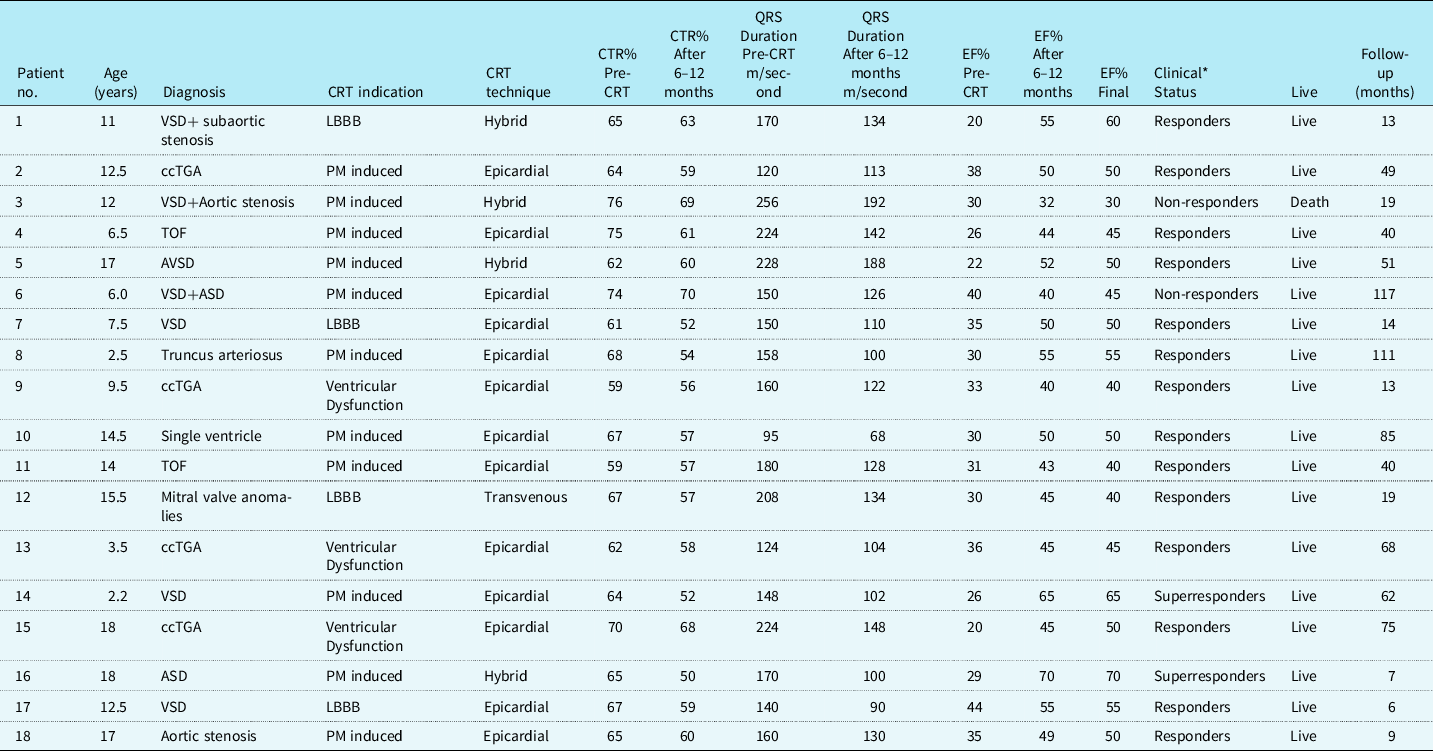
The main characteristics of the cases were summarised in Table 1.
Baseline characteristics of the patients (n = 18)

Values are median (range) or n = (%)
* Acute complications
** Lead fracture
The median cardiothoracic ratio (CTR) after CRT implantation decreased significantly when compared to the pre-procedural median CTR (65 versus 58%, p < 0.05).
Median QRS duration after CRT implantation decreased significantly when compared to the pre-procedural QRS duration (160 versus 124 m/second, p < 0.05).
The median systemic ventricular EF% increased dramatically after the procedure (30 versus 50% p < 0.05).
Fourteen cases were “Responders” (78%), two cases were “superresponders” (11%), and two cases were “nonresponders” (11%). While symptoms (hospitalisation due to cardiac failure, dyspnoea, fatigue, prolonged feeding times with growth failure, exercise intolerance) remained the same or partially recovered in 40% of the patients, significant regression of symptoms was seen in 50% of the patients. Worsening was seen only in two patients (11%). NYHA classification could be evaluated in 10 patients. While worsening was detected in one patient (Class 3–Class 4), four patients remained at the same NYHA class (Class 3 in two patients, Class 2 in one patient, Class 4 in one patient). Improvement was seen in five patients (from Class 4 to Class 2 in one patient, from Class 4 to Class 3 in one patient, from Class 3 to Class 1 in one patient, from Class 3 to Class 2 in two patients). Ross classification could be evaluated in eight patients. While worsening was detected in one patient (Class 3-Class 4), three patients remained at the same Ross class (Class 3 in two patients, Class 2 in one patient). Improvement was seen in four patients (from Class 4 to Class 2 in one patient, from Class 4 to Class 3 in one patient, from Class 3 to Class 2 in two patients)
The median follow-up period of the patients was 40 months (6–117 months). Patients were followed up regularly in the outpatient clinic for adverse events. Lead failure was observed in one patient and ventricular tachyarrhythmia in another patient. Failed lead was changed and antiarrhythmic therapy was initiated for ventricular tachyarrhythmia.
One patient died during the follow-up on the cardiac transplantation list. This patient was diagnosed with ventricular septal defect and aortic stenosis at 12 years of age. First, VSD was closed at the age of 1.5. At 10 years of age, the Bentall procedure was performed due to aortic stenosis and aortic valve failure, and dual pacing was performed due to post-operative AV block. Although CRT-D was upgraded via hybrid method due to PIVD, the patient was a non-responder.
The details of CRT procedures and the results of clinical status were summarised in Table 2.
Characteristics of the CRT procedures performed in the patients

ASD=atrial septal defect; AVSD=atrio ventricular septal defect; ccTGA=congenitally corrected transposition of the great arteries; CRT=cardiac resynchronization therapy; CTR=cardiothoracic ratio; LBBB=left bundle branch block; NYHA=New York heart association; PM=pacemaker; TOF=tetralogy of Fallot; VSD=ventricular septal defect
* Quantitative improvement and/or subjective improvement of the functional class: symptoms of patients 1, 5, 7, 8, 12, 14, 15, 16, 18 decreased and Patient 1 (NYHA Class 3–2); Patient 5 (NYHA Class 3–2); Patient 7 (Ross Class 3–2); Patient 8 (Ross Class 4–3); Patient 12 (NYHA Class 3–1); Patient 14 (Ross Class 4–2); Patient 16 (NYHA Class 4–2); Patient 18 (NYHA Class 4–3)
Discussion
In this study, our CRT results in children with CHD were evaluated. We found that CRT increased the systemic ventricular systolic functions on echocardiography, shortened the QRS time on ECG, facilitated electromechanical synchronisation, and improved the clinical status of the patients. This study is one of the rare paediatric studies in literature that involves 10 years of data from an arrhythmia centre with a large volume in a developing country.
CRT basically allows to eliminate electromechanical dyssynchrony via synchronous pacing of both ventricles that result in coordinated biventricular contraction, decrease in myocardial strain and myocardial energy expenditure, reverse in adverse remodelling, and reduce in heart failure symptoms. Reference Motonaga and Dubin3,Reference Batra and Balaji12 The paediatric heart failure population is heterogeneous in both anatomy and aetiology of heart failure; thus, the adult experience cannot easily be applied in paediatrics. Although there is a standard guideline for CRT indications in adults, there is insufficient data for paediatric cases. The main indications reported in the studies for CRT were acute dyssynchronisation and systemic ventricular dysfunction due to acute post-operative period, PIVD, LBBB, and right bundle branch block (RBBB). Reference Karpawich, Bansal and Samuel5,Reference Anjewierden and Aziz6
Dubin et al Reference Dubin, Janousek and Rhee13 described a large cohort of paediatric and adult CHD patients in which 103 had CRT devices implanted (median age: 12.8 years). This cohort included 73 patients (71%) with CHD, 16 (15.5%) with cardiomyopathy, and 14 (13.5%) with congenital complete heart block. Almost half (45%) of these individuals had pacemakers prior to the CRT devices. Over the follow-up period (mean: 4.5 months), the QRS duration improved by 38 ± 31 m/second (from 166 ± 33 m/second to 126 ± 24 m/second; p < 0.01) and the EF improved by 14 ± 13% (from 26 ± 12% to 40 ± 15%; p < 0.05). Improvements in QRS duration and EF were seen in all three groups, with no significant differences between the outcomes between them.
Janoušek et al Reference Janousek, Gebauer and Abdul-Khaliq14 described a multicentre cohort of 109 CRT patients with a greater proportion of CHD patients (80%) as compared with those in the study by Dubin et al Reference Dubin, Janousek and Rhee13 Most of the patients in this cohort (77%) had dyssynchrony associated with single-site pacing, although 23% had electrical dyssynchrony with intrinsic atrioventricular nodal conduction. Of these, 9% had LBBB with a systemic LV, 5% had right bundle branch block (RBBB) with a systemic right ventricle (RV) or single ventricle, and 9% had non-specific QRS prolongation. During follow-up (median: 7.5 months), similar improvements in QRS duration (median: 40 ms improvement from a starting median QRS duration of 160 m/second) and EF (median: 12% improvement from a median starting EF of 27%) were seen.
Our follow-up period was quite long when compared with these big series above (median 40 months). PIVD, LBBB, and RBBB were the main CRT indications. In our study, a 20% increase in median EF and a median of 36 m/second decrease in QRS duration was observed.
Complete AV block can develop after operations for DORV, DILV, ccTGA, AVSD, TOF, and VSD. Single-chamber or double-chamber pacemaker implantation is the treatment. Reference Perera, Motonaga and Miyake15 It was reported that PIVD might develop in the long term and this was observed to be higher in right ventricular pacing. It has been stated that PIVD, mainly developed as a result of dyssynchronisation and an improvement in ventricular functions could be seen by upgrading to CRT. Reference Valsangiacomo, Schmid and Schüpbach16,Reference Balaji and Sreeram17 Balaj et al, in their series of 47 cases with post-operative pacemaker implantation (right atrium–right ventricle) who were smaller than 2 years old when the surgery was performed, reported PIVD in 9 patients (19%). They observed an increase in the median FS of these nine cases from 11 to 29% when they were upgraded to CRT. Reference Balaji and Sreeram17
In our study, ventricular pacing was upgraded to CRT in 11 cases (9 RV and 2 LV pacing; 61%). An improvement in ventricular systolic functions was detected in all of the cases (10/11; 90%) except one.
Apart from pacing, dyssynchronisation can also be seen in patients with LBBB, RBBB, preexcitation, and frequent premature ventricular contractions and consequently ventricular dysfunction has been observed. Reference Batra and Balaji12 Janoušek et al reported LBBB in 10% of cases and RBBB in 5% of cases in their CRT series. Reference Janousek, Gebauer and Abdul-Khaliq14
In our study, LBBB was determined in four patients (22%) and RBBB in three patients (16%). These rates were higher than Janoušek et al, which might be due to the diagnostic and demographic differences in cases with CHD.
In cases with CHD with functional two ventricles, the right ventricle is the systemic ventricle in cases of ccTGA and after intraatrial baffle operation in the transposition of the great arteries. At least a moderate degree of heart failure or exercise intolerance was reported in one-third of these cases. Systemic RV heart failure is an important cause of late morbidity in CHD. Reference Khairy, Landzberg and Lambert18 The contribution of CRT in regression of heart failure symptoms in these cases has been controversial. In a study of eight CRT cases, Janoušek et al assessed haemodynamic effects in systemic RV cases, and found a 10% increase in right ventricular EF and right ventricular fractional area of change increased from 18 to 30% in 17.5 months. Reference Janousek, Tomek and Chaloupecky19 Cecchin et al in a series of nine cases with systemic RV, reported that EF increased from 28 to 42% in the first 30 days, however, in the long term, only two cases showed response and seven were non-responsive. Reference Cecchin, Frangini and Brown8 In our study, there were four cases with systemic RV. CRT was used due to PIVD in one of them and for systemic ventricular dysfunction in the rest. In these three cases, there was an increase in EF and response in clinical status.
Patients with single-ventricle physiology are at risk of developing heart failure, associated with increased mortality. Myocardial dysfunction is one of the important causes of mortality after bidirectional cavopulmonary anastomosis and Fontan operation. Reference Kiaffas, Van Praagh and Hanioti20 In a patient group of single ventricle with post-Fontan palliation, followed for a median of 17 years, 40% developed congestive heart failure and 18% died. Reference Piran, Veldtman and Siu21 It has been suggested that CRT for intraventricular resynchronisation in these cases should be performed through multisite pacing. Bacha EA et al reported that out of 26 patients whom CRT via multisite pacing was performed, haemodynamic improvement was observed in 24 patients in the early period. Reference Bacha, Zimmerman and Mor-Avi22 However, in a series of patients reported for the long term, the rate of CRT application in single ventricular physiology is quite low. For example, Janousek Reference Janousek, Gebauer and Abdul-Khaliq14 reported that 3.7% of 109 CRT patients had single ventricular physiology and Dubin Reference Dubin, Janousek and Rhee13 reported this rate as 6.8% of 103 CRT cases. In our study, this rate was 6% which was compatible with other publications.
In the literature, different techniques such as epicardial, transvenous, or hybrid method were used according to patient age, pathology, or the single versus dual-chamber feature of the previous pacemaker. Reference Cecchin, Frangini and Brown8,Reference Miyazaki, Negishi and Hayama23–Reference Miyazaki, Sakaguchi and Kagisaki25 In our study, the epicardial method (72%) was used in majority of the cases.
Echocardiographic and ECG parameters are frequently used in the long-term follow-up of patients and prognosis of CRT. Reference Piran, Veldtman and Siu21,Reference Sakaguchi, Miyazaki and Yamada26 There is insufficient data on which of these may be a stronger predictor. Although prolonged QRS duration appeared to be a criterion for CRT application in adult studies, it was also reported that it may not be a good predictor in some studies. Reference Karpawich, Bansal and Samuel5 Echocardiography has been frequently used to detect mechanical dyssynchrony, and many parameters have been proposed for that purpose in children with CHD. Reference Friedberg and Mertens27 However, ventricular geometry, systemic ventricular morphology, and bundle branch block can lead to misinterpretation of results. In the Japanese multicentre study, a single echocardiography criterion was not found for prediction, and the combination of M mode measurement of the left ventricle and tissue Doppler USG was reported to be beneficial in patients with LBBB on ECG. Reference Seo, Ito and Nakatani28 Punn et al by comparing ECHO and ECG in optimisation of CRT stated that ECHO did not show superiority in their studies, and ECG was more advantageous considering the duration and cost of the procedure. Reference Punn, Hanisch and Motonaga29 In our study, we achieved optimisation by using ECG QRS duration and echocardiographic dyssynchrony measurements and EF change as a basis for follow-up. 3D ECHO and strain ECHO were also used when it was available during the last 4 years.
In different studies, the incidence of responses varied according to the age at the CRT application and ventricular morphology. Five different clinical responses were reported to be possible, namely superresponders, responders, non-progressors, non-responders, negative corresponders. Reference Horigome30 The ideal for prognosis was the superresponsor, where the anatomy and function became normal with clinical improvement and reverse remodelling after CRT. In our population, 11% of the patients treated with CRT for refractory heart failure could be identified as superresponders. This proportion was similar to previously reported results, ranging from 12 to 16%. Reference Batra and Balaji12,Reference Bacha, Zimmerman and Mor-Avi22,Reference Miyazaki, Sakaguchi and Kagisaki25 Our non-responder rate was 11%. Independent of ventricular physiology, previous mitral valve replacement, left ventricular non-compaction, and aortic stenosis might have contributed to the two cases who did not respond. This rate was reported as 30% in the adult series of Young et al Reference Young, Abraham and Smith31 and 10–18% in the largest paediatric series. Reference Dubin, Janousek and Rhee13,Reference Janousek, Gebauer and Abdul-Khaliq14
Despite the benefits of CRT including improvements in exercise capacity, functional class, and ventricular haemodynamics, a pro-arrhythmic effect is less clear. The fact that patients have CRT might lead to increased risk for ventricular tachycardia in some reports. At the same time, sudden cardiac death risk was increased in CRT patients when the ventricular functions were taken into consideration. Randomised trial evidence directly comparing cardiac resynchronization therapy (CRT) with a pacemaker (CRT-P) and with an implantable defibrillator (CRT-D) is not available. Indirect evidence suggests that CRT-D may reduce mortality to a greater degree because of greater sudden death reduction. CRT-D is more costly and possibly subject to more complications than CRT-P. Reference Horigome32,Reference Ray, Fendelander and Singh33 All three of the patients who had CRT-D implanted in our study had a high risk for sudden death before the implantation. We did not encounter any proarrhythmic situation in patients with CRT-P implantation. Only the patient with aortic stenosis (whose VT was not documented previously but had CRT-D implantation due to syncope) had sustained VT episodes during follow-up. He was followed up with medical treatment. Therefore, it might not be too correct to say that CRT has a proarrhythmic effect according to the results of our study. It seems larger studies with longer follow-up periods are needed about this subject. The emergence of possible arrhythmia risk may lead us to use CRT-D in paediatric cases.
Limitations
This study had several limitations. The sample size was small, and the basic cardiac anomalies were heterogeneous. The lack of evaluation of functional capacity in cases in the paediatric age group was another shortcoming. In addition, cardiac function and ventricular volume could be evaluated more accurately by cardiac magnetic resonance (MR) examination, especially in those without systemic ventricle left ventricle. However, this technique was not technically possible in patients who underwent epicardial or hybrid CRT. Although total follow-up duration was longer, for the sake of standardisation, the individual CRT response of the patients were given at a shorter period of 6–12 months and this was another limitation of the study.
Conclusion
Patients with highly heterogeneous and complex CHD might develop heart failure early or late. Electromechanical dyssynchrony is one of the factors in the development of heart failure in patients with CHD. Patients with CHD and wide QRS complexes should thus be specifically screened for a CRT indication. If properly applied, CRT causes reverse ventricular remodelling, augments systolic ventricular functions, and may improve long-term prognosis.
Acknowledgements
None.
Financial support
This research received no specific grant from any funding agency, commercial, or not-for-profit sectors.
Conflict of interest
None.
Authors’ contribution
YE: Conception or design of the work, drafting the work, final approval of the version to be published, any part of the work are appropriately investigated and resolved. FSS: Conception or design of the work, drafting the work, final approval of the version to be published, any part of the work are appropriately investigated and resolved. EO: Conception or design of the work, drafting the work, final approval of the version to be published, any part of the work are appropriately investigated and resolved. CK: Revising the work, final approval of the version to be published, any part of the work are appropriately investigated and resolved. PA: Conception or design of the work, drafting the work, final approval of the version to be published, any part of the work are appropriately investigated and resolved. CT: Conception or design of the work, Ddrafting the work, final approval of the version to be published, any part of the work are appropriately investigated and resolved. SA: Conception or design of the work, drafting the work, fFinal approval of the version to be published, any part of the work are appropriately investigated and resolved. MG: Conception or design of the work, drafting the work, final approval of the version to be published, any part of the work are appropriately investigated and resolved. OY: Conception or design of the work, drafting the work, final approval of the version to be published, any part of the work are appropriately investigated and resolved. SH: Acquisition and analysis, final approval of the version to be published, any part of the work are appropriately investigated and resolved. AG: Conception or design of the work, revising the work, final approval of the version to be published, any part of the work are appropriately investigated and resolved.
Ethical standards
The authors assert that all procedures contributing to this work comply with the ethical standards of the relevant national guidelines on human experimentation and with the Helsinki Declaration of 1975 and the Istanbul Mehmet Akif Ersoy Research and Training Hospital Institutional Review Board (124-201IMAEH) approved the study.