Introduction
Hypoplastic left heart syndrome and its variants, undergoing the neonatal Norwood procedure and subsequent staged palliation, carry a significant risk of mortality and morbidities despite remarkable advances in surgical techniques and perioperative management.Reference Ohye, Schranz and D’Udekem1–Reference Lawrence, Ittenbach and Hunt4 Recent studies demonstrated that transplant-free survival at 5 years following the Norwood procedure plateaued over the last two decades, ranging from 50 to 70%.Reference Ohye, Schranz and D’Udekem1–Reference Goldberg, Trachtenberg and William Gaynor3 This continuous hospital and interstage mortality is caused by anatomic complexity, association of genetic or extracardiac anomalies, and prematurity.Reference Lawrence, Ittenbach and Hunt4–Reference Hehir, Dominguez and Ballweg8 However, postoperative systemic ventricular dysfunction and subsequent heart failure remain the highest risk factors for adverse outcomes.Reference Balsara, Burstein and Ittenbach9–Reference Lynch, Jeewa and Minn12 Although heart failure accounts for the majority of deaths after the Norwood procedure, some patients with heart failure can improve in systemic ventricular function and still progress successfully through staged palliation.Reference Lynch, Jeewa and Minn12,Reference Goldberg, Gaynor and Mahle13 Due to the complexity of ventricular, coronary, and aortic morphology, as well as changes in volume load conditions at each surgical stage, predicting the long-term outcomes of patients with systemic ventricular dysfunction remains challenging. In this context, addressing the improvements in systemic ventricular function over time is necessary to inform clinical decision-making. Management of heart failure in Norwood patients remains challenging and fundamentally different from that in patients with biventricular physiology because multiple mechanisms, including myocardial fibrosis, myocardial ischaemia, volume loading in shunt physiology, and a predisposition to diastolic dysfunction, contribute to heart failure in this population.Reference Garcia, Beatty and Nakano11,Reference Lynch, Jeewa and Minn12,Reference Prasad, Sra and Levy14 Furthermore, the relationship between heart failure medication use in Norwood patients and outcomes is not well understood.
Recently, N-terminal pro B-type natriuretic peptide has become known as a biomarker for heart failure even in patients with univentricular hearts.Reference Lassen, Artemenko and Jerosch-Herold15–Reference Niedermaier, Ono and Klawonn17 Therefore, we chose this peptide and the age-adjusted zlog-value (zlog-N-terminal prohormone of brain natriuretic peptide) to evaluate systemic ventricular function.Reference Palm, Holdenrieder and Hoffmann18
This study aimed to characterise survival outcomes, surgical interventions, and heart failure medication used in patients after the Norwood procedure who demonstrated chronic systemic ventricular dysfunction, comparing those with and without normalisation of systemic ventricular function during follow-up.
Materials and methods
Patients and data collection
We reviewed all patients with hypoplastic left heart syndrome and its variants who underwent the neonatal Norwood procedure at our centre between 2001 and 2024, and patients who demonstrated heart failure (systemic ventricular dysfunction lasting >30 days from the beginning of detection by echocardiography) were identified. Transient postoperative systemic ventricular dysfunction (≤30 days) after the Norwood procedure, bidirectional cavopulmonary shunt, and total cavopulmonary connection were excluded. Hospital data were collected, and post-discharge outcomes were determined from outpatient clinic documentation or correspondence with referring paediatric cardiologists.
Operative techniques
Operative techniques for the Norwood procedure were described in our previous studies.Reference Fetcu, Schaeffer and Klawonn6,Reference Piber, Ono and Palm19 The choice between a modified Blalock–Taussig–Thomas shunt and a right ventricle to pulmonary artery conduit was based on surgeon preference. Modified Blalock–Taussig–Thomas shunt typically used a 3.5 mm heparin-coated Gore-Tex tube, while the right ventricle to pulmonary artery conduit usually involved a 5 mm non-valved ring-reinforced Gore-Tex tube. Prostheses were mostly placed to the right of the neo-aorta. Operative techniques for bidirectional cavopulmonary shunt and total cavopulmonary connection were described in previous studies.Reference Ono, Burri and Mayr20,Reference Schreiber, Hörer and Vogt21
Echocardiography
Archived echocardiograms from post-Norwood procedures, performed by many cardiologists, were used to assess systemic ventricular function and atrioventricular valve regurgitation. An experienced echocardiographer reviewed the archived echocardiogram images and assessed the systemic ventricular function and atrioventricular valve regurgitation. The systemic ventricular function was evaluated according to the report by Margossian et al., which focuses on the measurement of systemic ventricular function and ejection fraction in patients with a functional single ventricle.Reference Margossian, Schwartz and Prakash22 The echocardiograms were interpreted to measure systemic ventricular end-systolic volume and systemic ventricular end-diastolic volume and to determine the fractional area change and systemic ventricular ejection fraction, qualitatively graded by eyeballing as normal = 0, trivial (ejection fraction < 50%) = 1, mild (ejection fraction < 40%) = 2, moderate (ejection fraction < 30%) = 3, or severely reduced (ejection fraction < 20%) = 4.Reference Fetcu, Osawa and Klawonn23,Reference Rickers, Wegner and Silberbach24 The systemic ventricular dysfunction was defined as an ejection fraction lower than 50%. Atrioventricular valve regurgitation was graded based on the jet width and length in 2D lateral and anteroposterior views, with the following categories: Trivial was defined in width (vena contracta) within 2 mm and length within the middle of the atrium. Mild was defined in width within 4 mm and length within the middle of the atrium. Moderate was defined in width within 6 mm and a length deeper than the middle of the atrium. Severe was defined as a width of more than 6 mm and a regurgitant jet reaching the atrial wall.
zlog-N-terminal prohormone of brain natriuretic peptide
Blood samples were collected during hospitalisation and during follow-up in the outpatient clinic. Peripheral venous blood samples were obtained using standard collection techniques. N-terminal prohormone of brain natriuretic peptide concentrations were determined using the Roche Elecsys proBNP II assay on a Cobas e411 system, with an assay range of 5–35,000 ng/L. Because N-terminal prohormone of brain natriuretic peptide concentrations show a marked age dependency during both childhood and adulthood, absolute values were transformed into standardised zlog values (“zlog-N-terminal prohormone of brain natriuretic peptide”).Reference Palm, Holdenrieder and Hoffmann18
Statistical analysis
Categorical variables are presented as absolute numbers, as well as percentages, and were compared using a chi-squared test (observed frequency ≥ 5) or Fisher’s exact test (observed frequency < 5). Continuous variables are shown as medians with interquartile ranges and are compared using an independent sample t-test for normally distributed data and the Mann–Whitney U test for non-normally distributed data. Transplant-free survival and the recovery estimates after the onset of heart failure were calculated using the Kaplan–Meier method, and comparisons between patients with and without recovery were made using the log-rank test. A Cox regression model was used to identify factors influencing recovery, with results reported as hazard ratios with 95% confidence intervals. Data were analysed with SPSS version 28.0 and R version 4.2.
Results
Patients’ characteristics and perioperative outcomes
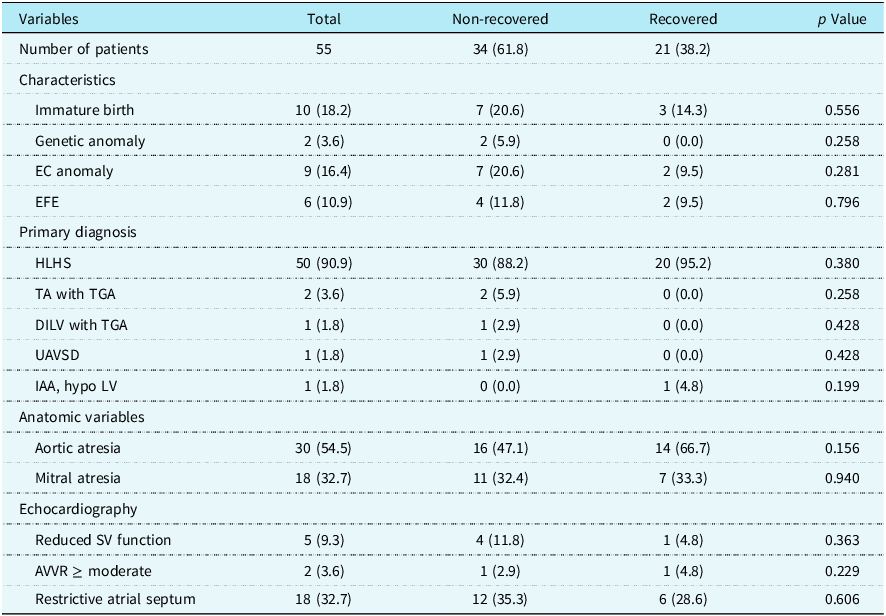
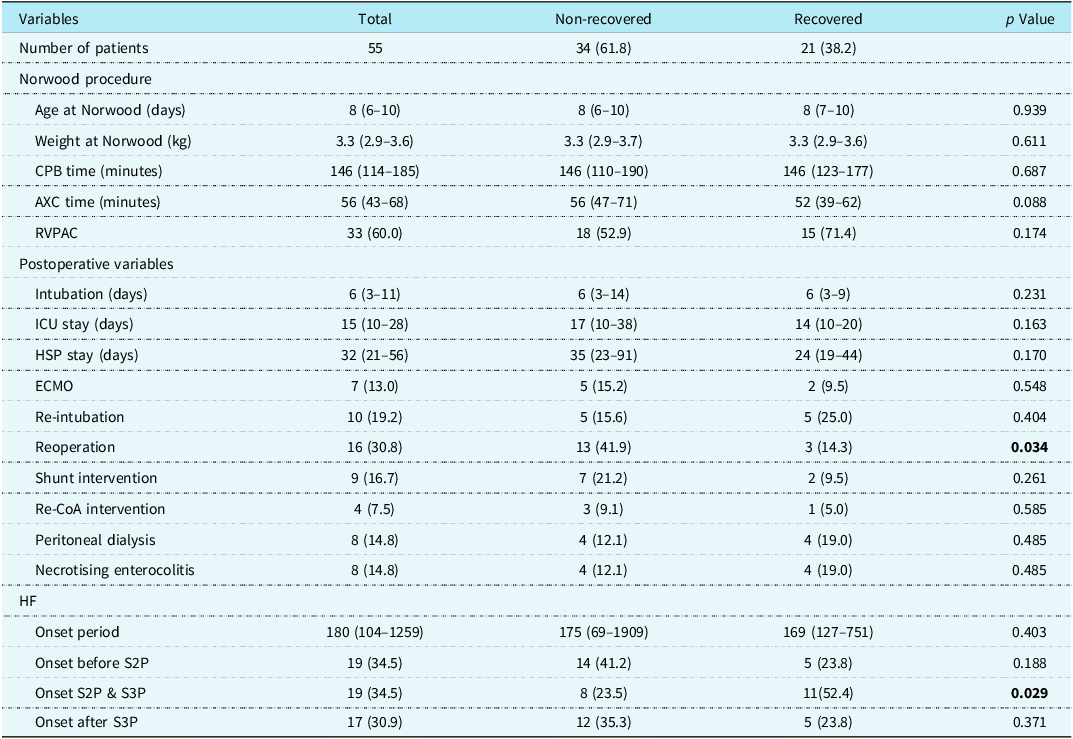
During the study period, a total of 380 patients underwent the Norwood procedure. Heart failure was observed in 55 patients. Recovery of systemic ventricular function occurred in 21 patients, while systemic ventricular function did not recover in the remaining 34 patients. Patients’ characteristics are shown in Table 1. Primary diagnosis, associated anomalies, and echocardiographic variables before the Norwood procedure were similar between the groups. Peri- and postoperative data are shown in Table 2. Age and weight at the Norwood procedure were similar between the groups. Postoperative length of stay in the ICU and in the hospital was also similar between the groups. The recovery group had a lower prevalence of postoperative reoperation than the non-recovery group (14% vs. 42%, p = .034). The occurrence of other postoperative events was similar in both groups. After the onset of heart failure, recovery of systemic ventricular function was more frequently observed in patients whose onset was between stage II and III of palliation than in other periods (52% vs. 24%, p = .029). Comparison of patients between modified Blalock–Taussig–Thomas shunt and right ventricle to pulmonary artery conduit is shown in Supplementary Table S1. The recovery rate was similar between the groups (27.3% vs. 45.5%, p = .174). The incidence of necrotising enterocolitis was higher in modified Blalock–Taussig–Thomas shunt than right ventricle to pulmonary artery conduit (28.6% vs. 6.3%, p = .026). As for the timing of the onset, onset before bidirectional cavopulmonary shunt was higher in modified Blalock–Taussig–Thomas shunt than right ventricle to pulmonary artery conduit (59.1% vs. 18.2%, p = .002).
Patient characteristics

EC = extracardiac; EFE = endocardial fibroelastosis; HLHS = hypoplastic left heart syndrome; TA = tricuspid atresia; DILV = Double inlet left ventricle; UAVSD = unbalanced atrioventricular septal defect; IAA = interruption of the aoritc arch; LV = left ventricle; SV = systemic ventricle; AVVR = atrioventricular valve regurgitation.
Data are shown as n (%) or median (IQR).
Peri- and postoperative data

CPB = cardiopulmonary bypass; AXC = aortic crossclamp; RVPAC = right ventricle to pulmonary artery conduit; ECMO = extracorporal membrane oxygenation; CoA = Coarctation of the aorta; HF = heart failure.
Data are shown as n (%) or median (IQR).
Bold represents p < 0.05.
Outcomes after the onset of heart failure
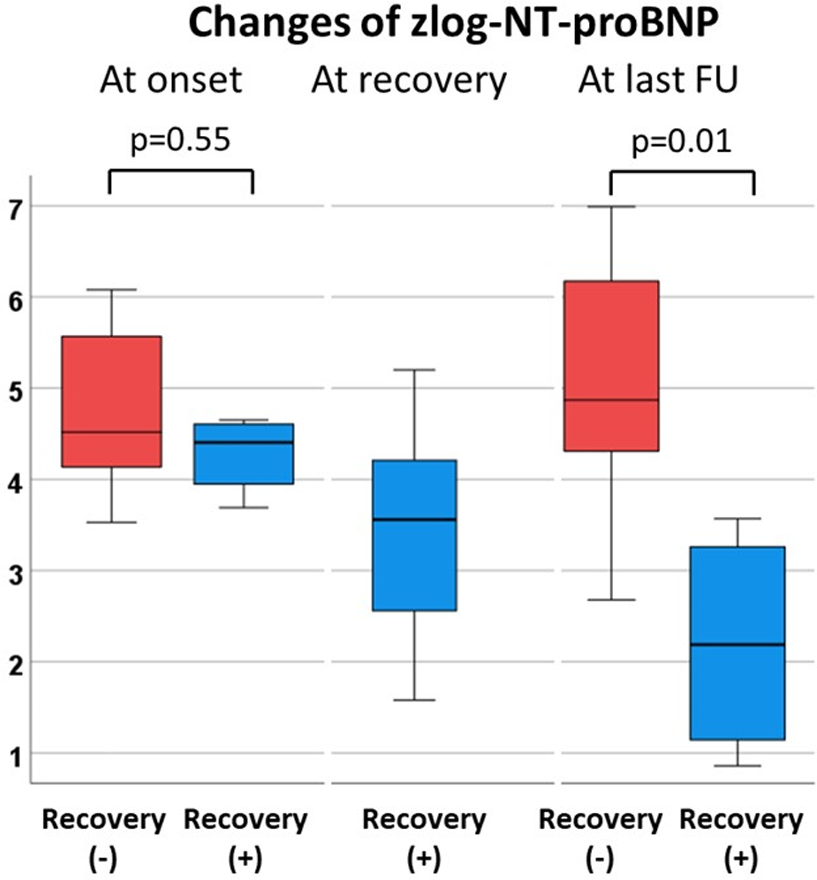
After the onset of heart failure, different types of medical therapy were performed. Medication included diuretics in 34 patients (furosemide in 27 patients with a median dose of 12 mg per day, spironolactone in 31 patients with a median dose of 12.5 mg, hydrochlorothiazide in 8 patients with a median dose of 10 mg, and torsemide in one patient with a dose of 15 mg), beta-blockers in 27 patients (carvedilol in 3 patients, bisoprolol in 11 patients, and propranolol in 10 patients), angiotensin-converting enzyme inhibitors in 24 patients (captopril in 13 patients, enalapril in 5 patients, and lisinopril in 9 patients, with a median dose of 3.5 mg), sodium-glucose co-transporter 2 inhibitors in 5 patients (empagliflozin in 3 and dapagliflozin in 2, with a median dose of 10 mg), methildigoxin (Lanitop) in 7 patients, and a phosphodiesterase type 5 inhibitors in 16 patients (sildenafil in 16 with a median dose of 16 mg and tadalafil in 2 patients). Transplant-free survival after the onset of heart failure in patients, with and without recovery of systemic ventricular function, is shown in Figure 1. Survival was better in patients who showed recovery than in those who did not (88.8% vs. 26.7% at 5 years, p < .001). Figure 2 depicts zlog-N-terminal prohormone of brain natriuretic peptide values at the onset of heart failure and at the last follow-up. At the onset of heart failure, zlog-N-terminal prohormone of brain natriuretic peptide was similar between the recovery group and non-recovery group (4.2 ± 1.3 vs. 4.5 ± 1.3, p = .55). However, at the last follow-up, zlog-N-terminal prohormone of brain natriuretic peptide was lower in patients with recovery compared to those without recovery (2.2 ± 1.3 vs. 5.1 ± 1.5, p = .01). As for recovery time, the median duration of systemic ventricular function normalisation was 187 (interquartile range: 77–354) days. The cumulative incidence of recovery was 60.9% at 5 years (Figure 3).
The Kaplan–Meier survival curve was compared between recovery and non-recovery. Because no patient underwent heart transplantation, survival is the same as transplant-free survival. There was a significant difference in survival between the two groups (p < 0.001).

Box-and-whiskers dot plots showing serial zlog-NT-proBNP values in patients with and without recovery.

Proportion in recovery of ventricular function. The rate of recovery was 60.9% at 5 years, and the median duration of normalisation was 187 (IQR: 77–354) days.

Factors influencing recovery of systemic ventricular function
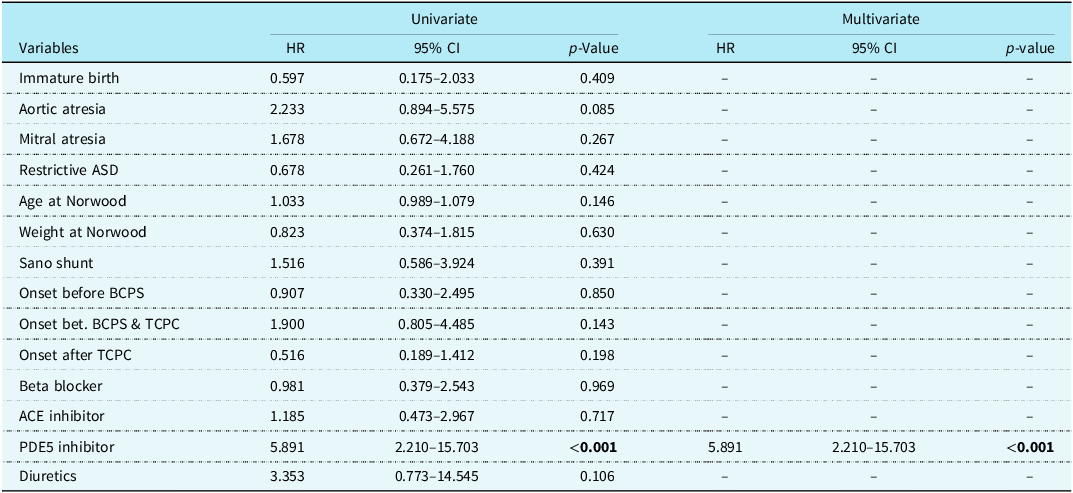
The results of the analysis are shown in Table 3. The use of phosphodiesterase type 5 inhibitors was identified as a factor that promoted the recovery of systemic ventricular function (heart rate: 5.891, p < .001). Other variables, including morphological factors, the timing of onset, or other medications, were not identified as influencing factors in the recovery of systemic ventricular function. All other variables tested are shown in Supplementary Table S2.
Influencing factors for recovery

ASD = atrial septal defect; BCPS = bidirectional cavopulmonary shunt; TCPC = total cavopulmonary shunt; ACE = angiotensin converting enzyme; PDE = phosphodiesterase.
Bold represents p < 0.05.
Discussion
Summary of the results
In our cohort of 380 Norwood patients, heart failure, defined by systemic ventricular dysfunction lasting at least 30 days, was observed in 55 patients. Recovery of systemic ventricular function occurred in 21 patients. The cumulative incidence of recovery was 60.9% at 5 years, and they demonstrated better survival after dysfunction onset, compared to those who did not. The use of phosphodiesterase type 5 inhibitors promoted the recovery of systemic ventricular function.
Systemic ventricle dysfunction after the Norwood procedure
Infants with hypoplastic left heart syndrome or a variant undergoing the neonatal Norwood procedure are at high risk of systemic ventricular dysfunction, and systemic ventricular dysfunction is the leading cause of postoperative mortality.Reference Hehir, Dominguez and Ballweg8–Reference Ghanayem, Allen and Tabbutt10,Reference Rickers, Wegner and Silberbach24 Balsara et al. demonstrated that the presence of combined systemic ventricular dysfunction and atrioventricular valve regurgitation markedly increases the likelihood of attrition before bidirectional cavopulmonary shunt.Reference Balsara, Burstein and Ittenbach9 However, there are multiple factors influencing systemic ventricular dysfunction, including coronary artery anomalies, coronary insufficiency, volume overload by shunt-dependent physiology, aortic atresia, shunt type, ventricular dilation, arrhythmia, recurrent coarctation, and shunt complications. Rickers et al. demonstrated that the coronary microcirculation of the right ventricle in hypoplastic left heart syndrome patients shows significant differences compared with controls.Reference Fetcu, Osawa and Klawonn23 Kulik et al. showed histologic findings of myocyte hypertrophy, subendocardial fibrosis, and interstitial fibrosis, suggesting chronic ischaemia may be involved.Reference Kulik, Sleeper and VanderPluym25 All of these anatomic and physiologic factors contribute to the high incidence of systemic ventricular dysfunction after the Norwood procedure, and it has remained an unsolvable issue in the past two decades despite the sophistication of surgical techniques and refinement of perioperative management.
Recovery of systemic ventricular function in patients with heart failure
Severe systemic ventricular dysfunction leads directly to higher mortality after the Norwood procedure. However, chronic mild to moderate systemic ventricular dysfunction could be recovered with the optimal medical and interventional therapies.Reference Lynch, Jeewa and Minn12,Reference Kulik, Sleeper and VanderPluym25 Lynch et al. demonstrated that 52% of patients with hypoplastic left heart syndrome and right ventricular dysfunction had normalised function after the Norwood procedure.Reference Lynch, Jeewa and Minn12 Kulik et al. reported that 41% (13/32) of patients, who developed systemic ventricular dysfunction, resolved, and resolved patients had good outcomes as good as in the entire cohort.Reference Kulik, Sleeper and VanderPluym25 In this study, recovery of systemic ventricular function occurred in 21 of 55 patients (38%), which is consistent with other studies. As for the onset of systemic ventricular dysfunction, patients who experienced the onset between stage 2 and stage 3 had the best recovery rate. We assume that this is related to the volume unloading by stage 2 bidirectional cavopulmonary shunt. We also found some patients who developed systemic ventricular dysfunction after bidirectional cavopulmonary shunt without significant risk factors, such as AVV regurgitation or re-coarctation. We think this is due to the remodelling of the ventricular geometry by volume unloading, leading to a more frequent recovery in patients with this type of systemic ventricular dysfunction.
Heart failure medication in the setting after the Norwood procedure
Although the therapeutic benefit of a multidrug approach is now widely accepted in the broader heart failure population, evidence in the medical treatment of heart failure in patients with hypoplastic left heart syndrome is limited. Yimgang et al. reported that angiotensin-converting enzyme inhibitor therapy did not demonstrate a beneficial effect on interstage heart failure among infants with hypoplastic left heart syndrome.Reference Yimgang, Sorkin and Evans26 Hsu et al. also demonstrated that enalapril had no therapeutic effects in infants with single-ventricle physiology.Reference Hsu, Zak and Mahony27 Jean-St-Michel et al. found no therapeutic effects of angiotensin-converting enzyme inhibitors (captopril) or beta blockers (carvedilol) in patients after the Norwood procedure.Reference Jean-St-Michel, Chetan and Schwartz28 These results are consistent with the findings of our study. However, in this study, there was positive evidence of the therapeutic effect of phosphodiesterase type 5 inhibitors. Goldberg et al. demonstrated a positive effect of Udenafil on exercise capacity in Fontan patients.Reference Goldberg, Zak and Hu29 They also showed that sildenafil could effectively improve exercise performance in children and young adults following the Fontan procedure.Reference Goldberg, French and McBride30 In addition, Van de Bruaene et al. showed that sildenafil increased cardiac index during exercise and reduced total pulmonary vascular resistance in Fontan patients.Reference Van De Bruaene, La Gerche and Claessen31 Another study by Goldberg et al. showed that Fontan patients treated with sildenafil had an improvement in their myocardial performance index, suggesting that sildenafil may be effective to improve or maintain ventricular performance.Reference Goldberg, French and Szwast32 In the present study, the heart failure recovery rate was significantly higher in patients treated with phosphodiesterase type 5 inhibitors. Conventionally, phosphodiesterase type 5 inhibitors have been used as pulmonary vasodilators to decrease pulmonary vascular resistance. This approach has also been shown to successfully reduce increased pulmonary vascular resistance in Fontan patients, as demonstrated by Mori et al.Reference Mori, Park and Yamagishi33 The effects of phosphodiesterase type 5 inhibitors for systemic ventricular dysfunction in this patient population should be further investigated, including the achievement of target dosing in heart failure medications without an associated increased risk of mortality.
Biomarker for heart failure after the Norwood procedure
There are several biomarkers for heart failure, including galectin-3, neutrophil gelatinase-associated lipocalin, mid-regional pro-adrenomedullin, and tetranectin. N-terminal prohormone of brain natriuretic peptide is the most widely used biomarker in clinical practice. In a recent study, we demonstrated that zlog-N-terminal prohormone of brain natriuretic peptide is a reliable predictor of major adverse cardiovascular events in children with CHD.Reference Palm, Holdenrieder and Hoffmann18 As N-terminal prohormone of brain natriuretic peptide is a sensitive marker for cardiac wall stress, ventricular overload, and myocardial dysfunction, it is also a useful tool for infants and young children after the Norwood procedure.Reference Niedermaier, Ono and Klawonn17 Our data showed that zlog-N-terminal prohormone of brain natriuretic peptide at the onset of heart failure was high in both patients with and without recovery of systemic ventricular function, but it decreased only in patients who demonstrated a recovery of systemic ventricular function. Therefore, zlog-N-terminal prohormone of brain natriuretic peptide might be a helpful marker for the recovery of systemic ventricular function. In the future, clinicians should consider zlog-N-terminal prohormone of brain natriuretic peptide in infants undergoing the Norwood procedure as a tool for postoperative care and follow-up.
Impact of shunt type
Newburger et al. demonstrated in their SVR trial that transplant-free survival before stage II surgery was better in the right ventricle to pulmonary artery conduit group than in the modified Blalock–Taussig–Thomas shunt.Reference Newburger, Sleeper and Gaynor34 However, overall outcomes at 6 years did not differ by shunt type. Our results also demonstrated a lower incidence of necrotising enterocolitis after the Norwood procedure and a lower incidence of systemic ventricular dysfunction before stage II surgery in right ventricle to pulmonary artery conduit patients than those with modified Blalock–Taussig–Thomas shunt. However, the recovery rate of systemic ventricular dysfunction was similar between the groups, and our previous study demonstrated no significant difference in overall survival between modified Blalock–Taussig–Thomas shunt and right ventricle to pulmonary artery conduit.Reference Ono, Kido and Wallner35
Future prospective
Further sophistication of surgical and interventional techniques might be needed to prevent or mitigate the development of systemic ventricular dysfunction and heart failure after the Norwood procedure. Emerging medical therapies such as sacubitril/valsartan and sodium-glucose co-transporter 2 inhibitors, now standard of care in adult heart failure, may play a role in heart failure management for patients after the Norwood procedure in the future, although their efficacy in patients after the Norwood procedure has yet to be determined.
Study limitations
This study was limited by its retrospective, non-randomised, single-centre design. The choice of shunt type was at the surgeon’s discretion. Changes in surgical and medical management during the study period likely influenced outcomes. Although the evaluation of the systemic ventricular function was performed by experienced paediatric cardiologists, there still remain valid questions about the methodology of portraying systemic ventricular dysfunction. A significant atrioventricular valve regurgitation may impact the measurement and underestimate the systemic ventricular dysfunction. Improvements of the quality and accuracy of echocardiography during the study period might impact our results. The variables of residual arch obstruction (re-coarctation), Qp/Qs, and systemic ventricular end-diastolic pressure were not included in the analysis.
Conclusions
In patients who developed heart failure after the Norwood procedure, transplant-free survival was better in those who experienced recovery of systemic ventricular function than in those with sustained dysfunction. Heart failure between bidirectional cavopulmonary shunt and total cavopulmonary connection was more likely to recover compared to heart failure at other times. Heart failure was more likely to recover when treated with phosphodiesterase type 5 inhibitors compared to other heart failure medications. Regular measurement of zlog-N-terminal prohormone of brain natriuretic peptide might be useful for heart failure.
Supplementary material
The supplementary material for this article can be found at https://doi.org/10.1017/S1047951126113870.
Data availability statement
The data that support the findings of this study are available upon reasonable request.
Acknowledgements
We thank Mr. Daniel Lucic for his contribution to the collection of follow-up data.
Financial support
This study was supported by grants from the Förderverein des Deutschen Herzzentrums München.
Competing interests
The authors declare no competing interests.
Ethical standard
The Institutional Review Board of the Technical University of Munich approved the study (approval number 2025-232-S-NP on May 05, 2025) and waived the need for informed consent from the patients who were retrospectively analysed in the study.