Disorganized infant attachment has long been recognized as a significant risk factor for maladaptive outcomes across a variety of developmental domains (Berlin, Cassidy, & Appleyard, Reference Berlin, Cassidy, Appleyard and Shaver2008; Carlson, Reference Carlson1998; Carlson, Egeland, & Sroufe, Reference Carlson, Egeland and Sroufe2009; Fearon, Bakermans-Kranenburg, van IJzendoorn, Laspsley, & Roisman, Reference Fearon, Bakermans-Kranenburg, van IJzendoorn, Lapsley and Roisman2010; Hertsgaard, Gunnar, Erickson, & Nachmias, Reference Hertsgaard, Gunnar, Erickson and Nachmias1995). This had led to a great deal of research into the precursors and consequences of disorganized attachment that has served as the basis for a host of intervention programs aiming to reduce the incidence of attachment disorganization. The effectiveness of these interventions was last subjected to meta-analytic examination more than a decade ago (Bakermans-Kranenburg, van IJzendoorn, & Juffer, Reference Bakermans-Kranenburg, van IJzendoorn and Juffer2005). It is perhaps surprising that Bakermans-Kranenburg and colleagues found that interventions were generally ineffective at reducing rates of disorganized attachment in infancy. However, research available to clinicians regarding the factors contributing to attachment disorganization has grown since the 2005 meta-analysis and has greatly influenced more recent intervention efforts (for a review, see Lyons-Ruth & Jacobvitz, Reference Lyons-Ruth, Jacobvitz, Cassidy and Shaver2008). Thus, it is critical to revisit the question of the effectiveness of interventions on disorganized attachment. We provide an updated review of the literature on the origins and impacts of disorganized attachment, discuss approaches to intervention that aim to prevent or reduce disorganization, and then present a meta-analytic assessment of intervention effectiveness.
Attachment theory and research suggest that the expectations that children build about their mothers’ availability and responsiveness when confronted with challenges become organized into distinct patterns of attachment behavior (Ainsworth, Blehar, Waters, & Wall, Reference Ainsworth, Blehar, Waters and Wall2015/1978; Bowlby, Reference Bowlby1969, Reference Bowlby1980; Sroufe & Waters, Reference Sroufe and Waters1977). Disorganized attachment refers to the failure to develop a coherent strategy for managing distress in the presence of the parent. Variability in infant attachment quality is typically assessed during the Strange Situation Procedure (SSP; Ainsworth et al., 2015/1978), a laboratory-based procedure involving brief separations and reunions between the infant and his or her primary caregiver. Observations of behavior during reunion episodes (e.g., proximity seeking following distress or avoidance upon the parents return) provide evidence of the infant's expectation regarding the caregiver's availability, leading to classification of the infant's attachment pattern (i.e., secure, insecure-avoidant, or insecure-resistant). In the case of disorganized attachment, a number of unusual behaviors in the presence of the parent can indicate a momentary breakdown in strategy (Main & Solomon, Reference Main, Solomon, Greenberg, Cicchetti and Cummings1990). Behaviors indicative of disorganized attachment include stilling, freezing, anomalous movements and postures, frightened expressions, and even active avoidance in the mothers’ presence (Main & Solomon, Reference Main, Solomon, Greenberg, Cicchetti and Cummings1990). Moreover, disorganized attachment behaviors often fail to fit into the natural sequence of events, and their lack of context make these behaviors particularly peculiar.
There is evidence to suggest that disorganized attachment is a consequence of frightening or odd/anomalous parenting behaviors (Hesse & Main, Reference Hesse and Main2006; Lyons-Ruth, Bronfman, & Parsons, Reference Lyons-Ruth, Bronfman and Parsons1999; Schuengel, Bakermans-Kranenburg, & van IJzendoorn, Reference Schuengel, Bakermans-Kranenburg and van IJzendoorn1999; Schuengel, Bakermans-Kranenburg, van IJzendoorn, & Blom, Reference Schuengel, Bakermans-Kranenburg, van IJzendoorn, Blom, Solomon and George1999; van IJzendoorn, Schuengel, & Bakermans-Kranenburg, Reference van IJzendoorn, Schuengel and Bakermans-Kranenburg1999; see also Benoit, Reference Benoit2004). Main and Hesse (Reference Main, Hesse, Greenberg, Cicchetti and Cummings1990) argue that children are left with an “unsolvable dilemma” when the person to whom they should turn for comfort is also a source of threat. In turn, conflicting motivational systems within the infant, namely, between proximity seeking and avoidance, may result in disorganized attachment. Besides frightening behavior, other antecedents of disorganized attachment include a number of risk and socioeconomic factors. These include low family income (Fish, Reference Fish2001), parental psychopathology, and in particular, maternal depression (Toth, Rogosch, Manly, & Cicchetti, Reference Toth, Rogosch, Manly and Cicchetti2006; van IJzendoorn et al., Reference van IJzendoorn, Schuengel and Bakermans-Kranenburg1999) and parental substance abuse (Cyr, Euser, Bakermans-Kranenburg, & van IJzendoorn, Reference Cyr, Euser, Bakermans-Kranenburg and van IJzendoorn2010; Melnick, Finger, Hans, Patrick, & Lyons-Ruth, Reference Melnick, Finger, Hans, Patrick, Lyons-Ruth, Steele and Steele2008). Moreover, accumulating evidence points to child maltreatment as a major contributor to disorganized attachment (Cicchetti, Rogosch, & Toth, Reference Cicchetti, Rogosch and Toth2006; Cyr et al., Reference Cyr, Euser, Bakermans-Kranenburg and van IJzendoorn2010). These antecedents significantly undermine the caregiver's availability in helping the infant modulate distress, and in extreme cases (e.g., maltreatment) implicate the caregiver as a source of distress.
Numerous studies have associated attachment disorganization with negative developmental outcomes. For example, children classified as disorganized in infancy are at increased risk of externalizing problems (Fearon et al., Reference Fearon, Bakermans-Kranenburg, van IJzendoorn, Lapsley and Roisman2010; Groh, Roisman, van IJzendoorn, Bakermans-Kranenburg, & Fearon, Reference Groh, Roisman, van IJzendoorn, Bakermans-Kranenburg and Fearon2012), as well as physiological dysregulation, such as heightened cortisol reactivity (Bernard & Dozier, Reference Bernard and Dozier2010; Hertsgaard et al., Reference Hertsgaard, Gunnar, Erickson and Nachmias1995). In addition, studies have evidenced associations between disorganized attachment in infancy and later dissociative psychopathology in adolescence (e.g., Carlson, Reference Carlson1998). These findings suggest that early disruptions in the attachment relationship, particularly those leading to disorganization, set the stage for later developmental challenges.
Attachment-based interventions involve varied approaches and targets, such as providing support to caregivers, enhancing parental sensitivity, and/or shaping caregivers’ attachment representations. In support-focused interventions, clinicians provide social, financial, legal, health, and educational services to families that lack access to those resources. In addition, many of these programs provide information on child development so that mothers can respond to their infants in more developmentally appropriate ways. Sensitivity-focused interventions target parenting behaviors more directly as interventionists implement skill-based training techniques (e.g., video feedback and parent coaching) that aim to increase sensitive responses to infant cues. Numerous studies suggest a link between maternal sensitivity and attachment security (for a meta-analytic review, see De Wolff & van IJzendoorn, Reference De Wolff and van IJzendoorn1997), and such findings serve as the theoretical basis for the implementation of sensitivity-based strategies. Representation-focused approaches, in contrast, aim to modify how caregivers reflect on their own attachment histories, with this reflective processing expected to support the caregiver's availability for the infant. In addition, many programs implement multifaceted approaches that integrate multiple treatment modalities.
Bakermans-Kranenburg et al. (Reference Bakermans-Kranenburg, van IJzendoorn and Juffer2005) meta-analytically demonstrated that, overall, interventions did not significantly change disorganized attachment (d = 0.05, ns). This might not be surprising, however, given that many of the interventions reviewed at the time were not specifically designed to target disorganization. Nevertheless, several characteristics of the target sample and intervention approach moderated intervention effectiveness. First, when comparing the percentage of disorganized attachment in control groups, intervention effects were more robust in samples with higher base rates of disorganization (>21%; d = 0.31), than in samples with lower base rates of disorganization (<21%; d = –0.18). Second, interventions that specifically focused on changing parents’ sensitivity were more effective (d = 0.24) than those that focused on providing support or targeting parents’ own attachment representations (d = –0.04). Taken together, findings from the previous meta-analysis suggest that effective interventions (a) target an appropriate sample at elevated risk for disorganized attachment, and (b) specifically focus on key mechanisms of risk (i.e., parent insensitivity).
Seven new studies with 708 participants have been published in the years following Bakermans-Kranenburg et al.’s (Reference Bakermans-Kranenburg, van IJzendoorn and Juffer2005) meta-analysis, suggesting that an update and extension of previous findings is critical. The purpose of the current study was to examine whether interventions were effective in reducing rates of disorganized attachment, and if so, identify the conditions under which interventions were most effective. With respect to potential moderators, we were especially interested in (a) whether there had been a significant change in intervention effectiveness over time, (b) whether sensitivity-focused approaches were more effective than support- or representation-focused approaches (consistent with previous findings), and (c) whether characteristics of the target sample were associated with intervention effectiveness.
Method
Search strategy
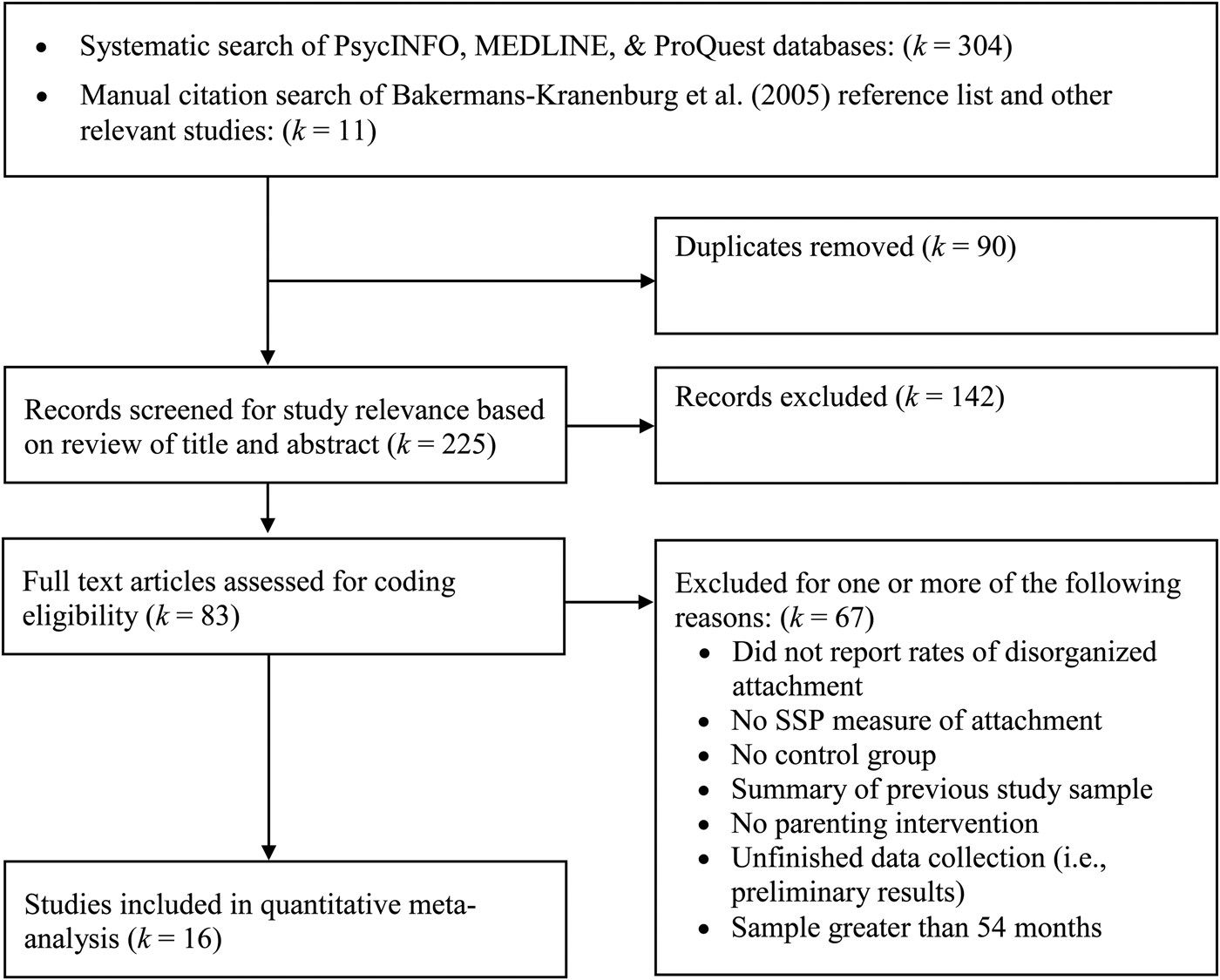
Both peer-reviewed articles and dissertation reports were systematically collected using multiple search strategies. Online databases (PsycINFO, MEDLINE, ProQuest Dissertations) were searched using the following combination of key terms: attachment* and intervention (or related terms, including sensitivity or responsiveness or preventive or early intervention or preventive intervention or response to intervention or therapeutic or treatment outcomes or clinical trials). Related keywords were generated using the EBSCOhost search engine expander option; other search terms were adopted from Bakermans-Kranenburg et al.’s (Reference Bakermans-Kranenburg, van IJzendoorn and Juffer2005) meta-analytic review. Moreover, a manual citation search was conducted from the reference list of Bakermans-Kranenburg et al. (Reference Bakermans-Kranenburg, van IJzendoorn and Juffer2005), and relevant studies were included in this meta-analysis. The titles and abstracts of 315 studies were retrieved and inspected for study relevance (see Figure 1). When study relevance could not be determined from the title or abstract alone, the full text was screened and assessed for eligibility.
Flow diagram indicating study selection procedure.

Inclusion for study criteria
Similar inclusion/exclusion criteria were implemented for study selection as were used in the previous Bakermans-Kranenburg et al. (Reference Bakermans-Kranenburg, van IJzendoorn and Juffer2005) meta-analysis. Eligible studies reported rates of disorganized attachment in children following intervention, as well as in children assigned to a control condition (including treatment or no treatment control). Eligible samples consisted of current or expecting mothers with young children or infants less than 54 months of age. Studies exploring intervention effects in child samples identified as having developmental disorders (e.g., autism spectrum disorders or intellectual disabilities) were excluded. No date or geographical restrictions were applied, and studies included both peer-reviewed articles and dissertation reports published in the English language. Intervention studies were selected based on their use of the SSP (Ainsworth et al., Reference Ainsworth, Blehar, Waters and Wall2015/1978) and the Preschool Assessment of Attachment (PAA; Crittenden, Reference Crittenden1995). Reports that failed to report SSP data using the four-way classification system (Main & Solomon, Reference Main, Solomon, Greenberg, Cicchetti and Cummings1990) were excluded. Given that no studies reporting on the PAA met our inclusion criteria, the final study set only included studies that measured attachment with the SSP.
Three studies were excluded because they lacked a comparative treatment or control group (i.e., Cassidy et al., Reference Cassidy, Ziv, Stupica, Sherman, Butler, Karfgin and Powell2010; Cohen et al., Reference Cohen, Muir, Parker, Brown, Lojkasek, Muir and Barwick1999; Hoffman, Marvin, Cooper, & Powell, Reference Hoffman, Marvin, Cooper and Powell2006). In addition, when studies had multiple interventions and only one control group (i.e., Bakermans-Kranenburg, Juffer, & van IJzendoorn, Reference Bakermans-Kranenburg, Juffer and van IJzendoorn1998; Cicchetti et al., Reference Cicchetti, Rogosch and Toth2006; Cooper & Murray, Reference Cooper, Murray, Murray and Cooper1997; Juffer, Bakermans-Kranenburg, & van IJzendoorn, Reference Juffer, Bakermans-Kranenburg and van IJzendoorn2005), the intervention that targeted attachment most directly or most comprehensively (i.e., included multiple components) was included. Although several strategies have been developed to circumvent issues concerning the computation of effect sizes from interdependent sample variances, there is little agreement about the conditions under which these procedures are most appropriate. Borenstein, Hedges, Higgins, and Rothstein (Reference Borenstein, Hedges, Higgins, Rothstein, Bornstein, Hedges, Higgins and Rothstein2009) recommend either (a) calculating an effect size from the mean composite of both intervention groups, or (b) eliminating intervention groups and estimating the effect size from the intervention that is most relevant to the research question. An alternative approach includes reorganizing the composition of control groups and adjusting sampling error accordingly. Several factors influenced the selection of coding procedures. First, studies reporting data on multiple interventions often included programs that were not relevant to the research question. Rather than forcing the inclusion of interventions that were not oriented toward promoting secure attachment, we decided to omit them. Second, sample sizes of individual studies included in this meta-analysis were often limited. Splitting control groups and decreasing the sample even further risked artificially inflating the effect size statistic. Given these concerns, we erred on the side of being conservative with our inclusion of interventions and control groups. It is important that coding decisions with this respect were somewhat different from those implemented in Bakermans-Kranenburg et al.’s (Reference Borenstein, Cooper, Hedges and Valentine2005) meta-analysis, which is an important finding. Thus, when making direct comparisons to the previous meta-analysis, it should be noted that some effect sizes for studies published from 1990 to 2005 differ in magnitude.
Coding
Rates of disorganized attachment in the intervention group and comparison group at postintervention assessments were used to compute the effect size statistic. Relevant studies were collected, and key information was coded for moderator variables across multiple levels. Study-level descriptors included (a) year of publication, (b) country of data collection, (c) randomization, and (d) type of attachment measure used to assess disorganization (SSP, PAA, or combination).
For descriptive purposes, we also coded various aspects of the sample. These included (a) socioeconomic status, (b) clinical status (i.e., parents clinically referred or children clinically referred), (c) risk status of the parent (e.g., socially isolated or insecure), (d) risk status of the infant (e.g., adopted, irritable, or premature), (e) maltreatment status, and (f) mean child age at the start of intervention.
Finally, we recorded an array of intervention descriptors thought to contribute to program efficacy, which included (a) mean number of sessions, (b) professional level of the intervenor (i.e., layperson, professional or graduate student, or combination of both), (c) location of implementation (i.e., home based or clinic based), (d) the use of video feedback, and (e) treatment focus (i.e., support based, sensitivity based, representation based, or multiple foci).
Two independent coders determined whether eligible studies met the inclusion criteria. Interrater reliabilities were calculated using the intraclass correlation coefficient (ICC) and Cohen kappa (κ), and were high for effect size calculations (ICC = 0.99, p < .001, range = 0.99–1.00), continuous moderator variables (ICC = 0.97, p < .001, range = 0.92–0.99), and categorical moderator variables (κ = 0.94, p < .001, range = 0.75–1.00). All discrepancies were resolved through consensus.
Data analysis
Calculation of effect sizes
Effects across studies were synthesized using the statistical software R (R Development Core Team, 2015). Study outcomes were calculated with the escalc function in the metaphor package (Viechtbauer, Reference Viechtbauer2010) and transformed into the standardized mean difference. In all cases, these computations were calculated from the raw data using frequency counts of disorganized and organized attachments by group. Positive effect size values represent greater intervention effectiveness (i.e., lower rates of disorganized attachment in intervention group than comparison group), whereas negative values indicate that rates of disorganized attachment were higher in the intervention group than in the comparison group. Following a comparison of model-fit statistics, a random-effects model using the DerSimonian–Laird estimator (DerSimonian & Kracker, Reference DerSimonian and Kacker2007; DerSimonian & Laird, Reference DerSimonian and Laird1986) was used to calculate the effect size index (Borenstein, Reference Borenstein, Cooper, Hedges and Valentine2009; Schmidt, Oh, & Hayes, Reference Schmidt, Oh and Hayes2009). When including moderator variables, effects were analyzed using a mixed-effects model. Unlike moderator analyses for categorical variables, meta-analytic procedures analogous to standard regression techniques may be applied for continuous variables (Thompson & Higgins, Reference Thompson and Higgins2002). When applicable, continuous moderators were examined using meta-regression analyses.
Publication bias
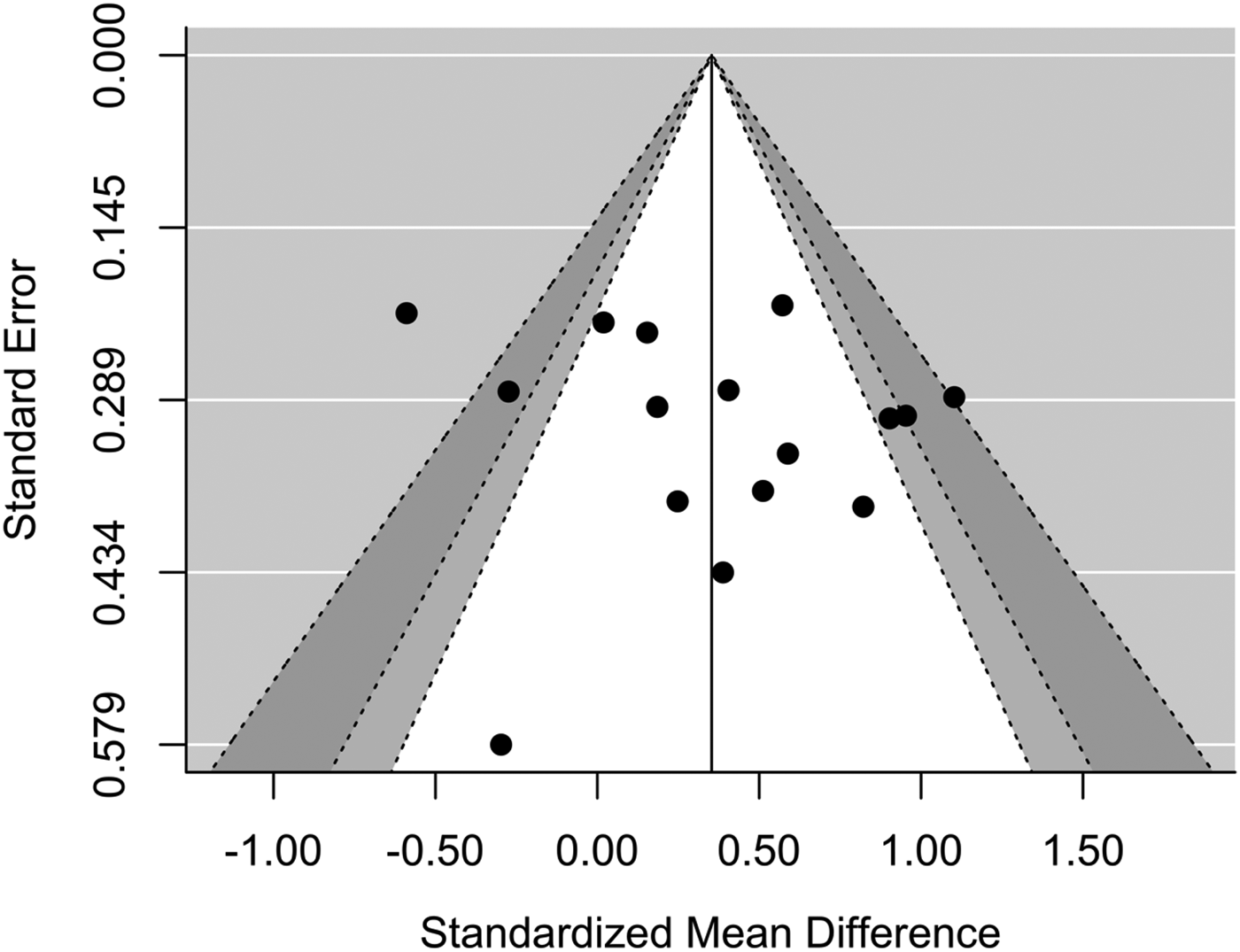
Several well-validated techniques have been developed to investigate the potential impact of publication bias on meta-analytic results. In the current investigation, we utilized a statistically enhanced contoured funnel plot, which provides a visual representation of the precision of study effect estimates as a function of standard error (Figure 2). Shaded areas to the left and right of the funnel plot reflect conventional statistical significance levels and can be used to interpret the extent of study bias. In the absence of publication bias, studies should follow a symmetrical distribution, with larger studies clustered toward the top (signifying greater precision) and smaller studies scattered toward the bottom. In the current set of studies, the funnel plot appears symmetrically distributed around the effect size point estimate. The statistical assessment of funnel plot asymmetry was then applied using Egger's linear regression method (Egger, Davey Smith, Schneider, & Minder, Reference Egger, Davey Smith, Schneider and Minder1997), which revealed nonsignificant results (p = .32). Next, we ran Duval and Tweedie's (Reference Duval and Tweedie2000a, Reference Duval and Tweedie2000b) trim and fill procedure, an iterative corrective test that yields an adjusted effect size for funnel plot asymmetry. As expected, these results confirmed that studies neither needed to be “trimmed” nor “filled” to correct for asymmetry. Finally, we applied Rosenthal's (Reference Rosenthal1979) fail-safe N, otherwise known as the “file drawer” approach, which estimated that 107 missing studies with null effects would be required to detect nonsignificant meta-analytic results.
A visual representation of the precision of study effect estimates as a function of standard error.

Results
Primary analysis
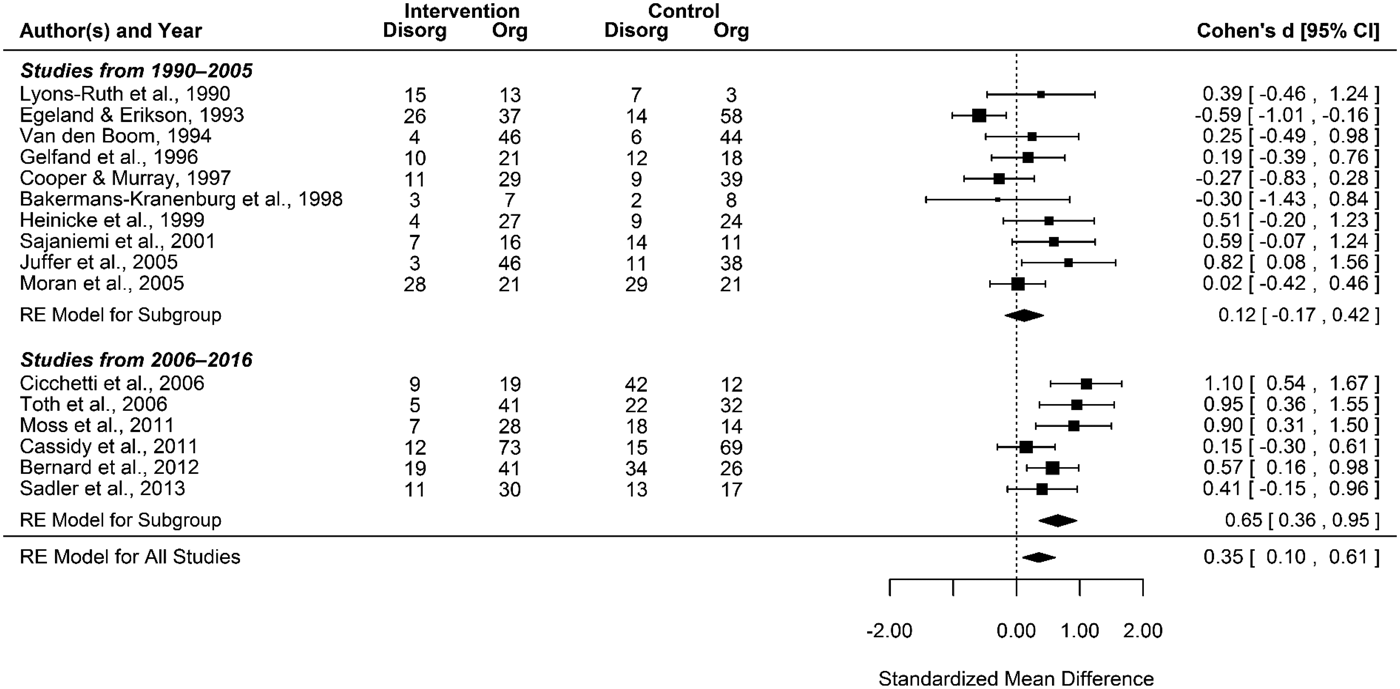
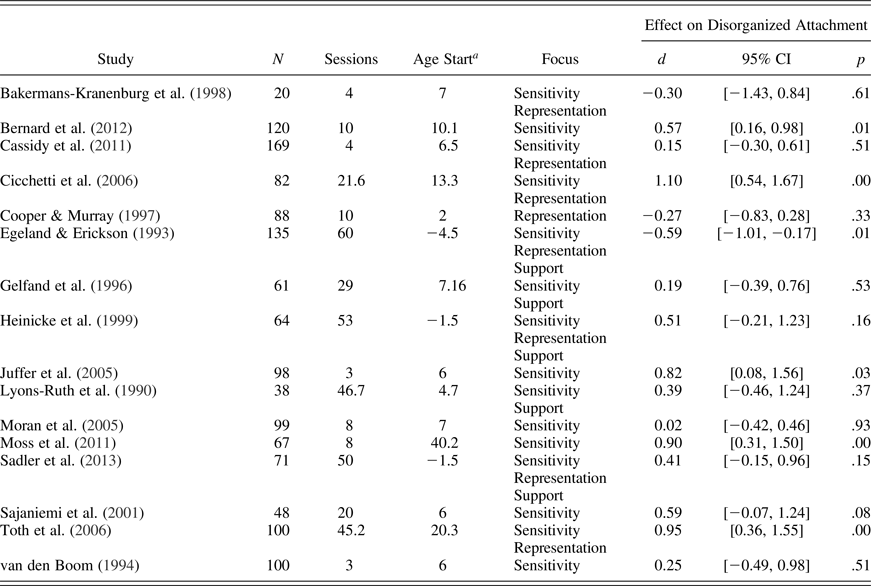
Individual studies displayed a wide distribution of effect sizes ranging from d = –0.59 to 1.10 (Figure 3). Confidence intervals that include zero indicate intervention effects that were not statistically significant at the p = .05 level. Some studies reported negative effect size values, suggesting adverse effects on attachment organization for children assigned to intervention in comparison to control conditions (i.e., Bakermans-Kranenburg et al., Reference Bakermans-Kranenburg, Juffer and van IJzendoorn1998; Cooper & Murray, Reference Cooper, Murray, Murray and Cooper1997; Egeland & Erickson, Reference Egeland, Erickson, Parens and Kramer1993; see Table 1 and Figure 3). Nonetheless, primary analyses revealed moderate intervention effectiveness in reducing or preventing disorganized attachment overall, d = 0.35, 95% CI [0.10–0.61]. The Q statistic estimates the variability among observed effect sizes that is not solely attributable to sampling error, and is ubiquitously applied in meta-analytic research. Using guidelines provided by Higgins and Thompson (Reference Higgins and Thompson2002), a considerable amount of heterogeneity was found among study effect sizes, Q (15) = 45.43, p < .001, and thus moderator analyses were performed to explore study differences more closely.
Forest plots comparing intervention efficacy for published studies between 1990 and 2005 and more recent studies published from 2006 to 2016. Shaded squares indicate weighted effect size estimates for individual studies; shaded diamonds reflect pooled effect size estimates measured by the standardized mean difference (Cohen d). Error bars indicate standard 95% confidence intervals. The results for both primary and subgroup analyses reflect random-effects modeling procedures. Moran, Pederson, and Krupka (Reference Moran, Pederson and Krupka2005) was published following the previous meta-analysis (Bakermans-Kranenburg et al., Reference Bakermans-Kranenburg, van IJzendoorn and Juffer2005).

Intervention studies: Descriptive statistics and effect sizes
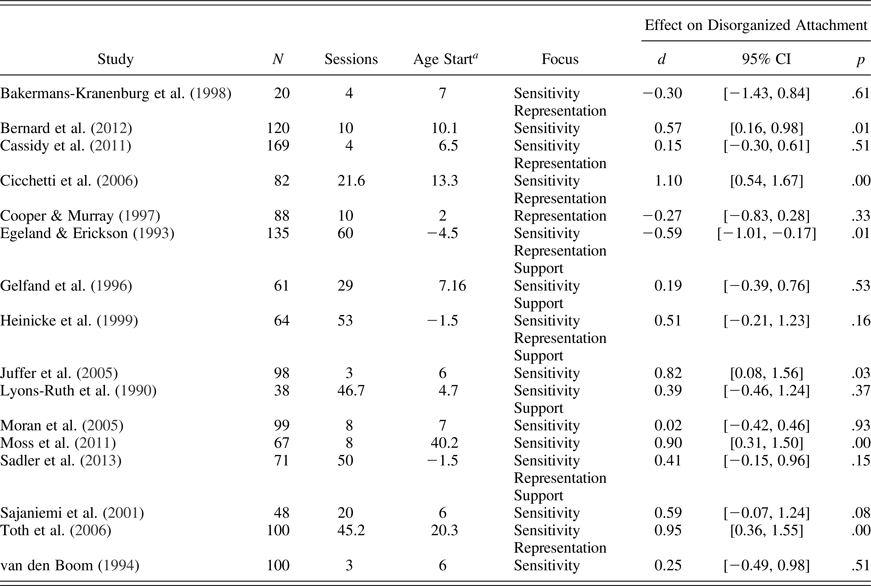
Note: Negative values for age represent interventions that have been implemented prenatally. Interventions that began in the second and third trimester of pregnancy have been assigned –1.5 and –4.5 months, respectively.
a Age of child in months.
Moderator analyses
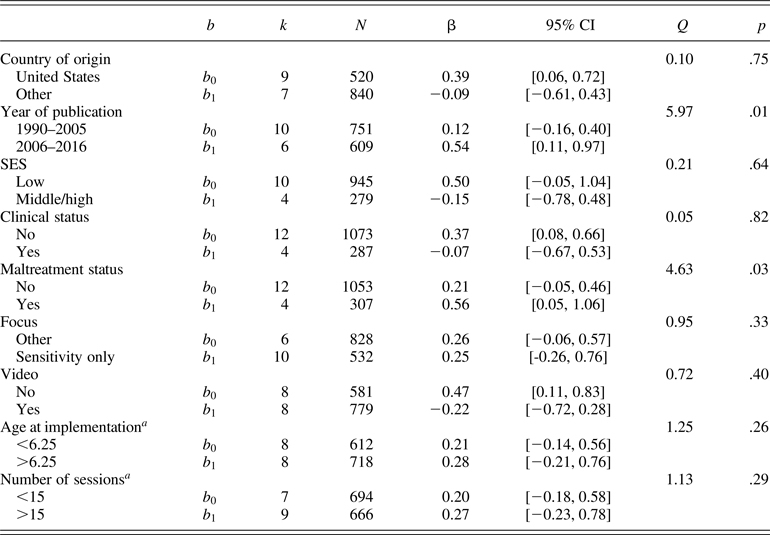
All moderator analyses used a random/mixed-effects model and were measured via the restricted maximum-likelihood estimator (see Viechtbauer, López-López, Sánchez-Meca, & Marín-Martínez, Reference Viechtbauer, López-López, Sánchez-Meca and Marín-Martínez2015). Three levels of moderators were examined: study design; sample descriptives; and intervention characteristics. Moderators with fewer than four studies in a given cell were not computed. Coded moderator variables that violated this criterion included randomization, type of attachment measure, professional level of the intervenor, location of implementation, and risk status. Of the nine moderator variables selected for analysis, three significantly explained the programs’ efficacy in targeting disorganized attachment, namely, year of publication, maltreatment status, and child age at implementation. A complete list of moderator results is presented in Table 2.
Categorical moderator analyses using a mixed-effects model
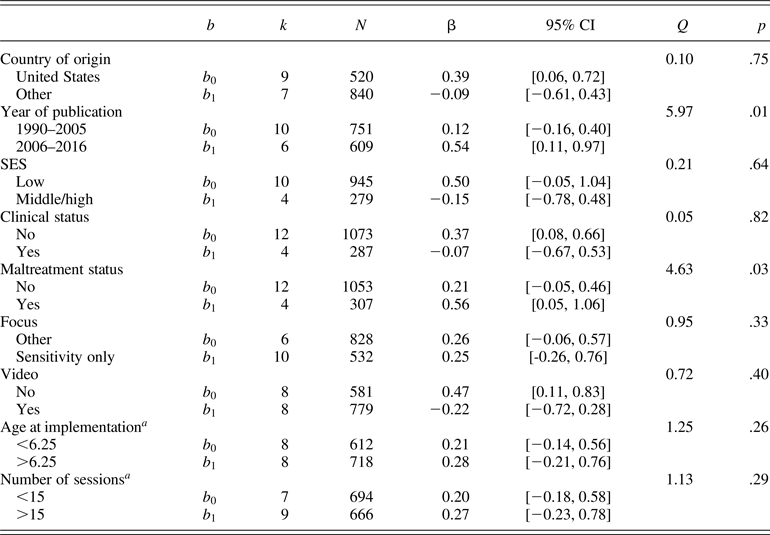
Note: Standardized beta weights (β) statistic and corresponding 95% confidence intervals are reported. The Q statistic and corresponding significance (p) value represent explained moderator heterogeneity across factors, b 0 represents the model intercept, and the b 1 coefficient represents the difference from the reference group. Moderators with less than four studies in a given cell were not computed.
aMedian split procedure used to dichotomize number of sessions.
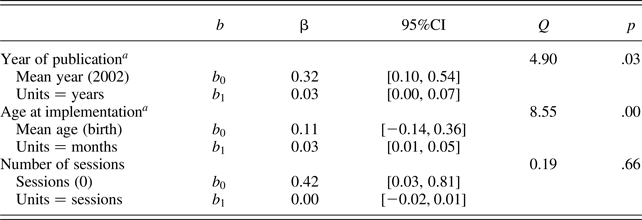
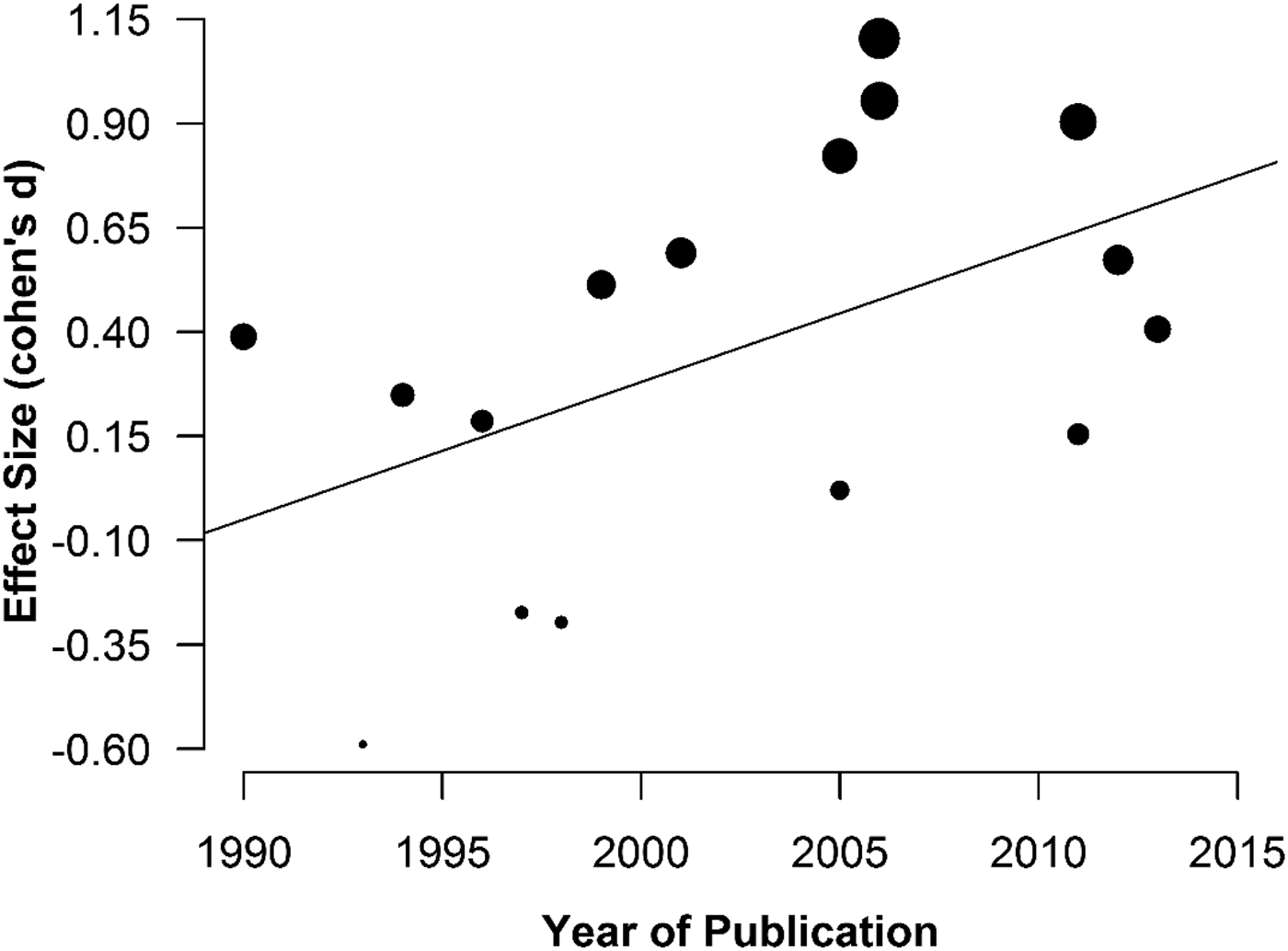
To examine the efficacy of attachment-based interventions over time, studies were first mean centered for year of publication and underwent random-effects meta-regression analysis for continuous covariates. This analysis revealed significant results, Q (1) = 4.90, p = .03, suggesting that more recently published intervention studies were more effective in preventing or reducing disorganized attachment. In order to compare findings for intervention effects with the previous meta-analytic review (Bakermans-Kranenburg et al., Reference Bakermans-Kranenburg, van IJzendoorn and Juffer2005), studies were then dichotomized according to date of publication (1990–2005 or 2006–2016). Significant contrasts were found between intervention studies published from 1990 to 2005 (d = 0.12) and studies published from 2006 to 2016 (d = 0.66; see Table 2 and Figure 3).
With respect to sample descriptives, heterogeneity analyses among maltreated and nonmaltreated samples were statistically significant, Q (1) = 4.63, p = .03. These findings suggest greater intervention effectiveness among studies targeting disorganized attachment behaviors in maltreated samples (d = 0.77) than samples without maltreatment (d = 0.21). In addition, a meta-regression analysis revealed a significant linear association between child age and effect of intervention; specifically, every 1-month increase in child age (at the start of the intervention) was associated with a 0.03 increase in effect size (see Table 3).
Mixed-effects meta-regression analyses with continuous moderators
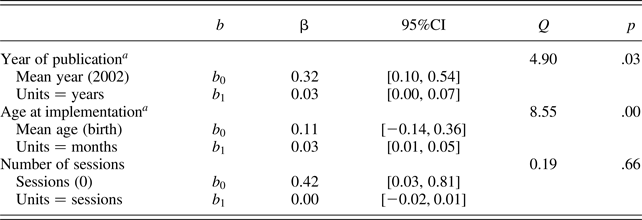
Note: Total moderator split k = 16; total sample size N = 1,360. Given that metaregression analysis was used rather than standard meta-analytic techniques for categorical variables, individual moderator splits (k) and sample sizes (N) are not computed.
a Moderators that have undergone mean-centering prior to analysis.
No significant moderators were found among intervention characteristics. Unlike findings from an earlier meta-analysis showing that sensitivity-focused approaches were most effective (Bakermans-Kranenburg, Reference Bakermans-Kranenburg, van IJzendoorn and Juffer2005), contrasts among specific intervention foci were not statistically significant in the present study.
Discussion
Contrary to a former meta-analytic review showing that interventions had no overall effect on disorganized attachment (i.e., Bakermans-Kranenburg et al., Reference Bakermans-Kranenburg, van IJzendoorn and Juffer2005), our meta-analysis demonstrated that interventions generally were effective in targeting disorganized attachment. Studies published after 2005 showed larger effect sizes for reduced rates of disorganized attachment than studies published prior to this date (see Figure 4). This new meta-analytic evidence of intervention efficacy has significant implications for policy and practice. Disorganized attachment has devastating sequelae, such as aggressive behavior in early childhood, psychopathology in adolescence, and physiological dysregulation (Bernard & Dozier, Reference Bernard and Dozier2010; Carlson, Reference Carlson1998; Hertsgaard et al., Reference Hertsgaard, Gunnar, Erickson and Nachmias1995; Lyons-Ruth, Reference Lyons-Ruth1996). Thus, preventing or reducing disorganized attachment in infancy could shift developmental trajectories away from these negative outcomes.
Mixed-effects meta-regression predicting intervention efficacy from year of publication, measured by standardized mean difference (Cohen d). Effect size was found to be positively associated with year of publication. Size of data points represent weighted values for independent studies.

It is promising that more recently published studies report higher effect sizes than less recently published studies. However, year of publication tells us little about what led to this improved effectiveness, especially given that publication date may not even align completely with when studies were conducted. Additional moderator analyses are discussed below; given that these analyses were based on a relatively modest number of studies, results should be interpreted with caution as further research is needed to replicate these effects.
Moderator analyses demonstrated that interventions were more effective when targeting maltreated samples than nonmaltreated samples. Given that maltreated children are especially at risk for disorganized attachment (Cyr et al., Reference Cyr, Euser, Bakermans-Kranenburg and van IJzendoorn2010), findings supporting greater benefits for maltreated children receiving intervention may reflect increased vulnerability in this population. The previous meta-analysis also found increased effectiveness in samples with high base rates of disorganized attachment. Moderator analyses did not, however, evidence greater rates of success when targeting at-risk (nonmaltreated) samples defined by low socioeconomic status (see Euser, Alink, Stoltenborgh, Bakermans-Kranenburg, & van IJzendoorn, Reference Euser, Alink, Stoltenborgh, Bakermans-Kranenburg and van IJzendoorn2015).
Regardless of whether greater intervention effectiveness is driven by increased vulnerability, these findings highlight the plasticity of parent–child relationships even in potentially toxic environments. The interventions that targeted maltreated samples varied considerably in their approaches. For example, the Attachment and Biobehavioral Catch-up (Dozier & Infant Caregiver Project Lab, Reference Dozier2012) involves a 10-session home-based intervention, which aims to increase nurturance to children's distress, increase following children's lead, and reduce frightening behavior; parent coaches of Attachment and Biobehavioral Catch-up use in-the-moment feedback about parent–child interactions during sessions and video feedback to reinforce parenting targets, celebrate parents’ sensitive responses, and gently shape parent behaviors that are insensitive, intrusive, or frightening. Similarly, Moss et al. (Reference Moss, Dubois-Comtois, Cyr, Tarabulsy, St.-Laurent and Bernier2011) used a short-term intervention delivered in parents’ homes that directly targeted parent sensitivity through discussions and video feedback about parent–child interactions. In contrast, Cicchetti et al. (Reference Cicchetti, Rogosch and Toth2006) implemented infant–parent psychotherapy, which involved a more intensive representation- and sensitivity-focused approach with weekly sessions over 1 year. In this model, the therapist takes a nondirective approach toward shaping mothers' attachment representations by supporting the mother in noticing and processing distorted interpretations about her infant's emotions and behaviors. That these different intervention approaches all produced medium or large effects on disorganized attachment for maltreated children is quite promising.
Consistent with previous meta-analyses (Bakermans-Kranenburg et al., Reference Bakermans-Kranenburg, van IJzendoorn and Juffer2005; Bakermans-Kranenburg, van IJzendoorn, & Juffer, Reference Bakermans-Kranenburg, van IJzendoorn and Juffer2003), findings demonstrated that interventions were more effective as children increased in age. Given that many interventions aim to enhance parental sensitivity, those implemented when children are older may be most effective because parents have more opportunities to practice and integrate new skills into their interactions. If programs are implemented prenatally or when infants are very young, parents may not have opportunities to practice skills, such as following children's lead in play or responding in nonfrightening ways when toddlers begin to cause trouble. In addition, it is possible that interventions are more effective at later stages of infancy or during toddlerhood due to shifts in children's developmental readiness. The later developmental window may represent a time of increased plasticity, during which children are more susceptible to environmental changes (Belsky, Bakermans-Kranenburg, & van IJzendoorn, Reference Belsky, Bakermans-Kranenburg and van IJzendoorn2007; see Belsky Reference Belsky1997, Reference Belsky, Ellis and Bjorklund2005). Further research on developmental timing, especially regarding mechanisms through which interventions change attachment, can bolster claims regarding age effects.
Contrary to findings reported in Bakermans-Kranenburg et al. (Reference Bakermans-Kranenburg, van IJzendoorn and Juffer2005), statistically significant differences among intervention foci failed to emerge. Although not statistically significant, programs solely providing sensitivity-focused training had a greater effect size (d = 0.51) than interventions providing a representation focus, support focus, or a combination of the two (d = 0.26). Studies aimed at experimentally isolating the effective or “active” components of intervention programs are needed to improve the evaluation of intervention outcomes. Such mechanism-focused questions can aid in further refinement of approaches and effective dissemination.
Taken together, findings of the current meta-analysis offer several important directions for future research. First, intervention studies offer incredible opportunities for experimentally testing models of developmental psychopathology. Given our findings that interventions are effective in changing an early risk factor, disorganized attachment, these randomized clinical trials offer a rare opportunity to examine the causal link between disorganized attachment and later psychopathology. Longitudinal studies should examine key outcomes of disorganized attachment, such as externalizing behavior and dissociation, to see if reductions in disorganized attachment lead to reductions in negative outcomes. Second, when interventions demonstrate evidence of efficacy, it is important to conduct studies that assess effectiveness under real-world conditions, identify active ingredients and mechanisms of change, and develop procedures for training, fidelity monitoring, and supervision. These steps are critical to the successful dissemination of efficacious interventions to vulnerable children.