Introduction
The Pirot sheep or Pirot pramenka is an indigenous Zackel traditionally reared/raised for centuries in the region of the South–Eastern Serbia. The geographic origin and breeding area of the Pirot sheep is directly associated with the following Serbian municipalities: Pirot, Knjazevac, Nis, Dimitrovgrad, Bela Palanka, Babusnica and even Crna Trava, Bosilegrad and Trgoviste or, more precisely, with the mountainous area of Suva Planina and Stara Planina. The most important historical breeding centre of the Pirot sheep was on the Stara Planina where, even today, the remaining population of this breed is located. Stara Planina – also known as the Balkan Mountains – occupies the central part of the Balkan Peninsula and represents the southern part of the Carpathian mountain range. It extends with its smaller, western part into the Republic of Serbia, while its eastern, larger part is in the Republic of Bulgaria. Mountain Stara Planina has been placed under protection as a nature park since 1997 (“Official Gazette of the RS” No. 19/97). This Act is a result of the recognition of the unique diversity of the local flora and fauna as well as the geological and hydrological characteristics of the mountain. Due to its agrobiodiversity and heritage, the area applied for the UNESCO Man and the Biosphere Reserve programme (MAB programme).
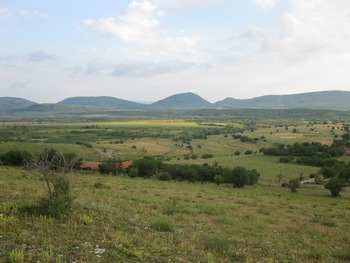
The Pirot area is famous for its unique traditional sheep herding, which over time became an integral part of the cultural and ethnic heritage that influenced the development of the rural community in this part of Serbia. Generally speaking, sheep breeding in this part of the country is rather extensive, and is focused on nomadic grazing during the summer and supplementary feeding of sheep with grains and forages during the winter. In the Pirot region, pastures (Figure 1) cover approximately 52.76 percent of the total land area, and are situated at the altitude of 600–2 000 m (Radoicic and Trkulja, Reference Radoicic and Trkulja2012). Pastures are very poor in legumes (about 15 percent). The common grasses on the pastures of Mountain Stara Planina area are: Agrostis vulgaris, Agrostis alba, Cynosurus cristatus, Anthoxanthum odoratum, Poa pratensis, Poa trivialis, Danthonia calyicina, Festuca vellesiaca, so that the total digestive protein content available to the grazing sheep is very low and ranges from 4.18 to 13.57 percent (Ruzic-Muslic et al., Reference Ruzic-Muslic, Petrovic, Petrovic, Nesic, Marinkov and Vorkapic2006). In the Stara Planina and Suva Planina mountains, sheep graze from April to late November. The winter housing is modest (small wooden sheep pens) and confined animals consequently lose weight and decrease production due to poor winter nutrition. However, for many years this type of traditional sheep herding was economically justified due to the market demand of Kachkaval cheese production and famous tradition of Pirot carpet manufacturing. The Pirot lamb was the third local signature brand. The lamb meat was famous for its juiciness and tenderness, with its exceptional and well-recognized flavour. The sheep products from Pirot region were famous and exported worldwide at the beginning of the twentieth century.
A typical pasture on the Stara Planina.

The historical data concerning the characteristics of the Pirot sheep are scarce. The environmental conditions and poor pastures were the main factors that influenced the formation of Pirot sheep. The frame of Pirot sheep was small with the average withers height of 60 cm, harmoniously built, with the firm skeleton and sturdy constitution (Mitic, Reference Mitic1984), compact as body length (BL) was 108.7 percent of the withers height, and with moderately developed chest. According to Mitic (Reference Mitic1984), the body mass of an adult sheep was about 41 kg. Ewes of Pirot Zackel are polled. The lack of detailed description of the breed reflected the widespread policy that autochthonous animal breeds were “primitive”, low in productivity and the signature of poverty. The selection of “improved animals” through crossbreeding with imported animals high in productivity was implemented as a compulsory measure of animal breeding and sheep reproduction practice in Socialist Yugoslavia.
Even so, the Pirot sheep was highly appreciated for its good milk and wool quality. The length of lactation was around 190 days, and the average milk yield per lactation was 77.5 kg (Mitic, Reference Mitic1984). The wool yield was very low – 1.4 kg per ewe, and 1.8 kg per ram (Mitic, Reference Mitic1984). The mandatory crossbreedings with Merino Precos and Wurtenbergin aiming to select larger animals for meat, increase the production of finer wool and preserve the milk production started in 1954, and the so-called “improved Pirot sheep” type was developed. However, certain important characteristics such as sturdiness were lost and, and at the same time, recognizable characteristics, i.e. milk taste, meat taste and suitability of wool for carpet manufacture were changed. The original sheep were bred in secrecy and obscurity in the very remote areas. The public awareness of the importance of traditional sheep production in the region was only recently recognized. During the last decade “Staroplaninski kachkavalj” and “Pirotski kachkavalj” have been certified as autochthonous hard cheese brands with protected geographic origin (The Intellectual Property Office of RS, 2010). According to the definition the “Staroplaninski kachkavalj” is a processed cheese made from fresh milk obtained from autochthonous Zackel sheep reared traditionally on Stara Planina and Suva Planina presuming that animals mentioned are supplied with the feed obtained in the defined geographic region and are kept grazing on high mountain pasture for at least 180 days/year. The “Pirot kachkavalj” can be dairy, sheep and/or goat hard cheese prepared from the milk of locally adopted animals reared under the same conditions as defined in case of Staroplaninski kachkavalj.
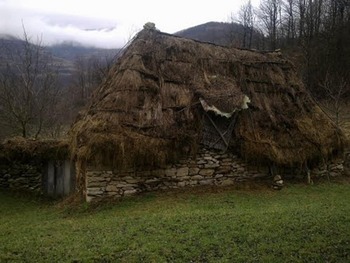
Since the selection strategy was compulsory and disregarded the sustainability of crossbred sheep both in regard to susceptibility to numerous diseases and the economic impact on small farmers, local production of sheep declined. Furthermore, the industrialization of the area attracted young people as a result of which the negative demographic trend has severely affected rural communities, and the local population abandoning villages caused a decrease in the number of sheep in the Pirot region. The original Pirot sheep population became gravely endangered. The demographic catastrophe of South–East rural areas in Serbia has started at the end of the Second World War due to the social politics implemented throughout former Yugoslavia. Nowadays, mountain villages are mostly abandoned and only remnants of small sheep farms exist (Figure 2).
Remains of a sheep farm in Mount Stara Planina (local name: “pojata”).

The conservation measures were introduced in the last decade of the twentieth century and included also the rural communities on the Stara Planina. At the same time local breeders have recognized the importance of indigenous sheep and identified the remaining examples of the original Pirot sheep. Moreover, with the support of the National AnGR authorities the remaining animals were registered and the condition of the population was rated as critical. Conservation authorities supported organized breeding and prevented the complete breed extinction. Nowadays around 60 individual Pirot sheep has been identified and included in one flock bred, controlled by the national authorities and according to the Serbian Plan for Animal Biodiversity Preservation for the period of 2011–2018 (“Official Gazette of RS” no. 13/2011; Stancic and Stancic, Reference Stancic and Stancic2013). The risk of extinction of original Pirot sheep was the main reason for urgent inclusion of this population into the list of Serbian endangered AnGR. The original Pirot sheep flock has been identified on the territory of municipalities Dimitrovgrad and Pirot on Stara Planina, and together with the other autochthonous sheep breeds from Stara Planina, have been the subject of several studies hoping to obtain the data for genetic resources preservation (Stevanovic et al., Reference Stevanovic, Stojiljkovic, Nedic, Radoja, Nikolic, Prodanovic, Ivanov and Vujanac2015; Stojiljkovic et al., Reference Stojiljkovic, Stevanovic, Ivanov, Drobnjak, Urosevic and Trailovic2015). The site of Kamenica is actually located 30 km north of Dimitrovgrad and some 25 km from Pirot, near the border with the Republic of Bulgaria. It is a representative example of typical rural settlement on the Stara Planina. The remaining rural population is engaged exclusively in extensive animal breeding. In addition to the agriculture, some households are involved in the development of rural tourism. At the same time, milk and meat from the autochthonous sheep from this region are being evaluated for certification of autochthonous products of protected geographic origin.
The aim of this study is to determine the phenotypical characteristics of the Pirot sheep from Stara Planina in Serbia. According to the current strategy recommended by FAO, the phenotypical characterization (FAO, 2012) is a prerequisite for the initiation of in vivo conservation of indigenous breeds. An overview of the greatest obstacles influencing the animal genetic resources preservation in Republic of Serbia, with the focus on Stara Planina, is also included in this paper.
Material and methods
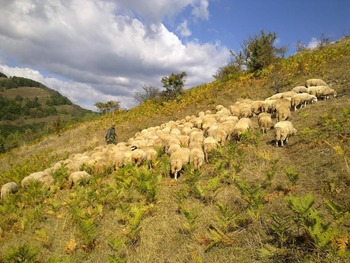
The phenotypical investigation of the Pirot sheep was performed on the only flock of this breed that is under controlled breeding situated on the Stara Planina, the Kamenica village, municipality of Dimitrovgrad (Figures 3 and 4).
Geographic location of Dimitrovgrad.

Pirot sheep flock from Kamenica, Stara Planina.

The phenotypical analysis included complete morphometrical investigation and qualitative body description performed upon the examination of 51 sheep and two breeding rams. The included individual sheep were divided into two age categories: category I (1–3 years) and category II (3–6 years) (FAO, 2012). The sheep were kept in a semi-intensive farming system. The nutrition was based on the fresh grass from regularly fertilized pastures with the addition of forages (hay) and grains. Body measurements were performed by the use of the zootechnic ribbon (250 cm), and pelvimeter was used for cranial, pelvic and thoracic width and depth measurements. The following morphological parameters were measured: BL, from the point of the shoulder to the caudal margin of the pin bone; height at withers (HWi), the distance from the ground to the top of the withers; height at tuber coxae (HTC), the distance from the ground to the top of the tuber coxae; height at tuber ischii (HTI), the distance from the ground to the top of the tuber ischii; chest girth (CG), the circumference of the chest just behind the withers and shoulders; thoracic depth (TD), distance from the ventral edge of the sternum to the top of the withers; chest width (CW), the width between the lateral edges of the shoulder joints; head length (HdL), from the tip of the nose to the top of the occipital crest; front length (FL), from the imaginary line, which connects the medial eye corners to the top of the occipital crest; head width (HdW), the distance between two zygomatic arches; base of the ear height (BEH), from incisura vasorum to the ventral ear base; cannon circumference (CC), at the central of the front cannon; ear length (EL), lateral aspect of the ear from base to the tip; hip width (HpW), the distance between the coxal tubercles; coxo-femoral width (CfW), the distance between the coxo-femoral joints; bi-ischial width (BiW), the distance between the pin bones (tuber ischii); pelvic length (PL), from the hip to the pin bone; base of the tail-pelvic simphysis diameter; tail length (TL), from the base to the tip of the tail. Based on the measured parameters, the following conformational indices were calculated: body frame index – HWi/BL × 100; body compactness index – TGi/BL × 100; body massiveness index – TGi/Hwi × 100; over increase index – HTC/Hwi × 100; thoracic wide index – CW/TD × 100; thoracic depth index – TD/HWi × 100; head index – HdW/HdL × 100; Dactilo-thoracic index CC/TGi × 100; Cannon circumference index – CC/HWi × 100 and pelvic index – HpW/PL × 100 (Stojiljkovic et al., Reference Stojiljkovic, Stevanovic, Ivanov, Drobnjak, Urosevic and Trailovic2015). A total of 13 descriptive parameters were obtained: type of wool coloration, wool colour, type of fleece, ear orientation, head colour, head profile, hair/wool type on limbs, colour of limb wool/hair, pigmentation of the hoof, tail form, back profile, rump profile and udder type.
The statistical analysis of the parameters measured was performed by GraphPad Prism 5.0 program. In addition to the basic descriptive statistics and Student's t-test, the Pearson correlation coefficient was established to determine correlations between body parameters in the Pirot sheep population.
Results
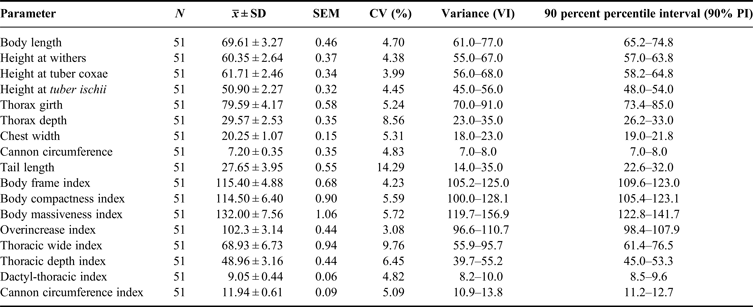
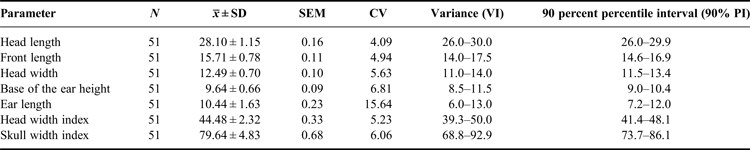
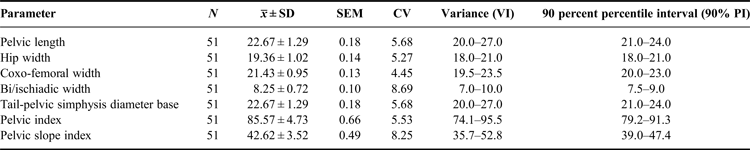
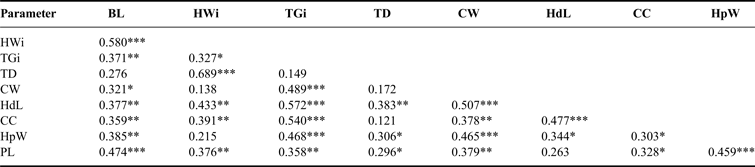
The morphometrical parameters and statistical data determined in Pirot sheep were presented in Tables 1–4.
Variability of morphometrical parameters in ewes of the Pirot sheep breed.

Variability of craniometrical parameters in Pirot sheep.

Pelvimetrical variables in Pirot sheep.

Pearson's correlation between the selected morphometrical parameters in the Pirot sheep population.

The data presented in Table 1 show that the average BL is 15.40 percent higher than HWi, thus reflecting compact and slightly rectangular body. The average HTC was 2.3 percent higher than HWi. The TD was 48.96 percent of HWi, This investigation revealed that the average CW was 33.55 percent of HWi, The average tail length was 27.65 cm. Body compactness and body massiveness indices suggest that the Pirot sheep has a strong and compact trunk. Low values of SD, SEM and coefficient of variation (CV) showed that the population studied was uniform.
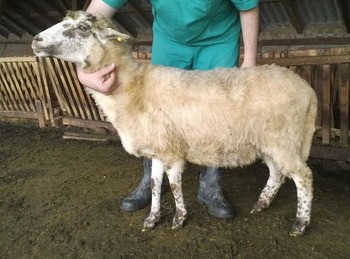
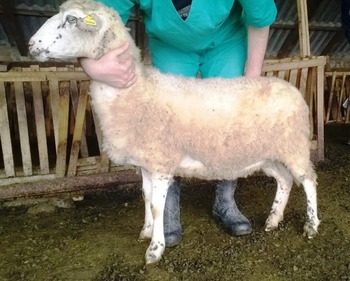
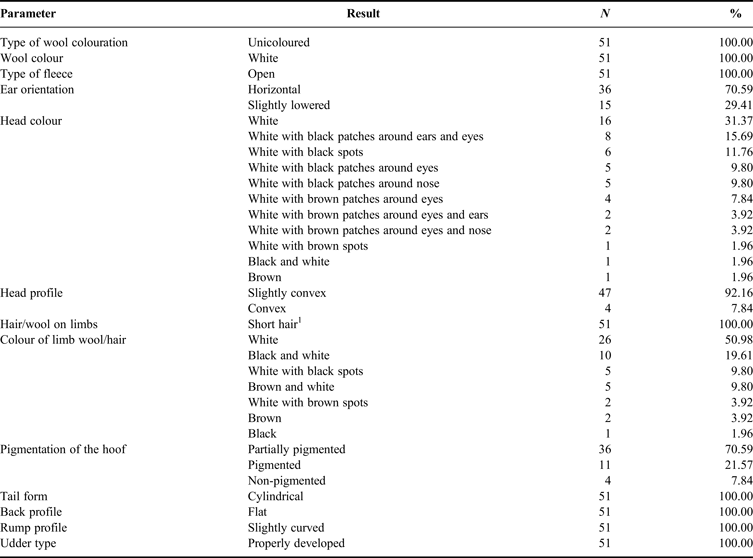
According to the results presented in Table 2, it can be observed that FL is 55.91 percent, and HdW is 44.48 percent of HdL, on average. These data show that the Pirot sheep has relatively elongated and light head. The data presented in Table 3 shows that the pelvis in Pirot sheep is well developed, slightly elongated and relatively wide enough. The Pirot sheep has exclusively white wool (Table 5), although exceptional individual sheep with grey and black wool may occur. The colour of hair on the head is white – spotted with small and large pigmented black and brown patches around the eyes, mouth and nose. The craniometrical parameters show that the Pirot sheep has well developed head with slightly convex profile. Ewes are pooled, while rams are horned. Other distinctive breed characteristics are: short hair on the legs with pigmented black or brown spots, long cylindrical tail, nice, well-developed udder and pigmented hooves (Figures 5 and 6).
Pirot sheep ewes in the examined population – white head with black patches around eyes and nose.

Pirot sheep with white head and black spots.

Qualitative phenotypic traits of Pirot sheep from Stara Planina.

1 Short hair up to the elbow joint on front, and slightly above tarsal joint on rear limbs in majority of studied individual sheep.
The body measures in ram 1 (2 years) and ram 2 (4 years) were the following: BL – 72.0 and 71.0 cm, HWi – 62.0 and 63.0 cm, CD – 33.0 and 33.0 cm, CW – 22.0 and 23.0 cm, CG – 82.0 and 84.0, HdL – 28.0 and 28.0 cm, FL – 15.0 and 15.0 cm, HdW – 13.0 and 14.0 cm, HTC – 61.0 and 62.0, HTI – 51.0 and 52.0, BEH – 10.5 and 10.5 cm, CC – 9.0 and 9.0 cm, horn length (HLr) – 45.0 and 65.0 cm, EL – 11.0 and 10.5 cm, HpW – 30.0 and 27.0 cm, coxo-femoral diameter (CfD) – 19.0 and 22.0 cm, BiW – 22.0 and 24.5 cm, PL – 25.0 and 25.0 cm and TL – 16.0 and 16.0 cm, respectively. Both rams are offspring of a single ram, which was identified when the preservation of Pirot sheep has been established. The lack of male reproductive individual can be a serious threat for the preservation of Pirot sheep.
The exterior characteristics of the modern Pirot sheep are similar to the historical data described by Mitic (Reference Mitic1984). The Pirot sheep has exclusively white wool (Table 5), although exceptional individual sheep with grey and black wool may occur. The colour of hair on the head is white – spotted with small and large pigmented black and brown patches around the eyes, mouth and nose. The craniometrical parameters show that the Pirot sheep has well-developed head with slightly convex profile. Ewes are pooled, while rams are horned. Other distinctive breed characteristics are: short hair on the legs with pigmented black or brown spots, long cylindrical tail, nice, well-developed udder and pigmented hooves (Figures 5 and 6).
Discussion
The comparison of the data presented in Table 1 with historical descriptions of the Pirot sheep revealed some changes in morphometrical characteristics. The determined data showed that the average BL is 15.40 percent longer than HWi. This is slightly different from the literature data (8.70 percent, Mitic Reference Mitic1984). The HWi as estimated did not differ from the earlier description of Pirot sheep (Mitic, Reference Mitic1984), but both differed from the data obtained by Gutic et al. (Reference Gutic, Petrovic, Kurcubic, Bogosavljevic-Boskovic, Mandic and Doskovic2006), who suggested that the average HWi of Pirot sheep was about 55 cm and that the average HTC was 2.3 percent higher than HWi. The TD of investigated animals was 48.96 percent of HWi, which is in accordance with the data by Mitic (Reference Mitic1984). This investigation revealed that the average CW was 33.55 percent in relation to HWi, and this finding was slightly different from the literature data (29.42 percent, Mitic, Reference Mitic1984), probably due to improved breeding practice. The TL was in average about 4–5 cm shorter compared with the data by Mitic (Reference Mitic1984). Body compactness and body massiveness indices suggest that the Pirot sheep has a strong and compact trunk. Low values of SD, SEM and CV showed that the studied population was uniform.
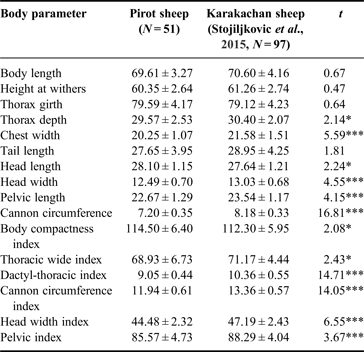
According to the results presented in Table 2, it can be observed that FL is 55.91 percent, and HdW is 44.48 percent of HdL, on average. These data show that the Pirot sheep has relatively elongated and light head. The data presented in Table 3 showed that the pelvis in Pirot sheep is well developed, elongated and relatively wide enough, considering the average mass of the lambs at birth (3.4–3.9 kg, Mitic, Reference Mitic1984). The craniometrical and pelvimetrical variability in the Pirot sheep has not been investigated before. The results obtained from craniometry and pelvimetry were similar to those determined for the Karakachan sheep (Stojiljkovic et al., Reference Stojiljkovic, Stevanovic, Ivanov, Drobnjak, Urosevic and Trailovic2015), another Zackel from Mount Stara Planina (Table 6).
Comparison of selected morphometrical parameters between Pirot and Karakachan sheeps.

*P < 0.05 – significant **P < 0.01 – very significant ***P < 0.001 – extremely significant.
A statistically significant difference between the different age categories was established for the following parameters: BL (P < 0.001), CW (P < 0.001), front length (P < 0.001), thoracic girth (P < 0.01), bi/ischiadic width (P < 0.01), CfW (P < 0.01), tail length (P < 0.01), base of the tail-pelvic simphysis diameter (P < 0.01), HWi (P < 0.05), head width (P < 0.05) and hip width (P < 0.05). Body indices between age groups did not differ significantly. The Pirot sheep is slow-growing and late-maturing breed, as well as the other Zackel sheep in the region.
The results obtained by analysing the correlations between some morphometrical parameters evaluated in Pirot sheep are shown in Table 4. The existence of significant positive correlations was established between a large numbers of the studied parameters. The high correlation coefficients between selected parameters indicate that the Pirot sheep is very harmoniously conformed, reflecting balanced physical development (growth) and also revealing that the breed has adapted to the environmental conditions through the history of the breed. The lack of variation and differences in some morphometrical parameters studied could arise problems sequential to inbreeding that cannot be avoided due to extremely small number of breeding animals included in a single flock. The population status did not allow the comparison with other Pirot sheep.
The comparison (Table 6) of the morphometrical parameters obtained for Pirot sheep has revealed significant differences from the data established for Karakachan sheep, another local small Zackel from Stara Planina (Stojiljkovic et al., Reference Stojiljkovic, Stevanovic, Ivanov, Drobnjak, Urosevic and Trailovic2015). There were no significant morphometrical variations observed for body parameters described within each breed, which means that both tested sheep populations were morphologically uniform and homogeneous but significantly different in regard to morphological characteristics and phenotype.
The phenotype of modern Pirot sheep is similar to the original breed described by Mitic (Reference Mitic1984). The facial spots, leg hair and spotting, together with very light convexity of the head and the type of fleece and wool were among the important traits that have been used for identification of original Pirot sheep when the preservation programme was established.
According to the descriptive phenotypical data obtained in the investigation of the modern Pirot sheep population, we can say that no major differences between this Zackel and Karakachan sheep, another important autochthonous sheep population from Stara Planina, were observed (except colour of wool). Over 90 percent of the sheep in Serbia is concentrated in small farms, with the variable structure and size of the flock, mainly in rural mountainous areas (Petrovic et al., Reference Petrovic, Petrovic, Ruzic-Muslic, Caro-Petrovic, Maksimovic, Ilic and Vuckovic2011). The agriculture and animal breeding management strategy of the Republic of Serbia is facing a huge challenge: how to ensure the connection between the endangered breeds and sustainable sheep production in the future? Among future tasks, the conservation and revival of rural areas is the most important process that can influence the development of animal breeding and agriculture together with the biodiversity preservation. The previous experience in the selection did not bring the expected results, mostly due to depopulation of the rural area which affected the number of total domestic animals and also the number of indigenous animals and traditional production in all the rural areas. The question: “Can we preserve Pramenka?” can be rephrased: “Can we save Mountain Stara Planina?”. The future strategy can be effective only after the project sustainability and financial investment are ensured. Rural development policies in Serbia have several tasks to preserve autochthonous animal populations (including Pirot sheep), i.e. changes in the people's behaviour, promotion of sustainable agriculture in accordance with local natural resources, further improvement of traditional products made from autochthonous breeds and efficient marketing campaigns, promotion of rural tourism, protection of nature and landscape, and strategies of decentralization (Stojanovic, Reference Stojanovic2008). Several centres and individual farms were formed to allow preserving the last herds of indigenous domestic animal breeds. Such centre is located on Stara Planina (Stojanovic and Pavlovic, Reference Stojanovic and Pavlovic2003). Shortly after the foundation of the conservation farms, the arising problem was the financing and sustainability of those farms. Disinterest of the local population in traditional animal farming and bad product marketing were the main reasons for economic difficulties that occurred on farms. The Ministry of Agriculture and Environmental Protection has developed a strategy for the period from 2011 to 2018 in the Republic of Serbia (Official Gazette of RS, no. 13/2011) with well-defined strategic areas, objectives and activities for animal biodiversity preservation. According to this national document, the animal resources play an important role in the Serbian biodiversity plan. Furthermore, only “in situ” method was introduced for the preservation of autochthonous and indigenous breeds of mammalian and avian species (Stancic and Stancic, Reference Stancic and Stancic2013).
There are two certified autochthonous animal products with protected geographic origin derived from the Pirot sheep – Stara Planina Kachkaval cheese and Pirot rug/kilim. These products are registered in the Serbian Intellectual Property Institute, and their basic source is the Pirot sheep. Unfortunately, this advantage of the Pirot sheep is not used in an efficient way because of poor marketing.
A possible success in preserving the Pirot sheep would be to promote the organic production system. According to Petrovic et al. (Reference Petrovic, Petrovic, Ruzic-Muslic, Caro-Petrovic, Maksimovic, Ilic and Vuckovic2011), sustainable approach to sheep production in Serbia and agriculture in general seeks to strengthen family farms, as well as to protect and exploit natural resources. This can be achieved with the Pirot sheep because of its triple-purpose production potential (milk–wool–meat), acclimatization capacity and breeding tradition, as well as the high-quality autochthonous wool, milk and meat products. Also a project by the Animal Husbandry Institute in Zemun, Serbia, proved that Pirot sheep could be the genetic basis for new, modern, highly productive breeds. MIS sheep has been developed at the Institute as a product of 20-year-long research in which the crossbreeding of the following two breeds were used Pirot sheep and Ile de France (Petrovic et al., Reference Petrovic, Petrovic, Muslic, Ilic, Stojkovic, Stanisic and Djokovic2014). This is an example of selective breeding for intensive modern sheep farming with the use of new technologies in lowland parts of Serbia.
Conclusion
The phenotypical characterization of the modern Pirot sheep population described in this paper provides new data necessary for future preservation programs and policies. In addition to that a survey among experienced agrotechnical specialists has drawn attention to the Pirot sheep's capacity and potential for future breeding and preservation of rural tradition in Serbia, especially in the Stara Planina and similar rural areas rich in mountain pastures, but with poor housing and winter care.
The established phenotypical data of the modern population of Pirot sheep in the area of Stara Planina did not differ from the description of the original sheep population mentioned in older literature, which means that the population examined may serve as the foundation for the programmes of preservation and can be the nucleus for the stabilization of the population on Stara Planina.
There is also the need for the implementation of breed preservation program as an important part of biological and traditional heritage of human rural population in Stara Planina and the whole Pirot region.
Although “In situ” conservation is an ongoing process and the Pirot sheep are carefully bred by the farmers devoted to preservation of biodiversity, the importance of “Ex situ” conservation should also be accentuated in the case of Pirot sheep, considering the small number of individuals, lack of the breeding rams and also bearing in mind that the remaining flock can be put in danger if an outbreak of infectious diseases came to be.
The depopulation of rural areas will remain the main obstacle in the progress of animal breeding, and therefore the socio-economic changes in the form of repopulation and local region revival must precede the rural development. Hence, the development of animal breeding as a priority must be taken into account as a long-lasting strategy. Short-term projects will only delay the extinction of endangered animal breeds and final demographic degradation of rural regions in Serbia for a short period of time.
Acknowledgements
This research was supported by the Ministry of Education, Science and Technological Development of Serbia (Grant number III 46002) and Public Veterinary Institute “Dr Vaso Butozan” Banja Luka, Bosnia and Herzegovina.