Introduction
Children with CHD are known to be at increased risk of neurodevelopmental delays, including motor and cognitive dysfunction, speech and language delays, behavioural abnormalities, and decreased quality of life. Reference Gaynor, Ittenbach and Gerdes1–Reference Lisanti, Uzark and Harrison3 The aetiology of these delays is multifactorial and occurs throughout the lifetime due to both non-modifiable and modifiable risk factors. Non-modifiable risk factors include in utero blood flow, low cerebral oxygen delivery, surgical factors, and genetics. Reference Lisanti, Uzark and Harrison3,Reference Verrall, Patel and Travitz4 Modifiable risk factors, such as longer lengths of stay in the ICU and hospital, family anxiety and stress, and being left alone for long periods of time with minimal interaction or opportunities to engage in developmentally appropriate activities, have the potential to be intervened upon and improved. Reference Gaynor, Ittenbach and Gerdes1,Reference Lisanti, Uzark and Harrison3
Parents and caregivers cannot always be present at their child’s bedside when they are admitted to the hospital. However, neonatal ICUs have shown that holding patients and participating in skin-to-skin contact have improved reflex development and quality of movement, decreased stress, arousal and excitability, and decreased asymmetries, with improved motor development at four to five years of age. Reference Pineda, Bender and Hall5 In addition, parental/family involvement and holding have been associated with improved mobility, as well as less patient stress and excitability. Reference Reynolds, Duncan and Smith6 Consistent and responsive caregiving (e.g., touching or soothing a baby when they cry), physical touch, soothing verbal interactions, eye contact, and smiles serve as an emotional foundation for regulation, bonding/attachment, and a sense of safety and predictability. Reference Garner and Yogman7 Volunteers are often used as person-centred one-to-one support for patients within several realms of medicine and may be able to be used as a substitute for family presence when family could use a break. Many neonatal ICUs utilise volunteers as ‘cuddlers’ to hold their patients when parents cannot be with the child. Reference Clubbs, Barnette and Gray8–Reference Fritsch-deBruyn, Capalbo and Rea10 There is very little literature discussing the use of volunteers in a paediatric ICU setting and no studies discussing the use of volunteers in a cardiac unit. Volunteers are not often utilised in paediatric cardiac units and specifically a cardiac ICU, given cardiac-specific precautions and a lack of comfort from volunteers with this fragile subset of patients with heart disease.
At Children’s Hospital Colorado, we developed and implemented the Cardiac Inpatient Neurodevelopmental Care Optimization or CINCO programme Reference Wolfe, Caprarola and Clark11 to ensure that within cardiac inpatient units, patients receive an optimal approach to neurodevelopmental care that is systematic and evidence-based. As previously described, part of CINCO was to develop a specially trained set of volunteers to provide developmentally appropriate interactions to patients when parents or caregivers are unable to be present or need a break. Reference Wolfe, Caprarola and Clark11 Here, we describe the development of a robust cardiac-specific inpatient volunteer programme, along with results of the first 3 years of implementation.
Materials and methods
Volunteer recruitment and training
Discussions with our Association of Volunteers began in 2019, with the plan to initiate CINCO-specific volunteers in 2020. However, due to the Covid-19 pandemic, volunteers from the community were not identified until the fall of 2021. Although prior to this time, volunteers could volunteer with our Heart Institute, volunteers did not receive cardiac-specific training. Therefore, meetings with the Association of Volunteers included refining and adding cardiac-specific volunteer training. In the summer of 2022, additional student volunteers were recruited from the University of Colorado pre-Health Professions programme, which facilitates opportunities for undergraduate students from under-represented backgrounds. Students applied and were accepted in June 2022 (n = 6), May 2023 (n = 10), and again in May 2024 (n = 10).
CINCO volunteers undergo a background check, occupational health screening, and orientation through the Association of Volunteers, as well as agree to participate in one 3-hour shift per week for at least 6 months. In addition, CINCO volunteers complete cardiac-specific training with the Heart Institute’s inpatient child life assistant and child life specialists, designed to increase volunteer confidence and competence given the complex presentation of patients with potential lines and tubes and cardiac-specific precautions (e.g., sternal incision, etc.). This training includes education about safely working with and holding cardiac patients in the acute and progressive care units (e.g., not picking them up from under the arms in the context of sternal precautions) and an introduction to the developmental plans and kits for developmentally supportive interactions. Then, volunteers shadow a current CINCO volunteer for two 3-hour shifts prior to volunteering independently to complete developmental activities as described on the developmental plans for eligible patients.
The weekly developmental plans are designed by the programme’s physical therapists, occupational therapists, and speech-language pathologists and include a goal from each discipline based on the patient’s current skill level, caregiver priorities, and developmental milestones appropriate for patient’s age. Reference Wolfe, Caprarola and Clark11 These plans include space to share important information about the patient, including precautions, and the child’s likes and dislikes. Developmental kits are also provided to patients by physical therapists, occupational therapists, and speech-language pathologists. These kits include developmentally supportive items, like rattles, books, blocks, and teethers, to complement the developmental goals and skill level of each child. Reference Wolfe, Caprarola and Clark11 The volunteers use the developmental plans and kits as ‘therapy extenders’ to increase the amount of time children work on therapy goals, as well as structure the volunteer and patient interactions. In February of 2023, volunteers received additional training about American Sign Language and were taught 12 signs to use with the patients as well as how to identify appropriate times for practising American Sign Language.
Patient selection
The electronic medical record is used to identify cardiac inpatients who are medically stable and appropriate for visitors and activity. For our cardiac ICU, this includes our sickest patients as long as they do not have an open chest, are post-operative day one or more, and are on stable or decreasing vasoactive medications. Child Life shares this patient list and room location with the volunteers at the start of each shift. Priority is given to patients who are 0–2 years of age with a therapy and/or CINCO order, a developmental plan at bedside, and a longer current or anticipated length of stay, as well as those without a parent/caregiver present at the bedside.
Volunteer activity log and survey
At the end of every shift, each volunteer completes an activity log survey (Supplement 1) via Research Electronic Data Capture or REDCap (hosted at Children’s Hospital Colorado) that is accessed through a QR code on their badge. This survey records how many patients are visited and what activities (read to, held, or played with the child) are performed with each patient. In the early spring and fall of 2023, a survey was distributed to the volunteers via email to provide feedback about their experience and the overall programme.
Parent survey
Between May 1, 2023, and October 1, 2023, a survey about the neurodevelopmental practices at Children’s Hospital Colorado was given to caregivers who participated in Developmental Care Rounds. Developmental Care Rounds are weekly bedside developmentally focused rounds to provide developmental education and support for family. In the survey, parents are asked four questions about the volunteer programme: (i) do they know about the volunteer programme, (ii) did a volunteer visit their child, (iii) did they complete activities on the developmental plans, and (iv) did the volunteer help make them more comfortable stepping away from the bedside. There was also one open-ended question asking for any thoughts or feedback about the volunteer programme.
Analysis
Descriptive statistics were obtained using Microsoft Excel and IBM SPSS Statistics, version 29 (IBM Corp.). Volunteer shifts were coded as being in the morning, afternoon, or evening. If at least one hour of their shift was between 9 AM and 12 PM, it was considered in the morning; if at least one hour of their shift was between 1 PM and 4 PM, it was considered afternoon; and if one hour was between 4 PM and 8 PM, it was considered an evening shift. If they had one hour in the morning shift and the afternoon shift, they were considered to have completed both a morning and an afternoon shift, which typically occurred if they completed a shift greater than 4 hours. Chi-square tests were used to evaluate associations between type of volunteer (i.e., student versus community) and when shifts occurred (i.e., weekdays versus weekends, morning versus evening). A two-tailed p < 0.05 was set as the threshold for significance.
Results
Volunteers and patient visits
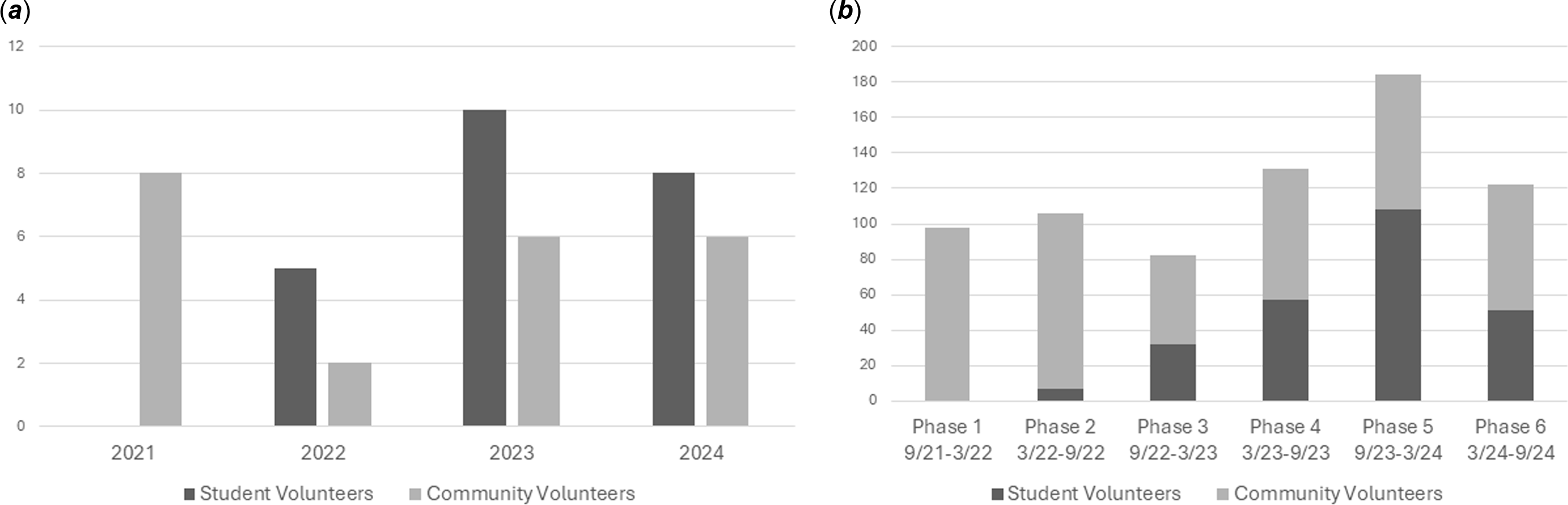
The first volunteer began on September 22, 2021, and by October 1, 2024, 45 volunteers were trained and onboarded. Over the years, we had an increase in the volunteer recruitment. Twenty-two community volunteers and 23 student volunteers were onboarded during this time (Figure 1A). As of October 1, 2024, the volunteer group overall participated in our programme for a median of 5 months (IQR 1–14 months), while 21 volunteers were still volunteering. Fifteen volunteers have volunteered with our programme for 12 or more months, with 5 of those being more than 18 months.
Number of shifts performed by student volunteers and community volunteers divided into 6-month intervals aligning with phases of CINCO implementation.

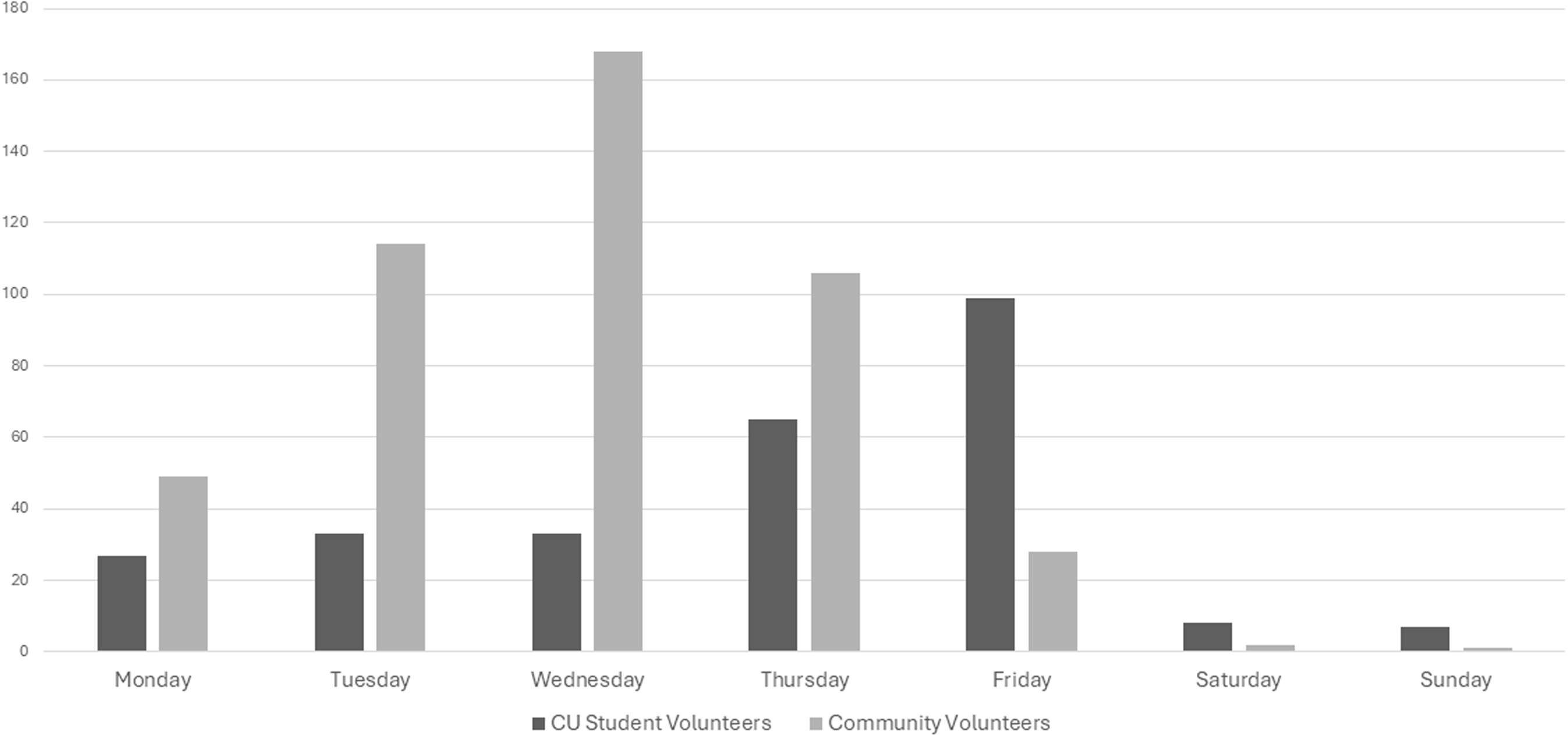
The volunteers completed a total of 723 shifts with a mean of approximately 4 hours each shift. Student volunteers completed 255 (35%) of these shifts (Figure 1B). Community volunteers were more likely to complete their volunteer shifts in the morning (p < 0.001), while student volunteers were more likely to complete their shifts in the evening (p < 0.001). Both groups were equally likely to complete afternoon shifts (p = 0.124). The two groups of volunteers also differed in which days of the week they completed volunteer shifts. Student volunteers completed significantly more shifts on Friday, Saturday, and Sunday, while community volunteers completed more shifts on Monday through Thursday (p < 0.001; Figure 2).
Shifts are completed for each day of the week by student volunteers and community volunteers. Community volunteers were more likely to complete shifts on Monday through Thursday, while student volunteers were more likely to complete shifts on Friday–Sundays (p < 0.001).

During volunteer shifts, 2310 patients were visited, with a median of 3 patients per shift (IQR 2,4). Of the patients visited, 1107 (48%) had a developmental plan at the bedside that the volunteer used, therefore acting as a ‘therapy extender.’ An additional 318 (14%) patients had a developmental plan at the bedside, though the volunteer did not utilise it for their visit. It was reported that 312 (14%) patients did not have a developmental plan, and 573 (25%) had no comment about the developmental plan.
Volunteers recorded reading to 780 (34%) patients, holding 1231 (53%) patients, and playing with 1230 (53%) patients. Volunteers were reported doing something other than these 3 activities with 965 (42%) patients, which included talking to, singing to, or sitting with the patient. Volunteers were documented doing two or more of these activities in the same session during 1196 (52%) visits. Since February 2023, American Sign Language has been used during 62 (5%) of 1141 volunteer/patient visits. Per the volunteer record, 57 of the 62 patients paid attention to the American Sign Language sign when it was used. To our knowledge, no major safety events (falls, catheter/tube removals, or cardiac arrests) have occurred during volunteer visits, and overall infection rates within the Heart Institute have remained stable or decreased since our volunteer programme began.
Volunteer engagement and parental survey results
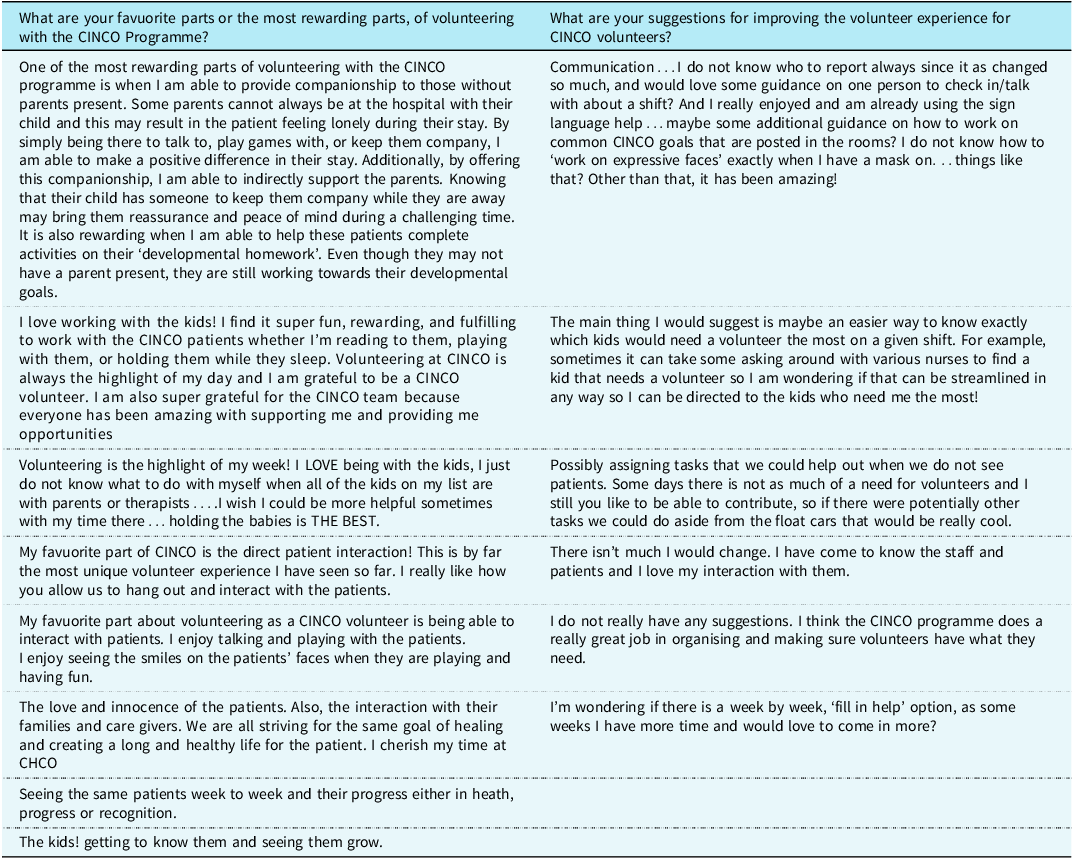
In early spring 2023, 9 survey invitations were sent via email to current volunteers. In fall 2023 an additional 16 invitations were emailed. In total, there were 8 (32%) responses to the survey. Survey responders reported that their favourite part of volunteering was the direct patient interaction, namely playing with and holding kids. One volunteer reported volunteering is “always the highlight of my day.” All respondents reported the current frequency with which they volunteer is “just right.” Seven (88%) were satisfied with the activities they performed during their volunteer shift, while one (12%) responded that they would like to be involved in other activities during their shift, as they reported that many families had recently been present and therefore the need for a volunteer to sit/play with patients decreased. Suggestions for improvement included finding an easier/better way of knowing which children needed a volunteer to visit them and creating a list of other tasks that can be completed when there are no children to see. Six (75%) reported that they felt they had enough support as a volunteer, and 2 (25%) reported they would like more support than they were receiving. For full comments about volunteer favourites and suggestions, please see Table 1.
Comments from volunteer engagement survey

Note. CINCO = Cardiac Inpatient Neurodevelopmental Care Optimization; CHCO = Children’s Hospital Colorado.
QR codes were given to caregivers to complete a survey 22 times between May 1 and October 1, 2023, resulting in six responses (27% response rate). One survey was completed by the patient’s father, while the rest were completed by the patient’s mother. Five of the respondents were aware of the volunteer programme, and five reported that their child had been visited by a volunteer. Only one respondent knew that the volunteer used the developmental plan to complete activities with their child, one reported they did not use the developmental plan, four were unsure if it was used or not, and one did not answer. Five (83%) respondents reported that knowing about the volunteer programme made them feel more comfortable stepping away from the bedside. Three comments were left about the programme: 1) the volunteer programme was a ‘great alternative’ for parents who cannot be at the hospital every day; 2) they haven’t used the volunteer programme but plan to; 3) they wished they knew when a volunteer had visited, as they didn’t always know, and that they wished the volunteers asked if they could use a minute away, as the volunteer only visited when they were not present.
Discussion
In this study, we found that it is feasible to recruit, onboard, and schedule a recurring group of university and community volunteers specifically for inpatient cardiology units, including the cardiac ICU. They hold and comfort patients and can also provide developmental care as an extension to therapies by using developmental plans, updated weekly with specific goals and recommended activities. This trained group of cardiac-specific volunteers provided comfort to the parents when they were not at the bedside, allowing them time to rest and potentially decreasing the need for nursing attention when parents are not available.
There is very little published about volunteers for specific inpatient units, and to our knowledge, none about volunteers specifically trained to work with patients in the paediatric cardiac ICU or progressive care units, often post-surgically. While there are reports of volunteers specifically trained to work with paediatric palliative care patients, Reference Seibold, Rossi and Berteotti12–Reference Pascuet, Beauchemin and Vaillancourt14 there are very few reports of volunteers working in the ICU setting. One study in the paediatric ICU, similar to our study, found that parents were comfortable with volunteers spending time with their child, finding it to be a positive interaction, and that volunteers could provide non-medical developmentally appropriate play with patients. Reference Pereira, MacDonald and Drobot15 Our volunteers were able to provide non-medical developmentally appropriate play by reading to or playing with children, as well as utilising the developmental plans and kits. Our developmental plans, which are hung at the bedside, are reported to be utilised by volunteers almost 50% of the time, giving them targeted activities to perform with patients. While volunteers reported no developmental plan present at bedside 13% of the time, this may be the result of the developmental plan not transferring rooms with the patient, a lack of supplies, or because the plan was not hung prior to the volunteer visit. Nonetheless, the training volunteers underwent prepared them for interactions in the absence of a plan. In addition to developmental play, volunteers were able to act as ‘cuddlers’ when most appropriate for a patient, similar to typical volunteer practices in the neonatal ICU setting. Reference Clubbs, Barnette and Gray8–Reference Fritsch-deBruyn, Capalbo and Rea10
While we did not evaluate the impacts of our training on our volunteers, one study of volunteers working with children in hospice palliative care found that training improved their volunteers’ self-confidence in working with this population. Reference Niinomi, Soejima and Hiraga13 One strategy we utilise to improve self-confidence, based on prior studies, Reference Seibold, Rossi and Berteotti12,Reference Pascuet, Beauchemin and Vaillancourt14 is to buddy a new volunteer with a current volunteer. Pascuet and colleagues evaluated volunteer satisfaction of their palliative care programme and found that overall their orientation and training were appropriate and that they felt comfortable asking questions and felt that they were a valued member of the team. Reference Pascuet, Beauchemin and Vaillancourt14 However, they felt less informed about patient medical and social needs, wanted more social contacts with other volunteers and staff, felt they were underutilised, and did not know what they should do during less busy times. Reference Pascuet, Beauchemin and Vaillancourt14 Similarly, our volunteers commented that they would be happy to complete other tasks when there is decreased need for face-to-face patient interactions, though they do not always know what else they can help with. Pascuet et al. Reference Pascuet, Beauchemin and Vaillancourt14 started a “Boredom Buster” list after their survey was complete, and we similarly have tried to establish a list of other activities or tasks, such as helping with Story Time, cleaning the playroom, or playing board games with older kids.
We did not evaluate associations of healthcare cost savings associated with the increased use of volunteers in our cardiac units. However, Hotchkiss et al. Reference Hotchkiss, Unruh and Fottler16 found that volunteers offer significant cost savings to hospitals. In a tight financial environment, volunteers may be an underutilised resource that has minimal cost (with the potential to decrease or offset other costs). The programmes are also low risk, and to our knowledge, there have been no unintended complications or adverse events related to our volunteers to date.
In addition to providing developmentally appropriate play, holding, and being therapy-extenders, we have found other potential benefits of volunteers in our cardiac inpatient units. Prioritising patients with longer admissions and caregivers who are unable to be present as frequently as would be ideal has allowed some continuity with certain patient–volunteer relationships, providing consistency of caregivers that is critical for a sense of safety and bonding for the patient and volunteer. Since survey completion, more hospital volunteers have expressed interest in becoming CINCO volunteers, and our volunteer pool has grown. With this larger pool, and particularly with the addition of student volunteers, more volunteers are present in the evenings and on the weekends, supporting a need and filling a gap that has been reported previously by parents and caregivers. For the student volunteers, this has not only given them an experience in a unique environment that will hopefully inspire them in their future careers but also provides an experience in the healthcare field they otherwise would not have prior to committing to a career in healthcare.
As with any study, including surveys, one limitation is response bias from those who complete the survey. Unfortunately, we had less than a third of volunteers and caregivers respond to their respective surveys, though this is not unusual for these types of surveys. In addition, we were only able to survey those volunteers who were still volunteering at the time; therefore, we missed those who no longer were volunteering and did not have the ability to determine why they were no longer volunteering. It is known that some of the college students no longer volunteer, as they graduated or felt they no longer had time to volunteer while continuing their studies. There very well may be volunteers who forgot to complete the activity log survey at the end of their shift, and therefore, we may be missing some shifts and underestimating the respective data. In terms of generalisation, while it is likely that this volunteer programme could be implemented in other institutions, we are only able to report how it was accomplished at our institution, a children’s hospital with a large-volume cardiovascular surgery programme and cardiac-specific paediatric units with associated staff, as well as access to a pre-existing volunteer office with established procedures. Our volunteer programme was implemented as part of a broader neurodevelopmental programme, CINCO, Reference Wolfe, Caprarola and Clark11 and therefore, we are unable to define its independent impact on neurodevelopmental outcomes or length of stay.
In conclusion, volunteers with specific training to support patients admitted to paediatric cardiology units can be utilised to help mitigate potentially modifiable risk factors impacting neurodevelopmental outcomes. It is feasible, low cost, and low risk to have volunteers provide targeted neurodevelopmental care to inpatients, increasing developmental stimulation and interaction, even during periods of critical illness and especially during prolonged admissions or decreased caregiver presence. Volunteers have the potential to decrease the negative impacts of hospitalisations during a time of particular developmental vulnerability. Giving volunteers cardiac-specific training and structure can increase volunteer confidence, satisfaction and potentially retention. Lastly, allowing parents and caregivers time away from the bedside could improve their mental health and provide comfort when they can’t be there, and therefore, may ultimately improve neurodevelopmental outcomes of their children.
Future directions will target improving and maintaining this current volunteer programme and increasing staffing coverage, as well as assessing neurodevelopmental outcomes. We would like to increase team integration and engagement between the volunteers and CINCO team members by having annual team social events (i.e., annual picnic) in the future as well. Improvements to the programme based on comments from current volunteers and caregivers include a system to proactively ‘schedule’ a volunteer if parents know they will not be at the bedside for a given day or time, a system to better allow volunteers to know where they are needed, and ongoing growth of a list of ‘other activities’ to be done when patients are not in need of volunteer assistance. An aim of our overall CINCO programme was to improve neurodevelopmental care in our institution, so we hope to assess neurodevelopmental outcomes of patients consistently visited by volunteers and compare them to a matched cohort to examine if volunteers help to improve short- and long-term outcomes. One last area for potential future study is to determine if and how allowing parents and caregivers time away from the bedside while a volunteer is visiting affects their mental health and health-related quality of life.
Supplementary material
The supplementary material for this article can be found at https://doi.org/10.1017/S1047951125109414
Acknowledgements
The authors would like to acknowledge our dedicated CINCO volunteers for their time and effort spent nurturing and encouraging our cardiac patients’ neurodevelopment.
Financial support
This work as part of the CINCO programme was supported by an award from the University of Colorado School of Medicine/Children’s Hospital Colorado Center for Clinical Operation Effectiveness and Patient Safety Small Grants Program.
Competing interests
The authors have no disclosures to declare.
Ethical standards
The authors assert that all procedures contributing to this work comply with the ethical standards of the Helsinki Declaration of 1975, as revised in 2008, and have been approved by the Organizational Research Risk and Quality Improvement Review Panel at Children’s Hospital Colorado.