Introduction
One of the first permanent high-altitude observatories was a hotel. On 16 September 1864, the astrophysicist Jules Janssen was quite happy with the work he had just carried out at the Faulhorn Berghaus, in the Swiss Alps: “I consider my ascent a success. I obtained results that I consider very important. We shall see what the Academy [of Sciences] thinks.”Footnote 1 On the summit of the mountain, at 2680 meters above sea level, Janssen had made significant progress in his demonstration that some lines of the solar spectrum were due to the atmosphere of the earth, and not to that of the sun. This result was essential not only to secure the foundation of solar spectroscopy just established by Robert Bunsen and Gustav Kirchhoff in 1859, but also to open up possibilities for analyzing the chemical constitution of the high atmosphere as well as that of other planets of the solar system (Aubin Reference Aubin2002). A week later, Janssen explained in more detail to his wife Henriette the sufferings he had been through in order to achieve this result:
My stay on the Faulhorn was rather tough. I was there, amidst snow and ice, forced to wake up before the sun and observe from the summit, for 5 and 6 hours, exposed to the wind and freezing cold. . . . I faced great difficulties in transporting my equipment so high up and through such bad roads. I nevertheless managed, at advantageous cost, as [I did with respect to] my stay here. The climb up took from 6:30 in the morning to 4 in the evening and I myself carried 4 to 5 kg (barometer, etc.). The rarefaction of the air breaks your legs; when I arrived I could not walk more than twenty paces without resting.Footnote 2
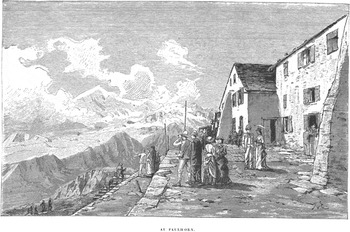
One surmises that Janssen was greatly relieved to reach a hotel where he could rest. But he chose the Faulhorn as his observation site for reasons that go beyond accommodation facilities. Among scientists, the Berghaus was already reputed as a semi-permanent observation spot. How can a hotel be an observatory? The idea of setting up an observatory high up in the mountain had been around for some time. Traveling in the same area, the Geneva naturalist Jean-André Deluc thought, in 1778, “that if an observatory was established at such altitude, new telescopic stars and new comets might perhaps be discovered whose weak rays would never break through the vapors of Greenwich” (quoted in Reichler and Ruffieux Reference Reichler and Ruffieux2002, 291). Established in 1823, the rudimentary chalet opened by Samuel Blatter on the top of Mount Faulhorn certainly became a highpoint in the landscape of nineteenth-century science. Cited in nineteenth-century bestsellers such as Alexander von Humboldt's Cosmos (1850, vol. 1, 312–314, 334, and 370), mentioned in François Arago's Œuvres complètes (1858, vol. 8, 620), the Faulhorn indeed came to enjoy “some sort of scientific reputation due to the remarkable work of which it was the theatre” (Janssen Reference Janssen1929–1930, vol. 1, 81). For some, the summit indeed was a “true meteorological observatory” (Martins Reference Martins1843, 134–135) or an “observatoire aérien” (Martins Reference Martins1866, 311). Due to its exceptional location, the Berghaus Faulhorn was one of Switzerland's prime tourist attractions, which it remains to this day (fig. 1). It was also a place where various observations were gathered and experiments carried out for nearly forty years in a wide range of scientific domains: meteorology, botany, zoology, glaciology, physiology, and, of course, spectroscopy.
The arrival of tourists at the terrace in front of the Hotel Faulhorn, undated engraving. Collection of the author.

In this paper, I do not want to discuss the transformation of the mountain into an object of diverse sciences so much as the reasons advanced by scientists for climbing up there in order to study phenomena that sometimes were in no way specific to the Alpine environment. I want to reverse the viewpoint and take a specific mountain as my entry point into the examination of the special attraction that mountains exerted on scientists, which I approach by focusing on their activities. It is meaningful, I want to argue, to see the Berghaus Faulhorn as one of the first semi-permanent mountain observatories in the world, by which I mean that this was a fixed site on the planet where observations of any kind were repeatedly made over an extended period of time.
In the following, I thus focus on Mount Faulhorn to discuss two different aspects of mountain science. First, my argument is about a specific period in the history of science's fascination with the mountain, coincidental with the moment when this particular mountain witnessed its most intense period of scientific activity, that is, roughly from the early 1830s to the late 1860s. Through this example, I wish to explain the way in which, between the “discovery” of the Alps by the traveling scientists of the late Enlightenment and the establishment of permanent observatories in the later part of the nineteenth century, a tourist attraction exerted a significant pull on scientists, too. Mount Faulhorn, I argue, was the hybrid construction of all its visitors. Scientists from a great variety of fields as well as tourists of different origins and means took part in this construction which was captured by some specific images: breathtaking panoramas, violent and thunderous storms, astonishing sunrises and sunsets, and promiscuity with raucous travelers. Second, I wish to introduce a more general, analytical understanding of mountain science, which works well for the period in question, but might also have a broader relevance. During its period of scientific activity, I claim that Mount Faulhorn stood for three different conceptions of the scientific usefulness of the mountain. Appearing roughly in chronological order, but significantly overlapping, these conceptual representations conveyed ideas about the relationship between the mountain and the globe: (1) the mountain as a singular spot in the ever-expanding networks of observation stations being put up at the time by John Hershel, Adolphe Quetelet, or Carl Friedrich Gauss, thus giving rise to a tension between observation spots in the mountain, believed to be highly singular, and (to use Henri Bergson's term to which we will come back) the “cinematographic” understanding of networking science, whereby stations are supposed to be generic and chosen for material convenience only; (2) the mountain as a microcosm supposed to recapture in a well-delimited space the characters of the globe as a whole, altitude being taken as analogous to latitude; and finally with the work of Janssen and others (3) the mountain as a macro-tool for the pursuit of science, thereby denying any specific interest in the mountain other than perhaps its acknowledgment as the antechamber of outer space, but no more, really, than the telescope already was a middle ground between the heaven and the earth.
In this article I focus on the scientific history of a specific mountain during a definite time period. But, as the above shows, my aim in writing this microhistory is broader. In a final epilogue, I will thus take a reflexive turn to try and make explicit its historiographic significance. It turns out that the analytical tools I use to understand the significance of the Faulhorn for nineteenth-century science may be useful for that other project as well. My hope is that the study of the Faulhorn as a singularity helps to situate the mountaintop among other science sites at the time, that it offers glimpses at the way in which scientists’ changing self-perception led them to demand more private spaces to conduct their research even when they were on the summit of mountains, and finally that it focuses attention on a lesser-known period in the history of the mountains, when scientists intermingled with tourists.
A Precedent: The Grand Saint-Bernard Hospice
In reports written about observations carried out on the Faulhorn, scientists always made sure to emphasize that the Berghaus was located at a higher altitude than the Grand Saint-Bernard hospice. Since the Middle Ages, a small religious community, well known for the help they provided to stranded travelers, was installed near the famous pass between Switzerland and Italy (see, e.g., Horace-Bénédict Saussure's account of his trip to the pass in Reichler and Ruffieux Reference Reichler and Ruffieux2002, 293). In 1817, the Geneva scientist Marc-Auguste Pictet came up with the idea of setting up a meteorological station at the top of the Grand Saint Bernard pass.
To scientists in the nineteenth century, dependability and regularity of observations became an obsession. While many considered that only military men had the discipline required for carrying out the task (Widmalm forthcoming; Werrett forthcoming), more and more scientists designed self-registering machines for the task (Mazzotti, forthcoming). A few, like Pictet or Jean-Baptiste Biot (Aubin Reference Aubin2003), believed that monks represented a good alternative to both. On 14 September 1817, a series of observations was launched at the Grand Saint-Bernard, which underwent almost no break up to the present. In the eighteenth century, the Turin Academy of Science had apparently considered setting up a weather station at the pass. On 30 December 1809, the French préfet Auguste Jubé de La Pérelle, again suggested that meteorological observations be made at the pass and sent to him (AGSB 0120). But no permanent weather records were kept at the pass prior to Pictet's initiative. To ensure its success, Pictet personally delivered meteorological instruments: there was a barometer attached to a Réaumur thermometer, a portable mercury thermometer and a portable mercury hygrometer for observing outside, and a delicate hair hygrometer conceived by de Saussure, whose hair Pictet promised to change after about two years. The instruments were given to the clergymen in exchange for their pledge to perform daily measurements, to carefully report them on a register book that would never leave the hospice, and to make a copy each month to be sent to him by mail. Pictet also provided instructions for regularity of the observations and how they were to be carried out. For measuring the snow falling on the pass, Pictet provided no instrument, relying on the fathers to find a means of their own: any approximation, he wrote, would be better than nothing. As for the wind and the sky, Pictet provided a qualitative scale. He also provided the fathers with printed skeleton forms to fill out. Every day, observations were to be made at the same time as in the botanical garden in Geneva. Each month, observations were published in Pictet's Bibliothèque universelle (AGSB Météo 01).
From a meteorological standpoint, contingency ruled over the choice of this location. Only altitude was important to Pictet: the progress of meteorology required an investigation of the third dimension of the atmosphere. “But where to find, in our Europe, a dwelling [occupied] all year long, close to the limits of perpetual snows? Where to find men devoted enough to live there, and learned enough to appreciate the usefulness of such observations and to carry them out with the required regularity and precision?” (quoted in Raulin Reference Raulin1863, 627). While scientific reasons were invoked, convenience was solely responsible for the selection of this specific observation post. Among the most important factors speaking for the Grand Saint-Bernard was that it was settled by clergymen: reliable observers who permanently lived on the spot. As opposed to the Faulhorn, however, the Grand Saint-Bernard was never particularly attractive to visiting scientists and tourists. For nineteenth-century sensibilities, as we shall see, a religious establishment overlooking a mountain pass was bound to exert less pull than a rustic hotel on an isolated mountaintop.
Mount Faulhorn from a Tourist's Perspective
“For a few years, ascents have been in fashion: every summer tourists leave all parts of Europe, flock to the Alps, and climb up the most inaccessible summits. . . . Healthy and vigorous bodies [find in] the Alps . . . an arena to deploy every physical and moral qualities” (Martins Reference Martins1866, 261). As tourism developed, so did the accessibility of certain hitherto out-of-reach spots of the Earth increase (on the recent surge of interest in the history of tourism, see Walton Reference Walton2005 and references therein). Mount Faulhorn is a prime example of such place which suddenly rose into public prominence. After the Berghaus was opened and maintained by the Blatter family, this summit became a “meeting point of plants and travellers belonging to countries often far apart and to various climates” (Anonymous 1843, 282). The author of the Three Musketeers, Alexandre Dumas, claimed to have climbed up the mountain in 1832. Mark Twain, Henry James, and Richard Wagner also spent the night at the Berghaus. Franz Liszt is said to have slept there with his lover Madame d'Agout in 1830, and the young American painter John Singer Sargent was said to have developed his watercolor techniques on the Faulhorn in 1870 (Shelley Reference Shelley1993, 200). A play was written about the dangers of spending the night in the Berghaus (Verconsin Reference Verconsin1881). But, as opposed to the hospice, it was not occupied all year round and not staffed by clergy.
As it became famous, the cultural representation of the Faulhorn were hybrid constructions by journalists, guidebook writers, travel writers and scientists (Steward Reference Steward2005, 44). Although the distinction between the experienced mountaineering tourist and the amateur scientist could be difficult to establish at the time, the Faulhorn they experienced was the product of the intersection of a wide range of cultural perceptions. The Faulhorn is a mountain in the Bernese Oberland near the Lake of Brienz. The top of the conic summit culminates at an altitude of 2,680 meters, roughly 1,600 meters above the village of Grindelwald, the easiest point of access down the valley, a mere day and half from Berne, and already famous for its impressive glacier. Up there, one found an inn open all summer long. In the 1840s, the hotel, now run by the Bohren brothers, was composed of six heated rooms and counted 28 master beds and many more for servants (Audin Reference Audin and Richard1843, 222). To reach the hotel effortlessly, mules or palanquins – “one of those machines, chaises à porteurs” – could also be rented, the use of which however was deemed unmanly in Henry James's novel Roderick Hudson (James [1875] Reference James1986, 364). Paths were well marked and well kept, and guides who could be hired in Grindelwald were considered useful but not necessary. For another fifty years at least, the Faulhorn hotel was reputed to be the highest spot where accommodation was to be found in the Alps – if not the world, as Eurocentric commentators were then prone to say – and as such it drew the crowds. As early as 1855, a small hotel was built at the Saint-Théodule pass in the Valais at an altitude of 3,350 meters (Martins Reference Martins1866, 311). Another famous hotel, not far from the Faulhorn but more accessible had already been opened by Caspar Bürgi: the Rigi Kulm (alt. ca. 1,800 m). But none could boast a cachet that came close to the Faulhorn's.
Accessibility was crucial. In Janssen's letters, the special attraction of the mountain transpires clearly. The climb up the Faulhorn seemed hard enough to insure that only a few determined scientists made it. Considerable physical exertion was required by the climb (and one has to remember here that Janssen was limping slightly), but also by the long periods of observation in cold and windy weather. Moreover, as his letters also attest, an expedition up to the Faulhorn required non-negligible logistics. For the scientist relying on restricted means, to afford the trip to the valley and then to organize the transfer of instruments to the mountaintop would be problematic, but not altogether unthinkable. For all these reasons, there were few places more attractive than the Faulhorn Hotel, where the required infrastructure in terms of food and lodging as well as guides and carriers could be found at reasonable prices. Neither too remote nor too easy to reach, it offered exceptional conditions for observation and the promise of reaping original results. Exploring alpine regions represented a middle ground between botanizing around the city and participating in official – and very expensive – naval expeditions oversees. In short, the mountain was exotic in Europe's background.Footnote 3
What made the Faulhorn's reputation was the view. An isolated peak facing a breathtaking panorama of giant mountains dominated by the Jungfrau, the Faulhorn stood for a mixture of exertion, accommodation at an altitude rarely accessible to the occasional tourist, and contemplation (especially of the sunset and sunrise that had become famous): “The traveller who can make up his mind to a steep walk,” a British guide book from 1852 stated, “will in fine weather be well rewarded for making the ascent of the Faulhorn. Before setting out he must understand that he should sleep at the top of the mountain: the chide object being to see the sun-rise from thence” (Bogue Reference Bogue1852, vol. 2, 54). This panoramic view was a hybrid between the “coup d'œil” of Bigg (Reference Bigg2005) and the “tourist gaze” of Urry (Reference Urry2002): “colossi with white shoulders and hair . . . personify[ing] centuries holding hands and circling the world” and a panorama embracing half of Switzerland to the North (Dumas Reference Dumas1982, vol. 1, 343). Of course disappointment was great when the weather was not up to expectations. On 8 August 1836, a young climber found the Berghaus swimming in thick fog. “The uncertainty of weather,” he wrote, “is a great drawback in this country, for it is very dispiriting not to obtain a good view, when you toil up to an eminence eight or nine thousand feet” (O'Flanagan Reference O'Flanagan1837, vol. 2, 82). Like other alpine destinations, the Faulhorn became famous for the violence of its storms.
The grandiose contemplation of nature, whether at peace or in fury, was not the main character of the mountain as described by Dumas. On the Faulhorn, scientists who toiled to isolate themselves from intruders when working in the city were forced to mingle with hectic hunting parties, noisy drinking Germans, and a “macedoine” of travelers gone astray to be rescued in the middle of the night. Accommodation was rustic and the company mixed:
The company encountered by the tourist is a very miscellaneous character. German students, English and French gentlemen, travelling Americans, and Russian noblemen, enter into the composition of the groups which meet round the deal table in a sort of kitchen, which forms the only salle à manger of the establishment. The bed-rooms are small and crowded with beds, which are, at times, as crowded as the house. . . . there is a certain amount of satisfactory entertainment: food and wine, which would be rejected in the valleys, are relished here, after the long walk. (Bogue Reference Bogue1852, 55)
To maintain a hotel there required much work, which however was mostly invisible to tourists and scientists. In 1855, before the start of the summer season, Reverend William Grendon Heathman met
some twenty porters and female servants . . . carrying at their back the commodities and requisites necessary to commence innkeeping. They had started as early as two o'clock in the morning from Grinderwald [sic], and had consumed just fifteen hours in their labour. . . . Most of these Alpine porters, who carried everything on their backs, bore great weights [one no less than 134 pounds. . .]. The first thing after arrival was to set to work and clear the habitation of the snow and ice with which the rooms were filled. After this operation they kindled a blazing fire, and cooked the provisions. (Heathman Reference Heathman1855, 135–136)
In fact, visitors mostly noted the Spartan conditions of life which stood in strong contrast with the beauty of the spectacle. “You must not for a moment imagine,” Reverend Heathman went on, “notwithstanding all our toil and discomfort, that we at all regretted our labour. Far from it, we were most amply rewarded. In the evening and in the morning we enjoyed one of the most extensive and astonishing views of the Alps, near and far, which are to be found in this land of wonders” (ibid., 134).
Singularity
In view of this lack of comfort, promiscuity with loud visitors, and inclement weather, the Berghaus Faulhorn hardly seemed a natural place for scientists to visit – except of course for the same reasons Victorian tourists did. The scientists’ reasons for including Mount Faulhorn as a notable observation station in the growing networks put in place in the nineteenth century must therefore have been important. In a recent study on the early constitution of meteorology as a scientific discipline, Fabien Locher (Reference Locher2007) has identified two different models for the stations set up at that time. In the first of these models, observers used standard instruments to record at predetermined times a restricted set of data. The exemplar was the famous magnetic crusade launched in the 1820s and 1830s by Humboldt, Gauss, Hershel, and Quetelet in the fields of geomagnetism and meteorology. For them, the precise spots on the surface of the earth where data was taken did not matter as much as their even distribution over the globe. In the second model, called the “landed ship” by Locher, scientists traveled abroad, carefully selected a special location that they thought deserved attention, and then submitted it to intense interdisciplinary studies. Locher has drawn attention to the extensive program of studies followed over several months in 1835–1836 by Professor Charles Martins from Montpellier University and the Navy officer Auguste Bravais in Lapland and on the Spitzberg Island, during which they boarded ships belonging to the French Navy to record temperatures and magnetic fields, observe stars and auroras, botanize, collect rock samples, and study the local fauna. As we shall see, both savants would later pursue a similar program on the summit of the Faulhorn.
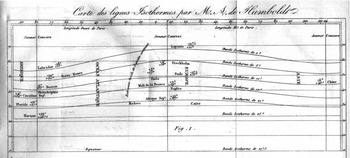
To gain knowledge about the continuum (phenomena that are continuously distributed over a certain spatial area or progressive temporal processes), scientists must often rely on discrete sets of observations taken on specific locations at some particular instants. To analyze the sort of inference they make when they move from this discrete set of data to a description expressed as a continuum, the French philosopher Henri Bergson (1907) introduced the concept of “cinematographic knowledge.” In Creative Evolution, he contrasted it with older methods for gaining knowledge about continuous processes. Classically, change was not approached by associating indistinct snapshots, each of them meaningless in themselves, but rather by focusing on singular moments (Canales Reference Canales2006). In the first decades of the nineteenth century, scientists engaged in extending the knowledge about the environmental sciences were facing a similar dilemma. Locher's two models for the development of meteorology might be construed as the geographical counterparts of Bergon's terms. In 1817, with the introduction of the “isotherm lines” (fig. 2), Humboldt tried to impose artificial continuity on scattered, “cinematographic” observations stations whose singularities were thereby erased. While a complex story could be told about each point pictured on his graph, none of their particularities (except name and coordinates) appeared. Admittedly, most stations Humboldt could gather data from had never been chosen for purely scientific reasons. Only political and contingent rationales could explain why Paris and China figured, but not Madrid or Siberia. In fact, even in cinematographic observation networks, all stations were chosen because they were highly singular.
Alexander von Humboldt's map of isothermal lines, showing mean temperature around the world as a function of latitude and longitude. Note that the few data points labeled on the graph all represent highly singular observation spots (foldout following Humboldt Reference Humboldt1817).

But mountains played a special part in such networks. They were key nodes that deserved special attention and were thought to be especially revealing of the general laws one wished to uncover. In this conception that was closer to classical than to cinematographic knowledge, mountains represented singular spots of the Earth and in the networks – stations chosen a priori because of the exceptional types of measurement one could make there and nowhere else. Like other famous observation stations, the Faulhorn was chosen both for contingent reasons and as representative of general trends. On the “high altar of the Faulhorn,” visitors believed themselves to be engaged in a communion with nature, a feeling that was shared by scientists as well (Barry Reference Barry1836, 3). A singular attraction in the Grand Tour from which bourgeois society hoped to get a more intimate feeling for Europe, the Faulhorn exerted a special ascendance due to its singularities, only some of which were purely scientific in nature: an attractive environment, adequate infrastructure, local help, frequent visitors, etc.
After Colonel Johann Heinrich Weiss, a surveyor and cartographer who had drawn a first panoramic view from the summit around 1810, the first person to go up the Faulhorn with a scientific resolve was the meteorologist Ludwig Friedrich Kämtz, from the University of Halle and later Dorpat. A dedicated reader of Humboldt, Saussure, and Deluc, Kämtz was bound to be attracted by the mountains. In 1832, he stayed from 27 May to 24 June on top of the Rigi and from 11 September to 5 October on the Faulhorn. The following year, he would spend more time in both places (Kämtz Reference Kämtz1833a; Reference Kämtz1833b; Reference Kämtz1840; Reference Kämtz and Martin1843; and Reference Kämtz and Walker1845; see also Martins Reference Martins1866, 399). Following precedents set by Johann Kasper Horner in Zurich and Herr Eschmann on the Rigi in January 1827, Kämtz observed a rigorous program of thermometric, barometric, and hygrometric measurements at every hour of the day and organized similar measurements to be taken simultaneously in Zurich, Berne, and Geneva (see table in Kämtz Reference Kämtz and Walker1845, 253). The meteorologist was looking for laws that would apply even under extreme conditions. The singularity of the mountain environment is obvious in his treatise Vorlesungen über Meteorologie published in 1840, translated into French with many additional comments by Martins (Kämtz Reference Kämtz and Martin1843; this last edition was also translated into English [Kämtz Reference Kämtz and Walker1845]; it is famous for its appendix on the “graphic method” by Léon Lalanne). Storms and winds are said to be more violent on the mountain than in the valley (Kämtz Reference Kämtz1833c). Times when daily maximum temperatures are reached are compiled and, on this account, the climate on the summit of a mountain is compared to that on the seashore (Kämtz Reference Kämtz and Walker1845, 19, n.). A hypothesis is tested according to which the dryness of the atmosphere is higher in mountain climates (ibid., 93). As far as Kämtz was concerned, Mount Faulhorn was a highly singular site of observation from which special insights about meteorological laws could be gained. “These few results,” he concluded, “show us that even such complex phenomena are ruled by some precise laws” (Kämtz Reference Kämtz1833b, 44).
The 1830s was, scientifically-speaking, a busy decade for the Berghaus Faulhorn. In September 1832, James David Forbes, who was with Kämtz, measured the transparency of the atmosphere at Brienz and on the Faulhorn, showing that solar infrared radiation was composed of various types of rays that differed with respect to the way they were absorbed by the atmosphere (Forbes Reference Forbes1842; Kämtz Reference Kämtz and Martin1843, 150, n.). Professor C. Brunner (Reference Brunner1830), a chemist from the University of Berne, measured the composition of air samples taken at the top of Mount Faulhorn (Culotta Reference Culotta1972). A Russian entomologist also published the result of observations on several mountains including the Faulhorn (Chaudoir Reference Chaudoir and Lasserre1837). Finally, in September 1837, Forbes came back with his magnetometer (Bache Reference Bache1841).
After Kämtz's visits a second high-profile series of continued meteorological observations in the Faulhorn region was undertaken by a group of French scientists in the early 1840s. From 19 July to 4 September, 1841, the above mentioned Bravais and Martins, joined by Louis Bravais, Auguste's brother, worked with M. Wachsmuth who then tended the hotel. The following summer, from 26 July to 18 August, 1842, Martins went back accompanied by the meteorologist Athanase Peltier and another brother of Auguste's, the abbot Camille Bravais (Martins Reference Martins1843, 134–135; Peltier Reference Peltier1845). Bravais and Martins came back twice to the Faulhorn, in 1844 and 1846. On each of these occasions, their scientific program was remarkably broad. Discussing another ascent they made around that time, Élie de Beaumont wrote:
After having admired the magnificent panorama, MM. Bravais, Martins and Le Pileur hastily installed their instruments: barometer, thermometer, hygrometer, psychrometer, pyrheliometer, actinometer, compass; instrument to measure the horizontal magnetic intensity; instrument to measure the inclination of the magnetized needle; instrument to measure electric tension; instrument to measure the boiling temperature of water; instrument to observe the tints of the sky and the transparency of the atmosphere, etc. (Beaumont Reference Beaumont1865, 38)
Carrying so many instruments up the mountain of course required consequent organization. Martins and Bravais’ accounts of their several mountain expeditions bear witness to the tasks facing scientists in the organization of their ascents:
We had to oversee ourselves the preparation of the ascent; divide objects in lots of equal weights and draw lots among carriers in order to avoid quarrels and reclamations; busy ourselves with the preparation of food, buy bread and wine, distribute them ourselves the day of our departure. Thereby, instead of spiritual calm, instead of the meditation which the man of science requires so much before he undertakes his work, we were distracted by thousands of vulgar details, thousands of irritating difficulties that do not occur in ordinary circumstances of life, and which assailed us at the very moment when we felt the need of being free from all preoccupations. (Martins Reference Martins1866, 274)
On the Faulhorn, on the other hand, some of these worries were eased or altogether avoided. Among the non-obvious advantages of the Berghaus was the possibility of recruiting local help among “the large swarm of licensed mendicants, who make their annual living out of strangers who throng their country during the summer months” (Packe Reference Packe1857, 72). Indeed, the personnel of the chalet together with more transient local help was not only helpful in guiding scientists around the country, in carrying food, wood, water, and materials up to the mountain, and in preparing meals. Members of the Blatter family themselves were also recruited as technical assistants by many visitors. Samuel Blatter himself was acknowledged as a useful assistant by Kämtz (Reference Kämtz1833a). Reliance on the Blatter family however stands in stark contrast with other witness accounts emphasizing the Alpine roughness of the hosts (Bourjot Reference Bourjot1838, 384–385).
Even if contrary to the hospice at the Grand Saint-Bernard pass the Berghaus Faulhorn was not occupied all year long, it nevertheless was a fixed spot that was regularly visited by scientists. Far less complete than at the hospice, series of observations could conceivably be gathered by scientists or enlightened amateurs. On 30 August 1835, Gustav Bischoff, professor of chemistry and technology at the University of Bonn, visited the Faulhorn to study soil temperatures. On 12 April, he had written the superior of the hospice to ask him for observations (Grand Saint-Bernard Archives, AGSB 0121). On the Faulhorn, Bischoff placed an apparatus to track the temperature of the soil on the south side of the inn. This apparatus consisted of a wooden case filled with earth and sand in which a bottle filled with water was placed. The case was buried four feet deep and the hole dug up was filled with a heat insulator. There was a small opening allowing a thermometer to be plunged in the water and the temperature of the soil was inferred from that of the water. Bischoff compared his observation at the Faulhorn with those he made in his chemical laboratory in Bonn and on the nearby hill of Löwenburg, 1173 feet above the Rhine. But according to his own procedures, one had to wait four weeks for thermal disturbances caused by digging the hole to subside. Bischoff therefore hoped he could rely on visitors to take regular measurements for him.
I, therefore, request all natural philosophers and other travellers accustomed to such observations, who may happen to visit the Faulhorn, so celebrated for the grandeur of its scenery, to devote a few minutes to similar observation, and to have the goodness to communicate to me the result. For this purpose I have committed a thermometer to the care of the innkeeper on the Faulhorn, Hans Bohren, of which the observer may make use. The landlord will have the kindness to direct the observers to the spot where the box is buried, and will draw out the bottle. (Bischoff Reference Bischoff1841, vol. 1, 167)
Mr. Ziegler, a pastor in Grindelwald, took an interest in Bischoff's measurements and he observed a temperature on top of Mount Faulhorn on 22 September 1835. In his scientific publication, Bischoff suggested to readers who might be passing by to pay Ziegler a visit. In the Alps, the tourist might be a nuisance to the scientist, but among the hikers flocking to the Berghaus there were some amateur observers who could prove valuable to science.
Microcosm
Collecting is now recognized as a crucial part of European scientific endeavor since the early modern period (Findlen Reference Findlen1994). In the nineteenth century, botanic, zoological, and human collections in natural history museums were greatly expanded, allowing scientists to compare side-by-side samples coming from a wide variety of places. Whole empires and their various climates were condensed into metropolitan botanical gardens (Bonneuil Reference Bonneuil1991; Drayton Reference Drayton2000). The mountain offered something more: a natural laboratory for studying the effect of high latitude and/or high altitude on the biosphere and the prospect of understanding the interdependency of flora, fauna, and climate. As opposed to earlier more or less amateurish exploitation of the Faulhorn Hotel by tourists, Bravais, Martins, and their companions turned the place simultaneously into an observatory, a laboratory, and a botanical garden. In line with the “landed ship” model they had followed in Lapland (Locher Reference Locher2007), Bravais and Martins’ expeditions to the Faulhorn form an important chapter in the birth of high altitude multi-purpose observatories.
Every summer thousands of tourists climb up that peak [the Faulhorn], in order to enjoy the magnificent view of glaciers and snows of the Oberland. The inn set up to host them became the meteorological stations of MM. Martins and Bravais. They recreated the observatory of Bossekop and from 17 July to 5 August, they made a series of observations similar to those of Lapland. (Beaumont Reference Beaumont1865, 34)
Struck by the similarity between mountain and Arctic flora, Bravais and Martins were especially thorough in their botanizing. They collected samples of 132 different species and concluded that the flora of the Faulhorn corresponded to that of Northern Lapland. To find vegetation similar to that of the Spitzberg, one would have to go above the line of eternal snows – and thus higher than the Faulhorn (Martins Reference Martins1866, 95 and 273). Twenty years later, Martins reaffirmed his strong belief in the analogy between the effect of latitude and altitude on vegetation. The Mont Ventoux was a microcosm: “all the climates of Europe, from that of Provence and the North of Italy to that of Lapland, are gradually represented on the flanks of the Ventoux” (ibid., 401). Compared with the studies they had made in the polar region, their investigation of high altitude climate was precious to
distinguish between phenomena produced by the lowering of temperature from those that can be especially explained by a great elevation above the level of the seas. In a word, they lead us to a rigorous parallel between the influences of latitude and altitude; and thence to the most varied and the most fruitful applications . . . to agriculture, hygiene and consequently to the well-being of the population destined to live in mountainous countries. (Ibid., 309–310, emphasis added)
Incomparably small compared to the Earth, the mountain could thus be taken as representative for the globe as a whole. As the French geographer Élisée Reclus noted, “the walker who, in the space of a few hours, hikes up from the base of the mount to the rocks at the summit, in reality travels further and more fruitfully than if he would devote years to circle the earth, through the seas and the low regions of continents” (Reclus Reference Reclus1880, 73). To account for this parallel, Bravais and Martins devoted much effort to the study of all aspects of that environment. They dutifully repeated Kämtz's observations, taking 152 barometric measurements, day and night, every three hours. Complete series for temperature, atmospheric pressure, and relative humidity were obtained. Although definite conclusions about the relationship between weather conditions and plant geography eluded them, they remained optimistic: “the time will come when science will know why certain vegetal species venture so far from their native countries, while others seem stuck within the limits of a narrow location” (Anonymous 1843, 282–284).
Inspired by Humboldt, this vision was especially true for the study of botanic geography, but it was also useful in the study of other phenomena, such as geomagnetism. Investigating like Forbes the behavior of the magnetic needle at high altitude, Bravais used the same needle whose oscillations he had measured in Paris, Orléans, Dijon, Lyon, Besançon, Berne, Basel, Soleure, Thun, and Brienz, and that he would later carry up the Mont Blanc. The result of such effort however was disappointing. “The influence of altitude on the intensity of terrestrial magnetism did not manifest itself in an obvious manner. No law emerged from the data thus obtained. . . . What should be concluded from such uncertainties? Nothing but the need to perfect our means of study” (Martins Reference Martins1866, 300). Martins held on to the positivistic belief that when means of observation would be precise enough, “the law will manifest itself: thus does science itself teach us the nature of the gaps that remain to be filled and show us the type of improvement they demand” (ibid., 301). Negative results were also meaningful. Similarly, the French scientists brought with them several tightly sealed glass jars, which they filled with air sampled on Mount Faulhorn. Analyzed in Jean-Baptiste Dumas's laboratory in Paris, the content of the jars showed, contrary to John Dalton's claims, that the proportion of oxygen was not sensibly different from the air of Paris (Anonymous 1841). Similarly, using an apparatus designed by Victor Regnault, physics professor of the Collège de France, careful experiments were made to determine differences in the temperature at which water boiled as a function of atmospheric pressure and altitude (Peltier and Bravais Reference Peltier and Bravais1844). Even the beautiful sunrises and sunsets of Mount Faulhorn could not escape their measuring frenzy (Bravais Reference Bravais1844). If the mountaintop differed from the valley neither in the composition of its air, nor in the characteristic of its magnetic field, the parallel between altitude and latitude seemed established.
Although the mountain provided an environment conducive for carrying out a range of scientific investigation, as specific environmental knowledge progressed, the construal of the mountain as a microcosm recapturing aspects of the globe as a whole receded. A true Humboldtian, Martins summarized the impressive but seemingly incoherent list of topics observed above 2000 meters by himself and his colleagues: “Oscillations of the barometers and the thermometers; the relative humidity of air at various depths; the radiance of snow surfaces at night, as well as that of plants and other bodies in nature; the relative intensity and the speed of ascending and descending sound; the complex and interesting phenomena of glaciers; vegetation and animal life in these high regions; and, at last, the physiological phenomena manifesting themselves in man.” The results of these observations, he noted, were now distributed in treatises of “physics, meteorology, physique du globe, botanic and zoological geography” (Martins Reference Martins1866, 309). But as a microcosm the mountain environment hardly survived in such treatises.
Macro-Tool
Instead, the mountain seemed to be reduced to a scientific instrument of especially large proportions. Before the “laboratory revolution” of the last third of the nineteenth century (discussed in Aubin Reference Aubin2002), scientific equipment for experimenting often was less than optimal in urban centers. Scientists for example crisscrossed the globe to observe transits of Venus where a laboratory measurement of the speed of light would have produced the same result (Aubin Reference Aubin2006). Because of the conditions found in high-altitude environments, the mountain could serve as a huge open-air laboratory where special experiments could be attempted.
Bravais, Martins, and their collaborators accordingly turned Mount Faulhorn into a gigantic instrument. One of their most interesting experiments, performed on 24–27 September 1844, was to measure the speed of sound. The speed of sound had already been measured several times, including in 1822 by a commission composed of the engineer Gaspard de Prony, astronomers Alexis Bouvard, Claude Mathieu, and Arago, together with Humboldt and the chemist Louis Joseph Gay-Lussac. But Bravais and Martins thought it was useful to insure that the velocity would be the same for sound waves going up or down. They carried a small cannon weighing 23 kilos to the top of the Faulhorn, while another was left near the Lake of Brienz. A small light flashed whenever they were fired and the time between the appearance of the light flash and the perception of sound was measured using Breguet chronometers. Weather data were moreover gathered; personal equations measured. Once more, however, the result of the experiment was nil: that is, it failed to reveal anything new, except that interesting experiments could be carried out in such an environment (Bravais and Martin 1844; Bravais and Martins Reference Bravais and Martins1845).
In 1864, Mount Faulhorn was preferred to the treadmill for a physiological experiment. Adolf Eugen Fick and Johannes Wislicenus, respectively professors of physiology and chemistry at the University of Zurich, climbed it to validate a hypothesis advanced by the chemist Justus Liebig according to which protein alone powered muscular contraction. The German-trained spectroscopist Edward Frankland, who was Fick's brother-in-law and also related to Wislicenus, went up with them to carry out one of the “experiments that changed nutritional thinking” (Carpenter et al. Reference Carpenter, Harper and Olson1997). Prior to the climb, they eliminated protein from their diet. They collected urine three times: before, immediately after reaching the hotel, and the morning after. “We preferred the mountain to a treadmill, not merely because the ascent is a more entertaining employment, but chiefly for the reason that we had no suitable treadmill at our disposal” (Russel Reference Russel1996, 423).Footnote 4
Let us now go back to Janssen who climbed the Faulhorn that same year, on 16 September. It is not known whether he met Frankland on that occasion, or read the poem entitled “Muscular power, or the Ascent of the Faulhorn, A Diuretic Ditty” of which a handwritten copy apparently remains in Frankland's papers (ibid., 428, n. 5). Observing in Paris in the evening and in the morning, Janssen suspected that some spectral lines, which he named “telluric lines,” were due not to the sun, but to the atmosphere of the earth, and more specifically to water vapor in the atmosphere. In 1862, he requested and obtained funds from the Government to go and study the phenomenon in Italy in a dryer climate. But the evidence he gathered failed to satisfy him (Aubin Reference Aubin2002). On 18 June 1864, he asked for more money, this time to study solar spectra viewed from the top of a mountain. He wished to choose a station at high altitude, but where the temperature would nonetheless allow him to observe: Mount Faulhorn was the obvious choice. Kämtz, Bravais, and Martins had already lauded the clarity of the air: “The transparency of the air was so great, that I frequently saw Jupiter before sunset; the polar and some other stars near the zenith were visible, at a mean, ten minutes after sunset” (Kämtz Reference Kämtz1833d, 336). Although the weather was not favorable at first, the sky soon cleared and Janssen could confirm his hypothesis. But the evidence again required further confirmation. In Geneva, he observed the spectrum of a bonfire he had ignited on the other side of the lake. The same lines were observed (Janssen Reference Janssen1865). But Janssen still was not totally satisfied. Back in Paris, he was allowed to conduct some experiments in the pipes of the gas experimental factory in La Villette. In conditions that seemed to be entirely under his control Janssen was at last satisfied with the evidence he had obtained.
The moral of Janssen's story, as I see it, was the temporary disqualification of the mountain as far as astrophysical observations were concerned. The great tradition of outdoor experiments now was on the wane. The physical sciences were in the process of being enclosed within the confines of modern laboratories whose walls would eliminate external disturbances as much as possible.Footnote 5 In Janssen's case, the mountain had been a useful tool for showing, once more, the absence of an effect, or at least the diminution of an effect – while telluric lines were not observed on the mountaintop (which was the expected result), the water vapor spectrum was observed in the laboratory at La Villette. Significantly, the mountain observatory of the Faulhorn had now run its course and, although it was turned into a regular meteorological station of the Bernese network put in place in August 1860 (Wild Reference Wild1860, 230), it would never again, as far as I am aware, be the site of a major scientific adventure.
Conclusion
In July 1862, the great man of mountain science John Tyndall climbed up the Faulhorn with the biologist T. H. Huxley. He was far from sharing the universal enthusiasm for what he called the “ignoble Faulhorn” (Tyndall Reference Tyndall1871, 258). Four years later, he repeated Janssen's experiment on the Faulhorn (ibid., 272). But Tyndall seems never to have been comfortable on that mountain: “I disliked the ascent of the Faulhorn exceedingly, having followed a monotonous pony-track up the ugliest of mountains” (Tyndall Reference Tyndall and Galton1861, 307). One may conjecture that the mountaineer was repelled by the lack of challenge this hike presented and by the excessive crowd encountered there. The Alps that attracted him were not easy to reach.
With the foundation of the Alpine Clubs, there was less room for improvisation and amateurism in mountaineering. To count as exploration, an ascent now needed to be physically demanding. The mountain became, in the words of one president of the Alpine Club, Sir Leslie Stephen (Reference Stephen1871), “the playground of Europe.” To those mountaineering scientists who belonged to the Club, the mountain was no longer a singular station in observational networks, no longer microcosm nor macro-tool, but rather a place where codes of manliness and gentility were articulated (Hansen Reference Hansen1995). Like Tyndall, Bravais and Martins had praised adventurous science as a nice and appropriate reward for the young:
Nights spent in shacks, even under a stone, near the limit of eternal snows; the true difficulties and the serious danger of glaciers; the unexpected obstacles, the vertical rocks blocking the way to the desired peak, the sudden cold, the effects of air rarefaction; the clouds suddenly covering the mountain in a thick fog; the storms and the lightening that so often hits the peaks, darkness catching the traveller in the middle of these deserts of snow and ice: here are adventures worthy of the vigour and aspirations of the masculine and hardened youth. What pleasure it is to triumph over the obstacles and to face perils where life, in the end, is rarely at stake, and what reward after the victory! (Martins Reference Martins1866, 261–262)
From the point of view of adventure and exoticism, the Faulhorn no longer fit the bill. But astronomers and meteorologists would soon be drawn to the mountains again for routine work, as opposed to climbing fun, and they would strive to establish permanent stations at high altitudes. When Janssen drew astronomers’ attention back to the usefulness of mountain observations again in 1888, his goals were as elevated as always promising nothing less than solving the riddle of extraterrestrial life (by showing that the chemical elements needed for life existed on other planets):
Astronomy and above all Physical Astronomy will be led to use more and more elevated stations. . . . The mountain and above all some mountains will therefore play a great role in the Astronomy that is coming. This Astronomy will no doubt solve very high questions: . . . whether the stars we see are inhabited, whether life exists beyond the earth, and whether beings similar to us live in other worlds. (Janssen Reference Janssen1929–1930, vol. 2, 115)
But when Janssen started to lobby intensely in favor of setting up an observatory on the Mont Blanc – a huge public, if not scientific, success – he emphasized routine over adventure.Footnote 6 He himself “climbed” up the Mont Blanc on a chair carried by several men! In the mountains, scientists, as much as mountaineers, were tourists no more.
A Reflexive Epilogue: Mount Faulhorn and the Historiography of Nineteenth-Century Mountain Science
As opposed to the scientists discussed above, I unfortunately never had the opportunity to climb up Mont Faulhorn. Yet, my encounter with the place was, up to a degree, a gamble as much as it was for them. Like my protagonists, I invested time and energy on the Faulhorn, where relatively minor figures produced minor contributions to science, in the hope that my study would have broader implications than the purely local circumstances I chose to focus on. In all attempts at microhistory, the way one generalizes local observations is both the most problematic and the most important question the author needs to address:
In its least attractive form, microhistory is the history of the trivial event, a story that could be told – but need not be because it is not especially illuminating (and, in its worst form, is not even a very good story sui generis). In its best version, microhistory takes a singular episode from the past and makes it stand for something much bigger than the sum of its parts, without straining the meaning to be teased from the evidence. (Findlen Reference Findlen2005, 236)
While I would not presume that my story live up to all these expectations, I would like to suggest that the framework used here has a historiographical counterpart to which it may be useful to draw attention. This article presented different procedures by which scientists conferred global significance to the local study they carried out on the Faulhorn. Similarly, one can ask: what does the above study of a specific site tell us more globally about nineteenth-century (mountain) science?
To answer, one can again consider Mount Faulhorn as a singularity in a network, as microcosm and as a macro-tool. In so far as my object of study is a specific mountaintop, I have strived to show how Mount Faulhorn was singular with respect to a whole network of mountain stations in the nineteenth century. Its accessibility, the permanent facilities found there, and its prominence in the cultural landscape of mid-nineteenth-century tourism were special to Mount Faulhorn and can account not only for its attractiveness but also for the way it was experienced by scientists. But this article also aims at adding the mountaintop to the extensive list of the places of experiment and observation (for a partial list including gentlemen's house, pubs, churches, etc., see Gieryn Reference Gieryn2006, 29 n. 2). Among all “truth-spots,” to use Gieryn's term, mountaintops have several singularities that the study of the Faulhorn has allowed to bring to the fore, in particular its use as microcosm and macro-tool. My study therefore suggests that, as a knowledge site, the mountain played a part in the quest for both more global approaches and bigger experimental apparatuses.
To network all the generic “places” where science was pursued in the middle decades of the nineteenth century, that is, to produce a detailed geography of their various interdependencies, is a task historians have barely started. The most one can now say seems to be that before the laboratory was fully institutionalized in the latter part of the century, several other spots competed adequately with it and some were still allowed to do so afterwards (on this, see esp. Kohler Reference Kohler2002). Construed as a microcosm for nineteenth-century society, the Berghaus Faulhorn offers a glimpse at the complex way in which scientists mingled with other tourists. This study highlights a settling process occurring as a result of changes in scientists’ social self-perception: more and more, it seems that scientists required that they possess their own space, even in the remote areas of the globe. For the historian, finally, the Faulhorn appears as a macro-tool that enables the observation and analysis of certain otherwise elusive phenomena. Historical narratives about the mountain often look over this period when science and tourism intermingled, after the pioneers of the eighteenth century but before the end of the nineteenth century. Big narratives sometimes obscure the faint lights of an intermediate period when both professional identities and mountain representations were in flux. Perched atop the Faulhorn, even if only in a metaphorical sense, microhistorians may be able to catch a glimpse of those lights.