Introduction
Autism is a neurodevelopmental disorder with life-long impairments. Although the genetic role in the development of this disorder is substantial,Reference McGuffin, Owen, O’Donovan, Thapar and Gottesman 1 , Reference Hoekstra, Bartels, Verweij and Boomsma 2 no single gene has been confirmed, and no biological diagnostic markers have been established. Autism is characterized by impairments in social interaction and communication, and the presence of stereotyped behaviours and restricted interest. In addition to these, the symptoms must be evident prior to 3 years of age, as is defined in the Diagnostic and Statistical Manual of Mental Disorders, 4th edition (DSM-IV). 3 Autism spectrum disorder (ASD),Reference Wing 4 a broader clinical category of autism, includes autism as well as Asperger disorder and Pervasive developmental disorders, not otherwise specified; the latter two disorders are a milder form of autism. There has been a growing research interest in ASD. In effect, a PubMed search reveals that the number of papers related to ASD was approximately four-fold higher in 2008 than in 2000. This increase has been coincident with accumulating evidence of a recent increase in the prevalence of ASD.
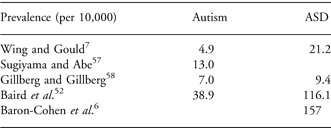
Williams et al. Reference Williams, Higgins and Brayne 5 extensively reviewed the literature on the prevalence of ASD, and concluded that the prevalence of both autism and ASD have been markedly increasing for the last three decades in Europe, the United States and Japan. The most recent large-scale study by Baron-Cohen and colleaguesReference Baron-Cohen, Scott and Allison 6 reported that 1.57% of children aged 5 to 9 years have ASD, indicating an approximately eight-fold increase compared with the prevalence reported 30 years ago in the United Kingdom by Wing and GouldReference Wing and Gould 7 (see Table 1 for a limited selection of the studies reviewed by Williams and colleagues). However, as noted in a study in the United States by Schechter and Grether,Reference Schechter and Grether 8 although the prevalence of autism among children aged 2 to 3 years and among children aged 3 to 4 years has conspicuously arisen during the last decade, no equivocal rise has been observed in the prevalence among children aged 5 years and above. Furthermore, a recent Danish register-based study shows that average age at first-ever diagnosis of autism was decreased between 1994 and 1999.Reference Parner, Schendel and Thorsen 9 , Reference Atladottir, Parner and Schendel 10 These studies suggest that the increased prevalence of ASD may be accounted for by a shift in diagnostic practices, with diagnoses of ASD being given more readily over the last decade, at least in part due to an increased awareness of ASD among health professionals.Reference Parner, Schendel and Thorsen 9 – Reference Rutter 11 However, although studies have indicated that the prevalence of ASD continues to increase even in very recent years,Reference Waterhouse 12 there is no definitive evidence for the theory that the rise is due to only increased awareness and diagnosis, rather than a true increase in incidence.Reference Rutter 11
Reported prevalence of autism and ASD over the last three decades (only selected publications are listed)
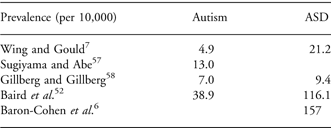
ASD, autism spectrum disorders.
Given the probable rise in the number of ASD sufferers, numerous researchers have sought to identify potential risk factors for ASD. Among the many potential factors, two candidates have emerged: low birthweight (LBW) and advanced paternal age at birth.Reference Schendel and Bhasin 13 – Reference Croen, Najjar, Fireman and Grether 16 The proportions of children with LBW and children with an older father at birth have been increasing for the last two to three decades in many countries, including Japan.Reference Takimoto, Yokoyama, Yoshiike and Fukuoka 17 – Reference Hamilton and Ventura 23 On the other hand, LBW may not confer risk of ASD on its own, as conflicting results have been reported of this association.Reference Kolevzon, Gross and Reichenberg 24 As much attention has recently been paid to an involvement of epigenetic effects in complex disorders such as ASD,Reference Momoi, Fujita, Senoo and Momoi 25 it will be of particular interest to examine whether LBW plays a role as an epigenetic factor that precipitates genetic expression among those with genetic vulnerability for ASD.Reference Rutter 11 Moreover, as a drastic rise in the occurrence of ASD is a concern in terms of public health, preventative strategies for ASD that can derive from investigations are highly demanded.
Another aspect of ASD to be considered is early detection. It is well established that early detection of ASD followed by early intervention has a positive effect on later outcomeReference Rogers 26 ; that is, the earlier, the better. However, very early detection before 2 years of age is difficult for the following reasons. First, as described above, no established biological markers are available for ASD. Early studies reported hyperserotonaemia among individuals with typical autism,Reference Hanley, Stahl and Freedman 27 , Reference Ciaranello 28 although abnormalities of blood serotonin levels have not been proven to be useful for clinical diagnosis.Reference Chandana, Behen and Juhasz 29 Neuroimaging studies using magnetic resonance imaging and positron emission tomography have indicated structural and functional abnormalities in children with ASD.Reference Palmen and van Engeland 30 , Reference Verhoeven, De Cock, Lagae and Sunaert 31 However, such techniques are not practically and economically applicable to all children who may have ASD under 2 years of age. More recently, automated eye-tracking devices have been shown to be of benefit in detecting abnormalities of eye gaze among children with ASD.Reference Jones, Carr and Klin 32 , Reference Klin, Jones, Schultz, Volkmar and Cohen 33 As abnormalities of eye gaze are viewed as a core symptom of ASD,Reference Wetherby, Woods and Allen 34 this finding is clinically and aetiologically important. However, as these studies relied upon small numbers of children with an established diagnosis of ASD, analyses of sensitivity, specificity and positive predictive value of this device are awaited. Second, certain behavioural characteristics during the first 2 years of life have been supposed to predict later emergence of ASD. These include delayed motor and language development,Reference Teitelbaum, Benton and Shah 35 , Reference Landa and Garrett-Mayer 36 impairments in joint attention,Reference Clifford, Young and Williamson 37 , Reference Landa, Holman and Garrett-Mayer 38 abnormalities in playing with toysReference Wetherby, Woods and Allen 34 and deficits in imitation and response to name.Reference Landa, Holman and Garrett-Mayer 38 – Reference Rogers, Hepburn, Stackhouse and Wehner 40 Unfortunately, the numbers of children examined in these studies were too small to draw firm conclusions; for instance, a reported delay in motor development was not supported by a later study.Reference Ozonoff, Young and Goldring 41 There is thus a need for longitudinal studies with a larger sample in order to formulate a decisive diagnostic algorithm using very early, potential precursors of ASD. Such precursors are expected to comprise social, psychological, physiological, biochemical and genetic indices as well as behavioural characteristics.
Aims and strengths of the HBC for mothers and children
To resolve these unanswered questions, the authors established an ongoing, multi-disciplinary birth-cohort study in Japan: the Hamamatsu Birth Cohort for Mothers and Children (HBC). The HBC was designed to achieve two key goals for an improved understanding of ASD, namely:
-
1. The identification of factor responsible for the increasing prevalence of ASD.
-
2. The formulation of a diagnostic algorithm for ASD that can be applied to infants prior to 2 years of life. Such an algorithm would incorporate social, psychological, physiological, neurological, biochemical and genetic factors as well as behavioural traits, and would have sufficiently high sensitivity, specificity and positive predictive value.
The strengths of the HBC are four-fold. First, this is a cohort study that focuses extensively and comprehensively on early indicators of ASD. Second, to increase the amount of information on any developmental changes associated with ASD, multiple and repetitive face-to-face assessments of mothers and children are being conducted over the course of 4 years, with a particular focus on the first 2 years of life (the mothers were assessed eight times and the children were seven times in the first 2 years); this represents a substantially greater number of assessments compared with previous longitudinal studies. Third, it is well acknowledged that LBW has a detrimental effect on subsequent development. However, the influence of LBW on the central nervous system development in terms of the pathophysiology has yet to be clarified. Japan is an ideal country for research into this phenomenon, because the proportion of LBW neonates has been steadily increasing over the last two to three decades (4.2% in 1980 and 9.6% in 2006)Reference Takimoto, Yokoyama, Yoshiike and Fukuoka 17 ; that is, this situation allows us to conduct, as it were, a natural experiment. Last, as the HBC is a multi-disciplinary cohort study involving professionals from many different disciplines, the collected data have the potential to yield valuable hypotheses in a wide range of fields, including psychiatry, psychology, paediatrics, obstetrics, gynaecology, developmental biology, genetics, education, health economics and health policies.
Enrollment, study area and participants
All the pregnant women visiting the Department of Obstetrics and Gynaecology, Hamamatsu University School of Medicine and the Kato Maternity Clinic were invited to participate in the study, and those women who agreed and whose spouses (or partners) agreed were enrolled. The two research sites are both located in the north–eastern part of Hamamatsu city, a city with a population of approximately 800,000 in the central part of Japan. In this country, medical service users are not bound to visit registered or home doctors before seeing specialists; pregnant women can freely choose any maternity clinic, from a private clinic to a large (or university) general hospital for specialists’ care. The medical cost for uncomplicated child delivery is not covered by the National Health Insurance system in Japan; however, all the local governments cover a substantial proportion of the charge for delivery, unless a patient demands special care (e.g. a room with special facilities). In addition, charges for complicated deliveries are paid by the National Health Insurance system. One unique characteristic of childbirth in Japan is that a certain proportion of Japanese pregnant women prefer to stay at their parents’ house beginning approximately 1 month before the due date until one or more months after delivery for the purpose of receiving their parents’ care (a custom known as ‘satogaeri bunben’ or return-home delivery),Reference Yoshida, Yamashita, Ueda and Tashiro 42 which results in most of these women attending maternity clinics near their parents’ residence. The option of giving birth while staying at the residence of one’s parents is also acceptable in the Japanese health care system. This is because there are literally no regional boundaries for medical care in Japan. Free accessibility to medical care, in addition to a lack of nationwide central database systems (e.g. a case register), renders a complete fashion of epidemiological studies extremely difficult in Japan. In this regard, pregnant women who live in but move out of Hamamatsu city for delivery, and then give birth in their parents’ residential area away from the city are inherently not enrolled in this study.
As a role of leading hospitals, the university hospital provides specialized services in maternity care: that is, artificial reproductive technology and high-risk deliveries (e.g. severe pre-eclampsia, foetal hypoxia and maternal diseases). Women receiving such specialized care were not excluded from this study. Babies to whom they give birth are likely to be at a disadvantage in terms of both intra- and extra-uterine development, and hence, if they were to be eliminated, valuable information on the relationship between growth alterations in early life and subsequent development would be lost. However, including a disproportionate number of complicated deliveries could lead to an overestimation of the rate of abnormal development. Therefore, care is also necessitated in treating this subpopulation at the stage of data analyses.
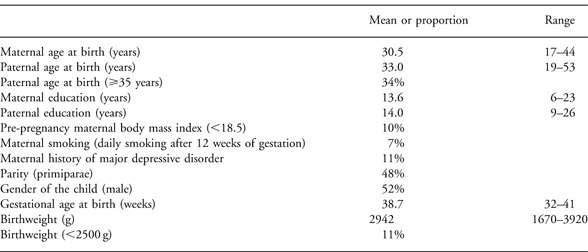
Given that conceptions after artificial reproductive technology are associated with an advanced age of parents,Reference Ford, North and Taylor 43 one may also speculate that mothers in our cohort would tend to be older than pregnant women living in the community as more births from artificial reproductive technology would be involved. However, a preliminary inspection of the participants (N = 501 mothers who had given birth by the end of June 2009) showed that the mean maternal age at birth was 30.5 years and the mean birthweight was 2942 g, suggesting no substantial departure from the national statistics (maternal age at birth: 29.4 years for a 1st child and 31.4 years for a 2nd child; birthweight: 3050 g for a male and 2960 g for a female). 44 In this regard, the study participants in this cohort are a fairly representative sample of pregnant women in the community (see Table 2).
Demographic characteristics for the Hamamatsu Birth Cohort for Mothers and Children (HBC)
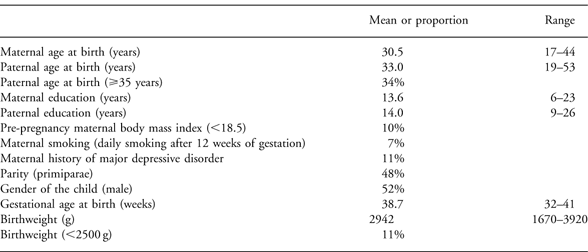
N = 501 participants (mothers) and their children enrolled and born by the end of June, 2009.
Thus, participants are pregnant women giving birth at two researches sited in the community. As the outset of the HBC study in November 2007, approximately 800 pregnant women have been invited to participate in the study, and approximately 85% of them gave their informed consent. This participation rate is considerably higher than that of other cohort studies conducted in Japan.Reference Miyake, Sasaki and Ohya 45 We were unable to enroll women who gave birth at one of the two research sites but had not visited them before delivery and those who underwent emergency delivery (e.g. women who intentionally concealed their pregnancy but had to visit the emergency room for delivery). However, the number of such women was negligibly less (<1%). More than 1200 women and their children are expected to participate in the HBC study by the end of 2010.
Data collection
Information on mothers and infants was collected using a range of sources, as discussed briefly below. Further details of the methodology are provided in Appendix A, and a list of measurements is given in Appendix B.
A large part of the information on the factors related to demographic factors, living conditions and socioeconomic status, social support, as well as factors related to child development are derived from in-depth interviews of all the participating women. Similarly, the information regarding child development is derived mainly from direct face-to-face assessments of the child. The interviews and assessments take place in examination rooms situated at the two research sites during pregnancy (normally the second trimester) and when the child was 1-, 4-, 6-, 10-, 14-, 18-, 24-, 32-, 38- and 50-month old. Other sources of information include self-completed questionnaires for mothers, medical records and biological samples including cord blood, placenta and buccal swabs.
Diagnosis of ASD is a key issue in the HBC study. Children suspected of having ASD are first screened in three main domains by applying: (1) the Modified Checklist for Autism in Toddlers,Reference Robins, Fein, Barton and Green 46 Japanese version,Reference Kamio and Inada 47 at the age of 10, 14 or 18 months of age; (2) the Mullen Scales of Early LearningReference Mullen 48 at the age of 10, 14 or 18 months of age; or (3) a careful clinical judgment by our study team, including a child psychiatrist and a developmental psychologist. This screening stage was followed by thorough diagnostic assessments at the age of 2 years or later whenever needed, by use of two diagnostic instruments, the Autism Diagnostic Interview-Revised (ADI-R)Reference Lord, Rutter and Le Couteur 49 and the Autism Diagnostic Observation Scale (ADOS),Reference Lord, Risi and Lambrecht 50 along with case conferences held by our study team with one additional paediatrician who have more than 5 years of clinical experience in diagnosing ASD in infants. The ADI-R is a semi-structured interview for parents or primary caregivers with 93 items to assist in diagnosing ASD. The ADOS is a semi-structured direct assessment of key symptoms of ASD for children with ASD.Reference Lord, Rutter and Le Couteur 49 , Reference Lord, Risi and Lambrecht 50 Both instruments are well-standardized and have been shown to have high reliability and validity; a study by Lord et al. Reference Lord, Risi and DiLavore 51 has shown that diagnosis of ASD made at the age of 2 years with combined information of ADI-R, ADOS-G and clinical diagnosis is remarkably stable at the age of 9 years, with an overall sensitivity of 75% and specificity of 78%. Two of the authors took part in formal training sessions conducted by the developers of these instruments, and were judged to be reliable in their use (K.J.T. for ADI-R, K.M. for ADI-R and ADOS). These two instruments have been shown to be more helpful than others for identifying children with ASD; however, it has also been shown that the use of these tools alone is not always sufficient for diagnosing cases of ASD.Reference Baron-Cohen, Scott and Allison 6 Therefore, clinical diagnosis after a case conference is critical to finalize the best-estimate diagnosis.
For the above reasons, we have adopted a standardized practice of reaching a best-estimate diagnosis for ASD based on combined information from screening tools and research diagnostic instruments in addition to direct observation of the child.Reference Lord, Risi and DiLavore 51 , Reference Baird, Simonoff and Pickles 52
Ethical issues
The study protocol has been approved by the Hamamatsu University School of Medicine and the University Hospital Ethics Committee (no. 20–82, 21–114). Written informed consent to participate in this study, with allowance for withdrawal at any time from entry through follow-up, is obtained from each pregnant woman.
Keeping the families involved
To keep the attrition rate as low as possible, we are employing a range of efforts directed at family members of the participating mothers and children, all of which are viewed positively by families and add impetus for family members (e.g. spouses, partners, as well as sisters and parents of the participating mothers) to visit our centre. These include newsletters that are sent to participants about two to three times per year, and birthday cards that are sent to all the children and their mothers, regardless of whether or not the mothers are still actively involved in the study. The most important among all is that, in order to maintain good relations with the families, we strive to establish a cordial, ‘familial’ attitude in all our mutual interactions. In addition to communicating in as friendly a manner as possible, we provide them with any requested information, such as information on treating dry skin or other conditions in their children, information on public lectures for child care, and so forth. We also ask each mother, a few days after delivery, if she accepts that collected information will be shared with regional health workers, particularly public health nurses, to provide better care for mothers and children.
Disclosure of genomic information is sometimes disfavoured in fear of unveiling hidden personal information, particularly in Japan. Specifically, negative attitudes towards such studies that may predict physical illnesses later in life of infants are understandable. Under such circumstances, we eliminate any genetic elements from the study for the first two years to minimize the attrition rate arising from fear attached to the purposes of the research. However, a recent study has reported that 69% of Japanese favoured the promotion of genomic studies.Reference Ishiyama, Nagai and Muto 53 We anticipate that intimate relationship with participating children and the parents may confer credibility to the study team, and we proceed to ask the parents or caregivers for providing DNA samples at 24 or 32 months of age of the child.
Statistical power
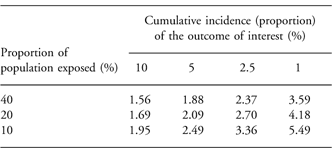
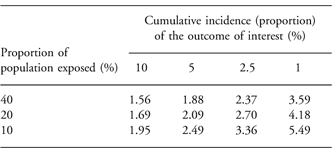
In the HBC protocol, we computed statistical power for the planned sample size of 1200 children. For binary outcomes, Table 3 shows that with 1200 infants one could be 80% sure of identifying as statistically significant a true relative risk of 1.95 or more, given a 10% exposure in the general population and a 10% cumulative incidence of outcome. For instance, we expect that 10% of children from the general population are born with LBW, 44 while the expected proportion of those children with language delay at 18-month old is about 10%.Reference Horwitz, Irwin and Briggs-Gowan 54 If we hypothesize that LBW has a two-fold increased risk of delay in expressive language at the age of 18 months, then our sample size of 1200 children would have sufficient power (83.3%) to detect a significant association (α level of 0.05).
Minimum detectable relative risks demonstrated with a statistical power of 80% for 1200 infants, given proportion of exposure in the general population and cumulative incidence of outcome measure
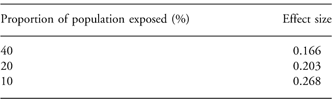
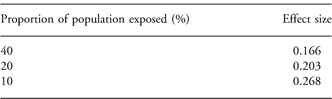
For a normally distributed quantitative trait (e.g. scores of expressive language at 18 months of age using the Mullen Scales of Early Learning),Reference Mullen 48 Table 4 shows that with a sample size of 1200 infants, a difference of 0.27 s.d. as effect size in a variable of interest between two groups of individuals (such as LBW and normal birthweight groups) can be detected with 80% statistical power. If we hypothesize that infants born with LBW have an expressive language score of 0.3 s.d. or more compared with normal birthweight infants, then our sample of 1200 infants would have a statistical power of 87.7% to detect a significant difference (α level of 0.05).
Minimum detectable effect size (s.d.) demonstrated with a statistical power of 80% for 1200 infants according to various exposure levels in the general population
Preliminary data and future directions
As the HBC is a unique and multifaceted cohort study for various purposes, including early detection of ASD, it is our mission to keep it available and useful for researchers as well as health-related professionals.
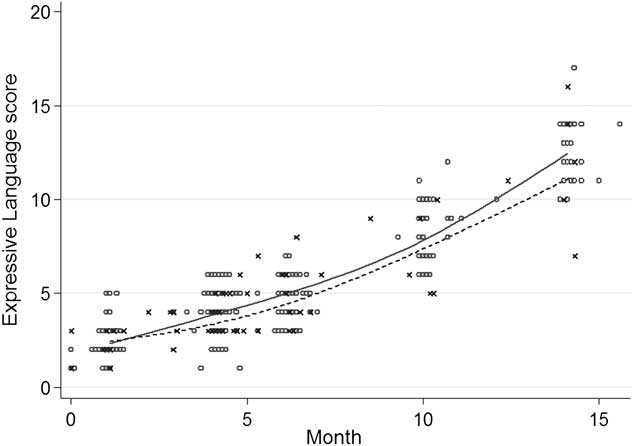
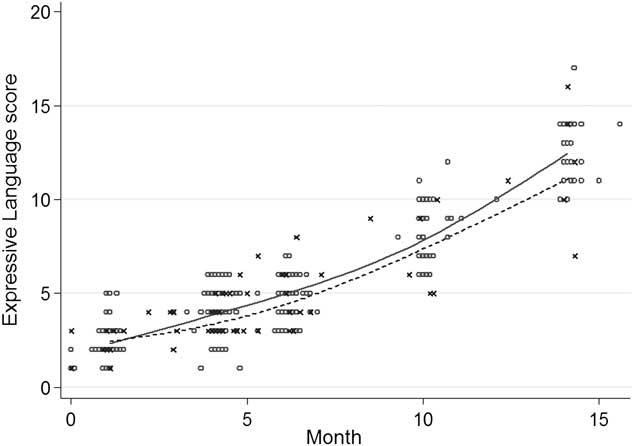
An example of the usefulness of the HBC data can be shown in an examination of language development in infants. Fig. 1 shows trajectories of expressive language during the first 14 months of life, using predicted values from a growth curve modelling allowing for repeated observations in the same individuals. This analysis was limited to term-born singletons to highlight the impact of LBW on subsequent development without any complicating effects from prematurity or unusual intrauterine hardship among twins. Low birthweight exerts detrimental effects on expressive language, as was expected from prior studies.Reference Yliherva, Olsen, Maki-Torkko, Koiranen and Jarvelin 55 , Reference Landry, Smith and Swank 56 Importantly, our preliminary data suggest that the divergence of language development in LBW infants from an expected growth pattern starts even after birth, not at a specific life stage. As the proportion of LBW in Japan is one of the highest (9.6%) among the countries in the Organisation for Economic Co-operation and Development, 44 the HBC is expected to provide invaluable information on various aspects of the relation between LBW and ill health, including effects on physical growth, cognitive development, as well as emergence of ASD.
Trajectories of expressive language during the first 14 months of life: the detrimental effect associated with low birthweight can be observed even in the early months in our preliminary data. Twins and those born at a gestational age of less than 37 weeks are not included in this analysis. The solid line and small open circles indicate the data for normal birthweight infants; the dotted line and x’s indicate the data for low birthweight infants.
Acknowledgements
The authors thank the following for their help and support: Dr Tetsuo Kato of the Kato Maternity Clinic, Hamamatsu; Professor Toshihiko Terao, the Dean of the Hamamatsu University School of Medicine; and Professor Satoshi Nakamura, the Head of the University Hospital of the Hamamatsu University School of Medicine. The authors also thank Dr Yoko Kamio and Dr Makiko Okuyama for their helpful comments on maintaining the HBC. This study was financially supported by a Grant-in-Aid for Scientific Research from the Ministry of Education, Culture, Sports, Science and Technology, Japan. Dr K. J. Tsuchiya is the recipient of a Grant-in-Aid for Science Research (C) (2) (No. 18591280) and a grant for the National Center for Child Health and Development (21S-3). Professor N. Takei is the recipient of a Grant-in-Aid for Science Research (B) (2) (No. 14370288). Professors T. Ohzeki and N. Takei, Drs K. J. Tsuchiya and T. Miyachi, and Kaori Matsumoto are the recipients of a grant for the National Center for Child Health and Development (19KOU-3). The HBC Study Team includes Ms Riyo Takabayashi, Ms Tsuruko Mori, Ms Hiroko Muraki, Ms Chie Shimmura, Ms Noriko Kodera, Mr Shun Takahashi, Ms Michiyo Nishizawa, Ms Yukiko Suzuki, Ms Rieko Sato, and Drs Keiko Iwata, Anitha A. Pillai, Thanseem Ismail, Hideo Matsuzaki, Shu Takagai, Genichi Sugihara, Mayuko Kamo, Yosuke Kameno, Mariko Shima, Yujiro Yoshihara, Tomoyasu Wakuda, Katsuaki Suzuki, Shigeyuki Yamamoto, Masayoshi Kawai, Kazuhiko Nakamura, Masatsugu Tsujii, Toshirou Sugiyama, Norio Mori, Yusaku Endoh, and Teruhiko Suzuki. The authors thank Drs Kazuhiro Sugihara, Motoi Sugimura, Kinya Takeuchi, Kazunao Suzuki, Toshiyuki Uchida, Yasuhiro Komura, Yuusuke Murakami, Yasuhiro Koumura, Yuuki Miyabe, Kyuya Hirai, Toshiaki Kaga, Yuki Nakamura, Rui Koizumi, Hirotake Murakami, Yukiko Kobayashi, Ayako Mochizuki, Masako Otome, Hiroko Tajima and all the attending obstetricians for enrolling pregnant women to participate in the study and collecting cord blood samples. The authors thank the chief midwife, Ms Kiyomi Hinoki and all the midwives and staff at the maternity clinic of the Hamamatsu University School of Medicine, for enrolling participants and facilitating recruitment. The authors also thank Drs Yuichi Nakagawa, Satoru Iwashima, Masanori Yamamoto, Eiko Nagata and all the paediatricians and staff at the Department of Paediatrics at the Hamamatsu University School of Medicine for collecting the medical history of the children, including the NICU data. As for taking care of the participating mothers and children suffering from difficult conditions, the authors owes much to help from local health care professionals, including Ms Izumi Kaneko and all the public health nurses and midwives from Hamamatsu City/Shizuoka Prefecture, Ms Tomoko Matsumoto at Nearai Gakuen and Dr Tomokatsu Yamazaki at Center for Developmental Medicine, Hamamatsu City.
Contributions
Drs K. J. Tsuchiya, K. Matsumoto, T. Miyachi and N. Takei participated in conceptualizing the study design, recruiting and diagnosing the study participants, and drafting the paper. Drs N. Kanayama, H. Itoh, K. Hirano and T. Ohzeki developed the methods of collecting information on pregnancy, foetus, childbirth and child development, in addition to facilitating data collections and providing critical comments on the draft. Final approval for submission to the Journal was obtained by all of the authors.
Statement of Interest
The authors have stated that there are no competing interests.
Appendix A. Detailed descriptions of data collection
In-depth interviews of pregnant women/mothers during pregnancy and after childbirth
-
• Demographic variables: used for analyses as potential confounders, as well as for keeping contact with participants for as long a period of time as possible.
-
o Identification of the participating pregnant woman/mother, her date of birth, age, postal address, nationality and native language, and contacts other than immediate family members, and the name, date of birth, age, gender, nationality and native language of the spouse (partner) and each family member.
-
o Identification of the child, including the name, date of birth, and gender.
-
o Identification of any change in the family members or their residences at each visit.
-
-
• Socioeconomic status: data collected, as indices of socioeconomic status are the educational history, annual income and occupational status. Studies suggest that lower socioeconomic status is predictive of developmental delay of children.Reference Pungello, Iruka, Dotterer, Mills-Koonce and Reznick 59 , Reference Stein, Malmberg, Sylva, Barnes and Leach 60
-
o Educational history and the schools from which the pregnant woman and spouse (partner) graduated.
-
o Annual income of the pregnant woman and of the household.
-
o Annual income of the household at 14 months of age of the child.
-
o Change of annual income during the last year at 14 months of age of the child.
-
o Occupational status of the pregnant woman/mother and spouse (partner) during pregnancy and at 1, 4, 6, 10, 14, 18, 24, 32, 38 and 50 months of age of the child.
-
-
• Social support: following questions were adopted from Kendler et al., 2005.Reference Kendler, Myers and Prescott 61 Minor modifications were made for ease of use. Social support is an important factor for perinatal mental health and depressive symptoms among women.Reference Kendler, Myers and Prescott 61 , Reference Robertson, Grace, Wallington and Stewart 62
-
o Emotional support: the pregnant woman is asked the following questions during pregnancy: ‘Is there anyone who listens to you if you need to talk about your worries or problems?’ ‘Does your spouse (or partner) listen to you if you need to talk about your worries or problems?’ ‘Is there anyone who understands the way you feel and think about things?’ ‘Does your spouse (or partner) understand the way you feel and think about things?’
-
o Instrumental support: the pregnant woman/mother is asked the following questions during pregnancy and at 1, 4, and 6 months of age of the child: ‘Is there anyone who goes out of their way to help you if you really need it?’ ‘Does your spouse (or partner) go out of their way to help you if you really need it?’
-
-
• Intention for pregnancy of the pregnant woman: we employed the method previously reported by D’Angelo et al. (2004)Reference D’Angelo, Gilbert, Rochat, Santelli and Herold 63 to categorize the pregnancy as ‘intended’, ‘mistimed’ or ‘unwanted’. Unintended pregnancy has been reported to be associated with low birth weight,Reference Eggleston, Tsui and Kotelchuck 64 , Reference Gipson, Koenig and Hindin 65 disturbances in maternal attachment towards children,Reference Goto, Yasumura, Yabe and Reich 66 , Reference Goto, Quang Vinh and Thi Tu Van 67 and maltreatment.Reference Sidebotham and Heron 68
-
• Smoking and drinking habits: maternal smoking is a well-known risk factor affecting intrauterine growth.Reference Bull, Mulvihill, Quigley and Agency 69 , Reference Ward, Lewis and Coleman 70
-
o Frequency of smoking and drinking of the pregnant woman, who is asked whether the use was either before pregnancy, during the first trimester, or during and after second trimester.
-
o Frequency of smoking of the mother and spouse (partner) and location of smoking (e.g. in a room with the child) at 1, 4 and 6 months of age of the child.
-
-
• Temperament: assessment of the parental sociability and emotional openness using the Broader Phenotype Autism Symptom ScaleReference Dawson, Webb and Schellenberg 71 of the pregnant woman and spouse (partner). The broader autism phenotype is a milder form of ASD that is seen among typically developed individuals but is shown to run within a family with an ASD proband.Reference Piven, Palmer, Jacobi, Childress and Arndt 72
-
• Medical history of the pregnant woman/mother and spouse (partner).
-
o History of childbirth of the pregnant woman: number of children born, number of stillbirths, artificial and spontaneous abortions, and the history of pregnancy and birth complications, e.g. prematurity or Caesarean section.
-
o History of physical illness and use of medical services of the pregnant woman/mother and spouse (partner), e.g. allergic disease, thyroid diseases, heart diseases, or head trauma, as examined both during pregnancy and the follow-up period.
-
o Use of medication, including supplements, of the pregnant woman, who is asked whether the use was either before pregnancy, during the first trimester, or during and after second trimester.
-
o History of mental illness of the pregnant woman and spouse (partner), including lifetime and current psychiatric diagnoses, based on an examination with the Structured Clinical Interview for DSM-IV Axis I Disorders (SCID-I).Reference First, Spitzer, Gibbon and Williams 73 Due to time limitations, we did not explore all possible psychiatric diagnoses, but focused on depressive disorders (major depressive disorder and dysthymia), bipolar disorder, schizophrenia and related disorders, alcohol related disorder, anxiety disorders (panic disorder with/without agoraphobia, obsessive and compulsive disorder, social phobia), anorexia nervosa and bulimia nervosa.
-
o Use of mental health services of the mother during follow-up.
-
-
• Medical history of the child
-
o Onset, duration and frequency of high fever, symptoms of common cold, including cough and nasal discharge or respiratory infections, and use of medical services, if any, for each visit during follow-up.
-
o History of specific conditions of the child, e.g. asthma, atopic dermatitis, allergic rhinitis, food allergy, mumps, rubella, Kawasaki disease, otitis media, febrile seizure, or head trauma during follow-up. To confirm that a child had asthma, atopic dermatitis, or allergic rhinitis, we adopted the Phase 3 Manual of the International Study of Asthma and Allergies in Childhood (ISAAC phase 3),Reference Ellwood, Asher, Beasley, Clayton and Stewart 74 which consists of 48 items.
-
-
• Nutritional status of the child
-
o Frequency of breast feeding at 1, 4, 6 and 10 months of age of the child.
-
o Timing of weaning and number of teeth at 1, 4, 6, 10, 14, 18 and 24 months of age of the child.
-
o Frequency and type of food intake at 14 and 38 months of age of the child: a short version of the Food Frequency Questionnaire, developed and validated by Tokudome and colleagues,Reference Tokudome, Goto and Imaeda 75 , Reference Tokudome, Goto and Imaeda 76 which consists of 47 items including typical Japanese foods. We modified this for brevity.
-
-
• Child development and behaviours
-
o Motor and language development: the Kinder Infant Development Scale,Reference Omura, Takashima, Yamauchi and Hashimoto 77 which consists of 117 items, is administered at 1, 4, 6 and 10 months of age; this scale covers six domains: gross motor, fine motor, sociability, receptive language, expressive language and feeding behaviours.
-
o Sociability (use of tools, gestures, social cues, imitation): Part 2 of the MacArthur-Bates Communicative Development Inventories (MCDI),Reference Fenson, Marchman and Thal 78 Japanese version,Reference Ogura and Watanuki 79 which consists of 64 items, is administered at 10, 14, 18 and 38 months of age of the child. Abnormality in sociability has been shown to be predictive of ASD diagnosis.Reference Rogers, Hepburn, Stackhouse and Wehner 40 , Reference Zwaigenbaum, Bryson and Lord 80 Originally, the MCDI was intended to be self-administered; we administered this as a face-to-face assessment instead.
-
o ASD screening: the Modified Checklist for Autism in Toddlers,Reference Robins, Fein, Barton and Green 46 Japanese version,Reference Kamio and Inada 47 which consists of 23 items, is administered at 10, 14 and 18 months of age. Predictability of ASD diagnosis has been shown in previous studies.Reference Zwaigenbaum, Bryson and Lord 80
-
o Developmental regression: some children with ASD have been indicated to show arrested or degraded development during the early stages of life.Reference Stefanatos 81 This is assessed with the Early Developmental Questionnaire,Reference Ozonoff, Williams and Landa 82 which is administered at 18 and 32 months of age. The original version consists of 25 items; we organized these into 9 items for brevity.
-
o Temperament and responsive behaviours: the Early Child Behavioural QuestionnaireReference Putnam, Gartstein and Rothbart 83 is administered at 18 months of age. The original version consists of 201 items covering three domains; we adopted two of the three domains (negative affectivity and effortful control). Scores in these two domains have shown to differentiate those with ASD from non-ASD siblings.Reference Garon, Bryson and Zwaigenbaum 84 , Reference Konstantareas and Stewart 85
-
o Adaptive behaviours: the Vineland Adaptive Behaviour Scale, the second edition (VABS-II)Reference Sparrow, Cicchetti and Balla 86 is administered at 32, 38 and 50 months of age. VABS-II contains five domains: communication, daily living skills, socialization, motor skills and maladaptive behaviour, and consists of 435 items, although the number of items administered differs depending on the age and adaptability of the child.
-
o ASD diagnosis: For those children suspected of having ASD, a semi-structured interview, the Autism Diagnostic Interview – Revised (ADI-R),Reference Lord, Rutter and Le Couteur 49 the Japanese version, is administered to the mother by two of the authors (KJT and KM), who underwent training by the developers of this instrument, and were judged to be reliable in its use.
-
o Sleep pattern: durations of night-time and day-time sleep, and the number and hours of night waking, were measured with the Brief Infant Sleep QuestionnaireReference Sadeh 87 at 10 and 32 months of age.
Face-to-face assessments of children
-
-
• Child development
-
o Hearing: acoustic examinations using an auditory brainstem response (ABR) test are conducted at 1–3 days after birth.
-
o Anthropometrics: height, weight and head circumference are measured at 1, 4, 6, 10, 18 and 38 months of age of the child.
-
o Cognitive development: an assessment using the Mullen Scales of Early LearningReference Mullen 48 is conducted at 1, 4, 6, 10, 14, 18, 24, 32, 38 and 50 months of age, which covers five domains of child development: gross motor, fine motor, visual reception, receptive language, and expressive language. This instrument is widely used in studies examining early child development, particularly developmental trajectories of children with ASD.Reference Landa and Garrett-Mayer 36 , Reference Zwaigenbaum, Bryson and Lord 80 A pattern of lowered scores in two language domains but with normal scores in other domains has been considered as predictive of ASD diagnosis.Reference Wetherby, Woods and Allen 34 , Reference Zwaigenbaum, Bryson and Rogers 39
-
o Neuropaediatric examinations of posture, muscle tonus, grasp and plantar reflex, Moro reflex optical righting reflex, Landau reflex, parachute reflex and hopping reaction are conducted at 1, 4, 6 and 10 months of age.
-
o Quantitative and qualitative assessment of eye tracking movement following visual stimuli on a PC screen are conducted either at 14, 18, 24, 32, 38 or 50 months of age, depending on the availability of the child. Abnormalities of eye tracking movement have been suggested to be associated with ASD diagnosis.Reference Jones, Carr and Klin 32 , Reference Klin, Jones, Schultz, Volkmar and Cohen 33
-
o Response to joint attention and response to name: a part of the Autism Diagnostic Observation ScaleReference Lord, Risi and Lambrecht 50 is applied at the ages of 10, 14, 18 and 24 months. Lack of responses to joint attention and/or name have been regarded as early behavioural diagnostic markers for ASD.Reference Clifford, Young and Williamson 37 , Reference Zwaigenbaum, Bryson and Lord 80
-
o ASD Diagnosis. The Autism Diagnostic Observation ScaleReference Lord, Risi and Lambrecht 50 is administered for screening positive children (i.e. children showing abnormalities either in the Modified Checklist for Autism in Toddlers, lowered scores in the receptive language or expressive language domains in the Mullen Scales of Early Learning, or abnormalities in clinical assessments). The assessment using this instrument can be conducted only by one of our authors (KM), who was trained by the developer and judged to be reliable in its use.
-
-
• Clinical assessment: Paediatricians with a sufficient experience in diagnosing ASD or other developmental abnormalities are invited to see the child with the examiner in charge whenever needed. The reasons for delayed or aberrant development are sought among staff afterward.
Self-completed questionnaires for mothers
-
• Postpartum depression: the Edinburgh Postnatal Depression Scale (EPDS),Reference Cox, Holden and Sagovsky 88 the Japanese version,Reference Cox and Holden 89 which consists of 10 items, is self-administered at 2, 4, 8 and 40 weeks after the delivery. Prior studies have indicated that a cut-off of 8/9 points is reliably applicable for Japanese women, with a sensitivity of 82% and specificity of 95%.Reference Yamashita, Yoshida, Nakano and Tashiro 90
-
• Parental stress related to child rearing: the short form of the Parenting Stress Index,Reference Abidin 91 the Japanese version,Reference Kanematsu, Araki and Narama 92 which consists of 36 items, is self-administered at 14 months of age of the child.
-
• Language development of the child – word recognition and expression: Part 1 of the MacArthur-Bates Communicative Development Inventories (MCDI),Reference Fenson, Marchman and Thal 78 Japanese version,Reference Ogura and Watanuki 79 which consists of 453 items, is self-administered at 14 and 38 months of age of the child.
Medical records
-
• Course during pregnancy
-
o Routine maternal health checkups during pregnancy: prepregnancy BMI, height, body weight, symphysis-fundus height, abdominal circumference and laboratory tests including proteinuria, glycosuria, pretibial oedema and anaemia are performed at each visit (usually about 10 visits during the course of pregnancy).
-
o Foetal size and weight are estimated using ultrasound measurements during the second and the third trimester (usually more than five examinations during the course of the pregnancy).
-
o History of infectious diseases of the pregnant women: assays were made for maternal serum IgG, IgA and IgM antibodies to Parvo Virus B19, cytomegalovirus, and Chlamydia trachomatis, and vaginal smears were examined for Streptococcus agalactiae.
-
-
• Perinatal factors and examinations
-
o Date, time and gestational age at birth.
-
o Presentation and mode of delivery, e.g. normal or breech, vaginal or Caesarean, use of vacuum/forceps.
-
o Long and short diameters and weight of placenta.
-
o APGAR score and arterial blood pH at birth.
-
o Types and dosages of anaesthetic agents used during the delivery.
-
-
• Perinatal child-related factors and examinations
-
o Height, weight and head circumference at birth.
-
o Use of NICU: Diagnosis given, treatment and duration of the stay.
-
o Frequency and type of feeding (i.e. breast v. formula) for the infants during the first 5 days after the delivery.
Biological samples
-
-
• 10–30 ml blood (according to availability) from the umbilical vein to collect serum samples and, in the case of Caesarean section, an additional 10–30 ml to collect plasma samples. The normal procedure to collect serum involves keeping the sample at room temperature for 30 min after collection, centrifuging at 3500 rpm for 10 min, dividing into 200 μl aliquots, and storing at −80°C until use.
-
• For mothers who undergo a Caesarean section and provide additional consent, sample tissues of the placenta and subcutaneous lipid layer are collected.
-
• DNA samples are collected from the participating child and the parent at the age of 24 or 32 months of the child by means of buccal swabs.
Appendix B. List of items measured, measuring instruments and timing of the measurements. See also Appendix A

( ): Collection of this information is not conducted in all of the participants.