The history of the Pediatric Cardiology Fellowship at Johns Hopkins
Johns Hopkins Hospital is one of only a handful of institutions with a rich and long-standing history as a leader in Paediatric Cardiology training. In 1930, Dr Helen Taussig became the head of the cardiac clinic at Johns Hopkins, one of four specialty clinics created by Dr Edward Park, Chair of Paediatrics.Reference McNamara, Manning, Engle, Whittemore, Neill and Ferencz 1 The first paediatric cardiology fellow to train under Dr Taussig began in 1930, although regular acceptance of fellows did not occur until the 1940s.Reference Anne 2 By 1965, as one of the founding programmes, Johns Hopkins achieved accreditation for its fellowship programme in paediatric cardiology.Reference Anne 2 After 13 years of becoming the head of paediatric cardiology at Johns Hopkins, Dr Taussig collaborated with Dr Alfred Blalock and Dr Vivien Thomas in recognising that the common cyanotic lesion, tetralogy of Fallot, was associated with decreased pulmonary blood flow. This led to the concept of performing a connection between the aorta and the pulmonary circulation, and the Blalock–Taussig shunt operation was first performed in 1944.Reference McNamara, Manning, Engle, Whittemore, Neill and Ferencz 1 , Reference Engle 3 Appeals came from doctors all over the world to visit Johns Hopkins to learn to diagnose tetralogy of Fallot. Dr Taussig had insisted that to learn tetralogy of Fallot one had to study the entire body of knowledge that comprised paediatric cardiology, and in the late 1940s she felt that this required a minimum of 1 year. Today, of course, with echocardiography and interventional catheterisation, plus the greater participation in research by trainees, this has become 3 years of training.Reference McNamara, Manning, Engle, Whittemore, Neill and Ferencz 1 To support her trainees, Dr Taussig applied to the National Institutes of Health and the Children’s Bureau to fund academically oriented clinical and research training in congenital cardiac defects.Reference McNamara, Manning, Engle, Whittemore, Neill and Ferencz 1 This innovative spirit and collaborative attitude became ingrained in her fellows and the programme itself. Of the 130 fellows Dr Taussig trained, 34 ultimately became division heads of either cardiology or paediatric cardiology.Reference Engle 3 Dr Taussig’s dedication to her patients, intellectual curiosity, and propensity for lifelong learning have become pillars of the fellowship programme at Johns Hopkins.
Although the Johns Hopkins Pediatric Cardiology Fellowship remains an important element of the Helen B. Taussig Congenital Heart Center, it resides in a moderate-sized Children’s Hospital. In keeping with this setting, over the past two decades, the programme was re-designed to align with institutional strengths. The programme has sought to train the next generation of academic paediatric cardiologist as well as emphasise collaborative research and utilisation of mentors as well as laboratory and clinical resources throughout the entire institution. This required a careful balance between excellent and complete clinical training and protected time for research and academic activities. The programme has also permitted individualised career paths in fields such as cardiac genetics, gene therapy, and quality improvement. By maintaining this model, the fellows become expert clinicians, independent learners, and researchers, while allowing them the individuality to shape and mold their fellowship.
In the ever-changing landscape of medical education, how do we combat the threats to training? A fellowship should have two very basic objectives, to train fellows to be capable and thoughtful paediatric cardiologists, but also prepare them for an individual career pathway. The goals for the fellowship programme are to facilitate trainees in learning basic clinical competencies of their field, develop an advanced expertise or focus in a clinical area, learn to work in teams, supervise and teach, practice quality improvement, select and utilise mentors/training strategy, complete training in didactic research skills and complete scholarly project, as well as prepare for lifelong learning. A programme must also prepare the trainee for what is to come after fellowship such as deciding on a setting for long-term career focus, inpatient versus outpatient focus, area of clinical focus, such as non-invasive imaging, cardiac catheterisation, and electrophysiology, major components of career, such as clinical, research, teaching, and administration, and developing a strategy for work life balance. So how does a programme effectively accomplish this?
Johns Hopkins has a breadth of research and scientific mentors, laboratories, and facilities. The programme leadership strives to encourage fellows to be curious and develop individual academic interests and then match them to mentors and training opportunities to undertake well-constructed studies. The research training incorporates a formal didactic course on clinical research design for all fellows. Fellows interested in primarily clinical research are encouraged to seek projects and mentors related to their clinical interests. Whether fellows are interested in clinical research or laboratory/translational research, they may apply for a position on institutional National Institute of Health T32 programme. This programme was designed specifically for fellows in cardiology and intensive care fellowships in paediatrics. As such, it was recognised that 4 full years would be necessary to obtain both clinical and research training. If selected to participate in this programme, fellows commit to completing a 4th year of fellowship, which provides funding for their 3rd and 4th year as well as additional funds for research supplies and conference attendance. A seminar programme open to all fellows is aligned with this programme. The mentors for these grants come from a wide range of clinical and basic science researchers, all who form mentorship teams for the individual trainee. This helps the trainee establish a solid foundation in medical research with an excellent project and career development support. Through this programme, trainees are able to develop studies and interests that will propel them through their career. It also helps to put them on the road to obtaining other highly sought-after grants from organisations such as the American Heart Association or National Institutes of Health.
Clinical and didactic components of education
Education is another major pillar in the foundation of any successful fellowship. At Johns Hopkins, several educational initiatives have been developed that support and enrich our fellows. In recent years, there has been a transition from traditional teaching styles to newer principals of adult learning. At Johns Hopkins, there were earlier generations of trainees who were exposed to the teaching style “see one, do one, teach one” – for example, Dr Taussig became head of the paediatric cardiology clinic in 1930 2 years after finishing residency. This mantra is still present in current medical teaching, but modern education theory has led to an evolution in teaching methods.
By the end of the 19th century, it was becoming apparent that adults had different learning needs than children and adolescents. Modern theories of adult education are based mostly on Blooms taxonomy of learning, which was created in 1956.Reference Neubauer and Murphy 4 This was conceptualised as a pyramid with increasing levels of understanding the higher you were on the pyramid with evaluation being the highest level of achievement. The main focus of Bloom’s taxonomy was to improve students’ learning and thinking rather than memorisation. In recent years, the concept of adult learning has redefined our educational theories as well as how we impart knowledge. Owing to this and the new concepts of adult learning, many new forms and methods of education have emerged. In 2001, Bloom’s taxonomy was reconfigured by Pohl to have creating as the highest level of learning.Reference Anne 2 Dr Fink’s revised taxonomy is much more directed at the self-learner, and is therefore directly applicable to medical education. His theory incorporates many factors including fundamental knowledge, learning how to learn, caring, application, and others, all of which combine to create significant learning.Reference Anne 2 This can be seen well in correlation of medical procedures. The old rhetoric was “see one, do one, teach one”. This, to some extent, is still the case but has been flushed out to include knowledge, competence and performance, and action. The concept of andragogy versus pedagogy is another aspect of adult education. Pedagogy translates as “to lead a child” and is the older, hierarchal method of teaching where the teacher dictates to the student what they need to know with no further explanation. In 2005, Knowles et al.Reference Pohl 5 described andragogy (man leading) as the theory and practice of educating adults. Andragogy includes seven principles, for example, adults must want to learn, learn effectively only when they are free to direct their own learning, and have a strong inner motivation to develop a new skill or acquire a particular type of knowledge. Adults will learn only what they feel they need to learn. Adults are practical in their approach to learning; they want to know “How is this going to help me right now? – Is it relevant (Content, Connection and Application)”. Adults learn by doing, as children learn by doing, but active participation is more important among adults. Adult learning focusses on problems and the problems must be realistic. Children learn skills sequentially. Adults start with a problem and then work to find a solution. Experience affects adult learning. Adults have more experience than children. This can be an asset and a liability. Adults learn best in an informal situation. Children have to follow a curriculum. Often, adults learn by taking responsibility, by the value and need of the content they require to understand, and the particular goals it will achieve; being in an inviting environment and having roles as an active participant in the learning process makes it efficient. Adults want guidance. Adults want information that will help them improve their situation or that of their children. They do not want to be told what to do. They want to choose options on the basis of their individual needs.Reference Knowles 6 It is no mystery that the adult attention span is short, somewhere in the order of 7 min.
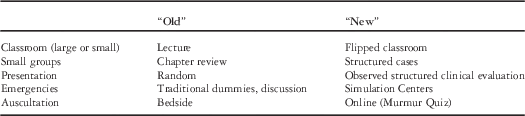
How have we tried to apply these concepts and techniques at Johns Hopkins? Our teaching methods and styles have adapted to engage adult learners and make them active participants in their education. We use a combination of flipped classroom, structured case-based small-group learning, observed and structured clinical examination, simulations, and innovative educational technology. Our flipped classroom for paediatric cardiology consists of multiple case scenarios or activities where the learners are actively engaged in the teaching of one another and the teacher acts more as a facilitator to guide the discussion. For this to work best, it is expected that the learners have done some pre-work either by reading sections of textbooks or watching online lectures. In a flipped classroom, the learners do the majority of talking, not the teacher, and it is an excellent way to gauge the learner’s knowledge and compression of the anatomy and physiology. Structured case base learning is a facilitator-led discussion of a clinical scenario. Case-based scenarios are designed to mirror the way patients actually present with history, physical examination, and other information leading to the diagnosis and then management rather starting with the diagnosis. Children do not present by saying I have a coarctation of the aorta or I have a ventricular septal defect.
Observed structured clinical examinations began as a way to improve clinical examination skills with model patients who always had the same history and physical examination. Within the Johns Hopkins fellowship programme, the idea is to have “identical patients” by having fellows review and discuss an echocardiogram of a patient in a style of an oral board examination. Fellows are provided an echocardiogram to interpret and then present the case as if they were discussing it with the surgeon, intensivists, and also the parents. The identical case is reviewed individually by all fellows in the same training year. Once the fellow reviews the images and presents an assessment, they are evaluated on a structured rubric by attending faculty cardiologist and senior sonographers. After all fellows have presented, they receive the evaluation forms and direct verbal feedback. This has not only been an invaluable educational experience for the fellows, but has also aided in identifying gaps within our curriculum.
As with most academic medical institutions, simulations have become a huge aspect of medical education. These simulations are becoming more lifelike each year because of advances in technology. In 2006, Paul Brady published an article detailing the history and future directions of medical simulations. 7 He discussed why simulations have become popular, as well as the benefit and application of simulations. At Johns Hopkins, we frequently use simulations throughout the year that range from running mock codes with standard cardiopulmonary resuscitation all the way up to extracorporeal cardiopulmonary resuscitation simulation. The simulations are done both in our Simulation Center, a large dedicated facility with one OR room, two ICU simulation rooms and 12 exam rooms, and in the ICU and on the regular floors. Running the simulations in different environments is extremely helpful. The Simulation Center allows for more scripting of the simulation and for detailed analysis and debriefing of the scenarios. Simulations in the hospital allow for finding “real world” problems such as knowing where all the equipment is, allowing more people to participate as it is the clinical setting, and also the possibility of being a surprise so that the timeliness can be assessed. We are also fortunate to provide the Sadie Abell advanced simulation boot camp every year, which is a 3-day advanced paediatric intensive care and cardiac intensive care boot camp. Paediatric and critical care trainees practice on scenarios such as the recognition of significant tamponade, requiring immediate drainage, management of extracorporeal membrane oxygenation raceway rupture, postoperative junctional ectopic tachycardia, ventricular fibrillation on extracorporeal membrane oxygenation, and occluded Blalock–Taussig shunts.
We have also started to incorporate more online and adaptive forms of education. One of our Paediatric Cardiologist, W Reid Thompson, recently won the Johns Hopkins School of Medicine Innovations in Medical Education Award for his work in cardiac auscultation teaching. In the late 1990s, Dr Thompson developed a website called MurmurLab.org, a virtual cardiology clinic allowing students and practitioners to listen to a wide array of heart sounds and murmurs, all of which are actual patient recordings and not computer-generated facsimiles. This site became extremely popular with students and clinicians alike, as a means to improve their cardiac ausculatory skills. Dr Thompson is one of the country’s leading advocates for the use of the stethoscope and its utility as an educational instrument. He was recently cited in an article by the Washington Post, which was debating the utility of the stethoscope.Reference Bradley 8 In February of 2016, he, along with one of our fellows Gary Beasley, launched a new site call MurmurQuiz.org. This site has many similarities to the original programme in that it can function as a virtual cardiology clinic and now includes the capability for a user to quiz themselves and track their progress. MurmurQuiz allows for immediate learner feedback as well as active learner engagement. The combination of these two sites will continue to educate students and practitioners for many years.
The Johns Hopkins fellowship programme seeks to provide the highest quality education, but also to encourage fellows to become active teachers themselves. Each fellow is expected to take an active teaching role with the residents and medical students who rotate through our ward service as well as our clinic. This could be in the form of traditional lectures, but even more importantly they should lead bedside teaching as well. They are also expected to give a minimum of 6–8 lectures a year to the residents and staff or ward team. These lectures are to be of high yield and are usually on topics such as basic electrocardiogram, basic echocardiogram, and cardiac emergencies. On the basis of individual interests, some fellows undertake active educator roles beyond standard expectations – for example, several have leading small group simulations within the Johns Hopkins School of Medicine curriculum as well as are providing small group lectures on CHD and cardiac auscultation.
The focus on using methods of educating adult learners has some disadvantages. They tend to be more time consuming, may be more dependent on technology, and use of faculty time and specialised facilities can be expensive. The reliance is on less-directed discussion rather than didactics, which can lead to loss of control of the topic; however, in the long run, these teaching styles are ultimately better for the adult learner and should become the standard for medical education. A summary of how the Johns Hopkins Pediatric Cardiology Fellowship is transitioning from older to newer methods is illustrated in Table 1.
Comparison of previous teaching style vs newer adult learning principals.

Paediatric cardiology has developed and evolved since Dr Taussig first helped to pioneer the specialty. The fellowship at Johns Hopkins continues to evolve along with the field and adapt to current learners’ needs. Over the past 50 years of being an accredited fellowship, the programme has many accomplishments, but has also improved on the basis of evaluation of elements that were not successful all the while with an eye on the future and how best to serve our patients, colleagues, and the specialty in the tradition of Dr Helen Taussig, Dr Alfred Blalock, and Dr Vivien Thomas.