In November 1951 the general secretariat of the Council of Europe presented a memorandum on the prospect of a European Postal and Telecommunication Union. It claimed that ‘the meshes of the net of Universal Postal Union services, as well as those of the International Telecommunication Union, are still far too large for the European continent’.Footnote 1 Founded in 1949 to strengthen peace and democracy in Europe, the Council of Europe launched a variety of initiatives and explored practical solutions for European cooperation, sometimes also drawing on proposals from the past.Footnote 2 In fact, almost ten years earlier, in Vienna in October 1942, Friedrich Risch, a director of the German postal administration Deutsche Reichspost, used almost exactly the same words in claiming that ‘the meshes of the net of Universal Postal Union services and those of the International Communications (sic) Union are too large for our relatively little Europe’.Footnote 3 The 1951 memorandum echoed the rationale of a European convention dating from the highpoint of Nazi Germany's rule over large parts of Europe during the Second World War. The vision and the basic argument were the same: technical cooperation had to be upgraded to the present time needs for a stronger, more integrated Europe. Although it dropped the quotation marks along the way, the memorandum nevertheless explicitly cited the precedent of this European union.
In fact, the hegemony of the Third Reich facilitated transnational connections and circulations, particularly when it came to the continent's technological integration. This collective experience shaped the memories of those who sought to rebuild Europe after 1945. Transportation, an infrastructure on which postal services relied heavily, is a good example. Despite their implication in the transportation of millions of Jews to the death camps, railway experts and managers claimed immediately after the war that their cooperation had only been of a technical nature, and very effective. Even Louis Armand, who had been active in the French Resistance, stressed that German railway officials had (allegedly) resisted the ‘Nazi infection’ – pulling a veil over the variety of forms of collaboration and resistance of railway workers in Germany and France.Footnote 4 As far as they were concerned the National Socialists had carefully silenced the interwar plans and debates regarding a European postal union in the genealogy of their own project. All in all, dealing with the past was something sensitive in these years even when it came to international technical cooperation. Due to the war there were many memory gaps and more or less hidden links in public discourses obscuring continuities from the interwar to the post-war periods.
This article will investigate such continuities in the practices governing European flows of information (letters, postcards), goods (parcels) and money that circulated across borders through postal networks, as well as in the proposals to reform them with a view to creating a continental postal union synonymous with peace and prosperity – or, in other words, building Europe on mail. It will do so from the late 1920s, when the first plan to unite the postal systems of Europe emerged, to the late 1950s, when cooperation became institutionalised as the European Conference of Postal and Telecommunication Administrations (Conférence européenne des administrations des Postes et Télécommunications; CEPT), an international organisation that still operates today.Footnote 5 With regard to economic governance more generally, historians have highlighted continuities between the interwar and post-war periods and have demonstrated how interpersonal ties and the circulation of ideas grounded in the 1920s and 1930s contributed to shaping the new landscape of Community institutions.Footnote 6 Research on continuities in governance practices including formal institutions, norms and regulations adds another crucial dimension. It shows that multiple forms of European cooperation predated and survived the creation of the present-day European Union (EU).
However, the existing literature on the governance of European communication networks has treated this topic with a narrow focus on the post-war period.Footnote 7 On the basis of fresh research drawing on British and French postal and diplomatic archives, as well as the printed documents of international organisations and newspaper reports, this article will argue that such a narrow focus ignores two kinds of historically meaningful continuities: the first a longer genealogy of plans to build Europe on mail and the second common threads of persistent governance practices based on a strong preference for expert-driven cooperation and non-binding recommendations. New plans made after 1945 were intended to build on old practices, although these practices instead ended up taking over and shaping the newly-created organisations. In other words, the envelope was new, not the content.
The first section will briefly discuss the Universal Postal Union, the international organisation created in the nineteenth century, along with its evolution up to the 1920s. The second section will show how proposals and debates to create a European Postal Union gained a great deal of momentum during the interwar years and the Second World War. The third section will explore how these developments impacted post-war plans. Finally, the fourth section will argue that the new governance framework that emerged at the end of the 1950s represented an institutional envelope encompassing a postal Europe that had more or less already existed before the war.
Old Practices: A Deeply Rooted but Fragile International Postal Regime
In the nineteenth century, postal operators were increasingly organised nationally and turned into nation building institutions.Footnote 8 By the end of the century transnational actors like the Thurn und Taxis family had been marginalised by national public services. In all European countries postal administrations were in charge of a monopoly, owned and run by the state. As in the United States, European postal services were amongst the largest if not the largest organisations in their respective countries.Footnote 9 They employed hundreds of thousands of workers to collect, transport, sort and deliver what individuals and businesses wanted to write or send to each other. Postal services constituted the main channel for long distance communication, above all cross-border communication, as compared to the more expensive telegraph and telephone. They integrated different transport modes – from the postmen on foot to automobiles, trains and planes – in order to reach the most remote parts of countries. Indeed, images of postmen distributing letters under different natural and climatic conditions, and doing so while using a variety of means to reach their destination, became a way of representing and solidifying the very notion of national community in the public mind.Footnote 10 Rural populations along with postal worker unions forged the alliance that stood behind what has been termed the ‘postal-industrial complex’.Footnote 11 All in all, postal administrations interacted continuously with the state, and through their houses, uniforms and stamps acted as a vehicle for its imagination in everyday life.
At the same time, postal administrations pioneered intergovernmental cooperation. From 1874 onwards, multilateral technical, commercial and operational agreements smoothed the international circulation of mail within the framework of the Universal Postal Union (UPU). Before the First World War its members achieved a high degree of standardisation: customers within the UPU were charged only once for a service, these charges tended to drop and converge around the world and postal administrations no longer bargained cost and revenue sharing. Postal administrations co-constructed their national and international services, building their own postal world. They were infrastructures of nationalisation and globalisation at the same time. International law specialists and supporters of the League of Nations alike saw the UPU as a ‘complete success’ of intergovernmental cooperation.Footnote 12 Experts managed to design and develop an international regime synchronising national and international interests.
The UPU's territorial coverage expanded from thirty-seven million square kilometres in 1874 to 113 million by 1906, not least because of continuing colonial expansion. This spatial growth, together with the inflation following military and reconstruction expenses during and after the war, nevertheless created conditions for a fragmentation of this integrated and liberal organisation. The UPU survived, although the postal landscape was much more heterogeneous after the First World War than it had been before. In many countries, international rates became prohibitively expensive, so that some users called for reforming the system.Footnote 13 The economic crisis of the 1930s prevented such change, however.
Despite this fragmentation, postal officers continued to be proud of the UPU. In 1924 they celebrated in great pomp its fiftieth anniversary in the Swedish parliament, the royal palace and the streets of Stockholm. They strongly rejected attempts by the League of Nations and other international organisations, such as the International Chamber of Commerce created in Paris in 1919, to influence their work.Footnote 14 The Chamber repeatedly complained that it could take part in all diplomatic conferences dealing with international commerce, except in the postal field.Footnote 15 In Brussels in 1938 the director of the French postal administration again asserted that ‘the congress had to deliberate in full sovereignty and with full independence; for this reason it has to keep its present composition reserved only to delegates of Postal Administrations’.Footnote 16 In other words, these experts cherished their autonomy and strongly believed that linking networks across borders would make peace more secure, provided that experts rather than politicians or users as represented by the Chamber were in control of the process.Footnote 17 Arguing that scientific, technical and administrative rationality could curb political passions, this form of technocratic internationalism defined an apparently non-political form of governing transnational and international relations.
New Plans: Reforming European Postal Governance until 1945
Plans to further integrate postal networks and to lower rates across Europe were on the agenda of intergovernmental negotiations three times during a period of just over ten years, between 1929 and 1942. Between 1929 and 1931 a coalition of liberal Europeanists – mainly from the International Chamber of Commerce and various associations such as the International Committee for a European Customs Union and the Comité d'action économique et douanière in particularFootnote 18 – pushed their postal projects to the forefront of the so-called Briand Plan, a memorandum that French Foreign Minister Aristide Briand presented to his European counterparts in the League of Nations in May 1930. In his speech before the League's General Assembly in Geneva on 5 September 1929 Briand argued for a ‘kind of federal link’ between Europeans. In response to him the German Foreign Minister Gustav Stresemann suggested creating new links, such as ‘one money and uniform stamps’.Footnote 19 At this point some countries had already decided to once again seek greater uniformity in the postal field. They signed bilateral agreements and even created or began preparing regional postal unions, for instance in Scandinavia (1919), and particularly where borders had multiplied after the end of the war, such as in Central Europe (1935).Footnote 20 A pan-continental precedent existed elsewhere in the Pan-American Postal Union, which was originally founded by South American countries in 1911, and then enlarged to include Central and Northern American countries in 1921. The idea of establishing a pan-continental postal union in Europe had already been discussed in the international congresses of national chambers of commerce before the First World War and had reappeared in the 1920s.Footnote 21 However, the Briand Plan marked the first time that a government officially proposed building a ‘European Posts, Telegraphs and Telephones [PTT] regime’, incidentally linking within the same institution two sectors (post and telecommunication) that were regulated by two different organisations on the world level, namely the UPU and the International Telegraph Union.Footnote 22
The associations mentioned above soon started fleshing out this proposal and lobbying for it. The European Postal Union, as they called it, would have consisted of an international office and periodical conferences of experts politically overseen by governments. It would have been in charge of maintaining a system built around a single shared uniform rate that was more favourable than the UPU standard, as well as common stamps issued throughout Europe.Footnote 23 Its goals were both economic and political: erasing a barrier for users engaged in cross-border commercial relations on the one hand and conveying the idea of Europe to millions of people on the other. It seemed that Europeanising mail would have major effects given the daily connection of postal networks across societies. ‘The psychological effects of reduced rates on European correspondence would be invaluable’, the International Chamber of Commerce argued.Footnote 24 Furthermore, it seemed easy to enforce when compared to other proposals listed in the nine main application points of the Briand Plan.Footnote 25 As the director of the Swiss postal administration ironically put it: ‘as one generally considers that a European postal union would be relatively easy to achieve, it is not surprising that the plan of this union is the first to emerge from the still vague idea of a tighter European collaboration’.Footnote 26
The tone of this note reflected a larger consensus among the directors of the Swiss, French, British and German postal administrations, who confidentially wrote to each other to build a common front of opposition. They complained about a costly project which was also dangerous for the UPU's future. For the Frenchman Maurice Lebon, who was the first to warn his colleagues, the rate reduction within Europe would lead to an increase in traffic, but one that would fail to offset a major loss in revenues.Footnote 27 And with the Pan-American Union already having ‘dissolving effects’, he worried about the implosion of the UPU. The British Postmaster General Frederick Williamson fully shared his concerns.Footnote 28 For him, in the context of post-war inflation and postal rates increases, the priority was the restoration of penny postage at the national level, which a reduction in European rates would make impossible. Facilitating communication within national borders and empires came first, and international mail only second. Later Williamson also warned against a possible embrittlement of the UPU:
the establishment of such a Union at the present time would be a reactionary move. We hold that the gradual extension of the Postal Union to include the whole world, as it now does, has been one of the most beneficent methods of the international co-operation which has ever been developed. It is the only case in existence of absolutely world-wide co-operation on any subject.Footnote 29
Once he was sure that his colleagues agreed with him, Lebon convinced the French Posts and Telegraphs minister to block the project.Footnote 30 In the end the Briand Plan was subject to the effects of the Great Depression and the rising tide of (economic) nationalism. The League of Nations Commission of Enquiry for European Union that had been established to address the Briand Plan stopped meeting before it had any opportunity to discuss the proposal for a postal union.
At the same time, discussions within the International Chamber of Commerce also failed. Sir Geoffrey Clarke, a member of the British section of the Chamber and a former director-general of Posts and Telegraphs in British India who had campaigned after the war for ‘the reintroduction of Imperial penny postage’ within the British EmpireFootnote 31, warned Williamson that:
it is quite probable that at a small committee meeting in Paris next month consisting almost entirely of Frenchmen who are interested in this matter, the proposals will be carried unanimously, and though the Postal Committee of the International Chamber may not be a very formidable body, it would be just as well to keep its members from making fools of themselves.Footnote 32
Yet it soon became clear that this would not be such an easy task. There were multiple divisions. In Germany, as it happened, postal officials opposed the project, while their political head, the German Posts and Telegraphs minister, supported it.Footnote 33 During the meeting itself some postal officials also expressed a keen interest in the matter. Karoly von Forster from Hungary and Gunnar Lager from Sweden embraced the idea, along with experts from Yugoslavia and Czechoslovakia. Lebon and Clarke nevertheless managed to keep the situation under control. They had earlier received the support of Karl Sautter, who had represented Germany at the UPU congress in London in 1929, and who decided to boycott the meeting. According to him, ‘it will be the task of the administrations concerned to go forward at the present time within the limits of the Universal Postal Union, in order to cut the ground from under such undesirable separatist efforts’.Footnote 34 Discussion ended with the resolution to lobby the postal administrations to convene a meeting of expert officials on the prospect of a European postal union.Footnote 35 From that point forward, indeed nothing could or should happen.
At the initiative of the League's General Assembly, the Commission of Enquiry for European Union experienced a short revival in 1937–8. The French ministry of foreign affairs instantly unearthed the first plan for a postal union.Footnote 36 The International Chamber of Commerce still supported the idea, and others took it up with different objectives. For instance, in his widely sold book Union Now, published in 1939, the American journalist Clarence Streit proposed the creation of a federation of North Atlantic democracies. According to him, this union should pool resources in five key fields: citizenship, defence, trade, money and ‘postal and communications systems’.Footnote 37 ‘Uniting the postal services’, Streit claimed, ‘seems to present no serious problem’.Footnote 38 It seemed like a necessary step to unifying the new polity:
there is no service to our freedom’, Streit argued, ‘in continuing a system whereby the believer in free speech in Lyons must pay to send a letter to the believer in free speech in Geneva three times what he pays to send it to the believer in free speech in more distant Cherbourg.Footnote 39
Once again, French and British expert officials opposed the project. The correspondents were no longer the same, but the ideas they defended had not changed. Regarding the British, Postmaster General Frederick Williamson, who had held this job since 1922, retired in 1938. Upon taking control his successor explained to Geoffrey Clarke: ‘you can take it that the attitude of the UK Post Office towards this question has not changed in the meantime, and that we are as strongly opposed to the idea [of a European postal union] as we were in 1931’.Footnote 40 In France, Edmond Quenot replaced Lebon in 1935. He explained to his minister that the European postal administrations were already cooperating on their own within the framework of the UPU, above all in the new promising field of airmail, and that while such important partners as Germany and the Soviet Union had withdrawn from the League, technical cooperation should be kept out of international politics.Footnote 41 Rising tensions and the outbreak of the Second World War ended the work of the Commission of Enquiry for European Union, and with it the possibility of a second debate about a postal union.
Having said this, such plans experienced a surprising revival in the middle of the Second World War, in the new context of Nazi Germany's dominance over much of Europe. Plenipotentiaries and observers from nineteen countries gathered in Vienna in October 1942 to sign an international convention, consisting of eleven articles that created a European Postal and Telecommunication Union (EPTU).Footnote 42 The government in Berlin took the matter so seriously that it informed its Japanese ally of its plans in advance.Footnote 43 The EPTU was the ‘most significant’ case of Nazi German internationalism – a strategy that was deployed before the outbreak of the war and that culminated in 1942, as it did in several other technical domains as well, such as forestry or welfare policies.Footnote 44 It consolidated a series of bilateral agreements signed by Nazi Germany since 1941 with countries under its domination.Footnote 45 Ministers and delegates highlighted its economic benefits, but even more so its psychological effects. The fascist Italian PTT minister, Giovanni Host-Venturi, claimed that it would foster ‘true European solidarity’.Footnote 46 Gunnar Albrecht, who since 1919 had served as the first director of the independent postal administration of Finland, which was allied to Nazi Germany, also praised this initiative. He presided over the congress and expected that it would encourage a ‘feeling of brotherhood among the peoples of Europe’.Footnote 47
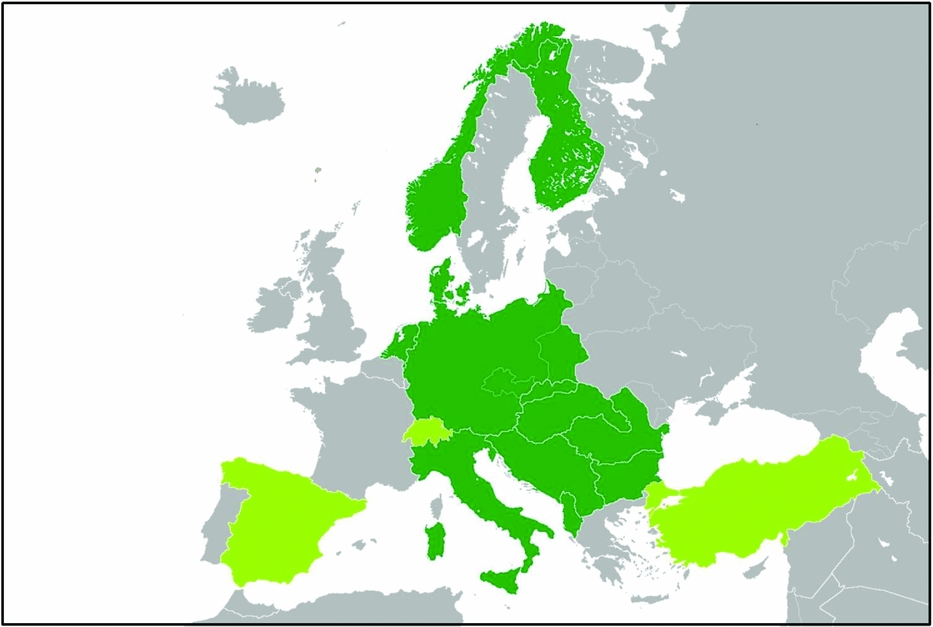
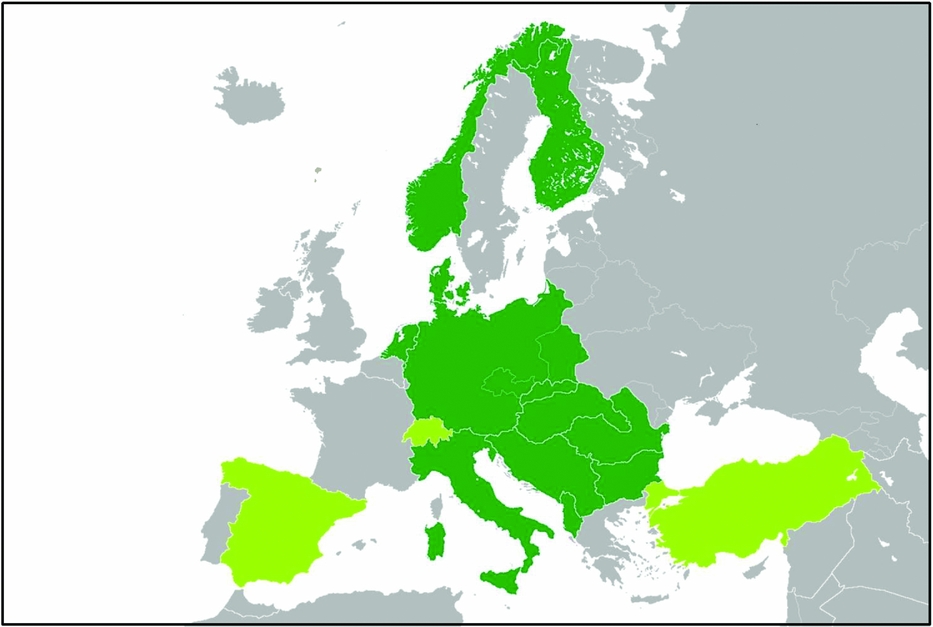
In principle the EPTU was open to ‘any European country, or one bordering a European country’.Footnote 48 Europe was not defined, but as a matter of fact it excluded countries at war with Nazi Germany, which were not invited. The EPTU actually encompassed only countries ruled directly or indirectly by the Reich as well as its European allies, although there were some exceptions. Occupied Greece did not attend. The Vichy regime hesitated to participate and in the end was simply not invited, as this proved too good an opportunity to sweep away symbols of French influence inherited from the nineteenth century. Instead of French and Gold Francs, the official languages within the union were to be German and Italian, and the official money of account the Reichsmark.Footnote 49 Belgium was also not invited while other neutral countries were, with some coming and others not. Turkey, Spain and the Holy See sent observers rather than delegates, and in the end did not sign the convention. Switzerland did the same after careful consideration of the functional benefits and the financial and political disadvantages of such a union.Footnote 50 Portugal and Sweden preferred to send no one to the congress. Despite these mixed results the German PTT minister, Wilhelm Ohnesorge, left Vienna satisfied and echoed Nazi Germany's instrumental use of ‘Europe’, which was common at this stage, in an effort to shore up support for its war against the Soviet Union in the East: ‘I don't speak as a European, this word is sacred and should not be used at every opportunity, but as a man who believes in this community of destiny with all the persuasion of his heart’.Footnote 51
European postal and telecommunication congress in Vienna (1942), map of participants and observers
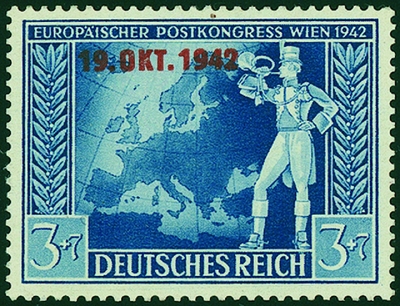
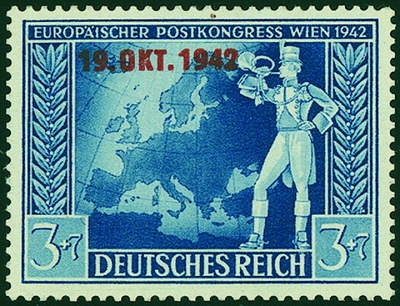
Naturally, the political context of the Second World War very much tainted the EPTU. Participants nevertheless strongly insisted on continuities with pre-war conditions. Many of them already knew each other and had worked together, and some were enthusiasts. Von Forster from allied Hungary did not mention the Briand Plan and his own support for it at the International Chamber of Commerce in the early 1930s, but instead recommended earlier forms of airmail cooperation as a starting point for intensified European cooperation in the future. Gunnar Lager was not there, but according to a Swiss observer the Swedish postal administration was keen to join the new organisation, although the foreign ministry obliged it to decline the German invitation, referring to Swedish neutrality.Footnote 52 In the postal field, the EPTU agreement enforced two key features of the plans from the 1930s. The first was the abolition of transit fees, which was also an old demand of the German postal administration predating the National Socialist usurpation of power in 1933. The second was a single rate for letters, for use from Narvik in Northern Norway to Syracuse in Sicily, which blurred the usual frontier between domestic and international correspondence. This rate corresponded to Nazi Germany's internal rate. Delegates did not touch upon the question of common stamps, although at least the German and Norwegian postal administrations issued stamps commemorating the congress.
European postal and telecommunication congress in Vienna (1942), commemorative stamp from Germany
The institutional framing of the EPTU was also very much in continuity with interwar projects. The EPTU explicitly left peacetime institutions and modes of international cooperation intact: the ambition was not to replace or play against the UPU. With an international office in Vienna funded by the member states on a proportional basis, as well as litigation procedures and a provision for the convention's revision by a conference of experts, with one vote per member country, the EPTU mirrored the governance principles of the UPU. In fact, it aimed to be the latter's official European regional sub-organisation, as indicated by Friedrich Risch, a director at the Reichspost in charge of foreign and colonial policy who was himself fascinated by the German founder of the UPU.Footnote 53 Risch described this aim in the journal of the UPU, whose international bureau continued its work from Berne during the Second World War, playing a key role notably in the transmission of mail and parcels to and from prisoners of war in coordination with the Red Cross.Footnote 54
The permanent postal commission, set up to deal with technical matters in between more formal congresses, met again in 1943 and revised the agreement to create greater uniformity amongst members. As Madeleine Herren has noted, Nazi Germany pursued ‘internationalisation strategies . . . with meticulous bureaucratic enthusiasm’ up to August 1944.Footnote 55 With the end of the so-called Third Reich in 1945 the EPTU disappeared as well.Footnote 56 This nonetheless does not mean that the Nazi experience remained irrelevant for post-war forms of regional cooperation. With the involvement of postal experts the ideas of the 1930s had become concrete measures during the war and had, in a way, solidified.Footnote 57
Mailing Europe after the Second World War
An article from a legal and political science encyclopaedia on regionalism introduced post-war postal cooperation in Europe in the following way: ‘as early as 1951, the Consultative Assembly of the Council of Europe, which promoted European unification by way of ‘sectoral’ integration, had proposed the creation of a ‘European Postal Union’.Footnote 58 This form of abrupt introduction to post-war developments, which is quite typical of standard textbook treatments of European regional integration, creates the false impression of a clear break between European integration after 1945 and prior developments in the postal sector. This is misleading for three reasons. First, it ignores pre-war and wartime plans which not only preceded post-war debates but also somehow became part of them. Secondly, it ignores features of the existing governance structures and practices which actually informed the discussions after 1945 to a great extent. Third, it routinely attributes later reforms to post-war European integration, which is simply not the case. To put it simply, it invents some continuities while hiding others.
The context of European integration stimulated and nurtured post-war proposals to reform the governance of postal networks and turn them into a motor for European unification. But these proposals actually followed the same rationale as before the end of the war: the objectives, expectations and justifications had hardly changed. Concrete objectives included the creation of a European postal union, in order to reach a higher degree of coordination than within the global UPU, and the new aim of possibly preparing for the complete integration of postal administrations into one operating agency. Supporters of postal cooperation continued to expect that it would facilitate commercial transactions and materialise the idea of Europe – the content of which changed however in the context of the Cold War and Western European integration. While parts of Western Europe became more integrated in some sectors, especially in the European Coal and Steel Community (ECSC) established in 1951–2, it seemed all the more important to make Europeans feel this integration on a more concrete and daily basis through postal and telecommunication objects and regulation. Stamps apparently could work magic, making the invisible visible so that ‘Europeans would then believe in Europe’, as one member of the Consultative Assembly of the Council of Europe argued.Footnote 59 This obsession with developing a greater feeling of community resonated with other contemporary pleas for the infrastructural integration of Europe, as a necessary first step toward political and cultural integration – what historians have called ‘infrastructural Europeanism’.Footnote 60 When justifying the focus on infrastructure integration, supporters of postal Europeanisation stressed that some regional unions already existed in this field, and that countries were taking some steps bilaterally, such as the Netherlands, Belgium and Luxembourg in the framework of the Benelux agreement, or France and Italy in the framework of the Francital customs negotiations (1950).Footnote 61 They believed that their ideas for Europe's postal integration were amongst the easiest in forging a concrete, material European reality.
Prior plans for postal integration impacted post-war developments through various channels or mediums. Continuities were strong even when there was change among the institutions and individuals arguing for European postal reform. Federalists who had read Streit before the war returned to his ideas after 1945, including, for example, Maurice Allais, the future laureate of the Nobel Prize for Economics.Footnote 62 At the same time, F. A. Hofman pleaded for a European postal union in advance of The Hague Congress in May 1948, which promoted the creation of the Council of Europe.Footnote 63 Already involved in the postal sector under the Nazi occupation during the war, he had become head of the Dutch postal administration. The title of his article in L'Union postale was so similar to that of Friedrich Risch's from 1942 that Hofman could not but mention the Nazi experience in the field:
in reading the title of this article there comes into our minds at once a union created during the war, viz., the European Union of PTT. . .–. It bore wrongly the title of ‘European’ because only a restricted number of European countries were members. Besides, this Union had no life in it; it disappeared at the end of the war. Nevertheless, the foundation of a truly European Postal Union is worth considering in detail.Footnote 64
The precise details of his plan were highly similar to the EPTU. It involved a common rate, the abolition of transit fees, the coordinated development of airmail and the standardisation of all postal regulations.
Within the Benelux framework, the Dutch postal administration signed bilateral arrangements with its Belgian and Luxembourg counterparts. At the same time, and perhaps in connection with this dynamic, members of the Consultative Assembly put a European PTT regime and a European stamp on the Council of Europe's agenda during its very first session, in the summer of 1949. Georges Bidault, Robert Buron, François de Menthon, Maurice Schumann and Pierre-Henri Teitgen, a group of French Christian democrats, called for the building of such a European postal territory.Footnote 65 As a member of the assembly, Buron himself prioritised economic over political integration and reminded his audience that the Zollverein had preceded German unification in the nineteenth century.Footnote 66 The assembly's commission on economic affairs agreed, and the general secretariat prepared a memorandum. The assembly issued a near unanimous recommendation in December 1951 calling on the ministers in the Council to take all suitable measures to establish such a union.Footnote 67
Hans Schuberth, the Bavarian Christian Social Union party's PTT minister for the Federal Republic of Germany from 1949 to 1953, became the principal governmental source of support for this proposal. Earlier on, in 1950, he himself had already started campaigning for the same agenda. He saw freedom of communication as a fundamental right in Western democracies; concerned by the threat of communism, he was inspired by discussions at the Council of Europe, as well as within the German chambers of industry and commerce and the Europa Union association in Mannheim.Footnote 68 Schuberth admitted that ‘these ideas . . . are not new . . . from a political and historical point of view, they have been in the air for a long time’.Footnote 69 At a moment when plans for European integration were being discussed and taking shape in various sectors, he found it ‘quite natural’ that these ideas materialised at that point in time.Footnote 70 He saw the European Defence Community as it was proposed by the Pleven plan – with its own high commissariat, council of ministers and parliament – as the model organisation. The newly organised German Bundespost itself was structured accordingly, he argued, so that it could easily fit into a European organisation at some point in the future.Footnote 71 However, Schuberth reckoned that a more intergovernmental European PTT union was a necessary step before the formation of a truly supranational community. The German federal parliament supported this policy. In January 1952 it approved a resolution calling for the creation of a postal union and a common regulatory framework for telecommunication amongst the member states of the Council of Europe.Footnote 72
Continuity, which was sometimes claimed and sometimes hidden, became a discursive device in the discussions. Politicians who supported postal integration were aware of earlier plans but hardly mentioned them. Although he refused to join the Nazi party Schuberth remained employed in the German postal administration during the Third Reich. He referred to Hofman's proposal but not to the EPTU.Footnote 73 Moreover, the Council of Europe memorandum quoted the 1942 argument that ‘the meshes of the net of the Universal Postal Union services and those of the International Telecommunication Union are still far too large for the European continent’ but did so without identifying the source, and mentioned the EPTU en passant.Footnote 74 References to earlier plans were selective because of political needs. Since European integration was presented as a response to the war, it was rhetorically and politically embarrassing to refer to concrete experiences of wartime European ‘integration’. Similarly, many promoters of European construction after 1945 reached back to and found inspiration in the 1929–30 Briand Plan, but few referred to it, as it was seen as being bound up with the apparent political failure of the League in interwar Europe.Footnote 75 At the same time, reminding audiences that a European postal union had been discussed for a long time reinforced the argument that it was an obvious and necessary step on the way to unifying Europe. If Europeans wanted to integrate the continent and prevent war, then they would have to set up the postal union that had proven impossible to build during the 1930s.
The Council of Europe and the Schuberth plan ultimately failed. As during the 1930s, objections from postal administrations proved ‘insurmountable’.Footnote 76 At the General Post Office in London, the fact that all documents were archived in the same folder – regardless of whether they concerned pre-war, wartime or post-war projects – reflects a real sense of continuity on the part of postal officials. As a British official put it: ‘broadly the situation appears to be substantially the same as it was in the 1930s. The establishment of a Western European Postal Union is neither necessary nor desirable, and the proposal to introduce reduced postage rates, etc., within Western Europe through the medium of a “Special Agreement” is probably unrealistic.’Footnote 77 In a draft memo to the Foreign Office the British General Post Office discredited the Council of Europe project by referring to past failures and the Nazi German initiative: ‘all previous proposals for a similar Union have come to nothing – except Hitler's; and that only lasted as long as he did’.Footnote 78 In the context of the Cold War, linking a European postal union to the Council of Europe with only non-communist member states would divide postal Europe in two camps and could consequently lead to the implosion of the UPU, a counterproductive proposition for Western European countries. Moreover, the cost of a lower intra-European common rate was deemed too high at a time when national reconstruction and Commonwealth relations were the priority.Footnote 79 It ‘would mean a reduction in revenue on the greater and most profitable part of their international traffic’, noted another British observer regarding the situation of continental postal administrations.Footnote 80 Indeed, France, Ireland, Greece, Sweden and Norway anticipated heavy losses.Footnote 81 Thus, due to politico-institutional and financial uncertainties, postal administrations again tended to block European postal reform. Opposition was even stronger in the telecommunication sectorFootnote 82 and, as the project sought to link the postal and telecommunication sectors, it increased its opposition. In May 1953 the committee of ministers of the Council of Europe, representing the governments of the member states, was divided, however.Footnote 83 Some countries supported the Consultative Assembly's proposal to convene an expert meeting in order to set up a postal and telecommunication union (the six member states of the ECSC: Belgium, France, Germany, Italy, Luxembourg, minus the Netherlands, plus Saarland), while others rejected it. In the end the vote was negative.Footnote 84
The deep crisis resulting from the failure of the European Defence Community project later froze any new attempt to create a postal Europe in 1954. However, the project was soon taken up elsewhere. An active participant in the 1948 congress of The Hague, and a member of the Consultative Assembly from its very beginning, Edouard Bonnefous must have known about the debates in the Council of Europe, as well as Buron's initiative, in that context. When Bonnefous became PTT minister in France in February 1955 he revived the idea. In June 1955 the foreign ministers of the six member states of the ECSC met in Messina to discuss further economic integration. The Belgian foreign minister, Paul-Henri Spaak, presided over intergovernmental discussions in the summer and autumn of 1955 over the possible scope and shape of any new treaties, discussions that eventually led to intergovernmental negotiations during 1956–7 and the signing of the treaties of Rome in March 1957. Taking advantage of this new impetus for economic integration, Bonnefous convened national expert officials from the six member states of the ECSC in Paris in July 1955, along with colleagues from the United Kingdom and Saarland, in order to explore the matter during a one-day workshop.Footnote 85 In his opening speech he stressed that Europe badly needed ‘to touch public opinion, to touch our peoples, [with] some concrete results, psychological and physical’.Footnote 86 In other words, it needed striking even if perhaps limited achievements more so than grand political designs, with post and telecommunication appearing as perfect candidates. Based on the minutes of the workshop and his own vision, Bonnefous presented a memorandum in the following days to the press and the Consultative Assembly of the Council of Europe in Strasbourg, of which he was still a member.Footnote 87 His plan essentially reproduced what the minister himself had already pushed for in the transport sector in the early 1950s: the institutionalisation of a formal conference of ministers, overseeing the work of expert working parties gathered within two permanent postal and telecommunication commissions. These would be in connection with an existing international organisation with broader competence: the Organisation for European Economic Cooperation (OEEC) in the case of transport and the Council of Europe in the case of the PTT.Footnote 88 In the summer of 1955 the Foreign Affairs minister, Antoine Pinay, blamed Bonnefous for having created an embarrassing situation: while he had pushed to bring this issue into the Messina context, he was now introducing another proposal in a competing arena.Footnote 89 Indeed, a postal and telecommunication sub-committee of the Spaak committee, composed of national experts, met in Brussels from August 1955 onwards. While Bonnefous probably used the Spaak sub-committee as a spur, he simultaneously claimed that, for ‘technical necessities’, cooperation should take place in a broader framework than the ‘core Europe’ of the ECSC.Footnote 90 The Council of Europe Assembly in Strasbourg passed a resolution in this direction in October 1956.Footnote 91 In the following years, the two options and their possible articulation would be discussed, although in the end neither the first nor the second option came to life, but a third one, in Montreux.
A New Envelope for Old Content: Continuities in Governance Practices
The European Conference of Postal and Telecommunication Administrations (CEPT) was created in Montreux in June 1959, adding new letters to the European alphabet soup of international organisations. Some claimed that it was a ‘new step . . . in the construction of Europe’Footnote 92 and the outcome of successive post-war plans to mobilise postal networks in order to lower political and economic borders in Europe and enforce a European identity. Yet the CEPT was neither linked to the European Economic Community (EEC) that was created in 1957–8 with the signing of the treaties of Rome, nor to the Council of Europe, nor for that matter to any other existing international organisation. Three explanations account for this outcome.
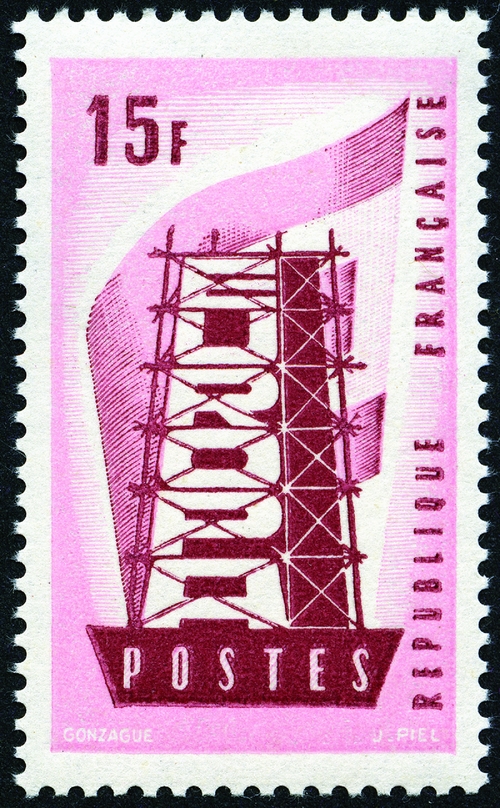
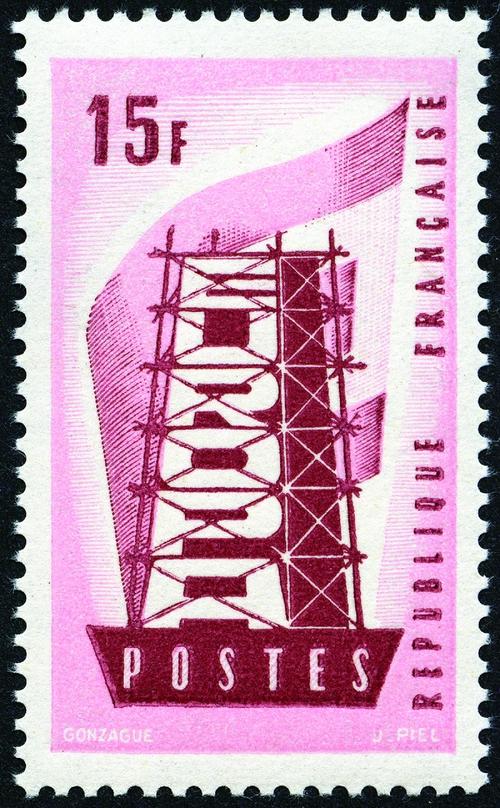
First, postal initiatives within the ‘core Europe’ of the six founders of the EEC (Benelux, the Federal Republic of Germany, France and Italy) twice failed for internal reasons. Composed of experts, the Spaak sub-committee on Posts and Telecommunication recommended establishing a postal union, to ‘realise in the postal field the gradual amalgamation of national economies’.Footnote 93 The Spaak Report in April 1956 highlighted transport, energy and post and telecommunication as three priority sectors for the future of European integration. Although postal and telecommunication matters did not ultimately feature in the treaties of Rome, some postal officials wished to carry on working within the framework of the Six. The former Spaak sub-committee turned into working parties that continued to meet from 1956 to 1958. Members first decided to issue a common stamp, inaugurating the so-called Europa special stamp series. While some commentators welcomed the fact that Europe, until then a rather ‘abstract notion’, had become ‘a material fact’, others noted that there was still no reduced rate for European correspondence.Footnote 95
French version of the first Europa stamp, issued in 1956
The same postal administrations later on established a provisional secretariat in Brussels. As a reaction to Western initiatives, in December 1957 the Eastern Bloc set up its own Organisation for Cooperation of Socialist Countries in the Field of Telecommunication and Postal Communications.Footnote 96 This further convinced several postal officials that a European postal union was possible and even desirable in the Western part of the continent. Belgian and French experts were particularly active in promoting it. Belgian officials proposed a profound uniformisation, going as far as having a common colour for post offices and design for letter boxes, as well as a common uniform for postmen across the six member states of the EEC. Administrators from the EEC member states finally came to an agreement in Brussels in September 1958, which aimed to create by 1959 an ambitious European Postal and Telecommunication Community that would be administratively linked to the European Commissions and headed by PTT ministers.Footnote 97 It was not designed to be the postal and telecommunications equivalent of the supranational ECSC but rather ‘a real cog of the European Economic Community’.Footnote 98 However, newly elected French President Charles de Gaulle and his Foreign Minister Maurice Couve de Murville stopped the project in early 1959. The new Community would reinforce the EEC, something that they were keen to avoid. They followed the advice of an internal Foreign ministry report, which complained about its lack of earlier involvement, and which was generally opposed to further ‘core Europe’ integration.Footnote 99 The French president and government thus offered relief to participants amongst the members of the EEC, like those from the Netherlands, who were not totally convinced by the project.Footnote 100 They also effectively supported alternative solutions by outsiders.
The second explanation is that postal administrations from United Kingdom and Switzerland reacted by pushing for an alternative project, the creation of a new but loosely organised institution. Since Hofman's proposal in the late 1940s it appeared to British observers that the prospect of a European postal union had never been unanimously rejected by postal experts. On the contrary ‘several Western European Postal Administrations – without committing their Governments – favour such a proposal, so that it would seem to offer good chances of success’.Footnote 101 Both the Bonnefous plan, as well as the talks within the Spaak sub-committee and later within the working parties, confirmed this, and ‘showed clearly that there is a growing drive in the Six towards the establishment of a permanent organisation . . . the setting up of formal restricted Unions, certainly in the Postal sphere and possibly also for Telecommunications’.Footnote 102 The British General Post Office then devised a strategy on the advice of the Foreign Office: no more frontal opposition but instead subtle orientation. In order to ‘share in [the] technical benefits flowing from the Working Parties’ activities’, and to drive its enlargement to other countries, British experts agreed to take part in the discussion as observers.Footnote 103 The enlargement of working parties exclusively composed of experts was deemed preferable: ‘we believe that it would be better to encourage that development rather than to support the creation of more formal machinery under the aegis of the Council of Europe’.Footnote 104 At the same time the British General Post Office opposed the Bonnefous plan so forcefully that Ian Keith, Viscount Stonehaven, a British member of the Council of Europe's assembly who apparently wanted greater British participation in more political European projects, publicly expressed his concern:
The British Post Office is a most conservative institution. It has the greatest reluctance even to print a new stamp when Britain has a change of monarch. . .–. I feel that there is great force in the arguments put forward, and my own opinion, as a private Representative, is that we ought not to be so stuffy in England, but should get cracking and try to do something.Footnote 105
Switzerland was not a member of the Council of Europe and agreed to the proposal of creating a loose organisation connected with the Six PTT Community, if the latter were ever to come to life.
The third and final explanation is that postal and telecommunication experts all agreed on the latter scheme. It was first discussed in Brussels in September 1958, fleshed out in January 1959 and finally adopted in Montreux, Switzerland in June 1959. Administrations from nineteen countries signed an arrangement based on a lowest common denominator. The CEPT that was established differed from all earlier plans in two main respects. First, it was not a regional postal union within the UPU, and it did not explicitly claim to build Europe on mail. Even if Hofman's plan was about a European postal union disconnected from political structures, it nevertheless aimed to create a regional union within the UPU, with a stronger identity and agenda than the CEPT. Despite its name the CEPT's mission statement made no explicit reference to Europe. It was instead concerned with ‘strengthening . . . links between the member administrations, together with the harmonisation and practical improvement of their administrative and technical services’.Footnote 106 The organisation deliberately did not define its understanding of Europe, and its ultimate geographical scope remained undefined. The Scandinavian countries requested to also invite Eastern Bloc countries. The majority of members rejected this option, however, and the CEPT ended up as a de facto Western Europe organisation. Nonetheless, it had more founding members than the OEEC or the Council of Europe had member states. The CEPT also lacked a permanent international structure. Instead of an international office, it institutionalised a rotating secretariat. Postal Europe thus had no permanent postal address. Power and influence were still very much shared by the member organisations and were not at all shifted to some supranational level.
Second, the CEPT was of a purely administrative nature. The text elaborating its basic rules was an administrative arrangement, which did not require any formal ratification by national parliaments. The CEPT could not issue binding resolutions, only guidelines and recommendations. National postal officials ran the CEPT, which excluded ministers and diplomats. In fact, the founding agreement explicitly stated that ‘the Conference is independent of any political or economic organisation’.Footnote 107 Compared to earlier plans, experts from the sector were far freer to take decisions. In 1930, for example, Aristide Briand had recommended verifying that ‘experts’ work would always take place under the control and influence of the political element, emanating directly from the governments’.Footnote 108 In a similar vein, the 1951 Council of Europe memorandum suggested the formation of an intergovernmental sectoral authority. Schuberth suggested an institutional design more inspired by the organisational layout of the European Defence Community. In the end Bonnefous pleaded for a European conference of ministers reporting to the Consultative Assembly of the Council of Europe.
All in all the CEPT stood for a very different governance structure than all earlier plans. It preserved the three institutional, financial and political pillars on which the community of postal officials had built an international postal regime since the 1870s. Institutionally it was not a regional union, and from this standpoint it kept the UPU unchanged.Footnote 109 However, it made it possible to cope with the fact that European administrations were losing control over the organisation. In the context of decolonisation it was clear that colonial votes would soon belong to the past. Coordination between Europeans before world conferences tended to compensate for that. The CEPT was also able to take over the Europa annual joint stamp issue.Footnote 110 Financially, there was no strict founding rule regarding rates. Domestic and longer distance communication (in particular imperial or post-imperial relations) could continue being subsidised by intra-European traffic. It would be up to each member administration to decide and adjust depending on the situation. Politically, the organisational layout of the CEPT reflected a strong continuity with the expert-led governance of the postal sector. This structure fully retained the expert's autonomy and the allegedly apolitical nature of international technical cooperation.
When the ‘outer Seven’ in the European Free Trade Association, created in 1959–60, opposed the EEC, it was a victory for the British Foreign Office. It was also a defeat for the Consultative Assembly of the Council of Europe, which immediately but unsuccessfully asked that the CEPT be considered as a preparatory step toward the establishment of a conference of PTT ministers, to be linked, given its economic dimension, if not to the Council, then to the Organisation for European Economic Cooperation.Footnote 111 It was a disappointment for supporters of closer integration, and some postal officials pointed out the CEPT's lack of European significance: they feared that it would develop into a mere forum for discussions, a ‘talking shop’ as the Italian delegate bitterly anticipated.Footnote 112
Conclusion
All attempts to Europeanise postal governance failed between the 1930s and the formation of the CEPT. Contrary to other plans, the CEPT did not impose major changes in the postal world in terms of either power and revenue division or symbols. Its creation marked a change in the institutional landscape. Although the envelope was new, the postal address on it and its content were not. Two arguments spoke in favour of a much more integrated European postal union: first, that it was comparably easy to achieve at the technical level and, second, that it could deliver impressive results due to its symbolic dimension. As a minister would later put it, it was a key for the ‘psychological integration’ of Europeans, which was ‘a condition and also a consequence of economic integration and later on political integration’.Footnote 113 At the end of the day, however, these arguments constituted the principle obstacles to the creation of such a European postal union. The tradition of cooperation had resulted in a complex international system deeply rooted in a strong transnational expert culture and the financial cost–benefit calculations of postal administrations keen on keeping the reins of their networks. Moreover, many governments and postal administrations strongly rejected the proposed symbolic intrusion into their own sovereignty, for example in the form of common stamps and uniforms. Aside from the Europa stamp series, the CEPT dealt with topics that were almost imperceptible to end users and remained out of reach of European political institutions. In this sense, it continued the ‘hidden integration’ of Europe undertaken by international technical bodies since the nineteenth century.Footnote 114
Even if the CEPT had pride of place, the EEC continued to push for its deeper model of integration. While working on non-trade barriers to further integrate the common market, the European Commission early on identified variations in technical standards and postal rates as obstacles that needed to be removed. Even if there were some divisions in the CEPT community on this issue, the European Commission failed to create its own structures in the field.Footnote 115 In 1966 the EEC's council of ministers rejected a Commission directive on the harmonisation of postal rates. In 1979 the Commission again pointed out the lack of harmonisation in this field. However, by the mid-1980s member countries to a large extent applied their (various) internal rates to intra-Community correspondence but only for a part of the traffic (light letters and postcards), and with many exceptions.Footnote 116
Major changes for the CEPT came from the evolution of the telecommunication sector. From the 1970s onward technological change and the industrial challenge from the United States and Japan, in the context of an economic slowdown and the rise of so-called ‘information society’, turned telecommunications into a crucial topic in European politics. A Commission report on the European telecommunications industry concluded in 1974 that the market for telecommunications manufacturers was extremely compartmentalised on a national level – hence low competitivity and high prices for service users.Footnote 117 The Commission wanted to unplug national preference style industrial policies in the telecommunications sector through technical harmonisation and liberalisation of public procurements. According to the Commission, the CEPT was an organisation that could not be circumvented. On the contrary, it had to be reinforced to pursue deeper harmonisation work. From that point on it took ten years for all the actors involved to agree to work out the single market solution.Footnote 118 One of the first concrete moves was the Commission and the CEPT signing a working agreement in July 1984. This tasked the CEPT with setting up common standards and specifications.Footnote 119 The Commission would supervise its work and translate it into directives. EC Commissioner for Internal Market and Services, Arthur Cockfield, took this agreement as a model in his 1985 white paper on the internal market.Footnote 120 Paradoxically, a European forum of national public monopolies, partly created in reaction to EEC developments and including non-member states, thus became instrumental in the completion of the EU's Single Market.
This development led to structural changes for the CEPT. Its technical standardisation body soon became a new independent organisation aimed at removing technical barriers, in cooperation with European manufacturers.Footnote 121 At the same time, the idea of a single market was extended to the network operators, the public postal and telecommunication monopolies. With privatisation and liberalisation starting in this field throughout Western Europe in the 1980s, the CEPT was finally transformed in 1993 into a forum of national regulatory authorities.Footnote 122 The driver was clearly no longer psychological integration but competitiveness. The postal markets gradually opened to competition from the late 1990s onward. But at the end of the process, ten years later, it was clear that with the volume of mail dropping quickly due to technological (email), social and cultural transformations, few if any competitors would jump in. The new postal Europe was now to be an empty envelope.