The history of relationships between humans and other animals (especially ‘domesticated’ animals) is a subject highly pertinent to our understanding of the Holocene ecology of planet Earth. The earlier stages of such relationships were first investigated by archaeologists, prehistorians and zoologists, who exploited the presence of the bones of livestock on excavated archaeological sites, developed narratives which incorporated surviving ‘primitive’ breeds, and turned to ethnography for insights into past husbandry practices. For the mid twentieth century, the syntheses of Grahame Clark (Reference Clark1939; Reference Clark1952) provide something of a benchmark for this kind of research. More recently, geneticists have explored the phyletic relationships of surviving livestock breeds, while isotopic studies of ancient bones have provided new insights into what humans and their animals ate during their lives and the different (geologically defined) regions between which they moved (e.g. publications of Reference MadgwickRichard Madgwick).
One of the oldest human/animal relationships is that involving sheep. The phyletic relationships of surviving sheep ‘breeds’ have been investigated and defined by geneticists (e.g. Chessa et al. Reference Chessa, Pereira and Arnaud2009; Deng et al. Reference Deng, Xie and Wang2020 and refs; Lawson Handley et al. Reference Lawson Handley, Burne, Santucci, Townsend, Taylor, Bruford and Hewitt2007). These act as proxies for narratives of sheep-breeding and husbandry methods, as developed by prehistorians and agricultural historians. In the case of sheep, a further proxy is provided by the use of surviving textiles, such as those from Bronze Age burials in Denmark, to create a typology (and outline chronology) of sheep breeds in relation to selective breeding for the ‘improvement’ of wool fibre from a weaver's point of view (Ryder Reference Ryder1983; Reference Ryder, Pritchard and Wild2005). Further contributions to these narratives are provided by more complex models of the ‘economic basis’ of European prehistory than those considered by Clark. Recently, for example, it has been argued that prehistorians have underestimated the importance of the growth of specialized textile production during the European Bronze Age, when woollen textiles began to compete with plant-based textiles of Neolithic ancestry, at the beginning of the second millennium bc (Kristiansen & Sørensen Reference Kristiansen, Sørensen, Sabatini and Bergerbrant2019).
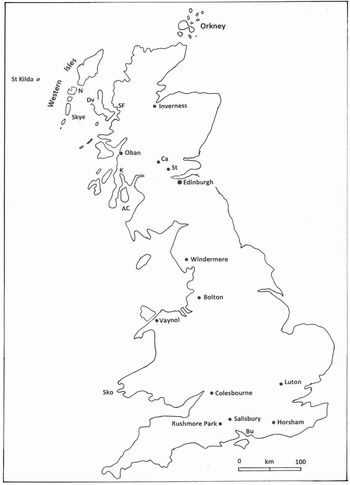
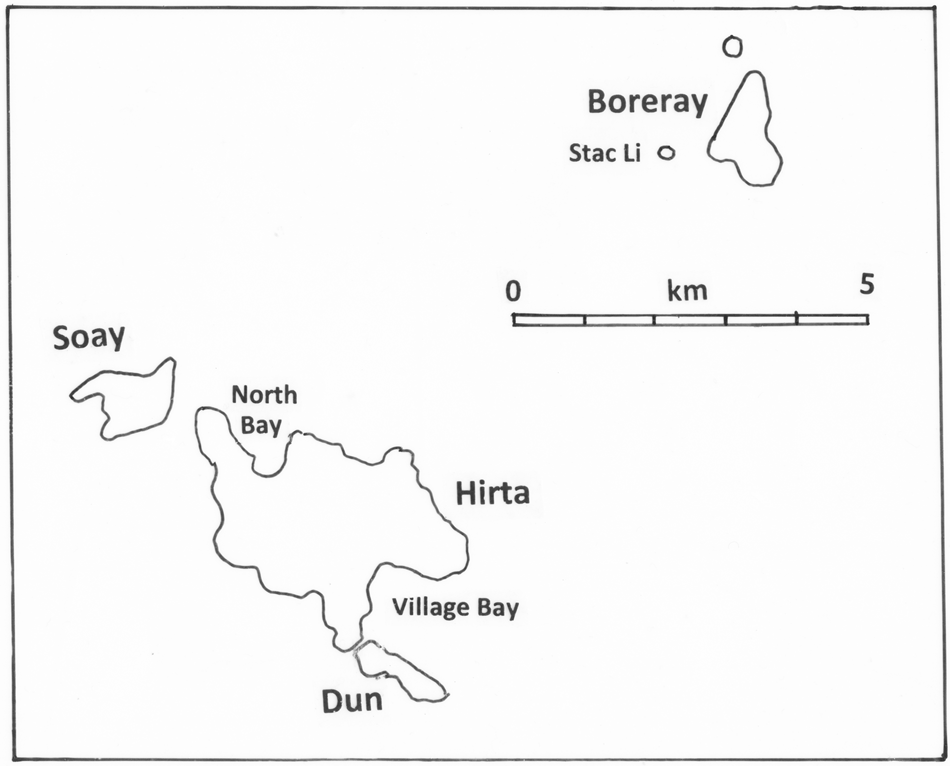
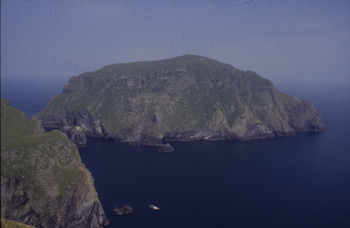
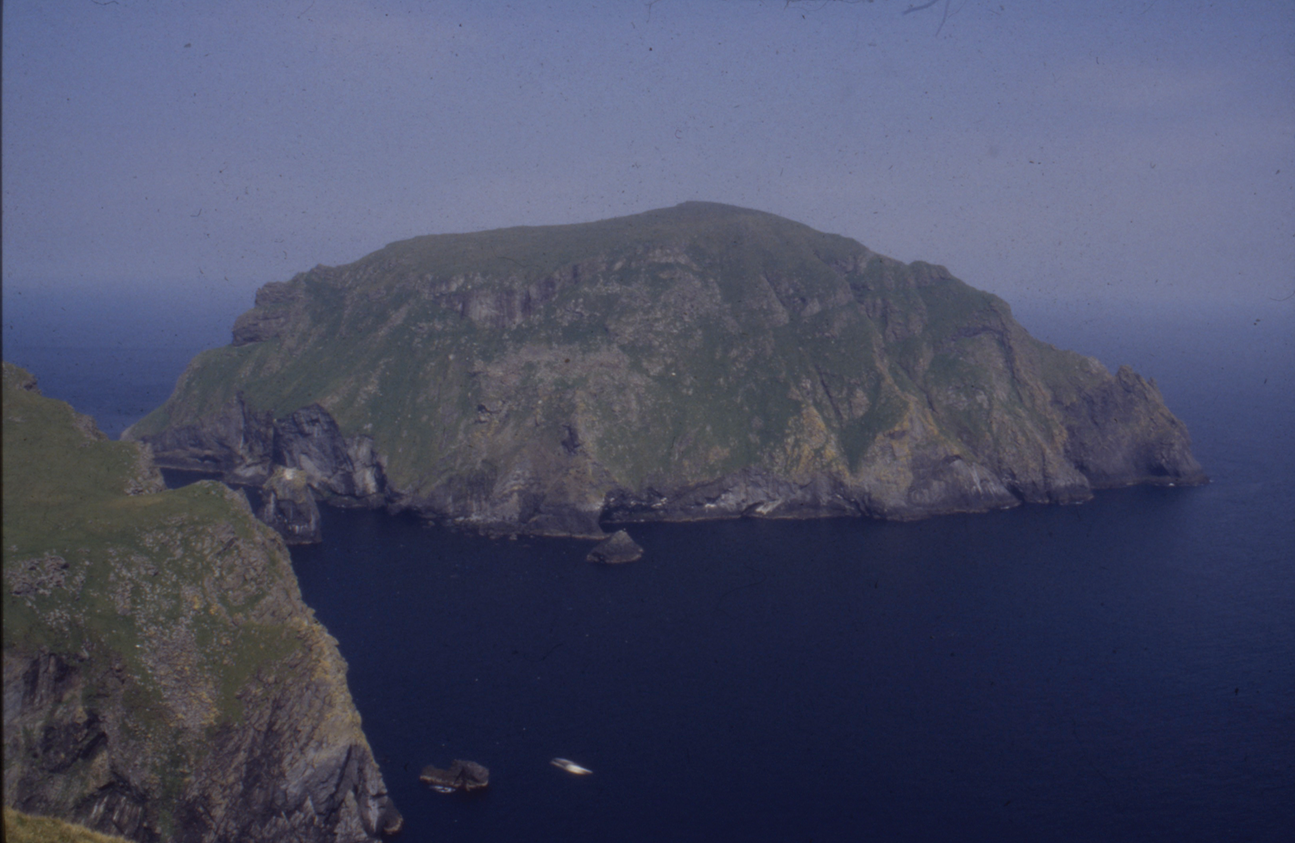
As it happens, one of the oldest investigations of ancient human/animal relationships also concerns sheep, and an attempt to use a ‘primitive’ breed in order to visualize the characteristics of Romano-British sheep (c. ad 43–410). The breed concerned was the Soay, which in the mid nineteenth century was to be found only on the uninhabited island of Soay, in the St Kilda archipelago, some 60 km west of the Western Isles of Scotland (Figs 1 & 2). Soay is a steep-sided island of igneous origin, covering an area of 96 ha at sea level (Harman Reference Harman1997, 7) (Fig. 3). Its sheep lived ferally, although before evacuation of the community living on nearby Hirta (St Kilda's only inhabited island) in 1930 they were ‘owned’ by the owner of St Kilda and exploited by the inhabitants of Hirta, who took annual harvests of wool and meat. Although Soay is separated from Hirta by a narrow strait, reaching it by boat involved a two-hour voyage, sometimes shortened by taking the very narrow passage between Dun and Hirta.
Map of Great Britain showing principal places mentioned in the text. Abbreviations: AC = Ailsa Craig; Bu = Butser; Ca = Callander; Dv = Dunvegan; K = Kilmory, N = North Uist; Sko = Skokholm; SF = Strome Ferry; St = Stirling. Rushmore Park is on Cranborne Chase.

Map of the St Kilda archipelago.

The island of Soay, from the south.
Lieutenant-General Pitt-Rivers (1827–1900), often described as the ‘father’ of British archaeology (Bowden Reference Bowden1991; Rethinking Pitt-Rivers Project; Thompson Reference Thompson1977), was apparently the first archaeologist to take an interest in the characteristics of Soays as an aid to understanding the early history of sheep breeds. It was he who first brought Soay sheep to a parkland environment (in southern England) where they (and their bones) could be more closely studied. In due course Soays were introduced to other landscape parks; 30 years ago it was suggested that there were about 4000 Soay sheep on farms and in parks in Britain (Clutton-Brock et al. Reference Clutton-Brock, Dennis-Bryan, Armitage and Jewell1990, 3). They were also imported to small islands, such as Ailsa Craig (in the Firth of Clyde, southwest Scotland) in the 1930s, and to several islands off the coast of southwest Wales between 1934 and 1958, including Skokholm, which is about the same size as Soay, and other much smaller islands of between 7.5 and 16 ha (Lockley Reference Lockley1960). By the late twentieth century, Soays were often to be seen at British rare breed centres, where their presence has now arguably become an oxymoron. Sometimes they are kept to graze beside reconstructed prehistoric houses or farms—usually ‘Iron Age’—although in the scientific literature the origins of Soays are generally assigned to the Bronze Age, if not earlier (Clutton-Brock Reference Clutton-Brock1981; Ryder Reference Ryder, Pritchard and Wild2005). Their presence in southern England (from the mid 1970s) at the experimental Butser Ancient Farm (Reynolds Reference Reynolds1979) and at the ‘Iron Age farm’ constructed for the 1978 BBC Television series Living in the Past (Percival Reference Percival1980) has created a general association between prehistoric farming and Soay sheep in the minds of archaeologists and the general public. In Britain, if not further afield, Soays have become the iconic ‘primitive’ sheep breed, a useful resource for education and the heritage industry; their conservation helps to maintain ovine genetic diversity. They are also a significant scientific resource in international terms. The transfer of 107 Soay sheep to Hirta in 1934 and 1935 made possible the work of the Soay Sheep Project (1959–67 and from 1985 to date: Clutton-Brock & Pemberton Reference Clutton-Brock and Pemberton2004; Jewell et al. Reference Jewell, Milner and Morton Boyd1974), perhaps the longest-running scientific programme of its kind ever undertaken.
The recruitment of Soay sheep to ruminations about the early history of domestication needs to be understood within a particular social and intellectual context. In the minds of the wealthy land-owning classes of Europe's imperial powers, there was a close association between shooting game and being well-informed about ‘natural history’, interest in the latter often increasing with age. Many amateur naturalists—and some amateur archaeologists—developed such interests during their formative years as soldiers and/or imperial administrators, during which hunting was naturally de rigeur (see Mackenzie Reference Mackenzie1988). After absorbing something of a global overview of natural history, some came to inherit large estates, often containing diverse habitats for wildlife and a range of archaeological sites and monuments. These were excellent environments for those with the leisure and intellectual curiosity to think about prehistoric humans and the ecosystems in which they lived (‘ecology’ and ‘ecosystems’ emerged as scientific concepts in the early decades of the twentieth century, promoted in England by scholars such as Arthur Tansley and Charles Elton).
In what follows, I outline the historical context of the relationship between the Soay, a primitive breed of sheep, and early archaeological science, during the period c. 1880–1920. I also summarize what is known of the history of these sheep at St Kilda, and what may be learned from their long sojourn on Soay. For centuries these were ‘sheep without shepherds’, or ‘living fossils’, as James Fisher put it (Williamson & Boyd Reference Williamson and Boyd1960, 76). Like ancient pollards, they occupy an interesting interdisciplinary terrain.
The clan chief, the general and the zoologist
By the first half of the nineteenth century, European naturalists knew a good deal about the distribution and characteristics of potential ‘wild ancestors’ of domesticated livestock. Addressing the history of domestication, later in the same century, was to require insights generated by the Darwinian revolution and the rediscovery of Gregor Mendel's pioneer work on genetics. Such research was also stimulated by the recovery of animal bones from archaeological excavations—notably those of the Swiss ‘lake villages’ from the 1850s onwards, which introduced much more substance and diversity to the concept of a European Neolithic (e.g. Keller Reference Keller1866). In Britain, Lieutenant-General Pitt-Rivers, who owned the Rushmore Park estate on Cranborne Chase in southern England from 1880, promoted the study of non-human bones from excavations, and it was he who triggered archaeology's first serious engagement with Soay sheep. In volume I of Excavations on Cranborne Chase (Reference Pitt-Rivers1887) he wrote (p. 172): ‘I am indebted to Professor Moseley, FRS for drawing my attention to the breed of sheep now inhabiting the island of St Kilda … which, in his opinion, are the only surviving representatives of the breed of Roman times. I have obtained several and bred from them. They are beautiful little animals …’. Pitt-Rivers’ excavations at Woodcuts, one of the Cranborne Chase sites, suggested that there were two types of Roman sheep, long-legged and short-legged. It was Henry Nottidge Moseley (1844–91), then Linacre Professor of Human and Comparative Anatomy at Merton College Oxford, to whom Pitt-Rivers submitted the horn cores from this site, and it was Moseley who made the comparison with sheep from St Kilda. However, when he wrote volume I of Excavations on Cranborne Chase, Pitt-Rivers had been keeping Soays for three or four years; in the second volume (Reference Pitt-Rivers1888, 221–2) he published a drawing of three of them in Rushmore Park, almost certainly made on or around 28 January 1887, by Pitt-Rivers’ assistant.Footnote 1 In this book, Pitt-Rivers displayed his continuing interest in the sheep bones found at Rotherley and Woodcuts, making comparisons with several sheep breeds; he emphasized the ‘slenderness’ of the ancient sheep bones, which were the same size or smaller than those of the sheep from St Kilda (Reference Pitt-Rivers1888, 221–2).
Henry Moseley was a distinguished naturalist who had taken part in the voyage of the Challenger (1872–76). In the late 1870s, he and Pitt-Rivers knew and respected each other; both were active members of the Anthropological Institute.Footnote 2 After obtaining his Oxford chair in 1881, Moseley immediately became involved in discussions about the future of Pitt-Rivers’ ethnographic collection (housed at the South Kensington Museum) and then in its transfer to Oxford, where it was to feature in the new Pitt-Rivers Museum, opened in 1886. Pitt-Rivers was excavating at Woodcuts in 1884 and 1885 and at Rotherley in 1886. It may well have been Moseley's exchanges with Pitt-Rivers which encouraged the latter to obtain some Soays for his park.
Pitt-Rivers was in an excellent position to do this, for he knew the owner of the sheep, Norman MacLeod (1812–95), the 25th chief of the MacLeods, whose family seat was Dunvegan Castle on the Isle of Skye. In his mid 30s, as part of a strategy to address his severe financial problems, MacLeod joined the civil service, soon becoming one of the main administrators of the infant South Kensington Museum, one of the most exciting cultural projects of the time. He and Pitt-Rivers would have been socially acquainted. In the mid to late 1860s, when MacLeod was assistant secretary at the Department of Science and Art at the museum, he and Pitt-Rivers lived in the same street, Upper Phillimore Gardens in Kensington—Pitt-Rivers at no. 10, MacLeod at no. 7. From 1874 to 1880, when objects from Pitt-Rivers’ collections were being transferred from Bethnal Green Museum to the South Kensington Museum, MacLeod was secretary of the relevant committee, which Pitt-Rivers regularly attended.Footnote 3 MacLeod retired from the civil service in 1881, the year after Pitt-Rivers inherited his large estate on Cranborne Chase. Whether Moseley was independently acquainted with MacLeod is not clear. MacLeod was an important figure at the South Kensington Museum, and was still in post when Moseley was working at the University of London in 1879, so it is quite likely. When Pitt-Rivers first got to know MacLeod, the latter did not own St Kilda, his grandfather having sold the islands in 1779; after his finances improved, he was able to ‘buy back’ the archipelago in 1871. In 1877, summer steamer services to St Kilda began, which made it easier to transport livestock—and many other things—to and from the archipelago. From his London residence, MacLeod would have been in regular communication about St Kilda with his factor John Tolmie Mackenzie (c. 1829–1910). Mackenzie was postmaster and harbourmaster at Dunvegan and was involved in various trading ventures. Every year, he took supplies out to the St Kildans, exchanging them for tweed, cattle, feathers, cheese, etc., which he then sold at a profit.
In 1883, Pitt-Rivers published On the Development and Distribution of Primitive Locks and Keys. He included information about the wooden tumbler locks used by the St Kildans, several of which found their way into his collections. MacLeod must have told him about the locks and arranged for him to obtain some of them. Getting hold of Soay sheep would have been a more complicated business. On 31 August 1886—the year when he was presumably writing the first volume of Excavations on Cranborne Chase—Pitt-Rivers purchased some St Kilda cattle from the Dunvegan estate.Footnote 4 By then, he had already bred from his Soays (see above). In 1885 he joined the Zoological Society of London, a sign of his new interest in keeping exotic animals and breeding from them. He presumably obtained his Soays sometime between 1882 and 1885, in summer—most likely in 1883 or 1884. A letter written by John Tolmie Mackenzie to Pitt-Rivers about supplying sheep, dated 18 August 1887, demonstrates the General's continuing interest.Footnote 5 Pitt-Rivers had asked for ‘St Kilda sheep’ (he wanted 2 rams and 10 ewes). Confusingly, in the late nineteenth century, the label ‘St Kilda sheep’ was usually applied to another primitive breed from northern Scotland, the one nowadays often known as ‘Hebridean’ (Kinsman Reference Kinsman2001). However, as Mackenzie informs Pitt-Rivers that ‘they are kept on an island which is almost inaccessible’, probably Soays were meant. By the 1880s, Hebridean sheep could have been obtained without troubling the factor of St Kilda (see below).
Mackenzie had certainly supplied the ‘St Kilda’ ewe and lamb which were sent in 1889 to Inverness (presumably from Strome Ferry by rail) and then (again presumably by rail) to the Royal Agricultural Show at Windsor, just west of London, by Henry Flockhart, an Edinburgh-based livestock trader.Footnote 6 By royal command, Flockhart showed the lamb to Queen Victoria at Windsor Castle on 28 June 1889, holding it in his arms (its mother had died, an attendant having ‘incautiously’ fed her a quantity of oats in Flockhart's temporary absence. For an image of more fortunate lambs, see Figure 5). It is clear from the description that these were Soays and not the other sort of ‘St Kilda sheep’. Their quoted weights (5.4 and 3.2 kg) suggest that their long journey had taken its toll.Footnote 7
In his capacity as Inspector of Ancient Monuments, Pitt-Rivers was in Edinburgh in September Reference Pitt-Rivers1883, and in Scotland in September 1884 and between late July and mid September 1885 (Rethinking Pitt-Rivers Project, Pitt-Rivers’ life). On those occasions he could have investigated the logistics of moving sheep from the northeast Atlantic to Rushmore Park in southern England, a straight-line distance of some 870 km. However, the transport arrangements are more likely to have been made by MacLeod's factor. At the time, weaving of tweed for export was taking off at St Kilda, and Mackenzie must have been quite interested in the archipelago's sheep. By 1883 he was spending over 10 times as much on buying St Kilda tweed as he had in 1874, soon after his appointment as factor. In terms of the notional values of goods exchanged (for this was a barter system), he made 61 per cent on it, a good average figure for his profit from this fabric throughout the 1880s.Footnote 8
Although livestock transport by rail and sea was commonplace by the 1880s, the removal of feral sheep from Soay to Rushmore Park was an epic venture. It involved capturing them, getting them down the steep sides of Soay and rowing them to Hirta (which would have taken the best part of two hours)Footnote 9 (Kerr Reference Kerr2013, 83). In due course they would have been taken out to a steamship anchored in Village Bay and then shipped to Oban, whose railway pier had been constructed quite recently. From here they would have been transported on the Oban–Callander railway line, probably in a livestock wagon hitched to a passenger train, to Stirling (a journey of over three hours)—or possibly further south if a through train was available. It is likely that the sheep were offloaded at Salisbury (rather than Blandford Forum, the nearest station to Rushmore Park); this would have involved a simpler rail journey and would have allowed the Soays to be driven for much of the way to their final destination along the Ox Drove, an east–west green way which passes not much more than 1 km from the park's North Lodge. This route may have given the sheep, presumably accompanied by a local shepherd, a chance to adjust to their new chalkland grazing regime.
The Soays were not the only ‘St Kilda’ breed of sheep kept by Pitt-Rivers. By 1894 his park contained ‘a small brown breed of sheep from St Kilda, which resemble the Roman sheep found in the Romano-British villages here, a breed of black four-horned sheep’ (Petch Reference Petch2012). These sound like Hebridean sheep, which have long lived on Boreray, another island in the St Kilda archipelago, among other places. However, it seems that the ‘St Kilda sheep’ kept in several late nineteenth-century parks were actually the descendants of Hebridean sheep removed from North Uist in the Western Isles. The North Uist laird Sir John Orde sent some of the sheep to his other estate at Kilmory, near Lochgilphead in Argyll, and later (probably in the 1870s) he sold or gave some to two friends living near Windermere, in the Lake District of northwest England. Both Lake District flocks resulting from these transactions were disbanded and dispersed in the 1880s (Kinsman Reference Kinsman2001, ch. IV and passim). In 1883 and 1885, Pitt-Rivers inspected several field monuments in the Lake District, and may then have found out about the Hebridean sheep kept in the region; he would doubtless have been keen to obtain some for Rushmore Park.
The St Kilda context: prehistory
The presence of ‘feral’ sheep at St Kilda was first mentioned in the late fourteenth century. From the account of Hector Boece (c. 1465–1536) it is possible to deduce that Soays were already isolated on Soay in the late Middle Ages and that another race of sheep, ‘probably the old Scottish shortwool’ (i.e. Hebridean), was then being kept on Hirta (Love Reference Love2009, 220). Since Soay (‘Isle of Sheep’) was named by those speaking the Norse tongue, it is likely that the sheep were domiciled on Soay well before the fourteenth century. If we may assume that the Norsemen named the island after its most distinctive—and perhaps surprising—feature, the name implies that sheep were already there when the Norsemen first encountered it.
In Britain, Soay sheep tend to be mentioned most frequently in discussions about domestication and the Neolithic, or in connection with experiments in ‘Iron Age farming’. In fact, however, Michael Ryder, who became an expert on sheep and their history and spent two weeks on St Kilda in 1964 (Reference Ryder1983, 511), argued that the Soays are descendants of a Bronze Age breed (Reference Ryder1983; Reference Ryder, Pritchard and Wild2005). Ryder was working on the basis of his studies of the wool fibre of different sheep breeds and of Bronze Age woollen clothing (mainly from Denmark). He developed a typology (and outline chronology) of sheep breeds based on posited selection for the ‘improvement’ of wool fibre for textile production. He noted that some Soays carry a ‘hairy-medium fleece’, whilst others produce ‘generalized-medium wool’; both types of sheep retain the brown upper parts and white belly of their wild ancestors. The same two types of fleece are found in Danish Bronze Age wool (‘and this, together with its brown colour, supports evidence from the bone remains that Soay sheep are survivors from the Bronze Age’: Ryder Reference Ryder, Pritchard and Wild2005, 123). Ryder argued (Reference Ryder, Pritchard and Wild2005, 125) that ‘had sheep reached St Kilda before the Bronze Age one might have expected survivals of Neolithic sheep without a fleece. Had sheep arrived after the Bronze Age one might have expected survivors with grey fleeces like those in the Orkney and Shetland breeds’ [my italics]. In 2005, Ryder argued that the Soays arrived on Hirta in the later Bronze Age, or conceivably as late as the early Iron Age. His view was based on the fact that Soay wool is more refined than wool from Sheshader, in the Western Isles, which is radiocarbon dated to 1300–840 bc. However, we should probably not take this dating refinement too literally; Ryder was working with an inadequate sample of contemporary (and Scottish) ancient wool.
Traditionally, the St Kildans kept sheep nowadays described as ‘Hebridean’ on both Hirta and Boreray. From the 1870s, Blackface and then Cheviot rams were introduced on Hirta. On Boreray, the islanders continued to exploit feral Hebridean sheep, though they evidently did not keep the race entirely ‘pure’. Hebridean sheep are comparable to and cognate with ancient ‘northern short-tails’, including the Manx Loghtan, the Shetland and the Orkney or North Ronaldsay breeds, as well as others which survived in parts of Scotland into the eighteenth and nineteenth centuries (Kinsman Reference Kinsman2001; and see Chessa et al. Reference Chessa, Pereira and Arnaud2009). Ryder regarded these as ‘Iron Age’ sheep in a broad sense. Such sheep, with their late oestrus and the water-shedding properties of their wool (Kinsman Reference Kinsman2001, 96, 232–5) became very well suited for subsistence farming in northern Scotland. They were scab-free; their wool was fine (only 2–3 sheep per person were required for basic clothing); their meat was delicious; and they were very ‘milky’, as a result of centuries of being milked while also feeding their lambs (Kinsman Reference Kinsman2001, 55, 60, 96, 97).
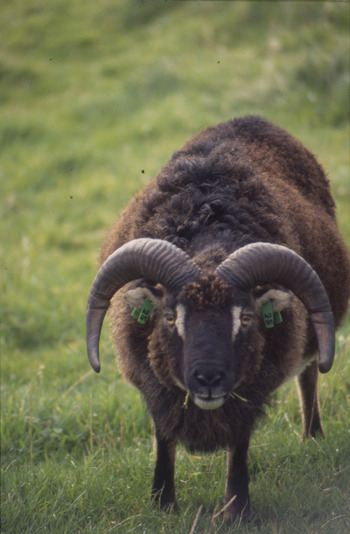
One advantage of the ‘Iron Age’ sheep over the Soays was that they provided several shades of naturally coloured wool—black, grey and white as well as brown. These were the traditional colours of St Kildan fabrics as recorded by Macaulay in the mid eighteenth century (Ryder Reference Ryder1983, 516). Ryder's text implies that not long after the introduction of ‘Iron Age’ sheep to Hirta, the Soays were probably only to be found on Soay, and may have been marooned or banished there as a direct response to the import of the new breed: they ‘would probably’, he argued, ‘have outlasted any introduced sheep of other breeds, given assortative mating and the known dominance behaviour of Soay rams’ (see Figure 4). Ryder's insight was surely correct. Love (Reference Love2009, 226) notes that, according to Donald Ferguson (1833–1918), Ground Officer at St Kilda from c. 1892, ‘four rams of the type that preceded the blackfaces were released by Sir John [MacPherson] Macleod [the then laird] probably in the 1860s “but they did no good”. A few white sheep appeared for a time, but their descendants soon reverted to the original colour’.
A Soay ram on Hirta.

Exactly when sheep of Soay type were supplanted by the ‘Iron Age’ type in Atlantic Scotland has not been established. Northern short-tails are comparable with old breeds in Norway, Iceland and the Faroe Islands. However, although the Norsemen were obviously capable of complicating gene pools by moving livestock around by sea, the available evidence appears to suggest that they did not introduce these breeds of sheep to the British Isles (Kinsman Reference Kinsman2001, 16–17). The arrival of ‘Iron Age’ sheep on Hirta, then, presumably occurred sometime between the middle of the first millennium bc and the middle of the first millennium ad. There is no particular reason to suggest that, because of Hirta's geographical location, the Soay/Hebridean transition in the archipelago must have taken place relatively late. The presence of a souterrain at Village Bay on Hirta suggests the former presence of a high-status residence, perhaps a broch or a wheelhouse, in the Iron Age; its stone will have been recycled long ago. We need not make the landlubber's assumption that Hirta's prehistory must have been somehow retarded. It would not have been difficult to sail to the archipelago in summer in anticyclonic conditions, or to settle there once initial reconnaissance had confirmed the viability of such a move. People were making pottery on Hirta in the Neolithic (Copper Reference Copper2017).
Whenever the ‘Bronze Age’ Soays arrived at St Kilda, they endured a 60 km voyage in an open boat (or boats), presumably from the Western Isles. When ‘Iron Age’ sheep were introduced later it must soon have become obvious, if it was not understood already, that they could not co-exist with Soays; the aggression of Soay rams threatened the survival of the traits which made the new sheep worth importing (see above). Soays on Hirta would accordingly have to be eliminated. Whether Soays were deliberately banished to Soay when the new sheep arrived, or had already been taken there, moving sheep to Soay from the Village Bay area would have been a challenging task. In my view the necessary local knowledge, skills and confidence could only have been commanded by people who lived and worked together on Hirta permanently—the kind of people capable of undertaking, for example, the dangerous activity of seal-hunting in the caves on the way to Soay (Fleming Reference Fleming2005, 72, 89; and see O'Crohan [1934] Reference O'Crohan2000, 97–101). As will be explained later, in historic times the ‘feral’ sheep of Soay were exploited by the St Kildans every year.
Making sense of the Soays: the Horsham circle
By the first decade of the twentieth century, it was not unknown for published records of archaeological excavations to include animal bone reports written by zoologists. For example, Thomas Hastie Bryce (1862–1946), Regius Professor of Anatomy at the University of Glasgow between 1909 and 1935 and an amateur archaeologist who worked on Bute and Arran, wrote one for a Roman fort site at Bar Hill on the Antonine Wall (in Macdonald & Park Reference MacDonald and Park1906). Bryce discerned an exact correspondence between the ‘very long and slender’ metacarpals and metatarsals of the excavated sheep bones and those of ‘the small slender-legged Soa [sic] sheep of St Kilda’ (Macdonald & Park Reference MacDonald and Park1906, 127). In 1911 the animal bone report for the Roman fort at Newstead, Melrose (southern Scotland), excavated in 1905, was written by James Cossar Ewart (1851–1933), Regius Professor of Natural History at the University of Edinburgh between 1882 and 1927 (in Curle Reference Curle1911). The report advocated calling the Soay ‘the Celtic sheep’ (joining ‘the Celtic pony’ and ‘the Celtic ox’, on whose origins Ewart was also an authority).
It was probably the animal bone report for the excavation of the once iconic Glastonbury Lake Village (1892–1907), produced by Boyd Dawkins and J.W. Jackson, which did most to implant the significance of Soay sheep in the minds of British archaeologists in the first half of the twentieth century (in Bulleid & St George Gray Reference Bulleid and St George Gray1917). Pitt-Rivers had been on the Glastonbury excavation committee in 1896, and the bone report compared the Glastonbury bones with ‘three test animals used by Pitt-Rivers’. However, it was Ewart who did most to elucidate the role of Soays in the history of sheep domestication, in two papers published in the Transactions of the Highland and Agricultural Society of Scotland, in which he attempted a methodologically holistic account (Reference Ewart1913; Reference Ewart1914). He was writing at a time when the discovery of Mendel's pioneering work on genetics was helping livestock breeders to understand the results of their experiments (his paper in the 1913 Transactions was preceded by an article on Mendelism). Ewart maintained that the skull, horn-cores and limb-bones of sheep races extant in Scotland ‘closely agreed’ with those present in Neolithic deposits, mostly in the Swiss ‘lake villages’. He believed that the first European domestic sheep, in his view the turbary, was descended from ancestors of the wild urials of Turkmenistan, before domestic sheep of mouflon origin were introduced to Europe in the Bronze Age. Phenotypes representing both strands of inheritance were apparently present among Soays. During this admixture, four-horned sheep developed as ‘sports’. The ‘short-tailed sheep of the Bronze Age type’, Ewart suggested, was once widely distributed over Europe and must be regarded as the ‘foundation stock’ of the majority of modern European breeds. The coats of some modern four-horned sheep consisted of fine wool about double the length of the Soay wool, Ewart observed. ‘If’, he wrote, ‘in Bronze Age four-horned sheep the wool was as long as the staple in modern Manx “four-horned” sheep, it would afford the ancient weavers a chance of turning out tweed as well as linen from their primitive looms’—a visualization which his Edwardian readers no doubt appreciated (Ewart Reference Ewart1913, 184). Two specialist appendices provided information about wool: it was noted that the short staple of Soay wool was too short for ‘suiting and costume cloths’ but ‘might find a market for gloves and hosiery’ (Sanderson Reference Sanderson1913, 191).
Ewart's views were illuminated by his own breeding experiments, carried out on land near The Bungalow, Penicuik, and (from 1911) Fairslacks Farm, near Edinburgh (which became Edinburgh University's first agricultural research station: Button Reference Button2018). In a letter to Nature in Reference Ewart1919, Ewart enthused about Soay–Southdown crosses, praising the excellence of their mutton and the strength and quality of their wool. He wanted to examine the wool of crosses which included wild races among their recent ancestors. He called his quest ‘the new search for the Golden Fleece’, and in this spirit he made it his business to keep in touch with the breeding experiments of others. In the later nineteenth century it was becoming increasingly fashionable for landowners to keep exotic animals and rare breeds in their parks—mostly as curiosities and walking lawn-mowers, but also to serve as the objects of breeding experiments motivated by scientific curiosity and/or a drive to create improved varieties of livestock. The enclosed nature of parks enabled such experiments to be insulated from tried and trusted livestock breeds kept on the home farm's pastures. In due course, as several park flocks or herds of a particular breed became established, it became possible for livestock breeders to get their hands on whatever animals took their fancy. In the case of the Soays, both the relevant clan MacLeod chiefs—Norman the museum administrator (d. 1895) and his son Norman Magnus (1839–1929)—were conscious of the breed's significance, and accommodating about supplying Soays to those who asked for them. From the early 1890s, Mr G.W. Duff Assheton Smith was keeping Soays at Vaynol Park, beside the Menai Strait in north Wales. He had obtained them directly from St Kilda, evidently in two consignments (Elwes Reference Elwes1912, 27). By this time John Tolmie Mackenzie junior was doing at least some of the work of the St Kilda factor (or perhaps had already taken over from his father). Near the end of Pitt-Rivers’ life, Assheton Smith wrote to him reminding him of a request he had made to purchase some ‘St Kilda sheep’ from the General, and in due course was sent some as a gift (Salisbury and South Wiltshire Museum, Pitt-Rivers Letters L2968, 2969, 2970).Footnote 10
In the early years of the twentieth century, the distinguished amateur naturalist Henry John Elwes (1846–1922) imported ‘a few [Soay] ewes and a ram’ to his estate at Colesbourne Park, near Cheltenham in Gloucestershire ‘through the help of the [St Kilda] proprietor’. He also bought two Soay rams and seven ewes from G.P. Lort (Elwes Reference Elwes1912, 28), whose father V. Lort had purchased most of Assheton Smith's Soays after the latter's death in 1904. Elwes knew St Kilda, which he had visited in 1868 as a young Scots Fusiliers officer (Elwes Reference Elwes1869). In 1913 he took a selection of his park sheep to the Royal Agricultural Society's show at Bristol, explaining in the guidebook (Elwes Reference Elwes1913) that he had crossed his Soay ram with some of his black Welsh ewes, as well as with Exmoor-bred Cheviots and Scotch Black-faced ewes. Elwes, who concluded that Soays were of no more than ‘ornamental’ value,Footnote 11 had recently published a couple of short papers on primitive Scottish sheep breeds in the Scottish Naturalist (Reference Elwes1912).
The expert, however, was Professor Ewart in Edinburgh. Elwes, an old Etonian, deferred to the joiner's son from Penicuik in Midlothian, corresponding with him about sheep until his own death. As we have seen, Ewart had written a definitive account of the history of sheep domestication (Reference Ewart1913; Reference Ewart1914). He was much more enthusiastic than Elwes about the potential of Soay sheep. ‘They seem’, he wrote, ‘to have finer wool than any of the modern improved British breeds, and they are capable of producing hybrids not only characterized by an extremely valuable fleece, but also by remarkable vigour and hardiness. By working on Mendelian lines, Soay rams could be utilized for restoring the vigour, without destroying the characteristics, of decadent improved modern breeds’ (Ewart Reference Elwes1913, 188). Ewart's wool expert, H. Sanderson from Galashiels (who supplied an appendix: Sanderson 1913), thought that Soay wool was ‘finer and shorter in the staple than any other Scottish wool’ and that ‘the wool makes nice level yarn and can be spun to fine counts, and if it were grown in quantity would probably find a market for making into shawls and hosiery’. In 1908 Ewart sent four Soays to Canada, sheep which ‘had been at Duddingston [near Edinburgh] in connection with Mendelian experiments’.Footnote 12 In 1910, the Duke of Bedford, President of the Zoological Society of London, established a small flock at Woburn (c. 75 km north of London) consisting of sheep obtained from both Soay and Colesbourne (Elwes Reference Elwes1912, 28).
By this time, Norman Magnus MacLeod, who had become clan chief on the death of his father in 1895, must have been familiar with the work and debates involving Soay sheep. His main residence was at Horsham, in West Sussex; eventually he had a fine house, Kentwyn's, built on the southeast outskirts of the town. Just east of Horsham, only about a kilometre from Kentwyn's, was Compton's Brow, built in 1900—the home of J.G. Millais (son of the pre-Raphaelite painter), who wrote a three-volume work The Mammals of Great Britain and Ireland (Reference Millais1904), in which he mentioned Soays, claiming them as descendants of the sheep whose bones were excavated at the Swiss lake villages. John Guille Millais (1865–1931), brought up in Perthshire (Scotland), had, like MacLeod, seen military service as a young man; he was also a hunting enthusiast, a superb bird illustrator, Fellow of the Zoological Society, owner of a large private natural history museum and co-founder of the Society for the Preservation of the Wild Fauna of the Empire (in 1903). Until his death in 1906, a friend and regular house-guest of both Millais and Norman Magnus McLeod was the ebullient big-game hunter Arthur Ernest Neumann, who had first met McLeod in Africa and hunted with him there. Neumann wrote most of his Elephant Hunting in East Equatorial Africa (Reference Neumann1898) while staying at Dunvegan; Millais provided some of the illustrations. And Faygate Wood, only 6 km northeast of where Millais and McLeod lived, was the home of the animal breeder Sir Claud Alexander (1867–1945). Alexander's family came from Ballochmyle in Ayrshire; an old Etonian like Elwes, he had moved south in 1900, not long after Millais settled at Horsham. His menagerie at Faygate included both mouflon and urial sheep at one stage, not to mention Przewalski's horse and British white cattle. By 1912, Alexander had crossed Soays with both mouflon and urial sheep (Elwes Reference Elwes1912, 25). He corresponded regularly with Ewart, sold animals to him and stayed with him at least once.Footnote 13 About the same distance to the southeast of Horsham, at Lower Beeding, was Leonardslee, where Sir Edmund Giles Loder (1849–1920), another old Etonian, kept a menagerie featuring numerous exotic animals, including beavers.
Further ramifications of the Horsham circle cannot concern us here. These men were usually former army officers, whose interrelated interests included shooting game, studying and writing about wildlife (and depicting it), collecting trophies (stuffed birds and animals as well as birds’ eggs) and wildlife conservation. They also went in for animal breeding and parkland zoos. At a time when the British empire was at its most powerful, their social connections gave them the opportunity to pursue their interests and hobbies on a planetary scale. There was a comparable interest group around Luton, to the north of London. Its most prominent members were the 11th Duke of Bedford (1858–1940) at Woburn and Lord Walter Rothschild (1868–1937) at Tring; Rothschild was famously photographed driving a carriage pulled by four zebras. There was also Leopold de Rothschild (1845–1917) at Ascott House, Wing, who had an estate tweed made from the fleeces of his ‘St Kilda’ sheep to provide suits for his family and senior employees (Kinsman Reference Kinsman2001, 108). The distinguished naturalist Richard Lydekker (1849–1915), author of The Sheep and Its Cousins (Reference Lydekker1912) among many other works, lived not far away at Harpenden. Further east, at Brent Pelham near Bishop's Stortford, Mr E.E. Barclay's park contained Soays which lived and interbred with mouflons (Elwes Reference Elwes1913, 24).
As owner and potential supplier of Soay sheep, Norman Magnus MacLeod (who went to school at Harrow, Eton's west London rival) must have had a certain cachet in the Horsham district. St Kilda, although by now home to a community of hard-working weavers (St Kilda tweed having become a prestige product), had ceased to turn a profit for its owner since around 1890 (Harman Reference Harman1997, 114). Ownership of an iconic island much visited and appreciated by tourists conferred prestige, but could become a public-relations issue when the islanders’ supplies ran short in the spring, as they frequently did. From at least 1910, Norman Magnus tried to sell the archipelago;Footnote 14 in 1924 he suggested that Lord Leverhulme might like to buy it for £6000—or £5000 with the Soay sheep thrown in. Leverhulme was not hooked, but he did take the bait, obtaining some Soays for his country seat at Rivington, near Bolton (Nicolson Reference Nicolson1960, 224–5). In the second decade of the twentieth century, the requirement to dip sheep against scab complicated their export—essentially an issue of conformity with the law, for Soays were scab-free. In 1909 police constables went out twice and managed to get the islanders to dip 1064 (non-Soay) sheep on Hirta, presumably most of its ovine population.Footnote 15 At first, the islanders had refused to dip the sheep in the August fulmar-catching season. Their non-Soay sheep certainly did have a problem with scab; for instance, in the winter of 1891–92, it ‘nearly carried them all away’.Footnote 16
Norman Magnus evidently took his role as guardian of Soays seriously. In September 1922, Neil Ferguson, Ground Officer of the St Kilda community and its largest sheep-owner, wrote to the Board of Agriculture pointing out that ‘our proprietor holds the island of Soa yet and keeps on it useless stock from which we are not getting any wool’. He was proposing to cross Soays with Blackfaces, although he was also going to make enquiries about the preservation of the Soay breed. Fortunately for future science, the Dunvegan factor wrote to the board pointing out that the owner was keen to preserve ‘the ancient brown sheep of the country’ on Soay and that the islanders were unwilling to pay for their replacement by some more developed breed.Footnote 17 Ferguson's initiative went no further. In an article in Country Life written by a Hampshire neighbour in 1924, MacLeod was quoted as saying that the Soays had always been kept pure (which was not quite true: see above and Gratten et al. Reference Gratten, Pilkington, Brown, Beraldi, Pemberton and Slate2010, who cite Elwes 1912 as stating that the now extinct Scottish Shortwool or Dunface sheep had once been introduced to Soay). In this article, a photograph of a flock of Soays shows them grazing in a landscape which seems to be that of Kilmuir near Dunvegan. Keeping a flock of Soays on Skye would have simplified the process of exporting them and made it easier to comply with dipping regulations.
The 1934 and 1935 sheeplifts
On 29 August 1930, the last 36 St Kildans were evacuated from Hirta. Summer steamer services continued to operate for tourists, however, and in 1931 a small group of expatriate islanders returned to Hirta to spend part of the summer there. The returnees wove tweed on looms in their former homes, under the direction of Alec (‘A.G’.) Ferguson, a St Kildan who had been operating successfully as a wholesale tweed merchant in Glasgow for over 30 years. Alec was the brother of Neil Ferguson, another returnee, who had been Ground Officer, postmaster and principal sheep-owner on Hirta at the time of the evacuation. On 16 July 1931, the archipelago was bought on behalf of Lord Dumfries, heir to the Marquess of Bute.Footnote 18 Dumfries was then 24 years old; an amateur ornithologist, he intended to manage St Kilda as a private nature reserve.
Preoccupied perhaps with his engagement and marriage (which took place on 26 April 1932), Dumfries did not visit St Kilda until the summer of 1934. However, on 27 December 1933, the Glasgow Herald and The Scotsman reported on the prospect of Hirta becoming ‘self-supporting, and, perhaps, a lucrative possession’. There were plans to move some Soay sheep from Soay to Hirta, whose (more modern) sheep had been evacuated and sold at the time of the human exodus. Numbers on Hirta would be brought up to 500–700. Building operations for the houses of shepherds and other workers would commence soon. The Wool Owners Association had inspected some Soay wool in 1932, and reported favourably on its quality as a ‘high grade fabric’. This was evidently a project conceived by Alec Ferguson and ‘sold’ by him to Lord Dumfries. On 30 March 1934, The Scotsman reported that Dumfries
has agreed to the carrying out of an experiment on carefully considered lines. The wool of the Soa sheep is of a fine silken texture, and it is believed that it will make a cloth that will be in great demand and fetch special prices. The scheme is largely that of Mr A. G. Ferguson, Glasgow, who has Canadian associations, and is an expert in cloth manufacture. It is understood that he has arranged a contract with the agents of Lord Dumfries, under which he is to proceed on the S.S. Hebrides on May 30 to St Kilda.
The former islanders would first shoot the ‘scrub sheep’ on Hirta which had missed the evacuation (around eight of them); for the Soay round-up they would bring dogs, and wear ‘the thick St Kilda stockings which seem to grip the seaweed, and enable them to get foothold’. Ironically, these stockings were usually made of the wool of Soays. As a piece in The Scotsman of 16 June 1889 put it, the Soays ‘have a fleece of light brown colour, and the natives buy a considerable quantity of their wool [from the laird] and knit it into stockings’.
The publicity campaign continued; on 12 May, Lady Dumfries opened the local Traders’ Exhibition at the Winter Gardens in Rothesay, Isle of Bute, where a handloom from St Kilda, apparently the property of Lord Dumfries, was on display. So were some St Kilda weavers, their work choreographed by Alec Ferguson.Footnote 19 On 4 June, Lord Dumfries came to Hirta for the first time, on the Hebrides, with a few guests, including the talented wildlife photographer Niall Rankin. On the same steamer was a party of expatriate St Kildans, led by Alec Ferguson who had brought out a small boat from Glasgow; the islanders also brought one of their own boats back into commission.Footnote 20 An excellent photograph of the party has been published (Quine Reference Quine1988, 172). (The attribution of sheep-lifting to the year 1932—e.g. Fleming Reference Fleming2005, 23; Harman Reference Harman1997, 193; Love Reference Love2009; Quine Reference Quine1988, 171–3; Williamson & Boyd Reference Williamson and Boyd1960, 78—is incorrect).
The following week, after Dumfries and his party had left,Footnote 21 the islanders embarked upon their first sheep-catching trip. It was a remarkable operation. The team of eight men first had to row their two boats from Village Bay to Soay, a distance of some 9 km; this would have taken the best part of two hours.Footnote 22 They then had to scale the steep side of Soay. Although most of the St Kilda dogs had been put down by drowning at the time of the evacuation, evidently ‘two of the old island sheepdogs’ had been saved, and assisted in the round-up; it seems that both nets and ropes were used in this operation.Footnote 23 The party managed to capture a total of 72 sheep.Footnote 24 According to the purser of the Dunara Castle, the operation was ‘a very difficult and dangerous task’; they lost a dog over the edge of the island.Footnote 25 Each sheep's legs had to be tied together before it was brought down to the boat. At least three photographs exist of the operation. One (Love 2009, fig. 28) shows a boat being rowed. Another,Footnote 26 possibly relating to a later escapade in July 1934,Footnote 27 is captioned ‘a St Kildan (at top of cliff) and a visitor from the mainland, are seen lowering two of the sheep’. It shows a fixed rope being used for the descents. A third photograph apparently exists showing Calum MacDonald making the vertiginous descent carrying one sheep roped on his back and another in front of himFootnote 28—which was the traditional practice (Williamson & Boyd Reference Williamson and Boyd1960, 77, quoting the 1886–87 diary of George Murray, a St Kilda teacher). The weight of a Soay ewe is around 25 kg, that of a ram c. 40 kg. The islanders must have made over 30 descents; the sheep would have been ferried to the most convenient landing-place on Hirta, probably North Bay, in several trips, which had to be co-ordinated and interpolated with the descents.
Eight of the ten male St Kildans known to have been on Hirta at the time were involved in the operation, four rowing each boat.Footnote 29 Only four of these ten had been still living at St Kilda at the time of the 1930 evacuation. The team's sheep-handling, climbing and rowing skills must have been distinctly rusty! The party included Finlay McQueen, aged 72, and quite probably Finlay Gillies, aged 78. These septuagenarians would have been in their 20s when Pitt-Rivers’ Soays were rounded up. The younger men were mostly shipyard workers; there was also a Free Church missionary.
In June 1935 a second sheep-catching party went to Soay,Footnote 30 also with two dogs).Footnote 31 This time the two old men were absent. If the figure of 107 transported sheep mentioned by Lord Dumfries in a talk the following January is correctFootnote 32 (according to Morton Boyd the initial flock of Soays on Hirta was a balanced flock of 20 rams, 44 ewes and 43 lambs: Williamson & Boyd Reference Williamson and Boyd1960, 80), on this second sheeplift they must have caught 35 sheep. A further object of the 1935 trip was to make a suit-length of St Kilda tweed to offer to King George V as a slightly belated Silver Jubilee present.Footnote 33 The wool was spun by Mrs Annie Gillies and the tweed was woven on the island by Alec Ferguson; it was not dyed, but retained its warm brown natural ‘moorat’ colour.Footnote 34 It seems unlikely that the ailing king got to wear this particular St Kildan tweed; he died in January 1936. The episode was, however, a helpful publicity coup for Ferguson.
The more ambitious elements of the Ferguson-Dumfries plan came to nothing, though publicity for St Kilda tweed continued. At the British Empire Exhibition held in Glasgow in 1938, St Kildans were in attendance at the highly popular clachan (‘Highland Village’). On the opening day, the King and Queen encountered ‘a volatile, bearded old Celt’, Finlay McQueen, ‘weaving industriously on his loom’; he broke off to kiss their hands and offer his blessings.Footnote 35 A.G. Ferguson & Co offered a suit of St Kilda or Harris tweed as one of the prizes for the millionth visitor to the clachan.Footnote 36 Perhaps impelled more by hiraeth (Welsh, ‘longing for the land’) than financial gain, expatriates continued to visit their native isle and do some weaving throughout the 1930s. In June 1939, the islanders rounded up 10 Soays for Lord Dumfries to send to the mainland.Footnote 37 These sheep, or rather their offspring, were probably the ones donated by Dumfries to Calderpark Zoo, in Glasgow, which featured at its opening in July 1947.Footnote 38
Island survivors: born to be wild?
It was the sheeplifts of 1934 and 1935 which were to make the Soay Sheep Project a practical possibility, the sheep becoming available for study on Hirta (the island can support around 1000 of them) (Figs 5 & 6). The sheeplifts were lucrative for the participants; £20 and all expenses were paid to Calum MacDonald in 1934 (Love 2009, 228). The Soays on Soay, and for that matter the Hebridean crosses on Boreray, St Kilda's other isle of sheep, are now truly ‘feral’. However, during the time covered by historical records (from the late Middle Ages onwards), these ‘old-fashioned’ sheep were ‘owned’, and at times the subject of financial transactions. For the islanders, expeditions to both Soay and Boreray, combining fowling with sheep management, were part of the annual calendar. When the film-maker Oliver Pike visited Hirta in 1908, he was taken by boat to Stac Li and Boreray; one of the crew, who was allegedly 80 years of age, rowed for three hours against wind and tide without respite (Pike Reference Pike1946, 193). In the 1934 sheeplift Finlay McQueen, aged 72, was certainly one of the oarsmen (Love Reference Love2009, fig. 28).
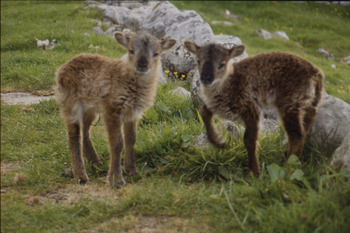
Soay lambs on Hirta.

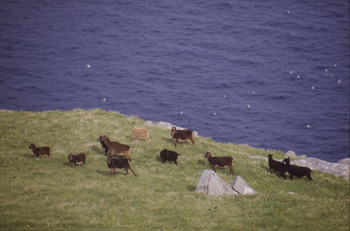
Soay ewes grazing on the north side of Hirta.

Curiously, the ‘feral’ sheep on Soay had apparently been owned by the laird [the landowner] from time out of mind (Napier Commission: http://napier-outerhebrides.blogspot.com/2010/05/st-kilda-2-june-1883.html; contra Williamson & Boyd Reference Williamson and Boyd1960, 76). The islanders valued both their wool and their meat. When they went to Soay, they took dogs which, like dogs from other parts of northern Scotland (Kinsman Reference Kinsman2001, 47) did not round up sheep; rather, taking advantage of the Soays’ scattering instinct, they targeted and pinned down individuals until humans could secure them (they had filed-down front teeth). There is a good mid seventeenth-century description from the Faroe Isles of how these dogs operated:
every dog taketh his sheep by the wool, and throws it down, without ever biting the sheep in the flesh, and when the sheep are so overthrown, they lie still and dare not rise till the men come and take them up; these dogs are so taught, that when the shepherd will have but one lamb of the flock for one occasion, he goeth in the fields with his dog, and what lamb he only points at, the dog taketh the same without hurting it. These dogs are long and small almost like grey hounds, and when they are well instructed, they are esteemed as of equal price with a cow; because of such sheep hunting, the people must also run very much … and such continual running maketh here many swift folks that are good and lasting runners (Debes Reference Debes1676, 130–31)
The methods employed to capture Soays seemed extraordinary, even chaotic, to outsiders who witnessed them, like the young school-teacher George Murray in 1886–87 (Kerr Reference Kerr2013) or the Kearton brothers in 1895 (quoted in Love Reference Love2009, 225). It was hard and tricky work, with sheep sometimes plunging to their deaths off the cliffs, and men having to descend Soay's precipitous sides in order to drive sheep up to the island's high plateau. A Soay sheep could jump ‘over a man's head’Footnote 39 and there were tales of ‘groups of sheep hunting the dogs instead of dogs hunting the sheep’.Footnote 40 In 1698 Martin Martin wrote that he had seen St Kildans pursuing the sheep ‘nimbly down the steep descent, with as great freedom as if it had been a plain field’ (Reference Martin1986, 21); his text seems to imply that they did not use dogs. George Murray went to Soay on 31 December 1886 to help obtain meat for the celebration of old Christmas Day on 6 January. On this occasion the party had no dogs, and caught the sheep by cornering them in ‘crevices’ and then effectively rugby-tackling them; two sheep were lassoed on the cliff-edge. They went to Soay again on 8 January, this time with dogs, to obtain meat for the celebration of old New Year's Day; it took Murray, then in his mid 20s, half an hour to climb to the summit plateau. By the time he got there, those ahead of him had already captured four sheep; the party caught 20 in an hour and a half. Only one boat (presumably quite a large one) was used; some sheep were precipitated into the water and had to swim. Since three men were left below in charge of the latter, the party must have consisted of about a dozen men—roughly the number of households then with adult males, if the very old are excluded (estimate based on Lawson Reference Lawson1993). For the return journey, with a dozen men and 20 sheep in one boat, they fearlessly took the frightening route through the narrow channel between Dun and Hirta (Kerr Reference Kerr2013, 45, 85–7).
Wool was plucked rather than sheared, when the men were on Soay, and doubtless that already shed was collected. According to Elwes (Reference Elwes1912, 27), ‘the wool of the Soays is very good and soft, but difficult to spin alone, because it is so short. Most of it is worked up with the wool of the other sheep, but some is spun alone for gloves and socks. It never exceeds 1½ inches [3.8 cm]’. Apparently tweed cloth looked ‘exceedingly pretty’ when Soay wool was mixed with the ‘Blackface’ wool of Hirta and Boreray.Footnote 41 In Edwardian times the ‘authenticity’ of St Kilda tweed was compromised by the import of wool,Footnote 42 perhaps partly in response to the growing menace of sheep scab, which was unknown on St Kilda until the import of modern breeds.Footnote 43 It seems unlikely that Soays actually contributed much wool to the ‘St Kilda tweed’ manufactured in the 1930s; their transfer to Hirta was probably more about publicity and niche marketing than the practicalities of textile production.
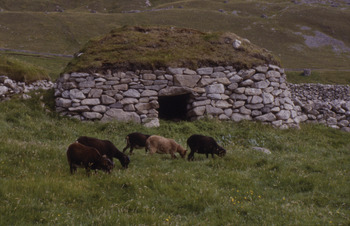
Traditionally, animals intended for slaughter were taken off live, the laird charging ‘only two shillings and sixpence’ [2/6, £0.125, 12½p] for every carcass in the 1890s (Kearton Reference Kearton1898, 41). Whether the islanders paid scrupulously for all animals taken from Soay when the factor was absent is an interesting question. Consumption of large quantities of meat, whether fresh or dried (reestit), for example after a funeral or at a reitach [betrothal feast], was important; the islanders evidently enjoyed Soay meat enough to make regular arrangements to get hold of it, and sometimes to pay for it too. According to the naturalist Ronald Lockley (Reference Lockley1960, 76), ‘[Soay] flesh is dark but well-flavoured, lean and surprisingly tender—superior, in my opinion, to Welsh lamb. Fat is stored in the body cavity, not between the lean flesh and skin’. McDiarmid (quoted in Love Reference Love2009, 225) compared Soay meat favourably with that of Blackfaces. The islanders dried meat in their numerous cleits (outhouses constructed of stone and turf: see Figure 7). Pure wind-drying was a tricky enterprise; timing was critical, since it had to be done when flies were dormant and the weather both cold and windy. If the St Kildans could manufacture or obtain salt (and ideally get some sugar), they would have been able to soak the meat in brine for 10–21 days before drying it either in cleits or in their roofs (where it would be partially smoked, like the reestit mutton of Shetland: Kennard Reference Kennard2014, 147–9).
A cleit (storehouse) at Village Bay, with Soay ewes in the foreground.

The island of Dun has no ‘ay’ (‘island’) suffix, and was probably separated from Hirta when the Norse language was in abeyance, that is in the later Middle Ages; the St Kilda mouse, accidentally introduced to the archipelago by the Norsemen, had colonised Dun before it was cut off (see Fleming 2005, 64–5). Soay sheep were kept on Dun in the early years of the nineteenth century and as late as 1877 (Love Reference Love2009, 224). Evidently the islanders appreciated the fact that Dun was more accessible than Soay, providing a sheep reserve where the domineering Soay rams were literally ‘insulated’ from the less feisty breed of sheep kept on Hirta. At some earlier stage, then, and possibly more than once, the islanders must have exported a small flock from Soay to Dun.
Retrospect and prospect
By the early nineteenth century, naturalists were aware of the existence of the primitive race of sheep which we now call Soay, and its relevance to the history of domestication. However, obtaining Soays, in order to study their characteristics and behaviour, or conduct breeding experiments, was much more problematic. It was thus fortunate that General Pitt-Rivers was acquainted with Norman MacLeod, the sole owner of Soays in the early 1880s. And it was also a felicitous circumstance for Soay-seekers that Norman's son and heir, Norman Magnus, lived in an archaeo-zoological hot spot in Sussex.
Doubtless the menagerie-mongers would have got their hands on Soays anyway in due course. It must have been hard to refuse the Duchess of Bedford, cruising the Hebrides in the years before the First World War with her tame naturalist, William Eagle Clark, in attendance, in the large and impressive steam yacht Sapphire II, which, run at top speed, consumed 15 tons [13.6 metric tonnes] of coal a day (Bedford Reference Bedford1968, pl. 16). For archaeology, a greater stroke of fortune was Pitt-Rivers’ serendipitous inheritance of a large estate from a second cousin. After he had obtained his Soays, their bones became available for studies in comparative anatomy. However, the first comprehensive metrical description of the Soay skeleton had to wait until the work of Clutton-Brock and colleagues (1990). In this study, it was noted that the legs of modern Soays were shorter than those of sheep from the Neolithic site of Links of Noltland (Westray, Orkney), but it was not clear whether this was a function of breeding over time or an island adaptation (Clutton-Brock et al. Reference Clutton-Brock, Dennis-Bryan, Armitage and Jewell1990, 40). It also emerged that Soays are a good deal further removed from their mouflon ancestors than are the feral sheep of Corsica and Sardinia (in terms of cranial capacity, length of leg and the nature of the pelage). Understanding of the genealogy of sheep breeds and races—facilitated by bones uncovered on archaeological excavations, work on ancient textiles and, increasingly, on sheep DNA—will always be a work in progress.
Thanks to the interest of Edwardian park owners, Soays are now widely available for experimental studies. Studies of the ethnography of regions where ‘primitive’ sheep races were still kept in the eighteenth and nineteenth centuries—including St Kilda itself—have also made significant contributions to our understanding of the deep history of sheep management. The Soay sheeplifts were the product of a brief but mutually convenient alignment of the commercial concerns of a tweed merchant, the hiraeth of exiled islanders and the half-formed plans of a rich young amateur would-be naturalist. Their unintended consequence was to facilitate the research-intensive and invaluable Soay Sheep Project.
Harman (Reference Harman1997) has documented the rural ethnography of St Kilda in considerable detail. For me, what emerges from this is the sheer ‘cultural competence’ of the islanders—the range of their practical craft skills, the diversity and challenges of their work and their lifeways in general. The close relationships between their skill sets, their elaborate and complex material culture, and their social organisation and behaviour patterns, imply a deep-seated adaptation to the St Kilda environment which is surely considerably older than the post-medieval period from which the recorded ethnographic evidence is derived.
The holistic character of these lifeways is well demonstrated by the ramifications of sheep husbandry. As Jorgensen has pointed out, ‘survival in an open boat in the cold waters of the North Atlantic demands warm, water-repellent clothing and bedding’. Counter-intuitively perhaps, sheep husbandry and maritime competence were intimately connected. Also necessary was ‘sophisticated knowledge of the properties of fibres, and when and how to harvest and process them. For pullovers, wether wool was the best; for sailors’ mittens, white ewe-lambs with especially shiny wool were already selected in their first year, the wool only to be harvested at the age of three. The pasture and the harvesting date were also important’ (Jorgensen Reference Jorgensen, Pritchard and Wild2005, 65).
On St Kilda itself, such cultural complexity is symbolised by the woollen sail of the islanders’ boat, as recorded in the 1830s. The boat was collectively owned, so its sail ‘was made up of 21 patches of varied sizes and shades … and of coarse plaiding, the contribution of 21 partners, in proportion to their share of land and rocks severally. The reefs are as varied as the sail, and of old garters or woollen ropes’ (MacLean Reference MacLean1838, 46). When the islanders mounted expeditions to obtain wool and meat from Soay sheep, their boat was propelled (when conditions were favourable) by a woollen sail, made up of the contributions of individual families to the collective; the crew was kept relatively warm and dry by woollen clothing. The process of turning wool into clothing and blankets was rich in ramifications, implicating the gendered division of labour, an understanding of dyeing and the sources of natural dyes, the sociality of women and the technology of handlooms, not to mention the accumulation and storage of urine (used as a mordant for dye). The transfer of Soays to the richer pastures of English parklands over a century ago has made a most useful contribution to the knowledge and understanding of prehistorians and archaeozoologists. As we contemplate them, nibbling the fescue in the shadow of yet another reconstructed roundhouse, we should be aware of what has been learned from their long sojourn on their eponymous island, many miles away.
This article is dedicated to the memory of Eric S. Higgs (1908–76).
Acknowledgements
I thank two referees and the editor of CAJ for their input to the improvement of this article, and also a sheep researcher at St Kilda, who, on being asked what it takes to be a successful Soay ram, provided a succinct if unprintable answer.