Inborn errors of metabolism (IEM) are a group of genetic disorders that can have serious clinical consequences for an affected neonate or young infant. Whereas the incidence of each specific metabolic disorder is rare, their collective importance is deemed to be of considerable public health significance (18). If undiagnosed and untreated, these disorders can cause irreversible mental retardation, physical disability, neurological damage, and even death (17). The most common disorders of IEM are phenylketonuria (PKU) and medium chain acyl-coA dehydrogenase (MCAD) deficiency (15;18). In the United Kingdom (UK), PKU and congenital hypothyroidism are the only disorders screened for routinely. The UK screening program for PKU is based on the application of three standard methods: the Guthrie bacterial inhibition assay, fluorometry, and chromatography.
Tandem mass spectrometry (tandem MS) has the ability to detect a much wider range of metabolic disorders than conventional methods (9;15;18). Analysis for these additional conditions can be undertaken using the same blood spot sample provided for PKU: no additional specimen collection or sample preparation is required. Analysis of samples by tandem MS is rapid, can be performed in large batches and, with automatic sample introduction, processed in 24 hours (4).
In 1997, two reports were published (15;18) by the UK National Health Service Research and Development Health Technology Assessment (NHS R&D HTA) Programme, examining the case for extending the neonatal screening program. These reports were generally favorable to the introduction of some screening for selected disorders but with caveats. They placed a high priority on evaluating MCAD deficiency and recommended further studies on the application of tandem MS to neonatal screening. The failure to fund these studies left many stakeholders disappointed and frustrated (8;16;19). However, with the subsequent widespread, international development and adoption of newborn-screening programs using tandem MS (11), the NHS R&D HTA Programme commissioned an updated review of the evidence. We conducted an economic modeling exercise synthesizing evidence on the clinical and cost-effectiveness of neonatal screening for IEMs using tandem MS compared with conventional screening technologies for a UK neonatal screening population, first for PKU alone and then for PKU and MCAD deficiency (14). This study summarizes the key findings of the HTA review (14).
METHODS
We used probabilistic modeling to estimate the marginal costs and life-years gained of tandem MS compared with conventional screening. A sequential approach was adopted, the first stage considered the economic implications of replacing conventional screening technologies with tandem MS for PKU alone. The second stage then considered the incremental cost-effectiveness of adding a simultaneous screen for MCAD deficiency alongside the screen for PKU. The economic viewpoint adopted was that of the UK healthcare system: indirect costs were not included. The primary outcome measure was expressed in terms of life-years gained.
Evidence on the diagnostic test characteristics of the tandem MS were obtained from systematic reviews reported elsewhere (14;15;18). Diagnostic study types that provided data on the sensitivity, specificity, or positive predictive value of neonatal screening using tandem MS for PKU and/or MCAD deficiency up to June 2003 were included in the reviews. The model adopted a conservative assumption that the false-negative rates for PKU were the same for existing and tandem MS screening modalities (.02 percent of screened cohort). As the overall false-negative rate was assumed to be the same for both options, all future treatment costs and morbidity outcomes were assumed to be the same for both the existing and new technology. Therefore, all further costs were excluded from the PKU model. The evidence (14) also suggests that neonatal screening using tandem MS has produced no false-negatives so far. However, this was regarded as potentially overoptimistic; therefore, it is assumed that tandem MS will generate one false-negative for every one million samples screened.
Costs for all existing technologies were obtained from a previous HTA report (15) and revalorized to 2001 using the Health Services Cost Index. These values were used to obtain a probabilistic estimate of mean cost per specimen examined for the current screening program. In a similar manner, a probabilistic estimate of mean cost per specimen examined was obtained for tandem MS technology, based on current capital and operating costs. With relatively high fixed capital costs, unit costs vary considerably according to the volume of samples processed by a single system. Therefore, mean cost estimates were calculated for different operating volumes, from 20,000 up to a maximum of 80,000 samples annually, with a range estimate based on 50,000 to 60,000 samples as a most likely operating volume for a single system.
The parameters used for the PKU model are summarized in Table 1. Table 2 summarizes the parameters used in assessing the combined screening for PKU and MCAD deficiency. All future costs were discounted at the (then) appropriate discount rate of 6 percent and all future life-years gained at 1.5 percent. A monograph published in the HTA series provides further details on methods and modeling assumptions (14).


The economics of tandem MS screening at different cost-effectiveness threshold values (i.e., society's willingness to pay for an additional unit of health benefit) are presented using cost-effectiveness acceptability curves. Monte Carlo simulation is used to undertake multivariate sensitivity analysis for uncertainty on all random variables and parameter assumptions in the model.
RESULTS
The costs of using tandem MS compared with conventional technologies for PKU screening alone are shown in Table 3, these results are presented for a cohort of 100,000 neonates screened and for an operating volume of between 50,000 and 60,000 samples per tandem MS system. It is estimated that the substitution of tandem MS for the conventional PKU screening technologies alone would add £54,900 per 100,000 neonates for no additional health gain.

The incremental costs of using tandem MS for PKU screening were then included within the model used to evaluate the impact of adding a simultaneous screen for MCAD deficiency. At an operating volume of 50,000 to 60,000 specimens per year per tandem MS, the mean incremental cost for PKU plus MCAD deficiency screening for a cohort of 100,000 neonates was −£17,298. This cost saving is also associated with a mean incremental gain of 57.3 (28.0, 91.4) life-years per 100,000 neonates screened. Table 3 summarizes the results.
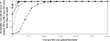
Figure 1 shows the cost-effectiveness acceptability curves for different operating volumes. As might be expected, the probability of cost-effectiveness increases at higher operating volumes of a tandem MS system. Operating at a capacity of between 50,000 to 60,000 samples per system and at a low threshold value of £1000, the probability that using tandem MS is cost-effective is .86; at a modest cost-effectiveness threshold value of £5,000 per life-year gained, the probability is .99.

Cost-effectiveness acceptability curves for phenylketonuria(PKU) plus medium-chain acyl-coA dehydrogenase (MCAD) deficiency screeningusing tandem mass spectrometry (MS) compared with conventional screening forPKU alone. Laboratory operating volume(specimens per annum). –[diam ]–, 20,000; —○—, 40,000; —[utrif ]—, Range 50,000–60,000; –○–, 70,000; –[squf ]–, 80,000.
DISCUSSION
This assessment indicates that substituting tandem MS for existing technologies for the screening of PKU alone could not be justified economically. However, replacing the existing PKU screening program with a tandem MS-based PKU plus MCAD deficiency screening program would be economically attractive.
For any screening technology false-positive results will incur additional resource costs and may impose psychological “disbenefits” on those affected. This assessment incorporated uncertainty in the false-positive rate of tandem MS for MCAD deficiency and additional resource consequences of these false-positive results.
No data were available at the time to quantify the potential psychological “disbenefits” associated with false-positive results. Some information has been published more recently, but these data are based on a broad range of IEM disorders and are not confined to MCAD deficiency (20). In addition, this research also found that parents in newborn screened groups had significantly lower stress than parents in the clinically identified group. Moreover, our assessment indicates that the ratio of false-positives to true-positives generated by tandem MS for MCAD deficiency is approximately 3:1, markedly less than the 50:1 ratio often quoted but based on a broad range of IEM conditions. To impact on the results of this assessment, the negative psychosocial effects that potentially arise from three false-positives would need to be large enough to offset the long-term quality-of-life effects from adverse outcomes preventable through screening both for the affected child and parents. The balance of these quality-of-life effects would still appear to favor screening in the case of MCAD deficiency.
Health benefits within the economic model were expressed in terms of gains in life-years only. However, the absence of quality of life weights for MCAD deficiency almost certainly underestimates the health benefits of screening, because no account is taken of reduced quality of life for those affected by moderate to severe disabilities; affects mainly avoided by early detection and treatment afforded by screening. Our model assumes that mortality in MCAD deficiency cases occurs only in cases presenting symptomatically. Studies of screened cohorts consistently have reported no deaths (3) in infants found to have MCAD deficiency once systems for adequate clinical follow-up are established (21;22), and no cases of appreciable cognitive impairment or neurological damage have been reported (5;21).
At the same time as our review of evidence was under way, the Department of Health National Screening Committee commissioned a 5-year pilot study on the clinical and economic implications of extending neonatal screening of PKU to include MCAD deficiency using tandem MS (13). The initial phase of this study has developed screening and diagnostic protocols, initial clinical management protocols and patient and health professional information resources. This study commenced screening in March 2004 and will continue for 24 months. As part of our modeling work, a value of information analysis was also performed to quantify the value of additional research to reduce uncertainty in random variables and parameter assumptions. The results reported elsewhere (14) show that the single most important driver of cost-effectiveness is the level of future disability costs incurred as a consequence of any neurological and cognitive impairments caused by failure to identify and treat MCAD deficiency cases early and the extent to which these costs would be avoided through screening detection.
The economic evidence around screening for other IEM conditions using tandem MS is far more problematic at present; therefore, no conclusion as to relative cost-effectiveness could be reached without additional research (14). Our modeling of the economic evidence provides important priorities for future research into possible extensions of neonatal screening using tandem MS. This prioritizing demonstrates that one of the most important drivers of relative cost-effectiveness is difference in long-term outcomes; that is, future disabilities incurred as a consequence of any neurological and cognitive impairments caused by IEM disorders and the extent to which these effects, and their associated costs, can be avoided through the early detection and treatment afforded by screening.
CONCLUSIONS
In conclusion, the results of our review of the available evidence and modeling of cost-effectiveness indicates that the introduction of tandem MS into a UK neonatal screening program for PKU and MCAD deficiency combined would be economically attractive.
CONTACT INFORMATION
Abdullah Pandor, MSc (a.pandor@sheffield.ac.uk), Research Fellow, School of Health and Related Research, University of Sheffield, 30 Regent Street, Sheffield S14 DA, UK
Joe Eastham, PhD (jeastham@teamwork-ms.co.uk), Teamwork Management Services Limited, Top floor, Eagley House, Deakins Business Park, Egerton, Bolton BL7 9RP, UK
James B. Chilcott, MSc (J.B.Chilcott@Sheffield.ac.uk), Senior Research Fellow, Suzy Paisley, MA (s.paisley@sheffield.ac.uk), Research Scientist, School of Health and Related Research, University of Sheffield, 30 Regent Street, Sheffield S1 4DA, UK
Catherine Beverley, MSc (catherine.beverley@cumbriacc.gov.uk), Knowledge Manager, Adult Social Care Directorate, Cumbria County Council, Civic Centre, Rickergate, Carlisle CA3 8QG, UK
The UK National Coordinating Centre for Health Technology Assessment Programme funded the study. The opinions and views expressed are of the authors and not of the funding bodies.