

In many developing countries around the world, a person’s chances of living a healthy and educated life depend, to a large extent, on the part of the country in which that person lives. In Colombia, in particular, the differences between municipalities are striking. For example, a mother in the municipality of Apia (Risaralda) has a higher chance of dying after birth than a mother in the war-torn Central African Republic. But less than 60 kilometers away, in Pereira (Risaralda), a mother’s chances of surviving labor are similar to those in Uruguay.Footnote 1 In Colombia, and in many other Latin American countries, we can find similar contrasts for other social indicators (Otero-Bahamón Reference Otero-Bahamón2016, 2019). This responds to what Harbers and Steele (this issue) name differentiated and disjointed states. What causes such stark differences in living standards within countries? What explains differentiated and disjointed states? What can countries do to lessen such variations?
In the quest for the causes of subnational variation, this article builds on key health geography concepts to point to an aspect of the national policy arena that drives subnational disparities in living standards: the sensitivity of policy to the particularities of place (Curtis et al. Reference Curtis, Riva, Rosenberg and Brown2010; Curtis and Riva Reference Curtis and Riva2010). Place-sensitive policies make adaptations to the way social services are provided, so that they are better equipped to deal with the different characteristics of places that matter for well-being. When the national policy framework for social services is place-sensitive, provision is facilitated in places that are more rural, poorer, or inhabited by ethnic minorities. But if the national policy framework is place-blind and employs a one-size-fits-all approach, services such as health and education take a toll in these locations. In a nutshell, the argument of this article is that the health and education that people in a place enjoy is not exclusively a matter of subnational determinants but can be greatly affected by the degree of place-sensitivity in the national policy environment.
To develop and test this argument, this study focuses on Colombia’s health sector. In 1992 and 1993, policymakers devised an overarching health reform that created a structured competition model, in which private and public health insurers and providers would compete to expand healthcare in a cost-effective manner. But although the plan yielded good results in coverage and access, public health experts and bureaucrats warned that the market of insurers was not working everywhere.
Using primary and secondary sources (interviews, documents, and newspaper archives), this article outlines the healthcare reform of 1993 that introduced a model of public and private insurance markets. A careful examination of the Colombian healthcare reform reveals that reformers ignored some place-based characteristics that mattered for health and that would interact with the proposed marketization. In concrete terms, reformers did not take into account the notion that markets might work differently in sparsely populated, small, and rural areas. The concept of place-sensitivity surfaced as an aspect that was missing from the Colombian health reform.
Through an econometric exercise, this study tests whether the place-blind feature of the Colombian health system has different impacts on health outcomes across different types of municipalities. The positive results of this analysis provide evidence that place-sensitivity (or place-blindness) plays an important role in the variations in subnational welfare and merits conceptualization and theorization for future applications in other studies of social policies and their subnational variation.
In this regard, this article argues that place-sensitivity is an important aspect of social policies that has not been taken into account in studies of social policy expansion and universalism (Esping-Andersen Reference Esping-Andersen1990; Huber and Stevens 2012; Martínez Franzoni and Sánchez-Ancochea Reference Franzoni and Sánchez-Ancochea2016; Garay Reference Garay2017; Pribble Reference Pribble2013), although it has been acknowledged by public health scholars and health geographers. Scholars have provided explanations for why a country designs more universal or inclusive welfare regimes that aim to reach the poorest members of society, but have forgotten that in order to accomplish this goal, social policies must also be “pro-place” and organized to cater to the particularities of service provision in the different locations where the poor live. In fact, and as this study will show in the case of Colombia´s healthcare, a social policy can be designed to incorporate the poor, but it will still exclude inhabitants of certain vulnerable areas when the model of provision is not adapted to the particularities of place. Thus, place-sensitivity is an aspect that policymakers should take into account in order to realize truly universal and inclusive welfare regimes that reach all members of society.
Place-sensitivity is a feature embedded in the design of social policies, and therefore it calls into question the traditional division between “policy design” and “policy implementation” (Niedzwiecki Reference Niedzwiecki2016; Carnes and Mares Reference Carnes, Mares, Boix and Stokes2007). Extant scholarship tends to explain “policy design” with national-level processes, such as democracy or political competition, while, in the face of stark subnational variations, “policy implementation” is explained by subnational-level determinants. When scholars attempt to make sense of variations between municipalities and provinces (Snyder Reference Snyder2001), they ignore the national political and policy arena and focus on subnational characteristics. The national arena practically disappears because, according to the methodological parlance of the subnational method, it is constant across subnational units and does not explain variations.
As Kent Eaton ascertains in his article for this special issue, this theoretical approach is problematic because it cannot be assumed that subnational jurisdictions are autonomous and free from pressures and influence from the central state. In fact, the national policy framework governing a service cannot be considered as constant across localities, because policies are never “place-neutral” but always have concrete spatial implications (Barca et al. Reference Barca, McCann and Rodríguez-Pose2012; Garcilazo et al. 2010). The likelihood of even policy implementation across places largely depends on the degree to which the effects of place are built into the policy design. Place-sensitivity is, in essence, an attribute of policy design that facilitates even policy implementation across a country.
This study begins with a theorization of place-sensitivity as a determinant of subnational public goods provision. Next it focuses on the design of Colombia’s health reform to show how place was absent from the policymaking process. To test the theory, the third section performs a quantitative analysis that shows how the place-blind feature of Colombia’s healthcare regime—the market of insurers—negatively affected the health outcomes of less-populous localities. The concluding section discusses implications.
Place-Sensitivity and Public Goods Provision
What leads to better health, income, sanitation, and education? Recent studies on the sources of universal or inclusive social policies stress the role of democracy (Huber and Stevens Reference Huber and John2012), left party rule (Huber and Stevens 2012; Pribble Reference Pribble2013), political competition (Pribble Reference Pribble2013; Garay Reference Garay2017), and social mobilization (Garay Reference Garay2017). But even in countries with universal welfare regimes, stark variations across areas are observed, motivating the majority of scholars to shift attention to subnational determinants. Human geographers investigate what aspects of place matter for well-being (Macintyre et al. Reference Macintyre, Ellaway and Cummins2002; Andrews et al. Reference Andrews, Joshua Evans and Masuda2012; Powell Reference Powell1995; Curtis et al. Reference Curtis, Riva, Rosenberg and Brown2010).
In a groundbreaking work, Macintyre et al. identified three types of place-based explanations: compositional, contextual, and collective. Compositional explanations refer to characteristics of individuals who cluster in places, such as their income, race, gender, or level of education. Contextual explanations refer to elements of the local physical and social environment, such as the quality of water, air, or government; the physical location in space; or other aspects likely to be shared by the people in a place. Collective aspects refer to “sociocultural and historical features of communities” like religion, traditions, or cultural practices (Macintyre et al. Reference Macintyre, Ellaway and Cummins2002). Locations across a country have diverse combinations of compositional, contextual, and collective aspects that have different implications for well-being, an idea that is built into the concept of “social determinants of health” put forward by the new public health (Curtis et al. Reference Curtis, Riva, Rosenberg and Brown2010, 329).
In the case of subnational research on Latin America, political scientists acknowledge (or control for) the impact of several compositional and collective features and focus on the theorization of political contextual determinants, such as the quality of the subnational state (Harbers 2015), subnational political competition (Pribble Reference Pribble2015; Alves Reference Alves2015), social capital (Díaz-Cayeros et al. Reference Díaz-Cayeros, Magaloni and Ruiz-Euler2014), democratic institutions (Touchton and Wampler Reference Touchton and Wampler2014), or partisan alignments (Niedzwiecki 2018). A more recent and still incipient approach focuses on the national and subnational determinants that account for cross-national differences in the degree of subnational variation (Otero-Bahamón Reference Otero-Bahamón2016, 2019; Giraudy and Pribble this issue). Both the literatures on human geography and subnational politics agree that place matters for social outcomes.
The argument of this study builds on—and departs from—these research traditions to stress that not only local aspects influence local outputs. In line with what Eaton (this issue) terms a “hybrid approach,” this study posits that nationaland subnational-level causes interact to influence subnational outcomes. In concrete terms, the policy environment that organizes the social services at the national level also influences subnational social outcomes by determining which place-based aspects matter for well-being and to what degree. The degree of “place-sensitivity” refers to an aspect of the institutions, laws, rules, and regulations that organize a social service that accentuates, mitigates, or leaves untouched the impact of placebased features on well-being. Social policy frameworks can have different degrees of place-sensitivity, ranging from place-sensitive to place-blind. The place-sensitive end takes into account place-based features in the design of policies so as to mitigate their negative impacts on health or education. Place-blind policies, in contrast, reflect a one-size-fits-all approach for different subnational contexts, leaving untouched or even accentuating the negative impacts of certain features of place on well-being.
Two examples for the health sector: if, for instance, the health system of a country is organized around private insurance, as in Chile, Mexico, or the United States, population density of places becomes important in calculating insurance premiums. This occurs because healthcare provision is more expensive in places where few people live. In such a system, population density is a place-based aspect that influences insurance consumption and, as a consequence, healthcare access and health outcomes. But the role of population density in health is not automatic; it is mediated by the fact that the national policy framework requires that individuals buy insurance. In this case, a place-blind approach would do nothing to mitigate the impact of population density on insurance premiums, whereas a place-sensitive approach would design a system of area-based subsidies to ensure that people in lowdensity places manage to purchase insurance. In the place-blind scenario, a placebased feature (population density) is activated; in the place-sensitive scenario, the impact of the place-based feature on health is mitigated.
Now let us consider the case of Peru, where ethnic minorities have particular practices regarding maternal and infant health. Among many women in the highlands, it is customary to give birth in the standing position, so women have preferred to give birth at home rather than in hospitals, where they would give birth in a horizontal position. Home births in Peru are associated with higher risks of maternal and infant deaths (MINSA 2005, 14). A place-sensitive approach would design a health system that embraced the cultural practices, so that women would feel less antagonistic toward birthing in a health facility. A place-blind policy framework, in contrast, would not consider this aspect. Place-sensitivity mitigates the impact of a collective aspect—the cultural practices surrounding childbirth—on health outcomes, whereas a place-blind approach leaves the impact of culture on maternal and infant health untouched. Thus, place-blind policy frameworks accentuate or ignore the impact of certain place-based determinants on well-being, whereas place-sensitive policies acknowledge them, adapt the ways the service is provided, and by doing so, mitigate their impact.
When place-blind frameworks prevail, the provision of a service might become unattainable, due to costs or the absence of necessary requirements, particularly in distant, rural, less densely populated, and poorer locations (Garcilazo et al. Reference Garcilazo and Tompson2010).
Types of Place-Sensitive Policies
Place-sensitive policies come in different varieties, depending on their relationship to the overarching policy environment. They can relax the existing standards of provision to meet the conditions of places, add resources to places to meet the model of provision, or adapt the standards of provision altogether to cater to the conditions of places.
The first type of place-sensitive policy relaxes the standards of provision to facilitate it in certain areas. Sometimes it might be impossible to provide a service with the same characteristics or quality across all locations, making it necessary to make exceptions to rules. This type of place-sensitivity might sacrifice quality to expand coverage, but without it, the service might not be provided in the first place. Examples of place-sensitive policies of this sort include an educational regulation that allows localities with fewer than a certain number of residents to hire teachers without a master’s degree, or a norm that provides different specifications for rural health posts than for urban health posts. In these instances, the standards of provision are relaxed for rural or less-populous locations so that education and healthcare can be provided. Education and health services in places that receive this type of place-sensitive adaptation might be subpar as a result, but at least these areas have coverage.
A second type of place-sensitive policy assigns additional resources to places with certain characteristics in order to meet the standards or fit the model of provision. In development literature, these initiatives are called place-based policies (Duranton and Venables Reference Duranton and Anthony2018). In contrast to the first type, this policy framework does not lower the standards to meet the more precarious conditions of some places but instead matches or compensates the local conditions to provide access to a social service without affecting quality. For instance, in a country like Brazil, with a primary healthcare model that assigns a team of doctors and nurses to every ten thousand people, a place-sensitive adaptation allows the assignment of a team in areas with dispersed population without reaching the population threshold. To compensate for the lack of population, the place-sensitive instrument assigns more teams of doctors and nurses to some places, so that the residents’ access to healthcare is similar to more urbanized locations.
Other place-sensitive policies of this type would include an insurance-based healthcare system that subsidizes insurance in places where provision is costlier, or an educational regulation that establishes various student-per-teacher ratios depending on population size and density. In these examples, more resources are assigned to certain places in order to compensate for the place-based aspect that negatively affects provision. Through this type of place-sensitive instrument, it is possible to expand service coverage while maintaining quality.
A third type of policy devises a different model of provision for certain places. This type of policy acknowledges that in some areas the service cannot be adequately provided in the current model and devises a different way to deliver it. For instance, in a health system organized around private insurance, a place-sensitive adaptation of this type would provide public healthcare in areas where insurers have no interest in doing business because of the high costs of provision.
Operationalization of Place-Sensitivity
In studying place-sensitivity, it is important to determine how to differentiate a place-sensitive policy environment from a place-blind one. To start, one must use existing local knowledge and available research to identify the place-based conditions that affect the provision of social services and social outcomes. Such knowledge will probably include rurality, distance, population density, ethnicity, and income, although the analysis can point to other aspects. It is important to keep in mind that some place-based conditions might become important for well-being because the policy environment activated their effects.
Second, one must estimate the proportion of people who live in places that exhibit either the well-being–promoting or well-being–damaging condition. I consider that a place-based aspect deserves an adaptation when at least 10 percent of the population lives in places that exhibit the so-called condition. To be fair, it is hard to establish these estimates without a degree of arbitrariness, but I consider that 10 percent constitutes a sufficient amount of people to deserve an adaptation to the policy framework.
For those place-based determinants that reach the 10 percent threshold, one must ask whether the set of policies that organize the social sector takes into account the impact of the identified place-based factors or not. Are aspects such as rurality or ethnicity ignored outright by the policy environment? Are some place-based determinants ignored and others considered? To determine this, it is useful to survey all the policy instruments in a sector and search for the different types of place-sensitive policies outlined above.
Next, one must evaluate the aptness of such instruments. Sometimes countries devise policies that are not really suited to the place-based challenge under consideration. For instance, consider an instrument that introduces variation in the per capita amount (or capitation fee) that the central state transfers to subnational units to provide a service, so that there are more funds in areas where provision is costlier. One must evaluate whether those price differentials are sufficient to pay for higher costs or are just symbolic acknowledgments, not meant to solve the challenges of provision. More apt place-sensitive instruments mean higher place-sensitivity.
Furthermore, one must gauge the quality of the place-sensitive instruments. Policies of the first place-sensitive type delineated above, which lower the standards of provision in certain places, have less quality than policy instruments of the second and third types—those that add resources to places or devise entirely different models of provision.
A country´s policy environment is increasingly more place-sensitive to the extent that more place-based characteristics are considered in the policy framework, the place-sensitive policy instruments are more apt to deal with the provision challenges of the place-based characteristics, and the place-sensitive instruments are of better quality (second and third type, as per the typology). Deviations from these move a country closer to the opposite, place-blind approach.
Let us consider an example. In an existing country, it is widely acknowledged that rurality negatively affects the provision of educational services. We first estimate the proportion of people who live in counties labeled as rural. Let us say that, in this case, 30 percent of the population lives in rural municipalities. Then we must survey the regulations, rules, mandates, laws, practices, and institutions to find the instruments that make adaptations to the provision of educational service for rural areas. If there are no such instruments, the country is place-blind with respect to rurality. If the contrary is the case, after having identified the policy instruments, we must evaluate their aptness to deal with variations in the degree of rurality and their capacity to provide services of similar quality in rural and urban areas. If the policy instruments are apt and of high quality, then the country is place-sensitive with respect to rurality.
Countries will often employ a variety of instruments to address the place-based challenges of provision. They can combine a place-blind general framework with place-sensitive policies that capture the locations that are left behind, or they can adopt a place-sensitive general framework that is more easily adaptable to the particularities of places.
Exploring the Colombian health sector shows how the reformers in the 1990s did not consider the impacts of some place-based characteristics in the design of the new healthcare regime. As a result, they designed a place-blind policy with harmful effects in a particular type of location.
Place-Sensitivity in Colombia’s Healthcare Regime
In Colombia during the reform process of 1993, policymakers ignored the possible impacts of several place-based aspects, such as population size, population density, and rurality, on the performance of markets. But a few years after the rollout of the new system, policymakers realized that the new healthcare regime “was not working” in places with such characteristics. Despite this, no place-sensitive approach was introduced.
A study of place-sensitivity in the Colombian healthcare case is relevant for two main reasons. First, several scholars and policymakers acknowledge that Colombia’s healthcare system has succeeded in increasing equity between the poor and the nonpoor: universal health insurance was reached in 2011, and the country has the lowest out-of-pocket health expenditure of all Latin American countries (Giuffrida et al. Reference Giuffrida, Carmen Elisa and Giedion2008; Montenegro and Bernal 2013, 9; Ewig Reference Ewig2016, 208). Acknowledging the negative impact of the marketization of social services on subnational inequality is thus important in a context in which reforms of this type are constantly on the table. Second, the findings could apply to other countries with similar models of social service marketization with private and public actors. In Argentina, Mexico, Chile, and the United States, private insurers are important participants in the provision of healthcare.
In 1991, Colombia’s Constituent Assembly established that health would be a basic right guaranteed by the central state. To materialize that mandate, technocrats in the Ministry of Health (MoH) devised a health reform later known as Law 100. Juan Luis Londoño, the health minister appointed to carry out that task, was convinced that the best way to guarantee universal healthcare was by opening the sector to the participation of private actors and by expanding insurance coverage. The health reform created a “structured competition” model based on three principles: the creation of a market for providers and insurers with the participation of private and public actors; the decentralization to the municipal level of many functions in administration, public health, service provision, and oversight; and the transformation of hospital funding from government transfers to selling of services (Guerrero et al. Reference Guerrero, Sergio and Chernichovsky2014).
This study focuses on the territorial implications of the first and most central tenet of the new health system: the creation of a market for insurers. Technocrats, government officials, and members of congress alike believed that corruption, clientelism, and excessive bureaucratization in health institutions were detrimental to healthcare expansion. For them, the participation of private actors would correct the problems that riddled the public service (Uribe Botero Reference Uribe Botero1992). The basic assumption of insurance-based healthcare in Colombia and elsewhere was “that health is just another economic sector and would benefit from competition to increase quality and contain costs” (Londoño and Frenk 1997, quoted in Laurell and Giovanella 2019, 5).
For insurers, two healthcare plans were created: the contributory plan (régimen contributivo) for employees and independents, which contributed 12 percent of their income; and the subsidized plan for poor and independent workers with incomes below the minimum wage, which was subsidized with government transfers and employer taxes. Insurers would enroll users in both plans, receive a capitation for each affiliate, provide the services included in the benefit plan, and administer the health risk.Footnote 2 To this end, insurers had to set up networks of providers in the locations where their affiliates lived and pay providers for the services individuals requested. Insurers would profit by making their affiliates healthy and incentivizing preventive healthcare. Insurers would compete for affiliates, and the possibility of changing insurer would incentivize good service provision (De Groote et al. Reference De Groote, de Paepe and Unger2005, 127).
Although this system had the goal of expanding to the poor, it assumed that the market for insurers would work. Policymakers in the MoH and in Congress firmly believed that opening the market for competition would be sufficient to guarantee access and quality of services. Fernando Botero Zea, the president of the legislative commission in charge of approving the health reform in the first debate, expressed this belief: “There is freedom to choose whatever the employee prefers. And there is another element. Competition between service providers. Wherever there is competition, the quality of service improves.” Álvaro Uribe Vélez, sponsor of the bill, stated, “To the extent that private enterprises participate, we offer [Colombians] an institutional plurality that will allow us to advance in universal coverage” (El Tiempo 1993a). There seemed to be widespread support for the creation of a market in the health sector. “The more competition, the more coverage” seemed to be the motto shared by all (El Tiempo 1993b). Even legislators from the Communist Party had no problem with the proposed marketization (El Tiempo 1993a).
In the reform process, legislators did not consider the difficulties of creating insurer markets in vast areas of the country that had limited or widely dispersed population, even though it is evident that markets need scale to function correctly. Policymakers did not take into account that the reform would activate the impact of population number and population density. For instance, in a disussion held in Congress, legislators and government members explicitly admitted that rural areas were completely forgotten in the social security reform, but they hoped that privatization and marketization would solve access problems (Gaitán Reference Gaitán1993).
When the new health system had been in operation for a few years, it became evident that many areas did not have enough demand to sustain a market of insurers; they had more insurers than could be efficient and profitable. Small and widely dispersed populations fragmented across several insurers, making the provision of services very costly. Subnational health authorities complained about this situation: “there are insurers with three hundred affiliates in one town, and in another town one hundred kilometers away they have another five thousand. How do I divide them? How to conform health networks like that? The attention is very costly” (quoted in Guerrero 2014, 116). The first health minister after the rollout of the reform, Alfonso Gómez Duque, acknowledged the situation: “in the years 1994 and 1995 [we presumed] that there were not going to be market conditions in many regions of the country. We asked that to be investigated … and in effect, it was proved that in a large proportion of the country there were no market conditions” (Salud Colombia 2002). This means that the principle of quality improvement through open competition among insurers did not become a reality in peripheral regions (Guerrero et al. Reference Guerrero, Sergio and Chernichovsky2014, 13; Guzmán Reference Guzmán-Finol2014; Plaza et al. Reference Plaza and Hearst2001).
In sum, several observers concurred that for areas with low density, small size, and rural populations, the principle of competition that the national policy framework devised either was unattainable or provoked unforeseen consequences (Hernández 2014; Ospina 2014; Olarte 2014). The place-blindness of the health reform led to a lack of competition or competition without scale in a number of locations. This aspect is important because a significant proportion of Colombia’s people live in locations with these characteristics. The country has 1,101 municipalities, of which 630 have populations below 15,000, and together these municipalities account for 12 percent of the population. Similarly, about 650 municipalities have more rural than urban residents (rurality above 50 percent).
What would a place-sensitive approach look like? To start, it would acknowledge that markets for insurers and providers would not emerge evenly across locations. Using disaggregated data, it would identify the municipalities lacking scale to support such markets. For those locations, it would devise alternative approaches: grouping municipalities in order to establish larger markets, inventing nonmarket mechanisms to compensate for perverse incentives created by imperfect competition, or ditching competition altogether by offering the area to a single provider and insurer.
The 1993 health reform did not acknowledge contextual aspects, such as rurality and population size, in the design of insurer and provider markets. This aspect of the Colombian process raises a question: is the place-blindness of the healthcare reform partly responsible for differences between municipalities in health outcomes?
Data and Methods
The main argument of this article is that place-blindness (or place-sensitivity) in national policy frameworks is a determinant of subnational service provision and well-being. Place-sensitivity (or place-blindness) can either accentuate, mitigate, or ignore the impact of place-based characteristics on social outcomes, such as educational attainment or infant mortality. In the Colombian case, the argument is that the policy framework that introduced competition between insurers did not anticipate that the success of the market approach would depend on the existence of local conditions to sustain such markets. In particular, a market of insurers in places with high rurality, low population size, and low population density would be detrimental because it increased the costs of attention and diluted the responsibility of care. Since no place-sensitive instruments were designed to solve the challenges of the insurers’ markets in places with these characteristics, this feature of the reform was place-blind
For this study, I devised an econometric test that takes advantage of the municipal variation in the place-blind aspect of Colombia´s policy framework. Since the degree of insurer competition varies across municipalities, this test evaluates the relationship between competition among insurers and health outcomes in municipalities with different degrees of rurality, population density, and population size. In other words, it tests whether the impact of competition among insurers is moderated by rurality, density, and population size, and in what direction. These moderators or mediators were selected and not others because these are the ones that most clearly affect the functioning of markets. At the same time, the models control for other place-based characteristics that impact health outcomes, such as poverty and ethnicity.
If the theory is correct, and place-blindness (in the shape of insurance markets) is a determinant of subnational outcomes, the data should show that the effect of competition on health outcomes depends on these three moderators. In particular, I expect that more competition would be linked to better health outcomes in more populous, denser, or more urban municipalities, and worse outcomes in less-populous, more dispersed, or more rural municipalities.
The database employed here draws from different sources, such as censuses, electoral results, and statistics from the MoH and previous studies. It contains information for all 1,101 Colombian municipalities for the year 2009, although the dependent variables consider 2009 and 2010. A cross-sectional study is preferred to a longitudinal one, due to data constraints: the majority of the control variables are observed only for 2005, which is the year of the latest census.Footnote 3 The year 2009 was selected because the data for the dependent variables (infant mortality rates and mother deaths) have quality problems for earlier years and are too far from the census for later years. In addition, during 2009 and 2010, subnational governments did not change.
The key independent variable (IV) operationalizes market competition between insurers. I constructed an insurer market fragmentation index (IMFI), which is a Herfindahl concentration index for municipal insurers. This index uses the market share of each insurer in each municipality and expresses the probability that two persons randomly chosen belong to different insurer companies. The index used here is similar to the ethnic fractionalization index, commonly used in studies of ethnic heterogeneity. The formula is reported in table 1. Data on insurer market share are contained in the SISPRO dataset, a resource of the MoH that records indicators of provision, treatments, and demographic indicators for all municipalities. I take the average value of IMFI for 2009 and 2010 in order to avoid irregular patterns in a single year. The average IMFI in this dataset is 0.6 with a standard deviation of 0.21.
The dependent variables are municipal infant mortality rate (IMR) and municipal mother deaths (MD). Both indicators are well-established measurements of wellbeing, as their inclusion as UN Millennium Development Goals 4 and 5 reveals. I prefer mother deaths to maternal mortality ratio because such a ratio is difficult to estimate in the many municipalities that have no or few living births in a year. To avoid high fluctuation in rates, the dataset reports the two-year average for 2009–10 for infant mortality rates and the sum of 2009 and 2010 for maternal deaths. This is because I employ count models in the MD regressions that require integers. The data come from the SISPRO dataset.
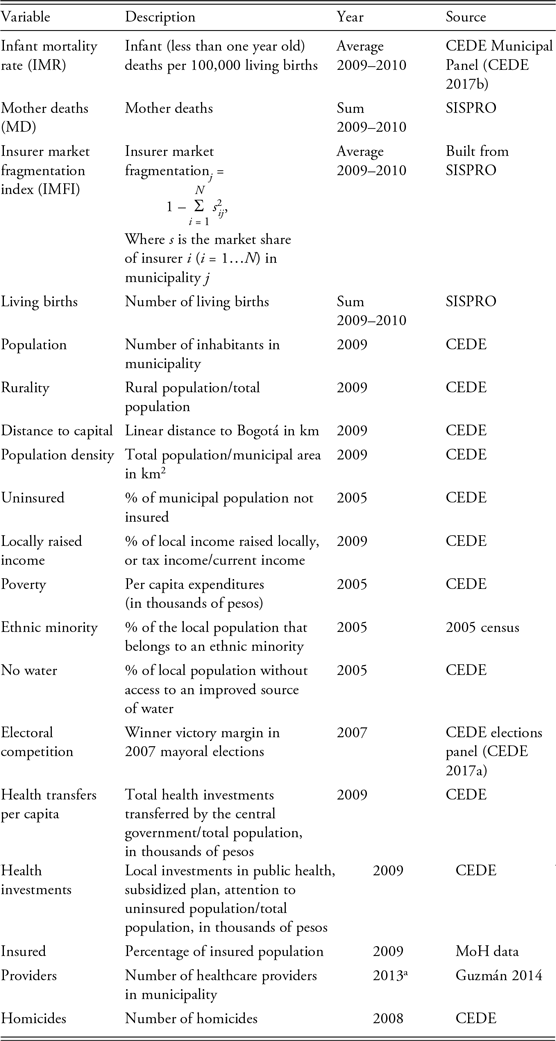
Variables and Sources

a The year for this variable is 2013, since the data from earlier years are inconsistent. Including a 2013 variable should not be problematic, since the number of providers in municipalities changes little over time.
The theory states that the effect of IMFI on health outcomes is moderated by three place-based characteristics: rurality (rural population in relation to total population), population density (total population relative to area), and population size. The sources of these variables are estimations of the 2005 census for 2009. Because I claim that the health reform was conceived with large urban populations in mind, I expect the sign of IMFI to be negative in urban, dense, and large municipalities. This means that in this type of place, greater market fragmentation should be correlated with lower IMR and MD. Alternatively, I expect the sign of IMFI to be positive in small, dispersedly populated, and rural municipalities. In municipalities with these characteristics, greater market fragmentation should be correlated with higher IMR and MD.
To test these interactions, three two-way interactions were performed between IMFI and rurality, IMFI and density, and IMFI and population size for each dependent variable. Surprisingly, no multicolinearity issues appeared: the three moderators were not correlated. The correlation between rurality and density is −0.29, rurality and population −0.22; and density and population 0.43. The interactions were in separate models instead of a four-way interaction model, not only to simplify analysis but also because the theory does not suggest that the effects of the moderators on health outcomes depend on each other. In other words, the theory stresses that the impact of competition between insurers depends on certain placebased characteristics and says nothing about whether such place-based characteristics interact between themselves.
I ran linear regressions for the log of IMR and negative binomial models for MD. Maternal deaths require a count model appropriate for overdispersed outcome variables. Since there were so many municipalities with zero maternal deaths in the course of two years, the data were overdispersed. Specialists use negative binomial regressions to deal with this problem (Hogan et al. Reference Hogan, Kyle and Naghavi2010).
In addition, I controlled for other determinants of municipal infant and mother mortality. Municipal capacity is measured through locally raised income. This is a good proxy because municipalities need technical skills and strength to be able to tax their population (Harbers Reference Harbers2015; Sánchez and Pachón Reference Sánchez, Pachón and de Gobierno2013). I also controlled for electoral competition, which may improve the provision of subnational public goods (Alves Reference Alves2015; Niedzwiecki Reference Niedzwiecki2016; Pribble Reference Pribble2015). I controlled for the availability of local resources for health, since Soto et al. (Reference Soto and Lorant2012) have shown that fiscal decentralization lowers IMR. To do so, I used per capita health transfers from the national government and per capita total investments in health, which include locally raised resources and transfers.
Giuffrida et al. (Reference Giuffrida, Carmen Elisa and Giedion2008) have highlighted the positive impact of health insurance affiliation on health outcomes, and to control for this, I included the proportion of people insured in both subsidized and contributory plans. I also controlled for the number of healthcare providers existing in a municipality, since it is reasonable to believe that the existence of several insurers in a municipality would be irrelevant if just a single provider or no providers existed. I controlled for poverty, proportion of the population that belongs to an ethnic minority, distance to the capital, and homicides.
In addition, I included department fixed effects to take into account neighboring effects and omitted institutional variables. In the IMR models, I controlled for the proportion of people who have no access to an improved source of water (Granados and Sánchez Reference Granados and Sánchez2014). I excluded from the MD models all municipalities with no live births (around 80) and added live births as a control variable. And although it would be ideal to control for municipal IMR and MD before the health reform, there are no data for the early 1990s for these indicators. For this reason, results might overestimate the real effects of the IV. Table 1 contains information on the sources of each variable.Footnote 4
Results
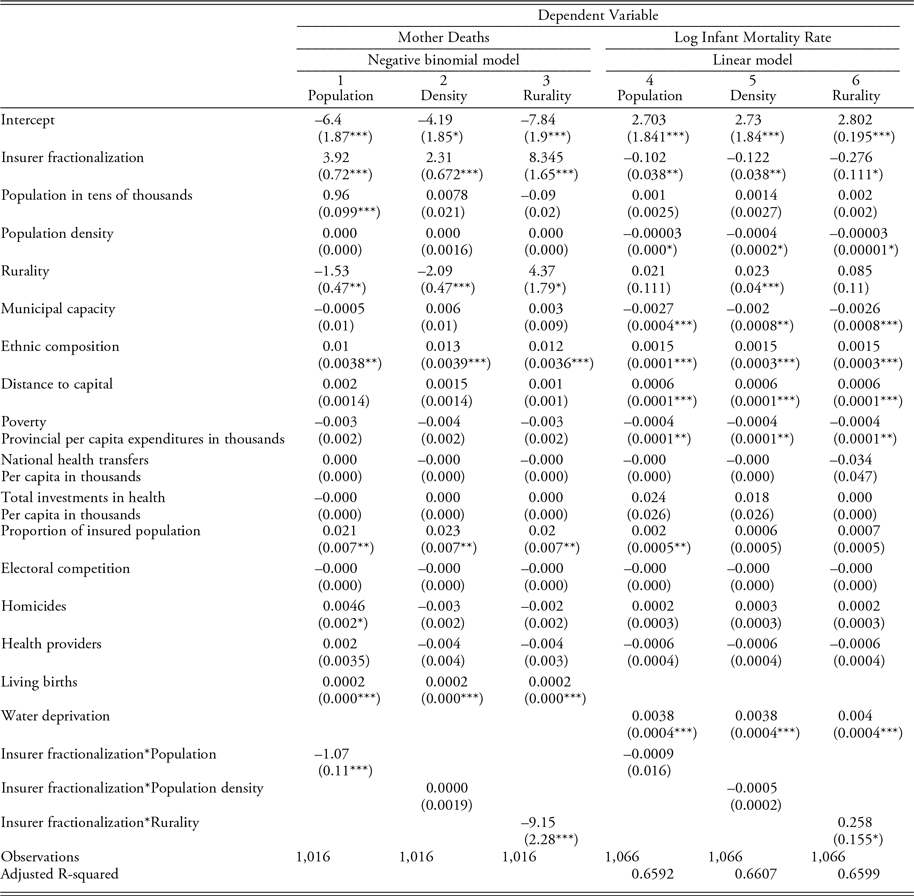
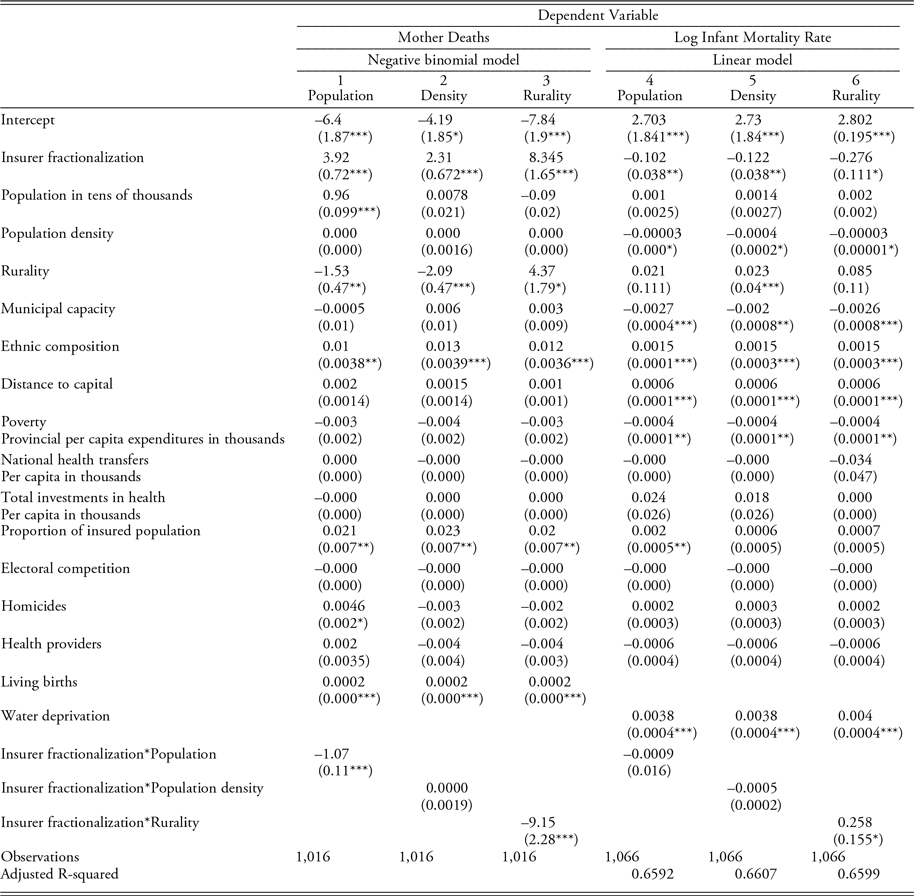
Table 2 reports the results of the different models. Columns 1, 2, and 3 have MD as DV, and columns 4 through 6 have the log of IMR as DV. For each dependent variable, the first column interacts market fragmentation with population size, the second with population density, and the third with rurality.
Regression Coefficients
*p < 0.05, **p < 0.01, ***p < 0.001
Standard errors in parentheses. Department coefficients not reported.
IMFI and Maternal Mortality
The analysis finds that the association between insurer market fragmentation (IMFI) and mother deaths (MD) is mediated by two of the three variables considered here at a statistically significant level. The results show that the effect of market fragmentation on maternal mortality depends on the municipality’s degree of rurality and population size. For this reason, the coefficient reported for IMFI in the output reveals only what the effect would be in the case that rurality or population equaled zero, and it makes it necessary to plot marginal effects to assess the varying coefficients.
The results partially support the theory stressed here, in the sense that the national policy framework interacts with place-based characteristics to produce subnational outcomes. However, regarding the direction of effects, some of the models lead to conclusions that go against the expectations. For population size, the interaction behaves as expected. Higher insurer fragmentation is linked with more maternal deaths in small municipalities and fewer deaths in larger municipalities. For rurality, the interaction behaves contrary to the expectation: higher insurer fractionalization is correlated with more maternal deaths in very urban municipalities.
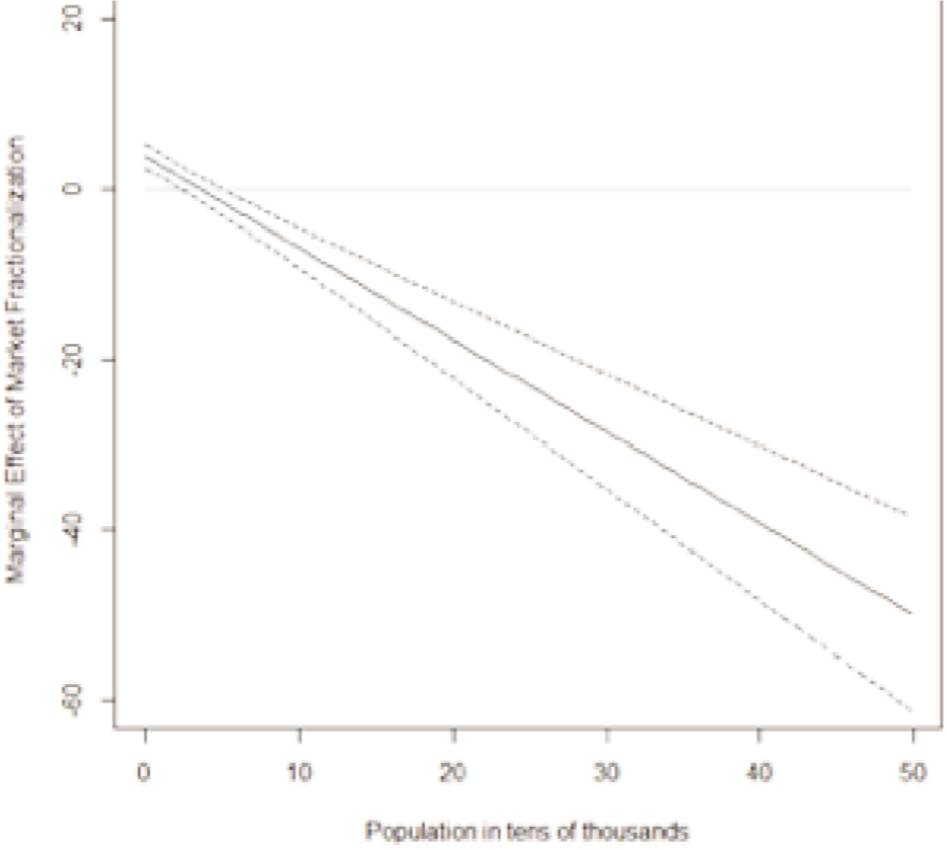
Regarding the interaction between IMFI and population size, figure 1 presents the coefficients of insurer fractionalization for municipalities ranging from 0 to 500,000. In small populations, up to 36,000 (3.6 in the plot), insurer fractionalization has a positive effect on MD at a 95 percent confidence interval. This means that a more fragmented market is correlated with higher MD. This effect is quite dramatic, considering that there are 927 municipalities (out of 1,101) with populations below 36,000 and that one-third of Colombians live in municipalities of this size. As population becomes larger, the effect of market fractionalization becomes negative. For population sizes of 51,000 and up, increased market fractionalization is correlated with lower MD. An increase in competitors in the market is correlated with beneficial health outcomes in larger municipalities and prejudicial outcomes in smaller municipalities. These findings support the predictions of the theory.
Marginal Effect of Insurer Fractionalization Index on MD for Different Population Values

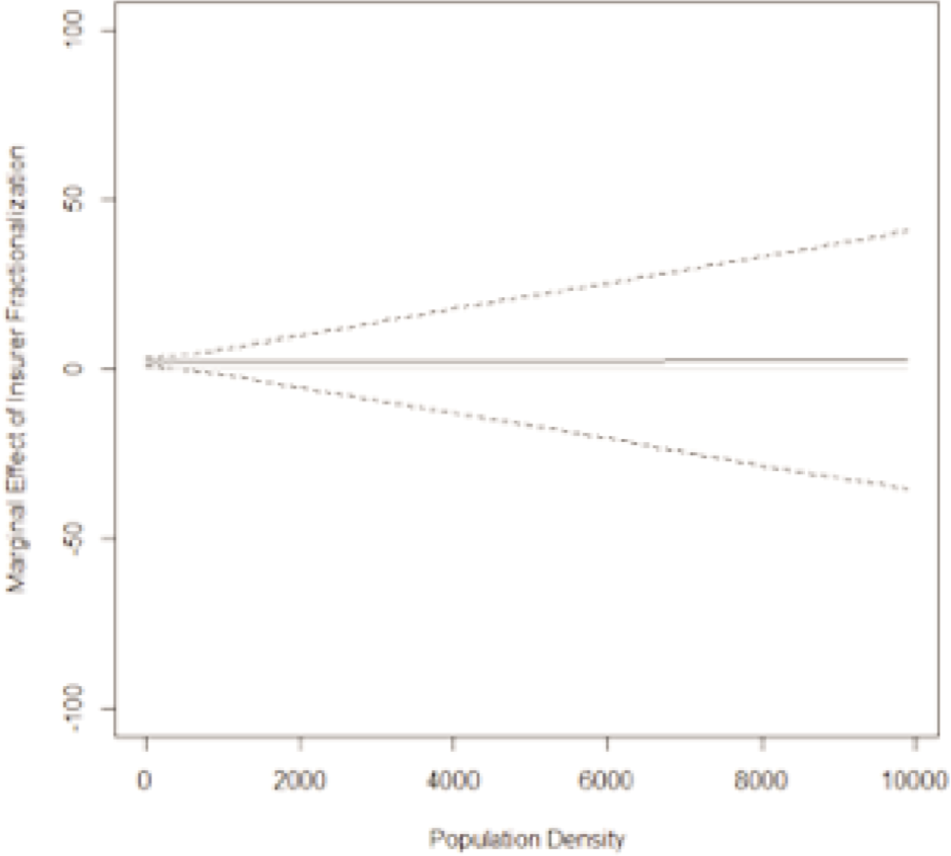
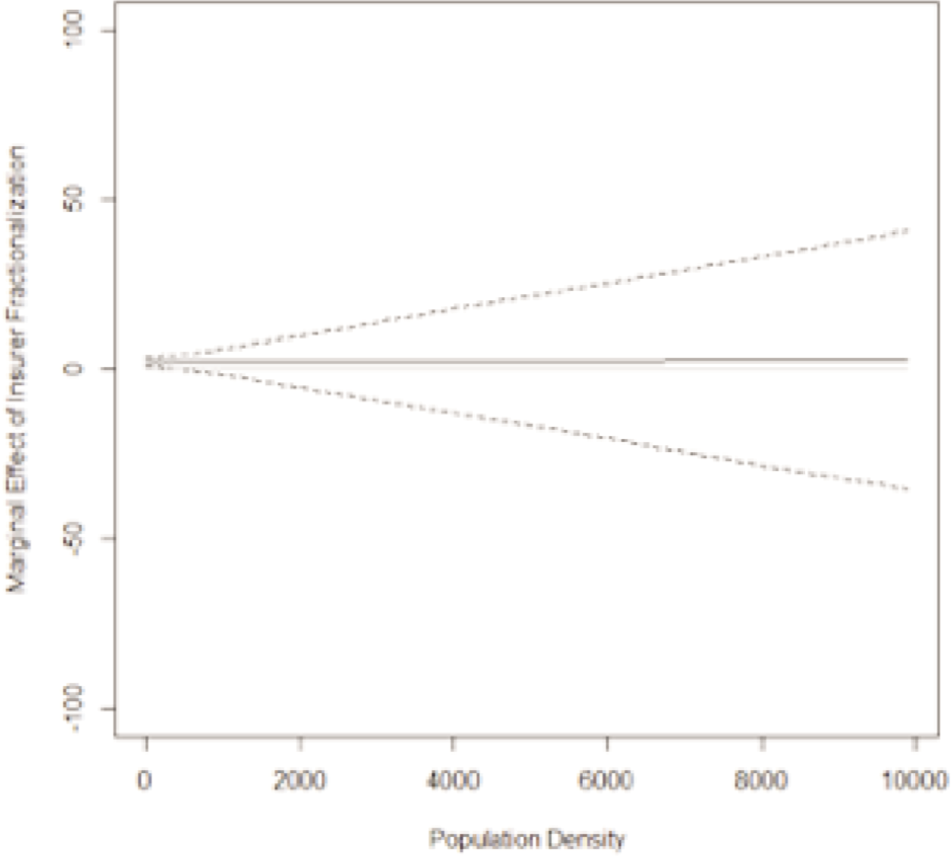
Figure 2 shows that interaction between IMFI and density is not significant: the effect of IMFI is constant across population density values.
Marginal Effect of Insurer Fractionalization Index on MD for Different Population Density Values
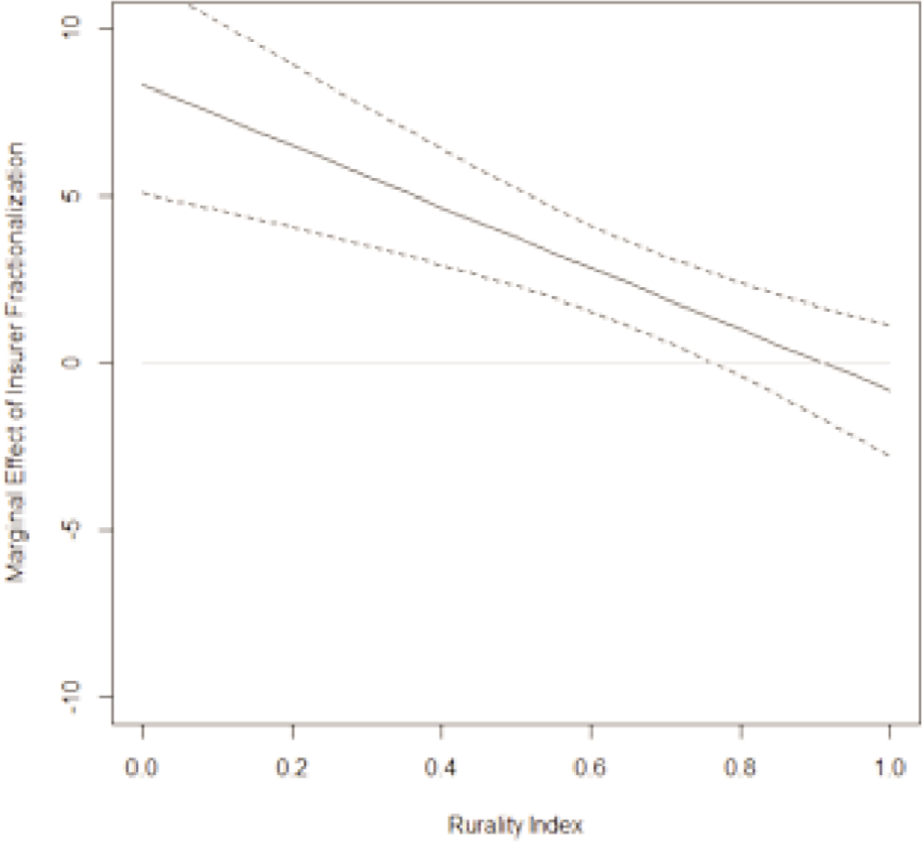
The interaction between IMFI and rurality, however, yields results that contradict the expectations. As figure 3 shows, in very urban municipalities, insurer market fragmentation is linked with higher maternal deaths. To the extent that municipalities become more rural, the coefficient of IMFI approaches 0. In other words, it is worse for rates of maternal death to have more competition between insurers in more urban than in rural areas, a finding that does not fit the predictions.
Marginal Effect of Insurer Fractionalization Index on MD for Different Rurality Values

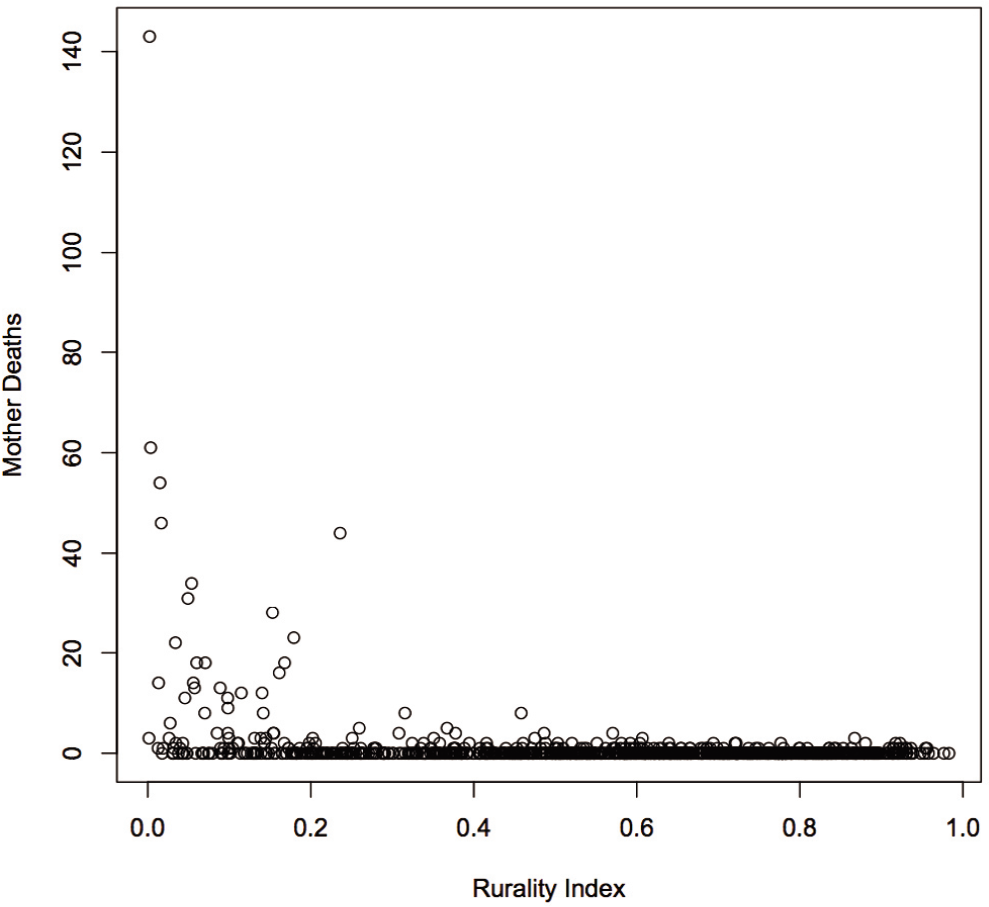
Why is this the case? Why would market competition affect urban rather than rural municipalities? This could be explained in that multiple mother deaths are practically absent in mostly rural municipalities. Figure 4 plots rurality levels against mother deaths and evidences that municipalities with rurality above 0.6 have 0 or 1 mother deaths. In other words, places with more than two mother deaths are mostly urban. The same cannot be said for density and population size, since mother deaths occur in municipalities of all sizes and all densities. We need a further study of how insurance markets function in mostly rural municipalities to better interpret this counterintuitive result.
Rurality Index and Mother Deaths

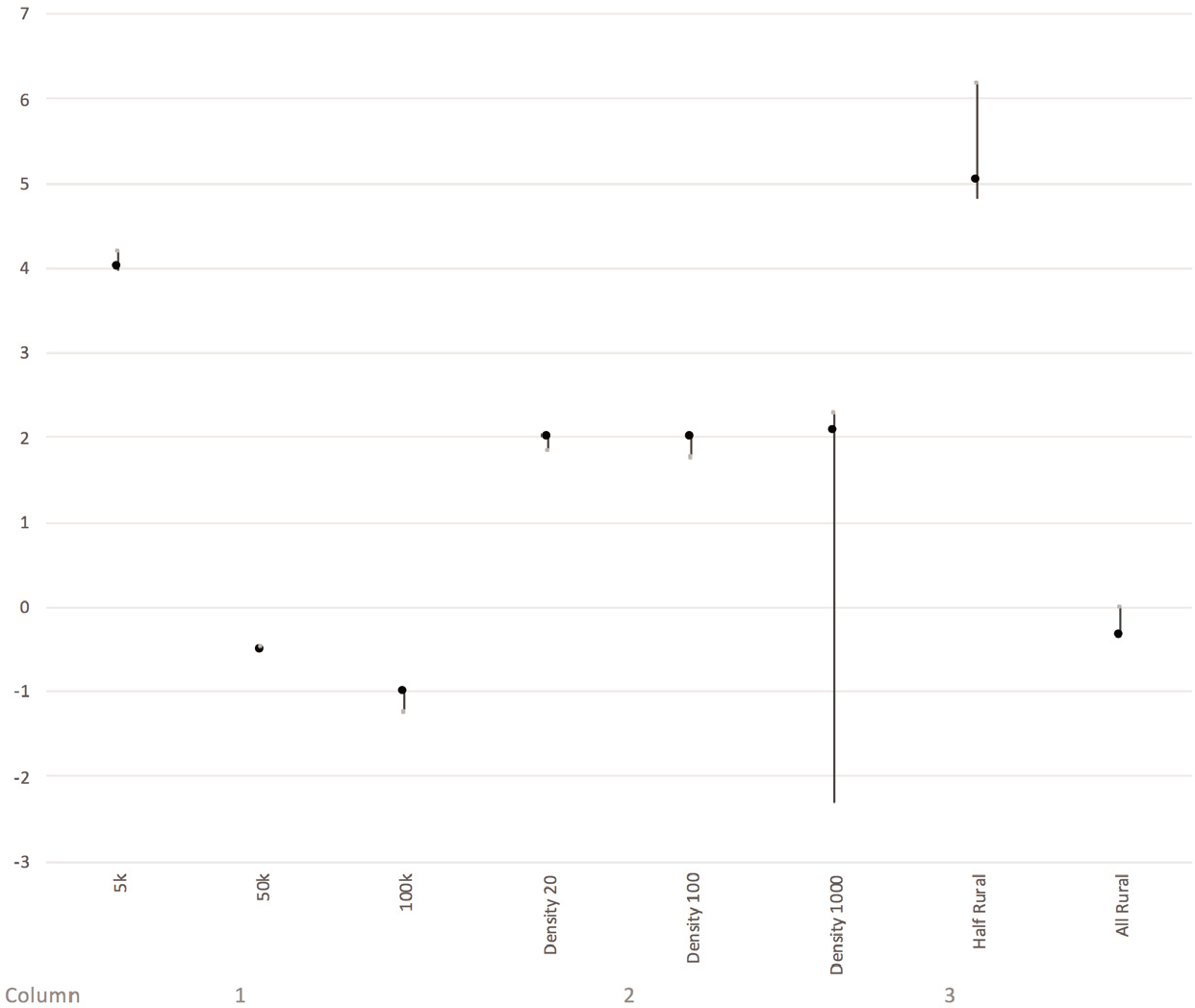
Figure 5 shows the predicted multiplicative effect of changes in market fragmentation on maternal deaths for different types of municipalities. The plot shows what happens when a particular municipality goes from having an IMFI of −1 standard deviation (0.37) to +1 standard deviation (0.847), keeping all other variables constant at their median values. In a municipality of five thousand people, the increase in IMFI is correlated with a four-time increase in MD. In a much larger municipality of one hundred thousand people, a similar-sized change in IMFI is correlated with a 100 percent drop in maternal deaths.
Effect of IMFI Changes on Mother Deaths, Selected Municipality Types

IMFI and Infant Mortality Rates
These results find that the association between market fragmentation and IMR is mediated by rurality but not by population size or population density. This means that the effect of market fragmentation on infant mortality depends on rurality but is constant across population sizes and population densities. The lack of significance of two of the interactions (models 4 and 5) means that it is possible to read the direction of the effect of the IV straight from the coefficients table. IMFI is significant and with the expected sign: more insurer fractionalization is correlated with lower infant mortality rates.
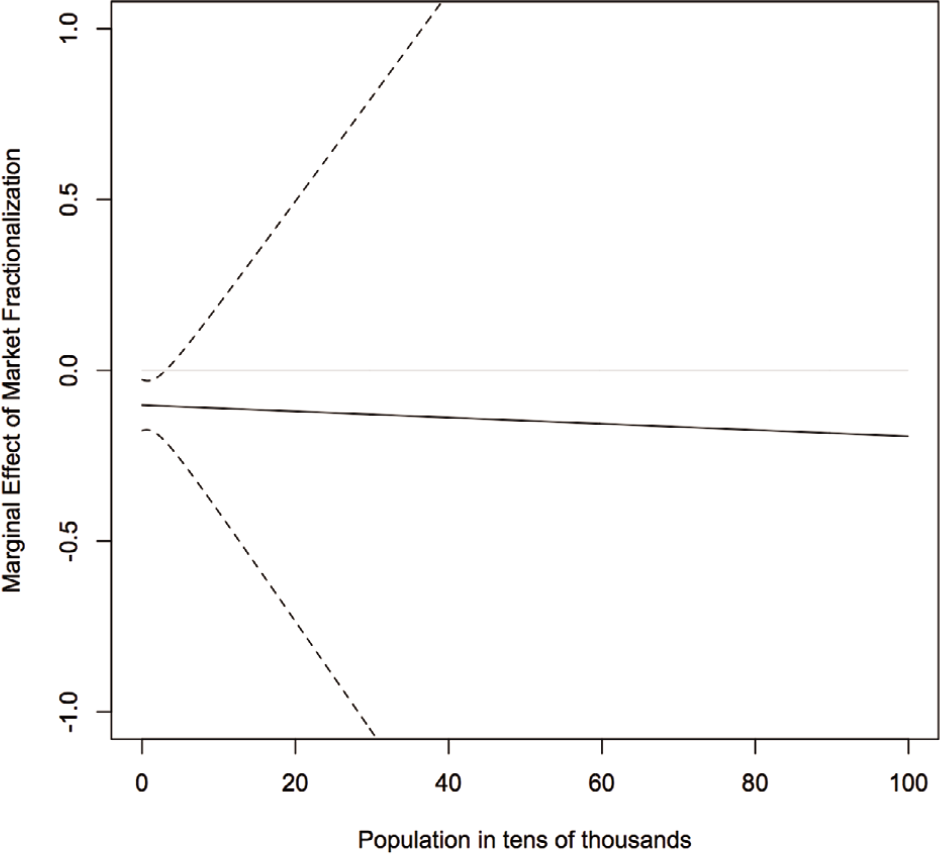
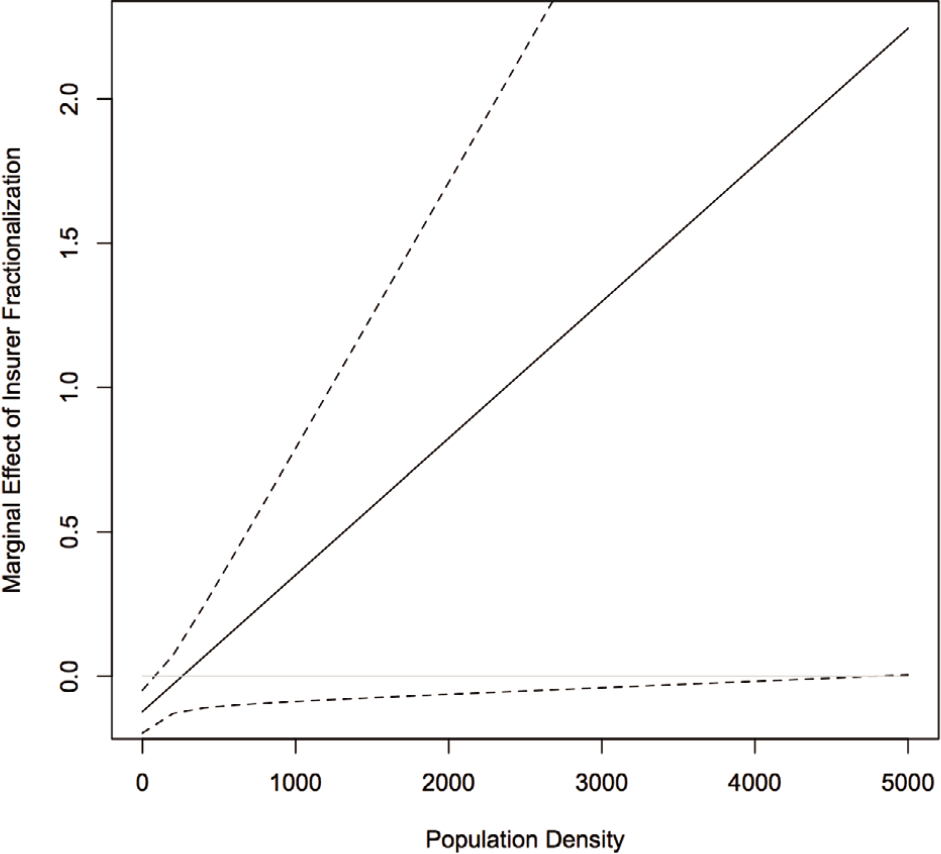
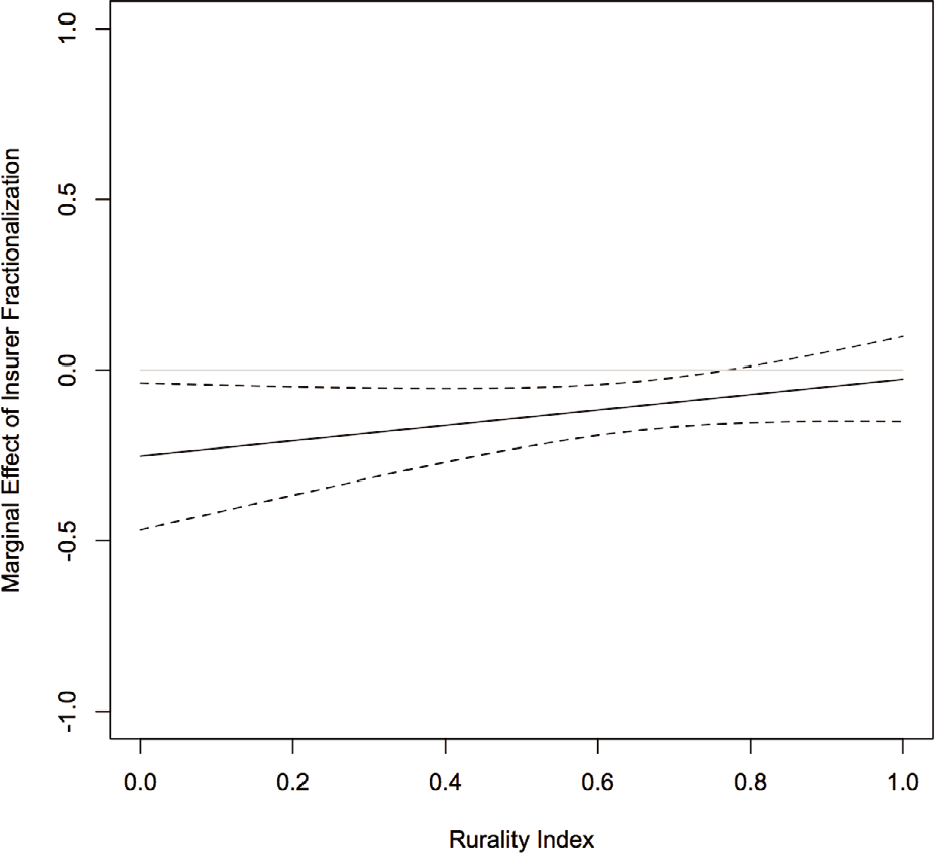
Figures 6 and 7 show the insignificant interactions between IMR and population size and population density. Figure 8 shows the marginal effects of IMFI for different values of rurality. Let us remember that rurality goes from 0 when a municipality is completely urban to 1 when it is completely rural. As figure 8 shows, in completely urban populations, the coefficient of insurer fractionalization is about −0.3. This means that in very urbanized municipalities, insurer fractionalization works as the health reform expected: increased competition is correlated with better health outcomes.
Marginal Effect of Insurer Fractionalization Index on IMR for Different Population Values

Marginal Effect of Insurer Fractionalization Index on IMR for Different Population Density Values

Marginal Effect of Insurer Fractionalization Index on IMR for Different Rurality Values

The effect of insurer fractionalization becomes less substantial as the observed municipalities become more rural. In municipalities where at least 80 percent of the population lives in rural areas (20 percent of all municipalities), the effect of insurer fractionalization stops being significant. Insurer fractionalization is positive for IMR only when more than 20 percent of the population in a municipality lives in urban areas.
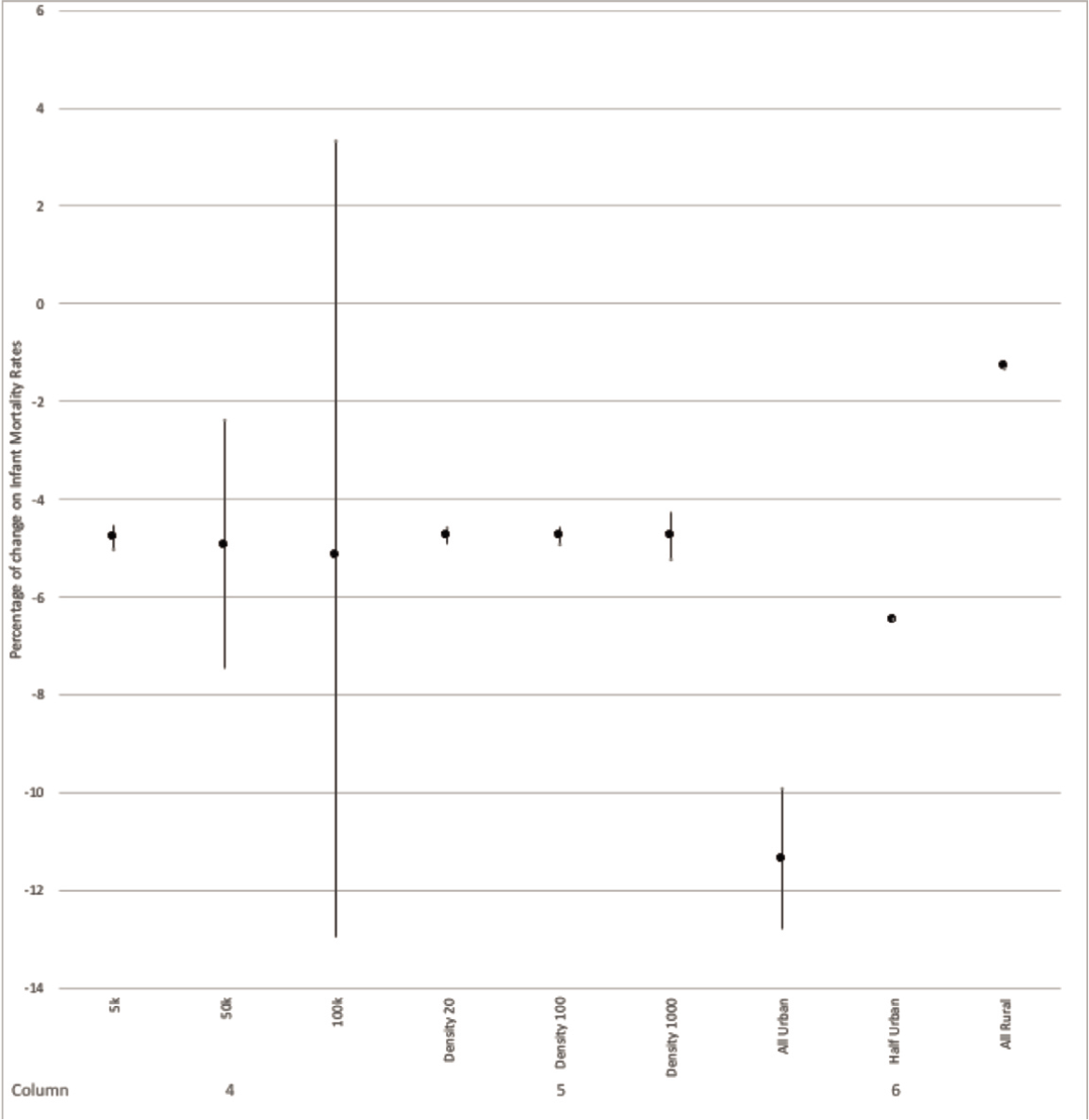
Figure 9 explores the predicted reduction (or increment) in IMR for different types of municipalities. When the hypothetical municipality is completely urban, going from having an IMFI of −1 standard deviation (0.37) to +1 standard deviation (0.847) is correlated with an 11 percent reduction in the initial IMR. When the municipality is completely rural, the same IMFI change is correlated with just a 1 percent drop in the initial IMR. Adding competitors to the insurer market is beneficial only in mostly urban municipalities.
Effect of IMFI Changes on Infant Mortality Rates, Selected Municipality Types

Controls
Regarding controls, only one aspect turned significant and with the same direction in all models: a higher proportion of people belonging to an ethnic minority is associated with higher IMR and MD.
Some of the controls have significant but contrasting effects for MD and IMR. This is the case for rurality, which is associated with lower MD but higher IMR.Footnote 5 Population density is insignificant for MD but significantly associated with lower IMR; distance from the capital is associated with higher IMR at a significant level, but the effect is insignificant for MD; municipal capacity is only significantly associated with lower infant mortality; and percentage of insured population, contrary to expectations, is associated with more MD. These contrasting associations suggest that the geography of infant mortality differs from the geography of maternal deaths, an aspect worth exploring in future work. Urban places with highly capable subnational governments and locations closer to the capital have lower IMR; smaller and more rural places have fewer maternal deaths.
Some of the controls proved insignificant across most models. Subnational electoral competition, homicides, number of healthcare providers, health transfers, and health expenditures were not significant for neither of the two outcomes.
Discussion
The results of the econometric exercise partially support the theory. The fragmentation of insurance markets is, in general, not place-neutral, but its effects on infant and maternal deaths depend on context. For infant mortality, the positive effect of the market is tangible only in municipalities where at least 20 percent of the population lives in urban areas. For maternal mortality, the positive effect of increasing market competition can be observed with a significant level in municipalities with populations larger than 36,000. On the other hand, marketization has a negative effect in the 927 municipalities where the population is smaller than 36,000.
However, there are a few findings that contradict our expectations. The effect of market fragmentation does not depend on population size (for IMR) or density (both outcomes) and is worse for mother deaths in urban than in rural municipalities.
These results imply that for the most part, markets are associated with different effects, depending on the type of municipality. In this sense, markets are not placeneutral; they are not “good everywhere,” as the policy designers first thought. In contrast, they interact with the local conditions and produce differentiated outcomes. In places with particular characteristics—small and urban, in the case of maternal mortality—deepening the markets is associated with worse health outcomes. The fact that the national policy environment does not counter the possible pernicious effects of insurer competition in places not fit for the market makes the Colombian health system place-blind with respect to these aspects. In Colombia, the lack of place-sensitivity in the national health framework, which translated into the creation of insurer markets without territorial distinctions, is associated with variation in subnational health outcomes.
This empirical test does not explore the relationship between different degrees of place-sensitivity and social service provision and social outcomes in a sample of countries. Neither does it test the impact on different social indicators of changing from a place-blind to a place-sensitive approach. There are, indeed, different empirical strategies to test the arguments developed in this study, which I do not pursue. The approach employed here takes advantage of the fact that this particular place-blind feature of the Colombian health policy (the market of insurers) varies across locations, allowing me to test its impact on health outcomes. The subnational variation in this place-blind feature enables me make the point that place-blindness (or -sensitivity) in the national policy framework is a subnational determinant in this case.
To what extent are these findings generalizable? The Colombian case is relevant for countries such as Argentina, Mexico, Chile, and the United States, with significant participation of private insurers in healthcare provision. In addition, the Colombian case can illuminate the limits of marketization on social services, since this type of reform is often an option when social service reforms are being considered.
Conclusions
What explains subnational variation in living standards related to health, education, and sanitation? What can countries do to reduce such variations? This article stresses that there is one aspect of national social policy frameworks that has been neglected by existing accounts focusing on policy progressiveness and subnational determinants: place-sensitivity. Place-sensitive national policy frameworks are those that acknowledge that the well-being people enjoy is influenced by the characteristics of places where they live and their interaction with the set of rules, laws, and regulations that organize a social sector. In this regard, place-sensitive policy instruments devise ways to mitigate the negative impact of place-based features on social outcomes and serve as instruments to reduce subnational inequality (Otero-Bahamón Reference Otero-Bahamón2016, 2019; Giraudy and Pribble this issue).
This article has studied the Colombian healthcare system to demonstrate how the lack of place-sensitivity (place-blindness) is a determinant of subnational health outcomes and an example of the differentiated nature of the Colombian state (Harbers and Steele this issue). Such place-blindness was crystallized in the creation of markets of insurers that disregarded the areas that lacked the scale to sustain such markets. Evidence from an econometric exercise suggests that more competition can lead to worse, rather than better, health outcomes in less-populous municipalities, even controlling for subnational determinants, such as poverty, ethnicity, and municipal capacity. And although some of the findings run contrary to the theory, the majority of the models give support to the expectations.
Two key policy implications emerge from this study. Policymakers should take the notion of place seriously by devising place-sensitive instruments that activate or neutralize the effect of subnational determinants on social outcomes. But although this is desirable, these policy innovations are often hard to come by. First, policymakers must have a motive, such as responding to demands of pro-poor incumbents or the need to cater to certain subnational constituencies. But motives might be elusive, since politics entails an urban bias. It is hard for policymakers to craft policies for places with a shortage of voters.
Second, changes to existing policy frameworks often generate opposition and resistance: from agents who gain economically or politically from the placeblind approach; from other state actors who prefer a place-blind approach because it is universal, promarket, or cheaper; or from bureaucrats who anticipate the added challenges of differential policy frameworks. In order to implement a place-sensitive design, policymakers need to impose their authority on such varied challengers.
In addition, the study suggests that place-sensitivity can be an avenue to universalism. Voices in favor of universal social services despise an approach that might lead to different services for different populations. A universal stance means that all citizens, regardless of gender, location, or income, have the same right of access to quality services. Yet attempts to make a service universal might be confused with a one-size-fits-all approach, and this could lead to higher, rather than lower, inequality between individuals and regions. This article suggests that place-sensitivity could be a way to make universal social service a reality for all citizens in a country.
Interviews
Hernández, Mario. 2014. Public Health expert, professor at Universidad Nacional. August 29.
Ospina, Óscar. 2014. Member of Congress for Partido Verde, Former Department Health Director for Cauca, Former Hospital Director. September 24.
Olarte, Luis. 2014. Adviser, Ministerio de Salud, Colombia. September 29.