Introduction
For centuries education has been considered to play a significant role in shaping the attitudes and behaviour of women and men. Education is known to be a vital determinant of fertility behaviour and outcomes (Barakat & Blossfeld, Reference Barakat and Blossfeld2010; Shapiro & Gebreselassie, Reference Shapiro and Gebreselassie2008). In particular, female education is a critical predictor of the reproductive health behaviour of women. This is probably because educated women tend to acquire non-traditional reproductive behaviour such as delayed age at first marriage and age at first birth, and have a tendency to bear fewer children than their counterparts with no formal education (Bongaarts, Reference Bongaarts2010; Gayawan & Adebayo, Reference Gayawan and Adebayo2013; Grant, Reference Grant2015). This has given rise to the adoption of policies in developing countries aimed at massive promotion of female education, both as an end in itself and as a means of fighting high fertility.
Sub-Saharan African countries have bought into this policy recommendation and have aggressively pursued the expansion of female education since late in the last century (Grant & Behrman, Reference Grant and Behrman2010). However, little is known about the potency and consistency of the negative association between female education and fertility in various parts of the region. A relatively recent study suggested a limitation on the universality of the transformative role of education, and that its independent impacts on the behavioural patterns of men and women are quite complex and uncertain (Graff, Reference Graff2010). It is therefore imperative to subject the consistency of the education–fertility hypothesis to more scrutiny in sub-Saharan Africa. How consistent is the likelihood of female education lowering fertility in the region?
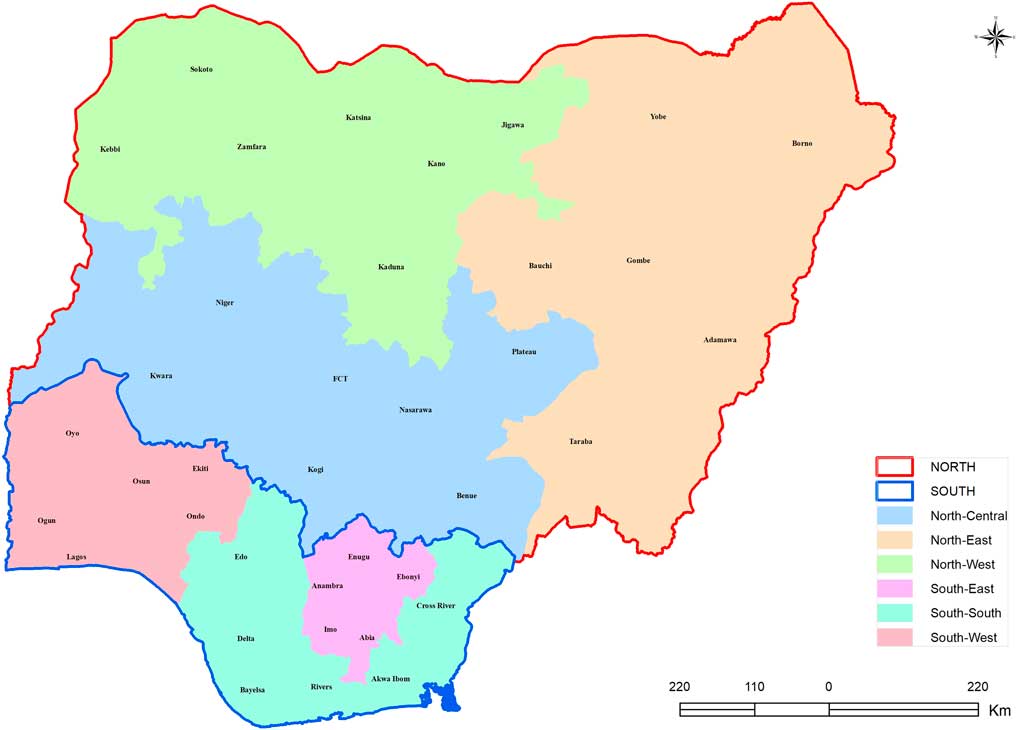
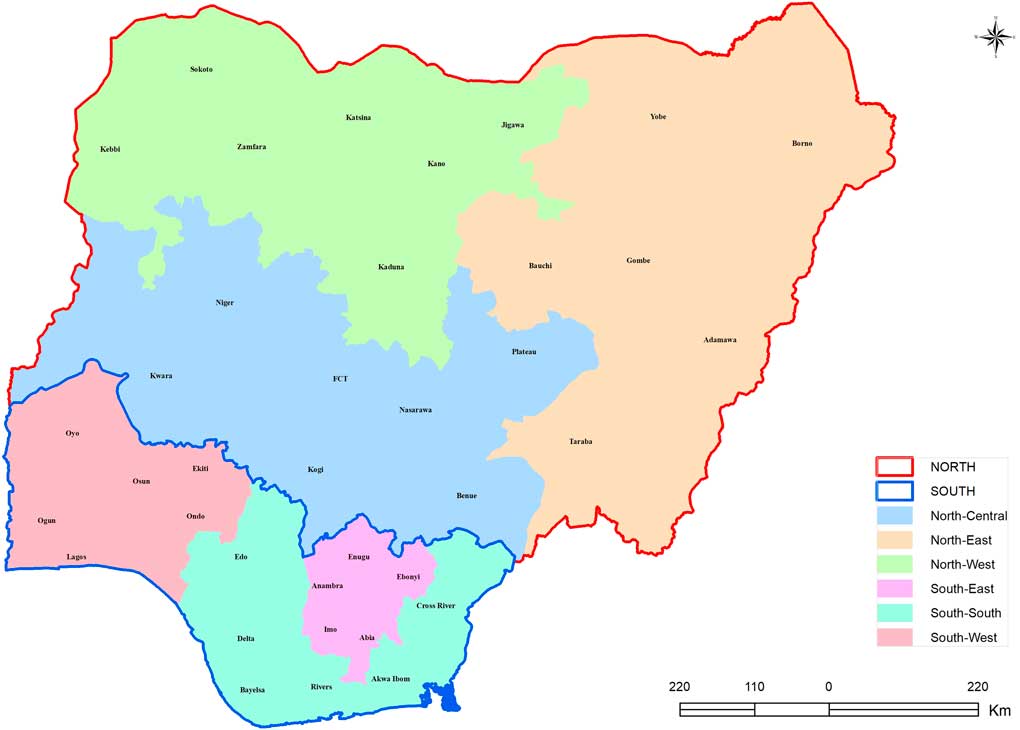
This study attempted to scrutinize the hypothesis in the Nigerian context. It asked three questions. First, how consistent is the effect of female education on fertility across the north–south demographic divide in Nigeria? The north–south demographic divide represents the division of Nigeria into regions with marked differences in key demographic variables. The northern region stretches from the Guinea savannah through the Sudan savannah to the Sahel savannah forest belt at the northern boundary of the country. The southern region stretches from the Atlantic Ocean through the tropical rainforest belt to the mouth of the Guinea savannah forest belt. Also, the north–south demographic boundary flows along geopolitical zones in the country. The north-central, north-east and north-west geopolitical zones form the north region, while the south region includes the south-east and south-west geopolitical zones. Figure 1 illustrates the landmass areas for the north and south regions. Demographic differences between the north and south regions are apparent in fertility, infant mortality and age at first marriage. The average TFR in the north is 6.1, whereas it is 4.5 in the south. Further, average infant mortality is 79% in the north but 60% in the south. In addition, while child marriage is still predominant in the north, the practice has decreased significantly in the south (National Population Commission [Nigeria] & ICF International, 2014). The demographic differences between the two regions have been explained in terms of differences in levels of education, urbanization and economic development. While the north is predominantly rural, educationally disadvantaged and poor, the south is more urbanized, better educated and more economically developed (Isiugo-Abanihe, Reference Isiugo-Abanihe2010). Therefore, examination of the role of female education in fertility in the north and south of the country is likely to offer a policy guide to address the fertility challenge in Nigeria.
Map of Nigeria showing the north–south demographic divide.
The second question the study sought to answer was: what level of education triggers an inverse association between female education and fertility in the north and south of Nigeria? The third question was: is there a difference in the strength of the effect of female education between the south and the north of the country? The study employed the Nigeria Demographic and Health Survey (NDHS) data sets to examine these three questions.
Female education and fertility
There have been a large number of studies that have examined the association between female education and fertility. In a study across developing countries in Africa, Asia and South America, Martin (Reference Martin1995) observed that higher female education exhibited a negative association with fertility, but that the association could be positive at lower educational levels in the least developed countries. Also, a recent study of a sample of countries from all world regions confirmed a pronounced negative effect of women’s education at primary and secondary levels on fertility (Lee, Reference Lee2016).
Studies in developed regions have shown that increasing levels of female education is a significant factor in the transition from high to low fertility, and general family and reproductive transitions (Breton & Prioux, Reference Breton and Prioux2005; Hoem et al., Reference Hoem, Neyer and Andersson2006; Perelli-Harris et al., Reference Perelli-Harris, Sigle-Rushton, Kreyenfeld, Lappegard, Keizer and Berghammer2010). Other studies in Europe have reported a negative association between fertility-related behaviour (such as birth timing) and female schooling as a result of the high opportunity cost of childbearing amongst such women (Becker et al., Reference Becker, Cinnirella and Woessmann2011; Gronqvist & Hall, Reference Gronqvist and Hall2013). Similarly, Cygan-Rehm and colleague observed in Germany that increased female education causally reduced completed fertility owing to birth postponement and the high opportunity cost of childbearing (Cygan-Rehm & Maeder, Reference Cygan-Rehm and Maeder2012).
Studies in Asia and the Middle East have also shown that female education is critical to fertility decline. For instance, a Mongolian study reported that the effect of female education on fertility was a vital force in the decline recorded around year 2000 (Aassve & Altankhuyag, Reference Aassve and Altankhuyag2002). In Iran, massive deployment of formal and informal female education around 1989 promoted contraception use, which accelerated the increase in average age at first marriage among females and consequently reduced the Total Fertility Rate (TFR) from 7.0 in 1980s to 1.9 in 2006 (Lutz et al., Reference Lutz, Cauaresma and Abbasi-Shavazi2010). Two recent studies in Taiwan and Turkey corroborated the critical role of female education in fertility behaviour. Güneş in his study in Turkey observed that completed primary education was inversely related to fertility and incidence of teenage birth, while Chen observed in Taiwan that maternal education was a more critical predictor of fertility than parental education (Güneş, Reference Güneş2013; Chen, Reference Chen2016). Similar to the findings among adult females in Europe, the study in Turkey further acknowledged that female education has a negative association with teenage fertility through postponement of marriage and childbearing among teenagers.
On the African continent, some studies have attempted to unravel the nature of the association between female schooling and fertility. In the late 1980s, Kritz and Gurak observed that countries in Africa with higher gender equality in education reported greater fertility declines (Kritz & Gurak, Reference Kritz and Gurak1989). The finding suggests that countries where the level of female education could compare with that of their male counterparts experienced lower fertility. Ainsworth and colleagues reported that while female education at secondary or higher level has a significant and inverse relationship with fertility in virtually all countries, primary-level female schooling tended to have a positive relationship with fertility in many countries (Ainsworth et al., Reference Ainsworth, Beegle and Andrew1996).
Furthermore, female education has been found not to be significantly related to the number of children ever born in Mali, whereas in Cote d’lvoire it has been shown to be an essential factor in fertility regulation (Guillaume & Desgrees du Lou, Reference Guillaume and Desgrees du Lou2002; Madhavan et al., Reference Madhavan, Adams and Simon2003). A study in Anambra State, south-eastern Nigeria, concluded that female education was a weak predictor of fertility, and the study argued that although female education is a necessary factor, it is not sufficient to cause fertility decline (Nwakeze, Reference Nwakeze2007). Indeed, an earlier study in Nigeria by Olusanya (Reference Olusanya1967) found a positive association between female education and fertility. Grant corroborated this in a recent study in Malawi, which found that expanded education did not bring about a higher age at first birth, which is a significant variable in fertility reduction (Grant, Reference Grant2015).
On the other hand, a relatively recent study in Nigeria found that women with secondary or higher education had a lower risk of first child birth. However, those with just primary education had a higher risk of first child birth relative to those who did not have any education (Gayawan & Adebayo, Reference Gayawan and Adebayo2013). Other earlier studies in various parts of sub-Saharan Africa, and in particular in Nigeria, have observed that female education at the secondary or post-secondary levels inversely predicted fertility (Isiugo-Abanihe et al., Reference Isiugo-Abanihe, Ebigbola and Adewuyi1993; Bongaarts, Reference Bongaarts2010; Isiugo-Abanihe, Reference Isiugo-Abanihe2010; Wusu, Reference Wusu2012; Kara & Maharaj, Reference Kara and Maharaj2015).
Methods
This study analysed the female re-code data sets of the 2003, 2008 and 2013 NDHS. The National Population Commission [Nigeria] and ICF Macro International/ORC Macro collected the data sets using nationally representative cluster sample sizes of women aged 15–49 of 7620 in 2003, 33,385 in 2008 and 38,948 in 2013. The data are freely available at MEASUREDHS.com. Details of the respective sampling and data collection procedures, as well as ethical approval obtained, are contained in: National Population Commission [Nigeria] & ICF International (2014); National Population Commission [Nigeria] & ICF Macro (2009); National Population Commission [Nigeria] & ORC Macro (2004).
Data were extracted for females aged 40–49. The purpose was to analyse the women who were near completing, or might have completed, their childbearing goals. Thus, the weighted study sample included 1272 women from the 2003 survey (north=783; south=489), 5904 from the 2008 survey (north=3160; south=2744) and 5491 from the 2013 survey (north=4081; south=1410). Women resident in the North-Central, North-East and North-West areas of the country were allocated to the ‘north’ group; those resident in the South-East, South-West and South-South areas were allocated to the ‘south’ group.
The analysis focused on the north–south demographic divide in Nigeria to determine the differentials in the association between female education and fertility in these two broad regions of the country.
Data were analysed using univariate, bivariate and multivariate analyses. At the univariate level, the percentage distribution of the respondents across basic background characteristics was determined, i.e. by age, age at marriage, education, child mortality, partner’s education, religion, wealth index, place of residence and north–south region. The bivariate analysis examined the association between the study’s main explanatory variable (level of female education) and a fertility indicator (Children Ever Born, CEB) across the three survey years by north–south region. The chi-squared test was used to test the significance of the bivariate association. Poisson regression in the Generalized Linear Model was used to develop two bivariate and three multivariate models each for the 2003, 2008 and 2013 surveys.
The confounding variables age at marriage, child mortality, partner’s education, religion, wealth index and place of residence were included in the multivariate Poisson regression models as these have been reported in the literature as being significant predictors of fertility in sub-Saharan Africa (Ogum, Reference Ogum1980; Shapiro & Gebreselassie, Reference Shapiro and Gebreselassie2008; Gayawan & Adebayo, Reference Gayawan and Adebayo2013), but also because a sharp variation exists between the north and south of Nigeria in the performance of these factors (National Population Commission [Nigeria] & ICF International, 2014). The factors were included in the models to control for their differential effects, and to isolate the influence of female education on fertility. For instance, while age at marriage is lower in the north than the south, child mortality is higher in the north than in the south.
Results
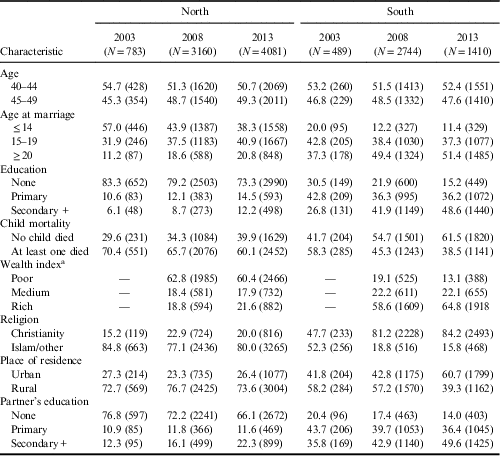
Table 1 presents the sample women’s background characteristics by survey year and north–south region. The vast majority of the respondents in the north reported having no education (73.3% and 83.3% in 2003 to 2013, respectively). In the south, the proportion with no education declined significantly between 2003 and 2013: from 30.5% in 2003 to 15.2% in 2013. Although the proportions with primary and secondary or higher education increased across Nigeria from 2003 to 2013, the proportions with formal education in 2013 were much higher in the south than in the north.
Percentage distribution of women aged 40–49 by selected characteristics and north–south demographic region of Nigeria, 2003, 2008 and 2013 NDHS
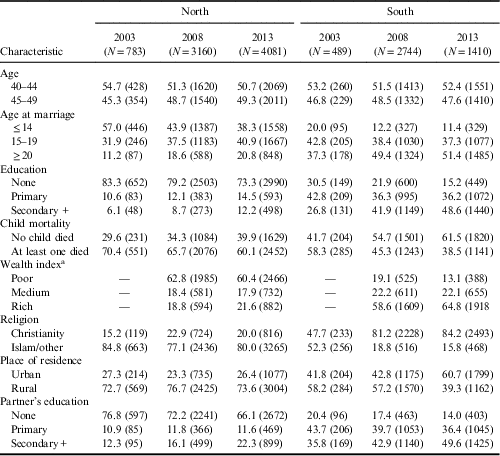
Number of women (n) in parentheses. Inconsistency in ‘n’ is due to differences in response rate.
a The 2003 NDHS did not include wealth index.
While most of the respondents in the north got married before the age of 20 up until 2013, this proportion declined steadily and significantly in the south between 2003 and 2013. The highest proportion of women who reported they had experienced the death of at least one child in the three surveys was reported in the north (70.4%) and the lowest in the south (38.5%). Northern respondents were more often rural dwellers and Muslims. In contrast, urban residence grew from 42% in 2003 to 61% in 2013 in the south and Christianity remained dominant. The majority of northern respondents indicated membership of households in the poor wealth quartile while the majority of their southern counterparts were in households in the medium and rich quartiles. Similarly, while most respondents in the north reported that their husbands had no formal education, the majority of those from the south reported that their husbands had primary and secondary or higher education.
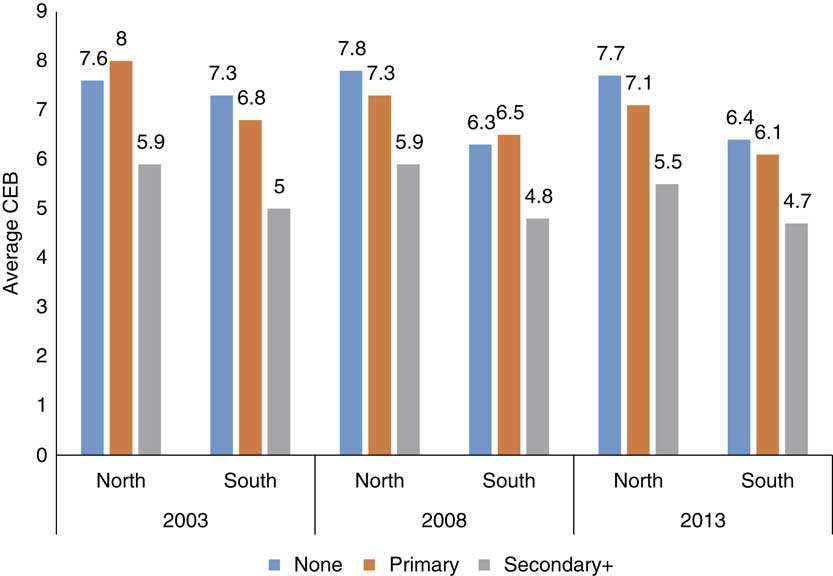
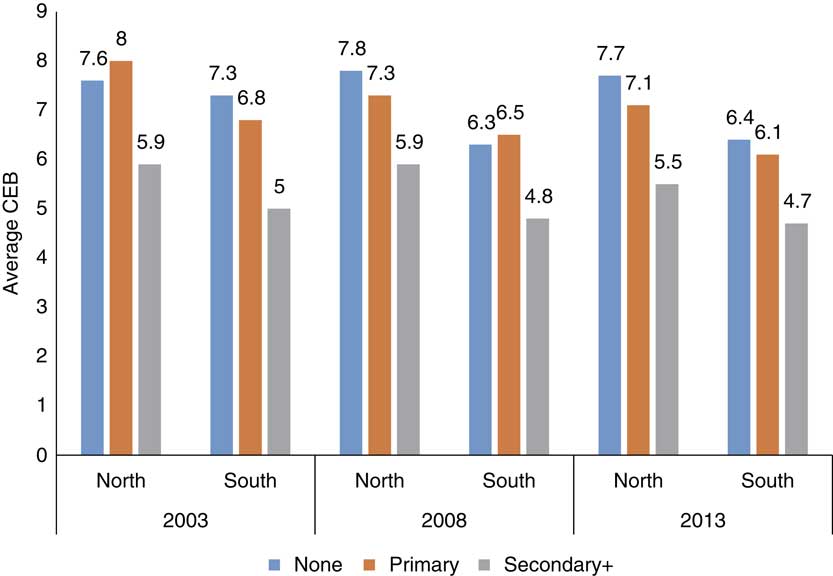
Figure 2 shows the average CEB of sample women by their education level and north–south region. It was only in the north in 2003 and the south in 2008 that women with primary education reported an average CEB slightly higher than their counterparts who had no formal education. Apart from these two exceptions, education and average CEB in the three surveys followed a consistent pattern in both the north and south. Average CEB declined with higher educational attainment. Respondents with secondary education or higher had the lowest average CEB, whereas those without any schooling showed the highest average CEB across the three surveys in both the north and south.
Distribution of women by median CEB and education in the north and south of Nigeria, 2003–2013. Sources: 2003, 2008 and 2013 NDHS.
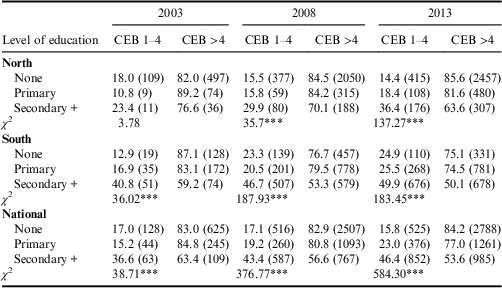
Besides the two exceptions pointed out above, a higher proportion of women with secondary or higher education reported a CEB of 1–4 compared with their counterparts with no education consistently across the three surveys in both the north and south (Table 2). Also, it was consistently evident that the proportion of women with a CEB of 4 or more was highest among those with no schooling and lowest among those with secondary or higher education in the three surveys and in both the north and south. As earlier observed, deviation from this consistent pattern was only noted in 2003 in the north and south in 2008. Also, there was a statistically significant association between education and CEB in all surveys and regions, except in 2003 in the north. The majority of women with no education and primary schooling reported a CEB >4 in the three surveys (p<0.001). Conversely, a higher proportion of their counterparts with secondary or higher schooling reported a CEB of 1–4 (p<0.001) across the three surveys.
Percentage distribution of women aged 40–49 by CEB and level of education in the north and south demographic regions of Nigeria, 2003, 2008 and 2013 NDHS
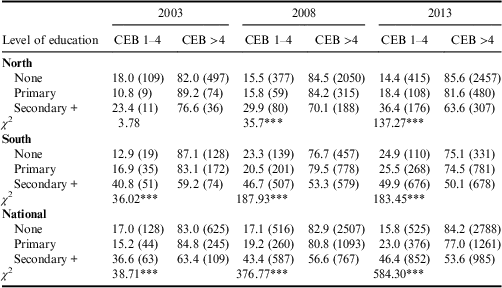
Number of women (n) in parentheses.
***p<0.001.
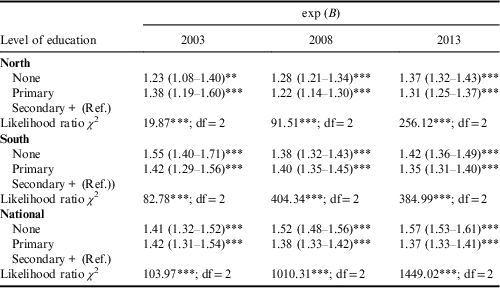
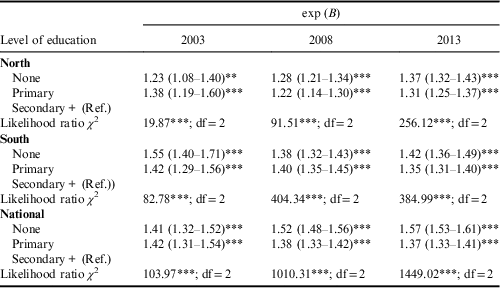
Table 3 presents the unadjusted Poisson regression coefficients of the association between female education and CEB. In all the models (north, south and national), education significantly predicted CEB (p<0.001). Both in the north and south, women with no education and those with primary education were likely to report a higher CEB than their counterparts with secondary or higher education. There was a mixed pattern for the effects of none and primary education in the north and south. Those with primary schooling indicated a higher CEB than those with no education in 2003 in the north; the same pattern was evident in the south in the 2008 survey. At the national level, respondents with primary education reported a higher CEB relative to those with no education only in 2003. Conversely, in the other surveys (that is, 2008 and 2013) the level of CEB reported by women with no education was higher than that of their counterparts with primary education.
Unadjusted Poisson regression estimates (with 95% CI) of the effects of women’s education on CEB in the north and south of Nigeria, 2003, 2008 and 2013 NDHS
**p<0.01; ***p<0.001.
Moreover, the coefficients reveal that the influence of education was stronger in the south than in the north. As shown in Table 3, the proportions of women with no schooling and primary education, who were likely to report a higher CEB relative those with secondary or higher schooling, were higher in the south than in the north across the three surveys. For instance, while women with no schooling and those with primary education reported 55% and 42% higher CEBs respectively than those with secondary or higher education in the south in 2003, the corresponding proportions were 23% and 32% for none and primary schooling in the north. A similar pattern occurred in 2008 and 2013 in both the north and south. The pattern suggests that the effect of secondary or higher female education on fertility was stronger in the south than in the north.
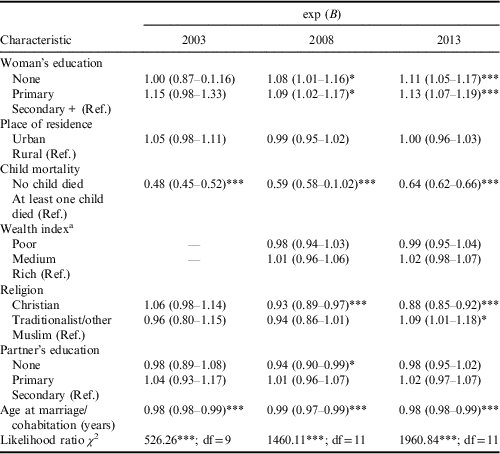
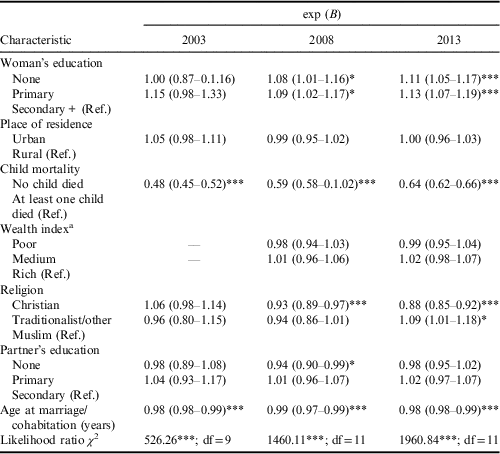
In the adjusted model, education significantly predicted CEB in 2008 (p<0.05) and 2013 (p<0.001) in the north (Table 4). In both surveys women with no education and primary schooling reported a higher CEB than their counterparts with secondary or higher education. Moreover, women with primary education reported a higher CEB than those with no formal schooling. Also, among the confounding factors considered, age at marriage/cohabitation, as well as child mortality, consistently and significantly predicted CEB in all the surveys. Respondents who had never experienced child death consistently reported a smaller CEB than those who had previously lost at least one child (p<0.001). Similarly, a significant inverse relationship existed between fertility and age at marriage or cohabitation; this was consistent in all three surveys.
Adjusted Poisson regression coefficients (95% CI) of the association between women’s education and CEB by selected characteristics of women aged 40–49 in the north of Nigeria, 2003, 2008 and 2013 NDHS
a The 2003 NDHS did not include wealth index.
*p<0.05; **p<0.01; ***p<0.001.
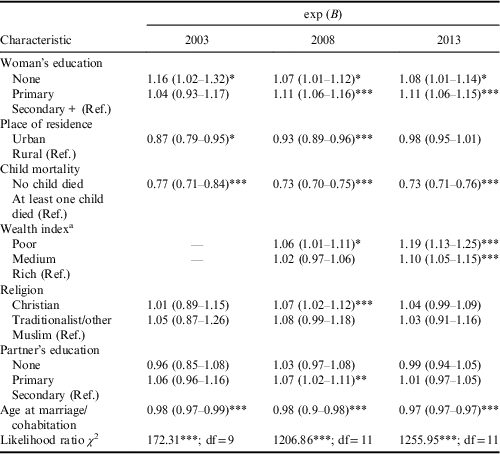
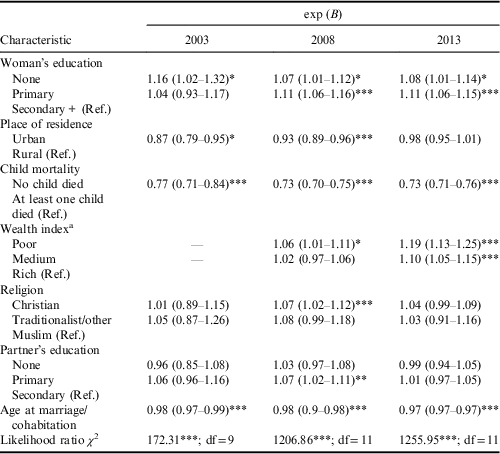
Furthermore, female education significantly predicted CEB in the south in all three surveys after adjusting for confounding variables (see Table 5). Respondents with no schooling (p<0.05) in 2003, none (p<0.05) and primary education (p<0.001) in 2008, and none (p<0.05) and primary schooling (p<0.001) in 2013, reported a higher CEB relative to those with secondary or higher education. Similar to what was observed in the north, women with primary schooling reported a higher CEB than their counterparts with no education in the 2008 and 2013 surveys. For instance, in 2008, while women with no education reported a 7% higher CEB, those with primary education reported an 11% higher CEB, and nearly the same in 2013. Also, age at marriage/cohabitation and child mortality exhibited a significant inverse and consistent association with CEB in the three surveys (p<0.001) in all models in the south.
Adjusted Poisson regression coefficients (with 95% CI) of the association between women’s education and CEB by selected characteristics of women aged 40–49 in the south of Nigeria, 2003, 2008 and 2013 NDHS
a The 2003 NDHS did not include wealth index.
*p<0.05; **p<0.01; ***p<0.001.
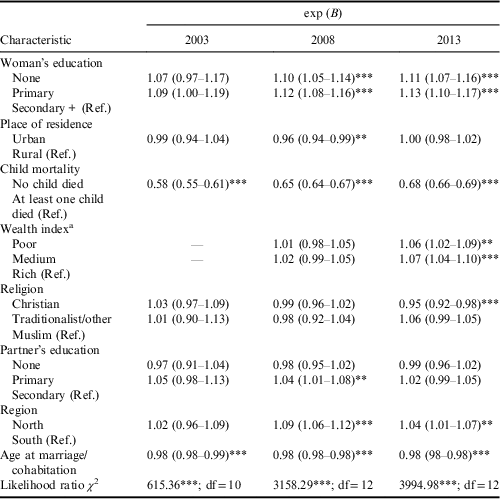
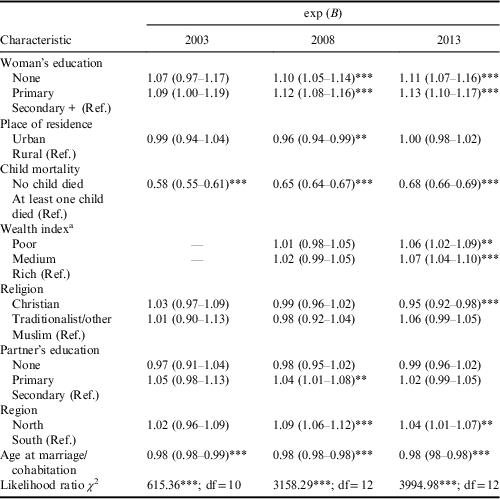
At the national level, the adjusted association between education and CEB was similar to the results found in the north and south of the country (Table 6). Respondents with no education and primary schooling significantly reported a higher CEB in the 2008 and 2013 surveys. The difference in CEB reported between those with no education and those with primary education was consistent with what was observed in the north and south regions. In 2008, for example, women with primary education reported a 12% higher CEB, while those with no schooling reported a 10% higher CEB. Also, age at marriage exhibited a significantly inverse association with CEB (p<0.001), while those who never had any child mortality experience reported a smaller CEB than those who had at least one child mortality experience. Similar to the results of the adjusted models in the north and south, the association was consistent in all surveys.
Adjusted Poisson regression coefficients (with 95% CI) of the association between women’s education and CEB by selected characteristics of women aged 40–49 in Nigeria nationally, 2003, 2008 and 2013 NDHS
a The 2003 NDHS did not include wealth index.
*p<0.05; **p<0.01; ***p<0.001.
Discussion
This study examined the consistency of the association between female education and fertility across Nigeria’s north–south demographic divide. First, female education was found to be a significant predictor of fertility in both the north and south of Nigeria. The findings of the bivariate analysis and the unadjusted and adjusted regression models support this assertion. It was only in the 2003 survey in the north and the national-level analysis that education failed to predict fertility. The findings suggest that secondary or higher education has the most substantial inverse effect on fertility compared with primary schooling in both the north and south. The results support the fact that women with secondary or higher education tend to have fewer children than those with primary or no formal schooling. Previous studies have shown that female schooling operates through postponement of marriage to exert a negative effect on fertility in virtually all world regions (Olusanya, Reference Olusanya1967; Isiugo-Abanihe et al., Reference Isiugo-Abanihe, Ebigbola and Adewuyi1993; Martin, Reference Martin1995; Bongaarts, Reference Bongaarts2010; Isiugo-Abanihe, Reference Isiugo-Abanihe2010; Lutz et al., Reference Lutz, Cauaresma and Abbasi-Shavazi2010; Kara & Maharaj, Reference Kara and Maharaj2015).
Furthermore, the size of the regression coefficients suggested a variation in the effectiveness of education in the two studied demographic regions of Nigeria. The coefficients in the south were more significant than those in the north, though this was only evident in the unadjusted models. The difference in size suggests that the influence of female education was stronger in the more educated south than in the north, where female education was still low in 2013. It may imply that the impact of female education has to do with its prevalence; when this is higher it tends to have a more significant influence on fertility than when it is limited. Indeed, female education (both in coverage and level of attainment) was quite limited in 2013 in northern Nigeria compared with the south (Wusu, Reference Wusu2012; National Population Commission [Nigeria] & ICF International, 2014).
However, the study analysis indicated mixed results in the comparative effects of no schooling and primary education. The results showed that women with primary education may report higher average fertility than their counterparts with no formal schooling, as evident in the 2003 and 2008 surveys. The bivariate analysis indicated that women with primary education reported a higher CEB than those with no schooling. This was observed both in the north and south. The unadjusted and adjusted regression models supported this observation. Of importance is the fact that, in the adjusted regression models, this finding was the general pattern in both the north and south. Women with primary education reported a higher CEB in both the north and south, and at the national level of analysis. Earlier studies in sub-Saharan Africa and other least developed countries had reported similar findings. Such studies suggest that female education at lower level may increase fertility and women with primary education may have higher fertility than their counterparts with no education (Martin, Reference Martin1995; Ainsworth et al., Reference Ainsworth, Beegle and Andrew1996). A little education probably increases the likelihood of carrying a pregnancy to term and possibly encourages non-adherence to traditional long breast-feeding norms.
An earlier explanation advanced for the above results is that women with no education experience a higher frequency of spontaneous abortions and still births (Bongaarts, Reference Bongaarts2010). According to Bongaarts, this may be as a result of their inability to manage their reproductive life effectively, owing to their inability to access information, relative to their counterparts with primary education or higher. Also, women with no education are less likely to accurately report their fertility than those with some primary education. It is also plausible that women with primary education are more likely to breast-feed less intensely and therefore be more susceptible to conception than their counterparts with no schooling, who are more likely to adhere to the traditional long period of breast-feeding, with its contraceptive effect. While women with primary-level education probably breast-feed less than those with no schooling, their level of contraceptive use may be insignificant relative to that of their more educated counterparts. Also, some education (even at primary level) tends to improve the health and nutritional status of a woman, as well as her antenatal care awareness and usage, all of which increase the chances of carrying a pregnancy to full term. It is thus safe to conclude that female education at the primary level in Nigeria may not be an essential factor in planning for a lower fertility level in the country. The finding suggests that the preponderance of low female education (below secondary schooling), especially in northern Nigeria, is one of the major barriers to fertility decline in Nigeria (Wusu, Reference Wusu2012; National Population Commission [Nigeria] & ICF International 2014).
Another important finding from the analysis was the emergence of two covariates that significantly predicted fertility in the regression models: age at marriage/cohabitation and child mortality. These two factors were found to be consistently significantly associated with fertility in all three surveys in both the north and south, as well as at the national level. There was a significant negative association between age at marriage and fertility in both the north and south, and this association was consistent in all three surveys at the highest level of significance. Similarly, women who never experienced the death of a child reported a lower proportion of fertility compared with those who had experienced the death of at least one child in both the north and south. Also, the association was at a high level of significance. The consistency of the significance levels and the size of the proportion estimates suggest that age at marriage and child mortality exert stronger influences on fertility than female education in both the north and south. This finding supports earlier studies that have identified the critical role of age at marriage and child mortality in fertility behaviour (for instance, Bongaarts, Reference Bongaarts2006; Isiugo-Abanihe, Reference Isiugo-Abanihe2010).
Moreover, in the descriptive analysis of the pooled data it was observed that fertility level in the northern region was higher than in the south in the three surveys. Also, the multivariate Poisson regression analysis of the later two surveys (2008 and 2013) showed that the north reported a significantly higher fertility rate than the south. Thus, the fact that fertility has been significantly higher in the north than in the south of Nigeria is indisputable (National Population Commission [Nigeria] & ICF International, 2014). This finding suggests that the differences in female education, age at marriage and child mortality between the north and south account for the sharp difference in fertility levels between the north and the south. The suggestion is predicated upon the premise that female education and age at marriage have been lower in the north than in the south. Also, a higher level of child mortality was reported in the north than in the south. Female education and age at marriage were found to be negatively associated with fertility, while child mortality and fertility were positively related in both the north and south.
The findings of the study may be limited in three ways. First, the data analysed were cross-sectional, and as such the findings do not in any way imply a cause-and-effect relationship between female education and fertility. Secondly, the reported numbers of children ever born may have suffered from the effects of memory loss or deliberate misreporting since it assesses the historical childbirth experiences of older women. Some women might not have remembered their birth history correctly. Thirdly, despite the great deal of effort that goes into the planning and execution of the DHS to avoid bias, it is likely that some biases filtered through at various levels.
Nevertheless, the results suggest that female education remains consistently and significantly inversely related to fertility in both the north and south of Nigeria. Women with secondary or higher level of female education reported a lower CEB than those with primary and no schooling in both regions. Furthermore, the findings suggest that female education exerts a negative effect on fertility much more efficiently in the south, where female schooling is more prevalent than in the north, which has a limited level of female education. Primary-level female education seems to be ineffective in reducing fertility; if anything, it tends to increase it. Women with primary schooling reported a slightly higher CEB than those who did not have any formal education. Also, the analysis reveals age at marriage and child mortality as consistent and significant predictors of fertility in both the north and south of the country. Women who married at relatively higher ages or who had never lost a child to death reported a smaller number of children consistently in both the north and south. In the situation of high infant and child mortality, women tend to hedge in order to ensure that a certain number of children survive. To attain sustainable fertility decline in Nigeria, it is imperative to pursue policies aimed at increasing not only the prevalence of female schooling, but also the level of female educational attainment in both the north and south of the country. By the same token, policymakers and programme implementers should focus on social, physical, environmental and cultural factors influencing age at marriage and child survival in both regions as essential ends in themselves and as critical factors in persistent fertility decline.
Acknowledgments
The authors appreciate the anonymous reviewers for their thoroughness and very useful suggestions. A previous version of this paper was presented at the 2015 International Conference on Population Geographies, University of Queensland, Brisbane, Australia.
Ethical Approval. The authors assert that all procedures contributing to this work comply with the ethical standards of the relevant national and institutional committees on human experimentation and with the Helsinki Declaration of 1975, as revised in 2008.
Conflict of Interest. The authors have no conflicts of interest to declare.
Funding. This research received no specific grant from any funding agency, commercial entity or not-for-profit organization.