Introduction
Necrotising otitis externa is an uncommon infection of the temporal bone, characterised by a propagating osteomyelitis arising from an otitis externa infection. The first known case of this infection was recorded in 1968 by Chandler,Reference Chandler1 who described an ear infection characterised by severe pain, discharge, and a propensity to invade surrounding cartilage, bone and nerves. This infection, which he named ‘malignant external otitis’, seemed to occur in older adult diabetic patients. Interestingly, Meltzer and Kelemen,Reference Meltzer and Kelemen2 in a case report published 9 years prior to Chandler's case report, described a similar severe propagating ear infection in a 61-year-old diabetic patient.
More than half a century later, our understanding and treatment of necrotising otitis externa have evolved. With advancements in radiological investigations and antibiotic therapies, the morbidity and mortality of necrotising otitis externa have decreased. However, the incidence of necrotising otitis externa appears to be rising dramatically in EnglandReference Chawdhary, Liow, Democratis and Whiteside3–Reference Chawdhary, Pankhania, Douglas and Bottrill6 and Scotland.Reference Hopkins, Bennett, Henderson, MacSween, Baring and Sutherland7 This is in contrast to epidemiological studies from other countries, including Taiwan, where the incidence of necrotising otitis externa decreased between 2001 and 2015,Reference Yang, Xirasagar, Cheng, Wu, Ka and Shia8 and the USA, where an audit of the National Inpatient Sample DatabaseReference Sylvester, Sanghvi, Patel, Eloy and Ying9 demonstrated a steady incidence of necrotising otitis externa between 2002 and 2013.
The current work aimed to explore potential theories for the apparent rising incidence of necrotising otitis externa in the UK using national epidemiological data and published literature. The theories explored included: the increasing ageing population in the UK, the growing prevalence of diabetes in the UK, physician awareness of necrotising otitis externa, and antibiotic resistance trends.
Materials and methods
Using the Hospital Episode Statistics database accessed via the National Health Service (NHS) digital webpage, data pertaining to necrotising otitis externa hospital admissions in England between 2002 and 2017, including patient demographics, number of hospital admissions and length of stay, were compiled and analysed. The Hospital Episode Statistics database was also used to collect age data for all hospital admissions across England during the same time period. Adult diabetes mellitus types 1 and 2 prevalence data for England between 2003 and 2017 were collected from the National Diabetes Audit and the Quality and Outcome Framework database accessed from the NHS digital webpage.
Publication trends in ENT journals (with an impact factor greater than 1) pertaining to necrotising otitis externa management between 2002 and 2017 were analysed. Relevant publications were identified by two researchers independently. These individuals searched Medline, Embase, PubMed and Cochrane Library databases, using the search terms ‘invasive otitis externa’, ‘invasive external otitis’, ‘malignant otitis externa’, ‘malignant external otitis’, ‘necrotizing/necrotising otitis externa’, ‘necrotizing/necrotising external otitis’ and ‘skull base osteomyelitis’, identifying literature published from 2002 to 2017 inclusive. All studies and reference lists were cross-checked by both researchers.
There is no existing national database for antibiotic resistance; therefore, ciprofloxacin resistance levels for all adult ear swabs testing positive for Pseudomonas aeruginosa from 2004 to 2018 were collected from our teaching hospital database, which covers a wide geographical area and includes samples from a wide range of populations taken in both primary and secondary care.
Results
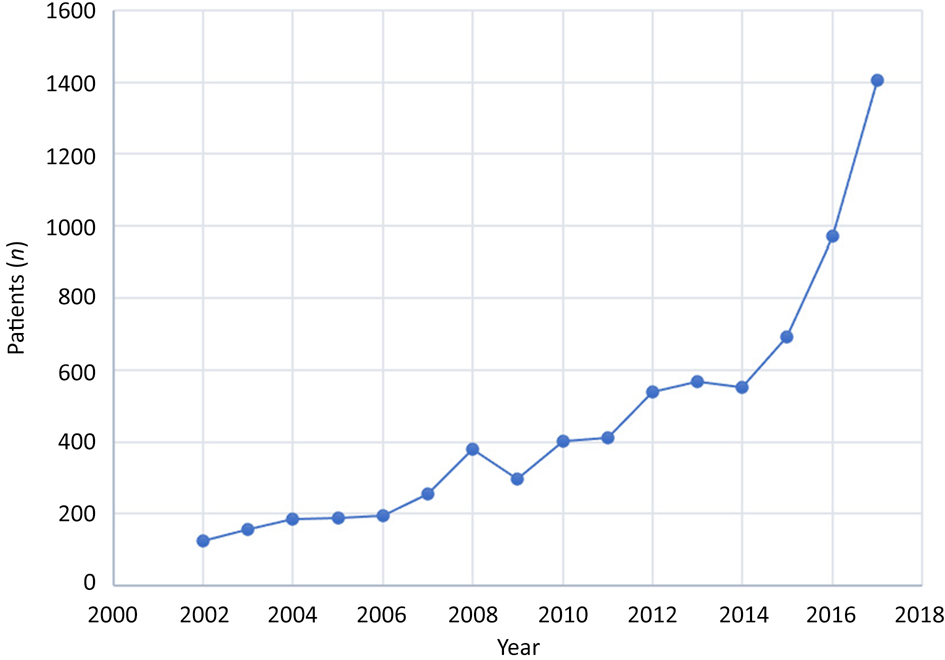
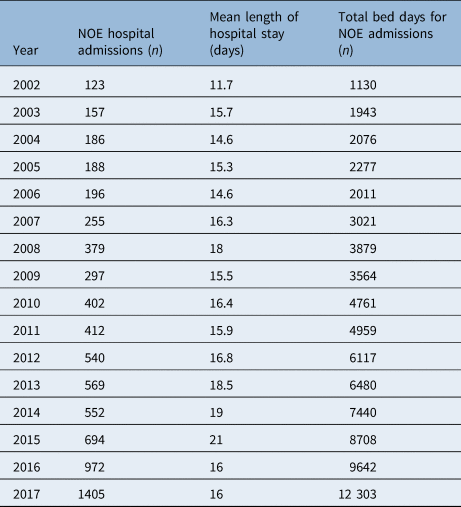
Between 1 January 2002 and 31 December 2017, a total of 7327 cases of necrotising otitis externa were recorded in England, for a total of 80 311 hospital bed days. The cohort comprised 5298 (72.3 per cent) male and 2029 (27.7 per cent) female patients. This sex ratio remains approximately constant from year to year. The mean hospital stay was 16.3 days; this did not demonstrate a significant pattern of change throughout the study period (Table 1). The admission trend line (Figure 1) shows a gradual increase in hospital admissions for necrotising otitis externa from 2002 to 2014, followed by an exponential rise from 2014 to 2017.
Hospital admissions for necrotising otitis externa between 2002 and 2017 (data from NHS England).

Hospital Episode Statistics data for NOE

NOE = necrotising otitis externa
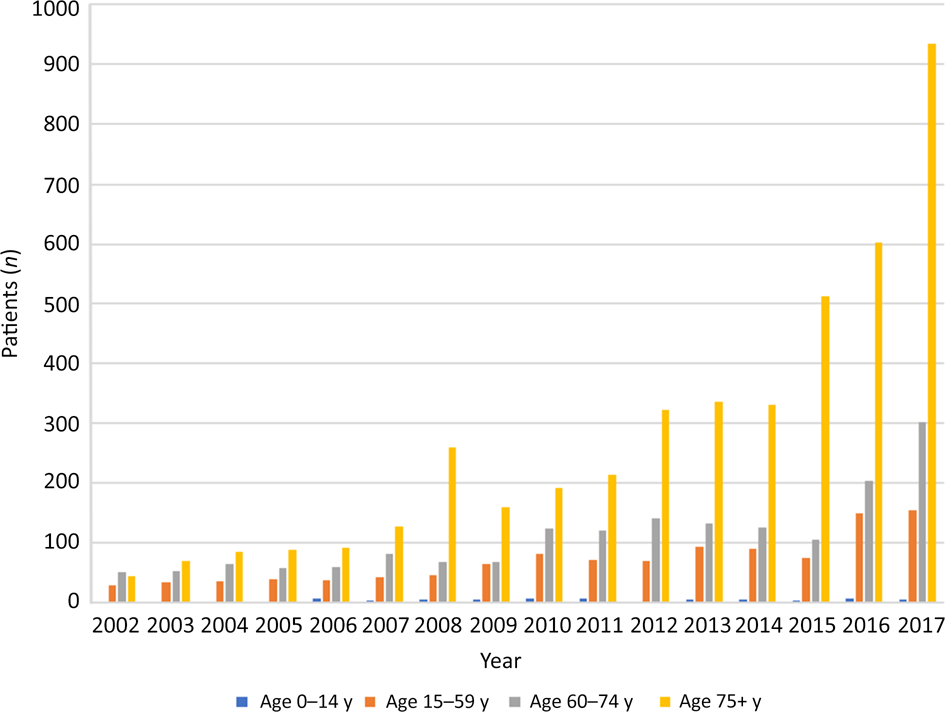
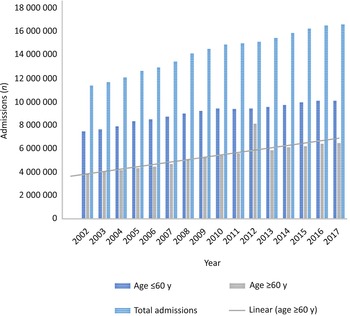
Sixty-one per cent of patients diagnosed with necrotising otitis externa were aged 75 years or older, whilst 84 per cent were aged 60 years or older. The mean age of admitted patients with necrotising otitis externa showed a continuous increase over the 16-year period, with the proportion of patients aged over 75 years rising from 36 per cent in 2002 to 66 per cent in 2017 (Figure 2). Figure 3 demonstrates the age trend of patients admitted to hospital with any condition over the same time period.
Ages of patients admitted to hospital with necrotising otitis externa between 2002 and 2017 (data from NHS England). Y = years

Ages of patients admitted to hospital with any condition between 2002 and 2017 (data from NHS England). Y = years

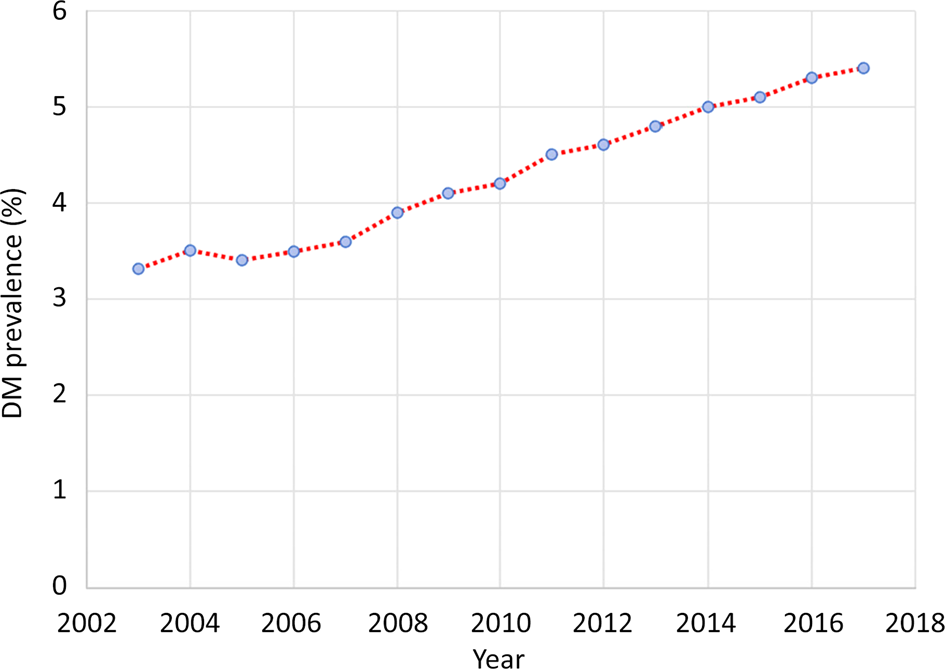
The combined prevalence of diabetes mellitus types 1 and 2 in England increased over the same time period, from 3.3 per cent in 2003 to 5.4 per cent in 2017 (Figure 4), representing a significant rise in the at-risk population.
Combined prevalence of diabetes mellitus (DM) types 1 and 2 (data from National Diabetes Audit and Quality and Outcomes Framework UK database).

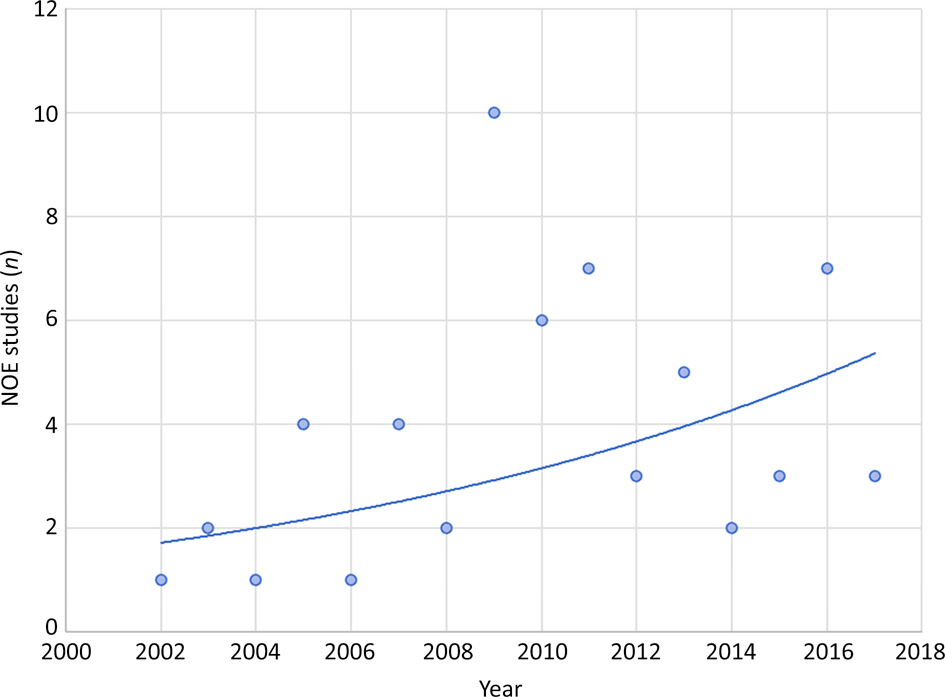
The number of peer-reviewed published studies in ENT journals (with an impact factor greater than 1) pertaining to the management of necrotising otitis externa is small but demonstrates a gradual increase over the time period (Figure 5).
Published peer-reviewed studies of necrotising otitis externa (NOE) management in ENT journals with an impact factor greater than 1 published between 2002 and 2017.

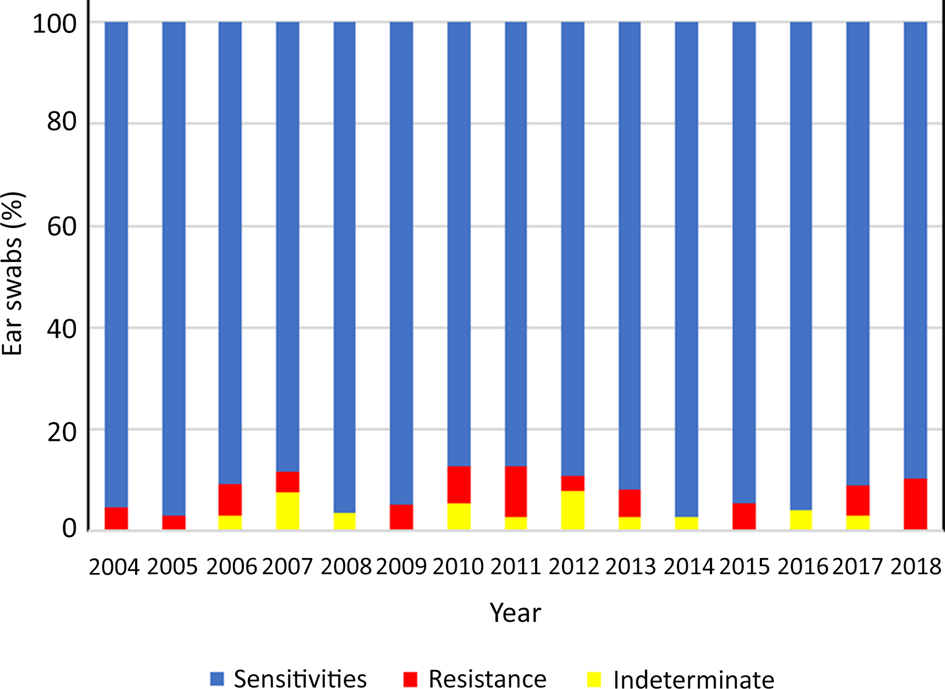
Analysis of over 4000 ear swab culture and sensitivity results within our NHS Trust did not show any significant change in the proportion of ciprofloxacin-resistant P aeruginosa over the time period (Figure 6). Peak resistance levels did not rise above 10 per cent. There has been no significant change in the proportion of pseudomonas swabs demonstrating antibiotic resistance during the time period. These data are comparable to those from other UK centres.
Ciprofloxacin sensitivities for Pseudomonas aeruginosa in over 4000 adult ear swabs at Manchester University NHS Foundation Trust between 2004 and 2018.

Discussion
The increasing incidence of necrotising otitis externa in the UK has been mentioned in a number of published case series, and several authors have proposed potential theories for it. However, this is the first study to actively explore potential reasons for the apparent exponential rise in necrotising otitis externa incidence.
Hospital Episode Statistics data suggest that necrotising otitis externa has increased in incidence by 1142 per cent between 2002 and 2017 in England. This is particularly interesting when we consider that its incidence in other countries remains stableReference Sylvester, Sanghvi, Patel, Eloy and Ying9 or is decreasing.Reference Yang, Xirasagar, Cheng, Wu, Ka and Shia8 The reasons for this increase are likely to be multifactorial, but the analysis of trends for likely contributing factors is interesting and useful in terms of guiding future prospective work on this theme.
This work has a number of flaws and limitations, which are addressed within the discussion. The work used only freely accessible data and therefore addresses a time period ending in 2017. Another major limitation is that this is an observational study of retrospective trends at a population level and does not incorporate patient-level data. However, whilst acknowledging that correlation does not imply causation, a number of interesting trends were observed in the studied parameters over the matched time period.
Rising prevalence of diabetes
Diabetes mellitus is a well-known risk factor for developing necrotising otitis externa.Reference Chandler1 A study of 88 patients from 1990 to 2013 by Stern Shavit et al.Reference Stern, Soudry, Hamzany and Nageris10 revealed that 75 per cent of patients had a pre-existing diagnosis of diabetes. Other necrotising otitis externa case series have reported diabetes in more than 50 per cent of patients.Reference Carlton, Perez and Smouha11–Reference Ali, Meade, Anari, ElBadawey and Zammit-Maempel13
Studies have shown that, compared with non-diabetics, diabetic patients have: impaired polymorphonuclear leukocyte function, diminished chemotactic and phagocytic activity, and poor oxidative and bactericidal function.Reference Marhoffer, Stein, Maeser and Federlin14–Reference Gallacher, Thomson, Fraser, Fisher, Gemmell and MacCuish16 Coupled with the associated endarteritis, microangiopathy and small vessel obliteration that occur in diabetics, these patients are thus uniquely susceptible to P aeruginosa infections. The higher pH of cerumen in diabetics may also be a contributing factor to infection rates.Reference Driscoll, Ramachandrula, Drezner, Hicks and Schaffer17 It is therefore not surprising to observe an increase in the prevalence of diabetes mellitus coinciding with the rise in incidence of necrotising otitis externa. The Quality Outcome Framework from which our diabetes prevalence data were acquired is a primary care initiative and therefore a reliable measure of population health.
For future prospective studies, ascertaining the relative risk of diabetes in predisposing patients to necrotising otitis externa, or indeed the involvement of diabetic control in the management and prognosis of patients with necrotising otitis externa, will be essential avenues to research.
Antibiotic resistance trends
There is currently no national database for antibiotic resistance trends, and our data are therefore based on analysis of over 4000 ear swab culture and sensitivity results within our NHS Trust. A limitation of this analysis is that P aeruginosa is not the only causative organism in necrotising otitis externa, though it remains the most commonly isolated pathogen in necrotising otitis externa worldwide, accounting for a positive microbiological culture in a substantial majority of cases.Reference Mahdyoun, Pulcini, Gahide, Raffaelli, Savoldelli and Castillo18
There has been no significant change in the proportion of P aeruginosa swabs demonstrating antibiotic resistance during the matched time period. These data are comparable to findings at other UK centres (based on informal discussion with other UK centres), though they demonstrate a lower pseudomonal resistance rate than that described in published case series from other countries.Reference Mahdyoun, Pulcini, Gahide, Raffaelli, Savoldelli and Castillo18 Pseudomonal resistance has been attributed to an overuse of fluoroquinolones and delays in diagnosis, which can facilitate biofilm formation.Reference Loh and Loh19,Reference Berenholz, Katzenell and Harell20
Staphylococcus aureus has been cultured in a minority of reported case series, with its methicillin-resistant S aureus (MRSA) strain reportedly more prevalent in non-diabetics.Reference Hobson, Moy, Byers, Raz, Hirsch and McCall21 Resistant pseudomonal strains and MRSA have been linked to poor prognostic indicators.Reference Hobson, Moy, Byers, Raz, Hirsch and McCall21,Reference Clerc, Verillaud, Duet, Guichard, Herman and Kania22 Fungal necrotising otitis externa is an increasingly recognised phenomenon, having an increased incidence in the severely immunosuppressed.Reference Marchionni, Parize, Lefevre, Vironneau, Bougnoux and Poiree23
As a fluoroquinolone, ciprofloxacin eradicates bacteria by inhibiting bacterial DNA replication. It does this by inhibiting the two bacterial enzymes that are key to DNA synthesis.Reference Hooper24 Studies demonstrating its efficacy in the treatment of necrotising otitis externa have been well documented.Reference Lew and Waldvogel25 However, there are published reports of pseudomonal resistance to ciprofloxacin,Reference Berenholz, Katzenell and Harell20 and one reported case of pseudomonal resistance to ceftazidime, gentamicin and ciprofloxacin.Reference Bernstein, Holland, Porter and Maw26 The two recognised mechanisms for ciprofloxacin resistance are target site modification and upregulation of efflux pumps.Reference Rehman, Patrick and Lamont27 Mutations in target-encoding genes, gyrAB and parCE, reduce the affinity of DNA gyrase and topoisomerase to ciprofloxacin. Over-expression of efflux pumps, which occurs via mutations in regulatory efflux genes, reduces the intracellular concentration of ciprofloxacin.Reference Rehman, Patrick and Lamont27 Such mutations in efflux regulatory genes can lead to broad antimicrobial resistance. For example, over-expression of the MexAB-OprM efflux system has been linked to intrinsic resistance of P aeruginosa to quinolones, tetracycline, chloramphenicol, macrolides and B-lactams.Reference Li, Nikaido and Poole28
Whilst it is reassuring that our local case series of over 4000 ear swabs does not demonstrate an increase in antibiotic resistance, this may not represent the environment present in patients with necrotising otitis externa, who are almost inevitably diabetic or immunosuppressed, and are likely to have had a number of courses of topical and systemic antibiotics prior to diagnosis. Future research could usefully clarify these points, ascertain the relevance of antibiotic-resistant bacterial strains in necrotising otitis externa, and optimise antibiotic choice and administration.
Ageing population
The presented Hospital Episode Statistics data (Figures 2 and 3) clearly demonstrate that an increasingly aged population is being admitted to hospital in England, and that the proportion of patients aged over 75 years admitted with necrotising otitis externa is increasing year on year. These are population-level data and do not tell us whether this simply reflects an ageing population or perhaps an increasing trend for the older adult to be admitted to hospital. Census data in England29 tell us that people aged over 75 years made up 7.5 per cent of the population in 2001, and this almost doubled to 14.7 per cent in 2011. The ageing population in England is therefore very real, and will have an increasing impact on the provision of health and social care in coming years.
It is not possible to use this population-level data to draw a conclusion regarding the apparent rising incidence of necrotising otitis externa amongst the same population, but only to observe that, in a similar manner to diabetes prevalence, the increasing older adult population means that a larger proportion of the population have an additional risk factor for developing necrotising otitis externa – immunosenescence. Immunosenescence refers to the gradual deterioration of the immune system by the ageing process. Age, like diabetes mellitus, has always been a recognised predisposing risk factor for developing necrotising otitis externa.Reference Chandler1 As the immune system ages, the ability to protect oneself from infections and cancer decreases. Conversely, inflammatory responses mediated by the innate immune system increase in intensity and duration, rendering older adults susceptible to tissue-damaging inflammatory reactions.Reference Weyand and Goronzy30 Specific age-related changes leading to susceptibility to infections include: impairment of the respiratory burst of macrophages and neutrophils, hindering their ability to destroy bacteria;Reference Weyand and Goronzy30 decreased stimulatory ability of antigen-presenting dendritic cells;29 and decreased neutrophil chemotactic and phagocytic abilities.Reference Corberand, Ngyen, Laharrague, Fontanilles, Gleyzes and Gyrard31 With such a deterioration in the host's defences, opportunistic bacteria such as P aeruginosa can easily infect ear canal tissue and establish a chronic infection, likely having a synergistic effect with diabetes and other causes of immunosuppression.
Increased physician awareness
The theory of increased physician awareness of necrotising otitis externa is one that is exceptionally difficult to explore. We could consider the alternative diagnoses that necrotising otitis externa patients might have been mistakenly diagnosed with in the past, but this would be almost impossible to investigate retrospectively. It is not beyond the realms of imagination, though, that as physicians learn about a rare condition first described only two generations earlier, they are more likely to recognise it, diagnose it and document it. It is also not beyond the realms of imagination that increased awareness of necrotising otitis externa may have led to more widespread use of accurate clinical terminology and increasingly accurate clinical coding for centralised diagnosis registration. One of the limitations of epidemiological data is that it relies on diagnosis documentation and may not reflect accurate necrotising otitis externa case numbers. At the time of writing, there are no published clinical cohort studies that demonstrate a rise in necrotising otitis externa incidence, this phenomenon being limited to epidemiological studies.
• Necrotising otitis externa (NOE) is a severe, life-threatening infection
• The incidence of NOE is rising rapidly in England according to Hospital Episode Statistics data
• It is likely that a combination of factors is contributing to this incidence rise
• There is a corresponding rise in the at-risk older adult and diabetic populations in England
• Increasing physician awareness of NOE may be contributing through increased recognition, diagnosis and clinical coding of the condition
We used a proxy measure of peer-reviewed publications to ascertain whether there has been an increase in physician awareness of necrotising otitis externa. This is a very flawed measure, as it may be a self-fulfilling prophecy. If the incidence of a rare condition increases, it makes sense that the frequency of publications on the topic and physician awareness of the condition will also increase. Between 2002 and 2017, there were 61 papers published on necrotising otitis externa in major ENT journals (with an impact factor greater than 1). The level of evidence within these papers was poor, with most being single-centre case series with low patient numbers. One systematic review by Mahdyoun et al.Reference Mahdyoun, Pulcini, Gahide, Raffaelli, Savoldelli and Castillo18 was published in the 16-year time period. The number of peer-reviewed published studies per year was small, and whilst it demonstrates a gradual increase over the time period, it is impossible to draw a conclusion from these numbers.
Delayed diagnosis of necrotising otitis externa is associated with poorer outcomes, and increased physician awareness would enable earlier recognition of this rare and dangerous infection. Increasing physician awareness of necrotising otitis externa is therefore a topic that warrants further attention.
This study has not resolved the issue of an apparent rising incidence of necrotising otitis externa in England, whilst the condition is stable or declining in incidence in other countries. What we do know, however, is that the increased at-risk population means that physician awareness, and rapid diagnosis and management of necrotising otitis externa, is more important than ever.
Conclusion
Whilst acknowledging that correlation does not imply causation, we cannot ignore the fact that the massive rise in the incidence of necrotising otitis externa has occurred alongside documented increases in the at-risk older adult and diabetic populations in England. Although we have not observed any rise in antibiotic resistance trends at a population level, this may not be representative of the microbiome in an immunosuppressed population. It is likely that a combination of factors is contributing to the rise in necrotising otitis externa incidence in England, including increased clinician recognition, diagnosis and accurate clinical coding.
Acknowledgement
This research was supported by the National Institute for Health and Care Research (‘NIHR’) Manchester Biomedical Research Centre.
Competing interests
None declared