Low-intensity psychological treatments have been gaining increasing recognition as standalone first-line treatment options within stepped-care models for acute mental health problems (Andrews, Cuijpers, Craske, McEvoy, & Titov, Reference Andrews, Cuijpers, Craske, McEvoy and Titov2010; Coull & Morris, Reference Coull and Morris2011; Foroushani, Schneider, & Assareh, Reference Foroushani, Schneider and Assareh2011; Lewis, Pearce, & Bisson, Reference Lewis, Pearce and Bisson2012; Newman, Szkodny, Llera, & Preworski, Reference Newman, Szkodny, Llera and Przeworski2011; van't Hof, Cuijpers, & Stein, Reference van't Hof, Cuijpers and Stein2009). Low-intensity psychological interventions typically involve the use of self-help materials based on principles of cognitive behaviour therapy (CBT) under the provision of limited clinical guidance (guided self-help) or no clinical guidance (non-facilitated self-help; National Institute for Health and Clinical Excellence, 2011). Low intensity psychological treatments are recommended by the National Institute for Health and Clinical Excellence (NICE) for the treatment of various mental health problems, including mild to moderate levels of depression, panic disorder, and generalised anxiety disorder (NICE, 2009, 2011). CBT-based guided self-help is already being offered in Australia through the government-funded Mindspot Clinic (http://www.mindspot.org.au/) and in the United Kingdom (e.g., Beating the Blues; http://www.beatingtheblues.co.uk/) as first-line intervention for anxiety and depression. Gains similar to traditional face-to-face CBT have been reported (e.g., Cuijpers, Donker, van Straten, Li, & Andersson, Reference Cuijpers, Donker, van Straten, Li and Andersson2010; Priemer & Talbot, Reference Priemer and Talbot2013). In the absence of clinical guidance, however, the empirical evidence suggests that non-guidance contact should be provided to ensure better outcomes (for a review, see Talbot, Reference Talbot2012). Non-guidance contact has been defined as contact that does not involve the provision of assistance in the application of specific therapy techniques. It is suggested that even minimal levels of non-guidance contact, such as emails to encourage treatment adherence, can increase self-help therapy's outcomes by motivating treatment engagement and improving adherence (Talbot, Reference Talbot2012).
Most self-help therapies are based on principles of traditional CBT. Widening effective self-help options would offer clients a choice of treatment. Giving clients a choice of treatment has been shown to significantly improve treatment outcomes (e.g., Carter et al., Reference Carter, Luty, McKenzie, Mulder, Frampton and Joyce2011). Schema therapy, a relatively recent treatment model derived from CBT, may be an effective addition to an ensemble of existing therapies from which people may choose (Young & Klosko, Reference Young and Klosko1994; Young, Klosko, & Weisshaar, Reference Young, Klosko and Weishaar2003). Compared to CBT, which tends to focus on automatic thoughts and core beliefs in the present, schema therapy places greater emphasis on the developmental origins of psychopathology, interpersonal relationships and emotional states. Originally developed for personality pathology, outcome studies have so far supported its efficacy for borderline personality disorder (Farrell, Shaw, & Webber, Reference Farrell, Shaw and Webber2009; Giesen-Bloo et al., Reference Giesen-Bloo, van Dyck, Spinhoven, van Tilburg, Dirksen, van Asselt and Arntz2006; Nadort et al., Reference Nadort, Arntz, Smit, Giesen-Bloo, Eikelenboom, Spinoven and van Dyck2009), as well as its effectiveness for cluster C, paranoid, histrionic or narcissistic personality disorder (Bamelis, Evers, Spinhoven, & Arntz, Reference Bamelis, Evers, Spinhoven and Arntz2013). Central to schema therapy is the treatment of early maladaptive schemas (EMSs), which refer to dysfunctional themes about oneself and one's connection to others that are thought to underlie personality pathology and psychological distress. A total of 18 EMSs have been identified and are postulated to result from unmet core needs in childhood; namely, basic safety, connection to others, autonomy, self-esteem, self-expression, and realistic limit-setting. Unmet needs for basic safety, for example, are presumed to lead to EMSs pertaining to fears of abandonment, mistrust, and abuse. Schema therapy aims to modify problematic EMSs and to facilitate the use of more effective coping strategies.
Although schema therapy was developed for the treatment of personality pathology, EMSs have been found to relate to psychological distress in a number of ways. Elevated levels of EMSs have been consistently associated with psychological distress and have been identified in individuals experiencing a mood or anxiety disorder (for a review, see Hawke & Provencher, Reference Hawke and Provencher2011). As well, in a 9-year follow-up study conducted among 115 clinically depressed individuals, EMSs emerged as significant predictors of depression severity and number of episodes (Halvorsen, Wang, Eisemann, & Waterloo, Reference Halvorsen, Wang, Eisemann and Waterloo2010). Outcome studies have also shown that the treatment of anxiety and mood disorders using psychotropic medication can produce significant improvements in EMSs in relatively brief periods of time. Specifically, significant reductions in EMSs have been observed in psychiatric outpatients after 2 months of antidepressant use for major depressive disorder or panic disorder, and after 6 weeks of intense group CBT to treat depressive and anxious symptoms (Atalay, Atalay, & Bağdaçiçek, Reference Atalay, Atalay and Bağdaçiçek2011; Fitzsimmons et al., Reference Fitzsimmons, Gallagher, Blayone, Chan, Leaitch, Veals and Wilkinson2008). In addition, positive change in EMSs has been found to predict significant reductions in symptomatic distress among outpatients with Axis I and/or Axis II disorders after only five sessions of schema therapy (Nordahl, Holthe, & Haugum, Reference Nordahl, Holthe and Haugum2005). Two recent controlled outcome studies have compared schema therapy to CBT for the treatment of major depression and PTSD with either no significant differences or outcomes favouring schema therapy (Carter et al., Reference Carter, McIntosh, Jordan, Porter, Frampton and Joyce2013; Cockram, Drummond, & Lee, Reference Cockram, Drummond and Lee2010).
Overall, the above findings suggest that schema therapy may be an effective first-line treatment not only for personality psychopathology, but also for more general psychological distress that may or may not be associated to personality pathology. It is hoped that self-help schema therapy may then be an effective and appealing treatment option for individuals with limited access to traditional face-to-face therapies, as well as for those who find the interpersonal environment of traditional therapy too challenging as a result of mistrust or fear of intimacy (Carter et al., Reference Carter, Olmsted, Kaplan, McCabe, Mills and Aimée2003; Mitchell et al., Reference Mitchell, Agras, Crow, Halmi, Fairburn, Bryson and Kraemer2011; Mond, Myers, Crosby, Hay, & Mitchell, Reference Mond, Myers, Crosby, Hay and Mitchell2010). A well-known self-help schema therapy book written by individuals credited with the development of schema therapy has been available for the past 2 decades: Reinventing Your Life: The Breakthrough Program to End Negative Behavior. . . and Feel Great Again (Young & Klosko, Reference Young and Klosko1994). Despite the popularity of the book and the self-help program, its efficacy has not been tested. The main goal of the present study was to assess the impact of Young and Klosko's (Reference Young and Klosko1994) self-help schema therapy on psychological distress and EMSs. Treatment adherence and treatment satisfaction were also evaluated as a secondary goal. A 6-week treatment protocol was used. No therapist guidance was offered. Non-guidance contact was provided through weekly emails in an effort to promote treatment adherence and enhance outcomes.
Method
Participants
Participants were self-referred and recruited using a variety of methods, including advertisements in local newspapers, posters on community bulletin boards, mass e-mail circulated at two local universities, as well as announcements through local cable television and on an internet advertisement website. Advertisements targeted individuals who were interested in self-growth and in making significant life changes in relationships and work. Examples of problems described in the self-help book were given (e.g., having a tendency to be drawn to people who may not meet one's needs, feeling somewhat defective, feeling unhappy or unfulfilled). A link was provided to the study website, which described the research project and screened applicants. The first phase of the screening process required applicants to complete online questionnaires assessing the following inclusion criteria: aged 18 years or older, regular internet access, adequate understanding of written English, availability over the following 6 weeks, and willingness to work on the self-help program several hours per week. Given the preliminary nature of the study and the absence of clinical guidance, a number of exclusion criteria were used to target individuals with milder forms of psychopathology: acute suicide risk or previous suicidal attempts; presence of psychotic symptoms, as measured by items of the Psychosis Screening Questionnaire (PSQ; Bebbington & Nayani, Reference Bebbington and Nayani1995); current substance abuse or dependence; self-reported terminal illness; current enrolment in psychotherapy or immediate plans to initiate psychotherapy; psychotropic medication either initiated or adjusted in the past month or dose adjustments anticipated in the upcoming weeks; and positive history of sexual/physical abuse during childhood, such as history having been found to be strongly associated with suicidal behaviour (Enns et al., Reference Enns, Cox, Afifi, De Graaf, Ten Have and Sareen2006). Applicants who did not meet one or more of the study criteria immediately received an automated message explaining that they did not qualify for participation, thanking them for their interest in the study and providing them with a list of community mental health resources.
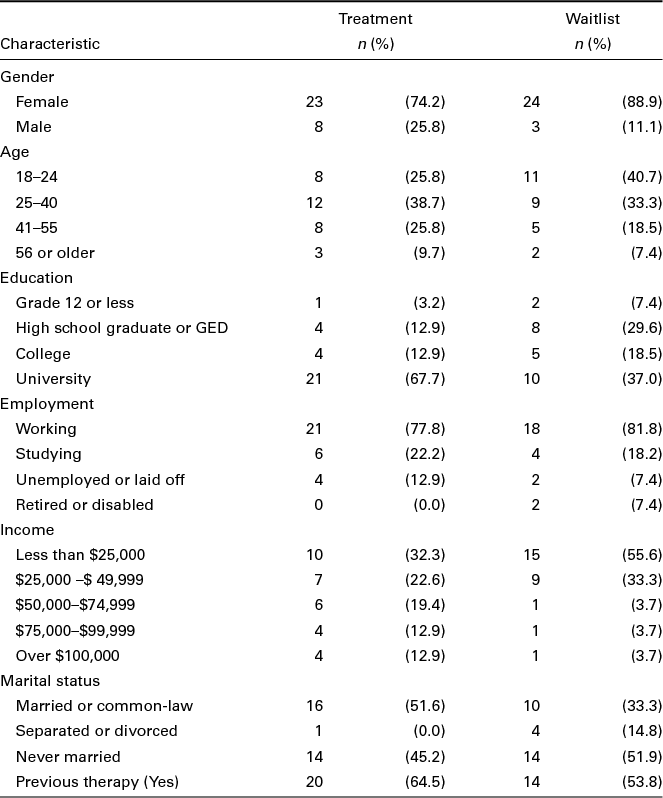
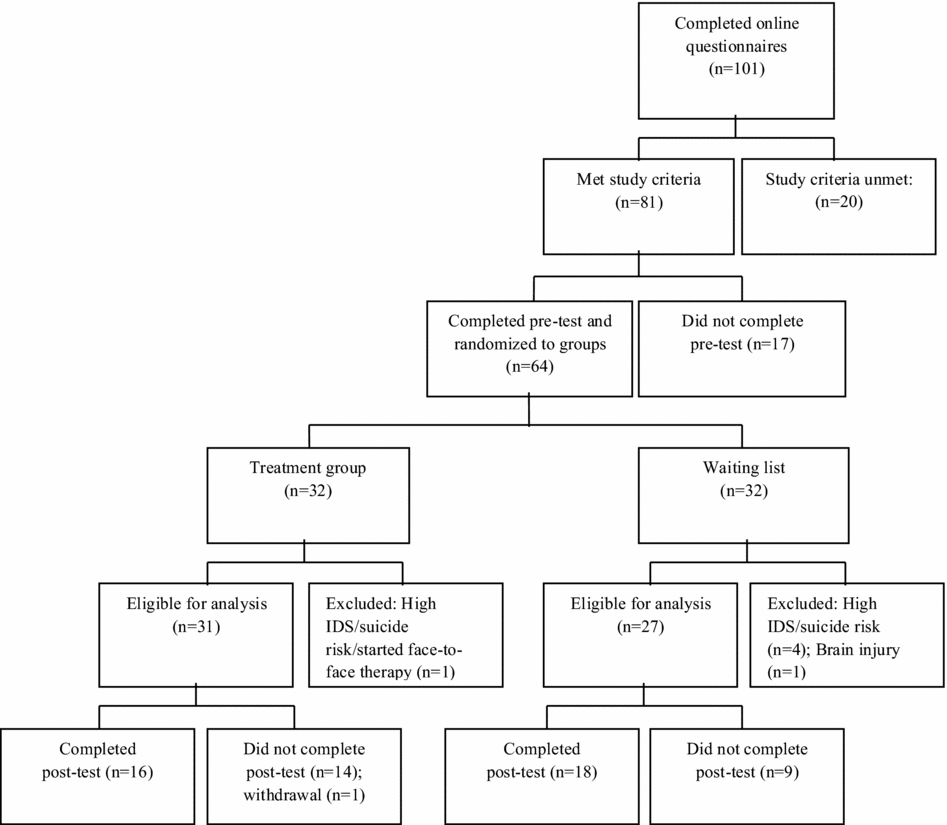
A total of 101 applicants entered the second phase of the screening, which required them to create a password and complete the Outcome Questionnaire — 45 (OQ-45.2; Lambert & Burlingame, Reference Lambert, Hansen, Umphress, Lunnen, Okiishi, Burlingame and Reisinger1996) and the Inventory of Depressive Symptomatology — Self-Report (IDS-SR; Rush, Reference Rush1982). Applicants had to be experiencing a minimum amount of distress, as indicated by a score >49 on the OQ-45.2, that is, no less than the mean score obtained in a community sample (Lambert et al., Reference Lambert, Morton, Hatfield, Harmon, Hamilton, Reid and Burlingame2004). If showing symptoms of severe depression or potential suicide risk (score >38 on IDS-SR, the cut-off for severe depression, or a score >1 on Item 18 assessing suicide ideation, or >2 on Item 17 evaluating hopelessness), applicants were excluded and provided a list of community mental health resources with encouragement to avail themselves of the services. Eighty-one applicants met all inclusion criteria (see Figure 1). Within 24 hours of giving their informed consent through a secure electronic system, applicants were emailed a link to complete additional baseline questionnaires via a secure account created for the study. Sixty-four participants completed all baseline measures and were randomly assigned to either self-help schema therapy or a waitlist control. Socio-demographic characteristics of all participants eligible for participation are presented in Table 1.
Sociodemographic Characteristics of Study Participants Eligible for Analysis (N = 58)

Note: Percentages may not add up as a result of missing data.
Participant flow through the recruitment and analyses.
Materials
Outcome measures
The OQ-45.2 (Lambert et al., Reference Lambert, Hansen, Umphress, Lunnen, Okiishi, Burlingame and Reisinger1996) was used as the primary outcome measure. It is a 45-item self-report questionnaire that assesses distress (e.g., ‘I feel blue’), interpersonal relationships (e.g., ‘I feel unhappy in my marriage/significant relationship’) and social and occupational functioning (e.g., ‘I find my work/school satisfying’). OQ-45.2 scores have been shown to be sensitive to progress, deterioration, or absence of change over the course of therapy (Lambert et al., Reference Lambert, Morton, Hatfield, Harmon, Hamilton, Reid and Burlingame2004). Responses are given for the past 7 days using a 5-point Likert scale (0 = never and 4 = almost always). As a confirmatory factor analysis yielded mixed findings on the postulated multidimensionality of the OQ-45.2 (e.g., Bludworth, Tracey, & Glidden-Tracey, Reference Bludworth, Tracey and Glidden-Tracey2010), the total score of the OQ-45.2 was used. The validity of the OQ-45.2's total score has been consistently supported as a measure of global psychological distress (Bludworth et al., Reference Bludworth, Tracey and Glidden-Tracey2010; Mueller, Lambert, & Burlingame, Reference Mueller, Lambert and Burlingame1998). Cronbach's alpha in the present sample was .92.
The Revised Young Schema Questionnaire-Short Form (YSQ-SF3; Young, Reference Young2005)
The 90-item YSQ-SF3 assesses 18 EMSs and was found to be equivalent to the original 205-item YSQ (Stopa, Thorne, Waters, & Preston, Reference Stopa, Thorne, Waters and Preston2001; Waller, Meyer, & Ohanian, Reference Waller, Meyer and Ohanian2001). Respondents rate each statement in terms of how they feel about their lives on a 6-point Likert scale (1 = completely untrue of me and 6 = describes me perfectly). Sample items include ‘I argue with other people too much’ and ‘It is hard for me to show affection to people’. A confirmatory factor analysis revealed the presence of both a first-order generic factor that includes all items and of 18 correlated first-order specific schema factors (Kriston, Schäfer, von Wolff, Härter, & Hölzel, Reference Kriston, Schäfer, von Wolff, Härter and Hölzel2012). In the present study, the generic factor or overall level of EMSs was assessed and thus scores on all 90 items were summed. Internal consistency was satisfactory (α = .95).
Two measures were developed for the study to assess treatment adherence and satisfaction. Treatment adherence was evaluated using a two-item measure asking participants the estimated time spent weekly on exercises recommended in the book, as opposed to time spent simply reading the book, and the number of pages read over the treatment period. Participants indicated their level of treatment satisfaction by responding to the statement, ‘Overall, I am satisfied with this self-help therapy’, on a Likert scale ranging from 0 (not at all) to 4 (to a very great extent).
Screening and monitoring measure
The Inventory of Depressive Symptomatology — Self-Report (IDS-SR; Rush, Reference Rush1982) was used for screening purposes to determine study eligibility during recruitment. It was also used at mid- and post-treatment for monitoring participants’ level of depressive symptoms and suicidal ideation in the event that a more intense and direct form of clinical intervention might be indicated. The IDS-SR includes 30 items assessing over the past 7 days the presence and severity of DSM-IV symptoms of a major depressive episode. The IDS-SR possesses strong psychometric properties (Rush, Gullion, Basco, Jarrett, & Trivedi, Reference Rush, Gullion, Basco, Jarrett and Trivedi1996). Potential applicants showing symptoms of severe depression or potential suicide risk were excluded from participation (score >38 on IDS-SR, the cut-off for severe depression, or a score >1 on Item 18 assessing suicide ideation, or >2 on Item 17 evaluating hopelessness). Participants who met any of these criteria during monitoring were contacted directly for assessment, were requested to cease participation in the study, and were offered assistance in locating appropriate treatment.
Self-help treatment manual
Reinventing Your Life: The Breakthrough Program to end Negative Behaviour . . . and Feel Great Again (Young & Klosko, Reference Young and Klosko1994). This book begins with a self-assessment questionnaire to identify relevant EMSs or ‘lifetraps’. Depending on participants’ responses, they are directed to the most relevant chapters. The second section of the book describes how lifetraps develop in childhood, how they may be experienced, and how they can be changed. The third section provides in-depth schema descriptions, additional assessment quizzes, relationship warning signs, case illustrations and specific exercises to modify each lifetrap or EMS. The book concludes with a chapter devoted to strategies for maintaining and promoting further change.
Procedure
A randomised controlled trial was conducted to compare a 6-week non-guidance contact self-help schema therapy condition to a waitlist control. In order to reduce attrition during recruitment and the waiting time between the completion of baseline measures and the start of treatment, randomisation to groups occurred in cohorts of 10 participants and no later than 2 weeks following inclusion in the study. Participants assigned to the treatment group received a copy of the self-help book by mail and treatment was immediately initiated. Halfway through the 6-week treatment period, all participants were sent an email prompting them to fill out the IDS-SR (Rush, Reference Rush1982). Following completion of the post-treatment measures, participants in the waitlist group were sent a copy of the self-help book and given an opportunity to participate in the treatment. If participants did not complete pre-test, mid-treatment, and post-treatment measures within a week after the questionnaires were sent, three standard email reminders were sent every 3 days encouraging them to do so. All measures were completed online. Participants worked through the material presented in the treatment manual over the 6-week period independently and on their own schedule. Non-guidance contact for individuals in the treatment group was provided through weekly standardised emails containing words of encouragement and a hyperlink to a diary in which they could indicate from a checklist the chapters and exercises they had completed during the previous week. This checklist was designed to help participants keep track of their progress with the material and to encourage treatment adherence.
Statistical Analyses
Preliminary inspection of the data revealed no statistical outliers and confirmed that all prerequisite statistical assumptions were met. Independent samples t tests and chi-square tests, respectively, were conducted to assess mean differences and sampling distributions across groups at pre-test. Between-group changes on outcome measures across pre- and post-test were analysed using repeated-measures (time × group) analyses of variance (ANOVAs). Study completer and intention-to-treat analyses were conducted. The latter were performed using the last observation carried forward (LOCF), which were the pretest scores. An analysis of reliable and clinical change was conducted using the method developed by Jacobson and Truax (Reference Jacobson and Truax1991) and benchmarks established for the OQ-45.2 (Lambert et al., Reference Lambert, Morton, Hatfield, Harmon, Hamilton, Reid and Burlingame2004).
Results
Participant Flow
As shown in Figure 1, 51.6 % (n = 16) of the treatment group participants and 66.7% (n = 18) of the waitlist participants completed post-treatment measures and as such were eligible for analyses.
Baseline Data
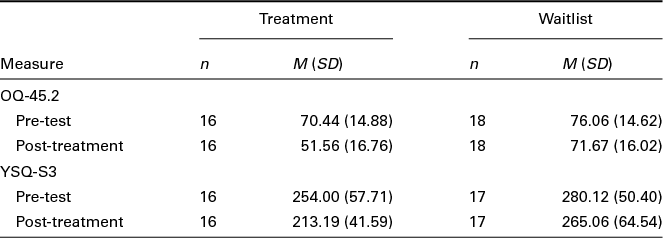
Group differences at baseline between the treatment and waitlist groups in terms of age (≤40 years; >40 years), therapy antecedents (yes; no), and outcome measures were examined including all participants enrolled at baseline (n = 58), as well as for study completers only (n = 34). A chi-square test showed no significant difference between the treatment and waitlist group in terms of age or therapy antecedents. The other categorical variables could not be analysed given small cells. Means and standard deviations at pre- and post-treatment on outcome measures are displayed in Table 2. Independent sample t tests on the OQ-45.2 and YSQ-SF3 revealed no significant differences between groups. Based on known normative benchmarks for the OQ-45.2 (Lambert et al., Reference Lambert, Morton, Hatfield, Harmon, Hamilton, Reid and Burlingame2004), average pre-test scores on the OQ-45.2 of study participants were found to be comparable to individuals seeking employee assistance program services (M = 68.48; SD = 22.88) or attending university counselling centres (M = 67.84; SD = 22.90), suggesting clinical levels of distress. As well, the mean pre-test score was above the established clinical cut-off score of ≥64 for the OQ-45.2.
Pretest and Post-Test Scores on Outcome Measures for Study Completers
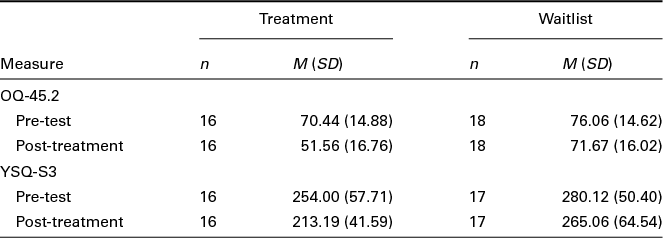
Note: OQ = 45.2: Outcome Questionnaire = 45.2; YSQ = SF3: Young Schema Questionnaire — Short Form.
Main Analyses
Intent-to treat
A repeated-measures ANOVA revealed that the intervention produced a marginal reduction in distress scores, as indicated by the group × time interaction that approached significance, Wilks’ Lambda = .95, F(1, 56) = 3.09, p = .084, partial eta squared = .05. There was a significant main effect of time on the OQ-45.2, Wilks’ lambda = .84, F(1, 56) = 10.71, p = .002, partial eta squared = .16, with both groups showing a reduction in distress scores (see Table 2). The main effect of group was not statistically significant, F(1, 56) = .57, p = .453, partial eta squared = .01. There was no significant interaction on the YSQ-S3, Wilks’ lambda = .974, F(1, 55) = 1.49, p = .227, partial eta squared = .03. A significant main effect of time on the YSQ-S3, Wilks’ lambda = .83, F(1, 55) = 11.32, p = .001, partial eta squared = .17, indicated that both groups experienced a reduction of EMSs scores. No main effect for group was found, F(1, 55) = .14, p = .709, partial eta squared = .003.
Study completers
Based on an analysis of study completers only, treatment participants experienced a significant reduction in distress as measured by the OQ-45.2, while the waitlist participants showed no significant change over the pre-test and post-test, resulting in a significant group × time interaction and a large effect size, Wilks’ lambda = .84, F(1, 32) = 6.22, p = .018, partial eta squared = .16 (see Table 2). Regarding the impact of self-help schema therapy on EMSs, the group × time interaction approached significance while the effect size was moderate, Wilks’ lambda = .90, F(1, 31) = 3.30, p = .079, partial eta squared = .10. A significant main effect of time on the YSQ-S3, Wilks’ lambda = .67, F(1, 31) = 15.52, p < .001, partial eta squared = .33, indicated that both groups experienced a reduction of EMSs scores. The main effect comparing the two groups was, however, significant, F(1, 31) = 4.93, p = .034, partial eta squared = 14.
Reliable and Clinical Change
Given the lack of significant results from the ANOVAs conducted on the full sample (ITT analyses), reliable and clinical change were calculated only for study completers. Reliable change refers to the magnitude of change in individual scores needed to rule out measurement error and to attribute with confidence measured change to actual symptom improvement or deterioration (Jacobson & Truax, Reference Jacobson and Truax1991). Based on the method of Jacobson and Truax, a change in scores of 14 points or more is considered an index of reliable change on the OQ-45.2 (Lambert et al., Reference Lambert, Morton, Hatfield, Harmon, Hamilton, Reid and Burlingame2004). Clinically reliable change additionally assumes a categorical change in a participant's scores based on an established cut-off demarking a clinical versus non-clinical population (Jacobson & Truax, Reference Jacobson and Truax1991), that is, a cut-off score of ≥64 for the OQ-45.2 (Lambert et al., Reference Lambert, Morton, Hatfield, Harmon, Hamilton, Reid and Burlingame2004). Study completers were categorised into one of four categories of outcome using the reliable change index and clinical cut-off score:
Reliably improved
A participant who (a) still had a score within the clinical range at post-test, but who demonstrated a reliable reduction in scores; or (b) a participant who already scored below the clinical cut-off at pre-test, but who demonstrated a reliable reduction in scores, was deemed to have reliably improved. In the treatment group, 7 out of 16 study completers (43.8%) showed reliable improvement. In the waitlist group, 2 out of 18 study completers (11.1%) demonstrated reliably improved scores.
Recovered
A participant whose score was within the clinical range at pre-test and whose score reliably decreased to within the non-clinical range at post-test was considered recovered. In the treatment group, 5 out of 16 study completers (31.3%) were deemed to be recovered. In the waitlist group, 4 out of 18 study completers (22.2%) met criteria for recovery.
No change
A participant whose scores changed less than 14 points was considered to have shown no reliable difference in scores from pre-test to post-test. In the treatment group, 4 out of 16 study completers (25.0%) showed no change. In the waitlist group, 10 out of 18 study completers (55.6%) demonstrated no change.
Deteriorated
A participant whose score reliably increased, that is, demonstrated an increase in score of 14 points or more, was deemed to have deteriorated. None of the 16 study completers in the treatment group demonstrated deterioration. In the waitlist group, 2 out of 18 study completers showed deterioration (11.1%).
Successful outcome
The categories of participants who recovered and who reliably improved were combined into a single category representing a successful outcome (e.g., Callahan & Hynan, Reference Callahan and Hynan2005). Twelve of the 16 completers in the treatment group (75.0%), compared to 6 of the 18 completers in the waitlist group (33.3%) were deemed to have achieved a successful outcome. A chi-square square test for independence indicated that this represented a significant difference, χ2(1, n = 34) = 4.35, p = .020, phi = .42.
Treatment Adherence and Satisfaction
As for treatment adherence, participants were not expected to have read the whole book in order to adhere to treatment, given that the self-help book directs readers to the sections of greatest personal relevance. An analysis of the findings revealed that 13 of the 16 treatment completers (81%) reported reading 150 pages or more of the 352 pages. Ten of these individuals (63%) read over half of the book (200+ pages). Only 3 (19%) participants reported reading 149 pages or less. Seven participants (44%) indicated that they devoted between 2 to 5 hours per week using the intervention material, while another seven participants (44%) indicated that they devoted between 0.5 to 2 hours per week. Only two (12.5%) participants reported spending less than half an hour per week on treatment.
Six of the seven participants who spent 2 hours or more per week and five of the seven participants who spent between 0.5 to 2 hours per week showed a clinically significant improvement in distress. One out of the two participants who spent less than 0.5 hour per week using the intervention material also demonstrated clinically significant improvement. The majority of treatment completers (n = 14; 87.5%) reported being satisfied with self-help schema therapy, with ratings ranging from moderately satisfied (n = 9; 56.3%), greatly satisfied (n = 2; 12.5%), to satisfied to a very great extent (n = 3; 18.8%). One participant (6.3%) was satisfied to a slight extent while another one (6.3%) was not at all satisfied.
Attrition
A chi-square test revealed that attrition rates did not differ significantly between the treatment (n = 15; 48.4%) and waitlist groups (n = 9; 33.3%). A series of chi-square analyses and t tests were conducted to assess pre-test differences between completers versus non-completers in the treatment group. No significant differences were found at baseline on any of the variables assessed, including age, therapy antecedents and outcome measures. As treatment non-completers did not fill out post-tests, it was not possible to assess differences between treatment completers and treatment non-completers at post-treatment.
Discussion
The present study provides preliminary data on the impact of self-help schema therapy with non-guidance email contact to reduce overall psychological distress and early maladaptive schemas among the general population. Among the full sample, the ANOVAs (ITT analyses) revealed a reduction in distress that approached significance, but no significant changes in EMSs. More positive outcomes were found among study completers. Compared to the waitlist, self-help schema therapy produced significant and large reductions in psychological distress, as measured by the OQ-45.2. The treatment and waitlist completers reported at pre-test levels of distress comparable to levels reported in individuals seeking treatment (Lambert et al., 2004). At post-treatment, the mean OQ-45.2 score of treatment completers had diminished to levels similar to those found in non-clinical community samples, as reported in the OQ-45.2 normative data. Post-test scores among the treatment group completers were in fact comparable to outpatient benchmarks for the OQ-45.2 in employee assistance programs or university counselling centres following an average of 4–6 therapy sessions. Over twice as many study completers in the treatment group than in the waitlist group achieved a successful treatment outcome.
Self-help schema therapy did not produce a significant reduction in EMSs, but findings for study completers approached significance and the between-group effect size was moderate. Given that the level of statistical significance is largely influenced by sample size, but not the effect size (Sullivan & Feinn, Reference Sullivan and Feinn2012), these findings suggest that self-help schema therapy did produce substantial changes in EMSs. This is in line with studies showing that changes in EMSs can occur even over brief periods of time (Atalay et al., Reference Atalay, Atalay and Bağdaçiçek2011; Fitzsimmons et al., Reference Fitzsimmons, Gallagher, Blayone, Chan, Leaitch, Veals and Wilkinson2008; Nordahl et al., Reference Nordahl, Holthe and Haugum2005). Recent findings suggest that the assessment of personality-related constructs includes both state and trait variance, which is thought to reflect the interplay of relatively stable traits and comparatively variable states implicated in personality pathology (McGlashan et al., Reference McGlashan, Grilo, Sanislo, Ralevski, Morey, Gunderson and Pagano2005; Morey et al., Reference Morey, Shea, Markowitz, Stout, Hopwood, Gunderson and Skodol2010). Short-term changes in personality variables would then be likely to represent state-related as opposed to trait-related change in personality pathology.
The present findings must, however, be interpreted in light of a number of limitations. A substantial dropout rate was observed, although this is not unusual for randomised controlled trials of treatment for anxiety and depression (Haby, Donnelly, Corry, & Vos, Reference Haby, Donnelly, Corry and Vos2006). It is also not substantially different from the 19% to 50% dropout rates obtained in a review of early termination in standard CBT (Salmoiraghi & Sambhi, Reference Salmoiraghi and Sambhi2010). As well, a review of dropout rates from internet-based therapy with minimal therapist contact showed a range of 2% to 83%, with a weighted average dropout rate of 31% (Melville, Casey, & Kavanaugh, Reference Melville, Casey and Kavanaugh2010). As no post-test data are available for those who dropped out, the reasons why participants chose to discontinue treatment remain unknown. Treatment completers did not differ significantly from treatment non-completers on any of the variables assessed at pre-test, including symptom severity. There was also no significant difference between the dropout rates of the treatment and control groups. It may be that the elevated attrition rate in both groups relates to the demographic composition of the groups. Higher attrition rates have indeed been reported in younger age cohorts and cohorts of low income (e.g., Danoff, Kemper, & Sherry, Reference Danoff, Kemper and Sherry1994; Tough, Siever, & Johnston, Reference Tough, Siever and Johnston2007). In the present study, a number of participants in the treatment and control groups were in the 18–24 age group (25.8% and 40.7%, respectively) and a majority had low income levels; that is, less than $25,000 net income per year (32.3% and 55.6%, respectively). Beside attrition, other study limitations included a relatively small sample size, the exclusive use of self-report measures and the absence of follow-up.
Further study is needed to identify predictors of treatment completion and to develop methods of improving participant engagement in treatment. Minimal non-guidance contact, as opposed to pure self-help, was provided in the current study with the hope that it would facilitate adherence and reduce attrition rates while replicating the natural conditions of the usage of the book (Talbot, Reference Talbot2012). These email prompts, however, may not have been sufficiently engaging to reduce attrition. Lower attrition rates have been reported in other CBT-based guided self-help studies using non-guidance email contact, but a number of differences exist between those studies and the present one. The use of more personalised automated emails using the first name of the participants as well as emails that responded to participant's behaviour during each week — for example, if they did not appear to be using the book — may have improved engagement (e.g., Titov et al., Reference Titov, Dear, Johnston, Lorian, Zou, Wootton and Rapee2013). It is possible that non-guidance contact may be more effective in the context of a more structured program that includes a treatment outline, which was not provided in the present study. The use of pre- and post-assessment interviews either by telephone or face-to-face (Nordin, Carlbring, Cuijpers, & Andersson, Reference Nordin, Carlbring, Cuijpers and Andersson2010), or the inclusion of minimal telephone support or clinical guidance during the treatment phase (Bilich, Deane, Phipps, Barisic, & Gould, Reference Bilich, Deane, Phipps, Barisic and Gould2008), may have also further enhanced treatment completion, although the latter option would entail additional costs.
Findings from the present study suggest that self-help schema therapy, as described in the self-help book, Reinventing Your Life: The Breakthrough Program to End Negative Behavior . . . and Feel Great Again (Young & Klosko, Reference Young and Klosko1994), combined with the provision of non-guidance contact, may be effective for a sizeable number of individuals in the community who otherwise might not receive clinical attention. Although significant gains were found only among those who persisted with treatment, about half of the participants assigned to the treatment group did persist, and did so despite the lack of contact with a clinician and with only minimal non-guidance email contact. Most participants who completed treatment reported being satisfied and devoted several hours per week working through the exercises, highlighting the fact that a number of individuals were invested in the intervention. Considering the preliminary nature of the study and the positive outcomes, further study is warranted. It is hoped that further investigation would widen available treatment options for people struggling with psychological distress and who are interested in self-help.
Author Note
Margaret Priemer is now at Springhill Institution, Nova Scotia, Canada.
Acknowledgment
This research was supported by a grant from the Faculté des études supérieures et de la recherche of the Université de Moncton.