In a colonial report dated April 1956, the head administrator of the Gao cercle, in northern French Sudan (present-day Mali), noted a trial involving a Tuareg and his captive (iklan; sg. akli in Tamajaq; bella in Songhay), who wanted to be officially recognized as a ‘worker’ under the French Overseas Labor Code of 1952.Footnote 1 This claim, which reveals the former slave's familiarity with colonial law, was the result of ten years of struggle during which an increasing number of iklan in the Gao region elaborated strategies aimed at socioeconomic emancipation. In northern French Sudan, the colonial administration was reluctant to promote the emancipation of slaves.Footnote 2 Until the 1950s, iklan were registered as serviteurs (servants) in their masters’ families. Beginning in 1946, in the wake of post-Second World War colony-wide reforms, an increasing number of iklan claimed greater independence. In only ten years, this movement led to the separate registration of iklan families. Although legal emancipation did not revolutionize the living conditions of all iklan, many of whom continued to work for their masters, it constituted a major milestone in the emancipation process.
This article explores why and how this emancipation movement occurred. It shows that one of the main self-emancipation strategies of the iklan, the majority of whom were nomadic pastoralists tending their masters’ herds, was geographical mobility. Some engaged in labor migrations towards the Gold Coast (present-day Ghana) or to the nearby cities of Gao and Niamey. Others stayed in the region and strategically extended their pastoral mobility in order to gain autonomy, simultaneously appropriating their masters’ livestock. The central argument of this article is that, in contrast to earlier strategies of slave self-emancipation in West Africa, characterized by mass exodus or labor migrations, this local movement constituted a powerful and successful spatial strategy –that is, a kind of mobility, beyond that required by iklan's previous pastoralist lifestyle, that purposefully distanced them physically and socially from their masters.Footnote 3 More than labor migrations, these local trajectories challenged the foundations of Tuareg society. They forced colonial administrators, who had tacitly tolerated slavery in this region several decades after its official abolition in 1905, to modify their policies toward nomadic populations, first by individually addressing the iklan's claims, and subsequently by standardizing the independent registration of all iklan families.Footnote 4 By exploring this emancipation process at the interface between iklan spatial strategies and local colonial administrators' practices, this article offers an original analysis of the intrinsic relationship between spatial and social mobility in French West Africa, while also stressing the flexibility of the French colonial administration and its capacity to adapt to shifting local socioeconomic and political contexts.
There are, inevitably, terminological challenges in describing these processes, since naming and categorization are closely implicated in them. In Tamajaq, the word iklan refers to servile groups. Colonial administrators, however, systematically used the word bella, of Songhay origin: the iklan emancipation movement discussed in this article was termed the ‘bella question’ by colonial officials. Following Florence Boyer, who stresses the ambiguity of the term bella, the word iklan is used throughout this article.Footnote 5 However, iklan covers a variety of social conditions, and becomes increasingly problematic as the process of emancipation unfolds. Because it refers to the Tuareg servile population, emancipated ‘iklan’ are, by definition, no longer iklan. This distinction is marked here by use of the term ‘iklan’ when referring to the period that precedes the separate registration of iklan families (including when discussing the spatial strategies that led to this policy), and the expression ‘iklan descendants’ when referring to the post-registration period. Although the latter expression poses its own problems – for many iklan descendants, legal autonomy did not end slavery-related practices – it is used to emphasize that iklan does not refer to a fixed status.
Before discussing the emancipation movement in detail, the following section examines the contribution of this case to the broader historical scholarship on slavery and emancipation in French West Africa. The article goes on to consider French ‘nomad policy’ (politique nomade), the iklan's spatial strategies towards emancipation, and colonial responses to iklan mobility.
slavery and emancipation in french west africa: the iklan case
Slavery posed major dilemmas for European administrators in colonial Africa. While in theory colonizing powers subscribed to an anti-slavery ideology, they feared in practice that massive slave emancipation would result in uncontrollable economic and political turmoil.Footnote 6 Tolerance for slavery was particularly pronounced and enduring in the remote region of northern French Sudan, where iklan continued to be considered slaves by both their Tuareg masters and the colonial administrators until the 1940s.Footnote 7 This situation makes their struggle for socioeconomic autonomy in the 1940s and 1950s a particularly significant case of late emancipation in Africa.
In French West Africa, anti-slavery legislation dating from 1848 was applied selectively throughout the second half of the nineteenth century, a period characterized by a demand for labor associated with the military conquest of Western Sudan.Footnote 8 In 1905, after the French established solid military and administrative control over most colonized territories, a decree formally ended the practice of slavery. The impact of this decree varied from one area to another. In the southern and western regions of French Sudan, thousands of slaves left their masters en masse or used labor migration as well as colonial courts to renegotiate their social condition and status.Footnote 9 In other areas, colonial officials’ ongoing concerns for economic and political stability merely led to a gradual decline in slavery. In the Wolof peanut basin of Senegal, for example, where the French feared that massive liberation would have adverse consequences on peanut production, slave owners considerably influenced the application of colonial law.Footnote 10 Emancipation occurred gradually, even after the 1905 decree, as slaves became involved in labor migration, joined the growing Mouride brotherhood, or developed independent economic activities.Footnote 11
Transition towards emancipation was even slower in Mauritania, where colonial administrators continued to tolerate slavery well into the twentieth century.Footnote 12 A relatively late colonial conquest and the limited capacity of colonial administrators to rule over large nomadic areas, among other factors, explain French officials’ reluctance to promote slave emancipation. Examining slavery in the Mauritanian Adrar throughout the first half of the twentieth century, Ann McDougall shows that one of the main consequences of this tolerance was the accentuation of the distinction between slaves and freed slaves (haratin; sg. hartani). The increasing ability of haratin to move into salaried labor – and thereby gain independence from their former masters – was indeed rooted in the continuing subservience of slaves.Footnote 13 The distinction between these two social groups remained salient into the postcolonial context, as haratin continued to respect a social order from which they hoped to gain materially rather than joining slaves and more recently freed slaves to challenge it.Footnote 14
Similarly, the iklan emancipation movement in northern French Sudan occurred relatively late in the colonial period. However, its roots and development contrast both with the gradual emancipation in the Senegal peanut basin and with the long-term redefinition of social categories in the Mauritanian Adrar. First, until the mid-1940s, slavery among the Tuareg population of the Gao region remained almost entirely unaffected by colonial rule. Second, iklan themselves initiated this sudden emancipation movement. The agency of slaves and slave owners in the context of late emancipation has most often been explored in terms of reactions or responses to colonial policies.Footnote 15 In contrast, negotiations over iklan emancipation in Gao occurred the other way around. It was iklan action that pushed local administrators to adapt their policies and attitudes towards slavery.
This bottom-up emancipation process was rendered possible through geographical mobility, which iklan used as a way to accumulate economic capital while socially distancing themselves from their masters. Some iklan left their nomadic way of life to work in cities. Others extended their usual nomadic areas with the intention of appropriating their masters’ herds. These local displacements were far more radical than labor migrations in the context of Tuareg pastoral societies. By hurting the interests of masters, whose main form of wealth lay in control over pastoral resources, the claims to emancipation were immediately felt and demanded a quick response from the colonial administration. Solicited by both the iklan and their masters, local administrators had no option but to address conflicts and respond to iklan emancipation strategies. Martin Klein stresses that for most slave emancipation movements in French West Africa ‘the state … understaffed and underfunded, [was] generally unwilling to attack local compromises that resulted from renegotiation of social relations’.Footnote 16 In the Gao region, the local administration was compelled to intervene to settle clashes between former slaves and masters. Submerged by the number of claims and conflicts resulting from local displacements, district administrators first managed issues case-by-case, but soon realized that a more encompassing policy was needed. This policy consisted in the separate registration of all iklan families, who thereby acquired administrative independence from their former masters.
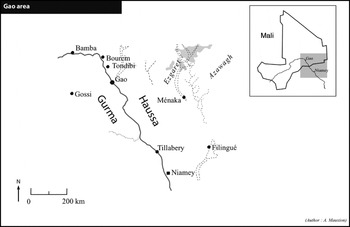
Iklan emancipation was in this way ‘co-authored’ by the iklan, their masters, and local colonial administrators but initiated by the iklan. This co-authorship points to a major characteristic of the French colonial administration, namely its necessary capacity to adapt to local circumstances. Gregory Mann has shown that even the indigénat – the regime of administrative sanctions applied to colonial subjects – while ‘[enabling] the fiction that institutions and procedures prevailed over individuals and practices [and] that administrative capitals controlled commandants and their agents’, in fact varied widely in practice from one region and administrator to another.Footnote 17 The response of district administrators to iklan local spatial strategies illustrates the flexibility of French colonial rule. The separate registration of iklan families was a direct response to iklan claims. Labor migration might have been a more common practice, but ultimately it was local displacements that brought the most dramatic status changes for iklan throughout the Gao region (Fig. 1).
The Gao area, Mali.

controlling spatial mobility and residential areas: french ‘nomad’ policy in the gao region (1898–1946)
Northern French Sudan was a particularly challenging region to conquer and rule. Anti-colonial military resistance from Tuareg leaders, which lasted in the Gao area until 1916, along with the inherent difficulties of administering a substantial nomadic population on a vast arid territory, led French officials to tolerate and even support the practice of slavery decades after the anti-slavery legislation of 1905. This section explores this dilemma by examining the development of the French ‘nomad’ policy, from the creation of a military post in Gao in 1898 to the beginning of the iklan emancipation movement in 1946.
The hierarchical Tuareg society that the French found on their arrival in the Gao region at the end of the nineteenth century was divided into numerous social groups which the new rulers, drawing on ideas of European feudalism, classified crudely into three main categories: nobles (imajeghen and ineslemen), vassals (imghad and dawsahak), and slaves (iklan or bella).Footnote 18 The Tuareg Iwellemmendan Kel Ataram (a group of imajeghen), located mostly around Menaka, controlled the entire Gao region, including the Songhay, Arma, and Fulani populations living in the Niger River valley, in a vast political confederation founded on complex networks of dependence and alliances.Footnote 19 The goal of early French ‘nomad’ policy was to break up the Iwellemmendan confederation by consolidating the autonomy of historically ‘vassal’ groups and organizing the nomad population into administrative units known as tribus, which were subdivided into fractions.Footnote 20 This process was challenging for the French. In 1934, more than three decades after the creation of a military post in Gao, the Gao commandant de cercle wrote in a political report: ‘Most nomads continue to avoid our action … The registration of both the population and the herds must be completely redone … Our main task is to gain the nomads’ trust and to tame them as soon as we can.’Footnote 21
Initially, colonial administrators prevented Tuareg groups from accessing the Niger River Valley. This allowed them to gain the trust of the populations living in the valley – many of whom were regularly subject to Tuareg raids (rezzous) – while weakening the economic and political bases of the Iwellemmendan confederation.Footnote 22 No longer able to extract goods from valley residents nor to access the river and pasturelands during the dry season (March to July), several Tuareg groups surrendered. The French then used the Gurma (as the ecological zone on the right bank of the Niger River is known) as a strategic place from which they could control these populations. In a political report dated 1899, the Gao commandant de cercle wrote:
We will divide the nomads into two categories. Those who complied and those who did not. The former … have been treated by us with favoritism. The commandant de cercle does not need to intervene once the submission is accepted. The group is counted and a nomadic area is temporarily designated in the Gurma while the commandant de région determines how much war and annual taxes should be paid, as well as what the final nomadic area will be … Once in the Gurma, their taxes paid, we leave the nomads in peace. As long as the pasturelands are not overgrazed we can expect few issues from these populations.Footnote 23
These two main strategies – preventing the nomads from accessing the river and placing most of the surrendering Tuareg in the Gurma – established the main principles of French ‘nomad’ policy during the following decades: an attempt to administer strictly defined Tuareg tribus and fractions which were restricted to clearly-delimited ‘residential areas’, which defined the recurrent seasonal moves of the group.Footnote 24 In 1912, the Gao commandant de cercle noted: ‘each tribu now has its organization, individuality, and chief with judicial power who no longer reports to the Amenokal [the chief of the Iwellemmendan confederation] but directly to the chef de subdivision’.Footnote 25 The construction of several wells throughout the region supported the policy of separation of Tuareg groups by contributing to the reduction of their residential areas.
Pushing the rationale of this policy one step further, in 1909–10 the French administrator Betrix strove for the sedentarization of all the nomads in the Gao cercle. This project devoted particular attention to the iklan.Footnote 26 A similar process had already begun, with relative success, in the nearby Tillabéry cercle (present-day Niger). In 1908, two iklan groups from the Dori cercle who escaped their masters and moved to the Tillabéry cercle were freed and encouraged to become sedentary.Footnote 27 Commenting on Betrix's attempt to implement this vision in the Gao cercle, in 1911 an administrator mentioned that even though it was desirable to control the nomads’ spatial mobility, it was impossible to transition them to a sedentary lifestyle. The main reason, he argued, was ecological. Unlike in the Tillabéry cercle, located further south, the precipitation in the Gao area did not allow farming beyond the Niger River floodplain, which was already exploited by the sedentary population.Footnote 28 In fact, the only place in the Gao cercle where a significant number of iklan had been able to leave their masters and develop a semi-sedentary lifestyle during the early years of colonial rule was precisely the area located just north of the Tillabéry cercle, where it was possible to farm beyond the floodplain and where a number of iklan groups had been placed in an administrative canton for sedentary populations.Footnote 29
After realizing that the sedentarization of nomads was not a realistic option, the French continued their administration by tribu, focusing on controlling residential areas, monitoring possibly subversive activities, and collecting taxes. Two main challenges made this process of administration particularly slow and difficult. First, the relationships between Tuareg groups and the influence of the Iwellemendan Amenokal on most chiefs were tenacious. In 1916, for example, more than ten years after having surrendered to the French administration, Fihrun Ag Alinsar, the Amenokal of the western Iwellemendan, led a rebellion against the French administration. Second, the social and spatial control that the French sought to achieve was never accomplished. Local conflicts between fractions, the demographic evolution of each tribu, and the spatial flexibility necessary for the pastoralists to cope with recurrent droughts led to the frequent rearrangement of fractions and tribus.
In this politically unstable environment, French administrators avoided addressing the iklan question. French ‘nomad’ policy largely benefited those defined by the administrators as vassals. Colonial reports during the 1920s and 1930s repeatedly mentioned the growing importance of the imghad. In 1920, the Gao commandant de cercle wrote: ‘The imghad have become increasingly important within Tuareg society and are now wealthier than the imajeghen … We can predict that in a few years the Tuareg element of the Gao cercle will be mainly represented by the imghad.’Footnote 30 Most imghad, dawsahak, and other social groups previously subjects of the imajeghen had many iklan, whose living conditions did not improve with the emancipation of their masters. The main concern of the French administration was political, not moral, and during these first decades of colonial rule, the vast majority of iklan remained, as described by the Gao commandant de cercle in 1912, the ‘forced herd-keepers whom [the French couldn't] liberate massively without creating uncontrollable upheavals’.Footnote 31
The iklan were the most important demographic group of the cercle: it was reported in 1935 that 31,474 bella (very largely iklan, though there is some uncertainty in the way the category was interpreted) lived in the Gao cercle versus 29,598 Songhay, 11,304 Fulani, 10,261 Tuareg (non-iklan), and 5,536 Arma.Footnote 32 . The French were worried about the sudden emancipation of such a large group, and when they mentioned the iklan in reports it was most often for strictly political purposes or to comment on their poor living conditions. Discussing the situation of the few iklan fractions who were able to become independent during the early years of colonial rule, and noting how ‘poorly administered’ they were, the Gao commandant de cercle concluded: ‘Our interest is to not separate the iklan from the Tuareg. The role of the iklan should be to lead the herds under the authority of the nomads’.Footnote 33 When an open conflict between iklan and their masters occurred, the French often supported the latter. In 1938, when a Tuareg master asked the administration to bring back some of his iklan families who had moved away in order to avoid forced recruitment, the French gathered the scattered iklan families in question.Footnote 34 Administrators sometimes described the iklan's ‘miserable state, pitiful physiology, inferior status from a human perspective’, as well as how ‘the Tuareg – imghad and imajeghen alike – have a profound contempt for their captives, without whom they cannot live’, but these comments never led to any major political initiative in favor of this large population.Footnote 35
Tacit tolerance of slavery by colonial authorities, originally considered necessary to establish military and administrative control over the region, continued throughout the first half of the twentieth century as an incentive to foster pastoralist groups’ cooperation.Footnote 36 Far from undermining slavery, Bruce Hall argues, colonial rule in the Niger River bend encouraged tighter control over slaves by pastoralist leaders. This point is central to understanding the legal and economic situation of iklan during the 1940s when, decades after the abolition of slavery in French West Africa, they suddenly began to claim greater independence from their masters. From the standpoint of colonial administrators, iklan had literally no property. They tended their masters’ herds and were registered as servants on their masters’ family certificates. From the standpoint of the pastoralist elite – which Hall discusses based on an extensive collection of Kunta scholar Shaykh Bay's legal opinions – iklan remained slaves. Although they could, in theory, own what they earned on their own time, they were unable to bequeath it.Footnote 37 These elite views were rooted in their interpretation of Islamic law, as well as in their realization that slavery had been maintained under colonial rule.
This status quo was increasingly challenged in the years immediately following the Second World War and the new 1946 French constitution. This change did not come from new legislation but rather from the spread of progressive political ideas by newly created political parties and the growth of an intellectual African elite in the nearby city of Gao. Increasingly aware of their condition and their capacity to change it, a significant number of iklan openly challenged their masters by engaging in labor migration and extending their usual grazing areas. These strategies profoundly affected the foundations of the colonial administration by calling into question the integrity of Tuareg political formations, the assigned boundaries of residential areas, and more generally the relations of domination and dependence between Tuareg masters and iklan.
iklan's spatial strategies towards socioeconomic emancipation (1946–60)
In asserting control over their spatial mobility and eluding the control of their ex-masters beginning in the later 1940s, iklan were at the same time accumulating economic capital. Iklan moved in different directions with different purposes. Some went to nearby towns or to the Gold Coast to seek employment opportunities, while others modified their pastoral circuits either to join other tribus where they could develop independent economic activities, or to hide their masters’ herds. This section shows that local moves constituted the most destabilizing spatial strategies toward socioeconomic emancipation for both the Tuareg masters and the colonial administration.
Throughout the 1930s and 1940s, several factors such as the burgeoning urbanization of the colonies, a growing Western-educated African elite, and the active participation of African populations in the Second World War led France to reconsider its position and role in Africa.Footnote 38 The constitution of the Fourth Republic, voted on 27 October 1946, replaced the Empire Français with the Union Française.Footnote 39 A major consequence of this shift was the creation of territorial assemblies in French overseas territories, of which half of the members were elected. Africans were also given the possibility of creating political parties. Union Soudanaise – Rassemblement Démocratique Africain (US-RDA), the party that became the main political force leading to the independence of French Sudan, was founded in 1946. Postwar reforms did not directly address slavery among the Tuareg communities of northern French Sudan, but they prompted the circulation of progressive social and political ideas in the most remote areas. US-RDA played a particularly significant role in this process. Local and regional leaders of this new political party found a powerful electoral base in the iklan populations. By the late 1940s, their ideas ‘reached even the most remote wells [of the Gao region]’.Footnote 40 During the legislative elections of 1951, to the surprise of colonial administrators, iklan in the Gao cercle voted massively for US-RDA, including in nomadic areas.Footnote 41 More generally, US-RDA rose, in only a few years, from in 1948 ‘[a party] that has very little influence on the masses’ to in 1951 ‘the most organized and dynamic party in the region’.Footnote 42 From 1951 onward, it won all of the electoral competitions in the Gao cercle.
In a report on the ‘bella [iklan] question’ dating from 1954, the commandant de cercle Jean Raynaud identified the political reforms of 1946 as the starting point of the iklan's claims:
The new constitution spread the news of the abolition of slavery across the region. This interpretation is quite curious because it supposes that the 1875 constitution legitimated slavery, or at least tolerated it … This ‘new abolition’ of slavery, conceived as such by the population, brought about a massive exodus of the bella towards Niger.Footnote 43
Beginning in 1946, a significant number of iklan in the Gao region chose to migrate as a way to distance themselves – spatially and socially – from their masters. The most important destination was the regional town of Gao, where iklan could find employment as workers on construction sites. In 1947, the Gao chef de subdivision mentioned: ‘recruiting workers in Gao is no longer an issue, because in addition to the regular labor migrants from the villages [of the valley], many bella [iklan] left their fractions following the news of last year's reforms’.Footnote 44 The population of the bella neighborhood in Gao doubled between 1951 and 1954.Footnote 45 This iklan migration to Gao only amplified the spread of US-RDA ideas throughout the region, as it served as a powerful vector for US-RDA's message to the iklan who remained in the fractions and tribus. Some iklan also moved to Niamey, located further south on the Niger River, where they were able to find employment opportunities as workers, as well as to the Gold Coast, following a well-established pattern of Songhay migration.Footnote 46 As mentioned by the Gao chef de subdivision in 1948, the masters usually did not oppose them: ‘they know that they are unable to prevent them, and that most bella return’.Footnote 47
Labor migration was not the only way in which the iklan used spatial mobility to emancipate themselves. At least three distinct local migration patterns appeared or developed during the late 1940s and 1950s. First, some iklan left their masters to join other fractions or tribus. These movements, although not new, became more frequent. In 1952, a group of iklan from the Kel Mehiga fraction (Kel Es Suq tribu) who had been victim of ‘severe exactions and bad treatments’ left their masters to live among the Kel Temokassin (Kel Egheris tribu).Footnote 48 Second, some iklan moved to develop activities allowing them to become more economically independent. In 1949, several iklan families among the Tengaregadash tribu moved away from their masters to settle closer to the valley, where they subsisted by gathering wild plants.Footnote 49 After two years of negotiations led by the French administration, these iklan finally moved back with their masters under the condition that they would farm millet around water reservoirs and only give a small part of the harvest to their masters. Nine years later, in 1958, the Gao chef de subdivision noted that due to the increasing leniency of the Tengaregadash, no major conflicts between masters and their iklan occurred after the compromise.Footnote 50 Finally, some iklan moved away from their usual residential area in order to hide part of their masters’ herds or to openly claim ownership rights over them. The Gao commandant de cercle explained: ‘The severity of the problem is not so much that the bella left …, but that they did not leave alone. They brought their masters’ herds with them.’Footnote 51
Who moved, and what did these migrations mean to the iklan? First, not all iklan performed the same activities in Tuareg society. Jean Gallais distinguished three categories of iklan in the Gurma: the iklan daw ehan who lived with their masters and performed domestic tasks; the iklan n egef or iklan n tenere who led the herds; and the iklan n'debe who mostly farmed around water reservoirs.Footnote 52 Colonial reports frequently stressed the difference between the social conditions of the iklan who lived with their masters and those who did not. While the former commonly suffered harsh treatment, the latter enjoyed more latitude in their mobility and activities. This was the case with the iklan n egef. Due to their pastoralist activities they lived in separate nomadic encampments and only occasionally saw their masters.Footnote 53 Regional migration was mainly carried out by these mobile and relatively independent iklan. By extending their pastoral areas, they sought to emancipate themselves while simultaneously appropriating their masters' herds.
Regional migration, especially when it involved the appropriation of herds, was the most destabilizing iklan emancipation strategy for both Tuareg masters and the French administration. More than the other forms of spatial mobility, including labor migration, it shook the foundation of Tuareg social and economic organization. As masters lost their followers and economic capital, their social status was jeopardized. By hiding or seizing their masters' herds, the iklan did not move to leave, but rather to stay in the Gao region and confront their masters. Colonial reports of conflict negotiations and trials provide windows into how some iklan experienced this emancipation process. The two following cases illustrate the complexity and stakes of these struggles.
In September 1955, Ibrahim, an akli n egef from the Kel Temokassin fraction (Kel Egheris tribu) fled from his usual residential area with several hundred goats and sheep. His father's master, who claimed to be the owner of the herds, filed a complaint to the colonial administration against Ibrahim. Several people were interviewed as part of the investigation.Footnote 54 The religious leader of the Kel Temokassin fraction stressed that Ibrahim stole the herds. Ibrahim's uncle confirmed this version: ‘Neither Ibrahim nor his parents have ever owned even one animal.’ Ibrahim's father himself confessed that he felt profoundly betrayed by his son. He indicated a few locations where he thought his son might have gone. In his opinion, Ibrahim crossed the river to hide the animals in Haussa, among the Sheriffen tribu, where members of his mother's family lived. The chief of the Sheriffen tribu confirmed that Ibrahim came to Haussa to live among his maternal family, although he did not know where exactly.
Although archival documents do not record the outcome of this conflict, this collection of transcribed interviews raises two major points. First, by the mid-1950s, such investigations were common throughout the Gao region. In order to arbitrate the many conflicts initiated by iklan or their masters, the colonial administrators needed to collect substantial information about the families and their relationships. Both iklan and Tuareg masters were asked to comment on various conflicts and state their opinions. These investigations thereby created new spaces for iklan to reflect on their condition. Second, not all iklan necessarily agreed on the necessity to strive for more independence. The opposition between Ibrahim and his uncle and father is not an exception. In many cases where herds were hidden, it was indeed members of the iklan community who indicated to the administrators where the animals could be found; the interviews are evidently the product of complex processes involving pressure from masters and the reluctance of elders to challenge established relationships, as well as the desire for self-emancipation.
The second case concerns the iklan Norben (Kel Egheris tribu). In August 1955, reacting to their iklan's claim over the herds, a group of imghad masters went to the iklan encampment to remove the herds. For the first time in the Gao region, the iklan refused and fought.Footnote 55 Several people were injured, and a trial was held in Gao. The physical resistance of the iklan Norben explains the particular dimension that the ‘Norben affair’ took in the region.Footnote 56 The trial opposed the claimant Azeidar, who led the imghad expedition to the iklan encampment, against 13 iklan. Azeidar first explained to the court that the herds at the iklan Norben encampment had belonged to his family for several generations.Footnote 57 The iklan, he argued, did not have any rights to the animals, and until recently this fact had never been questioned. He therefore accused the iklan of trying to steal his animals. Two of the thirteen iklan defendants, Nafissao and Azigzane, formulated the main defense arguments:
Nafissao I am not a bella [iklan] of Azeidar. We, the Norben, have never been herders for the Ikaolaten imghads [Azeidar's fraction].
The judge But until 1952 you were registered among their family, and none of the animals were registered in your name …
Nafissao It is because they were more powerful than us …
The judge Who are you, then, if you are not a bella?
Nafissao I am a Fulani. Our family is from Al-Kasba, near Bahondo (Bamba) … The Iwellemmendan of Menaka attacked our ancestors and took a woman as a hostage. They gave the woman to the Ikaolaten … We are all descendants of this woman.Footnote 58
Like Nafissao, many iklan who strove for independence during the 1950s refused to be categorized as iklan or bella. Some used stories of their lineage to claim another identity. Others claimed to be Songhay. Yet, assuming this claim and achieving independence required accumulating economic capital. Azigzane, another defendant, developed the iklan argument regarding ownership of the herds:
Azigzane All of the animals counted by the chef de subdivision in my herd are mine. None of them belong to Azeidar or another Ikaolaten.
The judge How did you acquire them?
Azigzane Through my own work; I collected wild plants, which I sold. I also sold wood. Part of the herd also comes from my sister's dowry.Footnote 59
The iklan who moved to Gao, who sold wild plants or who worked in Songhay villages for several months each year, were increasingly able to buy animals. A notable from the Gao region who was asked, as part of this trial, to comment on the relationship between the iklan Norben and the Ikaolaten imghad pointed to this possibility. Although this practice remained limited, he admitted that, in some iklan families, it was difficult to make the distinction between the master's herd and what the iklan had acquired personally through their own work. During conflicts, some iklan, like Azigzane, did not hesitate to claim personal ownership rights over the totality of the herds.
The court recognized that the Norben were the iklan of the Ikaolaten imghad. Yet, given that French law proscribed relations of servitude, that the relationship between Tuareg masters and iklan had evolved under French rule, and that some iklan had recently been able to acquire some animals as a result of their own labor, it was decided that the herd be divided: 102 cows, one calf, 589 goats and sheep, four donkeys, two camels were attributed to Azeidar; and 96 cows, 30 calves, 1828 goats and sheep, and 40 donkeys to the iklan Norben.Footnote 60 In addition, the iklan Norben were organized into an independent fraction and were encouraged to move away from their residential area in order to avoid further conflicts with their former masters.Footnote 61 This decision was in line with the broader iklan policy that the French developed during the mid-1950s. The following section examines this policy by clarifying how the French understood the iklan's progressive emancipation and responded to it.
french responses to iklan migration and claims in the gao subdivision (1946–60)
The management of the ‘bella [iklan] question’ by colonial administrators in the Gao region did not result from a general policy elaborated in Bamako – the capital of French Sudan – but rather from local practical reactions to iklan claims. Jean Clauzel, who was a colonial administrator in northern French Sudan during the 1950s, mentioned that ‘[the iklan policy] was not a real and coherent reform, elaborated and imposed by the central administration, but rather a series of more or less concerted measures taken by the administrators and officers in the region’.Footnote 62 The testimonies of several other ex-colonial administrators support Clauzel's perspective.Footnote 63 More perhaps than in other regions of West Africa, due to the geographical distance to the administration headquarters and the particular challenges of administering nomad populations, at the margins of the Sahara, colonial administrators needed to adapt official French policy to local socioeconomic and political realities. Focusing on the Gao subdivision, this section shows that emancipation was a bottom-up process, initiated and sustained by iklan. Administrators were mostly concerned with migration because it generated conflicts over the control of herds. By standardizing their responses to this issue, they amplified the consequences of iklan resistance through mobility.
During the early years of the iklan emancipation movement, labor migration to Gao, Niamey, or the Gold Coast was the most accessible way for the iklan to emancipate themselves. The French administration merely noted the growth of the iklan population of Gao, without trying to limit this phenomenon. Within fractions and tribus, however, the colonial administration continued to maintain the status quo by supporting the masters. Yet rising conflict between iklan and their masters pushed the administrators to face the issue. In a report dated 1955, the Gao chef de subdivision explained:
The entry of the bella [iklan] population into the civic, economic, and even political life of the region is, within the nomad population, and most importantly among the imghad tribus located in the Gurma, the revolution of recent years, if not the last months. Numerous, prolific, robust, dynamic, and able to adapt to the most difficult situations, but aspiring to a better life and freedom, the bella … are confronted with an overly rigid Tuareg society and will certainly play an increasingly important role in the pastoral life of the subdivision.Footnote 64
The imghad tribus located in the Gurma were indeed the most challenged by the iklan question. In 1955, the nomad population of the Gao subdivision was divided into seven tribus: Ibohanen, Shamanamas, Kel Assakane, Sheriffen, Tengaregadash, Kel Gossi, and Kel Egheris. Without entering into the complex history of each tribu, it is useful to clarify and contrast how different patterns of iklan resistance developed among each of them. The iklan represented a small percentage of the Shamanamas and Ibohanen, and the iklan question was almost nonexistent within these tribus.Footnote 65 Among the Kel Assakane and Sheriffen tribus, most iklan who sought to emancipate themselves left for Gao or another town, without openly confronting their masters.Footnote 66 The religious leadership among both tribus explains this tendency: several colonial reports stressed that the ineslemen (nobles specialized in religious affairs) had an overall better relationship with their iklan than the imajeghen and imghad groups, because of their greater flexibility as masters and the religious prestige that they had among their iklan.Footnote 67 Among the Tengaragadash tribu, as briefly mentioned in the previous section, a compromise was found between masters and iklan after a two-year exodus of the latter. It is among the Kel Gossi and Kel Egheris tribus, both under imghad leadership and located in the Gurma, that the iklan question profoundly destabilized the colonial administration. In these tribus, the iklan did not only leave their masters; they confronted them by trying to appropriate the herds, hiding them in remote locations, or selling them on markets distant from their residential areas. Trying to explain this phenomenon, administrators blamed the weakness of the leadership, the scattering of the population, the particularly difficult living conditions of the iklan, and their sheer numbers.Footnote 68
The iklan question became a concern for French administrators for two main reasons. First, the uncontrolled liberation of such a large population was a threat to the regional socioeconomic and political organization. Correspondingly, US-RDA leaders in Gao saw in this movement an opportunity to destabilize the administration and gain electoral and political support. Facing growing claims from both iklan and their masters, commandant de cercle Raynaud took the initiative of elaborating an iklan policy, the main goal of which was to provide a fair response to iklan demands while retaining a coherent social and economic system.Footnote 69 What is remarkable about this decision is that it was a local administrative response to iklan emancipation strategies, not a top-down imposition. The new policy addressed the two main claims of the iklan regarding ownership of the herds and their social status, as explained by the Gao chef de subdivision:
A one-way solution applied without discernment to the entire region would be counterproductive. Many debates and case-by-case negotiations would be necessary to regulate the issue. We need to keep punishing the bella [iklan] who appropriate their masters' herds, but at the same time register some of these herds in their name even though we know they belong to the masters … [About] the distribution of the family certificates, which the bella await as a freedom certificate, … we will give them to the bella who prove that they are able to pay taxes.Footnote 70
A census of all the tribus of the Gao subdivision from 1954 to 1956 allowed French administrators to put this policy into practice. For the first time, iklan families were registered separately from their masters and most household heads received a family certificate. The chef de subdivision who conducted the census noted, for each akli, whether or not he was in conflict with his master. In addition, masters were required to allow newly autonomous iklan descendants to register part of their former masters’ herds in their own name, and a distinction was made on the registration list between the herds that the iklan descendants owned and those they continued to tend for their former masters. When a master declared that some of his herds were missing and accused iklan of having hidden them, a note was also written on the registration list, thereby allowing the master to retrieve the animals if they were found. Finally, when iklan actions against former masters took an organized and collective form, independent iklan fractions or subfractions were created. This comprehensive census constituted a turning point in French iklan policy.Footnote 71 The information collected provided administrators with the evidence necessary to arbitrate future conflicts case by case. From 1956 onwards, the iklan question is less visible in colonial reports. Many conflicts persisted and some were durable, but the complaints came equally from former masters and iklan descendants, and solutions were relatively easily found and enforced. Many iklan descendants continued to leave their tribu to work in town, but this remained largely tolerated by administrators.Footnote 72 It was the subversive ‘moving to stay’ strategy that triggered a more comprehensive colonial response. The attention it received from the administration contributed to iklan socioeconomic emancipation throughout the Gao cercle. Carefully conceived iklan strategies, integrated within the broader French ‘nomad’ policy, were indeed applied to iklan of all the tribus and fractions, regardless of whether or not they moved or tried to emancipate themselves. During the census of the Kel Assakane tribu in 1956, the Gao chef de subdivision wrote:
Many bella [iklan] families never claimed anything, but on principle, and also to prevent future claims, I had to require the masters to register some of their herds in the name of their bella … Although among this tribu the bella do not seem yet to be ready for the change, the census was done the same way as among the Kel Gossi. I provided distinct family certificates to each bella household's head.Footnote 73
The French administration was left with no choice but to legitimate the emancipation movement resulting from local migrations by standardizing the independent registration of iklan families in colonial records.
conclusion
1946 constitutes a turning point for the social and spatial organization of Tuareg society in the Gao region of northern Mali. Until then, colonial officials ruled over Tuareg populations by dividing them into distinct administrative units and controlling their residential areas. This policy largely ignored iklan, most of whom were registered among their masters' families and continued to serve them as they did before French conquest. From 1946 onward, however, iklan progressively emerged as new political actors. They were able to distance themselves both socially and economically from their masters by moving away from them.
In only ten years, the different spatial strategies deployed by iklan in order to emancipate themselves led to the legal recognition of their independent status and ownership of some herds. This emancipation movement happened through a combination of two main factors. First, growing numbers of labor migrants to Gao, Niamey, and the Gold Coast brought back new ideas and discourses. Iklan who went to Gao and Niamey were exposed to the growing activities of the US-RDA and were able to convey a progressive political message to their families. Those who moved to the Gold Coast and returned provided a window into how people lived in this British colony; this external influence was a central motor to the emancipation process. The second main factor was internal to Tuareg society. An increasing number of iklan, stimulated by the spread of new political ideas, challenged the authority and domination of their masters by moving locally and appropriating part of their masters' herds. The iklan policy that French administrators developed in response to the conflicts generated by these local moves was generalized and applied throughout the region, leading to the actual independence of the majority of iklan, backed by legal measures.
Official access to a legal status separate from their masters' authority did not revolutionize the living conditions of most iklan descendants, many of whom continued – and still continue in many families – to live with their former masters and work for them. Yet, it constituted an important step in a slow process of socioeconomic emancipation that, stimulated by various events such as a series of droughts during the 1970s and 1980s, and several rebellious movements among the Tuareg population, intensified during the late twentieth century.Footnote 74