Introduction
The National Science Board 2016 Indicators Report is a reminder that science and engineering jobs are more valuable than ever and that student interest and performance in science and engineering in the USA still needs to be improved. In its review of the Program for International Student Assessment data, the Indicators Report describes that the US average mathematics and science literacy scores are below the average scores for all developed countries. Additionally, the USA has substantially fewer high scores and more low scores than other developed countries. It is also reported that innovation based on science and engineering research and development is globally recognized as an important vehicle for a nation's economic growth and competitive advantage. Science, Math, Engineering, and Technology (STEM) jobs are agreed upon by policymakers to be good for workers and for the economy but North America is maintaining a slower growth in this area than rapidly developing economies such as China and South Korea.[1] As Lester Paldy described in an editorial for the Journal of College Science Teaching, “We need to do more to carry the message to the public that science is critical to US competitiveness in a globalized economy (…)” and “there is still much room for improvement at the precollege level”.[Reference Paldy2]
The goal of this study is to examine whether university research experience for high school students, also called research apprenticeships, helps increase student pursuit of degrees and careers in science, and to explore other benefits that research apprenticeships may possess for students who participate in them and valuable teaching objectives they are able to realize.
There are several theories regarding the problems of little inclusivity in and pursuit of STEM degrees and careers offered by studies on the matter. Gender and ethnic/racial differences observed in the likelihood of obtaining a STEM degree have been linked with student disenchantment regarding STEM teaching methods that are focused on “weeding-out” less-determined students.[Reference Nicholls, Wolfe, Besterfield-Sacre, Shuman and Larpkiattaworn3] More generally, the whole idea of the STEM pipeline metaphor, an ever-narrowing pipeline describing the trajectory to a STEM degree or career that leaves so many behind at each narrowing point, fails to attract students for two main reasons: it misleadingly suggests a universal and lock-step path toward STEM careers that ignores nearly half of all who end up in them, and it blocks inquiry into factors described by decades of research that increased understanding of the complicated path toward any career.[Reference Cannady, Greenwald and Harris4]
Other studies shift the focus from these systemic problems to the individual classroom problems at their roots. The ideas discussed over many reports for improving STEM interest include promoting enthusiasm through encouragement,[Reference Bryan, Glynn and Kittleson5] allocating better resources both in terms of classroom materials and teacher training,[Reference Hofstein and Lunetta6, Reference Tai, Liu, Maltese and Fan7] focusing on developing interests at a younger age,[Reference Kokkelenberg and Sinha8, Reference Hall, Dickerson, Batts, Kauffmann and Bosse9] creating lessons that are more hands-on and problem solving based,[Reference Sanders10] and exposing students to “real science” where the answers are uncertain.[Reference Bleicher11] In this report, we hypothesize that participation in research apprenticeships is a useful method for improving interest in STEM degrees and careers. The style of STEM teaching and interaction with STEM fields in research apprenticeships addresses each of the ideas posited by previous studies on improving STEM education.
The research apprenticeship studied in this report is a 7-week program during high school students’ summer vacation held in a university Materials Science and Chemical Engineering laboratory. Several faculty members, graduate students, undergraduate students, and high school teachers participate in the program as supervisors and mentors to the group of high school students enrolled in the program. High school teachers in the apprenticeship do not only serve as supervisors, they also participate to learn laboratory skills and train for teaching science research. The average number of high school students per year involved with the program over the years reviewed by this study was 50.
Every morning of the 7-week period all students, supervisors, and mentors gather in a single room to hear presentations about ongoing research the students can be involved with, laboratory safety, ethics in research, patenting, Excel use and statistics, library use and literature searches, and fundamentals in materials science. Students also make presentations during these meetings on scientific journal articles they are interested in, updates on results they have acquired from the research they conduct during the program, and summaries of larger group experiments conducted for instructional purposes. Perhaps most importantly, the morning meetings also serve as an opportunity to make announcements about specific instruments and activities, and to allow for a sense of community to develop as everyone in the program comes together to share information and start the day.
After the morning meetings, student groups divide up and meet with their individual mentors to start doing work for the day. In the beginning 2 weeks before students have selected their projects, campus and laboratory tours, instrument lectures, journal clubs, and instructional group experiments would follow the morning meetings. Once all the students have passed their laboratory safety and instruments exams and selected partners and projects, they are able to independently conduct research in the laboratories.
Because the students are underage, they must always have mentors or supervisors with them who are over the age of 21, but the laboratory work is not done for them by their mentors. Mentors serve as supervisors who teach the students the science behind the projects the students have embarked upon and the methodologies the students need to know to conduct experiments. Additionally, mentors answer students’ questions about experiments and help students interpret their results. The idea is to teach the students to grasp the basics so that they begin to make deductions, design experiments to move forward based on results they have obtained, and see significance on their own by virtue of their hands-on experiences with science and their unfettered access to scientists.
Another important objective of the program is to provide an entertaining and healthy environment for the students. On Friday afternoons, everyone gathers in the same room used for the morning meetings to have pizza, some supervisors take students to a field to play baseball and have ice cream in the evenings on occasion, and some students participate in a musical group conducted by one of the program mentors to practice chamber music that they perform at the end-of-program symposium. There are also annual field trips to an aquarium or museum, to go canoeing in a nearby river, and to go night fishing on a big boat. This helps the students make friends over the summer and even dispels some stereotypes about what the life of a scientist is like.
Finally, at the end of the 7 weeks a symposium is held where parents are invited to listen to short presentations from every student summarizing the work they completed and the results they collected. A year book containing an abstract for every project written by the students who participated in them is printed for each student. The yearbook also contains pictures of students working in the laboratories and enjoying group activities. For many students, however, the symposium does not mark the end of their time in the laboratory. Students who live nearby to the university often return after school during the school year to continue conducting experiments because they need more results to write a good paper on their projects. The end of the program not being the end of the work is an important lesson for many students about the type of timeline one might see in an actual science career.
The format of this research apprenticeship addresses many of the problems presented in the literature on STEM education with two main aspects: individual access to mentors who are experienced in the field and hands-on activities that allow students to interact with real research and with each other. The systemic issues of the STEM pipeline metaphor[Reference Cannady, Greenwald and Harris4] can be corrected by individual access to experienced mentors because students can find out how their mentors arrived at their current positions and what motivated them to get to where they are, whether they be professors in the middle of their STEM careers or graduate/undergraduate students in the middle of their STEM degrees. Because the mentors, especially the graduate and undergraduate students, act as supervisors throughout the program, the students have ample opportunities to have conversations like these with their mentors. The importance of interactions with real scientists for inspiring students to pursue STEM fields is summarized well by Hall et al., “Of special concern from the current study is the limited knowledge of science and math teachers and counselors with respect to STEM careers (…) There is a need to meaningfully engage students in (STEM) if the United States is to compete and lead in the 21st century”.[Reference Hall, Dickerson, Batts, Kauffmann and Bosse9] The ability in the research apprenticeship for students to have conversations with scientists about their career paths can help students realize that STEM is more accessible than they ever expected.
The more focused problem of motivation and encouragement can also be addressed. Students have described that “teachers who are knowledgeable, inspiring, enthusiastic, and caring” are particularly motivating when learning STEM[Reference Bryan, Glynn and Kittleson5] and that “openness, respect for students, encouragement of discussion, and the sense of discovering things together” were aspects of STEM instruction that they thought could be improved.[Reference Seymour and Hewitt12] Mentors participate in research that bears directly on their expertise and their teaching portfolio. They are experienced in their fields and heavily invested in their topics, which makes them knowledgeable and enthusiastic teachers. Learning in the apprenticeship is heavily dependent on discussion as it occurs in a laboratory setting. Such an environment requires an active back-and-forth between mentor and student, ensuring that concepts and methods are properly communicated so that students will be able to conduct experiments on their own. Furthermore, since the projects the students work on are parts of their mentors’ ongoing research, students and mentors truly are discovering things together. This type of mentor–student interaction is not only the improvement students hope to see from STEM instruction but has also been found to positively affect undergraduate students’ decisions to apply to graduate school in STEM fields.[Reference Hathaway, Nagda and Gregerman13]
While many of the STEM teaching virtues reported by students in previous studies focus on teachers, the type of lesson employed to teach STEM has also been mentioned. In the Bryan et al. study, hands-on activities were reported to motivate students to learn STEM, and problem-solving has also been reported to be an important aspect of understanding scientific inquiry.[Reference Sanders10] Sanders encourages a robust learning environment where learning is a constructive, not receptive, process and social interaction (working in teams) is fundamental to cognitive development. The foundation of the research apprenticeship we studied is in group oriented, hands-on, problem-solving activities because this is the foundation of research in a university laboratory. First, students learn the principles behind their projects and the methods they must understand to conduct experiments from their mentors. Then, through hands-on experiences, literature review, and open discussion, they cultivate their comprehension on a deeper level. Finally, they begin independently problem solving as they design and execute follow-up experiments, interpret results, and write reports.
The activities students in the research apprenticeship participate in are valuable for encouraging interest in STEM not only because they are group oriented, hands-on, and require problem solving, but also because they provide exposure to “real science.” They are not lists of tasks for students to follow ritualistically like many high school laboratory activities are, they are segments of the research their scientist mentors conduct for a living. “Cook book” laboratory activities do not engage students in thinking about why they are conducting certain experiments and how the methods they carry out will help them to answer their questions. The problem-solving activities students in the research apprenticeship engage with helps them learn to justify assertions based on scientific evidence and, subsequently, attain important STEM learning goals.[Reference Hofstein and Lunetta6] Additionally, students in non-traditional settings like university research laboratories have reportedly exceeded expectations of teachers for learning both conceptual science knowledge and laboratory skills.[Reference Bleicher11] The exposure to real science makes the text book concepts students learn in the classroom more tangible and makes STEM fields more accessible and dynamic, not an impenetrable set of rules to be memorized.
Social interaction is reported to be an important aspect of STEM learning in more ways than just working and problem-solving in teams. In the same study that discussed students’ appreciation of hands-on activities, social interactions, specifically more laboratories, field trips, and collaborative projects, were also listed by students as motivators for learning STEM.[Reference Bryan, Glynn and Kittleson5] In a report about a research apprenticeship that focused on more field-based work, as opposed to the wet laboratory work focused on here, the author describes social interactions as one of the most important benefits to students.
“The social aspect of the expedition had an effect on students that was as profound as the academic experience. Students indicated several salient areas in which they grew from a social perspective (including) learning more about oneself, making friends, developing self-confidence in group situations, developing an open mind to different people and situations, (and) learning to work more cooperatively (…)”.[Reference Abraham14]
In the research apprenticeship we report on, social interaction is a valued aspect of the learning environment. Students learn to communicate and cooperate when collaborating with one another and discussing material with mentors. They also develop friendships and learn to appreciate the balance between work and fun during field trips, games, and music rehearsals. Ultimately, students who are more socially satisfied in their learning environment place a higher value on what they learn and feel there is less of a cost in learning it.[Reference Townsend and Hicks15]
Finally, the age at which students gain interest in STEM is also important in maintaining that interest. Since “the secondary school setting represents a critical point in helping adolescents become aware of potential STEM careers and connecting these career decisions to educational decisions” it makes sense that the research apprenticeship we studied would be effective in encouraging students to pursue degrees and careers in STEM.[Reference Hall, Dickerson, Batts, Kauffmann and Bosse9] Early exposure and encouragement has been found to have made a difference: surveyed 13-year-olds who expected to have science jobs by 30 ended up having science bachelor's degrees at a higher rate than those without that expectation,[Reference Tai, Liu, Maltese and Fan7] and long-term interest in and experience with STEM has been found to be consistent with a student's comparative advantage in earning a STEM degree in college.[Reference Kokkelenberg and Sinha8]
In this study, we surveyed research apprenticeship participants 5–15 years after their participation in the apprenticeship to find out what and where they studied in undergraduate and graduate school, what careers they pursued, and whether their participation in the apprenticeship influenced their decisions. The length of time between survey participation and apprenticeship participation is an important aspect of this report because it sets the report apart from previous similar studies. A 2010 review of 53 apprenticeship experience studies placed emphasis on the conclusion of one study which stated that the full impact of these programs is often underestimated because follow-up studies are not included.[Reference Sadler, Burgin, McKinney and Ponjuan16] While past studies tend to focus on students’ eagerness to pursue a scientific career in the future and their perceptions of science after their experiences in a research apprenticeship, this study is able to, in many cases, follow students’ trajectories after their experiences all the way to their current careers and have them describe the impact that those experiences had on each step of the path. We will compare apprenticeship participant answers on education and careers to those of a group of students who graduated from the same high schools and with similar grades to the apprenticeship participants but with no university research experience in high school. Finally, we will examine the apprenticeship group's comments on the apprenticeship's influence to consider aspects other than inspiring or sustaining interest in STEM degrees and careers that the students may have benefitted from.
Methodology
The students surveyed were split into two groups: the apprenticeship group and the control group. There were 123 apprenticeship group respondents and 70 control group respondents. The apprenticeship group consists of students who attended the research apprenticeship focused on by this study any year between and including 2001 to 2011. Since participation in the program usually occurred in students’ junior year of high school, this implies that the apprenticeship group respondents graduated from high school any year between and including 2002 to 2012. Records on apprenticeship participants were used to reach out to students who fit these criteria to respond to the survey. The number of students found in the program records from 2001 to 2011 was 386, and 191 of those students were found online through Facebook and LinkedIn. Those social media were used to request email addresses and survey participation from the 191 students resulting in the collection of 145 email addresses. The survey was sent to those 145 email addresses and 123 students responded to the survey. The response rate calculated with respect to the number of students identified online (191) was 64.4%.
The control group respondents had to be as similar as possible to the apprenticeship group respondents without having participated in any university research apprenticeship during high school. Because entry to the apprenticeship required a high school grade point average (GPA) of 90 or higher, this level of high school GPA was a requirement for participation as a control group respondent. Additionally, the control group respondents had to have graduated from high school any year between and including 2002 to 2012 and from a high school that an apprenticeship participant attended.
To find control group respondents, research apprenticeship participants and math and science teachers from their high schools were contacted and asked to reach out to students who fit the previously described control group criteria. Of the 61 high schools represented in the apprenticeship dataset, 28 were represented in the control group dataset. Apprenticeship participants were specifically asked to reach out to their friends or siblings who fit the control group criteria because this would increase the likelihood that the control group respondents would have similar interests to the apprenticeship group respondents. Likewise, the teachers that were sought out were specifically math and science teachers because they would likely reach out to high achieving math and science students, making those students ones with similar interests to the apprenticeship group respondents.
Because the most important criterion for being in the control group was not having attended a university research apprenticeship, the survey questions sent to the two groups varied. Survey questions sent to the apprenticeship group regarding the apprenticeship, called The Garcia Program, were not included in the survey questions sent to the control group. Additionally, survey questions were sent to the apprenticeship group using the Survey Monkey website which allows for the specification of answer types by the question creator, while survey questions sent to the control group were sent via personal message (email, phone, social media, etc.) through the apprenticeship participant or high school teacher contact person. The difference in survey formats is due to the method of contact with the respondents. These are the two sets of survey questions:
Apprenticeship group questions
(1) In which year(s) did you participate in the (apprenticeship name) as a high school student? (Check boxes provided with years 2001 through 2011 listed).
(2) How would you say the Garcia Program affected your high school experience overall? (This can be academically and/or socially.) What do you feel you learned from your experience in the Garcia Program? (Two text boxes provided, one labeled “Effect on high school experience” and the other labeled “What you learned”)
(3) Did you receive any awards or recommendation letters related to your experience in the Garcia Program? If so: Did these awards or recommendations help you changes at getting into a school or getting a job? (Two text boxes provided, one labeled “Yes/No Received awards/recommendations” and the other labeled “Yes/No Effect on acceptance”)
(4) Have you attended/are you attending a college or university for an undergraduate degree? If so: What school did/are you attend/ing? What was/is your major or field of study? (Include minors and concentrations). What degree did/are you pursue/ing? Did you complete that degree? (Five text boxes provided labeled “Yes/No School,” “School,” “Field of Study,” “Degree,” and “Yes/No/Ongoing Degree Completion”)
(5) Did your experience in the Garcia Program affect your choice of school and/or field of study? If so, please describe how your experience played into those choices. (Text box provided)
(6) Have you attended/are you attending a college or university for a graduate degree? If so: What school did/are you attend/ing? What was/is your major or field of study? (Include minors and concentrations). What degree did/are you pursue/ing? Did you complete that degree? (Five text boxes provided labeled “Yes/No School,” “School,” “Field of Study,” “Degree,” and “Yes/No/Ongoing Degree Completion”)
(7) Did your experience in the Garcia Program affect your choice of school and/or field of study? If so, please describe how your experience played into those choices. (Text box provided)
(8) Are you currently employed? If so: Describe your position and place of work. (Include whether or not you are attending school while working.) Does your job involve research? (This can include STEM related research or research in a different field.) (Three text boxes provided labeled “Yes/No Employed,” “Description,” and “Yes/No Research Involvement”)
(9) If yes to the first part of Q8: Did your experience in the Garcia Program affect your choice of profession? Does your experience in the Garcia Program affect the way you approach problems or tasks in you work? If so, please describe below. (Two text boxes provided, one labeled “Choice” and the other labeled “Approach”)
(10) Would you like to be a part of our alumni page? If so: You can write a short paragraph about yourself and some friendly advice to new Garcia students here. (Three text boxes provided labeled “Yes/No,” “Bio,” and “Advice”)
Control group questions
(1) What year did you graduate?
(2) What school (if you did) did you go to for undergrad and what were your majors/minors?
(3) What school (if you did) did you go to for graduate school and what were your majors/minors?
(4) What is your profession? (if you are employed) and briefly describe it.
Results and discussion
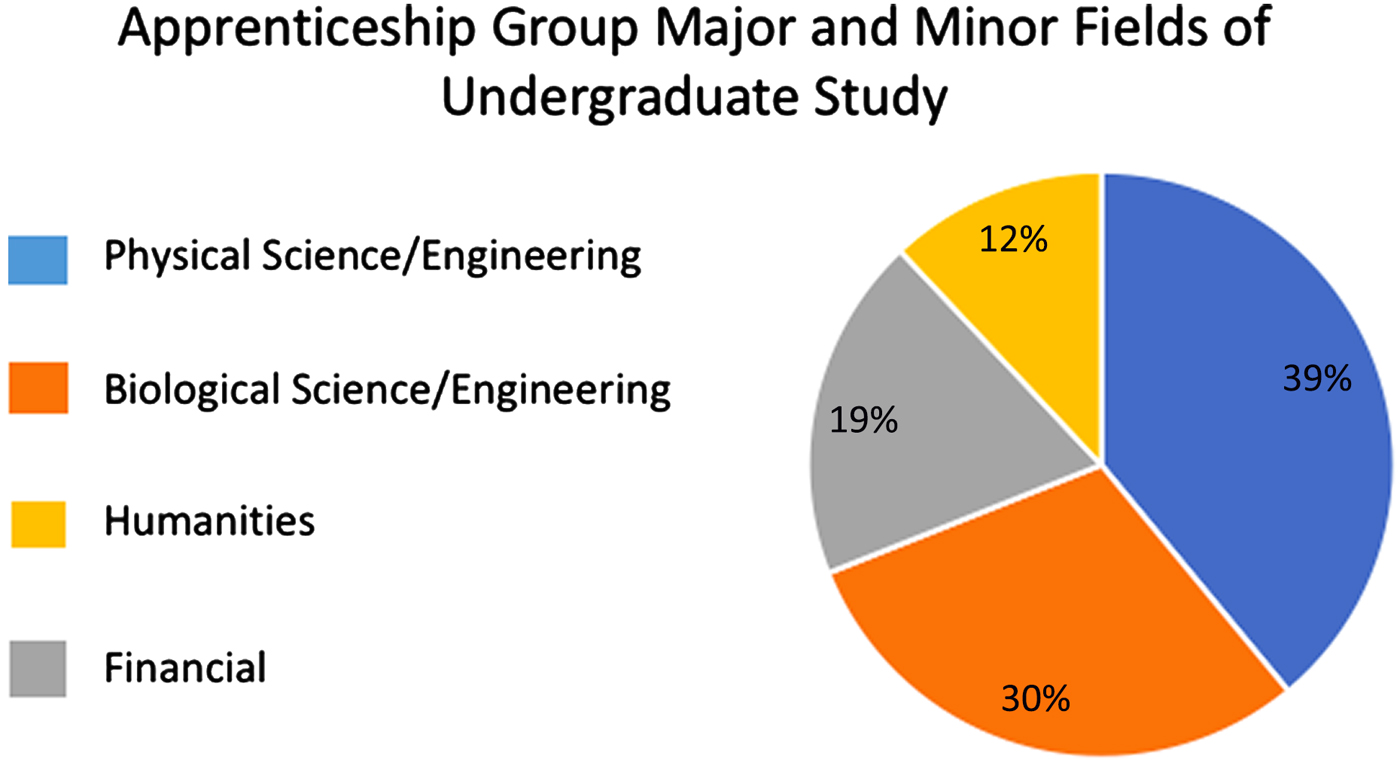
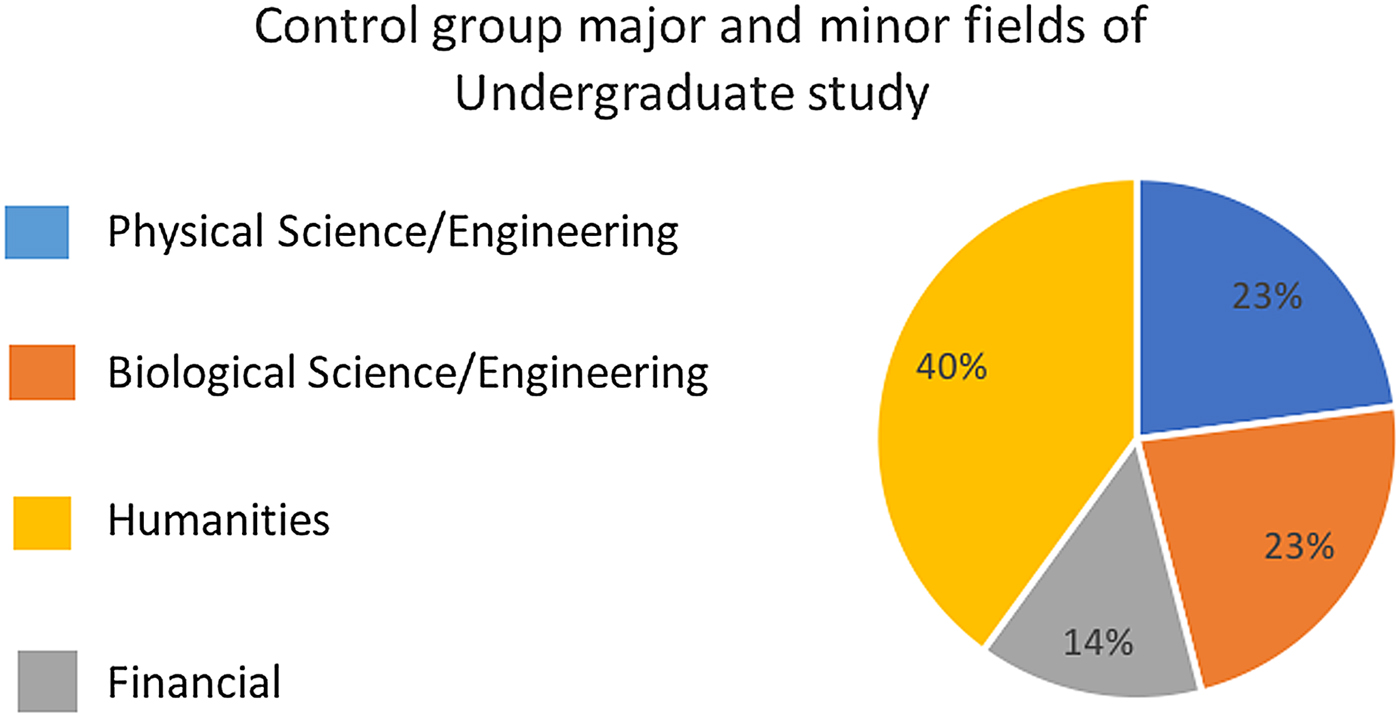
The apprenticeship group and control group responses which can be compared with one another involve choices of undergraduate schools and undergraduate fields of study, graduate schools and graduate fields of study, and professions. For both undergraduate and graduate fields of study, responses were divided into four categories: physical science/engineering, biologic science/engineering, humanities, and financial fields. Figures 1 and 2 are graphical representations of the percentages of respondents’ reported undergraduate majors and minors that fall into the four categories for the apprenticeship group and the control group, respectively. Each respondent may have more than one field of study as questions on the subject asked for the listing of all majors and minors. Majors and minors are weighed equally in the categorization.
Categorized undergraduate majors and minors listed by apprenticeship group respondents.

Categorized undergraduate majors and minors listed by control group respondents.
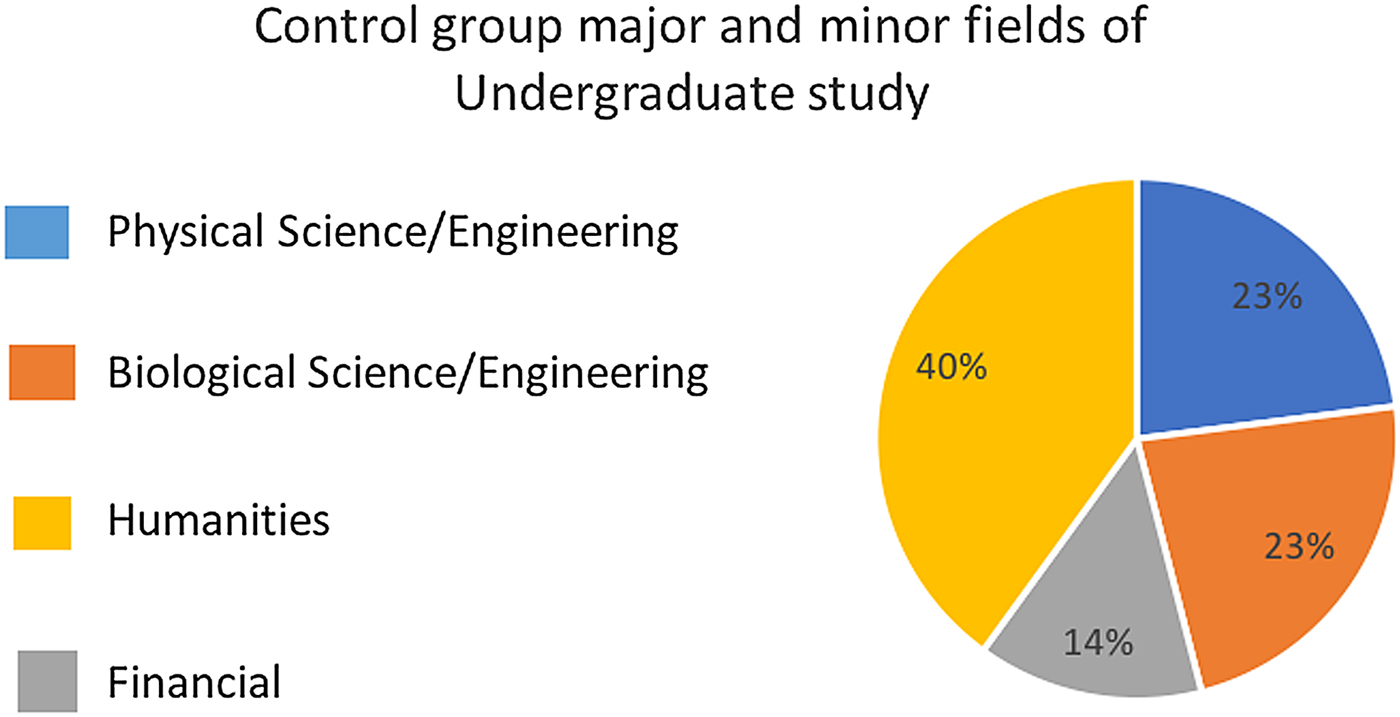
The categories with the greatest percentage of majors and minors were physical science/engineering for the apprenticeship group and humanities for the control group with 39% and 40%, respectively. The categories with the second greatest percentage of majors and minors were biologic science/engineering for the apprenticeship group and both physical and biologic science/engineering for the control group with 30% and 23%, respectively. The total percentage of physical and biologic science/engineering majors and minors were 69% for the apprenticeship group and 46% for the control group with 62% of apprenticeship group respondents studying majors and minors that fell exclusively in the STEM categories and 40% of control group respondents studying majors and minors that fell exclusively in the STEM categories. Of the apprenticeship group respondents, 16% studied a combination of STEM and non-STEM majors and minors while 20% of control group respondents studied a combination of STEM and non-STEM majors and minors leaving 22% of apprenticeship group respondents and 31% of control group respondents that studied exclusively non-STEM (humanities, financial, or humanities and financial combinations) majors and minors.
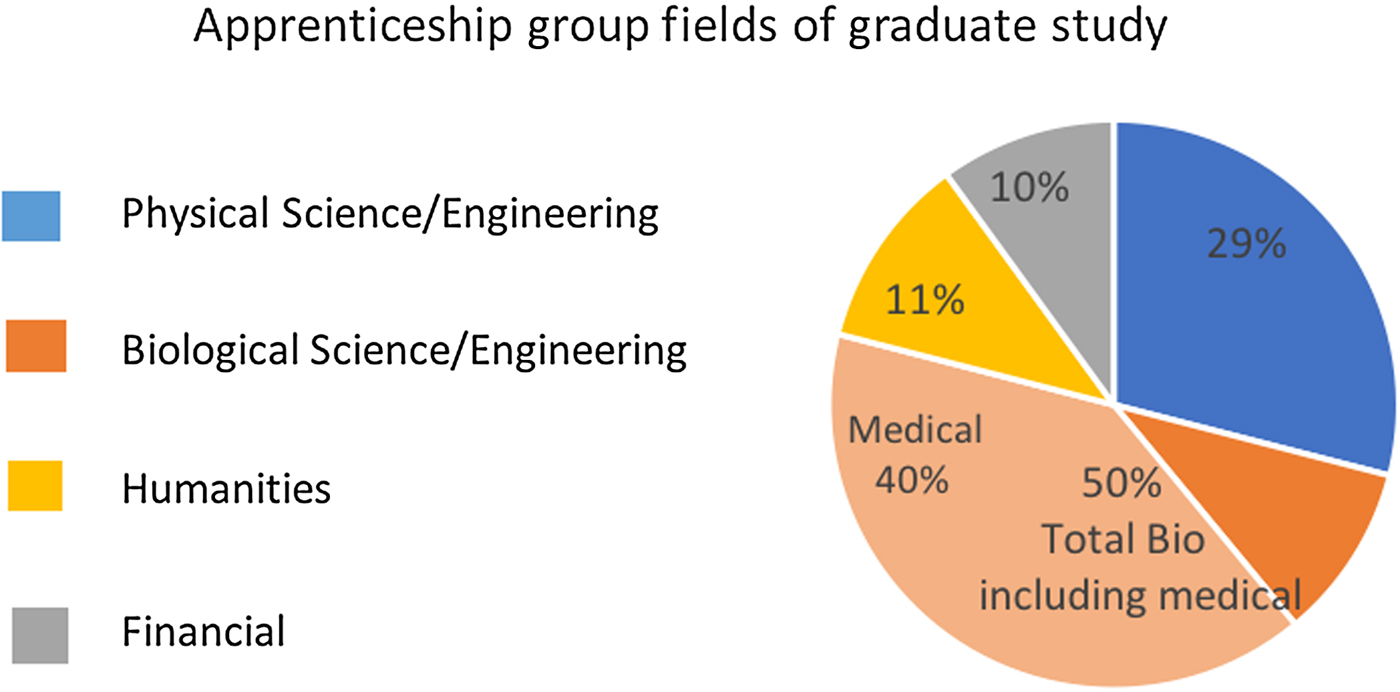
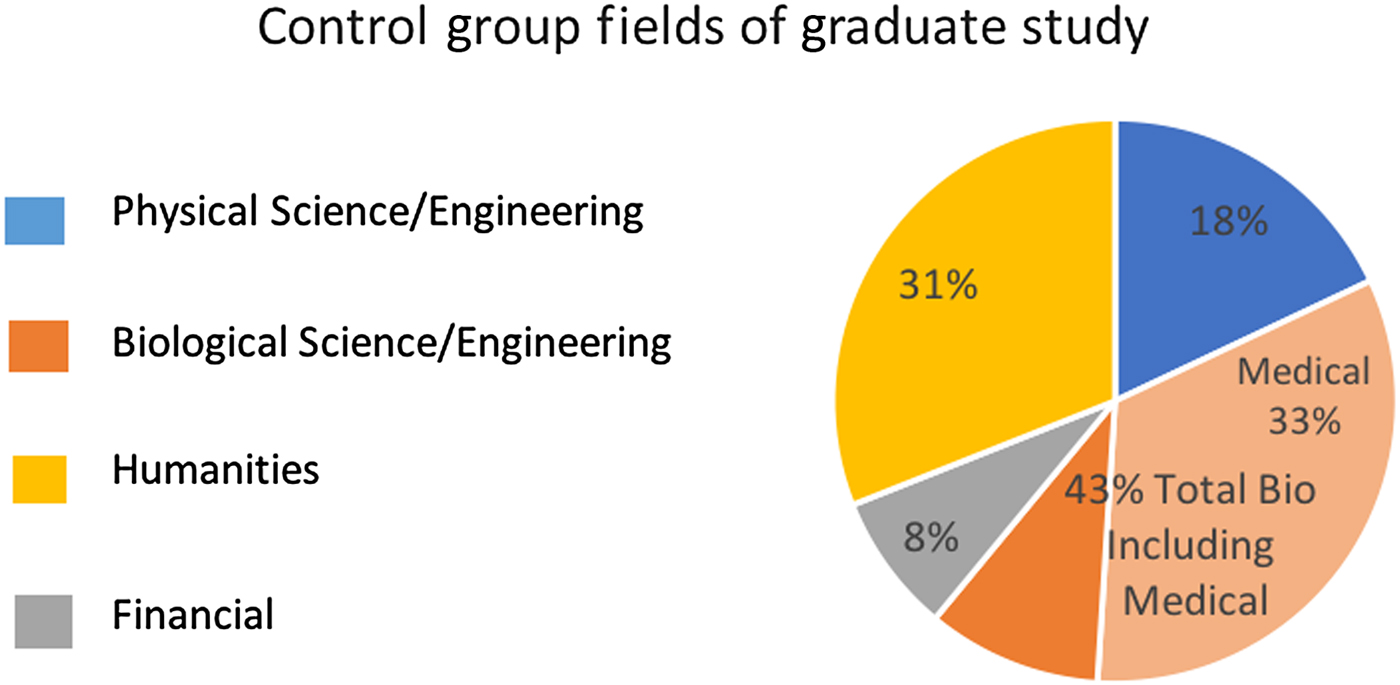
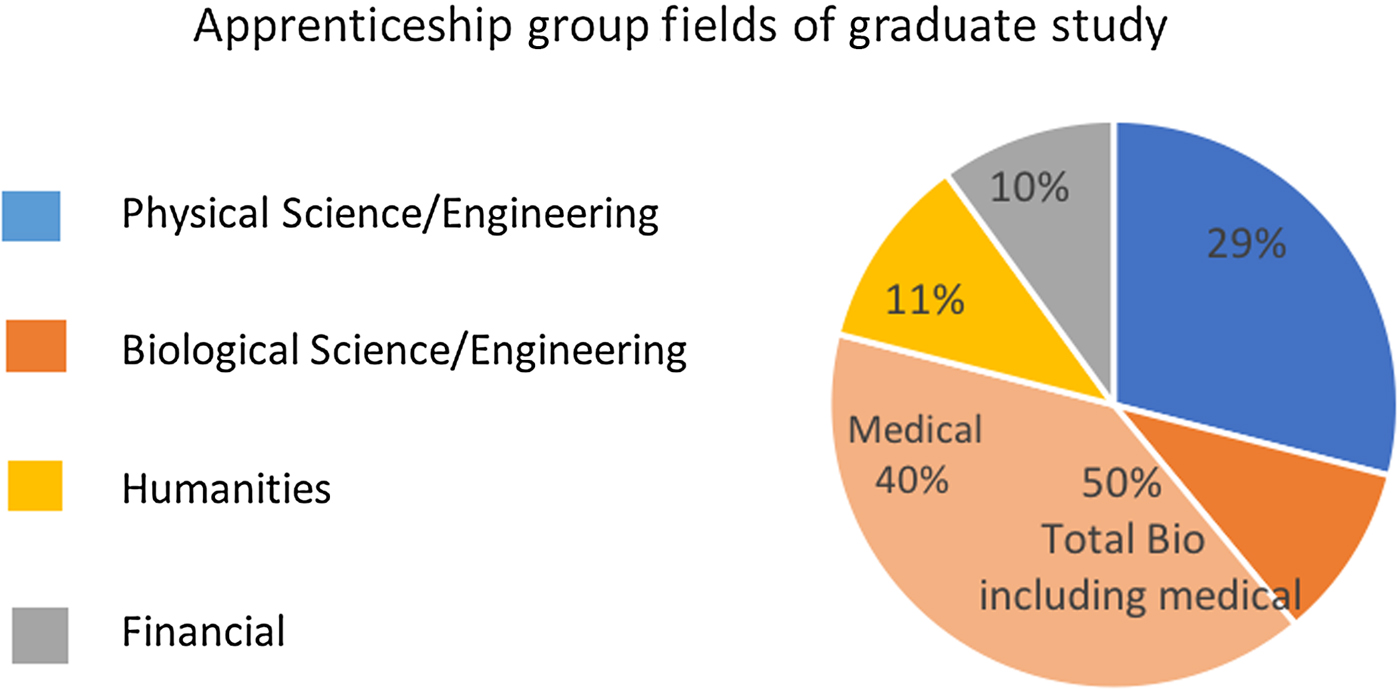
Graduate school fields of study were categorized and graphically represented in Figs. 3 and 4 for the apprenticeship group and the control group, respectively. Of both the apprenticeship group and the control group 56% went on to graduate school.
Categorized graduate majors reported by apprenticeship group respondents. The biologic science/engineering category shows a subdivision for specifically medical fields including human and veterinary medicine and dentistry.
Categorized graduate majors reported by control group respondents. The biologic science/engineering category shows a subdivision for specifically medical fields including human and veterinary medicine and dentistry.
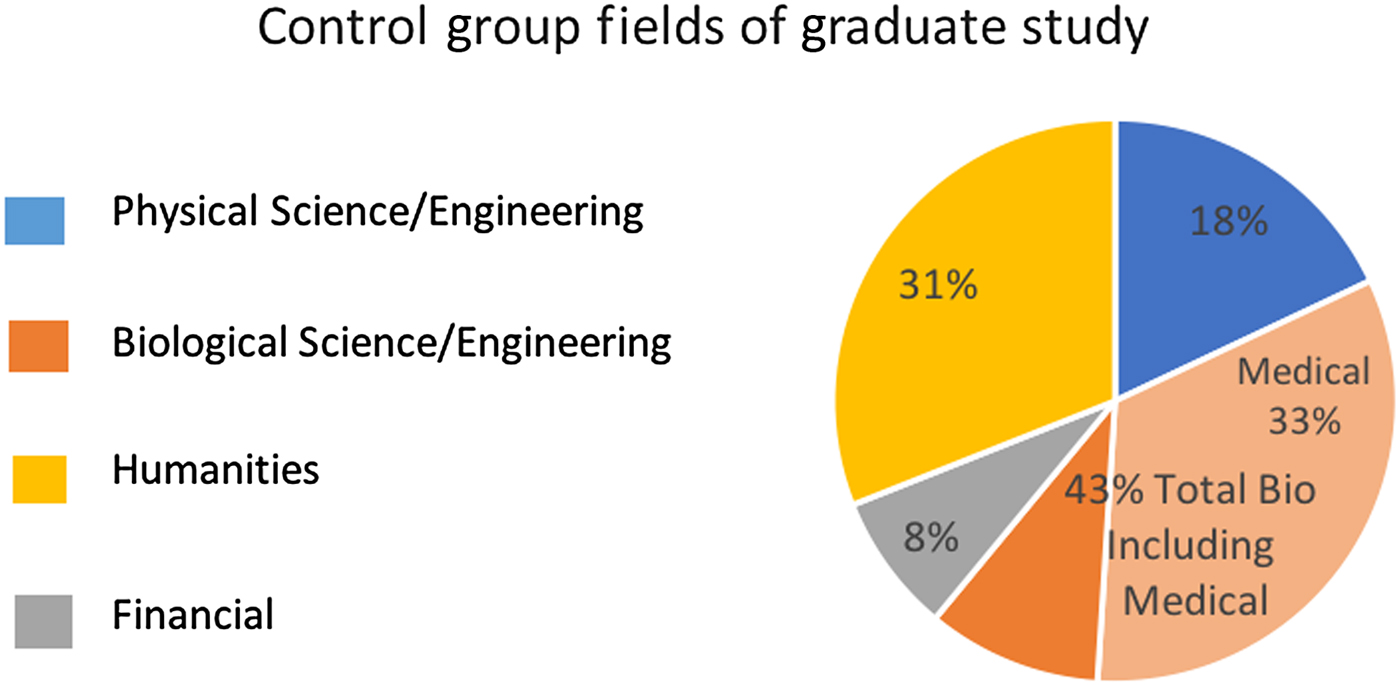
The category with the greatest percentage of majors was biologic science/engineering for both the apprenticeship group (50%) and the control group (43%). The categories with the second greatest percentage of majors and minors were physical science/engineering for the apprenticeship group and humanities for the control group with 29% and 31%, respectively. The total percentage of physical and biologic science/engineering graduate majors was 79% for the apprenticeship group and 61% for the control group.
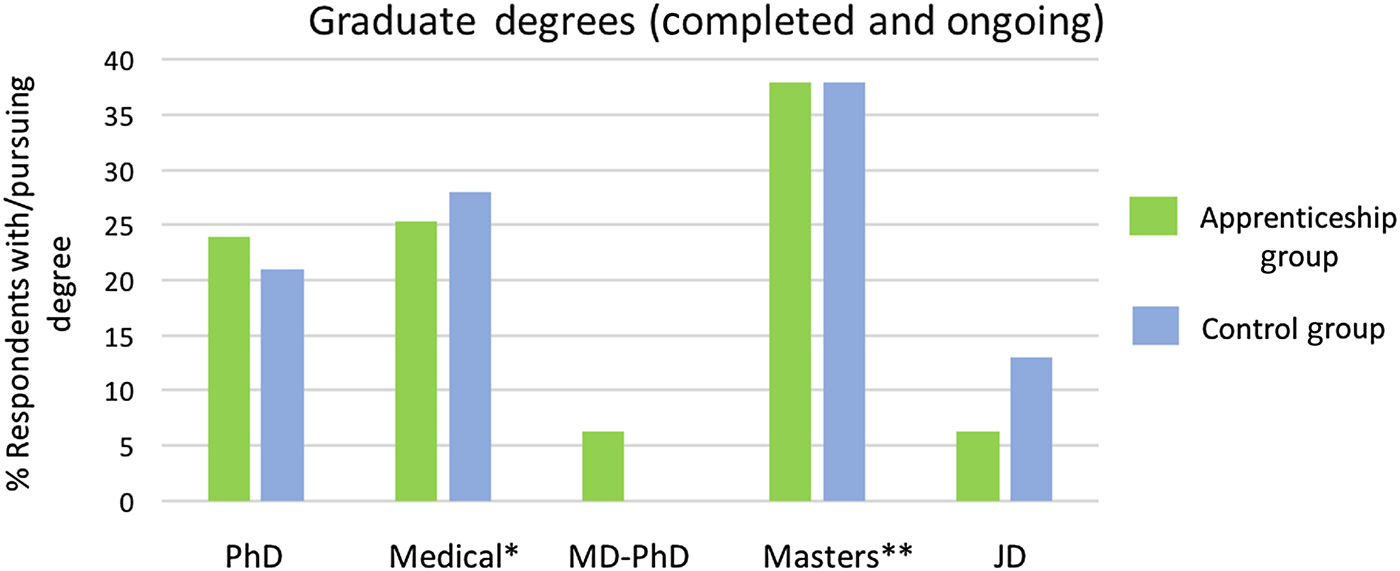
The types of graduate degrees in progress or earned by the apprenticeship and control groups are shown in Fig. 5.
Graduate degrees in progress or earned by apprenticeship group and control group respondents.
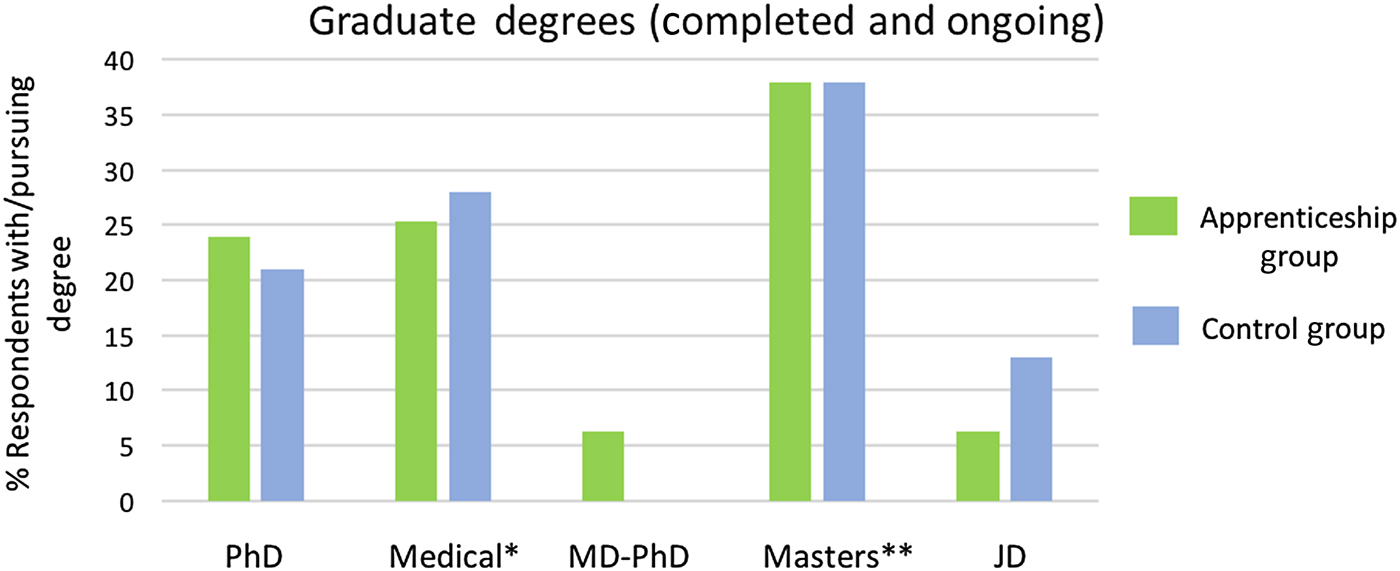
Masters degrees including MA, MS, MBA, MPhil, MPH, and Master's for Nurse Practitioner represent 38% of all graduate degrees earned or in progress for both the apprenticeship group and the control group. PhDs and medical doctor degrees including MD, DMD, DDS, DVM, and PsyD are similarly represented in each group. For apprenticeship group 24% of graduate degrees are PhDs while 21% of control group graduate degrees are PhDs, and 25.4% of apprenticeship group graduate degrees are in the medical doctor category while 28% of control group graduate degrees are in the medical doctor category. More pronounced differences between the groups can be seen in the MD–PhDs and the JDs. The percentage of apprenticeship group graduate degrees that are MD–PhDs is 6.3% while there are no MD–PhDs in the control group graduate degrees, and 6.3% of apprenticeship group graduate degrees are JDs while 13% of control group graduate degrees are JDs.
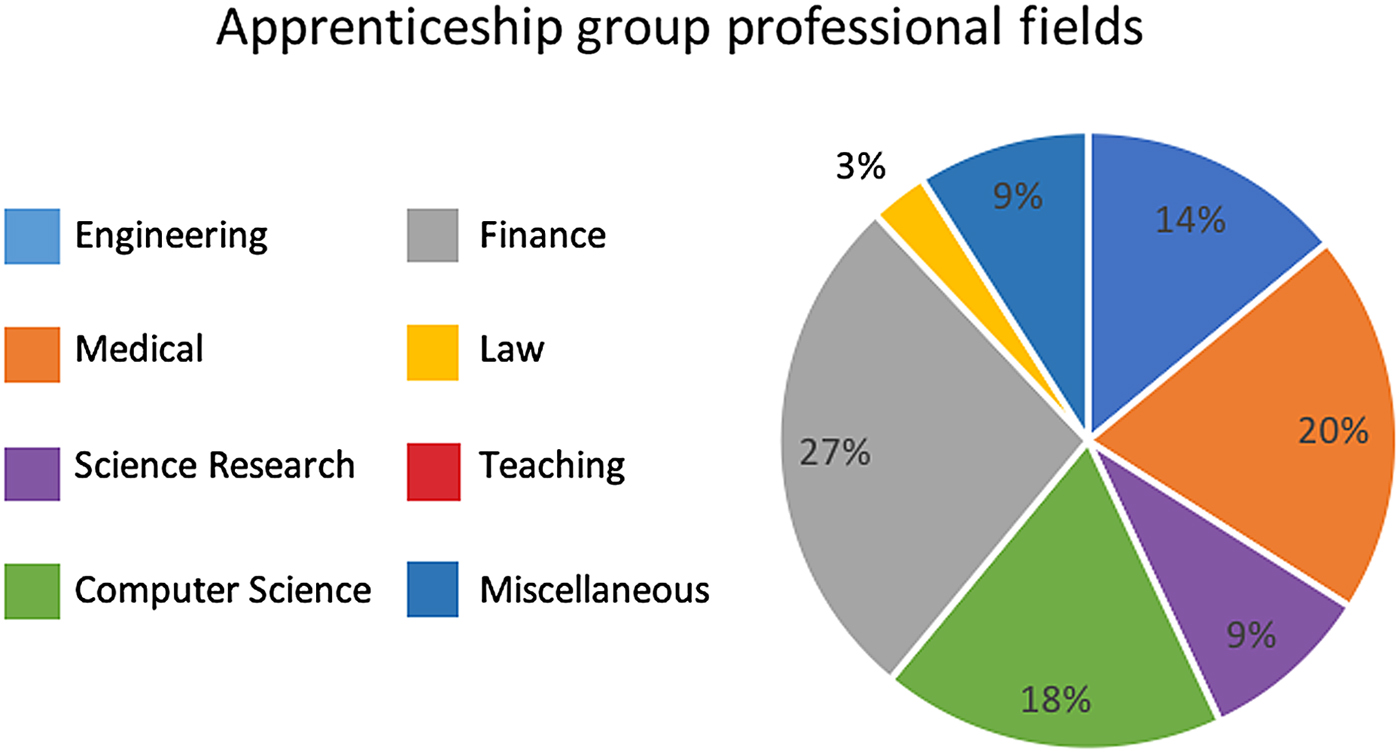
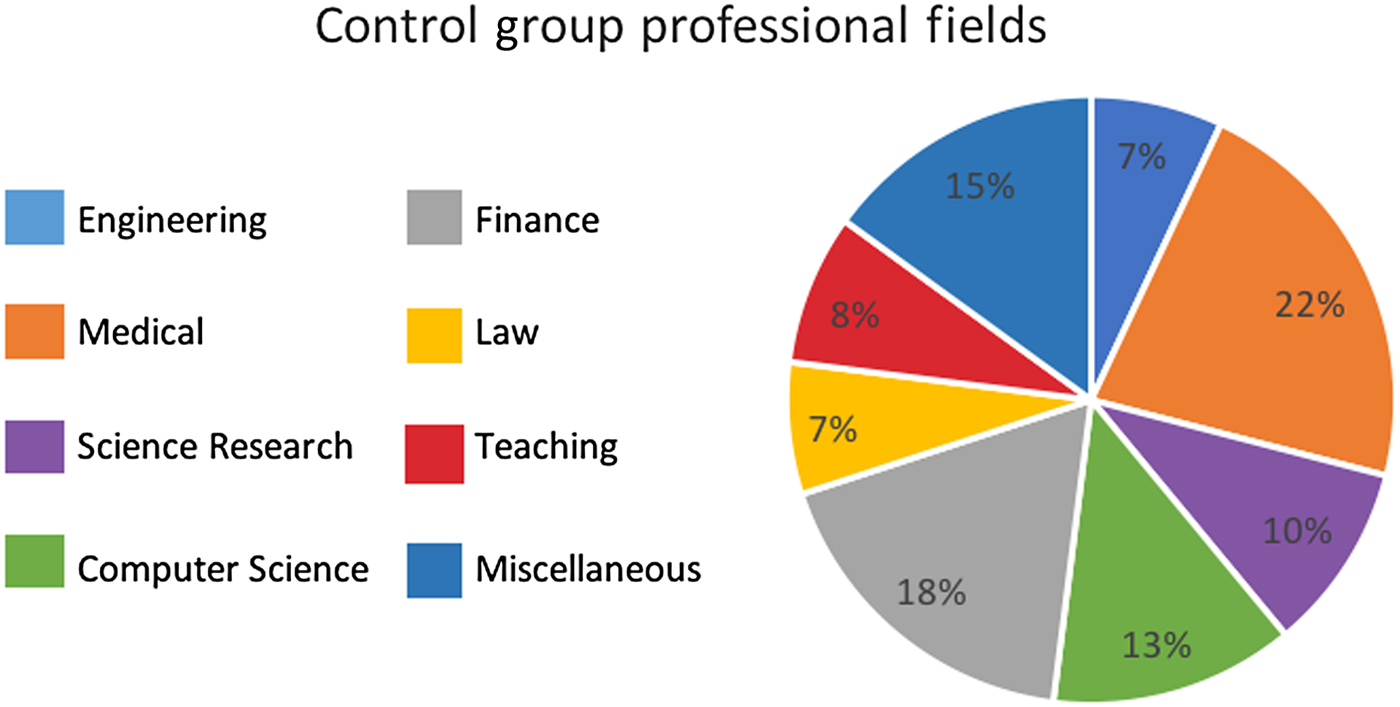
The percentage of employed apprenticeship group respondents is 69% while 86% of control group respondents are employed. The professions they reported were categorized into eight groups. Broad professional field categories include: engineering, medical, science research, computer science, finance, law, teaching, and miscellaneous. The miscellaneous category was for professions that were not either described well enough to fit into one of the other categories or did not fit into any of the other categories but were too few to create an entirely separate category. The division of reported professions into the categories can be seen in Figs. 6 and 7 for the apprenticeship group and the control group, respectively.
Categorized professions listed by the apprenticeship group.

Categorized professions listed by the control group.
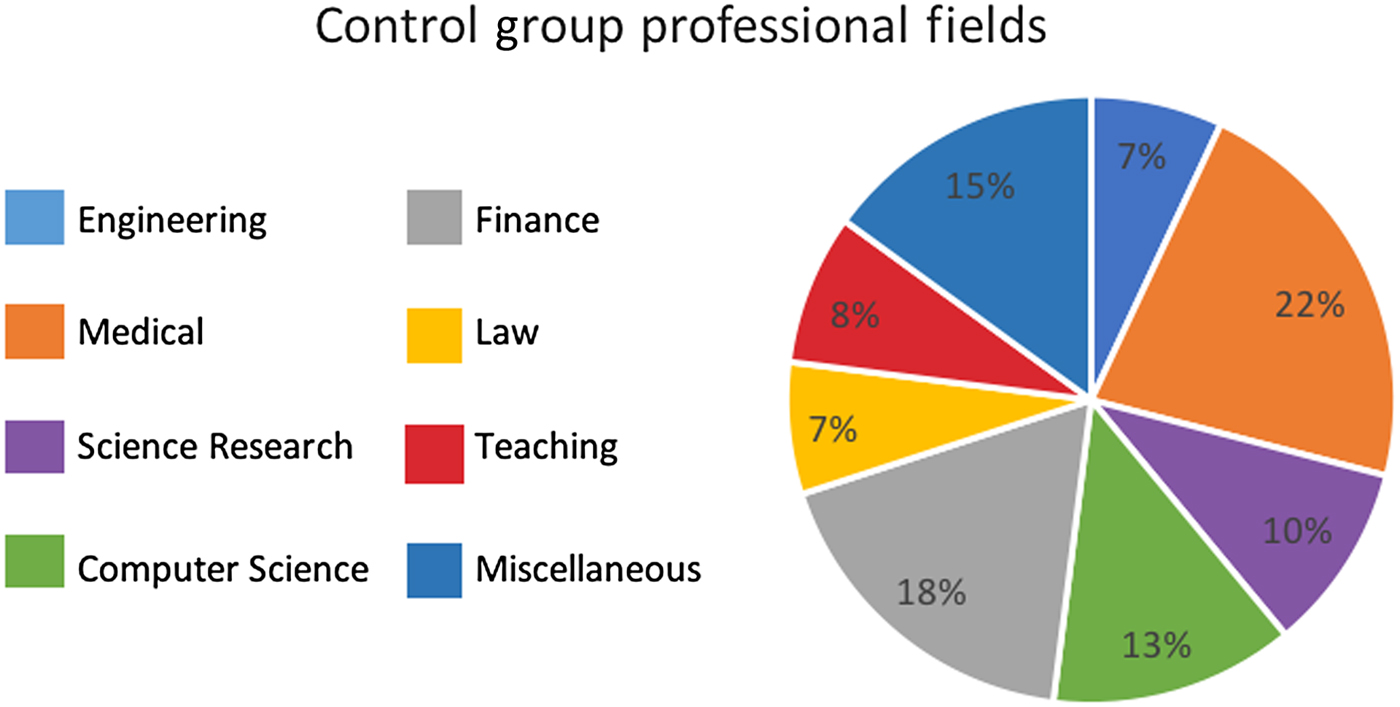
The categories with the greatest percentage of professions were finance for the apprenticeship group (27%) and medical for the control group (22%). The categories with the second greatest percentage of professions were medical for the apprenticeship group and finance for the control group with 20% and 18%, respectively. The total percentage of medical, engineering, science research, and computer science professions was 61% for the apprenticeship group and 52% for the control group.
In undergraduate and graduate education decisions and in professional decisions, the apprenticeship group consistently has a higher percentage of STEM fields. For undergraduate fields of study the STEM total for the apprenticeship group's majors and minors was 69% compared with the control group's 46%. A 2014 NPR article that compiled data on US college majors from 1970 to 2010 into one graph was treated as a basis for comparison and the listed majors were grouped into the four fields that our data were grouped into. The 2000, 2005, and 2010 data from the NPR article were used since these years have the most overlap with the years that our survey respondents attended undergraduate school. The average percentages of the four fields over these 3 years are 40% in the humanities, 21% in biologic science/engineering, 10% in physical science/engineering, and 25% in financial. The NPR data share its highest percentage of majors with the control group, the highest percentage of which was humanities at 40%. The control group, however, had a higher STEM total of 46% compared with the NPR data's 31%.
The apprenticeship group's highest percentage was physical science/engineering at 39% compared with the control group's 23% physical science/engineering and the NPR data's 10% physical science/engineering. The second highest apprenticeship percentage was biologic science/engineering at 30% compared with the control group's 23% biologic science/engineering and the NPR data's 21% biologic science/engineering. This shows that for undergraduate fields of study, while the control group selected a greater percentage of STEM majors and minors than a larger and less specific group of people, it is more like a national data set than the apprenticeship group is.
The control group was selected based on high school GPA and high school attended but also, to some degree, on interests because of their relationships to apprenticeship participants and math and science teachers. These criteria make it more likely to select STEM fields more than the average 2000–2010, US undergraduate student, as evidenced by their percentage of STEM fields being 46% and the NPR data's percentage of STEM fields being 31%. However, there is an even greater difference between the control group percentage of STEM fields and the apprenticeship group percentage of STEM fields which is 69%. These differences make a case for the effect the research apprenticeship had on the apprenticeship group's undergraduate major and minor decisions.[Reference Bui17]
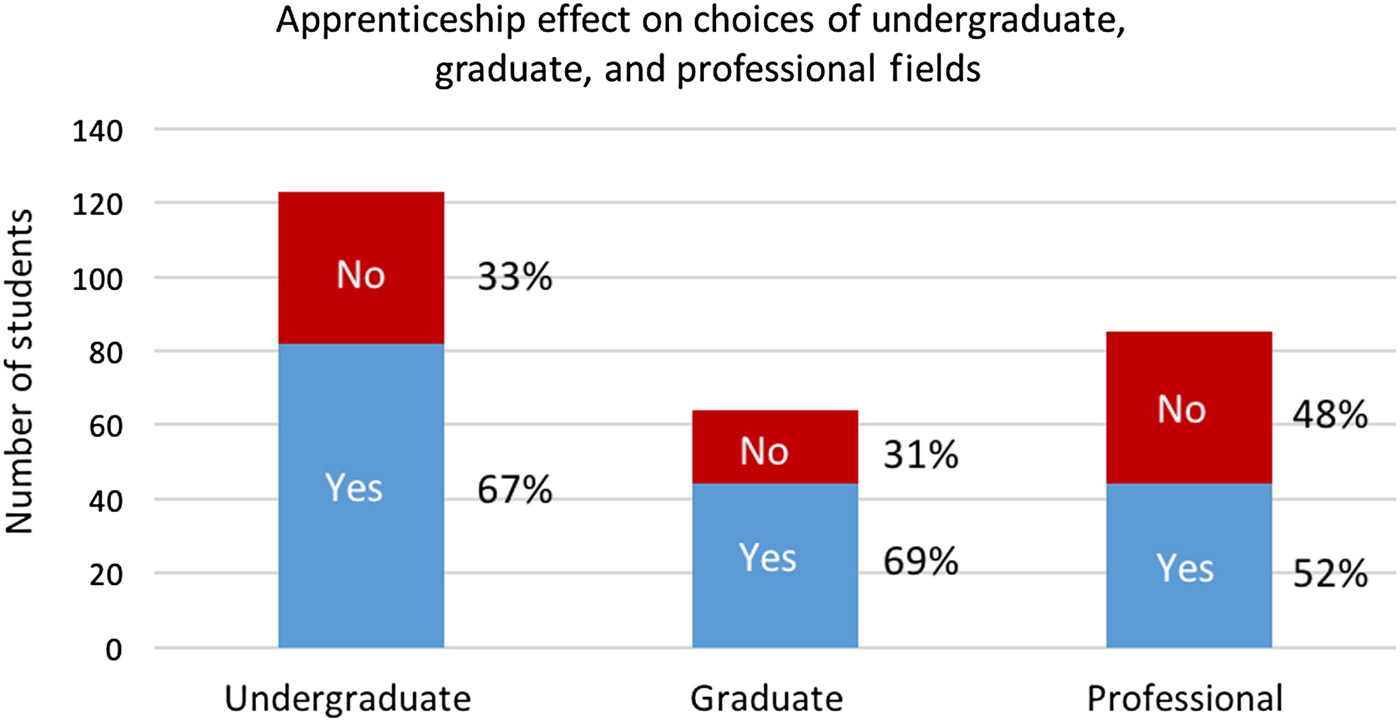
More direct evidence of the research apprenticeship's effect on undergraduate decisions is the 67% of apprenticeship group respondents that reported that the research apprenticeship they attended did, in fact, influence their choice of undergraduate school or field of study. Many of those respondents said that their experiences in the apprenticeship lead them to choose a scientific field of study or lead them to look for schools with good research programs after having piqued their interest in research. The single category with the highest percentage of apprenticeship group majors and minors, physical science/engineering, is also evidence of the apprenticeship's influence; the research focused on in the apprenticeship is materials science and chemical engineering, areas which falls into the physical science/engineering category.
For both the apprenticeship group and the control group, 56% of respondents attended or are attending graduate school. Compared with the 37% of individuals with completed bachelor's degrees who held graduate degrees in 2015,[Reference Baum and Steele18] this is a larger than average portion for each group, which supports the fact that their differences are likely due to the apprenticeship group's research apprenticeship participation. For the graduate school decisions, the apprenticeship and control groups begin to resemble one another a bit more than for undergraduate school decisions since the distribution of graduate degrees pursued by these two groups are very similar, as shown in Fig. 5 and as the gap between apprenticeship and control STEM totals narrows from 22% more apprenticeship group undergraduate STEM majors and minors to 18% more apprenticeship group graduate STEM majors. However, the apprenticeship group maintains the greater percentage of STEM degrees. Similarly, while both groups” largest percentage of fields of graduate study went to the biologic science/engineering category, the apprenticeship group had 50% of graduate majors in this category and the control group had 43% of graduate majors in this category. Additionally, 69% of apprenticeship group respondents who have attended graduate school reported that their research apprenticeship experience influenced their choice of graduate school or field of study, so while the effect of the apprenticeship may be less pronounced in graduate school decisions, it still makes a difference.
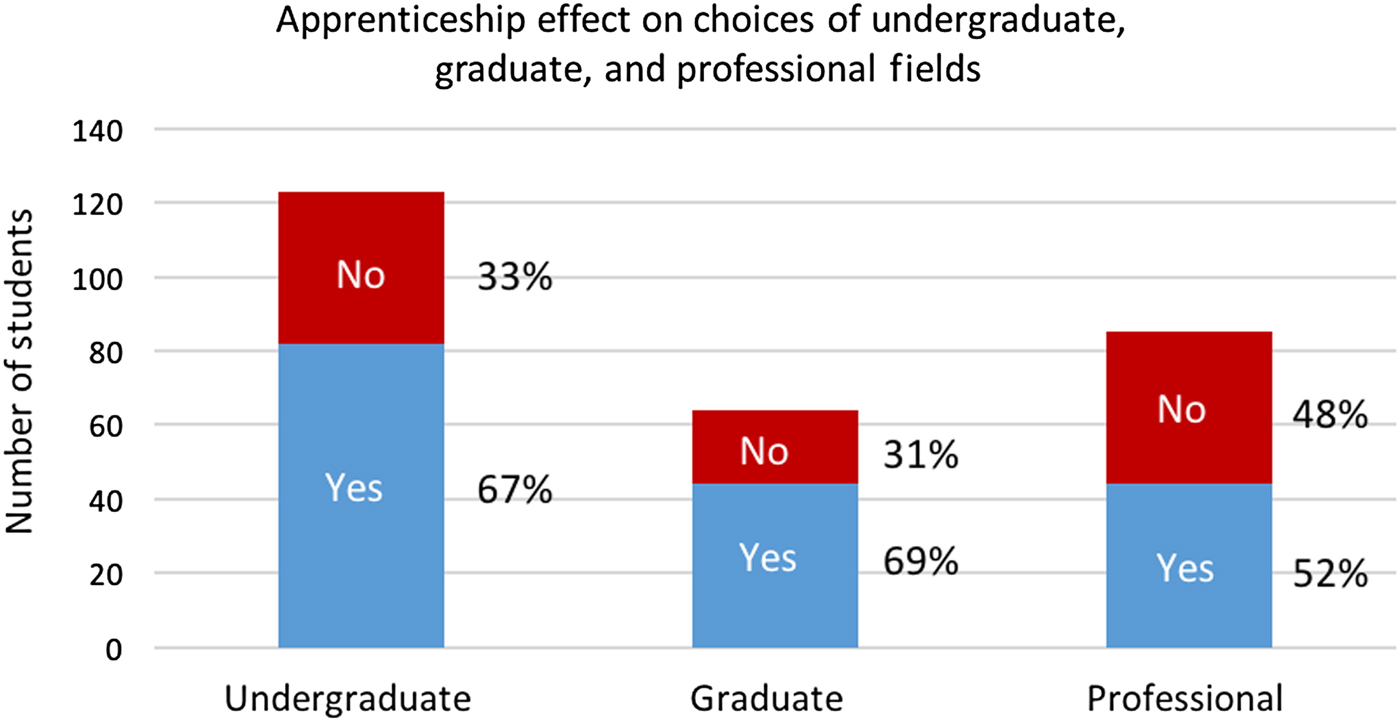
The difference between the apprenticeship and control STEM total percentage narrows further in the professional fields. The apprenticeship group maintains the lead but it decreased from 22% for undergraduate fields, to 18% for graduate fields, to 8% for professional fields. This is to be expected since the respondents participated in the research apprenticeship in high school. As time progresses, high school experiences will expectedly have a smaller direct effect on decision making. Figure 8 demonstrates this principle by showing the decrease in the percentage of apprenticeship group respondents who reported that their apprenticeship experience affected their decisions at different stages of their scholastic and professional careers. Fifty-two percent of employed apprenticeship respondents said that the apprenticeship affected their choice of profession.
Yes or no responses on the apprenticeship's effect on choices of undergraduate, graduate, and professional fields. The total of yes and no responses within each bar represents the number of respondents who have attended undergraduate school (left bar), graduate school (middle bar), or are employed (right bar).
While the apprenticeship group has a greater percentage of STEM professional fields than the control group, its single category majority shifts from a STEM field for undergraduate and graduate school to finance. While this shift correlates with the diminished direct effect of the research apprenticeship on choices over time, other apprenticeship group survey responses may indicate that even in a non-STEM field, their apprenticeship experiences affect the way they work. Of the apprenticeship respondents working in finance, 57% studied STEM in undergraduate and/or graduate school, 30% of apprenticeship respondents working in finance reported that their jobs involve research, 39% of apprenticeship respondents working in finance reported that their experience in the research apprenticeship affected their choice of profession, and 56% of apprenticeship group respondents reported that their experience in the research apprenticeship affects the approach they take to their work. Many responses to the question of the apprenticeship's effect on approach taken to a profession included the fact the apprenticeship taught them the basics of problem solving, critical thinking, development of rigorous testing of assumptions, devising protocols, and the ability to carry out complex long-term projects. These are foundational skills they learned from a research apprenticeship, and likely from the STEM majors their apprenticeship experiences influenced them to enroll in, that remain useful to them in their professions even when their professions are unrelated to a STEM field.
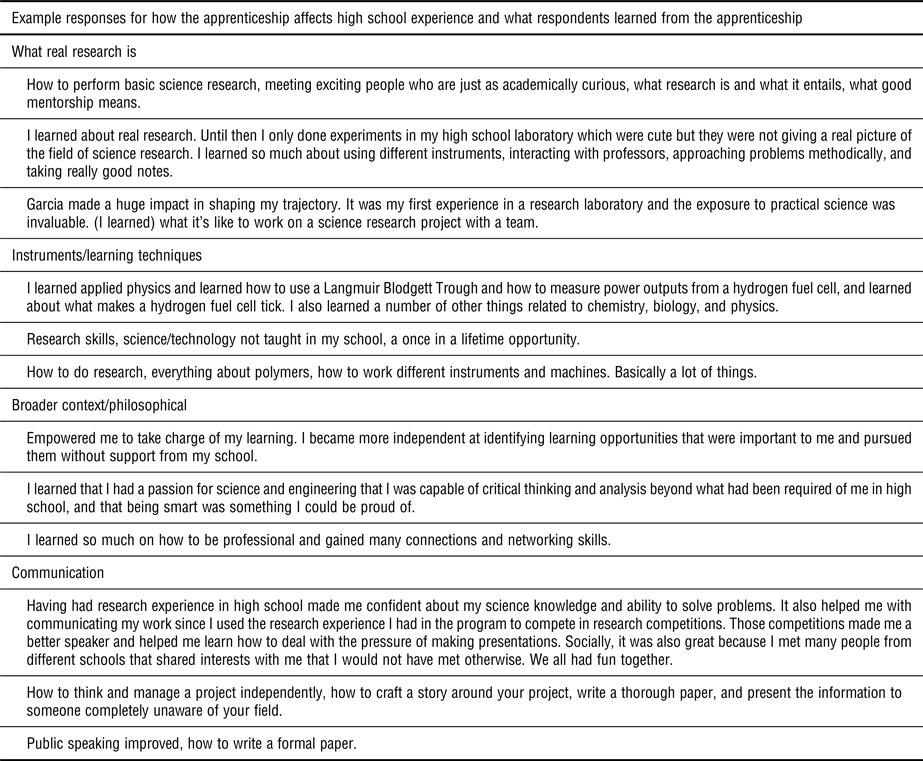
The responses about the apprenticeship's effect on the approach respondents take to their professions ties the first part of the goal of this study, to examine whether research apprenticeships help increase student pursuit of degrees and careers in science, to the second part, to explore other benefits that research apprenticeships may possess for students who participate in them and valuable teaching objectives they are able to realize. The beginning of the apprenticeship group survey focuses on the effect the apprenticeship had on their overall high school experience and what they learned from their participation. On the question of how the apprenticeship affected their high school experience, 96% of respondents reported a positive effect, 3% neutral, and 1% negative. Additionally, 94% of respondents reported learning something from the program. Most people who reported having learned something included many details which have been broken up into several categories. The top four categories were (1) “what real research is,” (2) using instruments/learning laboratory techniques, (3) broader context/philosophical, and (4) communication. It should be noted that the high percentage of positive responses with respect to the apprenticeship's effect on students’ overall high school experiences is likely due to the bias of students who decided to respond to the survey. If students responded to a survey about their apprenticeship experiences, it is likely that they felt strongly about its effects on their lives which may be the ultimate cause of the 96% positive response. In general, this study hopes to communicate that while bias is inevitable in this type of survey, a substantial number of students have benefited strongly from their participation in the apprenticeship.
The category “what real research is” included mentions of the scientific method, experimental design, and research skills. The phrase, “what real research is” was used often in respondents’ descriptions of what they learned from the program, explaining that their high school science courses did not sufficiently inform them about academic research and scientific research as a profession. The instruments/laboratory techniques category consisted of students describing the many instruments they learned to operate and laboratory techniques they learned to perform. The broader context/philosophical category included mentions of having learned about critical thinking and creativity, but also included mentions of having learned to adopt several virtues including independence, self-motivation and diligence, patience, confidence, and leadership. Finally, the communication category included mentions of learning to write scientific papers, make scientific presentations, improve public speaking, and communicate concepts to people outside of the respondents’ scientific fields. Other categories that were written about were teamwork, college preparation, time management, literature review, mentorship, and whether or not the respondent actually enjoys research. There were also several comments about how the apprenticeship opened opportunities for them that exceeded what their school districts could have provided. Not only do these responses show that the effect of the apprenticeship on the respondents’ high school experiences was overwhelmingly positive, with 38% of respondents also mentioning the highly positive social impact the program had, but that the apprenticeship provided profound insights and lessons for the students during their high school years that they could carry with them going forward. For sample responses see Table 1.
Example responses for the apprenticeship group survey questions on the effect of the apprenticeship on overall high school experience and what the students learned from the apprenticeship. Responses were selected to demonstrate the types of details that fit into the four most mentioned categories: (1) “what real research is,” (2) using instruments/learning laboratory techniques, (3) broader context/philosophical, and (4) communication.

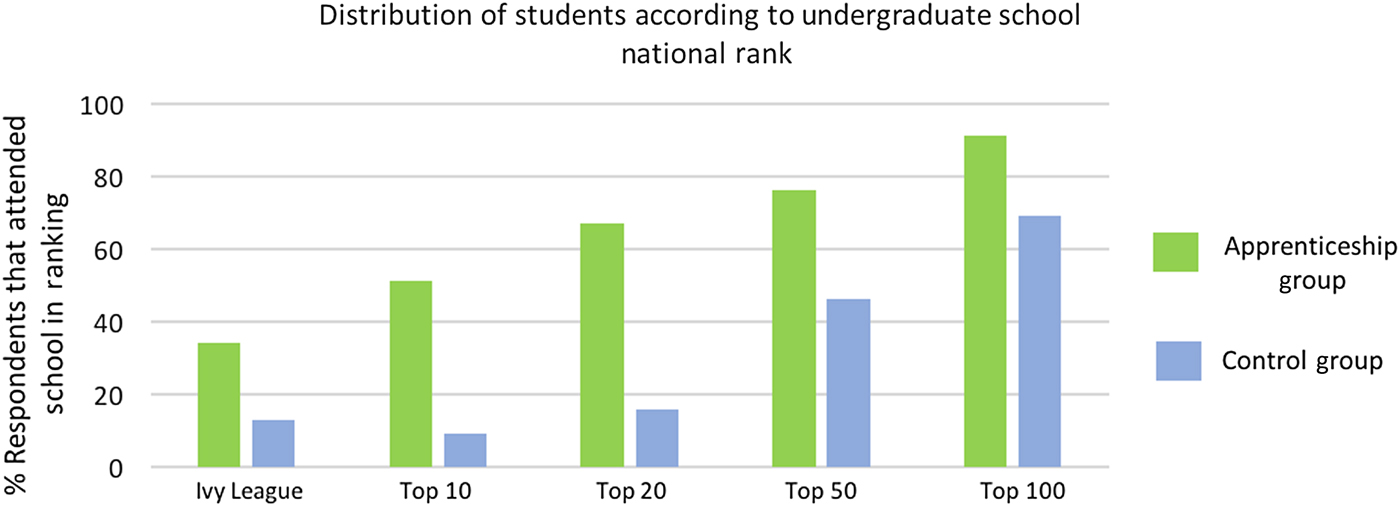
There were also more concrete benefits the apprenticeship group respondents gained from their experiences in the apprenticeship. Respondents who reported having received awards or recommendation letters as a result of their participation in the apprenticeship formed 81% of the group and 77% reported that their participation in the apprenticeship helped them get accepted to a school or job. Respondents who attended one of the top ten nationally ranked schools according to US News and World Report 2016 formed 51% of the group.[19] Figure 9 shows the distribution of respondents by the rank of their undergraduate school.
Percentage of students in the apprenticeship group (green bars) or the control group (blue bars) that attended different ranks of undergraduate schools. Ranking was performed by US News and World Report.[19]

While 51% of the apprenticeship group attended a top 10 school, only 9% of the control group, a group of students with similar grades (high school GPA of 90 or higher) and from the same high schools as the apprenticeship group respondents, attended top 10 schools. Participation in the apprenticeship and the opportunities for awards and recommendations that it entails is extremely valuable for students when it comes to applying for colleges.
Conclusion
Research apprenticeships for high school students offer unique opportunities for students learning STEM. The exposure to real research conducted in university laboratories and mentorship by real scientists allows students to gain a deeper understanding of what careers in STEM can be like and how different people can become involved with those careers. The hands-on, problem-solving nature of experiments that students conduct helps them learn concepts in STEM through authentic inquiry and by justifying their assertions with evidence. Working in teams encourages students and improves communication skills, and working closely with mentors keeps students engaged in open discussion and confident in their abilities. The university laboratory setting gives students access to resources they may not otherwise have access to in their high schools in the form of instruments as well as well-trained instructors. The social nature of the apprenticeship provides a healthy balance of work and play that motivates students to learn.
Students who participated in a research apprenticeship from 2001 to 2011 were surveyed about their experiences in the apprenticeship and their undergraduate school, graduate school, and professional decisions. A control group of students who attended high schools that students who participated in the research apprenticeship attended, had similar high school GPAs as the students who participated in the research apprenticeship, and graduated over same range of years as the students who participated in the research apprenticeship were also surveyed about undergraduate school, graduate school, and professional decisions.
The apprenticeship group had higher percentages of STEM undergraduate (69% STEM in apprenticeship group and 46% STEM in control group) and graduate (79% STEM in apprenticeship group and 61% STEM in control group) fields of study than the control group and a higher percentage of STEM professional fields (61% STEM in apprenticeship group and 52% STEM in control group) than the control group. Both groups had 56% of respondents attend graduate school, which is higher than the 37% of people who graduated with a bachelor's degree that attended graduate school in 2015. Of the apprenticeship group respondents, 67% reported that their apprenticeship experiences influenced their choice of undergraduate school or field of study, 69% reported that the apprenticeship influenced their choice of graduate school or field of study, and 52% reported that the apprenticeship influenced their choice of profession. Additionally, 56% of apprenticeship respondents reported that their apprenticeship experiences influence the approach they take to their work. These results demonstrate that participation in a research apprenticeship during high school likely influences more students to pursue STEM degrees and careers.
Other benefits of research apprenticeship participation were also explored. Apprenticeship group respondents described different aspects of what they learned from their experiences in the apprenticeship. The most frequently provided details were about learning what “real research” was, learning laboratory techniques and concepts in science, learning to develop a good work ethic, work in teams, and build patience and self-confidence, and learning to communicate science through writing and presentations to scientists and non-scientists. The apprenticeship experience had a positive effect on overall high school experience for 96% of apprenticeship group respondents, 81% of apprenticeship group respondents reported having received awards or recommendation letters as a result of their participation in the apprenticeship, and 51% attended top 10 undergraduate schools compared with the 9% of control group respondents that attended top 10 undergraduate schools.
The learning environment that a research apprenticeship provides for students fits the recommendations of many studies on STEM education for encouraging student interest in STEM. More students who participated in a research apprenticeship pursued STEM fields in their education and in their professions than students with similar grades and backgrounds who did not participate in a research apprenticeship. In addition to the effect of increased pursuit of STEM degrees and careers, participation in research apprenticeships positively affects STEM learning, high school experience, and college admission. University research apprenticeships for high school students are a valuable tool for students and teachers of STEM.
Acknowledgments
Funding for this project was provided by the NSF-Inspire Program Award No. 1344267 and by the Morin Foundation Trust.