




No CrossRef data available.
Article contents
Quantitative analysis of right atrial performance after surgical repair of tetralogy of Fallot
Published online by Cambridge University Press: 21 January 2005
Abstract
We aimed to assess the right atrial performance in patients after surgical correction of tetralogy of Fallot, and to clarify the relationship between the pump function of the right atrium and right ventricular systolic function.
We included in the study 50 asymptomatic patients following corrective surgery of tetralogy of Fallot, comparing them to 30 normal subjects. Right atrial areas were measured by echocardiography, and the active fractional area of emptying was expressed, in percentages, as the area measured at the onset of atrial contraction, minus the minimal area, divided by the area at the onset of atrial contraction. We used this value to assess the atrial pump function. Right atrial peak strain rates were measured by tissue Doppler imaging. Compared to controls, patients with tetralogy of Fallot had a significantly reduced right atrial active fractional area of emptying (p = 0.005), along with a reduced peak late diastolic strain rate (p = 0.002). Among 20 patients who underwent magnetic resonance tomographic examination, a relatively higher right atrial peak late diastolic strain rate was shown in patients with a right ventricular ejection fraction of less than 50% (p = 0.021).
Right atrial performance is reduced in patients after surgical correction of tetralogy of Fallot. When facing right ventricular systolic dysfunction, nonetheless, the right atrial pump function may be relatively enhanced. Tissue Doppler derived strain rate can provide quantitative analysis of regional right atrial performance.
Information
- Type
- Original Article
- Information
- Copyright
- © 2004 Cambridge University Press
Cardiac performance is of increasing importance for patients undergoing surgical correction of tetralogy of Fallot because their life expectancy has been prolonged.1 Long-term follow-up studies in these patients have demonstrated persistent right ventricular systolic and diastolic dysfunction.2–5 Atrial function is a crucial determinant of ventricular filling,6, 7 and the left atrium may play an important role during the course of evolving heart failure.8, 9 Data on right atrial function in such patients is sparse, and as far as we are aware, there is no data about the interaction between right atrial and right ventricular function. Tissue Doppler derived strain rate is a promising parameter with which to assess regional myocardial deformation, since it is less affected by overall cardiac motion and tethering effect.10, 11 Our study aimed, first, to assess the right atrial performance using the area method and tissue Doppler derived strain rate, both calculated from cross-sectional echocardiography, in patients after corrective surgery for tetralogy of Fallot, and second, to clarify the relation between the right atrial pump function and right ventricular systolic function derived from magnetic resonance tomography in the same group of patients.
Methods
Patients studied
We included in our study 50 patients following corrective surgery for tetralogy of Fallot, and 30 age-matched normal subjects. The patients were asymptomatic, and selected on the basis that they had no patent oval foramen or residual ventricular septal defect, were in sinus rhythm, and had an adequate transthoracic window for echocardiographic examination. Their characteristics are shown in Table 1. The mean age at corrective repair was 6.4 years, with a range from 4 months to 51 years, and their mean age at examination was 17.1 years, with a range from 6 to 56 years. The period of follow-up was 8.7 years, with a range from 1 to 28 years. During surgical repair, the right ventricular outflow tract had been reconstructed with a valved homograft or heterograft in 26 patients (52%), and by insertion of a patch in 24 patients (48%). Data from the patients with tetralogy of Fallot was compared with findings from 30 age-matched healthy subjects, who were examined for evaluation of an innocent murmur. Their mean age was 14 years, with a range from 6 to 62 years. Among the 50 patients, 20 underwent a magnetic resonance tomographic examination in order to quantify the right ventricular systolic function. Informed written consent was obtained from the patients or their parents. The patients included in the studies involving magnetic resonance tomography were those who agreed to undergo the examination on the same day as the echocardiographic study. The main characteristics of the 20 patients who received magnetic resonance tomographic examination, and of the other 30 patients, are comparable (Table 2).
Table 1. Characteristics of the 50 patients studied after corrective surgery for tetralogy of Fallot.

Table 2. Comparison of characteristics between the patients with tetralogy of Fallot having or not having a magnetic resonance tomographic examination.

Cross-sectional echocardiography
All the normal subjects and the patients were examined using a 2.5/3.5 transducer interfaced with a Vingmed system V (GE Vingmed, Horten, Norway). Initially, routine diagnostic imaging was performed, including colour flow mapping, along with pulsed and continuous wave Doppler. The standard apical four-chamber view was recorded. The right atrial area was measured along its endocardium in three different phases of the cardiac cycle, as previously described,12 when the right atrium reaches its maximal area, at the onset of the electrocardiographic P wave, or at its minimal area. The active right atrial area of emptying was calculated as the area at the onset of atrial contraction minus the minimal area, while the right atrial passive area of emptying was calculated as the maximal area minus the area at the onset of atrial contraction. We then computed the ratio between the active and passive areas of atrial emptying. The fractional area of right atrial active emptying was calculated as the area at the onset of atrial contraction minus the minimal area divided by the area at the onset of atrial contraction, and expressed as a percentage.
Tissue Doppler imaging studies
After the normal echocardiographic examination, colour Doppler myocardial imaging was performed with the same apical four-chamber view in all the subjects. Sector size and depth were chosen to achieve a frame rate of 130 ± 20/s. Gain settings, filters, and pulse repetition frequency were adjusted to optimise colour saturation. We recorded 3 consecutive cardiac cycles during normal quiet respiration. The myocardial colour Doppler data were stored in digital format, and transferred to a computer workstation for the off-line analysis with dedicated software (TVI; GE Vingmed, Echopack). In all the normal subjects, and the patients, curves of right atrial and right ventricular strain rate were assessed in the middle of the corresponding lateral walls (Fig. 1). A pixel of 1 × 1 was applied, and strain rate was estimated by measuring the spatial velocity gradient over a computation distance of around 2–3 mm in the direction of measurement.

Figure 1. The characteristic peaks in the curve of atrial strain rate. A: late diastolic peak strain rate; E: early diastolic peak strain rate; RA: right atrium; RV: right ventricle; S: systolic peak strain rate.
The curve of atrial strain rate was also characterised by the three main waves, systolic, early diastolic and late diastolic, which coincided with the ventricular systolic, early diastolic and late diastolic periods, respectively. The direction of the curve for atrial strain rate was the opposite to that of the ventricular curve (Fig. 1).
Magnetic resonance tomographic study
In 20 of the patients, we performed magnetic resonance tomographic studies on the same day as the tissue Doppler examination for the evaluation of ventricular function. For magnetic resonance imaging, we used a 1.5 T Philips instrument (Philips, Eindhoven, Netherlands). Using previously published methods,13 the ventricular volumes were measured by a third independent observer, who was blinded to the results obtained after analysis of the data from tissue Doppler. The ventricular ejection fraction was calculated as the end-diastolic minus the end-systolic volume divided by the end-diastolic volume, and was again expressed as a percentage.
Statistical analysis
The statistical software used was SPSS 10.0. Data were expressed as mean plus or minus standard deviation. The nonparametric Mann-Whitney test was used to assess the differences between two unpaired groups. For analysis of correlations the nonparametric Spearman rank correlation was performed. We considered a p value of <0.05 to be statistically significant.
Results
Standard echocardiographic results
The echocardiographic results are shown in Table 1. Following the corrective surgery, none of the examined patients had a residual ventricular or atrial septal defect. Of the patients, 14 (28%) patients had a gradient greater than 40 mmHg across the right ventricular outflow tract, and 44 (88%) had mild-to-moderate pulmonary regurgitation. Two of the patients undergoing magnetic resonance tomography, and three from the other thirty, showed a Doppler pattern of restrictive right ventricular physiology, which was diagnosed when antegrade pulmonary flow in late diastole was detected throughout the respiratory circle.
Right atrial performance measured by cross-sectional echocardiography (Table 3).
Table 3. Comparing the right atrial and right ventricular performance measured by cross-sectional echocardiography and tissue Doppler imaging between the 30 normal subjects and the 50 patients with tetralogy of Fallot.

There were no significant differences in age or heart rate between the normal subjects and those who had undergone corrective surgery. In the patients, the minimal right atrial area (p = 0.001), the area at atrial contraction (p = 0.001), and the maximal area (p = 0.013) were significantly larger than in normal subjects. The fractional area of active right atrial emptying was significantly lower (p = 0.005), while the ratio between active and passive emptying was significantly higher (p = 0.001) in the patients when compared to their normal controls (Figs 2 and 3).

Figure 2. Comparison of the fractional area of right atrial active emptying between patients after surgical correction of tetralogy of Fallot and normal controls.

Figure 3. Comparison of the active and passive emptying areas between patients after surgical correction of tetralogy of Fallot and normal controls.
Right atrial and right ventricular performance measured by tissue Doppler derived strain rate
Using tissue Doppler imaging, we showed that the systolic (p = 0.001), early diastolic (p = 0.038) and late diastolic (p = 0.002) peaks for the strain rate of the lateral wall of the right atrium (Fig. 4), as well as the comparable peaks for the strain rate of the right ventricular free wall, with respective p values being 0.001 for systolic, 0.013 for early diastolic, and 0.001 for late diastolic peaks, were all significantly reduced in the patients with tetralogy of Fallot when compared to their normal controls (Table 3). In patients with a right ventricular ejection fraction of less than 50%, the peak late diastolic strain rate for the right atrium was significantly higher (p = 0.021) than in those with a right ventricular ejection fraction of more than 50% (Fig. 5, Table 4).

Figure 4. Comparison of the right atrial lateral wall peak strain rates measured by tissue Doppler between patients after surgical correction of tetralogy of Fallot and normal controls.

Figure 5. Comparison of right atrial lateral wall late diastolic peak strain rate in patients after surgical correction of tetralogy of Fallot when also comparing those with right ventricular ejection fractions of greater or less than 50%.
Table 4. Comparison of the tetralogy of Fallot patients with right ventricular ejection fraction of >50% with those with an ejection fraction of <50%.

Discussion
Right atrial performance after surgical correction of tetralogy of Fallot as measured by cross-sectional echocardiography
Right ventricular dysfunction secondary to pulmonary regurgitation or residual obstruction to the right ventricular outflow tract is frequently observed in the long-term follow-up of patients after corrective surgery for tetralogy of Fallot.14 Recent studies in adults have demonstrated that left atrial function is a crucial determinant of ventricular filling in patients with impaired left ventricular relaxation,6, 7 and that the left atrium plays an important role during the course of evolving cardiac failure.8, 9 Information about right atrial function among patients with right ventricular dysfunction, however, such as after surgical correction of tetralogy of Fallot, is sparse. In this study, we showed that the right atrial pump function, expressed as the fractional area of active emptying, was reduced in such patients. This can be explained by the preoperative hypoxic state combined with the surgical damage to the right atrial myocardium.15
Abnormal right ventricular relaxation has also been reported after correction of tetralogy of Fallot. Indeed, in our study we found that the ratio between active and passive emptying was significantly higher in the surgically corrected patients than in the normal subjects. This may indicate that, compared to the right atrium in normal subjects, the atrium in patients following corrective surgery for tetralogy of Fallot has to contribute more in the process of ventricular filling, although its pump function is already reduced.
Regional right atrial performance as quantified by tissue Doppler strain rate
Previous studies focusing on the right ventricle showed reduced regional, as well as global, right ventricular function following corrective surgery for tetralogy of Fallot.16, 17 Our results show that the regional deformation of the right atrial wall as assessed by tissue Doppler strain rate is also reduced in these patients. The reduced systolic and early diastolic peaks revealed by this technology may reflect the decreased right ventricular function and increased atrial stiffness, since the right atrium has no active motion during the ventricular systolic and early diastolic periods. In contrast, the reduced late diastolic peak shown by the atrial strain rate may indicate reduced atrial pump function. This finding is consistent with the result obtained from cross-sectional echocardiography.
Relation between right atrial pump function and right ventricular systolic function in patients following corrective surgery for tetralogy of Fallot
Our data show that the patients with reduced right ventricular systolic function have a relatively enhanced longitudinal atrial myocardial shortening, indicating increased atrial pump function. This may be an adaptive compensatory mechanism of the right atrium to prevent further deterioration of the right ventricular haemodynamics. A similar compensatory mechanism of the left atrium has been reported in patients with left ventricular dysfunction.6, 7, 18 We did not find a significant difference in the right atrial active emptying fraction, which serves as a global parameter, when comparing the right ventricular ejection fraction between the normal and operated groups. Changes in the regional myocardial function may occur before any global alteration is apparent, and could explain our findings.
Right ventricular restrictive physiology as indicated by Doppler detectable antegrade forward flow in the pulmonary artery in late diastole is an important phenomenon after repair of tetralogy of Fallot.4, 19 Only five of our patients had restrictive right ventricular physiology, which makes impossible statistical comparison of atrial function between the restrictive and non-restrictive groups. Since atrial performance is inversely influenced by its after-load, nonetheless, we assume that the right atrial pump function would be reduced when facing a restrictive right ventricle. In this situation the compensating mechanism between right atrium and right ventricle could be hampered. Further data addressing this point are needed to confirm this assumption.
Limitations
Strain rate measurements are angle dependent, possibly more so than other Doppler modalities. Tissue deformation in one direction is always associated with deformations in other directions to keep the mass structure constant. Interpretation of strain rate, therefore, should be performed with caution if tissue direction deviates <30° from the direction of the beam. This is why tissue Doppler measurements in this study were performed in the middle segment of the lateral atrial wall.
The measurement of the atrial strain rate is limited by the thin atrial wall. To overcome this, we used a pixel size of 1 × 1, and a computation area of 2–3 mm, in measuring directions for calculation of the longitudinal strain rate. Although using fewer pixels may lead to a “noisy” strain rate curve, identification of the peaks in the curve is still possible when acquisition is performed with an optimal cross-sectional gain, and a frame rate of between 110 and 150/s.
Conclusions
Right atrial performance is reduced after surgical correction of tetralogy of Fallot. When facing right ventricular systolic dysfunction, however, the right atrial pump function may be relatively enhanced. In this setting, we have shown that calculations of strain rate using tissue Doppler can provide quantitative analysis of regional right atrial performance.
Acknowledgements
The German Heart Institute in Berlin would like to thank the DAAD Foundation for supporting Dr Hui Wei and Dr Dsebissowa Fatima. We are grateful to Anne M. Gale, ELS, for editorial assistance.
References
Meijboom F, Szatmari A, Deckers JW, et al. Cardiac status and health-related quality of life in the long term after surgical repair of tetralogy of Fallot in infancy and childhood. J Thorac Cardiovasc Surg 1995; 110: 883–891.Google Scholar
Abd El Rahman MY, Abdul-Khaliq H, Vogel M, et al. Value of the new Doppler-derived myocardial performance index for the evaluation of right and left ventricular function following repair of tetralogy of Fallot. Pediatr Cardiol 2002; 23: 502–507.Google Scholar
Carvalho JS, Shinebourne EA, Busst C, Rigby ML, Redington AN. Exercise capacity after complete repair of tetralogy of Fallot: deleterious effects of residual pulmonary regurgitation. Br Heart J 1992; 67: 470–473.Google Scholar
Gatzoulis MA, Clark AL, Cullen S, Newman CG, Redington AN. Right ventricular diastolic function 15 to 35 years after repair of tetralogy of Fallot. Restrictive physiology predicts superior exercise performance. Circulation 1995; 91: 1775–1781.Google Scholar
Lange PE, Onnasch DG, Bernhard A, Heintzen PH. Left and right ventricular adaptation to right ventricular overload before and after surgical repair of tetralogy of Fallot. Am J Cardiol 1982; 50: 786–794.Google Scholar
Prioli A, Marino P, Lanzoni L, Zardini P. Increasing degrees of left ventricular filling impairment modulate left atrial function in humans. Am J Cardiol 1998; 82: 756–761.Google Scholar
Piotrowski G, Goch A, Wlazlowski R, Gawor Z, Goch JH. Non-invasive methods of atrial function evaluation in heart diseases. Med Sci Monit 2000; 6: 827–839.Google Scholar
Kono T, Sabbah HN, Rosman H, Alam M, Stein PD, Goldstein S. Left atrial contribution to ventricular filling during the course of evolving heart failure. Circulation 1992; 86: 1317–1322.Google Scholar
Rossi A, Zardini P, Marino P. Modulation of left atrial function by ventricular filling impairment. Heart Fail Rev 2000; 5: 325–331.Google Scholar
Weidemann F, Eyskens B, Mertens L, et al. Quantification of regional right and left ventricular function by ultrasonic strain rate and strain indexes after surgical repair of tetralogy of Fallot. Am J Cardiol 2002; 90: 133–138.Google Scholar
D’Hooge J, Heimdal A, Jamal F, et al. Regional strain and strain rate measurements by cardiac ultrasound: principles, implementation and limitations. Eur J Echocardiogr 2000; 1: 154–170.Google Scholar
Barbier P, Solomon SB, Schiller NB, Glantz SA. Left atrial relaxation and left ventricular systolic function determine left atrial reservoir function. Circulation 1999; 100: 427–436.Google Scholar
Vogel M, Gutberlet M, Dittrich S, Hosten N, Lange PE. Comparison of transthoracic three dimensional echocardiography with magnetic resonance imaging in the assessment of right ventricular volume and mass. Heart 1997; 78: 127–130.Google Scholar
de Ruijter FT, Weenink I, Hitchcock FJ, Meijboom EJ, Bennink GB. Right ventricular dysfunction and pulmonary valve replacement after correction of tetralogy of Fallot. Ann Thorac Surg 2002; 73: 1794–1800; discussion 1800.Google Scholar
Krymsky LD. Pathologic anatomy of congenital heart disease. Circulation 1965; 32: 814–827.Google Scholar
Davlouros PA, Kilner PJ, Hornung TS, et al. Right ventricular function in adults with repaired tetralogy of Fallot assessed with cardiovascular magnetic resonance imaging: detrimental role of right ventricular outflow aneurysms or akinesia and adverse right-to-left ventricular interaction. J Am Coll Cardiol 2002; 40: 2044–2052.Google Scholar
Vogel M, Sponring J, Cullen S, Deanfield JE, Redington AN. Regional wall motion and abnormalities of electrical depolarization and repolarization in patients after surgical repair of tetralogy of Fallot. Circulation 2001; 103: 1669–1673.Google Scholar
Yamaguchi M, Arakawa M, Tanaka T, Takaya T, Nagano T, Hirakawa S. Study on left atrial contractile performance-participation of Frank-Starling mechanism. Jpn Circ J 1987; 51: 1001–1009.Google Scholar
Norgard G, Gatzoulis MA, Josen M, Cullen S, Redington AN. Does restrictive right ventricular physiology in the early postoperative period predict subsequent right ventricular restriction after repair of tetralogy of Fallot? Heart 1998; 79: 481–484.Google Scholar

Table 1.
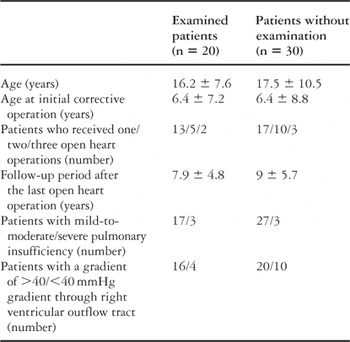
Table 2.

The characteristic peaks in the curve of atrial strain rate. A: late diastolic peak strain rate; E: early diastolic peak strain rate; RA: right atrium; RV: right ventricle; S: systolic peak strain rate.
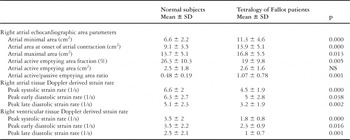
Table 3.

Comparison of the fractional area of right atrial active emptying between patients after surgical correction of tetralogy of Fallot and normal controls.

Comparison of the active and passive emptying areas between patients after surgical correction of tetralogy of Fallot and normal controls.

Comparison of the right atrial lateral wall peak strain rates measured by tissue Doppler between patients after surgical correction of tetralogy of Fallot and normal controls.

Comparison of right atrial lateral wall late diastolic peak strain rate in patients after surgical correction of tetralogy of Fallot when also comparing those with right ventricular ejection fractions of greater or less than 50%.
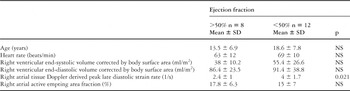
Table 4.
 You have
Access
- 25
- Cited by