These monuments are nothing more than indispensable catalysts which trigger in the beholder a sense of the life cycle, of the emergence of the particular from the general and its gradual but inevitable dissolution back into the general. This immediate emotional effect depends on neither scholarly knowledge nor historical education for its satisfaction, since it is evoked by mere sensory perception. … We will henceforth call this the age-value. Footnote 1
According to the Austrian art historian Alois Riegl’s (1857–1905) classic essay, cultural heritage possesses age value (Alterswert), which stems from an object’s visual traces of age that suggest the passage of time. Footnote 2 For Riegl, age value becomes apparent “in the erosion of surfaces, in their patina, in the wear and tear of buildings and objects, and so forth”; Footnote 3 age value “manifests itself immediately through visual perception and appeals directly to our emotions” Footnote 4 so that it “touches the masses independent of their education.” Footnote 5 Arguably, Riegl’s 1903 essay was the first, and perhaps most profound, formulation of modern values-based preservation; it left an enormous legacy, and the notion of age value has ever since been influential in contemporary conservation and heritage studies and, indeed, in heritage management. Footnote 6 The present article, however, is not primarily a discussion of Riegl. Writing more than 11 decades after Riegl’s essay, I am re-theorizing age value to ask what it actually is that becomes apparent in the erosion of surfaces and touches the masses by evoking age. The outcome is a series of insights and questions that will contribute not only to the development of the field of heritage studies but also to reconsidering some existing practices in the professional heritage sector.
HAS AGE VALUE PASSED ITS SELL-BY DATE?
Riegl argued that the monuments’ age value, which, according to him, emerged in its current form at the very beginning of the twentieth century, “was the logical consequence of the historical value that preceded it by four centuries.” Footnote 7 Whereas “the historical value of a monument arises from the particular, individual stage it represents in the development of human activity in a certain field,” Footnote 8 its age value manifests “the slow and inevitable disintegration of nature” at large. Footnote 9 The latter, therefore, rests on the visual perception of traces, such as corrosion, patina, and general wear and tear that “testify to the fact that a monument was not created recently but at some point in the past.” Footnote 10 Riegl reckoned that historical value was superseded by age value, but he also insisted that both are inseparably connected. On the one hand, age value relies on “a basic art-historical orientation” to be able to perceive the state of decay in relation to the original condition and broadly defined age of the monument. Footnote 11 On the other hand, “age-value conveys the achievements of [historical] scholarship to everyone, as it spends in emotion what intellect has fashioned.” Footnote 12
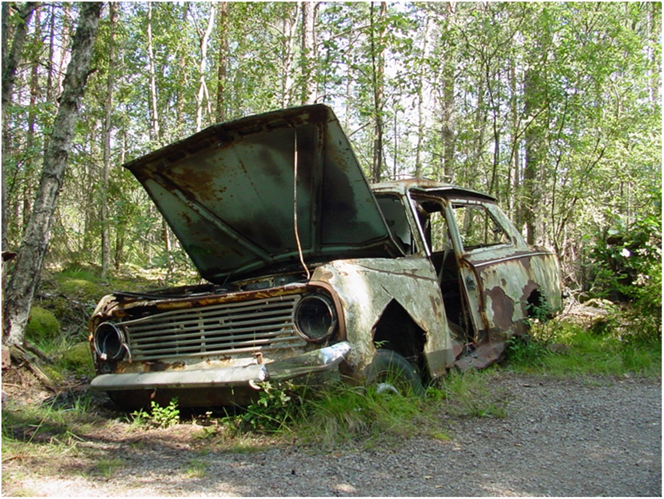
Riegl identified a major conflict of interest in the practice of preservation between the values of age value and historical value. Whereas historical value demands that individuals “maintain as genuine as possible a document” for future historical research and, thus, to stop any further decay, Footnote 13 age value requires them to refrain from any preserving intervention because “[t]he pure and redeeming impact of natural decay must not be arbitrarily disturbed by new additions” until a state of “complete destruction” is reached. Footnote 14 This conflict could be seen at work, for example, in the case of the car cemetery at Kyrkö Mosse near Tingsryd in southern Sweden. Footnote 15 Numerous decaying wrecks representing much of twentieth-century automobile history were spread out along an old road running next to the modern one (see Figure 1). When the authorities considered them to be environmental hazards, many people objected. The wrecks reminded them of similar models they once used themselves and their decay through the passage of time. This meant that there was no point in conserving the site in its present state, as the very act of freezing one point in the cars’ life cycles would have endangered a good part of the value of the site that lay in its state of decay. The age value of the slowly disintegrating cars led nevertheless to the protection of the site in the 1990s but in a state of continuing deterioration and without any intervention aimed at conserving the status quo. The site was protected for 49 years when the wrecks were expected to have deteriorated to an extent that they had lost all value. Riegl would have been delighted to see such a recognition of apparent age value of a particular monument.
A car wreck protected for its age value in the car cemetery at Kyrkö Mosse, Tingsryd, Sweden; or is it a clever copy? (photograph by Cornelius Holtorf, 2006).
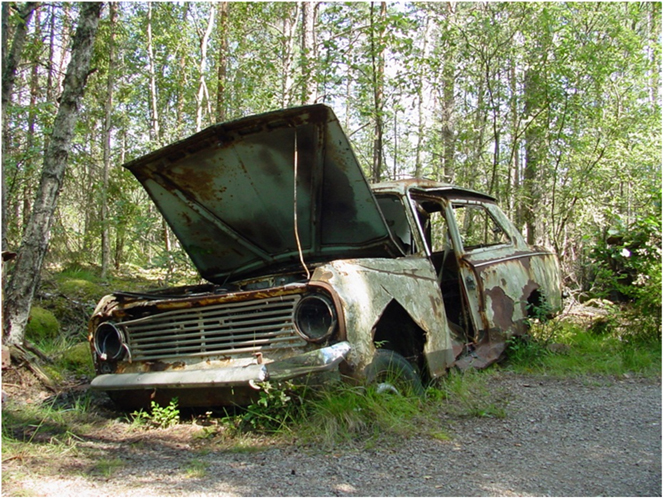
Writing about a century ago, Riegl realized that owing to “the development of modern techniques of reproduction … new and perfect means of compensating for the loss of originals will be found” so that the historical value of a monument could to some extent be separated from decaying originals. Footnote 16 In the present example, the historical value of the car wrecks, therefore, might be conceded to some extent to the state-of-the-art copies representing their condition at a given point in time. However, what Riegl did not foresee was modern techniques that allow individuals to compensate even for the lack of actual age and decay over time and, thus, the possibility of modern (re-)productions possessing age value. Riegl figured, conversely, that in contrast to an original monument’s outdated style, which might be imitated in a way that it would be invisible to all but trained art historians, its incompleteness, lack of wholeness, and tendency to dissolve form and color set an old monument at once apart from a modern object, even for an untrained eye. Footnote 17 But today, in the early twenty-first century, it is perfectly conceivable that a state-of-the-art copy of a car wreck features all of the hallmarks of a decaying original and could therefore possess age value too. The apparent presence of decay and ongoing deterioration back into a seemingly natural state is sufficient to trigger in the beholder a sense of the life cycle, to use Riegl’s phrase cited earlier, and thus evoke a perception of age, even though the site may not have originated very long ago at all. In the next section, I will discuss in more detail how it is, and what it takes, that clever copies, reconstructions, and even imaginative inventions can also possess age value.
THE PRESENCE OF PASTNESS
I suggest that what becomes apparent in the erosion of surfaces and touches the masses by evoking age is not the historical origin of a given object but, rather, what I call its pastness. Footnote 18 The concept of pastness denotes the quality for a given object to be “of the past.” As with Riegl’s age value, pastness is not age specific but, rather, generalizes all past periods into one—either something possesses pastness or it does not. But this is also where the similarities with age value end. The presence or absence of pastness is not related to an object’s physical properties and age but, rather, is something to be sensed; it is the result of a particular perception of a given object and, as such, firmly situated in a given social and cultural context and for a certain audience. Footnote 19
A question of considerable relevance for understanding the contemporary social role of tangible cultural heritage is under which conditions human audiences perceive such pastness. A lot of empirical work will be needed to determine the relative importance to perceptions of pastness of various types of heritage, for various kinds of audiences, and under a range of different circumstances. In particular, it is unclear at present whether the concept of pastness can be generalized globally or should only be applied to a much smaller region within the so-called Western world from where the examples are derived. Here I wish to contribute to laying some of the theoretical groundwork for future work and for future thinking on pastness, both in heritage studies and in the professional heritage sector. It becomes clear relatively quickly that, although the perception of pastness may result from a credible determination of the time from which a given object originates, it may also come about in other ways. A ruin may possess pastness because its walls are in a visible state of decay, irrespective of whether or not it possessed the same feature already as new, as in the case of artificial ruins. Footnote 20
But pastness encompasses more than the perception of decay. A church may acquire pastness because its architectural style matches what we expect of a Romanesque or Gothic building, irrespective of whether it was built in the nineteenth century or before. Any object can exude pastness when it appears within a credible historical sequence following on from something older and coming before something more recent, irrespective of how or, indeed, when it came to assume this position. It seems therefore that pastness is never inherent in an object and connected to its material substance but, instead, the result of a certain perception of an object in a given context. According to the theory of pastness, there are three specific criteria of which at least one, but, better, several, need to be fulfilled for pastness to emerge. Footnote 21
Pastness Requires Material Clues
An object’s materiality speaks to its age and acquires age value through obvious traces of wear and tear, decay, and disintegration. Patina, cracks, and missing bits are hallmarks of an object possessing the quality of being of the past. Footnote 22 This includes what Riegl’s subsumes under the term age value. In this vein, a conservator of the Smithsonian Institution reportedly once recommended that museum specimens should not be cleaned so that their “handsome patina” would be “left intact, both to show their age and for aesthetic reasons.” Footnote 23 However, when appropriate material clues are missing, an object lacks pastness and may subsequently not be perceived as being of the past. A prominent example of this effect was the restoration of Michelangelo’s frescoes on the ceiling of the Sistine Chapel in Rome. When it reopened in various stages during the 1990s, after a decade of diligent restoration, the familiar scenes lacked their familiar cracks and patina and appeared in some very bright colors. Subsequently, a controversy erupted whether the conservators had gone too far and removed some layers of Michelangelo’s original artwork. Footnote 24 The public debate also focused on whether the paintings should have been restored to their original impression at all. To some, with the removal of the material clues of the painting’s age, the restored works of Michelangelo looked too new. The Irish artist William Crozier, for example, stated in an interview: “What they have taken away is the age of the paint.” Footnote 25 In other words, the paintings are now lacking in pastness. Disney Imagineering, on the other hand, proceeds exactly the other way around. They use character paint to create the impression of “states of aging whenever we need to make something new look old.” Footnote 26
Pastness Requires Correspondence with the Expectations of the Audience
Sometimes, however, material clues and sophistication in detail alone are not sufficient for achieving a perception of pastness. A second criterion to be fulfilled is the matching of the appearance of a given object with its audiences’ pre-understandings. Intended audiences of themed environments need to recognize and understand the particular ideas that their designers were conveying. In other words, historical objects in themed environments should correspond to how guests expect to see them. “To be credible historical witnesses,” David Lowenthal suggests, “antiquities must to some extent conform with modern stereotypes.” Footnote 27 Or, as others have explained, “[s]omething authentic is simply something that looks as you imagine it might, based on a lifetime of movies and television and glossy advertisements in magazines.” Footnote 28 This principle becomes plainly evident when details of the past do not match our expectations. One good example is the Classical Greek temple. Although these buildings were originally painted in bright colors, contemporary depictions or models in which they appear like this make them look new, not old. Such is the power of perceptions of pastness based on appearances that colorful Greek temples do not look quite right, despite what the academic experts may say. Vice versa, the more something is of the past, the more it reflects cultural assumptions of the present. That is one reason why nothing is harder to predict than the past.
Pastness Requires a Plausible and Meaningful Narrative Relating Then with Now
A certain minimum number of material clues or correspondence with the audience’s expectations is possibly required for a site or artifact to possess the quality being of the past. A final, additional criterion of pastness is the story told about the history of an object—that is, the narrative that links past origin and contemporary presence. The story must be plausible and meaningful to its audience if the pastness of the object is not to be cast into doubt. There is a politics of plausibility that negotiates what is and is not plausible and to whom. We are so familiar with the conventional historical narrative that we first become aware of it when something does not appear to fit in and, thus, does not appear to make sense. For example, claims that some Homo sapiens finds date millions of years before the earliest accepted evidence, that extraterrestrials played a role in erecting some of the most prominent prehistoric monuments like the pyramids, or that there were major human civilizations well before the age of the known civilizations, cannot easily be aligned with current accounts of human evolution and cultural development. Evidence for such claims that may come in the form of material clues said to be skulls, tools, monuments, and so on lacks in pastness insofar as many audiences doubt the associated narrative.
All three requirements for the emergence of pastness come together in the final scene of the science fiction story Planet of the Apes. Footnote 29 On that planet, apes have famously taken over from humans, but this particular part of their history is being kept secret by the ruling apes in order to prevent a return to power of the surviving humans. The human heroes in the story—as well as the human film audiences today!—suddenly realize the full extent of that secret history when, at the very end, an object appears that is loaded with pastness. The Statue of Liberty is not only a clear reference to one of the most recognizable landmarks of contemporary North America, but it also carries—as it appears in the film—all of the material clues of a derelict ruin. We therefore realize together that we are looking at a North America in the future, and the entire narrative of the film falls into place.
THE MAKING OF PASTNESS (AND THE UNMAKING OF THE DISTINCTION BETWEEN PAST AND PRESENT)
To the extent that heritage is what reminds us of the past in the present, pastness is a definitional requirement for heritage and a prerequisite for perceiving cultural heritage. How can anything be appreciated as cultural heritage that is not, to some extent, “of the past”? How can anything tell a story about the past if it lacks pastness? However, as I have indicated, pastness does not derive from the physical substance that a given heritage object is made of but, rather, emerges from perceiving an object in a specific way, in a given social and cultural context. Contemporary buildings and sites can be subjected to various techniques enhancing their pastness and, thus, their heritage credentials, ranging from simulated material decay, to matching widespread preconceived expectations for the appearance of historic buildings, to adapting them to a certain historical narrative. Such contemporary structures can also take over some of the existing societal functions of cultural heritage that have originated in the past. Footnote 30
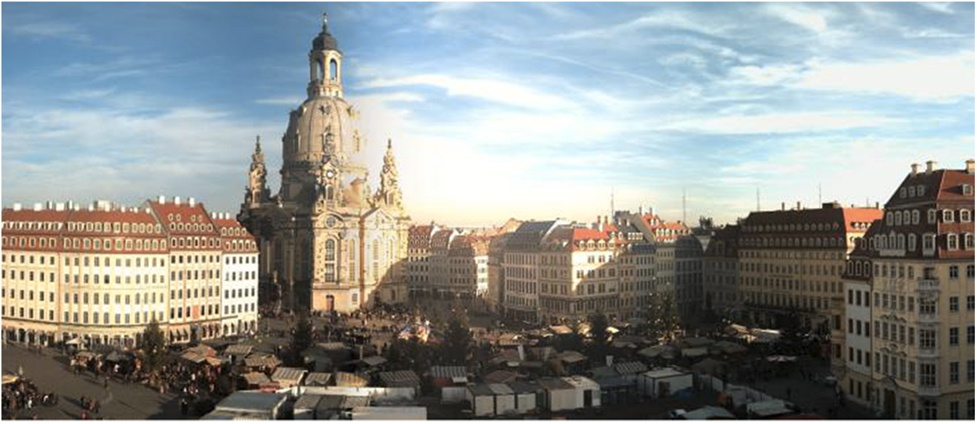
In Dresden, Germany, the Neumarkt area, which once consisted of eighteenth-century vernacular baroque architecture, is in the process of being recreated in a former condition so that it appears as if these buildings had never been destroyed by the bombs of World War II (see Figure 2). Heritage specialists can be quick to dismiss such buildings as resembling “Disneyland,” meaning that they are fake history and are intended as commercial traps; for better or worse, these specialists, therefore, have not become professionally involved in the design and construction of these essentially new buildings. However, appealing “old” towns such as Dresden’s newly emerging Neumarkt emanate plenty of pastness, not only attracting tourists and reviving city shopping but also making the local community proud of its heritage and enhancing the inhabitants’ sense of belonging. Footnote 31 In the case of Dresden, the popularity of the reconstructed Neumarkt area is linked to a popular ambition to refocus the history of the city that is visible in its architecture. Previously, the architecture of the city centre had been telling a story about the destruction of World War II and the postwar socialist reality. Now, the focus is on a more glorious, earlier past, evoking a historical narrative of continuity rather than disruption. Behind this portrayal may very well lie what Jason James, in a critical analysis of recent architectural restoration projects in Germany, describes as “a means of compensating for and undoing the damage inflicted on national culture over a sixty-year period marked by fascism, war, national division, and state socialism.” Footnote 32 What we see at work here is an interesting conflict, deserving further study in the future, between the complexities of history, on the one hand, and present-day quality of life, on the other.
The past in the making at Dresden Neumarkt, Germany—constructing a new historical narrative of the city (photograph by cityscope online medien GmBH, reproduced with permission of the City of Dresden, 22 December 2013, http://panorama.dresden.de/).
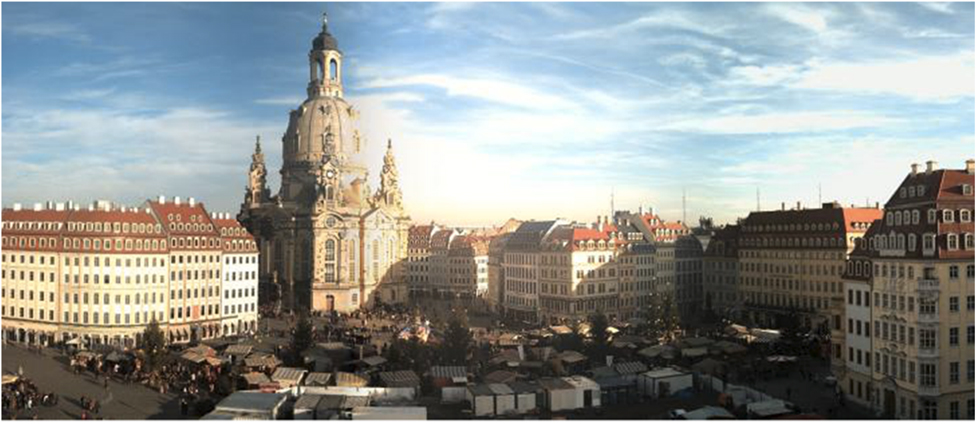
Certainly, what we have been witnessing in recent years in Dresden is nothing less than the new emergence of a prominent cultural heritage possessing considerable pastness. This pastness emerges both from buildings matching the expectations of inhabitants and from the visualization of a historical narrative that is not only broadly plausible but also preferable to many, as some of the less appealing aspects of the city’s past are being side-lined.
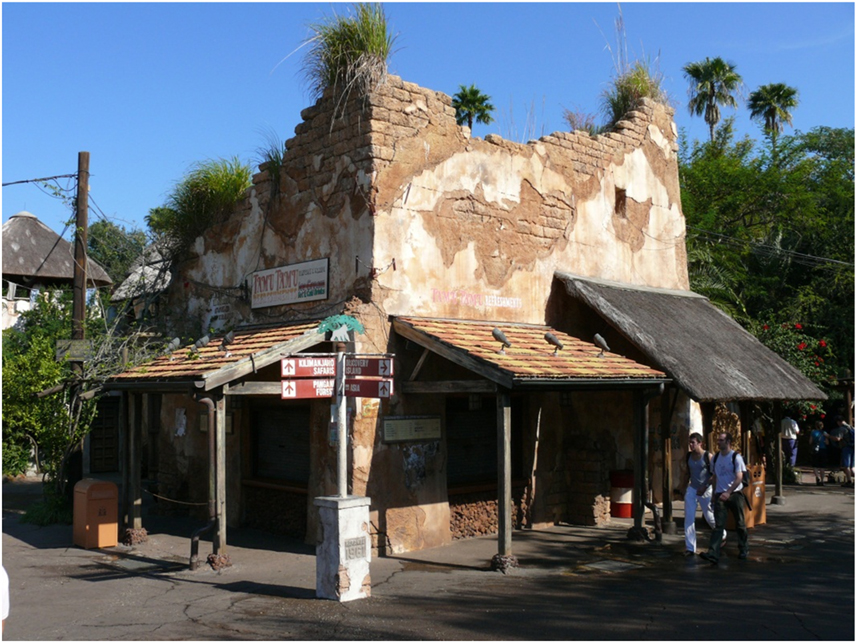
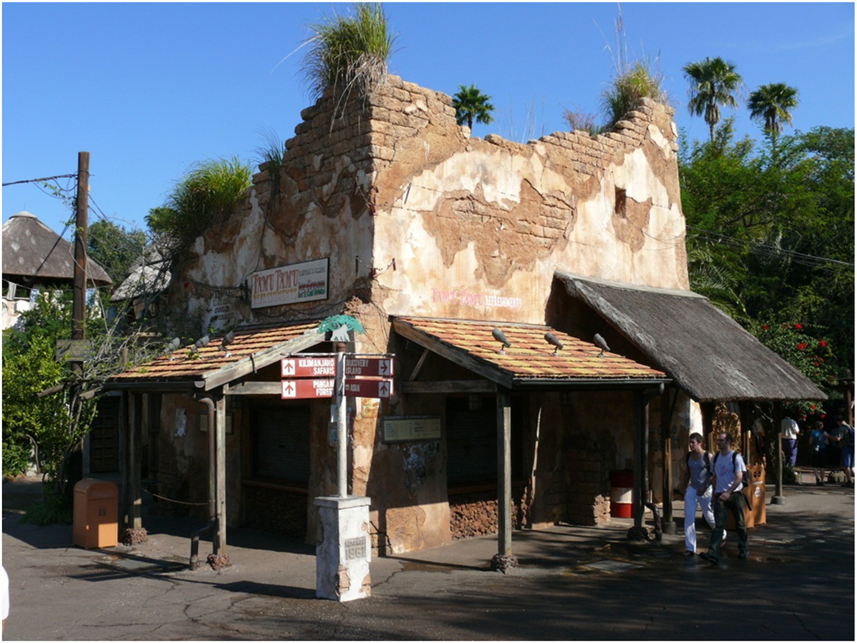
There are many other examples for the creation of pastness through architectural design, creating certain desired settings. Picturesque English landscape parks of the eighteenth and nineteenth centuries often included follies that gave the impression of an older structure gradually reclaimed by nature in the form of walls collapsing to rubble and plants overgrowing everything. Imaginary and imagined, artificially patinated ruins have been realized in a variety of cultural genres, from oil paintings to contemporary architecture, and communicating anything from existential warnings to drawing attention to local business. Footnote 33 Joe Rohde speaks of “narrative placemaking” when referring to the technique through which the past is created from scratch. Footnote 34 Rohde, then a creative executive of Walt Disney Imagineering, had overall responsibility for the design of Disney’s Animal Kingdom in Florida. The park contains, among others, the invented “African” village of Harambe, which, it was decided, was not to be as new as the entire park (built in 1998) and, instead, have a past. As a result, through the design of a colonial fort that has fallen into disrepair, engravings commemorating an invented independence in the year 1961, the carefully laid out footprints of the ancient city wall on the surface, the use of character paint, and the simulation of general wear and tear, among other features, a foreign but, at the same time, very familiar past was created that immerses visitors in a historical narrative—where there was a huge Florida swamp only a few years previously. Footnote 35 Although the specific narrative may not be very plausible to anybody in the given location, the material decay of the buildings speaks very clearly of the past (see Figure 3).
Narrative place making at Disney’s Animal Kingdom, Orlando, FL, United States—recently a Florida swamp, now an African village with a visible past (photograph by Cornelius Holtorf, Reference Holtorf2007).
Contemporary retro chic comprises many further examples, from facsimile prints of historic documents to faux-antiqued paint and stonewashed or ripped jeans. The House of Blues chain of theme restaurants/nightclubs features window weeps with fake water damage, ersatz graffiti in the toilets, and pretend tobacco stains dotting the ceilings. Footnote 36 Intriguingly, the experience does not suffer from the audience being aware of the underlying artifice. The British historian Raphael Samuel remarks that such “retrochic is untroubled by the cult of authenticity” and “part of the genius of retrochic is that it can create an aura of pastness even when the documentary record—or the archaeological one—leaves us with no more than a few shrivelled tissues in the hand.” Footnote 37 He is quite clear that for an aura of pastness to emerge, chronology is irrelevant, whereas “literary and historical fantasy have free rein.” Footnote 38 Ultimately, it is the assumption of antiquity that matters, not its veracity. Even popular depictions of fictitious pasts may have significant benefits as part of the cultural heritage. Footnote 39 The recreated past can be superior to original remains of the past even in its perceived authenticity and, hence, assume its place. Footnote 40
The level of attention given to material clues and other details in Disney theme parks ensures that guests do not feel obliged to admire the verisimilitude of what ultimately is artifice. Instead, the parks are immersing guests in ambiances that put the very distinction between reality and fake behind them. Footnote 41 By the same token, as Samuel argues, retro chic “blurs the distinction between originals and re-makes” and “abolishes the category differences between past and present, opening up a two-way traffic between them.” Footnote 42 Edward Bruner comes to a similar conclusion regarding Lincoln’s New Salem and adds one additional complication: “It is not just that the 1990s and the 1830s New Salem are always in process of construction, but that the 1990s New Salem influences our conception of the 1830s. In other words, what is called the copy changes our view of the original.” Footnote 43
Our own concepts and conceptions of the past that are in part influenced by contemporary popular culture will necessarily color the way in which we picture the past and, thus, what we expect authentic objects of the past to look like. This idea is close to culture historian Mieke Bal’s notion of “preposterous histories” in which processes and events that took place in more recent periods inform our understanding of earlier ones. Footnote 44 Quite possibly, this is the way in which we always understand the past. According to the German philosopher Hans-Georg Gadamer (1900–2002), understanding the past is not merely a reproductive, but also a very productive process:
Time is no longer primarily a gulf to be bridged, because it separates, but it is actually the supportive ground of process in which the present is rooted. Hence temporal distance is not something that must be overcome … In fact the important thing is to recognise the distance in time as a positive and productive possibility of understanding. It is not a yawning abyss, but is filled with the continuity of custom and tradition, in the light of which all that is handed down presents itself to us. Footnote 45
Gadamer argues, thus, that the “true” historical object is not “an object” at all, but a relationship that comprises both the reality of history and the reality of historical understanding. He calls this the “principle of effective-history.” Footnote 46 Not only does the power of effective history determine in advance what seems to us to be worth enquiring about, but we also find that, by following the criterion of intelligibility, the other presents itself “so much in terms of our own selves that there is no longer a question of self and other.” Footnote 47 This is exactly what happens at Dresden’s Neumarkt, in Lincoln’s New Salem, in English landscape parks, in Disney’s Animal Kingdom, and elsewhere.
UNDERSTANDING AND MANAGING PASTNESS IN THE PRESENT
The potential consequences and practical implications of my argument for heritage studies and the professional heritage sector are profound. One resulting consequence is an extended remit of the field of heritage. Heritage, by definition, possesses pastness and evokes the past in contemporary surroundings, including open-air museums, topical theme park attractions, historical reconstructions, and historicizing architecture. At present, heritage professionals usually distance themselves from newly constructed architectural evocations of the past rather than celebrating the increased significance of the past in present urban environments. Footnote 48 However, in the contemporary experience society, in which sensual experiences for customers prevail, reconstructions and historicizing architecture often fulfill very successfully their role as evocations of the past and of our heritage. Footnote 49 In fact, after only a few years have passed, many people surprisingly forget that seemingly old buildings had not always existed in their present locations. Footnote 50
These trends and observations pose new challenges for heritage studies. The field becomes much larger, incorporating new empirical data, additional stakeholders, and a range of new theoretical concerns. Among the latter are emerging questions of plausibility, credibility, and trust that complement the long-standing, but more limited, debates about authenticity. Footnote 51 In terms of management, not all sites possessing pastness may require special legal protection, but they should all benefit from professional expertise in heritage and cultural policy, advancing accessibility, and inclusiveness. Another question worth asking is which principles of heritage conservation are best suited to accommodate the popular desire of large parts of the population to perceive pastness. Footnote 52
John Ruskin (1819–1900), William Morris (1834–96), and Georg Dehio (1850–1932) famously insisted on principles summarized by the dictum “conserve do not restore.” According to this line of thinking, a clear and always visible distinction must be maintained between the original material substance derived from the past and any modern additions that lack authenticity. In this view, complete reconstructions are not allowed, and restoration is discouraged as it effectively destroys historic evidence. This approach champions historical value over age value. As Riegl knew, it requires an educated audience to understand and appreciate the historic significance of a given building, often additionally hindered by incomplete preservation. Footnote 53 This school of thought has nevertheless been very influential since the second half of the nineteenth century. It informed, for example, the International Council on Monuments and Sites’s International Charter for the Conservation and Restoration of Monuments and Sites (Venice Charter), stipulating, among others, that restoration “must stop at the point where conjecture begins” and that any replacements of missing parts “must be distinguishable from the original so that restoration does not falsify the artistic or historic evidence.” Footnote 54
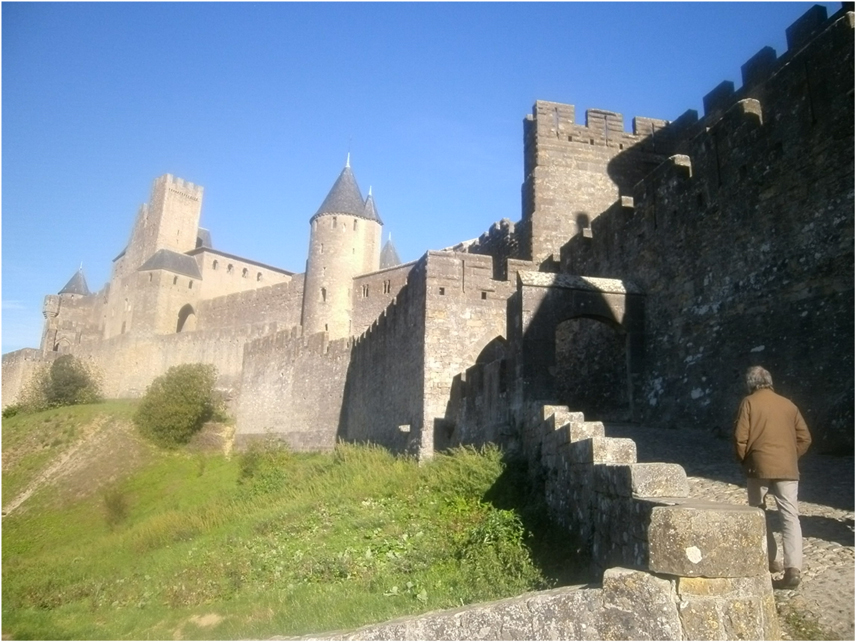
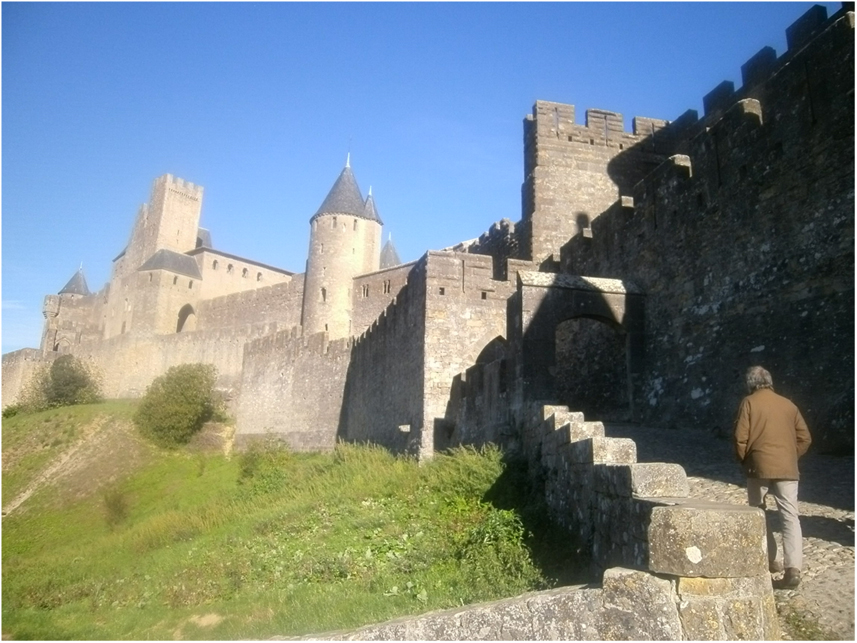
The alternative school of thought, famously represented by the Frenchman Eugène Emmanuel Viollet-le-Duc (1814–79) in Carcassonne in southern France, focuses not exclusively on the material substance but also on the original idea and appearance of the building at a different point in time. Here, the impression the building was meant to give in the past is being recreated or, indeed, newly created. Footnote 55 Although such reconstructions may lead to a degree of completeness that had never existed previously, the result is not necessarily a falsification but, arguably, an improved view of the site that corresponds better to what was intended originally at a given point in time. A building restored in this way will speak to all of the senses of human visitors; its meaning is as accessible as its pastness is perceptible in the way it illustrates holistically a familiar past and historic sequence (see Figure 4).
A familiar past: the imaginatively reconstructed city walls in Carcassonne, France (photograph by Cornelius Holtorf, 2012).
Viollet-le-Duc’s work has often been dismissed and even ridiculed by academics as inauthentic inventions and “almost Disney-like recreations.” Footnote 56 But, in recent years, this kind of architecture has been gaining in popularity not only among citizens but also among architects and town planners. In addition to historical reconstructions, historicizing architecture has re-emerged and is now gaining ground after a long period during which various modernist aesthetics dominated. Footnote 57 Over the past few decades, many cities throughout central Europe (Dresden is but one example) have recreated, or are in the process of recreating, their historic centers, even though they did not survive the bombs of World War II. There is a widespread longing for historical view sheds that create the appearance of a historically grown town quarter or building, evoking pastness even when the architectural continuity in fact no longer exists. Footnote 58 Historic buildings are increasingly being supplemented by new extensions and additions that adopt a similar, historicizing style and create a unifying impression that is in harmony with the original structure. Footnote 59
Such ambitions are often controversial, but once the work is completed, it is seldom regretted. The appearance of historical reconstructions is for many people, at least initially, indistinguishable from that of buildings that originated in the past. The relatively recent age of such buildings is not of any great significance for their capacity to possess pastness in the eyes of the many beholders who do not consider themselves to be experts in the field or are in another capacity versed in appreciating historic details. We may therefore ask on whose behalf the Venice Charter is being implemented, if a very large number of people affected in the present might prefer different practices. Contrary to the Venice Charter, and to what Riegl believed, it is the tangible form of a building that facilitates historic recollection and memory, not its actual historicity. Footnote 60 The yardstick against which historicizing architecture and reconstructions are to be judged, therefore, cannot be historic accuracy alone, which only experts can assess reliably. Instead, we need to look at the overall effect such architecture has in society and how it is perceived by people more widely. Footnote 61 A stylistically homogenous scene of streets with buildings conveying pastness has a strong effect on our senses. Visitors will have more memorable impressions and almost feel immersed in the past, irrespective of any historical inaccuracies in the architecture and, indeed, irrespective of any shortcomings in their own historical expertise.
This focus on the audience’s perception and appreciation in determining the quality of cultural heritage sits well with recent trends in international heritage management emphasizing the uses and benefits of heritage for people. Footnote 62 For example, the Council of Europe’s Framework Convention on the Value of Cultural Heritage for Society acknowledges explicitly in its preamble “the need to put people and human values at the centre of an enlarged and cross-disciplinary concept of cultural heritage” and “the need to involve everyone in society in the on-going process of defining and managing cultural heritage.” Footnote 63 By the same token, the Spanish conservation scientist Salvador Muñoz Viñas argues that the value of an object under conservation does not lie in some kind of inherent property and truth that is best accessible to a small group of experts but, rather, in the meanings and functions it has to all of its human audiences: “It is the affected people who best know what meanings the object possesses, and how it will best convey these meanings; it would not be ethically correct to impose a different point of view just because someone has expertise in art history, in organic chemistry, or in stone conservation techniques.” Footnote 64 Such agendas are rather different from those of the Venice Charter, which focuses a lot on the historical value of cultural monuments and built heritage, as best appreciated by scholarly experts.
As this discussion illustrates, the practices employed in the professional heritage sector are often closely linked to the more theoretical debates in heritage studies. Footnote 65 The concept of pastness and its application to heritage does not only challenge established notions of age and authenticity but also, ultimately, raises profound academic questions on how people conceive of their surroundings, how they value places and artifacts of the past, and what it might mean to democratize heritage and take it out of the hands of experts and cultural elites. Taking the notion of pastness seriously means calling on scholars and heritage professionals alike to engage in a new way with the character, perception, meaning, and experience of the past evoked in present society.
CONCLUSIONS: FROM AGE VALUE TO PASTNESS
I have been arguing that Riegl’s notion of visible age value concerning heritage objects is out of date because it can be simulated. Clever copies, reconstructions, and even imaginative inventions may be designed so that they possess age value, and, for many people, they are thus able to evoke the past in the present. Arguably, it is the tangible form of a monument that facilitates historic recollection and memory in society, not its historicity. Decisive is the extent to which a given site or object is “of the past”; that quality that is called pastness. Pastness is in fact what becomes apparent in eroded surfaces and what, according to Riegl, touches the masses by evoking age.
Cultural heritage and its meaningful interpretation presuppose the perception of pastness. Instead of asking when a given object originated in the past, we should henceforth pose the question whether it possesses pastness. I have described three requirements that each can bring about a perception of pastness: material clues, correspondence with the expectations of the audience, and a plausible and meaningful narrative relating then with now. Every one of these criteria can be fulfilled by particular design and building techniques that are in line with the audience in the present. One important consequence of my argument is that the distinctions between reality and fake, original and copy, past and present, old and new, other and same are fast eroding. These dichotomies are not helpful for understanding the character and function of heritage in the contemporary world and, therefore, need to be overcome in heritage studies as well as in the professional heritage sector.
Another implication of my argument is a need for heritage studies and the heritage sector to concern themselves with a much wider range of objects and phenomena than is conventionally the case. Any site or object that exudes pastness and evokes the past in the present should be included, no matter when and how it was made. This includes, for example, open air museums, topical theme park attractions, historical reconstructions, and historicizing architecture. Pastness does not rely on material substance originating from the past. The old maxim “conserve, do not restore” has therefore lost its meaning. We should give more attention to the overall effect such architecture has in society and on its audiences. Adopting the notion of pastness as a tool for understanding heritage in contemporary society is to develop further existing research on the character, experience, and meaning of the past evoked in the present by people and for people. Footnote 66
In effect, my argument also means that heritage management is being transformed into past management. I am tempted to argue that the past has always been the main reason why heritage and archaeology have mattered in society. Experiencing the past in the present has long been contributing to people’s well-being and their perceived quality of life. But the reason for that benefit was not, as Riegl had it, that an object’s visual traces of age could “testify to the fact that … [it] was not created recently but at some point in the past” and, thus, its age value. Footnote 67 Riegl had it wrong in his account of “[t]he Modern Cult of Monuments.” As I have argued here, the presence of age value is not directly linked to age and, instead, relies on the perception of pastness. Riegl’s classic paper and the notion of monuments’ age value form part of a modern cult of heritage. This cult was anything but universal and, instead, was linked to the very particular intellectual and cultural context of European modernity. As we now take a broader perspective on the roles of the past and the significance of pastness in society, Riegl’s ideas themselves become part of the (intangible) heritage of the twentieth century, slowly accumulating patina and acquiring pastness themselves. At the same time, new questions and agendas are emerging for the field of heritage studies. The study of the conditions under which pastness is perceived in contemporary societies has only just began.
ACKNOWLEDGMENTS:
This article was first conceived for a volume that never saw the light of day and subsequently presented at the Contemporary and Historical Archaeology in Theory conference, held in London in 2013, at the University of Gothenburg in 2015, and at the University of Basel in 2016. For comments, I am grateful to all who contributed to the discussion on these occasions. I would also like to thank Laurajane Smith and Ian Lilley for detailed comments on a previous draft. In addition, I am grateful to the two reviewers who recommended to accept this article for the present journal.